Blog

  • PRESS RELEASE : Britain is undersaving for retirement warns Pensions Commission [May 2026]

    PRESS RELEASE : Britain is undersaving for retirement warns Pensions Commission [May 2026]

    The press release issued by the Department for Work and Pensions on 19 May 2026.

    The Pensions Commission has today (19 May) published its interim report on the state of retirement saving in the UK, setting out the key challenges facing the current system and where it will focus its work next.

    • Interim report highlights key challenges in retirement saving across the UK with 15 million people currently undersaving for retirement.
    • Findings sets direction for further work to improve retirement outcomes ahead of final recommendations in 2027.
    • Commission set up as part of government’s wider reforms to pensions system to help more people retire with dignity.

    The Pensions Commission has today (19 May) published its interim report on the state of retirement saving in the UK, setting out the key challenges facing the current system and where it will focus its work next.

    The report highlights that many people are not saving enough for retirement, particularly among low and middle earners, the self‑employed and women, and points to the need for the system to evolve to meet modern working lives.

    There are currently 15 million people under saving for retirement which could reach 19 million without action, leaving large groups across the UK facing a severe cliff-edge when they retire, according to a new report from the Pensions Commission.

    Set up by the Government in July 2025, the Commission aims to address a savings challenge that has been building for decades, examining why tomorrow’s retirees’ risk being worse off than today’s and making recommendations to reverse this.

    This follows the success of the 2002 to 2006 Commission which built a consensus for the roll-out of Automatic Enrolment into pension saving, resulting in 89% of eligible employees now saving into their pensions, up from 55% in 2012.

    Its findings include:

    • Low and middle earners are most at risk, with around half saving only at minimum Automatic Enrolment levels with little else to fall back on.
    • 45% of working-age adults – around 18 million people – are not saving into a pension at all, despite nearly half of them being in work.
    • Where employers are contributing about the statutory minimum this is largely benefiting higher earners.
    • Just 4% – one in 25 – of wholly self-employed workers are saving for retirement, and it’s even lower among younger self-employed people.
    • On current trends around 3 in 10 private pension pots are accessed at the earliest possible opportunity with half of all pots taken out in full. Nearly half of these are spent on large expenses like a car, holiday or renovations.

    The Commission examined why tomorrow’s retirees are on track to be poorer than today’s with too many working age adults are saving nothing at all into a pension. A final report with recommendations will follow in early 2027.

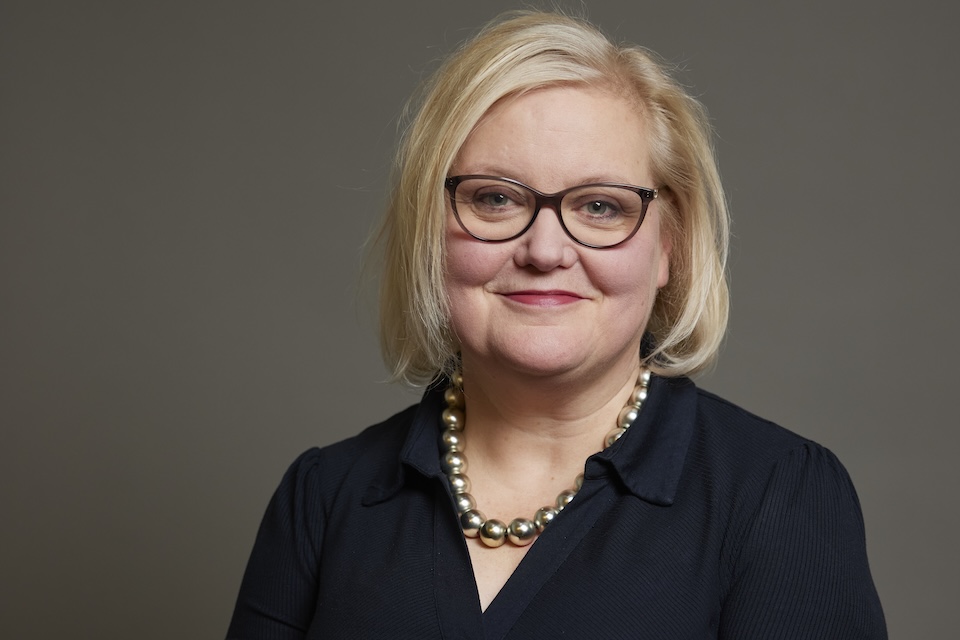
    Pensions Commissioner, Baroness Jeannie Drake said:

    Over the past two decades since the Turner Commission there is no doubt pensions reform can be described as a success. Yet the second Pensions Commission is looking forward and seeing many people not saving enough and millions not saving at all.

    This demands a renewed national settlement on pensions.

    Achieving this will require clarity of purpose, but it also offers a moment of opportunity; to renew a social contract that commands confidence across the country.

    The recommendations we present in our final report will address the need to secure adequate income in later life and a pension system that is fit for decades to come.

    The Commission will set out the course to improving future outcomes whilst ensuring the system is fair and sustainable within and between generations.

    Minister for Pensions, Torsten Bell MP, said:

    Britain has got back into the pension saving habit, but the job is only half done with tomorrow’s pensioners still on track to be poorer than today’s.

    The Pensions Commission sets out clearly the scale of the challenge: not enough people are saving for retirement, and many of those that are aren’t saving enough.

    The Commission warns that without action millions more people could be at risk of becoming reliant on state support in retirement.

    It adds that there is much for public policy to do to shape the future of pensions, whilst maintaining the broad political consensus pensions has had since the Turner Commission in the 2000s. The Commission is clear that change must happen in the right way, with any recommendations for change implemented gradually. The Government has ruled out any changes to Automatic Enrolment contributions this Parliament.

    Dr Yvonne Braun, ABI Director of Long-Term Savings Policy said:

    The report makes a powerful case for a new national settlement for pensions. Automatic enrolment is a sturdy foundation, but must evolve to meet the scale of the challenges ahead.

    We and our members stand ready to work with the Commission to deepen saving, extend coverage and support better decisions in retirement, so that everyone can look forward to greater financial security in later life.

    Over the next year the Commission will hear a wide range of views before presenting its final report and recommendations in early 2027. A call for views from all interested parties has also launched today.

    Rocio Concha, Director of Policy and Advocacy at Which? said:

    Which? welcomes this interim report from the Pensions Commission and the valuable evidence it brings together on the UK’s pension adequacy challenge. It is very encouraging to see recognition of the need to increase private pension saving rates and coverage, while also acknowledging the financial pressures caused by the cost of living crisis.

    The report rightly highlights that too many working people are projected to reach later life without sufficient savings, and that women, carers, the self-employed and many ethnic minority groups continue to face structural barriers. It is also promising to see a strong focus on how to support people to use their pension savings throughout retirement.

    Which? looks forward to continuing to work with the Commission, industry and wider civil society groups to help drive the reforms needed so people are better prepared for retirement.

    Julian Mund, Chief Executive of Pensions UK, said:

    Pensions UK welcomes the breadth and ambition of this report, and shares the Commission’s view that we need a new national settlement on pensions.

    Evidence presented in the report clearly strengthens the case for more pension saving over longer working lives, alongside systemic change that delivers sustainable incomes – building on welcome reforms in the Pension Schemes Act.

    We look forward to working with Government to explore how that diagnosis can be turned into a practical roadmap for reform, well before the next generation fall short of the retirement incomes they expect and deserve.

    Caroline Abrahams, Charity Director at Age UK:

    We welcome this new report from the Pensions Commission, which provides an excellent analysis of the problems facing our pensions system today. This is the first and necessary step for ensuring the pensions system of the future enables tomorrow’s older people to have a decent standard of living.

    There’s a clear need to improve the way the State Pension and private pension systems work together; otherwise people on low incomes are at risk of falling through the cracks and hurtling towards their retirements without the required funds, or the time to make up the shortfall. We look forward to working with the Commission as it explores the best solutions for future pensioners.

    Aside from the commission, the government is also reforming the pension landscape and improving retirement for today’s workers. The Pension Schemes Act, passed this month, will benefit 22 million workers by up to £29,000 by the time they retire, driving down costs, boosting returns and enabling the automatic consolation of small pension pots to ensure every pound saved works harder for working people.

    Louise Hellem, Chief Economist, CBI, said:

    The publication of the Pensions Commission’s interim report is an important step towards building a long-term framework that delivers adequate living standards in retirement. Getting this right requires the government, businesses and individuals all to play their role in supporting better saving.

    As the debate progresses, it is vital that retirement adequacy is considered hand in hand with the UK’s growth ambitions. Strong economic growth underpins sustainable pension outcomes by supporting employment and higher sustainable wage growth, enabling individuals to save, and driving stronger investment returns over time. It is only growth that can sufficiently reduce difficult trade-offs and maintain political, public and business support for change.

    TUC General Secretary Paul Nowak said:

    Workers deserve a pension system that guarantees against poverty in retirement and enables them to maintain their standard of living.

    Although millions more people are now building up workplace pensions, far too many on low and middle incomes are not heading for a decent retirement – with women, Black and minority ethnic and disabled workers, and those in the gig economy at highest risk.

    The Commission must now develop a bold plan to fix this, which will need to include higher employer contributions and a fair deal for those currently missing out.

    Nausicaa Delfas, Chief Executive of The Pensions Regulator, said:

    The pensions system is still unfinished business with too many people on track for an inadequate retirement income. That is why we welcome the Pensions Commission report, and look forward to continuing to work with the Commission, Government and industry to create a system which delivers what matters most: a sustainable income in retirement for everyone.

  • Keir Starmer – 2026 Comments on Small Businesses

    Keir Starmer – 2026 Comments on Small Businesses

    The comments made by Keir Starmer, the Prime Minister, on 19 May 2026.

    Small businesses are the backbone of our economy – run by people who take risks, create jobs and keep communities going. This government is firmly on their side.

    Too many small business owners are spending hours chasing money they are owed and when payments don’t come through, the cost is personal. It’s about whether you can pay your staff, keep the lights on, or invest in your future.

    Today we’re changing that with the toughest action on late payments in a generation, so small businesses get paid on time and get the backing they need to grow, create jobs and serve their communities.

  • PRESS RELEASE : Largest crackdown on late payments in over 25 years as landmark Bill enters Parliament [May 2026]

    PRESS RELEASE : Largest crackdown on late payments in over 25 years as landmark Bill enters Parliament [May 2026]

    The press release issued by the Department for Business and Trade on 19 May 2026.

    Ministers announce the introduction of legislation to tackle late payments and protect small businesses.

    • Small Business Protections Bill introduced to Parliament to back small businesses with the toughest late payment regime in the G7 
    • Stronger new powers for the Small Business Commissioner to investigate, adjudicate disputes and fine persistent late payers with potential penalties worth tens of millions 
    • New 60-day cap on payment terms for large firms, mandatory interest on late payments, and action to ban the practice of retentions in construction

    Small businesses will no longer be left chasing money they are already owed, as ministers today [Tuesday 19 May] introduce landmark legislation to end the scourge of late payments and back millions of sole traders, freelancers, and family firms across the country. 

    The Small Business Protections Bill (formally known as the Commercial Payments Bill) delivers the toughest crackdown on late payments in a generation – putting a clear duty on large firms to pay smaller suppliers on time and giving small businesses the certainty they need to keep investing, supporting jobs and growing their communities.

    It comes as the Prime Minister and Business Secretary are expected to welcome small business owners and Federation of Small Businesses (FSB) representatives to Downing Street to mark what leaders have called a “historic moment for small firms”.

    Late payments close 38 businesses every single day because they are not paid on time. That’s the equivalent of 266 a week, and well over a thousand in any given month. For business owners, the impact is immediate and personal – forcing them to spend hours chasing invoices instead of running their businesses and putting jobs and livelihoods at risk.

    The Bill fundamentally changes how businesses pay each other, putting an end to excessive delays and unfair practices that hit small firms hardest, through sweeping new reforms.   

    Prime Minister Keir Starmer said:

    Small businesses are the backbone of our economy – run by people who take risks, create jobs and keep communities going. This government is firmly on their side.

    Too many small business owners are spending hours chasing money they are owed and when payments don’t come through, the cost is personal. It’s about whether you can pay your staff, keep the lights on, or invest in your future.

    Today we’re changing that with the toughest action on late payments in a generation, so small businesses get paid on time and get the backing they need to grow, create jobs and serve their communities.

    Reforms include a clear 60-day cap on payment terms on all large firms paying smaller suppliers, mandatory interest on late payments, set at 8% above the Bank of England base rate, and a ban on the practice of withholding retention payments under construction contracts.  

    On top of this, the Small Business Commissioner is getting major new powers to investigate poor payment practices, adjudicate disputes, and fine the worst offenders – with potential fines that could be worth tens of millions for persistently late payers.   

    The Office of the Small Business Commissioner has already recovered more money for small firms in the last year than in the previous four years combined.

    By improving cashflow through supply chains, the Bill supports productivity, growth and keeps our small businesses afloat, by giving them the certainty they need to invest and grow.        

    Business Secretary Peter Kyle said:   

    Costing the UK economy £11 billion every single year, late payments choke growth, cost jobs, and force too many good businesses to close. That ends today.  

    Through this landmark bill we are delivering the toughest payment reforms in over a generation, to give the UK the strongest legal framework in the G7, and back small businesses with the certainty they need to grow and thrive.

    Minister for Small Business and Economic Transformation, Blair McDougall said:  

    I’ve spoken to too many business owners who do everything right and are still left lying awake at night wondering how they’ll pay their staff or cover their bills because they haven’t been paid what they’re owed.  

    Introducing this Bill is about standing up for those people, to restore fairness, dignity and security for small business owners and the self-employed, so they can focus on doing what they do best: growing their businesses and the economy.  

    The Bill builds upon and strengthens legislation first laid out in the 1998 Late Payment of Commercial Debt Act, over 25 years ago, to give us the strongest legal framework on late payments in the G7.  

    After working closely with the Federation of Small Businesses, these Bill powers will also ensure boards or audit committees of persistently late‑paying large companies publish clear explanations of poor payment performance and the steps they are taking to improve it. 

    FSB Policy Chair Tina McKenzie said:

    Tackling late payment is one of the biggest things the government can do to help small businesses grow.

    FSB is proud to have worked with ministers on these reforms and it’s encouraging to see the voice of small firms reflected in legislation. Giving audit committees a clear role in payment practices is a vital step in changing late payment culture.

    The legislation forms part of a broader plan to back small businesses and turn the page on years of underinvestment by tackling the pressures they have faced from high inflation, borrowing costs and unnecessary bureaucracy. This includes small business rates relief of up to 100% for the smallest premises, shielding firms from costs,

    Alongside this, the government is cutting costs for working families by halving childcare, introducing £2,000 incentives for SMEs hiring apprentices, boosting access to finance, and cutting red tape for hospitality, high street and cultural venues.

    It also follows the Prime Minister’s Small Business Plan, launched last year to make the UK the best place to start and grow a business. Developed in partnership with small firms, the plan will boost access to finance with £4 billion of additional support, make it easier to win government contracts, and brings together advice and funding through a new Business Growth Service so firms can access the help they need in one place.

  • PRESS RELEASE : Government turning the tide for young people in the Midlands with jobs backing from Severn Trent [May 2026]

    PRESS RELEASE : Government turning the tide for young people in the Midlands with jobs backing from Severn Trent [May 2026]

    The press release issued by the Department for Work and Pensions on 19 May 2026.

    Young people across the East and West Midlands will have more work opportunities as Severn Trent becomes the latest backer of a government drive to tackle youth unemployment, pledging 400 roles in the water industry.

    • Severn Trent is the latest backer of the Youth Guarantee, the Government’s scheme to give every young person the chance to earn or learn  
    • The company is creating 400 employment opportunities for young people across the Midlands, supporting Government action to tackle the water sector’s skills shortage 
    • Youth Guarantee has already received backing of major employers including McDonald’s and the Premier League 

    Severn Trent, one of the largest water and sewage companies in England and Wales, says the opportunities for 16 to 24-year-olds will be created over the next three years as part of a new programme. They will include six-month paid work placements across a wide range of roles within the company, including a variety of operational roles and customer support agents.

    To support those from all backgrounds, 25 of the opportunities each year will be ringfenced for young people who have experience being in care. 

    Severn Trent is the latest major employer to back the Government’s Youth Guarantee, which aims to give every young person the chance to earn or learn. Other supporters include the Premier League, Channel 4, Royal Shakespeare Company and Pinewood Studios.  

    The Youth Guarantee and Growth and Skills Levy reforms are backed by £2.5 billion investment, providing employment support for almost a million young people and unlocking up to 200,000 jobs and apprenticeship opportunities. 

    This comes in response to the rise in recent years of young people not in employment, education or training (NEET), which is close to one million.   

    Severn Trent’s commitment also comes as an important step in tackling the serious skills shortage facing the water sector, with 35% of skilled jobs currently going unfilled.  

    To mark the new partnership, the Minister for Skills Jacqui Smith visited Severn Trent’s training academy in Coventry, which opened in 2021, to meet young apprentices developing skills in operations, engineering and other specialist roles. At the site, learners train by practicing real repairs using indoor and outdoor rigs that simulate live water networks. 

    Baroness Jaqui Smith, Minister for Skills said: 

    Every young person deserves the opportunity to build a career they’re proud of and that is exactly what we are making happen through the Youth Guarantee.

    It is great to see Severn Trent joining a growing number of household businesses backing our mission to open doors and deliver real opportunity across the country.

    Their commitment shows how working hand in hand with businesses provides young people with the skills, the confidence and the chances they need to succeed.

    Daniel Jackson, 19 Water technician who led the tour with Minister Smith said:  

    To be asked to lead the tour with the Minister was a real privilege. I started as an apprentice, and the Academy really helped give me the learning and opportunity to do well. I completed my programme and am now part of the leakage team – finding and fixing leaks and supporting our customers, and I love it. I’m excited about where my career will take me. 

    Neil Morrison, HR Director at Severn Trent said:  

    We know giving a young person that first opportunity can be game changing, and at Severn Trent we are committed to providing experiences that result in positive outcomes. The Youth Guarantee is a great example on how we can come together to do just that. 

    Welcoming talented young people into our organisation, who bring with them new ideas and fresh perspectives ultimately help us be better as a business. We firmly believe no matter what organisation or business you are, there’s a role to play in unlocking genuine pathways for young people.

    The Government is working to boost opportunities for young people more widely in the water and utilities sector, with conversations ongoing with Anglian Water, the RPS Group and M Group.

    The new placements build on the 500 work experience placements Severn Trent already provide annually, and 100 new apprenticeship opportunities each year, providing a vital route into skilled employment for young people at the start of their careers.

    The Government is working hand in hand with sector leaders to open up early career routes for young people, through both the Youth Guarantee and the Energy & Utility Skills Sector Entry Pilot.

    The pilot is delivered jointly by DWP and Energy & Utility Skills, and offers nine accredited training modules, guaranteed interviews and has an expected 75% progression rate into work. Industry leaders including the National Grid, M Group, Murphy’s and Severn Trent have already committed to the scheme.

    The package of measures under the Youth Guarantee include a Youth Jobs Grant worth £3,000 for employers for every young person they hire aged 18-24 who has been on UC for six months, an expanded Jobs Guarantee offering subsidised work for eligible 18 to 24-year-olds, and new foundation apprenticeships in key sectors, including hospitality.

    On top of this, the government is continuing its commitment to delivering Youth Hubs to every local area in Great Britain to establish a national network and address the almost one million young people not earning or learning – a rise of 248,000 between 2021 to 2024 – so that every young person can progress wherever they live.

    Alongside these measures, JobHelp provides young people with free, practical support to navigate their job search from CV tips and interview guidance to training opportunities and government support all in one place.  

  • NEWS STORY : Charity Regulator Recovers £2.5 Million After Football Foundation Inquiry

    NEWS STORY : Charity Regulator Recovers £2.5 Million After Football Foundation Inquiry

    STORY

    The Charity Commission has said £2.5 million has been recovered for the Players Foundation after an inquiry found serious mismanagement at the football charity. The organisation was previously known as the Professional Footballers’ Association Charity and was established to support former and current professional players.

    The regulator said £1.9 million had been transferred from the charity’s bank account to the Professional Footballers’ Association trade union without adequate explanation or governance. It also found that the charity had allowed the union to occupy its properties rent free for several years, causing financial loss to the charity.

    The Charity Commission said the transferred sum, interest and outstanding rent had been repaid after it raised concerns. It said trustees had let down the players the charity was intended to support, and one trustee had been disqualified from serving as a trustee or holding a senior management position in a charity for four years.

  • NEWS STORY : Plaid Cymru Uses King’s Speech Debate to Press for More Welsh Powers

    NEWS STORY : Plaid Cymru Uses King’s Speech Debate to Press for More Welsh Powers

    STORY

    Plaid Cymru has used the start of the new parliamentary session to press the UK Government for further devolution following its victory in the Welsh election. The Guardian reported that the party had tabled an amendment to the King’s Speech calling for additional justice, infrastructure and welfare powers to be transferred to the Senedd.

    The move follows a major shift in Welsh politics, with Plaid Cymru taking office after an election in which Labour lost power and Reform UK became the main opposition in the expanded Senedd. Rhun ap Iorwerth’s party narrowly missed an absolute majority, leaving the new administration to define its relationship with Westminster.

    The amendment is unlikely to force immediate constitutional change, but it signals that the new Welsh Government intends to test Labour’s stated openness to reform. It also creates an early political challenge for Starmer at a time when his Government is already facing pressure from within Labour and from opposition parties.

  • NEWS STORY : EU Figures Warn UK Rejoining Would Mean Standard Membership Terms

    NEWS STORY : EU Figures Warn UK Rejoining Would Mean Standard Membership Terms

    STORY

    The debate over Britain’s future relationship with the European Union has returned to Westminster politics after senior Labour figures raised the prospect of closer ties or eventual re-entry. The Independent reported that former European officials warned the UK should not expect a bespoke arrangement if it sought to rejoin the bloc.

    Sandro Gozi, a former Italian Europe minister and current MEP, said any future UK application would have to address the issues expected of any candidate country. The report said this could include questions around the euro, Schengen and the absence of the budget rebate the UK previously secured as a member state.

    The issue has re-emerged after Wes Streeting (in photo) made pro-European arguments in his first speech from the back benches and Andy Burnham distanced himself from previous comments about reversing Brexit as he seeks support in Makerfield. Starmer has also suggested that rejoining the EU could be discussed years in the future, while maintaining that it is not the Government’s current policy.

  • NEWS STORY : Thames Water Rescue Deal Reportedly Hit by Political Uncertainty

    NEWS STORY : Thames Water Rescue Deal Reportedly Hit by Political Uncertainty

    STORY

    A proposed rescue deal for Thames Water has reportedly been affected by political uncertainty around the future of the Government. The Guardian reported that ministers have been negotiating with a consortium of creditors led by Elliott Management over a possible takeover deal for the heavily indebted water company.

    Government sources told the newspaper that the talks had run into difficulties partly because of uncertainty over whether Keir Starmer would remain Prime Minister. The report said some potential investors were concerned that Andy Burnham, if he eventually entered Downing Street, could take a more interventionist approach to utilities and public ownership.

    A Government spokesperson said ministers would act in the national interest and that Thames Water remained financially stable, while the Government remained ready for all eventualities, including special administration if necessary. Thames Water has been attempting to avoid financial collapse after building up debts of more than £17 billion.

  • NEWS STORY : Poll Suggests Andy Burnham Would Lead Labour Members’ Leadership Choice

    NEWS STORY : Poll Suggests Andy Burnham Would Lead Labour Members’ Leadership Choice

    STORY

    Andy Burnham has emerged as the clear favourite among Labour members in a poll on a possible future leadership contest. Sky News reported that a YouGov survey of Labour members placed the Greater Manchester mayor on 47% as first-choice candidate, ahead of Keir Starmer on 31%.

    The poll was published as Burnham seeks to return to Parliament through the Makerfield by-election, although he has not yet been selected as Labour’s candidate. The by-election was triggered after Labour MP Josh Simons announced his intention to stand down, creating a possible route back to Westminster for the former cabinet minister.

    The survey found Wes Streeting, who resigned as health secretary last week and said he would stand in any leadership race, on 4% as first choice. Starmer has continued to insist that he wants to lead Labour into the next general election, while allies have said the party should focus on governing rather than internal speculation.

  • NEWS STORY : UK Labour Market Weakens as Unemployment Rises to 5%

    NEWS STORY : UK Labour Market Weakens as Unemployment Rises to 5%

    STORY

    UK employers cut hiring and posted fewer vacancies in April, according to official data that added to pressure on the Government over the state of the economy. Reuters reported that early payroll figures from HM Revenue and Customs showed a fall of 100,000 employees between March and April, the largest monthly drop since the early stages of the pandemic, though the Office for National Statistics said the estimate was likely to be revised.

    The unemployment rate rose to 5.0% in the three months to March, while vacancies fell to their lowest level since early 2021. The ONS said lower-paying sectors including hospitality and retail had seen some of the largest falls in payroll numbers and vacancies over the latest period and across the year.

    The figures come as ministers seek to demonstrate that the Government can deliver growth despite domestic political pressure and international economic uncertainty. Employers have warned that higher labour costs and employment law changes are affecting hiring plans, while the Government argues that its wider economic programme is designed to support investment and living standards.