
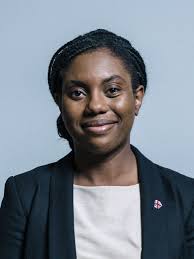
The speech made by Kemi Badenoch, the Leader of the Opposition, in the House of Commons on 13 May 2026.
This King’s Speech is taking place against the most extraordinary backdrop. We knew that the carriages were booked, that the horses were ready and that the King was coming, but would we have a Prime Minister? It is such an honour to be the Leader of the Opposition who gets to respond today. May I start by congratulating the proposer and seconder of the Loyal Address on their excellent speeches? I also congratulate the Whips on finding two Back Benchers prepared to support the Prime Minister at this time.
The hon. Member for Bradford West (Naz Shah) gave a moving and funny speech. I especially appreciated her comments about black and brown faces on TV—or, as my children say, “Oh look, it’s mummy again.” She only touched lightly on the fact that she is someone who has faced one of the most challenging childhoods imaginable, yet through the strength of her character, has made it to this place. She is made of tough stuff, and that is something we need more of in this House. Anyone who can boast of chewing up and spitting out George Galloway in an election is clearly formidable.
I also congratulate the hon. Member for Harlow (Chris Vince) on successfully delivering a humorous and warm-hearted speech. As he noted, he is my constituency neighbour. He ran the London marathon last month, raising money for the St Clare hospice, which cares for his constituents and mine, so I would like to take this opportunity to thank him for doing that. I have become a big fan of his after listening to his speech, especially as he was so generous in his comments about the Harlow Conservatives’ successful election campaign and my councillors’ outstanding work on regenerating the town centre. If things on his side of the House are getting a bit much, he would be very welcome to cross the Floor and help the Conservatives carry on that work.
I think we can say that the proposer and seconder of the Loyal Address have upheld the best traditions of the House.
I would of course like to pay tribute to His Majesty the King. His Majesty has served through a period of great personal difficulty, and throughout it he has exemplified the virtues of grace, dignity, humour, modesty and resolve in the face of adversity—virtues that were on full display during his hugely successful state visit to the United States. I am sure the whole House will have admired his skilful speech to Congress. It was a speech full of the wisdom and courage needed for our times. Of course, we would never have got to hear it if we had listened to some people in this House who called for the King’s visit to be cancelled—thank goodness no one listens to the leader of the Liberal Democrats.
As for the Prime Minister, when he was young, he called for the end of the monarchy, so I am glad that the right hon. and learned Gentleman has seen the error of his ways, because previous King Charleses took a much dimmer view of that kind of thing. I am only sorry that this new-found appreciation of the monarchy and our country’s traditions has come too late, because this is the first parliamentary Session ever without the hereditary peers. Their departure will be keenly felt and our Parliament will be poorer for it, especially when we consider some of the people Labour has been replacing them with—people who have already had the Whip removed before they have even taken their seats.
Mr Speaker, I know that the convention is for this to be a light-hearted debate, but as I have already said, this is a highly unusual moment. The Prime Minister is in office but not in power. Everyone is trying to pretend it is all right—it is not all right. In the past 48 hours, nearly 100 Labour MPs have called for the Prime Minister to resign. Four Ministers have quit. It is clear that his authority has gone and that he will not be able to deliver what little there is in this King’s Speech. This is a Government less than two years in office who have already run out of ideas and run out of road.
So how did we get here? There is a great line in the musical “Hamilton”: “Winning is easy, governing is harder”. Everything that has gone wrong in Labour’s first two years comes back to one problem: it came into office with no plan. It did not understand the difference between winning an election and governing a country. It was very easy to make promises in opposition—promises to freeze council tax, promises to take £300 off energy bills, promises to the WASPI women. Hundreds of Labour MPs took photos with them to post on their Facebook pages, websites and election leaflets, but at no point did they bother to think how they would deliver any of it.
Labour did not spend its time in opposition thinking deeply about the country’s problems. It assumed that governing in the 2020s would be like governing in the 1990s, but it is not. Britain is facing new structural problems. We have an ageing—[Interruption.] Labour Members all shout at me; I know they cannot wait to get back to their plotting, but it is quite important that we hear what is being said. We have an ageing population, a falling birth rate and a welfare bill that is spiralling out of control. We have an information revolution in the shape of AI that threatens to unravel the world of work as we know it, and the cost of energy is driving industry out of the country.
Labour was taken by surprise that we are living in a more competitive and increasingly hostile world. Its manifesto was just a set of misleading promises. It promised no new taxes on working people—fail. It promised to crack down on illegal immigration—fail. It promised to tread more lightly on people’s lives—epic fail. It made promises without knowing how anything works.
Let us look at housing. Just after Labour took office, when I was shadow Housing Secretary, I stood at this Dispatch Box and warned the former Deputy Prime Minister, the right hon. Member for Ashton-under-Lyne (Angela Rayner), that she had been stitched up and that the 1.5 million new homes Labour promised had been hung like a millstone around her neck. I knew the Government would not be able to meet that target, because they did not understand why more houses were not being built. Sure enough, they are already more than a third down on their target, and well behind what we delivered. Of course, in the end it was not 1.5 million homes that did for the former Deputy Prime Minister; it took just one flat in Brighton to bring her down.
It is so obvious—[Interruption.] I know Labour Members don’t want to hear it. Look at them—they are so arrogant that they want to lead our country, but they cannot even lead a coup. It is so obvious that they cannot handle being in government. They hate the responsibility, and they hate having to take tough decisions. They prefer scratching the itches that they had in opposition: giving inflation-busting pay rises to the unions, with 28% for the doctors who, after nearly two years, are still striking, and handing out more benefits to the only people who will still vote for them, because Labour Members do not understand that poverty is created not by a lack of benefits but by a failing economy.
We spent the last Session listening to Labour MPs telling us how great everything was going, and no doubt we will hear lots of grandstanding speeches this week, telling us what a fantastic job they did. How absurd, given the number of them demanding that the Prime Minister stands down. We counted, Mr Speaker, and there were 24 U-turns in that first parliamentary Session: winter fuel, family farms, grooming gangs, welfare reform, social media for under-16s, day one workers’ rights—the list goes on and on. Every single one of those U-turns had at its core a single issue: the Prime Minister’s total lack of judgment. This is a man who, faced with a crisis of vision, charisma and electoral success, sent for Gordon Brown.
Leadership is about having a vision for this country, and the courage to take difficult decisions, persuading your party that those difficult decisions will pay off in time, and taking responsibility for your mistakes. The Prime Minister has failed on every count. We have had pillars, promises, four-point plans, five-point plans, missions, with none of it achieving anything—reset after reset after reset. Even if the Prime Minister lasts long enough in office for this Loyal Address to be delivered, the Bills announced today do not remotely come close to what the country needs—[Interruption.] Labour Members are chuntering, Mr Speaker, but not a single one of them dares to intervene on me.
I welcome the Government’s ongoing support for Ukraine and their commitment to NATO. In this increasingly dangerous world, it is more important than ever that we stand with our allies in the fight against tyranny. I also commend the Government for their commitment to speed up the delivery of infrastructure such as new nuclear. Too many Governments have been frustrated in their attempts to deliver nuclear projects quickly, and we will support efforts to make the process simpler, faster and cheaper.
I also want to be generous to the Home Secretary, because I see that she is trying to do something about illegal immigration. The elephant in the room is that she almost certainly will not be Home Secretary for much longer, and sadly, no one else in the Labour party looks remotely interested in bringing down illegal immigration. The rest of the offerings in the King’s Speech make it clear that Labour Members have learned no lessons from their mistakes in government so far. All we have is a load of reannounced policies: hounding our brave veterans through the courts; legislating for digital ID—a policy they told us they had dropped; and banning trail hunting, which is just more class war that makes no one’s life better. Scrapping NHS England is something the Prime Minister announced 14 months ago—but I suppose the Health Secretary has been a bit distracted lately, hasn’t he? [Interruption.] He’s chuntering now. Why don’t you just do your job? There is no point in him giving me dirty looks; we all know what he has been up to.
Even worse is what is not in the Gracious Speech. There is no defence readiness Bill, because apparently it is not ready. Where are the plans for welfare reform? There are none, because Labour MPs have blocked them. Where is the plan to make savings? There isn’t one, because Labour Members do not know how to make savings; they only know how to spend money—other people’s money. Where is the plan to support businesses? There isn’t one, because they do not understand that it is business that creates growth, not Government. They have no answers on what really matters: the problems that must be solved to get Britain working again.
I do feel very sorry for Labour Back Benchers. [Interruption.] It’s true—I do feel sorry for Labour Back Benchers. They arrived here not that long ago with such high hopes. Some of them, in fact, were so talented that they were made Ministers before ever speaking a word in Parliament. So talented! Although one of them has just resigned; I must not forget that. We have watched their growing horror, day after day and week after week, as this hope descended into total chaos; the dread as they are sent out yet again to defend the indefensible; the injustice of feeling like pariahs in their own constituencies—banned from pubs and banned from hairdressers, which is presumably why all the women on the Government Front Bench have the same hairstyle. We have seen the realisation that their legacy is just going to be—[Interruption.] They can complain as much as they like. I was not expecting this to be comfortable for them. They are the ones who are trying to unseat their Prime Minister; they should face that. We have seen the realisation that their legacy is just going to be breakfast clubs and Peter Mandelson.
Labour MPs have been treated as disposable by their leadership: sacked for backing the two-child benefit cap, sacked for opposing welfare changes, sacked for supporting farmers. The Prime Minister then U-turned on all of them. It must be tough when you take a principled stand and have the Whip removed, only for the Government to confirm six months later that they agreed with you all along. It is no wonder that nearly 100 Labour MPs have now called for the Prime Minister to go. I know that there are another 100 who claim to be supporting him, although some of them did not even know that their name was on that list. When you can only get a quarter of your MPs to publicly back you, the game is up, so the starting gun for the Labour leadership contest has been fired.
Let’s have a look at the runners and riders. We have the former Deputy Prime Minister—she is not here—who has giving up vaping but still has not paid her taxes. We have the Health Secretary, who accidentally sent his takeover plans to No. 10—almost as incompetent as leaving them on the photocopier. And we have the Mayor of Manchester, a self-proclaimed winner who has twice failed to win the Labour leadership, including against the right hon. Member for Islington North (Jeremy Corbyn). As one Labour MP said about all the candidates in this race, and I quote:
“We have to face up to the fact that every single one of them is”—
I apologise, Mr Speaker—
“f****** useless.”
I do feel sorry for the poor Labour MPs who will now be subjected to months of peacocking by leadership candidates while the country is not being governed. I have some advice for whichever of them eventually takes over. Getting to No. 10 is not an award for being in a game show. This is not “Strictly Come Dancing” and, despite appearances, it is not “The Traitors” either. If you are a Housing Secretary who cannot work out her housing taxes, if you are a Health Secretary who can only cut waiting lists by deleting names from them, if you are Gordon Brown’s former Chief Secretary to the Treasury and you think the bond markets are a hoax, I can assure you that being Prime Minister is going to be a lot tougher.
Too many have failed because they thought that winning an election or a leadership contest was the success, but it is not. The work does not end when you get the job; that is when it starts.
It is absolutely preposterous that the Government are here laying out a programme as their Ministers are resigning and a large proportion of the Labour party is saying that the Prime Minister needs to go. The whole thing is totally illogical. Either Labour MPs agree with this agenda—in which case, why are they trying to get rid of the Prime Minister? Or they do not agree with this agenda—in which case, what on earth are we all doing here?
It is time to be brutally honest. The country is angry with the entire political class—all of us here. They are not happy with how we have been doing politics. It is time to get serious.
Emily Thornberry (Islington South and Finsbury) (Lab)
The right hon. Lady seeks to lecture us on why everyone is so fed up with the political class, but she is using this opportunity not to lay out what the Conservatives would do, but to insult everyone on the Labour Benches. Surely that is not the way to proceed.
Oh, I am not done yet; there is plenty more to come.
The right hon. Lady says that she is getting a lecture, and she is. We are all getting a lecture, because we are legislators of the United Kingdom. We were sent here to fix difficult things, not to focus on our personal hobby horses, ranging from the petty to the puerile.
Labour Members do not need to be scared of the hon. Member for Clacton (Nigel Farage)—I am not. He is not the cause of Britain’s problems—[Hon. Members: “You are!”] Labour Members are still delusional. I am sorry to puncture the bubble, but I am not here to pretend that what is happening is not happening. They can all pretend and live in la-la land, but I am going to speak the truth to them. The hon. Member for Clacton is not the cause of Britain’s problems; he is a symptom of the failure of the political class to focus on what matters. If you fix the problems that people care about, he goes away.
Mr Toby Perkins (Chesterfield) (Lab)
The right hon. Lady says that the hon. Member for Clacton (Nigel Farage) is a symptom of the problem, but does she agree that she and he have something in common? She very loosely agreed that we should race with America into war in Iran, then just a week later she thought, “Maybe that’s not such a good idea.” Does that not prove why she and he are totally unsuitable for speaking from the Government side of the House?
That was a nice try, but it is not going to work.
You cannot solve the problems of the country unless you have a plan to fix the civil service, the regulators, the legislative straitjacket and the powers transferred from Parliament to the courts. Unless you fix the structures of Government, everyone will continue to fail. Britain is not ungovernable and it is not broken.
The right hon. Member for Islington South and Finsbury (Emily Thornberry) asked what the plan was. We have published an alternative King’s Speech, and the reason is that we need to take tough decisions to get the country out of the mess we are in by cutting wasteful spending, funding defence, securing our borders and reducing the cost of energy. If you want to bring down bills for families and bring industry back to this country, you need a plan to scrap the net zero legislation that is strangling industry and making energy costs higher. That is why we are proposing a cheap energy Bill to do just that.
If you want businesses to employ people, you need to stop crushing them with thousands of pages of employment laws and stop handing power to the unions. You need to stop hammering businesses with tax rises. That is why we are proposing a get Britain working Bill, which would scrap laws that are no longer fit for purpose and are killing jobs.
If you want to get a grip on illegal immigration and remove foreign criminals from the country, you must have a plan to leave the European convention on human rights and repeal the Human Rights Act. Efforts to get control of our borders have been frustrated because power has been taken out of the hands of Ministers. We need to bring that power back, so that we do not have murderers staying in our country because the courts stop us from deporting them. Our alternative King’s Speech shows how it can be done, letting the Government, not the courts, decide who comes and goes. Prime Ministers are going to keep running into problems until they deal with activist lawyers and international agreements that tie the Government’s hands against the interests of the British public. [Interruption.] Labour Members are chuntering that this is “boring.” Does someone want to stand up and tell us who they are supporting: the plotters or the PM? I know that is what they really want to get to. They are not interested in hearing what the plan for the country should be, because they are too focused on Labour party problems.
Next, we must reduce welfare spending, which is eating every penny that we generate in income tax and more. We must spend much more on defence. Even former Labour Defence Secretaries are pleading with the Government to do so. That is why we are proposing a sovereign defence fund that will overhaul Britain’s defence industrial base. That is what the alternative could be. The alternative King’s Speech makes difficult choices, because that is what leadership is. We have laid out these plans now because we are more than happy for Labour to take them; they might be our political opponents, but we are all citizens of this country. We recognise the enormous challenges facing Britain. We want to see those problems solved, and so do our constituents.
Time and again, I have offered the Prime Minister support to pass difficult legislation. Time and again, he has turned it down. It might be too late for him now, but it is not too late for his successor. It is time to get serious—it is time to deliver. That is what the British public expect, and it is what the Conservative party will do.