
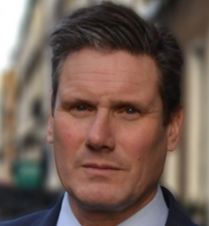
The statement made by Keir Starmer, the Prime Minister, in the House of Commons on 13 April 2026.
With permission, Mr Speaker, I would like to update the House on my visit to the Gulf, the evolving situation in the middle east and the implications for Britain’s security.
Before I do that, I want to put on the record in this House my total determination to make the changes across the entire state that are so clearly necessary to honour the victims, the injured and the families of Southport. Today’s report is harrowing. It is difficult to read and I cannot begin to imagine the pain upon pain that it will cause the families it affects. Our thoughts are with them today. The Home Secretary will respond to the report in full after this statement.
Last week I visited the Gulf and was able to thank in person some of the brave men and women who, from day one of the US-Iran conflict, have resolutely defended the interests of this country, its people and its partners. I thank them again, in this House, for their courage and their service. I am sure the whole House will join me in those thanks.
While in the Gulf, I met leaders and senior military representatives across the region, including the Crown Prince of Saudi Arabia, the President of the United Arab Emirates, the King and Crown Prince of Bahrain, and the Emir and Prime Minister of Qatar. In recent days, I have also spoken to the Sultan of Oman and the Emir of Kuwait. Across all those conversations, I agreed to deepen our engagement on both defence and economic resilience, because they all made it abundantly clear that the solidarity and strength of our partnership with them has been a comfort in these challenging times. We should not forget that the nature of Iran’s response—the indiscriminate attack upon countries that never sought this conflict and the huge damage done across the Gulf to civilian infrastructure, with civilian casualties—is abhorrent. It has clearly shocked the region and all of us.
We must bear that in mind now as we lift our sights to the future, because while the ceasefire between the US, Israel and Iran is undeniably welcome, it is also highly fragile. The region remains on edge and a lot of work is required to reopen the strait of Hormuz and de-escalate the situation, leading to a sustainable ceasefire. In pursuit of that goal, we call for Lebanon to be included, urgently, in the ceasefire. Diplomacy is the right path and I welcome the talks taking place this week. Hezbollah must disarm, but I am equally clear that Israel’s strikes are wrong. They are having devastating humanitarian consequences and pushing Lebanon into a crisis. The bombing should stop now.
We also put on record our thanks to Pakistan and other partners for playing such an important role in diplomatic efforts. We hope the process will continue without further escalation. That applies to the running sore that is the strait of Hormuz, shamefully exploited by Iran. All the leaders I met were crystal clear that freedom of navigation is vital and must be restored—no conditions, no tolls and no tolerance of Iran holding the world’s economy to ransom. The impact of Iran’s behaviour in the strait is causing untold economic damage that is visible on every petrol forecourt in this country.
My guide from the start of this conflict has always been our national interest. That is why we stayed out of the war and why we continue to stay out of the war. It is why we are working now to restore freedom of navigation in the middle east—because that is squarely in our national interest. Clearly, that is not a straightforward task, and it will take time. I have met UK businesses in energy, shipping, insurance and finance, and they are clear that vessels will not be put through the strait until they are confident that it is safe to do so. That is why we are working around the clock on a credible plan to reopen the strait.
I can confirm today that together with President Macron, I will convene a summit of leaders this week to drive forward the international effort we have built in recent weeks, bringing together dozens of countries to ensure freedom of navigation in the strait of Hormuz. The summit will be focused on two things: first, diplomatic efforts to bring pressure to bear for a negotiated end to the conflict and for the strait to be opened; secondly, military planning to provide assurance to shipping as soon as a stable environment can be established. Let me be very clear: this is about safeguarding shipping and supporting freedom of navigation once the conflict ends. Our shared aim is a co-ordinated, independent, multinational plan. This is the moment for clear and calm leadership and, notwithstanding the difficulties, Britain stands ready to play our part.
Let me return to the impact of the conflict on our economy. We all know that the consequences will be significant and that they will last longer than the conflict itself. We continue to monitor the effects. I remind the House that energy bills went down on 1 April and that whatever happens in the middle east, those bills will stay down until July. We are investing more than £50 million to support heating oil customers, and fuel duty is frozen until September—all because of the decisions this Government took at the Budget.
However, there is a wider point. We cannot stand here in this House and pretend that a global shock threatening to hit the living standards of British people is somehow a novel experience; Britain has been buffeted by crises for decades now. From the 2008 financial crash, through austerity, Brexit, covid, the war that still rages in Ukraine and the disastrous premiership of Liz Truss, the response each time has been to try to return to the status quo—a status quo that manifestly failed working people, who saw their living standards flatline and their public services decimated.
This time, Britain’s response must and will be different to reflect the changing world we live in. That starts with our economic security: during this conflict alone, we have capped energy bills, raised the living wage, strengthened workers’ rights and ended the two-child limit, which will lift nearly half a million children out of poverty. Looking forward, it also means a closer economic relationship with our European allies, because Brexit did deep damage to the economy, and the opportunities we now have to strengthen our security and cut the cost of living are simply too big to ignore.
It continues with our energy security. I say once again that oil and gas will be part of our energy mix for decades to come. However, we do not set the global price for oil and gas. Households across the country are fed up with international events beyond their control pushing up their energy bills. I stand with them on that. We will go further and faster on our mission to make Britain energy-independent, because that is the only way we will get off the fossil fuel rollercoaster and take control of our energy bills.
Finally, we must strengthen our defence security. That means boosting our armed forces, as we have, with the biggest sustained investment since the cold war. It means doubling down on the most successful military alliance the world has ever seen, of which this party in government was a founding member: the NATO alliance. It also means strengthening the European element of that alliance, taking control of our continent’s defence more robustly, and deepening our partnerships, as we have done with our deals to build Norwegian frigates on the Clyde and Turkish Typhoons in Lancashire. Not only is that creating thousands of secure jobs and opportunities for our defence industry right across the country, but it is enhancing the way that our armed forces can collaborate with our allies.
As the middle east conflict shows once more, the world in which we live has utterly changed. It is more volatile and insecure than at any period in my lifetime. We must rise to meet it calmly, but with strength. That is exactly what we are doing at home and abroad. We are strengthening our security, taking control of our future and building a Britain that is fair for all. I commend this statement to the House.