Category: Speeches

  • Emma Hardy – 2022 Speech on Access to GP Services

    Emma Hardy – 2022 Speech on Access to GP Services

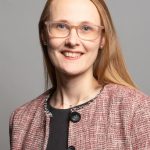
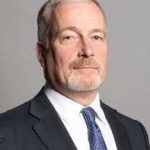
    The speech made by Emma Hardy, the Labour MP for Kingston upon Hull West and Hessle, in the House of Commons on 21 June 2022.

    Before I turn to the main substance of my speech, I want to take advantage of the presence of the Under-Secretary of State for Health and Social Care, the hon. Member for Lewes (Maria Caulfield), who is sitting there waiting to sum up the debate, by raising a few points further to my earlier intervention on the Secretary of State. They concern the Medicines and Healthcare products Regulatory Agency and the mandatory logging of mesh complications, which was a recommendation in the Cumberlege review. It has been more than a year since the most recent review, so I think that the Secretary of State may have been a little confused when, in his response, he referred to what was happening a year later. We have just learnt that the MHRA will continue the yellow card system, and will not be introducing mandatory reporting. I am keen to hear the Minister’s response to that point.

    As joint chair of the all-party parliamentary group on endometriosis, I am also keen to hear from the Minister when we will see the women’s health strategy. Although that is not specific to the debate, it does relate to GP services. I should also like to hear her response to the anecdotal news I have been hearing that more appointments for gynaecological procedures are being cancelled than appointments for any other operations, and that gynaecological elective procedures are the least likely to take place. Again, it seems that there is a real issue surrounding women’s health.

    I hope that the Minister will be able to address those issues of the women’s health strategy, endometriosis and mandatory reporting, but I will now turn to the main substance of my speech on access to GP services. Hull has only 40 GPs per 100,000 patients, which is one of the lowest proportions in the area. I want to draw attention to what two of my constituents have said. One, a gentleman called Rob Grimmer, told me about the birth of his granddaughter Nova. That was wonderful news, but unfortunately the family were unable to contact a GP surgery or get through to 111 when they needed to, and eventually they had to take the baby to A&E for treatment. The good news is that the baby is fine, but I am sure that Members can imagine the trauma involved. I have been a new mum myself, and I know that going to A&E with a new baby must be terrifying and very upsetting. I should like to hear from the Minister why we are seeing so many mums and babies having to go to A&E to obtain support.

    Another constituent, a gentleman called Steven Draper, said that he waited three weeks for his grandson to see a GP. His grandson is only eight years old. What I really want the Government to take on board in this debate is the impact on children, and particularly on children’s education. If a child is repeatedly not feeling well and is unable to gain access to the services that they need, they will miss more school. The Department for Education says that attendance is very important and that it wants children to be back at school—Ofsted and a member of the Social Mobility Commission have also stressed the importance of attendance—but that does not seem to be joined up with children’s problems in accessing dental treatment and GP appointments, which lead to their having time off school.

    I remember that when I was a primary school teacher there was a “brush bus”—I am not sure whether anyone else encountered one of these—which visited the school so that children could learn about the importance of brushing their teeth. There were even giant teeth in the classroom, which the children loved, so that they could see which bits get missed out during brushing. The problem is not just cuts in dental services, but cuts in public health provision, prevention measures and education. Long before the pandemic, we saw public health information services go.

    Having teeth removed when a child is very small has an impact on that child’s education, not just in terms of time off but in terms of speech and language, and it will therefore affect phonics. It has a knock-on effect. I must emphasise to the Minister that we need to get this right. We are failing children when it comes to dental treatment. Indeed, we are failing people from cradle to grave, because we are also failing those at the other end of the spectrum.

    This is another issue of which the Government should have been fully aware. They should have understood that people were ageing before the pandemic and that older people’s requirements are different. A few decades ago, most people in care homes had false teeth, which actually made them easier to look after, especially if they were dementia patients. I raised in Parliament, three or four years ago, the specific issue of dental care for people in care homes, particularly those suffering from dementia, who can find the whole procedure very traumatic while not understanding what is happening to them. This problem has existed for a long time, since way before the pandemic. There should have been plans that recognised that people were ageing, and ageing with their teeth, and would therefore continue to require dental treatment.

    We are reaping what the Government have sown in the net spending cut of 25% between 2010 and 2025. We are reaping what they sowed in the five years before the pandemic, when the number of practices providing NHS dentistry fell by more than 1,200. I have huge sympathy for dentists and GPs in my constituency, and I want to add my thanks for everything that they do.

    I was contacted by a local dentist about how she had been feeling. It was quite an upsetting letter. She had been pregnant and on maternity leave for part of the pandemic, but while she was pregnant she was trying to do her job in the middle of it. She was obviously worrying about her own baby, and she told me that she was having to give up being an NHS dentist because it was just not working out.

    In her letter to me, she says:

    “The Government have only offered £50 million in time limited funding which amounts to £40 a week per dentist. After a decade of savage cuts, it is no more than a sticking plaster of no consequence to the wider issues. I am likely going to go private this year despite enjoying helping high-need patients due to the Government’s poor contract and lack of funding.”

    With respect, it is a bit odd for the Minister to blame the Labour party for not changing the dental contract when the Conservatives have had 12 years to look into it. I hope the Minister will urgently address the issue before more dentists step away from practice. That dentist had 3,200 patients in her practice, which means 3,200 more people now looking for support and help.

    Unlike my hon. Friend the Member for Lancaster and Fleetwood (Cat Smith), I have not had a gentleman present me with his teeth, but I have had some really upsetting cases. A lady, who was pregnant and unable to access any other free NHS dental entitlement, said to me:

    “Being entitled to free NHS dental care when you’re pregnant clearly isn’t an option any more. I think the situation needs to be addressed as I am sure it is not just in my area in Hull.”

    She is absolutely right. Why is it that pregnant women are given free dental treatment? It is because pregnancy is likely to have an impact on teeth, so the lack of access to free treatment is storing up problems in the long run. I have had countless emails from people telling me they have been struck off their dentist’s list due to not attending during a period of illness. Someone else told me that despite the swelling in her mouth causing immense pain, she had been dismissed as a patient and told that there was a six-to-12-month waiting list even if she was accepted again. Another who needs dental treatment and whose dentist had passed away told me:

    “I complained to the ombudsman service. The ombudsman has today telephoned with the news that they are so overwhelmed with complaints that they are only allocating caseworkers to cases where death or serious injury has occurred. Even the ombudsman service cannot cope with the incompetence and failure that we have in the NHS dental service.”

    Another gentleman wrote to me about how he broke his tooth in July 2021 and was still waiting in pain to have it removed in February 2022. The list of people who have contacted me to say they cannot find a dentist goes on and on. We are storing up more problems for the future. Someone else contacted me to say that their one-year old son—aged one, children are meant to have a dental check whether they have teeth or not—is unable to get a dental appointment. If we do not treat people when they are younger, we will create more problems in the future. Mismanagement of our NHS and our public finances, because of a lack of preparation and things not being thought through, means that everything costs more in the long run,

    Our dental services are in crisis. We are facing a collapse that will take years to put right. Waiting lists, delays, cancellations and shortages are the real growth areas in Conservative backlog Britain. My constituents, along with those in the rest of the country, have had enough.

  • Daisy Cooper – 2022 Speech on Access to GP Services

    Daisy Cooper – 2022 Speech on Access to GP Services

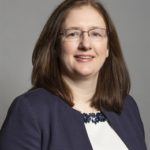
    The speech made by Daisy Cooper, the Liberal Democrat MP for St Albans, in the House of Commons, on 21 June 2022.

    The Conservatives have been running our health and social care system into the ground for years. Covid has made an already bad situation worse, but it was already bad, and my constituents—patients and healthcare professionals—can really feel it. A constituent who is a professional chauffeur needs to provide regular medical assessment certificates to keep his job, but his GP is not doing them right now, so my team have had to work hard to make sure that his employer will not sack him.

    Some of my constituents have managed to see their GPs. One has had a referral for chronic back pain, another for a diagnosis of breast cancer that needs treatment, but having had those appointments they then discovered weeks later that the referral letters were never sent. Another constituent who had a contraceptive implant has had some very severe side effects and wants to have it removed, but she cannot get an appointment. A constituent who contacted her GP to say that she was having suicidal thoughts was asked to fill out a form.

    I was so concerned about these reports that I have been to visit our GP surgeries in St Albans. From the other end of the spectrum, it is incredibly shocking. The very second the phone lines open in a GP surgery, there are flashing lights on its big screen. At one minute past the time that its phone lines open, there are hundreds and hundreds of calls on the electronic board. Many of those phone calls are from very distressed callers who are in pain and very concerned. Many of the people at the counter—the receptionists at the other end of the phone—are receiving verbal abuse, and we know that GPs are receiving abuse in their surgery rooms behind closed doors as well. The BMJ suggests that violent incidents in GP surgeries have doubled in the last five years.

    One of the GP surgeries in my constituency has now employed somebody on a full- time basis to do one job: to chase the local hospitals to send the letters so that the GPs can get the results that their patients need. We have heard Members across the House talk this afternoon about how fantastic it would be if we could use big data and if our constituents could become expert patients and use all the information collected on their phone, but frankly, at the moment, we are starting from a basis where we cannot even get a letter from a hospital to a GP surgery. It feels as though the entire system is creaking at the seams, and that is even before we get to the postcode lottery of the number of patients each GP has, or the length of appointments.

    Members across the House have talked about the planning system and the fact that lots of new homes are often built in areas without the infrastructure to go with them. I wholeheartedly sympathise with the calls for new homes, but it seems crazy in the circumstances that clinical commissioning groups are not even statutory consultees for planning applications, for local plans or even for permitted development. It should be a priority for this Government to change that and make sure that CCGs have the right resources to respond to planning proposals.

    Then we have the problems with dentists. Like many other Members use, I have constituents who have raised these problems. I have mothers with MAT-B certificates who cannot get dental treatment. I have parents whose children are developing gum disease, but they cannot get an appointment with their dentist. I have couples who have moved to St Albans and, because they have moved, cannot get an appointment with the dentist. The list goes on and on.

    I have challenged the Minister before about the Government’s announcement earlier this year that they were going to give £50 million to dentists to create some emergency catch-up appointments. When the Secretary of State was challenged on this earlier this afternoon, he said that that £50 million had resulted in tens of thousands of new appointments. That was news to me. Earlier this year, I submitted a number of written parliamentary questions. I asked the Government how many dental practices had achieved the quarter 3 targets to make them eligible for this £50 million. The answer was that the Government did not hold that information centrally. I asked the Government how many expressions of interest had been received by the deadline of 3 January. The answer was that the Government did not hold that information centrally. I then asked the Government how many of those who had offered to carry out this urgent dental practice had been accepted. Again, the Government said that they did not hold that information centrally. So what has happened to that £50 million? How much of it has been drawn down?

    Maria Caulfield

    The hon. Lady will know, because she raised this in oral questions, that dentists return that data in quarters. We will have that data from the dental community by the end of June, and we will then be able to answer her questions. She knows that; she is making a political point here.

    Daisy Cooper

    I am genuinely incredibly grateful for that answer, because when I challenged the Minister on this last week I did not receive that answer. I am grateful to receive that response. I submitted a letter to the Minister—I think it was in April—and attempted to come to some drop-in events that were cancelled, so I am pleased to hear that that data will be provided by the end of June. However, my constituents in St Albans have seen absolutely zero appointments created from that money. Every dental practice has said that because of the way the funds have been set up, it has been impossible for them to apply for them. A number of other Members have raised that point.

    The truth is that the Government have failed to recruit the GPs that we need. We have a retirement time bomb among our general practitioners, and we know that dentists are leaving NHS work as well. We need to see a serious plan from the Government so that everybody who needs to see a GP or a dentist can actually see one.

  • Caroline Johnson – 2022 Speech on Access to GP Services

    Caroline Johnson – 2022 Speech on Access to GP Services

    The speech made by Caroline Johnson, the Conservative MP for Sleaford and North Hykeham, in the House of Commons on 21 June 2022.

    I draw the House’s attention to my declaration in the Register of Members’ Financial Interests. The debate is about GPs and dentists, and I will deal first with GPs. I pay tribute to the GPs who work in my constituency, and in particular those at the New Springwells practice and at Caythorpe and Ancaster medical practice, which have outstanding CQC ratings. I also pay tribute to the GPs who delivered the vaccine service. Not only did they work during covid with its challenges, but they delivered a vaccine service as well. They are a very hard-working, admirable group of people.

    I agree with the Opposition that much of the overall problem with the NHS is a workforce problem. That is true. There are too many staff overall, and not enough of them are directly delivering or improving clinical care. We have expensive, very highly trained clinical decision makers being asked to do admin tasks that take them away from the clinical tasks that we are paying them for and which we need them to do. That contributes to our longer waiting times. So we need to increase the number of doctors.

    The Opposition are making a big point about 12 years, but it takes 10 years to train a GP, and it takes longer than that to train a consultant. So, actually, the shortage was created during Labour’s time in government and we are trying to fix it. That is indeed why the number of medical schools has been increased by five. I am pleased that one of them is in Lincoln, just outside my constituency. It is training a new generation of doctors who will provide services locally—people predominantly stay where they train—which will help the people of Lincolnshire to have more access to doctors. However, the Government should go further. In the year when we had challenges with A-levels caused by covid and more people than expected got the grades required to get into medical school, places were exceptionally increased. There are challenges with that—only so many people can get around a bedside and a patient will be happy to have only so many people listen to their heart or feel a lump or bump or suchlike—but, nevertheless, it has been managed for one year, and I think that it could be managed for more. The best thing that the Government could do for the health service in that regard would be to massively increase the number of doctor places. At the moment, we are turning away keen, enthusiastic potential young doctors doing their A-levels because places are so oversubscribed, but then we find that we have a shortage. That surely cannot be right.

    I turn to ease of access. The Secretary of State mentioned making it easier for people to be referred into secondary care, which of course is a good thing, but we need to ensure that training is in place for that. Since I became a consultant, we have seen the number of patients referred into secondary care increase rather rapidly—certainly in the department that I work in—but the quality of referrals has not always been right, and undoing an unnecessary referral can be more time-consuming than just seeing the patient. We need to be mindful of the need to have clinical decision makers doing what they need to do and, as such, if we are to broaden the scope of people making referrals, we need to ensure that either referrals are done with specific guidance or that training is provided so they are good-quality referrals, and not those that add to waiting lists.

    On dentistry, we have heard much talk about children having whole-mouth teeth extractions. Clearly, that is a horrific thing to happen—it is unimaginable, really, that a child needs to come into hospital to have all their teeth removed. I look to the Minister to tell us what she doing about that, because it is not, as some have suggested, all the Government’s or the NHS’s problem. In part, it must be about diet, teeth brushing and dental care—whether the teeth are being properly looked after—as well as potentially fluoride enhancement of water and the availability of dentists. Several stages need to be looked at in a more holistic way to prevent these children from having to go through such an awful experience.

    In Lincolnshire, NHS dental care is good, but the service’s availability is relatively poor. In the last two years, only 41% of adults in Lincolnshire have seen an NHS dentist, and less than a third of children saw an NHS dentist in the last year. The Minister will be aware that I had an Adjournment debate on the topic in October. I thank her for her engagement with me since and for her support in identifying potential solutions, as well as local dentists, the local dental committee, Professor Juster from the University of Lincoln and Health Education England for their time. They are just some of the people I have met to discuss Lincolnshire’s dental issues and how we can improve care.

    The first thing to be solved is, of course, the dental contract. The contract was created by Labour in 2006, but I agree that we have had time and should probably have sorted it out by now. I raised that with the previous Secretary of State when I was on the Health and Social Care Committee in the previous Parliament. The contract pays for units of dental activity. There are three levels covering wide ranges of levels of care. Why Labour signed off on a contract that created such variability in both the value of a UDA and the amount of work required to be paid for one, I do not know, but it is human nature for someone to expect to be paid more if they have done more work, and that someone given the option of earning more for doing the same work will choose to do so. There, fundamentally, are the problems we have with the NHS contract. I look forward to hearing what the Minister is doing on that. I understand that she is in negotiations with dentists at the moment. I hope that she will be able to update the House on progress and that it will be good progress.

    The second issue is geography. We know that our medical students predominantly stay where they train, and there is no dental school in the east midlands or in East Anglia. I am grateful to Health Education England and Ministers for discussions about solutions to this following my question at Prime Minister’s questions. There are a number of ways of resolving it. In the longer term, a dental school at Lincoln University would be a good way of ensuring that we have locally grown, locally trained dentists. The university is very supportive of that in the discussions, and indeed we have the support of all Greater Lincolnshire Members of Parliament for ensuring that this goes ahead.

    I appreciate that it will take time to plan and deliver that, so in the meantime we need more dentists locally. The Minister and I have recently been talking about centres of dental development. The principle of a centre of dental development, which I would like to see in Sleaford, is that postgraduate training is delivered. It is attractive work for the sake of recruitment. People want to work at a centre because they get to deliver training and it is a more attractively remunerated job, but also, the postgraduate people being trained are immediately delivering care. Such a facility could be up and running within 18 months to two years and actively delivering care to my constituents, which is what I am looking for. I am particularly keen to see a centre located in Sleaford, because we have relatively few NHS dentists. We have great local schools, we have a fabulous community and we have great rail links, both north-south and east-west. What progress is the Minister making on these proposals?

    Does the Minister have any update on what progress is being made on support for military families? I have a number of RAF bases, including RAF Cranwell, in my constituency. People who have moved around from place to place find that they have dropped off the list in one area and are struggling to get on to one in another. We have a covenant that says that we will ensure that people who are serving in our armed forces, and their families, are not disadvantaged, but clearly in this regard they are. I would be grateful for those updates from the Minister.

  • Taiwo Owatemi – 2022 Speech on Access to GP Services

    Taiwo Owatemi – 2022 Speech on Access to GP Services

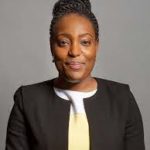
    The speech made by Taiwo Owatemi, the Labour MP for Coventry North West, in the House of Commons on 21 June 2022.

    It goes without saying that GP surgeries play an essential role in our communities and in our NHS. They are often the first port of call for anyone in need of medical help, and it is the hard work of GPs that ensures we can all obtain advice, medicine and referral to other services. However, like much of the NHS, GP surgeries are overstretched, under-resourced and understaffed, due to more than a decade of Tory mismanagement.

    Frustratingly, my constituents in Coventry North West are suffering the consequences of that. Constituents contact me every week, telling me about the difficulties they face in trying to access their GP. Like so many of the GP surgeries discussed today, surgeries in my constituency are made up of dedicated health and administrative staff who have been stretched often to breaking point and simply do not have the capacity, resources or staff they need to serve their patients.

    I will focus on one example—a constituent who reached out to me about their 2-year-old daughter. Their daughter is non-verbal, has recently been having nosebleeds and is exhibiting symptoms of head trauma. Each day, my constituent wakes up and joins a queue to try to access a GP appointment. Even though they are often on the phone for hours, they are still not able to book an appointment. In fact, they have not been able to speak to anybody at all at the surgery. My constituent is understandably concerned for their child’s health and, like many others, is desperate to see their GP.

    The difficulties facing our GP services are having a knock-on impact on the rest of the NHS. Patients unable to see their GP are more likely to request an ambulance or visit A&E. In the west midlands, we have seen ambulance waiting times skyrocket to more than 8 hours for some people. Another constituent raised a case where the patient had to wait more than two hours for an ambulance to arrive, even though they were experiencing a heart attack. If the Government do not get to grips with the scale of this problem, the entire NHS will have to pay the price.

    Before being elected as the Member of Parliament, I worked in the NHS as a full-time cancer pharmacist, and I still regularly volunteer as a pharmacist at my local hospital, Coventry University Hospital in Warwickshire. That has provided me with first-hand experience of the dedication and hard work of everyone who works in our fantastic NHS.

    It is important that the Government finally deliver a plan that lives up to the dedication of NHS staff, providing GPs and others with the resources they need to do their job. That is what our GPs deserve and it is what my constituents in Coventry are desperately asking for.

  • Jack Brereton – 2022 Speech on Access to GP Services

    Jack Brereton – 2022 Speech on Access to GP Services

    The speech made by Jack Brereton, the Conservative MP for Stoke on Trent South, in the House of Commons on 21 June 2022.

    NHS and care services have been under significant pressure over the last few years, due to the pandemic and now in restoring services as we open up. That includes dentist and GP services. I thank all of our NHS and care workers for all that they do and, especially, for all that they did during the pandemic.

    Many of my constituents have contacted me because they are struggling to get GP appointments or to register for a place at an NHS dentist locally. I have been supporting many of my constituents to get access to GP services and to get into NHS dentists locally. That is something that we must address. The Government are prioritising £36 billion of additional investment to help to improve our health and social care services, which is very welcome. Primary care must be a key part of that investment and the improvements we need to see. I hope that, particularly with the reforms we are making in the NHS and the development of integrated care systems, we will see far more joined-up local healthcare that focuses on providing the seamless services patients need.

    We also need to improve some of the quality issues. In some surgeries in Stoke-on-Trent we see very good quality of care, but the picture is far from uniform. We must also see the CQC taking a greater interest in issues of quality, such as whether someone can actually get an appointment, and not just the issues of safety that it focuses on at the moment.

    Bringing decision making to a more local level for primary care will also ensure we can provide more joined-up and coherent health care services in our communities. For far too long, patients have struggled to access the healthcare they need, and both GP and dentist services have buckled under the strain of ever growing demand. Many GPs in Stoke-on-Trent have often raised with me the increasing challenges they face with greater demand for services and the increasing complexity of physical, mental health and wider social issues patients are presenting with. We need to fix the pressures we see in the system to create a healthcare system that shifts the balance far more towards prevention and earlier intervention. Whether it is physical or mental health, the more we can take action sooner, the better the outcome for the patient and the less likely more intensive and costly healthcare will be needed in the future. To achieve that, we must see the NHS collaborating far more with wider healthcare partners, including pharmacies, local charities and others who have much to give in terms of preventive healthcare, especially for mental health. We very much need that support so that those GP and dentist services can improve.

    I also support the work being done through primary care networks, which is bringing together key health professionals—not just GPs—to support GP services and patients. In North Staffordshire, we need to see the development of the four proposed integrated care hubs, especially in Longton, with the development of the next phase of the new Longton health centre. My hon. Friend the Member for North East Bedfordshire (Richard Fuller) made a point about the problems and processes in developing new buildings and new NHS assets. We have seen significant challenges in doing that, and it feels as though we have been talking about the issues for years. We have had consultation after consultation, but we seem no further forward. We have talked long enough about wanting to deliver those improvements, and we need to now get on and deliver them. They will bring all the local community NHS services together on one site, providing far greater healthcare services at the centre of the community and more walk-in services. I hope the Longton site might also include one of the new community diagnostic hubs—it is important that we deliver those across the country.

    Those improvements to local community healthcare services will have the significant benefit of helping to ease the pressures on the Royal Stoke University Hospital as well as on local primary care services. This is not just about more money; given the record increases in the amount we are putting into the NHS and social care, it is vital that we continue to focus on the health and care workforce—something that comes up regularly when I talk to many of the healthcare professionals in the trust that runs the healthcare services in Stoke-on-Trent and Staffordshire.

    Obviously, we cannot train new doctors and nurses overnight; it can take five years or more to do that. However, we are making good progress, with 4,300 more doctors and over 11,800 more nurses than this time last year. We also have 72,000 new nurses in training. We must build on that.

    We must build and deliver the improved health and community health services that our communities need, and continue to attract more people to work in our health and social care system, creating more and more integrated healthcare services and supporting GP and dentistry services to meet the future health needs of our constituents.

  • Stephen Morgan – 2022 Speech on Access to GP Services

    Stephen Morgan – 2022 Speech on Access to GP Services

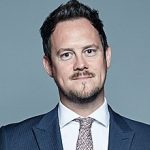
    The speech made by Stephen Morgan, the Labour MP for Portsmouth South, in the House of Commons on 21 June 2022.

    I am grateful for the opportunity to raise the issues affecting my constituents in this important debate. Sadly, those issues are now becoming frustratingly commonplace for far too many people in Portsmouth, as record numbers of people are waiting for care, and waiting longer than ever before.

    According to research by the Nuffield Trust, published in The Times last month, the figures are stark. Portsmouth is the worst affected area in the country, with just 40 GPs per 100,000 people. Meanwhile, one of the key GP practices in my city, the Guildhall Walk Healthcare Centre, closed in September last year, impacting more than 8,000 patients, many of whom are my constituents. Another GP service at the John Pounds Centre in Portsea also remains closed. I have raised concerns with local decision-makers about this, but it is clear that Government intervention is urgently needed to deliver the GP services that my constituents need and deserve.

    It is a similar story with dentistry. A recent report from the Association of Dental Groups found that Portsmouth, at 42, has the seventh lowest number of NHS dentists per 100,000 in the country. Local Tory Ministers have claimed that the additional £6.8 million of piecemeal funding for dentistry in the region will help, but during the local dentistry forum that I convened with practitioners and representatives of the British Dental Association, they made it clear that it does not even begin to meet the scale of the challenge. They also underlined that there should be changes to rules and regulations on recruitment and retention to tackle this problem, as we have seen with NHS GPs.

    I would welcome confirmation in the Minister’s response to the concerns raised by my constituents during my various lobbying efforts that reforming the NHS dental contract is under way, and that the BDA will be involved in its development. However, this cannot just be tinkering around the edges. My constituents need real action, and they need it, now.

    In a survey that I conducted to hear the views of Portsmouth people, one respondent told me:

    “I’ve had the same dental practice since I was born and now I don’t have a dentist at all because he went completely private due to Government contracts. I’m on universal credit and I can’t afford to pay private. My daughter is almost two years old and has never seen a dentist. It’s just shocking.”

    Another said:

    “My children and I travel to Watford every six months for our dental check-ups. There is no option to register with an NHS dentist in Portsmouth. I just hope none of us ever need emergency treatment.”

    Possibly one of the most shocking examples of how bad things have got is that one Portsmouth resident had to resort to pulling out two of his teeth with pliers, after struggling to find an NHS dentist. In 2022, in one of the richest countries on the planet, no one should be forced to take such action because NHS services are hanging by a thread.” Portsmouth is now not just a dental care desert: it is a healthcare hell. It is time for the Minister to take her head out of the sand, listen to the people of Portsmouth, intervene to clear the backlog, develop a workforce strategy and finally deliver the NHS services my constituents expect and now desperately need.

  • David Johnston – 2022 Speech on Access to GP Services

    David Johnston – 2022 Speech on Access to GP Services

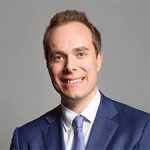
    The speech made by David Johnston, the Conservative MP for Wantage, in the House of Commons on 21 June 2022.

    All the GP surgeries in my constituency have worked incredibly hard throughout this period. I saw some of that up close when I was volunteering with the vaccination effort in the weeks that I could. The entire period has been a complete whirlwind for them, and they went straight back into there being a huge demand for appointments. I commend them for what they did during covid and what they are doing now.

    The job of an MP is to not just champion but challenge. As every other Member of the House has, I have heard complaints about the difficulty of getting GP appointments, which I need to raise with surgeries. Those complaints are about getting an appointment at all, getting a face-to-face appointment, getting through on the phone, or—more for dentists than GPs—being able to register.

    We know that the covid pandemic is a huge part of that problem, because we asked the public to stay at home and protect the NHS, which they did almost to a fault. I remember Ministers at the Dispatch Box, as the pandemic went on, pleading with people to come forward if they thought they had something. Understandably, however, people did not want to burden their GP or hospital. They are now rightly coming forward, and they may have had hospital treatments delayed again because of the backlog, so they are going to their doctor instead.

    Sometimes, my constituents are unhappy about not getting face-to-face appointments; they dislike eConsult and telephone appointments. I have used eConsult successfully, and I think it and telephone consultations have a place, but as a GP at one of my surgeries said, the risk with both of those is that GPs do not see the thing that the patient has not come in about. A patient may come in about their leg, and while they are there, the GP says, “Can I just have a look at the thing on your neck?”.

    Emma Hardy

    I completely agree with the hon. Gentleman’s point about GPs not being able to identify the issues that people have not come in for. Another thing that doctors can notice at face-to-face appointments is that someone is a victim of domestic abuse or violence.

    David Johnston

    I completely agree; the hon. Lady has made an important point. Sometimes, what people present with is not the biggest issue in their lives, and a skilled practitioner can uncover that.

    As has been touched on, the issue is partly about telephone systems, bizarrely, as I will come on to, but it is also undoubtedly about a shortage of GPs. The Government have a grip on that: we have 1,500 more GPs now than in March 2019; 4,000 more trainees have taken up training places this year compared with 2014; and we have a health and social care levy which, as has been touched on, the Labour party opposes but which provides £12 billion a year to the health and care system, so there is more money to improve telephone systems and face-to-face appointments. Looking at the data this morning, we had 2 million more face-to-face appointments in April this year than in April last year, but we are still below pre-pandemic levels.

    The complaints I get about dentistry are more about not being able to register anywhere. There is a particular issue with the promise that we make to pregnant women about being able to see a dentist, because even they cannot get registered. I met the Minister about that recently. The issue there is less about a shortage, as it is with GPs, and partly about the contract; there seems to be cross-party agreement that the 2006 Labour contract needs to be changed. I am also pleased that the Government will allow more internationally qualified dentists to support the dental system here.

    There are two things that we need to get better at. One of them was touched on by my hon. Friend the Member for North East Bedfordshire (Richard Fuller). My constituency has also seen a huge growth in housing—we have two housing developments in Didcot alone, which will house 18,000 people—and the promised GP surgeries for these increased populations never arrive. As my hon. Friend said, we must get better at putting in the infrastructure first and at planning for the increased populations.

    I shall finish on the second thing. Some Members may know that I worked in social mobility before I became an MP, running charities for disadvantaged young people. Unfortunately, the medical profession is the most socially exclusive profession in the country. Only 6% of doctors are from a working class background. A person is 24 times more likely to become a doctor if they have a parent who is a doctor. That is worse than politics, worse than the media, worse than the law, and worse than any other profession that we can think of. There are many reasons for that. It is about the allocation of work experience, how the recruitment process works, and the fact that 80% of applications to medical school come from 20% of schools. There is a whole range of things.

    The young people with whom I worked were eligible for free school meals. A very high proportion were from ethnic minorities. Medicine was the profession that they most wanted to get into. It was the most popular profession. On the one hand, we have a shortage of GPs, and, on the other, we have this incredible talent pool that finds that it cannot get into the profession.

    One thing the Government might consider, as well as how we get the infrastructure in first, is how we make what is a hugely popular profession more accessible for certain groups of young people with whom I used to work, because, at the moment, they simply do not get into it in the numbers that they should, and, if they did, they might help with this GP shortage.

  • Cat Smith – 2022 Speech on Access to GP Services

    Cat Smith – 2022 Speech on Access to GP Services

    The speech made by Cat Smith, the Labour MP for Lancaster and Fleetwood, in the House of Commons on 21 June 2022.

    It is a pleasure to follow the hon. Member for North East Bedfordshire (Richard Fuller). His points on planning resonated with me as a Lancashire MP. Where we see large expansions of housing that do not go hand in glove with expansions in GP practices, school places and public transport networks, it is hard to get buy-in from the current population in those areas for that expansion, with patients already struggling to get GP appointments.

    When I was collecting my thoughts for this debate, I was worried that I might fall into the trap of talking about the huge number of constituents who get in touch with me daily about their frustrations with GPs and dentists, so I will begin by paying tribute to the GPs and dentists who work in my Lancaster and Fleetwood constituency. Having worked very closely with them for seven years, it is clear they are working to the best of their ability in a system that is, frankly, broken.

    I will single out one GP in particular. It is always risky to start naming GPs because there will be someone I miss, but I pay tribute to Dr Mark Spencer. When he recognised the health inequalities, the differences in life expectancy and the increased number of cancers and other conditions among his patients in Fleetwood compared with patients in the rest of the borough of Wyre, he started an initiative called Healthier Fleetwood, which has the buy-in of our town, to promote healthier living and exercise. It is for that work that Healthier Fleetwood was awarded the Queen’s Award for Voluntary Service last month. I congratulate all the volunteers at Healthier Fleetwood and Dr Mark Spencer on having the initiative and foresight to do that. He established it because of those health inequalities, which are exacerbated when access to primary care is made difficult. The reality is that record numbers of people are waiting for care and waiting longer than ever before. When we say that people are waiting longer for care, it is important to remember that people are waiting in pain and in discomfort, and with conditions that become more severe and more difficult to treat.

    Frankly, Tory mismanagement has left England with 4,500 fewer GPs than we had a decade ago. That is in stark contrast to what was promised in the 2019 Tory manifesto, which talked about 6,000 more GPs. Instead, we have 4,500 fewer. It is no wonder that patients are getting frustrated. Many of my constituents at the Lancaster end of my constituency started a Facebook group when they became frustrated with the telephone system of one medical practice in Lancaster. A lot of such issues are down to the fact that there is just not enough capacity to meet demand in that part of my constituency. My constituency feels like two stories. I get far more complaints and grumbles from the Lancaster end of my constituency about struggling to access GP appointments than I do at the Fleetwood end, and that is reflected in the number of GPs recruited.

    When patients cannot access GP appointments, they are directed to urgent care or accident and emergency. That is financially illiterate. The cost of a GP appointment is roughly £39. If we direct someone to an urgent care centre, it is £77. If they end up at A&E, it is £359. By not funding and supporting primary care, and by not recruiting and retaining the GPs we need, it is costing the NHS more to deliver healthcare and making it more frustrating for my constituents.

    Turning to dentistry, I spoke last week to a nursery teacher in my constituency who teaches a class of three and four-year-olds. They had been learning about dental hygiene and they were given a little toothbrush and toothpaste. She talked about their experiences of going to the dentist. She told me that hardly any of those three and four-year-olds had been to a dentist. That concerns me deeply, but it ties in with what I am getting in my mailbag as a constituency MP: constituents are struggling to get NHS dentists for their children. Adults, too, are struggling to get NHS dentists. One of the most obvious ways people fall out of having an NHS dentist is when they move house. I have many people who moved to live in my constituency from other parts of the country and tried to find an NHS dentist. Years and years later, they are still left waiting. I have examples of parents of school-age children who are still on NHS waiting lists to see an NHS dentist.

    One of the most difficult advice surgery appointments I have ever had to sit through was when a constituent put on the table in front of me the teeth he had pulled out of his own mouth. That will, frankly, stay with me forever, but it should never have got to that point. As a result of that case, I have raised the issue of access to NHS dentistry many times in this Chamber, including at Prime Minister’s questions. Last year, 2,000 dentists quit the NHS.

    The number of nought to 10-year-olds admitted to hospital for tooth extractions is going up. I looked up the statistics for my own area. There were 30 children in Lancaster and 40 children in Wyre under the age of 11 who had been admitted to hospital for tooth extractions. Of those children, 30 were five years old or younger. I have to say that we are getting something dreadfully wrong when it comes to NHS dentistry and access to NHS dentistry. If we do not get it right for children and babies, we are storing up a lifetime of health issues that will become more and more expensive to deal with and have a knock-on effect on wider health.

    To wrap up, the Culture Secretary recently admitted that a decade of Conservative mismanagement had left our NHS “wanting and inadequate” before covid hit. It seems that the Conservatives are now breaking their promise to hire the GPs we need and they are overseeing an exodus of NHS dentists. Those who cannot afford to go private are resorting to DIY dentistry or are being left in pain. Frankly, the longer we give the Conservatives in office, the longer our constituents will wait in pain.

  • Richard Fuller – 2022 Speech on Access to GP Services

    Richard Fuller – 2022 Speech on Access to GP Services

    The speech made by Richard Fuller, the Conservative MP for North East Bedfordshire, in the House of Commons on 21 June 2022.

    It is a pleasure to follow the hon. Member for Liverpool, Wavertree (Paula Barker). My observations are based on having, in the past six months, spoken and spent mornings with the people at about 11 of the 13 GP networks in my constituency and on some of their observations, which I have shared with the Minister previously.

    Part of the issue in my area is that the population has grown so significantly. Since 2000, the number of patients per GP has gone up by about 40% in the constituency, which puts on significant pressure, which GPs are responding to, primarily by recruiting other direct care professionals, such as paramedics and various qualified nurses. That has a role in providing support to deal with the problems, but it has not overcome them. Significant efforts are being made to enable my constituents to contact their GP. One interesting issue in those observations was that the practice’s choice of phone system had a significant effect. Practices that chose system A—I will call it that, as I do not want to say a bad word about a particular practice or phone system—would find that the response for the customers, the patients, was terrible. In effect, when 10 people were waiting, the 11th caller got a signal that the number was no longer obtainable. So they would then go to the practice. This was just after covid, so they would go to the practice, try to get in and there would be a big sign on the door saying, “No entry”. These very easy-to-understand problems cannot be solved by the Government but they have a direct impact on people’s experience of primary care.

    However, there are aspects that can be affected by the Government. One of the biggest concerns in my area has been the level and pace of housing development and the absence of an infrastructure-first policy. Can the Minister update the House on her conversations with the Department for Levelling Up, Housing and Communities about implementing infrastructure-first? It means that, before a large housing development can take place, the GP services and the school places need to be there. We should not have people moving into their new houses on some of these estates and then finding that there are no GP places, school places and dentists. This was a manifesto commitment of my party and we should be putting it into law.

    The comments by the hon. Member for Sheffield Central (Paul Blomfield) about dental contracts also go for GP contracts. There seems to confusion in the NHS—the Minister is clear that this is not really a Government responsibility—about whether there is value to the partner model among GPs, or whether we should be moving to a salary model and saying, essentially, that we are not going to pay extra for partners. This is an area where the Government need to set some direction of travel. It is an important direction to set for the NHS. I have my views, but I would be interested to hear whether the Minister believes that is something she can do.

    Something that has been on my mind this week particularly has been the sclerotic process in NHS Estates and in other groups for getting primary care facilities built. The BBC’s “Look East” yesterday carried a story about the new primary care facility being built in Biddenham in my constituency. Eight years since it was first planned, we are hoping—fingers crossed, Madam Deputy Speaker—that that building will be commenced. That is because a lot of people had an interest. The GPs, the CCG, NHS Estates, the local authority, the housing developer and the developer of the facility all had an interest, but who was making the decision? The NHS needs to recognise that in the provision of services it has to be clear on who is saying yes, when, where and how.

    I am grateful to the Minister for saying she will conduct a review of the impact, had infrastructure-first been in place. In my constituency, there is a cramped surgery in Great Barford that could move to a perfectly good, agreeable building opposite that would provide better facilities. Arlesey has had a significant increase in population. I visited its GP practice just two weeks ago. There is no air conditioning, and the doors mean someone could walk in on a GP during their session with a patient. The facility needs upgrading, so we need a decision. I am told that my local authority, Central Bedfordshire Council, has the money ready to convert a site in Biggleswade to primary care, yet the NHS decision process is not making that happen. These planning processes need urgent attention from the Government if change is to be made.

    We have talked about the diversity of primary care roles, which is one of the Government’s positives, as they have said they will increase the number of roles such as emergency care nurses and other types of nurses and paramedics. We saw the Government’s “Data saves lives” paper this week, on how the better use of data can assist in providing solutions. I take the shadow Secretary of State’s criticism of the NHS app. I was going to say it is 19th century, but it is certainly 20th century in its user-friendliness. What is the plan not only to harness data but to make it accessible and to put power in the hands of the patient?

    People can do things with their health information, such as tracking how many steps they take each day. Diabetics can track information on testing. This is a world of improvement that empowers individuals in primary care. The first port of call in primary care provision is each of us managing our own healthcare. What better way to do that than following examples from the rest of the world through NHS applications?

    Will the Minister update the House on the use of artificial intelligence and big data, particularly when it comes to pre-emptive screening? The Government are making a welcome investment in screening centres, but how are we harnessing all this medical data to the task of improving healthcare at a preventive level, rather than later in the day?

    My hon. Friend the Member for Winchester (Steve Brine) has left, but he is absolutely right that the Government are on the right course in opening up more points of presence for primary care by bringing in pharmacies and screening centres, so that each of us can choose where we want to go to get some of the services we want. It is important that legislation and regulation follow as permissive an approach as possible. Let us focus regulations on the patient and patient choice, not on the provider and provider restrictions.

  • Paula Barker – 2022 Speech on Access to GP Services

    Paula Barker – 2022 Speech on Access to GP Services

    The speech made by Paula Barker, the Labour MP for Liverpool Wavertree, in the House of Commons on 21 June 2022.

    I put on record that my husband is a senior manager in the NHS.

    Dr Claire Fuller was commissioned by the Government to lead a national review of primary care. In her introduction to that review, she says that

    “there are real signs of…discontent with”

    general practice,

    “both from the public who use it and the professionals who work within it.”

    Every day, more than 1 million people benefit from primary care professionals and, by Dr Fuller’s own admission, primary care teams are over-stretched “beyond capacity”. Sadly, we have not heard anything today from the Secretary of State to address that issue.

    GPs have been working in local communities for over 100 years. The concept has not changed: GPs are still based in their local community, with the only difference being that the buildings they work in are much more modern. GPs have now moved to a triage system, creating the perception that it is difficult to get a face-to-face appointment, and for some of my constituents that perception is reality. Bookable appointments have now moved to a longer lead-in time, from three to four weeks in advance to seven to nine weeks in advance. Nationally, there were half a million more appointments in January this year than in January 2020, but the number of GPs is roughly the same, despite the Government’s promise in February 2020 that they would recruit 6,000 more GPs by 2024. More than two years down the line, we are simply no further on.

    People are frustrated and angry that they are being contacted by GP surgeries to book in for a health check, yet cannot get to see their GP when they feel unwell. While it is undoubtedly important for GPs to carry out health checks, which can enable interventions, that cannot be at the expense of routine appointments. Those health checks are on an enhanced service contract, meaning that the GP is paid for every patient who takes them up. That is in addition to their normal contractual obligations, so it is no wonder that patients are frustrated. At the NHS Confederation last week—the gathering of more than 5,000 senior NHS managers and staff—which the Secretary of State said he attended, the single biggest area of concern was workforce.

    We must ask ourselves why the guidance from NHS England predominantly concentrates on emergency care, rather than urgent care. It talks about how many people are waiting in accident and emergency, how many ambulances are delayed, and how many people cannot be discharged on time. Those are all important subjects, but that emphasis diverts people’s attention from the important point that the part of the NHS that deals with 90% of patient needs, GPs, only receives the crumbs off the table: 9% of the budget. It is time for the Government to deliver on their promises to recruit more GPs. The biggest threat to the NHS is crippling workforce shortages. If those shortages are not resolved, the Government will eventually start saying, “The NHS is failing.” That will, in turn, lead to the hedge funders coming in and taking over.

    Our NHS staff are underpaid, undervalued and under-resourced, and are then blamed by this Government—this Government who have been in power for 12 years. Meanwhile, patients are struggling to get GP appointments and, often, when they call 111, they are advised to present themselves at A&E. This Government are hellbent on turning the NHS into the national hospital service, rather than the national health service. The model of primary care must change, and change for the better, to enable our constituents to access GP services in a timely and appropriate manner. Quite frankly, nothing less is good enough.