
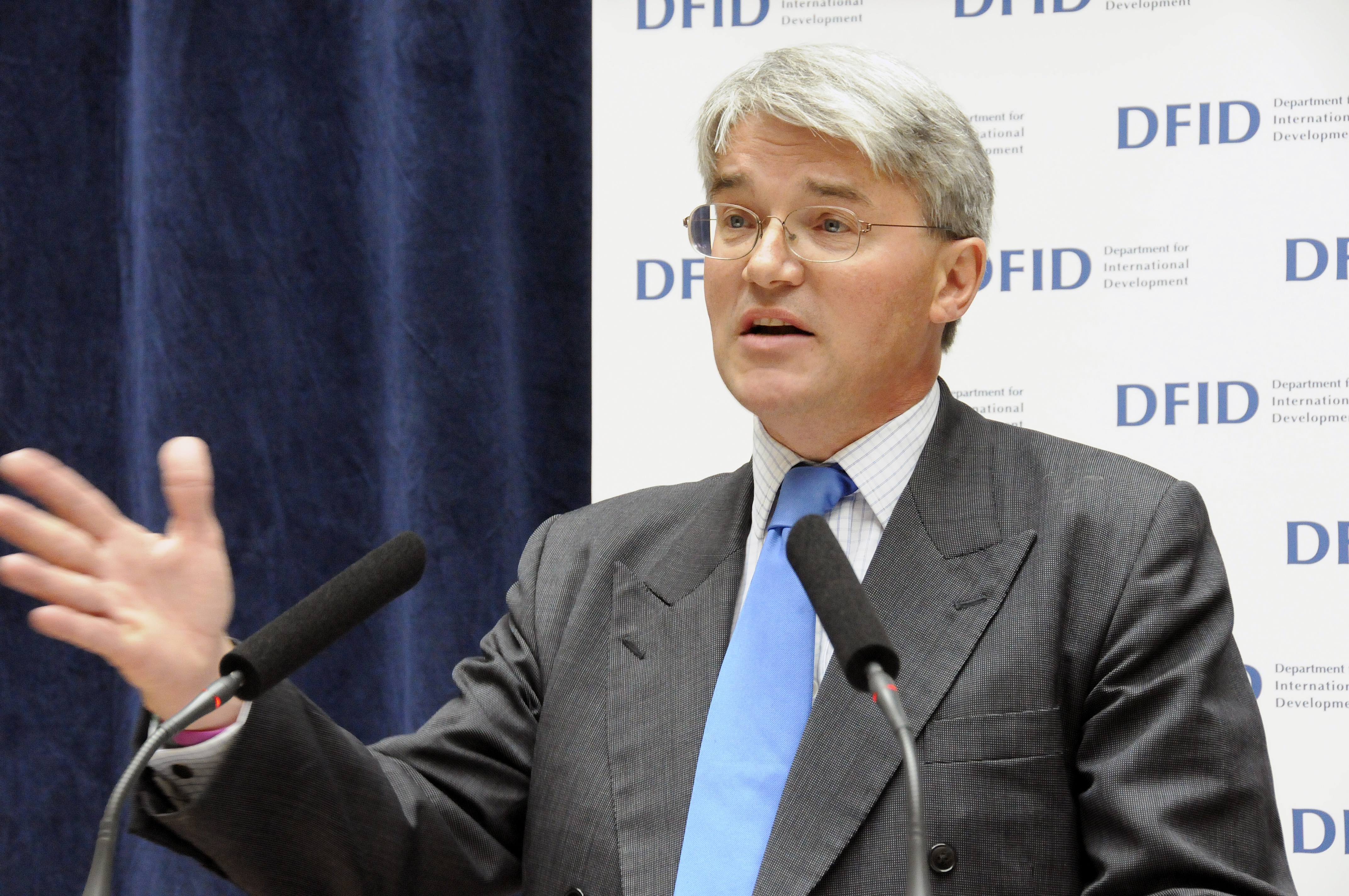
The speech made by Sir Andrew Mitchell, the Conservative MP for Sutton Coldfield, in the House of Commons on 13 May 2026.
Thank you, Madam Deputy Speaker, for giving me a chance to contribute to this King’s Speech debate at such an early point. It is a pleasure to follow the hon. Member for Harrow West (Gareth Thomas), and I want to express strong support for what he said about the determination of the Government and of the whole of Parliament to crack down on antisemitism. I hope that he will have carried everyone in this House in the words he used.
It is also a great pleasure to congratulate the hon. Members for Bradford West (Naz Shah) and for Harlow (Chris Vince) on their brilliant speeches, which entertained and amused the House. The hon. Member for Harrow West said that it was an honour to be in the same party as both of them, but I think all of us can say that it is an honour to be in the same Parliament as both of them, and they certainly did very well. I have to admit that it is now 34 years since, in 1992, I had the privilege of seconding the Queen’s Speech from the Government Benches. On that occasion, I referred to myself as an
“oily young man on the make”—[Official Report, 6 May 1992; Vol. 207, c. 56.]
Those were the days!
There are three points I wish to contribute briefly to the debate, all of which came off the doorsteps in the royal town of Sutton Coldfield during the recent elections, when I was listening carefully to my constituents—elections, incidentally, which were extremely successful for the Conservatives in the royal town of Sutton Coldfield, where we hold now all 10 seats on Birmingham city council, having got rid of the last vestiges of the Labour party in the royal town.
That clean sweep in the royal town of Sutton Coldfield was not echoed across the city of Birmingham, where six significant parties are now represented on the council, making governance even more difficult than it was before. I urge those on the Treasury Bench, in particular the Secretaries of State for Environment, Food and Rural Affairs and for Housing, Communities and Local Government, to be on red alert about what happens now in the city of Birmingham. They are, I think, going to need to give the commissioners far greater powers. Vulnerable people, old and young, depend on Birmingham city council turning a page and becoming a more effective giver of good local governance. The words of the Conservative leader of the Conservative group on Birmingham city council, Robert Alden, are important. He said that the group would try to
“work with people across the political spectrum”
to deliver these priorities.
Birmingham has languished under a profoundly inadequate Labour administration, which even the Labour party nationally did not think was doing a proper job. It will now require a herculean effort of restraint and good will to deliver the governance that the people of Birmingham are entitled to receive. That will involve devolving more power locally. Governance is always best when it is closest to the people it seeks to serve, and certainly the royal town of Sutton Coldfield’s town council, under its outstanding leader Simon Ward, is ready for more devolution, which we think will make life better for local people.
My second point is about defence, because although the words are in the King’s Speech, an awful lot more needs to be done. Ukraine and President Trump have ushered in a new era on defence—and, incidentally, thank goodness the last Conservative Government were so fast to realise, arm and train the Ukrainians ahead of and during the early days of the illegal invasion by Russia. The Prime Minister complains—he may or may not have some justice in doing so—that the armed forces have been hollowed out over many years by both parties. However, it is on his watch that these acute problems have come to pass. George Robertson, who was respected on both sides of the House over many years, has made clear that we must now rearm and increase our spending on defence, and I very much hope that the Government will provide far more urgency than they are providing at the moment to that cause.
President Trump was not the first person to complain about Europe failing to pull its weight financially in NATO, but he is the first American President to take action. Britain needs to step up. We need to lead European NATO with France and Germany, but also with Poland and in co-operation with Ukraine, whose technology has redefined modern warfare. Australia and Canada are significantly increasing their spending, and I very much hope that the Government will now entertain far greater urgency in addressing these matters.
I am pleased that Gordon Brown is now at the heart of this Labour Government. I hope he will explain the importance of soft power being the other side of the defence coin. Many hon. Ladies and Gentlemen on the Labour Benches are experts on defence, and they know that the Government made a terrible mistake in cutting further the amount that we spend on development. Development is a very important arrow in the defence quiver, and I very much hope that Gordon Brown will be able to explain to the Government why this is so important, and why they have made such a mistake.
My third and final point is about welfare, which is now consuming every penny that we raise in income tax. We simply cannot go on like that.
The Government always appear to be caught in the headlights whenever welfare is discussed. The last time they sought to tackle the issue, they were unable to carry their Back Benchers and they failed to do so. I submit that they failed because they tackled it in the wrong way.
There are three rules of welfare reform, as I learned many years ago as a junior welfare Minister between 1995 and 1997 in John Major’s Government. That may have been 30 years ago, but the rules of welfare reform have not changed. It was the most complex of the various ministerial jobs that it was my privilege to undertake, and this is what I learned.
First, we cannot take benefit money off poor people. It is not right to do so anyway, and as constituency Members of Parliament we know that it cannot be done. None of us came into politics to make poor people poorer. Taking money off the poorest people is not something that anyone who is planning to reform welfare should entertain.
Secondly, the only way to save on welfare is to freeze benefits, although not disability benefits—something that I believe no Conservative Government have ever done. Freezing benefits can make a significant difference to the size of the budget.
Seamus Logan (Aberdeenshire North and Moray East) (SNP)
Does the right hon. Member agree that rather than attacking the most vulnerable in our society to pay for the nation’s defence, it would be better to tax the banks and the large multinationals on their extravagant profits?
Sir Andrew Mitchell
I am worried that the hon. Gentleman, who is my friend, was not listening to what I said. I said that the first rule of benefit reform is not to take cash off very poor people, and I explained that it cannot be done. That is what Labour found when it outlined its policies for welfare reform and then had to back off.
The third rule is to narrow the gateways into a benefit. We have seen—particularly with the personal independence payment, but in other ways as well—that narrowing the gateways is an important aspect of any reform. I very much hope that the Government will return to the issue with a well-thought-through plan and will manage to carry people with them.
Finally, the hon. Member for Harlow said in seconding the motion that this is a King’s Speech for young people. I hope that it is; I fear that it is not. We need to recognise that we are presiding over a period of growing intergenerational inequality, and this House must address it. I hope that the hon. Member’s point will inform the decisions that the Government make now.