
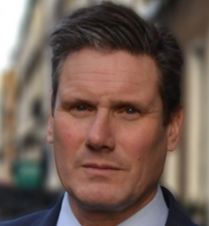
The speech made by Keir Starmer, the Prime Minister, in the House of Commons on 13 May 2026.
Mr Speaker, may I say what a pleasure it is to welcome the Gracious Speech of His Majesty, and the radical agenda of this Labour Government that will tear down the status quo that has failed working people and build a stronger, fairer Britain?
In the light of the abhorrent attacks in Golders Green two weeks ago, let me start by briefly addressing that directly. It was the latest in a series of appalling antisemitic attacks; a normalisation of hatred that leads terrorists with warped Islamist ideologies to attack people they have never even met, simply because they are Jewish; a hatred that leads some to march calling for the murder of British Jews, and not to think that there might be something wrong about that.
I have fought that hatred in my own political party, and I have sat with others as they describe what it means for them—the fear, the sense that maybe they should not wear something or do something that might reveal their Jewish identity, just in case. It is time for the silent majority in this country to speak up, to stand with British Jews and to defeat this hatred once and for all, just as we will take on any form of hatred, from left or right, that seeks to divide us. In the words of the Gracious Speech, we will
“defend the British values of decency, tolerance and respect for difference under our common flag”.
That is also why, when far-right agitators try to come here this Saturday to spread their poison of hatred, this Labour Government will block them, this time and every time.
The Humble Address was brilliantly proposed by my hon. Friend the Member for Bradford West (Naz Shah). Members across the House will have read her remarkable new book, and her list of endorsements is truly impressive, reaching well over 100 Members—at last, a list that we can all get behind. [Laughter.] It is not the first time that she has shown her ability to bring people together. She united her city and many in this House when she sent George Galloway packing.
The House will know that my hon. Friend is passionate about the measures that this Government are taking to lift half a million children out of poverty, as we all are on this side of the House—it is the pride of these Benches—but the House might not know about her remarkable effort to get Marcus Rashford to champion free school meals and speak to pupils in her constituency. Most of us would have attempted this via the complex world of agents and managers, but my hon. Friend had a different idea. She spoke, as you do, to the sister of Cristiano Ronaldo. I can imagine that the Ronaldo household is used to fielding some pretty big offers—multimillion-pound transfers, billions in brand sponsorships, Piers Morgan calling for the eighth time that day—but I cannot imagine the confusion in the Ronaldo family when they heard my hon. Friend say not, “Is Cristiano Ronaldo available?”, but, “Can you give me the number of Marcus Rashford? I want to invite him to a primary school in Allerton to have some porridge in our free breakfast club.”
On a much more serious note, I know that the whole House will join me in paying tribute to my hon. Friend’s extraordinary courage, together with her mother, brother and sister. Their story is utterly harrowing, and their strength to survive and deep-rooted determination to fight for change are an inspiration for all of us, and the very best of who we are. My hon. Friend brings a lived experience to our politics—an empathy, a compassion, a humanity, and an understanding of how easy it is to slip from a stable and secure life into one gripped by terrible deprivation.
As my hon. Friend writes in her book:
“Behind every word we utter must lie the foundation of real human experience”.
In that spirit, I am sure she will welcome the measures in this King’s Speech, which will deliver change grounded in that lived experience and the work of the tireless campaigners who have fought for justice, whether that is remediation for those living in homes with unsafe cladding, banning abusive conversion practices, our mission to halve violence against women and girls, or the Hillsborough law, which will bring justice for all. As she says so powerfully,
“equality, fairness and justice must belong to all of us.”
That is the driving purpose of our party, and her speech was in the finest traditions of this House.
The Humble Address was also brilliantly seconded by my hon. Friend the Member for Harlow (Chris Vince). We are all proud to represent our constituencies, but few of us so relentlessly name our constituency as those who represent Harlow. Members from previous Parliaments will remember my hon. Friend’s predecessor, Robert Halfon, who seemed to get Harlow into pretty well all of his contributions. Well, my hon. Friend will not be outdone. He has inherited the great Harlow shoehorn, and he is already recognised across this House as a one-man tourist board. I have to thank the hon. Member for Huntingdon (Ben Obese-Jecty), who is caught in Hansard referring to my hon. Friend as the “Trade envoy to Harlow”—a rare example of a good idea from the Opposition.
No matter the debate, my hon. Friend the Member for Harlow will find the local connection, whether it is championing the role of Harlow college in dealing with climate change, praising the invention of fibre-optic cables in Harlow, or telling us how Harlow doubled for Paris during an episode of “The Crown”. I remember clearly my hon. Friend saying to me that wherever he goes in the world, he is always thinking about Harlow, and he is quite right.
I congratulate my hon. Friend on his amazing fundraising at this year’s London marathon, as has been mentioned.
I understand his disappointment at being overtaken by the right hon. Member for Basildon and Billericay (Mr Holden). All I can say is that there is no shame in losing to someone whose training was so extensive that it involved running all the way from North West Durham to Billericay.
It is perhaps no surprise that, as a secondary school maths teacher for 15 years, my hon. Friend has an eye for detail, boundless energy and an ability to handle those on these Benches who are occasionally unruly, but he also has a real passion for young people, a deep and personal understanding of the invaluable role that young carers play, and total conviction in the power of education to change our country, so I know he will welcome the education Bill in the Gracious Speech. When the next series of “Educating Essex” is made, he will rightly be the star, and I thank him for yet another fantastic speech today.
Let me also thank the Leader of the Opposition for the usual warm and generous nature of her contribution. In difficult days, her input is always a ray of sunshine. I particularly like getting tips from her on how to win friends. This is from the party that had previously called us “orcs and goons”; I am a Gooner, so, as usual, she is less than half right. However, we do have one thing in common: both our parties had tough results in the local elections last week. The difference is that she has not noticed. There is another difference: we are in government, and they are no longer even the Opposition.
This King’s Speech is a strike against the status quo, which has failed working people. It is a King’s Speech for the young people whose gifts lie in their hands, and who work hard, want their talents to be recognised, and just want an opportunity in their community. It is a King’s Speech for the children who, under the Conservative party, had to go to school without breakfast, hungry, cold and tired, when they should be focused on their learning. It is a King’s Speech for the backbone of this country; for working people who worry about the cost of living and want their town centre to thrive, their public services to work, and their Government to be on their side—and we are, because at the heart of this programme is a plan to make Britain stronger and fairer.
Right now, across the country, people turn on their television and see bombs falling; they go to the petrol station and see prices rising; and they are worried sick about the consequences. We cannot stand here in the House and pretend that this is new. Britain has been buffeted by crises for decades now—the 2008 financial crash, the austerity that followed it, Brexit, covid, and the war that still rages in Ukraine—and the response? Their response is always the same: a desperate attempt to get back to a status quo that failed working people, decimated their public services, and made them pay the price. Our response this time must and will be different—a complete break. We will not simply slump back to the old ways. This King’s Speech gives us the strength we need—the economic security, energy security and national security to control our future in a chaotic world. It is an agenda of radical reform across our major public services. This is an urgent, activist Labour Government who tilt power back to workers, renters and the less fortunate, and give a voice to the working class and to all those whom the status quo has repeatedly ignored and dismissed. We are in favour of a Britain where everyone, whatever their background, can go as far as their talent and effort take them, and where people have a pride in where they live and hope in what lies ahead. That is the change of a Labour Government, and this King’s Speech delivers it.
We will deliver on economic security, and let me be clear: as the conflict in Iran unfolds, we are in a better position because of the action that my right hon. Friend the Chancellor took last year—getting inflation down, borrowing down and mortgage costs down. That is why we have been able to cap energy bills, raise the living wage, strengthen workers’ rights and end the shameful two-child benefit limit, lifting half a million children out of poverty.
Faced with challenges, we do not retreat from our Labour values; we use them as our compass—strength through fairness. We will keep supporting those who need it most, including by creating a new national programme to redistribute surplus food, so that no one in this country needs to go hungry because of the conflict overseas. We also need to strengthen our sovereign capabilities, because the days when this country turned its back on our critical industries are over. We have seen that with British Steel, and we will see it with new legislation to clean up our waterways. A failure in the water industry has been going on for decades. It is a disgrace, and this Labour Government will tackle it.
We will take that moral urgency to every part of our nation, with Bills to increase the pace of change in our NHS, in law enforcement, in controlling our borders and more. While immigration is down, we need to do more. While violent crime is down, it needs to be lower. While NHS waiting lists are down, we must go further, rewiring the state so that the working people of this country feel that it serves their interests. We will also build in this country sovereign power in the industries of the future, which will give us greater control in a world being reshaped by artificial intelligence. We will tear down the barriers to growth on planning, on faster infrastructure development and on business regulation, helping our great businesses, large and small.
We will, as a defining act of this Government, rebuild our relationship with Europe, putting Britain back at the heart of a stronger Europe. That is good for growth, and it will reduce the cost of living and strengthen our security. There is no good reason to oppose it, so for our economic security, and for our Labour values, this Government will act.
Jim Allister (North Antrim) (TUV)
Prime Minister, in my part of the United Kingdom, Northern Ireland, we have been subjected for some years to the humiliation of being governed by laws that we do not make and cannot change. Yet you, Prime Minister, now seem to want to impose that same denial of democracy on the whole United Kingdom by making us a subservient rule-taker from a foreign Parliament. How is that in the interests of democracy?
Mr Speaker
Order. The hon. and learned Gentleman has been here long enough to not blame me for the problem. He should not say “you”.
The Prime Minister
I thank the hon. and learned Gentleman for his intervention. I am very well aware of the tensions in Northern Ireland, and the issues that have to be dealt with in our relations with the EU, but we have to face the fact that promises were made about Brexit that were not true, and which have not borne fruit. It is in our economic interests, our national interests and our defence interests to be closer to Europe. Of course we will navigate carefully, taking on board the issues in Northern Ireland, as he would expect, but it is in our interest to be closer to the EU. That is what we are doing, and we will go further.
This moment demands even greater radicalism on energy security. The British people should not have to pay more in their bills, and their living standards should not be hit, because of a war that they did not vote for and that Britain is not involved in, which is happening thousands of miles away. That is a fundamental argument of this Government, and the Conservatives have no answer to it. For decades they ducked the long-term decisions to make our country, our energy and our economy stronger, so we are going to take control. We are going to declare Britain’s energy independence. That does not mean, and it will not mean, that we turn off the taps in the North sea—oil and gas will be part of the mix for decades—but we have to move so much faster on clean energy, with a whole-society effort and everyone playing their part as we take control of our energy security.
Dave Doogan (Angus and Perthshire Glens) (SNP)
I am very grateful to the Prime Minister for giving way. He talks about energy security; he should know that Scotland has an energy surplus—we generate more electricity than we use—and that, in conditions of surplus, prices go down. However, in Scotland, because we are stuck in the GB energy market, we pay for the scarcity of energy in England—not just to the point of equality, but to our detriment, so that there are higher prices for energy in Scotland. Can he explain why that dysfunction exists, and what is in this King’s Speech to fix it?
The Prime Minister
What is in this King’s Speech to fix that is moving faster to our energy independence. That is the way that we get off the international markets. That is the way that we take control and reduce bills for people across the country.
We will, of course, also strengthen our country’s defence security. That starts with the fundamentals, and a recognition that it is not in the interests of this country to rush into a war without any thought of the consequences. That is my position, and that has always been my position, regardless of the pressure—a test of judgment that some in this House have failed. It continues with our commitment to NATO, the most successful defensive alliance in history, and a proud achievement of this party that others would throw away.
Today, faced with even greater threats, we need to strengthen NATO, we need to invest in our defence capabilities, and we need to strengthen the European element of NATO, because this nation is stronger when it stands with others, not just in word, but in deed. We are prepared to lead from the front; to bring nations together in this moment of danger; to support Ukraine, including through the coalition of the willing; and to act with our allies to reassure shipping in the strait of Hormuz. We are not content merely to manage the fallout from the Iran crisis; instead, we are building an international effort to solve it and end the economic harm.
Of course, standing up for the defence and security of the United Kingdom depends on one thing above all else: ending 14 years of Tory defence austerity with the biggest sustained investment since the cold war. We will go further with the measures outlined in the King’s Speech and our upcoming defence investment plan. We will develop the capabilities that our nation needs. We will also deepen our partnerships to fire up our industries and make sure that British skill, British pride and British resolve are converted into British jobs in a stronger, fairer Britain.
Lincoln Jopp (Spelthorne) (Con)
The Prime Minister has used a lot of words about the defence investment plan. I think it was due in the autumn of last year, so when is he going to sign it?
The Prime Minister
I will take no lectures from the Conservatives. They hollowed out defence spend. Defence spend was 2.5% when they came into power, and 2.3% when they left power. The investment plan is being finalised and will be published soon. However, strength is the foundation, and that is the way we maintain our control, even in the storms of this world.
David Davis (Goole and Pocklington) (Con)
The Prime Minister quite rightly prioritises the defence of the country. We have depended for decades on the courage, honour and loyalty of our soldiers. However, some of our best units are now losing soldiers, because this Government are undermining them and allowing them, under the Northern Ireland Troubles Bill, to be prosecuted and persecuted for alleged crimes—that were not carried out—from decades ago.
The Prime Minister
The right hon. Member knows very well that the provisions for Northern Ireland are intended to strike the right balance between what needs to be done and protecting our veterans. We are, of course, proud of all those who have served and do serve our country, but the legislation put forward by the last Government was struck down, leaving no protection whatsoever.
Mr Mark Francois (Rayleigh and Wickford) (Con)
On that point, will the Prime Minister give way?
The Prime Minister
I will make some progress. The way we change our country—[Interruption.]
Mr Francois
The Prime Minister will know that in the recent Supreme Court Dillon judgment the Court ruled that the Conservatives’ Northern Ireland Troubles (Legacy and Reconciliation) Act 2023 overwhelmingly was not incompatible with the Human Rights Act—he knows that. He referenced the awful events in Golders Green, rightfully, and he defended the police officers against attacks and the leader of the Green party, rightfully, and said that they had to take split-second decisions. If Northern Ireland veterans had to take split-second decisions to uphold the rule of law in Northern Ireland, what is the difference?
The Prime Minister
I have been in control rooms in Northern Ireland, watching decisions being taken on the use of fatal force. I am well aware of the nature of the decisions that have to be taken, the circumstances in which they are taken and how difficult those decisions are. That is not the same as the issues in the Bill, and the right hon. Gentleman knows it.
Strength is the foundation: it is the way we maintain our control even in the storms of this world, and the way we change our country rather than just manage the crisis. More than anything, change means a Britain where every child can go as far as their talent or effort allows. It is a beautiful idea, one that I know is shared across the House, but as representatives we need to see the country as a whole to make sure we see every child, including the children growing up in poverty, the children who have special educational needs, the young people who cannot get a job, and the people who are ignored and excluded from our highest aspirations because they do not want to go to university. This is a King’s Speech to change that once and for all.
My late brother had difficulties learning, and he had to fight every day just to be seen. There are millions of people like him: people who are ignored by a system and a status quo that has no expectations for them. This King’s Speech will make sure that no child is left behind, because everyone has something to contribute to the success of this nation. Every child must succeed if we are to build a stronger, fairer Britain. That is how we tear down the status quo preserved by the Conservative party—a status quo that failed working people, a status quo that left Britain’s economy exposed, a status quo that made our country weak.
There are some in this country—some even in this House—who would feed the frustration with that status quo into a politics of grievance and division. This King’s Speech sets a different course, a more hopeful course, and a course that sees the conflict in Iran, a war on two fronts, not as something to wring our hands about, but as an opportunity we must take to shape our country’s future, to end the status quo that has failed working people, and to build a stronger, fairer Britain. That is what this King’s Speech delivers and I commend it to the House.