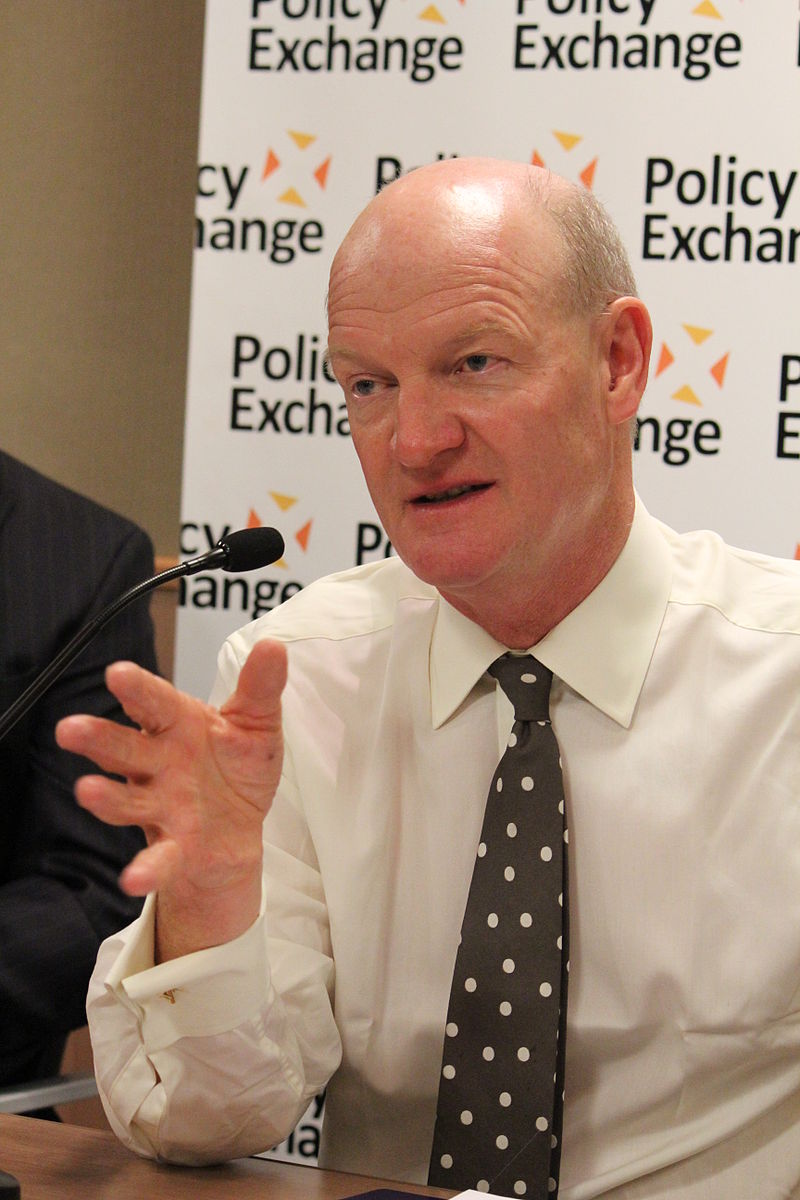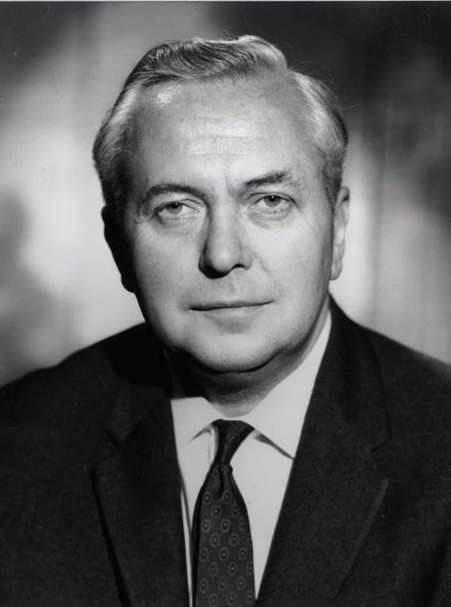
Tag: Speeches

  • David Cameron – 2005 Speech to Conservative National Education Society

    davidcameron

    Below is the text of the speech made by David Cameron to the Conservative National Education Society on 16th June 2005.

    Five years ago this Government decided to spend thousands of pounds of public money on an advertising campaign.

    I loved it.

    The ads had a simple message – and a true one.

    They reminded us that “No-one forgets a good teacher”. Of all the influences on our lives, few are as profound as the inspiration of a good teacher.

    Teaching is more than a profession, it is a vocation. It’s a calling to make the world a better place by working with the young to enrich their minds.

    And there are few more important jobs than teaching.

    Why?

    Because there is no more important subject than education.

    Importance of education

    And it’s with the importance of education for the most disadvantaged in our society that I’d like to start.

    A decent education is the best start in life that any child can have. It is the ladder up which all can climb. The chance for everyone – whatever their background – to better themselves.

    If we want to create a genuine opportunity society, if we are determined to unlock human potential, if we believe – as I do, passionately – that every life is precious and no-one should have their chance to contribute written off, then we have to reform our education system.

    For many children in state schools, especially those born with the fewest advantages in life, there has been a persistent failure to believe in their right to the best. They have been held back by what George Bush senior called the “soft bigotry of low expectations”.

    We still have not built an education system which genuinely meets the needs of the disadvantaged.

    In some ways, we’ve actually made it worse.

    The goal of an opportunity society is receding from our grasp. 30 years ago, the percentage of children from state schools attending Oxford and Cambridge was two thirds. Today it is just one half.

    The importance of education goes much further than ensuring social mobility.

    Our failure to build a state education system which leaves no child behind has contributed to a society in which young lives are unnecessarily blighted.

    Take the vital issue of teenage pregnancy. Young mothers, and their children, risk being consigned to a life of dependency and poverty.

    Of course we can’t expect schools to have all the answers.

    Parents, families, teachers, politicians – we’re all in this together. We have a shared responsibility to our children and to society.

    But education has a crucial part to play. Would so many teenage girls get pregnant if they had been inspired at school, taught to be ambitious for themselves and equipped with the right skills to go out and get a job?

    Would so many young men turn away from a life of responsibility, and towards anti-social behaviour if they were taught to read properly so that they could see the point of education rather than view it as something between a waste of time and a source of embarrassment?

    After all, the connection between illiteracy and crime is evident: almost 70 per cent of our now record prison population cannot read or write properly.

    There’s a link between a poverty of expectation, poverty in society and the reality of thousands of scarred lives.

    We all know it.

    Tackling the roots of these social problems depends on getting what happens in our schools right.

    And if all our young people are to be given hope, rather than being allowed to drift to society’s margins, then we need to reform education to equip future generations for an ever more competitive world.

    In the age of globalization the future is bleaker than ever for those without skills, but opportunities are richer than ever for those with them. In the twenty-first century there is no more important national resource than our human capital.

    So: getting education right is vital if we are to have a socially mobile Britain, a socially cohesive Britain and an internationally competitive Britain which equips its citizens for the future.

    But it also matters crucially for a fourth reason. It’s one that, strangely, politicians don’t talk about often enough.

    Happiness.

    I believe that education is one of the keys to happiness.

    Education that stimulates, that inspires and that instills a love of books, of knowledge and of learning is one route to a happy and fulfilling life. You don’t have to take Mill’s side against Bentham in arguing that there are “higher forms of pleasure” to believe that loving learning is one way of loving life.

    The economist Richard Layard has recently made a powerful case that public policy should not be oriented towards maximizing wealth, but rather towards increasing happiness. The relevance to education is clear.

    Of course, we want to equip our children to compete effectively in the modern world. But education should be about so much more than that.

    Good teaching should open our minds to the best that has been thought and written.

    We should want our children to be inspired by history, learning of our country’s role in the expansion of freedom, enjoying the story of mankind’s progress through time.

    We should demand that our children be allowed access to the arts, exploring the worlds of imagination that literature can open up, appreciating the beauty of what great talents have produced.

    And we should recognize that in drama, music and sport – including competitive sport – the opportunity for self-expression, growth and achievement can be nurtured.

    So, there is no more important issue for the country than education – and no greater challenge for us to get right.

    Where there is political consensus, we should celebrate it. There is no point in parties bickering about matters on which we fundamentally agree.

    The Government wants a diversity of schools. I agree. The Government is talking about devolving greater power to heads and governors. I have always shared this goal. Where these things actually happen, we will applaud and support them.

    But where things are still going wrong, where the Government is failing to give the right lead, or where it fails to deliver on promises – and there are plenty of such areas – I will take a stand and try to build a new consensus.

    In opposition – every bit as much as in government – politicians need to set out what they believe in, what their goals are, and what their compass will be. If you don’t – and if you don’t stick to them – you will get buffeted from one issue to another.

    The principles I want to follow are clear.

    That a good education is a birth right for all: a pledge that everyone mouths, but one that means nothing unless we are determined to confront under-achievement amongst the poorest in society.

    That discipline is the first requirement for every school

    That the basics of reading, writing and numeracy are the vital building blocks for every child.

    That a good education should provide both the skills for life and a love of learning for its own sake.

    That every child is different – and that not every school should be the same.

    That a good education should mean challenging the sharpest minds and helping those who fall behind.

    That all schools – state, church, voluntary, private – should celebrate their independence and autonomy.

    That parents have rights to choice and to involvement – but that they also have clear responsibilities to the schools to which they send their children.

    That these responsibilities include making sure their children turn up on time, are properly fed and appropriately turned out, and – above all – that they behave properly.

    That the poor behaviour of a minority of children should never be allowed to wreck the proper education of the majority.

    That teaching and learning vocational skills is every bit as worthwhile as teaching and learning knowledge.

    That universities should be centres of excellence, independent from Government, with access based on merit.

    The new Conservative agenda

    In recent times party political debate has often been in danger of missing the big point in education.

    The Labour Party has talked primarily about “resources”, talking about spending per pupil, per school and as a share of our national wealth.

    The Conservative Party has talked more about “structures”, giving parents greater choices between different sorts of schools.

    Both are important – but there is a danger of missing the absolutely vital bit in the middle: what actually happens in our state schools.

    Will our children learn to read, write and add up properly? Will they be safe in class? Will they be stretched to the best of their abilities? Will they be taught the skills they need to have a successful career when they leave? Will our local school do the best for our child?

    These are the questions parents ask themselves – the issues we stress about when considering our children’s education.

    That’s why my focus is going to be simple and straightforward – on the basics.

    Discipline. Standards. Promoting teaching methods that work. Scrapping those that don’t. Building on tests, league tables and exam standards that genuinely measure success, failure and progress. Exposing and demolishing those that dumb down, promote an “all must have prizes mentality” or simply waste time.

    It is only once we have established what constitutes a good education that we should go on to ask: what stands in its way? How can we clear the obstacles in its path?

    The big issues in education

    There are five vital areas of weakness where we will question the Government, call them to account, seek and publish the clearest possible information – and take a stand on what needs to be done.

    Literacy in primary schools.

    Discipline in secondary schools.

    Special Educational Needs.

    The fact that bright children are being left out and non academic children are left behind.

    And a system for testing and examining that – put simply – is currently not fit for purpose.

    Literacy in primary schools

    Firstly: in spite of progress made and the national literacy strategy, around one in five children leaves primary school unable to read properly, and one in three leaves without being able to write properly.

    If you can’t read, you can’t learn. These children are lost to education. The waste – for them, for our country – is nothing short of a scandal.

    The evidence that traditional teaching methods – particular synthetic phonics – are the best way of teaching children the basic building blocks of reading and writing is now absolutely clear.

    We welcome the Government review of the National Literacy Strategy, but we are clear about the stand that should be taken and the battles that will have to be fought.

    Phonics works. Tip toeing gently around this subject gets us nowhere. Another review – and another cohort of children will pass into secondary school unable to read and unprepared to learn.

    The Government has got to say what works clearly, make the change and actually follow it through to the end.

    Discipline in secondary schools

    Second, discipline. If children don’t learnt to respect authority at school how can we expect them to respect others when they grow up?

    We all know that lack of discipline is an issue that affects most schools, and cripples the learning process in many. The figures bear this out.

    A teacher is assaulted every seven minutes of the school day. 17,000 pupils were expelled in a single term recently for violent behaviour. The scale of the problem was shown by an undercover documentary which showed a supply teacher’s battle with scenes of chaos in a variety of schools.

    The Government has decided to hold another review. This is fine, as long as something comes of it. But everyone knows that often with this Government, calling for a review is seen as the end of the process.

    We want to see the following clear and decisive action.

    The unambiguous right for heads to expel unruly pupils – so it is clear where authority lies.

    The abolition of appeals panels – so that heads cannot be undermined by having their decisions publicly reversed and disruptive children returned to the classroom.

    The right to make home/school contracts binding, by letting heads refuse to accept children if parents don’t sign them.

    On discipline, schools – all schools – should have autonomy. They are – and should be seen clearly as – places where children go to be taught and to learn, not reception centres for all children irrespective of how they behave.

    As well as this change in approach to the autonomy of schools – and as well as the changes to the law I have set out – we need something else.

    A change in culture. As I’ve said, with so many of these problems we’re all in it together. Government. Opposition. Parents. Teachers. Governors. Heads. Children.

    Listen to children threatened with punishment who say “I know my rights” and listen to teachers to frightened to deal robustly with poor behaviour. And it is clear what is happening.

    We are starting to treat teachers like children, and children like adults. That is wrong – and we should say so.

    SEN

    The system for dealing with special educational needs in this country is based on good intentions. The desire to see all children treated with equal love and care and attention is one we all share.

    But the system is now badly in need of reform.

    In some ways we are in danger of getting the worst of all worlds.

    At one end, children who are finding it difficult to keep up are being dragged into the SEN bracket, when what they really need is rigorous teaching methods.

    At the other end, children with profound needs are being starved of resources and inappropriately placed in mainstream schools.

    The move towards inclusion was right for many children. No one – least of all me – wants to turn the clock back to saying that some children are “ineducable”.

    But the pendulum has simply swung too far. The ideological obsession with holding all children in the same building for school hours, as if mere proximity connotes something profound or productive, has destroyed the education of many of society’s most vulnerable citizens.

    It is foolish to pretend that some of the most challenged and challenging children in Britain can study alongside their mainstream peers with a few hours of extra assistance here and there, or the part time aid of a teaching assistant now and then.

    They need constant attention from experts in facilities dedicated to their needs. It is expensive and it is painstaking but it is right.

    Similarly, it is wrong to close schools for those with moderate disabilities, whose needs fall in the ground between that of the mainstream and those with severe conditions.

    Forced into mainstream schools in which they are inevitably left behind, or alternatively into Severe Learning Disabilities schools in which they are never truly pushed to achieve, the plight of children with moderate learning disabilities is extremely troubling.

    Children with learning difficulties or disabilities deserve better than to have their real needs waved away because of their totemic status as representatives of social inclusion. These are our children, not guinea pigs in some giant social experiment.

    In the name of this inclusion agenda, centres of excellence are being torn down. When the expertise is dispersed, it is so difficult to bring it back together.

    I have set out some very clear steps for the Government to take. They’re having an “audit” of special schools. This audit must:

    Take account of parents’ views, as they are so often ignored

    Look at the law, which restricts choice and is biased against special schools

    Cover all special schools, in every part of the country

    And as I have said, that there should be a moratorium on closing special schools at least until the audit is completed.

    Instead, the government has announced that the audit will only look at schools for those with the profoundest needs and disabilities. Yet it is the schools for those with moderate needs that are being closed.

    We must make a stand on this issue. We must make a difference on this issue. There are parents up and down this country willing us on. They know what is happening is wrong. They know it can and must be changed. And through the force of our argument we will help make that change.

    Challenging bright children, helping those that have fallen behind

    One of the things that made people sit up and listen to Labour in 1997 was their promise in the introduction to their Manifesto to set children by ability.

    Tony Blair knew that putting that pledge up front would send parents a message – that New Labour was different. That they wouldn’t let egalitarian dogma get in the way of raising school standards.

    Tony Blair was right. The trouble is that he’s done nothing about it. Recent research by the academic David Jesson has shown what we already knew – that able students do better when they study together.

    The brightest need to be set with their peers, so they can soar.

    The struggling need smaller classes with the best teachers so that the difficulty they’re having can be properly addressed.

    The government never stops talking about ‘stretch’ – but nothing actually happens.

    As well as stretching the brightest and helping those that fall behind, we need to keep children switched on to learning.

    One the reasons some young people switch off is that they are bored. At 14 and 15 they would like to learn more skills, but that’s not what is on offer.

    This is not just a personal waste – it’s a national waste.

    Just 28 per cent of young people in the UK are qualified to apprentice, skilled craft and technician level, compared with 51 per cent in France and 65 per cent in Germany.

    If France and Germany are getting vocational education right, why can’t we?

    The answer which the Government and much of the educational establishment has come up with is the diploma scheme.

    But it seems to me that there is a fundamental flaw at its heart – it entails the death, in any meaningful sense, of the A level.

    You should never try to improve something that is weak – vocational education – by scrapping something that is fundamentally strong – like the A level.

    If we want to improve vocational education …

    ….if we want to end the snobbery that has surrounded it …

    … if we want to keep these young people switched on to learning …

    … and I want to do all of these things …

    … then we must take some bold steps.

    Surely these must include the following:

    Funding vocational courses from 14.

    Funding vocational centres that match the best available anywhere in the world.

    And establishing a simple set of vocational qualifications that businesses don’t just buy into, but actually design.

    The examination system

    The fifth and final area is the examination system.

    Each August GCSE and A level results come out – and the same thing happens.

    The debate between the ‘best results ever’ and “the easiest exams ever” begins.

    To avoid this demoralizing slanging match, we need to restore faith in our examinations system. There are real problems.

    Students that failed maths A level in 1991 would now get a B. For one exam board last year, you could get an A in Maths GCSE with 45% – get more than half the questions wrong and you still get an A.

    There is a simple principle that must be applied. Exams and their results should differentiate clearly between those pupils who excel, those who do well, those who pass and those who fail.

    There are various ways to achieve this revaluation. For example, A grades could be reserved for a fixed proportion of students, or marks could be published as well as grades, or both. But I am clear – a revaluation so that parents, employers and students themselves can have confidence in the system must take place.

    An overarching principle

    So those are the five challenges I believe need urgent attention. But beyond the specifics, there lies a more general problem at the heart of British education.

    I don’t yet have a word for it. The best I can do to describe it is to say that it’s a lack of purpose.

    Students being told the questions to their exams four weeks before they sit them.

    A history curriculum that asks students to wonder how a soldier felt, rather than teaches them about the battles he fought.

    An A level paper today found to be almost identical to a CSE paper thirty years ago.

    You don’t have to believe every example you read about to know that all too often where there should be clarity, there is fog, where we need rigour, there is fudge.

    It is difficult to find a better example than the Professor of continuing education who said the following:

    “The great challenge facing education in the 21st Century is the pursuit of a holistic problematised pedagogy.”

    Would anyone like me to read that out again?

    We should be frank about this.

    There has been a deep division in the educational establishment for fifty years – between those that think education is about imparting knowledge, and those that think it is about encouraging children to learn for themselves.

    Of course, schools should inspire as well as instill. But when it comes to the basics, we should be blunt: teaching is right, and ‘discussion facilitation’ is wrong.

    It is common sense that, especially when very young, children shouldn’t be left to blunder around in the dark.

    Rather, they need to be told some basic, essential things.

    Discipline, respect for others, responsibility – children aren’t born with restraint: they need to be taught it.

    Times tables don’t leap unbidden into a child’s mind: they must be learned, and once learned, as everyone knows, they’re learned for life.

    Acquiring knowledge and exploring creatively are linked. But creativity, exploration and self-expression can only come after a child has acquired confidence in using the basic tools of communication, language and number.

    It is a special type of cruelty that denies children access to the keys to learning for fear of stifling their creativity. It is only through a thorough grounding in literacy, being taught to read, that children are given the chance to communicate on terms of equality with others.

    The ‘learn for yourself’ attitude has been indulged far too much, and that has been to the detriment of the education and lives of children for half a century.

    It’s wrong to pretend that children are adults – that they always know what’s best for them. Children won’t necessarily all want to learn to read or to spell – just as when they’re given a choice between chips and pizza or healthy, nutritious food they’re more likely to choose what they like, not what’s good for them.

    At its heart, education must be about giving children what is good for them.

    Conclusion

    I hope that much of what I’ve said tonight is proven to be unnecessary. I hope that in the course of this Parliament, the Government addresses the challenges I’ve identified.

    And if they do, we’ll support them every step of the way. The important thing is that it’s done, not who does it.

    Because the quality of Britain’s education system today will determine our success as a society tomorrow.

    The irony is that many of the problems we face in our education system today have arisen because those responsible for it dislike confrontation.

    Fear of confrontation has turned modern education upside down.

    We treat children like adults, and teachers like children.

    We leave young children to ‘discover things for themselves’ when they need to be taught the basics.

    And we spoon feed teenagers, softening the requirements of their exams, when what they need is to be challenged and inspired.

    Our education system doesn’t like to say no, and doesn’t like to tell someone that they’ve failed. In the false economy of British education at the start of the twenty first century, the system seems to underestimate the cost of getting things wrong early on.

    Well I do understand the importance of teaching all children the basics, of stretching pupils to the best of their abilities, of encouraging ambition and rewarding hard work.

    And I want our educational system to deliver all of these things.

    It’s common sense.

    And like millions of parents across our country, the Conservative Party must stand for it – because we want every child to have the best start in life. We want youngsters to make a success of their careers. And we want to help build a stronger, better Britain.

  • David Cameron – 2005 Speech to Launch Leadership Bid

    davidcameron

    Below is the text of the speech made by David Cameron on 29th September 2005 to launch his leadership bid.

    I’m standing here today because I want to lead the Conservative Party and I want to lead it to victory at the next General Election. Now there are some who say I’m a bit too young. Some who say I’ve just been in Parliament for five years, maybe I don’t have the experience to do the job. And in some ways they’re right. I am only 38 years old, I have only been in Parliament for five years. But I believe that if you’ve got the right ideas in your head and the right passion in your heart, and if you know what this Party needs to do change, then you should go for it.

    And that’s why I’m doing it.

    There are people who say that the Labour Party under Gordon Brown will move to the left, that the economy’s going to hit the rocks, that all we’ve got to do is wait and just give it one more heave. I think that is rubbish. And I think it would be a pathetic way for a great Party like this to behave.

    There are some people who say that we’ve just got to attack the Government with a bit more vigour, we’ve just got to pull them apart a little bit more.

    I say that’s wrong. We’ve already called Tony Blair a liar.

    The problem at the last election was not that people trusted the Labour Party – they didn’t. They got the lowest level of support for a Government in our political lifetime. The problem was that people don’t yet trust the Conservative Party, and it’s we who have got to change.

    There are some people who say it’s just about coming up with more radical policies and putting them forward with more passion and with more vigour. Of course we’ve got to have the right policies, but that alone won’t do it.

    At the last election we had lots of good policies. Yesterday, the Government introduced our food policy for schools. Three days ago, they introduced our policy to scrap the revaluation of the council tax. The very day after the election, the Prime Minister stood on the steps of Downing Street, and spoke about respect and virtually introduced our school discipline policy.

    It’s not policies alone that are going to do it.

    It’s not even, dare I say it, having a young, energetic and vigorous party leader, although come to think of it that wouldn’t be such a bad idea.

    It’s not just organisation, it’s not just presentation, it is something much more fundamental.

    We have to explain to people what it means to be a Conservative in 2005. We’ve had, frankly, a leadership election that I think has sent half the country to sleep – including some of the people who’ve been taking part in it. We’ve made interesting speeches, we’ve come up with interesting policy ideas, we’ve trotted out that mantra of things that we believe in.

    But we’ve got to say what those principles mean in 2005 and how they’ll make a difference to this country in the future.

    We talk about personal responsibility. We talk about support for the family. For lower taxes. For limited government. For national sovereignty. But what we have to do is make the change in the culture and identity of the Conservative Party and say what those things mean today, and that’s what I want to do.

    Personal responsibility. I believe passionately that people should be free to run their own lives and to choose. But personal responsibility must not mean selfish individualism. There is a we in politics as well as a me.

    And when we look at an increasingly atomised society, in which people don’t talk to each other, in our inner cities we have different races living separate lives, we need a shared responsibility – a sense that we’re all in this together. That not just individuals and families have responsibilities, but also government and business.

    And that’s why one of the things I’ve put forward is the idea of a School Leaver Programme. To say to people, to say to voluntary bodies and to business and to the Armed Forces – think of a great four month programme that you can put young people through, so that they can do something together, whatever their class, their background, their colour or whatever part of the country they come from.

    Lower Taxes. I believe passionately that we should leave people with more of their own money to spend as they choose. But lower taxes cannot mean coming up to an election time with a small bunch of personal tax cuts that just undermine our credibility and make people think that we’re out there to bribe them to vote for us.

    Our belief in lower taxes has got to be about making this economy competitive and dynamic and the best place in the world to have jobs and invest and have businesses. We’ve got to have a sense in the Conservative Party, that we want to share – an important word – share the proceeds of growth between better public services on the one hand and lower taxes on the other hand.

    Limited Government. I desperately want the State to be our servant and not our master. But rolling back the state must never mean that the weak and defenceless are left behind. That’s why I’ve spoken about a whole new compact with the voluntary sector and social enterprises, to deal with the most difficult problems in our inner cities – with drug dependency, family breakdown, persistent unemployment, poor public space.

    In the 1980’s we said to businesses – go to that part of the country where the economy is broken, pay no tax, pay no rates and bring wealth to those areas.

    Today we ought to be saying the same to social entrepreneurs – go to that part of the country where society is broken and solve those deep-seated problems that government has consistently failed to solve.

    National Sovereignty. I do believe that this country does best when we govern ourselves and we’re proud of our institutions. But national sovereignty must never mean isolation or xenophobia. This is an incredible country with its best days ahead of it.

    We should be proud of the fact that we are a leading member of the European Union, of NATO, that we’re on the UN Security Council, that we’re a leading member of the Commonwealth.

    And what we must do is show how we can engage ethically and enthusiastically with the rest of the world.

    And when the Conservative Party talks about international affairs, it can’t just be Gibraltar and Zimbabwe – we’ve got to show as much passion about Darfur and the millions of people living on less that a dollar a day in sub-Saharan Africa who are getting poorer while we are getting richer.

    If we have the courage to explain what each and every one of the Conservative principles that make us Conservatives mean today, then, we can win.

    But it is a change of culture and identity. There is no Clause 4, there is no magic wand, there is no one thing that we can do to show that this party thinks Britain’s best days ahead.

    It is a change right across the board.

    This party has got to look and feel and talk and sound like a completely different organisation.

    It’s got to be positive. I want no more by-election campaigns or General Election campaigns when our message is overwhelmingly negative and when we just attack our components.

    I want us to be optimistic, talking to peoples’ hopes and not their fears.

    And I want us to be a consistent Conservative Party. There are times in this quite new politics we have when Tony Blair sits in the middle of the British political spectrum, when he says or even does Conservative things.

    Tuition fees. Foundation hospitals. City academies.

    When he does these things, I want a Conservative Party that says yes, that is a good idea, let me show you how to make it even better. Not one that seeks a way of opposing him and just looks opportunistic and insincere.

    And we’ve got to change every part of our party, including how we select candidates. Having more women standing for Parliament is not political correctness, it is political effectiveness. If the conversation we have within our own party doesn’t reflect the conversation we’re having with the general public, we won’t win, and we won’t deserve to win.

    These are the changes we have to make, and I’m passionate about making them. Because I am fed up of sitting on well-leathered green benches in the House of Commons, and I don’t want to wait another four years of opposition while we make the same mistakes again. I say why put off what has to be done.

    I’m fed up with people coming to my surgeries – young mums, who say, I can’t handle this complicated tax credits and benefits system and I can’t get the help I need, what I want is to be floated free, to keep more of my own money as I choose to.

    I’m fed up of listening to businessmen, who find the combination of tax and regulation mean it’s not worth investing and growing and giving people jobs.

    I don’t want to have to go on hearing from pensioners who can’t pay the council tax and when they see there’s so much waste in government, they know what their hard-earned money is going towards.

    This is a practical party – Conservatives are not ideologues but we are idealists.

    We do have a dream. A dream of a country where the brightest kid from the poorest household can go to the best university. A dream where it’s the easiest country to set up a business, to employ people, to make money, to invest and to put it back. A dream where we have a stable society in which families who do the right thing, who actually try and work hard and do the right thing for their children are rewarded rather than punished.

    But all the dreams in the world won’t come true unless we have the courage to change.

    That’s what this leadership election is about. Everyone is now saying we need a modern, compassionate Conservatism. I absolutely believe that is the case, and the choice for the Party has got to be, who do you think really believes it, who will really stick to it? When the going gets tough and the press attacks you after a couple of years and say this isn’t distinctive enough, it isn’t attacking enough, who will dig into their core and say, well that’s what I believe.

    I’m not changing just to win, I’m changing because I think it’s right for the country, it’s right for our times, it’s right for a whole generation of people who feel so switched off politics.

    So that is the choice we’ve got to make. We can win, we can make this country better, but we can only win if we change. That’s the question I’m asking the Conservative Party. Don’t put it off for four years, go for someone who believes it to the core of their being.

    Change to win – and we will win.

  • David Cameron – 2004 Speech at Independent Fringe Meeting

    davidcameron

    Below is the text of the speech made by David Cameron at the Independent Fringe Meeting on 4th October 2004.

    You’ve given me 5 minutes.

    Let me try it in a sentence.

    By emphasising the Conservative values that the vast majority of the British public share, by turning them into Conservative polices – and by showing how we would put them in to action.

    In other words: values, policies and action.

    Before expanding on that let me say how we don’t win.

    We don’t win by a fruitless search for differences between us and our opponents where none really exist. It’s opportunist Punch and Judy politics. It’s unattractive and it doesn’t work.

    We have to forget about what Blair is going to say tomorrow or the next day. I don’t know what he’s going to say. He doesn’t know what he is going to say.

    We should just get on and do what we think is right.

    Second, we won’t win by picking one subject – whether it is Europe or anything else – and talking about it incessantly. People want their political parties to tackle the broad range of issues that they care about. In the main that means schools, hospitals, crime, immigration and the economy.

    If you don’t sound balanced, you won’t seem balanced.

    Third, we won’t win by being exclusively negative. People now know they have been let down by Labour. We reminded them of that- quite rightly- during the local election campaign. They don’t need anymore reminders from us. And every reminder we send probably says as much about us as it does about them.

    It’s time to accentuate the positive…

    So, back to the simple formulation – values, policies and action.

    Above all we have to recognise that the biggest problem in British politics today is cynicism, apathy and disillusion. They are the enemy, not Labour or the Liberals.

    How many times have we all heard on the doorstep – “you’re all the same”, “you won’t make any difference”, ending with the question: “what’s the point?”

    Judging from the turn out at general local and by-elections, most people’s answer to that last question – “what’s the point?” – is that there isn’t any.

    Labour and the Conservatives are marooned on broadly the same poll rating, somewhere in the low 30s.

    They’re there because they’ve let people down. We’re there because people don’t yet think that we will make any difference. The Liberals are doing well, more than anything else, because they are not either of us.

    But I’m upbeat.

    There are three questions that matter in terms of political success.

    Do people share your values?

    Do they agree with you about what’s wrong?

    And do they think you have the right plans for doing something about it?

    The answer to the first question about values is good for the Conservatives. Why else do you think the focus group obsessed Labour party has been so timid?

    Should crime be punished or tolerated? Does Britain do best when it is control of its own destiny?

    Are families the key building block of a stable society? Does equality of opportunity matter more than equality of outcome? Are our institutions a source of strength not a cause of weakness?

    Should we encourage people to do more for themselves when they can?

    All value questions – and all get a Conservative answer almost anywhere in the country you care to ask them.

    Answers to questions about what is wrong in Blair’s Britain are just as encouraging.

    Here I admit, we’ve checked with polls and focus groups.

    Do people think that crime is rising and the hands of the Police are tied by bureaucracy and paperwork? Yes.

    Do people think that hospital managers and head teachers are too busy looking up to Whitehall to manage effectively? Yes.

    Do people feel over taxed and in awe of third term tax rises and a £2,000 council tax. Yes. They don’t just think these taxes are coming if Labour win again – they know they are coming.

    So that brings us to the big one – “do people agree with our plans?”

    First, they don’t know enough – if anything at all – about them.

    Second, even if they do, because of the wall of cynicism and disillusion, they don’t believe we will achieve them.

    That’s why the Timetable of Action being published this week is so important. It will tell you what we will do in the first day, the first week, the first month.

    It gives you details of the first queen’s speech and the first budget. It is about being accountable.

    It is about people feeling that they are in charge again, and not the politicians. To make sure we are the servants, not the masters.

    Two last points.

    Does the Conservative party need to modernise itself?

    Yes, of course. If you don’t understand the complexities and changing nature of modern society you are irrelevant.

    If you don’t address the modern concerns of a modern country, you are dead.

    Second, by saying that most people in this country share broadly Conservative values, have I said enough?

    No. We have to make sure that we include all of those values.

    That we have a vision of society. That we believe we have obligations unto each other. That there is a net beneath which no one should fall. That there is a “we” as well as a “me”.

    As I look at a Labour Government that is closing special schools for disabled children, that is throwing wardens out of sheltered accommodation schemes, that endlessly threatens community hospitals, that offers drug addicts the sort of treatment place that is worse than useless and that crushes the voluntary and charitable sectors with its belief that “Society is the State” – nothing more, nothing less – there has never been a greater need for Conservatives to explain our view of society, our obligations to each other and our compassion for those in need.

    And with everything I’ve said – I hope we can inject some passion – as well as compassion – into what we say at the same time.

    So how do we win?

    Values, policies and action.

    Who knows? If we follow this with passion as well as discipline, people might just listen.

  • David Cameron – 2001 Maiden Speech

    davidcameron

    Below is the text of the maiden speech made by David Cameron in the House of Commons on 28th June 2001.

    I am pleased to follow the maiden speeches of the hon. Member for Glasgow, Maryhill (Ann Mckechin) and the hon. Member for Dundee, East (Mr. Luke). Both spoke movingly and amusingly about their constituencies. I am glad that the hon. Member for Dundee, East is a true blue in the sense that he supports Dundee. It is our role to turn him blue in other ways; I look forward to trying to do that.

    I am delighted to make my maiden speech in a debate on our procedures. I have worked in two Departments—the Treasury and the Home Office—as a special adviser, and I was therefore one of the bad guys, always in a rush to get legislation through the House in order to prove that the Executive were delivering their programme. However, experience shows that too many Bills are passed too quickly, often with too little scrutiny and to little concrete effect. I have therefore enjoyed listening to the debate on the Government’s suggestion for improving matters. I remain sceptical about their solution.

    I listened carefully to my hon. Friend the Member for Aldridge-Brownhills (Mr. Shepherd). Both his speeches today were incredibly inspiring. As a new boy, I shall try to remember those lessons about our role and that of the House of Commons. The balance has tipped too far in favour of the Executive, and I am highly suspicious about programming Bills in advance and separating debates from votes.

    I listened carefully to the comments of my right hon. and learned Friend the Member for Sleaford and North Hykeham (Mr. Hogg) about being independent Members and listening to the arguments. I remember working with my right hon. and learned Friend the Member for Folkestone and Hythe (Mr. Howard) when he was Home Secretary. We lost many votes in the other place, and my right hon. and learned Friend asked our Minister there why we kept losing them. He replied, “Home Secretary, I am afraid that, although I get all our peers to come and vote, they listen to the arguments and they do not always go the right way.”

    It is a privilege and an honour to represent the constituency of Witney and the people of west Oxfordshire. Witney is a seat rich in history and blessed with some of England’s most stunning towns, villages, buildings and countryside. It stretches from the market town of Chipping Norton in the north to the banks of the Thames in the south, and includes the thriving market towns of Witney, Carterton, Woodstock, Burford and Eynsham.

    The western boundary is Oxfordshire’s county boundary and includes Cotswold villages of great beauty such as Taynton and Idbury. To the east, the seat stretches towards Oxford’s city limits, taking in Begbroke and Yarnton. There are 115 villages and settlements in valleys and plains watered by the Dorn, the Glyme, the Evenlode and the Windrush.

    Burford was home to one of our great Speakers, William Lenthall, who stood up so clearly for the independence of the House and his office. West Oxfordshire can also boast of great statesmen. It contains the birth and burial places of Winston Churchill—Blenheim and Bladon.

    We have great generals, such as John Churchill, Duke of Marlborough, who was rewarded with Blenheim palace for his victories in the war of the Spanish succession. As we, on the Conservative Benches, settle our own issue of succession—Spanish or otherwise—I hope that our battles are shorter and slightly less bloody.

    West Oxfordshire’s political history extends to all traditions. The Levellers, who are now regarded as heroic early socialists, rebelled during the civil war because they believed that their leader, Cromwell, had betrayed the principles for which they fought. I am sure that Labour Members who might sometimes feel the same way do not need reminding that the leaders of that rebellion were rounded up and shot in Burford’s churchyard. William Morris, the socialist visionary, lived and is buried at Kelmscott manor in my constituency, and I have no hesitation in urging all hon. Members to visit that beautiful village on the banks of the Thames which time seems to have passed by.

    Since 1945, west Oxfordshire has been represented by Sir Douglas Dodds-Parker, who parachuted into France in the 1940s; by Neil Marten, who served with the special forces during the war before embarking on a long and distinguished ministerial career; and by Douglas Hurd, now Lord Hurd, who was an outstanding Foreign Secretary. This brings me neatly to the hon. Member for St. Helens, South (Mr. Woodward).

    I know that it is traditional to pay tribute to one’s immediate predecessor, and I have no hesitation in saying that I agreed with almost everything that he said in the first half of the previous Parliament, when he was a trenchant critic of the Government. It was only when he moved to the Labour Benches and supported that Government that our views started to diverge. I know that he worked hard for people in west Oxfordshire and must have felt strongly to leave such a magnificent constituency with such friendly and welcoming people. However, he remains a constituent, and a not insignificant local employer—not least in the area of domestic service. We are, in fact, quite close neighbours. On a clear day, from the hill behind my cottage, I can almost see some of the glittering spires of his great house.

    West Oxfordshire’s economy includes a wide diversity of agriculture and small and medium-sized businesses. Witney was for years dominated by blankets, beer and its railway. There remains just one blanket factory, the beer is predominantly brewed elsewhere and the railway has been closed. I will always support moves to examine reopening our railway to Oxford and extending the line to Carterton. Witney and west Oxfordshire are now beacons of enterprise and success. A range of service, technology and light industrial businesses have thrived in our area, and with the Arrows and Benetton Formula 1 teams, we are becoming the grand prix capital of the world. Our unemployment rate is close to the lowest in the country. However, our farming and tourism businesses have suffered badly from the foot and mouth outbreak and need time and an understanding, enabling Government to recover.

    RAF Brize Norton, adjoining the relatively modern town of Carterton, is now one of our largest employers. It is one of Britain’s longest-established air bases, and has played an important role in the defence of this country and in servicing our armed forces. Its facilities and expertise in air-to-air refuelling make it the perfect location for the future strategic tanker aircraft and I will always support its role. The now ageing VC10s that thunder down the runway loaded with fuel for our fighter aircraft are fondly known locally as “Prescotts”, because they are able to refuel two Jaguars simultaneously—one under each wing. There was some suggestion during the election campaign that the right hon. Gentleman’s name should be appended to some other type of aircraft, perhaps a fighter that packed a bit more of a punch.

    Carterton is a rapidly growing town and in need of new services, such as a sixth form for its excellent community college, the campaign for which I strongly support. West Oxfordshire has an excellent Conservative-led district council, which has invested in those kinds of facilities, including some in Carterton. and I look forward to working with it in the years ahead.

    Chipping Norton, long famous for William Bliss’s tweed mill, which remains a striking landmark, is a classic Cotswold market town. It is also home to the kennels of the Heythrop hunt. There is a long tradition of hunting in west Oxfordshire, originally based in the royal forest of Wychwood, where Ethelred II established the first royal hunting lodge more than nine centuries ago. I will always stand up for the freedom of people in the countryside to take part in country sports, and, in the light of today’s debate, would always be concerned about any limits set on a debate on a hunting Bill that could curtail that freedom.

    Under its beautiful and serene exterior, west Oxfordshire faces important issues and problems. Rural poverty has been exacerbated by foot and mouth. The decline of local services, emphasised by the tragic closure of Burford hospital during the last Parliament, has angered local people. We still have cottage hospitals in Witney and Chipping Norton, which I strongly support.

    Rumours of budget cuts for our hospitals and the dreaded “r” word—rationalisation—for our ambulance service are rife. Those emergency services and hospitals play a vital role in rural communities and they should be expanded, not discarded. In the context of today’s debate, the health reform bill promises decentralisation, but we shall need a lot of time to scrutinise it and ensure that it really will deliver a local NHS. I hope that that can happen under the proposed system.

    In Witney, there is huge pressure on housing and great concern that the Government’s top-down housing targets will mean building on greenfield sites and wrecking the countryside that we love. That is another issue of great local importance.

    The theme of how we make and scrutinise decisions runs through today’s debate. I wanted to be elected to the House because I believe in what it stands for and what it can do to hold Governments to account, air grievances and raise issues that people in west Oxfordshire care about. I also wanted to be elected because, through action here, one can get things done.

    I shall support all the efforts being made to restore the House as the cockpit of debate, and the place where policies are announced, debated and decided and where the Government are scrutinised and challenged, whether on the Floor of the Chamber or through strengthened, independent Select Committees. I cannot see how deciding in advance how much time should be given to a Bill and systematic guillotining can help in that regard, but I am a new boy and I am listening to the arguments.

    The beauties of west Oxfordshire of which I have spoken—the glorious view from the top of Burford high street and Pope’s tower in Stanton Harcourt—sum up for many people what they feel about their British identity. I know that we shall always be able to treasure that identity, whether it rests on those feelings or on something else, but what matters just as much as our identity is our self-determination, and our ability to make decisions as a nation and to question and challenge them properly in this place. The ability to continue doing so rests in our own hands. It is a privilege that I shall try to preserve while serving the kind and generous people of west Oxfordshire.

  • James Callaghan – 1979 Motion of No Confidence Debate

    Below is the text of the speech made by the then Prime Minister, James Callaghan, during the No Confidence debate called by the Conservative Party, which was held in the House of Commons on 28th March 1979.

    The Prime Minister The right hon. Lady, the Leader of the Opposition began by recalling the circumstances in which our debate on the motion of no confidence is taking place. As she said, it follows directly from my proposal last week that in the light of the devolution referendums, and especially because of the result in Scotland, there should be a limited period of discussion between the parties before Parliament debated the orders that would repeal the Scotland and Wales Acts once and for all.

    The right hon. Lady did not immediately reject that proposal. She waited for the well-advertised move by the Scottish National Party. Its Members told the world what they would do, and they did it. They tabled a motion censuring the Government. For what? For not immediately bringing the Act into force.

    The Opposition, of course, want nothing like that. They want the very reverse. They want to get rid of the Act. But the SNP motion was enough for the Opposition Chief Whip. I am glad to see that he is now securely perched on the Front Bench. I hope that he will not fall off. When the SNP tabled its motion, the right hon. Gentleman went into action. He scurried round to the Liberal Party to find out if it would vote for a motion of censure—and he was not disappointed. The Liberals, spinning like a top, assured him that they would be ready, indeed that they were anxious, to take part in talks with the Government on the future of the Acts, but, equally, they were ready to vote for any motion that would prevent such talks from even beginning.

    Fortified by that display of Liberal logic, the Opposition tabled their own vote of no confidence. We can truly say that once the Leader of the Opposition discovered what the Liberals and the SNP would do, she found the courage of their convictions.

    So, tonight, the Conservative Party, which wants the Act repealed and opposes even devolution, will march through the Lobby with the SNP, which wants independence for Scotland, and with the Liberals, who want to keep the Act. What a massive display of unsullied principle!

    The minority parties have walked into a trap. If they win, there will be a general election. I am told that the current joke going around the House is that it is the first time in recorded history that turkeys have been known to vote for an early Christmas.

    On Friday I wrote to the other parties basically concerned with devolution for Scotland and Wales, formally confirming the talks that I had offered in the House. So far, not surprisingly—I do not complain about it—I have had no reply, except for what the right hon. Lady said on television. But when the motion of no confidence is defeated, the Governmen’s offer will still stand.

    We shall be glad, and will seek, to open discussions with the other parties about the future of the Scotland Act within the limited time period that I proposed last week. The Government firmly believe that that should be the next step before Parliament takes the final step of debating and deciding on the orders to erase the Acts from the statute book.

    Mr. Gordon Wilson (Dundee, East) rose—

    The Prime Minister Amid the general excitement of today, I ask the House not to forget that the people of Scotland are expecting hon. Members on both sides to treat their constitutional future with seriousness and not just as a by-product of a grab for office.

    Today, the right hon. Lady has widened the discussion into a general indictment of the Government’s record and actions.

    Mr. Nicholas Ridley (Cirencester and Tewkesbury) rose—

    Mr. Speaker Order. The Prime Minister is not giving way.

    The Prime Minister As this is a motion of no confidence, I think that I am entitled to deploy our case in the way that I choose best.

    I reply to the right hon. Lady by advancing three propositions. First, this Government, who have been in a minority in this House for most of their life, have achieved an outstanding record of social progress and economic performance.

    Secondly—and on this point I do not differ from the right hon Lady—during the years that lie ahead there will be a great deal for the Government and for the country to do in such areas as improving our industrial efficiency, the return to full employment, controlling prices, better industrial relations, and overcoming poverty. There will be no sense of complacency by the Government about what needs still to be done, but neither should we overlook the achievements of the last five years.

    My third proposition is that we shall make most progress by adapting and broadening the policies that have served so far to protect the people of this country in the midst of world recession and not by sudden switches or reversals of policy.

    The right hon. Lady clearly believed this afternon that she was putting forward some new policies. On the contrary, what we heard was a repetition of the same old policies that the Conservative Government tried between 1970 and 1974—policies that failed and that finally led to the ignominy of the three-day candlelit week in which the last Conservative Government expired.

    Perhaps I might add a fourth proposition to the other three. If we are to succeed, the country needs a Labour Government with a working majority—and we shall seek that in the early future.

    During the coming year, developments in the world at large will critically affect Britain’s prospects for jobs, for prices, and for trade. Last summer, in Bonn, I met the leaders of six of the major industrial countries and together with my right hon. Friend the Chancellor of the Exchequer we pressed very hard that all the countries present should take domestic action that would sustain world levels of trade and improve the unequal distribution of our balance of payments.

    The measures that we then decided upon have had a good measure of success and, as a result, the world economy, including that of this country, has benefited from a faster growth rate. But, with some notable exceptions, prices are still rising too fast and the level of world unemployment is not yet falling. Yesterday’s decision by the oil-producing countries to raise prices will not help either inflation or employment, and will increase the problems caused by the interruption in Iranian oil supplies. They will have a further adverse effect on world trade and on the world balance of payments, especially of large oil importing countries, such as the United States. The price increases may force certain countries to adopt more restrictive growth and trade policies. They will certainly make it more necessary than ever for all countries to adopt concerted and co-operative policies if we are to maintain levels of world trade and employment. The right hon. Lady says that such meetings are not worth while. If she ever had the responsibility for these matters, she would learn how valuable these meetings are.

    I wish to emphasise the priority that must be given to saving oil on a world scale. Britain is more fortunate than most. This year, thanks to the North Sea enterprises, we shall produce three-quarters of our requirements. In the course of next year, Britain will reach self-sufficiency. That is an inestimable boon.

    Nevertheless, there is an obligation on Britain, as on everybody else, to be sparing, to be economical in the use of oil, and to meet the international obligations that we have entered into in company with other countries. There is general agreement among the industrial countries that we should reduce oil consumption in each of our countries by 5 per cent. I believe that to be the minimum reduction. We in Britain are working to that end and are fortunate to have a well-based coal industry to replace part of our oil consumption.

    Although this country’s supplies are reasonably assured and we may escape comparatively unscathed, if an oil scarcity should develop or high prices should restrict the level of output in other countries, it will clearly become more difficult for us to export, and jobs in export industries will be at greater risk, with a consequential effect on the rest of our economy, as on the economies of other countries.

    I claim that the Government’s economic policies are well-designed to meet this test. We have given high priority to new investment in industrial plant and machinery, through tax reliefs and direct financial aid, and our industries have responded by investing more. We have made the restraint of inflation an overriding priority to keep our costs down. We have doubled our programme to train skilled men and women for new jobs and we have established the National Enterprise Board, which is giving financial backing to new industries and enterprises like the Rolls-Royce aero-engine that will power the new American Boeing aircraft, and the microprocessor venture in which we must mark out a place among world leaders.

    Since 1974 we have set up the successful Scottish and Welsh Development Agencies to encourage new enterprises. Employers and trade unions are jointly working together to study the future prospects for their industries and for export markets, and how to prevent import penetration, under the aegis of the sector working parties and with the aid of the Government.

    I note what the right hon. Lady said about protecting yesterday’s jobs. I agree that we must strike a balance between protecting jobs that are now fading and creating new jobs, but I can claim—if the Opposiion were looking at this matter objectively they would agree—that it makes sense to protect some of our more vulnerable industries from the onslaught made on them by the new industrial countries. We have eased their transitional difficulties by financial help—or perhaps I should say by public expenditure—to give them a breathing space while they adapt to new methods or new products.

    During 1978, against that background, unemployment was reduced by more than 100,000. Employers and workers are ready to take advantage of that partnership with the Government. By working together we are slowly but surely—too slowly for my liking—making British industry more fit to face the rigours of world competition.

    We have not overlooked the fact that during such a period of transition there will be casualties among companies and firms, and the Government have devised social measures to ease the problem for those who are affected. The job release scheme allows people to retire at 62 with an allowance, provided that they are replaced by younger people. There is the subsidy paid to small firms which take on extra full-time workers. There is the programme that helps people aged between 19 and 24 who have been out of work for six months and older people who have been out of work for at least a year.

    Payments are made to companies forced to work short time that compensate them at a rate of 75 per cent. of the gross wages for each day lost. All these and other schemes operated by the Manpower Services Commission have led the rest of Europe—I ask the right hon. Lady to note this when she is so scathing about our policies—to acknowledge that this country has a comprehensive job creation and job protection programme that has eased the social tensions that would otherwise have been created and that exist in other countries, as we have witnessed on our television screens.

    The Labour Government are convinced that that basic approach makes for greater sense than the free market, free-for-all approach that would abolish grants and financial aid, which was put forward by the Opposition spokesman. That would undermine these programmes and that policy. If the Conservative Party were to get its hands on our affairs, it would be an act of vandalism.

    Turning to some aspects of industrial relations, as the right hon. Lady correctly said, the events of the winter demonstrate the difficulties into which a society such as ours can be drawn. They also demonstrate the difficulties that arise when there is not an agreed understanding between the Government and the trade unions. If there had been agreement last autumn, we might have avoided some of the events of the winter. I do not seek to ascribe responsibility for the failure to agree, but I point to the consequences—especially to those who believe that confrontation is the best way forward. Are the events of this winter to become a regular pattern under a Conservative Government?

    This Government have reached a new agreement with the TUC. It is not perfect, and it may be breached on occasion, but our future prospects depend on how successfully we build on that agreement. It is important for its reaffirmation—let the Opposition deny it if they dare—that the Government and the TUC must work in partnership. Is that agreed, or not? Let me add that the Government take the view—I come immediately to the point that has been raised by the hon. Member for Exeter (Mr. Hannam)—that we shall make most progress by building the widest possible economic consensus with the unions, employers and Government.

    The agreement between us covers three areas. First, there is the guidance that the TUC has issued to its affiliated unions on the handling of industrial relations and on the need to observe agreements, stating that strike action is to be taken in the last resort. There is a strong recommendation for strike ballots. The agreement recognises the concern about certain aspects of the closed shop and gives advice on the flexible operation of such agreements. Those are the issues on which the Opposition have focused. Do they prefer to jeer at the prospects of that agreement breaking down rather than hope that it will succeed?

    Secondly, there is agreement by the TUC, in which the CBI will participate, on the need to take part, each year, in a national assessment of the economy for the year ahead. That was suggested by the right hon. Lady, even though it was a little late, so let hon. Members not jeer at that. If anybody jeers at that, he will be in for a wigging pretty quickly. There is also agreement to discuss what increase in production can be achieved, how much increase in labour costs the country can afford, and how inflation can be kept down. There is a bold and ambitious target, to which we have set our hands, of working to get inflation below 5 per cent. in the next three years. That is the objective.

    Thirdly, there is recognition of the problem of how to adjust remuneration differentially between the various groups of workers, and particularly in the public services, without leading to one group leapfrogging over another. That is a most difficult area, and we have not yet found the answer. I am grateful to Professor Clegg and his colleagues—I hope that my hon. Friends are noting the jeers—who have undertaken the task in the new Standing Commission on pay comparability.

    The agreement with the TUC recognises and sets out that some of these pay problems are becoming more intractable. It is ready to take part in work to try to achieve a national consensus on the overall distribution of income. These are important areas for discussion and agreement. They cannot be solved by the right hon. Lady’s simplistic approach that she described some months ago as the withdrawal of Government from interference in wage bargaining. As the right hon. Lady hopes soon to have responsibility, the question that I am about to ask becomes more pertinent. If she proposes to withdraw from interference in wage bargaining, how will she deal with the public services pay? What principles will she apply? In her first reactions—I hope that later ones will be different—she poured scorn on the effectiveness of that agreement, unlike the right hon. Member for Lowestoft (Mr. Prior). I shall not embarrass him by going into that further.

    If any Government can secure success in those areas, it will take us a long way forward in solving a problem that has long been the cause of inflationary discontent, namely, how to adjust pay levels in different occupations and industries without at the same time generating other claims that at the end of the day leave the structural problems unsolved but, in the process, fuel inflation.

    The agreement with the TUC has set some ambitious aims. They are a formidable challenge, not only to the Government but to the trade union movement. The seriousness with which solutions to these problems are pursued—the Government are following them up with the TUC—will be watched closely by the country to see whether the agreement has the substance that I believe it will have.

    I am certain that that is the better way forward—far better than the Opposition’s plan, which seems to be to dust off some of their more ancient pieces of artillery left over from 1970 and make a planned industrial offensive. Of course it is right to highlight any individual or collective cases of folly and excessive abuse of power—evils that the great majority of trade unionists deplore, just as much as do the rest of the community. But for the Conservative Party to highlight and exploit individual cases as a means of driving the trade union movement, in general, into a corner, tarring all the 11 million members of unions with the same brush, is a dangerous miscalculation.

    The 1980s will not be the occasion for an action replay of the Tories’ misjudgments of the beginning of the 1970s. The agreement with the TUC will not be perfect, but it is an important step towards industrial peace and steadier prices. It is an agreement that deserves support, not sabotage.

    The right hon. Lady seemed to be under the impression that today she has been proposing some entirely new policies, making a new beginning. On the contrary, all that she was doing was to offer us the stale and outdated 1970 Conservative Party election manifesto.

    I know that the Opposition want to forget the years 1970–74. The right hon. Member for Sidcup (Mr. Heath), the former leader of the party, is removed from Conservative Party collective thinking like Trotsky was blotted out of the photographs of the Stalin era. [Interruption.]

    Mr. Speaker Order.

    The Prime Minister I admit that I am provoking them a little, Mr. Speaker.

    Indeed, if we are to judge from recent broadcasts, Conservative history ceased when Harold Macmillan stepped down as Prime Minister in 1963.

    Each of the main planks of the right hon. Lady’s platform today was nailed down in the 1970 manifesto—cut taxes, curb the power of the trade unions, restore respect for law and order, full-hearted support for the European Community, and centralised power decentralised. It was all there.

    What was the result when they were elected? Property speculators were given a free hand—[Interruption.]

    Mr. Speaker Order. The right hon. Lady the Leader of the Opposition was heard in silence.

    The Prime Minister As I was saying, property speculators were given a free hand, credit control was abolished, and the money supply was increased to finance some pretty phoney finance companies. The Conservatives opened up one of the most discreditable periods in the history of the City of London. [HON. MEMBERS: “Hodge.”] I would not advise any hon. Member to say that outside.

    I know that many of the reputable companies in the City look back on that period with great distaste. Now some of the speculators are emerging from their holes, rubbing their hands once again. I warn them not to count their chickens before their cheques bounce.

    The Conservatives failed, when they were in Government, to safeguard our greatest national asset—North Sea oil. They handed out the assets to the oil companies with unparalleled generosity. They would have let the revenues from oil slip through their fingers. They left gaping loopholes in the rules governing corporation tax paid by the oil companies. They did not even negotiate an arrangement to ensure that the United Kingdom, the home country, would ensure for itself a substantial proportion of the oil that was produced. We had to put all this right when a Labour Government came to office, and through the participation agreements this country can now be sure of safeguarding for our own use a substantial proportion of the oil that is pumped.

    On the other side of the coin, the Tories’ doctrinaire approach to industrial relations left an Act of Parliament which, as the CBI spokesman told us, was surrounded by hatred, and where every relationship was sullied by its provisions. That, too, we have had to put right.

    The right hon. Lady calls for less government at local level. Does she really think we have forgotten the handiwork of the right hon. Members for Leeds, North-East (Sir K. Joseph) and for Worcester (Mr. Walker)? Let her reflect, when she calls for less burueacracy, that local authority manpower between 1970 and 1974 increased by nearly 300,000—the biggest increase in bureaucracy ever in any comparable period.

    In the Health Service the right hon. Member for Leeds North-East achieved the unenviable double of setting up a new form of organisation that was unsuited to the needs of the Service and at the same time of dramatically increasing the numbers working in the administration. It does not lie in the mouths of the Opposition to call for a reduction in bureaucracy, or for the right hon. Lady to speak, as she did at Solihull, of Whitehall strangling local democracy.

    The right hon. Lady complains about inflation, and justifiably so. So do I, regularly. At 9.6 per cent. it is higher than it should be, but we have brought it down from 25 per cent. What happened between 1970 and 1974? It more than doubled. Today, the figure that is complained of is lower than when the Conservative Party left office.

    On the question of monetary policy, let me give the figures. We are being invited today to go back to the old remedies. Between 1970 and 1974, the average annual increase in the money supply was 21 to 22 per cent. a year. Under this Government the average is about 9 per cent. a year. When the Conservatives were in power they got rid of the Industrial Reorganisation Corporation. This time they want to hamstring the National Enterprise Board. They intend to cut public expenditure. They keep saying so. What do they propose to do? Do they propose to stop the National Enterprise Board funding the new Rolls-Royce aero-engines? [HON. MEMBERS: “Answer”.] There are more questions yet. Let us have a compendium. Do they intend to cut the Euopean airbus? Will they stop the production of the new HS146 aicraft? Is it the youth employment schemes that are to go? Is it the Welsh Development Agency or the Scottish Development Agency, which is at the moment backing 9,000 jobs with £20 million of investment?

    Is it the new social benefits that we have introduced that are to go or the mobility allowance for the disabled, the invalid care allowance, or help to disabled housewives? I make no mention of school milk.

    Since we came into office the average number of patients on each doctor’s list has declined. Are the numbers to be allowed to swell again when public expenditure is cut?

    The numbers of people served by home helps have increased. The meals on wheels service has been enlarged.

    Are these to be cut back? Or is it the rebuilding of our cities? Would they tamper with the child benefit scheme, whose allowance is to be increased from £3 to £4 per week from 1 April?

    What about the pensioners? During the Conservatives’ term of office pensioners’ living standards fell behind those of the population who were working. By contrast, this Government have steadily improved the real position of the pensioner year by year, by increasing the pension by whichever has been the higher of the forecast earnings or the forecast prices. That is now a statutory responsibility. It has improved the standard of life of the pensioner after he or she retires, by comparison with the wage earner.

    Let me give the figures. When the Conservative party left office the pensioner’s proportion of the net earnings of a married male manual worker was 40 per cent. Today the pensioner’s proportion of the same net earnings of the male married manual worker is 50 per cent.—an increase in real standards. We shall fulfil our statutory obligations again this year.

    This is the season of Estimates and revenue. Yesterday we debated expenditure on the Armed Forces for the coming year. Today I should like to inform the House of the estimate of the Chancellor of the Exchequer for old-age pensions for the coming year. First, he has provided for a correction to the underestimate in the forecast made this time a year ago—a question that has been raised on a number of occasions by hon. Members on both sides, but mainly from Government supporters, I grant. Let us associate the Conservatives with this. Do not let them escape their share of the responsibility.

    Earnings last year rose faster than the forecast on which the Chancellor based his uprating at that time. He has taken account of this in the new increase that will operate for the next pension year from November. For a marired couple, therefore, he has provided for an increase in the pension next November of about £4 a week to around £35, and for a single person of about £2.50 per week, to about £22. That is provided in the Estimates. That will be one more important step to reduce the gaps that still exist in our society—to remedy the injustices, to erase the class divisions and racial bigotry, to attack poverty and the lack of opportunity that still face many of our citizens. The difference between the Opposition and the Government is that we know that these problems will not be solved by a return to those policies of 1970 or by soup-kitchen social services. They will be overcome only if we harness the energy and the ideals of our people to build a fairer and more just society.

    Let need, not greed, be our motto. Our purpose as a Government and as a party is to present a bold, Socialist challenge to all these problems as we face these tasks. I ask for the confidence of the House and of the country so that we may continue with our work.

  • James Callaghan – 1976 Ruskin College Speech

    Below is the text of the speech made by the then Prime Minister, James Callaghan, at Ruskin College in 1976.

    I was very glad to accept your invitation to lay the foundation stone for a further extension of Ruskin College. Ruskin fills a gap as a ‘second chance’ adult residential college. It has a special place in the affections of the Labour movement as an institution of learning because its students are mature men and woman who, for a variety of reasons, missed the opportunity to develop their full potential at an earlier age. That aspect of the matter is a particular interest of my own. Ruskin has justified its existence over and over again. Your students form a proud gallery and I am glad to see here this afternoon some of your former students who now occupy important positions. They include leading academics, heads of state of commonwealth countries, leaders of the trade union movement and industrial life and members of Parliament. Indeed, eleven of the present Labour members of Parliament graduated from Ruskin and five of them are either in the government, or have served there, including one present member of the Cabinet, Eric Varley, the secretary for the industry.

    Among the adult colleges, Ruskin has a long and honourable history of close association with the trade union movement. I am very glad to see that trade unions are so strongly represented here today because you are involved in providing special courses for trade union officials and I hope that this partnership will continue to flourish and prosper.

    The work of a trade union official becomes ever more onerous, because he has to master continuing new legislation on health and safety at work, employment protection and industrial change. This lays obligations on trade unionists which can only be met by a greatly expanded programme of education and understanding. Higher standards than ever before are required in the trade union field and, as I shall indicate a little later, higher standards in the past are also required in the general educational field. It is not enough to say that standards in this field have or have not declined. With the increasing complexity of modern life we cannot be satisfied with maintaining existing standards, let alone observe any decline. We must aim for something better.

    I should like to pay tribute to Billy Hughes for his work at Ruskin and also for his wider contributions to education as chairman of the Adult Literacy Resource Agency. This has been a strikingly successful campaign for which credit must go to a number of organisations, including the BBC. It is a commentary on the need that 55,000 students were receiving tuition this year with a steady flow of students still coming forward. Perhaps most remarkable has been that 40,000 voluntary teachers have come forward to work, often on an individual personal basis, with a single student. When I hear, as I do in so many different fields, of these generous responses to human need, I remain a confirmed optimist about our country. This is a most striking example of how the goodwill, energy and dedication of large numbers of private persons can be harnessed to the service of their fellows when the need and the opportunity are made plain.

    There have been one or two ripples of interest in the educational world in anticipation of this visit. I hope the publicity will do Ruskin some good and I don’t think it will do the world of education any harm. I must thank all those who have inundated me with advice: some helpful and others telling me less politely to keep off the grass, to watch my language and that they will be examining my speech with the care usually given by Hong Kong watchers to the China scene. It is almost as though some people would wish that the subject matter and purpose of education should not have public attention focused on it: nor that profane hands should be allowed to touch it.

    I cannot believe that this is a considered reaction. The Labour movement has always cherished education: free education, comprehensive education, adult education. Education for life. There is nothing wrong with non-educationalists, even a prime minister, talking about it again. Everyone is allowed to put his oar in on how to overcome our economic problems, how to put the balance of payments right, how to secure more exports and so on and so on. Very important too. But I venture to say not as important in the long run as preparing future generations for life. RH Tawney, from whom I derived a great deal of my thinking years ago, wrote that the endowment of our children is the most precious of the natural resources of this community. So I do not hesitate to discuss how these endowments should be nurtured.

    Labour’s Programme 76 has recently made its own important contribution and contains a number of important statements that I certainly agree with. Let me answer that question ‘what do we want from the education of our children and young people?’ with Tawney’s words once more. He said: ‘What a wise parent would wish for their children, so the state must wish for all its children.’

    I take it that no one claims exclusive rights in this field. Public interest is strong and legitimate and will be satisfied. We spend £6bn a year on education, so there will be discussion. But let it be rational. If everything is reduced to such phrases as ‘educational freedom’ versus state control, we shall get nowhere. I repeat that parents, teachers, learned and professional bodies, representatives of higher education and both sides of industry, together with the government, all have an important part to play in formulating and expressing the purpose of education and the standards that we need.

    During my travels around the country in recent months, I have had many discussions that show concern about these matters.

    First let me say, so that there should be no misunderstanding, that I have been very impressed in the schools I have visited by the enthusiasm and dedication of the teaching profession, by the variety of courses that are offered in our comprehensive schools, especially in arts and crafts as well as other subjects and by the alertness and keenness of many of its pupils. Clearly, life at school is far more full and creative than it was many years ago. I would also like to thank the children who have been kind enough to write to me after I visited their schools: and well written letters they were. I recognise that teachers occupy a special place in these discussions because of their real sense of professionalism and vocation about their work. But I am concerned on my journeys to find complaints from industry that new recruits from the schools sometimes do not have the basic tools to do the job that is required.

    I have been concerned to find out that many of our best trained students who have completed the higher levels of education at university or polytechnic have no desire to join industry. Their preferences are to stay in academic life or to find their way into the civil service. There seems to be a need for more technological bias in science teaching that will lead towards practical applications in industry rather than towards academic studies.

    Or, to take other examples, why is it that such a high proportion of girls abandon science before leaving school? Then there is the concern about the standards of numeracy of school-leavers. Is there not a case for a professional review of the mathematics needed by industry at different levels? To what extent are these deficiencies the result of insufficient co-operation between schools and industry? Indeed, how much of the criticism about basic skills and attitudes is due to industry’s own shortcomings rather than to the educational system? Why is it that 30,000 vacancies for students in science and engineering in our universities and polytechnics were not taken up last year while the humanities courses were full?

    On another aspect, there is the unease felt by parent and others about the new informal methods of teaching which seem to produce excellent results when they are in well-qualified hands but are much more dubious when they are not. They seem to be best accepted where strong parent-teacher links exist. There is little wrong with the range and diversity of our courses. But is there sufficient thoroughness and depth in those required in after life to make a living?

    These are proper subjects for discussion and debate. And it should be a rational debate based on the facts. My remarks are not a clarion call to Black Paper prejudices. We all know those who claim to defend standards but who in reality are simply seeking to defend old privileges and inequalities.

    It is not my intention to become enmeshed in such problems as whether there should be a basic curriculum with universal standards – although I am inclined to think there should be – nor about any other issues on which there is a divided professional opinion such as the position and role of the inspectorate. Shirley Williams, the new secretary of state is well qualified to take care of these issues and speak for the government. What I am saying is that where there is legitimate public concern it will be to the advantage of all involved in the education field if these concerns are aired and shortcomings righted or fears put at rest.

    To the critics I would say that we must carry the teaching profession with us. They have the expertise and the professional approach. To the teachers I would say that you must satisfy the parents and industry that what you are doing meets their requirements and the needs of our children. For if the public is not convinced then the profession will be laying up trouble for itself in the future.

    The goals of our education, from nursery school through to adult education, are clear enough. They are to equip children to the best of their ability for a lively, constructive, place in society, and also to fit them to do a job of work. Not one or the other but both. For many years the accent was simply on fitting a so-called inferior group of children with just enough learning to earn their living in the factory. Labour has attacked that attitude consistently, during 60 or 70 years and throughout my childhood. There is now widespread recognition of the need to cater for a child’s personality to let it flower in its fullest possible way.

    The balance was wrong in the past. We have a responsibility now to see that we do not get it wrong again in the other direction. There is no virtue in producing socially well-adjusted members of society who are unemployed because they do not have the skills. Nor at the other extreme must they be technically efficient robots. Both of the basic purposes of education require the same essential tools. These are basic literacy, basic numaracy, the understanding of how to live and work together, respect for others, respect for the individual. This means requiring certain basic knowledge, and skills and reasoning ability. It means developing lively inquiring minds and an appetite for further knowledge that will last a lifetime. It means mitigating as far as possible the disadvantages that may be suffered through poor home conditions or physical or mental handicap. Are we aiming in the right direction in these matters?

    I do not join those who paint a lurid picture of educational decline because I do not believe it is generally true, although there are examples which give cause for concern. I am raising a further question. It is this. In today’s world, higher standards are demanded than were required yesterday and there are simply fewer jobs for those without skill. Therefore we demand more from our schools than did our grandparents.

    There has been a massive injection of resources into education, mainly to meet increased numbers and partly to raise standards. But in present circumstances there can be little expectation of further increased resources being made available, at any rate for the time being. I fear that those whose only answer to these problems is to call for more money will be disappointed. But that surely cannot be the end of the matter. There is a challenge to us all in these days and a challenge in education is to examine its priorities and to secure as high efficiency as possible by the skilful use of existing resources.

    Let me repeat some of the fields that need study because they cause concern. There are the methods and aims of informal instruction, the strong case for the so-called ‘core curriculum’ of basic knowledge; next, what is the proper way of monitoring the use of resources in order to maintain a proper national standard of performance; then there is the role of the inspectorate in relation to national standards; and there is the need to improve relations between industry and education.

    Another problem is the examination system – a contentious issue. The Schools Council have reached conclusions about its future after a great deal of thought, but it would not be right to introduce such an important change until there has been further public discussion. Maybe they haven’t got it right yet. The new secretary of state, Shirley Williams, intends to look at the examinations system again, especially in relation to less-academic students staying at school beyond the age of 16. A number of these issues were taken up by Fred Mulley and will now be followed up by Shirley Williams.

    We are expecting the Taylor Committee Report shortly on the government and management of schools in England and Wales that could bring together local authority, parents and pupils, teachers and industry more closely. The secretary of state is now following up how to attract talented young people into engineering and science subjects; whether there are more efficient ways of using the resources we have for the benefit of young people between the ages of 16 and 19 and whether retraining can help make a bridge between teacher training and unemployment, especially to help in the subjects where there is a shortage.

    I have outlined concerns and asked questions about them today. The debate that I was seeking has got off to a flying start even before I was able to say anything. Now I ask all those who are concerned to respond positively and not defensively. It will be an advantage to the teaching profession to have a wide public understanding and support for what they are doing. And there is room for greater understanding among those not directly concerned of the nature of the job that is being done already.

    The traditional concern of the whole Labour movement is for the education of our children and young people on whom the future of the country must depend. At Ruskin it is appropriate that I should be proud to reaffirm that concern. It would be a betrayal of that concern if I did not draw problems to your attention and put to you specifically some of the challenges which we have to face and some of the responses that will be needed from our educational system. I am as confident that we shall do so as I am sure that the new building which will rise here will house and protect the ideals and vision of the founders of Ruskin College so that your future will be as distinguished as your past and your present.

  • James Callaghan – 1945 Maiden Speech in the House of Commons

    Below is the text of the speech made by James Callaghan in the House of Commons on 20th August 1945, his maiden speech in Parliament.

    Rising for the first time, I seek the indulgence which the House always extends to those who address it. However, I must say that listening during the last few days it seemed to me that a new tradition is growing up; you get up and ask for indulgence, and then proceed to lay about you with all you have got, tormenting everybody on the other side, and hoping to get away with it. I hope I shall not trespass too deeply on the indulgence of Members on the other side of the House, but I do want to ask hon. Members to lift their eyes for a few moments from the European scene to what is happening in Asia at the present time.

    I was very glad indeed to hear what the Foreign Secretary had to say about the prodigious American contribution to victory in the Pacific war. Those of us who have had the opportunity of seeing a little of that contribution are left in amazement at the breadth of conception and the speed of execution with which the Americans have carried out their attack across thousands of miles of ocean. I believe it to be almost unparalleled in its field, but at the same time I would like to say that I think this House and this country also owe a debt to those dogged Australians who slogged their way across New Guinea.

    However, this very successful strategy of the Americans, which has taken Japan by the throat at the earliest opportunity, has left problems behind it. The first problem is this, that because they have been willing to leap across hundreds of miles of ocean, cutting the communications of the Japanese, they have left behind them large forces of well-equipped troops, well-housed, well-dug-in, well trained and not a bit feeling like surrender. We are going to face the spectacle of tens of thousands of troops at present in Truk, in Rabaul, in Indo-China, in Malaya, throughout the Netherlands East Indies, returning to Japan undefeated and that, in my judgment, is a most dangerous event. I do not suggest for one moment that we should prosecute the war on those islands to kill them—we value the lives of our own men too much—but I do say that the course which events are taking in Japan at the present time is liable to reinforce the militaristic myth which has bedevilled that country far too long.

    I will try to speak with a due sense of responsibility for I remember the Foreign Secretary’s words on the need for it. I can understand the policy of the Allied commanders at the present moment, which is to use the authority of the Emperor of Japan to compel the surrender of his troops, but I hope that when that surrender has been compelled, we shall have no more to do with the Emperor of Japan. He is, as a divine monarch, the embodiment of all that is opposed to a democratic State and I think this ancient and honourable House will recall that 300 years or so ago it once had occasion to deal with the divine rights of kings. Now we have the spectacle of an Emperor who puts himself on a far higher plane than did our own King Charles. We must have had enough of the Emperor. His position as a semi-divine monarch cannot be reconciled with the introduction of a democratic State in Japan and I say that we must get rid of him.

    The second point I want to make is this. I do not know whether hon. Members have been following the composition of the new peace Cabinet in Japan, but I regard it as the height of insolence to the Allied commanders that some of the men now holding office in the Japanese Cabinet should be permitted to retain those offices, and I hope the Allied commanders will make away with them. May I remind the House that the present Vice-Premier of Japan, Prince Konoye, is the man who was Prime Minister of Japan when she made war on China; that he is the man who condoned the stripping of British subjects at Tientsin; that he is the man who concluded the military alliance with Italy and Germany? Is that the sort of man we are going to treat with? Do hon. Members know, too, the Character of the present Foreign Secretary of Japan, Shigemitsu? He, too, was a member of the War Cabinet in Japan who was recently operating against us, and who has exchanged the friendliest of messages with Herr Hitler, Signor Mussolini and Count Ciano in the past. We must have nothing to do with these people. They hold out no hope for the future as far as we are concerned.

    I hope, if I may look across the Inland Sea to China for a moment, that at some stage before we break up, the Foreign Secretary will be able to give us some information about the present negotiations between China and Russia. I believe these discussions are fraught with in credible possibilities for peace or war in the future. If I might venture to utter a criticism of what the right hon. Gentleman the Member for Warwick and Leamington (Mr. Eden) said earlier in the day, it would be this: he seemed to refer to China as though it were a country like Greece or Bulgaria or Poland. Hon. Members will know as well as I do that China is no country; it is a continent, it is an empire. General Chiang Kai-shek cannot claim to speak for the whole of the peoples of China. I think I am right in saying that at one time during recent years there have been as many as four Governments in China; certainly at the moment there are two who can lay claim to the allegiance of considerable numbers of the Chinese people. I think we should be very hesitant in coming down on one side without having regard to the vast territories which are administered by another section of the Chinese people, which are administered well, and as far as one can make out, have some contribution to make to the future of the world.

    One final word. I think that now the rising tide of Japanese aggression has passed its summit and the waters are beginning to recede, we shall find that the configuration of the landscape has changed. Throughout the whole of Asia there are new problems and new landmarks arising. A fierce resurgent nationalism is to be detected throughout the whole of the Netherlands East Indies, throughout Indo-China and Malaya, certainly in Burma, which will give headaches to the Empires of Britain and of the Dutch and to France. I believe the Foreign Secretary will have to find new men and new methods if we are to deal successfully with the problems which will confront Great Britain in its relations with its Dominions and its Colonies in South-East Asia.

  • Sam Gyimah – 2015 Speech on the School Business Professional

    samgyimah

    Below is the text of the speech made by Sam Gyimah, the Parliamentary Under Secretary of State for Childcare and Education, at the Birmingham Metropole Hotel on 19 November 2015.

    Thank you for that very kind introduction.

    It’s a real pleasure for me to be here today.

    Background and wider context

    Across the public sector, we know the challenge over the next Parliament will be this: how can we deliver world-class public services whilst spending within our means?

    And what this boils down to is simple: good financial management.

    It is vital that our public services make the most effective and efficient use of the resources they are given, ultimately from the taxpayer. This is not just a ‘nice to have’ – it is core and fundamental to each and every school.

    For schools to deliver the high standards we expect of them, they must start from a position of strong financial management.

    School business managers

    School business management has changed dramatically in recent years. The number of school business managers, bursars, finance directors and finance officers in our state-maintained schools has now almost tripled since 2005.

    ‘The age of the school business manager’ report published this year highlights that 90% of secondary schools have access to a school business manager, making them an integral part of the system. You are enabling schools to be more innovative and autonomous in freeing themselves from local authority control and being responsible for their own decisions and strategy. And I have great expectations that your role will become even more fundamental to schools across the country.

    It is obvious to everyone in this room today but it is worth saying again: the role of the school business manager is far more than simply managing the finances of a school. The role encompasses far more because the distinction between the back office and the frontline is false.

    You are all part of the frontline.

    You are all directly enabling schools to drive up their performance which ultimately impacts outcomes for their pupils.

    You are all playing a vital role in the strategic direction and governance of schools.

    And, as a result, you are having a direct impact on the success of our education system as a whole.

    Over the last Parliament, we had a laser focus on driving up educational standards.

    We drove a culture of high expectations for all. And began our mission to spread educational excellence everywhere.

    But, underpinning educational excellence is sound financial management.

    Higher spending per pupil does not in and of itself equal better attainment. Educational systems around the world show this. It is good spending which drives this improvement in schools, and that is why your role is so important.

    The professional standards framework we are launching today will formalise this valuable role further. Defining more clearly the characteristics of a good school business manager will help to further demonstrate the importance of the job and the expertise required, raising the status of your profession in the process.

    ‘The age of the school business manager’ report also provides encouraging reading on this point. Two years ago, fewer than half of respondents from senior leadership teams believed the school business manager role was valuable or essential. That figure now stands at well over 80%; a dramatic increase in such a short space of time.

    Publishing these standards is, therefore, a fantastic opportunity to remind the sector of the crucial value you add.

    But the discipline of school business management should not be restricted only to those who call themselves school business managers. Governors, headteachers, senior leadership and CEOs of multi-academy trusts all have an important part to play in the strategic direction of schools, and they will increasingly rely on you for your knowledge and expertise: in generating income, in asset management, in procurement, in HR, in health and safety; if I continued with this list my speech would have to be very long indeed!

    Funding reform

    We all want the same thing from our schools, to extend opportunity and deliver a world-class education to every young person across the country, so that everyone, no matter where they come from, has a fair shot to succeed. Subsequently, we all want schools to be funded fairly, rather than as a result of history.

    Raising standards

    Fairer funding will channel resources to the schools where they are needed most and can have the greatest impact.

    Our aim as a government is simple – to achieve educational excellence, everywhere. To allow us to do this effectively, we need to make sure that schools are correctly funded to reflect the needs of their pupils.

    Efficiency

    I’m sure I am preaching to the choir when I also say that schools have a duty to spend the money they receive efficiently. We know that by continuously pushing to find the best deals and value for money in schools’ procurement spend, the money saved can be used to improve the frontline service that children benefit from every day.

    Given the difficult financial climate we find ourselves in as a country, it is more important now than ever that schools are relentless in their drive to squeeze the best value out of every pound and penny they receive.

    And this is one of the many areas where your work as school business managers is so vital. Now is the time for you to have a huge impact on schools. Ten years ago, schools were reliant on local authorities without the autonomy to act independently.

    Now, though the academies programme, more and more schools are more autonomous than ever, giving frontline professionals the freedom to think innovatively and creatively about how to make the best use of funding for your pupils.

    For some, this is the effective procurement and management of HR support or property maintenance – for others it is supporting the purchase of frontline intervention services to benefit those students receiving the pupil premium. Your role is strategic – supporting the whole school from back-office functions through to classroom support that directly drives outcomes for pupils.

    Once again, ‘The age of the school business manager’ report highlights important evidence, that “appropriately skilled and effectively deployed” school business managers can provide the senior leadership team in schools with a 33% gain in efficiency.

    In practice, this means they can put more of their time into the classroom, making even more of a difference to those children that need it most – highlighting once again the impact that you all can have on frontline services for pupils.

    Collaboration

    We also know that the most effective schools often work in collaboration with others. They share knowledge, skills, experience and resources in order to achieve their goals.

    This can be done formally through multi-academy trusts, in federations, or as part of a teaching school network, or less formally, through clustering arrangements or collaborative procurement arrangements.

    And we want school business managers to be at the forefront of this. To be leading the way and demonstrating how much you have gained, and will continue to gain in future, by working together.

    Because it is through communities of professionals such as NASBM that we see a truly sustainable and effective way of spreading expertise, innovation and understanding across the sector. And it is through resolute advice from school business managers that school leaders will be convinced of the need to work with other schools to ensure that money is used as efficiently as possible to drive down costs.

    Challenges

    When I met Stephen [Morales, Executive Director of the National Association of School Business Management] earlier this year, we discussed some of the challenges that school business managers face in schools.

    Foremost amongst them was not being listened to. How can you effect changes in schools if senior leaders do not listen to the messages you are giving them?

    So I hope that governors, headteachers, and CEOs of multi-academy trusts across the country will take note now when I say – that this government supports you and this government will continue to support you, because we know how important your role is. Every day, your work underpins the great teaching in our schools and unlocks our goal of educational excellence, everywhere.

    And, as I mentioned at the start of my speech, the professional standards framework we are launching today will only increase your standing and reputation, as experts in your field.

    I am sure this association will go from strength to strength over the coming years. I thank you for the hard work you have done so far, and I eagerly await hearing about the successes I know you will make in the future.

    Thank you so much for having me.

  • Vince Cable – 2014 Speech on Higher Education

    vincecable

    Below is the text of the speech made by Vince Cable, the Secretary of State for Business, Innovation and Skills, at Cambridge University on 23rd April 2014.

    Cambridge contains many happy memories for me. It was here, more than 50 years ago, that I got to try my hand at acting and debating, where I first took an interest in politics and where – in hindsight – I sealed my fate by switching from natural sciences to studying economics.

    Unusually for those times – in fact, it remains unusual today – I arrived in Cambridge with a decent idea of the direction my life might have taken had I gone to college rather than university. That wasn’t because of any advice I received at school, but because my father was a factory worker turned college lecturer who taught building trades. He cared deeply about his work – and about the value of training – but he also felt deep frustration about his own thwarted educational ambitions.

    My subject this evening is the proper relationship between higher and further education. It arises from an awareness of the continuing gulf between the 2 systems, whether in terms of funding, of perceived esteem, of adequate pathways for students between the 2, of practical collaboration between HE and FE, or in terms of awareness among young people, their teachers and their parents.

    As it happens, my launch point into this subject is a speech delivered by a hero of mine while I was a student at Fitzwilliam all those years ago. Tony Crosland’s vision of social democracy, set out in ‘The Future of Socialism’, inspired my early political life – and still does, in certain respects. In April 1965, Crosland – then Secretary of State for Education and Science – spoke at Woolwich Polytechnic on the need for ‘coordinating principles and…a general conception of objectives’ for HE and FE. What’s remarkable about that speech is how much of it continues to be relevant.

    Crosland advocates a dual system of HE and FE, each with separate funding – as opposed to a unitary one in which universities sit at the top of an institutional ladder. Separation is necessary, he argues, because the ever increasing demand for vocational training cannot be fully met by universities, because a single hierarchical model inevitably diminishes the standards and self-assurance of colleges, and because FE must have capacity to be directly responsive to local and social needs.

    He also focuses on the idea of polytechnics – a small number of new institutions with a clear purpose to concentrate on higher level skills, address the needs of industry and enjoy strong links to universities. His main warning resonates as much now as it did then:

    We shall not survive in this world if we in Britain alone down-grade the non-university professional and technical sector. No other country in the Western world does so… Let us now move away from our snobbish caste-ridden hierarchical obsession with university status.

    Almost 50 years since Crosland, then, we have similar concerns. For all the changes made over the decades in between – changes to our education systems, changes to how the world operates compared to the post-war era – many of the fundamental debates are also similar: about the importance of skills to sustainable economic growth, about the value of education to individual prosperity and wellbeing.

    In particular, few people today would dissent from Crosland’s summary of what makes FE different and valuable: its “tradition of service to industry, business and the professions”; its delivery of training and qualifications required by the “all-important” technicians and managers in the UK workforce; and its courses for students supplementing their existing education or making up for missed opportunities earlier in their lives. “There are immense fields of talent and aspiration here,” he concluded. “Common justice and social need combine to demand that they should be harvested.”

    It is worth briefly recalling what happened following those earlier political interventions on skills. The response to Cherwell’s warning was the creation of Colleges of Advanced Technology, like Aston, Loughborough and Surrey – conceived to rival the likes of Zurich, Charlottenburg and MIT. The CATs were absorbed by the university system in 1961, amid concerns that they lacked access to capital and were unable to recruit the best staff while falling under local authority funding. Crosland’s polytechnics, meanwhile, were incorporated as universities under the 1992 Act – Woolwich becoming the University of Greenwich – a nationalisation prompted by aversion to the same local government as much as for reasons of education or industrial policy.

    Now, through the CATs and the polytechnics we gained some excellent universities, which brought with them genuine links to business, employer-designed degrees and strong research profiles. The polys, in particular, were pioneers in areas like sandwich courses – as Crosland noted – as well as modular courses, and they developed highly-regarded degrees in such professional disciplines as engineering, law and architecture.

    But in gaining these universities, we lost something. Our post-secondary education has become distorted. The OECD concluded that our post-secondary vocational sub-degree sector is small by international standards – probably well under 10% of the youth cohort, compared to a third of young people elsewhere. In the US, more than 20% of the workforce have a post-secondary certificate or an associate degree as their highest qualification. In Austria and German, sub-degree provision accounts for around 50% of the cohort. In South Korea, one-third of the youth cohort enters junior college on 2-year programmes of higher vocational training. Elsewhere, countries with low volumes have sought to address the problem. Sweden, for example, trebled its numbers in higher VET programmes between 2001 and 2011.

    We in England are out on a limb here – because, even Scotland has higher numbers gaining Higher National qualifications relative to bachelor degrees. It is unlikely that we have got things right and everyone else is wrong. The OECD identified a growing demand for post-secondary qualifications involving less than a bachelor’s degree. This is true for our labour market too. Employers in key sectors such as engineering and IT consistently tell me that they need workers with strong technical knowledge and skills – an area where the polytechnics excelled.

    In a number of areas, technical skills shortages threatens to constrain growth. Our economy requires 830,000 new engineers over the next 8 years – purely to replace workers reaching retirement. The same thing is happening in the nuclear industry, where more than two-thirds of skilled workers are set to retire in the next decade. And in IT, more than two-thirds of employers report a lack of software engineers, which is hindering product development.

    So clearly, there has been a hollowing out of our post-secondary provision.

    Make no mistake. Our HE system is a great success, the engine behind the most productive research base in the G8. Despite growing competition, the UK still ranks first or second globally at research in most disciplines. UK HE output was more than £73 billion in 2011 to 2012, providing more than 750,000 full-time jobs. This equates to 2.8% of GDP – up from 2.3% in 2007 to 2008. Thanks to the funding reforms introduced, university finances have been put on a stable long-term footing – meaning increased resources for teaching and increased support for students from disadvantaged backgrounds. I have been particularly pleased to see applications from people from disadvantaged backgrounds reach record levels, and for English 18-year-olds in general, despite the declining demographics of that group, as well as recovery in the past year in applications from mature students.

    There’s also much to be proud of in FE. We are on target to support 2 million apprentices over this Parliament. Colleges currently educate around 177,000 students at higher levels – offering many people the chance to live and study locally, and on a flexible, part-time basis. And, in a major success for our international education strategy, UK education providers have just won 4 contracts worth £850 million to establish 12 technical and vocational training colleges in Saudi Arabia. There is also plenty of innovative provision: the construction school at Hull college, which I visited last year, whose apprentices refurbish derelict housing to provide accommodation for families on low incomes; the Aviation Academy at Leeds Bradford International Airport, offering qualifications from Level 2 diplomas to a BSc in air transport management; Gateshead College’s simulated work facility located on-site at Nissan.

    When I came into office in 2010, the one specific spending cut already pencilled in was for FE and training. While it didn’t make us popular, our decision to reform HE funding has not only strengthened the position of universities but – just as important, it freed up resources to support priority areas in FE such as basic skills and apprenticeships. We have also invested in the FE estate to the tune of almost £1.7 billion, enabling over 1,000 constructions and refurbishment projects across the country worth over £2.5 billion.

    Nevertheless, serious weaknesses remain. High-level vocational training has fallen through the gap between our HE and FE systems, as I’ve already highlighted; relative to other countries, we are way behind where we need to be. Beyond that, it has to be said that funding for colleges, unlike that for universities, has shrunk. Allocations to colleges will have fallen by nearly a fifth in real terms by the end of this Parliament, while learner numbers have stayed near constant. Moreover, our further education system has become concentrated at low levels of training. For adults, the FE that government supports is geared more to addressing failures of the school system than meeting the requirements of employers. In such circumstances, it is far harder to, in Crosland’s words, “achieve the diversity in higher education which contemporary society needs.” Nor can we sensibly hope to achieve greater parity of esteem between HE and FE if students in the respective systems don’t enjoy parity in terms of resources.

    So what should we do? I want to suggest a number of ways forward – some new, others already in train.

    First, we need to fill that high-level vocational gap. Today, I want to set out the vision for a new generation of National Colleges: specialised institutions, acting as national centres of expertise, in key areas of the economy. They will be employer-focused, and combine academic knowledge with practical application.

    We have already announced funding for 2 of these institutions. One is associated with High Speed 2, and will meet the needs of this major project as well as the wider rail industry. The other is the training facility – receiving £18 million of public investment – that’s destined for the Manufacturing Technology Centre in Coventry, where apprentices will get to qualify as incorporated engineers, there will opportunities for international secondments and progression to full degrees, and engineering graduates will earn chartered status.

    In the near future, we will be publishing a National Colleges launch document, where we will invite employers in other key sectors to approach us with their ideas. Where there is evidence of a shortage in higher vocational skills, and employers are willing to invest time and resources to address it, then the government will invest alongside you. We want to hear from interested employers and we aim to announce the next set of National Colleges by the end of the year.

    A second means to tackle the shortage of higher vocational skills is already available. Higher apprenticeships are an important solution to the sub-degree gap, and there are already some superb schemes, for which entry is as competitive as getting into Cambridge. Rolls Royce higher apprenticeships in engineering, for instance, take nearly 4 years and include degrees from the University of Warwick. Apprentices at Jaguar Land Rover can expect to be earning around £32,000 by the time they finish their course; they also collect a Warwick degree.

    The kind of programme, including a sponsored degree, has huge advantages both for employers (who gain staff with theoretical as well as practical knowledge tailored to their specific needs) and for individuals (who gain a career-focused degree, earn good money while they study and graduate free without student loans).

    Previous governments did not support this route effectively. Higher apprenticeship funding is difficult to claim and poorly administered. We are changing that by routing funding directly to employers, enabling them to purchase training for degree-level apprenticeships. In future, such apprenticeships can include full undergraduate and masters degrees, funded through employer and government co-investment.

    This is an essential step to making higher apprenticeships the norm rather than a niche in the overall skills programme – making it as plausible to complete a degree via an apprenticeship as to go to university for 3 years. This is a huge opportunity for universities, who think of their customers in terms of employers as well as individuals. Doing so can attract significant investment, as well as introducing cutting-edge practice into their degree programmes – as Warwick has done.

    Third, we need to trust FE institutions more. In overseas vocational systems, colleges have the power, like UK universities, to devise their own programmes and award their own qualifications. But in England, colleges are obliged to teach curricula handed to them by external awarding bodies, leaving little room to tailor provision to the needs of students or of their potential (or actual) employers. We need colleges with the power to decide what to teach and how. National Colleges will be able to do precisely that – setting the standards for their own qualifications, which other colleges will also be able to offer.

    We want excellent existing colleges to set their own qualifications too – and to be able to validate the programmes of their peers. For example, Sir Tim Wilson recommended that when the opportunity to legislate arises, we should allow colleges with foundation degree awarding powers to accredit other foundation degree programmes. I agree with him.

    This improving agenda cannot be restricted just to the higher levels of FE. Crosland was absolutely right when he insisted that “common justice and social need combine to demand” that the talents and aspirations of all students be nurtured and advanced, whether they seek professional careers, middle manager roles or to develop more basic skills. The Education and Training Foundation is a new body created and led by the sector itself to raise standards across the sector. It will be supporting implementation of the recommendations of Frank McLoughlin and his Commission on Adult Vocational Teaching and Learning. They include making sure that vocational programmes involve meaningful work placements and that there is proper employer representation on the governing bodies of colleges and training providers. We have also introduced a range of interventions to address poor quality, including a stronger process led by the FE Commissioner to ensure that rapid and robust action is taken to remedy poor performance in FE.

    I should add, in passing, that we will not compromise on quality in HE either – where, for example, we are requiring all alternative providers to have existing courses independently assured and their management and financial sustainability scrutinised. As recipients of public funding via their students, we have also asked alternative providers to join HESA and provide information on what they provide for those students.

    Next, we recognise that unlike HE students, FE students are not eligible for maintenance loans and grants. FE students normally study close to home, reliant on parental support and/or substantial amounts of paid part-time work. In many cases, parental support is limited; FE students typically come from low-income backgrounds. But, as FE becomes more specialised, we may need to think about provision for students studying for high level qualifications who may need to relocate to be close to national centres of expertise. This, along with the other points I have raised today, is an area that I think will require further investigation in the future.

    Fifth, we need colleges and universities to work more closely together: to facilitate progression between FE and HE; to provide a coherent educational offer locally; to work with Local Enterprise Partnerships so that their growth plans can proceed with the skills elements in place. I know that this happens here and there. City and Islington College has strong progression pathways enabling students to go on to prestigious degrees, including medicine. Coventry University has set up Coventry University College, focused on sub-degree provision. Teesside is also ahead of the game, with a partnership between Teesside University and the Tees Valley further education colleges of some 20 years’ standing. It guarantees FE students a place on a degree programme once they’ve completed an Access to Higher Education Diploma. The Tees Valley LEP is now establishing a specialist STEM centre with the university and Middlesbrough College, supported by a £6.5 million grant from the Skills Funding Agency. I want to see far more initiatives of this kind arising from local recognition of local need.

    Sixth, and finally, I come back to the slippery issue of esteem. Our stated goal is for people to regard academic and vocational routes to higher educational attainment as equally valid – and for higher level qualifications, academic and vocational to be of equal prestige. This will continue to be an uphill battle. I recently heard of a school’s astonishment when it learnt that one of its pupils opted to undertake a degree level apprenticeship at a leading employer rather than go to Oxbridge.

    We urgently need balanced careers advice, with schools as conscious and supportive of vocational opportunities as academic ones. There’s still a lingering view in this country that apprenticeships are for people who don’t make it to university. This is wrong, and is would be met with bewilderment in other countries. We should be clear that there are degree- and masters- level apprenticeships, which are just as rigorous as degrees studied in the traditional way – and deliver equally good (or better) career prospects.

    The Department for Education is developing a common application portal so that 16-year-olds can see to see the full range of options available to them. Similarly, if we are to have credible, high-level vocational programmes – which are a legitimate and equally prestigious alternative to the traditional undergraduate route – older school leavers should be able to consider them alongside university options. We already have a well-recognised and effective system for applying to university through UCAS, which operates independently of government. What is less well known is that UCAS also acts as a portal for candidates applying to study Higher National Certificates and Higher National Diplomas, including at FE Colleges. I have asked my department to work with UCAS to examine the scope for integrating higher level apprenticeships into their services.

    In sum, this is a challenge where we must be both determined and patient. Over time, as the funding changes I’ve outlined boost the volume of higher apprenticeships sufficiently for them to become mainstream, they – and other options – should be seen as an increasingly attractive rival to the university degree.

    My purpose here is most certainly not to shift attention away from higher education in this country. Our system is outstanding, and I want as many people to benefit from it as possible, once they have the appropriate qualifications. We have lifted number controls on universities, because it is good for individual opportunity and it is good for growth. But by tackling the sub-degree gap, by improving funding mechanisms, by changing popular attitudes, we can broaden choice for people and for the businesses who need capable staff.

    Our HE and FE systems both have critical roles. Over the past half century, though, we have been more in thrall to the admirable vision of Lionel Robbins than we have to the equally pertinent vision of Tony Crosland. HE has grown in scale and prestige far ahead of FE, with adverse consequences. It is time to create the conditions whereby HE and FE can both fulfil their respective missions for the people of this country, and better combine to achieve shared national goals.

  • Vince Cable – 2014 Speech on the Economics of Integration

    vincecable

    Below is the text of the speech made by Vince Cable, the Secretary of State for Business, Innovation and Skills, at the opening of the Catapult Centre for Offshore Renewable Energy Technology on 13th March 2014.

    I am delighted to be back in Glasgow. And to be able to combine my job as Secretary of State – formally opening the Catapult Centre for Offshore Renewable Energy Technology at Strathclyde – with a visit to the university where I taught economics 4 decades ago, and to which I owe a great deal.

    I am also here, in my UK ministerial role, to listen to and also represent the views of business. And since I am in Scotland I will engage with the issue of independence. Whatever view we might take on this issue, the question of existing political and economic arrangements is casting a blight over business investment and jobs at a time when the UK is seeking to build on the signs of recovery.

    When I was at this university, I divided my working time between teaching and research (and, also, a large amount of time helping to run the city in the Labour council group). My research earned me a PhD, but it was somewhat esoteric and was probably only ever read by a handful of people. Nevertheless, putting aside the fancy equations which I introduced in order to impress the thesis examiners, I was dealing with a subject highly relevant today: the economics of integration. Indeed, we are now dealing with the economics of disintegration.

    Before I address that issue it is worth mentioning that I was financed then, as most university researchers are today, by a UK research council. Scottish research universities receive about 13% of the total pot, which is a reflection of the high quality of research conducted here: way beyond Scotland’s 8% share of the UK population. I don’t know how many academics in Scotland have registered that this money would not be there after independence.

    The exam question I set myself then was: what are the benefits and costs of integrating countries through regional common markets or similar arrangements? At the time, the early success of the European Union was inspiring countries in other parts of the world to copy its example – in Africa, Asia, the Middle East and Latin America, where I chose my case studies. The big lesson in hindsight is that economic integration has proved much harder than the theory suggested and has made little progress, with the exception of the North American Free Trade Area. The European model of integration has proved almost unique and is far too easily taken for granted.

    Much the same applies to union between states of the kind achieved between England and Scotland in 1707 and maintained since. A good pub quiz question is: which countries have successfully and voluntarily merged since the Second World War? Tanganyika and Zanzibar? Perhaps. German reunification? But many multinational states have fractured: Pakistan, Yugoslavia, the Soviet Union, the United Arab Republic, Ethiopia, Sudan and Czechoslovakia. With the exception of the last, break up was violent or followed by violence. Please don’t take that as a warning about the UK. Yet experience does tell us that, in economies and politics as well as in relationships, divorce is invariably messy and painful and can be vicious. There are inevitable quarrels about borders, the allocation of oil and other natural resources, assets and debts, population movements and new citizenship definitions, rights and obligations. We should not underestimate the extent of goodwill required to achieve a velvet divorce. History teaches us that it is easier to break countries apart than to unify them – and the UK is an unusual and, I believe, a rather precious creation.

    The central issue which my own research addressed was how to maintain regional (or national) integration in the face of persistent inequalities and imbalances. There is a theory of agglomeration, or ‘growth poles’, which suggests that, in the absence of strong corrective action, integration can lead to the polarisation of benefits. The European Union has been successful in narrowing such imbalances – labour migration being one important mechanism – though the current experience of some South European Eurozone countries vis-à-vis Germany may test that claim to destruction. And at a national level, a combination of regional policy, transfer payments and devolved government is recognised to be necessary to keep centrifugal forces in check.

    There is an argument to the effect that London and the South East of England act as a destabilising source of imbalance in the UK. I have described London as a big suction machine. While this may be an issue between parts of North and South of England, it is not, however, obviously an issue between England and Scotland since Scotland has an employment rate of 73%, the highest country within the UK, and output per capita has been close to the UK average since the 1990s.

    Ironically the issue of Scottish independence has surfaced as the economies have been converging, not diverging. There was a better basis for arguing that Scotland, especially the area formerly known as Clydesdale, experienced structural, disadvantage a generation ago. This was essentially the case I argued in the Red Papers for Scotland (edited by Gordon Brown), in which I contributed a piece arguing for radical devolution including home rule, an idea which was deeply unfashionable at the time. One creative outcome was a proposal which was worked up by a group of us – Glasgow University academics and politicians – which became the blueprint for the Scottish Development Agency, now Scottish Enterprise. It has served Scotland well over more than 3 decades, operating within the UK under different governments.

    However, I have come to bring these issues up to date, not reminisce. There has been an exchange of reports by the UK and Scottish governments on the potential consequences of Scottish independence. I don’t just want to rehash the arguments but point to evidence on some of the main issues which have surfaced: the viability of continued monetary union; the likely trajectory of Scotland’s public finances; and the economic value to Scotland and the rest of the UK of the UK Single Market.

    The issue of currency union is proving to be critical and the debate has been given non-partisan clarity by the Governor of the Bank of England. There are three currency options open to an independent Scotland; sterlingisation, adopting the euro and having an independent currency. However, the Scottish Government continues to propose the option of forming a sterling currency union.

    Governor Carney has spelt out the essential preconditions for a successful, continued currency. It requires both high degrees of banking and fiscal integration of the sort we have now but that independence would fracture. An integrated financial sector requires a banking union such that any Scottish-based bank would have to be subject to UK-level financial regulation. Even then, UK tax payers would be exposed to external (Scottish) financial risks.

    A further condition is fiscal integration, both to underpin the banking union and to mitigate the risk of Scotland borrowing in sterling at low interest rates and accumulating debt leading to default. Were Scotland to find itself with large debt and high interest rates, markets would doubt the durability of union, leading to politically challenging austerity or break up. The Eurozone crisis is a cautionary tale about the conditions required for successful monetary union which have a direct bearing on Scotland.

    To meet these conditions would mean that Scottish independence would be highly circumscribed. Moreover, the UK government, including my colleague the Chief Secretary to the Treasury and the Shadow Chancellor have made it clear that it would not wish to be part of such a currency union with the risks and obligations involved. In the event of independence there will not be a currency union. The only way to keep the UK pound is to stay in the UK – that is part of the choice that people in Scotland are being asked to make. And this fact requires the campaigners for independence to have a plan b.

    One possible plan b is a variant of monetary union which does not require the active cooperation of the continuing UK: so called ‘dollarization’. Several countries – Panama, El Salvador and Ecuador – have adopted the US dollar as their currency, as did Argentina before the arrangements collapsed. Hong Kong operates a currency board, which is similar to dollarization. Angus Armstrong has done some analysis of the option of sterlingisation for Scotland within the UK. He identifies the key challenge as the ability to offer lender of last resort facilities to financial institutions. Hong Kong does so to some degree but has fiscal reserves (accumulated surpluses) of 30% of GDP and $300 billion of foreign exchange reserves. Denmark has an analogous arrangement in relation to the Euro, as does Montenegro; but they do not have a significant banking sector.

    Scotland, in contrast, would almost certainly start life as an independent country with a substantially more challenging financial position. It is simply not in a position to offer a credible facility and this applies in particular to Scottish banks which have assets totalling around 1,250% of an independent Scotland’s GDP The jibe about a small country with a big bank attached has practical consequences. The inevitable consequence, now being openly talked about, is that large financial institutions would decamp to the continuing UK. Leaving foreign banks operating on a branch basis and losing Scotland its invisible earnings from financial services. The recent comments from Standard Life and Alliance Trust predicting an exit from Scotland suggests that they have come to the same conclusion. Just as worrying is the fact that RBS and Lloyds (which incorporates the Bank of Scotland) have had to enter Scottish independence in their risk registers.

    Academic analysis of the currency union options leads to the clear conclusion – spelt out by Armstrong and Ebell – that a separate currency for an independent Scotland could be the best option. But this would inevitably lead to a disruption of trade and capital flows within the British Isles and a long term divergence between Scotland and the continuing UK.

    The second, associated issue relates to the fiscal challenges of an independent Scotland. Here, we need good analysis which takes us beyond the simple caricatures of public debate. In that debate, Alex Salmond argues that freed of the yoke of the UK, and with a freedom to utilise 90% of North Sea oil revenue, Scotland could become a new Norway: a land of milk and honey with Scandinavian public services and American taxes. The opposite caricature is that Scotland has been shielded from fiscal reality by the munificence of tax payers in the English Home Counties (via the Barnett formula) and is living beyond its means.

    The future fiscal position of an independent Scotland hinges on 2 main uncertainties. The first relates to oil and gas revenues. These depend primarily on price, which is volatile and over which the Scottish Government has no control, and volumes which can be influenced positively by a favourable tax regime for exploration and production – though at the expense of short-term revenue. The reality is that the North Sea oilfields are way past their production peak and will deplete further over future decades. Forty years ago, “It’s Scotland’s oil” was quite an attractive slogan. But we are not living 40 years ago and the balance of advantage has changed. Costs are rising in more challenging deep water drilling and in accessing residual deposits in depleted fields.

    The Scottish government is using very optimistic scenarios in which oil and gas prices are sufficiently strong to maintain fiscal stability post independence, at least in the short term, and the Scottish Government has unsurprisingly promoted them. However, that does not mean they are likely, let alone credible, and there are independent estimates of oil revenues by the IFS and the OBR which are significantly more pessimistic. McLaren and Armstrong conclude that plausible projections of North Sea oil related tax are less than the likely Barnett transfer and that the proposed oil fund is “unaffordable” with spending cuts required instead. Yesterday’s Government Expenditure and Revenue Scotland statistics showed the Scottish fiscal position now weaker than the rest of the UK, and oil and gas revenues are set to fall in the coming years.

    The fiscal position is also complicated by the demographics of Scotland, which has a smaller working age population as Scotland ages faster.

    Taking all the long-term structural factors together, Crawford and Tetlow at the IFS conclude that an independent Scotland would need to make permanent tax rises or spending cuts of over 4% per year to deal with these challenges, compared with 0.8% for the UK as a whole.

    The third area of concern relates to the benefit of the British single market. This takes me back to the benefits of integration and the corresponding costs of disintegration. The benefits include freedom to trade in general and in particular for Scottish companies which sell 70% of their exports to the rest of the UK; the benefit of common standards and regulation and tax in reducing business costs; the benefits of scale and network externalities from shared services (road, rail, aviation, the Royal Mail, the Post Office Network) for some of which – like mail delivery – Scotland enjoys substantial cross-subsidy. Last week the Western link interconnector was launched, cementing Britain’s internal energy market, to the considerable advantage of Scotland’s renewable sector. And, or course, the UK Green Investment Bank is head-quartered in Scotland, based in Edinburgh.

    The obvious question is: what is the counterfactual? No doubt many business functions could go on as before. We do not know, and that in itself is a source of uncertainty. The Scottish Government’s wish to create its own regulatory system; the commitment to renationalise Royal Mail in Scotland; potential problems with diverging VAT rates and a separate currency: all will reduce transactions and the benefit of integration. Some of the divergence would be limited by common adherence to EU Single Market rules, but the terms on which Scotland may be able to negotiate its way back into the EU remain unclear.

    The most well known example of this effect is trade between the US and Canada. The research shows that after controlling for the effects of differences in regional incomes and distance between the various regions in the two countries, Canadian provinces traded around more with each other than with US states of a similar size and proximity.

    All of these factors, taken together, suggest significant business costs, or at least uncertainties, around the economics of Scotland’s independence – with corresponding implications for jobs. What, however, matters more than politicians’ interpretations of the evidence is the reaction from business. A growing list are now stating their intention to consider relocating from Scotland in the event of independence: financial services companies worried about future regulatory safeguards (Standard Life, the Alliance Trust in Dundee); multinational companies concerned about the costs of maintaining separate head office operations and the business environment more generally (BP and Shell); Clydeside military shipbuilding; Scottish companies concerned about the overall impact on investment and competitiveness like Aggreko and the Weir Group, which first spoke up two years ago. Some business surveys suggest that a third or more of firms may consider moving, and 65% of FTSE 100 companies have been negative about the impact of independence on business.

    I recognise that the decision, at the end of the day, involves emotional issues as well as rational calculation of gain and loss. There is a deep pride here and it is foolish for critics of independence to suggest that Scotland could not survive on its own and manage its own affairs. And having lived here, I am well aware of Scotland’s sense of national pride and identity – though this has been amply expressed through law, education, culture and sport within the UK. I discovered when I lived here that there were few more lonely experiences than being an Englishman on the terraces at Hampden Park during an England versus Scotland football international (now, sadly, discontinued). All the same, I don’t want to see Scotland leave the UK family.

    But there is also a steady growth in what I call ‘multiple identity’: people who are entirely comfortable as – say – Glaswegians, Scots, British and Europeans. I look at my own family. I have 2 Scottish children, born here; a Scottish step daughter and 3 step grandchildren; a large family of Indian in-laws of various nationalities; 2 separate families of Hungarian in laws, 1 from Dundee; and a dozen or so nieces and nephews of mostly mixed parentage. The era of exclusive identity is over.