
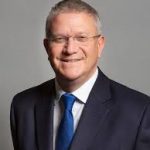
Tag: Andrew Rosindell

  • Andrew Rosindell – 2024 Speech on the Economy, Welfare and Public Services

    Andrew Rosindell – 2024 Speech on the Economy, Welfare and Public Services

    The speech made by Andrew Rosindell, the Conservative MP for Romford, in the House of Commons on 22 July 2024.

    Thank you, Madam Deputy Speaker. May I say what a pleasure it is to follow the hon. Member for Welwyn Hatfield (Andrew Lewin)? He spoke with great eloquence, and also with passion about his constituency. I know what a wonderful moment it is when we give a maiden speech. We all have that honour when we enter the House. I welcome the hon. Gentleman to his place, and look forward to working with him in the years to come. Of course, Hertfordshire is next to the county where my own constituency is located—Essex and Hertfordshire are twin counties, so we are neighbours in some senses—and I also look forward greatly to hearing more from him in the months and years ahead.

    I think that one of our colleagues who spoke earlier forgot to welcome the hon. Member for Finchley and Golders Green (Sarah Sackman). I know that constituency well. I campaigned for Mrs Thatcher in 1983 as a young Conservative, at the age of 17; I know Ballards Lane very well, and I have often been to Margaret Thatcher House. I must commend the hon. Lady on her kindness and the generous words that she spoke about not only Margaret Thatcher but my friend Mike Freer, whom we were sad to lose in the election. I know that she will be a fine champion of Finchley and Golders Green, which is a proud constituency with a great identity, and I look forward to visiting Finchley again while the hon. Lady is in place as the Member of Parliament.

    Wera Hobhouse

    I do apologise to the hon. Member for Finchley and Golders Green, and to the whole House, for not recognising my duty to thank the hon. Lady for her wonderful speech. This means that even after seven years in the House one sometimes forgets to do certain things. It is very good to see the hon. Lady in the House, and I particularly enjoyed what she said about the rule of law.

    Andrew Rosindell

    I am deeply proud to have been elected for the seventh time as the Member of Parliament for Romford. I am now the longest-serving MP for Romford since 1885, when the constituency was created. I am here because I believe in things. I am here not because I seek titles and positions, but because I believe in this country, and I am also passionate about my constituency, because it is where I am from. I think that those of us who come from our constituencies know how important it is to represent a place where we have lived all our lives, and I will always be proud of being the MP for my home town.

    As I have said, I believe in things, and I believe first in this country. Let me say to Ministers, whom I congratulate on their election to power, that things change and Governments come and go, but the one thing that we must never give away is the freedom and liberties of the British people. I say to them, “Whatever you do, please do not reverse the biggest democratic decision that the British people made.” We want to have sovereignty; we want to have the right of self-governance; but we also want prosperity, and that means free enterprise, low taxes and smaller government. It does not mean creating a larger centralisation of power. Margaret Thatcher taught us that if we have lower taxes and free enterprise, if we give people the freedom to prosper and make their own decisions in life, in the end we create more prosperity and more opportunities for all. That, I am sure, is what all of us, in all parts of the House, want to see, so let us learn from past mistakes.

    I respect the fact that we have different opinions on many issues, and I also understand that all of us here want the best for our country and our constituencies. However, I believe that if we want economic prosperity, we need Governments to stay out of people’s lives. We need to allow business to flourish. We need less regulation, and we need to cut unnecessary public expenditure, so that people are not paying high taxes which disincentivise work and put people off from investing in our country. I hope that the Government, having taken office, will pay heed to that. I also say to them that, yes, we want to protect our environment, but we have to think very carefully about the evangelism of net zero. We do not want to make our country cold and poor, and to give competitive advantage to other countries that do very little about climate change and have not met their targets. I am afraid the policy that the Government have adopted will deliver more power to China, so I warn them about going too far in that direction.

    I believe that we should be a Parliament that makes decisions, so I disagree with more and more quangos, committees of experts and bodies that are not democratically accountable having so much say. Why are we effectively giving the Office for Budget Responsibility a veto over the rights of this Parliament to decide economic policy? Surely that is something that the Government should think again about.

    Before I have to end, I would like to say that if we are serious about devolution, we should give all parts of the country greater control over their local communities. Boroughs such as Havering would rather be independent. We do not want to be under Greater London; we want power devolved back to our local communities. Historically, we are part of Essex, and we do not like being controlled by City Hall—and certainly not by the current Mayor of London. I represent the people of Romford, and they would agree with what I have said. Let us have free enterprise, true devolution and, above all, prosperity for the British people, but let us also stand up for our country abroad and at home.

  • Andrew Rosindell – 2015 Parliamentary Question to the Foreign and Commonwealth Office

    Andrew Rosindell – 2015 Parliamentary Question to the Foreign and Commonwealth Office

    The below Parliamentary question was asked by Andrew Rosindell on 2015-11-02.

    To ask the Secretary of State for Foreign and Commonwealth Affairs, what his Department’s primary objectives are at the upcoming Commonwealth Heads of Government meeting.

    Mr Hugo Swire

    The 2015 Commonwealth Heads of Government Meeting is an opportunity to demonstrate the continued relevance of the organisation in the 21st century. The British Government will pursue its commitment to strengthen the Commonwealth’s focus on promoting democratic values and development. We will also use the Heads of Government Meeting to shape a Commonwealth role in implementing the new Sustainable Development Goals, and consider how the organisation can help address other global challenges. A new Secretary General will also be announced at this meeting.

    The Heads of Government Meeting also takes place the week before the Paris Climate Conference. The British Government will therefore use the meeting as an opportunity to build support amongst Commonwealth members for an ambitious agenda and targets.

  • Andrew Rosindell – 2015 Parliamentary Question to the Foreign and Commonwealth Office

    Andrew Rosindell – 2015 Parliamentary Question to the Foreign and Commonwealth Office

    The below Parliamentary question was asked by Andrew Rosindell on 2015-11-09.

    To ask the Secretary of State for Foreign and Commonwealth Affairs, what steps he is taking to cooperate with his Egyptian counterpart on measures to (a) counter security threats and (b) ensure the safety of air passengers travelling from Egypt.

    Mr Tobias Ellwood

    On 5 November, the Prime Minister, my right hon. Friend the Member for Witney (Mr Cameron) and I spoke with President Sisi and Foreign Minister Shoukry about the safety of air passengers travelling to and from Egypt. Her Majesty’s Ambassador in Cairo is in regular contact with the Egyptian authorities, and the UK has an ongoing dialogue with Egypt on security issues.

    The Foreign and Commonwealth Office is engaging with international partners about the ongoing aircrash investigation and its implications. We have shared all information we are able to share and discussed our conclusions with partners. We are also helping officials from the Department for Transport to work closely with Egyptian counterparts to ensure necessary airport security measures are in force. The safety of British nationals remains our priority.

  • Andrew Rosindell – 2015 Parliamentary Question to the Department for Environment, Food and Rural Affairs

    Andrew Rosindell – 2015 Parliamentary Question to the Department for Environment, Food and Rural Affairs

    The below Parliamentary question was asked by Andrew Rosindell on 2015-11-23.

    To ask the Secretary of State for Environment, Food and Rural Affairs, what assessment she has made of the potential effect of the forthcoming cessation of funding of the National Wildlife Crime Unit on the prosecution of wildlife crime cases in the UK; and if she will make it her policy to continue funding the National Wildlife Crime Unit for the next five years.

    Rory Stewart

    An assessment of the effect of future funding decisions regarding the National Wildlife Crime Unit on the prosecution of wildlife crime cases in the UK has not yet been made.

    Decisions on future funding of the National Wildlife Crime Unit beyond March 2016 will be made as part of the current Spending Review process.

  • Andrew Rosindell – 2015 Parliamentary Question to the Home Office

    Andrew Rosindell – 2015 Parliamentary Question to the Home Office

    The below Parliamentary question was asked by Andrew Rosindell on 2015-12-01.

    To ask the Secretary of State for the Home Department, if she will bring forward legislative proposals to allow the free movement of citizens between the UK, Canada, Australia and New Zealand.

    James Brokenshire

    The Government has no plans to legislate to introduce free movement between the United Kingdom, Canada, Australia and New Zealand.

    The United Kingdom’s existing immigration arrangements, do nevertheless reflect the case for promoting mobility between countries. This includes the Tier 5 Youth Mobility Scheme which allows 18-30 year olds from Canada, Australia, New Zealand and other participating countries and territories to experience life in the UK for two years including the ability for them to work. We also continue to operate arrangements under which nationals of Commonwealth countries that have a UK-born grandparent may be admitted to work and settle in the United Kingdom through the UK Ancestry route. Also, citizens of Australia, Canada and New Zealand do not require a visa to visit the UK and the permitted activities of visitors include business related activities such as attending meetings and conferences, negotiating and signing business contracts and attending trade fairs for promotional work.

    We have also introduced new measures such as the registered traveller scheme which offers expedited entry to the UK through use of the e-gates at the border.

  • Andrew Rosindell – 2015 Parliamentary Question to the Department of Health

    Andrew Rosindell – 2015 Parliamentary Question to the Department of Health

    The below Parliamentary question was asked by Andrew Rosindell on 2015-12-07.

    To ask the Secretary of State for Health, what steps his Department is taking to ensure that doctors from the EU working in the NHS have adequate English skills to practice.

    Ben Gummer

    In 2014 powers were given to the General Medical Council to enable them to carry out proportionate language checks on doctors from the European Union who wish to practise in the United Kingdom. This is a major step forward for quality of care and patient safety by ensuring that only doctors with adequate English language skills are able to practise in the UK.

    Local checks are also carried out by individual employers as part of their recruitment processes.

  • Andrew Rosindell – 2016 Parliamentary Question to the Department of Health

    Andrew Rosindell – 2016 Parliamentary Question to the Department of Health

    The below Parliamentary question was asked by Andrew Rosindell on 2015-12-17.

    To ask the Secretary of State for Health, what steps he plans to take to ensure that implementation of European Professional Cards for doctors does not inhibit his Department’s ability to perform background checks on doctors from other European countries.

    Ben Gummer

    The European Professional Card (EPC) will not be introduced for doctors until 2018 at the earliest.

    The European Commission will review the effectiveness of the EPC process for the first wave of professions, which includes nurses, pharmacists and physiotherapists, before any decision is taken to extend the EPC to other professions.

  • Andrew Rosindell – 2016 Parliamentary Question to the Department for Culture, Media and Sport

    Andrew Rosindell – 2016 Parliamentary Question to the Department for Culture, Media and Sport

    The below Parliamentary question was asked by Andrew Rosindell on 2016-01-06.

    To ask the Secretary of State for Culture, Media and Sport, what steps his Department is taking to (a) encourage the training of new behind the scenes production staff and (b) promote Britain’s position in the global film industry.

    Mr Edward Vaizey

    The Government announced up to £16 million in match funding in 2013 and a further £4m in 2015 to support skills in the Creative Industries, including training for behind the scenes production staff. The UK has one of the most generous film tax reliefs in the world. In 2014-15, the Government paid out £251 million in film tax relief, which attracted over £1 billion in investment to the UK last year. In 2015-16, the Government is also providing over £23 million in grant in aid alongside a projected £49 million in Lottery funding to support Britain’s position in the global film industry.

  • Andrew Rosindell – 2016 Parliamentary Question to the Department for Education

    Andrew Rosindell – 2016 Parliamentary Question to the Department for Education

    The below Parliamentary question was asked by Andrew Rosindell on 2016-01-18.

    To ask the Secretary of State for Education, if she will take steps to increase schoolchildren’s understanding of the Commonwealth by increasing the proportion of the national curriculum dedicated to teaching about the Commonwealth and its relationship with the UK.

    Nick Gibb

    The national curriculum’s programme of study for citizenship education sets the expectation that pupils are taught about the United Kingdom’s current relations with the Commonwealth. There are also opportunities in the history national curriculum for schools to teach about the Commonwealth.

    The national curriculum, introduced in September 2014, does not attempt to represent the sum total of everything that should be taught in schools. It prescribes the essential knowledge that pupils should be taught, leaving schools greater flexibility to teach over and above what the national curriculum requires, and to decide how to teach the essential content that is prescribed.

  • Andrew Rosindell – 2016 Parliamentary Question to the Foreign and Commonwealth Office

    Andrew Rosindell – 2016 Parliamentary Question to the Foreign and Commonwealth Office

    The below Parliamentary question was asked by Andrew Rosindell on 2016-01-25.

    To ask the Secretary of State for Foreign and Commonwealth Affairs, what the cost to the public purse was of the Judicial Committee of the Privy Council acting as final court of appeal for Commonwealth relations in 2015.

    Mr Hugo Swire

    The administration of the Judicial Committee of the Privy Council administration has been the responsibility of the UK Supreme Court (UKSC) and its costs are integrated with those for running the UKSC. Accordingly it is not possible to identify precisely those costs which are attributable to the JCPC.

    In 2014 – 2015, however, which is the latest financial year for which figures are available, the JCPC accounted for approximately 33% of the number of cases heard by both courts and 29% of the number of sitting days in both courts. On the basis of the average of both options the JCPC can notionally be regarded as consuming 31% of the total gross expenditure of both courts. In 2014 – 2015 this was £12.44 million, which means the JCPC’s share of this is notionally £3.85 million. Costs are offset by the £316,000 raised from fees charged to JCPC litigants.
