
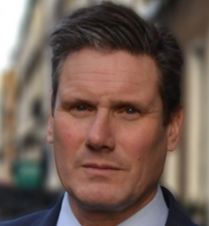
The statement made by Keir Starmer, the Prime Minister, in the House of Commons on 20 April 2026.
With permission, Mr Speaker, I would like to provide the House with information that I now have about the appointment of Peter Mandelson as our ambassador to the United States.
Before I go into the details, I want to be very clear with this House that while this statement will focus on the process surrounding Peter Mandelson’s vetting and appointment, at the heart of this there is also a judgment I made that was wrong. I should not have appointed Peter Mandelson. I take responsibility for that decision, and I apologise again to the victims of the paedophile Jeffrey Epstein, who were clearly failed by my decision.
Last Tuesday evening, 14 April, I found out for the first time that on 29 January 2025, before Peter Mandelson took up his position as ambassador, Foreign Office officials granted him developed vetting clearance, against the specific recommendation of the United Kingdom Security Vetting that developed vetting clearance should be denied. Not only that, but the Foreign Office officials who made that decision did not pass this information to me, to the Foreign Secretary, to her predecessor, now the Deputy Prime Minister, to any other Minister, or even to the former Cabinet Secretary, Sir Chris Wormald.
I found this staggering. Therefore, last Tuesday I immediately instructed officials in Downing Street and the Cabinet Office to urgently establish the facts on my authority. I wanted to know who made the decision, on what basis, and who knew. I wanted that information for the precise and explicit purpose of updating this House, because this is information I should have had a long time ago, and that this House should have had a long time ago. It is information that I and the House had a right to know.
I will now set out a full timeline of the events in the Peter Mandelson process, including from the fact-finding exercise that I instructed last Tuesday. Before doing so, I want to remind and reassure the House that the Government will comply fully with the Humble Address motion of 4 February.
In December 2024, I was in the process of appointing a new ambassador for Washington. A due diligence exercise was conducted by the Cabinet Office into Peter Mandelson’s suitability, including questions put to him by my staff in No. 10. Peter Mandelson answered those questions on 10 December, and I received final advice on the due diligence process on 11 December. I made the decision to appoint him on 18 December. The appointment was announced on 20 December. The security vetting process began on 23 December 2024.
I want to make it clear to the House that, for a direct ministerial appointment, it was usual for security vetting to happen after the appointment but before the individual starting in post. That was the process in place at the time. This was confirmed by the former Cabinet Secretary, Sir Chris Wormald, when he gave evidence to the Foreign Affairs Committee on 3 November 2025. Sir Chris made it clear that
“when we are making appointments from outside the civil service…the normal thing is for the security clearance to happen after appointment but before the person signs a contract and takes up post.”
At the same hearing of the same Select Committee, the former permanent secretary to the Foreign Office, Sir Olly Robbins, said that Peter Mandelson
“did not hold national security vetting when he was appointed, but, as is normally the case with external appointments to my Department and the wider civil service, the appointment was made subject to obtaining security clearance.”
After I sacked Peter Mandelson, I changed that process so that an appointment now cannot be announced until after security vetting is passed.
The security vetting was carried out by UK Security Vetting—UKSV—between 23 December 2024 and 28 January 2025. UKSV conducted vetting in the normal way, collecting relevant information, as well as interviewing the applicant, in this case on two occasions. Then, on 28 January 2025, UKSV recommended to the Foreign Office that developed vetting clearance should be denied to Peter Mandelson. The following day, 29 January 2025, notwithstanding the UKSV recommendation that developed vetting clearance should be denied, Foreign Office officials made the decision to grant developed vetting clearance for Peter Mandelson.
To be clear, for many Departments a decision from UKSV is binding, but for the Foreign Office the final decision on developed vetting clearance is made by Foreign Office officials, not UKSV. However, once the decision in this case came to light, the Foreign Office’s power to make the final decision on developed vetting clearance was immediately suspended by my Chief Secretary last week.
I accept that the sensitive personal information provided by an individual being vetted must be protected from disclosure. If that were not the case, the integrity of the whole process would be compromised. What I do not accept is that the appointing Minister cannot be told of the recommendation by UKSV. Indeed, given the seriousness of these issues and the significance of the appointment, I simply do not accept that Foreign Office officials could not have informed me of UKSV’s recommendations while maintaining the necessary confidentiality that vetting requires.
There is no law that stops civil servants from sensibly flagging UKSV recommendations while protecting detailed, sensitive vetting information, to allow Ministers to make judgments on appointments or on explaining matters to Parliament. Let me be very clear: the recommendation in the Peter Mandelson case could and should have been shared with me before he took up his post. Let me make a second point: if I had known before Peter Mandelson took up his post that the UKSV recommendation was that developed vetting clearance should be denied, I would not have gone ahead with the appointment.
Let me now move to September 2025, because events then, and subsequently, show with even starker clarity the opportunities missed by Foreign Office officials to make the position clear. On 10 September, Bloomberg reported fresh details of Mandelson’s history with Epstein. It was then clear to me that Peter Mandelson’s answers to my staff in the due diligence exercise were not truthful, and I sacked him. I also changed the direct ministerial appointments process so that full due diligence is now required as standard. Where risks are identified, an interview must be taken pre-appointment to discuss any risks and conflicts of interest. A summary of that should be provided to the appointing Minister. I also made it clear that public announcements should not now be made until security vetting has been completed.
In the light of the revelations in September last year, I also agreed with the then Cabinet Secretary, Sir Chris Wormald, that he would carry out a review of the appointment process in the Peter Madelson case, including the vetting. He set out his findings and conclusions in a letter to me on 16 September. In that letter, he advised me:
“The evidence I have reviewed leads me to conclude that appropriate processes were followed in both the appointment and withdrawal of the former HMA Washington”.
When the then Cabinet Secretary was asked about that last week, he was clear that when he carried out his review, the Foreign Office did not tell him about the UKSV recommendation that developed vetting clearance should be denied for Peter Mandelson. I find that astonishing. As I set out earlier, I do not accept that I could not have been told about the recommendation before Peter Mandelson took up his post. I absolutely do not accept that the then Cabinet Secretary—an official, not a politician—when carrying out his review could not have been told that UKSV recommended that Peter Mandelson should be denied developed vetting clearance. It was a vital part of the process that I had asked him to review. Clearly, he could have been told, and he should have been told.
On the same day that the then Cabinet Secretary wrote to me, 16 September 2025, the Foreign Secretary and the then permanent secretary of the Foreign Office, Sir Olly Robbins, provided a signed statement to the Foreign Affairs Committee. The statement says:
“The vetting process was undertaken by UK Security Vetting on behalf of the FCDO and concluded with DV clearance being granted by the FCDO in advance of Lord Mandelson taking up post in February.”
It went on to say:
“Peter Mandelson’s security vetting was conducted to the usual standard set for Developed Vetting in line with established Cabinet Office policy”.
Let me be very clear to the House. This was in response to questions that included whether concerns were raised, what the Foreign Office’s response was and whether they were dismissed. That the Foreign Secretary was advised on, and allowed to sign, this statement by Foreign Office officials without being told that UKSV had recommended Peter Mandelson be denied developed vetting clearance is absolutely unforgivable. This is a senior Cabinet Member giving evidence to Parliament on the very issue in question.
In the light of further revelations about Peter Mandelson in February of this year, I was very concerned about the fact that developed vetting clearance had been granted to him. Not knowing that, in fact, UKSV had recommended denial of developed vetting clearance, I instructed my officials to carry out a review of the national security vetting process. But, as I have set out, I do not accept that I could not have been told about UKSV’s denial of security vetting before Peter Mandelson took up his post in January 2025, I do not accept that the then Cabinet Secretary could not have been told in September 2025 when he carried out his review of the process, and I do not accept that the Foreign Secretary could not have been told when making statements to the Select Committee, again in 2025.
On top of that, the fact that I was also not told, even when I ordered a review of the UKSV process, is frankly staggering. I can tell the House that I have now updated the terms of reference for the review into security vetting to make sure it covers the means by which all decisions are made in relation to national security vetting. I have appointed Sir Adrian Fulford to lead the review. Separately, I have asked the Government Security Group in the Cabinet Office to look at any security concerns raised during Peter Mandelson’s tenure.
I know that many Members across this House will find these facts to be incredible. To that, I can only say that they are right. It beggars belief that throughout this whole timeline of events, officials in the Foreign Office saw fit to withhold this information from the most senior Ministers in our system of government. That is not how the vast majority of people in this country expect politics, government or accountability to work, and I do not think it is how most public servants think it should work either.
I work with hundreds of civil servants—thousands, even—all of whom act with the utmost integrity, dedication and pride to serve this country, including officials from the Foreign Office who, as we speak, are doing a phenomenal job representing our national interest in a dangerous world—in Ukraine, the middle east and all around the world. This is not about them, yet it is surely beyond doubt that the recommendation from UKSV that Peter Mandelson should be denied developed vetting clearance was information that could and should have been shared with me on repeated occasions and, therefore, should have been available to this House and ultimately to the British people. I commend this statement to the House.