
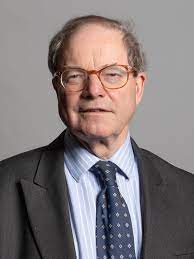
The speech made by Geoffrey Clifton-Brown, the Conservative MP for North Cotswolds, in the House of Commons on 13 May 2026.
Madam Deputy Speaker, I am grateful to catch your eye in this important King’s Speech debate. I follow other colleagues in congratulating the hon. Members for Bradford West (Naz Shah) and for Harlow (Chris Vince) on their amusing and well-informed speeches.
One of the few things that this Government have got right in the King’s Speech is the expedited Bill to nationalise Scunthorpe steelworks in order to safeguard domestic steel production. The plant is costing the taxpayer £1 million a day, and therefore modernisation and future private and public investment under a Government-owned company need to be implemented.
However, our economy is in a very fragile state. It grew by only 1.3% in real terms in 2025, and the Office for Budget Responsibility forecasts that it will grow by only 1.4% in 2026—the lowest level of any G7 country. The United Kingdom is carrying one of the highest levels of borrowing in the western world. National debt is a staggering £2.9 trillion, which is equivalent to 93.8% of our entire GDP or £102,000 per household. Even more concerning is the fact that we are expected to spend—wait for it—£111 billion on debt interest alone to service that debt. If that were a Government Department, it would be the third largest.
We are heavily reliant on international markets, and our national balance sheet is highly leveraged. That leaves our economy dangerously exposed to external shocks, such as the war in Iran and the Ukraine conflict. As a result, our borrowing premium on that debt is one of the highest in the OECD; today, we are paying more in debt interest than Greece. A 1% rise in interest rates adds £1.3 billion in costs in the first year, and £12 billion by the end of the forecast period, as new, expensive debt replaces older, cheaper debt. Indeed, yesterday, 30-year gilts hit a 28-year high at 5.81%. That gives a clue as to what the international markets think of our economic standing.
On that note, I observe that one of the Labour leadership candidates does not have a clue how the bond market funding our enormous debt actually works. With inflation expected to rise again—some forecasters expect it to reach 6.7% next year—we face the very real risk of sliding into recession or a bond strike. If those very serious consequences were to occur, this country would be forced to take much more fundamental measures to cut our expenditure. A competent Government should already be doing so, to avoid any chance of this happening and to protect our reputation in the international markets.
I note that the Government have included a Bill to reform the welfare system. The fact that 1 million people could work but do not is causing unacceptable tax increases on the rest of the hard-working population’s earnings. On top of that, higher interest rates are leading to higher food prices, higher mortgage payments and higher business costs. No one in this country—especially poorer working people—will be protected.
Some of the issues we see today are avoidable. The current political instability is a major factor. It is not my job as an Opposition MP to tell Labour how to sort out its leadership problems, but whatever it does, it is important to convince the international community and the people of this country that there is a stable, well-thought-out economic policy and to give the markets confidence, in order to reduce the current borrowing premium. It is not the job of the Government to subsidise every business, but it is the duty of the Government to create conditions in which growth, prosperity, enterprise and investment can thrive.
The Government have included a Bill to target youth unemployment, which is welcome, but the fact that it has risen by 16% or by 100,000 compared with a year ago makes it very hard for youngsters now leaving university or further education to start their careers. Meanwhile, businesses—particularly in hospitality and retail—are being taxed into oblivion and are not hiring as many people.
In my North Cotswolds constituency, we employ 3,700 people in hospitality, and the sector provides £220 million to the local economy. However, higher employer national insurance contributions, rising minimum wages, hugely increasing business rates and energy price increases, exacerbated by the Employment Rights Act 2025, are all making it harder to make profits and are stalling growth. Taxes are already at a post-war high and there are threats to hike them further. None of this environment is encouraging businesses to hire and take on more people and so reduce the high unemployment figures.
Sorcha Eastwood (Lagan Valley) (Alliance)
I agree entirely with the hon. Member. To me, we have one of the most business-hostile environments. You made comments about young people not getting work. Do you agree that that is made worse by the national insurance hikes that have seen almost a generation being unable to get employment? Do you agree with me in that contention?
Madam Deputy Speaker (Ms Nusrat Ghani)
Order. Let us start the Session as we mean to go on, with no “you” or “your”, because the hon. Member is not talking about me.
Sir Geoffrey Clifton-Brown
I do not think I could design a tax increase that was a bigger tax on jobs than the hike in national insurance. I totally agree with the hon. Lady, and I think it is tragic in particular for our young people trying to get into the world of work today.
As Chairman of the Public Accounts Committee, my focus is on value for money for the taxpayer and ensuring that no expenditure goes to waste. Figures published by the National Audit Office in its “Audit insights” report in January 2026 point to a deeply worrying picture. The Government now spend around £1.1 trillion of taxpayers’ money across 17 Departments. A Department’s accounts are qualified—sorry, this is getting a little technical, but I hope the House will bear with me a little in this section of my speech—when it does not spend its budget as Parliament intends. The Department for Work and Pensions has had its accounts qualified for 36 years because its fraud and error rate is 3.3%, costing the taxpayer a staggering £9 billion. Overall—this is even more staggering—the Government have written off close to £7 billion this year across Departments, including the Ministry of Defence writing off £1.5 billion purely on cancelled projects. I repeat: £7 billion has been written off this year from cancelled and wasted projects. That is staggering.
The PAC has consistently recommended that each Department improves its digital and AI efficiencies. We believe that should be implemented from the top down, and that a chief digital and information officer should be appointed at a senior level in every Department and on arm’s length bodies. That would lead to efficiencies and savings. After all, every efficiency and every saving that can be made is more money to spend somewhere else. The public sector is constantly behind the private sector digitally, and we need to do much better to ensure that our public services actually deliver for taxpayers, using the latest and best technology to do so. AI is a tsunami that the Government are nowhere near prepared to deal with. I do not mean this as a criticism of the civil service—it is just how it is—but only 5% of the civil service have specific IT qualifications. Some experts say that needs to rise to 10%, which would be a massive transformation.
The Government announced a Bill to reform the welfare system. This year alone, the Department for Work and Pensions budget is expected to reach a projected £333 billion, or around 23.7% of UK spending. That almost outweighs the income tax payments of £330 billion that we receive from hard-working people. Imagine that: the total amount of income tax from hard-working people almost does not pay for the bill for the Department of Work and Pensions. The pension and benefit budgets are ballooning, and that expenditure is only due to increase as we mercifully live longer and healthier lives. Somebody else mentioned that we are at risk of intergenerational unfairness. There is a risk that our children will be unable to pay off this increasing debt, yet this Government have failed to take back control of this skyrocketing budget. Instead, their Back Benchers refuse to support such changes, which would cost just £5 billion.
Another issue that the PAC will be examining closely is the cost of Government compensation schemes, which over their lifetime are expected to exceed £102 billion, or just under what we pay in debt interest in any one year. The Government, of course, have a moral obligation to compensate citizens when the state makes serious mistakes, but we must do so in a fair, proportionate and non-litigious way.
Finally, and most importantly, I want to turn to defence. The first absolute duty of any Government is to ensure that our nation is properly defended. The King’s Speech made a commitment to NATO and to a sustained increase in defence spending, yet the defence investment plan, promised from that Dispatch Box in June 2025 and in every month since then—alongside the strategic defence review—has still not been published. Until we have that plan, we cannot see how the Government propose to procure all the military equipment that is needed.
Jim Shannon
I commend the hon. Gentleman for the speech that he is making. Does he agree that one of the things we need to do on defence here in the United Kingdom is adopt the drone technology that Ukraine now has? Russia is under threat: it is worried about the attacks that are reaching far into its interior. Does he agree that we may need a partnership with Ukraine to promote our drone technology in a way that can make us as effective as the Ukrainians?
Sir Geoffrey Clifton-Brown
If the hon. Gentleman is just a little patient, he will find that, two or three paragraphs down, I will address precisely that point.
Currently, the defence budget for 2025-26 is £62.2 billion, which is a measly 18% of the welfare budget of £333 billion. The Government have pledged to increase it by 2.6%, or £9 billion, by 2027 and by 3% in the next Parliament, which means a further increase of £14 billion. But none of that new money has yet arrived.
Iqbal Mohamed (Dewsbury and Batley) (Ind)
Does the hon. Gentleman agree that the best form of defence is peace, and that the overseas development aid budget—as was mentioned earlier by the right hon. Member for Sutton Coldfield (Sir Andrew Mitchell)—is a key component of achieving peace around the world through soft power and diplomacy? A great deal of that aid is crucial for people’s survival in many parts of the world.
Sir Geoffrey Clifton-Brown
I welcome the hon. Gentleman’s intervention. As someone who worked under my right hon. Friend for Sutton Coldfield (Sir Andrew Mitchell) as a junior Opposition defence spokesman, I understand the value of overseas aid, and I particularly understand the elements of it that he describes as soft power. The other day the PAC conducted an inquiry about the BBC World Service, and I do wish that the Government would fund that service properly. It is an extremely well-respected element of Britain’s ability to project our values around the world, and it is very sad when the Chinese and the Russians come in as soon as we make cuts in it.
At a time when the world is increasingly uncertain and bellicose, our MOD budget is in crisis, and as a result a significant number of procurement projects have been put on hold. These delays will have significant cost implications, so when, or if, the extra money does arrive, it will buy less and less equipment. I went to Ukraine earlier this year, and it is clear to me that we need more and more rockets, drones, interceptors, unmanned vehicles and investment in space. However, some of the proposed equipment is designed for yesterday’s wars, and it remains to be seen whether the MOD will be agile enough to make those substitutions in future procurement.
David Davis (Goole and Pocklington) (Con)
That is pretty obvious.
Sir Geoffrey Clifton-Brown
It may be pretty obvious to some, but it is not so obvious to others.
To govern is to make difficult choices. In short, the Government are spending more than the country can afford, funded by ever-increasing amounts of debt. If we are serious about protecting our nation in an increasingly uncertain world, we must also be serious about the strength of our economy. That means bringing our unaffordable welfare bill under control, creating a stronger environment for growth, eliminating billions of pounds in waste—some of which I have identified in my speech, although if time had allowed I could have identified billions more—and reforming how government works through the rapid roll-out of digital reform. The civil service must be reoriented around productivity and efficiency. Only with a stronger, leaner and more resilient economy can we fund our defences, secure our future and meet the challenges ahead.