Category: Speeches

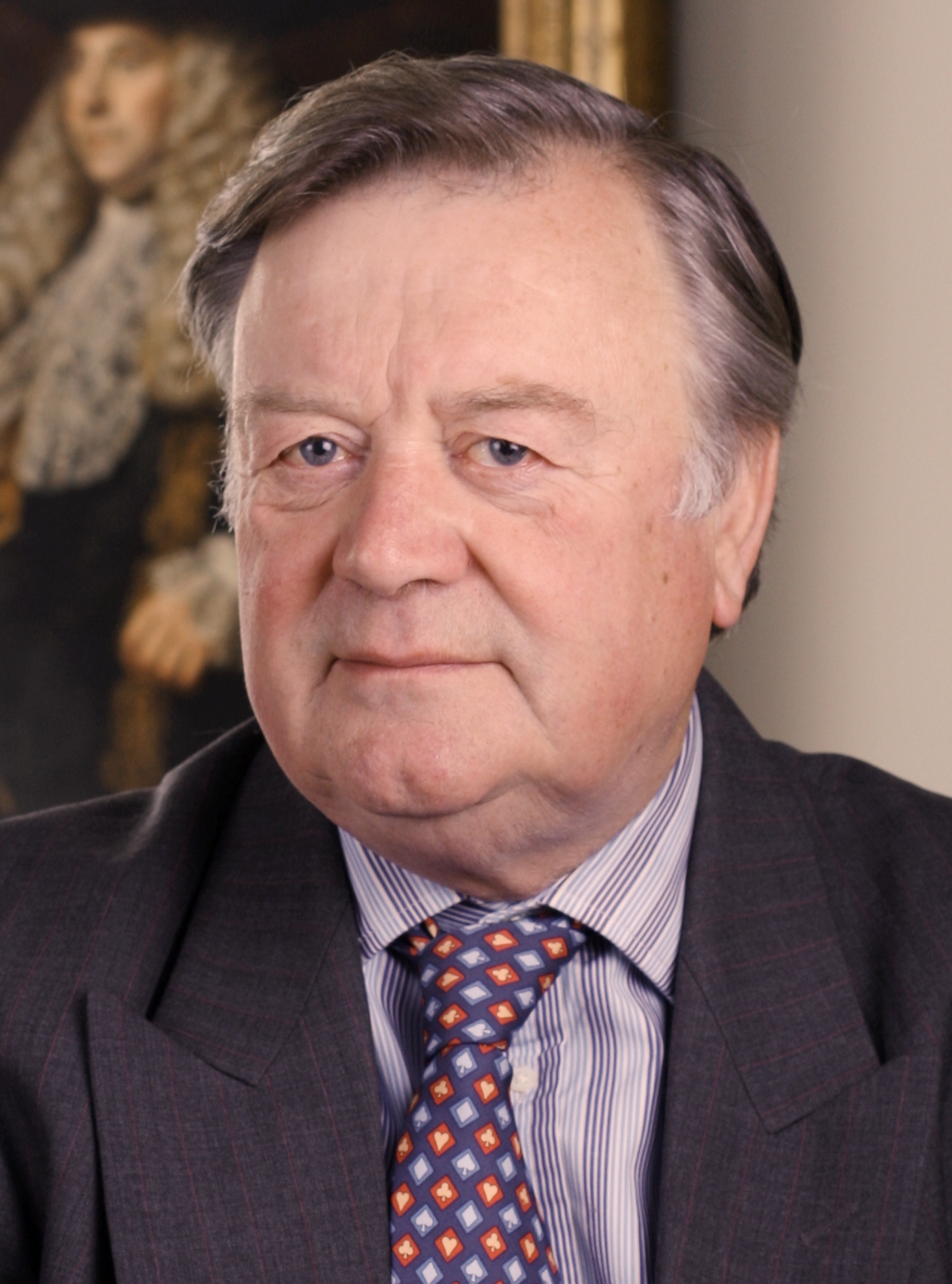
  • Jim Cunningham – 2019 Speech on University Hospital Coventry

    Below is the text of the speech made by Jim Cunningham, the Labour MP for Coventry South, in the House of Commons on 13 June 2019.

    I am grateful to Mr Speaker for granting me the opportunity to raise this issue, which is very important to my constituents in Coventry South. I am sure it is also important to the constituents of colleagues from Warwickshire.

    I thank my colleagues—my hon. Friends the Members for Coventry North East (Colleen Fletcher), for Coventry North West (Mr Robinson) and for Warwick and Leamington (Matt Western), and the hon. Members for Nuneaton (Mr Jones), for Rugby (Mark Pawsey) and for North Warwickshire (Craig Tracey)—for their support. Together, we sent a letter to the Secretary of State for Health and Social Care to request a meeting to discuss these issues, and I am keenly awaiting a response. Many of those colleagues also attended an informative meeting with two surgeons from the hepato-pancreato-biliary unit at University Hospital Coventry, Mr Khan and Mr Lam. The point of the letter was that we wished to discuss the transfer of the HPB unit, which provides pancreatic services at University Hospitals Coventry and Warwickshire, to hospitals in Birmingham and Worcester.

    UHCW has been developing pancreatic cancer services since 1990. It has an excellent team of doctors, specialists, nurses, surgeons and other healthcare professionals, and has completed more than 1,000 major operations and thousands of other therapies. It deploys cutting-edge robotic, endoscopic and radiologic technology to treat patients in Coventry. It takes a patient-centred approach to its service, resulting in excellent feedback from those who have undergone treatment in its care. The success of the department cannot be denied. The outcomes of therapies are on a par with international standards in all spheres. Proposals to shut down this extremely successful department will be a great loss to the NHS.

    Matt Western (Warwick and Leamington) (Lab)

    I thank my hon. Friend for giving way. He is making a very important point. Does he agree that one of the key issues, as he was just alluding to, is that with any potential loss of service comes not just the potential loss of reputation but the issue of what sort of haemorrhaging effect it may have on the rest of this great hospital?

    Mr Cunningham

    Yes, I fully agree with my hon. Friend. That was one of the points made by the surgeons whom I and the hon. Member for Nuneaton met a few weeks ago.

    These proposals stem from the 2014 regional review of services. They are based on the fact that the UHCW was not providing care for enough people, according to the requirements of the Department of Health and Social Care and commissioning guidelines. There were serious capacity constraints at University Hospital Birmingham, leading to multiple cancellations of operations on the day and prolonged waiting times. The process of the review was in fact challenged by a legal notice. The initial proposal stated that UHB and UHCW services should be amalgamated, with the teams working together to develop a model that would provide more efficient services in the west midlands and maintain operating at both sites, with the joint service to be led by UHB.​

    Mr Marcus Jones (Nuneaton) (Con)

    I congratulate the hon. Gentleman on securing this debate. These are important services that my constituents also access. Clearly, amalgamating these services is of concern to me as it will take away the choice of residents as to whether they want treatment at Coventry or Birmingham. As the population is growing significantly in our area, amalgamating those services may also lead to longer waiting times. Does he agree with me?

    Mr Cunningham

    The hon. Gentleman makes a valid point, and I will be touching on that a little later on in my comments.

    As a bigger hospital in one of the UK’s biggest cities, UHB had a great deal of influence over these discussions. It soon became apparent to the UHCW team that the sacrifices would be one-sided. UHCW felt that it must pull out of the talks, as it was clear that its services would be downgraded and its specialised work would be removed completely—services that it had worked hard to develop. That would be detrimental to the people of Coventry, Warwickshire and beyond.

    In November 2018, NHS England served a formal notice on UHCW to transfer specialised liver and pancreas services to UHB in Birmingham or risk decommissioning. UHCW was denied the opportunity to establish the population base required to be an independent centre. There is now a concerted effort from UHB trust management and NHS England to enforce the takeover of the HPB centre at Coventry.

    The simple and accepted solution, which is in line with the professional recommendations, is to implement the agreement between UHCW, Worcester Acute Hospitals NHS Trust and Wye Valley NHS Trust to provide the liver and pancreas specialised service at UHCW NHS Trust. It is important to highlight the ongoing capacity constraints at UHB. The realignment from Worcester and Hereford to UHCW would effectively fulfil the required population base to be an independent centre—as per Department of Health and Social Care guidelines—and also reduce the very long waiting times for cancer operations and improve access.

    The proposals demonstrate more short-sighted, efficiency-obsessed thinking from NHS England based on the National Institute for Health and Care Excellence guidelines. The findings of the 2015 review, which stated that UHCW’s HBP unit does not serve enough people, totally ignored the good standard of pancreatic care at UHCW. It is of the highest quality and helps to provide patients with the best possible outcomes. NHS England’s proposals threaten the standard of care, which I will raise shortly. The proposals will have a detrimental impact on those in need of this care in Coventry and elsewhere in Warwickshire.

    Although the 2015 review stated that the HPB unit did not reach the population requirements, thousands of lives are saved because of the outstanding service that the team at UHCW have developed. The most obvious problem that my constituents in Coventry South, and people in east Warwickshire, will be faced ​with is geographical, as the hon. Member for Nuneaton said. Many of them will have to travel about 16 miles for treatment, which will be very costly. They will have to take trains, and we all know the problems associated with that. The time it will take patients who currently use the service to travel to Birmingham is unfair. Patient access will no doubt be reduced, as the journey time, as my colleagues from Coventry will be well aware, is about an hour by car and over 80 minutes by public transport. The journey time for patients who currently use the service at UHCW and live outside Coventry, in rural areas out of the reach of public transport, will be considerably longer and the journey will be considerably more expensive. NHS England will directly increase the stress and physical discomfort that patients and family members will have to endure. In addition, once patients have made the hour-long, or hours-long, journey to UHB, there will be a good chance that their treatment will be cancelled or delayed.

    University Hospital Birmingham specialises in liver transplants, and it has a success rate that the whole of the west midlands is immensely proud of. Understandably, those operations take priority because of the speed with which they need to take place. Patients at the hospital who have other, slightly less urgent, conditions find that their operations are routinely cancelled in place of a liver transplant. Moving pancreatic services to Birmingham will dramatically increase the number of patients at risk of having their vital operation cancelled. Any patient who suffers from pancreatic cancer, or people who have a family member who has died from this terrible disease, will know that the speed of detection and the speed of treatment are absolutely vital to survival. It is extremely hard to detect, and, as a result, doctors need to act quickly after a patient has been diagnosed. Any delay to operations decrease the chances of survival even further.

    The closure of the HPB unit at UHCW also poses a risk to the overall status of the hospital. By closing a key unit, the hospital is at risk of losing its specialist status, and, as a result, being downgraded to a district hospital. That will have a domino effect on the rest of the hospital.

    Matt Western

    My hon. Friend is making some very powerful points. For me, one of the most staggering facts —I am sure he will agree—is the sheer scale of the number of such operations that are undertaken at Coventry—5,000 over the past two years, I believe. That does not seem a small figure to me. Does he agree that it is surprising that this is even being considered in the first place?

    Mr Cunningham

    Of course, I totally agree. As I have outlined, it is not about just the volume of operations but their quality, and the skill of the surgeons, the nurses and all the auxiliary staff who do the best that they can for the patients. UHCW will inevitably lose its most skilled doctors and staff, and see the disintegration of the team, service and leadership that the unit has spent so long building.

    Finally, I understand that UHCW has written to NHS England outlining its opposition to these proposals—something that I fully support, as I am sure my colleagues here do. It is concerning that UHCW may face these proposals being forced upon it by NHS England, justified by guidelines that have little thought or respect for the quality of care already being provided and the concerns of local people. Not only do these guidelines ignore the quality of care, but NHS England has shown an incapacity ​to implement them fairly and equally across the country. There was a similar case in Stoke, but rather than close the unit, NHS England allowed it to carry on operating as normal, despite not meeting the population requirements. Will the Minister guarantee that NHS England will work with UHCW and support it by allowing it to continue to provide these outstanding services to the people of Coventry and Warwickshire?
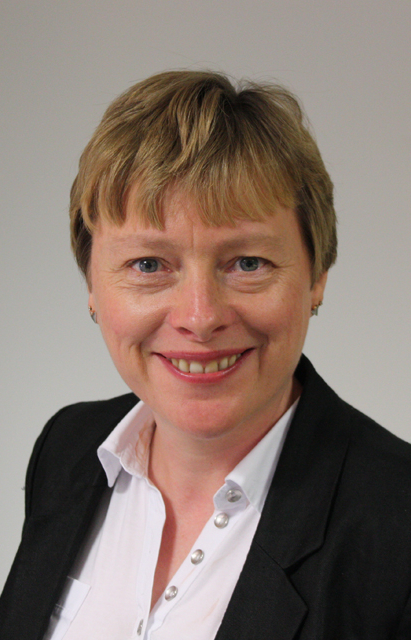

  • Angela Eagle – 2019 Speech on Brexit and Parliament

    Below is the text of the speech made by Angela Eagle, the Labour MP for Wallasey, in the House of Commons on 12 June 2019.

    It is a great privilege to follow the right hon. and learned Member for Beaconsfield (Mr Grieve) and the speech he has just given. I fear that the trajectory of the entire Brexit debate since the referendum, with everything that has happened, is pushing us to the extremes of that debate, because we had a Prime Minister who simply did not bring the country back together, or seek to do so. She decided that the way through this conundrum was to appease the unappeasable Brextremists in her own party. It is hard to see whether there will be the kind of consensus and bringing back together of our fragmented country for which my hon. Friend the Member for Stoke-on-Trent Central (Gareth Snell) wishes.

    I see us heading towards a final choice between no deal and revocation but, in the absence of that choice being before us today, the modest measure that we are debating gives us a chance as a Parliament to have an insurance policy against careering off into the catastrophe of no deal. A newly elected leader of the Conservative party with no democratic mandate from the country and no majority in Parliament might manipulate the way in which this House works to deny us the chance to express what we have already expressed clearly: there is no majority in this Parliament to take this country out of the European Union without a deal. To me, that is a modest proposal.

    Lady Hermon

    The Brexit Secretary studiously avoided questions about the Government’s commitment to the Good Friday agreement. Does the hon. Lady agree with me that taking this country out of Europe without a ​deal would have very serious consequences for Northern Ireland? Sinn Féin would certainly be incentivised to campaign for a border poll were there any hardening of the border, which would be inevitable with a no-deal Brexit. Heaven help us, but think what dissident republicans might do if there were to be no deal.

    Ms Eagle

    I agree with the hon. Lady. She is absolutely right to point out the Irish dimension of the entire debate. That many Conservatives seem willing to cast the Good Friday agreement into the flames has been an astonishing aspect of this debate.

    Members of the Conservative party opposed to this modest insurance policy describe it as a constitutional outrage, that this Parliament should seek to ensure that the country is not driven off the cliff of a catastrophic no-deal Brexit. In seeking to put aside one modest day of debate, to try to pass a Bill—which would need a majority in this House and to get through the House of Lords—to prevent that scenario, they suggest that we are somehow upending years of constitutional propriety.

    I would listen to such self-serving arguments with far more patience had we not had a Government who have spent the past few years disregarding all sorts of constitutional propriety in how they have run this Parliament: gerrymandering the number of people on Select Committees, wilfully ignoring Opposition motions and finally refusing even to participate in votes, and being quite happy to ride roughshod over centuries of constitutional convention for their own aims. They then get themselves in a lather about the very modest motion that we are debating.

    In the interests of the economic prosperity and security of this country, we have to prevent the Government party and any new Prime Minister behaving like a latter-day Charles I, seeking to govern without this Parliament. If we have to do that by using a modest Bill, that is the least we can do. There is no way, for the legitimacy of what we do in the future, that this Parliament must allow a Government without a majority and a new Prime Minister who does not have a direct electoral mandate to cause a no-deal Brexit without referring this back to the people.

    There is only one way, in the end, of solving the constitutional issues facing us, and that is through either a general election or another referendum. In any case, it is the people who must decide how we go forward. We are not going to allow any newly elected head of the Conservative party to take that decision away from the British people. That is why I support the very modest change before us today to put that insurance policy on to the statute book.

  • Dominic Grieve – 2019 Speech on Brexit and Parliament

    Below is the text of the speech made by Dominic Grieve, the Conservative MP for Beaconsfield, in the House of Commons on 12 June 2019.

    I listened carefully to the hon. Member for Stoke-on-Trent Central (Gareth Snell), just as I listened to what my right hon. Friend the Secretary of State for Exiting the European Union said at the Dispatch Box, and to my hon. Friend the Member for Stone (Sir William Cash). Each of them has picked up an issue and said to the House, “What is proposed is unusual and rather unsatisfactory. Let’s leave it; the House can do something else later,” but anybody who pays any attention to the way our Standing Orders operate ought to realise that there is no other opportunity than this, if the House wishes to assert its collective authority and be guaranteed a say in the event of an incoming Prime Minister wishing to take us out of the EU on a no-deal Brexit. There might be a desire to support that, but my point is that we will have no say. On that point, I am afraid that the hon. Member for Stoke-on-Trent Central is absolutely, wholly mistaken.

    My right hon. Friend the Secretary of State produced a series of obfuscatory facts that entirely glossed over the reality, which is that the Government can control the Order Paper between now and 31 October in a way that allows them to take us out of the EU with no deal, if an incoming Prime Minister—my right hon. Friend is in no position to speak for them—chooses to do that. That is the reality facing the House.

    Throughout this whole unhappy business of Brexit, I have tried to ensure a process that avoids chaos. I say this to my hon. Friends on the Conservative Benches: if we get to a point where a Prime Minister is intent on taking us out of the EU with no deal, the only way of stopping that Prime Minister will be to bring down their Government. I have to say here and now that I will not hesitate to do that, if that is attempted, even if it ​means resigning the Whip and leaving the party. I will not allow this country to be taken out of the EU on a no-deal Brexit without the approval of this House, and without going back to the country and asking it if that is what it wants.

    I desire the best for my party as a loyal member of it, and this is probably the last opportunity for a sensible way of influencing the outcome. Of course it is imperfect. The truth is that we need a hook on which to hang a Bill, so it was inevitable that the wording would be as it is today. There is no other way of doing this. It might be nicer if there were, but there is not. That, quite plainly, is the choice. I was elected Member of Parliament for Beaconsfield to represent my constituents’ interests. No deal is not in their interests, nor is there the smallest shred of evidence that there is a majority for that chaotic and appalling proposal, yet I have to face up to the fact that some people who wish to lead my party appear to believe that it is a viable option—indeed, appear to believe that they cannot become leader of the party if that is an option that they are not prepared to put forward. That is all part of a process, I am afraid, of further deceit, which is slowly swallowing up democracy in this country, and the reputation of this House.

    I shall support the motion. I disagree on most things with the Leader of the Opposition, and I disagree fundamentally with every tenet of his philosophical outlook, but this is the only opportunity we have. I will not say to my children and grandchildren, “When it came to it, I just decided to give up.” I will not do that.

  • Gareth Snell – 2019 Speech on Brexit and Parliament

    Below is the text of the speech made by Gareth Snell, the Labour MP for Stoke-on-Trent Central, in the House of Commons on 12 June 2019.

    On the subject of phantom Bills, there is one that has haunted this subject for many years now and he has just had nine minutes of debate time, so I shall try to be brief.

    First, I thank my Front-Bench colleagues, my right hon. and learned Friend the Member for Holborn and St Pancras (Keir Starmer) and my hon. Friend the Member for Darlington (Jenny Chapman), who has listened with distinction to every complaint I have had about the Labour party’s Brexit process over the past two years and has done so with good grace and a smile on her face, which is difficult when talking to me.

    I very much enjoyed the speech by the hon. Member for Grantham and Stamford (Nick Boles). He said that representatives of constituencies like mine have to be able to look their constituents in the eye when it comes to manufacturing jobs and the viability of the traditional industries, but I fear we have already passed that point. I have been asked time and again by the British Ceramic Confederation and those in the ceramics industries to vote for a deal. They have asked me to vote for a deal so that they can make preparations for the future. Food manufacturers in my constituency have told me that they need me to make a decision so that we can get past stockpiling. They have told me time and again that they need a resolution.

    Although I understand exactly what the hon. Gentleman said, I have not done it: on the three occasions when the opportunity presented itself to me, I have not voted for a deal. The most recent time, on 29 March, I followed my party line and would not support the deal that was put in front of me. I made a mistake: on that day I should have voted for a deal. I will now vote for a deal if one is brought forward, because it is inconceivable that we can continue with this line of debate in which we seek to make the decisions that we want to make and avoid making the decisions that we have to make.

    I do not object to the content of the motion, but I will not be voting for it. I shall abstain and withhold my vote, but not because I believe that no deal is something we should play with or that no deal is acceptable. I have voted continually to prevent no deal—I have ruled it out and taken it off the table—but in doing so all I have actually done is make the table longer and put it further away. Delaying Brexit does not stop no deal being the ultimate default endpoint; it just pushes it further into the future.

    We do not have a European Commission until 1 November, so any talk of renegotiation and future deals is completely pie in the sky. As many leadership candidates can talk about that as they wish, but by the point that the new Commission is available to endorse any changes, the date on which we exit will have passed. The choice that faces this House is not more parliamentary procedure and chicanery to quell our souls and let us feel we have all done the best we could to prevent no deal. We have to make the simple choice that is in front of us: do we want a deal or do we wish to revoke? If the answer is to revoke, the House can make its views known—there are plenty of mechanisms for doing so.

    Anna Soubry

    Will the hon. Gentleman give way?

    Gareth Snell

    No. I am going to carry on because of the time.

    If the answer is to support a deal, I say to members of my own party that we will have been responsible for a no—

    Dr Phillip Lee (Bracknell) (Con)

    Will the hon. Gentleman give way?

    Gareth Snell

    No. I am really sorry, but I am going to carry on.

    Dr Lee

    On that small point.

    Gareth Snell

    No, I am not giving way.

    We will be responsible for a no-deal Brexit by default, because of our inability to make a decision. That will not be helped if we allow ourselves today to be drawn down this route, with a two-clause Bill that brings us towards a date in September when something might come forward.

    The fact is that there is a deal. It is not a great deal, but it is what we are presented with. We can make decisions only on things that are presented to us. Until we face up to that, instead of messing around on what we want to do, we will make no progress, and my manufacturing constituents may be at the mercy of no deal. That will be the responsibility of everybody in this House who refuses to decide between the deal and revoking.

  • Nick Boles – 2019 Speech on Brexit and Parliament

    Below is the text of the speech made by Nick Boles, the independent MP for Grantham and Stamford, in the House of Commons on 12 June 2019.

    Two groups of right hon. and hon. Members will be finding today’s vote especially difficult. Many friends on the Conservative Benches will feel torn between their loyalty to their party and their clear understanding of the national interest. I know as well as anyone the great strain that they may be feeling this afternoon. I, too, was an instinctive loyalist—someone who towed the party line, ambitious for high office. I did not see anything wrong in that and, on most questions, I still do not see anything wrong in it, and nor is there anything ignoble about the desire to stay on good terms with the members of one’s local party.

    For each of us, however, there comes a moment and an issue that demands that we put such concerns to one side and do the uncomfortable thing, because we know that our constituents’ best interests demand it. I do not believe that any hon. Member with a concern for the welfare of sheep farmers or for people working in car factories will be able to look them in the eye after a no-deal Brexit has led to the decimation of Britain’s lamb exports and the destruction of thousands of highly skilled and well-paid manufacturing jobs. That is surely reason enough to support the motion today.

    The other group for whom today’s vote is hard is Labour Members who represent constituencies that voted by a clear majority to leave the European Union. ​They feel that they are duty bound to ensure that the UK does leave the EU and are worried that a vote for today’s motion will be misrepresented as an attempt to block Brexit. My constituents voted the same way, and I feel the same obligation, but today’s motion does not block Brexit—not even close. Today’s motion would secure an opportunity to debate a Bill on 25 June, so that Parliament, as my right hon. Friend the Member for West Dorset (Sir Oliver Letwin) said, can vote in September on the new Prime Minister’s plan for Brexit.

    Sir William Cash

    The hon. Gentleman refers to a Bill, but he does not know what it will contain, or perhaps he does. Will he enlighten us? Does it not really attempt to unwind the repeal of the 1972 Act, in so far as it deals with the question of deal or no deal? That is what the law says.

    Nick Boles

    The right hon. Member for West Dorset answered that question very adequately. The Bill simply provides Parliament with an opportunity in September to vote on the new Prime Minister’s plan for Brexit so that we do not leave with a no-deal Brexit on 31 October, as the law currently provides, without Parliament having had a chance to vote.

    If my old friends on the Conservative Benches, the true champions of one nation, and my new friends on the Labour Benches, the representatives of thousands of decent leave voters in the midlands and the north, find a way to support today’s motion, much more than a day of the Order Paper will have been won: this House will have seized the chance to defend its rights and freedoms against an arrogant Executive hellbent on implementing an extreme policy; the British people will have been given the opportunity to slow their leaders’ lemming-like rush towards a no-deal Brexit; and the world will have been given reason to believe that the psychodrama of the Tory party’s leadership contest does not define us as a nation, that Britain has not taken leave of its senses and that the House of Commons is a place in which grown-ups come together to take responsibility for securing the future of our country.

  • Oliver Letwin – 2019 Speech on Brexit and Parliament

    Oliver Letwin

    Below is the text of the speech made by Oliver Letwin, the Conservative MP for West Dorset, in the House of Commons on 12 June 2019.

    I am delighted to follow the right hon. Member for Twickenham (Sir Vince Cable). Much that needed to be said has already been said, so I shall not tediously repeat it. I want to make two points that I do not think have been sufficiently brought out so far in the debate and that might influence hon. Members who are still undecided about how to vote in a few minutes’ time.

    First, almost everyone who has spoken has agreed that it would be wrong for the UK to leave the EU without a deal, without Parliament having the chance for a decisive vote. We have no way of telling in advance how that vote would go, or whether Parliament would have an alternative. It has rightly been pointed out that without an alternative we could not prevent no deal from occurring, and it also is questionable whether there would be a majority for any alternative. However, almost everyone has agreed that we need to leave open the option for Parliament to make its mind up in such a decisive vote.

    It has been pointed out repeatedly that one possible means of preventing such a vote is a prorogation. I am indeed concerned about that, but I accept that we might be in luck and have a Prime Minister who does not seek to use that route. However, I want to draw hon. Members’ attention to a point that has not come out so far, which is that prorogation is not by any means the only way in which an incoming Prime Minister who was determined ​to leave with or without a deal—as many have put it—could avoid having a decisive vote. They would not need to go to the lengths of prorogation; in fact, they would not need to do anything. If they introduced nothing to the House of Commons to give us an opportunity for such a vote, the House would not, in the absence of this motion and what follows it, have any such opportunity.

    Sir William Cash

    My right hon. Friend has just referred to this motion “and what follows it”. This is a phantom motion about a phantom Bill. Will he illustrate exactly what we are meant to be talking about, as he did before, because a few months ago there were five Bills—we ended up with a No. 5 Bill? Will he please tell us what specific wording he would import into this motion if it were to be carried to the next stage?

    Sir Oliver Letwin

    My hon. Friend will not need to wait very long. If, but only if, this motion is passed today, it will be proper for those who put it forward to publish a sixth Bill, which it will be the job of the House to inspect and on which the House will take a view. It could be that the Bill will be defeated, but that will be a question for the democracy of our Parliament.

    Sir William Cash rose—

    Sir Oliver Letwin

    I will not give way. I am sorry.

    The point I am trying to make is that it is not necessary to prorogue to prevent a vote. The incoming Prime Minister would simply need to avoid taking any action. In those circumstances, we would leave on 31 October, and only after that would we need emergency legislation to catch up with the fact that we had left—

    Sir William Cash rose—

    Lady Hermon (North Down) (Ind) rose—

    Sir Oliver Letwin

    I will not give way. I am terribly sorry, but I promised the Speaker that I would be quick and I am going to be quick.

    We would then all be forced to vote for that emergency legislation because we could not possibly leave the country exposed to the fact that it had left without a deal and without due legislative preparation. So it is perfectly possible for an incoming Prime Minister to avoid any decisive vote unless we force one, and that is the purpose of reserving the day.

    My second point relates to that, and again I do not think it has fully come out in the debate so far. My right hon. Friend the Brexit Secretary has said that there is no reason to act now because there is no emergency—we are not facing immediate withdrawal without a deal, as we were when the right hon. Member for Normanton, Pontefract and Castleford (Yvette Cooper) and I put forward measures to prevent that and to ensure that we sought an extension—and of course he is right: we have until 31 October. That sounds like a long way away, but in parliamentary terms it is not. If we do not do these things now and on 25 June, and in the House of Lords thereafter, and if we do not have in place a process that leads to forcing a decisive vote in this House in early September on whatever the new Prime Minister puts forward, there will be no legislative time to do this, because the House traditionally sits for only two weeks in September and a couple of weeks in October.​

    That is well known to incoming Prime Ministers, and all the candidates are filled with sagacity and understanding of Parliament, so they will know perfectly well that they only have to occupy four weeks with doing nothing and we will be out. So, although it is not a fast-burning fuse, it is a bomb, and the fuse is already burning. If we do not put the fuse out now, we will not be able to disassemble the bomb in September or October.

    Sir William Cash

    Will my right hon. Friend give way?

    Sir Oliver Letwin

    I am terribly sorry, but I will not.

    That is why it is wrong to say that this proposal is premature. It may be right or wrong to vote for this motion this evening, but it is the only time we are ever going to get, and I hope that my hon. Friends and Opposition Members who are wavering about whether to support it recognise that they will have to look back if they do not support it now. If we fail, as we may well do this afternoon, they will have to look back on that as the direct cause of, in all likelihood, our leaving on 31 October without a deal. It is because I do not wish to have that on my conscience that I have taken the uncomfortable step of signing a motion that has at the head of it the name of the Leader of the Opposition, whose party I do not follow and with whose policies I generally profoundly and radically disagree. However, this is an issue so important that it transcends party politics, and I owe it to my fellow countrymen to ensure that we do not descend into a no-deal exit without Parliament having had a decisive vote.

  • Vince Cable – 2019 Speech on Brexit and Parliament

    Below is the text of the speech made by Vince Cable, the Leader of the Liberal Democrats, in the House of Commons on 12 June 2019.

    It is a privilege to speak in this debate as one of the signatories to the motion, but I want to start by paying tribute to the right hon. Member for West Dorset (Sir Oliver Letwin), who has not just signed this motion but anticipated the potential threat to the country, and indeed the sovereignty of the House, from proroguing and has applied his mind to a procedure for stopping it. We should all be very grateful to him. Of course although today is an Opposition day, this motion is supported by seven different parties. I hope and expect that a significant number of Conservatives will support it, not because they share my view that we should be stopping Brexit, but because they are concerned about the sovereignty of Parliament and the consequences of no deal.

    Fingers have been pointed at the right hon. Member for Esher and Walton (Dominic Raab), who is not present. He is probably not alone in advocating prorogation as a solution to this problem, but actually he has done us a favour and we should be grateful to him for highlighting a risk that might not otherwise have been apparent. I believe the real risk here is that one of the mainstream leadership candidates, having made unqualified commitments to remove Britain from the EU by 31 October, encounters the same arithmetic as his predecessor and encounters the constraints of the withdrawal agreement, and in order to avoid the humiliation of the present Prime Minister feels obliged to resort to drastic action. That is the risk that we face and I am grateful to the right hon. Member for West Dorset for starting a process of providing a necessary safety valve.

    It has already been agreed that we do not want an extensive review of all the arguments for and against no deal. They have been endlessly rehearsed and we will get plenty of time to rehearse them again. But in the few minutes I want to take, it is worth drawing attention to a couple of recent developments that underline just how dangerous that concept is.

    We have just had a visit from President Trump, who has reminded us about the instability of the world trading system. Those who advocate leaving without a deal place their faith in something called WTO rules. We now know that these WTO rules are worthless. ​The President of the United States attaches as much value to the WTO as he does to the European Union. He wants to destroy it. He is undermining it. He is failing to provide judges to dispute panels, which no longer work. So WTO rules are not worth the paper they are written on. That is the world into which the extreme advocates of no deal want to plunge the United Kingdom.

    The other point, which is highly topical, relates to the leadership competition within the Conservative party and the various fiscal bounties that are being offered to us. I suppose that, as an ageing pensioner on a high income, I should be deeply indebted to the right hon. Member for Uxbridge and South Ruislip (Boris Johnson) for thinking about me when he formulated his tax policy, but actually he is one of several candidates who threatens to blow a very large hole in the Chancellor’s provisions to deal with a no-deal Brexit.

    It could be argued that the Chancellor is excessively conservative. None the less, he is sufficiently prudent to be aware that a no-deal Brexit will do significant harm to the economy and to fiscal receipts and that there has to be some reserve provision. However, we now enter a period of danger in which that reserve could well be blown on promised tax cuts. Among the many adverse consequences of a no-deal Brexit—not just those we are familiar with around the supply of drugs, the shock to trade and the impact on the economy—is a serious fiscal crisis leading in turn to currency devaluation and other economic consequences.

    We will no doubt debate many times the consequences of no deal, but the risks are becoming more and more apparent. We should be grateful to those who anticipate those dangers and seek to prevent us from getting anywhere near them.

  • Kenneth Clarke – 2019 Speech on Brexit and Parliament

    Below is the text of the speech made by Kenneth Clarke, the Conservative MP for Rushcliffe, in the House of Commons on 12 June 2019.

    Mr Speaker, I am sorry that I surprised you. I am not sure that I wrote in beforehand, but I shall endeavour to be brief. I intend to be brief because there are not many complicated issues here.

    The first issue to which I want to respond is the procedural point that the Secretary of State wisely tried to retreat into, citing a few constitutional experts saying how outrageous it is for the House of Commons to try to take control of the Order Paper. Indeed, that very rarely happens but, with great respect to much more distinguished experts than me, such as Vernon Bogdanor, we have already demonstrated once that procedures already exist, which can be used—as they were by the right hon. Member for Normanton, Pontefract and Castleford (Yvette Cooper)—in very exceptional circumstances, for the House as a whole to take command of a day’s business. Of course, the reason it did not happen for many years is that most Governments have had a comfortable majority on every conceivable subject, so there was not the faintest prospect of their losing control of the Order Paper and nobody challenged them. However, we are in exceptional times and the precedent we have already created is a perfectly valuable one.

    Sir William Cash

    Will my right hon. and learned Friend give way?​

    Mr Clarke

    I will when I have finished my first point.

    This cannot bring down the Government. Of course, if the Government are defeated, it will be open to someone to bring a motion of confidence tomorrow. However, at present, the Government would carry a motion of confidence, so all we are doing—the majority of the House, if we do—is insisting that we want to bring some clarity to the present debate, and I would say some sanity. We want to give some reassurance to people in business up and down the country who are very worried, and take the opportunity again to rule out the idea of leaving with no deal. We certainly want to rule out the idea of proroguing Parliament indefinitely, so that the Prime Minister of the day can run a semi-presidential system for a bit and put in place what he or she wants, without any parliamentary majority.

    This is not a great threat to the constitutional foundations of the country. This does not actually threaten the future stability of Governments. and I am sure that, if we were in opposition, we would be supporting it without the slightest demur.

    Sir William Cash

    Will my right hon. and learned Friend give way?

    Mr Clarke

    I will give way, but I am about to finish the procedural point.

    In fact, when we were in opposition, David Cameron asked me to chair a committee to advise him on a lot of constitutional issues—with Sir George Young and Andrew Tyrie, who have now moved on to the upper House, and others—and to make recommendations. We actually advocated, and David Cameron in opposition accepted, that we should give the House more control over the business of the House. We started, eventually, this business of the Backbench Business Committee determining the business of the House for a day.

    In office, we took a slightly different perspective. I am afraid that was then reduced to the Backbench Business Committee producing harmless motions and the Government never voting on them, with only one-line Whips. In my opinion, one day, there might be a Government and a Parliament so adventurous as to contemplate giving more control to the House as a whole over its own business. However, this Parliament seems to prefer to get steadily weaker, rather than stronger, and I do not think that day has yet dawned. At this stage, as that is all I am going to say on the procedural point, I will give way.

    Sir William Cash

    On that procedural point, the reality is that Standing Order No. 14 gives precedence to Government business for very good reasons. It is in accordance with our constitutional conventions and the Standing Orders that Government have a majority and that, in those circumstances—[Interruption.] They do. With the confidence and supply agreement with the DUP, we have a Government and that is the point. We have a Prime Minister. This motion does no more than open the door to the possibility that, by some permutation or other, there may be some argument about a prorogation or, indeed, about no deal. But that is not what this motion is about; it is an open-door policy—nothing more or less.​

    Mr Clarke

    Governments pursue policies for which they have a parliamentary majority. I am going to be brief, so I shall not widen what I think is the very important broader constitutional procedural field.

    It is now argued by many people that this Parliament has no powers, really, except when it is passing legislation, and I think that that is what is contemplated here. Unless a statute is passed to change the law, the Government can regard motions in Parliament as a mere expression of opinion. I regard that as nonsense, I regard it as dangerous nonsense, and the sooner it is shot down the better. It has emerged in the last two or three years precisely because Parliament is fragmented: both parties are shattered on several policies, so people are trying again to get round the problems.

    Parties form a Government when they can command a majority in a vote of confidence. They can then only pursue policies for which they have a majority in the House of Commons, and continue to have a majority in the House of Commons. It is preposterous to start reinterpreting our unwritten constitution on the basis that no one ever intended that the Government should have to abandon a policy on which it is defeated in the House of Commons. That is complete nonsense. The worst thing to do—because one of the candidates at least fears that she would be defeated if she pursued her policy—is to send Parliament away and have no Parliament at all. I think that I have already made clear, in an intervention, my views on the prorogation point. I think that the sooner the House makes this clear, takes a day to make it clear and to make it illegal to contemplate doing that—and gives Parliament a role to stop it—the better.

    Leaving with no deal has, as I recall, been ruled out with increasing majorities on the three occasions on which we have voted on it. With this mad debate going on in the country at the moment, it is obviously high time Parliament reasserted the fundamental basis of what is going on—that there is no majority in the House for no deal. Apart from those who defend the desirability of leaving with no deal, which no one has done in today’s debate so far, I cannot see why people are going to such lengths to resist that.

    The Government’s policy, for which my right hon. Friend the Secretary of State speaks, is to oppose leaving with no deal. I agree with him that we can say to the Opposition, “Well, we had a deal and you would not let it go through.” I supported the Prime Minister’s latest attempt to surround that deal with suggestions that I think should have been supported by Opposition Members who agree with my hon. Friends and me on a soft Brexit. I have an eccentric view that they would have been supported.

    We have all constantly been attending plotting meetings. I have attended meetings at which Labour Members were agreeing to vote for the Second Reading of that Bill. What we were plotting was what amendments we would pass to put in improvements and safeguards. That could have prospered, but I am afraid that the Prime Minister preferred to do all her dealings, all the way through, with the members of the European Research Group. She always made concessions to them and eventually they told her that she had to go, so she said she was resigning. So we are now in this position.

    I personally believe—it may be an eccentric belief—that the Prime Minister could have secured a majority for the deal as she had finally modified it, in an attempt to ​get cross-party support. It is obvious that the deal that we all need will only be achieved by any Prime Minister when we face up to the need for cross-party support to get around the party divisions. Both parties must accept that a minority will rebel against any deal that comes forward, but we could probably get a majority of the House to vote down the Labour left and the Tory right and actually pass something that is in the national interest. That, I think, is the main objective that really lies behind today’s debate. To listen to all these arguments about why, for pedantic procedural and textual reasons, we should reject it is, I am afraid, to take—not for the first time—a rather bizarre perspective on the huge and historic events in which we are involved. The House really has to take some control.

    My final point is this. It might even improve the quality of the leadership debate that is going on in my party—and it needs to be improved—if we forced some reality into the exchanges between the extremely distinguished candidates who are vying for the privilege of being the next Prime Minister.

  • Scott Mann – 2019 Speech on Cornish Wrestling

    Below is the text of the speech made by Scott Mann, the Conservative MP for North Cornwall, in the House of Commons on 12 June 2019.

    Good evening, Mr Deputy Speaker. Meur ras—thank you—for allowing me to speak in the debate. The people of Cornwall will be saluting you.

    I come from a part of the country that has a very proud history and culture. Our population dates back to the stone age and is steeped in history and lore, particularly in mining and fishing. Some of our ancient traditions still exist today. Every year in Cornwall, people participate in the ancient tradition of hurling through the streets, and in the merry mornings of May, the ’Obby ’Osses descend through the streets of Padstow. In recent times, we have seen a huge resurgence in the sport of gig rowing. We are proud in Cornwall to be home to those historical cultural events, which are unique to our county.

    Today, I wish to shine a spotlight on Cornish wrestling. I will, if I may, refer to Cornish wrestling in the Cornish tongue for the rest of the debate—I will be referring to wrestling as “wrasslin”. That is how we describe it in Cornwall. I have had a large number of media requests about this debate, which I was not expecting.

    Cornish wrasslin bears no relation to the wrestling that people may have seen on television. It is not WWE. There are no ropes, nothing to jump off and no cage fights or tag teams. The sport of wrasslin in Cornwall sums up the Cornish very well. It is a game of power, skill and strength. Cornish wrasslin is a form of wrestling that has been established in Cornwall for several centuries. It is a unique sport that has witnessed a steady revival since the establishment of the Cornish Wrestling Association in 1920.

    The history of wrasslin was recorded first in “The History of the Kings of Britain” in 1139, in which Geoffrey of Monmouth suggested that Corineus, the medieval legend, wrestled a Cornish giant named Gogmagog at Plymouth Hoe. Two Cornishmen were recorded in a poem of 1590 entitled “Poly-Olbion” at the battle of Agincourt, carrying carried a banner of two Cornish wrasslers in a hitch or a hold. In the 17th century, historian Richard Carew wrote of Cornish wrestling:

    “Wrasslin is as full of manliness, more delightful and less dangerous”

    than hurling. I can just imagine two burly Cornishmen, with hands the size of shovels, striding out into battle at Agincourt, proud of their sport and proud of their county.

    In more recent times, we have seen a mini revival. Both Devon and Brittany have a history of wrasslin, and they have competed with Cornwall in inter-Celtic matches. Cornish wrasslin is the oldest sport in the British Isles, and alongside hurling it is the oldest sport indigenous to Cornwall.

    The objective of Cornish wrasslin is to throw the challenger from a standing position, with no grappling or holding on the ground. A bout begins when the competitors grab each other’s jackets by the collar, lapel or sleeve, in what is known as a hitch. To win the bout, ​the competitor must score a back. A back is scored by throwing the opponent on his or her hips or shoulders. There are four pins on the back of the jacket, and three have to touch the ground to score a back and win the contest. A single pin touching the ground only counts as one point but can be accumulated and scored at the end.

    There are many different techniques and throws to defeat an opponent and score a back. Crooks and heaves are the most popular. Crooks are a variation of a trip, to catch an opponent off guard, while heaves are used by heavier, more powerful wrasslers to lift their opponent in the air and fling them on their back.

    The wearing of canvas jackets is essential and makes gripping easier, and competitors also wear shorts and socks. One crucial thing to keep in mind is that strength is not the main contributing factor to wrasslin. Many techniques and moves can be deployed to get a back. In fact, competitors from Devon are said to have used more kicking, which has not always gone down particularly well with the Cornish.

    One of the most famous encounters between wrasslers from Devon and Cornwall must surely be the great wrasslin bout of 1826. Any match between Devon and Cornwall was almost always hotly disputed and always bore a pridely grudge, and this was no exception. James Polkinghorne was due to meet Abraham Cann. James Polkinghorne was born in the St Keverne and was usually associate with St Columb, for it was here that he was the landlord of the Red Lion inn. He set forth to uphold the honour of Cornish wrasslin when he took on Cann the challenger.

    The match was to find the champion of the west of England and it took place at Tamar Green in Devonport on 23 October 1826. The ultimate result has never been agreed and it remains a matter of controversy to this day. It was from St Stephens that James Polkinghorne set off, in his gig rowing boat, on a long trip with his brother to Tamar Green. Information about the controversy surrounding the event from the outset can be found in an article on the heyday and decline of wrasslin. In 1960, the late Leslie Jolly, a recognised authority on wrasslin, wrote in a Cornish gazette that he wondered whether Polkinghorne was the right person to take on the challenger Cann. Jolly’s grandfather, of Penscowen, St Enoder, was a renowned wrassler during the early part of the 19th century, and he made the case that Parkyn of St Columb Minor would have been a better representative. Parkyn had been champion for 20 years, but he was 52 and Polkinghorne a mere 38. Parkyn’s claims were supported by some involved in the sport, including in St Columb, but nevertheless it was Polkinghorne who eventually went across the Tamar.

    Cornish wrasslin has not always had a good name. Before the sport’s governing body was founded, there were all sorts of things going on in Cornwall. The attraction of wrasslin brought about a bout in Bodmin. One of the competitors entered the ring and threw two roach men. That success was immediately followed by an attack by the Bodmin men, which led to a general riot. The contenders congested in a pugilistic style, the combatants armed themselves with bludgeons from the wooden rickshaw in the church town, and a fight ensued. Heads were laid open, teeth knocked out and the battlefield was quickly strewn with the maimed.​

    During the 1930s and 1940s, several members of the Chapman family achieved great wrasslin success. Grandfathers, fathers and sons all fought. Many Cornish towns and villages held tournaments, and hundreds would turn up to watch the contests. The Hawkeys and the Warnes were also well-known wrassling families, but the most famous competitor of the day was the heavyweight champion, Francis Gregory of St Wenn.

    Gregory had his first match when he was 13 and he was the youngest Cornishman to show his skills at the London Palladium in 1927. He represented Cornwall seven times from 1928 at the official Cornu-Breton championships. He won seven times, on four occasions in Brittany. Later, he moved north and changed his sport to play rugby league for Wigan and Warrington and was capped for England. Taking up professional wrestling, he became known as Francis St Clair Gregory, and in November 1955 he made his first appearance in a wrestling match shown on British television.

    More recently, in the face of fierce competition and promotion, Cornish wrestling waned to a small group of stalwarts. To put a stop to the decline and help raise awareness, in 2004, the Cornish Wrestling Association became affiliated with the British Wrestling Association. Publicity increased and training sessions took place in Helston, Truro and Wadebridge. Those measures have helped wrasslin make a strong comeback. Based at St Columb Major, today Ashley Cawley is the current Cornish heavyweight champion. He is also the Cornish Wrestling Association’s public relations officer, while his uncle, Mike Cawley, is the association chairman. Ashley’s father, Gerry, came out of wrestling retirement and won two championships recently.

    Over the summer months, the Cornish Wrestling Association runs tournaments in villages and towns across the duchy. They also feature at the Royal Cornwall Show. All ages are welcome to participate and there are several children’s categories. There is now a plaque in St Columb Major to commemorate the fight between Polkinghorne and Cann. The contests are overseen by three referees called sticklers, who award the points.

    It is thought that Cornish wrasslin evolved the way it did because it is safer for wrestlers to land on their backs. The wrestlers are taught to grip tight and to avoid putting their arms down to soften the blow.

    Wrestlers swear an oath in Cornish before wrasslin. The translation is:

    “On my honour and the honour of my country”—

    I think they probably mean Cornwall there—

    “I swear to wrestle without treachery or brutality and in token of my sincerity, I offer my hand to my opponent.”

    I will give the Cornish a go:

    “Gwary whec yu gwary tek”,

    which means, “Good play is fair play”.

    While it has been good to give the Minister a tour d’horizon of Cornish wrasslin this evening, I have some specific asks for her. Perhaps next time she passes through Cornwall, she would like to take me on in a bout of Cornish wrasslin. Given the current environment, perhaps the quickest way to sort out the leadership contest is to put everybody in a Cornish wrasslin ring and let them duke it out and find out who is the strongest contender.​
    My first objective is to raise the profile of this wonderful traditional sport. I hope that we have managed to do that through the debate. Secondly, I seek the Minister’s support in getting help from Sport England to recognise Cornish wrasslin as a defined sport. That would allow Celtic tournaments between Brittany and Cornwall to continue. Sport England generously gave Cornwall £9,000 in 2012, and I hope that we can restore some of that funding.

    Thirdly, the Commonwealth games are taking place in Birmingham, and there has been Greco-Roman wrestling in previous Commonwealth games. We have a chance to showcase all that is great about the British Isles. Will the Minister therefore help me to lobby the Commonwealth games committee either to put Cornish wrasslin in future Commonwealth games or to allow our fantastic sportsmen and women who do Cornish wrasslin to have a spot at the opening ceremony to demonstrate how good the sport is?

    I hope that I have provided some entertainment in talking about a sport that I care passionately about. I hope that the debate has showcased Cornish wrasslin.

  • Jack Dromey – 2019 Speech on Crime in Birmingham

    Below is the text of the speech made by Jack Dromey, the Labour MP for Birmingham Erdington, in the House of Commons on 11 June 2019.

    Built in Victorian times, the Frances Road, Mere Road, Kings Road and Victoria Road areas of Stockland Green are over 100 years old. Historically, they were a haven of peace and tranquillity and a strong community—no longer. Twelve months ago, seven residents asked me to meet them in Frances Road. I arrived and 70 were there, and it all poured out. A woman said, “Our great-great-great-grandparents bought the house, and successive generations have lived in it ever since. Now we fear to walk the streets.” There was a daughter and her mum, and the daughter said, “If ever I want to go down to Slade Road to get a bus, I ask my mum to come with me. I am afraid.” One man who had lived there for 32 years said that gangs, as he called them, who were drugged and drunk had tried to break into his house at 3 o’clock in the morning only the previous week.

    The area is still a great community, but it is racked with crime. The increase is not exclusively due to the rise in the private rented sector, but at the heart of it is a rise to 53% of local homes now being in the private rented sector and rapid growth in the numbers of houses in multiple occupancy and unscrupulous landlords. Registered social landlords are importing vulnerable people into Stockland Green from all over the country, offering supported housing but without the necessary support.

    Senior police officers put it well in a recent discussion, saying that they had seen a disproportionate number of vulnerable people and ex-offenders imported into the Slade Road community from all over the country. They also said that rogue landlords often offer a room for £80 and make a lot of money—if they were providing the necessary support, it would cost three times that, but public agencies want to go for the cheapest possible outcome. They said that there are rogues in what sometimes seems like an unregulated marketplace, and that it is harder to get a decent student HMO than to prevent victims of domestic violence from ending up alongside ex-offenders. I do not want to send the wrong message—of course it is right that we accommodate the vulnerable and those on probation having come out of prison, but there has been a disproportionate dumping in Stockland Green without the necessary support to help either group rebuild their lives.

    The statistics for rising crime in Stockland Green are stark. Between May 2018 and April 2019, there were 1,179 violent and sexual offences, 480 examples of antisocial behaviour, 380 burglaries, 326 cases of criminal damage and arson, and 277 vehicle crimes, including cars being set on fire. Not all of Stockland Green can be painted with the same brush, but there are hotspots, particularly the Frances Road, Mere Road, Kings Road and Victoria Road areas and the shops further down the hill at the bottom end of the Slade Road.

    We now see open drug dealing in the area, and the vulnerable are fearful of walking the streets. I spoke to local residents only last Friday, and Michael said, “My two daughters used to love going to Brookvale Park. We no longer let them out because they just do not feel safe.” His neighbour opposite said, “I have lived ​here for 29 years. Every morning I come out and see open drug dealing in the street.” I have seen with my own eyes both those who are peddling drugs and clearly mentally ill people on the streets without supervision. I discovered one particular case of an individual who should never have been out other than under supervision, but nevertheless they were free to walk around.

    I also see powerful testimony in my own casework. Every week we get an approach from the Slade Road area. For example, a resident on Frances Road wrote to me to say that they have had to put their property on sale because of drugs, people banging on doors at midnight, and the fact that her children do not feel safe to go out of the house. She said, “This started in June 2016, when houses in multiple occupancy sprung up on the street. A lady climbed out of a window and was knocking on the front door at 3 o’clock on the morning. I reported the incident, but the police said they cannot do anything. They sent a PCSO to deal with the issue. Nothing was resolved.” She now cannot even sell the property, because at viewing times next-door residents are smoking drugs at the front door and the smell comes straight into her house.

    A second constituent wrote, “There are now many halfway houses on my road. We are really concerned about the drug deals that go on in at least three of the houses. They happen in broad daylight, and we see a lot of drug users coming into the street to buy from drug barons actually living in the street.” She said that residents are intimidated by some of them, and “I have been sitting in my car and watching deals take place as staff are leaving at the same time. They did not bat an eyelid. Most of the old neighbours want to move out now. Another neighbour and I cleaned piles of rubbish from our street recently, as most residents pay no attention if it is spilling into the street, particularly from the HMOs and the rapid growth in the private rented sector. Mice are common in our house now.”

    A third resident said, “In my street, and in the street opposite, we had two cars in a matter of weeks set on fire.”

    If we go down the hill to the shops in Slade Road, which is the heartland of the Kashmiri community in Stockland Green, we see a similar pattern of open drug dealing and various offences. For instance, one mentally ill man, released without supervision into a second-class HMO in the Slade Road area, came down the hill and assaulted five people, including a grandfather who was seriously hurt, until the police arrived—actually, one of the police officers was assaulted, too.

    I pay tribute to our local councillors, particularly Josh Jones and Penny Holbrook, for the work they have done. I also pay tribute to our local police officers Sergeant Jim Reid, Helena and Wayne for the work they do. But as the thin blue line is drawn ever thinner with the loss of 2,100 police officers in the west midlands, their problem in dealing with rapidly rising crime and antisocial behaviour becomes ever more acute. Last week, one resident showed me statistics from the neighbourhood watch arrangements we have now set up, and 83% of crimes recorded in the Slade Road and Stockland Green area do not lead to a conviction or resolution.

    I also pay tribute to those in the local authority: Matt Smith, who works on enforcement in the private rented sector; Rob James, the housing director; and Sharon Thompson, the cabinet member. They have taken welcome ​action, including a series of prosecutions in recent months at 170 South Road, 118 South Road, 11 The Drive, 472 Slade Road and 30 Hunton Road, with more to follow.

    Just as the police have suffered the biggest cuts to any police service in the whole of Europe, which is having an impact on our community, the local authority is reeling from the biggest cuts in local government history of £690 million. Those responsible for tackling these problems are doing their very best—I stress that once again—but their numbers have been cut by three quarters.

    Both the police and the council can and should do more. Indeed, I want to see the local authority move down the path of selective licensing schemes to tackle the undoubted problems in the Slade Road area, and in other areas of Birmingham. When I worked with the then mayor of Newham, I remember seeing at first hand the borough’s imaginative work on a selective licensing scheme and the enormous progress that was made as a consequence in tackling bad landlords. So the police and the council can do more, but the Government must accept that they cannot work miracles. If there is a hopelessly overstretched police service and a badly under-resourced local authority, of course it impacts on their ability to do their job.