Category: Speeches

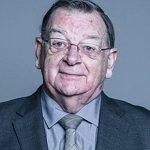
  • Lindsay Hoyle – 2019 Speech as Speaker

    Lindsay Hoyle – 2019 Speech as Speaker

    Below is the text of the speech made by Sir Lindsay Hoyle, the Speaker of the House of Commons, following the commencement of Parliament following the 2019 General Election.

    First, I would like to thank the constituents of Chorley for allowing me to put myself forward as Speaker, and I would also like to welcome all the new Members to the House. May I offer many congratulations to you on your new role as Father of the House, Sir Peter? Of course, this is nothing new to your family; as you know, you have great history in this Room. You have served this place and your constituents for 44 and a half years—it just goes to show all the newcomers that this really can be a job for life—[Laughter.] And I do not think this is the end just yet.

    It has been an absolute privilege to serve as a Deputy Speaker for the past nine years and as Speaker for a full two days; I have to say that that made the election pretty easy. Of course, Parliament was dissolved last month and it would be an honour to serve again in this Parliament—I hope that this time it would be for a little longer.

    As I have said before, a Speaker has to be trusted, and I believe I was trusted as Deputy Speaker. I have a proven track record of being impartial, independent and fair, allowing Members to exercise their right to speak regardless of the length of their service. [Interruption.] I would have thought the new MPs would have given me a bit of a boost on that—do not let those who have been here a lot longer start dictating already! Having served on the Back Benches for 13 years myself, I understand how important it is for Back Benchers to be able to hold the Government to account and to promote the causes that are dear to them. On that basis, I submit myself to the House as your Speaker and your champion. I will ensure that my office is open to all.​

  • Dennis Skinner – 1970 Maiden Speech in the House of Commons

    Below is the text of the maiden speech made by Dennis Skinner, the then Labour MP for Bolsover, in the House of Commons on 29 October 1970.

    I am grateful for an opportunity to speak in this very important debate. My constituency has within it upwards of 10,000 miners who work in the Notts and Derbyshire coalfield. It is important to place on record, too, that the previous hon. Member for Bolsover was Mr. Harold Neal, who served the constituency diligently for about 25 years. Like me, he became an official of the Derbyshire miners. During the post-war Government, he was made Parliamentary Secretary to the Ministry of Fuel and Power. Perhaps at that point I should cease to make comparisons.

    Having worked underground for 21 years and accumulated a little knowledge on the way, I want if possible to impart a little of it to the House. I wish to refer especially to one matter raised by the hon. Member for Worcestershire, South (Sir G. Nabarro) concerning pithead prices of coal.

    The price of coal at the pithead in Derbyshire when I left it on 18th June was less than £5 a ton. It is true that the national position is somewhat higher. The reason is that the North Derbyshire output per man shift is higher than the national figure. The result is that the national pit head price is something like £5 15s. a ton.

    The reason why the hon. Member for Worcestershire, South has to pay about £23 a ton for his smokeless fuel is that there are many people involved in trying to sell it. It could be argued that they are rigging the market in no way less than the people shown on television a few nights ago who are rigging the market in the construction industry.

    Three problems face our miners today. From my point of view, it is a pity that they have been referred to already by my hon. Friend the Member for Ebbw Vale (Mr. Michael Foot) in his excellent speech. Obviously it would be difficult for me to improve upon his rhetoric.

    I want to attempt to say a few words first about the basic wages and conditions in the mining industry. For some reason, they never seem to get across to the people really concerned. When miners talk about wanting a £20 minimum wage, they are really discussing a £20 maximum wage. There are no bonus payments in the mining industry today. There are no piece rates, no annual increments and no service payments. A man who has been in the pit for 50 years from the age of 13 or 14 finds towards the end of his career that he is likely to be shuffled to the bottom of the pack. Far from getting service payments, he gets less than he did 20 or 30 years before.

    My hon. Friends well know the conditions that I have outlined, but the Government should realise that wages and conditions of these kinds have to be accepted. When we discuss a £20 minimum wage for miners, it is no good right hon. and hon. Gentlemen opposite arguing that we are talking about something in excess of that when other marginal additions are made at the pithead.

    For working unsocial hours—the afternoon shift, the night shift, the continental shift and the twilight shift—unlike many other workers, the miner receives the monumental amount of 6d. an hour extra for working between 8 p.m. and 6 a.m. Indeed, it can and must be said that many miners do not receive that. Unlike hon. Members, miners are not sent home for a 95 days’ cooling off period. Miners receive two weeks annual holiday entitlement. It ill becomes anybody outside or any hon. Member in this House to talk about the miner having an occasional day off when the allowances that he gets for holidays are so abysmally low.

    Because of this situation—the wages and conditions that the miners have suffered all these years—we have seen, during the past few months and weeks, an upsurge of militancy in the miners’ ranks. It was an upsurge of militancy that recorded a 55 per cent. vote. Let no one imagine that the 55 per cent. vote was regarded by people like myself, who have just left the industry, or those who are now officials within it, as a disaster. It is generally accepted that if this vote had been taken 10, or even five, years ago the chances are that it would have been more like 20 per cent., not 55 per cent., because for the last 15 years the miners’ leaders have been confronted by a Chairman of the Coal Board who has been able to hide behind a 40 million ton mountain of coal. During the past two years—particularly the last 18 months—it became apparent not only to the miners, but also to people outside the industry, that this mountain was gradually being removed and that, therefore, the miners’ bargaining power had improved with it.

    When the miners were asking for their £5 a week wage claim, it was not a question of £5 today. The exercise in which they were taking part involved £5 in retrospection—a £5 wage claim that they failed to get 15 years previously because they were not then able to use any bargaining power. So it was not £5 for this particular year; it was £5 that they failed to get previously. It was indeed retrospection.

    They also recognised that they were confronted by a Chairman of the Coal Board, behind his 40 million ton mountain of coal, who previously exuded a great deal of self-confidence, now transferring that self-confidence into nothing less than arrogance—arrogance in the form of certain letters, before the strike ballot was declared, to the homes of the miners in order, it appears, to try to influence the miners’ families in the strike ballet. But, most important, he was really saying to the miners’ executive that he had met the previous Tuesday, “I cannot really trust you to tell the miners what the offer is. I must tell them myself.”

    The miners, realising the contempt with which they were faced, decided to put in for the full claim. I put it to the Chairman of the National Coal Board that if he really wants to display any tendencies of arrogance on behalf of the miners, the best possible way he can do it is to say to the miners’ leaders, “I will accede to the full £5 claim; I will also refuse to raise coal prices”, and, instead of alienating the miners and their leaders, walk arm in arm with them and confront the Tory Government with the demand that he is prepared to meet. That would be the kind of arrogance that I and the miners feel would remove the alienation which has taken place.

    The second major problem facing the industry, to which reference has already been made, concerns financial reconstruction. During the past two years the National Union of Mineworkers has argued—indeed, I raised the matter at the Swansea conference in 1968—that the Coal Board and the nationalised industries were failing to get investment grants comparable with those that private industry had been getting inside and outside the regions, but particularly in the regions, because, strangely enough, most of the coalfields are in the development areas. It can be usefully argued that if we had got development grants on the same basis as private industry it would have meant upwards of £15 million. We cannot argue about that today, because on Tuesday the Chancellor pulled the rug from under our feet. If we are to have a viable coal industry, as suggested by the Secretary of State for Trade and Industry, there must be a substantial write-off of the capital debts—a write-off that takes account of the £74 million paid in the 12-year period between 1947 and 1959 for importing foreign coal; a write-off that takes account of the £334 million paid to the former coal owners; and a write-off that takes account—most important of all—of the £1,000 million lost to the industry between 1947 and 1959 because the Coal Board and the miners were subsidising the rest of British industry to that amount by selling cheap coal. Without a write-off it seems to me and to my hon. Friends that we are not likely to remove one of the main problems within the industry. Indeed, it is hanging like an albatross not around the neck of the Chairman of the Coal Board but around the necks of the miners themselves.

    The third problem is the social question that arises from redundancy, pit closures, etc.

    First, I want to touch on social costs. In the Bill that was presented to this House in March this year by the Labour Administration there was reference to a sliding scale of two-thirds’ social costs being borne by the Government, one-half in the second year and one-third in the third year. I would argue that the Bill should go further. It should indeed be talking about social costs being borne in full by the Government of the day. The reason is obvious. It seems to me that the banker in Bournemouth should rightly pay as much in contribution to the consequences of the nation shutting pits as the back-ripper in Bolsover. Unless it is fully borne by the Government, the back-ripper in Bolsover will pay more than his fair share in the social costs of the industry.

    The second point in this social question concerns redundancy pay. The wage-related benefits introduced by the Coal Industry Act, 1967 have now expired so far as some miners are concerned. There are miners aged 58 and over throughout the coalfields who are beginning to become excluded from the wage-related benefits and are falling back on unemployment pay. I do not think that there has been any suggestion for cutting that. However, it will mean £8 2s. Therefore, I am arguing, as some of my hon. Friends argued with the previous Labour Administration, that there is a real necessity to see that the social benefits are continued over and above the three years until the men get jobs, which is unlikely, or until they reach the age of 65. It can usefully be argued that one of the reasons why the Bill was to some extent delayed was that these representations were being made by some of my hon. Friends. I suggest, therefore, that this is taken into account when the Bill is introduced.

    The third point which comes within the social question as a result of pit closures concerns the provision of alternative industries. My opinion is that, as a result of the Chancellor’s statement on Tuesday, far from seeing more alternative industries being directed or, shall we say, finding themselves within the development regions, which are generally consistent with the coalfields, we shall see fewer. Nevertheless, I suppose that it is my job as the representative of my constituents in Bolsover, who have seen a few pit closures, to put it to the Government that they should do something about the situation.

    The worst blow of all to the miners—and this, too, was referred to by my hon. Friend the Member for Ebbw Vale—occurred on Tuesday when the Chancellor of the Exchequer struck what I considered to be a savage blow against the miners in particular. I refer to the three waiting days provision. The statistics in the National Coal Board’s Report for the financial year ended 31st March 1970 show that there were 110,000 accidents in the industry during the previous 12 months. Of those, several hundred were reportable accidents, which meant that they represented broken limbs, broken arms, and, indeed, legs being removed. Despite all that, on Tuesday we heard of the appalling announcement that a miner disabled in an accident, or a miner with dust-filled lungs, will find that when he goes off sick or injured he will lose half the benefits that he now receives, and that is more than equal to the £5 wage claim which the miners have put in.

    If there is industrial peace in the coalfields this winter it will not be due to the efforts of the Chairman of the Coal Board, or because of the manipulations of the Tory Government. They will not have earned it, and in my view they do not deserve it.

  • Dennis Skinner – 2019 Twitter Statement Following Loss of Seat

    Below is the text of the Twitter statement made by Dennis Skinner on 13 December 2019 after losing the constituency of Bolsover to the Conservative Party.

    Sad day, for me.

    But, most of all for all those who worked so hard to make life better.

    We’ll be back, bigger, better and stronger.

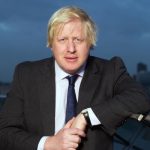
  • Boris Johnson – 2019 Statement Outside Downing Street

    Boris Johnson – 2019 Statement Outside Downing Street

    Below is the text of the statement made by Boris Johnson, the Prime Minister, outside Downing Street, London, on 13 December 2019.

    This morning I went to Buckingham Palace and I am forming a new government and on Monday MPs will arrive at Westminster to form a new parliament and I am proud to say that members of our new one nation government – a people’s government – will set out from constituencies that have never returned a Conservative MP for 100 years and yes they will have an overwhelming mandate, from this election, to get Brexit done, and we will honour that mandate by Jan 31, and so in this moment of national resolution I want to speak directly to those who made it possible and to all those who voted for us, for the first time, all those whose pencils may have wavered over the ballot and who heard the voices of their parents and their grandparents whispering anxiously in their ears.

    I say thank you for the trust you have placed in us and in me and we will work round the clock to repay your trust and to deliver on your priorities with a parliament that works for you and then I want to speak also to those who did not vote for us or for me and who wanted and perhaps still want to remain in the EU and I want you to know that we in this one nation conservative government will never ignore your good and positive feelings – of warmth and sympathy towards the other nations of Europe. Because now is the moment – precisely as we leave the EU – to let those natural feelings find renewed expression in building a new partnership, which is one of the great projects for next year, and as we work together with the EU, as friends and sovereign equals, in tackling climate change and terrorism, in building academic and scientific cooperation, redoubling our trading relationship.

    I frankly urge everyone on either side of what after three and a half years after all an increasingly arid argument I urge everyone to find closure and to let the healing begin because I believe, in fact I know, because I have heard it loud and clear from every corner of the country that the overwhelming priority of the British people now is that we should focus above all on the NHS that simple and beautiful idea that represents the best of our country with the biggest ever cash boost. 50,000 more nurses, 40 new hospitals as well as providing better schools, safer streets and in the next few weeks and months we will be bringing forward proposals to transform this country, with better infrastructure, better education, better technology and if you ask yourselves what is this new government going to do, what is he going to do with his extraordinary majority.

    I will tell you that is what we are going to do we are going to unite and level up – unite and level up bringing together the whole of this incredible United Kingdom. England, Scotland, Wales, Northern Ireland together taking us forward unleashing the potential of the whole country delivering opportunity across the entire nation and since I know that after five weeks frankly of electioneering this country deserves a break from wrangling, a break from politics, and a permanent break from talking about Brexit.

    I want everyone to go about their Christmas preparations happy and secure in the knowledge that here in this people’s government the work is now being stepped up to make 2020 a year of prosperity and growth and hope and to deliver a Parliament that works for the people.

    Thank you all very much and happy Christmas.

  • Queen Victoria – 1869 Queen’s Speech

    Queen Victoria – 1869 Queen’s Speech

    Below is the text of the Queen’s Speech given in the House of Lords on 16 February 1869. It was spoken by the Lord Chancellor on behalf of HM Queen Victoria.

    The LORD CHANCELLOR delivered HER MAJESTY’S Speech to both Houses of Parliament, as follows:—

    My Lords, and Gentlemen,

    I RECUR to your advice at the earliest period permitted by the arrangements consequent upon the retirement of the late Administration.

    And it is with special interest that I commend to you the resumption of your labours at a time when the popular branch of the Legislature has been chosen with the advantage of a greatly enlarged enfranchisement of My faithful and loyal people.

    I am able to inform you that My relations with all Foreign Powers continue to be most friendly; and I have the satisfaction to believe that they cordially share in the desire by which I am animated for the maintenance of peace. I shall at all times be anxious to use My best exertions for the promotion of this most important object.

    In concurrence with My Allies I have endeavoured, by friendly interposition, to effect a settlement of the differences which have arisen between Turkey and Greece; and I rejoice that our joint efforts have aided in preventing any serious interruption of tranquillity in the Levant.

    I have been engaged in negotiations with the United States of North America for the settlement of questions which affect the interests and the international relations of the two countries; and it is My earnest hope that the result of these negotiations may be to place on a firm and durable basis the friendship which should ever exist between England and America.

    I have learnt with grief that disturbances have occurred in New Zealand, ​ and that at one spot they have been attended with circumstances of atrocity. I am confident that the Colonial Government and people will not be wanting either in energy to repress the outbreaks, or in the prudence and moderation which I trust may prevent their recurrence.

    Gentlemen of the House of Commons,

    The Estimates for the expenditure of the coming financial year will be submitted to you. They have been framed with a careful regard to the efficiency of the Services, and they will exhibit a diminished charge upon the country.

    My Lords, and Gentlemen,

    The ever-growing wants and diversified interests of the Empire will necessarily bring many questions of public policy under your review.

    The condition of Ireland permits Me to believe that you will be spared the painful necessity which was felt by the late Parliament for narrowing the securities of personal liberty in that country by the suspension of the Habeas Corpus Act.

    I recommend that you should inquire into the present modes of conducting Parliamentary and Municipal Elections, and should consider whether it may be possible to provide any further guarantees for their tranquillity, purity, and freedom.

    A measure will be brought under your notice for the relief of some classes of occupiers from hardships in respect of Rating, which appear to be capable of remedy.

    You will also be invited to direct your attention to Bills for the extension and improvement of Education in Scotland; and for rendering the considerable revenues of the Endowed Schools of England more widely effectual for the purposes of instruction.

    A measure will be introduced for ​ applying the principle of representation to the control of the County Rate, by the establishment of Financial Boards for Counties.

    It will be proposed to you to recur to the subject of Bankruptcy, with a view to the more effective distribution of Assets and to the Abolition of Imprisonment for Debt.

    The Ecclesiastical arrangements of Ireland will be brought under your consideration at a very early date, and the legislation which will be necessary in order to their final adjustment will make the largest demands upon the wisdom of Parliament.

    I am persuaded that, in the prosecution of the work, you will bear a careful regard to every legitimate interest which it may involve, and that you will be governed by the constant aim to promote the welfare of religion through the principles of equal justice, to secure the action of the undivided feeling and opinion of Ireland on the side of loyalty and law, to efface the memory of former contentions, and to cherish the sympathies of an affectionate people.

    In every matter of public interest, and especially in one so weighty, I pray that the Almighty may never cease to guide your deliberations, and may bring them to a happy issue.

    Then the Commons withdrew.

  • Queen Victoria – 1867 Queen’s Speech

    Queen Victoria – 1867 Queen’s Speech

    Below is the text of the Queen’s Speech given in the House of Lords on 5 February 1867.

    HER MAJESTY, being seated on the Throne, adorned with Her Crown and Regal Ornaments, and attended by Her Officers of State:—The PRINCE OF WALES (in his Robes) sitting in his Chair on HER ​ MAJESTY’S right hand—(the Lords being in their Robes)—commanded the Gentleman Usher of the Black Rod, through the Deputy Lord Great Chamberlain, to let the Commons know “It is Her Majesty’s Pleasure they attend Her immediately, in this House.”

    Who being come, with their Speaker;

    The LORD CHANCELLOR, taking Directions from HER MAJESTY, said—

    My Lords, and Gentlemen,

    IN again recurring to your Advice and Assistance, I am happy to inform you that My Relations with Foreign Powers are on a friendly and satisfactory Footing.

    I HOPE that the Termination of the War in which Prussia, Austria, and Italy have been engaged may lead to the Establishment of a durable Peace in Europe.

    I HAVE suggested to the Government of the United States a Mode by which Questions pending between the Two Countries arising out of the late Civil War may receive amicable Solution, and which, if met, as I trust it will be, in a corresponding Spirit, will remove all Grounds of possible Misunderstanding, and promote Relations of cordial Friendship.

    THE War between Spain and the Republics of Chili and Peru still continues, the good Offices of My Government, in conjunction with that of The Emperor of the French, having failed to effect a Reconciliation. If either by Agreement between the Parties themselves, or by the Mediation of any other friendly Power, Peace shall be restored, the Object which I have had in view will equally be attained.

    DISCONTENT prevailing in some Provinces of the Turkish Empire has broken out in actual Insurrection in Crete. In common with My Allies, The Emperor of the French and The Emperor of Russia, I have abstained from any active Interference in these internal Disturbances, but Our joint Efforts have been directed to bringing about improved Relations between the Porte and its Christian Subjects not inconsistent with the sovereign Rights of The Sultan.

    THE protracted Negotiations which arose out of the Acceptance by Prince Charles of Hohenzollern of the Government of the Danubian Principalities have been happily terminated by an Arrangement to which the Porte has given its ready Adhesion, and which has been sanctioned by the Concurrence of all the Powers, Signatories of the Treaty of 1856.

    RESOLUTIONS in favour of a more intimate Union of the Provinces of Canada, Nova Scotia, and New Brunswick have been passed by their several Legislatures; and Delegates duly authorized and representing all Classes of Colonial Party and Opinion have concurred in the Conditions upon which such an Union may be best effected. In accordance with] their Wishes a Bill will be submitted to you, which, by the Consolidation of Colonial Interests and Resources, will give Strength to the several Provinces as Members of the same Empire, and animated by Feelings of Loyalty to the same Sovereign.

    I HAVE heard with deep Sorrow that the Calamity of Famine has pressed heavily on My Subjects in some Parts of India. Instructions were issued to My Government in that Country to make the utmost Exertions to mitigate the Distress which prevailed during the Autumn of last Year. The Blessing of an abundant Harvest has since that Time materially improved the Condition of the suffering Districts.

    THE persevering Efforts and unscrupulous Assertions of treasonable Conspirators abroad have, during the last Autumn, excited the Hopes of some disaffected Persons in Ireland, and the Apprehensions of the loyal Population; but the firm, yet temperate Exercise of the Powers entrusted to the Executive, and the Hostility manifested against the Conspiracy by Men of all Classes and Creeds, have greatly tended to restore Public Confidence, and have rendered hopeless any Attempt to disturb the general Tranquillity. I trust that you may consequently be enabled to dispense with the Continuance of any exceptional Legislation for that Part of My Dominions.

    I ACKNOWLEDGE, with deep Thankfulness to Almighty God, the great Decrease that has taken place in the Cholera, and in the Pestilence which has attacked our Cattle; but the continued Prevalence of the latter in some Foreign Countries, and its occasional Re-appearance in this, will still render necessary some special Measures of Precaution; and I trust that the Visitation of the former will lead to increased Attention to those Sanitary Measures which Experience has shown to be the best Preventive.

    ESTIMATING as of the highest Importance an adequate Supply of pure and wholesome Water, I have directed the Issue of a Commission to inquire into the best Means of permanently securing such a Supply for the Metropolis, and for the principal Towns in densely-peopled Districts of the Kingdom.

    Gentlemen of the House of Commons,

    I HAVE directed the Estimates for the ensuing Year to be laid before you. They have been prepared with a due Regard to Economy, and to the Requirements of the public Service.

    You will, I am assured, give your ready Assent to a moderate Expenditure calculated to improve the Condition of My Soldiers, and to lay the Foundation of an efficient Army of Reserve.

    ​My Lords, and Gentlemen,

    YOUR Attention will again be called to the State of the Representation of the People in Parliament; and I trust that your Deliberations, conducted in a Spirit of Moderation and mutual Forbearance, may lead to the Adoption of Measures which, without unduly disturbing the Balance of political Power, shall freely extend the Elective Franchise.

    THE frequent Occurrence of Disagreements between Employers of Labour and their Workmen, causing much private Suffering and public Loss, and occasionally leading, as is alleged, to Acts of Outrage and Violence, has induced Me to issue a Commission to inquire into and report upon the Organization of Trades Unions and other Associations, whether of Workmen or Employers, with Power to suggest any Improvement of the Law for their mutual Benefit. Application will be made to you for Parliamentary Powers, which will be necessary to make this Inquiry effective.

    I HAVE directed Bills to be laid before you for the Extension of the beneficial Provisions of the Factory Acts to other Trades specially reported on by the Royal Commission on the Employment of Children, and for the better Regulation, according to the Principle of those Acts, of Workshops where Women and Children are largely employed.

    THE Condition of the Mercantile Marine has attracted My serious Attention. Complaints are made that the Supply of Seamen is deficient, and that the Provisions for their Health and Discipline on board Ship are imperfect. Measures will be submitted to you with a view to increase the Efficiency of this important Service.

    I HAVE observed with Satisfaction the Relaxations recently introduced into the Navigation Laws of France. I have expressed to The Emperor of the French My Readiness to submit to Parliament a Proposal for the Extinction, on equitable Terms, of the Exemptions from local Charges on Shipping which are still enjoyed by a limited Number of Individuals in British Ports; and His Imperial Majesty has, in anticipation of this Step, already admitted British Ships to the Advantage of the new Law. A Bill upon this Subject will forthwith be laid before you.

    A BILL will also be submitted to you for making better Provision for the Arrangement of the Affairs of Railway Companies which are unable to meet their Engagements.

    MEASURES will be submitted to you for Improving the Management of sick and other Poor in the Metropolis, and for a Re-distribution of some of the Charges for Relief therein.

    YOUR Attention will also be called to the Amendment of the Law of Bankruptcy; to the Consolidation of the Courts of Probate and Divorce and Admiralty; and to the Means of disposing, with greater Despatch and Frequency, of the increasing Business in the Superior Courts of Common Law and at the Assizes.

    THE Relations between Landlord and Tenant in Ireland have engaged My anxious Attention, and a Bill will be laid before you which, without interfering with the Rights of Property, will offer direct Encouragement to Occupiers of Land to improve their Holdings, and provide a simple Mode of obtaining Compensation for permanent Improvements.

    I COMMEND to your careful Consideration these and other Measures which will be brought before you; and I pray that your Labours may, under the Blessing of Providence, conduce to the Prosperity of the Country, and the Happiness of My People.”

    Then HER MAJESTY retired.

  • Queen Victoria – 1886 Queen’s Speech

    Queen Victoria – 1886 Queen’s Speech

    Below is the text of the Queen’s Speech given in the House of Lords on 19 August 1886. It was spoken by the Lord Chancellor on behalf of HM Queen Victoria.

    My Lords, and Gentlemen,

    I HAVE summoned you to meet at this unusual season of the year for the transaction of indispensable business.

    The Session of the last Parliament was interrupted before the ordinary work of the year had been completed, in order that the sense of my people might be taken on certain important proposals with regard to the government of Ireland. The result of that appeal has been to confirm the conclusion to which the late Parliament had come.

    ​The provisional nature of the arrangement which was made by the last Parliament for the public charge of the year renders it inexpedient to postpone any further the consideration of the necessary financial legislation.

    Gentlemen of the House of Commons,

    The Estimates which were submitted to the last Parliament, and were only partially voted, will be laid before you.

    My Lords, and Gentlemen,

    At a period of the year usually assigned for the recess, and after the prolonged and exceptional labours to which many of you have been subjected, I abstain from recommending now, for your consideration, any measures except those which are essential to the conduct of the public service during the remaining portion of the financial year. I am confident that they will receive your prompt and careful attention.

    Then the Commons withdrew.

    House adjourned during pleasure.

    House resumed.

  • Robin Cook – 1999 Statement on Yemen

    Robin Cook – 1999 Statement on Yemen

    Below is the text of the statement made by Robin Cook, the then Foreign Secretary, in the House of Commons on 11 January 1999.

    Madam Speaker, with permission I should like to make a statement on recent events in Yemen. There have been three separate developments affecting British nationals in Yemen since the House last sat. On Saturday, and again this afternoon, I have discussed those events by phone with the Prime Minister of Yemen, Dr. Iryani.

    The most recent event was the kidnapping on Saturday of Mr. John Brooke from the compound of the oil company for which he worked, in the Marib area of northern Yemen. Our ambassador was in contact immediately with the Yemeni Prime Minister and Interior Minister to insist on full consultation with us on any steps being taken by the authorities to secure Mr. Brooke’s release. This afternoon I have expressed to Dr. Iryani our strong view that the release of Mr. Brooke should be achieved through mediation, and the Prime Minister of Yemen gave me an assurance that no force would be used without consultation with us.

    We currently have in Yemen a team of police officers who are preparing an account of the previous kidnapping. Two of those officers are experienced in hostage negotiation. We have made their skills available to the Yemeni authorities.
    We have also been in contact over the weekend with the Government of Yemen about the five British nationals who have been detained there. We understand that the five men were detained on 24 December. Our embassy in Yemen first heard of the arrest of unnamed British nationals on 29 December and immediately demanded access to them, including through a succession of meetings between our ambassador and Yemeni Ministers. However, access was not granted until last Friday, when our consul-general immediately visited the prison in Aden but was given access to only three of the five men.

    On Saturday, I stressed to the Prime Minister of Yemen the vital importance to us of obtaining access to all five men under detention in order to reassure ourselves and their relatives that they are well and being properly treated. Dr. Iryani undertook to make immediate inquiries and on Saturday our consul-general was permitted access to one of the other two men. Access to the fifth man is still being denied on the ground that he has Yemeni-British dual nationality.

    However, this afternoon Dr. Iryani assured me that access to the fifth detainee will be granted today or tomorrow.
    On Saturday, I stressed to the Prime Minister that if the five men are to be charged, those charges must be brought soon. They and their relatives are entitled to know why they have been arrested, and the five men cannot defend themselves against allegations until they are charged. If they are not to be charged, they must be released. This afternoon, I sought and obtained fresh assurances from the Prime Minister of Yemen that all five men will have access to legal advice, that any charges will be subject to due process of law in open court, and that consular staff will have the right to attend.

    I now turn to the tragic events arising from the seizure of 16 tourists in southern Yemen. Twelve British nationals, two Australians and two Americans were ​ kidnapped by an armed group on 28 December. According to the Yemeni authorities, the kidnappers’ key demand was the release of a number of Yemenis and foreigners arrested by the Yemeni authorities. As soon as we learned of the kidnapping, the British ambassador spoke to the Yemeni Interior Minister, Hussain Arab. He made clear our paramount concern for the hostages’ safety. He pressed on the Yemeni authorities our strong wish that no precipitate action be taken which could endanger the hostages’ lives.

    The next day Yemeni security forces encircled the kidnappers and their hostages. There was a firefight, in which four of the hostages were killed. Three were British. I am sure that the whole House will join me in extending our deep sympathy to the families who grieve for those who were killed. The testimony of the survivors confirms more forcefully than any hon. Member can that all the hostages conducted themselves with the greatest courage and concern for each other.
    There is still much confusion about how the firefight started and about whether hostages had been killed before the security forces intervened. At the request of the Foreign Office, a team of British police officers went to Yemen on 1 January. In close co-ordination with the visiting Federal Bureau of Investigation team, they are preparing a full account of what happened.

    On Saturday, I expressed to the Prime Minister of Yemen the importance of full co-operation between our Governments in the investigation. We agreed that the best way for us to maintain sound bilateral relations was to work closely together in establishing the truth and in bringing the full truth into the open. It would be wrong to prejudge the police investigation or to anticipate what it may conclude about the handling of the rescue attempt by the Yemeni authorities. Let us be clear, however, that the primary responsibility for what happened rests with the armed gang who seized the hostages in the first place. Those responsible for seizing the hostages, and for the death of four of them, must be pursued and brought to justice.

    I pay tribute to the British ambassador, Vic Henderson, to Consul-General David Pearce and to their small team. They have responded with professionalism and with total commitment to a succession of demanding events.

    Two areas of public policy require to be reviewed in the light of recent events. The first relates to the travel advice issued by the Foreign Office. Our travel advice in relation to Yemen has for some time warned of the risk of kidnapping. Following the recent tragic deaths, our travel advice has been strengthened to advise

    “against all non-essential travel to Yemen”.

    Following the recent kidnapping of Mr. Brooke, our ambassador has today met representatives of the British community to impress on them the need for heightened vigilance, and to discuss with them the implications for their safety of recent events. All British nationals are being encouraged to re-register urgently with the embassy.

    Our system of travel advice is widely held up as a model of good practice by other countries. It already tends to the side of caution, although it is necessary that it should not veer to over-reaction if it is to retain credibility among the public. We are constantly looking for ways of improving distribution of that advice. We need to be sure that it is seen by anyone thinking of travelling to dangerous parts of the world.

    I am therefore inviting tour operators and other members of the travel industry to the Foreign Office to discuss how we can further improve the distribution of our travel advice. We hope to develop with them a voluntary agreement on advice to clients booking holidays to countries where there is a risk. We would wish such an agreement to include a commitment to notify our consular division when tours are being organised to dangerous countries.

    The second area of public policy that we must review in the light of recent experience is how we can improve our support to other countries in handling the seizure of hostages. I can announce that the Foreign Office will appoint a police expert with experience in hostage negotiations as a consultant to the Foreign Office on counter-terrorism work. Our intention is that he or she will travel abroad to discuss the training needs of foreign Governments, and to offer advice on their handling of hostage-taking.

    We shall also launch a global series of seminars and consultations to share best practice in handling terrorist incidents with countries around the globe. Last November, we held such a seminar within the G8 to pool expertise on handling kidnap cases. Now we must make sure that the expertise pooled at that London seminar is shared more widely with countries outside the G8. These initiatives reflect the two principles that must guide the conduct of our consular duty: first, that the safety of British nationals is our paramount concern; and secondly, that only we can succeed in securing their safety from terrorism only by close international co-operation in defeating the terrorists.

    The whole House will wish to record its condemnation of terrorism. Kidnapping is a crime. It is the same crime whether it is committed for financial gain or for political reward, and it is as much a crime under Islamic law as it is anywhere else. I invite all hon. Members to join me in sending the firmest possible message to terrorists that we are determined to protect the safety of our nationals and to be robust in combating terrorism wherever it occurs.

  • Frank Dobson – 1999 Speech on the NHS

    Below is the text of the speech made by Frank Dobson, the then Secretary of State for Health, in the House of Commons on 11 January 1999.

    I should like to make a statement on how the national health service is coping with the recent sharp rise in the number of people falling ill.

    First, on behalf of everybody in the country, I want to thank all the people working in the health service and local social services for the huge effort they have been putting in to ensure that everybody gets the treatment and care that is needed. They have done all that because there has been a surge in the numbers of people going to see their doctor, and an even bigger surge in the number of people calling ambulances and helplines and going to hospital. The sharp increase in the level of illness is confirmed by the increase in the number of people dying, which in some parts of the country has meant that families trying to arrange funerals face long delays.

    The figures put together by the Public Health Laboratory Service from returns made by the Royal College of General Practitioners show that the present outbreak of flu and flu-like illnesses seems likely to be on the same scale as that which occurred in the winters of 1994 and 1996, although the figure may go higher. The figures reflect the increased number of people with flu-like symptoms who go to see their local GP. Until now, flu and flu-like illnesses have been worst in the west midlands and the north, but there have been sharp peaks elsewhere.

    The demand for ambulance and hospital services has shown a much larger increase, with daily ambulance journeys almost doubling in some places. Both the Merseyside and the Greater Manchester ambulance services saw the demand for ambulances shoot up to more than 1,000 journeys a day, compared with an average of 500 to 600. For the London ambulance service, this new year was the busiest on record with more than 4,700 journeys, compared with a daily average of 3,000.

    There have also been some tragic fatalities due to meningitis. I extend my sympathy to the families concerned. Parents are right to visit their family doctor to seek advice if they have concerns. In November, the chief medical officer advised general practitioners to refer suspected cases of meningitis promptly to hospital, and he will renew that advice.

    The national health service is better prepared than ever before to cope with those illnesses, and in most places hospitals have coped well with the pressures that they face. In August, I asked the NHS to prepare itself, to strengthen emergency and ambulance services, to make best use of the beds available, to improve discharge arrangements and to prevent unnecessary admissions to hospital in the first place. It has done so. Almost 2,200 schemes are under way nationally, backed by the £159 million announced by my right hon. Friend the Chancellor in the pre-Budget statement. Those include £750,000 to improve intensive and high-dependency care in London; £200,000 for one-stop clinics in Walsall; £175,000 for better home treatment and care in Leeds; £140,000 for a community-based phlebotomy service in Gloucestershire; and £45,000 to help prevent fractures among the elderly in Kent.

    In August, we also announced that GPs could this winter, for the first time, offer flu vaccinations to all their patients over 75, rather than confine vaccinations to ​ particularly vulnerable groups. As a result, a third of a million extra doses have been given this year compared with last, and vaccine remains available.

    We are tackling particular pressure points. Over the past week, those parts of the NHS that are suffering particular problems which could be helped by extra cash have been told that they can draw on the £50 million contingency fund, which is there for that purpose. In some places that will mean more high-dependency beds being provided to relieve pressure on intensive care beds.

    The position today is that 35 adult intensive care beds are free and available for use. The situation seems to be easing, but it could get worse again if icy weather were to lead to a lot of falls, particularly among the elderly. The NHS cannot be complacent. It is not, and I am not.

    I will not pretend that the NHS everywhere has coped as well as the public are entitled to expect. Such an increase in illness will always cause difficulties, but those difficulties have been made worse because of the serious underlying problems that we inherited. We inherited a rundown NHS with serious staff shortages. Many buildings are out of date, much equipment is old and unreliable, methods of working are not making best use of new technology—particularly information technology—and there are not enough staffed beds. The Government are getting a grip on the short-term consequences of those problems and are also laying longer-term foundations to build a modern and dependable NHS. Much of that work is already under way.

    One of the causes of the shortage of nurses is the cuts that the previous Government deliberately made in the number of nurses going into training, which fell from 15,000 a year at the time of the 1992 general election to fewer than 13,000 when they left office, having fallen at one point to 11,700. If they had not made those cuts, there could have been an extra 11,000 nurses available to the NHS today. It takes three years to train a nurse, so the country is paying a heavy price for those years of Tory neglect.

    This year, 15,500 nurse training places will be available and 2,500 more people are already in training compared with when we took over. As I have said before, we must also reform the system of nurse education and training, which the previous Government introduced in the 1980s. It has achieved some of its objectives, but its emphasis on the academic element has put off some potential recruits.

    Many nurses, when they qualify, think that they lack the practical skills necessary on a ward. The transfer of responsibility to the education sector from the health service has broken the old links between individual hospitals and nurses in training, to the disadvantage of both. Many nurses and nurse managers recognise the need for change, so I hope to carry the profession with us—but reform there must be.

    The previous Government refused, right up to the end, to recognise that there was a shortage of nurses. This Government recognise that reality and therefore training extra nurses is a major objective. We spelt that out in our evidence to the pay review body. This year, we also made it clear that the pay review body should give special attention to the pay of nurses in the lower grades. Like the nurses, we want reform of the present rigid grading structure and better career development prospects so that those vital staff have a modern, fair and flexible system for pay and promotion. I repeat my hope that the ​ independent pay review body will propose a settlement that is fair to nurses and midwives and which the Government will be able to implement in full.

    We are also addressing the concerns of qualified nurses who have left the NHS. We want to attract them back, not only with better pay, but with family friendly shift patterns and a better and safer working environment. If we are to retain existing staff, recruit new staff and persuade former staff to return, we must provide them all with the modern buildings, plant and equipment that they need. We have already embarked on the biggest hospital building programme in the history of the NHS, and there is more to come. High priorities for more small-scale investment include the replacement of outdated and unreliable equipment.

    Last September, the Prime Minister announced that the national lottery new opportunities fund would help to provide new and better equipment for the detection and treatment of cancer. He also announced that, from April, we would be investing £30 million to renew 25 per cent. of accident and emergency departments to make them better and safer for both patients and staff. Ambulance services will be given new control systems, new vehicles and new equipment. All those will help the NHS to cope better with winter pressures.

    New methods of working will also help. We launched three pilot schemes in Newcastle, Preston and Milton Keynes to test NHS Direct, a nurse-led 24-hour helpline. The schemes have been a great success: providing advice and reassurance round the clock, they have been very popular with patients, and have had a positive impact in helping them to look after themselves and reducing unnecessary calls on other services. Over Christmas and the new year, NHS Direct pilots took almost double their usual number of calls—itself an indication of the upsurge in illness. After receiving advice from the nurse to whom they spoke, about half the patients with flu symptoms were able to look after themselves. That shows how the NHS is delivering new and better services, and it is being extended to the rest of the country.

    With the special investment of £44 million that we have provided, NHS Direct has already been extended to the west midlands, where it took more than 1,150 calls in its first week of operation. By April this year, it will cover more than 20 million people in the west country, Manchester, south London, west London, Essex, Nottinghamshire and other places: over 40 per cent. of the population. That will provide a new and better service for patients and at the same time help people to avoid resorting unnecessarily to GPs, the 999 service or their local hospitals.

    Finally, there is the question of beds. Under the last Government, the number of acute beds was reduced by 40,000 and the number of general beds by a further 23,000. In September I announced a review of beds in the health service—of the number of beds involved, the sort of beds and where they should be. Preliminary work for the review suggests, not surprisingly, that the health service needs more beds. Our extra investment in the NHS over the next three years will ensure that we can respond rapidly when we have the final report.

    Then there is the question of intensive care and high-dependency beds. Soon after taking office, on the advice of the specialists in children’s intensive care, I authorised a shift of extra funds from the paperwork of ​ GP fundholding to children’s intensive care, and the concentration of the service in regional and sub-regional centres, with special arrangements for retrieval of very sick children by specially trained and specially equipped staff. As a result of the additional investment, the service can now provide up to 300 children’s intensive care beds, very specialist new-born babies’ beds and high-dependency beds. The new system has been working well, but recently there was an unacceptable delay in dispatching an ambulance from Nottingham to Rotherham. In the light of that experience, I have insisted that each children’s intensive care unit, with its local ambulance service, must review its arrangements to ensure that it is possible to stabilise and transfer very sick children safely and promptly.

    Intensive and high-dependency care beds are vital to the treatment of many people who have had operations, as well as accident and emergency cases. They demand huge resources. Intensive care is not just a matter of a bed and some specialist equipment. To care properly for one patient for one day in intensive care can require the services of around six specialist nurses as well as specialist intensive care doctors, anaesthetists and others.

    Previously, the overall level and availability of intensive and high-dependency care has not had the attention that it deserves. That is why the Audit Commission is co-operating with the national health service and the Intensive Care Society to carry out a detailed study of the operation of intensive and high-dependency care in the NHS. I hope that that will provide a sound basis on which to plan for better services. I am also reviewing the role of the emergency bed service and of the national intensive care bed register. None of that is a criticism of the people working in those services—more than anyone else, they want the system to be modernised.

    It has always been a source of pride in our country that, when difficulties crop up, people rally round to help and they have certainly done so on this occasion. I thank them all. In particular, I thank Dr. Ian Bogle, chairman of the British Medical Association, for his repeated advice to the public that normally healthy adults should use services in a considerate and responsible way.

    From next April, for the first time in 20 years the NHS will operate on a budget entirely set by a Labour Government. It will benefit from the first stage of our £21 billion extra investment. In the meantime, I know that people realise that, when so many people suddenly fall sick, as they have in some places recently, it is inevitable that treatment and care cannot be as prompt as at other times. I want to ensure that we provide the people who work in the NHS with sufficient tools and resources to ensure that the impact is much less in future.

    Over the past few weeks, nurses, doctors, midwives, health visitors, cleaners, kitchen staff, managers, porters, ambulance staff, laboratory scientists, therapists, pharmacists, telephonists, clerical, administrative and maintenance staff and social services staff have all performed wonders on our behalf when their own ranks have been severely depleted by the same illnesses that are affecting the rest of us. Many of them have kept on working while “under the weather” themselves. Many ​ have returned early from leave to help their colleagues. Others have cancelled leave that they planned to take. I thank them all. They have done us proud.

  • David Taylor – 1999 Speech on School Governing Bodies

    Below is the text of the speech made by David Taylor, the then Labour MP for North West Leicestershire, in the House of Commons on 11 January 1999.

    As a parent of four daughters in full-time education and as one who was once employed in the profession, it has been a pleasure and a privilege for me to be a member of school governing bodies in north-west Leicestershire for more than 20 years. However, there is no comparison between those early years as a governor and now, and nor would I ever want to return to them. The role of governing bodies has changed completely following the implementation of local management of schools introduced by the Education Reform Act 1988. Every survey of governors since then has revealed the great time commitment that the job now involves and has referred to the paper mountain from central and local government and from the schools themselves.

    I am delighted that the Minister for School Standards, my hon. Friend the Member for Birmingham, Yardley (Ms Morris), is replying to the debate. Since her election to the House, she has used her 18 years as a teaching professional to excellent effect and she is widely respected in the world of education. She knows only too well the impact on governors of the huge changes in the culture of education during the past decade or so.

    In the debate on the education White Paper, my hon. Friend said:

    “We recognise the important role of governors… I am afraid that we have put a further burden on them… When the relationship between the governing body and the school is right, it is a tower of strength for the good of the children. When it is not right and when governors feel that they are burdened down with paperwork, it is a matter for concern.”—[Official Report, 18 July 1997; Vol. 298, c. 656.]

    In my visits last year to all schools in north-west Leicestershire, it was clear to me that the Government have every right to be concerned. The chairs of governors of those schools—mainly village primaries—often said that they were drowning in a sea of paper. I requested this debate in an attempt to raise the profile of the issues.

    Nationally, there are more than 300,000 governors and they are a huge and valuable resource. However, there is a risk that, as unpaid volunteers, they are being taken for granted and overwhelmed by consultation papers and new duties. Members of all governing bodies are increasingly concerned about the layer upon layer of additional responsibility and work that is being placed upon lay governors. Governors are unpaid volunteers: although they can reclaim expenses for expenditure incurred on behalf of the school, few do so because they are concerned about additional costs on already stretched school budgets. It might seem surprising, but many new governors are still not aware of the commitment and responsibilities that come with being a governor, while more experienced governors feel that they cannot commit more and more time to doing justice to their role. Recently, there has been a much higher turnover of governors in my part of the world, and we are not unique.

    The issue is not merely the call on the time of governors—time which so far has been willingly and freely given: there is an enormous information overload. ​ The continuing inflow of documents for the attention of chairs and members of governing bodies is reaching alarming proportions and is a disincentive for people either to take on, or to continue with, the role of governor. A cursory glance at the commitments for school responses in Leicestershire last term, and for some due early in the current term, reveals eight major consultations by the local education authority: on educational development, lifelong learning, behaviour support, nutritional standards for school meals, fair funding, key stage 1 class sizes, the new deal for schools and early-years child care. Soon, the LEA will be required to hold consultations on asset management, youth work, school organisation, special educational needs provision, youth and community education review, fair funding from April 2000 and the LEA Ofsted action plan. The Minister will appreciate what a daunting agenda that is for governing bodies and head teachers.

    I do not criticise the LEAs; they are carrying out statutory responsibilities to consult and would be acting illegally if they did not do so. Central support staff in local authorities are as overwhelmed by those requirements as are governors and school staff. However, at the rate that we are going, something will have to give.

    I have referred to the particular pressures of time and to the immense information overload for governors. I now turn to the issue of responsibilities. The increased responsibility in many areas requires a range and level of professionalism and expertise that few lay individuals can reasonably be expected to have. However, what is frequently demanded of governors, especially those who are chairs of governing bodies, now includes the setting of staff pay and conditions, professional development interviews and appraisal of head teachers, and, most importantly, the health and safety legal requirements. Following the delegation of health and safety issues to schools, governors have a corporate responsibility for health and safety regulation and non-compliance might constitute a criminal act that can carry severe penalties.

    I have always supported increased freedom for governors in relation to schools and recognise that it brings increased responsibility. I believe that most governors are content to accept that responsibility. However, they are volunteers and they require training and support. Local education authorities are under a specific duty to provide governor training. In Leicestershire, that is very well handled within the limited resources available, but that is not necessarily the case elsewhere. One of the difficulties in providing up-to-date and effective training and support is that guidance material on recent educational initiatives is not as full or as available as would be ideal, nor are the resources typically available to LEAs for such matters anywhere near the levels necessary to help optimise governors’ contributions to driving up standards.

    The three key roles of governors remain to provide a strategic view, to act as a critical friend and to ensure accountability. The day-to-day pressures are such that the urgent can too often drive out the important. It is easy to forget that one’s original intention was to drain the swamp when one is up to one’s ears in alligators. Many of the extra pressures on governors that I have described developed in the years following the Education Reform Act 1988, but the past 20 months have posed additional challenges for school governing bodies through the major new duties placed on them.

    The Labour Government brought into force certain provisions of the previous Government’s Education Act 1997. The new duties now placed on governing bodies include the requirement to make arrangements to adopt a baseline assessment scheme for pupils entering primary education. Governing bodies must now adopt curriculum tests and public examination schemes with locally defined annual targets. There is a new duty on governing bodies and head teachers to provide careers education in years 9 to 11.

    Finally, under the School Standards and Framework Act 1998, governing bodies are required to ensure that schools meet limits on the size of infant classes; they must conduct the school with a view to promoting higher standards of educational achievement; they must have regard to guidance issued by the Secretary of State on determining the capability of members of staff; they must set annual school attendance targets; they must adopt a home-school agreement and take reasonable steps to ensure that the parental declaration relating to such agreements is signed by every parent; and they must ensure that any school lunches comply with regulations prescribing nutritional standards.

    There is an additional duty, to which I have already referred, relating to health and safety of persons on school premises, or taking part in any school activities elsewhere. A recent tragedy in Leicestershire underlines the importance of that new responsibility. I have outlined only a few of the new duties to illustrate the extra challenges posed for governors.

    Notwithstanding the changing priorities and despite the limitations on time and resources, the predominant role of any school governing body should be a strategic one. Governors constantly strive to establish high expectations, challenge complacency and provide a practical policy framework within which the school can thrive. However, the key to that is surely to have every post on the governing body filled, some continuity of local and national policies and properly resourced support from the LEA or school.

    Governing is a commitment which, if carried out properly, consumes many hours of precious time. Governors are expected to share responsibility for the safe and efficient running of the school. Many governors are in full-time employment and find it difficult to persuade their employers to allow them time away from work to fulfil their widening duties. Some governors have to use days from their precious annual holidays to do that, which compromises their commitments to their own families.

    At local schools, governor visits are often used to monitor and evaluate curricular work in the school—in my area, the literacy hour is under review this year. Monitoring and evaluating the curriculum is an area in which governors often feel out of their depth. It is very time consuming if it is to be done properly.

    The pressures on chairs of governors are heavy; at different times, I was chair of a small village primary school and of a large upper school. As chair, one’s work load is clearly much larger than that of other governors. One is in daily contact with the head teacher to give support, with frequent meetings to discuss special needs, budgets and new directives, to fill in consultation documents, or to consider admissions. The chair probably tries to summarise all the documents coming into the school to make things easier for the other governors. One must often produce much of the governors’ report to ​ parents and write letters to the local authority when one does not agree with its decisions. One must make and consider suggestions for the school’s development plan—the list goes on.

    I loved the role of chair of governors: it was one of the most interesting voluntary jobs that I have ever done. However, the calls on time and energy can become wholly unreasonable. We are rapidly reaching the position where future candidates for the chair will come only from the ranks of the retired, the unemployed, or those with some other means.
    I remember that Sir Ron Dearing recommended that schools should be allowed to work in peace for at least five years.

    That would have given governors and teachers time to consolidate and improve the new skills that they had had to acquire during the previous 10 years. No one expects the world to stop for them, however, especially when social and economic change is so rapid. Our new Government, with an ambitious agenda to fulfil, produced even more pressure. I was delighted that our top campaign priority was education and that education is a main focus of our actions in government. Nevertheless, we absolutely must carry governors with us. The voluntary commitment of governors is already heavy and the hours are extensive. Many governors feel that even more delegation is undesirable and that governing bodies have been given enough powers and responsibilities to absorb. More paid staff, either in schools or in LEAs, are required to support the governor’s role.

    When it was known that I had been successful in securing the debate, I received some feedback from local governors with a substantial number of letters, faxes, phone calls and visits from schools in the county of Leicestershire. We should bear in mind that many of those people have performed that role for a decade and more. They have experienced all the changes made by successive Governments and are not harking back to some illusory golden era of governing. I shall quote briefly from that correspondence. The chair of governors at a small village primary school says:

    “We are now implementing the various initiatives detailed in the School Standards and Framework Act. I am increasingly concerned that the governor work load is going to become prohibitive. In addition, the increase in governor responsibility and accountability does not seem commensurate with the voluntary nature of serving as a school governor.

    I do not think that remuneration for governors—as has been suggested occasionally—is the answer. I do, however, feel that governors are becoming a free substitute for the education authority professionals who are rapidly disappearing as more and more services and administration are devolved into schools.

    Aside from the increased role of governors, this devolution of services puts extreme pressure on the staff of small schools.”

    A second letter states:

    “It is slightly alarming to note the rapid way in which the role of school governor has changed over the last year—it may be increasingly difficult to find people who are willing to take on this job in the future.”

    Another letter says:

    “I have been Chair of a local primary school for the past 18 months. During this time, we as a governing body have seen the amount of our work load increase tremendously. The sheer weight of documentation that comes through from the DfEE and the LEA is such that I do not have time to read it all… I am aware that many of my colleagues find themselves equally beleaguered. We ​ find ourselves having to concentrate on the everyday issues of running the school rather than focusing on strategic issues and those directly affecting the children within our school.

    I became a governor because I cared about my children’s education. I now find myself dealing with a whole array of issues which have little or nothing to do with that education.

    I have to take responsibility for keeping them warm, safe, fed and partially educated at home. The balance of their education should be provided at school but governors cannot focus on that crucial part because they are too engrossed in the new bureaucracy of governor accountability. Frankly, it is labour on the cheap. Please help”.

    I pass on to my hon. Friend the Minister that poignant and heartfelt plea.

    As a governor in and the Member of Parliament for a constituency containing 50 schools and 12,000 children, I urge the Minister to recognise governors’ problems and give them encouragement about the Government’s support for them and reassurance about their future role. The weight of work and worry that we are transferring to volunteer governors seems neither sensible nor sustainable. We cannot go on like this.

    I am grateful to the Whips for carving out so much time for the Minister to respond to a crucial issue. I look forward to her speech with great interest.