Category: Speeches

  • David Amess – 2019 Speech on the Loyal Address

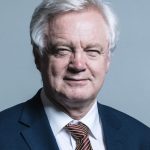
    Below is the text of the speech made by Sir David Amess, the Conservative MP for Southend West, in the House of Commons on 19 December 2019.

    I rise to speak in support of the Gracious Address. I begin by congratulating the proposer and seconder of the Humble Address. It is a huge honour to be chosen for either position. My hon. Friend the Member for Chatham and Aylesford (Tracey Crouch), who is a very popular colleague, did not disappoint the House. Her speech was first class. Our hon. Friend the Member for Walsall North (Eddie Hughes) kept us well entertained with a tour de force delivered with no notes.

    Mr acting Deputy Speaker, last night someone said to me, “David, you’ve been here a long time. You must be near to becoming the Father of the House.” I looked up the list of seniority to find that I am No. 7, which left me depressed. In part, that is because I think I am a little young to be Father of the House, but let me make it abundantly and absolutely clear that, as the father of five children, the idea of becoming father to 649 MPs is too much.

    Unlike my right hon. Friend the Member for Tunbridge Wells (Greg Clark), I hated every minute of the general election campaign.

    Victoria Prentis (Banbury) (Con)

    Oh!

    Sir David Amess

    I am sorry, but I did. I did not want an election to take place two weeks before Christmas. I did more than 100 canvassing sessions in the wet and the cold, tripping up steps at night, holding a handkerchief in one hand because of a cold. I found it depressing, although obviously I am thrilled to bits by the result. Thinking of the detail of the campaign, it seems to me that in my constituency the manufacturers of grey paint must have run out of supplies; every other house was grey. Often when I pressed a doorbell, the purple thing went round and round and then I found myself talking to people who were not inside the house. I thought it was a huge risk to hold a general election when we did. I had no idea that the British people would turn out in such great numbers. From the Conservative point of view though, the result is fantastic.

    Among the Opposition parties, the smaller ones had mixed results and I do not know what their take on the election is, but I entirely understand why SNP Members are very happy with the result they achieved. I do not know what their strategy is for the next five years, but previously when they had a lot of Members they energised the place and a lot of robust debates were had. I hope that they will achieve something in the next five years, even though they may be disappointed regarding their overall objective.

    Now, I look at the Labour Benches. All new Members are thrilled to bits about winning their seat, but those of us who were previously MPs tend to think about the human side of it all and those, including some of our ​colleagues, who lost their seat. I think we have lost some very good colleagues indeed from the Labour Benches. I will not get involved in the internal discussions within the Labour party, but I hope that those colleagues who lost their seat are given as much support as possible and are not simply abandoned.

    As I look at the Conservative Benches, I remember—as do you, Sir Roger—the day in 1983 that we were elected. We remember the joy of that election and the huge thrill. It is a huge honour to be sworn in and to make one’s maiden speech, perhaps with mum and dad, family and friends looking on. I have been looking at the figures for that election: 397 Conservatives were elected and Labour was down to 209. We had a majority of 144. Fast forward to last Thursday, and we now have an overall majority of 80, with 365 Conservative MPs. Labour has 203. Although not too many of my new colleagues are present to listen to what I am going to say, I hope they will read Hansard and reflect on what happened.

    I became famous for 30 seconds in 1992, when I retained the Basildon seat for the third time. We had a huge election victory, but five years later—or 14 years after you and I were elected, Sir Roger—we suffered an absolutely catastrophic defeat. Labour got 418 seats and the Conservatives were down to 165. Sir Michael Shersby, who was the Member of Parliament for the constituency that the Prime Minister now represents, died a week after the general election and we were down to 164. So I say to my colleagues and to anyone who is interested: it is no good the Conservative party winning an election and being the Government again after a miserable two and a half years unless we do something with our majority. There is no point in time-serving; it is now up to the Conservatives to deliver on the manifesto.

    I will not reiterate what was in the manifesto, because we are probably all sick to death of it, but it is now up to the Conservative party, which has a wonderful opportunity, to make sure that every part of the country that has elected a new Conservative Member of Parliament enjoys prosperity—if we deliver on the manifesto, all those new MPs’ constituents will enjoy that prosperity. What is the point of being in politics just for the sake of it? We are in politics to get things done. For the past three and a half years, we have got nothing done. We have argued with each other and there has been a horrible atmosphere in this place. We have been falling out with one another. It is now down to my Conservative colleagues to get on and deliver on the manifesto.

    Although there are not many newly elected MPs present to listen to me, I am going to give them a bit of advice. They should be very careful who they trust; be wary of the colleague who does not make eye contact but wants to know them only when they want something; and be very wary of their ambitions. I know my own limitations—my wife reminds me of them every single day—and we cannot all be Prime Minister. I have been covering up my disappointment at not being Prime Minister for 36 years. Do not be in a hurry to get ministerial office. There are plenty of other things that Members can do in this place. As far as Ministers are concerned—we have a splendid lot of Ministers—once they are on the ladder and get to the top, I am afraid there is only one way to go.​

    We are here for five years and there is an awful lot that we can do. I agree with every part of the manifesto, so I shall pick up on only two points. The first is about building regulations. I am honoured to be the chairman of the all-party group on fire safety and rescue. Had we been listened to, the Grenfell disaster would never have happened. That is a reality. There is a sentence in the manifesto about it; we have to do something with the building regulations. We have to make sure that there are sprinklers in every new school that is built and we must retrospectively fit sprinklers in high-rise blocks. That has to be delivered.

    My second point is about animal welfare. My right hon. Friend the Member for North Thanet (Sir Roger Gale), who is currently in the Chair, and I were among the four or five Conservatives who voted against foxhunting. There has been a sea change among those of us on the Conservative Benches and we must not let the animal kingdom down. If I did not have the support of every constituent in Southend West, I had the support of every dog. I had dog of the day on my Twitter account. I will not let the animal kingdom down, and I hope that, on a cross-party basis, we can do something to stop the live exports of animals—we must do that.

    Let me come now to my final measure—social care. Anything can happen in five years. Whatever we do—whether it is a royal commission or not—we must tackle this issue. My constituents say, “David, we are all growing older”, and I say, “You are either growing older or you are dead. Which way do you want it?” Given that we are all growing older, we must do something about social care.

    Let me end with these thoughts. For many colleagues the election is over, so what are they going to do for the next five years? I am already going to be involved in an election, because when we get back in January there are two vacancies for Deputy Speaker on the Conservative side and I will be one of the candidates, and I will be asking colleagues for their first preference vote. Furthermore, when we get Brexit done, there is something else that we must get done, which is to make Southend-on-Sea a city. Let us get it done. I wish everyone a very happy Christmas and a wonderful new year.

  • Ed Davey – 2019 Speech on the Loyal Address

    Ed Davey – 2019 Speech on the Loyal Address

    Below is the text of the speech made by Sir Ed Davey, the Liberal Democrat MP for Kingston and Surbiton, in the House of Commons on 19 December 2019.

    It is a great privilege to follow the right hon. Member for Wokingham (John Redwood), and it was a delight to hear that he is a convert, however late, to increased public spending. He made some interesting points about macroeconomic policy and he spoke about the new fiscal rule that the Chancellor announced just before the general election, which I hope the House will soon get to debate. He welcomed that rule, but I have some concerns about it as I think it rather old-fashioned. I would like a new fiscal rule to consider the net worth of the public sector and ensure that it is growing over time; at the moment it is in negative territory, particularly because of various pension fund liabilities. That would be a much better approach to managing fiscal policy long term, because it looks at the whole balance sheet of the public sector, which is what a normal business would do. We now have a data set for the past three years from the Office for National Statistics, and I hope we can have that debate later on, because it is important to get fiscal policy right.

    The right hon. Gentleman made two other interesting points about monetary policy. He spoke about wanting to bring back quantitative easing, which is an interesting question.

    John Redwood indicated dissent.

    Sir Edward Davey

    The right hon. Gentleman shakes his head, and I am sorry if I misinterpreted his remarks. We should look at quantitative easing and how it is done, both in this country and elsewhere. There is some concern that the way central banks have done it has not led to a fair distribution of prosperity and that the money has gone into a small number of hands, resulting in increased inequality.

    I am slightly worried by something that the right hon. Gentleman said about monetary policy that might imply—he might disagree that this was his implication—that there should be some challenge to the independence of the central bank by the Government of the day. I would not welcome that, although I would certainly welcome a debate on quantitative easing. I look forward to debating with him, so that we get our macroeconomic policy right. Finally, I will just say this. It did appear that the right hon. Gentleman was talking about expansionary fiscal policy and expansionary monetary policy. I wonder if he is worried about the impact of Brexit on our economy.

    Like the Leader of the Opposition, I would like to remember one of our late friends, Frank Dobson, who passed away last month. Although we were members of different political parties, I found Frank to be one of the friendliest, most decent and most committed Members of this House I have ever met in my 20 years here. From his opposition to the Iraq war and apartheid to the work he did to rebuild the NHS, Frank leaves a proud record. In his role as the Brian Blessed of the Commons, Frank also leaves several volumes of funny, filthy and totally politically incorrect jokes. Mr Deputy Speaker, I am sure you would like to hear an example, but I fear I must remind the House that our proceedings are being broadcast before the 9 pm watershed.

    I pay tribute to the mover and the seconder of the Humble Address. The hon. Member for Chatham and Aylesford (Tracey Crouch) has a bright career in front of her, particularly in pantomime. I invite her to join me in my annual walk-on part for St Paul’s Players in Chessington. This year, during the general election, I took my family and I had my walk-on part as one of Robin Hood’s merry men. I can tell you, Mr Deputy Speaker, that I know where the baddies are in this House and where the Sheriff of Nottingham sits. The hon. Member for Walsall North (Eddie Hughes) made an impressively long speech as a bid for a job ahead of the Prime Minister’s ministerial reshuffle. I wish him luck.

    I believe our United Kingdom is one of the greatest examples of international co-operation in world history, so much so that four nations can be as one while being themselves: democratic, open and internationalist, operating under the rule of law and under the uniting presence of Her Majesty. We have been a beacon of political stability in the world. I believe we remain fundamentally a people who are outward-looking, inclusive, compassionate and capable of progressive reform as we recognise and value the lessons of history.

    Christine Jardine (Edinburgh West) (LD)

    I thank my right hon. Friend for giving way. Does he agree that, while the Scottish National party might trumpet gaining 80% of Scottish seats, the fact is that only 45% of the people of Scotland voted for it? If we had a more proportional representation system, that would have been reflected in the seats there, in the same way as the seats here might have been a little different.

    Sir Edward Davey

    My hon. Friend is exactly right. The majority of people in Scotland voted for parties who want to preserve the Union. I get a sense that right hon. and hon. Members on the Government Benches should also note that the majority of people voted for parties who wanted to give the people a final say on the European Union.

    We needed a Queen’s Speech that would truly keep our country together, heal the divides and tackle the challenges of inequality, lack of opportunity and climate change. However, I fear the Prime Minister’s Queen’s Speech will only undermine our united country’s great traditions. I fear that, with this Government’s programme, we will become a more inward-looking, more illiberal and less compassionate country. The one nation rhetoric of the Prime Minister is not matched by his actions. Let me start with Brexit.

    Let us be clear that the Prime Minister and the Conservative party now own Brexit. It is their total and complete responsibility. They cannot blame anyone else any more. They have become the Brexit party from top to bottom. The question, of course, is this: will the Prime Minister get Brexit done? More precisely, will he get it done by the end of the year, so we can avoid the disaster of a no-deal Brexit? Well, we shall see.

    The Prime Minister’s biggest weapon in his Brexit deal endeavour is surely his unmatched flexibility with the truth. His so-called triumph of achieving a deal for Brexit phase one was possible only because he betrayed his big promise to the Democratic Unionist party, his erstwhile big supporters. His willingness to jump unashamedly over every red line he had previously been willing to die in a ditch for will have been noted in Brussels by Europe’s rather more skilful negotiators.

    Mr Gregory Campbell (East Londonderry) (DUP)

    The right hon. Gentleman makes a fairly accurate assessment of the communication between the Conservative party, its leader and my party, but does he agree that there is still the opportunity and time for redemption?

    Sir Edward Davey

    There is always time for redemption, but if the hon. Gentleman is hoping for it in this case from this Prime Minister, I wish him well.

    Some of us have led successful negotiations, pan-Europe, in Brussels—difficult negotiations that I won for Britain—on everything from economic reform of the single market to climate change. I did not succeed by adopting this Prime Minister’s tactics of bulldog bluster combined with the record of a turncoat. I do not believe that that is the right approach, and I do not believe that he will succeed without reneging on all, or most, of his previous promises to leave voters. My parliamentary interest in this is whether or not, in the dark Conservative forests of the Brexit Spartans, his erstwhile friends have yet smelt betrayal. We shall see, but as we oppose Brexit and continue to point out the extra costs, economic damage and loss of influence, we will also remind Government colleagues of the previously unthinkable concessions that now need to be made for any chance of a deal next year.

    I turn to the NHS, which the Prime Minister has made so much of. Every Member of the House was elected on a manifesto committed to increasing spending on the NHS in real terms—maybe there is a little political consensus there. I, for one, am relaxed about ​putting a spending commitment for the health service into law, but that prompts one question: is the spending enough? I do not want to repeat the election debate, where the Labour party and the Liberal Democrats were arguing for higher health spending than the Government. Instead, let me approach it in a rather different way, in terms of what our medium-term NHS spending target should be.

    Most health analysts tend to talk, not as the Prime Minister does, in the abstract—in total spending, which is bound to go up with an ageing population and economic growth—but in comparisons between similar countries: on spending per person, on the percentage of the national income. If we compare the UK’s health spending in these ways—even with the Prime Minister’s rises—against the world’s other largest developed countries, the UK fares badly. In the G7, our health spending per person is the second lowest—lower than Germany and France. As a share of national income, in the G7, the UK again performs badly, with Italy the only country that is spending less.

    I readily admit that the NHS is far more efficient as a health service than, say, the health system of the United States, but surely we should be really ambitious for the NHS, and the factual evidence shows that this Government and this Queen’s Speech are not. As we legislate for future NHS spending targets, why do we not take the opportunity to be really ambitious? Why do we not aim to spend 10% of our national income on the NHS, as a minimum? That would bring us up to G7 comparators, and I think that the British people would back a policy where £1 in every £10 of the national cake was spent on the nation’s health. I accept that the Government may be nervous about spending targets based on national income because their economic policies look set to fail so badly and national income will grow very slowly.

    John Redwood

    Does the right hon. Gentleman accept that comparing a health service that is completely free to the user with one where there are payments through insurance schemes and collections of money is not a fair comparison? He should add in all the costs of the Inland Revenue in the UK, because that is the way we collect the revenue. And in relation to a previous point that he made, I think Brexit is good for the economy, not bad—I have always said that.

    Sir Edward Davey

    I will come to that last point in a second, but the right hon. Gentleman’s point about health systems is an interesting point for debate. I point to countries such as Denmark, which have a taxpayer-funded system and spend a significantly higher share of their national income on health. I am afraid that his point is not valid.

    Crispin Blunt (Reigate) (Con)

    Will the right hon. Gentleman give way?

    Sir Edward Davey

    No, I am going to make some progress.

    On economic policy and Brexit, I have to tell the House that I am worried about self-imposed Brexit austerity. I will explain why. First, take the damage to growth from Brexit and the red tape of Brexit at our customs borders, a cost estimated by Her Majesty’s Revenue and Customs at a mere £15 billion every year. We had a red tape battle in the coalition, and we never ​got anywhere near saving that amount of money, yet this Government want to impose that cost on our businesses.

    Then we have the damage to businesses and our NHS from the ending of free movement of labour within the EU. That will damage growth overnight. It is not just the impact on economic growth of this Brexit austerity that worries me, but the impact on the poorest and most vulnerable in our society who will feel it the most. We have already seen the numbers of children in poverty rise by nearly 400,000 since 2015, and we have seen the report from the Resolution Foundation, which I hope that Government Members will read, that analysed the Conservative’s general election manifesto and said that child poverty will continue to rise year-on-year with that party’s policies.

    Wera Hobhouse (Bath) (LD)

    One hundred and thirty-five thousand children will live in temporary accommodation this Christmas, and this Government make no proposal to resolve that tragedy. Temporary accommodation causes childhood trauma and the problem will be resolved only if we build a lot more social homes for rent.

    Sir Edward Davey

    I could not agree more with my hon. Friend. Shelter’s report made that very point this week. There was no mention of homeless people in the Queen’s Speech, and no mention of tackling child poverty.

    There was another huge omission from the Queen’s Speech: the climate emergency. Sure, we heard the unambitious 2050 net zero target mentioned again, but just like in the Conservative manifesto, there was a lack of a sense of urgency and of a set of practical but radical measures. I find that truly alarming. It is particularly alarming because this Prime Minister has previously written so scathingly about the need to tackle climate change.

    Meg Hillier

    The right hon. Gentleman will know, as a former Secretary of State for Energy and Climate Change, how long it takes to get these major projects that will deliver big change up and running. In my speech, I outlined three failures that happened because of this Government and their predecessor. Does he agree that we need to get action going now?

    Sir Edward Davey

    I absolutely do. In her speech, the hon. Lady mentioned carbon capture and storage; I had pushed that competition forward, and it was going very well but, directly after the 2015 election, the then Chancellor cancelled it overnight and put Britain’s global leadership on this key climate change technology back years. It was a disgraceful measure.

    I was talking about the opinions of the Prime Minister on climate change. Just seven years ago, in his infamous Telegraph column, he sought to cast doubt on mainstream climate science, dismissing it as complete tosh. You can hear him saying that, can you not, Mr Deputy Speaker? Instead, he warned about the

    “encroachment of a mini ice age”.

    That is what our Prime Minister said.

    On wind power, in which Britain now leads the world thanks to Liberal Democrat Ministers—[Hon. Members: “Oh!”] If anybody wants to contest that point, I am ​happy to take an intervention. None are coming. What did this Prime Minister have to say about what is now the cheapest form of renewable power? He said that wind farms would barely

    “pull the skin off a rice pudding”.

    This technology is a global leader from Britain. It is powering our homes, but the Prime Minister apparently does not believe in it.

    Then we see the Conservative record on climate change since 2015, voted for at every stage by the Prime Minister: scrapping the zero carbon homes regulations, banning onshore wind power and stopping tidal lagoon power.

    And then we come to Heathrow. In south-west London, we do not forget what the Prime Minister said just four years ago, when he promised that he would

    “lie down in front of those bulldozers and stop the construction of that third runway.”

    If only, Mr Deputy Speaker—if only.

    Sarah Olney (Richmond Park) (LD)

    Does my right hon. Friend agree that this Conservative Government’s commitment to expanding Heathrow, and the economic benefits claimed for it, do not justify the impact on climate change, the impact on air quality and the impact on noise, in south-west London in particular but also over a very wide area?

    Sir Edward Davey

    My hon. Friend is absolutely right. She has been an amazing campaigner against the third runway, and I always admire her advice and thank her for it.

    When we on these Benches say that we do not trust this Prime Minister and this Government on climate change. The evidence is with us, so we will raise the need for radical action on climate change time and again in this Parliament. We will work to force the Government to make the next global climate change talks in Glasgow in November a success, even though they come, ironically, just when the UK will be losing its influence on climate change at the European table. We will champion the need to decarbonise capitalism, and to build on the fantastic work done by the Governor of the Bank of England, Mark Carney. Today, in the Financial Times, we read that Mr Carney is taking action, introducing world-leading climate stress tests in major financial institutions. If only this Government would back the Bank of England in the City, there would be a historic opportunity for this country to lead the world with a gold standard for green finance, but I fear that there is no ambition on the Conservative Benches for that.

    This Queen’s Speech is disappointing on so many levels, and we will vote against it. Liberal Democrats in this Parliament will do our democratic duty: we will scrutinise the Government, and argue for the liberal, inclusive, fairer and greener society in which we believe.

  • John Redwood – 2019 Speech on the Loyal Address

    Below is the text of the speech made by John Redwood, the Conservative MP for Wokingham, in the House of Commons on 19 December 2019.

    It was a pleasure to see our new Speaker in the Chair at the start of the debate, and I would like to send my congratulations to him through you, Mr Deputy Speaker. I was delighted at his election, and I am quite sure that he will be a fair and experienced judge of our affairs and will look after our House very well.​

    The recent election and the conversations that I was able to conduct even more intensively than usual with the electors of Wokingham told me that they do want some changes. I made promises to them that I would come here again as an advocate for more money for our local schools, which have been short-changed in recent years, so it is a pleasure to see in the Gracious Speech the down payments promised for next year, and I look forward to those continuing in the years that follow.

    My electors and I agreed that we need more money for our local surgeries, more nurses and doctors to be recruited and better support for our local district general hospital in Reading. Again, I see that answer already in the Gracious Speech, with a promise of substantial new resources—financial and personnel—for the national health service, which will be laid out in legislation for a five-year period. I welcome that. It is a pleasure to say to my electors that two parts of the job seem to be well on the way to being done, but having a little experience of government, I know that there will remain, day by day and month by month, issues to sort out, to ensure that my constituency gets its fair share of the money.

    Liz Saville Roberts

    In his capacity as a former Secretary of State for Wales, does the right hon. Gentleman share my concern and disappointment that there was no mention of Wales whatsoever in the Queen’s Speech, as well as my concern about how the money being promised to England will find its way to Wales, through the Barnett formula or wherever? Finally, will he perhaps ask the same question as me: how much longer do we need the Wales Office for? Looking at the behaviour of this place, there will be people outside saying, “Surely Wales could do a bit better than this.”

    John Redwood

    The right hon. Lady knows full well that there is a formula and consequentials from the English settlement. I am quite sure that my right hon. Friends in the Government will look after Wales, and it is her job to test them out in the appropriate debates. This speech is not the appropriate moment, because I am not here to speak for Wales; I am here to speak for Wokingham and West Berkshire, and I am here to speak for the wider nation, as we all do.

    I am also looking forward to the promises on infrastructure. The Government have rightly said that we have a big job of work to do to improve our railways and roads, to make sure that people can get to work and get their children to school, that we can bust the congestion and that people have easier journeys. That, too, will reduce pollution and increase safety.

    Wokingham is a very fast-growing area, because we are doing more than our fair share for the national housing achievement. We particularly need support on putting in additional transport links, with digital signals on the railways so that we can have more capacity and more trains, and an improved road network. It was a pleasure to work with the previous Secretary of State for Transport in the last Parliament on the idea of strategic local highway networks. We needed more money and support for those important roads, which are under the control of councils. They do not qualify for trunk status but can often relieve trunk roads and provide an important means for my constituents and others to get to work or get their children to school. The previous Government answered that, but it falls to the new ​Government, with the more generous financial settlement that I look forward to, to ensure that we can work together, so that I can get some of those road schemes and rail improvements for the Wokingham area, which will be much needed.

    The big thing, which represents a seismic shift in Government policy and which I welcome, is the introduction of optimism and enthusiasm—the belief that this country can achieve great things, that we do not have to constantly cut under the Maastricht criteria and that we should no longer make state debt the main objective of economic policy. I have been working away for some time to get that change of policy, but Philip Hammond was not sympathetic to my views in all sorts of ways. I am delighted that the new Prime Minister and the new Chancellor are enthusiastic about the idea that the aim of economic policy for this Parliament must be prosperity— prosperity for the many, and tax cuts for everyone.

    Tax cuts are a very important part of creating greater prosperity. People work hard, and they want to keep more of their own money. They are often better judges of how to spend their money than councils and Governments. It falls to a renewed Conservative party to take that message to every part of the country, implement that message in the forthcoming Budget and show that not only will we find more money for schools, hospitals and roads, which is needed, but we will also have some money for tax cuts.

    Some tax cuts do pay for themselves because our rates are too high, and if we cut them to an affordable rate, people work harder, stay here, contribute more and are more enterprising, and we get more money in. Other tax cuts will reduce the revenue, so we need to grow the economy, and over the years it works because growth generates more jobs and higher incomes, and in comes more money.

    To fulfil this new objective, the Government have rightly changed the basis on which the economy is going to be governed. We have gone away from state debt as a percentage of GDP, the iron rule that dominated the last dreadful years of the Labour Government—a period of collapse, when state debt got out of control—dominated the coalition period of recovery and dominated the Philip Hammond Conservative Government period, when he seemed to like that particular proposition. Now we have a much more sensible idea, which is that we should of course be prudent—there is no magic money tree, and we cannot spend safely on the scale Labour recommended to the country—so what we are suggesting now as the golden rule is that any current expenditure must be covered out of taxation, but we can borrow up to 3% of GDP to put in those big new investments and the myriad smaller investments in broadband, rail, road, water and the other things where public money is needed as an adjunct to the substantial private investment that will in many places be going into those important developments.

    This will make a lot of difference, because this Parliament needs to understand that there has been a very nasty world manufacturing recession over the last six months or so and there has been a worrying slowdown in the world economy over the last year. It began, as these things always do, with the central banks that get it wrong. It began with the tightening of the central bank in America, the Federal Reserve Board, in the third and fourth quarters of 2018. We could feel the shake on the ​world economy, and we saw what was happening to world markets. It spread to the eurozone, which stopped all its quantitative easing, although its economy was still very weak and could not really take that particular shock, and it came to the United Kingdom, where we had a very severe policy being pursued by the Bank of England. Very predictably—I remember warning about it some time ago—these changes in central bank policy did indeed slow the world economy.

    Now things have changed, but they have not changed yet in the United Kingdom, so I urge the Prime Minister and the Chancellor to get the UK authorities into line with the analysis and the prescription of the world central banks outside the United Kingdom. What we have seen in the last six months is a very big move to cut interest rates worldwide by most of the major central banks not only in the advanced world, but even more dramatically in quite a number of the emerging market countries from Turkey to India and Brazil. We have seen cuts in the United States of America, and we have seen the reintroduction of quantitative easing—bond buying, created money—in the eurozone, because the eurozone economy has shuddered to a halt in some places. We have seen further developments in Japan, which carried on with quantitative easing and zero or negative interest rates throughout the difficult period, but it too needs to boost things rather more.

    However, there has been no response in the United Kingdom. Indeed, only in the last few days the Bank of England has gone the other way. It has done a series of stress tests on the major banks, and I am delighted to say that our major banks passed with flying colours. The worst case in the stress test was very severe, but there were no problems for the banks, as the Bank of England reported. However, the Bank of England then said that the clearing banks had to double the counter-cyclical buffer of capital they keep. That is technical language. What does it mean? It means there is about £20 billion less available for mortgages, car loans, business expansion and new investment. That is what it means—a very fundamental monetary tightening. It happened at the same time that sterling went up about 10%—another very strong monetary tightening.

    Money growth is eye-wateringly low in the United Kingdom, unlike in the eurozone, and it is well below that in the United States of America. At exactly the point when we were doing this, the Federal Reserve Board, with 2%-plus growth in America, which we would love to have on this side of the Atlantic, was injecting billions—I think about $150 billion was injected in a single month—into the money markets to keep things liquid so that the American consumer, car buyer, mortgage demander and small businesses would have access to the money they needed to continue the very successful American growth strategy. Let us ensure a growth strategy in which monetary policy does not stand too much on the brake.

    There is also the issue of how the Treasury has been recalculating our obligations at official level. Around October, when it probably thought that we might be leaving the European Union—there was a chance of that at the time—it decided that the student loan system was costing us £12 billion a year more, although that system had not been accounted for in such a way up to that point. There were no changes to the student loan system, or to the experiences of those who could not ​repay their loans, yet the figures that we presented deteriorated sharply as a result of that decision. I do not think we should allow that to deviate from what I hope will be a positive Budget—probably at the end of next month, given the rumours I see in the press.

    We need the Budget to provide that boost to growth. I think it is eminently affordable to have the increases that we promised and talked about in the general election regarding schools, hospitals and infrastructure, and also eminently affordable to have those promised tax cuts to business rates and national insurance. We would not need to offset that with other tax increases, because this economy desperately needs a boost.

    In a world where some other Governments are boosting on the fiscal side, and practically every other country is boosting on the monetary side, in order to see off the threat of the world slowdown turning into something worse, it is important that the United Kingdom authorities do the same thing. I have every confidence in my right hon. Friend the Prime Minister, who I think is single-handedly turning around the mood with his message of confidence and enthusiasm for how we can do better. That will take some cash, however, and now is the time to spend a bit of that.

    This country and its economy can achieve a lot more, so let us ensure that the new message of prosperity for the many and tax cuts for everyone is seen through. That is the way to bring most people in this country together, and honour the promises that many of us made in the general election. That will show that the country has made wise decisions up to this point, and that Brexit will not be damaging to our economy, but can be part of a positive move towards faster growth, better jobs, and more paid jobs, just as we have experienced in recent years and months.

  • Meg Hillier – 2019 Speech on the Loyal Address

    Below is the text of the speech made by Meg Hillier, the Labour MP for Hackney South and Shoreditch, in the House of Commons on 19 December 2019.

    It is a pleasure to welcome you back to the Chair of the House, Mr Speaker, and it is a pleasure to follow the right hon. Member for Maidenhead (Mrs May), because despite our political disagreements she and I agree on what she said about everybody counting and the Government’s being there for everybody. I thank the people of Hackney South and Shoreditch who re-elected me for the fifth time to stand up for them all—not just for the 73% of them who voted for me, but for the others who did not. I will stop at nothing to stand up for them in this House.

    The Queen’s Speech is quite incredible. It talks about investment in education, the NHS and public services, but this Government have slashed spending over the past nine and a half years. The promise of more funding for schools comes now, but only after nine years of funding cuts that have led to an 8% per pupil funding decrease over the past decade. The Government talk about more police, but who was it who cut their numbers in the first place? The Prime Minister has been keen to talk about the past as though it were a different country; were he in his place, I would remind him that he has been not just the Prime Minister for a few hundred days but an MP and the Mayor of London. He cannot dodge responsibility.

    I will of course welcome things in the Queen’s Speech that will deliver for the people of my constituency. It feels a bit bitter to hear talk about investment in broadband from the same Government who rigged the most recent broadband competition, particularly for rural broadband, so that only one bidder could win, but it is important that we invest in infrastructure in our country. Even in ​my constituency—even in Shoreditch—where we have the best tech businesses beating like a heartbeat for Britain, we have too poor a broadband service. I will join the Government in supporting investment in broadband if they will deliver in my constituency and across the country.

    I cannot stand here today without highlighting the real challenges for the people of Hackney South and Shoreditch. As the former Prime Minister said, everybody counts. In my constituency, that includes half of our children who live in poverty after housing costs are taken into account. In my constituency, or across Hackney, 30% of deaths are still premature, and the leading cause of that is cancer, so investment in our health service for early diagnosis and treatment is absolutely vital. One fifth of adults, which is above average, still smoke in my constituency, compared with around 14% of the London population.

    With a ratio of nearly one in 10, Hackney has the highest rate of diagnosed depression of any London borough. I would welcome a review of mental health support, but, as the former Prime Minister said, I think that we may need to be more radical than that, so I will be watching what happens closely. Hackney as a borough is the 11th most deprived of the 326 English local authorities. Although some people talk about our being achingly cool—they think of the hipsters with their beers and of our bread makers and our beer makers and so on—a very high percentage of my constituents are in great need, with more than a third living in financial poverty, earning 60% of median earnings after housing costs are taken into account.

    I wanted this Queen’s Speech to say a lot more about housing. In my borough, it takes 17 times a person’s salary to buy a home. That compares with the London average of 13.8 times, which is pretty high, and the England and Wales average of eight times the amount, which is also high. It means that home ownership is out of the reach of so very many. In my constituency, there are more private renters than homeowners. Half of all households are represented in social housing, which is more than the other two combined.

    A real stain on one of the richest countries in Europe and in the world is the fact that more than 3,000 families are living in temporary accommodation. Just in the past few weeks, a man wrote to me begging for help because for two and a half years he has lived with his eight-year-old son in one room in a hostel. We have a fantastic Labour elected mayor in Hackney, who is doing his utmost to resolve this housing crisis, which is costly to the individuals concerned, costly to our communities and costly to the taxpayer. Without more from this Government, it will be difficult—if not impossible—to deliver for those 3,000 families who need help, and for those children who will be living without a permanent roof over their heads and who will be celebrating Christmas in one room in a hostel or in short-term, inadequate temporary accommodation.

    I would not want to suggest that this poverty is also a poverty of ambition, because boy, do my constituents want to get on in life. None the less, without those basic building blocks of primarily secure long-term, affordable housing, and swift and easy access to proper healthcare, to secure and properly paid jobs and to skills development, they will never get there. Some in my constituency earn enough money to work a four-day week, but many, ​many more work three or four jobs on poverty wages on zero-hours contracts just to pay the rent. There is also the invidious bedroom tax policy, which does not work. On one estate, the Wenlock Barn estate in Hoxton, 74 families are hit by this policy and they do not have an option to move to a different property. It is a cloud cuckoo policy, and if the Prime Minister is anywhere near honest about his desire to be a one nation Conservative, it is one that he would abolish right now.

    All Governments should be creating a ladder of opportunity for the people of this country. This Government, or the Governments before them, have ripped away the lower rungs of that ladder, so it is a very long reach for too many of my constituents. I want to see some commitment from this Government that they will help my constituents.

    Let me move on the specifics of the Queen’s Speech. Her Majesty talked about the Government continuing to “lead the way” in tackling climate change. It has been my great sorrow, in one of my responsibilities as the former Chair of the Public Accounts Committee—a role I hope to resume in this Parliament—to have pored over the detail of the Government’s policy on climate change. And what do we see? There was carbon capture and storage: three expensive competitions, wasting millions of pounds achieving absolutely nothing. There was the much vaunted green deal, with the noble aim of greening our homes, because, let’s face it, more domestic emissions come from housing than from aviation. But that scheme was scrapped as a total failure—predictably—and cost the taxpayer the equivalent of £17,000 per loan granted.

    Caroline Lucas (Brighton, Pavilion) (Green)

    The hon. Member is making a powerful speech. She will know that the Committee on Climate Change wrote to the Prime Minister yesterday to say that action on climate change is falling short. Does she agree that that will continue to be the case for as long as this Government do not commit to leaving fossil fuels in the ground, and that that means ending mass road building, mass aviation expansion and the mass subsidies to the fossil fuel industry?

    Meg Hillier

    I thank the hon. Lady for her point, which I am sure she will be making more firmly later.

    We have to look at this issue in the long term. Let us be clear: Governments of different colours did not deal with it early enough or properly, but we now need to tackle it, and a Government with a majority of 80 have every opportunity to be bold and ambitious in this direction. But they privatised the green investment bank, which became the Green Investment Group and now does not even need to deliver on any of its green principles. There are very few guarantees about where that money will go. Had the green investment bank remained in public hands, we would have had a huge opportunity to invest in emerging green industries to create jobs and opportunities as well as tackle climate change issues. But that was another squandered opportunity.

    In order to compare this situation with what Labour in power can do, I turn to my own borough—the Labour-run Borough of Hackney—which has set bold targets to tackle climate change, and is achieving those targets. Already, half the electricity for the council and local schools is generated from renewable sources, and that will rise to 100% by April next year. Only very ​recently, the council established a publicly owned clean energy company that will maximise all council-owned roof space to generate renewable electricity. The council is also decarbonising its vehicles and tackling many other issues. I do not have time to go into everything today, but it is setting an example to show what can be done. If one London borough can do this, what could a Government do if they set their mind to it? This Government really need to step up. Of course, we await reshuffles, but I invite the relevant Minister to come and see what my borough is doing; we can show them how we are leading the way.

    The Queen’s Speech also touched on “swift justice” for knife possession. There is a scourge of knife possession among our young people in particular, and too many people in my borough are fearful of walking their own streets because of the impact of knife crime. Only during this election campaign, another young man’s life was lost and another family are bereaved. I am angry and disturbed for the families I visit who have lost loved ones and whose lives have been devastated as a result of knife crime. However, I urge the Government to tread carefully. Yes, knife crime is a scourge, but if we simply say that we will criminalise more the people who carry knives, people will choose to carry other sharp weapons. We will need to look closely at the detail of that legislation to ensure that it achieves what it sets out to—not just a headline.

    The Queen’s Speech included new rules requiring councils, police, schools and housing associations to work together. Of course, the Labour Mayor of London set up the violence reduction unit to do just that, and my constituency has the Hackney Integrated Gangs Unit. Once again, I genuinely and openly offer the Government the opportunity to come and see what we are doing locally in Hackney. We do not have all the answers, but we are tackling this issue—unfortunately, from bitter experience of the impact on our community.

    It rather surprised me to hear Her Majesty talk about setting up a royal commission on justice. I do not think this is really necessary. I could refer the Government to a slew of Public Accounts Committee reports and concerns raised on probation, where we have seen a failure of the modernisation of the system and an attempt to reverse those changes; on prisons, where we have seen a slashing of prison officer numbers and huge issues there; on chaos in courts and tribunals; and on a huge IT project that is behind schedule. The problem is that several Secretaries of State for Justice were throwing everything in the air wanting to change everything overnight, and that is a recipe for chaos. We need to go back to the basics—to stability. We must not have stop-start and reversal; we must make sure that there is proper investment in our criminal justice system. A royal commission worries me. It kicks the can down the road as there is a danger that we will never actually deliver. A royal commission can take a couple of years and then the Government have to consider it. We do not have that time to wait. Actually, it is much simpler than that. I hope the Government will look at those bits of our work and make sure that they take those points on board.

    I am interested in the national skills fund. I hope—maybe too much—that this might mean investment for people in low-paid work who want to improve their skills, as the Labour manifesto proposed. I hope that it will end the barrier to skills and training in further education ​that is the loan system. Many of my constituents who are women returning to work, had been in low-paid jobs and had children do not want to take the risk of a loan in order to possibly get a better-paid job. They cannot afford that, they do not have the credit record for it, and they are very nervous about it. If the national skills fund supports them, then fantastic. If it also makes sure that our young people are training in the tech skills—the global skills—that many of my tech businesses in Shoreditch find hard to get in the UK, then great. As I said at the very beginning, if there is something that the Government are doing that will help my constituents, I will work with them on that, but I wait to see the detail.

    On immigration, I am sadly an expert in the failings of the Home Office in this area, as one of its top six customers among the 650 Members of this House in representing constituents’ concerns. I represent the world in one borough. People from across the world come to my surgery telling me their problems with immigration. We have 40,000 European citizens in Hackney, as well as many Commonwealth citizens. The hostile environment is a reality in my borough. When leave to remain was reduced from five years to three years, guess what—that meant that constituents had to pay two fees before they could apply for their citizenship. Then, in a very mean-spirited way, it was reduced to two years, so they have to pay three times the fees before they can qualify for citizenship. Many of my constituents really struggle with those costs. Of course, I want a fair system, a clear system and a faster system, but we should not be putting up barriers to people who have demonstrably shown that they have a legitimate right to be here and are being pushed through a bureaucratic process that delays their eventual proper opportunity to fulfil work and family hopes and to contribute to our communities and our economy.

    The Government have talked about investment and borrowing in this Queen’s Speech. That is a very simple phrase and I look forward to seeing the detail. Her Majesty talked about the Government

    “keeping borrowing and debt under control”

    and “a responsible fiscal strategy”. Let me assure the Government that if I am returned to the position of Chair of the Public Accounts Committee—or, indeed, even if I am not—I will hope that that Committee watches every penny and pound of taxpayers’ money that is being spent. I will be challenging the Government on the efficiency, effectiveness and economy of every promise made in this Queen’s Speech and every plan that emerges from it. But above all, I will challenge, cajole, criticise and at every stage make sure that this Government are doing what they can to deliver for the best interests of my constituents in Hackney South and Shoreditch.

  • Theresa May – 2019 Speech on the Loyal Address

    Theresa May – 2019 Speech on the Loyal Address

    Below is the text of the speech made by Theresa May, the Conservative MP for Maidenhead, in the House of Commons on 19 December 2019.

    Mr Speaker, may I first take this opportunity to congratulate you on your election as Speaker? I know that, in residing in that Chair, you will uphold the best traditions of the Speaker of the House of Commons. I also want to thank you for the work that you have done, and I know you will continue to do, in showing concern for the health and well-being, including the mental health, of Members of this House and staff across Parliament. Thank you for all that you have done here.

    I have been in this House for over 22 years, and this is the largest number of Conservative Members of Parliament that I have seen. I congratulate my right hon. Friend the ​Prime Minister on leading our party to an overwhelming victory. One thing now is certain: the Lobby is going to be rather crowded. It will also be a rather welcome change to see all Conservative MPs going through the same Lobby. [Laughter.]

    I hope my right hon. Friend will forgive me if I just reflect that this was the result that was supposed to happen in 2017. Of course, back then, people still thought the Labour party supported Brexit. Two years on, they saw that that was a sham, a pretence and a betrayal of millions of traditional Labour voters, and those voters have now elected Conservative Members of Parliament. This victory brings with it a huge responsibility, because they have put their trust in us and, as my right hon. Friend has said, we must work flat out to repay that trust—not just Ministers, but every single one of us. Of course, that means delivering Brexit. It means delivering our manifesto commitments on schools, the NHS and infrastructure, which is why the legislation and the commitments in the Queen’s Speech are so important. But it means more than that. It means building a country that truly works for everyone. That has always been the ambition of the Conservative party, because we are a party that is at its strongest when we appeal across the board to people regardless of age, gender, ethnicity, sexuality, background, income or where they live. That is the true Conservative party.

    We must deliver on Brexit and on our manifesto commitments, but we must go further. We must ensure that, in every decision we take in this House, we remember those communities that have lent us their vote. That means things like taking forward the modern industrial strategy, ensuring prosperity across the whole country, and I welcome the commitment in the Queen’s Speech to spend on science and on research and development.

    It also means remembering those communities when we negotiate trade deals around the world, including with the European Union, because good trade deals will protect the jobs of those who have put their faith in us and, more than that, will bring good, new, better jobs to the UK. It is interesting to note that we have not yet had a reference in this debate to the fact that, under a Conservative Government, yet again, we have seen employment go up.

    Geraint Davies (Swansea West) (Lab/Co-op)

    Will the right hon. Lady give way?

    Mrs May

    No.

    Good trade deals will protect the rights of workers and of those who have put their trust in us. I welcome the commitment in the Queen’s Speech to an employment Bill, which I trust will not only enshrine but enhance workers’ rights in this country. Good trade deals will also ensure that we maintain this country’s high standards in areas like the environment. The environment Bill will be a very important piece of legislation.

    We need to deliver on all those issues, particularly for communities that have lent us their vote, because these are the communities that feel most left behind by globalisation. These are the communities that, all too often, have borne the brunt when rights and standards have not been protected. We have a very real job to do in delivering for those people who have put their trust in us.​

    Of course, as we deliver Brexit and look ahead to the end of next year, we have to deliver a trade deal with the European Union by the end of December 2020. There are those who say it cannot be done, but I do not believe that. I have every confidence that it can be done, but we must do more than that because, by the end of December 2020, we have to agree and ratify a new treaty on security with the European Union such that it will come into operation on 1 January 2021. Again, I have every confidence it can be done, because significant work has already been put into these issues. Elements of that were agreed with the EU in the political declaration. There is work to be done, but it can be done and it must be done to that timetable.

    There is another matter that people across the UK will look to us to deliver on: the social injustices that still persist. I welcome the reference in the Queen’s Speech to the domestic abuse Bill, and I am grateful to the Prime Minister for the speed with which he responded to me when I pressed him on this matter earlier this week.

    The Prime Minister

    I responded instantly.

    Mrs May

    Indeed. That Bill has cross-party support and it will genuinely improve the lives of victims and survivors of domestic abuse.

    I also welcome the reference to reforming the Mental Health Act, although, yet again, I am bound to say that I would have preferred a more full-blooded commitment to a new Mental Health Act. The review of the current Mental Health Act raised many issues about how we deal with and treat people with mental health problems. It is not just about resources; it is also about the attitude and the way in which people are treated. If we put those changes into place in a new Mental Health Act, we will bring genuine and significant improvements to people in this country who have mental health problems.

    There are other social injustices we need to look at. Often, social injustice is underpinned by a feeling among the powerful that there are others in our society whom they can treat as second-class citizens. One of the worst examples and what really brought that home to me was the way in which the young girls and boys being sexually abused and groomed in Rotherham were treated by the authorities in that place. It was as if they were people who did not count. But they did count, and we must always remember that every member of our society, every resident of the UK, counts. It is that spirit of ensuring equality that lay behind the work done on social housing, and I note the commitment the Government have made to produce a social housing White Paper. It is important that we continue that work to ensure that the voice of those in social housing is heard.

    Another injustice we need to tackle was highlighted by the race disparity audit—groundbreaking work by a Conservative Government that shone a light on injustice that too many experience and too few are willing to acknowledge. We cannot address all the issues raised and all the findings immediately, but we must ensure that the Government do not abandon the work on the race disparity audit. If we take action across the board, we will truly be creating one nation.

    Speaking of one nation, my right hon. Friend the Prime Minister has, on a number of occasions, expressed his desire to unite the country. Of course, that will not happen if the United Kingdom is torn asunder by those ​who want to ignore the ties of family, of history, of shared endeavour, of shared purpose, that we have formed together over the years. My view is simple: breaking up the United Kingdom is to the benefit of no one and the detriment of all. I am grateful to him for the reference in the Queen’s Speech to the importance the Government attach to the integrity of the United Kingdom, and I look forward to the work that I know the Government will do to ensure that that is demonstrated.

    Neil Gray (Airdrie and Shotts) (SNP)

    The former Prime Minister has spent a lot of her speech talking about the debt that her party and her successor owe to those who lent her party their support, but she will know better than anyone that a true leader, a true statesman, acknowledges those who did not vote for them. In Scotland, the Scottish National party secured 45% of the vote. Nobody denies the current Prime Minister’s right to govern on 43% of the vote, so how can she turn round to the people of Scotland and say that we cannot have our say on our own future, after the general election results that we just had in Scotland?

    Mrs May

    As the hon. Gentleman will have heard from my excellent hon. Friend the Member for West Aberdeenshire and Kincardine (Andrew Bowie), 55% of people in Scotland voted for parties that support the Union of the United Kingdom. At the end of his speech, the right hon. Member for Ross, Skye and Lochaber (Ian Blackford) made a great plea about how an independent Scotland would be in the European Union. We all know that an independent Scotland will not be in the European Union—it will not be allowed to be in the European Union. So what the Scottish nationalists are saying to people in Scotland is simply not true.

    The Queen’s Speech refers to the UK’s place and influence in the world. I note that there is to be a full review of international policy, no doubt building on a number of reviews that have taken place and work done in recent years. It is important that we look at this issue now. Of course, global Britain has never gone away; we have always been a global Britain. In recent years, we have continued to play an important role in international fora on matters such as climate change; we have played a key role in dealing with terrorism, modern slavery and people smuggling; and we have enhanced our presence in key areas east of Suez and in the Asia-Pacific region. We brought together action across the world when we found that a chemical weapon had been used on the streets of the UK by Russia.

    At the same time, we have seen the international fora and the rules-based international order on which we have depended for decades coming under significant threat. At the same time as we have seen the atmosphere and discourse of politics in the UK become more acrimonious. Across the world we have seen a change, too. We have seen an emphasis on absolutism and confrontation rather than compromise. We have a decision to take as to where we sit in that: whether we side with the absolutists or continue to be a country that believes it is right that big countries come together internationally and restrain their own demands in order to seek agreement for the greater good of all.

    We have also seen from some an interest in stepping back from a defence of democracy, human rights and the rule of law. We have to decide whether to look ​inward or to continue to play a role in defending those values; I believe we should, because that is what global Britain is all about. It is important that we continue to uphold those values around the world. Of course, that may bring into the spotlight our relationship with the United States of America. It is a special relationship that we must nurture and preserve. It is in the interests not only of us and the United States but of the world that that special relationship is maintained. But it is not a one-way relationship. We do not just accept every position that the US takes; we consider our own interests and, when we disagree with the US, we tell them clearly that we disagree with them.

    Over the past three years, we have seen this House focusing so much on Brexit and focusing so much internally, but we now have an opportunity: we can set that to one side and move on to being the global Britain that the Prime Minister has spoken about and that every Conservative Member on the Government Benches espouses. We can be a Britain that takes its place in the world; a Britain that recognises the need to reform the international rules-based order, playing not just a role but a leading role in that reform; and a United Kingdom that stands up for the values that we share—the values of democracy, the rule of law and human rights. A United Kingdom standing proud in the world. I believe the world needs the United Kingdom to take that role. I know that, under my right hon. Friend, we will do just that.

  • Ian Blackford – 2019 Speech on the Loyal Address

    Ian Blackford – 2019 Speech on the Loyal Address

    Below is the text of the speech made by Ian Blackford, the SNP Leader at Westminster, in the House of Commons on 19 December 2019.

    Thank you, Mr Speaker.

    There was absolutely nothing for the people of Scotland in that address from the Prime Minister, and I hope that, for those who were watching and listening back home, it was preceded by an announcement that it was not for viewers and listeners in Scotland.

    I congratulate the hon. Members for Chatham and Aylesford (Tracey Crouch) and for Walsall North (Eddie Hughes) on their addresses. I listened to all the stories about “A Christmas Carol”, but we did not hear which Conservative Front Bencher would be playing Scrooge. The hon. Member for Walsall North is a great football fan, and I thought that he would perhaps mention Aston Villa. They are not having the best of times, but I hope that he is enjoying watching John McGinn, whom we gifted to him from Hibernian last year.

    This morning, Scotland’s First Minister, Nicola Sturgeon, wrote to the Prime Minister demanding the transfer to the Scottish Government of legal powers to hold a second independence referendum under section 30 of the Scotland Act 1998. As the First Minister outlined, there has been a material change in the circumstances since the independence referendum of 2014, based on the prospect of Scotland‘s leaving the European Union against its will.​

    It is for the Prime Minister to explain to the people of Scotland why he is denying Scotland the right to choose our own future. Why did democracy stop, in the Prime Minister’s world, with the independence referendum in 2014? And may I say to the Prime Minister that it is not a good look to be playing with his phone rather than listening to the legitimate demands of the Scottish National party? [Interruption.] The Prime Minister says, “Say something more interesting.” Well, Prime Minister, this is about democracy. This is about the Scottish National party, which stood in the election on a manifesto about Scotland’s right to choose, and it is about the Conservatives, who said no to indyref2—and what happened? Well, the Conservatives lost more than half their Members of Parliament.

    Prime Minister, you got your answer from the people of Scotland. The SNP got 45% of the vote, a 20 percentage point difference from the Government. We got 80% of the Members of Parliament who sit on these Benches. Some time, some day, the Prime Minister is going to have to respect democracy. The Prime Minister cannot and will not continue to say no.

    Drew Hendry (Inverness, Nairn, Badenoch and Strathspey) (SNP)

    The Prime Minister says that looking at his phone is more interesting than hearing what Scotland needs. Does that not tell us everything about this Prime Minister and his view of Scotland?

    Ian Blackford

    Indeed it does. There is not much that can be added to that, because the image of the Prime Minister playing with his phone and not listening to the Scottish National party says it all.

    The people of Scotland did not vote for this Prime Minister. Scotland did not vote for this Conservative Government, and we certainly did not vote for the con of a Tory plan that has been set out today.

    In December 1967, my old friend Winnie Ewing proclaimed that

    “the march of time can bring anomalies between elections, so that sometimes a Government may have a majority in this House but be in a minority in the country.”—[Official Report, 6 December 1967; Vol. 755, c. 1551.]

    In Scotland, that is certainly the case. Here in this place, we face a Tory Government we have rejected, implementing a manifesto that Scotland rejected. For too many years, Scotland has been held back by successive Tory Governments we did not vote for.

    Scottish National party MPs have today set out an alternative Queen’s Speech to deliver for the people of Scotland. With a renewed and strengthened mandate, our expanded SNP team will focus on our priorities—on Scotland’s priorities: stopping Brexit and protecting Scotland’s NHS from any grubby Trump trade deal; dealing with the climate emergency; and, once and for all, putting an end to Tory austerity. Instead, the Government’s Queen’s Speech sets out another Tory programme that the people of Scotland rejected. Despite the fact that Scotland voted to remain a member of the European Union, we now face being dragged out against our will.

    We often hear about losers’ consent, but the fact is that Scotland voted to stay in the EU to maintain our rights as EU citizens. This Conservative Government do not have the consent of the people of Scotland, the Scottish Parliament or our Government to take Scotland ​out of the EU. We ask that the solemn right, claimed by the people of Scotland, to determine the form of government best suited to our needs be exercised. This House accepted that claim of right as a principle, on a motion that I moved in July 2018. It is the Scottish people who are sovereign.

    In that context, it is right for the House to respect our Scottish Parliament and last week’s election result. But of course, in the last Parliament, the Tories ignored our interests and sidelined the will of the Scottish Government, intent on bringing forward a deal that will destroy our economy and risk jobs and livelihoods. As the former EU permanent representative to the EU, Sir Ivan Rogers, said, that pledge will create

    “the biggest crisis of Brexit to date”

    in late 2020. He said that “get Brexit done” was

    “diplomatic amateurism, dressed up domestically as boldness and decisiveness.”

    From selling off our NHS to selling out Scotland’s fishing communities, the Prime Minister will inflict hardship on our communities as the cost of delivering his damaging Brexit.

    The voices of the people of Scotland are being silenced—80% of their representatives in this House are not listened to by a Tory Government showing contempt. That is why we stand up for Scotland and against cruel, punishing policies and narrow, backward-gazing politics. Instead, we are determined that Scotland’s right to choose our own future will be delivered, not simply because we in the SNP want that, but because the people of Scotland demand it. We stood on a mandate to give Scotland the right to choose its own future. I put the Prime Minister on notice that SNP Members will never stop fighting this Government for that case and for our mandate—for a fresh independence referendum—to be respected.

    Andrew Bowie (West Aberdeenshire and Kincardine) (Con) rose—

    Ian Blackford

    I see the hon. Gentleman seeking to intervene. Will he accept democracy and Scotland’s right to choose?

    Andrew Bowie

    I thank the right hon. Gentleman for giving way. Will he accept democracy and that last week, 55% of Scottish voters voted for parties that want to remain in the United Kingdom? There is no mandate for a second independence referendum in Scotland. The Scottish people are not calling for a second independence referendum. They want us to get on with the day job. Fix your own backyard before coming in here, demanding a referendum on Scottish independence. [Interruption.]

    Ian Blackford

    Well, as my hon. Friend the Member for Glasgow South (Stewart Malcolm McDonald) says, “What absolute tosh!” The hon. Member for West Aberdeenshire and Kincardine (Andrew Bowie) cannot get away from the fact that we won the election. We are here standing up as a voice for Scotland, and he lost most of his colleagues. They were rejected at the ballot box; they have been reduced to rump. The fact of the matter is that we on our side have 80% of the seats. The Government can only wish that they had such a mandate and such a majority in the rest of the UK. The reality is that no democrat can deny that we won the election. ​We demand a right to have a referendum. The Scottish Government and the Scottish Parliament have a strong record for bettering the lives of citizens across Scotland, and we know that with more powers and with independence, we can and will do so much more.

    Today, the Scottish National party has published our alternative Queen’s Speech. The people of Scotland voted to lock the Prime Minister out of Downing Street and escape Brexit. Scotland voted to choose a better future, and our plan is to deliver that better future. We want to see a national health service protection Bill to stop the NHS across the UK being at risk from a US trade deal. It would guarantee that trade deals would not undermine the founding principles of the NHS that we cherish so much. We will continue to make the case and work to ensure that Scotland’s voice is heard. Our nation has the right to choose its future. We will also deliver in Scotland a Bill to increase parental leave with an additional 12 weeks to be ring-fenced for the father in order to encourage take-up, as well as to increase statutory maternity and paternity pay.

    The SNP new green deal will build on the transition towards a greener, sustainable future. We will continue to press the UK Government to match Scotland’s net zero emissions target by 2045, putting oil and gas receipts into a net zero fund focused on measures to battle climate change and putting tackling the climate emergency front and centre of our priorities. That is what a responsible Government do.

    Unlike the Conservatives, our ambition is to end poverty, not to increase it by a failure to act or to show leadership. Poverty is not inevitable. To fight it, we will work to end the disgraceful two-child cap on tax credits and the associated rape clause. We call on the United Kingdom Government immediately to end the benefits freeze and to halt the roll-out of universal credit. We will use every device open to us in this place to make the case that we cannot allow our citizens to be dragged into debt, hardship and despair by this nasty, careless Tory Government. We want to bring forward an equal living wage Bill, meaning an increase in the living wage to at least the level of the real living wage and an end to age discrimination.

    The Scottish National party MPs reject the wholly immoral replacement of nuclear weapons at a cost of over £200 billion, and we call on other parties to follow us, to say no to Trident and to remove those weapons of mass destruction from the Clyde.

    We want to help our pensioners by ensuring that the BBC licence fee remains free for those aged over 75. We will not abandon those women born in the 1950s, and, just as we have done in previous Parliaments, we will demand that this Government deliver justice for the 3.8 million women born in the 1950s who are being denied their pension by this Conservative UK Government. We will be pressing for an NHS funding boost from the UK Government that matches the current Scottish level and for constitutional change in abolishing the House of Lords and extending the franchise to include 16 and 17-year-olds.

    This expanded SNP group is determined, and we are ready for the challenge. The Government think they can do what they want with Scotland and get away with it. That will not happen on our watch. The Tories are risking our economy and reducing opportunities for citizens.​

    The choice is clear: an outward-looking country with a vision of tolerance, inclusiveness and prosperity for all, or the offering of the Union run by a Tory party that does not care about Scotland. The Tory programme for government will push child poverty to a 60-year high and devastate our economy. The hardest of Tory Brexits risks up to 800,000 jobs in Scotland. The Tory manifesto means that day-to-day spending on public services outside health will still be almost 15% lower in real terms in 2023-24 than it was at the start of the 2010s. Austerity has hit communities hard, and it is not going away—more of the same from the Tories. Despite the climate emergency, there is nothing in the Queen’s Speech to make real progress on reducing emissions. The UK Government have already failed to match the Scottish Government’s 2045 net zero emissions target. That is just the start of it.

    Yes, the Conservatives can say that England and Wales have had their say, but what about Scotland? We had our say, and Scotland rejected this Prime Minister and rejected the Tories. Those of us who represent the people and the will of Scotland will use every avenue open to us to protect our people against this Government their shoddy plan.

    Before I close, I want to appeal to Members across the House. In the previous Parliament, Members conducted themselves in less than acceptable ways on occasion. People across these islands have recognised that, and they are fed up with it. Let us start this Parliament with respect and let the strength of our arguments win the case, rather than drag this place into the gutter.

    Finally, in setting out the SNP’s clear opposition to the Government’s Queen’s Speech and offering our alternative, I have set out to the people of Scotland the tale of two Governments, of two parties, of two futures. I started with the words of Winnie Ewing, and I want to begin closing with the words of another parliamentarian. Let me remind the House of the words of Charles Stewart Parnell, who said that

    “no man has the right to fix the boundary of a nation. No man has the right to say to his country, ‘Thus far shalt thou go and no further’”.

    Now Scotland must have the chance to choose its own future: one shackled to the Brexit destruction imposed by Westminster, or one with hope, opportunity and ambition and with an independent Scotland in the European Union.

  • Boris Johnson – 2019 Speech on the Loyal Address

    Boris Johnson – 2019 Speech on the Loyal Address

    Below is the text of the speech made by Boris Johnson, the Prime Minister, in the House of Commons on 19 December 2019.

    This is the moment to repay the trust of those who sent us here, by delivering on the people’s priorities with the most radical Queen’s Speech for a generation. If there was one resounding lesson from this election campaign, and one message that I heard in every corner of these islands, it is not just that the British people want their Government to get Brexit done, although they do, but they want to move politics on, and move the country on, by building hospitals, renewing our schools, and modernising our infrastructure, as well as making our streets safer, our environment cleaner, and our Union stronger. This Queen’s Speech, from this people’s Government, sets in motion a vast interlocking programme to unite and level up across the whole United Kingdom, and unleash the potential of all our people.

    This one nation Government will enshrine in law record funding for our NHS, take back control of our borders with a wholly new immigration system, toughen our criminal justice system with longer sentences for the most dangerous offenders, double investment in basic science research, and protect our environment with a Bill so ambitious and so vast, that there is no environmentally friendly way of printing it off.

    This is not a programme for one year or one Parliament; it is a blueprint for the future of Britain. Just imagine where this country could be in 10 years’ time, with trade deals across the world creating jobs across the UK, and with 40 new hospitals, great schools in every community, and the biggest transformation of our infrastructure since the Victorian age. Imagine British scientists using new gene therapies to cure the hitherto incurable, and leading the dawn of a new age of electric vehicles—not just cars, but planes—and pioneering solutions to the challenge of climate change. I do not think it vainglorious or implausible to say that a new golden age for this United Kingdom is now within reach. In spite of the scoffing, in spite of the negativity, in spite of the scepticism that you will hear from the other side, we will work flat out to deliver it.

    Her Majesty’s Gracious Speech was expertly proposed by a beacon of our one nation Conservatism, my hon. Friend the Member for Chatham and Aylesford (Tracey Crouch). She is not only a football coach of great distinction who has done much to champion the female game, which will be a key part of this country’s bid for the 2030 World cup, but is so personally skilled at the game, with what has been described by her adversaries as a “take no prisoners” style, that according to The Daily Telegraph—if you cannot believe The Daily Telegraph, Mr Speaker, what can you believe?—she was once barred from playing against men to protect their egos. She has even used this Dispatch Box for an impromptu game of keepy-up, using it as a goalmouth in what was probably one of the less shocking innovations tolerated by the previous Speaker.

    My hon. Friend has also done pioneering work on tackling loneliness, improving dementia care, and, as we have heard, curbing the harms inflicted by gambling and alcohol. She is so dedicated to her job that she has regularly brought her son Freddie into the Lobby, so reducing the voting age to about six months. Chatham’s great parliamentary sketch writer, Charles Dickens, would himself confirm that her speech was in the very finest traditions of this House. [Hon. Members: “Hear, hear.”]

    My hon. Friend the Member for Chatham and Aylesford was followed with great style by my hon. Friend the Member for Walsall North (Eddie Hughes). When he addressed this House for the first time in 2017, he said:

    “the good people of Walsall North…have had to wait 41 years to hear a maiden speech from their Member of Parliament. You can only imagine how disappointed they will be”.—[Official Report, 3 July 2017; Vol. 626, c. 978.]

    My hon. Friend was being characteristically modest, but I cannot help noticing how the good people of Walsall North have taken drastic steps to avoid another maiden speech. They not only re-elected my hon. Friend, but they quintupled his majority just to be sure. As the right hon. Member for Islington North (Jeremy Corbyn) pointed out, you wait years for a Queen’s Speech then along come two in short order—something my hon. Friend will appreciate, as one of the growing number of bus drivers’ children on the Conservative Benches. He was elected—

    Ian Paisley (North Antrim) (DUP)

    Will the Prime Minister give way?

    The Prime Minister

    I know the hon. Gentleman wants to ask about buses, but I must make progress.

    My hon. Friend was elected as a blue collar Conservative from a traditionally Labour seat, a path that many have just followed. Since then, as he pointed out quite rightly, he has secured funding for a new A&E department at his local hospital and a new railway station for Willenhall. I know he comes from a Labour family. In fact, I think his brother is a Labour councillor. When he first declared himself a Conservative he felt, he said, like the black sheep of the family. All I can say is I bet that if they are watching today, they will feel nothing but pride in my hon. Friend’s brilliant speech.

    Let me also welcome to his place the right hon. Gentleman the Leader of the Opposition, a stickler, as we all know, for watching a Queen’s Speech at the right time. [Laughter.] Although I do not know what he has against coronation chicken, Mr Speaker. As our exchanges across the Dispatch Box come towards a close—alas—let me say that our personal relations have always been excellent. For all our disagreements, I have never doubted that the right hon. Gentleman’s beliefs are deeply held and his sincerity is to be admired. Certain members of his shadow Cabinet, on the other hand, are absolutely clear where the responsibility for the election result lies. The voters of the country have let his side down. They have forfeited the confidence of the Opposition and the time has come for Labour to take the only possible step: dissolve the electorate and replace it with a new one—at least, I think that is what the right hon. Member for Islington South and Finsbury (Emily Thornberry) said.

    For my own part, I feel a colossal sense of obligation to the electorate that I and we are humbled to serve. I say to those people who lent us their votes, however hesitantly, that this Government will now engage flat out on a programme of change for the better. Tomorrow is the day when we finally peel back the plastic wrapping, about which you have heard so much, Mr Speaker, and present our oven-ready deal. It will go into the microwave as the withdrawal agreement Bill—it works in both devices, this deal—taking back control of our money, our borders, our laws and our trade, clearing the way for an overarching programme of national renewal.

    Above all, it is time to invest in the institution that gives the country its cohesion and even our national spirit—the simple and beautiful idea that whoever you are, the NHS is there for you when you fall sick. As our NHS cares for us, so we will care for the NHS, delivering the biggest cash boost in a generation, and, for the first time, this Queen’s Speech guarantees a new funding settlement in law. What will that pay for? The biggest hospital-building programme in living memory, with 40 new hospitals, 50,000 more nurses—and their bursaries—6,000 more GPs and 50 million more GP appointments, and we will introduce a new NHS visa to fast-track talented staff from overseas. We will scrap those iniquitous hospital parking charges for all staff and vulnerable people, and we will guarantee dignity and fairness for everyone in their later years with a long-term and sustainable solution to social care. Indeed, I invite cross-party work on that solution, in the spirit of co-operation that I think is supported by many, many Members on both sides of the House.

    While many of these measures were indeed foreshadowed in the last Queen’s Speech, fortified by our new mandate we will go even further. We will give millions of tenants greater rights over their rented homes, abolishing no-fault evictions. We will help millions of commuters whose lives are made miserable by strike action by imposing minimum service agreements.

    Alan Brown (Kilmarnock and Loudoun) (SNP)

    Will the Prime Minister give way?

    The Prime Minister

    I will happily give way—if the hon. Gentleman is opposed to helping struggling commuters, I am delighted to hear from him.

    Alan Brown

    Earlier on, the Prime Minister used the slogan, the “people’s Parliament”, but the people of Scotland rejected his Government. If he really believes in the people, is it not right that the people of Scotland should have their say in a referendum?

    The Prime Minister

    I think it was Nicola Sturgeon herself who said that the referendum in 2014 was a “once in a generation” event. I do not know about you, Mr Speaker, but I feel that the Scottish Nationalist party should concentrate more on delivering on the domestic priorities of the people of Scotland and rather less on breaking up our United Kingdom.

    Stewart Malcolm McDonald (Glasgow South) (SNP)

    Will the Prime Minister give way?

    The Prime Minister

    I believe that if I gave way to the hon. Gentleman, I would be forced to repeat the point I have just made.

    We will abolish the threat of no-fault evictions, and we will take forward our plans to rejuvenate and, in many cases, to revolutionise the infrastructure of Britain, including Northern Powerhouse Rail. We will remedy the scandal that Leeds is the largest city in western Europe without light rail or a metro. We are dramatically improving local bus services, levelling up across the country to the standards set in London—at least, as they were set under a previous Mayor—and we are investing nearly £30 billion in our road network, including upgrading the A66 to be the first continuous dual carriageway across the Pennines since the 1970s.

    Above all, this one nation Government will strengthen our United Kingdom of England, Scotland, Wales and Northern Ireland—the most successful Union in history and a sacred inheritance that this Parliament will never allow anyone to rip up or rend asunder.

    We will stand by one of the greatest international symbols of British courage and daring: our armed forces—the men and women who sacrifice so much to safeguard our way of life. We will protect our protectors from unfair and vexatious legal claims that undermine their morale and confidence. We will spare no effort in addressing the profound concerns of millions about the state of our criminal justice system with the first royal commission for almost 30 years, and there will be action now to impose tougher sentences on the most serious offenders.

    Stephanie Peacock (Barnsley East) (Lab) rose—

    The Prime Minister

    If the hon. Lady wants to contest the need for tougher sentences for serious offenders, I am happy to hear her view.

    Stephanie Peacock

    The Queen’s Speech mentioned a sentencing Bill. Will that include provision for increasing the sentence for causing death by dangerous driving from 14 years to life imprisonment? If not, are the Government open to accepting an amendment?

    The Prime Minister

    The hon. Lady makes an important and valid point. I have no doubt that she reflects the concerns of her constituents, and we will certainly be looking at what we can do to make sure that people who are guilty of dangerous driving receive the penalties they deserve. I know that the Home Secretary will have listened very carefully to what the hon. Lady has said.

    We will also end the dangerous practice of early release of terrorists, but our reforms will only stand the test of time if our system of government here at Westminster meets the challenge of a new era. The steady erosion of faith in politics has poisoned our public life, so we will establish a constitution, democracy and rights commission to recommend proposals to restore trust in our institutions and our democracy. As a first step, we will repeal the Fixed-term Parliaments Act 2011 so that never again can we have the ludicrous spectacle of an Opposition party trying to defy the will of a majority of the House and running away from a general election. We will do everything in our power to restore devolved government in Stormont so that Northern Ireland is once again ruled by its own elected representatives.

    Ian Paisley

    Of course, we all look forward to devolved government being re-established in Northern Ireland fairly and equitably for all. Will the Prime Minister make good on his commitment for a golden age for all of the United Kingdom by making good on his promises for bus building and infrastructure in Northern Ireland so that we can all enjoy that golden age, and will he build a Boris bridge, not just the Boris bus?

    The Prime Minister

    I am grateful to the hon. Gentleman, and he can certainly be assured of my commitment to ensuring that the beautiful buses continue to be built in Ballymena. I will do everything we can to ensure that that continues to be the case. As for his desire for a bridge to connect the two biggest isles of the British Isles, all I can say is that it is a very interesting idea. I advise him to watch this space and, indeed, to watch the space between the islands, because what he has said has not fallen on deaf ears.

    When it comes to standing by our friends, whether in Northern Ireland or elsewhere, one innovation that this Queen’s Speech introduces is that we will stop public bodies taking it upon themselves to boycott goods from other countries and to develop their own pseudo-foreign policy against countries that, with nauseating frequency, turn out to be Israel.

    Liz Saville Roberts (Dwyfor Meirionnydd) (PC)

    Will the Prime Minister give way?

    The Prime Minister

    No.

    The scale of our programme is matched only by the sense of responsibility that now falls on all of us who have been elected. Again, I congratulate all new Members, and a huge responsibility now falls on all of us to redeem and repay the trust of the British people. I say to the people of this country that we owe you, we know it and we will deliver. We have now the energy, the ideas, the mandate and the people and we will spare no effort in fulfilling that mandate. As we engage full tilt now in this mission of change, I am filled with invincible confidence in the ability of this nation, our United Kingdom of Great Britain and Northern Ireland, to renew itself in this generation as we have done so many times in the past. After the dither, after the delay, after the deadlock and after the paralysis and the platitudes, the time has come for change and the time has come for action, and it is action that the British people will get from this Gracious Speech, this most Gracious Speech. I commend it to the House.

  • Jeremy Corbyn – 2019 Speech on the Loyal Address

    Jeremy Corbyn – 2019 Speech on the Loyal Address

    Below is the text of the speech made by Jeremy Corbyn, the Leader of the Opposition, in the House of Commons on 19 December 2019.

    It is the tradition at the beginning of each Session of Parliament to commemorate former Members of the House who have died. It has only been two months since the last state opening, but in that time we have sadly lost our great friend Frank Dobson, the former MP for Holborn and St Pancras. Frank was a very, very committed Health Secretary from ’97 to ’99, who began the rebuilding of our national health service after it had been so disgracefully run down by the Conservative Government at that time. He was always an incredibly friendly face, and always full of anecdotes and jokes that I cannot repeat here. He will be greatly missed by all of us on these Benches and, I suspect, by many others who knew him as a thoroughly decent Member of Parliament who was very committed to his constituents and to the cause of good housing across the country. We have also lost David Lambie at the magnificent age of 94. David was a Labour MP from 1970 to 1992, and I knew him very well as a committed peace campaigner.

    On Tuesday, the Prime Minister and I remembered Saskia Jones and Jack Merritt, the wonderful young friends who died in the appalling terror attack at Fishmongers’ Hall. It is right that we pay tribute to them again today for the way in which they lost their lives and the message they left behind.

    I would like to take this opportunity to welcome all new Members, on both sides of the House. Being a Member of Parliament is a massive achievement and a massive honour. I would imagine that, in witnessing our opening proceedings today, many must be thinking, “What on earth have I taken on? The pantomime season has come very early this year.” [Interruption.] Yeah, look behind you. [Interruption.] If I may continue, I would also like to pay tribute to the former Members who lost their seats in the general election. To serve in Parliament and then fight the election and not be returned is an amazingly traumatic experience, when they have put such a huge amount of work into their campaign as well as into the work they have done here. We should all think for a moment about the human side of what it is like to go through that experience, and the trauma they must all feel. I pay tribute to them and thank them all. I will not mention all the names, but I would just like to commemorate and thank Dennis Skinner for his amazing work and the presence he has been in this Parliament throughout all the years that he was an MP.

    I would like to congratulate the proposer of the Loyal Address, the hon. Member for Chatham and Aylesford (Tracey Crouch), who showed passion and integrity. That is what she became known for since her very principled resignation from the Government over their failure to restrict fixed odds betting terminals, and I thank her for that. But I am afraid that that is where we part ways, for if there is anything that can drive a wedge between two people even more than a Brexit vote in this place, it is the north London rivalry between Spurs and Arsenal. These things may seem trivial, but, as the great Bill Shankly once said:

    “Some people believe football is a matter of life and death. I am very disappointed with that attitude. It is…much more important than that.”

    To put it another way, to help the hon. Member, Arsenal won 13 league titles and Tottenham two—but we take our victories where we can find them. I compliment the hon. Member particularly on the last part of her speech dealing with the natural world and the environment: it was incredibly important and very well put.

    I also congratulate today’s seconder of the Loyal Address, the hon. Member for Walsall North (Eddie Hughes), on his speech and the spirit with which he gave it. I got a sense of the spirit of Walsall when I was in Walsall College recently—a wonderful place with wonderful students. Conservative Members are renowned for their membership of various clubs: the Bullingdon club, the Reform club and so on. There are many of those clubs. But I was absolutely overjoyed when researching the hon. Member to find that he is a member of one of the greatest and most prestigious clubs of them all—he is a trustee of the Walsall Wood allotment charity, which is a fantastic honour, I am sure everyone will agree. He will understand more than most the ecstatic pleasure that we allotment holders, including him, get from our allotments and the produce we get from them. I hope this will provide an opportunity for a genuine, bipartisan working relationship over the onions and the carrots.

    It was just two months ago that the Prime Minister made the Queen come here in the rain as part of a pre-election stunt. Since then, he has made many promises to many different parts of the country. He has promised to address problems that are the result of his own party’s actions in government and its political choice to impose austerity cuts on this country. There can no longer be any doubt that austerity has caused unnecessary suffering to millions of people all across this country. The communities to whom the Prime Minister made his promise will now judge him on whether he keeps them.

    In this Queen’s Speech, the Government have tried to mimic some of the priorities and, interestingly, much of the language of Labour policies, but without the substance. On austerity, on investment, on regional inequality, on the national health service, we can see how we forced the terrain to shift. They say that imitation is the sincerest form of flattery—even if it is a very pale imitation. But I fear that those who were swayed by the Prime Minister’s promises will be sorely disappointed, as this Queen’s Speech shows that what the Government are actually proposing is woefully inadequate for the scale of the problems that this country faces.

    Our NHS, the country’s most precious institution, is on its knees due to this Tory Government. The Government now talk about enshrining the funding settlement in law. Enough of the gimmicks—just fund it properly. I do not remember the last Labour Government having to pass a law to force themselves to invest in the NHS, yet they increased NHS funding by a rate of 6% per year. This Government are proposing little more than half that—less, in fact, than the historical average.

    The gap between the Government’s rhetoric on the NHS and the reality is enormous. Last week, for the first time ever, every single major accident and emergency unit in England failed to hit its four-hour waiting time target. Every major unit failed to meet the target—every single one—under this Government. The number of people in England waiting for operations is the highest since records began—4.4 million—and the number of unfilled staff vacancies has ballooned. The Prime Minister’s promise of 50,000 extra nurses was quickly revealed as a sham—19,000 of them already work for the NHS—and his promise of 40 new hospitals turned out to be a reconfiguration of just six. The public will remember this. They will not look kindly on promises that are not kept.

    This Government say that they will take action on hospital car parking fees, following our lead, but whereas we propose to abolish those fees, apparently only some people will be entitled to free parking under their plans. It was the disastrous Health and Social Care Act 2012, brought in by the Conservatives and the Liberal Democrats when they were in coalition, that flung open the door to privatisation, which is the cause of so many problems in our NHS, yet the Queen’s Speech says nothing whatsoever about the Health and Social Care Act and the privatisation that it has brought.

    Not so long ago, the Prime Minister stood on the steps of Downing Street and announced that he had a plan to solve the social care crisis, so where is it? It was not in his party’s manifesto, and all we have today are empty words about bringing forward proposals. Perhaps we should not be surprised—all we had in the last Queen’s Speech were empty words about bringing forward proposals. And in the Queen’s Speech before that, what did we get from the Conservatives? Empty words about bringing forward proposals. At least they have continuity on this. Cuts to adult social care are expected to reach almost £8 billion by the end of 2019-20, but the Government are only putting £1 billion back in. It is like taking £8 from someone and expecting them to be grateful when you give them back £1.

    When it comes to young people, the Government seem to have given up altogether. This is yet another Queen’s Speech that is miserably weak on education, with nothing for early years, nothing for colleges and nothing for universities. The Government clearly have not heard the anxious cry of parents and teachers about school funding, overcrowding and unqualified teachers. The funding promised for schools will still leave them hundreds of millions of pounds worse off in real terms than they were in 2010.

    When it comes to Brexit, the election result demonstrated a strong determination from many people across our country to end the mess and paralysis of the last three years. We understand that people are desperate to move on. That does not mean that we will just accept the Prime Minister’s reckless approach to how it is done. He has now deliberately resurrected the threat of no deal at the end of next year, which would decimate industry and destroy people’s jobs. That threat is now written into the withdrawal agreement Bill.

    The Prime Minister has shown time and again that his priority is a toxic deal with Donald Trump that will sell out our NHS and risk the safety of our food, our environmental protections and workplace rights. We do not want our NHS given over to US corporations, and we do not want expensive medicines with extended patents. We do not want food like chlorinated chicken on our dinner tables either. We know that the Prime Minister’s deal will not put Brexit to bed. It will just be the beginning of years of more drawn-out negotiations.

    It has been reported that the Government want to scrap the Department for International Development—a proud achievement of Labour in government. Will the Prime Minister confirm that this Government will not close DFID, and will he ensure that 0.7% of the UK’s spending continues to be used to help end global poverty and destitution? I note the commitment to develop a sanctions regime to directly address human rights abuses. That sounds like good news for Saudi Arabia. Should the Saudi regime be worried, or will the Government continue to ignore its human rights abuses and war crimes in Yemen, which have resulted in famine and humanitarian disaster? According to the UNHCR, the refugee commission, there are almost 71 million forcibly displaced people around the world. Where is the Government’s commitment to do anything for those desperate people fleeing war, violence and famine?

    Around the world, Britain should stand up for human rights and democratic rights, including the right of workers facing exploitation and abuse, so it is very worrying that here at home the Conservative Government are planning an assault on workers’ rights to withdraw their labour, beginning with the transport workers. No worker goes on strike lightly, but we will oppose any attempt to curtail that right. We have already seen some of the most draconian anti-worker laws, and now the Government seek to take us even further back in time—again, in breach of the conventions of the International Labour Organisation. In a country where pay is too law, work too insecure and bad employers too common, attacking the rights of the working people to stand up for themselves is a completely wrong-headed approach.

    On the subject of transport, with planned transport investment in the north less than half that in London, what assurances can the Prime Minister give that the commitments on investment in the Queen’s Speech are not just another failed gimmick, as the northern powerhouse was? We should take it as a form of flattery that, on investment, the words of the Queen’s Speech echo what Labour has long argued—that investment is desperately needed in every part of our country. However, the scale of investment planned by the Government falls woefully short of what is required.

    Speaking of falling woefully short, this Queen’s Speech contains nothing of substance to deal with the colossal challenge of climate and environmental emergency. Net zero carbon emissions by 2050, which is the Government’s target, is too late and, in any case, at the current rate of progress we will not reach net zero until 2099. Any target date will be fanciful if action does not start now. What are the Prime Minister’s plans on climate for this year and for each year after that? It is clear that COP 25 this year was a failure. Next year, Britain has the honour of hosting COP 26 and, frankly, I think it will be embarrassing for all of us to host such a vital conference if we are not doing enough to reduce our own carbon emissions and show we have made some real progress towards bringing forward the target date. The Government need to get serious and put young people’s futures before those of the big polluters, many of whom fund the Conservative party.

    This Christmas, thousands of people will be sleeping rough on the streets, thanks to this Government and their housing policy. Rough sleeping has doubled on the watch of the Conservative party in government. Everyone who sees people huddled in doorways in the cold—in the fifth richest country on earth—knows it is morally wrong. Shelter says that 280,000 people will be homeless on Christmas day in England alone, either rough sleeping or living in temporary housing or hostels, so can the Prime Minister explain why there is no mention of homelessness in the Queen’s Speech and why there is so little to address the housing crisis? Could it be that he does not want to upset the billionaire landlords who back his party? The Prime Minister has used Labour’s idea of offering discounted homes to first-time buyers. It is okay—it is more flattery—but let us see the substance of it. What reassurance can he provide that this will not go the same way as the failed starter homes programme? Remember when we were promised 200,000 starter homes in 2015? But, as yet, we have seen absolutely zero.

    The fire at Grenfell Tower exposed a housing system that is fundamentally broken. Yet two years later—two years later—319 of the 446 buildings covered in aluminium composite cladding have not had it removed. Imagine living in one of those buildings and feeling at risk. That is probably not something many Members of this House go through, but it is an experience that thousands of people go through every day, living with the fear of a burning inferno that is their home. Will the Prime Minister now set a hard deadline for all landlords to replace dangerous cladding? Will he fund the installation of sprinklers in high-rise social housing blocks, and reverse budget cuts to the fire service? We will look at the findings of the Government’s royal commission on the criminal justice process, but any changes to sentencing must be done in consultation with anti-terror experts, and not as a knee-jerk reaction to make political capital.

    This Queen’s Speech is notable for what is not in it. It does nothing for students who are being lumbered with huge debts, it does nothing for older people unable to pay their heating bills this winter, and it does nothing to address their levels of poverty in our country. This year, the United Nations—yes, the United Nations itself—had to take our Government to task over the shocking fact that 14 million people are living in poverty in this, the fifth richest country in the world. Should that not be a source of shame for this Government? Should not their Queen’s Speech contain something to address that? Why is there not even a mention of universal credit, the cruel policy that has ruined so many lives?

    Why is there no commitment to immediately raise the minimum wage to £10 an hour so that people no longer have to work their fingers to the bone yet still remain in poverty? These things are not in this Queen’s Speech because this Government, and that Conservative party, do not stand for the people on the receiving end of their policies. Despite all their promises, that is exactly what this Queen’s Speech shows.

    The central aim of my party, the Labour Party, is to stand up for working people and for every part of this country—for the many, not the few—and to deliver social justice, prosperity and a society that works for all. As this Government plough ahead with their programme of gimmicks and false promises, we will be holding them to account every step of the way. We will be campaigning inside and outside Parliament, and across the country, for the real change that sadly this Government will not deliver, but that our country so desperately needs.

  • Eddie Hughes – 2019 Speech on the Loyal Address

    Below is the text of the speech made by Eddie Hughes, the Conservative MP for Walsall North, in the House of Commons on 19 December 2019.

    I hope you will forgive me, Mr Speaker, if I look slightly bewildered to be called to address a full House of Commons Chamber: I have simply never had this experience previously. In fact, over the previous two and a half years, I have got used to being called at the end of a debate to address a Chamber that is almost completely empty, and then being given two minutes to make a 10-minute speech. If you like what you hear over the next few minutes, Mr Speaker, I would like to think you will call me early in debates, unlike your much-loved predecessor. For the moment, though, I am just going to relish this amazing opportunity to talk to all these people.

    It is an incredible privilege to be seconding the Humble Address, and it is also an incredible privilege to follow my dear and good friend, my hon. Friend Member for Chatham and Aylesford (Tracey Crouch). If I remember correctly, she won her seat in 2010 from a Labour Member. If my maths is right, some 50 new Conservative MPs in this Chamber won their seats from Labour Members, right across the country from Ynys Môn to Ipswich—[Hon. Members: “Not in Scotland.”] SNP Members had to ruin the flow, didn’t they? Come on guys—you are meant to be nice. [Interruption.] You are meant to be nice to me. Conservative MPs won Labour seats from Ynys Môn to Ipswich and from Kensington to Blyth Valley. Anybody who has a political bone in their body should just take a minute to remember how they felt when that Blyth Valley result came in.

    I won my seat from a Labour Member in 2017, but the Conservatives last won the seat in 1976, and they only managed to win it then because John Stonehouse, the Labour MP, faked his own death. While on a business trip to Miami, he left a pile of clothes on the beach, pretending that he had gone for a swim, never to be seen again, supposedly. I tell you what: he was a damn fine swimmer, because five weeks later he turned up 10,000 miles away in Melbourne, Australia. He was arrested and tried to apply to a couple of countries for asylum, but that did not happen, so he was deported back to the United Kingdom. Incredibly, while out on bail he continued to serve as a Labour MP. I am not sure, but I do not think the Home Secretary, my right hon. Friend the Member for Witham (Priti Patel), would allow such leniency these days. I found it amusing to read a line on Wikipedia that said:

    “Although unhappy with the situation, the Labour Party did not expel him.”

    That sounds like a familiar theme these days.

    For those of us who are 2017 MPs, this has felt like a very precarious innings—like we are never more than five weeks away from a general election. I was getting a bit concerned, because my Conservative predecessor, who is now Baron Hodgson of Astley Abbotts, managed to serve 910 days as the MP for Walsall North. When Parliament was dissolved on 5 November, I had served for 881 days—[Hon. Members: “Ooh!”] I thank my hon. Friends for playing their part—so I knew I had to win the election to beat the baron.

    The good omen for me and for this incredible Conservative victory should have been apparent to me on 27 April this year. With just a few days to go before the local elections, I was visited by a man who was at that time a humble Back Bencher: my right hon. Friend the Member for Uxbridge and South Ruislip (Boris Johnson); he was not the Prime Minister then. The blond bombshell was unleashed on the unsuspecting people of Bloxwich, and the result was truly magnificent to behold. Everybody who asked for a selfie was greeted with a beaming smile and an occasional tussle of those famous blond locks. When our tour reached its inevitable destination, the Bloxwich showman—the future Prime Minister—obviously pulled a pint of Thatchers Gold. I know what you are thinking, Mr Speaker: you are thinking, “So what? What was the consequence of this great visit?” The consequence for me was that, in those local elections a few days later, we won two more council wards against the national trend and, for the first time in 20 years, the Conservatives took outright control of Walsall Council.

    Perhaps that should not have been a surprise because, over the past three years, we have had a blue-collar revolution. The working people—the working class—of Britain have sent two shock results and who led both those campaigns? It was one man who completely understands that, actually, what the public want—what ordinary working people want—are a Government who will stay out of their way, but will ensure that they have safe streets, a good standard of education for their children, and a great national health service when they need it. We now have a Government and a Prime Minister who understand that and will deliver. People lent us their vote in this election. We cannot let them down; we must not let them down; we will not let them down.

    Mr Speaker, I think you know the answer to this question. What is the first priority for this country? [Hon. Members: “Ah!”] Members are supposed to say, “Get Brexit done.” Anyway, get Brexit done. Indeed, in an interview immediately after the election result, I think I heard the right hon. Member for Hayes and Harlington (John McDonnell), the shadow Chancellor, say that he now understood that the public want to get Brexit done, but Labour had not been listening.

    In my constituency of Walsall North, 74% of people who voted in that referendum voted to leave, but that was not the interesting thing for me during the general election. When I was telephone canvassing, I spoke to lifelong Lib Dem voters who voted remain in the referendum, but who were now voting Conservative because they said that they were real democrats. They knew how important it was for this country to deliver on the result of that referendum.

    Walsall North is like many of the constituencies that we have just won. It is among the most deprived constituencies in the country, but now we have a Prime Minister who completely understands that, although ability is equally distributed across the country, opportunity is not. That is why we are going to transform the further education system by investing in a huge new rebuild programme worth £1.8 billion.

    Investment in infrastructure is also incredibly important. There are towns such as Willenhall in my constituency where the manufacturing base has been decreased over recent years. I was delighted to work with the Mayor of the West Midlands and secure the money for a new train station for Willenhall, because that train station will be a lifeline for that town. It will allow the people of Willenhall to travel to Birmingham and to Wolverhampton more easily for job or education opportunities. It will also allow people to travel into Willenhall, so if we can continue to remediate those old industrial sites, we will automatically free up new opportunities. I am imagining a time when we have a robotic factory in Willenhall, making goods that would otherwise be brought over from the other side of the world, therefore also reducing our carbon footprint for free.

    Mr Speaker, I know what you are thinking. You are thinking—

    Kevin Brennan (Cardiff West) (Lab)

    Sit down!

    Eddie Hughes

    I will look at the camera to see who said that. That is not what you were thinking, Mr Speaker. I know you. You were thinking, “What about the NHS? Is it safe in this Conservative Government’s hands?” Let me tell you, it certainly is in Walsall North, because thanks to the Health Secretary my constituency has got £36 million for a new A&E department, which is going to increase capacity and improve conditions for staff and patients alike.

    What about the rest of the country, though? I do not know where to begin: 50,000 extra nurses; 50 million extra GP practice appointments a year; and 40 new hospitals. And what about the future of our great nation? Well, I am delighted to read that this Conservative Government will be investing a stonking £3.2 billion a year in research and development by the end of this Parliament, although I completely agree with my hon. Friend the Member for Harborough (Neil O’Brien), who said that we simply cannot continue to spend half that money in just three cities—London, Oxford and Cambridge—but that we need to spread it throughout the country.

    From my point of view, it certainly looks like the future of the whole United Kingdom is incredibly bright with this Conservative Government. As we look to 2020 with a new-found spirit of optimism and ambition, it is my privilege, on behalf of the great people of the Black Country, to commend this Gracious Speech to the House.

  • Tracey Crouch – 2019 Speech on the Loyal Address

    Tracey Crouch – 2019 Speech on the Loyal Address

    Below is the text of the speech made by Tracey Crouch, the Conservative MP for Chatham and Aylesford, in the House of Commons on 19 December 2019.

    I beg to move,

    That an humble Address be presented to Her Majesty, as follows:

    Most Gracious Sovereign,

    We, Your Majesty’s most dutiful and loyal subjects, the Commons of the United Kingdom of Great Britain and Northern Ireland, in Parliament assembled, beg leave to offer our humble thanks to Your Majesty for the Gracious Speech which Your Majesty has addressed to both Houses of Parliament.

    Mr Speaker, despite the fact that this is quite possibly the most terrifying thing that I have ever done, it is, of course, a great honour to move the Address as the re-elected and proud Member for Chatham and Aylesford. This speech is usually a gift reserved by the Whips for those thought to have had their best times. The Chief Whip, a man well known for his elegance, charm and wit, has clearly clocked that it is panto season, for asking me to do this speech is the equivalent of shouting, “Your career is behind you!” [Hon. Members: “Oh no it isn’t.”] I think we can do a bit better than that and, frankly, I would feel a bit more reassured if the Prime Minister could join in. The Chief, a man well known for his elegance, charm and wit, has clearly clocked that it is panto season, for asking me to do this is the equivalent of shouting, “Your career is behind you.” [Hon. Members: “Oh no it isn’t!] [Laughter.]

    Instead of “Cinderella” or “Puss in Boots”, let us raise the literary tone and note that today is the anniversary of “A Christmas Carol” being published in 1843. Charles Dickens was a son of Chatham, so this old has-been speech makes me feel like the ghost of Christmas past; my hon. Friend the Member for Walsall North (Eddie Hughes) will presently play the ghost of Christmas future; and the Prime Minister is oven ready for the role of the ghost of Christmas present.

    Scrooge would have been brilliantly played by the former Chancellor, Philip Hammond, but he was sadly pipped for the part by the last Speaker, who auditioned powerfully for the role for many a bleak year. Old Marley sits on the Front Bench opposite, chained and regretful—and that is just about Arsenal’s recent performances. But who is our Tiny Tim, so valiant and small, the object of universal pity? It could be none other than the hon. Member for Westmorland and Lonsdale (Tim Farron), whom we welcome back to the House; we wonder whether he will have another go at his party’s leadership.

    I had thought of continuing the “Love Actually” election theme by delivering my speech on bits of card, with the parliamentary choir singing carols in the background, but: one, we are not allowed to bring props into the Chamber; two, I think Hugh Grant has suffered enough; and, three, it would be simply impossible to fit in all the names of the new Conservative intake.

    I note that the last Kent MP to propose the Loyal Address was Bob Dunn, the long-serving Member for Dartford, who started his speech by mentioning that he had been

    “returned as its Member in four successive general elections—at each election, the Conservative vote has been significantly higher than the time before.”

    Thanks to this Prime Minister, I now know how he felt. This legislative programme outlines plans for a Bill authorising the construction and operation of High Speed 2, but it was in the Queen’s Speech of November 1994 that the legislation for High Speed 1 was proposed. Along with the constituency of Dartford, High Speed 1 travels through mine and many others in Kent. Bob Dunn spoke of its potential virtues, predicting

    “the economic benefits associated with it”.—[Official Report, 16 November 1994; Vol. 250, c. 7-9.]

    And he was right. Thanks to that Bill, 25 years ago, parts of Kent have seen major regeneration thanks to a much-reduced travel time to London, and there is still even more potential to unlock.

    I am privileged to be the Member for Chatham and Aylesford, a diverse constituency with a strong naval history. A friend and mentor of mine, my right hon. Friend the Member for North Thanet (Sir Roger Gale), mentioned to me earlier this week that he is now the only Kent MP to have been serving while the Chatham dockyard was still operational, but rumour has it that he is also the only Kent MP to have been here the last time a Thanet MP proposed the Loyal Address: in 1937—[Laughter.] Sorry, Sir Roger.

    Although the dockyard, while not within the boundary of my constituency, has always been of critical significance to the town, it ceased operation in 1984. However, its regeneration has been remarkable, paying tribute to its heritage through housing, employment and tourism.

    Another female member of the 2010 intake to have proposed the Loyal Address is, of course, my right hon. Friend the Member for Portsmouth North (Penny Mordaunt). Like Chatham, her constituency is built very firmly on the foundations of the Royal Navy and, of course, she famously littered her speech with bits of the male anatomy as a dare from her colleagues in the reserves. I thought I would seek her advice, given that I knew I would feel sick to the core and would be shaking with fear, whereas she has served with great calmness and tranquillity during tough times at the highest level. She looked at me, took my hand and said, “Tracey, you’ll be fine. Just don’t cock it up.”

    I note that the last Loyal Address after a December election was proposed by a Mr Reginald Mitchell Banks from Swindon. Hansard notes that he delivered his speech in court dress, a tradition I am grateful no longer exists, although if Hansard wishes to note that I am wearing high-street chic, it is of course welcome to do so. Mr Banks spoke of the importance of trading with our friends abroad, and of course the bonds of commerce and enterprise between the United Kingdom and countries both near and far have only strengthened since. The famous Watling Street—a trading route used by ancient Britons, Vikings, Saxons and Romans—runs through Chatham. It was on that road that famous battles were fought against Roman invaders, but I am delighted to say that things have changed, and it is on that road, now known as the A2, running through Aylesford, along with the M20, that goods come and go from the port of Dover, which, as the Foreign Secretary now knows, is a rather important trading point.

    It is in that spirit of being open to the world that, 96 years on from that election and its subsequent Humble Address, we have proposed legislation that, by delivering on Brexit, creates new and exciting trading opportunities—and it starts in this House tomorrow with the European Union (Withdrawal Agreement) Bill. That Bill and other Brexit legislation announced this morning will unlock and unleash Britain’s potential. We stand ready to build a new relationship with our friends in the EU and elsewhere based on free trade and co-operation. Thanks to the legislative programme announced today, we can raise our own standards in areas such as agriculture and of course—my personal passions—animal welfare and environment.

    The reintroduction of the Environment Bill will protect and restore our natural environment for generations to come, set ambitious, world-leading but achievable programmes to tackle pollution, and enable us to make the most of our much loved landscapes. For those of us with densely populated, polluted constituencies, whose last pockets of green space are threatened by inappropriate and strategically ill thought through planning proposals, demonstrating that those fields provide not only a haven for wildlife but a breathing space in urban areas that enhances the health and wellbeing of our residents is our last remaining hope.

    As well as other extremely important pieces of legislation, I know from my campaigning throughout the election that my constituents will warmly welcome plans to enshrine in law increased funding for the NHS, greater access to GP appointments, fairer funding in education, more police officers and tougher sentences for serious criminals. They will also be delighted to hear of further commitments to support those with poor mental health. Members of this House, including me, have spoken powerfully and personally about their own brushes with various mental health conditions. It is right that we help to remove the stigma around mental health by talking about it, but it is actions, not words, that matter. It is paramount that we ensure that our constituents, whose voice may not be as loud as our own, receive the treatment they need by guaranteeing that mental health will be treated with the same urgency as physical health.

    I was proud that our manifesto included commitments to improve the overall wellbeing of the nation. Although measures such as investing in grassroots sport, enhancing physical education in schools and reforming the out-of-date gambling legislation may not be in the legislative programme outlined today, the Prime Minister should know that there is wide cross-party support for such improvements beginning the laborious Whitehall process, and I hope that will happen soon.

    I made my maiden speech during a debate on poverty. Part of my constituency suffers enormously from deprivation, and I work alongside many organisations to support those who find themselves unable to cope. Charles Dickens chronicled vividly the poverty of Victorian Britain and the inequalities alleviated in the ensuing 180 years by moderate, enlightened Governments of all colours. Mercy and altruism must remain our mission in today’s one nation Conservative party. I have worked with many MPs from other parties in this House on various issues. Of course I welcome and congratulate my new colleagues on the Conservative Benches, but there are friends who sat on the Opposition Benches whom I will miss enormously. Although we have not covered ourselves in glory in the past few years, new MPs will soon discover that this place is at its best when we work together, and that relationships and friendships will be formed over issues that need cross-party consensus if progress is to be made.

    Chatham’s hero, Dickens, may have been a great social reformer, but he also observed that there is nothing in this world so irresistible as laughter and good humour. Perhaps that would be no bad guide for us, as we repair this House of Commons in the coming months. Let laughter and good humour replace recent rancour; let friendships thrive through adversity; and let us respect our differences but not let them divide us. And of course, let Tottenham finish above Arsenal in the league this year. As I finish my humble offering to Her Majesty, I take this opportunity to wish colleagues and all the hard-working House staff a very merry Christmas, a happy Hanukkah and a peaceful holiday season. In the words of Tiny Tim at the end of “A Christmas Carol”, God bless us everyone!