Category: Issue of the Week

  • ISSUE OF THE WEEK 5 : Should Belarus Play in the 2024 Euros?

    ISSUE OF THE WEEK 5 : Should Belarus Play in the 2024 Euros?

    ISSUE 5 – SHOULD BELARUS PLAY IN THE 2024 EUROS?

    INTRODUCTION

    The matter of whether Belarus should be playing in the qualifiers for the Euro 2024 football competition has continued to cause controversy, as some politicians believe it should be prevented from taking part because of their role in the war in Ukraine. Although the country has been prevented from hosting international games, UEFA has stated that it doesn’t currently expect to take further action to stop them playing in the football tournament and its qualifiers being held in Germany in June 2024. Russia have been prevented from taking part, with UEFA having expelled their football teams from all international competitions that they organise, following the country’s invasion of Ukraine.

    Currently, Belarus are playing in Group I of the qualifying round for Euro 2024, with other teams in their group including Switzerland, Israel, Romania, Kosovo, Belarus and Andorra. The top two teams in the group will qualify for the main part of the tournament in June 2024, with the first qualifying match for Belarus taking place against Switzerland behind closed doors in Serbia on 25 March 2023. UEFA hope that the inclusion of the Belarus team will be helpful to raise awareness of the issues by forcing them to play behind closed doors, whilst also allowing the country’s professional football players a chance to play for their national team.

    TIMELINE

    On 24 February 2022, Russia launched an invasion on Ukraine with some of their troops entering the country via Belarus. Given this escalation, UEFA met and on 3 March 2022 they issued a statement about Belarus, stating:

    “The UEFA Executive Committee met today and decided that all Belarusian clubs and national teams competing in UEFA competitions will be required to play their home matches at neutral venues with immediate effect. Furthermore, no spectators shall attend matches in which the teams from Belarus feature as host”.

    UEFA went further with Russia and suspended them from all international tournaments and matches, issuing a press release saying:

    “All Russian teams are currently suspended following the decision of the UEFA Executive Committee of 28 February 2022 which has further been confirmed by the Court of Arbitration for Sport on 15 July 2022”.

    It has been suggested that Russia could instead move to join the Central Asian Football Association (CAFA) and in March 2023 the Tajikistan Football Federation formally invited the country to join CAFA’s inaugural men’s tournament being held from 9 to 21 June 2023. Russia indicated that they were interested in the proposals, but final details have yet to be confirmed.

    Nigel Huddleston, responding to a Parliamentary question asked by Matt Vickers in March 2022 on whether Russia and Belarus should be taking part in international sports events, said:

    “Following the international summit, a joint statement was signed by 37 nations and published on Tuesday 8 March, affirming the position outlined below: Russia and Belarus should not be permitted to host, bid for or be awarded any international sporting events. Individual athletes selected by Russia and Belarus, administrators and teams representing the Russian or Belarusian state should be banned from competing in other countries, including those representing bodies, cities or brands that are effectively representing Russia or Belarus, such as major football clubs”.

    In September 2022, Nancy Faeser, the German Minister of the Interior wrote to Aleksander Čeferin, the UEFA President, asking for Belarus to be removed from taking part in the qualifications for the tournament. She commented that “not only Russia, which is waging a war of aggression in violation of international law, but also Belarus as an essential supporter of the Russian leadership should be excluded from all international football matches and tournaments”.

    Lord Foulkes wrote to Aleksander Čeferin in February 2023 noting that UEFA’s proposed ban didn’t go far enough noting that Russia had been excluded from the competition and “Belarus served as a base for Russia’s initial invasion of northern Ukraine last February”. UEFA have made limited formal responses to these requests, but have stated that the situation remains under review. A spokesperson for Lord Foulkes said that his letter was acknowledged by UEFA, but that he didn’t receive a reply.

    In March 2023, a letter was sent to UEFA signed by over 100 MEPS from the European Parliament which mentioned “the very fact of participating in UEFA Championship by the Belarusian national team will be later used by Lukashenko and his propaganda team to prove he is well-received in the international community”.

    On 15 March 2023, 30 Swiss Parliamentarians wrote to Aleksander Čeferin mentioning:

    “This choice of UEFA is in contradiction with the decision of the International Olympic Committee. The IOC has excluded both Russia and Belarus from the 2024 Olympic Games following the war of aggression against Ukraine. This decision therefore takes into account the fact that Belarus is an accomplice of Russia, because it provides Russia with a deployment area and bases for its attacks against neighbouring Ukraine. We support this clear position of the IOC and ask you to follow this example and to also exclude Belarus from all competitions by UEFA”.

    We contacted UEFA but they refused to comment.

    The debate continues about whether sport allows people to come together, or whether a country’s actions are so serious that it would be wrong for their national football team to take part in international tournaments.

    RESOURCES

    PRESS RELEASE : Belarus teams to play on neutral ground in UEFA competitions [March 2022]

    George Foulkes – 2023 Letter to UEFA (Lord Foulkes of Cumnock)

    Matt Vickers – March 2022 Letter Asking Government’s Policy on Russia and Belarus Taking Part in International Sporting Events

    Nancy Faeser – 2023 Letter Asking for Belarus to Be Removed from 2024 Euros

    Swiss Parliamentarians – 2023 Letter Asking for Belarus to be Removed from 2024 Euros

    EXTERNAL LINKS

    UEFA

    UEFA Page on Belarus

    Football Federation of Belarus

    Council of Europe – Football governance: business and values report

    Libereco – Partnership for Human Rights

    Petition to Remove Belarus from Euro 2024

    House of Commons Briefing Note on Belarus

  • ISSUE OF THE WEEK 4 : 1847 General Election

    ISSUE OF THE WEEK 4 : 1847 General Election


    The 1847 United Kingdom general election was held in July and August of that year, with the Whigs securing 292 seats, the Conservatives 325 and others 39 seats. The election was significant for the strong showing of the Irish Repeal Association, who won 36 seats, which advocated for the repeal of the Act of Union and Irish independence. Richard Dorset has written a book which details the results of the 1847 General Election constituency by constituency. We asked him a few questions about that election.

    Was the General Election in 1847 politically important?

    Inasmuch as John Russell continued as the Prime Minister, it didn’t ultimately become a landmark General Election which changed politics, but it was an important part of the free trade and protectionism debate. The free traders were broadly the candidates from the Peelites, Liberals, Whigs and Radicals. This was at a time when there was a growing movement amongst entrepreneurs and industrialists to reduce tariffs to allow them to export their goods abroad. The election led to a Government empowered to remove tariffs and that was seen in 1849 when the restricting Navigation Acts were repealed.

    Were there any election results that were significant?

    The most notable result is perhaps the election of Feargus O’Connor in the second seat at Nottingham, in what proved to be the only Chartist who was ever elected as an MP. There were high hopes for the party following this result, but they gained little over 10% of the vote at the next General Election in 1852. Nationally it was still early days for the political concepts called for by the Chartists and they were only able to field nine candidates.

    Also of note was the election of Lionel de Rothschild in the City of London as he was the first practicing Jew to win election to the House of Commons. This proved problematic for Parliament as Jews weren’t allowed at the time to serve as MPs, so John Russell led moves to create the Jews Relief Act to allow Rothschild to take his seat. The Lords resisted and it took until 1858 before change was approved and Rothschild was able to actually sit as an MP. This change also enabled Benjamin Disraeli to become Prime Minister for the first time in 1868.

    Was the famine in Ireland a major political issue in the country?

    Surprisingly not as large as might have been expected and there’s been some recent research which shows what a lost opportunity this was to tackle the Great Famine at an earlier point. It was notable that the Irish Repeal party led by John O’Connell (son of Daniel O’Connell) secured 36 seats, an increase of 16 from the 1841 General Election. But the political class at the time were generally wealthy and so they were lagging behind in representing the poorest in society who were suffering. The famine was to become important in the years after as demands for Irish independence started to grow.

    What were General Elections like at a constituency level?

    Raucous and this was in part because of the open nature of the election result as the secret ballot wasn’t introduced until 1872. That led to treating the voters with plenty of food and drink being supplied by those candidates who could afford it. The publication of electors and their votes cast led to corruption and also meant that there was no freedom of expression allowed. The problem of bribery was raised in the House of Lords in July 1847 by Henry Brougham who had previously served as the Lord High Chancellor. He wanted every newly elected MP to have to state on oath in Parliament that they had not bribed any voter, saying that no voter could hold their heads up in public if they were found to have lied about this.

    There was also frequent violence at a local level and the amount of free alcohol offered to treat voters also led to a relatively large number of disturbances during campaigning, public meetings and at the count itself. Deaths also weren’t unheard of and at the 1847 general election a young surgeon lost his life when a crowd got excited at the arrival of a beer wagon. There was another issue in Norwich when a group of navvies working on the rail network came to support Peto, himself an owner of the railways locally, and were attacked by residents in the city. The navvies found safety in a pub but the crowd tried to smash their way in and it was only calmed down following the arrival of the police.

    Was the 1847 election fought on the same boundaries as the previous election in 1841?

    Yes, although with the exception of the Sudbury constituency which had been disenfranchised in July 1844 following reports of corruption. The electors were moved into the Western Suffolk constituency, although a new Sudbury constituency was later created in 1885.

    Are you looking to write any further books?

    The current book is just a basic list of results from that election with details obtained from a number of different sources. I’m planning a longer book about the election which tells the story of numerous candidates and their experiences of politics in the 1840s. I’m also including details of many of the issues that occurred in constituencies, not least the violence and disruption that I’ve already mentioned.

  • ISSUE OF THE WEEK 3 : Barbara Castle and the Rail Network

    ISSUE OF THE WEEK 3 : Barbara Castle and the Rail Network

    This is the third in our ‘issue of the week’ series which are designed to collect information and resources together about specific matters of political debate. Although we are publishing a number of documents every week for each new issue, we will also continually add new resources to these pages to make them as comprehensive as possible over time. We also hope that students will find the topics useful as a starting point for research on matters of political interest.

    Some of the interviews below were conducted for UKPOL, but there are also several new speeches that we’ve added to the web-site by Barbara Castle and from other politicians and commentators from the era. Many thanks to the Urban Transport Group for their assistance with this project and also to the National Archives. We have been offered additional resources relating to Barbara Castle which we will add to the web-site in due course.

    Particular thanks also to Christian Wolmar, a railway historian who has written a number of books including The Subterranean Railway: How the London Underground was Built and How it Changed the City ForeverCrossrail : The Whole Story and more recently, British Rail : A New History.


    INDEX

    Introduction

    Timeline

    Richard Beeching and the Cuts to the Railways

    Ernest Marples

    Tom Fraser

    Closures of Stations and Rail Lines By Year

    The Build-Up to a Transport Policy

    1968 Transport Act

    Was Barbara Castle an Effective Transport Minister?

    Further Reading


    “Barbara Castle was one of the most notorious or most effective transport ministers in history, depending on your view. She introduced the breathalyser, the 70 mph speed limit on motorways and car seatbelts, but also presided over 2,050 of Beeching cuts in a betrayal of Prime Minister’s Harold Wilson’s pledge to reverse them” – from the book On the Slow Train by Michael Williams


    INTRODUCTION
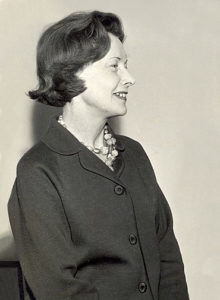
    Barbara Castle was a British politician who served as a Member of Parliament for over thirty years and held several high-profile cabinet positions in the Labour government of the 1960s and 1970s. She had been a trail blazer in many ways, she was the youngest female MP in the House of Commons in 1945 and only the fourth woman to hold a Cabinet position. She was a MP representing Blackburn between 1945 and 1979 and then was the MEP for Greater Manchester between 1979 and 1989. Following the election of the Labour Government in 1964 she was appointed as the Minister for Overseas Development, before a surprise move to become the Minister for Transport in December 1965.

    Castle followed on in the Transport Minister role from Conservative Ernest Marples, who had commissioned Beeching to write his report on the future of the rail network and her Labour predecessor Tom Fraser. Marples had a strong focus on roads, not least partly due to involvement in a road building company, whereas it has been said by politicians of the time and historians that Tom Fraser didn’t produce a clear direction for the railways. It was a challenging legacy for Castle who had to deliver on a new transport policy in line with the 1964 Labour Party manifesto.

    As Minister of Transport in the late 1960s, Castle oversaw the implementation of the Beeching cuts, a series of drastic reductions to the UK’s railway network that resulted in the closure of thousands of miles of railway lines and stations. The goal of the controversial Beeching cuts was to reduce losses on unprofitable lines and to shift investment to more profitable routes, however it also resulted in many rural communities and industrial areas losing their rail connections, and it also made it harder for people to travel for work and leisure. It was against the backdrop though of a railway network which grew in a fragmented way in the late nineteenth century, was used heavily during both war periods and under-invested in, leaving a bloated network which was losing substantial sums of money.

    Castle’s railway policy was met with some controversy and criticism at the time because it seemed to go against the promises made at the 1964 General Election to stop some of the major closures. However, defenders of her also note that there were external factors that needed to be considered, not least the rapid growth of car ownership. Barbara Castle wrote in 1984, when the Castle Diaries 1964-1970 were published, her comments on the background of what she faced. On the state of the network, Christian Wolmar said:

    “Some of what Beeching closed was inevitable. If you look at the maps there were little lines connecting villages and branches off branches, none of that was ever going to really be very useful in a motoring world”.

    Later on, Castle introduced major legislation, the 1968 Transport Act, which was wide in its scope but which did introduce the principle of subsidising some rail lines where there was a social need. She also looked at new ways of encouraging freight to be moved from road to rail and also introduced new passenger transport bodies to try and create more strategic public transport policies at a local and regional level. Opinions on Castle’s performance as Transport Minister are divided, some view her as a strong leader who modernised the country’s transportation system and made important changes to improve efficiency and profitability, while others see her policies as harmful to many communities and industries that relied on rail transport.


    TIMELINE

    14 October 1959 – Ernest Marples becomes Conservative Transport Minister

    27 March 1963 – First Beeching Report published (The Reshaping of British Railways)

    15 October 1964 – Labour win General Election and Labour Party manifesto

    16 October 1964 – Tom Fraser becomes Labour Transport Minister

    16 February 1965 – Second Beeching Report published (The Development of the Major Railway Trunk Routes)

    21 December 1965 – Barbara Castle’s diary entry on being asked to become new Transport Minister

    23 December 1965 – Barbara Castle becomes new Transport Minister

    31 March 1966 – Labour win General Election and Labour Party manifesto

    24 May 1966 – Barbara Castle’s diary entry following meeting with rail unions

    15 June 1966 – Barbara Castle’s statement on retaining routes for potential re-opening

    15 March 1967 – Barbara Castle’s statement in Commons on the Railway Network Map

    6 November 1967 – Barbara Castle’s speech in Commons on Government’s Transport Policy

    20 December 1967 – Barbara Castle’s statement in Commons on the Transport Bill

    6 April 1968 – Richard Marsh replaces Barbara Castle as Transport Minister

    25 October 1968 – Transport Act passed (Text of railway section of 1968 Transport Act)


    RICHARD BEECHING AND THE CUTS TO THE RAILWAYS
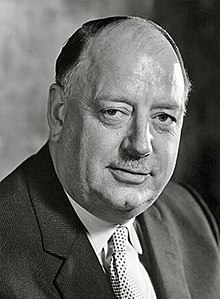
    Richard Beeching, Baron Beeching, was a British engineer and businessman who served as the chairman of British Railways from 1961 to 1965. During his tenure, he oversaw the creation of a plan which led to a major restructuring of the rail network, which included the closure of thousands of miles of railway lines and stations, known as the “Beeching cuts”. Although some blame Beeching for savaging the rail network, historians often have a more nuanced view that he was tasked with a specific objective by Ernest Marples and many of his recommendations proved to be useful for the modernisation of the rail industry.

    The goal of the Beeching cuts was to reduce losses on unprofitable lines and to shift investment to more profitable routes. Beeching’s report, “The Reshaping of British Railways”, which was published in 1963, identified over 5,000 miles of railway lines and over 2,300 stations as uneconomic, and recommended their closure. As a result, many rural communities and industrial areas lost their rail connections, and it made it harder for people to travel for work and leisure.

    It’s also useful to note that Beeching wasn’t the first to suggest cuts, they had already been taking place, it was just that his report laid out with clarity what the future held for specific lines and the network as a whole. HP White writes in Forgotten Railways that:

    “In 1963 came the British Railways Board’s publication ‘The Reshaping of British Railways’, which will also be known as the ‘Beeching Report’. It is rightly regarded as a landmark in the story of rail closures, but probably for the wrong reason. It is not generally realised that while the Beeching Report recommended the closure of some 5,000 route miles of passenger services, it did not initiate the closure programme. Between 1950 and 1962, 4,236 route miles had already been closed. What was important was that, for the first time, the approach was a planned one”.

    He adds:

    “As a result of the association of his name solely with closures, Beeching has been seen as having a purely negative approach to his brief. But in a message to BR employees in July 1962 he expressed the hope that, having talked hitherto largely about cuts, he would soon be able to talk of growth. That he was denied the opportunity was due less to his own inclinations than to Government policies – or rather lack of them”.

    The Beeching cuts were mostly implemented by the Labour government of the time, led by Harold Wilson, and were initially supported by Tom Fraser and at first Barbara Castle, the Ministers of Transport. The cuts were met with significant controversy and criticism, as they were seen as detrimental to many communities and industries that relied on rail transport. But, with Castle reluctant to push forward the second Beeching report, it was evident that a change was coming.

    Beeching’s report and the railway cuts have had a long-lasting impact on the British railway system and many people still regard the size of the cuts as a major mistake and a missed opportunity to modernise the rail network. Over recent decades there has been a political move towards what is called “Reversing Beeching” and reopening lines and services. The House of Lords have produced a library briefing discussing these potential efforts to reopen lines, with this research document also linking to a speech on this web-site by Andrew Adonis which was made to the IPPR on this subject.


    ERNEST MARPLES
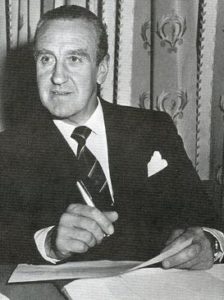
    Ernest Marples was a British businessman and politician who served as the Minister of Transport from 1959 to 1964. He played a key role in the restructuring of the UK’s rail network during this period. One of Marples’s most significant actions as Minister of Transport was the introduction of the “Beeching Plan” which proposed the closure of thousands of miles of railway lines and stations in order to reduce losses on unprofitable routes. The plan was named after the chairman of British Railways, Dr. Richard Beeching, who was appointed by Marples.

    The “Beeching Plan” was implemented by the Labour government that succeeded Marples’ and led to the closure of more than half of the UK’s railway stations and a third of its railway lines, causing significant controversy and criticism, particularly in the regions that lost their rail connections. To this day, Marples is known by many as one of the villains in railway history, as although some cutbacks to the number of lines and stations were inevitable where usage was particularly low, the fully implemented proposals would have devastated the network.

    Marples is also known for his involvement in the construction of the M1 motorway, the first of its kind in the UK, which was completed during his tenure as Minister of Transport. The road construction was also controversial given the personal interests that Marples had. Joe Moran writes in ‘On Roads – A Hidden History’ that:

    “Already, though, the flyovers were losing some of their lustre as they became embroiled in political wrangling. Ernest Marples remained a major shareholder in Marples Ridgway, the company he co-founded in 1948 which was involved in much of the early motorway building. When this company won the Hammersmith Flyover contract in 1960, the press challenged him over the conflict of interest. In a nod to the ancient road running along the chalk escarpment from the Dorset coast to the Norfolk Wash, this flyover became popularly known as the Maples Ridgeway. Marples was forced to divest himself of his shares – although probably not, as some history books have alleged, by selling them to Mrs. Marples. One MP asked the minister whether he would see to it that ‘before the opening ceremony the huge Marples nameplates which are scattered all over it, are removed in order that people can see the flyover?’”.

    In terms of legacy, Marples’ tenure as transport minister is viewed in a negative light by many due to the severe impact of the Beeching cuts on many communities and industries that relied on rail transport. His promotion of road infrastructure over rail also had a long-term impact on the UK’s transportation system and the environment. However, at the time there were those who supported his plans, including journalist Douglas Haig who wrote in December 1965 that he was the best of the recent Transport Ministers.


    TOM FRASER

    Tom Fraser was Labour’s Minister of Transport between October 1964 and December 1965, responsible for implementing the transport policy laid out in the 1964 Labour Party manifesto which said:

    “Nowhere is planning more urgently needed than in our transport system. The tragedy of lives lost and maimed; growing discomfort and delays in the journey to work; the summer weekend paralysis on our national highways; the chaos and loss of amenity in our towns and cities – these are only some of the unsolved problems of the new motor age. Far from easing these problems, the Government’s policy of breaking up road and rail freight co-ordination, of denationalising road haulage and finally of axing rail services under the Beeching Plan, have made things worse.

    Labour will draw up a national plan for transport covering the national networks of road, rail and canal communications, properly co-ordinated with air, coastal shipping and port services. The new regional authorities will be asked to draw up transport plans for their own areas. While these are being prepared, major rail closures will be halted.

    British Road Services, will be given all necessary powers to extend their fleet of road vehicles and to develop a first-rate national freight service. Reform of the road goods licensing system must now await the report of the Geddes Committee but, in the interests of road safety, we shall act vigorously to stop cut-throat haulage firms from flouting regulations covering vehicle maintenance, loads and driving hours.

    Labour believes that public transport, road and rail, must play the dominant part in the journey to work. Every effort will be made to improve and modernise these services. Urgent attention will be given to the proposals in the Buchanan Report and to the development of new roads capable of diverting through traffic from town centres. Labour will ensure that public transport is able to provide a reasonable service for those who live in rural areas. The studies already mentioned will decide whether these should be provided by public road or rail services”.

    The Government had come into power saying that it would review the Beeching cuts and look to form a new policy on how to tackle the losses in the rail industry, halting any major rail closures. Fraser was in the role for just over a year and he had ultimately decided that the general thrust of Beeching seemed correct, a view which had taken hold within the Transport Department. Despite the manifesto, he continued the closures policy, although he decided in June 1965 not to renew Beeching’s contract when his second report soon proved to be too politically difficult for the Government.

    One of Fraser’s most controversial decisions was the closure of the Varsity Line between Oxford and Cambridge even though this hadn’t even been listed by Beeching as track which should be shut. Over recent years, work has begun on plans to reopen the line to improve east-west rail links. Charles Loft wrote in ‘Government, the Railways and the Modernization of Britain’:

    “Fraser was unable to take decisions and was unduly reliant on his officials, his downfall was precipitated by his commitment to a planned transport policy. Even if such a policy could have been devised so as to justify a halt to the closure programme, it could not have been done quickly enough to satisfy important sections of Labour Party support; and without a new policy the advice that Fraser received on individual closure proposals was unlikely to differ from what Marples had received. Transport planning, it turned out, was at odds with the maintenance of an aura of dynamic change. It was in this respect that Fraser clearly failed to deliver and in which, on the face of it, things were to change with the arrival at the Ministry of Barbara Castle”.

    David Henshaw wrote in this book ‘In The Great Railway Conspiracy’ focusing on the closure of the Varsity Line:

    “In July 1965, the hapless Fraser – poorly briefed and seemingly disinterested – consented to closure [of the Varsity Line]. During this unhappy period, with lines being put forward [for closure] and processed at a rate of ten a month, this crucial link fell with hardly any national debate, as did others that were soon regretted. Implementation proved difficult, because there was trouble arranging bus services on a local basis, but the greater part of the line closed to passengers in November 1967, with the western end remaining open for freight, and a short section between Bedford and Bletchley for passenger trains. These remaining tenuous threads were to be of priceless value 30 years later, when action was finally taken to begin the long and complex task of reinstating the line”.

    He continues:

    “By the end of 1965, with the greater part of the Reshaping proposals now processed, there were few realistic candidates left for closure. Why then, did the Labour Government continue the process? According to Roger Calvert of the National Council for Inland Transport, the new and inexperienced administration had been bullied into submission by the powerful anti-rail civil servants at the Ministry of Transport, who were in turn being harassed by the Treasury over the railway’s growing deficit. Labour had, technically, arrived in power with a brief to integrate transport, but the railways were making big losses and Tom Fraser was getting top level advice that further closures were the way forward. In the end, there was no other game in town. He certainly seems to have had little interest in the transport job, and was understandably considered by the rail lobby to be openly road-biased”.

    Many of Fraser’s most notable decisions are in relation to the road network, as he introduced the 70mph speed limit, initially as a trial. His year in office was otherwise unremarkable, with many policies from the Conservative Government not being widely changed. This was the challenging backdrop of what Barbara Castle took over when she became Transport Minister, a need to try and create a new transport policy rather than just a continuation of what the Conservatives had been doing. Fraser was widely seen by politicians of the time and railway historians to have struggled with the role, hence why Wilson caused some initial shock, not least to her, by bringing Barbara Castle in to develop a new strategy.


    CLOSURES OF STATIONS AND RAIL LINES BY YEAR

    Railway line closures by year:

    1963 : 324 miles (521 km) [Conservative, Ernest Marples]
    1964 : 1,058 miles (1,703 km) [mostly Conservative, Ernest Marples]
    1965 : 600 miles (970 km) [Labour, Tom Fraser]
    1966 : 750 miles (1,210 km) [Labour, Barbara Castle]
    1967 : 300 miles (480 km) [Labour, Barbara Castle]
    1968 : 400 miles (640 km) [Labour, Barbara Castle and Richard Marsh]
    1969 : 250 miles (400 km) [Labour, Richard Marsh and Fred Mulley]

    Details of closed railway stations can be found at http://www.disused-stations.org.uk/.


    THE BUILD-UP TO A TRANSPORT POLICY

    Harold Wilson had given Barbara Castle the role of Transport Minister as Tom Fraser had struggled in the job and the Prime Minister wanted it to become a priority for the Labour Government. She faced challenges immediately, Fraser had effectively continued many policies from Ernest Marples and she needed to come up with an integrated transport policy which had been promised in the 1964 Labour party manifesto.

    TR Gourvish noted in his book ‘British Railways 1948-1973’ the scale of the administrative problems that she faced:

    “The Ministry, like the railways themselves, required improved planning mechanisms and a better co-ordination of departments. Castle was apparently shocked to find that she had been posted to ‘a huge, sprawling jungle’ of 7,000 civil servants, patently in need of major departmental reform”.

    Philip S Bagwell similarly noted in The Transport Crisis in Britain that “the overwhelming majority of the staff in the Ministry were concerned with road transport”. A few weeks into her new role, in February 1966, Barbara Castle stated her thoughts to how she would develop the Government’s transport policy. She said that:

    “The time has come for a radical new railway policy. We had to decide its shape and size, taking into account national and regional plans as well as social needs and also how we should pay for it, so identifying costs which should be borne by the community, giving realistic efficiency targets to British Railways and taking from them the slur of a deficit.

    The first requirement was to regard our railways as a valuable national asset, as the French did, and to concentrate on improving them. Labour had never denied that some pruning must be done, but there was no need to go to the other extreme and write off any part of it which didn’t fit in with the ‘superficially defined criteria of profitability’ without making any effort to see whether, by imaginative adjustments, the lines could be made more remunerative”.

    Lisa Martineau wrote in her biography of Barbara Castle that car usage was growing and that there were limits to what she could do as Transport Minister, noting:

    “Democratising car ownership would mean building new roads and spending more on existing ones, of course; but 90% of passenger traffic and 60% of freight was carried on the roads, and Barbara accepted that you would not get people out of their cars and ‘onto railways which could not take them where they wanted to go’. An accommodation with the car had to be found: ring roads, restrictions on cars in the centres of towns and cities, and subsidised public transport were obvious beginnings”.

    There were hints at the excitement of road building for Barbara Castle, when she noted in 1966 at the construction of the Almondsbury interchange that “these are the cathedrals of the modern world”. TR Gourvish comments in his book ‘British Railways 1948-1973’ that after getting to grips with the role, Castle wanted to redefine the Government’s policy:

    “When Castle took office, the Board was about to embark on the second stage of its passenger rationalisation programme, a systematic evaluation of all its passenger services in order to weed out those which were ‘suspect in the sense that earnings do not cover direct costs’. But this initiative was put to one side with the change of direction in 1966, which involved the identification of a larger, 11,000-mile network for development and a group of passenger services which would qualify for government subsidy. Castle was certainly expected to be more hostile to closures, particularly by those on the Labour backbenches and in the rail unions who had attacked Tom Fraser for perpetuating the Beeching-Marples approach. One of the myths of railway history is that the new Minister, by championing the cause of the commuter and rural rail user, finally nailed the lid on the Reshaping coffin”.

    The closures of railway lines kept coming, with Castle justifying many closures by saying that the cuts were less than Beeching had intended. She did save some lines from closure, but there were others cases such as the railway line from Buxton to Matlock which she authorised the closure of, even though it hadn’t been on the list proposed by Beeching. The debate on the future of the railways continued with the work towards legislation planned for 1968.

    Work was beginning on a new model for public transport, including what became regional passenger transport executives who could co-ordinate and organise at a regional level. In a parliamentary debate, prior to the passing of the Transport Act, in November 1967, the Shadow Transport Minister Peter Walker said:

    “I turn to the proposals for passenger transport authorities. These proposals have no friends. Local authorities do not like them; industry does not like them, and the bus industry in particular does not like them. Everybody is opposed to them”.

    Castle said in response:

    “The 1962 Act set up the railways as a separate entity, encouraged them to compete with other forms of nationalised transport and then left the profit and loss account as the sole criterion of success and did not even provide conditions in which the profit and loss account could be balanced”.

    Walker had said in his speech that Barbara Castle’s plans involved substantial nationalisation, but the proposals were more nuanced than that. They were an attempt to deliver an integrated transport policy, recognising that roads were now the future of transport for many, but also ensuring that bus and rail services would continue to be an option. Castle would have by nature of her political instincts been in support of more nationalisation as she was on the left of the party and had at other times argued for this approach, but she wanted in transport to be a partnership of public and private.

    There was another challenge evident with Barbara Castle’s diary entry following meeting with rail unions which was that it was necessary to keep the workers and the trade unions on side. This proved to be a real challenge, although the rail unions did recognise that things could have been much worse given the backing that Castle was trying to give to the network. Christian Wolmar said that “even today, the unions are strong enough to suddenly make a lot of trouble and part of the problem that the Government has now found itself in is because they haven’t talked properly to the unions”. He added that “Castle realised the importance of winning the unions over and devoted a lot of time to it”.

    Castle had by this time “become a media hate figure” according to Joe Moran in ‘On Roads – A Hidden History’, but much of this wasn’t with relation to railway policies, but instead because of her policies with regards to roads. She had introduced the breathalyser, she had effectively made permanent the 70mph road ban introduced by Tom Fraser and introduced compulsory seatbelts in new cars. There were protests about the motorway speed limit by many who felt they should be able to do what they liked in their car on the new motorways and didn’t appreciate being told what to do by a Government Minister.

    One controversial decision that Barbara Castle took was the dismissal of railway manager Gerry Fiennes, who had saved the East Suffolk line from closure by cutting costs locally and showing that the line could save money by competent management. He went public with an announcement that lines could be saved, but Castle thought that his book ‘I Tried to Run a Railway’ went too far. David Webster, the Shadow Transport Minister for the Conservatives condemned the dismissal and demanded an inquiry into the decision.

    Barbara Castle’s preparatory work in 1966 and 1967 was building up to one of the most substantial pieces of legislation that had been seen since the war, what became the 1968 Transport Act.


    1968 TRANSPORT ACT
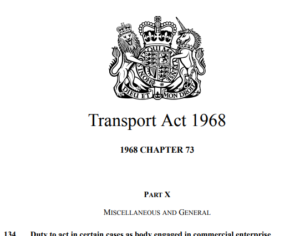
    The text of 1968 Transport Act at legislation.gov.uk and the book ‘The British Railways System’ by Roger Spear et al is a useful detailed guide written for Open University students as to the structure of the railways at the time and the challenges which Ministers faced.

    The Transport Act 1968 was a major piece of legislation passed by the UK government that aimed to modernise and reorganise the country’s transportation system. The main architect of the act was Barbara Castle who wanted to not only deliver on the party’s 1964 manifesto but also to have clarity on the future of transport.

    The act was substantial in its scope and size, the largest since the Second World War. It aimed to achieve numerous objectives such as delivering a more integrated public transport system by the creation of PTEs and it created the National Freight Corporation (previously known as British Road Services), with the goal of improving the efficiency and profitability of the country’s freight operations.

    The Act also allowed for the establishment and development of liner trains, which evolved into Freightliner, which allowed containers to be transported by rail in an attempt to stop some of the move towards transporting goods by road. Despite progress actually being made, Barbara Castle wrote in her diaries that some of her proposals weren’t progressed, noting her successor:

    “Dick Marsh never brought them into operation because he did not approve of them, so the experiment in shifting goods from road to rail was never made”.

    The Act gave local authorities more powers to plan and provide public transport services, and it established the National Bus Company, which aimed to improve the efficiency and profitability of the country’s bus operations. The creation of PTEs, or Passenger Transport Executives, allowed areas (usually urban) to take control of bus routes in their region as well as working with the rail industry. There had until this point been a general policy to tackle urban transport problems by building new ringroads and flyovers in cities, leading to residential areas being demolished and causing environmental issues.

    Significantly, the Transport Act also included provisions for the closure of uneconomic railway lines and stations, with subsidies available for lines which fulfilled a social good for the community. HP White writes in Forgotten Railways that “until at least 1963 subsidy had been a dirty word for all political parties” and so Castle’s subsidy was “a very significant policy change”. Richard Pryke and John Dodgson note in their book The British Rail Problem : A Case Study in Economic Disaster:

    “Barbara Castle wanted to eliminate open-ended subsidies and impose some financial discipline on the Railways Board. The solution adopted was to identify those passenger services that were losing money and to cover their estimated deficits through a subsidy. It was hoped and expected that the Board would then be able to break even provided its capital charges were scaled down, and if it were relieved of responsibility for the highly unprofitable freight sundries service”.

    They add that:

    “The Transport Act of 1968 has failed in its objective: British Rail is once again heavily in deficit, despite the financial reconstruction and the receipt of a large subsidy. In 1969, the railways and their ancillary activities had a net profit of around £20 million, after taking into account the £76 million which they received from the Government. However, by 1971 they were once again in deficit, and in 1973 they sustained a net loss approaching £50 million, despite £94 million of subsidies”.

    Lisa Martineau wrote in her biography of Barbara Castle just how sizeable and revolutionary the legislation was:

    “Barbara’s labyrinthine Transport Bill was the longest non-financial Bill in parliamentary history and the longest Bill or any sort since the war. The experts and the media, for the most part, were impressed. She had, said the New Statesman, set out ‘to reform practically the whole of the internal transport system …. by a nice blend of traditional socialism and up to date technocratic intervention’. The Bill was often called a pantechnicon – a bazaar and a receptacle containing many miscellaneous objects, as well as a removal lorry – it was ‘stuffed with all the radical proposals for reorganising British transport that have been maturing under that neat crop of fiery hair for the past eighteenth months’ wrote The Times”.

    Some were disappointed by the Act in terms of how the road lobby still seemed to be winning the arguments over the future of transport, with David Henshaw writing in the Great Railway Conspiracy:

    “The 1968 Act proved a serious disappointment. The Government lost its nerve in the face of concerted opposition from the road lobby and eased the lorry taxation proposals. And the unremunerated railway grants system actually precipitated a fresh round of closures, because there was a cap on the total grant aid, and the level of grant for individual lines proved too generous, leading the Government to refuse aid in many cases. By 1970, the implementation of Dr Beeching’s Reshaping report was more or less complete, but with railway income falling, overall financial viability remained as far out of reach as ever”.

    Richard Pryke and John Dodgson note in their book ‘The British Rail Problem : A Case Study in Economic Disaster’ that:

    “The moral which the Railways Board appears to have drawn from the Transport Act was not, as the Government intended, that British Rail must do its utmost to cut its costs and trim its investment, but that, if the need arose, more assistance would be forthcoming”.

    Overall, the Transport Act 1968 and Barbara Castle’s efforts aimed to modernise and reorganise the country’s transportation system and to reduce losses on unprofitable lines, however it also resulted in significant controversy and criticism for the negative impact it had on many communities.


    WAS BARBARA CASTLE AN EFFECTIVE TRANSPORT MINISTER?

    Barbara Castle’s period as Transport Minister was one of the most remarkable of anyone who held the role, as there was an ambitious new policy position put together for the future of rail and road. The 1968 Transport Act was in many ways revolutionary in terms of public transport integration, subsidising rail lines and also developing freight services by rail.

    However, for those who believe the rail sector was badly damaged following Beeching, they will point to how many stations and miles of railway lines closed during her period in office. Castle, herself not a car driver, was always sympathetic to the needs of those without their own car, but she faced the challenge of a society where car ownership was becoming more common and there seemed to be a shift away from public transport. She once said:

    “I refused to be a King Canute trying to force people onto railways which could not take them where they wanted to go”.

    Christian Wolmar said that “she didn’t quite understand the impact that cars would have, like everyone else at the time” with not just politicians of the time, but also the Transport Ministry in the 1960s being very much in favour of a car focused future. Wolmar adds though that “it was a breakthrough” that Castle introduced the process of subsidising some rail lines where there were social benefits to doing so, adding that “many politicians today still don’t understand that and they talk about railways paying their way”.

    During the initial part of her period in the role, she did though continue the closure programme and she also extended it, closing lines such as Buxton to Matlock which hadn’t been part of the Beeching plan. Although Castle did approve the closures of thousands of miles of rail line, she did ensure that some routes were saved, including York to Harrogate, Manchester to Buxton and the Exeter to Exmouth line.

    Outside of the rail network, Castle was also known for other innovations, such as the introduction of the breathalyser which helped to tackle the shock figure in 1966 that 8,000 people had died on the roads. She also was also responsible for requiring seatbelts to be fitted into new cars and extending the 70mph limit on motorways so that it effectively became permanent. In addition to this, she enabled 1,400 miles of the British canal network to be saved in a substantial part for leisure use, despite objections from HM Treasury that it wasn’t commercially viable.

    Alfred F Havighurst noted in his 1985 book ‘Britain in Transition – The Twentieth Century’:

    “Barbara Castle’s notable Transport Act of 1968 reflected courage and intelligence in dealing with financial deficits and inefficiency in the railway and road haulage. For the nationalised railways this legislation wiped out financial losses which had piled up from the past, transferred unremunerative traffic to road haulage, and provided compensation for services which were still socially desirable though unremunerative. The goal for British Railways was operation without deficits by 1974. Also, the Transport Act completely transformed road haulage in the endeavour to make maximum use of railways in handling freight previously carried on congested highways, to eliminate competition between the railways and road haulage, and, in general to render road haulage safer, more efficient, and more economical”.

    Charles Loft wrote in ‘Government, the Railways and the Modernization of Britain’:

    “Castle’s reputation as an innovative minister of transport who restored a measure of coordination to transport policy and gave rail a better deal rests primarily on a series of measures contained in the 1968 Transport Act. Although she refused to recreate the BTC, the Act’s provision for Passenger Transport Authorities to coordinate transport in urban areas and its creation of a National Freight Corporation (NFC) to control the former British Road Services, the BRB’s collection and delivery services and various rail freight services, including freightliners, largely satisfied Labour’s desire for coordination. Its provision of subsidies for loss-making rail services and a ‘quantity licensing’ system for road haulage, designed to divert freight from road to rail, combined with her commitment to an 11,000 mile network, rather than the 8,000 implied by the final round of Beeching’s traffic studies, given even a critic such as Henshaw the impression that she successfully challenged the pro-road bias of the Ministry and its Permanent Secretary Sir Thomas Padmore, an impression which owes much to the weight of opposition brought to bear on quantity licensing by the RHA and the Conservatives”.

    David Henshaw wrote in this book ‘In The Great Railway Conspiracy’ about the legacy of Barbara Castle:

    “Castle has had a mixed press over the years. After the cheerfully road-biased Marples, and ineffective Fraser, she entered the Ministry like a breath of fresh air, standing up to the powerful civil servants and making a serious attempt to find a fair solution to the railway issue. On the other hand, she oversaw some disastrous closures that should never have been allowed. Unlike previous incumbents, her transport politics were hard to place. She rarely used railways, but needed a chauffeur because she couldn’t drive, and apparently had no desire to”.

    The individual reader can make up their own mind as to whether or not Barbara Castle was a successful Minister, but she was perhaps unarguably productive and industrious in developing policy directions. Much of what an individual might make of Barbara Castle likely depends on whether they feel she did enough to stop the rail closures that took place in the 1960s or whether her new policy of subsidising unprofitable lines actually meant an end to the closures at least from the 1970s onwards. Looking back though at transport policy in the twentieth century, it would be hard not to look at the 1968 Transport Act as being a revolutionary piece of legislation which contained some radical and innovative new visions for the future.

    Jonathan Bray addressed this question and concluded:

    “So, 50 years on, what is the legacy and the relevance? You can argue long and hard over whether she was in the end too radical or too pragmatic – or whether the positives are outweighed by the scars that haven’t healed from the lines that closed on her watch (and she would have loved to have the argument with you!). But you can’t fault her for ambition, determination and brio. She showed that you need to go out there and sell radical change (she always had her press people in for the key decisions and led from the front on making the case)”.


    FURTHER READING

    The Transport Crisis in Britain by Philip S Bagwell

    Fighting All the Way by Barbara Castle

    The Castle Diaries 1964 – 1970 by Barbara Castle

    I Tried to Run a Railway by Gerry Fiennes

    British Railways 1948-1973 by TR Gourvish

    The Great Railway Conspiracy by David Henshaw

    Little Book of Beeching by Robin Jones

    Politics & Power – A Biography of Barbara Castle by Lisa Martineau

    On Roads – A Hidden History by Joe Moran

    The British Rail Problem : A Case Study in Economic Disaster by Richard Pryke and John Dodgson

    Forgotten Railways by HP White

    On the Slow Train by Michael Williams

    British Rail : A New History by Christian Wolmar


    EXTERNAL LINKS

    Barbara Castle’s Archive at the Bodleian Library

    Barbara Castle’s Cabinet Diaries at the University of Bradford

    Article by Jonathan Bray – “The best transport secretary we’ve had?”

    Christian Wolmar

    National Archives

  • ISSUE OF THE WEEK 2 : The UK and Australia Trade Deal

    ISSUE OF THE WEEK 2 : The UK and Australia Trade Deal

    This is the second in our ‘issue of the week’ series which are designed to collect information and resources together about specific matters of political debate. Although we are publishing a number of documents every week for each new issue, we will also continually add new resources to these pages to make them as comprehensive as possible. We also hope that students will find the topics useful as a starting point for research on matters of political interest.

    Some of the interviews below were conducted for UKPOL, but there are also statements, speeches and contributions from politicians and other figures over the course of the development of the UK and Australian trade deal.


    INTRODUCTION

    The UK’s trade deal with Australia is the first that has been negotiated since Brexit and has been seen as politically important to prove that the country can secure beneficial agreements. Many other trade deals have been rolled over from the previous arrangements from when the UK was within the European Union, with a now growing political pressure to deliver some bespoke agreements although some large deals such as with the United States are making slower progress. The agreement in principle between the two countries was signed in June 2021, with the formal signing of the agreement taking place in December 2021, with the aim to implement the UK and Australia deal in the first quarter of 2023.

    There are 32 different chapters within the agreement (the full text of the trade deal with all 32 chapters) which cover key markets such as agricultural products as well as digital and financial services. Government expectations are that the trade deal will increase UK GDP by 0.08% in the long-run, representing a sum of £2.3 billion a year by 2035. This is though only a fraction of the amount that the Government’s own figures suggest will be lost by leaving the European Union. The trade deal with Australia is relatively small given the size of the country’s economy and distance from the UK, but there are important historic links between the countries.

    The UK Government gave 10 main advantages of the agreement:

    – unprecedented access for British services and investors
    – better business travel for British professionals
    – tariff-free trade for British exports
    – easier for young Britons to travel and work in Australia
    – digital trade opportunities for a global tech superpower
    – lower prices for British shoppers and manufacturers
    – slashing red tape for entrepreneurs and small businesses
    – access to billions of pounds worth of government contracts
    – stronger cooperation on shared challenges
    – a major step for UK-trade in the Indo-Pacific

    Liz Truss, the then Secretary of State for International Trade, said in a Commons statement in June 2021:

    “This gold-standard agreement shows what the UK is capable of as a sovereign trading nation: securing huge benefits such as zero-tariff access to Australia for all British goods and world-leading provisions for digital and services, while making it easier for Brits to live and work in Australia”.

    There has been opposition to the treaty from a number of organisations, including concerns about the agricultural trade terms and also animal rights issues in Australia. A number of political figures have also questioned whether there has been sufficient scrutiny of the trade agreement and claims that it was negotiated too quickly for political reasons leading to it not being as advantageous to the UK as it could have been. For example, the National Farmers’ Union argued that:

    “There is little in this deal to benefit British farmers. When it comes to agriculture, it appears that the Australians have achieved all they have asked for and British farmers are left wondering what meaningful benefits have been secured for them. This will just heap further pressure on British farm businesses already facing serious challenges such as a squeeze on labour, the phasing out of support payments and rocketing input costs.”

    The Labour Party said that they would support the trade bill in principle, but Nick Thomas-Symonds, the Shadow Secretary of State for International Trade, said that “notable from the outset is that the Government ‘list of benefits’ contains no mention of climate targets or the impact of the removal of import tariffs on UK agriculture”.

    Sarah Green, the Liberal Democrat spokesperson for International Trade, said about the negotiations that:

    “The Government’s need to hurriedly chalk up trade deals meant the UK-Australia FTA was not only negotiated too quickly but also carelessly. Key stakeholders were ignored, Parliamentary scrutiny was denied and unnecessary concessions were made.”

    The Government’s explainer to the trade deal and the Government’s details of the 10 key benefits. The Australian Government also has its own documents relating to the trade deal. The House of Commons Library has also published a research document into the trade deal.


    THE SECRETARY OF STATE FOR INTERNATIONAL TRADE

    Role created on 13 July 2016.

    Liam Fox : 13 July 2016 – 24 July 2019

    Liz Truss : 24 July 2019 – 15 September 2021

    Anne-Marie Trevelyan : 15 September 2021 – 6 September 2022

    Kemi Badenoch : 6 September 2022 –

    The holders of the Shadow Secretary of State for International Trade from the Labour Party have been Barry Gardiner (14 July 2016 – 6 April 2020), Emily Thornberry (6 April 2020 – 29 November 2021) and Nick Thomas-Symonds (29 November 2021 – ). The Liberal Democrat spokesperson for International Trade is Sarah Green and the SNP spokesperson is Angus MacNeil.


    ACCOUNTABILITY AND SCRUTINY

    One of the areas of debate with the Australia Trade Deal is whether there has been sufficient time for scrutiny and accountability of what and how the Government has negotiated. There have been some controversial moments, including when the then Secretary of State Anne-Marie Trevelyan failed to attend a meeting of the International Trade Committee.

    The International Trade Committee published their first report on 22 June 2022 and they noted that:

    “We have been greatly disappointed that the Government has repeatedly failed to accede to our request that we be guaranteed a period of at least 15 sitting days between the publication of the section 42 report and the laying of the Agreement under the Act, to allow us to finalise and publish our report. Our request for this guaranteed period was not unreasonable. It would have ensured that we were able to identify and make recommendations on matters of interest to the House, thereby giving the Government due notice of any potential concerns, before the brief window of statutory parliamentary scrutiny commenced.”

    The committee’s second report was published on 6 July 2022 and they noted in that report:

    “The Secretary of State for International Trade failed to attend before us to answer questions on the Agreement on 29 June, despite a commitment to do so. This made it impossible for us to take into account her evidence on the new date agreed—6 July— and still publish our report before the very end of the scrutiny period. Consequently, we are obliged to publish our report now, before we have taken the Secretary of State’s evidence.”

    Within a separate annex of this report the committee express concern not only about the lack of willingness of Anne-Marie Trevelyan to appear in front of the committee, but also comment on the lack of time that she is willing to spend when giving evidence. The Secretary of State responded to the first and second reports with an official reply which didn’t comment on the specific complaints, but that noted:

    “We have provided extensive opportunity and time to scrutinise the agreement and do not believe it was necessary to extend the CRaG scrutiny period. The UK-Australia FTA cannot be ratified until all necessary primary and secondary legislation is scrutinised and passed by Parliament in the usual way, which will give the House opportunities to debate the implementing legislation.”

    In an interview with us Sarah Green, the Liberal Democrat spokesperson, criticised not just the speed and quality of the negotiations from the UK trade side, but also added that:

    “The Government have rejected calls for the publication of sectoral and regional impact assessments, denying us the opportunity to gain a detailed understanding of the deal’s real impact”.

    Richard Foord, the Liberal Democrat MP for Tiverton and Honiton, noted:

    “The Government’s approach during negotiations with Australia and New Zealand seems to have been to sell out British farmers left and right—and then some—to try to clinch a deal. These trade deals are more about attempting to garner positive headlines than supporting our world-leading agriculture and fishing industries”.

    Helen Liddell, Baroness Liddell of Coatdyke, a former Secretary of State for Scotland who has followed the Government’s recent trade deal progress commented to us that:

    “I do not think there has been sufficient scrutiny of Trade Bills and that is not helped by the non availability of a trade strategy. This is the prevailing view of the International Agreements Committee of which I am a member. And a number of Peers from around the House shared that view”.

    The Scottish Government said on their involvement in the trade agreement that:

    “Scottish Government officials received regular briefings from DIT on the progress of negotiations, which were useful. However, as I have made clear to the UK Government, information is not the same as involvement, and we had no say in the decisions taken by the UK Government throughout the negotiations and saw no detail on key parts of the agreement, such as tariffs and tariff rate quotas (TRQs), until after they were agreed. Nor were we given the underpinning analysis or rationale behind the decisions”.

    A spokesperson from the Department for International Trade didn’t directly answer our question on whether all information requested by members of the International Trade Committee would be provided to them, but they noted that:

    “Parliamentarians have been able to scrutinise the full treaty text, a draft Explanatory Memorandum and independently Scrutinised Impact Assessment for the FTA since these were laid before Parliament in December 2021. We received advice from the independent Trade and Agriculture Commission and the Treaty and explanatory information have been available for Parliamentary scrutiny for more than eight months”.

    Andrew Bowie, the International Trade Minister, defended the Government in the Commons in November 2022 on scrutiny, saying:

    “I now briefly turn to scrutiny, which is incredibly important. Contrary to the description of the right hon. Member for Warley of the scrutiny process, and always remembering that CRaG was introduced by Labour, the Government have made extensive commitments to support robust scrutiny of all new free trade agreements. These commitments greatly exceed our statutory requirements and we have met every single one.

    I hear and understand the concerns of the hon. Member for Rochdale and I accept the challenge to go further and do better, but the Australian FTA was examined by Parliament for more than seven months and the scrutiny period featured reports from three Select Committees”.

    Speaking in the same debate, Gareth Thomas, the Labour spokesperson said that there was a danger in not accepting scrutiny that mistakes could be made in future trade deals:

    “[George Eustice] underlined those criticisms by going on to point out that unless we recognise the failures of the Department for International Trade, we will not learn the lessons necessary for negotiations with other countries over other free trade agreements, such as, importantly, the CPTPP accession discussions. He rightly noted, as many others did—I will come back to the contributions of others—the weaknesses of the scrutiny process and crucially how it weakens the hand of British negotiators, which is a point we made during the passage of the Trade Bill back in 2020”.

    Drew Hendry from the SNP said in the debate on the scrutiny argument:

    “A general debate is no replacement for genuine parliamentary scrutiny. The Government have failed to provide that, even though it was promised. The deals, lumped together in the debate, are one-sided and a betrayal of farmers. They threaten food security and animal welfare, reduce consumer confidence, find climate change expendable and do nothing to mitigate the enormous losses of Brexit”.


    ANIMAL RIGHTS AND ENVIRONMENTAL STANDARDS

    An area of concern has been different environmental rules and animal rights regulations between Australia and the UK, with concerns from some organisations that goods with lower standards might be allowed into the UK. Natalie Bennett (Baroness Bennett of Manor Castle) said in the House of Lords that there were “atrocious animal welfare and environmental standards in Australian farming”.

    The UK Centre for Animal Law stated that:

    “Meat exported to the UK did not come from animals which had been subject to hot-iron branding or mulesing. Hot-iron branding is still permitted in all States and Territories of Australia but is banned in the UK. Mulesing is a painful procedure that involves cutting crescent-shaped flaps of skin from around the lamb’s breech and tail using sharp shears. The resulting wound, when healed creates an area of bare, stretched scar tissues which diminishes the attraction of blowflies thereby reducing the risk of fly strikes.”

    The matter of mulesing has been frequently mentioned by politicians concerned about the variation in standards. Dominic Johnson (Baron Johnson of Lainston) speaking for the Government in the House of Lords said:

    “I was told that 90% of all mulesing is done with pain relief. Yes, there are different practices and clearly, mulesing is not relevant in the UK because of flystrike and other conditions, but we have the ability to protect ourselves and we still have the ability to ensure that the food and goods we import conform to our standards.”

    On environmental standards, the National Farmers’ Union (NFU) stated in a submission to the International Trade Committee that:

    “The terms of the agreement do not create a level playing field in either animal welfare or environmental standards. The starting point of each party remains unaltered by the presence of the FTA commitments. However, what is foreseen is “non-regression and non-derogation” commitments that would prevent standards going backwards in a manner that affects trade, in either party. This is fundamentally different from whether there is a level playing field at the outset”.

    In the same submission, the NFU added:

    “Agricultural production in Australia, however, is not subject to the same environmental protections as in the UK. For example, a significant proportion of cattle in Australia are raised in feedlot systems. Australia’s feedlots have capacities ranging from 500 to over 50,000+ head of cattle. Over 60% of the cattle on feed in Australia (i.e. resident on a feedlot) as of June 2020 were located on feedlots with a capacity for over 10,000 head of beef animals. Feedlots are a feature of Australian beef production and are huge in size and scale. This compares to the average size of a beef cattle herd in England at 27 animals and whilst there will be larger farms in the UK, only 4% of English beef farm holdings have more than 100 beef cows. Furthermore, in comparison, 87% of UK beef is produced using predominantly forage based diets, a system which is not only more climate friendly, but also supports biodiversity and the natural environment through extensive grazing. The use of hormones as growth promoters are banned”.

    They were also critical in their submission about the impact of climate changed, noting:

    “The NFU has been clear that, for the UK to truly deliver on its ambitions for a more sustainable future and the goals of COP26, all aspects of policy, from domestic environmental and agricultural policies to international trade policy, must be joined up in their delivery of these aims. It is therefore disappointing to see the UK seeking to negotiate new free trade agreements with countries that are not taking a similarly ambitious approach to tackling the challenge of climate change without putting provisions that reinforce these ambitions in place”.


    OTHER CRITICISMS OF THE TRADE DEAL

    Although the animal rights and environmental standards questions have been those put forward perhaps the most frequently with regards to the deal, one of the most powerful criticisms of the trade deal has come from George Eustice, who was on the Cabinet sub-committee which negotiated the Australia deal. In November 2022, speaking in the Commons Eustice said:

    “The first step is to recognise that the Australia trade deal is not actually a very good deal for the UK, which was not for lack of trying on my part. Indeed, as my right hon. Friend pointed out, there were things that we achieved, such as a special agricultural safeguard for years 10 to 15, staged liberalisation across the first decade and the protection of British sovereignty in sanitary and phytosanitary issues. It is no surprise that many of these areas were negotiated either exclusively or predominantly by the Department for Environment, Food and Rural Affairs on behalf of the UK team, but it has to be said that, overall, the truth of the matter is that the UK gave away far too much for far too little in return.”

    In the speech he said one of the major mistakes was:

    “We should not set arbitrary timescales for concluding negotiations. The UK went into this negotiation holding the strongest hand—holding all the best cards—but at some point in early summer 2021 the then Trade Secretary my right hon. Friend the Member for South West Norfolk (Elizabeth Truss) took a decision to set an arbitrary target to conclude heads of terms by the time of the G7 summit, and from that moment the UK was repeatedly on the back foot. In fact, at one point the then Trade Secretary asked her Australian opposite number what he would need in order to be able to conclude an agreement by the time of the G7. Of course, the Australian negotiator kindly set out the Australian terms, which eventually shaped the deal. We must never repeat that mistake.”

    Some politicians, such as Emily Thornberry who was then the Shadow Secretary of State for International Development, said that the deal was too beneficial for the Australians:

    “What makes this deal all the more indefensible is that, while Australia is getting everything it wanted and more, we are getting next to nothing in return, with a miniscule 0.025% increase in UK growth the most optimistic projection the government can come up with”.

    The Government also stated that they did not believe that the impact on agriculture would be substantial in terms of the size of the market and because UK consumers would prefer British products, but the Northern Ireland Executive noted:

    “The UK Government has stated that Australia will not be exporting significant amounts of beef to the UK or that Australian imports will replace imports from other countries.  Whilst recognising the appeal of Asian markets to Australian exporters, it is likely that Australia’s insistence on achieving a rapid and very sizeable increase in market access signals an intention of making significant use of it.”

    Toby Perkins, the Labour MP for Chesterfield, asked the Prime Minister during PMQs whether he agreed with the comments that George Eustice made, with Rishi Sunak replying:

    “All trade deals involve give and take on both sides. The Australia trade deal will open up new markets for 3 million British jobs, which is fantastic, reduce prices for Australian goods and make it easier for young people to move back and forth between the two countries. Going forward, we will ensure that our trade deals work for the UK. That is what we will deliver”.


    BENEFITS OF THE TRADE DEAL

    In addition to the Government’s ten benefits from the deal, a spokesperson from the Department for International Trade told us that:

    “Our landmark trade agreement with Australia will unlock £10.4 billion of additional bilateral trade, eliminating tariffs on 100% of UK exports, support economic growth in every part of the UK and deliver for the 15,300 businesses already exporting goods to Australia”.

    Speaking in the House of Commons in November 2022, the International Trade Minister Andrew Bowie said:

    “Our deals include a range of protections that allow us to apply higher tariffs to protect UK farmers, including tariff rate quotas for a number of sensitive agricultural products; specific additional protective measures for beef and lamb products, which will provide further tariff protections to our farmers; and a general bilateral safeguard mechanism that will allow the UK to increase tariffs or suspend their liberalisation for up to four years in the unlikely situation that the farming industry faces serious loss from increased agricultural imports. On top of all that, there is still the option of global safeguards under the WTO”.

    In the same debate, Greg Hands, the Minister for Trade Policy, said:

    “The Australia and New Zealand free trade agreements are deals that will deliver for people, businesses and our economy. These are our first “from scratch” free trade agreements since we left the European Union, and they are deals of which this country can be proud. They demonstrate our ambition as an independent trading nation. They secure commitments that, in places, go above and beyond international best practice, and put us at the forefront of international trade policy”.

    Anthony Mangnall, the Conservative MP for Totnes, said in the Commons that it was important to consider the financial services industry, noting:

    “We need to look at where the Australia trade agreement benefits us. As the Minister for Trade Policy, who is no longer in his place, said, 82% of our workforce and 80% of GDP are in financial services. That is where this deal strikes incredibly well and effectively. We will have greater access—more than ever before—to Australian markets. From architecture to law to financial services, we will be on an equal footing. That could increase UK service exports to Australia by £5 billion. Additionally, it cuts the bureaucracy that so many small businesses have been frustrated about”.

    Paul Beresford, the Conservative MP for Mole Valley, noted that he felt there was also potential for British companies to increase the number of goods which they could sell into Australia:

    “The UK needs to push its goods in both countries. For example, New Zealand and Australia’s roads are currently dominated by Asian-manufactured vehicles. I have asked people there why they are not buying British. The answer is “We will when the prices come down and the tariffs come down.” With this tariff reduction, we have a chance to take our share and more, but we have to use it. We have to get out there, and we have to push our products in those two countries”.


    HOUSE OF COMMONS INTERNATIONAL TRADE COMMITTEE

    Witness Evidence of Lorand Bartels, Chair of the Trade and Agriculture Commission

    Witness Evidence of Anne-Marie Trevelyan, Secretary of State, and Crawford Falconer, Second Permanent Secretary

    International Trade Committee’s First Report

    International Trade Committee’s Second Report

    Response to the First and Second Reports from the Department for International Trade


    SPEECHES IN LORDS DURING THE TRADE BILL DEBATE IN JANUARY 2023

    Lord Johnson of Lainston – Minister of State at the Department for International Trade

    Lord Johnson – Concluding Speech in Debate

    Baroness Liddell of Coatdyke

    Lord Goodlad

    Lord Frost

    Baroness Young of Old Scone

    Lord Kerr of Kinlochard

    Lord Swire

    Lord Howell of Guildford

    Lord Liddle

    Lord Marland

    Baroness Bennett of Manor Castle

    Lord Udny-Lister

    Earl of Sandwich

    Lord Lansley

    Baroness McIntosh of Pickering

    Lord Inglewood

    Lord Hannan of Kingsclere

    Lord Purvis of Tweed

    Lord Lennie


    PRESS RELEASES

    UK agrees historic trade deal with Australia [Downing Street, June 2021]

    New era of free trade with the UK [Australian Government, December 2021]

    UK trade deal with Australia will create opportunities for the legal profession [Law Society, December 2021]

    Australia and the United Kingdom Announce Signed Free Trade Agreement [Australia-United Kingdom Chamber of Commerce, December 2021]

    Aussies to toast tariff-free British G&Ts [Foreign Office, December 2022]


    COMMENTS FROM BUSINESSES, ORGANISATIONS AND PRESSURE GROUPS

    Accolade Wines

    City of London Corporation

    Federation of Small Businesses

    Friends of the Earth

    National Farmers’ Union

    Northern Ireland Executive

    Scottish Government

    Trades Union Congress

    UK Centre for Animal Law

    UK Trade Policy Observatory

  • ISSUE OF THE WEEK 1 : Balancing Economic Growth with Protecting the Environment – the Norwich Western Link Road

    ISSUE OF THE WEEK 1 : Balancing Economic Growth with Protecting the Environment – the Norwich Western Link Road

    The planned road from Broadland Northway roundabout (Norfolk County Council)

    This is the first in our ‘issue of the week’ series which are designed to collect information and resources together about specific matters of political debate. Although we are publishing a number of documents every week for each new issue, we will also continually add new resources to these pages to make them as comprehensive as possible. We also hope that students will find the topics useful as a starting point for research on matters of political interest.

    For this week’s ‘issue’, we’re looking at how politicians can balance economic growth whilst also protecting the environment, especially on matters of infrastructure projects. One of these current debates is in Norfolk, East Anglia, with the planned Norwich Western Link. We have interviews with Martin Wilby, a Conservative councillor and the Cabinet Member for Highways, Infrastructure and Transport at Norfolk County Council, and also the campaign group established to oppose the road, Stop the Wensum Link. Listed below, we also have additional interviews we have conducted, as well as collecting together past statement and policy positions from charities, pressure groups and individuals.

    The council are supporting the road (the route of which is visible in the council’s own video above) as they argue that it completes the ring of roads (the Southern Bypass which opened in 1992 and the Norwich Northern Distributor Route – which is formally known as the Broadland Northway – which opened in April 2018) around Norwich and will improve transport links in the county. Although Norfolk County Council are the main movers of the project, it is also supported by the majority of other councils in Norfolk, although Norwich City Council oppose the road as it promoted car dependency in the area. The road construction is supported by numerous organisations including Norfolk Fire Service and also the Norfolk and Norwich University Hospital who believe on balance that it would be beneficial because of reduced ambulance conveyancing times, as well as Norfolk Chambers of Commerce who say it will meet “our growth ambitions”. Norfolk Constabulary stated that they supported the road as “it would be useful to have the Western Link Road completed which would save officers time when they are on an emergency call rather than go partially around the route and then have to traverse through the city roads”.

    However, the reason this section of road was not constructed along with the Broadland Northway was explained by the council stating in their executive summary in 2008:

    “[The public consultation led to] strong environmental concerns being expressed about the impact of a new road across the River Wensum Special Area of Conservation (SAC) to which the County Council responded by carrying out further assessment beyond a Stage 2 level to ascertain whether the impact on the SAC could be mitigated. The conclusion was that it could not be demonstrated that the new road would not affect the integrity of the SAC. Alongside this, traffic modelling indicated that a road starting at the A1067 in the west rather than the A47 gave significant benefits and delivered most of the objectives of the NDR scheme and these were key factors in the decision to choose the preferred route as now proposed.”

    These environmental concerns are based around the land which would need to be crossed which is the rare chalk stream habitat of the Wensum Valley. The council’s proposals include a bridge across the River Wensum itself, but opponents question whether this would significantly damage not just the natural environment, but also be damaging visually and cause noise issues during both the construction of the road and then from traffic using it. Stop the Wensum Link point to the environmental mitigation measures on the Norwich Broadland Northway and say that these “had failed” with the council’s own inspection report showing issues.

    The council are arguing that after reviewing transport usage that this section should now be built. After some initial research and site investigations, there were four suggested routes for the new road which went to a wider consultation and review, with the council preferring route C. Although this consultation is now closed, details of all of the routes are still visible at https://nwloptions.commonplace.is/. The council have organised a number of events explaining the need for the road and they also published the results of the 2018 public consultation exercise.

    The council argue that there are economic benefits to the road, stating that the environmental issues can be mitigated. Others argue that the environmental impact is too damaging and the CPRE produced a report with evidence that road projects simply generate more traffic. The Government believe that new infrastructure is necessary for the economy, with the Western Link road being listed in the Government’s September 2022 Growth Plan. Other pressure groups, such as the Campaign for Better Transport, have argued that sustainable transport can reduce the need for new roads and have published a research paper entitled Roads and the Environment. The new road is opposed by environmental groups including Norfolk Wildlife Trust, Friends of the Earth, the Woodland Trust, Norfolk Rivers Trust and the Norfolk & Norwich Naturalists’ Society.

    Opponents of the scheme also argue that roads are only necessary because there are a lack of alternative public transport options, with some suggesting that despite environmental concerns the Government is too ready to provide financing for new road projects. The council have also had to amend their preferred route slightly due to the presence of bats in the area, which are a protected species. There is also the challenge of providing access to the road for pedestrians and cyclists, with Norwich Cycling Campaign stating their opposition to the current proposals as they don’t include cycle lanes which the group says is necessary to keep cyclists safe. Other public transport organisations such as First Eastern Counties Buses said that they supported the road because they believed that it would “reduce congestion” in the area. A representative from KonectBus also stated that they supported the Western Link, but wanted the road “to be built as close to the Longwater junction as possible” in their public consultation submission.

    Part of the land that would be crossed by the road (copyright UKPOL)

    The current cost of the 3.9 mile long road is estimated to be around £251 million, an increase on the previous estimate of £198 million, although opponents of the project have suggested that the final total might be closer to £300 million. The project requires the financial backing of the Department for Transport, who would provide 85% of the total funding. The Government is also committed to continuing a road building programme, but have stated that they are focused on the Strategic Road Network being net zero. However, there is still a significant cost to the council and Stop the Wensum Link note on their web-site:

    “Norfolk County Council already have a deficit of £39M, forcing them to hike council tax 3% this year. With construction costs spiralling, high inflation and stagnating wages, throwing more money at building this road makes no sense. Increasing costs and an already debt laden council threatens vital services and risks further tax rises.”

    Although the Government’s growth plan of September 2022 mentioned the road, this was under Liz Truss’s brief premiership and no guarantees have been given to the council on whether funding will still be made available. Liz Truss had been in support of the road before becoming Prime Minister and as she was a Norfolk MP, it had seemed very likely that her government would have backed the plans. With Rishi Sunak now Prime Minister, a final decision on the funding is expected to be made in 2023 with the Government needing to balance the economic argument alongside a growing demand for action to be taken to protect the environment and there is also the backdrop of potential national spending cuts being needed to balance the books.

    If the funding is made available, the current timetable for the road construction is:

    Mid-2022 – Pre-planning application public consultation
    Spring 2023 – Submit planning application
    Late 2023 – Public inquiry (if required)
    Mid-2024 – Full Business Case submitted to the Department for Transport
    Late 2024 – Start of construction
    Late 2026 – Norwich Western Link open for use

    This road is an example of the challenges which local Government have in trying to balance economic growth and the environment. It also shows the cost of embarking on these projects and the substantial amount of work that has to take place to get them to a stage where funding can be secured. For those opposing schemes such as this, there are financial challenges as councils have funding to help them make a business case for a new road, whereas campaigning organisations often have to fund raise to secure their monies. They also often have to be creative in how they can get publicity for their work, with the Stop the Wensum Link group holding numerous events and having a strong social media presence.

    Whether or not the road is built, this is likely to be an important case that is watched by other councils and governmental bodies to see how the environmental impact is dealt with. It also shows how much work local councillors have to put in to these projects, often facing opposition to their plans and needing to constantly respond to that. But, on the flip side, it also shows how much work and energy that volunteer campaigners put in towards monitoring projects and putting together arguments to help protect the environment. These are complex arguments and why it is perhaps important for individuals to become engaged in politics to fight for their beliefs to ensure that the best decisions are made.

    For readers, we have listed a wide variety of resources below which may help those who are undecided on whether they support this road project and ones like it. We will continue to add to this list and continue to secure more interviews as the project continues.


    KEY INTERVIEWS

    Martin Wilby

    Stop the Wensum Link

    INTERVIEWS, RESOURCES AND COMMENTS

    Emma Corlett, Deputy Leader Labour Group of Norfolk County Council

    Ben Price, Leader of Green Party Group of Norfolk Council Council

    Chloe Smith, Conservative MP for Norwich North

    Chloe Smith – 2019 Letter to Norfolk County Council on Norwich Western Link

    Clive Lewis, Labour MP for Norwich South

    George Freeman, Conservative MP for Mid Norfolk

    Jerome Mayhew, Conservative MP for Broadland

    Natalie Bennett, Baroness Bennett of Manor Castle (former Leader of the Green Party)

    Nova Fairbank, Norfolk Chambers of Commerce

    Norfolk County Council – Key Benefits of the Road

    Norfolk County Council – 2016 Technical Report for the Road

    Norfolk County Council – 2021 Outline Business Case for the Road

    Norfolk County Council – 2022 Addendum to Business Case

    10 Myths About the Western Link – Stop the Wensum Link

    CPRE Letter to Norfolk County Council Opposing Road

    Report to Breckland District Council’s Cabinet

    Bat Conservation Trust’s Position Statement

    First Eastern Counties Buses Letter of Support for the Project


    PRESS RELEASES

    [The county council also have their own extensive timeline of documents at https://www.norfolk.gov.uk/roads-and-transport/major-projects-and-improvement-plans/norwich/norwich-western-link/timeline]

    Amended route options approved as Norwich Western Link shortlist – 09/11/2018 [Norfolk County Council]

    Road Link Across Wensum Valley Would Cause Irreversible Harm – 15/01/2019 [Norwich Green Party]

    Western Link for NDR options are unacceptable, says NWT – 11/01/2019 [Norfolk Wildlife Trust]

    Grave concerns as Norwich Western Link route approved – 16/07/2019 [Norfolk Wildlife Trust]

    Preferred route for Norwich Western Link agreed by councillors – 25/07/2019 [Norfolk County Council]

    Cabinet asked to agree council’s approach to appoint Norwich Western Link contractor – 24/01/2020 [Norfolk County Council]

    NDR Western Link – Net Gain is not enough – 03/02/2020 [Norfolk Wildlife Trust]

    NWT reaction to conditional support for Western Link road – 18/05/2020 [Norfolk Wildlife Trust]

    NDR Western Link – Norfolk Wildlife Trust will object – 02/09/2020 [Norfolk Wildlife Trust]

    Western Link threatens probable largest barbastelle bat colony in UK – 01/12/2020 [Norfolk Wildlife Trust]

    Norwich Western Link contractor announced – 25/06/2021 [Norfolk County Council]

    Ferrovial Construction Awarded Norwich Western Link Project – 25/06/2021 [Ferrovial Construction]

    The Wensum Link – What About Cycling? -22 August 2021 [Norwich Cycling Campaign]

    Maternity colony for rare bats continues to be under threat from proposed road route – 06/12/2021 [Norfolk Wildlife Trust]

    National Highways announce new environmental sustainability division as it targets net zero – 07/01/2022 [National Highways]

    Campaigners from Norfolk, Suffolk and Essex have signed a joint statement calling for greener priorities in Transport East’s 30-year plan -31/01/2022 [Stop the Wensum Link]

    Western Link’s design refined following bat surveys – 25/02/2022 [Norfolk County Council]

    Norwich Western Link remains catastrophic for wildlife despite route changes – 04/07/2022 [Norfolk Wildlife Trust]

    The Western Link: What would happen to our wildlife? – 08/08/2022 [Norfolk Wildlife Trust]

    Our Open Letter, in objection to the Norwich Western Link – 17/08/2022 [Norfolk Wildlife Trust]

    Western link still represents value for money, despite cost increase – 24/06/2022 [Norfolk County Council]


    EXTERNAL LINKS

    Stop the Wensum Link

    Norfolk County Council – Western Link Road

    Norfolk Wildlife Trust – Western Link Road

    Wensum Woodlanders

    Buglife – Western Link Road

    Norwich Western Link – Campaign Web-Site Opposing the Road

    Big Issue Article – Wales has stopped building new roads. Will other countries go down the same route?

    Imperial College Business School Report – Are new roads worth the money?

    Guardian News Article – Norfolk road report rewritten to remove warning of risk to bats

    The wood and the road: my battle to save an irreplaceable ecosystem

    Andrew Boswell’s Crowd Justice Campaign to Stop Road Building

    Greenpeace – Building New Roads Creates More Traffic