
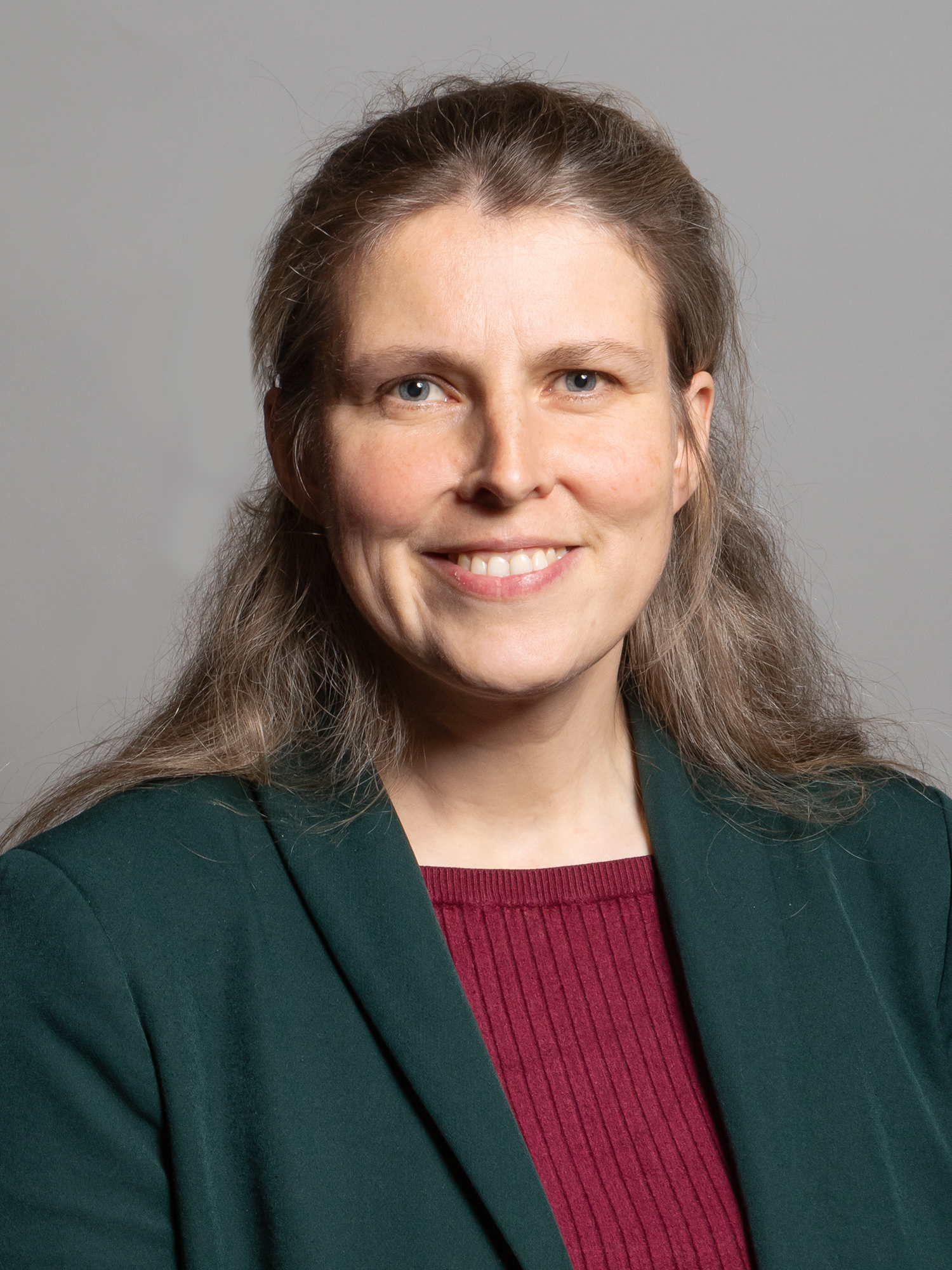
The speech made by Rachael Maskell, the Labour MP for York Central, in the House of Commons on 13 May 2026.
I congratulate His Majesty on delivering the Gracious Speech, and I concur with the hon. Member for North Cotswolds (Sir Geoffrey Clifton-Brown) that investing 0.7% of GDP in international development aid will bring greater stability and increase our ability to secure greater diplomacy, as well as development. I think that should be our focus. I also thank him for the work he does on the Public Accounts Committee.
The intersection of crises bearing down on our planet, our nation and our communities demands a bold response in this parliamentary Session. I recognise the current bind, but as we move into the next chapter of Labour’s story, there is one consideration that I want the Government to take through this legislative programme: how we bring our communities, our country and our fractious planet together. Such vision and policy must be the thread that gathers and inspires us.
Against the backdrop of fast-paced change, this planet is breaking. The grotesque inequalities, climate degradation and conflict are driving people apart. At home we have had 14 years of austerity, whereby the harder someone works, the tougher it gets. That is why I have called for a new economic orthodoxy, as neoliberalism preys on the working class and exploits all who want to get on as much as those who cannot. As people are fleeced, the energy giants and water bosses profit, despite putting carbon in our air and sewage in our rivers, such as the Ouse in York—the second worst in the country. The clean water Bill must pull this service back into public hands and public accountability.
Jeremy Corbyn (Islington North) (Ind)
I welcome the hon. Lady’s call to take water back into public ownership. Does she agree that in setting the share price at which we buy it back, we should take account of the cost of pollution, of the money that is being paid to distant shareholders with no investment or interest in this country, and of the inconvenience caused to so many of our residents by constant leaks and the waste of water? Shareholders should pay the price of it, not our constituents.
Rachael Maskell
I do agree. It is daylight robbery, and people should not be profiting from our natural resources. We should not see the levels of pollution that exist in our rivers, which should be pure and clean. I have a sewer running through the middle of my city, and it is not acceptable. It is right to legislate, but also to ensure that we are not adding carbon to our natural environment. On airport and road expansion, we should ensure that we bring down levels of carbon, and I fear that might not be the case with airport expansion.
The draft commonhold and leasehold Bill is welcome, as is freezing ground rents, but as developers extract all they can and people pay extortionate rents and management costs, we need to see good-quality housing as a right and to rethink the model. As I have witnessed in my constituency, co-operative housing is a powerful antidote that is worth investing in, alongside a new generation of council-built housing for the common good.
The system is rigged against ordinary people, as it was 126 years ago, when trade unions came together to form the Labour party. It is our duty in this Parliament to once again set the ambition to drive transformation for our communities, address the grotesque inequalities that drive people apart, and rewire the system to bring us together. That is our purpose. As the unions fought for common terms and better pay, Labour reimagined a society in which everyone can get on, a welfare state for those in need, and an NHS in which Bevan positioned the duke and the dustman as equals. Not understanding a collective, cohesive society puts all this at risk, as Opposition parties seek to exploit opportunity and people, sell off our common assets and sow division.
That is why Labour has an immense obligation to be bold and ambitious, not for those who take all they can, but for those who serve, work and play their part—and to take away the stigma and barriers for those who cannot. I implore the Government to maintain the rights of those with indefinite leave to remain, as new communities work alongside established communities. When it comes to restraining traumatised children, on which the Government are consulting, I simply warn them: don’t! I will not support that. All children must be treated with dignity—nothing less.
Iqbal Mohamed (Dewsbury and Batley) (Ind)
On indefinite leave to remain, on the journey down from my constituency today, I spoke to the private hire driver. He is on a visa that requires renewal every two and a half years. He will have to do that renewal four times before he is eligible for indefinite leave to remain. He is not really complaining about that, but about the council not allowing him to continue working when his visa is up for renewal and he sends away his documents to be processed. Would the hon. Member agree that that should be looked at, and that there should not be any unintended consequences of that process?
Rachael Maskell
The hon. Member has put that well and truly on the record. We need to reform the system. It is really prejudiced against so many people who are working hard in our society. We should not increase the time taken to get indefinite leave to remain, because our word should be our bond, and we should honour the agreements we make.
That brings me to Labour Members’ ambitions for reforming the special educational needs and disabilities system. We need an inclusive approach, so that every child finds their place and reaches their level. More inclusion means rewiring the culture to be therapeutic and trauma-informed, with new pedagogies; mapping out learning styles for children; and ending harsh discipline and the single channel of exam-based assessments. Instead, we must include children and bring out their best. I urge the Treasury to invest the funding needed to help raise this generation and future generations, by supporting parents and babies with the right foundations during the first 1,001 critical days, and by providing the wraparound support that teachers, health professionals and support staff need, so that our SEND system is fixed once and for all. The benefit of that investment will show in the years to come.
As we support our young people into work, we must recognise that state neglect under the last Government caused so much harm. We must be compassionate and work with, not against, our young people, as they struggle to navigate their way and transition into independence and work. Society and our communities should be brought together.
Our centralised system is failing; decisions are made far from the realities of the regions and nations. That is building a sense of remote dystopia, and of not being in touch with the daily challenges that are being experienced as the cost of living weighs heavy, while others live profligate lives. Today, we need a radical devolution of power, finance and opportunity to help people see themselves as having agency and purpose. We should recognise the diversity of all our communities, and our common bond. It will not be found in the idealisms of some, or the toxic divisions of the right, which, believe me, will set community against community, while its crypto-backed leaders sow chaos and division, ripping up our NHS and our welfare state—our incredible inheritance that has glued our society together through generations.
In the King’s Speech, we have so much to celebrate, and I will sew in the voices of my community in York as we progress. I want to ensure that the Railways Bill protects the wellbeing of all who work in the sector. Having championed the Removal of Titles Bill in the last two parliamentary Sessions, I hope that we can move fast on cleaning up our politics. I welcome the move to tackle antisemitism, as antisemitic graffiti has been found in my community this week. It brings such shame, and we must move fast on that. Improved relations with the EU will help to build the bridges we need.
York is a visitor and tourism hotspot, so I will work carefully with the Government on the overnight visitor levy. I trust that businesses will not pay a penalty, and that our city will get the reward. The draft taxi licensing Bill will really help to bring licensing back under control.
I trust that we will do more on the climate crisis. As the national emergency briefing highlighted, we do not have the luxury of time. The UK is in the bottom 10% of countries in the biodiversity intactness index, and one in six species is at risk of extinction. While our planet burns and our icecaps melt, we need to invest fast. Finance should be invested to hasten decarbonisation, and projects such as BioYorkshire should be funded to ensure that we hasten agricultural resilience, preventing the low yields and crop failure that are escalating the cost of food. That is why I am really glad that we are moving to independence in our energy market, too. We need a second employment rights Bill to capture the single status of worker, extend collective bargaining, and improve the wellbeing of workers.
My final point is this: if we are to bring a diversity of voices to Parliament and ensure that they are heard, this place must change. Governments have been destabilised in recent years due to too much power being held by the Executive, and too little power being invested in Parliament. If that does not change, the discourse of distrust between Parliament and the people will continue. Our voices, representing the diversity of the country, must be heard, and must impact the programme of government. I want all Bills to go through in-depth consultations with MPs, who would input the experiences of their communities. Just running artificial intelligence across consultation responses is not good enough. I want full pre-legislative scrutiny, so that we can ensure that Bills are robust, unifying, and do everything possible to improve the lives of those we represent. Without that, I fear that we will let down the people we were sent here to represent. It is time to include all; the mission is too great to be for just a few. This parliamentary Session must be like no other, connecting communities, unifying society and transforming our future.