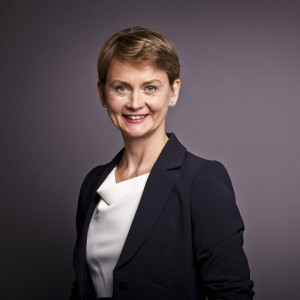
The statement made by Yvette Cooper, the Foreign Secretary, in the House of Commons on 5 January 2026.
I want to begin by expressing my condolences to all those affected by the terrible tragedy in Crans-Montana, and my support for the Swiss authorities. The British embassy has been supporting the family of Charlotte Niddam, who was educated in Hertfordshire and in north-west London. I can confirm that yesterday Charlotte’s family were given the devastating news that her remains had been identified. Charlotte was just 15. The whole House will be thinking of her and her friends and family now.
Let me turn to Venezuela. Over the weekend, the United States conducted air strikes on a series of Venezuelan targets, and confirmed that it had captured Nicolás Maduro and his wife, Cilia Flores. They have been indicted on narcoterrorism, drug smuggling and weapons charges. I can confirm to the House that the United Kingdom was not involved in these operations.
UK policy on Venezuela has long been to press for a peaceful transition from authoritarian rule to a democracy that reflects the will of the Venezuelan people, maintains security in the region and is in line with international law. That remains our position and our determined view about what must happen in Venezuela now. Over the weekend I discussed this with the US Secretary of State, Marco Rubio, and the UK Government are in close contact with our international partners on the issue.
The first duty of government is the safety and security of our citizens, and my Department is working tirelessly to ensure the safety of British nationals. Over the weekend I also spoke to the UK chargé d’affaires in Caracas. All our embassy staff are safe and accounted for, and working to support the approximately 500 British nationals in Venezuela. Our travel guidance currently advises against all travel to Venezuela, and British nationals in Venezuela should closely follow that travel advice, which will be kept up to date.
We should be under no illusion as to the nature of the Maduro regime. A once functioning democracy has become a hub for very dangerous organised criminal gangs—corrupt links have involved Iran, with Hezbollah increasingly present in recent years, as well as malign support from Russia—and a regime that has facilitated illicit finance, sanctions evasion and organised criminal activity, including narcotics trafficking and illegal gold trading. That undermines the security of the whole region, including UK overseas territories, as well as the United States and other regional partners. The country has been driven into economic ruin, with an 80% drop in its GDP in a decade. More than 8 million people have left, which has caused instability elsewhere in the region.
We have seen Maduro’s regime systematically dismantle democratic institutions, silencing dissent and weaponising state resources to maintain power through fear and corruption. The International Criminal Court has opened an investigation into possible crimes against humanity, following reports of hundreds of extrajudicial killings, including at the hands of Venezuela’s security services and paramilitary groups under the regime’s command. UN investigators have repeatedly reported a pattern of arbitrary detentions, tortures and killings.
In the July 2024 presidential election, millions of Venezuelans voted, but the official results have never been published. The opposition leader, María Corina Machado, was banned from standing by Maduro. International observers cited basic failures of election integrity. Independent tallies covering 80% of polling stations showed a clear victory for Edmundo González, yet Maduro claimed victory.
Most recently, in October, the UN independent fact-finding mission reported on state security forces using firearms against protesters after the elections 18 months ago, where 25 people died. González has been forced to leave the country and claim political asylum in Spain. Machado was forced into hiding for her own safety and had to be spirited out of the country to receive her Nobel peace prize in Norway last month.
These are the hallmarks of a regime that clings to power through fear, coercion and violence, not through democratic consent. That is why, as the Prime Minister said on Saturday, we can shed no tears for the end of Maduro’s rule.
Let me turn to UK policy. The UK has long been an advocate for a democratic Venezuela and a vocal critic of the Maduro regime. Since 2019, successive UK Governments have refused to recognise the regime. Through the G7 and the UN, with partners and directly, we have continued to call out the Maduro regime and its appalling human rights violations.
We have also, in some areas, taken a different policy approach from some of our allies. Our other Five Eyes partners have closed their embassies, but we have maintained our diplomatic mission in Caracas at a much more senior level than many of our partners and are seeking dialogue, sustaining direct contact with the opposition, supporting Venezuelan civil society and advocating for British interests.
A year ago, around Maduro’s inauguration, the UK acted alongside partners and announced a wave of new sanctions. We targeted 15 individuals, including judges and senior-ranking officials in Maduro’s regime responsible for undermining democracy and the rule of law, and for human rights violations. We have imposed sanctions on individuals, but not on sectors of the economy, and we have not supported or been involved in blockades or strikes against drug boats. We have continued to directly promote the interests of the British overseas territories, which need to see stability in the region.
Of course, throughout we have promoted and maintained support for international law. The commitment to international law, as the Prime Minister set out on Saturday, is immensely important to this Government. Those principles guide the decisions that we make and the actions that we take as part of Britain’s foreign policy. That commitment to international law is part of our values; it is also strongly in the UK’s national interest. Our manifesto talked about a foreign policy that is progressive and is also realistic, engaging with the world as we find it, in the interests of UK security, prosperity and our values. That means upholding international law and defending democracy, and it means confronting the complex, evolving and hybrid threats that we and our allies face in the world today.
Those principles and values also guide the conversations that we have with our allies across a range of issues where we agree and disagree. In my discussions with Secretary Rubio, I raised the importance of complying with international law, and we will continue to urge all partners to do so at every stage. It is, of course, for the US to set out the legal basis for its actions. The UN Security Council is discussing Venezuela this afternoon. These issues will continue to be matters for international discussion.
I discussed with Secretary Rubio what should happen next and our continued commitment to a transition to a peaceful and stable democracy. Our collective immediate focus must be on avoiding any deterioration in Venezuela into further instability, criminality, repression or violence. That would be deeply damaging for the people of Venezuela, our own overseas territories, our allies in the US and other regional partners.
The UK has long been clear that the leadership of Venezuela must reflect the will of the Venezuelan people, so the international community must come together to help achieve a peaceful transition to a democratic Government who respect the rights and will of their people. That must mean action on the economic crisis, the release of political prisoners, the return of opposition politicians, an end to political repression, respect for human rights, and plans for the holding of free and fair elections. I urge the acting President, Delcy Rodríguez, to take these steps forward, because the people of Venezuela have a right to decide their own future.
The US Secretary of State and I discussed the particular role that the UK can play to support a peaceful democratic transition and stability. Drawing on our embassy in Caracas and on the work that we have done over many years to build up relationships and dialogue with Venezuelan opposition parties and with the current authorities and regime, and of course our relationship with the US, to that end I have also spoken today with Venezuelan opposition leader María Corina Machado. Her unwavering fight for democracy, human rights and the rule of law in Venezuela, and against oppression, is inspirational. We will keep in touch over the days and weeks ahead.
Finally, let me turn briefly to another matter. The House will have seen recent comments from the United States and from Denmark regarding Greenland. Let me be very clear on the UK’s position: Greenland is part of the Kingdom of Denmark. Our close European partners, our long-standing NATO allies and all our countries work closely together on security issues and will always do so. The future of Greenland is a matter for the Greenlanders and Danes, and no one else. I commend this statement to the House.