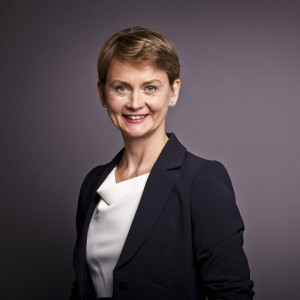
The statement made by Yvette Cooper, the Foreign Secretary, in the House of Commons on 18 November 2025.
I want to update the House on two of the world’s gravest conflicts—in Gaza and in Sudan—following recent resolutions in the UN and discussions at the G7, and on the action that the UK Government are taking to pursue peace.
First, I turn to Gaza. After two years of the most horrendous suffering, the ceasefire agreement led by President Trump with the support of Qatar, Egypt and Türkiye has been in place for six weeks. Twenty hostages are now home with their loved ones, and the remains of 25 more have been returned so their families can grieve. More aid trucks are entering Gaza. But the ceasefire is highly fragile, and there is still a long journey ahead to implement the commitments made at Sharm el-Sheikh and to get to a lasting peace.
Last night, the UN Security Council passed resolution 2803. The UK voted for this important resolution, which authorises the establishment of an international stabilisation force for Gaza, and transitional arrangements including the board of peace and a Palestinian committee. It underscores the essential need for humanitarian aid and reconstruction, and points the way to a path to Palestinian self-determination and statehood. Crucially, it is supported by the Palestinian Authority, and Arab and Muslim partners in the region and beyond. The resolution is a critical staging post that sustains the unity around President Trump’s 20-point plan.
Momentum must now be maintained. It is essential that an international stabilisation force and trained Palestinian police can be deployed quickly to support the ceasefire and to avoid a vacuum being left that Hamas can exploit. We will also need the urgent formation of a Palestinian committee alongside the board of peace. As we made clear at the UN last night, these transitional arrangements must be implemented in accordance with international law, and respecting Palestinian sovereignty and self- determination. They should strengthen the unity of Gaza and the west bank, and empower Palestinian institutions to enable a reformed Palestinian Authority to resume governance in Gaza, because Palestine must be run by Palestinians.
The work to implement the first phase of the ceasefire agreement must continue. That means work so that Hamas releases the bodies of the remaining three hostages taken in the terrorist attack on 7 October, so that their families can properly grieve. We urgently need a major increase in humanitarian aid, because aid into Gaza is still a trickle rather than a flood. Two weeks ago, I visited warehouses in Jordan holding UK aid for Gaza, including one run by the World Food Programme with enough wheat to feed 700,000 people for a month; yet it still sits there because the Jordanian route into Gaza is still closed. People there told me that there were 30 more warehouses nearby, with food, shelter kits, tents and medical supplies—less than 100 miles from Gaza but still not getting in.
I welcome the very recent improvements in aid flows, and that one more border crossing, Zikim, is now partially open. But it is not nearly enough. We need all land crossings open—including the Rafah border with Egypt— with longer and consistent hours, and urgent work is needed immediately in all parts of Gaza to rebuild basic public services and to provide shelter as winter draws in. Medical staff must be allowed to enter and leave Gaza freely, and international non-governmental organisations need certainty that they can continue to operate. I spoke to the King of Jordan and to doctors in Amman about a maternity and neonatal field hospital unit that stands ready to be moved into Gaza—but, again, they cannot yet get it in. The Israeli Government can and must remove the restrictions and uncertainty now.
As well as working with the US and others, we are drawing on distinct UK strengths to support a lasting peace. We are providing expertise on weapons decommissioning and ceasefire monitoring, based on the Northern Ireland experience. We are supporting on demining and unexploded ordnance, including with £4 million of new UK funding for the United Nations Mine Action Service, and we are funding to surge in experts, including from British organisations such as the HALO Trust and Mines Advisory Group, whose impressive work I recently saw at first hand. On civil-military co-ordination, we have UK deployments into a dedicated US-led hub for Gaza stabilisation efforts.
Beyond Gaza, stability in the west bank is essential to any sustainable peace, and I am concerned that the PA faces an economic crisis induced by Israeli restrictions that are strangling the Palestinian economy. The Netanyahu Government should be extending, not threatening to end, the arrangements between Israeli and Palestinian banks—arrangements that are crucial to the everyday economy for Palestinians. This is crucial for stability, which is in Israel’s interests too.
The pace of illegal settlement building continues. We have seen further appalling incidents of settler violence during the olive harvest. While I welcome Israeli President Herzog’s expression of concern, the response of the Israeli authorities is still completely insufficient—practically and legally. Tackling settlement expansion and settler violence is vital to protecting a two-state solution, in line with the UK’s historic decision to recognise the state of Palestine.
Let me turn now to Sudan, where the worst humanitarian crisis in the 21st century is still unfolding, right now. The UN humanitarian chief, Tom Fletcher, who has just visited the area, has described it as:
“the epicentre of suffering in the world”
and he is right. Over 30 million people need lifesaving aid. Twelve million have been forced from their homes. Famine is spreading. Cholera and preventable disease are rampant. In El Fasher, following advances by the Rapid Support Forces, there are horrifying scenes of atrocities, with mass executions, starvation, and the systematic use of rape as a weapon of war—horrors so appalling they can be seen from space.
As the United Nations Office for the Co-ordination of Humanitarian Affairs has put it, El Fasher is a crime scene. Satellite pictures show discolouration of sand consistent with pools of blood, multiple clusters of objects consistent with piles of human bodies, and the apparent burning of bodies and operations to dispose of bodies in mass graves. Further horrors will yet unfold unless greater action is taken.
A year ago, Britain tabled a resolution at the UN Security Council demanding humanitarian access and civilian protection, but it was shamefully vetoed by Russia. Six months ago, at our London-Sudan conference, the UK brought together international partners and secured £800 million in funding, but the situation continues to deteriorate, including with North Kordofan now under threat and fighting moving to El Obeid.
We need a complete step change in efforts to alleviate the suffering and bring about peace. That means more aid to those in need. The UK has committed over £125 million this year alone, delivering lifesaving support to over 650,000 people—treating children with severe malnutrition, providing water and medicine, and supporting survivors of rape—but the challenge is still access.
The RSF still refuses safe passage to aid organisations around El Fasher. The Sudanese armed forces are bringing in new restrictions that stand to hinder aid. Both sides must allow unhindered passage for humanitarian workers, supplies and trapped civilians. We are urgently pressing for a three-month humanitarian truce to open routes for lifesaving supplies, but aid will not resolve a conflict wilfully driven by the warring parties, so we desperately need a lasting ceasefire underpinned by a serious political process.
At the Manama dialogue conference in Bahrain two weeks ago, I called for the same intense international efforts to address the crisis in Sudan as we have seen around Gaza. At Niagara last week, I joined our G7 partners in calling for an immediate and permanent ceasefire, for the unimpeded access of humanitarian aid, and for external actors to contribute to the restoration of peace and security. We are engaging intensively with the Quad countries—the United Arab Emirates, Saudi Arabia, Egypt and the United States—which have now together called for an immediate humanitarian truce, and an end to external support and arms that are fuelling conflict. I strongly support Secretary Rubio’s latest comments regarding the need to end the weapons and support that the RSF is getting from outside Sudan.
Last Friday, the UK called a special session of the United Nations Human Rights Council, in which a UK-drafted resolution was passed, securing international consensus for an urgent UN inquiry into alleged crimes in El Fasher, because impunity cannot be the outcome of these horrifying events. We need to ensure that teams can get in to investigate those atrocities and hold the perpetrators to account, and I have instructed my officials to bring forward potential sanctions relating to human rights violations and abuses in Sudan.
The UK will play its full part to ensure that it is the Sudanese people, not any warring party, that determines Sudan’s future. Wars that rage unresolved do not just cause untold harm to civilians; they radiate instability, undermine the security of neighbouring states, and lead migrants to embark on dangerous journeys. We are striving to meet those urgent humanitarian needs, and striving to secure not just the absence of conflict, but the presence of lasting peace. From Gaza to Sudan that can only be done through international co-operation, and through countries coming together for peace. I commend this statement to the House.