Tag: Speeches

  • Ruth Jones – 2021 Speech on Foreign Aid Cuts

    Ruth Jones – 2021 Speech on Foreign Aid Cuts

    The comments made by Ruth Jones, the Labour MP for Newport West, in the House of Commons on 13 July 2021.

    I would like to say that it is a pleasure to speak in this debate, but that would not be true. I am appalled that we are having to vote on this proposal at all. This cut to our international aid budget reflects badly on all of us, not just the Government, and portrays the UK as inward-looking and self-serving.

    This is a Tory manifesto promise that will be broken, and broken very publicly, as the whole world is watching. I wonder how the Prime Minister can have the bottle to attend COP26 and call on other countries to raise finances for climate action, given that he is in charge of a Government who are cutting their own contribution—surely the ultimate act of hypocrisy.

    If overseas aid funding was going to finance vanity projects, trips to the moon or high-flying, cutting-edge dodgy ventures, I could begin to understand the reasoning behind the decision, but none of the projects fall into those categories. They are basic health and social care projects that benefit millions of people across poorer countries on our planet. It funds basic projects such as polio eradication, sexual health advice, the clearing of landmines, education programmes, the provision of clean water and sanitation, and the prevention of sexual exploitation of women and girls. The money funds training programmes such as the NHS overseas training scheme, which trains 78,000 healthcare workers in Nepal, Uganda, Ethiopia, Bangladesh and Myanmar.

    Many projects will now come to an end, affecting lives in countries such as Afghanistan, Syria, Somaliland, Nigeria and many more. By cutting funding to those numerous projects the Government will cause many unnecessary deaths, which is a scandal. We must highlight that callous approach today. Before Government Members say, “Oh, it is just Labour Members whingeing again”, let us have a look at the people who are calling for a reversal of the cuts: Tory Ministers such as Ruth Davidson; Baroness Sugg, who resigned from the Government in November over the cuts; and the right hon. Member for Reading West (Alok Sharma).

    World leaders have condemned the cuts, including Samantha Power, head of the United States Agency for International Development, and Malala, who calls on the Prime Minister to keep his promise of helping 40 million girls go to school, and the Archbishop of Canterbury, who describes the Chancellor’s decision as “shameful and wrong”. Interestingly, every living former Prime Minister is opposed to the plan. These are big hitters, and their condemnation is clear. I therefore urge the current Prime Minister and the Chancellor to think again, go back to the drawing board, and plan a different route that does not disadvantage millions of people in countries less affluent than our own. This is not fair and it is not right. I want to be very clear: I will vote against the Government’s plan to cut the overseas aid budget by £4 billion this year, and I urge Government Members to do the same, because the world is watching.
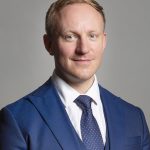
  • Sam Tarry – 2021 Speech on Foreign Aid Cuts

    Sam Tarry – 2021 Speech on Foreign Aid Cuts

    The comments made by Sam Tarry, the Labour MP for Ilford South, in the House of Commons on 13 July 2021.

    The Government’s decision to renege on their international obligations rides roughshod over those ring-fenced commitments and puts at risk the lives of millions across the globe. That is not in our national interest, and it is certainly not in our national security interest, and that is before taking into consideration our moral duty as a nation to alleviate global poverty.

    Damningly, several former Prime Ministers, who proudly upheld our country’s aid commitments, have voiced their concerns about this Government’s handling of their international aid obligations. Indeed, we heard earlier that the right hon. Member for Maidenhead (Mrs May) has committed to voting against a three-line Conservative Whip for the first time ever, so powerfully does she feel about this issue.

    When the right hon. Lady spoke in this debate, she was crystal clear on what the aid cuts would mean, “fewer girls will be educated, more girls and boys will become slaves, more children will go hungry and more of the poorest people in the world will die.” A damning indictment from a former Conservative Prime Minister.

    The UK has a long and proud track record of stepping up to support those in need. We cannot abandon our responsibilities to those around the world who are most poverty-stricken, least of all in a global pandemic. The UK is currently the only G7 country to commit in legislation to spending 0.7% of gross national income on international development, a target set by the United Nations, and it is the second largest international development donor behind only the US. That is right and proper, and it is a fact.

    The extended families of many of my Ilford South constituents directly benefit from UK aid, lifting millions out of illiteracy and poverty and providing so much support to some of the poorest communities around the globe, including in Bangladesh, Pakistan, India and Sri Lanka.

    However, instead of leading by example, this Government are now, shamefully, the only G7 Government to cut their aid budget this year. There can be no clearer argument against cutting aid than the devastating impact on the covid response. In April this year, when the delta variant was ravaging India, vital coronavirus research centres—including a project tracking variants in India—had their funding reduced by up to 70%, prompting the project lead to say that the cut would not only make vital projects unviable but would, in effect, kill them dead.

    In May, the Tropical Health and Education Trust criticised the UK Government for slashing £48 million in global healthcare funding as part of their wider cuts. Indeed, the NHS’s plans to donate 6 million items of personal protective equipment to healthcare workers fighting new variants across the world were held up, yet again preventing the containment of the virus.

    We have a duty to act, and we must do so now before it is too late for millions who rely on direct aid. This is not about giving a man a fish to feed himself but about giving him a net to provide for himself. It is about our historic obligation to lift up the global south using our nation’s far greater resources.

    I welcome the actions of Conservative Members who will join us today in voting against this callous and awful manoeuvre by the Government.

  • Jeremy Wright – 2021 Speech on Foreign Aid Cuts

    Jeremy Wright – 2021 Speech on Foreign Aid Cuts

    The comments made by Jeremy Wright, the Conservative MP for Kenilworth and Southam, in the House of Commons on 13 July 2021.

    There are, I think, two primary arguments for opposing the Government this afternoon. The first is that the 0.7% overseas aid target was a manifesto commitment. That is a serious point, though the electorate will appreciate that the expectations on which those manifestos were based have changed substantially since covid-19.

    The second is that the target is in statute in the International Development (Official Development Assistance Target) Act 2015. That is true, but the Act also envisages and allows for circumstances in which the Government might not meet the target in any given year, including the impact on public borrowing, and Parliament cannot stop the Government doing so. The Act, at section 3(1), is very clear about that. We have the right only to be informed of how and why the target is to be missed. As far as I can tell, nobody is proposing to amend the 2015 Act, so it will remain unchanged whatever the vote this afternoon.

    I welcome the Government’s clarification that they are not seeking unilaterally to change the statutory target, but rather to miss it. Those are different things, and the former would, in my view, be both wrong and unlawful, but we either trust the Government or we do not. If we do not trust the Government—and we are here because a large number of Members do not—why would we trust them to keep the 0.7% commitment beyond next year when the Act so clearly allows them to decide not to? Transparent, externally judged criteria, arguably at least, would leave those of us who want to see the preservation of aid spending in a stronger position than under the 2015 Act alone, which applies what are in truth fairly loose shackles to Government on aid spending and leaves it entirely to Government to decide when to escape them, and that cannot help provide the certainty that the aid sector rightly seeks.

    I believe in the merits of overseas aid spending and I have used many of the arguments made so eloquently by my right hon. Friend the Member for Sutton Coldfield (Mr Mitchell), who deserves huge credit for extracting the compromises that the Government have already made. Those arguments, though, must in the end persuade the public whose money we are spending. As Conservatives, we also argue that high public debt is bad for our long-term capacity to support the vulnerable everywhere. Enduring public support for aid spending may well depend on the public recognising that we have apportioned the financial burden of the covid crisis fairly, and not protected aid spending to the detriment of other areas of spending that they may find at least as deserving. I think the Government are now trying to strike that balance. Recognising though I do the strength of the arguments made by many on both sides of this House in the course of this debate, it is important and necessary to give the Government credit for that effort.

  • Liam Byrne – 2021 Speech on Foreign Aid Cuts

    Liam Byrne – 2021 Speech on Foreign Aid Cuts

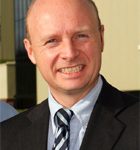
    The comments made by Liam Byrne, the Labour MP for Birmingham Hodge Hill, in the House of Commons on 13 July 2021.

    That was a great speech and it is a pleasure to follow it.

    The House does not need a former Chief Secretary to the Treasury to lay out how today’s motion is a con job, but I shall explain it anyway. The Red Book published at the most recent Budget shows that public sector net debt will not fall until 2024 at the earliest, but there is no way that a Chancellor or Chief Secretary would ever make a judgment about whether it was falling sustainably on one year alone, which means that this cut is now forecast to stretch way into the next Parliament. Yet the sums we are talking about are just 0.14% of the national debt stock. This comes at a time when we are putting up defence spending by £24 billion yet cutting aid spending by £4 billion. We are boasting about our soft power superpower status and then slashing into the budget that delivers that soft power. A country’s values are judged by its budget, and this aid cut tells us everything we need to know about this Government’s priorities.

    The second point is that this aid cut will cost lives and it will cost livelihoods. The Prime Minister sailed into the G7 very proud of his declaration that he wanted to jab the world and make sure that, by the end of next year, the world would be safe from covid. However, by the end of the G7, the IMF said that we were about $23 billion short of what we needed for a global vaccination programme. This aid cut will not help that; it will hurt that effort to jab the world.

    Moreover, we have a significant problem now getting the world back on its feet after this pandemic. The IMF thinks that we need about $200 billion extra in spending to protect the world against covid and $250 billion of extra investment—climate-friendly investment—to help safeguard the recovery. How will this aid cut help with that great global project that we must attend to in the years ahead? It will not; it will damage the world’s efforts to get there and it will damage our efforts to help persuade others to get to that big target.

    It is 36 years to the day since we celebrated Live Aid, an example of how we in this country set out to lead the world to help the world’s poorest. On this day of all days the Government are set to surrender that leadership. We cannot have a rules-based order if we have a Prime Minister who continues to shred the rules. This is a renegade act by a renegade Government and I will be voting against the motion tonight.

  • Tom Tugendhat – 2021 Speech on Foreign Aid Cuts

    Tom Tugendhat – 2021 Speech on Foreign Aid Cuts

    The speech made by Tom Tugendhat, the Conservative MP for Tonbridge and Malling, in the House of Commons on 13 July 2021.

    I am delighted to be called, and I pay enormous tribute to the Chancellor of the Exchequer, who is sitting on the Front Bench today. The Chancellor demonstrated during his career before reaching this place that we can do well by doing good. In working for the Children’s Investment Fund Management, he proved that finance and capitalism can support the world’s poorest and change lives, but he will also recognise that even an impressive fund such as that is built on a stable platform created by Governments and guaranteed by organisations, international bodies and others. I am very sorry but for that reason I will not be able to support him today, because that platform is so important. That confidence and ability to rely on a stable platform for the future is essential. Instead of that continuity and that guarantee of an enduring future, we are sadly going back towards the yo-yo policy. That is not just bad because of the variability; it is bad because it costs more and delivers less. Frankly, it is inefficient, it is an error and it undermines our capability.

    Nobody in this House is more passionate about global Britain or Britain’s place in the world than me. Nobody believes more that we should have a place at every table and a voice in every room. But we need to know that we are no longer buying that with gunboats; we are buying it with the aid and the effectiveness that we bring.

    Anthony Mangnall

    My hon. and gallant Friend is making an impressive speech. He talks about global Britain; the point of global Britain is diplomacy, trade, aid and defence. Those four things are interconnected with one another: if we reduce one, that has an impact on all. That will be detrimental to everything from the integrated review to our outside approach.

    Tom Tugendhat

    My hon. Friend is completely correct. Of course, the reality is that we are not living in a vacuum—we are not taking these decisions with nobody watching. Our friends are watching and our rivals are watching. As we make this decision, as we change our policy on Afghanistan, and as we buy different seats at various UN tables through our diplomacy in sub-Saharan Africa, Asia and South America, we know that we are changing the rules by which we live. We are literally changing the standards of our modern world through how we buy support, develop allies and partner around the world.

    As Members have said, this debate is of course about the world’s poorest, but it is not just about the world’s poorest. Fundamentally, it is about Britain and how we protect ourselves. How do we shape this world? How do we get the standards that make sure that British businesses succeed, British finance shapes the world and British rules are those that the world lives by? We do that by making sure that we win the votes at the UN by making sure that we have the voices around the table—the voices of the Foreign Ministers of countries around the world. We can do it; I know that because we have done it. For 20 years we have won debates, shaped arguments and defended our position. We have done it by doing well and by doing good—exactly as the Chancellor demonstrated in his pre-political career.

    I can understand why the Government might say that these targets—these ambitions—are too high and that they wish to set a different spending limit, but that is not the argument they are making. The argument that the Government are making is the Augustinian argument: “Lord, make me chaste—but not just yet.” If you wish to be holy, choose sanctity; if you wish not to be, be frank with what you are choosing.

  • Wendy Chamberlain – 2021 Speech on Foreign Aid Cuts

    Wendy Chamberlain – 2021 Speech on Foreign Aid Cuts

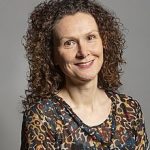
    The speech made by Wendy Chamberlain, the Liberal Democrat MP for North East Fife, in the House of Commons on 13 July 2021.

    I thank you, Mr Speaker, and I thank Members from across the House for their perseverance on this issue. When the Government announced last summer that the Department for International Development would merge with the then Foreign and Commonwealth Office, I and my fellow Liberal Democrats warned of the risk to overseas development assistance and funding. I asked an urgent question to the Foreign Secretary I wrote to the Secretary of State for International Development on those very issues. The Secretary of State said at the time:

    “We are committed to the 0.7% of GNI commitment…We want the aid budget and the development know-how and expertise that we have in DFID—it has done a fantastic job…at the beating heart of our international decision-making processes.”—[Official Report, 18 June 2020; Vol. 677, c. 947.]

    But here we are, just one year later. With the Government having claimed just last week that the opportunity to vote on this cut to ODA spending had been lost by a Division not being called in the recent estimates day debate, I wonder what has caused them to change their mind and bring forward today’s debate at such short notice.

    Economic circumstances caused by covid are not the fault of the world’s poorest, and we and the many charities and NGOs that contacted me in advance of today’s debate know that the poorest will be hardest hit by these cuts. The reality of the covid pandemic is that no one is safe until everyone is safe. At the heart of this is the sharing of urgently needed vaccines around the world, but it is not only that. We know that global inequalities and poverty mean that people around the world cannot take precautions to protect themselves. We cannot expect those without access to clean water—785 million at the last count in 2017—to be able to wash their hands for 20 seconds.

    Slashing development spending is deeply harmful to the notion of global Britain and to us at home. The cuts to this funding also mean cuts to spending within the UK, a fact that I think is sometimes lost. ODA funding goes to many places, including our universities that are doing research into how best to tackle the entrenched causes of global inequality and how to support developing countries to be self-sufficient. St Andrews University in my constituency is looking at up to 50% cuts to some of its active projects, which will impact on the poorest today. These cuts harm not only those in need around the world but our own research and innovation industries, which are vital to our response to Brexit and to facing the climate crisis.

    Turning to the Government’s update, the fiscal tests for development spending presented today are the height of cynicism. They are designed never to be met. As others have said, we have met these tests only once in this century. Conservative MPs must know that supporting today’s motion means not returning to 0.7% in this Parliament, and that means that every one of them who supports the Government today will be breaking their manifesto promise for five years in a row. It is a straight choice: do we return to 0.7%, as we were all elected to this place to do, or do we fail to be the global leader on this issue that the UK has been to this point?

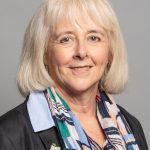
  • Pauline Latham – 2021 Speech on Foreign Aid Cuts

    Pauline Latham – 2021 Speech on Foreign Aid Cuts

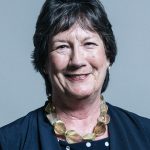
    The speech made by Pauline Latham, the Conservative MP for Mid Derbyshire, in the House of Commons on 13 July 2021.

    I rise really very sadly today, because like everybody else I stood on a manifesto that said that we would honour that 0.7% commitment, and I was there when we voted on it originally. The people we are trying to protect have already been hit, because our economy declined at the beginning of the covid pandemic. They will continue to be hit by this reduction to 0.5%, because 0.7% of a figure is a lot more than 0.5%. The amount has gone down hugely already, and people are suffering.

    If we take a random family with two parents and maybe six children, four of whom are boys and two of whom are girls, the girls will be the ones who have less food and who would benefit from the nutritional programmes that we provide, but we will not be providing those programmes. The girls would normally get less food, because boys are prioritised in many families, and the boys would probably go to school, whereas the girls would not be able to go to school because they would not have the funding to enable them to afford it. The Prime Minister has stood so often on the promise that he will educate all girls with 12 years of quality education. Well, no matter how he protests, that is not going to happen now.

    I feel that we are letting down the poorest people in the world. We are devastating their futures for £4 billion, which, as we have heard, is 1% of what has already been borrowed. It is not a lot of money. We have borrowed that money and, as has been said by many, the people who we should be benefiting will not benefit. They will not have malaria treatments, they will not have the neglected tropical disease treatments and they will not have all the help they need. Especially, they will have earlier marriages and younger pregnancies because we are cutting the devastating figure of 85% of the family planning budget and the abortion budget. That is going to devastate many girls. Many girls will die in early childbirth because of this decision by the Government.

    I find it shocking that this Government are doing this. We are a Conservative Government, and we decided to spend the 0.7%. We legislated for it, and now we are letting the very poorest people down. I do not see how anybody who has heard the speeches today could in all conscience vote to support what the Government want to do with the double lock, because we will never get back to 0.7%.

  • Hilary Benn – 2021 Speech on Foreign Aid Cuts

    Hilary Benn – 2021 Speech on Foreign Aid Cuts

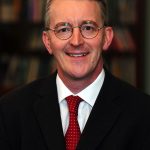
    The speech made by Hilary Benn, the Labour MP for Leeds Central, in the House of Commons on 13 July 2021.

    Since Ministers announced that the UK was going to be the only G7 country to cut its aid this year, despite all the other countries facing the same fiscal pressures, there is not one Member of this House who is not now aware of the consequences of the decision that Ministers have taken—a cut of 85% in the support that we give to the United Nations Population Fund to prevent maternal and child death and unwanted pregnancy; a cut of 95% to the Global Polio Eradication Initiative, at the very moment when the world is closer than it has ever been to eradicating that dreadful disease; and a cut of 50% in the support we give to the humanitarian mine action programme, which stops people losing their arms, their legs and their lives to unexploded ordnance. It is a very long list, and every one of those things harms our reputation and does not help us to persuade others, because other countries judge us not by what we say, but by what we do.

    The choice before the House today is a very stark one: do we act to put this right, or do we accept the double lock that has been proposed? I urge the House to reject it, because there is a principle here. What is it about the level of Government spending on helping the world’s poorest people that means that it alone is going to be subject to these tests? No other area of Government expenditure is: just this one. If this is about protecting the public finances, why is this area of Government expenditure—the money we spend on getting children into school, or on vaccinating children so they do not die of diseases that our children do not die of—being singled out? I have great admiration for the OBR, but determining the level of our international aid spending is not part of its responsibility. It is the Government’s responsibility, it is a political responsibility, and Ministers should not try to pass the buck on to someone else, especially since the latest OBR forecast makes clear that it is exceedingly unlikely that the two tests would be met in the next five years.

    Mr Harper

    Can I just pick the right hon. Gentleman up on that point about other areas of expenditure? The Treasury and the Chancellor have set out these tests—promises that are in our manifesto, and which we mean to keep. The comprehensive spending review is taking place this year, and it seems to me that we will be judging all other areas of Government expenditure by these same measures. I see the Chancellor nodding, so it seems to me that we are being very consistent here, and it is important that we keep our promises about our fiscal responsibilities as well as getting back on track to meet our aid responsibilities.

    Hilary Benn

    I am afraid that I take a different view of the Government’s consistency from the right hon. Gentleman’s, because they have chosen quite specifically, knowingly and deliberately to break a cast-iron promise to the world’s poorest people that was also contained in that manifesto. As I said in my last contribution on this subject, most of those people probably have no idea that this House made that commitment together, but the Government have chosen to break it, and the choice we are making today is whether we think that is right or wrong.

    The Chancellor might think that the double lock is a way out of this political problem, but I do not think it is, because the issue before us has not gone away. It is just the same as it was on the day when the original cut was announced, and the question before us is whether it is right—morally, practically or politically—to break our word to the world’s poorest people. I would argue that it is not: it is wrong in principle and it is harmful in practice, as we have heard from excellent speeches made by Conservative Members. It is not who we are; it is not the country that we should aspire to be; and I ask the House to reject this motion so that we can restore aid to 0.7% and keep the promise that we made to the people of this country and the people of the world.

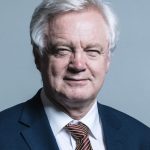
  • David Davis – 2021 Speech on Foreign Aid Cuts

    David Davis – 2021 Speech on Foreign Aid Cuts

    The speech made by David Davis, the Conservative MP for Haltemprice and Howden, in the House of Commons on 13 July 2021.

    I consider myself an economic Thatcherite, yet when I come to choose between money and lives, I always choose lives. This House should remember—this should be at the forefront of every Member’s mind today—that this is a vote where we are choosing whether or not to intervene to save lives. That is the key issue, not the monetary issue, which I will return to in a second.

    The Government argue that this is a policy the United Kingdom cannot afford, but while we have heard about this being a small fraction of our borrowing, we should remember that it is an even smaller fraction of our spending. We spend, in a non-covid year, at least £800 billion; the £3.5 billion saving we are talking about is less than 0.5% of that. That is what the Treasury tells us is the critical, overwhelming measure that forces us to do something that has such dramatic consequences.

    The Chancellor might say, as his press spokesman did in the course of last week, “Well, you find the money from somewhere else”—saying that to a past Public Accounts Committee Chairman is very dangerous for a Chancellor. We were in Chesham and Amersham a week or two ago, as my right hon. Friend the Member for Sutton Coldfield (Mr Mitchell) said, and Cheryl Gillan would have said to the Chancellor, “Well why don’t you just cancel HS2?” That is between £100 billion and £200 billion; it would pay for 25 to 50 years of this shortfall. It is really that simple.

    So I do not really accept what the Chancellor is saying—that the only place, indeed the best place, for savings to be found is cutting aid, which will cost lives. Such a choice is morally reprehensible. Let us be clear about that—morally reprehensible.

    Mr Mitchell

    My right hon. Friend is making an incredibly good point, but has he also noticed that, in the Chancellor’s outstanding policy on spending announced last November, the cut that he is referring to—this cut of 1% of the borrowing on covid last year—is the only cut that has been announced?

    Mr Davis

    My right hon. Friend is right. The prioritising of this cut makes it even more morally reprehensible. Indeed, at the same time, as I think the spokesman for the SNP, the hon. Member for Dundee West (Chris Law), said, we are increasing spending on defence. I happen to agree with increasing spending on defence, but I do not agree with cutting spending on things that will lead to the need for more defence because of migration, civil wars and the rest of it.

    As my right hon. Friend the Member for Sutton Coldfield, the hon. Member for Rotherham (Sarah Champion) and the Leader of the Opposition have pointed out, the Government’s proposed double lock on returning to 0.7% is deceptive. It is designed to look reasonable. However, in fact, none of the people who have spoken so far has actually stated the full case. Although we say that the condition has been met only once since 1990, under a Conservative Government, and has never been met, really—well, it was once, just about—since the 0.7% policy was put in place, it has actually never been met since 1970, because the wording is not “a current budget surplus” but

    “a sustainable current budget surplus”.

    All the current budget surpluses we have been talking about so far have been for one year—and frankly, the one under us in 2018 lasted about 10 nanoseconds; it was a very tiny surplus. In practice, we have not had a sustainable current surplus since the 1970s, so I am afraid that, under the actual wording in the statement, we are not looking at 0.7% for a very long time indeed. We heard the Leader of the Opposition say it would be years, possibly decades, possibly never, and I think he is right about that.

    Even if the conditions were to be met, the proposal will do nothing to deal with the crises that are caused by the policy already, right now. The Government argue that the cuts are temporary, but death is never temporary—and this will cause deaths.

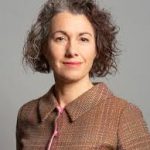
  • Sarah Champion – 2021 Speech on Foreign Aid Cuts

    Sarah Champion – 2021 Speech on Foreign Aid Cuts

    The speech made by Sarah Champion, the Labour MP for Rotherham, in the House of Commons on 13 July 2021.

    It does not show respect for the House to ask us to take such a significant decision with little notice, little explanation and no clarity about the consequences of today’s vote. It does not show respect for communities in the poorest parts of the world when this Government are willing to play games with their lives and livelihoods in this way. The Government present the motion as giving Parliament an opportunity to have a say on when and how the UK will return to spending 0.7% of GNI on aid. But today is not really about the 0.7% target, the cuts or the livelihoods that are already being affected by our reduced spending. It is about exerting pressure on Government Back Benchers who have been brave enough to call out what the Government are doing. Basically the Government are saying, “Back this or you will be blamed when taxes rise or spending falls”—things that will likely happen because of the pandemic anyway.

    Today is yet another example of this Government’s complete lack of regard for parliamentary scrutiny, and they have form. There is a pattern of this Government withholding information until the last minute and then only making the most basic details available. Let us be clear: the Government have not brought forward a substantive motion for this debate. The motion that they have tabled is made in neutral terms—a device that was intended to allow the House to debate an issue without coming to a view. They claim that this debate is binding. It is not our procedures that make it binding; it is their political choice. This is a knee-jerk reaction dreamt up between last Thursday and yesterday in the face of growing criticism of this Government.

    Yesterday’s written ministerial statement talks of returning to 0.7 % only when we are not borrowing for day-to-day spending and underlying debt is falling. On their own, each of those tests is a high hurdle. When combined, these conditions become incredibly strict. Since the 0.7% target was introduced in 2013, these tests have been met only once. They explicitly link ODA spending to policy decisions made by other Government Departments on tax and spending. This double lock could lead to an indefinite cut in aid spending, and, of course, the tests do nothing to prevent the Government from dropping lower than the 0.5%.

    The Office for Budget Responsibility has said that the UK’s economy is forecast to return to pre-pandemic levels in the second quarter of 2020—faster than originally thought. If a return to economic normality is getting closer, why the need to introduce these extra tests before returning to 0.7%? They are just added roadblocks artfully placed by the Treasury on the track back to the legally mandated level of 0.7%. Fundamentally, the statement paints aid spending as an either/or choice; we are spending either on domestic public services or on international aid. It is an artificial choice that MPs are being forced to make. This is a breathtakingly cynical manoeuvre and the House must not fall for it.