Tag: Speeches

  • Thangam Debbonaire – 2022 Speech on the Speaker’s Conference

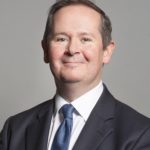
    Thangam Debbonaire – 2022 Speech on the Speaker’s Conference

    The speech made by Thangam Debbonaire, the Labour MP for Bristol West, in the House of Commons on 22 June 2022.

    I, too, very much welcome the motion on the Speaker’s Conference and thank Mr Speaker for his leadership on this matter. It offers us all an opportunity to consider the employment conditions of Members’ staff. This is the right time to be doing that, following another damaging few months for the reputation of this House when we have had serious allegations and convictions against some Members. It is not a very large number, but it is important that we ensure we are providing good working practices for all Members’ staff. This is a really important step forward.

    Since Gemma White’s report into the bullying and harassment of MPs’ staff, the House has made a lot of progress in how we employ, manage and treat our staff, providing them with a form of redress, complaint and assessment of those complaints, but we now need to take further steps. For instance, we have had the establishment of the Members’ Services Team, to whom I pay great tribute. I have always found them to be extremely helpful and approachable, and they are a fount of knowledge. I urge colleagues who may not have come across the team to make use of the fact that they are camped out in the Portcullis House atrium every day. They offer a friendly face, and help awaits. Members now have access to a range of best practice employment guides, and the opportunity to attend regular workshops. Again, all Members are encouraged to use the service, but we need to build on it and strengthen our structures and processes.

    I want to place on record the fact that some Members have expressed concern that the Independent Parliamentary Standards Authority will be the body that ends up employing Members’ staff. The point of the conference is to look at all reasonable options, but it is important to put on record that my understanding—I am not speaking on behalf of IPSA—is that IPSA has expressed reservations about whether that would be appropriate. I certainly feel that, at the moment, we have other options to consider, which is what the conference is for.

    In response to the question from the right hon. Member for East Yorkshire (Sir Greg Knight) and the Leader of the House’s answer, I reiterate that the motion specifies the date of the first report—not the second, third or final report—as 31 October, but it is important that the House is able to debate the reports at regular intervals and to scrutinise the work being done. As the Leader of the House mentioned, the Speaker’s Conference will have cross-party membership. It will take on Select Committee powers and will have the power to require evidence, witness statements and information to be prepared for it in the same way as a Select Committee, which I think is right. The Leader of the House also mentioned—I would echo this—that the previous Speaker’s Conference marked a point on which we have made much progress, because having a Speaker’s Conference on increasing diversity in ethnic and gender representation in this place has been followed by a marked increase in all of the above. I feel that this bodes well for the next Speaker’s Conference.

    The House of Commons is a beacon for democracy around the world. I feel that we have in our hands the opportunity to make it also a model workplace that is at the forefront of workers’ rights, with strong protections in place for all our staff, because future generations should inherit a safer and more inclusive Parliament where everyone has somewhere to turn, and where staff are able to fulfil their potential in every single team across this House.

  • Mark Spencer – 2022 Statement on the Speaker’s Conference

    Mark Spencer – 2022 Statement on the Speaker’s Conference

    The statement made by Mark Spencer, the Leader of the House of Commons, on 22 June 2022.

    I beg to move,

    That this House considers that it is desirable to consider the employment conditions of Members’ staff in order to ensure a more inclusive and respectful working environment, and accordingly agrees that the following Order be made:

    (1) There shall be a committee to be known as the Speaker’s Conference which shall consist of the Speaker, who shall be Chair, and up to 14 other Members appointed by the Speaker.

    (2) The Speaker shall appoint one or more of the members of the Conference to act as vice-Chair in his absence.

    (3) The Conference shall consider and make recommendations upon the contractual arrangements for the employment of Members’ staff.

    (4) Notwithstanding any Standing Order of this House, the Conference shall conduct its proceedings in such manner as the Speaker shall determine.

    (5) The Conference, and any sub committees thereof that the Speaker shall appoint, shall have power—

    (a) to send for persons, papers and records, to sit notwithstanding any adjournment of the House and to adjourn from place to place;

    (b) to report from time to time;

    (c) to appoint legal advisers, and to appoint specialist advisers either to supply information which is not readily available or to elucidate matters of complexity within the committee’s order of reference.

    (6) The Conference shall produce its first report to the House, which shall include a description of the principles underpinning its work, no later than 31 October 2022.

    (7) The quorum of the Conference shall be five.

    (8) This Order shall have effect until the end of the current Parliament.

    I bring forward the motion on behalf of Mr Speaker to establish a Speaker’s Conference to consider and make recommendations on the employment conditions of members of staff in order to ensure a more inclusive and respectful working environment. The treatment and safety of those who work on the estate is paramount, and I pay tribute to Mr Speaker for bringing this matter to the forefront of our attention today. I commend him for working across parties and across the House to make sure that this motion was brought before us in the House today.

    As all Members will be aware, under our current system, individual MPs are responsible for the employment of their own staff. This is a long-standing practice. The Speaker’s Conference will be able to consider whether this remains appropriate. I do not seek to answer that question today, and I do not think this is the moment to debate it, but, should the House agree to today’s motion and the accompanying memorandum from the Clerk of the House, the conference will approach this task without any preconceptions.

    Sir Greg Knight (East Yorkshire) (Con)

    Paragraph 6 stipulates:

    “The conference shall produce its first report to the House…no later than 31 October 2022.”

    In view of the fact that there are two scheduled parliamentary recesses between now and that date, does my right hon. Friend not think that that is rather ambitious?

    Mark Spencer

    I thank my right hon. Friend for that question. That would be an interim report. It is my understanding that Mr Speaker would draw the Committee together, and establish a narrative and what it is looking at. I think the report would be an early opportunity for Members to get a sense of the Committee’s direction of travel.

    Hon. Members will be aware that Speaker’s Conferences are not common. I think the most recent one was in 2008, which is before I and many other Members were elected to this place. It was established to look at the representation of women, ethnic minorities and disabled people in this place. It proved to make progress in that direction. I hope that this Speaker’s Conference will be as effective as the 2008 conference. It will be a Committee of the House of Commons, so it will have the powers and legal protections that that entails. That will ensure that it can secure any evidence it needs and that evidence will be given to it freely.

    Angela Richardson (Guildford) (Con)

    On paragraph 5(a), which talks about powers, is it my right hon. Friend’s understanding that Members of Parliament and current members of staff will be fully consulted in that process?

    Mark Spencer

    I would fully expect that the Speaker’s Conference will take representations from Members. Once we are aware of which Members are on the Committee—I encourage my hon. Friend to make representations to the Whips Office if she wants to be considered—all Members will be able to feed into the process.

    The Speaker’s Conference will include Mr Speaker and 14 other Members. Mr Speaker will appoint those Members with regard to party representation. He will have full discussions with party representatives to give them the opportunity to feed those names in. As the motion sets out, the Speaker’s Conference will have the powers enjoyed by all other Select Committees. As I said to my right hon. Friend the Member for East Yorkshire (Sir Greg Knight), it will report its preliminary findings no later than 31 October. As was the case with the Independent Complaints and Grievance Scheme, which was set up for the employment of Members and staff, it is ultimately a matter for this House to decide how we progress.

    I pay tribute to my predecessors, my right hon. Friends the Members for North East Somerset (Mr Rees-Mogg) and for South Northamptonshire (Dame Andrea Leadsom), who made great strides in establishing the ICGS. It provided a dedicated independent mechanism for the handling of complaints of bullying, harassment and sexual misconduct.

    The Speaker’s Conference will be an opportunity to improve the working culture and to continue to make progress in that direction. The Government have made it clear that there is no place in this building or in this Parliament for bullying, harassment or sexual harassment. As Leader of the House, I am determined that we do all we can to ensure that that does not happen. With cross-party support, working together in this House, I think we can make great progress.

    Should the House agree to establish the Speaker’s Conference, I would like to take this opportunity to wish Mr Speaker well in his endeavours. It will be a beneficial change, promoting positive working environments. I offer the House my full support in its progress.

  • Dominic Raab – 2022 Statement on the Proposed Bill of Rights

    Dominic Raab – 2022 Statement on the Proposed Bill of Rights

    The statement made by Dominic Raab, the Secretary of State for Justice, in the House of Commons on 22 June 2022.

    Today the Government are delivering on our manifesto commitment to overhaul the Human Rights Act and replace it with a Bill of Rights, which I am introducing to Parliament today.

    This country has a long and proud tradition of freedom which our Bill of Rights will enhance, for example, in respect of free speech and recognition of the role of jury trial. Equally, over the years mission creep has resulted in human rights law being used for more and more purposes, with elastic interpretations that go way beyond anything that the architects of the convention had in mind and have not been subject to democratic, legislative oversight. Following the Government’s consultation on the Bill of Rights, our reforms will curtail the abuses of human rights, restore some common sense to our justice system, and ensure that our human rights framework meets the needs of the society it serves.

    I am grateful to the chair and panel of the Independent Human Rights Act Review for their valuable report, which has influenced and informed our thinking in preparing both our consultation and the final Bill.

    The measures in the Bill of Rights will:

    1. Strengthen the right to freedom of speech. We are attaching greater weight to freedom of speech, defined as the exchange of ideas, opinions, information and facts, as a matter of utmost public interest, and widen the responsibility for attaching this greater weight to all public authorities.

    2. Recognise the right to jury trial. The Bill recognises the right to trial by jury under, and subject to, the framework set by Parliament and the Scottish and Northern Ireland legislatures.

    3. Clarify the interpretation of certain rights. Human rights, especially Article 8, have been used to frustrate the deportation of criminals. The Bill provides clearer criteria for the UK courts in interpreting rights and balancing them with the interests of society in particular in the context of deportation of foreign national offenders. This will restore credibility to the system and ensure we can protect the public by deporting those who pose a serious threat.

    4. Reduce burdens on public authorities. We are stopping the imposition of positive obligations on our public services without proper democratic oversight. We will make clear that when public authorities are giving clear effect to primary legislation, they are not acting unlawfully. We will do this by restricting UK courts’ power to interpret legislation, as we propose to do for section 3 above. This will deliver greater certainty for public services to do the jobs entrusted to them, without the constant threat of having to defend against expensive human rights claims.

    5. Ensure that public protection is given due regard in interpretation of rights. The Bill contains a provision that obliges all those who interpret convention rights to consider the need to reduce the risk to the public from convicted criminals serving a custodial sentence. This will support the Government’s proposed reforms to the Parole Board and strengthen the Government’s hand in fighting Article 8 claims from terrorists opposing their placement in separation centres.

    6. Limit the Bill’s territorial jurisdiction. Domestic and Strasbourg case law has extended beyond the intent of the convention’s drafters. The Bill excludes extraterritorial jurisdiction for military operations abroad.

    7. Implement a permission stage to ensure trivial cases do not undermine public confidence in human rights. The introduction of a permission stage will ensure that courts focus on serious human rights claims and places responsibility on the claimant to demonstrate that they have suffered a significant disadvantage before a human rights claim can be heard in court.

    8. Recognise that responsibilities exist alongside rights. We are recognising that responsibilities exist alongside rights and ensuring that the appropriateness of paying damages to those who have infringed the rights of others are considered.

    9. Strengthen domestic institutions and the primacy of UK law. The Bill empowers UK courts to apply human rights in a UK context, affirming the Supreme Court’s independence from the Strasbourg Court. It will make explicit that the UK Supreme Court is the ultimate judicial arbiter.

    10. Increase democratic oversight. The Bill makes sure that the balance between our domestic institutions is right, by repealing section 3 to ensure that UK courts can no longer alter legislation contrary to its ordinary meaning and the overall purpose of the law.

    11. Enhance Parliament’s role in responding to adverse Strasbourg rulings. The Bill enhances the role of Parliament in responding to adverse Strasbourg judgments against the UK. The Bill also affirms Parliament’s supremacy in the making of laws.

    The issues addressed by the Bill of Rights affect the whole of the UK, and any changes must be made on a UK-wide basis. We will ensure that the framework applies equally, whilst also allowing for difference in how the framework is applied and implemented across the UK. During the consultation period I visited Wales, Scotland, and Northern Ireland to discuss our proposals and we will continue to engage with the devolved Administrations, civil society and relevant stakeholders across the UK.

    The Bill and all of its supporting documentation is available at: https://bills.parliament.uk/bills/3227 copies of which have been presented to Parliament.

  • Anne-Marie Trevelyan – 2022 Statement on the UK-Ukraine Infrastructure Summit

    Anne-Marie Trevelyan – 2022 Statement on the UK-Ukraine Infrastructure Summit

    The statement made by Anne-Marie Trevelyan, the Secretary of State for International Trade, in the House of Commons on 22 June 2022.

    On Friday 17 June, we hosted a UK-Ukraine infrastructure summit in London. The summit, with Prime Minister of Ukraine, Denys Shmyhal, and Minister of Infrastructure of Ukraine, Olexandr Kubrakov, brought together Ukrainian Ministers and business leaders for talks on rebuilding Ukraine after the conflict and ensuring its long-term prosperity.

    Discussions identified where UK companies have world-class skills that can support reconstruction efforts—such as digital infrastructure, water and sanitation, energy, homes, and transport.

    During the summit, we signed a memorandum of understanding with Ukraine which set out elements of UK support for reconstruction efforts and established a joint taskforce, which will help build partnerships between UK and Ukrainian businesses to assist the reconstruction of infrastructure in and around Kyiv.

    The taskforce will support greater collaboration between the UK’s world-class infrastructure, energy, and transport companies and Ukrainian public organisations and private sector businesses. This will help plan for the future as well as repairing damaged and destroyed infrastructure, including transport systems, homes, and bridges more efficiently, safely and sustainably.

    The UK has already committed to provide a combined economic, humanitarian, and military support package to Ukraine worth over $3 billion. UK Export Finance has also pledged to retain its £3.5 billion-worth of financial support for trade to Ukraine—helping the country to fund its reconstruction projects and allowing UK exporters and Ukrainian buyers to access the finance they need to trade commercially.

    The UK has introduced one of the largest and most severe packages of economic sanctions against Russia. Measures cover over £4 billion-worth of products that are traded with Russia, 1,000 individuals and 100 entities in key sectors such as defence, crippling Putin’s war machine.

    We also announced changes to trade remedy measures relating to the conflict. This includes reallocating ringfenced market access for steel imports from Russia and Belarus to other countries, including Ukraine.

    The UK will do everything in its power to support Ukraine’s brave fight against Russia’s unprovoked invasion and to ensure its long-term security and prosperity.

  • Anne-Marie Trevelyan – 2022 Statement on the Gulf Co-operation Council Trade Negotiations

    Anne-Marie Trevelyan – 2022 Statement on the Gulf Co-operation Council Trade Negotiations

    The statement made by Anne-Marie Trevelyan, the Secretary of State for International Trade, in the House of Commons on 22 June 2022.

    Today I am formally launching free trade negotiations between the UK and the Gulf Co-operation Council (GCC) from Riyadh, Saudi Arabia, where I am meeting the GCC Secretary General, His Excellency Dr Nayef Falah M. Al-Hajraf, and Ministers from the six GCC member states.

    In line with our commitments to scrutiny and transparency, the Department for International Trade has published, and placed in the House Libraries, more information on these negotiations. This includes:

    The UK’s strategic case for a UK-GCC Free Trade Agreement (FTA).

    Our objectives for the negotiations.

    A summary of the UK’s public consultation on trade with the GCC.

    A scoping assessment, providing a preliminary economic assessment of the impact of the agreement.

    The Gulf Co-operation Council represents Bahrain, Kuwait, Oman, Qatar, Saudi Arabia, and the United Arab Emirates (UAE). These six countries are home to 54 million people and have a collective economy of £1.2 trillion.[1]

    The GCC is equivalent to the UK’s seventh largest export market, and total trade was worth £33.1 billion in 2021. An FTA would be a substantial opportunity for both our economies and a significant moment in the UK-GCC relationship. It will grow the economy, support jobs and the levelling up agenda.

    Government analysis shows that an FTA is expected to increase trade by at least 16%, add at least £1.6 billion a year to the UK economy and contribute an additional £600 million or more to annual UK workers’ wages.

    All regions and nations of the UK are set to benefit from a trade deal with the GCC, supporting the Government’s levelling up agenda. Industries outside of London are expected to benefit most, with the east midlands, west midlands, north-east and Yorkshire and the Humber in line for the greatest proportional gains.[2]

    The GCC countries are undergoing a period of economic change and they all have ambitious vision strategies, which highlight areas for future economic growth and development. Demand for international products and services is expected to grow rapidly to £800 billion by 2035, a 35% increase, which will create significant opportunities for UK firms. Now is the time to strike an ambitious and modern trade deal.

    A strong trading relationship will allow the UK to play to our strengths as a manufacturing powerhouse and a world leader in technology, cyber, life sciences, creative industries, education, Al, financial services and renewable energy.

    UK businesses in these industries have a role to play in supporting the GCC countries as they diversify their economies to move away from a reliance on fossil fuels and towards knowledge-based and green economies. The UAE, for example, has set a target of generating 50% of its electricity from renewable sources by 2050.

    UK goods exporters could benefit from reduced or zero tariffs, making their products more competitive in the GCC market. For example, UK clothing, ceramics and wind turbine parts currently face tariffs of up to 15%. British farmers and food and drink producers can also benefit from new export opportunities for products, including cereals—up to 25% tariff—and chocolate—up to 15% tariff—since the GCC countries import virtually all of their food.[3]

    The UK and GCC countries share an important investment partnership, with at least £30 billion already invested in each other’s economies, and an FTA will help to strengthen this even further. This will support jobs throughout the UK and the GCC countries.

    The UK will continue to uphold our high environmental, labour, food safety and animal welfare standards in our trade agreement with the GCC.

    The first round of FTA negotiations will take place over the summer. As negotiations progress, I will ensure that parliamentarians, UK citizens and businesses are provided with regular updates.

    [1] IMF estimate for 2021, World Economic Outlook April 2022.

    [2] Based on the percentage increases in the scoping assessment.

    [3] Tariffs in these sectors are mostly 5% across the GCC where in some cases individual countries charge higher tariffs on specific products. Note that tariffs on chocolate does not include products containing alcohol.

  • Sajid Javid – 2022 Statement on UK Life Sciences

    Sajid Javid – 2022 Statement on UK Life Sciences

    The statement made by Sajid Javid, the Secretary of State for Health and Social Care, in the House of Commons on 22 June 2022.

    The life sciences have played an essential role in helping us to learn to live with covid-19. The UK’s natural strengths, and our world-beating vaccine programme, have allowed us to lead the way in this. As we learn the lessons of covid-19, it is essential that we take steps to further strengthen UK life sciences and our resilience against both future threats and a possible future resurgence in covid-19.

    To date over £380 million has been invested to secure and scale up the UK’s vaccine manufacturing capabilities and we have ambitious plans to invest more alongside industry to further our domestic vaccine resilience. As announced in the spending review in October 2021, the Government have now made available £9.6 billion for key covid-19 programmes and related health spending and continues to work closely with industry to ensure our life sciences sector thrives.

    Looking to the future, we are determined to take action to secure further investment into the UK’s thriving life science industry and cement our position as a science superpower. To that end, the Government have agreed a detailed heads of terms with Moderna to create a strategic partnership over the next decade. A binding contract will be negotiated with Moderna over the coming weeks and, subject to approval of a full business case, will be in place by early Autumn. The proposed partnership, led by the vaccine taskforce, will strengthen domestic mRNA capability and better equip the UK to respond to covid-19 and future health emergencies.

    Moderna would establish their global research & development centre in the UK as part of an R&D strategic partnership, siting R&D capability onshore, with academic and wider vaccine ecosystem engagement, including extensive use of the clinical trials network in the UK. Their facilities would support vaccines not just against covid-19 but other diseases such as flu and RSV. The industry-leading, future-proof design of the plant will permit the addition of capability to manufacture a wide range of medicines and will be a massive boost to the UK’s R&D capability. The site will also allow the UK to be better prepared in the event of future health emergencies. The project, which will provide an important boost to the local economy and to the country’s life sciences sector, was developed with the support and collaboration of the vaccine taskforce and will be a key investment to bring novel technologies and pandemic resilience onshore in the UK.

    A consistent and resilient supply of covid-19 vaccines will be critical in protecting against a possible future resurgence in covid-19, ensuring jabs are provided in time to protect those who are most vulnerable to serious covid-19. That is why one of the objectives given to the vaccine taskforce was to strengthen the UK’s onshoring capacity and capability in vaccine development, manufacturing and the supply chain to provide resilience for future pandemics.

    Moderna has demonstrated expertise in mRNA development and has offered a strategic partnership with Her Majesty’s Government under which it would invest in a new state of the art manufacturing facility in the UK for the production of respiratory vaccines. This would be capable of accelerating production, with UK priority access, in the event of a future health emergency.

  • Sajid Javid – 2022 Statement on Monkeypox

    Sajid Javid – 2022 Statement on Monkeypox

    The statement made by Sajid Javid, the Secretary of State for Health and Social Care, in the House of Commons on 22 June 2022.

    The United Kingdom Health Security Agency (UKHSA) yesterday published its updated vaccination strategy in response to the current monkeypox outbreak.

    Based on the currently available vaccine supply, UKHSA recommends that the available doses of the vaccine should be used for a selective vaccine strategy with the aim of interrupting transmission in the subset of individuals at increased risk. This approach is supported by the Joint Committee on Vaccination and Immunisation (JCVI).

    Although anyone can contract monkeypox, data from the latest outbreak shows higher levels of transmission within, but not exclusive to, the social networks of gay, bisexual, and other men who have sex with men (GBMSM). Therefore, the updated strategy recommends that vaccination should be offered as soon as feasible to GBMSM at highest risk. Targeted pre-exposure vaccination is also recommended for others, including healthcare workers who are at high risk of exposure.

    In view of the current epidemiology and vaccine supply available, wider vaccination in low-risk GBMSM individuals or the general population is not advised at this time.

    NHS England is due to set out details on how eligible people can get vaccinated shortly.

    To see the full updated strategy, which includes details of the recommendations for both pre and post-exposure vaccination, please visit: https://www.gov.uk/guidance/monkeypox-outbreak-vaccination-

  • Julia Lopez – 2022 Statement on the Shared Rural Network

    Julia Lopez – 2022 Statement on the Shared Rural Network

    The statement made by Julia Lopez, the Minister for Media, Data and Digital Infrastructure, in the House of Commons on 22 June 2022.

    I wish to inform the House that I have today laid a departmental minute recording the Government’s proposal to enter into an agreement to indemnify Digital Mobile Spectrum Ltd—a subsidiary of four mobile network operators—in respect of costs that may arise if there is a change in the operator of the Emergency Services Network.

    The proposed indemnity will be reported as a contingent liability in line with the HM Treasury Contingent Liability Framework and managed in accordance with “Managing Public Money” (MPM).

    The shared rural network is the Government’s £1 billion deal with four mobile network operators to deliver 4G coverage to 95% of UK landmass by the end of the programme. The Government are investing over £500 million to target hard-to-reach areas where there is currently no 4G mobile coverage from any mobile network operator. The Government funded element of the programme includes upgrades to extended area service mobile telephone masts being built as part of the Home Office’s emergency services network.

    As set out in the minute, the proposed indemnity would cover costs of up to £15.2 million which may be required for additional equipment and operating expenses should the terms of a future emergency services network contract cause additional costs to be incurred by mobile network operators in order for them to operate their mobile network in accordance with shared rural network requirements. Any costs incurred as a result of the indemnity will be funded from within shared rural network programme approved funding.

    A copy of the departmental minute will be placed in the Libraries of both Houses.

  • Leo Docherty – 2022 Statement on the LGBT Veterans Review

    Leo Docherty – 2022 Statement on the LGBT Veterans Review

    The statement made by Leo Docherty, the Minister for Defence People and Veterans, in the House of Commons on 22 June 2022.

    The pre-2000 ban on LGBT personnel serving in the armed forces was totally wrong. In January this year, the Government committed to deliver an independent review to properly look at the lasting impact that this ban has on veterans today. The purpose of the review is to make evidence-based recommendations as to how the Government can meet their commitment in the veterans strategy to ensure the experience of LGBT veterans who were affected by the ban is understood, and their service valued.

    Such a review requires the right person to lead it and, after careful consideration, the Prime Minister has appointed Lord Etherton PC QC as independent Chair. The review will begin with immediate effect. It will conclude with a final report being presented to the Chancellor of the Duchy of Lancaster (Steve Barclay) and the Secretary of State for Defence (Mr Ben Wallace) no later than 25 May 2023. The full terms of reference for the review can be found attached.

    Attachments can be viewed online at: http://www.parliament.uk/business/publications/written-questions-answers-statements/written-statement/Commons/2022-06-22/HCWS126

  • Greg Hands – 2022 Statement on Energy Efficiency

    Greg Hands – 2022 Statement on Energy Efficiency

    The statement made by Greg Hands, the Minister for Energy, Clean Growth and Climate Change, in the House of Commons on 22 June 2022.

    Upgrading our homes to be more energy efficient is the best long-term solution for reducing our energy costs, keeping ourselves warm and healthy in winter and tackling fuel poverty. It is also essential for our transition to net zero and in supporting local jobs and growth. This is why the Energy Company Obligation scheme remains a key policy in supporting low income and vulnerable households to upgrade their homes with energy efficiency and heating measures.

    Making homes more energy efficient reduces heating costs permanently, mitigating the impacts of current and future price rises. There are wider benefits; energy efficient homes are more comfortable to live in, with consequent improvements to householder’s health and wellbeing.

    The Energy Company Obligation has a good track record of delivering such upgrades to homes. Since 2013, it has installed around 3.5 million energy efficiency measures in 2.4 million homes across Great Britain.

    In April, we published the response to the consultation on the future of the Energy Company Obligation across Great Britain, committing to an expansion of the scheme from £640 million to £1 billion a year and extending it by four years to 2026. Today the Government have laid the regulations for the scheme.

    The last iteration of the Energy Company Obligation scheme, EC03, came to an end on 31 March 2022 and since 1 April 2022, EC03 measures could continue to be delivered to previous scheme rules—subject to some exceptions—until 30 June 2022. Similarly, suppliers have had the option to deliver to the new scheme, EC04, rules from 1 April 2022.

    EC04 will be focused on low-income and vulnerable households in Energy Performance Certificate (EPC) Band D-G homes. The scheme will bring positive value to society, with estimated installations of around 800,000 measures in around 450,000 homes. Households could save on average £290 annually off their energy bills over the lifetime, or up to £1,600 in the least energy efficient homes. However, those savings could average £600 next winter. 360,000 homes will be upgraded to EPC Band C, helping more households out of fuel poverty.

    Government will mandate minimum energy efficiency improvements requiring Energy Performance Certificate (EPC) Band F and G homes to be improved to a minimum Band D and Band D and E homes to be improved to a minimum Band C, contributing to our statutory fuel poverty target and interim milestone.

    To make greater progress on upgrading the least energy efficient homes, there is a minimum target of upgrading 150,000 Energy Performance Certificate (EPC) Band E, F and G private tenure homes. This will ensure the least energy efficient homes are not left behind. Furthermore, a minimum target of 90,000 solid wall insulation measures is introduced to maintain the focus on insulating harder to treat homes, while supporting the solid wall insulation industry.

    Under the scheme, support for repairs and replacements of broken gas and electric storage heating systems will be limited to 5,000 homes per year and the repair of inefficient oil and liquefied petroleum gas (LPG) systems will be permitted as a last resort where renewable heating cannot be installed. This will ensure measures installed under EC04 align with the Government’s Heat and Buildings Strategy and net zero targets.

    Homes in off-gas rural areas will be incentivised in Scotland and Wales, to ensure homes that may be harder to reach and more expensive to deliver are not left behind. EC04 has been designed to complement the Home Upgrade Grant in off-gas homes in England, social housing funding and the private rented sector regulations. It will continue to work alongside existing energy efficiency and fuel poverty policies in Scotland and Wales.

    Up to 50% of a supplier’s obligation may be delivered under the reformed Flexible Eligibility mechanism (EC04 Flex), an increase from 25% under the previous scheme. EC04 Flex enables local authorities, the Scottish and Welsh Governments and energy suppliers to target and refer other low-income households who may not be in receipt of means tested benefits.

    A new scoring methodology will be introduced, providing greater support to the worst performing homes. Support will continue for new and innovative installation methods and measures via a reformed innovation measure mechanism. Only fully tested measures with adequate consumer protection will be eligible.

    This expansion of the scheme forms part of the wider support package to help households with rising energy bills.

    In May, in recognition of increased cost of living and continued rising energy costs, a package of support worth £37 billion was announced, which includes the Energy Bills Support Scheme. Most vulnerable households will receive at least £1,200 of support this year and, all households will receive a £400 grant as a credit from energy suppliers from October 2022 onwards, which does not need to be repaid.