Tag: Speeches

  • Matthew Offord – 2022 Speech on the National Food Strategy and Food Security

    Matthew Offord – 2022 Speech on the National Food Strategy and Food Security

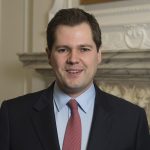
    The speech made by Matthew Offord, the Conservative MP for Hendon, in the House of Commons on 27 October 2022.

    It is a pleasure to speak in this debate, and I congratulate my right hon. Friend the Member for Tatton (Esther McVey) and the hon. Member for Bristol East (Kerry McCarthy) on securing it. I have been calling for a national food strategy for many years. Like the hon. Member, I agree that the food strategy is not about the nanny state; it is a road map, putting a spotlight on the path that we should tread as a nation.

    The national food strategy mentions food security a lot. Many of us are concerned about that, but what is food security? Academic research on that issue found that there are more than 200 definitions of “food security”. The NFS, however, defines self-sufficiency as the ability of a nation to produce its own food, but under that definition the UK has not been self-sufficient in food security for the past 176 years. We are all aware of the problems with the blockades during the first and second world wars. The Agriculture Act 1947 was designed to improve food security, but I am not convinced that we have since achieved that.

    Many people say that food security is all about shortage, but we have to ask ourselves, “Is there actually a shortage of food?” No, there is not. Global food production is forecast to be higher this year than last. If England’s 2019 wheat crop had been used for human consumption alone, it would have provided 2,500 calories per person per day for 63 million people while using less than 20% of our agricultural land.

    Globally, a large share of crops are used to fuel cars and feed livestock. In the US, a third of the maize crop is turned into biofuels in a process that is worse for the climate than burning fossil fuels. Grain is expensive not because it is scarce, but because we feed most of it to livestock. Animals consume a disproportionate amount of feed to supply a small amount of meat. That ensures that 70% of farmland produces just 10% of the calories manufactured in the UK each year.

    Some hon. Members will be able to see where the debate is going. The issue of meat consumption is important to many people in the United Kingdom, and the popularity of vegetarianism and veganism is more important than ever. I will declare an interest: I have been a vegetarian for 39 years—not for moral or ethical reasons, but simply because I do not like eating meat. The hon. Member for Bristol East is a vegan, probably for the same reason, so I share her love of chickpeas rather than of Cheshire lambs. There are alternatives. I would never stop anyone eating meat, and I feel that everyone has the right to do so. It is important to many people and they enjoy it, so we should let them continue to eat meat.

    However, the food strategy has one area in which the Government have missed a trick: sustainable protein. The Government have the opportunity to become a global leader in the sustainable protein space. When I say protein, I mean plant-based or fermentation-made and cultivated meat, eggs, dairy and seafood. If we establish the UK at the forefront of the protein transition, we will help to make the UK’s food system more resilient, healthier and more sustainable. At the same time, the industry would align with many of the UK’s existing policy commitments, including reaching net zero carbon emissions by 2050, addressing the looming threat of antimicrobial resistance and championing animal welfare. It would also further cement the UK’s reputation as a climate leader and a global scientific superpower.

    Making meat from plants and cultivating it from cells presents enormous opportunities to provide the British public with the familiar foods that they want, but at a fraction of the external cost to the environment and planetary health. Plant-based meat production results in up to 90% fewer greenhouse gas emissions and uses up to 99% less land than conventional meat. When produced with renewable energy, cultivated meat could cut the climate impact of meat by 92% and use up to 95% less land. In addition, those sustainable proteins are free from antibiotics and involve no risk of the emergence of zoonotic diseases, which is associated with raising and killing animals for food.

    Back in June, I asked the Government whether they would consider sustainable protein as part of the national food strategy. They said that it was a very important issue, on which they were very keen, but they decided not to include it as part of the national food strategy. I therefore ask the Minister to do so today. This is an opportunity not to prevent people from eating meat, but to give them a choice. As a vegetarian, I would have the choice to eat such a product, whereas other people would have the choice of eating what is considered freshly reared meat or something that has been created. That could also help to address some of the issues surrounding food labelling. I know that many colleagues share concerns about production methods in certain religious communities, so the alternative protein market would allay some of those concerns.

    I ask the Minister to do four things: establish a strategy to make the UK a global leader in the sustainable protein space; invest in open access research and development for sustainable proteins; ensure a fair and robust regulatory plan for the market; and invest to ensure a dynamic industry ecosystem. That could help many parts of the world, and the UK could really take its place as a global leader in the market. Rather than cutting down on choice, it would extend choice to our constituents.

  • Alistair Carmichael – 2022 Speech on the National Food Strategy and Food Security

    Alistair Carmichael – 2022 Speech on the National Food Strategy and Food Security

    The speech made by Alistair Carmichael, the Liberal Democrat MP for Orkney and Shetland, in the House of Commons on 27 October 2022.

    First of all, I remind the House of my entry in the Register of Members’ Financial Interests. I congratulate the right hon. Member for Tatton (Esther McVey) on securing the debate and I thank the Backbench Business Committee for granting it. This is an enormously important and timely subject for the House to be debating.

    The cost of food and where people put their money at the moment is probably the uppermost consideration in the minds of all our constituents. I hope the Government will bear that in mind when they think about the wider policy and strategy, because the implications for some of what we are seeing at the moment could be profound for both producers and consumers. When people are primarily driven by price—I think that is their primary consideration at the moment—and they go to a supermarket and are looking for the cheapest food on the shelf, they are not necessarily going to find it with a Union Jack, red label or saltire on it. At a time when the Government are seeking to increase, through the variety of trade deals we have, the range of foods coming into this country, which may not have been produced to the same environmental and welfare standards that we are accustomed to, the damage that could be done to our own producers could be long-term and profound.

    I do not want to detain the House for too long today, not least because the right hon. Member for Tatton was comprehensive in her introduction to the debate. I can say that there was really nothing with which I disagreed in her speech—I am agnostic on the question of chickpeas, but apart from that. It is right that we should consider for a moment the role of our food producers in food strategy and food security, and particularly our fishermen, farmers and fish farmers. Aquaculture is one area of food production that offers a real opportunity for producing high-quality protein at affordable prices, but which also brings with it a number of challenges and opportunities.

    This issue also strikes at the heart of the role of Government. There are things that the Government can do, such as on food labelling and encouraging people to eat more or different fish or to use food in a different way—that is perfectly legitimate. There is an obvious role for the Government, for example in the production of support payments for farmers. At other times, however, the role of Government is to get out of the way and allow food producers to get on and do what they do best. The Minister, with his background, will be alive to that tension in Government.

    For farmers, fishermen and fish farmers, the many challenges result in a perfect storm. The rising cost of energy has had a wide range of impacts; the cost of fertiliser is the one that is spoken of most frequently, but the costs of running machinery, such as tractors, are also affected. With the agricultural industry facing an uncertain future, in particular, regarding the future of support payments, there is real anxiety in the industry about what the future holds.

    Let me say parenthetically that the suggestion of support payments being subsidies for farmers has to stop. Support payments for farmers are actually support payments for, probably, consumers and supermarkets. It is their route to ensuring that cheap food keeps being produced in this country—it is not just farmers who benefit from support payments. One thing that the Government could do as part of the food strategy is to look at how the big supermarkets have a real, adverse impact on how farmers can get their food on to the shelves. There is a massive imbalance of power. A few years ago, we started the Groceries Code Adjudicator. It has not had the effectiveness that I hoped it would, but that issue has to be revisited through whatever means we can.

    One of my frustrations relating to the future of support payments is that we see that as being about either agriculture and food production or environmental goods. From my experience as somebody who lives in and is part of an agricultural community and who was brought up on a farm, that is not an either/or—it is both. Farmers are working the land in a way that would maintain the richness of our countryside’s ecology, especially in many areas that are less productive, where the land is not of such good quality. I offered an example from my experience to the hon. Member for Bristol East (Kerry McCarthy), but there are others from my constituency. I see the damage that is done to crops grown in Orkney by barnacle geese, and Orkney is not a great cropping county. The balance between what farmers can do and the challenges of nature has really fallen out of kilter there.

    Our food strategy needs to be holistic; we cannot allow it to be silent on things. It is very well to say that we will have visas to bring in workers to pick fruit or to work on fishing boats, or whatever else it may be, but that is of absolutely no use if we have no housing in which to accommodate them. Housing in our rural communities is a massive issue. My hon. Friend the Member for Westmorland and Lonsdale (Tim Farron) speaks about that issue frequently.

    On transport, it frustrates me beyond measure that it seems to be a massive surprise to our shipping companies every year that suddenly in October, crofters start wanting to sell their lambs and to export them to the Scottish mainland. We need extra capacity in our ferries at that time. A bit more joined-up thinking in Government, wherever that is, would allow us to put food policy at the heart of Government and Government strategy. In that way, there would be a win for us all.

  • Jo Gideon – 2022 Speech on the National Food Strategy and Food Security

    Jo Gideon – 2022 Speech on the National Food Strategy and Food Security

    The speech made by Jo Gideon, the Conservative MP for Stoke-on-Trent Central, in the House of Commons on 27 October 2022.

    It is a particular pleasure to follow the hon. Member for Bristol East (Kerry McCarthy), with whom I sat on the all-party parliamentary group on the national food strategy, which has been disbanded. She covered a comprehensive range of issues that needed to be spoken about, so I will try not to cover some of them.

    I have consistently highlighted the need for a robust food system to ensure that every one of our constituents has access to nutritious, affordable food. In achieving that, we must safeguard our countryside and restore the balance of nature. We need to reduce the health problems that result from poor diets, and we can accomplish that only by working together—both across all Government Departments and more widely in society—from field to fork.

    The food system underpins our economy and security, and the health of our planet. Without restoring equilibrium to our food system, we will continue to have food production that depletes nature and makes us unwell. As the world faces ever more environmental and social challenges, ensuring a well-functioning and equitable food system becomes a matter of strategic importance. Food security depends on global peace, stability, and a healthy planet and population. We have been facing a threat to all three of those.

    The war in Ukraine has seen millions across the world put at risk of starvation. Ukraine is commonly referred to as the breadbasket of the world. It boasts some of the most fertile land on Earth, with rich black soil—chernozem—perfectly suited to growing grains and producing and exporting vast amounts of barley, corn, rye and wheat. Ukraine ranks first in the world in global sunflower production and export. Even after the war is over, it is likely that up to 50% of the land will have been rendered unproductive by landmines, which will take many years to clear.

    As buyers have looked to find alternative supplies, international commodity markets have faced turbulence and prices have risen. That affects the price of basic foods in shopping baskets in our local supermarkets.

    Russia is one of the biggest exporters of fertilisers. Farmers in the UK have concerns about input costs—particularly about fertilisers and animal feed—as well as energy costs. Indeed, agricultural commodity prices have always been strongly correlated to the price of energy. We forget that energy prices were increasing before the war in Ukraine, and as a net importer, the UK is exposed to the increasing volatility in gas prices. Energy inputs for farms increased by 34% between January and April 2022, and farm motor fuel costs increased by 30% over the same period. That comes at a period of significant economic turmoil following the effects of a global pandemic, when the food supply chain has had to respond to a surge in demand due to panic buying. A cluster of hot, dry summers has led to crop failure and nature loss, making our land less productive. We will all notice the impact on familiar products. I read recently that there is a challenge with tomato ketchup, which is a key ingredient of Staffordshire oatcakes. It may become a rarer commodity as climate change threatens to halve the harvest in the coming years.

    Fear of food shortages from multiple fronts has changed our attitude towards food. Increasingly, purchasing decisions are based on affordability and choosing the healthy option is more difficult than before. Lack of money means cold food and cold water. Some 71% of households who experienced food insecurity in the past month said they have cooked less, eaten food cold, turned off fridges and washed dishes in cold water.

    When families are being faced with the question of whether to eat or heat, it is more important than ever that we should have a national food strategy in place, aligning the nation’s hunger and health with UK climate goals and UK farm sustainability. Access to good food is essential to improving life chances and health must be a focus of our food production. Whatever the cause, we must recognise that the challenges around access to a healthy diet are major indicators of inequality. As I think the hon. Member for Bristol East mentioned, 18% of all households experienced food insecurity last month, compared with 54% for households on universal credit, so any Government policy developed needs to address that disproportionate impact.

    Foods that are bad for our health should not be the cheapest foods on the market, yet people are having to compromise the quality of their diets to cut food costs. The Food Foundation suggests that of those experiencing food insecurity, 58% said they were buying less fruit and 48% said they were buying fewer vegetables. One young person from Bite Back 2030 said:

    “There’s two chicken shops about a one-minute walk from my school that sells two wings and chips for £1. A school dinner is £2.40.”

    This is a serious issue. People are being forced to choose the cheapest calories, which are typically the least healthy. Families with lower incomes are not going to be driven by whether labels say food is high in calories, fat, sugar and salt. We should probably check those things, but we do not because the driver is money and that is what is affordable and within budget. Good food policy needs to reduce and rebalance the bombardment of unhealthy food and use the revenue raised to make more affordable, accessible, easy and appealing food for those on low incomes.

    We see the need to work closely with the food and drink industry to ensure that our whole population can afford good food, but tackling obesity is also central to our commitment to levelling up. We need to support healthier options and behaviours by addressing social factors that lead to obesity and making them more conducive to healthy living. Underpinning any economic levelling up must be a levelling up of diet-related life choices.

    Because I care passionately about the importance of fixing our food system from the triple challenges of climate change, biodiversity loss and diet-related ill health, I am hosting a food summit at Staffordshire University in Stoke-on-Trent on 4 November. I am delighted that the author of the national food strategy report, Henry Dimbleby, will be opening the summit. We will have a big conversation about food, and about inspiring new thinking and embracing new expectations of our food system, celebrating innovators and shining a light on the great work already under way. I think my right hon. Friend the Member for Tatton (Esther McVey) mentioned some of that work on innovation already.

    Under the current food system, the amount of food being produced from a given area of land has increased and the amount of other life occupying that same area of land has decreased. Data from the Department for Environment, Food and Rural Affairs shows that wheat yields in the UK have doubled from 1970 to today. Yet through that time, we have also seen the number of farmland birds decrease by 54%. We have touched on land use, so I will skip over it, but it is very important that we have a clear understanding of how we should use land.

    We need to recognise the dual role of farmers as food producers and conservationists, but we have to be careful not to turn farmers into environmental contractors with little incentive to continue food farming. Therefore, the food strategy could be clearer in linking food production to action against climate change and action to enhance the natural environment. Without such action, climate change further threatens to cause crop failures and nature loss, which makes our land less productive. Our priority must be looking at how we can reduce the environmental impact of the foods we consume, while making it easier and cheaper for people to consume healthier and more nutritious food. To build national resilience to food insecurity, we need to grow—quite literally—our local food production and enable smaller food businesses to thrive.

    The strategy is right to recognise that promoting local food and drink can also increase cultural identity and community pride. That, in turn, makes an area a more attractive tourist offer, while also ensuring the resilience of the local food supply and supporting farmers and small producers. Growing community involvement in the redistribution of food will help us to minimise food waste and ensure that food surplus from the supply chain is not wasted.

    I welcomed the emphasis that the Prime Minister placed on delivering the 2019 manifesto commitments. The manifesto has high aspirations for agriculture, food standards, children’s dietary health and levelling up opportunities, which are impacted directly by access to good food. Research has already been conducted on health disparities, and this could be considered within the compassionate framework that the Prime Minister has committed to, so the motion has my full support.

  • Kerry McCarthy – 2022 Speech on the National Food Strategy and Food Security

    Kerry McCarthy – 2022 Speech on the National Food Strategy and Food Security

    The speech made by Kerry McCarthy, the Labour MP for Bristol East, in the House of Commons on 27 October 2022.

    I thank the right hon. Member for Tatton (Esther McVey) for that comprehensive introduction. It means, I hope, that I can keep my remarks quite short. I agree on a lot of what she said, although she may not be surprised to hear that I do not agree with her about chickpeas. Hodmedod, a really good British pulse grower, has been growing them in Norfolk for the past few years and I urge her to support it in its efforts. There is so much potential and growing pulses here is really good for the soil. I can wax lyrical about things like chickpeas.

    Esther McVey

    I want to explain that I make a fabulous chickpea soup and stew. If anyone would like to know the recipes, I will be more than happy to share them.

    Kerry McCarthy

    I make a very good chana dal.

    The debate is about food security, which the right hon. Lady covered in detail, but also about the national food strategy. I pay tribute to Henry Dimbleby, who put a huge amount of work into the strategy. I have a well-thumbed copy of the strategy document; it is almost like a Bible to me, giving an overview of all the different aspects of food policy and what we need to do.

    I think Henry should feel let down by the inadequacy of the Government’s response to that document. I want to highlight some of the things the Government should be doing more on. The work was commissioned by the Department for Environment, Food and Rural Affairs, and he was an executive director there. It is disappointing that the Government are not treating that as the Bible for how to take things forward.

    Food poverty is now far worse than when Henry Dimbleby started that work. We have seen frightening figures from the Office for National Statistics this week showing how prices of basic foodstuffs have shot up: vegetable oil by 65%; pasta by 60%; bread by 38%. The Food Foundation recently reported that 18% of households, and 26% of households with children, have experienced food insecurity in the past month. That is nearly 10 million adults, and around 4 million children. Many of those surveyed said they have cooked less, eaten food cold, turned off fridges and washed dishes in cold water because of concern about energy bills and rising inflation. Many were buying less fruit and vegetables.

    On “Newsnight” last week, the former Children’s Commissioner, Anne Longfield, said she had never seen child food poverty on this scale before. She called, as did Henry Dimbleby, for Cobra to be convened. I raised that at Cabinet Office questions this morning and got a response about how the Prime Minister wanted compassion to be at the heart of what he did, but I did not get a response on how a cross-departmental approach to tackling food poverty could be steered by the Cabinet Office. A cross-departmental approach is needed. As Henry Dimbleby said when giving evidence to the Environment, Food and Rural Affairs Committee last week, we need a structural mechanism to drive progress. If it is not Cobra, I would like to know from the Minister what mechanism he envisages would work.

    Cobra is also very good at looking at granular detail, which is important because this calls for a localised response. We can express some generalities about food poverty, but Bristol, for example, which is known to be quite a foodie place, also has two of the top five food deserts in the entire country. There are estates in south Bristol where it is very difficult to access affordable and healthy food. So this needs to be done at a local level. My first question to the Minister is about how he sees that overarching response. Would DEFRA be leading? Does he see a role for Cobra?

    In terms of swift action, the national food strategy is clear that extending eligibility for free school meals is one of the best levers we have. Extending it just to families on universal credit would feed an extra 1.4 million children. Healthy Start and holiday hunger schemes are also important.

    Kate Green (Stretford and Urmston) (Lab)

    I am grateful to my hon. Friend for drawing attention to the importance of families being able to afford healthy food—all the more important given the rising cost of living. In relation to Healthy Start, she will know that take-up of these essential vouchers that provide fresh fruit and veg, and milk and vitamins to pregnant and new mums and their children is at only about 60% across the country. Will she support me in calling on the Government to work across Departments so that those applying for universal credit who are also eligible for Healthy Start are automatically registered for that Healthy Start support?

    Kerry McCarthy

    I thank my hon. Friend for that intervention. As I understand it, next week she will introduce a Bill, which I very much support and I hope that the Government will, too.

    I do not have much time to talk about the importance of healthy diets, but does the Minister know what has happened to the health inequalities White Paper? Will we see that soon?

    The national food strategy approach on junk food is quite straightforward: it is about restricting advertising and promotions, and targeting ingredients. Some people I know are concerned that that will mean increased costs for consumers, who can ill-afford to feed their families as it is. However, the suggestion is not to tax food in the shops but, for example, to tax sugar in the huge quantities bought by the food manufacturers, so it would be in their interests to reformulate their products to avoid that tax. We saw that happen with the soft drinks levy. I would be interested to know what the Minister thinks about that.

    There is all this concern about the nanny state and not wanting to dictate to people what they do and do not eat. However, we accept that action on smoking is important for public health reasons and that action on alcohol abuse is important. When we look at the cost to the NHS of diet-related diseases and ill health, it seems a no-brainer to me to take an interventionist approach on this, too. It is not about telling people what they can and cannot eat; it is about helping them to make the right choices for themselves and their families, making sure that the education is out there and giving financial incentives such as the Healthy Start scheme.

    In terms of other levers that could be used, public procurement could make a huge difference. The DEFRA consultation on public sector food and catering closed on 4 September. Could the Minister tell us when we will hear the results from that?

    This may be going back to chickpeas, but the Mayor of New York, Eric Adams, who describes himself as an imperfect vegan—I suppose that is better than nothing—has introduced a scheme whereby the default option for catering in New York hospitals is plant-based. That does not mean that people cannot choose meat-based options or things that are not plant-based, but apparently it is proving to be really popular and there is good take-up. Again, that is a way of encouraging people down the path of taking a healthier option. I hope the Minister agrees that much of the food served in our hospitals—regardless of whether it is of animal origin—is not the sort of food we should be serving people we are trying to make healthier and better.

    Kate Green

    In that regard, my hon. Friend will be pleased to know that Healthy Start does support the provision of plant-based meals.

    Kerry McCarthy

    I am glad to hear that; it is a good step. I will not go into the environmental arguments. I hope that people accept that I am not trying to force people down a particular path, but the Climate Change Committee, the UN and several Cabinet Ministers have accepted that, for environmental and health reasons, we could do with reducing meat consumption.

    I turn to the need for a land-use framework. I understand that the Government intend to publish one next year. Land is a finite, scarce resource, but we do not always treat it as such. We need to be strategic about how we use it for food, carbon sequestration, biodiversity and fuel. Where possible, “best and most versatile” land should be used for food growing,

    It is nonsense for the Government to seek to reclassify poorer-quality soil as BMV as part of their war on solar farms. Is that ill-thought-out proposal still Government policy? It was a few weeks ago; I hope the Minister understands that I am finding it quite difficult to keep up. Could he tell me whether the proposal to reclassify poorer-quality land as BMV is still going to be brought through?

    After yesterday’s Prime Minister’s questions, I am also not sure where the Government stand on onshore wind. Will the Minister clarify that? I am glad, however, to see that the fracking ban is back, but that one U-turn—or two U-turns—has left many casualties on the road in its wake. Again, that goes to the whole issue of what land is best used for. As Henry Dimbleby told the EFRA Committee last week, over the seven or eight decades since the war, we have been steadily producing more and more food on the same amount of land. He said:

    “That is making the land sick, destroying the environment and driving out nature.”

    What he said about the need for the land to be carbon-negative—not net zero—was spot on. The potential for carbon sequestration is huge, and by taking some of the least productive agricultural land out of production, we could enhance biodiversity at the same time as creating natural carbon sinks.

    Some 20% of our farmland—mostly peatland and upland—produces only 3% of our calories. Henry Dimbleby argued that about 5% of that should come out of farming. The rest of the farmland would be higher yielding, with lower inputs and lower environmental costs.

    Mr Carmichael

    May I warn the hon. Lady about the law of unintended consequences? By way of illustration, I offer the example of my own family farm on Islay, not in my constituency but on the west coast. Our farm sits in a site of special scientific interest designed to protect choughs, which are a highly endangered species. However, chough numbers continue to decline because the way in which land is farmed discourages the presence of cattle and, to encourage chough, both sheep and cattle need to be on that land. If she is not careful, the sort of blunt tool that she is talking about could work to the detriment of the chough population.

    Kerry McCarthy

    I do not know why the right hon. Member says that I am suggesting a blunt tool.

    Mr Carmichael

    You mentioned talking land out of production.

    Kerry McCarthy

    Yes; Henry Dimbleby suggests that that 5% should come out of production. However he does not dictate that that should be anywhere that, perhaps, does not have certain productivity levels or does not do this or that. That brings me neatly to my concluding point.

    Sir Geoffrey Clifton-Brown (The Cotswolds) (Con)

    Will the hon. Member give way?

    Kerry McCarthy

    I think that the hon. Gentleman will make a speech, so I will let him make his comments then.

    This is where the environmental land management scheme comes in, which is a sophisticated approach and not a blunt tool. It is about looking at everything taking place on the land, including what is being done to support nature and biodiversity. I would think that the farmland mentioned by the right hon. Member for Orkney and Shetland (Mr Carmichael) would very much come under those criteria; I hope so. My final question to the Minister is: where are we now with ELMS? Farmers are desperately seeking certainty on it. Will he confirm that the public money for public goods approach will still underpin support for our food and farming system?

  • Esther McVey – 2022 Speech on the National Food Strategy and Food Security

    Esther McVey – 2022 Speech on the National Food Strategy and Food Security

    The speech made by Esther McVey, the Conservative MP for Tatton, in the House of Commons on 27 October 2022.

    I beg to move,

    That this House recognises that food security is a major concern to the British public and that the impact of the covid-19 pandemic, the cost of living crisis and the conflict in Ukraine has made UK food security more important than ever before; further recognises the strain on the farming sector due to rising farming and energy costs; supports the Government’s ambition to produce a National Food Strategy white paper and recognises the urgent need for its publication; notes that the UK food system needs to become more sustainable; and calls on the Government to recognise and promote alternative proteins in the National Food Strategy, invest in homegrown opportunities for food innovation, back British businesses and help future-proof British farming.

    The motion is in my name and that of the hon. Member for Bristol East (Kerry McCarthy). I pay tribute to her for all her help in co-ordinating this debate, and I particularly thank the Backbench Business Committee for finding time for it.

    Food security is a perennial concern. Even the meaning of “food security” causes concern and disagreement, but I will use this definition as a starting point—being able to feed the population at a reasonable cost, even in the face of future shocks such as a global pandemic, massive harvest failure or a general crisis of agricultural productivity caused by climate change. However, colleagues may well wish to expand on that definition and talk about a whole array of issues, for this is such a vast topic with so many important implications for farmers and for families and household food bills, particularly now that we see them rising with the cost of living crisis.

    The UK is addressing the issues of food security by using new approaches to agriculture such as vertical farming, precision agriculture and genome editing. It is cutting food waste with Government policies and new technology, producing alternative proteins from cultured insects and algae—not for the faint-hearted—as well as producing plant-based meat, on which the UK leads the way, and packaging food in innovative ways to reduce damage, prolong freshness and fight off bacteria.

    However, with the shocks we have suffered to our food security over the last two years—the consequences of covid and lockdowns, and now of the war in Ukraine —there is much more the Government need to do, particularly to help our local farmers. In the north-west, our 12,815 farming and growing community quietly go about their business, collectively producing a wealth of food commodities and contributing more than £726 million to the economy. Our UK farmers and growers are world leaders in food safety, animal welfare, traceability and environmental enhancements, and these values are reflected through our UK annual food and drink export value of £2 billion.

    I want to focus on my little corner of the world. Over 70% of Cheshire county is still agriculture-producing, with large swathes given to dairy, sheep and cattle farming. More than 7,000 people are employed on 2,804 farm holdings covering nearly 160,000 hectares of land. We are home to some of the country’s leading dairy farms and dairies—for example, Grosvenor’s Eaton Estate in Cheshire produces more than 35 million litres of fresh milk a year, which is enough for half a million people every day. In Tatton, we have County Milk, which is a family-run business and the largest privately owned dairy ingredient company in the UK. We have the award-winning Delamere Dairy, located in Knutsford, and Bexton Cheese in Knutsford. We have the award-winning Lambing Shed, run by the Mitchell family, and Cheshire Smokehouse in Morley Green, Wilmslow. We have Mobberley Ice Cream, Great Budworth Ice Cream and Seven Sisters Farm Ice Cream—there are lots of ice creams—and Roberts Bakery. I meet my local farmers regularly, assisted and facilitated by the local National Farmers Union team.

    There have always been concerns in farming, for livestock and the Great British weather are temperamental fellows to work with, but of late these issues have got bigger and they need to be addressed if we want our food strategy to work. In Tatton, our farmers, like those across the country, are facing labour shortages, energy price increases of up to 400%, fertiliser cost increases of over 150% and red diesel increases, as well as increases in rural crime. Only the other week, I met a group of local farmers at Shepherd’s farm in Aston by Budworth, which has just invested £300,000 in a new milking shed of the new cubicle type, and they all concurred that we are now seeing particularly tough times.

    My farmers are renowned for good husbandry, good farming and good farming techniques, and they go to great lengths to look after their animals and land, for high-quality care leads to high-quality meat, milk and produce, but they need help to find staff and to offer competitive training and apprenticeships. New farmers entering the profession need to have a chance to get a farm, and those leaving it need a chance to relinquish a farm at a price that will provide for their retirement. Can the Minister please look into these matters as a matter of urgency? I know significant work has been done, but certainly more work needs to be done. If the Minister cannot provide a full answer today, I am more than happy for him to write to me.

    Another of my constituents is Philip Pearson, who, along with other members of his family, runs a family business called the APS Group. Set up by his grandfather after the second world war in Alderley Edge, it is now the biggest tomato producer in the UK, producing approximately 650 million tomatoes a year. He has explained quite clearly that the horticulture sector in the UK is desperately short of staff to look after crops and to cope during the harvest. He would have expected 1,500 workers, out of a peak total of 2,500, from central and eastern Europe each year—from March to Christmas—but this has not been possible this year.

    A question for the Minister is: can these farmers have more visas for seasonal agricultural workers—the number must rise from the current 30,000 to at least 50,000 as soon as possible—and can farmers employ Ukrainian nationals and other migrants now housed in the UK to help deliver an increase in the number of seasonal agricultural workers?

    Mr Alistair Carmichael (Orkney and Shetland) (LD)

    The right hon. Lady is making a very powerful case, very little of which I would disagree with, but the food strategy is not all about agriculture. The fishing industry also needs visas for crews in particular, which has been a problem for years. Through her, can I add to the Minister’s list to take to the Home Office the plight of the fishing industry as well as that of farmers?

    Esther McVey

    The right hon. Member absolutely can, and indeed he has. I expect other Members to talk about the farming in and the produce coming from their parts of the country. As I said, I am focusing on Cheshire, but I believe we all share the same concerns.

    In my patch, farmers are leading the way in technology, too. In the case of APS, it is developing robotics for tomato production, starting with harvesting and going right the way through to packaging. It is putting significant money and research into this development to cope with the lack of people now coming forward to work in the farming sector. However, these robots will not be ready for four to five years, so it needs short-term help now to be able to deliver on its commitment to supply tomatoes for the country.

    Farmers also care deeply about the environment. This particular farm is working hard to deliver compostable packaging. It uses its tomato plant waste to develop packaging, and it is using it for other sectors, including fake leather for car seats, coffee cups and even bactericidal treatment for the NHS. It is charged a packaging tax, yet it is developing green, biodegradable alternatives, so can the Minister let me know what incentives there are for such great British technology to help the companies providing these terrific developments, which will be used not just here, but right around the world?

    Jim Shannon (Strangford) (DUP)

    Robotics is very important in my constituency of Strangford in two ways. First, for the dairy sector, it is a seven-figure sum to set up a new robotic milking dairy—my neighbours are doing that—and, secondly, it is a significant six-figure sum for those wanting to have tomato houses, as the right hon. Lady has mentioned. To make such vast investments happen, the Government must be involved, so the Department for Environment, Food and Rural Affairs here and the Department of Agriculture, Environment and Rural Affairs back home will have to be very much part of that process.

    Esther McVey

    I thank the hon. Member for joining in and adding that pertinent point.

    We could not have this debate without talking about the high energy prices at the moment, with an increase of 400%, and what is happening to farms having to cope with those increased costs. For APS, this has resulted in reduced production of UK tomatoes and other foods, because the costs of production are not recovered through higher prices. Farmers must be mindful of passing on higher prices to customers—if they can, as the supermarkets and shops the food goes to will not accept them—so we must be mindful of how we support farmers.

    That company has even developed a combined heat and power plant, which supplies 3 MW of power to Alderley Edge, and it uses the waste heat and the carbon dioxide from that to grow their crop. I wonder whether it can get some recognition that it uses carbon dioxide from power generation to produce food, because that would help it to offset the huge increases in energy cost. I know the Department for Business, Energy and Industrial Strategy is reviewing the move from the European Union energy trading scheme to the ETS UK equivalent post Brexit, but can the Minister liaise with his ministerial colleague at BEIS and give me the latest news on that?

    Food production is essential for the delivery of the environmental benefits on which the Government plan to centre in their agricultural support policy, but unless we recognise the dual role of farmers as food producers and conservationists, we risk turning farmers into environmental contractors with little incentive to continue farming. That would do enormous damage to the jobs and communities that depend on farming, as well as weaken our food security. The strategy needs to be clearer in linking food production to action against climate change and enhancing the natural environment.

    My final plea is for greater clarity on food labelling, so that the high standards of British food are known and recognised—so a shopper knows the quality of the produce and where it is from. Buying British and locally, for me that means buying from Cheshire, is important not just because of the high husbandry standards of UK food but the low transport mileage to get from field to fork. That low transport mileage is particularly important if we are concerned about the environment. As my beef and sheep farmers say, it is better to have high-quality beef and lamb from Cheshire than chickpeas from halfway around the world. [Interruption.] I thank Members for the cheers for that.

    On food standards, it is important when the Government are negotiating and implementing free trade agreements to avoid undermining the domestic sector for farmers and growers and reducing standards. In its report on the UK-Australia free trade agreement issued on Friday 17 June 2022, the Environment, Food and Rural Affairs Committee concluded:

    “In practice it appears unlikely that food produced to lower animal welfare standards will enter the UK as a result of this deal.”

    That is positive news, but my farmers are calling for greater transparency on food labelling. Like me, they believe in choice, but we only have choice when we have knowledge of what we are choosing and what we are choosing from.

    Geraint Davies (Swansea West) (Lab/Co-op)

    I sit on that Committee and we observed that the average size of a sheep farm in Australia is 100 times the size of one in Wales, and they practise mulesing—shearing the back- sides of sheep in a painful way without anaesthetics—and transport cattle for 24 hours. So there is a clear problem of British producers being undercut by inhumane welfare practices and massive intensity of production.

    Esther McVey

    That relates to the transparency that some people are calling for to know what they are eating and enjoying, to appreciate the difference in cost and the treatment the animals have gone through. Fair competition can only really come from accurate labelling and transparency on produce. The UK produces some of the best food in the world, with the highest standards of safety and animal welfare, and it is only right that people in this country know what they are getting.

    Tatton farmers and producers are hard-working, dedicated to the sector, industrious and experts in their field, with many generations of experience. They want to help solve the food security issues that this country is facing, but along with this strategy, which goes some of the way, and along with awareness of what is happening around the world, more assistance is needed to help our farmers here and now with the problems the world is facing.

  • Jane Hutt – 2022 Statement on Ukraine

    Jane Hutt – 2022 Statement on Ukraine

    The statement made by Jane Hutt, the Minister for Social Justice in the Welsh Government, on 25 October 2022.

    Diolch yn fawr, Llywydd. Thank you for providing an opportunity for me to give an update to Members about our ongoing work to support people from Ukraine seeking sanctuary in Wales. When I last updated you in September, Wales had welcomed just over 5,600 Ukrainians in Wales under the Homes for Ukraine scheme, including under our supersponsor route.

    Arrivals have continued, but at a much slower pace in recent weeks. Just under 6,000 Ukrainians sponsored by the Welsh Government and Welsh households had arrived in Wales by 18 October, and there have been additional arrivals under the Ukraine family scheme, but we are not given that data by the UK Government. More than 8,300 visas have now been granted to people from the Ukraine who have sponsors in Wales, so we can expect the number of arrivals to continue to grow steadily in the coming weeks, and we are mindful that events in Ukraine can have a direct impact on the number of Ukrainians who may arrive in Wales. We deplore the latest attempts by Putin to try to break the will of the Ukrainian people. We are continuing to work with the Home Office to ascertain the likelihood of the additional 1,600 individuals we have sponsored arriving in Wales, so that we can properly plan for providing accommodation and wraparound support.

    In recent weeks, we have been considering the offer that we make to Ukrainians who we support in our accommodation under the supersponsor route. I and other Ministerial colleagues have visited many of our accommodation sites and received feedback directly from Ukrainian guests and the dedicated staff who are helping us to provide assistance. We want to help people to transition from a supportive welcome to active integration as quickly as possible.

    We believe that we can enhance personal independence and support people to move on to the next stage of their lives in Wales by revisiting our wraparound support offer. We will be aligning our initial accommodation offer much more closely to the support that would be received in other forms of temporary accommodation, and this will encourage guests to contribute to costs via earnings or universal credit wherever possible, after an initial short period. I have also engaged with my Scottish Government counterpart, Minister Neil Gray MSP, and I understand that they will be taking a very similar approach, as we learn from each others’ experiences in our response as supersponsors.

    Our supersponsor route is a key part of Wales’s response to the Europe-wide humanitarian crisis. We must ensure that we are steadfast in our commitment to supporting Ukraine and displaced Ukrainians living in Wales, despite the increased cost pressures we’re all experiencing. The support we provide here will have an impact on the family and friends still defending Ukraine. The changes we make will carefully balance helping people to be more independent, to move on to alternative accommodation more quickly, and to ensure that we have the finances we need to fulfil our commitment to the Ukrainians we have sponsored.

    As well as my visits to welcome centres, I recently attended the Ukraine arts festival and the new Cardiff Ukraine centre. In each case, I have been struck by the desire and ability of Ukrainians, with a wide range of skills and experience, to integrate and join the workforce as quickly as possible. Many Ukrainians are already working, including a sizable proportion of those in our initial accommodation.

    We need to be conscious that initial accommodation should be a short-term provision, with our guests supported to move on to longer term accommodation as soon as practicable. We understand that our welcome centres, which are funded by the Welsh Government, are of a good quality—and we are proud of that—but they are not a long-term option for people, not least because roots cannot be properly established in communities in such temporary accommodation.

    Last time I updated you, I remarked upon the good working relationship we had with the previous UK Minister for Refugees, Lord Harrington, and my hopes for a similar relationship with his successor. I am sorry to have to report that we have had no engagement from UK Ministers on these issues since Lord Harrington’s resignation.

    But we are at a critical juncture in the UK Government Homes for Ukraine scheme. Welsh households who signed up as sponsors are at, or near, the six-month hosting milestone that represents the commitment they made to their guests at the point of application. These households have done an inspiring thing and embodied the nation of sanctuary vision in its truest sense. We know many did not plan to continue beyond six months, but we urge as many hosts as possible to consider hosting for a longer period if at all possible. Where that isn’t possible, we thank you for everything you have done for your guests and for us as a nation. For those that can continue, we have funded Housing Justice Cymru to provide advice, training, peer support and mediation services for hosts in Wales. More information can be found by calling 01654 550 550 or emailing UkraineHostSupport@housingjustice.org.uk.

    We know that hosts in Wales are struggling with cost-of-living pressures, and this is a major factor in deciding if they can continue. This is why I wrote to UK Ministers, with my Scottish ministerial counterpart, to urge a quick decision on increasing the ‘thank you’ host payment to at least £500 per month from the current level of £350. We are still waiting for an update on this. We do need an urgent decision to avert a wave of homelessness presentations as we move into November, and I again call upon the UK Government to act on this, as well as providing financial certainty for year 2 of the programme, supporting the unfunded ESOL provision and ensuring funding parity across the three Ukraine visa schemes.

    We are now communicating regularly with hosts and Ukrainian guests, with a monthly newsletter being sent from the Welsh Government, and we’ll build upon this with additional information sessions and participation opportunities. Alongside our funded third sector partners, we recently held an open information session, which I was glad to see around 180 people attended to hear more about our work; we are mobilising a Ukraine peer support group through Displaced People in Action; and we’ll also soon survey our Ukrainian guests to better understand their unmet skills and employment needs. Ukrainians are clearly integrating very well indeed, but we will continue to consider any action we can take to make this as effective and supportive as possible. Diolch.

  • Dawn Bowden – 2022 Statement on Her Visit to New Zealand

    Dawn Bowden – 2022 Statement on Her Visit to New Zealand

    The statement made by Dawn Bowden, the Deputy Minister for Arts and Sport, and Chief Whip, in the Welsh Government on 25 October 2022.

    I have recently returned from New Zealand in my role as Deputy Minister for Arts and Sport.

    The primary focus of my visit was to support the Wales women’s rugby team as they took on the hosts and current world champions, the Black Ferns, in their group match of the Women’s Rugby World Cup on Sunday 16 October.

    My visit helped raise the profile of Wales, both within the rugby community and beyond. Ahead of the game it was an honour to meet the playing squad and WRU staff to discuss the progress they have made over the past two years, whilst recognising there are opportunities for further investment and development in the women’s game.

    In the days leading up to the game, I had a full schedule of visits, meetings and events where shared experiences of sport, culture and heritage were explored.

    My first meeting was with the Māori Language Commission in Wellington to discuss shared pathways to the revitalisation for indigenous languages. I then met Peter Miskimmin, Sports Diplomacy Manager and former CEO of Sport New Zealand. We discussed sport diplomacy, inclusion and collaboration, and the economic and social benefits, in particular for smaller nations. The final meeting of my first day was with the High Commissioner at the British Consulate in New Zealand, Iona Thomas.

    On my second day in New Zealand, I had an opportunity to discuss the development of the women’s game with Traci Houpapa, professional director at Women in Rugby Aotearoa. This was followed by a meeting with Waikato University senior deputy Vice-Chancellor, Professor Alister Jones to discuss the academic links between our two countries.

    I later met representatives of Healthy Active Learning and Active Me – Kia Tu. These are two programmes run by Sport New Zealand aiming to improve the quality of physical activity experiences of young people to promote wellbeing and support disadvantaged children into physical activity.

    I also had constructive meetings with Raelene Castle, CEO of Sport New Zealand, Rachel Froggatt and Raewyn Lovett, Secretary-General and Co-Chair respectfully of the International Working Group on Women in Sport. I had bilateral with Priyanca Radhakrishnan MP, Minister for Diversity, Inclusion and Ethnic Communities to discuss how our respective governments are seeking to address many of the challenging issues facing both nations.

    I travelled to Queenstown to visit Skyline Enterprises Ltd and the Shotover Jet – two adventure tourism attractions to see how Queenstown has used the natural landscape as a beautiful backdrop to successful enterprises.

    We are in discussion to bring an adventure tourism attraction from New Zealand to Wales and it was valuable for me to see first-hand one of its main attractions whilst also discussing the many parallels with our work in Wales in particular managing environmental obligations and incorporating native language as part of their strategies.

    This visit – at a time when the Welsh team is performing on the world sporting stage – is an excellent opportunity to demonstrate that Wales is an outward looking nation, open for business and determined to maintain existing relationships and explore new avenues to strengthen the special friendship that exists between Wales and New Zealand.

  • Rebecca Evans – 2022 Comments on Impacts of Austerity on Wales

    Rebecca Evans – 2022 Comments on Impacts of Austerity on Wales

    The comments made by Rebecca Evans, the Welsh Minister for Finance and Local Government, on 25 October 2022.

    By announcing reckless uncosted tax cuts for the rich, the UK Government lost control of the economy. Now the new Chancellor wants us all to pay for its failures with deep spending cuts.

    We are facing a new damaging era of austerity, which would threaten jobs, businesses and public services.

    The Chancellor could protect public services by using his tax levers more fairly and increase investment to get the economy moving in the right direction. He could help people pay their bills by increasing benefits in line with inflation.

    As we look ahead to our Budget, we need the UK Government to take action to avoid the type of destructive austerity that will further damage our economy and the public services so many of us rely on.

  • James Cleverly – 2022 Statement at the UN Security Council Counter-Terrorism Committee Meeting

    James Cleverly – 2022 Statement at the UN Security Council Counter-Terrorism Committee Meeting

    The statement made by James Cleverly, the Foreign Secretary, on 29 October 2022.

    Madame Chairman, your Excellencies, Ladies and Gentlemen,

    May I start by thanking India, our hosts, and Dr. Jaishankar for his key note speech.

    You are right that countries must do more nationally and internationally to counter the threat of terrorism. The UN and an effective CTC, both have a significant role to play in this endeavour.

    Just outside my office in London is an elegant memorial to those to those who were killed in the Bali bombing of 2002. 202 victims that came from more than 20 countries, including 23 from the UK.

    When terrorists struck London in 2005, one of the 52 people they murdered was 37 year old Neetu Jain, a biochemist graduate, who was born in Delhi.

    And the victims of the 2008 Mumbai attacks, who we honoured yesterday, came from every continent.

    Terrorism is a global problem, and a global threat, so I am incredibly grateful for Foreign Minister Jaishankar for using India’s Security Council Presidency to focus on this crucial issue, and advance his 8 point plan.

    The UK’s partnership with India is hugely important to me. And I’m pleased to be taking forward our CT cooperation this weekend. But let me now turn to the technological advances which offer terrorists new opportunities that we must counteract.

    Within the space of just two decades, terrorists have gone from circulating crackly voice recordings from the depths of Tora Bora, to global online recruitment and incitement campaigns, to live-stream attacks. And online incitement and racialisation of vulnerable people in far off countries, who have then gone on to use simple rental vans as weapons of terror. So we must continue to work together to fight terrorist ideologies online.

    In 2015 we set up the Counter Daesh Communication Cell in London, in partnership with the United States of America and the Government of the United Arab Emirates. Together we have worked with governments, civil society and communities to challenge Daesh’s narrative.

    We are also working with the G7 and Global Internet Forum to counter terrorism. And we continue to press tech companies, amongst whom are some of the internet’s biggest players, to crack down ever harder on extremist online content.

    Technologies that advance the online world also powers the real world. But both are open to exploitation. Tech designed with the best intentions can be repurposed for the worst of aims.

    From a garden – our Ambassador’s Garden – in Abu Dhabi, in January of this year, I saw the UAE’s Air Defence System interdict Houthi missiles. And only a few weeks earlier, drones had killed three people in Abu Dhabi. Drones are being used currently to target critical national infrastructure and civilian targets in Russia’s brutal invasion of Ukraine. So from the UAE to Ukraine, unmanned aerial systems from relatively cheap and unsophisticated, to those with military specifications, are used to inflict terror, death and destruction.

    This is why we have sanctioned three Iranian military commanders and one Iranian company involved in the supply of drones and why we must also do more to stop these technologies getting into terrorists’ hands.

    In 2019 the UK government launched our Counter-Unmanned Aircraft Strategy and we are funding new counter-drone technologies.

    And we are working through the Global Counter Terrorism Forum, to ensure we all do more to stop terrorists from misusing drones.

    The internet has also given terrorists groups murky new routes to conceal their finances and sustain their activities. We work with industry and international partners to understand and disrupt terrorist finances, including in Somalia and North Africa. We have made tackling illicit finance a core pillar of our cooperation with international partners like the UAE. And we look forward to India’s ‘No Money For Terrorism Conference’ in November.

    This is vital work. The threat from terrorism has not gone away. We know that a repressive response will only exacerbate the problem.

    And if we are to keep our people safe, we must comply with human rights, and we must continue to work together, and with industry, and all parts of our communities, to discredit the narratives of hate.

    To counter radicalisation. To infiltrate networks. To foil plots. And to starve terrorists of the finances and emerging technologies that they would use to do us harm.

  • Tariq Ahmad – 2022 Statement on New Support for Cholera Outbreak in Syria [Lord Ahmad]

    Tariq Ahmad – 2022 Statement on New Support for Cholera Outbreak in Syria [Lord Ahmad]

    The statement made by Tariq Ahmad, Lord Ahmad, on 28 October 2022.

    We are deeply concerned by the cholera outbreak across Syria, the first in more than ten years. With humanitarian needs the highest they have ever been, there is a significant risk that malnutrition, lack of access to clean water and chronic conditions, will see the situation deteriorate even further.

    This funding to UNICEF will provide vital lifesaving assistance to those in affected areas. The UK has not forgotten Syria and we will continue to work with international partners to ensure there is a coordinated response on the ground.