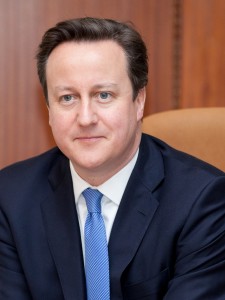
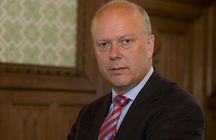
Below is the text of the speech made by David Cameron, the Prime Minister, in Leeds on 23 January 2012.
Thank you. Thank you very much for that introduction. Good afternoon everyone. Sorry to break up the speed networking – that sounds like a lot more fun than listening to a speech from me. I think we should probably introduce speed networking into the European Union and then those Council meetings, instead of being nine hour dinners, we could probably crack on and get them done in 90 minutes.
Delighted to be here and delighted to be launching this initiative. I said earlier this month that 2012 has got to be the year when we go for it. The year that we light new fires of ambition in our economy. The year when we get behind Britain’s grafters, do-ers, hard workers and entrepreneurs.
This isn’t something we’d quite like to do; this is something we’ve absolutely got to do because enterprise is critical to this country’s future.
As so often, Winston Churchill put it best. He said some people regard private enterprise as a predatory tiger that needs to be shot. Others look on it as a cow that should be milked but not enough people see it as a healthy horse pulling a sturdy wagon. In other words there is only one sensible and sustainable way to grow your economy and that is through brave people starting and growing businesses, employing people and creating wealth. Now some might say, ‘Well we agree with that but shouldn’t we just try to consolidate our success stories in big business and let them be the ones to drive recovery?’ And yes of course those businesses are vitally important but more important still is the small business, the new, the young – the businesses that haven’t even been born yet. Because over and over again studies show that small, high-growth firms are the engine of new job creation and they punch way above their weight. So if we want to make our economy stronger, this is where we’ve got to focus our fire power, on encouraging more people to start up and helping small businesses to grow.
Now we’ve made a start. We’re rolling back the bureaucratic, anti-business culture we’ve had for too many years in this country and we’re creating in its place a real climate for enterprise. Corporation tax has been cut and we’re cutting it further. Red tape has been cut and we’re cutting it further. Enterprise zones have been rolled out including here in Leeds to get the best and the brightest to start up. Entrepreneur visas have been brought in to get the brightest in the world to come here with great business ideas. And of course there’s entrepreneur relief so that those who start their own company can keep a bigger slice of their gains. Now since the election more than half a million jobs have been created in the private sector but this is not, and never can be, a case of job done. So today I want to tell you about two new things that we’re doing.
First, through 2012 we’re running a big national campaign to encourage more people to start up a business. Its core message is simple: there is a business in everyone. So what is the business in you? We need many more people to see themselves as entrepreneurs. To understand that each success story starts with a first step. Anita Roddick – she began The Body Shop from her kitchen. Richard Branson’s mother found a necklace on a train, clearly didn’t give it back to lost property, but sold it for £300 – interesting story – and that was the start-up capital for Virgin. Starbucks kicked off when three academics, probably with four or five opinions between them, wanted a good cup of coffee in their neighbourhood and they invested a few thousand dollars in a cafe.
Now of course it’s not enough just to exhort people to start up; we’ve got to give them practical help and that’s what this campaign and that’s what StartUp Britain is all about. If you talk to anyone who is starting a business, and they’ll tell you the number one thing they need is obviously money. Now we get that. That’s why we put in place agreements with the banks and targeted government schemes to get more cash flowing to small businesses. The trick is connecting that money to those who need it and that’s what our new online finance finder is going to do. It’s a very simple, very useful tool. Just answer a few questions about your business and the finance finder will tell you where to go to get the money you need.
Another thing entrepreneurs need is good advice. Starting a business is one of the hardest, most stressful things that anyone can do and it’s invaluable to know someone who’s been there and taken those risks themselves. That’s why we lined up thousands of mentors across the country and this campaign is going to connect them with the people who need their advice. But beyond those practical things, what entrepreneurs really need is the inspiration to keep on going when things get tough, as they inevitably do. So thanks to StartUp Britain, a campaign, as has been said, run by entrepreneurs, for entrepreneurs, they’re going to be able to log on and hear the stories of people who’ve done it all before. Now all this is coming together in one place in one campaign online and it’s going to be a real shot in the arm for enterprise in this country.
Now the second thing we’re announcing today is a very simple, very practical idea. It’s about using the spare space that we have in the public sector, in the government sector, to help businesses to grow in the private sector. We’ve heard from so many people who say, ‘Well I’ve got a great idea, I’ve got a little bit of start-up capital, I’m desperate to get it off the ground but I can’t find the space’. Or, people who say, ‘I can find the space but we’ve got to sign a three-year lease and we just can’t afford it’. And then of course you’ve got many people working in business during the day – or in government during the day – wanting to start a business but not wanting to misuse their office facilities or office computers and so what we need is additional space for them, sometimes space at the end of the day or even overnight. What we need is the British equivalent of the Silicon Valley garage – spaces that are cheap, flexible and available right now.
Some of these places are already opening up around the country – in fact I gave a speech in one of them last week. It’s called Hub Westminster. It’s at the top of the building that homes – that houses New Zealand House and you can rent an evening desk space there for just £40 a month. Then if you decide to take the plunge, maybe quit your job, start your own thing, you can start renting a full-time desk space and hire more as your business grows. So this is a brilliant idea and we want to help expand it.
Now, the British government has got a huge stock of buildings at our disposal. The first priority for the ones we aren’t using is obviously to sell them off, but in the meantime many are going to be sitting idle. So let’s match the capacity we’ve got in government with the need that is out there. Let’s provide office space where we can to those who can use it. So we’ve sent a message right across the public sector to government departments, to agencies, saying, ‘Give us your unwanted space. That office that has lain dormant for years; the shop that’s been boarded up; the rooms no one ever uses – the answer is out there: give that space to entrepreneurs for business creation.’
Now the Department of Communities and Local Government have said they’ve got two floors of an office block in Leeds, a large vacant building in Birmingham, another one in Plymouth. In London the Department for International Development has also found some space, so we’re throwing open the doors of government and letting the entrepreneurs in. And frankly this won’t just be good for the entrepreneurs and the business people involved; I’m hoping it’s going to be good for government too.
We’ll have civil servants who will then be sharing the water coolers, the lifts, the corridors with entrepreneurs and entrepreneurs that their policies will affect and I think this will be a good connection between public and private sectors. It could even be that the building we’re in today is available for use. So if you’re in Leeds and you’ve got an idea for a business it could start right here. This is the very epitome of a roll your sleeves up government; not waffling on about the theory of how we can help business or shuffle a bit of money around, but doing something practical that will really help.
So we’re doing all this with optimism and confidence because Britain is a country with enterprise running through its veins. I found this on New Year’s Day when my daughter got me out of bed and said, ‘I want to make mince pies’. We made some mince pies and she sold them to my protection team for £1 a time. She’s only eight years old; I thought that was a good spark of enterprise! Some of them are still recovering, but nonetheless…
But this is the country that led the agricultural revolution, that led the industrial revolution, that helped to kick start the technological revolution. We’re the country that invented the jet engine, the DNA, the World-Wide Web, Viagra – almost everything you think of, most of the sports you’ve ever heard of. We’re the country that sells tea to China, vodka to Poland and yes, cheese to France. Enterprise is what we do in Britain so this is the year that more than ever we’ve got to go for it and with StartUp Britain’s help and with all your help, that is exactly what we’ll do.
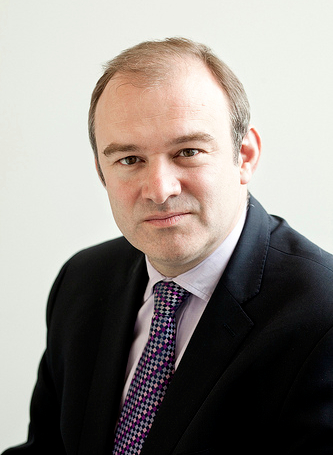
Below is the text of the speech made by Ed Davey, the then Secretary of State for Climate and Energy Change, in the House of Commons, London on 23 January 2012.
Introduction
Ladies and Gentlemen, the Department of Energy and Climate Change which I represent tonight, is, of course, a relatively new Whitehall department.
But the role of Secretary of State on the energy side has long antecedents.
My predecessors in that role include, Secretaries for Mines, Secretaries for Petroleum, Secretaries for Energy, Ministers of Technology, Ministers of Fuel, and my personal favourite….the Minister for Power.
I could get used to that title….
‘A surfeit of riches’
On the 21st December 1965, the Minister for Power, the Rt Hon Frederick Lee, rose in the House to Commons, and announced that by 1967 it was estimated that fifty million cubic feet of gas would be delivered ashore every day from the North Sea.
Just months earlier, in the September that year, British Petroleum’s rig SEA GEM had made the first ever hydrocarbon discovery in the UK’s North Sea waters.
Having read the exchanges that followed in the House, I must admit to having some sympathy for the Minister of Power.
Because that was a good news story, but one MP rose to bemoan the discovery which he claimed would ‘naturally’ lead to pit closures in the coal industry.
And one Scottish MP came close to claiming the North Sea’s riches for Scotland alone.
Some things, it seems, never change.
In exasperation, the Minister of Power said retorted that he hoped the House was not afraid of a ‘surfeit of riches’.
“We are making” he said, “a most remarkable indigenous fuel available to the British people”.
And so it has proven.
With the discovery of oil as well as gas in the North Sea, over the last 45 years: 41 billion barrels of oil and gas have been produced; contributing around £300bn in production taxes to the Treasury; benefiting both Scotland and the whole of the United Kingdom; seeing a renaissance in Aberdeen; hundreds of thousands of jobs across the country; the UK’s largest industrial investor for many decades.
“A surfeit of riches” indeed and testament to the drive, determination, and in some cases, sheer bloody doggedness of those working to unlock the riches beneath the sea.
So I want to pay tribute to all those who came before us.
But today, I don’t really want to talk about the past.
I want to address the future and the realities we face.
The future of the further exploration of North Sea resources.
The reality of what that means for the industry, the country, and indeed the planet.
Realities
Let me set out a few as I see them.
Reality number one:
Oil and gas will form an integral part of UK energy mix for decades to come.
Over 70% of the UK’s primary energy demand may still be filled by oil and gas into the 2040s.
With 20 billion barrels or more still to be drawn from the UK’s North Sea fields, having an indigenous source helps prevent over-reliance to imports from more volatile parts of the world.
So the UK Oil and Gas Industry is a vitally important strategic resource now and over the next half century at least – to help fulfil our energy needs – and as a contribution to the UK’s energy security.
Reality number two:
North Sea oil and gas production is crucial to the economy of the whole of the United Kingdom.
We are not a petro-state and we cannot afford for our economy to become over-reliant on any one sector.
But the truth remains that the UK’s oil and gas resources are one of the country’s greatest assets.
The Offshore Oil and Gas Industry is the largest corporate tax payer to the exchequer paying around 20% of total corporate taxes.
Although the exact amount fluctuates, this typically represents around £8 billion a year.
And particularly during this tough time, the contribution of the North Sea industries to helping dig Britain out of fiscal difficulty is essential.
These two realities add up to one thing.
The Government must aim to maximise the economically viable recovery of resources from the North Sea – and where they exists on land too.
Because this will contribute to growth, jobs, the balance of payments, and to energy security.
So the Government has been acting:
Providing a regime that encourages investment and innovation;
Introducing, for example, new field allowances West of Shetland;
Extending the small fields allowance;
And putting in place new allowances for shallow-water gas fields.
The level of investment in new oil and gas projects sanctioned in 2011 was over ten times the amount of 2009.
18 projects with a total value of around £13bn were approved.
In 2012, 29 projects approved with capital expenditure over £11 billion.
In 2013, we are already expecting around 28 new fields to get approval.
So this is really good news – good news that both the Government, and you, the industry can be proud of, and everybody who has been involved in that.
Climate change
But there is another reality – reality number three:
Climate Change.
The draft US National Climate Assessment released this month doesn’t mince its words:
“Sea level is rising, oceans are becoming more acidic, and glaciers and arctic sea ice are melting. These changes are part of the pattern of global climate change, which is primarily driven by human activity.”
As a planet we cannot go on using unabated fossil fuels at the rate we are now and keep climate change below 2°C.
And as our understanding of the changing climate grows, so does our understanding of what those risks might mean for our people.
An Earth which is hotter, more disaster-prone and more dangerous in the years to come means a more brutal environment for our citizens.
Just as it is this generation’s responsibility to pass on a healthy economy to the next, so it is this generation’s responsibility to pass on a healthy environment to the next.
I see both of these as moral responsibilities – responsibilities we owe to our children and our grand children.
So this Government, like the last, is committed to reducing harmful greenhouse gas emissions.
And part of that drive means a major shift to low-carbon energy supply.
Diversifying our energy mix.
Exploiting every energy source and every technology available to do so.
From renewables, to nuclear, to carbon capture and storage.
So I hope we can work together, particularly on the latter.
The third reality, the reality of climate change, means that this Government will support a fiscal regime that encourages investment and innovation in Offshore Oil and Gas:
That ensures a fair return for shareholders and the tax-payer;
That contributes to energy security;
That will keep the turbine turning and the lights on.
But, that fiscal regime must be compatible with our long-term aims for diversifying our energy mix, reducing our emissions, and building a low-carbon future.
And that is what the Energy Bill is all about.
The work ahead
So there is are significant challenges ahead of us.
In terms of the industry itself, there is important work being done by the PILOT work groups, looking at everything from exploration to infrastructure to technology to workforce issues.
The industry is working collaboratively to tackle these issues and I pay tribute to that.
Extracting the natural resources of the North Sea must be seen as a collective endeavour.
So I have been very impressed in the way these working groups have been operating.
Work is also being done across Government to produce an Oil and Gas Industrial Strategy which will assess where we are now and determine what overarching work needs to be done to address the pressing issues that your industry faces.
This will allow us, together, to set out a plan for the future.
This work has to be a collaboration to be successful.
Collaboration between DECC, BIS, HMT and Industry and also through talks with all the regional and sectoral trade associations, as well as the Scottish Government.
So I would like to thank all those who have contributed to this report and Oil & Gas UK for their help in that process.
It will be consulted on over the next few months and will be finally published for everyone to see at the end of March.
But it should be a living document, not just an event.
It should be reviewed and refreshed regularly to reflect the extremely complex and changing landscape we are operating in.
Conclusion
So in conclusion ladies and gentlemen, with so many projects in the pipeline, the future of the UK’s Offshore Oil And Gas industry is a very bright one.
Oil and gas will be fundamental to our energy policy for decades to come.
The health of the industry is crucial; crucial to Britain’s power needs and economic needs.
And that is why we have created a positive investment environment and continue to nurture the environment to exploit the talents and expertise of the North Sea industries.
The Department I represent has been charged with these two crucial missions, powering the country and protecting the planet.
In the long-term, we will only succeed in achieving our mission, if we demonstrate the pioneering spirit of those who spudded the first wells in the North Sea.
The investors, the risk-takers, the innovators.
This has to be a joint endeavour.
Government and industry working together to exploit the resources the earth has to offer, powering the country, providing prosperity, while protecting the planet for future generations.
So in that spirit, I want to thank the All Party Parliamentary Group and Oil & Gas UK for all your hard work over the last year.
And I want to thank all of you in the Offshore Oil and Gas Industry for the invaluable contribution you make to British society, now and in the years to come.
Below is the text of the speech made by Greg Clark, the then Minister of State for Decentralisation and Planning, at City Hall in London on 23 January 2012.
In 2005, humanity became a mostly urban species. For the first time in the history of the world, there were more people living in cities than outside of them. By 2050 it is projected that cities will account for three-quarters of the global population. It is therefore no exaggeration to say that cities are the future.
Of course, urbanisation is at its most dramatic in the emerging economies. For instance, China now has more than one hundred cities with a population of more than one million.
By 2050 it is projected that cities will account for three-quarters of the global population.
But cities are of crucial importance to the western world too. In fact, the argument that I want to make today, is that the battle for growth – for Britain’s economic future – will be won or lost in our cities.
In doing so, I want to focus on the long-term. Because while there is no doubting the seriousness of the immediate economic challenges that we face right now, we also have to understand the underlying causes.
In particular, we have to face up to the fact that, as a country, the world does not owe us a living. The only way to pay for the standard of living that we aspire to is to produce high value goods and services that the rest of the world wants to buy and in the provision of which we can offer a comparative advantage. This is a constant challenge in a world where the awesome economic potential of China and India is constantly moving forward.
One of the ways in which we do – and can – offer a comparative advantage is in our ability to cope with complexity. According to the Harvard economist Ricardo Hausmann;
The difference in wealth and income between nations is closely related to the ability of firms to take on complex tasks.
He notes that in America the average employee collaborates in some way with 100 co-workers. In India, he says, the equivalent figure is just four. The relevance to urban policy is that cities are engines of complexity: their primary purpose, their raison d’etre, is to facilitate human interaction to a degree that would not be possible anywhere else.
The battle for economic growth- for Britain’s future, will be won or lost in our cities.
Cities are often compared to living organisms. However, there is a fundamental difference between the two. Generally, the larger a living creature, the slower its metabolism. For instance, an elephant has a slower heartbeat than a mouse. In a successful city, the opposite is true.
In a city that succeeds, the larger an urban population, the faster the exchange of money, information, ideas and all the other interactions that fuel a dynamic economy. Of course, there are costs to supporting a larger population. But crucially these don’t have to increase as fast as the benefits.
Again, this is down to the power of complex interaction. In particular, the way that cities enable people to share the energy and infrastructure resources they depend upon. For instance, the size and density of a city population allows forms of mass transit that just wouldn’t be viable in other areas. In this respect cities transcend the limits of the natural world: they grow, but don’t slow. Contrary to their popular reputation, cities can be the most environmentally-friendly places on earth.
However, cities are not the only engine of complexity. Consider the impact of globalisation. Political and technological progress has enabled new connections to be made on a completely different scale – worldwide communication networks, international markets, global supply chains. With the whole planet to choose from, the possibilities are endless. Certainly, greater than can be offered by any local economy. This has been good for some cities – especially centres of global trade, but bad for others – particularly centres of industries where competitive advantage has moved elsewhere.
And yet, as is becoming obvious, globalisation is not without its own limits. As an engine of complexity it depends upon its capacity to sustain long-distance relationships – something which is coming under strain from a number of different factors:
– energy prices are pushing up the cost of travel and transportation
– the financial crisis is undermining trust in cross-border institutions
– and the rise of domestic consumption in Asia will mean more alternatives to exports to the West.
This doesn’t mean that the world is about to de-globalise, but rather that the age of easy globalisation is over.
And that’s a big opportunity for our cities. They too can support the complex interactions which a dynamic economy needs, but they do so on the basis of proximity not distance. This has several advantages:
– lower transportation costs
– the availability of local knowledge to inform investment decisions
– and the trust and understanding engendered by face-to-face, as opposed to electronic, communication.
This doesn’t mean that we’re going to see a wholesale re-location of manufacturing from east to west. That would be unrealistic and in some ways undesirable. But the balance is shifting. And our cities – the meeting point of complexity and proximity – are in pole position to benefit.
This matters to us because Britain has the potential to be a world beater at doing cities well. We have the advantage of being the first country in the world to have modern, industrial cities. We have many generations’ experience in working out how to manage cities and keep them functioning.
To take a topical example, our land use planning policies and procedures have helped ensure that the economic, social and environmental consequences of development are considered together. It is very clear that economic growth cannot be sustained in a relentlessly degrading environment. As cities in developing countries look at how to cope with growth, there are many lessons that we can share on how, with the right polices and structures, growth can make places better not worse.
And, generally, we have been successful. London today – in its energy, beauty, diversity, and as a cradle of opportunity and excellence – is one of the most admired cities the world has ever known. Our great cities outside London have been household names all over the world. After decades of decline in the second half of the last century, the last 25 years have seen a real sense of renaissance – city centres reversing the flight of population, and creating more jobs.
But for all that, I believe our cities can do much better. Take, for example, the eight largest English cities outside of London: Manchester, Liverpool, Leeds, Sheffield, Newcastle, Nottingham, Bristol and Birmingham. Known collectively as the ‘core cities’, together they contain:
sixteen million people, almost a third of the population of England
more than a quarter of our highly skilled workers
and half of the country’s leading research universities.
Unsurprisingly, they generate a huge part of England’s wealth – 27 per cent – which is more than London. And yet, there is strong evidence that, compared to the national average, most of our core cities are doing worse than the equivalent cities in Germany, France and Italy.
For instance, in Germany all eight of the biggest cities outside Berlin outperform the country in terms of GDP per capita. The same goes for all but two of the Italian core cities. In France, three of the eight outperform the national average and none fall significantly below it. But for England, seven of the eight core cities underperform – with Bristol as the only exception. Much the same pattern applies when it comes to the percentage of the workforce educated to tertiary level and to per capita rates of innovation. Despite the regeneration we’ve undoubtedly seen in our cities over the last 25 years, there is room for improvement.
So, what do our cities need to compete globally?
Let me start with what they don’t need, which is over-reliance on the public sector. Perpetual debt-funded job creation is simply not sustainable. And not just because it is unaffordable. Compared to their European counterparts, the core cities hold their own when it comes to the proportion of highly qualified workers that they have – but they do much worse when it comes to innovation as measured by patent applications per capita.
The causes of this gap are complex. But if the brightest and the best people all work for the state, then they are obviously not available to drive the commercial innovation that is the only way of creating jobs that pay for themselves. The need to rebalance the economy away from government and finance is something that applies to the whole country, of course – but no more so than in our cities. Policy makers are not job creators – at least, not directly. Rather, our task is to provide the best possible conditions for those who are – the entrepreneurs who create jobs on the basis of productivity not subsidy.
For cities, the highest priority must be to attract these innovators. To become the place where the most mobile and dynamic people in the world choose to live and work. In doing so, the challenges facing our cities is to combine their two great advantages: complexity and proximity.
Doing this successfully surely requires an in-depth knowledge of the people and places each city brings together. That is why urban policy has to involve vesting more powers in cities themselves – rather than seeking to run them as franchises of Whitehall. Cities themselves must take the lead. And leadership counts.
Nations, corporations, teams, schools, cities – all can be well-led or poorly-led. And in each case it makes a big difference whether they are or not. In helping our cities to flourish, it seems to me we should do what we can to widen the opportunity for strong leadership. I believe that it is no coincidence that the world’s leading cities usually have a visible leader with a clear executive authority – just as nations and corporations do. A look at nations and companies makes it clear that having a clear leader does not guarantee success. But it helps.
Few people in London – whoever they plan to vote for in May – think London is better off without having a mayor to stand up for them. Our second city – Birmingham – is twinned with Frankfurt, Milan, Lyon and Chicago, all of whom are led by an executive mayor. I believe that an elected major is not a substitute for the multi-layered co-operation that is what cities are all about, but as the embodiment of this ideal:
– as the human face of a responsive local democracy
– the honest broker of an active civil society
– the chief ambassador of a thriving urban economy.
I believe that the restoration of mayors to our great cities has the potential to be a major factor in bringing a new assertiveness and confidence to government outside London.
We have made this choice possible through the Localism Act, which received Royal Assent last year. In May we will give the people of eleven of the largest cities in England the opportunity to decide whether or not to have an elected mayor. Another, Leicester, chose last year to become a mayoral authority. And if enough local people ask for one, the Localism Act also allows other cities to hold a mayoral referendum too.
The Localism Act provides many other freedoms to local communities – as do our housing and planning reforms. However, we regard these measures as the foundation, not the capstone of our commitment to localism.
Having inherited the legacy of decades of centralisation, this Government has had to drive the process of decentralisation from the centre. By definition, only those that have power can give it away. But with the progressive empowerment of our communities, we need to think about decentralisation in a very different way.
In particular, cities should have an ever bigger part to play in shaping the ongoing process of reform. The Localism Act gives cities a right of initiative. This means that instead of ministers deciding what new powers should be given away, city leaders should be able to put forward their own proposals – to make the case for taking control of specific resources and responsibilities currently held by central government. We believe that a bespoke process of decentralisation is the best way of giving cities what they need to unlock economic growth and social progress in their communities.
Clearly, each case will be different. It will require a specific deal to be struck between the city and the various departments and agencies of central government. That is why we have created the Cities Unit at the heart of the government; not to tell cities what to do, but to facilitate city-led initiatives – working with the full authority of Downing Street to hammer out agreements across Whitehall.
In many ways, this turns the established order on its head. But this is as it should be. To attract entrepreneurs to our cities, city leaders must themselves be entrepreneurial, acting proactively to constantly improve the liveability and workability of their communities. To do so, they must come to Whitehall not as supplicants, as in the past, but as equal participants in an open and constructive deal making process.
We are already negotiating with the eight core cities. But this is only just start, the first wave of deal making process that will be expanded in the coming months. Indeed, I’ve been greatly encouraged by the desire that other cities have shown to be part of the City Deals initiative. That’s just as well – because as today’s report makes clear, the rebalancing and revival depends on all of Britain’s cities, not a favoured few.
So I would encourage every city represented here today to consider the vision that you have for your community – and the deal that you need to make it happen.
As Cities Minister, I greatly look forward to hearing your proposals.
Below is the text of the speech made by Nick Gibb, the Minister of State for Schools, at a Jewish Community Centre in London on 27 January 2016.
Can I start by saying thank you for inviting me here – it is a great privilege to join you at the inaugural Jewish Schools Awards.
Working as Schools Minister, it has continually struck me how powerful it is for a region, nation, or group of people to have a pro-education culture, which emphasises the value of study and hard work.
Scotland was famous for its pro-education culture, particularly during the nineteenth century; a pro-education culture can be seen in abundance in Far Eastern countries such as Singapore and cities such as Shanghai; and the Jewish community, aptly known as the ‘people of the book’, remain famous for theirs.
A pro-education culture, so difficult to win back if lost, is an enviable inheritance for any society – and I believe that it is what we should be celebrating, and are celebrating, today.
Amongst Jewish communities around the world, the fruits of this pro-education culture are unmistakable. Despite making up only 0.2% of the world population, a remarkable 22% of Nobel Peace Prize winners have been Jewish. From Harold Pinter and Boris Pasternak, to Henry Kissinger and Daniel Kahneman, Jewish communities have always punched well above their weight as writers, researchers and scholars. Perhaps there are some future Nobel Laureates amongst the classes being taught by the teachers here today.
A well-educated population does not occur unprompted. Behind every child’s story of academic success, there are the dedicated teachers who make such achievements possible.
One does sometimes hear it said that teachers do not have much impact. People like to quote great intellects, such as Mark Twain, who stated “I’ve never let my school interfere with my education”.
In addition, there are those of a sociological bent within education, who argue that teachers cannot be expected to change the life chances of children born into poverty and inequality.
I disagree profoundly with each of these ideas. My mother was a primary school teacher, and I am a committed believer that teachers can and do change children’s lives. Great teachers are masters of their subject, who tell stories, impart wisdom and inspire curiosity. They motivate, cajole and guide pupils to surpass their own expectations of themselves.
I have served as Schools Minister in 2 successive governments, and we have been dedicated to raising the prestige and quality of the teaching profession. In contradiction to the naysayers, evidence from both England and America shows that pupil outcomes vary significantly according to teacher quality.
Research in the Oxford Bulletin of Economics and Statistics has shown that being taught by a teacher in the top 25% of effectiveness, compared to one in the bottom 25%, adds almost half a GCSE grade per subject to a pupil’s outcomes.
This effect is more significant still for pupils from disadvantaged backgrounds, where the difference between a good and a poor teacher can be up to a whole year’s worth of learning.
Since 2010, we have put teachers in the driving seat of our reforms to improve state education in England. We have given schools, and teachers, unprecedented freedom to teach as they see fit, without an overbearing education bureaucracy driving their actions.
To this end, we have removed 21,000 pages of unnecessary school guidance, reducing the volume by 75%. We have worked with Ofsted to ensure that inspectors no longer penalise teachers for how they teach. Ofsted guidance was reduced in 2014 from 411 to 136 pages, and last year guidance was further reduced despite the increased reach of the common inspection framework.
In addition, teachers who believe that they are able to create something better within the state education system than the status quo, are now empowered to do so through the free schools programme, which is providing outlets for idealism across the country. And of course, it was the example of the Jewish Community Secondary School, a parent promoted school founded in 2010, which in part offered inspiration for this ground breaking reform.
And I am delighted to observe that the quality of teachers in our schools is steadily improving: in 2010, 61% of trainee teachers had an undergraduate degree at 2:1 or better. This year, that figure is 74%.
Crucially, in 2012 the proportion of trainee teachers with a 2:1 or above surpassed the national average of that year’s graduating cohort for the first time, and the annual initial teacher training census shows us that the proportion of new teachers holding a first-class degree is at an all-time high. Such evidence demonstrates that teaching is finally gaining the status it deserves in this country.
To ensure that the calibre of teachers keeps on improving, we have expanded schemes like Teach First, which this year has sent over 1,500 teachers to every region of England.
A good teaching workforce is one where teachers stay in the profession, so we are taking action to combat the unnecessary workload which for too long has weighed down teachers. More than 44,000 teachers responded to the Secretary of State’s ‘workload challenge’ in 2014, and in response we have pursued a series of measures to combat the debilitating effect of unnecessary workload.
The 3 biggest concerns that teachers raised during the challenge were marking, planning and resources, and data management, so we established working groups to address each of them in turn. The groups will be reporting in the spring, and I am certain that their findings will contribute to a culture shift in schools in the coming years, away from energy sapping and bureaucratic practices, and towards a teaching profession which is autonomous and empowered.
I recently attended a talk by a Swedish economist, who was explaining why Finland had such a remarkably strong education system towards the end of last century. Historically, Finland has had a classic pro-education culture, due to their use of schools as vehicles for nation building after Finland gained its independence from Sweden in 1809. He stated that in Finland, teachers were heralded as the ‘candles of the nation’, instrumental to building national solidarity.
Without wanting to sound too grandiose, if it is not too late, I would like to see teachers in England take on the ‘candles of the nation’ mantle today. We are living through a period of British history where integrating different groups of varied ethnic backgrounds is perhaps the leading challenge for this country’s future.
Our government has placed schools at the forefront of this process, ensuring that all schools promote the fundamental British values that define our country: democracy, the rule of law, individual liberty and mutual respect and tolerance for those of different faiths and beliefs.
In the past, we in Britain have perhaps been guilty of being too shy about promoting Britishness. But we should be resolute that there is nothing exclusionary about a host nation welcoming new groups into a national culture – an inclusive national identity is an eminently liberal and forward-thinking principle for a country to hold.
The assimilation of Jewish people into British national life is a case study of remarkable success. Since Jewish people began arriving in Britain in larger numbers during the late 1800s, they have not just assimilated into British society – they have become some of the leading proponents of it. Just look at Simon Schama becoming one of the foremost chroniclers of Britain’s history, or Lionel Bart one of Britain’s greatest popular composers.
For a diverse society to prosper, mutual understanding between different groups is vital. That is one reason, amongst many, why we have been preoccupied – through reforms to the national curriculum, GCSEs and A levels – with restoring the importance of knowledge to its rightful place in educational life. For years, the educational establishment has devalued knowledge in favour of skills and processes such as ‘problem solving’ and ‘critical thinking’.
But the great problem with this outlook, is that with limited knowledge, a pupil has very little with which to think critically about, or with which to solve problems.
Today, of course, is Holocaust Memorial Day – and what better example of the paramount importance of knowledge in a child’s education is there? History has the potential to widen our understanding of humanity’s potential for both greatness and evil, and a history of the 20th century provides ample examples of both.
Through the national curriculum, we ensure all secondary schools teach the Holocaust at some point during key stage 3.
However, as the October report from the Centre for Holocaust Education at University College London showed that, though 83% of pupils thought the Holocaust an important subject to study, many still did not have a sound grasp of the basic facts and events.
Two-thirds of the 8,000 British schoolchildren surveyed did not know what is meant by the term ‘antisemitism’, and when asked how many Jews died during the Holocaust, 1 in 10 chose fewer than 100,000. How can you think critically about the Holocaust when you have such fundamental misconceptions about the events?
For the past 10 years the Department for Education has funded the Holocaust Educational Trust’s Lessons from Auschwitz project which has taken more than 28,000 students to visit the site of the Auschwitz-Birkenau concentration camp. It is vital that all young people continue to learn in detail about the Holocaust, and that is why the department will continue to promote, support and fund teaching of the Holocaust.
There are other areas of the curriculum where we have broadened the scope of what pupils study. Religious education is an example where knowledge is a powerful aid to understanding British society in the 21st century.
The new religious studies GCSE, which will be introduced for first teaching in September 2016, will ensure that all pupils study not 1, but 2 religions in depth – an aspect of their education which will give pupils greater insight into the multi-faith society that we inhabit today.
Faith schools, of all denominations are a valuable component of Britain’s tapestry of school provision. In 2015, 3 non-selective state Jewish secondary schools – The King David High School, Yavneh College and the Jewish Community Secondary School – were amongst the 100 top-performing such schools nationwide at GCSE. In 2015, 4 Jewish primary schools had 100% of pupils attaining level 4 or above in reading, writing and mathematics.
Though defined by their faith, it remains important that such schools sit within a wider appreciation of British cultural life, and they must prepare pupils for life in Britain’s modern, liberal democracy.
Jewish education in this country provides an exemplar of how this balance can be struck, and I would like to say thank you for the enormous contribution that you all make to the educational life and cultural life of this country.
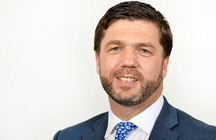
Below is the text of the speech made by Stephen Crabb, the Secretary of State for Wales, on 28 January 2016.
Ladies and gentlemen, good afternoon and thank you for this very kind invitation to come and speak to the Cardiff Business Club today. It is a huge pleasure and a privilege to be here with you.
I was really pleased that the Chancellor made Cardiff the location for his start-of-the-year speech about the global economy.
I did tell the Chancellor when we were planning the speech just before Christmas that he would need to bring his chequebook if he wanted to visit Wales.
And I was delighted that during the visit he announced funding for the new Compound Semiconductor Catapult which will make Cardiff a UK centre of excellence in terms of high tech innovation. This was something the business community in this city had been calling for. And it is a down-payment from UK Government on what we hope will be a massively significant City Deal for the Cardiff Capital Region – which we are all working hard right now to seal before Budget day.
One of my favourite moments of last year’s election campaign – aside from 10pm on election night when the exit poll was released – was the visit we did with David and Samantha Cameron to Brain’s Brewery. And I’m grateful to Scott Waddington for facilitating that visit.
The discussion we had with Scott in the boardroom beforehand about a range of key Welsh and UK business issues was really excellent. The PM found it genuinely insightful, and has remarked upon it to me since.
When I spoke to him last week about doing this speech today, he reminded me about the time he spoke at Cardiff Business Club back in 2007… Who knows, I’m sure the PM would welcome another visit back one day.
Because I do see it as one of my tasks as Secretary of State for Wales to get senior Cabinet members visiting Wales regularly.
Firstly, because – and we don’t shout enough about this – there are some truly remarkable things happening in certain parts of the Welsh economy right now. Things which deserve national and international attention, and which I’m determined to help profile.
And secondly, because we do face some major challenges and constraints which are holding the Welsh economy back. And it is vital that these are understood at the highest levels of government.
One of the characteristics of this government, I believe, and why I feel genuinely exhilarated by being a part of the team, is that we don’t shy away from the big challenges.
When we sit round the Cabinet table at 9.30am each Tuesday morning, we do try to wrestle with some of the really knotty issues facing this country and focus on solutions; in areas where we know we have to drive up the UK’s performance – on exports, for example, or on productivity.
And over the last year and a half, I have tried to make the hallmark of my time as Secretary of State for Wales a really strong emphasis on the need to raise our sights in Wales, to raise our ambition, to drive our economic transformation and be honest about where we are as a nation…
…never talking down who we are as a people, but neither ducking from addressing what I think are the big challenges we face in Wales.
And that means, yes, asking from time-to-time the hard questions about how well we’re doing, and it also requires being willing to challenge the dominant way of thinking on certain issues.
This approach also means fronting up to global issues and events, and meeting head-on the big questions that come along to confront us.
And one of the big issues we’ve been wrestling with in recent months is, of course, the question of our membership of the European Union.
And that’s exactly what I want to spend a few minutes speaking to you about today.
Because at some point in the coming weeks and months – certainly by the end of 2017 – this issue will, for a time, totally dominate our political life in the UK. It will become one of those rare issues that gets talked about down the pub and at the hairdressers. It will attract media curiosity from right across the world, and be a point of discussion in the boardrooms of major international companies.
Make no mistake, this referendum will be a global talking point.
But, whether or not the referendum is held during this year, it is already clear that 2016 will be a year of turbulence and uncertainty.
If you follow international markets you will see that this has already been the worst start to the year for global financial markets in more than forty years.
There are some profound things happening in the world economy right now which we are not immune from. We only have to look down the road to Port Talbot to know that we’re not immune from the global head-winds…
… the so-called “slump” in the Chinese economy with growth declining to a mere 6% (enough, by the way, over the next four years to add to its GDP a level of activity equivalent to the size of the German economy).
The key point about China is, of course, that the nature of its growth is changing as it moves to a more consumption-driven economy. And that will present major opportunities and risks to the UK economy…. Not least through massive excess Chinese industrial capacity which is turning international steel markets on their head right now.
Factor in what is the longest, and almost the deepest, slump in global oil prices for 20 years, which can have both benign and negative consequences, then it is pretty clear to me that 2016 will be a year of economic turbulence and big geopolitical challenges.
So this is the backdrop to the decision we will be taking as a nation as to whether we remain a member of the European Union or whether we leave.
We are clear that global turbulence and uncertainty are not reasons not to deliver on our commitment to secure a renegotiated membership of the EU and to present this renegotiation to the people of the country in a referendum.
Because let’s not forget the key reasons which have brought us to this point – in terms of both the demand for the referendum and the necessity of renegotiation.
I’m not going to guess how many of you fall into this category, but you would need to be aged at least 59 to have had a vote in the last referendum on Britain’s membership of the then European Community.
Given how profound the changes inside the EU have been over the last four decades, I think it’s a reasonable proposition that people of this country should have the opportunity to have their say on this issue again…
…made even more urgent by a growing discontent in many quarters about the nature – and the cost – of our membership of the EU, not least in parts of the business community where there is a strong desire to see the EU become more focussed on competitiveness and for EU regulations and directives to have a less burdensome, less intrusive impact.
So we have taken a decision as a Government, backed up by a manifesto commitment, not to just sit back while the sense of alienation, frustration and disillusion felt by many people towards the European Union festers and grows. As a political party, we have been at the forefront in the last twenty years of articulating that discontent and making the case for change…
…for change within the European Union itself (to achieve a better European Union overall) but change also when it comes to the specific terms of our own membership of the EU.
The UK has been protected from membership of the Euro, from Schengen, and from a raft of other integrationist measures while still capturing the enormous trading benefits of the Single Market which was one of Margaret Thatcher’s key achievements…
…And it is that instinct which has driven the need for renegotiation at this time and brought the other Member States back around the table to take seriously the UK’s concerns.
The case for change that is at the heart of our renegotiation is as much about looking to the future as about looking at the past or present failings of the EU. Because we know that in the years ahead the EU will undoubtedly need to change in response to major events like the sovereign debt crisis and the migration crisis.
The EU is going to change in profound ways – the nature of which we do not yet know for certain. But change within Europe is coming.
The answers to these crises which many EU leaders are already reaching for is essentially one of “more Europe” – more and deeper integration across more policy areas. I actually do not believe these are the correct answers as far as Britain’s own interests are concerned.
And so renegotiating the terms of our membership now is as much about trying to anticipate and safeguard against future changes within the EU, or within just the Eurozone, which could present a threat and challenge to key UK sovereign interests.
And I believe this renegotiation matters in very, very significant ways – and it matters for Wales.
There are four objectives at the heart of our renegotiation:
Firstly, to protect the Single Market for Britain and for the other member states who have chosen not to adopt the Euro currency. As I have said previously, the Single Market is an enormous strategic prize for UK business. We have taken the correct view as a nation that membership of the Eurozone, however, would not be. And it is really essential that the rules that the Eurozone countries adopt to ensure a stable common currency must not be detrimental to the interests of those other member states that use sovereign national currencies. That is our first objective in this renegotiation.
Secondly, boosting competitiveness by reducing the burden of red tape coming from Europe. In an unforgiving global economy which increasingly demands that nations become leaner, fitter, more agile, more competitive, the current way that the EU makes and enforces directives and regulations is a recipe for decline; with every year the cumulative impact of EU red tape becoming more and more of a deadweight. If the EU cannot and will not change its approach then the UK must have the ability to tailor its own approach. We have probably the most open economy of any European country. We understand better than anyone else the nature of the global economy. And we are determined to do everything possible to be in a position to compete and win within this global economy.
Our third objective in the renegotiation is to exempt Britain from that central Treaty phrase “ever-closer union” and to bolster the role within the EU of national parliaments. This is not a symbolic change – because that phrase “ever-closer union” has provided the drumbeat for all of the previous treaty changes we have seen in recent decades. It is not a drumbeat I believe should bind and dictate the terms of the UK’s own membership.
Fourthly, and perhaps most difficult and most controversial with some member states, is our determination to restrict the access of EU migrants to in-work benefits such as tax credits when they first come to the UK. My vision of Britain is of a country which absolutely does welcome talent and skills from across the Single Market area but where welfare policies do not create an additional powerful pull factor.
So this is the approach we are taking at this renegotiation. And I believe it is absolutely in tune with where mainstream business and also wider public opinion is at.
The centre-ground is a place of both pragmatism and principle. And that is why businesses across the length and breadth of Britain get what we are trying to achieve. They recognise that the status quo is simply not good enough for Britain.
And confident in the support we have from business, and with a general election mandate behind us, we have gone into this renegotiation determined to get a better deal.
Sure, it is painstaking and difficult work. But actually when you look at the record of the Prime Minister when it comes to European reform, he has shown that he can land a deal even when most commentators were predicting otherwise…
….protecting the British rebate …securing a real terms cut to the EU budget …negotiating vital opt-outs from ever deeper integration.
That is a strong reforming track record. David Cameron has reset the bar in terms of how British Prime Ministers should handle the European question.
I believe a healthy pragmatic scepticism must be a defining characteristic of any future Prime Minister when it comes to Europe. And that same mind-set should be what informs and builds the case to remain inside the EU if the renegotiation is successful.
Beware the wide-eyed shouty enthusiasm of those whose positions, either for leave or for remain, were already fixed long before the renegotiation had begun. And pity the audience who has to watch when these sides go head to head.
Here in Wales, since the start of the year, we have already been served up some of this style of debate. And a pretty unedifying and unenlightening spectacle it was, most commentators seemed to agree.
And the reason why it’s so unenlightening is that essentially the arguments are being made from the two most extreme possible positions – from the viewpoint that basically says the EU has been a disaster for Britain (and hence Wales) and therefore we need to head to the exit door as quickly as possible; and from the opposing viewpoint that says Wales is somehow linked with an economic umbilical cord to the EU and must stay in at any cost.
And to back up these two positions, the temptation for protagonists is to deploy ever more outlandish arguments.
And so those who argue for Brexit have started to present some kind of apocalyptic vision of the EU collapsing amid a wave of migrants which threaten Europe’s very economic, social and cultural foundations…. And that Britain basically needs to get the hell out of there.
The other side say no way, the EU keeps Welsh men and women in jobs and is the only sure foundation on which we can rely – more so than our own talents or productive capacity, more so than our own innovation and enterprise, more so than our own stock of human and intellectual capital. Outside of the EU, they say, Welsh families would be forced onto the breadline. The only possible prosperity is an EU prosperity.
These people say its membership of the EU which creates jobs …Overlooking some much more fundamental things I would argue.
If you think I am exaggerating their position then please look back at the news stories before Christmas where some senior figures in Wales – people who should know better – argued that Welsh farming would be decimated (i.e. reduced to the point of non-existence) if we were outside the European Union.
Sadly, this latter viewpoint has become pretty much the mainstream view in Welsh politics: Stay in at any cost. For some in Wales, EU membership actually seems to be even more important than membership of that one truly successful and dynamic currency union and trading bloc which is of course the United Kingdom.
But if, as a government, we allowed this viewpoint to dictate our posture on the EU, we would never have a renegotiation in the first place. There would never be any hard-headed determination to go back to our European partners and say “hey, this actually isn’t in the UK national interest, we are not going to go along with this.”
No, the case for Wales remaining within the EU cannot be left to those who say stay in at any cost; the argument has to be won with clearer and more thought-through arguments than those that are so often offered up by Welsh politicians.
It won’t be enough to point to the Objective One funding from Europe as some kind of prize we need to hang on to; structural funds are a mark of economic failure not an accolade for Wales…
Wales – where there is an assumption that if you are a senior politician then you must be a bought-and-paid-for member of the EU fan club. I am not, and I reject the notion that this should somehow be an article of faith.
Wales – where the European flag is now more common than the Union Jack; but, by the way, where there has been a collapse in the teaching of French, German and Spanish in Welsh schools.
And as for those Welsh politicians who pray-in-aid the names of major firms with operations in Wales to say we should stay in at any cost, well let me just say that most companies have made it absolutely clear that membership of the EU will not affect their operations in the UK. Airbus, too, is here fundamentally because of the concentration of skills and the generations of high-level aerospace expertise which is located in North Wales.
The case for staying in has to be built on stronger arguments. And for me the starting point is the potential additional benefits we can secure for the UK through a successful renegotiation and a reformed EU. Neither of the two extreme positions is where the centre of gravity of Welsh public opinion or Welsh business opinion is at. The argument about our membership of the EU will not be won or lost on these extremes.
No, the case for remaining inside the EU will be won by the reformers, informed by that healthy pragmatic scepticism I have talked about, who approach this question in a hard headed and clear sighted way, recognising that the story of the 21st century will be a global one and that successful renegotiation will provide the basis on which to say confidently that, in terms of the global risks and opportunities that lie ahead, staying in a reformed EU is the right choice.
Straight after the lunch today, I will be attending an event with Her Excellency Sylvie Bermann the French Ambassador who is here in Cardiff to present the Legion d’Honneur award to a number of servicemen from Wales who fought for the liberation of France during the Second World War. It will be a deeply humbling experience I am sure.
My late father-in-law grew up in Nazi-occupied Paris and was a teenager in 1945 when the war ended. He and I used to argue a lot about the future of Europe back in the late 1990s just before he died.
For him, and for so many people of that generation including many here in the UK, the emergence of the European Union was a matter of cementing the peace in Europe and guaranteeing economic security. And it became for him and so many others an article of faith. What they lived through and what they saw meant this faith was unshakable. I have total respect for that view.
But that is not how many people of my generation think.
The world that shaped my own political outlook has been one which has seen the rapid internationalisation of markets and the extraordinary global digital and communications revolution which has changed forever how we work and how we live.
That’s what’s shaped my thinking about Britain, Europe and the world.
More than ever, economic success requires a global focus and not one limited to the European continent. And that is no different for Wales, I believe.
Take a look at the list of the Welsh Government’s ‘Anchor Companies’. These are the fifty companies in Wales that have been identified as being crucial to the creation of jobs, growth and wealth within the Welsh economy through the size of their operations in Wales and the supply chain effects.
As some of the most important businesses in Wales, they provide an insight into our links with the global economy.
Of the fifty companies highlighted, only seven are headquartered in the European Union. By comparison, 15 are from North America. A number of others are from Japan, Asia and the Gulf.
In fact, more than half of these anchor companies are based outside of the UK, highlighting exactly how attractive we are as an inward investment destination, to both EU and non EU countries.
One of the huge privileges of my job is that I get to visit companies all over Wales, and I can tell you now it’s like a tour of the world in terms of where the investment is coming from and where the trade is going. More than half of all Welsh exports are to countries outside the EU and that share is growing.
Britain’s and Wales’ future is as an outward-looking nation with major links to the powerhouses of the global economy.
I have made clear this afternoon that I believe Britain and Wales’ interests are best served in a reformed and reforming European Union.
If the Prime Minister gets the renegotiation then I will be out there making the case for Britain to remain in the European Union… making a strong and pragmatic case, not based on wild and flimsy arguments. But based on a clear-sighted and hard-headed assessment of the risks and opportunities of both outcomes.
And I believe it will be the reformers who will carry the day – the reformers who come from a position of pragmatic scepticism.
But this will hinge on us being able to explain the impact and benefit of the deal we land.
But even after a successful renegotiation, and having put that renegotiation to the British people in a referendum, the issue of European reform won’t disappear.
The truth is, whichever party forms the British Government after this one, and the one after that, needs to be characterised by the same reforming approach that the Prime Minister has shown when it comes to our relationship with Europe.
Because the pressure being exerted back on the UK by a deepening European Union will continue to grow.
It will continue to throw up profound questions about our nationhood and sovereignty and it will be incumbent upon every PM from here on to find answers to them.
We can’t stop pushing for the EU to become a more competitive, more productive component of the global economy. It’s not in the British interest for Europe to wither as a global economic force. So for me it is a question of the balance of risks and opportunities in an increasingly uncertain and turbulent world.
There is no safe, easy, risk-free option. But with a successful renegotiation deal I believe there will be a clear and correct choice – and that will be to remain.
Below is the text of the speech made by Greg Clark, the Secretary of State for Communities and Local Government, at the Guildhall in London on 27 January 2016.
Ladies and Gentlemen.
It is an honour to be speaking here this evening, on this most sombre and important of days.
It’s not only my privilege to represent Her Majesty’s government.
The government wishes, of course, to pay its respects to those whom we honour this evening, such as the 10 British prisoners of war who saved Hannah Sarah Rigler from the Danzig death march.
Hiding her, feeding her, nursing her back to health.
But it is also my privilege and responsibility to speak as a citizen, husband and father, one who wants his children to grow to maturity in a peaceful, tolerant and supportive society, free from the blight of sectional hatred.
This duty to speak up is one borne by each of us.
Because Nazi Germany taught us – hard though it is to say – that genocide happens not just through the choices made by those who perpetrate it, but through the choices made by those who fail to stop the perpetrators.
It’s not just that bystanders look away; it’s that they choose to look away. The soil of hatred is fertilised by indifference to wickedness.
That starts with tolerating small acts of hatred, such as casual stereotyping; only if “everyday evil” remains unchecked can wickedness take root, and grow, into the acts which blight humanity.
William Wilberforce urged Parliament towards the abolition of slavery by saying:
“You may choose to look the other way but you can never say again that you did not know”.
On Holocaust Memorial Day, on behalf of the government – and myself – I commit never to choose to look away.
We must all recognise hatred, and challenge it; wherever and whenever we see it.
Below is the text of the speech made by William Hague, the then Foreign Secretary, in Rio de Janeiro in Brazil on 24 January 2012.
Over the last two days we have conducted the meetings we know as AUKMIN; which are detailed and substantive consultation between Britain and Australia’s Foreign and Defence Ministers.
I am very grateful to Kevin Rudd and Stephen Smith for travelling here with such a senior delegation, and for the excellent tenor of our talks.
We believe that close consultation between Britain and Australia has never been more important and I think I can confidently say that our approach to world affairs has seldom been more in step with each other.
Our countries are strategic and global allies.
We share democratic values and the will and determination to play a leading role in world affairs.
Our membership of the Commonwealth means that we are not just allies, we are also family. But while this is a partnership rooted in history it is also relentlessly forward looking and practical, which is why we attach such importance to it in the British government.
Australia’s neighbourhood is of growing importance in world affairs. We particularly appreciate Australia’s understanding the Asia-Pacific region and of the emerging powers, just as I know Kevin, Stephen and their colleagues appreciate our leading role in the foreign policy discussions of the European Union.
Our talks reflected our interests and priorities over the next decade, including preventing the spread of nuclear weapons.
Yesterday the European Union agreed to a phased ban on the import of Iranian oil, and action against Iran’s central bank. This is a significant increase – a major increase – in the peaceful, legitimate pressure on the Iranian government to return to negotiations over its nuclear programme. Until it does so, the pressure will only increase and Britain and Australia share the same sense of resolve about that.
We have discussed cooperation in the Asia-Pacific. We share close views about the development of the region and we discuss it regularly among ourselves and with our mutual ally the United States of America.
We have a valuable information-sharing relationship which is critical to our security. This morning Kevin and I have signed a new agreement which will increase this area of our cooperation.
We exchanged views on cyber security, following last year’s London Conference on Cyberspace. We explored how better to protect our governments, our industry and our national infrastructure from cyber attacks, and how we can work with others to mitigate cyber threats while championing human rights and the social and economic benefits of the internet. Both our countries are committed to developing our partnership in the cyber arena.
We discussed preparations for the London conference on Somalia next month, and later we will also discuss the situation in Nigeria, where we condemn the appalling acts of terrorism and stand behind the Nigerian government and people.
We have agreed to work closely on the Arab Spring, including assistance to countries in transition to more open, democratic government.
We support the work of the Arab League. Both our countries believe the United Nations Security Council has a responsibility to speak out and will work to that end.
We looked ahead to the important NATO Summit in Chicago, as the next milestone in the transition of security in Afghanistan to Afghan control.
And we discussed our bilateral ties. I am pleased that British exports to Australia increased by 30% in the first ten months of last year and we will take every opportunity to build on this success.
The deep trust at the heart of our relationship will be reflected at the meeting of our National Security Council later today which both visiting Ministers will attend and fully participate in.
I thank them both for the energy, friendship and intellectual rigour they have brought to our discussions and for the many areas where we have agreed we will work more closely this year; and am delighted to hand over the floor to Kevin Rudd.
Below is the text of the speech made by Chris Grayling, the then Minister of State at the Department for Work and Pensions, in London on 24 January 2012.
This morning I am here to talk to you about the Government’s perspective on employment.
And as the Government Minister who goes on television each month to present the latest employment figures, I am perhaps more focused on the detail behind the headlines than most.
Last week’s unemployment figures demonstrate the challenging economic climate we currently face.
Unemployment remains high and dealing with it continues to be a priority for the coming year.
But beyond the headlines the figures show that there is still a lot of movement in the labour market.
This month’s figures also show a small rise in employment.
The numbers of unemployed people have increased in part because people who were previously not looking for work – particularly women and students – have decided to try to get a job.
And the numbers claiming unemployment benefits has broadly flattened out, despite welfare reforms adding to the numbers claiming Jobseeker’s Allowance.
The figures also show that there are opportunities available for those looking for work. 300,000 people stopped claiming out of work benefits last month, and Jobcentre Plus took nearly 350,000 new vacancies.
Indeed over the course of the last year something like six million people have started a new job.
There are 10,000 new vacancies advertised through Jobcentre Plus every working day. This is estimated to be around half of all potential vacancies in the UK.
Even in difficult times there are vacancies and opportunities available for unemployed people.
And many people get themselves back into work quite quickly.
More than half of unemployed people leave benefits within three months.
But there are some people who find it much harder to get back into work and are unemployed for much longer periods.
And the longer someone is out of work the more difficult it can be for them to find another job. Their skills and experience become less relevant to the jobs market, their confidence may suffer and they may become indoctrinated by the welfare system and alienated from the world of work.
There are one million people of working age who have been claiming benefits for 10 years or more.
And 1.84 million children living in homes which are currently workless.
Of those 300,000 children live in homes where no one has ever worked.
And what is really sad is the way an attitude that being out of work is acceptable can pass down through generations, so entire families expect nothing more than a life on welfare.
Almost unbelievably inner London has the highest proportion of children in workless households – inner London – an area in which Jobcentre Plus takes an average of 15,000 new vacancies a month.
It is clear to me that, even in these difficult times, the supply of job vacancies is not the problem.
We must help people gain the skills, experience and motivation they need to get back into work.
And this support must be tailored to meet the needs of the individual, of employers and the local labour market to have the best chance of success.
To deliver this support we have created the Work Programme and contracted the best of the private, voluntary and public sector to deliver it.
This Programme is bigger than any previous employment programme and it will serve an unprecedented range of people, some of whom will need more help finding and keeping a job than others.
Organisations delivering the Work Programme are therefore paid variable amounts which are dependent upon the perceived complexity of getting an individual into work.
So, the more difficult it is to get someone into the work the more we will pay for that support.
Maximum payments for supporting people into sustained employment will range from around £4,000 for typical jobseekers to almost £14,000 for the hardest to help, reflecting the differing levels of support required.
This in itself is a unique approach for Government but what is really revolutionary is that we have not dictated the terms of this support.
The Work Programme is being delivered on an almost entirely payment by results basis.
How the providers get those results is broadly up to them.
But they receive a significant part of their fee only when they get someone into work and the rest of the payment when they keep them there.
In just over 12 months we have completely redefined employment support to focus on sustainable results.
And in doing so we have designed a contracting Framework that is deliberately flexible enough to bring in other forms of social intervention to support people in to work.
This means other parts of central and local government can use the Framework to deliver support in a much more holistic and comprehensive way.
We have built something that can go much further than tackling unemployment, and we are now looking at developing a sophisticated system of social interventions based around the payment by results model, with the Work Programme at its core.
The Prime Minister has made it clear that he is committed to extending payment by results to increase accountability and transparency as part of wider public service reform.
At the same time we are pushing power out from central Government and down to Town Halls.
The Localism Act gives local councils more power over the services they provide.
It frees local councils to make their own decisions about the services they deliver and shape their services around the needs of the people they serve.
On another level we are also giving Jobcentre Plus managers and advisers more discretion to tailor the services they provide to the needs of the jobseeker.
Jobcentre Plus staff understand far better than those of us in Whitehall what someone needs to help them get into work.
We have improved the service by encouraging our own staff to focus on results and giving them much more choice and flexibility in the services they provide.
We are also encouraging them to forge partnerships with local government officials, employment support providers, health and charitable organisations to deliver effective, holistic support.
And these partnerships make a real difference to successfully helping unemployed people back into sustainable employment.
I have visited virtually all of the Work Programme prime providers now to see how they are getting on.
And it is those that are forging links with the local government services, with Jobcentre Plus, with locally based charitable organisations, community organisations and crucially employers that appear to be performing the best.
It is those providers who have developed the strongest networks that are delivering more for their clients.
Because they are able to draw upon a much richer reserve to help people overcome their barriers to work – whether those barriers are a lack of skills and experience or something else – an addiction, or a criminal record.
We are already using the Work Programme Framework to develop similar partnerships to provide support from some of the most troubled families.
There are a small but significant number of families – around 120,000 – who are truly struggling and contribute a disproportionate amount to Britain’s social problems.
These families often have multiple problems and are well known to Local Authorities as they are already being supported in different ways by a host of local services.
Turning the lives of these families around and enabling them to fulfil their potential is a priority and would bring real social benefits.
Using European Social Fund money we are investing £200 million in drawing together that support to deliver real change for troubled families and help them get back in to work.
The ultimate aim is to break the inter-generational cycle of worklessness and get families working.
But a similar non-prescriptive, payment by results model to the Work Programme will mean providers have the resources and the freedom to really work holistically with these families, bringing together a comprehensive package of support that rewards progress towards work as well as starting in a job.
Local Authorities have played a key role in getting this service up and running.
I know you have been working extremely hard with officials at the Department for Work and Pensions and with the providers to get this provision in place.
And you will continue to play a critical role in making sure we see a strong flow of family referrals to make this provision a reality.
It is written into the contracts that families must be referred by their Local Authority and that suppliers must work with local services to deliver support.
I know that this work is already well underway; contracts went live earlier this month, the first families have been referred and the first action plans are being developed right now.
But this is just the beginning.
We are already looking at a number of other options, including using this approach to provide services to tackle drug and alcohol addiction and rehabilitate ex-offenders.
Ultimately, this comes down to a more sophisticated appreciation of public service delivery.
And a growing understanding that social change cannot be achieved simply through ever increasing spending, we have to be smarter than that.
Payment by results can help us deliver better public services by providing a real opportunity to shape services around individual need and in doing so really change people’s lives for the better.
Below is the text of the speech made by Jo Johnson, the Minister of State for Universities and Science, at the Royal Institution in London on 27 January 2016.
It’s a pleasure to be speaking to the Campaign for Science and Engineering in this, your thirtieth year. That’s 30 years since Save British Science was formed. Three decades of campaigning on behalf of Britain’s science and engineering community. And 3 decades holding ministers like me to account!
You, like others, told us that science was vital. And we didn’t disagree on that point. We have a Chancellor who lives in lab coats and high-vis jackets and the Spending Review was the clearest signal yet that science and innovation sit at the very heart of this government’s economic plan. This evening, I want to start by setting out in a bit more detail what that science settlement means.
A world-leader in science and engineering
First though I want to throw your minds back to December 15 last year. I know where I was. Counting Tim Peake down to blast off at the Science Museum, along with 3,000 schoolchildren waving Union Flags, their young minds fired by the magic of space and the power of science.
It’s a phenomenon I’ve seen time and again, as I’ve travelled the country, learning about our extraordinary research base.
It’s been a privilege to break ground at brand new facilities, to open new labs, and to meet the Nobel prize winners and the research teams keeping British science on the map.
In Manchester, I held a jar of liquid graphene, a substance which promises to revolutionise materials and how we use them.
In Wales, I saw the 5 millionth Raspberry Pi roll off the production line. These tiny computers, made in a technology park west of Cardiff, are spreading the benefits of the digital revolution to the furthest parts of the globe.
And on board the Royal Research Ship Discovery, I announced the winning bidder for our brand new £200 million polar research ship. Tonne-for-tonne, the UK will soon have the most advanced floating research fleet of any country in the world.
Our global scientific impact far exceeds our size as a nation. With just 3.2% of the world’s R&D spend, the UK accounts for 16% of the most highly-cited research articles.
And we’ve overtaken the US to rank first among comparable research nations for field weighted citations impact.
Last night, over supper in Amsterdam at the Competitveness Council, I asked Bill Gates what his assessment was of the UK science base. We were sitting around a table, along with the Commissioner for Research, Science and Innovation, and the science ministers of a number of other EU countries.
Unfortunately, the Chatham House rules of the dinner prevent me from repeating his answer, but I can tell you this: it made me unbelievably proud of all the work you do.
Our scientists and engineers truly stand tall on the world’s stage. And this government wants the next generation – all the young people across the country who were watching Tim Peake leave Baikonur that day – to be in a position to build on your legacy.
A decade of protection for science
Because of the difficult decisions we have taken elsewhere in government spending, we have been able to prioritise investment in science and research.
The commitments from the Chancellor in the Spending Review could not have been clearer. We are protecting science resource funding in real terms, at its current level of £4.7 billion, for the rest of the Parliament. At the same time, we are investing in new scientific infrastructure on a record scale – delivering on the £6.9 billion science capital commitment in our manifesto.
That means total investment £30.4 billion to 2020, building on the protections for the science budget in the last Parliament. That’s a decade of protection, and a decade of sustained investment by this government. And all this in the context of significant savings in other areas of expenditure, a clear sign of the place of science in our decision-making.
Best place to innovate
A stable funding environment is a start, but it’s not the end of the process. I’m not the first Science Minister to urge closer partnerships between the research base and industry, or to call for greater efforts on collaboration.
Our universities are already extending their work with charities and industry. In 2013 to 2014, they earned nearly £4 billion from working with businesses and others, up 20% on 2010. And in last year’s productivity plan, we set out our ambition to increase this income to £5 billion per year by 2025.
This collaboration is important because innovation is a shared endeavour. As we set out in our manifesto, we want Britain to be the best place in Europe to innovate and we will be setting out the support the government will be providing to help innovative businesses to flourish in a national innovation plan.
Our R&D tax credit now supports 80% of all business investment in R&D. In 2013 to 2014 over 18,000 companies used the schemes, claiming a total of £1.75 billion. This is a 78% increase in the companies claiming tax credits and a 58% increase in funding provided against 2010 to 2011.
Of course, government does not create innovation; it’s the scientists and engineers, the designers and the entrepreneurs who make it happen. But government can be a catalyst. Currently, every £1 of government spending on research leverages an estimated additional £1.36 of private funding. And for every £1 spent by the government on R&D, private sector productivity rises by 20p per year in perpetuity.
Getting the business environment right is key. The fiscal incentives we provide for research is the government’s single biggest source of business R&D support.
But, as a country, we can’t stand still. Our international competitors are continuing to innovate and develop new ways to support firms.
We’re looking carefully at what our partners in France, Finland and the Netherlands are doing, ensuring we have a range of financial instruments to support innovation.
At the Spending Review, we committed to protect the funding we provide through Innovate UK over this Parliament. This will include up to £165 million per year through new innovation finance products. With this funding our innovation offer will now span grants through to new financial instruments. These will support innovation and ensure the taxpayer can share in the success new ventures.
Alongside the finance, we’re providing the essential innovation infrastructure to help bring businesses and the research base closer together. We’re not just protecting the Catapult network, but expanding the programme to support growth in the high-tech sectors where Britain excels.
Earlier this month, the Chancellor announced our first Catapult in Wales. This will focus on the compound semiconductors that will underpin the next-generation of advanced electronics.
This joins 10 other Catapults that span the life sciences, satellite applications, energy, digital industries and high-value manufacturing. The Catapults will receive total public and private investment in excess of £1.6 billion over their first 5 years of operation. This is shared infrastructure that businesses on their own simply could not afford – and yet another example of the way we are supporting collaboration across the research base.
Science budget allocations
While we’re building new infrastructure, we are also ensuring we get the best return on our investments.
Sir Paul Nurse set out his plan to bring together the 7 Research Councils under the banner of Research UK, and as the Chancellor confirmed in the Spending Review the government is now moving forward with these recommendations.
Many of you will want to know that we’re preserving what works well, and building a stronger base for the future.
We have made clear our commitment to retaining the dual support system and the Haldane principle. These are vital characteristics of our research base. They protect curiosity-driven research that has underpinned so many serendipitous discoveries, and they ensure scientists are in the driving seat when it comes to assessing specific projects.
But there is also an opportunity, as set out in the Nurse review:
– to free up scientific leadership to focus on the research
– to reduce the duplication between funding bodies
– to improve support for multi-disciplinary research
– and to respond much more effectively to major global challenges – such as Ebola .
We fully recognise the importance of retaining strong leadership in individual discipline areas, and that will remain. The idea set out in the Nurse review was “one university, multiple faculties”. We are also clear that any inclusion of Innovate UK as part of Research UK must be done in a way which protects the ring-fence and Innovate UK’s business-facing focus.
But as we protect science and research funding we must also ensure on behalf of the taxpayers that we’re getting best possible return on investment. The Nurse review is part of that, and I’m also grateful to Lord Sterne for agreeing to review the Research Excellence Framework. He will be looking carefully at how funding could be allocated more efficiently; offers greater rewards for excellent research; and reduces the administrative burden on institutions.
In the meantime, we are working with the Research Councils and other delivery partners to agree the detailed allocations of the science budget.
Our intention is to formally allocate budgets to individual funding bodies by mid-February. The whole research community will then have the opportunity to feed in to Research Council and Innovate UK delivery plans towards 2020.
Global challenges
In this round of allocations, we have a unique addition in the form of the Global Challenges Research Fund. That’s £1.5 billion extra for the science budget by 2021 – additional funding that will help us stay at the forefront of global research.
This is a unique opportunity for UK academics to work with partners around the world and at the same time to address some of the biggest challenges of our time – it’s an opportunity for a double win.
The additional funding is possible because of 2 commitments set out by this government: to protect science and to protect overseas development assistance.
This new Official Development Assistance funding will enable us to build on the success of the existing Newton Fund, which since its launch in April 2014 has already galvanised academic partnerships in 15 countries across 4 continents.
I am pleased to confirm the expansion of the Newton Fund to £150 million a year by 2021. This means a total Newton Fund investment of three-quarters of a billion pounds, in addition to the £1.5 billion for the Global Challenges Research Fund.
With this investment, we will ensure Britain remains a scientific powerhouse in the years to come.
‘STEM capital’
None of this would be possible without a healthy supply of talented young scientists and engineers.
There have been positive signs recently. Apprenticeship starts in engineering and manufacturing technologies shot up by 52% between 2010 and 2014. Last year saw a 30% increase in the number of young people studying computing at A-Level. And this year saw the number of acceptances for STEM undergraduate degrees jump 5% on last year.
But I know from personal experience that a lack of ‘science capital’ in a family can pass through the generations. One of the reasons I didn’t major in science is that I was clearly better at other subjects. But I strongly suspect there was another issue at play: members of my immediate family have scarcely a science O-Level to rub between them. My father’s strong view was that history, which I loved, was basically a subject you could do in the bath, and that the best thing by far and away was to study classics.
Tackling deficiencies in STEM capital is not a job for government alone. I am discussing with Nick Gibb, our brilliant schools minister, how we can best help pupils that lack ‘STEM capital’ and may need extra encouragement.
Bill Bryson, as ever, captured it well. Writing about his dissatisfaction with his own level of scientific knowledge, he remembered the school science books that seemed to “keep all of the good stuff secret”, making the contents “soberly unfathomable.”
We have come a long way in the last decade in mainstreaming science, thanks in no small part to stars such as Brian Cox and Jim Al-Khalili and the important work of organisations like Science Grrl.
But cracking this is a whole country effort, and there is much more to do.
Science and Discovery Centres around the country play an important role, offering schools and families a hands-on experience that brings science to life. So I’m pleased to announce that we are partnering with the Wellcome Trust to set up a £30 million Inspiring Science Capital Fund to support these centres for the rest of this Parliament. This will be a competitive fund that centres can bid into ensuring these hands-on experiences are accessible to young people to the end of the decade.
This fund complements our wider support for ‘STEM inspiration’ programmes, including the CREST awards, the National Science and Engineering competition and, of course, STEM Ambassadors, a network of 31,000 people from science, engineering and academia.
Indeed, we’re taking this so seriously Britain even has a STEM ambassador currently orbiting the earth!
Best in Europe, best in the world
So we have the investment, the infrastructure and the people.
But to keep our knowledge factories winning Nobel Prizes, and attracting the best minds, we need to recognise that research these days is rarely a solitary undertaking, or even a narrowly national one. It is about partnerships.
The scientists and engineers that I meet, and the innovative start-ups that spin out from their universities, are usually part of a wider international endeavour. Their work often demands intellect, insight and investment no one country could provide.
Around half of all UK research publications involve collaborations with other countries. Papers involving international collaboration have almost twice the citation impact of those produced by a single UK author. And EU countries are among our most crucial partners, representing nearly 50% of all our overseas collaborators .
Indeed, our links with Europe are deep and longstanding. Free movement of people makes it easier for our universities to attract the best talent, and for British students to spread their wings across the continent, as I was able to do as a student at institutions in France and Belgium. Over 125,000 EU students are studying at UK universities, and over 200,000 British students have ventured overseas on the Erasmus exchange programme (UUK). I want many more to have the opportunities to study overseas that I enjoyed.
European research funding is, in many ways, an example of how the EU can get it right. While applying for funds must become simpler, especially for smaller firms, the key thing is that we have successfully argued for research money only to flow to where the best science is done, regardless of geography, regardless of political pressure.
Because of the excellence of our research base, it is no surprise that the UK is one of the most successful players in EU research programmes. The UK received €7 billion under the last framework programme (2007 to 2013). That made us one of the largest beneficiaries of EU research funding. In this funding round, Horizon 2020, we have secured 15.4% of funds, behind only Germany on 16.5%, and with the second largest number of project participations.
Some will make the point that non-EU countries also benefit from EU Research programme – Norway, Turkey and Israel, for example. But there is a fundamental difference. While some non-EU countries are part of the European Research Area, and sit on the European Research Area Committee, they don’t get a seat at the table when the Ministerial Council or the Parliament are setting the rules or deciding the budgets. Even those international bodies, like the European Space Agency, which sit outside of the EU, benefit from close institutional links. Around 20% of ESA funding comes directly from EU space programmes.
Of course, we cannot be starry eyed. There is a real need for reform, and the Prime Minister is fighting hard to fix aspects of our EU membership that cause frustration to many people. We need protections for those outside the Eurozone. More focus on competitiveness, to help create jobs. We need to take Britain out of “ever closer union” with more power for our Parliament, and we need to control immigration – so that “freedom of movement”, as the Prime Minister has said, means freedom to work and study, not claim benefits.
No one doubts Britain could stay a science player outside of the EU – indeed some of our universities have been successful for longer than many of its member states have even existed. But the risks to valuable institutional partnerships, to flows of bright students and to a rich source of science funding mean the Leave campaign has serious questions to answer.
While there is nothing in our EU membership that limits our ability to work with other countries, the onus is now on those who want to leave the EU come what may to explain how they would sustain current levels of investment and collaboration under very different circumstances.
As science becomes more international, we should nurture partnerships, not reject them. In the end, the British people will decide whether we are safer, stronger and better off as part of the EU, but our future security as a knowledge economy hinges on this decision.
Conclusion
This willingness to embrace global collaboration has been a central pillar of Britain’s proud scientific legacy.
And this government has shown its commitment to extending that legacy well into the future.
The Spending Review confirmed a decade of investment in our science and research base.
We have the tools.
We have the people.
We have the ambition.
Together, we will make Britain the best place in the world for science, engineering and innovation.
Below is the text of the speech made by Patrick McLoughlin, the Secretary of State for Transport, at the British Air Transport Association annual dinner on 27 January 2016.
Introduction
Thank you Sir Michael.
I’m delighted to join you this evening.
And I’m grateful to BATA for giving me this opportunity to say a few words.
A lot has happened since I last spoke at this dinner in 2014.
UK airlines have enjoyed sustained growth.
Passenger numbers at our airports have reached record levels.
And Britain itself is in a much stronger position.
A much reduced deficit.
A flourishing economy.
A majority government.
We put infrastructure investment at the top of our manifesto.
Infrastructure investment
If anyone doubted our commitment.
In November 2015, the Chancellor confirmed that we’ll spend 50% more on transport this Parliament than in the previous 5 years.
Wherever we can, we’re improving transport as fast as possible.
But we’re also doing something that this country hasn’t seen for many decades.
Planning and delivering a long-term transport infrastructure programme.
Building the capacity to fulfil the needs of future generations.
And when you consider investments that will help Britain thrive …
Airport capacity in the south east is about as important as it gets.
Aviation growth
Our prosperity today is intimately linked with the global ties we built in the past.
We still have the third largest aviation network in the world.
We also have fantastic, innovative, world-leading airlines.
Investing in new aircraft and routes.
More people fly with British airlines each year than carriers from any other country outside the US and China.
That’s thanks to you.
The success of UK aviation is also reflected in our airports.
Last week I was at Luton.
Which is investing £110 million developing facilities.
And celebrating record passenger numbers in 2015.
But that sort of investment and growth is being replicated at airports around the country.
A billion pound programme at Manchester.
Edinburgh.
Bristol.
New routes from regional airports to fast growing global destinations.
I could go on.
But growth at these airports will be in addition to growth in the south east, not instead of it.
Nothing will change the fact that without action, London’s aviation network will be full by 2040.
But constrained capacity is already costing us business and jobs.
With every new air route to the Far East or South America, Paris, Frankfurt and Dubai are making themselves more attractive to investors.
The advantage we’ve enjoyed for so long.
Through the strong global connections provided by Heathrow and Gatwick.
Is becoming less of an advantage as time goes on.
So sorting out the capacity issue is critical.
Delayed decision
That is why I asked Sir Howard Davies to lead the Airports Commission review.
And that is why.
Before Christmas.
The government accepted his case for expansion.
That in itself was a big step forward.
It showed that the debate’s moved on.
From whether a new runway should be built, to where.
We also agreed to choose 1 of the 3 short-listed schemes.
And we intend to meet the Commission’s requirement for an additional runway by 2030.
Of course I know that many in the industry were disappointed that we delayed the final decision.
It wasn’t something we took lightly.
But when opponents of expansion hailed the delay as some sort of victory.
They could not have been more wrong.
The decision was delayed because it was the right thing to do …
The responsible thing to do.
To make sure we’re fully prepared.
So we know from the outset that we will get the job finished.
You understand more than most.
That Britain’s deep-seated, infrastructure-averse culture.
Has a history of de-railing vital transport schemes.
And although we are slowly changing that culture.
To risk any chance of failure at this stage would be unacceptable.
It’s why we’ve been so thorough with HS2.
Six years of intense planning.
The biggest consultation in government history.
Perfecting the design.
Building the case, town by town, region by region.
Getting the widest possible public and political support.
Making sure the HS2 project is the very best it can be.
With minimum impact on the countryside and people’s lives.
And that’s what we’re doing with aviation capacity.
Does the delay mean we lack the evidence today to make a convincing decision?
Absolutely not.
We’re using this time to make the case for new capacity even more watertight.
It means we can test the Commission’s work further against the government’s new air quality plan.
This is additional work to test compliance.
And build confidence that expansion can take place within legal limits.
We’re also doing more work on carbon.
To address concerns on sustainability, particularly during construction.
We’re dealing with concerns about noise.
To get absolutely the best outcome for residents.
We want to make sure that communities get the best possible mitigation deal.
Finally, we’re carrying out extra economic analysis.
To assess the runway’s potential locally and nationally.
So it can deliver more jobs, more growth and more apprenticeships.
Local UK growth
And this is crucial.
We don’t just need new runway capacity so Heathrow or Gatwick can better compete with Paris, Frankfurt or Dubai.
We also need it for the benefits it will bring to the wider UK economy.
One of the most persuasive arguments for new capacity is the links it will provide to the north, the south west, Wales, Scotland and Northern Ireland.
Opponents have tried to suggest that a new runway would somehow undermine our domestic network.
In fact the reverse is true.
Wherever we decide to build new runway capacity.
You can be sure that local economies throughout the UK will benefit.
With more flights, more routes, and more connections.
So as we complete our work this year.
Let’s make sure these localised benefits are articulated.
From the airports and airlines that serve the regions.
Your voice is a powerful one.
And BATA members understand better than most the importance of domestic flights to every part of the UK.
So let’s keep beating the drum for the regions in this debate.
New BATA Chairman
Before I finish, I’d like to offer my congratulations to Jane Middleton.
BATA’s new chairman.
Jane, I look forward to working with you.
Conclusion
So, as you can imagine, there is a huge amount going on in the department at the moment.
But there’s also a real sense of purpose.
To do the job as thoroughly and effectively as we can.
And to maximise the opportunities that new capacity will bring.
Opportunities for passengers.
For the aviation industry.
And for every part of Britain which relies on air links to the south east.
Of course I understand the concern and impatience within the industry.
But getting this decision right.
So the benefits are widely appreciated.
So environmental impacts are clearly mitigated.
And so it’s supported by a majority of cross-party MPs and Peers.
Is absolutely paramount.
So let me assure you.
We will make a decision once this work is finished.
It will be the right decision for Britain.
And it will ensure that the Commission’s timetable for delivering the capacity can be met.