Tag: Maiden Speech

  • Robin Cook – 1974 Maiden Speech to the House of Commons

    robincook

    Below is the text of the maiden speech made by Robin Cook in the House of Commons on 14th March 1974.

    I, too, am a new Member and I begin by paying tribute to my predecessor, Mr. Tom Oswald, who represented Edinburgh, Central in this House for over 20 years. I have been a Member of this House for only a very short period, but in that time I have come to appreciate how much those who worked beside Tom valued him as a conscientious and reliable Member of this House.

    We in Edinburgh have long respected Tom as one who always gave the first claim on his time to any constituent with a problem. Those who knew him well will be familiar with his habit of maintaining a running serial number on all items of correspondence which he dispatched from this House. It will give some idea of how hard he worked for his constituents when I tell the House that at his retirement Tom Oswald had just reached his 40,000th letter.

    We do not conduct much agriculture in the city centre of Edinburgh. Therefore, I do not intend to follow those hon. Members who have spoken on this subject in the debate. However, we have a serious housing problem. For many of my constituents the expenditure on housing is the major expenditure in their weekly budget. Therefore, I propose to address myself to the price of housing and to the increase in the price of housing which has taken place in recent years.

    We have heard a lot in this debate about the increases in international commodity prices. We have heard how world market forces have pushed up prices with the inexorability of the laws of dynamics. It is worth noting that there is no world market in council houses. We neither trade them nor play the commodity market with them. Yet twice in the past 18 months my constituents have been faced with a major increase in the weekly price of their housing, their council rent, although the rent they pay is among the highest in Scotland.

    Therefore, I welcome wholeheartedly the rent freeze announced by the Secretary of State last week. I do so as chairman of the housing committee of Edinburgh, an authority with 52,000 council tenants. However, very few of those council tenants actually live within my constituency. Indeed, the reason for the acute housing shortage in the city centre is that for decades we have torn down the slums and failed to replace them with modern houses. A much greater proportion of my constituents are private tenants, and to many of those private tenants that rent freeze will be of far greater benefit than to most council tenants.

    I went on a number of walkabouts in my constituency around the shopping centres, expecting to meet shoppers who would talk to me about the increase in food prices. They did, but far more often we met elderly people, private tenants, who were desperately worried by the notice they had just received of the increase in their rent. In one case there was a punitive increase of £98 per annum for a room and kitchen.

    I concede that in some cases the rent of privately rented property is unrealistically low, but it must be remembered that many of those who still benefit from rent control are themselves elderly people receiving the old-age pension. They have not only a low income but are least capable of adjusting budget habits of a lifetime to a situation in which their weekly rent is trebled.

    It must also be remembered that we are talking of property which is the worst in the housing stock and the most neglected. Only this week I received a letter from a constituent who informed me that his rent was being increased by 400 per cent. phased over only four years. Yet this tenant has no hot water and there is no obligation on the private landlord to provide hot water at any stage in the course of those four years.

    Elsewhere in my constituency there are over 100 private tenants who are faced with a rent that will treble; yet I have a letter from the factor of their landlord informing one of the tenants that he is under instruction to spend no money on the repair of the properties. In these circumstances, what possible cost inflation or conceivable wage claim could justify these price increases?

    I regret the extent to which discussion on the Housing Finance Act has concentrated on the council sector. I regret it because it has concealed the greatest evil of the two Acts—the evil that for the first time since the Great War it is possible to get a good return on money invested in slums.

    We have been told that we need not worry unduly about these price increases because those with low incomes—the weak members of society—are protected by rent rebate and rent allowance schemes. On Tuesday there was quite a bit of chest-beating by hon. Members who seemed to imply that because we shall repeal the Housing Finance Act we might somehow contrive to make rebate schemes illegal. The hon. Member for Perth and East Perthshire (Mr. MacArthur), who is not here tonight, referred to 149,000 council tenants in Scotland who are living rent free because of the Housing Finance Act. That is not the case. Less than one-tenth of those council tenants are living rent free because they receive a rebate. Over 90 per cent.—the overwhelming majority—live rent free because they receive supplementary benefit and always have their rent paid for them in any case.

    It is worth remembering that, even before the Housing Finance Act, nine out of 10 council tenants in Scotland were already covered by a rent rebate scheme. Indeed, the rebate scheme that we in Edinburgh were compelled to drop by law was significantly more generous than the rebate scheme we then had to introduce. I do not expect that the Government intend to make it illegal for us to retain a rebate scheme. I am confident that they will restore to us the freedom to make that rebate scheme more generous once again. Repeal is only a first step and a beginning towards a more just system of housing finance.

    Those of us interested particularly in housing will watch the proposals put forward by the Government with particular concern to see whether they tackle the causes of increased housing costs. I welcome particularly the commitment given in the Gracious Speech to bring into public ownership building land. Here we have one of the clear, root causes of the recent increases in the price of houses. There have been references to commodity speculation forcing up prices. There is no clearer case of that than in building land.

    The hon. Member for Merioneth (Mr. Thomas) has already referred to speculation in agricultural land. Let me give one example of speculation in urban land which has occurred in the city centre of Edinburgh. A major industrial company wished to dispose of four acres of derelict industrial land. It was sold on a Wednesday for £137,000. On the Thursday, the company which acquired the land sold it again for £200,000. On the afternoon of that Thursday the gentleman to whom the company sold it, sold it again for £220,000—an increase of £80,000 within 24 hours.

    The company which sold the land in the first place is not an innocent in business. It is a major industrial concern, well known to many hon. Members on the Government benches for the very fine beer it brews, and to the Opposition for the fine donations that it makes to their party.

    Presumably, the company regarded the price as a fair one for the site. The £80,000 beyond that represents pure profit on speculation, and it has two consequences. First, it has the consequence that the site could not be used for council housing because we could not afford it at that price. Secondly, it means that every house now being built on that site will finally sell for £800 more because of the increase in the cost of the land.

    It is scandalous that we should allow speculation to drive up the price of an essential commodity such as housing in this way, and I welcome the commitment to take building land out of the market. I was distressed to see in the Gracious Speech that “Proposals will be prepared”. I hope we do not take too long preparing those proposals because unless we have public ownership of land, it will not be possible to expand the house building programme.

    Finally, I should like to thank the House for the courteous silence maintained throughout my speech, particularly as all I have said has not been of a non-contentious nature. However, I do not apologise for having confined myself to one topic. Housing is the major problem of my constituency, and its rising cost is the major inflationary pressure on my constituents. I am confident that they will welcome the prompt action of the Government to contain those costs.

  • Menzies Campbell – 1987 Maiden Speech in the House of Commons

    Below is the text of the maiden speech by Menzies Campbell in the House of Commons on 13th July 1987.

    I hope that it will not be thought presumptious or unduly prococious of the part of a maiden speaker to offer you, Madam Deputy Speaker, my congratulations on your new appointment. May I express the wish of those on the Liberal Benches that you enjoy your appointment and occupy the Chair for a long time to come.

    I am grateful for the opportunity afforded to me to make a maiden speech in this House. I do so attended with all the apprehensions to which maiden speakers are traditionally subject. In the spirit of that tradition, I wish to begin by referring to my predecessor, Barry Henderson.

    Barry Henderson served the constituency of Fife, North-East sincerely and conscientiously during the time he was its Member of Parliament. To me he was a courteous opponent, and he was gracious and generous in defeat. However, none of those qualities, admirable in themselves, was sufficient protection against the condemnation by the electors of Fife, North-East of the party of which he was such a loyal supporter. Some of the condemnation was especially reserved for the community charge, or the poll tax as it is colloquially described north of the border.

    I trust that we on the Liberal Benches may be forgiven some small self-indulgence from the realisation that the constituency that returned Mr. Asquith for so many years has once more returned a Liberal Member of Parliament.

    The House will be aware that within my constituency lies Scotland’s oldest university, founded in 1411. That university has a long noble tradition of scholarship in the arts and sciences, in teaching and research. The maintenance of that tradition is becoming increasingly difficult in the present climate. Research, in particular, is an issue of considerable controversy within that university. It is universally recognised within the academic community that research for its intrinsic merit is an essential feature of a vigorous and healthy university. It must surely be accepted that scholarship should not lightly be sacrificed to commercialism. However, that is an inevitable consequence of Government policies towards universities.

    Since 1980, St. Andrew’s university has suffered a cut of 21 per cent. in real terms in University Grants Committee funding. It has survived only by the skilful management of its investments and by a robust programme of recruiting foreign students who pay full fees. Obviously, that programme has been acompanied by a reduction in opportunity for students from the United Kingdom. Indeed, it may not be long before that institution is staring deficit in the face. One may think that that is hardly conducive to the role that is required of it during the last part of the 20th century.

    This debate is concerned with local government finance. Anyone who listens to those who are involved in local government on a day-to-day basis will readily accept that many of the difficulties that local government faces arise from the continuing reduction in central Government’s support for local government. In Fife, North-East, for example, if the housing support grant stood today at the same level as in 1979, the rents for council houses would be £6 per week less. Until that reduction in central Government support is halted, the pressure on local authorities will continue to be acute and damaging. To suggest, as appears to have been suggested in the House a few moments ago, that the community charge will bring a solution to the many problems of local government financing seems to ignore the fact that the community charge, of itself, will create its own difficulties.

    Of course, it is accepted that rates are universally discredited, although from time to time one feels that, as a means of raising local taxation, rates still enjoy some support from Labour Members. The replacement of one regressive tax by another is no solution. The community charge, or the poll tax, must be regressive and unfair; otherwise there would not be any need for rebates. If it were essentially a fair charge, there would not be any necessity to make allowances for those whose personal circumstances were such as to make them unable to pay. A tax that will benefit mostly those who earn over £350 per week is self-evidently unfair.

    We argue, as we have argued for a long time, that the only fair system of raising local taxation is by a local income tax based on the ability to pay. If ability to pay is recognised as the proper measure for raising taxation on a national, United Kingdom-wide basis, why is it denied that the same basis should be applied to local taxation?

    If the Government were to undertake to restore the level of central Government support to what it was in 1979 and to introduce a local income tax along the lines that we have argued, real progress could be made in the financing of local government. I look for that, but so far I have been disappointed.

  • Airey Neave – 1953 Maiden Speech

    aireyneave

    Below is the text of the maiden speech made in the House of Commons by Airey Neave on 29th July 1953.

    This is the first time that I have had occasion to address this House and I ask the indulgence of hon. Members. A maiden speech in the House of Commons is a milestone in the life of a new Member and I ask, therefore, for the consideration of hon. Members when I make certain points on the subject of defence.

    It may be thought that this is a complicated and difficult subject for a maiden speech, but I have chosen it for certain reasons. In the first place, in my constituency of Abingdon, which I have recently come here to represent, there are certain defence establishments, in particular the Military College of Science at Shrivenham and several other Service establishments, as well as the Atomic Energy Research Establishment at Harwell. As hon. Members will be well aware, my predecessor was much interested in defence matters and it would appear that I shall be connected with such matters through having these establishments in my constituency.

    There are personal reasons why I should like to take part in this debate and to put forward a few views which I hope will be regarded as not very contentious. The first is that I served for a long time in the Territorial Army, recently leaving it, when I retired about two years ago, and I specialised during the last war in military intelligence. As a consequence I want to lay emphasis on the subject of training in that sphere, and the points I want to make about National Service men are in respect of the time they will spend in the Territorial Army. I also want to suggest certain measures by which they can be attracted towards remaining in the Territorial Army on a voluntary basis.

    It is clear to all hon. Members that a certain amount of radical re-thinking is required upon defence policy. I want to preface my remarks by referring to the need for highly trained Reserves. That applies to the policy of having a system of defence under the North Atlantic Treaty Organisation. Highly trained Reserves are essential to any practical scheme of defence. That point has been made by General Eisenhower on numerous occasions and it is in that connection that I shall call attention to the principle that, in respect of the Territorial Army and other Reserve organisations in the future, it is our duty to seek the highest quality as much as quantity by creating large and skilled Reserves. By encouraging the voluntary aspect of service in the Territorial Army, and by encouraging men to remain on after they have done their National Service, the Territorial Army could be made more attractive to the National Service men of the future.

    My first point is that the training of Territorial intelligence officers should be encouraged. That is a type of military service which would be highly suitable for certain types of men who might volunteer to remain on in the Territorial Army. There is at present a certain amount of machinery for that purpose in the field security units which exist in T.A. camps, but it should be carried much further. In the war, no branch of the Armed Forces had a higher proportion of civilian soldiers than military intelligence, and it will be well within the knowledge of hon. Members that many men came from offices and factories to carry out this type of work. It is thoroughly interesting work, and although there may be security problems involved in taking on Territorials for this purpose—former National Service men—I suggest that a lot could be done.

    I therefore have three suggestions to make which I hope will find agreement in the House. First of all, we should encourage more language training for Territorials. That could certainly be done more widely than it is at the moment. It would be useful to have a pool of trained linguists available from the resources of the Territorial Army. Secondly, it should be possible to send Territorials abroad in connection with the liaison work which may be required if, unhappily, we have to defend Western Europe through the North Atlantic Treaty Organisation. Individual Territorials could be sent abroad to study such problems in Europe and in other N.A.T.O. countries.

    Another point which concerns all Territorial units is training abroad. Would it not be possible to send them abroad a great deal more than is done at present? I know that certain airborne units are being sent abroad for their annual training, but it could be done more generally so that the Territorials could study some of the ground upon which they might unhappily one day have to operate, although we hope that the present relaxation in the international atmosphere will prevent that from occurring.

    Speaking of the policy of building up these highly-trained Reserves, I suggest that these are imaginative and interesting methods of training, more likely to attract men to the Territorial Army than an increase in bounty or action of that kind. It may well be that such an increase in bounty would do a lot of good, but if we are to build up skilled Reserves we must attract the sort of people we want by the methods which I have suggested.

    My final point can be put much more shortly and it relates not to training in intelligence but to the provision of up-to-date weapons for the mechanics and skilled engineers and, indeed, the infantrymen who are willing and available to join the Territorials at present. I realise that this involves very difficult questions of cost and the whole problem of keeping weapons up to date, but as to the nature of the training, I ask the House to consider that it is very important that mechanics and trained engineers should do a type of voluntary training which does not involve too much in the way of regimental duties or too much foot drill.

    Although such duties and training are necessary for certain branches of the Army, I think we ought to provide specialists with facilities to study, in the case of those I have mentioned, the mechanics of new, technical and complex weapons. It seems to me that to adopt this procedure and to cut down the purely regimental duties is a much more effective way of training them, because in my submission it is our duty, in building up a specialist Reserve for the future, to concentrate on quality.

    In that connection, although I do not wish to go deeply into the subject, I think the standardisation of weapons should reach down into the Reserves within the N.A.T.O. system. That certainly would be of assistance in bringing about some of the results which I have suggested.

    I have made those few points and suggestions for future methods of training in looking ahead to the possibility that we may have to rely upon a long-term plan for training Reserves for the Army and, indeed, the other Services. I believe these are methods by which we can establish an efficient defence system in the future. I thank the House for listening so patiently to my views on the subject.

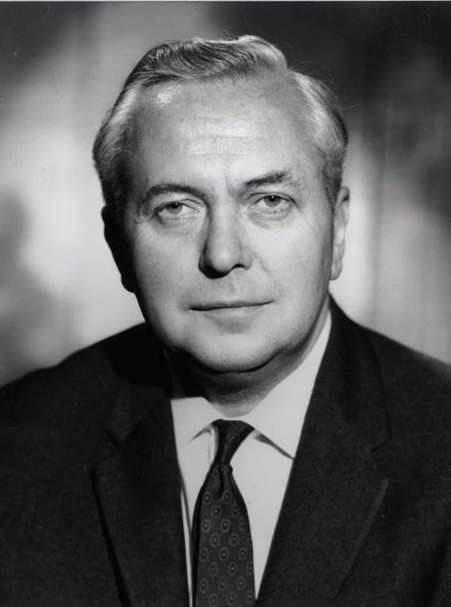
  • Harold Wilson – 1984 Maiden Speech in the House of Lords

    haroldwilson

    Below is the text of the maiden speech in the House of Lords of Harold Wilson, made on 14th March 1984.

    My Lords, in hoping for the indulgence of the House for my maiden speech, I should perhaps confess that this is not in fact the first time that I have spoken from these red Benches. My first parliamentary speech in 1945, in the role of the then lowest form of ministerial life—Parliamentary Secretary to the Ministry of Public Building and Works—was made from the Front Bench in here because, owing to the bombing of another part of the Palace of Westminster, their then Lordships graciously made this Chamber available. I was assigned to the task of directing the progress of the other building.

    I should just like to mention that that was after Walter Elliot (remembered by the older ones of us here), seeing from Whitehall that the Palace of Westminster was on fire, ordered—simply ordered, without any authority—the fire brigade to let the other place burn, pointing out that it was only 100 years old, having been built after the Treasury, as usual, had tried to save money the wrong way and had burnt all those tally sticks. So the fire brigade managed to save at any rate this part of the building.

    I do not know whether in a debate such as today’s I have to declare an interest as Chancellor of the University of Bradford—unpaid. But at any rate this debate on education gives a number of us—including myself—the opportunity to express our anxieties over present and forecast future difficulties that the Open University (OU) is required currently to face.

    I had conceived the idea of the Open University well before anyone ever thought of making me Leader of Her Majesty’s Opposition. I think that I called it the University of the Air, and I kept it under wraps right through the summer of 1964 before announcing it. I announced it finally, with the usual hand-outs, in September. So far as I recall, not a single newspaper reported the plan, except the Economist, then edited by Geoffrey Crowther, who was rapturous about the idea, and later he became the first Chancellor of the University.

    In making that proposal, which, as I say, did not receive a lot of early support, I had particularly in mind the fighting men of World War II, many of who perhaps would have gone to university but for the war, and who had married and had family commitments: the Open University gave some of them a chance to earn wages or salaries and at the same time to study. I do not need to tell this House that the Treasury was implacably opposed. Well, of course—what would your Lordships expect? But so, I am sorry to say, was the Department of Education, which I understand has improved a little from those days. But the resources of civilisation were not to be discounted. I appointed my noble friend Lady Lee of Asheridge Minister of State in the Department of Education. It was no idle threat, I assure your Lordships, and she had to take charge of the whole operation, and the outcome was a triumph on her part.

    At the same time broadcasting involvement was essential. Fortunately, at about that time the heads of the BBC wanted something from me. They came to see me, for a second channel. Well, we negotiated—if you can call it that. The condition that they accepted was an adequate provision of time for the new broadcasting university; and in fact their co-operation was invaluable in those years when it was an entirely new operation, as it has been in all those years since. I think that the university has also been quite useful to the BBC in providing a new area of training for its people.

    I am not quite sure of the rules, but perhaps at this point I ought to record, or declare, a family interest. My elder son, who has been a maths don at four Oxford colleges, is an OU lecturer, and over the years he has given me a good deal of evidence that the course there is at least as tough and as difficult as they required for an Oxford degree; and our other son has graduated through the Open University.

    The interesting fact is that today there are over 50 such universities all over the world, all modelled on ours, and for many years our balance of payments was fortified by sales of teaching material and, at least for a time, of equipment. Some of the engineering students needed to have engineering equipment and others needed equipment for similar studies. But it is, sadly, on the record that two or three years ago, when they cut back on university finances in our new universities, Her Majesty’s Government at the same time put the brake on so far as the OU was concerned.

    I should like to refer to what happened to the British universities. There were big debates in both Houses. In Bradford, for example, all our students in, say, engineering (our main subject), are required to work about a third of their four-year course in British factories or firms. In a few years’ time—and here I am thinking in particular of those who come from the Commonwealth, or further afield—whether as civil servants who have to authorise the import of this or that particular piece of machinery, or whether as industrialists themselves, those former students, as a result of their presence here in this country, working in one British factory or another, may well dictate what equipment they should import.

    Now I should like to turn to the Open University. I believe that the recent cuts forced on OU programmes will prove at least as serious as this short-sighted anti-Commonwealth attitude which we have seen developing in other ways and in other parts in recent years. The 1982 financial provision for the OU of £58.7 million has been cut to £58.2 million in 1983. You may say that this is not very much, £58.7 million to £58.2 million. But it is, of course, a much sharper cut than it appears to be because the figures make no allowance for inflation. Again, if we look at student grants, they amounted to £924 in 1980 and, at constant prices, to £814 in 1981. In real terms, they were 13½ per cent. lower. Over four years from 1980 to 1984, the university’s grant from Whitehall has increased by 24 per cent.—yes, thank you very much, certainly—while the retail price index has risen by 42 per cent., or two-four reversed.

    The £50-odd million that I have mentioned may seem a large sum, but not if’ one realises that the university teaches three-quarters of the whole nation’s part-time university students. It is not sufficiently appreciated that there are these part-time courses and that three-quarters of them are taken in charge by the university. It is also worth knowing, and the Treasury, which perhaps has some responsibility in this area, ought to be pleased to hear—I hope that it will hear—that the Open University graduate costs the country only a little over half as much as a graduate from a conventional university.

    I shall not weary the House with the whole catalogue of cut and cut again. I shall just instance computers. There are two novel and highly successful courses for managers and engineers in industry all over the country, not simply for those who can travel locally to a university. These same managers and engineers in industry have courses dealing with micro-processors and product design and development. It is a fact that already 30,000 engineers and managers have taken these courses through the OU. This year there are 1,100 undergraduates studying the digital computer. There are 2,300 studying the course “Computing and Computers” at a very low cost to the nation. This is a good investment.

    Jointly with the Science and Engineering Research Council, itself of high repute, the university is now planning postgraduate courses which will bring working engineers, working scientists and managers up to date in the latest developments in both manufacturing and the industrial application of computers. Current plans are now at risk at the hands of the rather less than imaginative Treasury, which seems to resent the kind of world in which we all live; these threatened plans would provide for 60,000 citizens of this country operating in this field.

    To cut these research facilities is, to use an old cliché, selling the seed corn, and this at a time when the university’s own industrial company—yes, it is a limited company—the Open University Educational Enterprise Limited, has handed over nearly £440,000 from interest and profits on its activities. I am sure that my noble friend Lord Perry, who has much more experience of this subject than any of us and who was really the creator of the Open University as we know it today, could confirm and verify with far more authority than I can command the alarming figures I have quoted, these current trends and the threat of more to come. He could estimate, I think, their significance for higher education in the widest sense. The facts show that over the next three years, to 1986, on the plans laid down by the authorities, the university will have to cut expenditure by £13.5 million.

    What the statistics will not show are the disappointments and the broken prospects of a generation of students whose potential contributions to British industry and to British inventiveness and competitiveness in a growingly competitive world are being snatched away, from what industry and the education process could provide, by the Treasury, which could not, in my view, in terms of the problems I am describing—I may be a little biased but I have known the Treasury for 40-odd years, and I was First Lord of it once—with any marked success, run a fish and chip shop.

    Noble Lords, at least those of my generation—I remind them of this before I sit down—will know the story of the man during the war who, having climbed the Duke of York’s steps and walked along to Whitehall, was asked by a passer-by “Which side is the War Office on?”, eliciting the reply “Ours, I hope”. After what I have described, based on firm and irrefutable facts and figures—there are lots more of them if anyone wants to have them—the need is for more work, more jobs and, if I may say so, more proof that Her Majesty’s Treasury is really fully committed in this war, this most desperate war, that we have in this country today, the war against unemployment.

    I wish to conclude by referring briefly to this. During the war, I was involved at the head of a series of Government statistical departments. I have to emphasise—and I would be ready to give reasons for this estimate, perhaps when we debate economic affairs in a different way—that the real unemployment figure for Britain is not 3⅓ million. Not at all; that is a completely phoney figure. The real figure is at least 4⅓ million, if one allows for the fact that school-leavers, for example, have been given great help in the creation of training courses by leading firms. In every speech I make in America or when touring abroad, I always pay tribute to one or two in the constituency that I represented for what they do to create jobs that do not really exist for some of these kids. I am thinking of Messrs. Pilkington, British Insulated Callender’s Cables and our Ford factory. But, of course, if our industry is to flourish, and if we are to keep among the top nations in this new technological revolution, then it is essential that the Government stimulate education for industry.

    I had the privilege, as I have said, of working for a time on Winston Churchill’s staff, before he sent me round to other departments to try to get their statistics as he would like to see them—not “cooking” them, but making them credible, understandable and comprehensible. Winston Churchill—there are many here who knew him better than I did—was undoubtedly a humanist. He did a great deal for people who were unattached to him. If he or Clement Attlee were alive today, if either was in charge, I can just imagine that a battery of brief and pungent directives would be flying around Whitehall headed “Action this day”. Many in this House have seen or received and shuddered when they got those documents, as I did. However, on youth unemployment, on stagnation in industry and on training for industry, I am certain that their message would have been “Action now” to stir our people and, above all, the younger generation to genuinely satisfying work and to training facilities that anticipate economic needs and opportunities of the remaining years of this century.

    Is it too much to ask that the same power and sense of direction be now applied in our training and education systems, and in a relevant attack upon the factors that are producing youth unemployment, through the provision of adequate, however varied, educational opportunities on which not only the future of those children, the future citizens, depend, but on which the future of Britain herself in the next half century will most certainly depend?

  • Harold Wilson – 1945 Maiden Speech

    haroldwilson

    Below is the text of the maiden speech made in the House of Commons by Harold Wilson on 9th October 1945.

    I am not sure whether in making a maiden speech from what is, I think, an unusual part of the House one is entitled to ask for its indulgence. Probably I am not entitled to ask for it, though on this occasion I feel the need for it even more than many of my colleagues who were elected to Parliament for the first time in the recent Election. They, at least, have spoken with great authority on the subjects which they have chosen and, although I find myself speaking from a part of the House where one is expected to speak with authority — though I am told this has not always been the case — I am called on to deal with a subject which even veteran Members of this House would enter upon only with very great trepidation — the important question of the amenities and facilities provided for private Members of this House.

    May I say that, speaking as one of the new young Members to whom my hon. Friend referred, I share, as we all do, their desire to see Parliament work as efficiently as it is possible for it to work. My hon. Friend raised a number of points with some of which I am not competent to deal. For instance, he raised the question of the Treasury for which I am, perhaps fortunately, not answerable. He raised also the question of postage which I know is inflicting very serious concern on a number of hon. Members, and I will undertake to see that what he said is brought to the notice of the authorities concerned. I think that all I can properly reply to is this question of the allocation of rooms for which the Ministry of Works is partly responsible, and also the subject he mentioned at the beginning, namely, the provision of accommodation in London for Members who have, so far, had difficulty in finding it.

    With regard to the amenities of Members within this House, the Government and all the authorities concerned are trying to do everything possible to improve them so that Members can do their job as efficiently as possible. I know how important this is in the matter of facilities for dictating letters and interviewing the general public. Members who have had greater experience than I have told me that in the past few weeks the amount of correspondence they have received has been very much greater than they can remember in the past. Certainly, those Members who have had an opportunity, during the recent Recess, of refreshing themselves by visiting their constituencies, or living in them, can testify to the desire of the public, greater than ever before, to see their Member of Parliament and discuss with him questions of private or public importance. I believe that the confidence of the public in Parliament as an institution, and in Members as individuals; is perhaps greater now than at any time in the past.

    The Government are most desirous that all possible facilities shall be given for adequate meetings, and for free and frank discussion between Members and the public. My hon. Friend referred to facilities which have been provided in other parts of the world. I, too, have seen the lavish scale on which Congressmen and Senators in the United States for instance, can entertain members of the public. As the House will know, provision is being made, when the Chamber is rebuilt, for additional amenities for Members, particularly for interviewing and the dictation of letters. In order that those who are charged with the duty of building the new Chamber shall be kept informed of what is required, I am asked by my right hon. Friend to say that it is his intention to carry out the proposal made by his predecessor to appoint a panel of private 188 Members to advise him on any questions of lay-out which may arise in the course of that work.

  • Rosie Winterton – 1997 Maiden Speech in the House of Commons

    Below is the text of the maiden speech made by Rosie Winterton in the House of Commons on 17th June 1997.

    I congratulate my hon. Friend the Member for Regent’s Park and Kensington, North (Ms Buck) on her evocative and passionate speech. Her experience as a Westminster councillor has made her an expert on housing and local government. I am sure that her constituents will appreciate that. I am grateful for the opportunity to make my maiden speech on this important Bill, which will benefit directly the lives of many of my constituents in Doncaster, Central by improving housing provision and generating much-needed jobs.

    In making a maiden speech, it is customary to refer to one’s immediate predecessor. I would like to go much further by paying a heartfelt tribute to Sir Harold Walker. He turned a Conservative seat into a Labour one in 1964, and served the people of Doncaster, Central loyally for 33 years. The people of Doncaster returned that loyalty with not only deep respect but true affection. Those feelings did not stem only from the fact that Sir Harold was an excellent constituency Member. Doncaster people are proud of Harold’s national work. He was the longest-serving Employment Minister and piloted through Parliament the Health and Safety at Work, etc. Act 1974, the Employment Protection Act 1975, and the Equal Pay Act 1970. He reformed the Merchant Shipping Acts and introduced many other pieces of legislation that bettered the employment conditions of millions of working people. Sir Harold went on to occupy with great distinction the position of Deputy Speaker and Chairman of Ways and Means for nine years.

    Sir Harold’s one shortcoming is his time-keeping, which is due only to the fact that he so enjoys talking to people that he is often delayed in getting to meetings. He takes jokes about it in good heart, and during the general election campaign he apologised to an assembled company for his delayed arrival by saying, rather proudly, “I am of course known throughout Doncaster as the late Sir Harold Walker.”

    During the general election campaign, I was reminded time after time by constituents of what a hard act to follow Harold would be. That was an unnerving experience, but Harold and his wife Mary did everything possible to help me during the campaign. They both worked tirelessly on my behalf; I could not have asked for more. Harold is not the tallest of men, and perhaps derives some pleasure from the thought that whilst he cannot tower over many people, he can at least tower over his successor.

    Doncaster is renowned for its coal mining, its railways and its thoroughbred horse racing, which takes place on the Town Moor course. The Grand St. Leger, as I am sure hon. Members know, is one of the highlights of the racing calendar. There is one other fact about Doncaster that I hope will cause Ministers to look favourably on my constituency. In 1899, the Doncaster branch of the Amalgamated Society of Railway Servants sent a motion to the Trades Union Congress meeting in Plymouth. The motion called on the TUC to organise a joint conference with socialist and co-operative bodies to discuss Labour representation. Thus it was really in Doncaster that the Labour party was conceived. I am sure that hon. Members will be delighted to learn that the foundation meeting of the society was held at the Good Woman inn at St. Sepulchre Gate in Doncaster.

    For me, being the area’s Member of Parliament is a special honour, as I was brought up in Doncaster. My mother Valerie was a nursery school teacher, and my father Gordon a local head teacher—and, later, an elected representative on Doncaster council. Let me take this opportunity to thank not only the electors of Doncaster, Central for giving me the privilege of serving them, but the members of the constituency Labour party for campaigning for me in the recent historic general election, with its Labour landslide.

    Yorkshire people are famous for the warmth of their welcome, and the people of Doncaster are no exception. Since the election, I have been overwhelmed by people’s generosity and kindness, and I intend to repay that by doing my best to represent their interests in the House.

    The Bill that we are discussing is about achieving two of the Government’s important objectives, jobs and social justice. When it is passed, councils such as mine in Doncaster will at last be able to use some of the money that they have in the bank from the sale of council houses to modernise existing homes and to build desperately needed new ones. The consequent building and refurbishment programme can be used to provide much-needed jobs and training in Doncaster. I believe that the Bill will end 18 years of unremitting underinvestment in housing in Doncaster.

    More than 5,000 people in my constituency alone are victims of Tory neglect, waiting for homes and worried about accommodation for themselves and their families. They deserve better, and the Bill will help them in their aspirations for a better life. Too many people in the Doncaster area are out of work, alienated and disaffected because they see little hope or future. The knock-on effects on society, in terms of crime and the growing drug culture, are frightening to witness.

    Much of the drive for change that will be brought about by the Bill is due to our two Ministers’ lifetime commitment to decent housing for all, and to local government. I understand that the Government will be looking to the construction industry to provide a significant number of new jobs and apprenticeships, but let me take that further, and ask whether the Ministers will visit my constituency to hear at first hand from a cross-section of representatives of my local authority and the voluntary and private sectors what Doncaster can do to assist in achieving the Government’s stated aims—securing jobs and social justice.

    Britain’s housing problems cannot be eliminated overnight, and unemployment cannot be made to disappear immediately, but both difficulties can be alleviated through the regional development planning to which my right hon. Friend the Deputy Prime Minister and Secretary of State for the Environment, Transport and the Regions and his Ministers are dedicated. The Yorkshire and Humberside region could become the most exciting growth area in the country. From Sheffield to Humberside stretches a conurbation of great economic potential, where considerable growth could take place. Through the policies of my right hon. Friend and his Ministers, that growth will be encouraged, cultivated and fashioned to bring about a regeneration of Yorkshire and Humberside.

    The Bill makes a start by tackling the basic issue of people’s right to decent homes. I believe that, if we can sort that out, many of society’s other problems can be tackled effectively. That is why I welcome the Bill, on behalf of my constituents in Doncaster, Central.

  • Tim Yeo – 1983 Maiden Speech in the House of Commons

    timyeo

    Below is the text of the maiden speech made by Tim Yeo in the House of Commons on 5th July 1983.

    I am grateful to you, Mr. Speaker, for calling me to make my maiden speech on a subject which affects far more people than the obscure title of the order suggests and which has become controversial.

    I declare an interest as the director of the Spastics Society which is one of the charities that derives substantial revenue from a football pool that is operated under the Pool Competition Act 1971. I hope to remain employed by the society until the end of this year and thereafter to serve it in a voluntary role.

    Although my constituency is new, it comprises some of the oldest and most beautiful villages in East Anglia. About two thirds of my constituency formed part of the old Sudbury and Woodbridge constituency. I pay warm tribute to Mr. Keith Stainton, the former Member of Parliament for that constituency. He had a distinguished war record and served the constituency most conscientiously for almost 20 years. I can testify to the loyalty and respect that he commanded in the constituency.

    Suffolk, South is an area of sharp contrasts. The other one third, which was part of the old Bury St. Edmunds constituency, contains Haverhill, a town with a substantial GLC overspill population, and many rural villages. It is a reflection on the excellent work of my hon. Friend the Member for Bury St. Edmunds (Mr. Griffiths), who supported me generously before and during the general election campaign with time and advice, that he is spoken of as highly on the GLC estates in Haverhill—where there is now a rapidly growing element of owner-occupation — as in the villages by people who are Suffolk born and bred.

    The Pool Competitions Act is an important measure for several of the leading charities. The Spastics Society, the Imperial Cancer Research Fund, the National Fund for Research into Crippling Diseases, better known as Action Research for the Crippled Child, are the best known, and each derives substantial revenue from the pools that operate under the Act.

    Over the past 25 years, the Spastics Society has received almost £40 million from that source, making it the most important single source of revenue. Those who decry the operation of the football pools ignore the tremendous benefit that has been conferred not just on the charitable organisations, but on the thousands of families who have reason to be profoundly grateful for the income received by charities from the operation of the Spastics Society, football pool and other charity pools.

    The relative importance of the pools has declined. The Spastics Society football pools contributed 44 per cent. of total voluntary income in 1973–74 whereas the figure for 1982–83 was down to 6 per cent. However, £500,000 still comes to the society from the football pool. That is three times the amount received by direct grant from central Government.

    The society paid £483,000 last year in unrecoverable VAT. I hope that my right hon. Friend the Minister of State will have the opportunity to remind his Treasury colleagues about the burden that VAT imposes on charities. The sum of £500,000 is a substantial one in charity terms. It is enough to pay for the whole of the Spastics Society’s social work service of 30 specialist workers assisting families in England and Wales. It is sufficient to cover, in running 33 centres for spastic adults, the difference between the cost and the fees received from local authorities. The money from the football pool is financing worthy activities.

    Apart from the income that the charities receive, there is another aspect of the football pools that has so far been overlooked this evening. They provide a means for 1.5 million people every year to make a small contribution to charity while at the same time enjoying, quite legitimately, a modest flutter with the possibility of sizeable, although not sensational, financial gain. Although it may be held that gambling is in one sense an undesirable activity, I do not believe that the participants in such football pools, by staking perhaps 15p or 20p a week, are endangering their family budget. The operation of the pools may mean that among the 1.5 million weekly subscribers are some who would not otherwise be aware of the charities that they are supporting and the work that those organisations are doing.

    There has been a general recognition for a number of years that the existing position, requiring the renewal of the order every year, is unsatisfactory not only for the Government and the House but for the operators of the pools who cannot make any long-term plans, and for the charities who are uncertain about the security of the income. Therefore, I welcome without reservation the statement by my right hon. Friend that the Act will be renewed annually throughout the life of the present Parliament. As we all know, this will run for a full five years. The Government have given the pool operators and the charities a longer period of secure operation than at any time since the original passage of the Pool Competitions Act 1971. For that reason I know that the charities will be grateful to my right hon. Friend for his assurance.

    My right hon. Friend will also know that extensive consultations have been held over the past few years with the Home Office, and the charity pool operators, and the charities were fully involved in those consultations. The charities and pool operators made clear their preference for new legislation that would permit the continued operation of charity pools on a permanent basis. If that is not possible, I hope that my right hon. Friend will hold discussions with all the parties involved to ensure that any damage to the charities’ incomes, following the ending of the present basis of pool operation, will be minimised.

    Bringing the present charity pools within the scope of the 1976 Act would be difficult to achieve without some adverse impact, but if it cannot be done. I hope that my right hon. Friend will argue even more strongly with his Treasury colleagues about value added tax.

    The Pool Competitions Act enshrines what seems to be an anomalous position, because it restricts the charity pools to a small number of specified operators. I stress that that restriction has been the wish of successive Governments since 1971. The charities concerned have no desire to be part of an exclusive group. At all times, the charities and pool operators have been at pains to stress that they would be happy for the Act to be amended to allow other charities to compete on an equal basis.

    When the matter was discussed in the past—the point was raised again this evening—concern was expressed about the expenses of pool operators. I stress, for the benefit of those who do not understand the nature of these pools, that the pool operators are commercial companies which are separate from the charities. The Spastics Society, for example, exercises no management control over the Spastics Society football pool, and has no legal responsibility for its administration.

    To some extent, I share the concern about the expense ratios. However, the circumstances of the pools have to be borne in mind, in particular the proportionate cost of running a football pool with a small weekly stake. It is 16p in the case of the Spastics Society football pool. The cost of running such a pool will inevitably be much higher than the cost of running a pool that has a weekly stake of, say, £1. Moreover, all subscribers should be aware how much of their stake — in the case of the Spastics Society football pool, it is 15 per cent. — goes to the charity, how much goes to the prize fund, and how much to expenses. Pool subscribers will also be aware that after the charitable donation has been deducted from their weekly stake, one third of what remains goes to the Customs and Excise in betting duty.

    The hon. Member for Huddersfield (Mr. Sheerman) may have talked to a number of leading fund raisers during the past week, but he has not attempted to talk to me, or to my colleagues who are involved in fund raising, and whom I see in the Gallery. As I run one of the largest fundraising operations in the country, raising about £10 million a year from voluntary sources, it is a shame that the hon. Gentleman made no attempt to talk to me if there is as much concern about fund-raising methods and costs as there seems to be. We in the Spastics Society are perfectly happy with the present system of pool operations.

    I hope we shall find a way forward that does not damage the financial position of the charities over the longer term. The voluntary sector plays a major part in the life of our country, and unusually, it enjoys the support, both practical and philosophical, of most, if not all, sections of the community. The true size of voluntary organisations is not known precisely, although the Charities Aid Foundation is sponsoring research, the results of which will be available later. It is likely to show that in economic and financial terms the voluntary sector is a force to be reckoned with.

    The Government have expressed their enthusiasm for the voluntary sector on many occasions and have backed their words with deeds such as increasing direct Government grants and fiscal concessions in the form of covenants, legacies and relief from stamp duty. That has demonstrated tangibly the Government’s remarkable support for the activities of many leading charities. Bearing in mind that every pound of direct Government support is boosted by voluntary donations and that in addition to expenditure by voluntary charities considerable real value is obtained through the work of unpaid volunteers, there is a substantial multiplier effect at work, converting each pound of Government assistance into several pounds’ worth of activity.

    The voluntary sector is one of the most cost-effective areas for Government expenditure. With the severe limitations that will now exist, quite rightly, on both central and local government expenditure over the next few years, the significance of the voluntary sector is likely to grow.

    By giving his assurance, my right hon. Friend the Minister has given some short and medium-term help to the charities. But the long-term anxiety is perhaps now more pronounced. It is in the interests of the community for the House to approve legislation that allows some modest form of gambling to be promoted for the benefit of charity. By doing so, the voluntary sector, which we are all so anxious to encourage, would receive continuing benefits.

  • Konni Zilliacus – 1945 Maiden Speech

    Below is the text of the maiden speech made by Konni Zilliacus in the House of Commons on 23rd August 1945.

    I venture to take part in this Debate so soon after entering this House, because this subject is one very close to my heart. While I was still in the Army at the end of the last war, I decided to try to enter the service of the League of Nations, and I succeeded in that attempt. For 19 years I was an official of the League of Nations Secretariat. I entered the service of the League because I believed then as I believe now that world government is the only alternative to world war, and I believed then and I believe now that this country has a very special part to play in the great adventure of leading mankind into the paths of peace.

    Some of the founders of the Covenant looked upon the League as the first step towards world government. It is my belief that the League failed largely because we lost the urge and the vision necessary to follow up that first step. At any rate, we did lose, and the second world war was the penalty. That is the price we have paid for our second chance, perhaps our last chance as has been said here before. Presented to us as our second and last chance, the Charter of the United Nations inspires mixed feelings, in some of us at any rate. On the one hand we are profoundly grateful to have been vouchsafed a second chance, and, of course, we must ratify this Charter and make the best of it; but on the other hand, 27 years after the launching of the Covenant and after six years of the second world war, this Charter is a very poor and timid affair. The Covenant, it will be remembered, was regarded by large sections of public opinion as a deep disappointment and as a very poor and unsatisfactory proposition, but the Charter of to-day is only the Covenant writ large. There are some improvements certainly, but there is not very much added to the Covenant. There is, of course, ode enormous difference, and a very great and beneficial difference, and that is that the Charter was first ratified, and by the overwhelming majority of 89 votes to two, by that redoubtable body, the United States Senate, which an American friend of mine once described as the graveyard of all the fallen hopes of world peace.

    The second important fact is that one of the three foundation members of this Charter of the United Nations is the Union of Soviet Socialist Republics. I venture to believe that the third and equally great fact is that this Charter is being presented for approval to this House by the first Labour Government to have a majority of its own. In a world where long-range rockets and flying bombs, world-wide air travel, television and wireless communication have become commonplace, the Charter strikes one rather, when presented as a foundation for building world peace, as a proposition to enter a horse and buggy race at Brooklands. In the light of the explosion of the atomic bomb, which has bludgeoned our imagination and bruised our souls, one feels rather that on arrival at Brooklands in our horse and buggy we find that the event has been changed without notice into a jet-plane race.

    That is why I welcomed the Prime Minister’s statement the other day that the discovery of the atom bomb might make a revaluation of the whole situation, especially in the sphere of international relations, necessary, and the even stronger words that fell from the lips of my right hon. Friend the Secretary of State for Foreign Affairs at the opening meeting of the Preparatory Commission for the United Nations, when he said that the effect of the atom bomb on the organisation of security was such that, in the whole security sphere, a great many of our previous conceptions and a great many of the assumptions on which the San Francisco Conference had worked might have to be radically revised.

    I hope that we take the San Francisco Charter in our stride, and ask ourselves incidentally, “Where do we go from here?” The Charter provides for its own amendment and can be used as the starting point for supplementary treaties and agreements of every kind based on this or that provision of its many clauses. Let me deal with one or two of the points that seem to me to arise in the present situation within the main features of the Charter. I believe that we should proclaim boldly that we regard the Charter as nothing more or less than an embryo system of world government, and intend to work as far as and as fast as we can to develop it in that direction. At the end of the last war, when the Covenant was first being elaborated to the world, a great statesman, Field-Marshal Smuts, with that union of lofty idealism and practical wisdom to which the Prime Minister paid such a just tribute yesterday, produced a remarkable pamphlet, “The League of Nations: a Practical Suggestion.” It was really a kind of public statement more than a pamphlet, for Field-Marshal Smuts was then a member of the Imperial War Cabinet. In that pamphlet he said that what we wanted was a League of Nations that would be real, practical and effective as a system of world government.

    I suggest that nothing less than that should be the aim of British foreign policy to-day, and that all secondary problems and immediate issues should be approached in the light of that over-riding major purpose. It makes a real difference to the way in which we solve immediate issues if we approach them from the point of view of working for the realisation, as the Labour Party’s policy in 1935 put it, bit by bit and step by step, of a co-operative world commonwealth, or, as we approach the Charter, of the maximum infringement of sovereignty within which we will try to make ourselves as comfortable as we can on the basis of the balance of power. So much for our major long-term policy in approaching the problems of organisation raised in the new Charter.

    I come to the economic and social foundations of this new peace machinery. The Charter is a great improvement in this respect and a great advance on the Covenant. For the first time, the improvement of social and economic activities and relations has been realised, as it were, officially and as a part of the structure of peace. I want to suggest four points that, I think, are worthy of attention in this connection. The first is the need for making the new specialist agencies, or, as I should prefer to call them, functional organisations, comprehensive, combining this new machinery and the bits that remain of the old machinery. For instance, the International Food and Agricultural Organisation should absorb whatever is left of the International Institute of Agriculture. The new World Health Organisation should take over what is left of the League’s Health Organisation and the old pre-last war international Public Health Office in Paris. The new organisation for transport and communications should find room within its framework for the universal Postal Union, and so on.

    Second, there should be a sufficient measure of central direction and impulse to this whole rather elaborate and scattered machinery. That is the point to which my right hon. Friend and former colleague from Geneva, the Senior Burgess for Oxford University (Sir A. Salter), has already called attention. It is a serious problem because, owing to the degree to which States have clung to their independence of this new machinery, the danger is that, with the very multifarious economic, social and technical activities, we shall have Governments succumbing to the temptation, either of saying that they will not do a thing for fear of offending certain sections of public opinion, or of not doing a thing because they do not want to do it, and so “passing the buck” from one committee and conference to another ad infinitum. We saw the beginning of that kind of thing at Geneva, and it would be a pity if the scattered and loose nature of this new machinery should allow such a situation to arise again. Fortunately, the provisions of the Charter are so vaguely and lightly sketched that there is room for a great deal of initiative in this respect, and I hope that the Government will take the initiative in framing these new proposals on lines that will endow the Social and Economic Council with adequate powers of supervision, direction and co-ordination, and that it will base this organisation on the budget and general directives of the Assembly.

    I hope, too, that the principle of the International Labour Organisation, the principle of direct functional representation which has been found so successful, will be extended to all the specialised agencies. For instance, in the organisation concerned with international economic relations, I hope there will be room not only for boards of trade, but also for national and international chambers of commerce, for national and international co-operative associations and trade union organisations; and in the transport organisation I hope to see the great international shipping companies, the national and international associations concerned with coastal traffic, railways and other forms of communication, as well as the international transport workers’ federations, seamen’s unions, railwaymen’s unions, postal workers’ unions and every kind of sectional interest directly concerned with these organisations. The arguments for that are the same as the arguments for applying the principle to the International Labour Organisation.

    I come to the question of international trusteeship, to which my right hon. Friend the Prime Minister drew attention yesterday. As this system stands in the Charter, it does not advance us very far, for in Chapter 12, Article 76, it is provided that the principle of the open door shall be applied, subject to the overriding interest of the native inhabitants. That is a very true and sound principle, but the Charter allows it to be applied by the colonial powers on their own judgment and consideration. Article 77 provides that Governments may, if they wish, voluntarily put their colonies within the international trusteeship system, but are under no obligation to do so if they do not choose. The system applies primarily only to the colonies taken from enemy Powers in the last war and the colonies that may be taken in this war. So that what the system amounts to in the Charter is a very high-sounding formula for allowing us to take the colonies of the ex-enemy States and putting them within our Imperial preference system.

    The Labour Party have a policy on this subject, which I hope will be in some form, in outline or principle, the policy of His Majesty’s Government. The Labour Party in 1943, at their annual conference, adopted a post-war policy on colonies in which they proposed, on the basis of reciprocity, to offer to put all non-self-governing colonies under a system of international trusteeship, and to apply to that system the principle of the open door, subject to the over-riding rights of the native inhabitants, but taking the judgment of the International Trusteeship Council on whether or not any particular measure of discrimination should or should not be regarded as necessary in the interests of the native inhabitants, with the right of appeal to the court on questions of law and fact arising out of such matters. I hope that that is still our policy, for, if that is the policy of His Majesty’s Government, we shall infuse honesty and vitality into provisions that at present seem somewhat hollow.

    The central question of the organisation of peace is, of course, the question of the distribution and use of power. I welcome the fact that power in the Charter is to be openly vested in the permanent members of the Council, that is, the Big Five. I have no objection to the so-called veto of the Big Five. In the first 10 years of the League, the League worked effectively only because it was, in fact, run by England and France who have been Allies in the war, and still could pull together. They had to take account of the views of other States, because the votes of other States were necessary, and they were bound by the obligations of the Covenant; but they did, in fact, control the League jointly on the basis of the obligations of the Covenant, with due regard to the rights of smaller States, and although they were theoretically bound to apply sanctions to each other, such a contingency was unthinkable. As from 1934 onwards, the Labour Party advocated the revival of the collective system, laid in ruins by the appeasement policy of the self-styled realists, but the conclusion of an alliance between France, Great Britain and the Soviet Union within the League as the steel framework of peace in Europe, and by establishing the closest possible co-operation and association between this group of States and the United States as the foundation of world peace. That, I believe, was a close anticipation of the central security provision of the new Charter, and I believe if that policy had been adopted when it was first pressed by the Labour Party 10 years ago, we should never have had the second world war.

    Let us assume for a moment that the primary problem of how to keep the Big Five together has been solved from the point of view of security. Obviously, if the whole of security rests on the solidarity of the Big Five, the major problem of security is not the assembling of international military forces to deal with aggression so much as the political problem of how to ensure that the Big Five pull together and do not fall apart. As long as they pull together, there is no aggressor in the world that would dare to stand up to them for five minutes. They therefore do not need any of the elaborate provisions of the Charter for assembling international forces from the ends of the earth, which is a dubious expedient and politically quite superfluous. All that is unnecessary as long as the Big Five pull together.

    There is a secondary problem, the genuine police force problem of maintaining law and order. If the Security Council is to function effectively, it needs some kind of what I should like to call a handy all-purposes executive arm. The Labour Party’s policy contained in “The International Post-war Settlement,” for a genuine international police force to be put under the command of some commander appointed by the military staff committee of the Security Council, would provide the proper body for discharging the routine functions of maintaining world law and order that will fall to the lot of the Security Council. We have had two instances recently which may serve as cases in point. The first was the recent trouble in Syria and Lebanon. It would have been very valuable if we had had the Security Council in being and an international police force at its orders to maintain law and order in those territories, without arousing the kind of suspicion and national animosity that were aroused by the way in which the incidents had to be handled under existing conditions.

    Again, we have had a good deal of potential trouble and unrest between Greece and her Northern neighbours. There, too, the kind of force that I am suggesting, and which is suggested in the Labour Party’s foreign policy, would be an extremely useful kind of force to carry out any routine police duties and investigations required by the situation. The Charter is an advance on the Covenant in that it rules out national intervention—the system by which a great Power would land marines or something of that sort to take care of the lives and property of its subjects in the territory of some other State which, in the view of the great Power, had not maintained order and which was too weak to resent this action, and such an international force would be useful to the Security Council to fill the vacuum thereby created. An international police force would carry out such policing duties as were necessary under the orders of the Security Council.

    What about the major political problem of keeping the Big Five together? I believe that it turns very largely on whether agreement can be reached between the Great Powers on the question of their armaments. If there is any kind of competition or suspicion between them as regards their armaments, it is impossible for them to work together effectively, and any kind of alliance between them will not be worth the paper it is written on. On the other hand, if we do conclude an agreement on armaments, then we have laid the foundation for a solid working agreement as partners and allies in upholding law and order in the world. The question of the atomic bomb is crucial to that issue, because so long as we withhold the secret of the atomic bomb from the Soviet Union we make ourselves directly responsible for starting a race in atomic bomb research, which will be far worse than a race in armaments; indeed, it will be the most fiendish form of a race in armaments. I realise that the Government may have difficulty in stating now their position on that issue, but I do hope that they will at least repudiate the attitude adopted by the right hon. Gentleman the Leader of the Opposition, who declared firmly and emphatically his opposition to sharing this secret with any other State in the world. A gloss has been given to that statement, perhaps quite unjustly, in certain parts of the Press. It has been stated by some diplomatic correspondents, for instance, that now there is a serious shift in the balance of power owing to our monopoly of the secret of the atomic bomb, and that from now on an Anglo-American bloc will function more or less as a unit in international affairs and will use their improved position in the balance of power to take a much tougher line with the Soviet Union about Eastern European affairs. Whatever hesitation the Government may perhaps quite rightly have about stating their positive policy on this matter before meeting the other Foreign Secretaries in council, I hope that they will make it perfectly clear that they do not propose to play Anglo-American atomic power politics against the Soviet Union in Eastern Europe.

    So much for the question of power, in relation to the holding together of the Big Five, which is the central issue in making this new world organisation work. I should like to touch on the essential problem in its relation to our European policy. Let me take as a starting point two statements made by my right hon. Friend the Secretary of State for Foreign Affairs during his magnificent address to the Blackpool Labour Conference last Whitsuntide. He said that the United States of America was a country which believed in private enterprise and that the Soviet Union had socialised her internal economy. Britain, he said, stood between the two with a tremendously progressive urge towards the socialised economy we need. My right hon. Friend the Minister of Education just now made the same point that we stand, in many respects, half-way between the Soviet Union and the United States. It is a very important point, to which I shall return in a moment. The Blackpool statement went on: I think it was the late Lord Beaconsfield who once said Britain and France joined together are an insurance for peace, but Britain, France and Russia joined together are a security for peace. How can an Anglo-Franco-Soviet combination serve to keep together the Big Five? I believe it can do so in this way. The United States and the Soviet Union are at opposite poles in this social crisis which, at present, is convulsing the world. The real danger for peace—let us face it quite frankly and honestly—is that the Big Five may break up because their two greatest members drift apart owing to their too-different approach to the paramount social issue. But under no conceivable government on either side of the Atlantic could a breach be opened between the English-speaking nations wide enough to threaten peace. Thank God for that; we have reached the stage of civilisation in our mutual relations where that possibility is definitely ruled out. On the other hand, American reactions, I believe, could and might have pulled a Tory England out of Europe and into opposition to the Soviet Union, whereas American Liberalism and trade unionism will always be strong enough to prevent a breach between an Anglo-Franco-Soviet combination and the United States. Therefore, our way to keep the Big Five together is to cleave to our Alliance with the Soviet Union through thick and thin, and let nothing come between us or cloud the good relations and feelings which exist.

    For what purpose and on what basis can we and France and the Soviet Union co-operate and form a firm and enduring combination within the United Nations Security Council? I believe we can do that by dedicating ourselves to the reconstruction, the unification and pacification of Europe. We are pledged to co-operate by the Anglo-Soviet Alliance, and I venture to believe we should work towards converting the Anglo-Soviet and Franco-Soviet Alliances into a comprehensive all-in agreement embracing on one side Great Britain, France and our Western European neighbours grouped in some form of economic and political union, and on the other the Soviet Union and the Eastern European group of States associated with the Soviet Union. The immediate objective of that combination, of course, would be to apply the provisions of the peace settlement to the ex-enemy States, but the constructive long-term purpose would be the unification and reconstruction of Europe. In that enterprise we could confidently enlist the co-operation and friendship of the United States and, so far as they were relevant to the situation, of China also.

    On what basis can Europe be reconstructed? The point has been rightly made that political democracy is essential to the reconstruction of Europe, but I think it is equally important to make the point that Europe can be successfully reconstructed for peace only on the basis of a sweeping advance towards Socialism. I hope that His Majesty’s Government will make their position quite clear on that point, even at the risk of losing the appearance of national unity in foreign policy. The Labour Party declared in its own foreign policy statement, “The International Post-War Settlement,” that Socialism was a fundamental necessity to the realisation of our international aims as well as of our domestic aims. Why did we say that? The answer is quite simple; it is not even new. It is contained in Palmerston’s statement, “If you ask me what a good foreign policy is, I reply that it is a good home policy,” and in Gladstone’s statement, “If you want to understand a country’s foreign policy, you must examine its domestic conditions, for the two are inseparable.”

    To-day, it is less than ever possible to separate domestic policy from foreign policy, for both are concerned primarily with issues of social justice and economic organisation. The dividing line between them has become so thin as to be well-nigh invisible. In home affairs we have national unity as regards our aims. We all want more houses, full employment, social security, better health services, better education and better pensions for the aged, and the only rock on which our national unity is split is the all-important question of the means to attain those aims. We believe that certain measures of nationalisation, a limited but definite advance towards Socialism, form the essential basis for reconstruction in this country. The other side do not believe that. I venture to think that in foreign policy we have the same unity of aims and the same difference as regards the methods necessary to attain them.

    While those of us who sit on opposite sides of this House can debate this question, thank Heaven, in a spirit of mutual understanding, and a desire for compromise and agreement, those who represent the same two points of view in Europe are standing on opposite sides of the barricades with arms in their hand. These things are being settled by Fascist counter-revolution and by social revolution led by the resistance movements. The overthrow of Fascism in Europe has meant the downfall of capitalism, for the reason that the defenders of the old social order in Europe, with a few honourable exceptions who were promptly liquidated or expropriated, threw in their lot with Fascism and have been dragged down in its fall. They started as appeasers, continued as collaborators, and ended as Quislings; they are now pushing up the daisies or facing firing squads. The resistance movements, on the other hand, are based on the working class, and largely on Socialist and Communist leadership. Their reconstruction programmes involve a sweeping advance toward socialism. On the issue of political democracy and civil liberty we stand with the U.S.A. in opposition to the views of the regimes in Eastern Europe. We are entitled to press our views of political democracy and civil liberty. I am glad we have abandoned the principle of non-interference in the internal affairs of European countries, because I think the job of reconstruction cannot be hindered by the claims of sovereignty.

    The political formulae of Western democracy displaced from their social context can mean anything or nothing. I speak feelingly because I have seen three years of intervention in Russia conducted in the name of non-interference with the internal affairs of Russia, claiming to be solely concerned with political democracy and self-determination in Russia without taking sides either with the Right or Left. I have seen, at Geneva, years of appeasement of the Fascist powers, conducted in the name of non-interference. I have seen some people defend non-intervention in Spain. As for Greece, I leave hon. Members to draw their own conclusions. I do beg the Government to make it clear that when they are using this same formula of political democracy and self-determination they axe doing so in the context of the social struggle that is taking place in Europe, and that they will make it clear that in no circumstances and under no pretext whatever will British-controlled economic and military power be used to bolster up reaction and counter-revolution in Europe. Having pressed our view of political democracy and civil liberties, I hope we will also say that we share with the Soviet Union the view that economic reconstruction in Europe can operate successfully only on the basis of a substantial advance towards Socialism, because the old social order has been smashed materially and compromised morally beyond repair in Europe, and that we agree with the reconstruction programmes of the resistance movements under their Socialist and Communist leadership, wish them every success, and would be glad to co-operate with them on the lines indicated in their reconstruction programmes.

    Let us say frankly that we believe Socialism is a fundamental necessity to the reconstruction of Europe and the spread of political democracy and liberty in Europe. Those were our words when we were in opposition; let us stick to this policy now that we are in power. We have acted on that belief in this country; let us act on it abroad. The necessity for Socialism does not stop at our frontiers, but expands throughout Europe. A new wind is blowing throughout the world and we are part of the wind. My right hon. Friend the Lord Privy Seal said a few days ago that he hoped it would be understood that the coming into power of Labour meant something different in this House. It means something different throughout the world. For this election, if you like, is our British version of the Russian Revolution, or, better still, perhaps it bears the same relation to the Russian Revolution and to its successor, the resistance movements in Europe, as the Government and Parliament that brought in the Reform Bill of 1832 bore to the French Revolution, and just as the Whigs and Liberals of the 19th century made no bones about their sympathy and support for the middle-class revolutions that were engaged in cleaning up the remnants of feudalism and the power of the landed aristocracy on the Continent, I hope that Labour in this country, to-day as yesterday, will send its sympathy and support and give its co-operation to the resistance movements which are working for a new social order in Europe. Let the message go forth that the hopes of those in other countries who greeted the advent of a Labour Government with joy are not mistaken, that their great expectations are not to be dashed to the ground, that we are not merely a Tory “Caretaker” Government in foreign affairs, but that foreign policy from now on will be inspired by a new vision, a new spirit, a new hope, new aims and new purposes, so that those who have died in the war shall not have died in vain and that this country, the Mother of Parliaments, will once more take the lead in this difficult art of living, the art of government, and apply that leadership and new faith to that enormously difficult problem of converting the tangled and miserable world of to-day into a mankind living free and at peace under an effective system of world government.
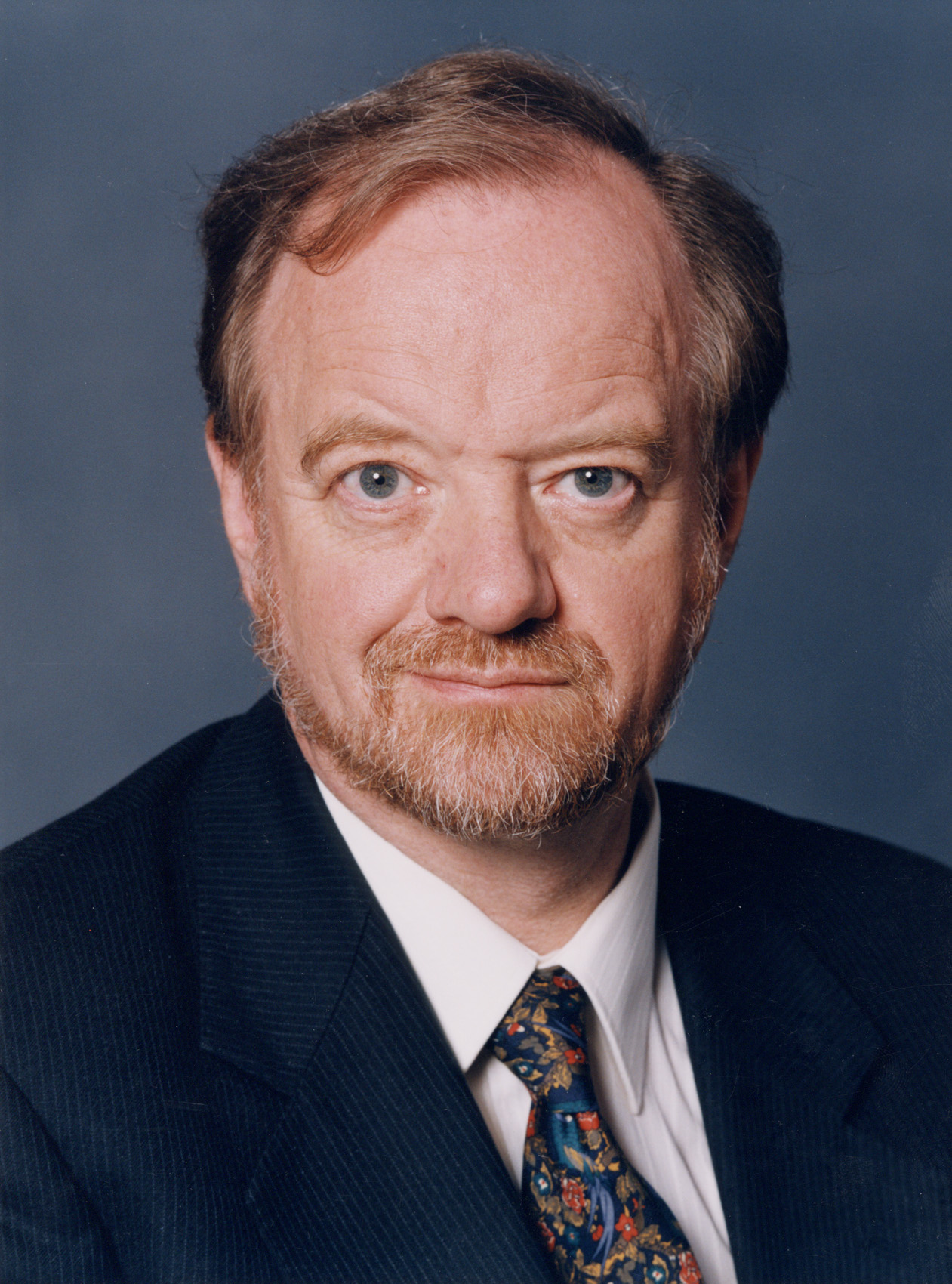
  • Alistair Darling – 1987 Maiden Speech in the House of Commons

    alistairdarling

    Below is the text of the maiden speech made by Alistair Darling in the House of Commons on 6th July 1987.

    I am obliged to you, Mr. Speaker, for giving me the opportunity to make my maiden speech. Before I address the subject matter of the debate, I wish to pay tribute to my immediate predecessor, Sir Alex Fletcher, who represented the constituency for four years after the redrawing of the boundaries in 1983. Before that he had represented Edinburgh, North for some years. When I had dealings with him he was entirely courteous and during the election campaign there was no rancour. I am happy to tell the House that the campaign was conducted entirely on the issues, which is perhaps why I have the pleasure of being able to address the House this evening.

    Before I address myself to the Bill I take the opportunity of paying tribute to George Willis, who represented Edinburgh, North and who sadly died during the general election campaign.

    It is appropriate that in my first speech in this place I should talk about a local government Bill that affects Scotland and other parts of the United Kingdom. I shall allude briefly to the position of Scotland and of those of my right hon. and hon. Friends who are not separatists, who form the majority of Scottish Opposition Members. If we are to be part of the United Kingdom, the position of those of us in Scotland must be considered and recognised. I consider that it is bad practice to attempt to legislate by what are essentially English provisions and to foist those on Scotland without giving them separate consideration, which they so richly deserve, from a Scottish point of view.

    There is a feeling abroad in Scotland that the Government do not care. That feeling will be exacerbated or will be fired if we are to see more legislation that applies to Scotland tacked onto the back of English legislation. The powers of the Secretary of State for Scotland are perhaps greater than those of any other Secretary of State and that makes the case all the more for giving Scotland and Scottish legislation separate consideration. If the Government are so proud of their record, let us hear those who speak for it. Let them proclaim the advantages that they say have come to Scotland. There is a junior Scottish Minister on the Treasury Front Bench and perhaps we shall have the opportunity during the debate of hearing what he has to say about the Bill.

    This is an unusual local government Bill, because it deals with Scotland and other parts of the United Kingdom. Scotland normally has separate legislation and Scottish legislation usually follows in about a year after the legislation has been introduced for the rest of the United Kingdom. That was the position until the introduction of the community charge legislation, or the legislation that imposes a poll tax on Scotland. In that instance Scotland was treated, for once, as an experiment. The poll tax has been tried out in Scotland as an experiment to see whether it will work and to see what the response is before it is tried in the rest of the United Kingdom.

    In a perverse sort of way it is possible that some good may come from Scotland being used in this way. Conservative Members know how greatly their forces were diminished north of the border and I believe that the poll tax contributed possibly more than anything else to their rejection at the ballot box just one month ago. The much criticised and much talked about yuppies, if there be such creatures, turned out overwhelmingly to support Labour Members.

    In Edinburgh, Central, as in the rest of the country, we have a sense of fairness and decency and of what is right and what is wrong. We believe that if a local authority is elected it should be left to get on with the job without interference from central Government. The hallmark of this Government is that they have interfered more than any other Administration in the way in which local authorities conduct their business. More than that, we value local services and we are willing to pay for a job well done. We do not want cheap and shoddy services. Instead, we want repairs that last and services that people take a pride in delivering and that others appreciate when they receive them. Cost cutting does not make for greater efficiency, and privatisation leads to cost cutting, which means in the long term that local authorities and the public sector must pick up the pieces.

    Part I of the Bill is clearly designed to squeeze direct labour organisations, although in many parts of the country they are extremely efficient and win a large share of the work that has to be put out to tender. Local authority services can be efficient, because the people who provide those services take pride in doing so. They know that they are providing a service on which local people rely.

    The Transport Act 1985 did more than anything else to undermine the provision of one local authority service-buses—by putting transport affairs into private hands. In the Lothian region, we had one of the best bus services in the country; now the ratepayers are paying £2 million more to subsidise a less efficient bus service. The hon. Member for Edinburgh, West (Lord James Douglas-Hamilton) will no doubt have some sympathy with that. When I was chairman of Lothian region transportation committee, he wrote to me again and again, more than any other Member of Parliament, asking whether I could do anything to restore services in his constituency.

    We must maintain and enhance DLOs, because they have to deal with emergencies and pick up the pieces when the private sector cannot meet the need. If the legislation is passed, DLOs will be weakened, jobs will be lost and it will cost us, the ratepayers and those who live locally more in the long term.

    Part II of the Bill is what I might term the morality part. It seeks to strike at those local authorities that choose not to do business with certain firms. I cannot see what is wrong with deciding that we do not want to do business with a firm that conducts itself in a way that we find reprehensible. I cannot see what is wrong in deciding that I do not wish to trade with a firm that mistreats its work force by not paying them properly, or by discriminating against certain sections on grounds of race, creed or colour. I should have thought that such an attitude would be lauded by all hon. Members. However, it appears that the Government intend to strike against it.

    I consider this a matter of decency. Where is the local authorities’ right to choose? Coming from a Government who support the right to choose and freedom of choice, this part of the Bill is ill founded. It strikes at the very right of local authorities to make choices, not just on cost but on matters of straightforward decency.

    I find part III of the Bill particularly difficult to understand. The hon. Member for Isle of Wight (Mr. Field) paid tribute to the magnificent vistas that can apparently be seen in his constituency by anyone who visits it. I invite any Conservative Member who wishes to come to Edinburgh. Indeed, I will invite the Scottish Front Bench, and will gladly pay for the two taxis that will be required to take them round the city. The Georgian facades and the historic and beautiful royal mile belie the fact that 20 per cent. of the constituents are unemployed, many of them young people. We have young bands of nomads with nowhere to live and nowhere to go. Instead of paying money to private landlords to build accommodation, we need controls over the sort of accommodation that is provided, proper supervision and proper funding. When we consider that the public purse pays private landlords some £9 million a year in Edinburgh, we realise that the money would be better spent by local authorities to provide properly supervised accommodation to suit the needs of young people—to give them a sense of pride in their accommodation, and a chance to make something of their unfortunate lives.

    Much has been said about the part of the Bill that strikes at publicity. I will say only that it seems very bad practice that the Government intend to suppress dissent to the extent of saying that communications from local authorities, perhaps to Members of Parliament, are to be struck at if they are critical of the Government. Part IV demonstrates that no one can attack the Government without fear of retribution through the courts. This Government have spent a large amount of money, both directly and indirectly, on privatisation and advertisements. We were told that businesses that had been created by the state were shackled by the state, but when they were to be privatised they became, suddenly, a model of efficiency, and we were told that they ought to be purchased when the opportunity arose. Who paid for that? The taxpayers paid for it. If the Government can spend public money on advancing what they believe to be right, democratically elected local authorities ought to have the freedom to do exactly the same.

    The Bill is one of the worst examples of local authority repression. Scotland will oppose it, just as it will be opposed throughout the country. Scotland will not be pushed beyond the pale. The legislation is bad for Scotland, just as it is bad for all parts of the United Kingdom. Opposition Members who represent Scotland will not pull down the shutters. We shall advance our arguments for fairness, justice and decency.

    The Government say that the economic recovery is taking a long time to come north. Similarly, Labour’s argument for fairness, justice and decency is taking longer than I should like, but in the end I believe that our view will prevail. One can trample on decency and scorn consensus only for so long. This Bill illustrates what a heavy-handed, centralist approach this Government have adopted. That is why the Opposition will oppose it root and branch.

  • David Cameron – 2001 Maiden Speech

    davidcameron

    Below is the text of the maiden speech made by David Cameron in the House of Commons on 28th June 2001.

    I am pleased to follow the maiden speeches of the hon. Member for Glasgow, Maryhill (Ann Mckechin) and the hon. Member for Dundee, East (Mr. Luke). Both spoke movingly and amusingly about their constituencies. I am glad that the hon. Member for Dundee, East is a true blue in the sense that he supports Dundee. It is our role to turn him blue in other ways; I look forward to trying to do that.

    I am delighted to make my maiden speech in a debate on our procedures. I have worked in two Departments—the Treasury and the Home Office—as a special adviser, and I was therefore one of the bad guys, always in a rush to get legislation through the House in order to prove that the Executive were delivering their programme. However, experience shows that too many Bills are passed too quickly, often with too little scrutiny and to little concrete effect. I have therefore enjoyed listening to the debate on the Government’s suggestion for improving matters. I remain sceptical about their solution.

    I listened carefully to my hon. Friend the Member for Aldridge-Brownhills (Mr. Shepherd). Both his speeches today were incredibly inspiring. As a new boy, I shall try to remember those lessons about our role and that of the House of Commons. The balance has tipped too far in favour of the Executive, and I am highly suspicious about programming Bills in advance and separating debates from votes.

    I listened carefully to the comments of my right hon. and learned Friend the Member for Sleaford and North Hykeham (Mr. Hogg) about being independent Members and listening to the arguments. I remember working with my right hon. and learned Friend the Member for Folkestone and Hythe (Mr. Howard) when he was Home Secretary. We lost many votes in the other place, and my right hon. and learned Friend asked our Minister there why we kept losing them. He replied, “Home Secretary, I am afraid that, although I get all our peers to come and vote, they listen to the arguments and they do not always go the right way.”

    It is a privilege and an honour to represent the constituency of Witney and the people of west Oxfordshire. Witney is a seat rich in history and blessed with some of England’s most stunning towns, villages, buildings and countryside. It stretches from the market town of Chipping Norton in the north to the banks of the Thames in the south, and includes the thriving market towns of Witney, Carterton, Woodstock, Burford and Eynsham.

    The western boundary is Oxfordshire’s county boundary and includes Cotswold villages of great beauty such as Taynton and Idbury. To the east, the seat stretches towards Oxford’s city limits, taking in Begbroke and Yarnton. There are 115 villages and settlements in valleys and plains watered by the Dorn, the Glyme, the Evenlode and the Windrush.

    Burford was home to one of our great Speakers, William Lenthall, who stood up so clearly for the independence of the House and his office. West Oxfordshire can also boast of great statesmen. It contains the birth and burial places of Winston Churchill—Blenheim and Bladon.

    We have great generals, such as John Churchill, Duke of Marlborough, who was rewarded with Blenheim palace for his victories in the war of the Spanish succession. As we, on the Conservative Benches, settle our own issue of succession—Spanish or otherwise—I hope that our battles are shorter and slightly less bloody.

    West Oxfordshire’s political history extends to all traditions. The Levellers, who are now regarded as heroic early socialists, rebelled during the civil war because they believed that their leader, Cromwell, had betrayed the principles for which they fought. I am sure that Labour Members who might sometimes feel the same way do not need reminding that the leaders of that rebellion were rounded up and shot in Burford’s churchyard. William Morris, the socialist visionary, lived and is buried at Kelmscott manor in my constituency, and I have no hesitation in urging all hon. Members to visit that beautiful village on the banks of the Thames which time seems to have passed by.

    Since 1945, west Oxfordshire has been represented by Sir Douglas Dodds-Parker, who parachuted into France in the 1940s; by Neil Marten, who served with the special forces during the war before embarking on a long and distinguished ministerial career; and by Douglas Hurd, now Lord Hurd, who was an outstanding Foreign Secretary. This brings me neatly to the hon. Member for St. Helens, South (Mr. Woodward).

    I know that it is traditional to pay tribute to one’s immediate predecessor, and I have no hesitation in saying that I agreed with almost everything that he said in the first half of the previous Parliament, when he was a trenchant critic of the Government. It was only when he moved to the Labour Benches and supported that Government that our views started to diverge. I know that he worked hard for people in west Oxfordshire and must have felt strongly to leave such a magnificent constituency with such friendly and welcoming people. However, he remains a constituent, and a not insignificant local employer—not least in the area of domestic service. We are, in fact, quite close neighbours. On a clear day, from the hill behind my cottage, I can almost see some of the glittering spires of his great house.

    West Oxfordshire’s economy includes a wide diversity of agriculture and small and medium-sized businesses. Witney was for years dominated by blankets, beer and its railway. There remains just one blanket factory, the beer is predominantly brewed elsewhere and the railway has been closed. I will always support moves to examine reopening our railway to Oxford and extending the line to Carterton. Witney and west Oxfordshire are now beacons of enterprise and success. A range of service, technology and light industrial businesses have thrived in our area, and with the Arrows and Benetton Formula 1 teams, we are becoming the grand prix capital of the world. Our unemployment rate is close to the lowest in the country. However, our farming and tourism businesses have suffered badly from the foot and mouth outbreak and need time and an understanding, enabling Government to recover.

    RAF Brize Norton, adjoining the relatively modern town of Carterton, is now one of our largest employers. It is one of Britain’s longest-established air bases, and has played an important role in the defence of this country and in servicing our armed forces. Its facilities and expertise in air-to-air refuelling make it the perfect location for the future strategic tanker aircraft and I will always support its role. The now ageing VC10s that thunder down the runway loaded with fuel for our fighter aircraft are fondly known locally as “Prescotts”, because they are able to refuel two Jaguars simultaneously—one under each wing. There was some suggestion during the election campaign that the right hon. Gentleman’s name should be appended to some other type of aircraft, perhaps a fighter that packed a bit more of a punch.

    Carterton is a rapidly growing town and in need of new services, such as a sixth form for its excellent community college, the campaign for which I strongly support. West Oxfordshire has an excellent Conservative-led district council, which has invested in those kinds of facilities, including some in Carterton. and I look forward to working with it in the years ahead.

    Chipping Norton, long famous for William Bliss’s tweed mill, which remains a striking landmark, is a classic Cotswold market town. It is also home to the kennels of the Heythrop hunt. There is a long tradition of hunting in west Oxfordshire, originally based in the royal forest of Wychwood, where Ethelred II established the first royal hunting lodge more than nine centuries ago. I will always stand up for the freedom of people in the countryside to take part in country sports, and, in the light of today’s debate, would always be concerned about any limits set on a debate on a hunting Bill that could curtail that freedom.

    Under its beautiful and serene exterior, west Oxfordshire faces important issues and problems. Rural poverty has been exacerbated by foot and mouth. The decline of local services, emphasised by the tragic closure of Burford hospital during the last Parliament, has angered local people. We still have cottage hospitals in Witney and Chipping Norton, which I strongly support.

    Rumours of budget cuts for our hospitals and the dreaded “r” word—rationalisation—for our ambulance service are rife. Those emergency services and hospitals play a vital role in rural communities and they should be expanded, not discarded. In the context of today’s debate, the health reform bill promises decentralisation, but we shall need a lot of time to scrutinise it and ensure that it really will deliver a local NHS. I hope that that can happen under the proposed system.

    In Witney, there is huge pressure on housing and great concern that the Government’s top-down housing targets will mean building on greenfield sites and wrecking the countryside that we love. That is another issue of great local importance.

    The theme of how we make and scrutinise decisions runs through today’s debate. I wanted to be elected to the House because I believe in what it stands for and what it can do to hold Governments to account, air grievances and raise issues that people in west Oxfordshire care about. I also wanted to be elected because, through action here, one can get things done.

    I shall support all the efforts being made to restore the House as the cockpit of debate, and the place where policies are announced, debated and decided and where the Government are scrutinised and challenged, whether on the Floor of the Chamber or through strengthened, independent Select Committees. I cannot see how deciding in advance how much time should be given to a Bill and systematic guillotining can help in that regard, but I am a new boy and I am listening to the arguments.

    The beauties of west Oxfordshire of which I have spoken—the glorious view from the top of Burford high street and Pope’s tower in Stanton Harcourt—sum up for many people what they feel about their British identity. I know that we shall always be able to treasure that identity, whether it rests on those feelings or on something else, but what matters just as much as our identity is our self-determination, and our ability to make decisions as a nation and to question and challenge them properly in this place. The ability to continue doing so rests in our own hands. It is a privilege that I shall try to preserve while serving the kind and generous people of west Oxfordshire.