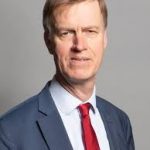
Tag: 2022

  • Gerald Jones – 2022 Speech in the No Confidence in the Government Motion

    Gerald Jones – 2022 Speech in the No Confidence in the Government Motion

    The speech made by Gerald Jones, the Labour MP for Merthyr Tydfil and Rhymney, in the House of Commons on 18 July 2022.

    The very fact that we are having a debate on a motion tabled by the Government on the Government’s confidence in themselves shows how out of touch with reality they really are. Just 10 days ago, many Government Members were writing open letters to the Prime Minister telling him that they had no confidence in him. Nothing has changed—we still have the same Prime Minister in Downing Street, leading this Government—so I do not know how on earth they are able in all good conscience to vote for this motion this evening. It is bizarre.

    We all know that the Prime Minister is unfit for office. Government Members all know it too, but rather than remove him from the position immediately, they have left him in No. 10 at a time when the country needs honest and respected leadership—something that he seems unable to offer. Last week, the Government blocked Labour’s vote of no confidence, and that was after the resignation of more than 50 members of the Prime Minister’s Front-Bench team. In blocking that vote and creating today’s spectacle, it is clear that the Prime Minister has only ever been interested in doing what is right for his own ego, rather than for the good of the country.

    Many of the Prime Minister’s former allies resigned from his Cabinet, but rather than remove him, they are indulging in fantasy economics in the leadership contest, distracting themselves from the chaos facing the country with party infighting, and attempting to disassociate themselves from their time in the Prime Minister’s Cabinet of chaos. The Conservative leadership candidates are also trying to wipe the slate clean after 12 years of Conservative rule, but on their watch taxes are going up, food and energy bills are spiralling out of control, crime is rising, and many of the public services we rely on have simply stopped working.

    The Prime Minister is squatting in No. 10, presiding over a zombie Government, while the country is gripped by a spiralling cost of living crisis and worsening backlogs caused by his Government’s economic policies and political failures. In just the last few days, I have spoken to constituents who are living through the Government’s cost of living crisis. A couple I met who are both in full-time employment get to the middle of the month and have to rely on the local food pantry to support them in putting food on the table for them and their young child. That is utterly depressing and shameful. Another couple told me that they visit the local baths at least three times a week for a swim at a reduced rate, thanks to the Welsh Government. That is great news for their health and wellbeing, but they also use it as an opportunity to have a shower to save on water and heating costs at home. We should not be normalising this in the 21st century.

    We should have a Prime Minister and a Government who focused on dealing with these issues and others that are causing great hardship across the country. Instead, we have more chaos, which is why I simply have no confidence in the Government. Since the Prime Minister announced his intention to resign on 7 July, the Government have dropped legislation and called off a number of Bill Committees on issues of the utmost importance, from protecting people online and fraud to national security and levelling up. That is a direct consequence of the chaos engulfing the Government at this moment.

    The country does not need a fourth Conservative Prime Minister in six years. Britain needs a fresh start and a Labour Government, which is why we will vote against the Government’s motion this evening.

  • Tony Lloyd – 2022 Speech in the No Confidence in the Government Motion

    Tony Lloyd – 2022 Speech in the No Confidence in the Government Motion

    The speech made by Tony Lloyd, the Labour MP for Rochdale, in the House of Commons on 18 July 2022.

    I am delighted to follow my right hon. Friend the Member for East Ham (Sir Stephen Timms). Morality and probity in public life matters—it really does—and we need to establish that. I was proud to become a Member of Parliament, and I think we believed that and were right to believe it. During my lifetime there have been 10 Conservative Prime Ministers, the bulk of whom would have found the idea of lying to Parliament anathema. Yet I am afraid we have a Prime Minister who has broken that code, and that matters.

    I have listened to Conservative Members extolling the virtues of the Prime Minister and the Government. There are things that I would agree with the Prime Minister about, such as Ukraine, on which this country now has a proud record. But across the world, we are now a laughing stock. This country, which was once the hallmark for probity, is now a hallmark for lawbreaking. We know there is potential lawbreaking in terms of the Northern Ireland protocol, because the Prime Minister has not got Brexit done. He has betrayed and made a fool of every Conservative Member of Parliament who stood up today, and in the past, and said, “We’ve got Brexit done.” Brexit has not been done.

    There was the attempt to keep Owen Paterson in office, and the overriding of Sir Alex Allan, the Prime Minister’s ethics adviser, who declared that the Home Secretary had broken the ministerial code of conduct. Of course those things are important and matter, but it matters even more that nearly 40% of children in my constituency are living in poverty. In some wards the figure is as high as one in two children. That matters, and the Government are failing abysmally to deal with such things. They should be ashamed. It matters that climate change—the biggest issue our nation faces—hardly got a mention by the Prime Minister or anybody else on the Government Benches. Climate change makes a difference to the futures of children in my constituency, and to children across the planet. The Government are failing on those issues on a day-to-day basis.

    In the end, what is ironic about this debate is that we could almost believe that it was not Conservative MPs who decapitated the Prime Minister. They got rid of him—not us—but one would not think that was the case today, given the way they describe their loyalty to the now outgoing Prime Minister. Of course, Cabinet Ministers did not resign. Only recently, when they saw their own futures at stake, did they make a decision to get rid of a losing Prime Minister. Before that, despite all his incompetence and failures, they stuck with him.

  • Stephen Timms – 2022 Speech in the No Confidence in the Government Motion

    Stephen Timms – 2022 Speech in the No Confidence in the Government Motion

    The speech made by Stephen Timms, the Labour MP for East Ham, in the House of Commons on 18 July 2022.

    I want to focus on one example of a specific problem with this Government that I think makes it impossible to have confidence in them. Between November last year and the end of March this year, the Prime Minister claimed 10 times at Prime Minister’s questions that more people were in work than before the pandemic. That was untrue. The figures show that total employment is still 366,000 lower than just before the pandemic.

    The Prime Minister made that untrue claim twice on 24 November 2021, three times on 5 January 2022, again the following week and then again the following week. He claimed it again on 2 February and on 23 February. On 24 February, the exasperated chair of the UK Statistics Authority wrote to the Prime Minister to point out that the claim was not true. The Prime Minister claimed it again on 27 March.

    On 30 March, I asked the Prime Minister at the Liaison Committee whether he accepted that his tenfold statements had been wrong. He replied:

    “I think I have repeatedly—and I think I took steps to correct the record earlier.”

    Well, he had not corrected the record, and he still has not. In his answer at the Liaison Committee it was clear that he understood what has actually happened since the pandemic, and that about half a million people—mainly older people—have given up on work, substantially reducing the number in work overall. However, four weeks after that discussion on 27 April, the Prime Minister said:

    “Let me give them the figures: 500,000 more people in paid employment now than there were before the pandemic began”.—[Official Report, 27 April 2022; Vol. 712, c. 754.]

    That was even though he had made clear to me on 30 March that he knew that to be untrue.

    At the Liaison Committee two weeks ago, the Chair of the Justice Committee

    asked:

    “How important is the truth to you, Prime Minister?”

    The Prime Minister replied, “Very important, Bob.” But it clearly isn’t important, and the record still has not been corrected for any of the 11 instances of the false claim that the Prime Minister knows he has made.

    Other examples of a lack of truthfulness have been much more consequential. After negotiating customs checks between Great Britain and Northern Ireland, the Prime Minister went to the Democratic Unionist party conference and announced that there would be no such checks. That was obviously untrue, and the DUP has paid a very heavy political price for taking him at his word. Democracy does not work if Ministers routinely say things that they know to be untrue. Why did they not see through him before?

  • Wendy Chamberlain – 2022 Speech in the No Confidence in the Government Motion

    Wendy Chamberlain – 2022 Speech in the No Confidence in the Government Motion

    The speech made by Wendy Chamberlain, the Liberal Democrat for North East Fife, in the House of Commons on 18 July 2022.

    We are here today because we have seen a real decline in our standards in public life, and in particular in the Prime Minister. We have heard many Government Members talk about the positive things in their constituencies, and they clearly want those to continue, but we are here because the Prime Minister was put out of office by those on the Government Benches two weeks ago.

    The Government had the opportunity to do things very differently, and I would argue that the rot set in in November last year, when there was an attempt to keep Owen Paterson from censure. I had the emergency debate on standards after that and, dare I say it, that was a much more collegiate and positive debate than this one, because I think there was recognition on all sides of the House that a stop needed to be put to the direction of travel. A constituent said that Mr Paterson’s resignation was not the end, but must be the beginning of an uncompromising campaign to end the corruption in our politics. We are here, and we have been where we have been in the last couple of weeks, because that corruption has not been stopped.

    If we look at partygate from a constituency perspective, other than trips to Barnard Castle, I have certainly had no higher volume of emails about anything from constituents, who told me some quite devastating stories. We know how that has gone; it has gone from “There were no parties” to “All rules were followed” to an admission that “There were parties, but we weren’t quite sure what the rules were.” The PM has indicated that he intends to remain as an MP if he remains sitting in this place. Therefore, I do hope that the Privileges Committee will continue with its investigation regardless of whether he is the Prime Minister. If the new Prime Minister, whoever they may be, fails to ensure this, we will know that there is no change to the approach to our standards in public life. Lord Evans believes there has been an erosion, and Lord Geidt clearly did so. Indeed, the hon. Member for Weston-super-Mare (John Penrose) made it clear in his resignation statement that standards have fallen.

    To go back to what the hon. Member for Birmingham, Yardley (Jess Phillips) said, the fact that we have ended up here because of a lack of candour about office appointments means that this place is not safe. We cannot with all confidence say that it is safe. That shames and should shame us all, and we should all be committed collectively to doing something about it. By failing to face up to this corrosion and failing to identify the battery acid at the core of their party, the Government have lost people’s confidence because they have lost confidence in their values, and our by-election victories over the last year demonstrate that.

  • Richard Graham – 2022 Speech in the No Confidence in the Government Motion

    Richard Graham – 2022 Speech in the No Confidence in the Government Motion

    The speech made by Richard Graham, the Conservative MP for Gloucester, in the House of Commons on 18 July 2022.

    I would have preferred, as I think my constituents would, these many long hours of debate on confidence in the Government to have been spent discussing the safety of our children and the Online Safety Bill. This is a difficult moment for Labour Members, as they all stood to make the right hon. Member for Islington North (Jeremy Corbyn), who is aware of roughly what I will say, the Prime Minister of our nation. How would he have fared with his plan for a second referendum on the EU, which he did not even personally believe in? Would he have created the private sector-led vaccine taskforce? When Dame Kate Bingham was first appointed to it, there was no shortage of Opposition Members saying that it was a crony appointment. It was, in fact, a brilliant move, and she worked closely with our multinational pharmaceutical companies, which the right hon. Member for Islington North would happily have abolished, along with our intelligence agencies.

    Sarah Owen

    Will the hon. Gentleman give way?

    Richard Graham

    There is no time, alas.

    Would the hon. Member for Rhondda (Chris Bryant) today be defending his Prime Minister’s record on standing up to Putin? We are talking about the man who gave Putin the benefit of the doubt when it came to the murder of a British citizen in Salisbury and the handling of Novichok, which could have killed hundreds, if not thousands. As I say, I understand that this is a difficult debate for Labour.

    Nor did we hear any mention from the Scottish National party of the first ever dedicated, ringfenced funding pot for marine energy in the recent renewables auction, which provides £20 million a year for investment in Scottish companies such as Orbital Marine Power, MeyGen Ltd, and Nova Innovation. There was nothing from the SNP about the value of the Prime Minister’s 33 trade envoys, who tirelessly promote Scottish products abroad. None of us has ever lost confidence in Scotland, or in the quality of Scottish products, but we think it is sad that the SNP does not see the value of the United Kingdom promoting Scottish exports all over the world.

    On what this Government have achieved, let me highlight first their strong record on the Indo-Pacific pivot, which has led to better relationships across south-east Asia, to the great benefit of those nations and our own; and, secondly, what has been done with levelling up, pride and regeneration in small cities such as my own of Gloucester. There, the levelling-up fund, the station improvement fund and a whole number of improvements have done things that under Labour’s tenure were never even dreamed of.

    Let us be in no doubt. There are always things that a Government can do better. For example, I wish this Government were thinking closely and hard about insulation for some of our poorer families to help them through this winter’s energy increase, and maybe that will come. However, I am in no doubt that this is a Government who are delivering, and I have full confidence in them.

  • Gill Furniss – 2022 Speech in the No Confidence in the Government Motion

    Gill Furniss – 2022 Speech in the No Confidence in the Government Motion

    The speech made by Gill Furniss, the Labour MP for Sheffield Brightside and Hillsborough, in the House of Commons on 18 July 2022.

    When the Prime Minister took office, he stood on the steps of Downing Street and promised to level up every part of Britain. He said he would close the opportunity gap and, in his words, unleash the power “of every corner” of the United Kingdom. In 2019, he came to Sheffield and made that same pledge. He continues to boast about levelling up as though it has been some gigantic success, but if we dig deep enough beneath the surface, we find that his legacy is one of broken promises, shattered communities and a failure to deliver. The public know that they cannot trust a word that the Government say. They have concluded that levelling up is just another empty slogan that will do nothing to help them in their everyday life.

    The effects of 12 years of Conservative mismanagement are plain to see. Only if we remove the Conservative party from power altogether will we see these trends reversed, and today’s vote is a chance to do that. To take just one example, our local authorities’ budgets have been cut to the bone by the Prime Minister and his two Conservative predecessors. Sheffield City Council’s central Government grant has been cut by more than £3 billion in real terms since 2010, which has put an enormous strain on its budgets. The impact has been stark. According to the End Child Poverty coalition, 45% of children in my constituency are in poverty. That really is a shameful statistic. One of the basics of levelling up needs to be ending child poverty once and for all, but in my region, child poverty rates continue to rise year on year. This is not levelling up; this is levelling down, and families across the country are paying the price.

    The Conservative party is truly unfit to govern, as it has shown time and again. I am of course pleased to finally see the back of the Prime Minister, but it is clear that whoever takes over cannot be trusted to truly level up. Instead of focusing on the real issues facing people, leadership candidates are trying to stoke culture wars and divide communities. Today, the Met Office warns that unprecedented heatwaves pose a significant risk of death, but the leadership candidates are not prepared to step up to the serious threats posed by climate change. They instead want to water down net zero targets and roll back green initiatives. Perhaps that is not surprising, given that one candidate has seemingly accepted tens of thousands of pounds in donations from a notorious climate change denier. The Conservative party is out of touch, out of ideas and, I hope, soon to be out of power. A new leader will not change any of that.

  • Ian Levy – 2022 Speech in the No Confidence in the Government Motion

    Ian Levy – 2022 Speech in the No Confidence in the Government Motion

    The speech made by Ian Levy, the Conservative MP for Blyth Valley, in the House of Commons on 18 July 2022.

    I still remember the look on people’s faces when I first won my seat back in 2019—it was the look of hope for the future, because they had felt neglected for generations. To tell the truth, that is why I decided to stand for Parliament, represent the people of Blyth Valley and break the chains of Labour.

    One of our first tasks as a Government was to deliver Brexit, which we did, and then to support the country through the pandemic, which we did with the massive vaccine roll-out, the furlough scheme and the support to businesses and individuals. Now we are supporting the people of Ukraine.

    In Blyth Valley, people are starting to see the shoots of economic growth. The number of jobs set to come to the area is truly amazing, with Britishvolt, JDR Cable Systems, Merit, the Catapult, Tharsus, the offshore wind industry, the port of Blyth and Dräger, and we also have the towns fund and the future high streets fund. This is true levelling up with a Conservative Government, with an expectation of more than 10,000 jobs. Where once stood a coal-fired power station will stand a gigaplant. The 16th largest building in the world will make the batteries to power thousands of electric vehicles up and down the country.

    Dr Luke Evans

    I am very grateful to my hon. Friend for giving way, because Britishvolt has its headquarters stationed at MIRA technology park. Is not such levelling up in the midlands and the north-east under this Government exactly why we should have confidence in this Government’s agenda?

    Ian Levy

    I totally agree, and we are levelling up across the country. The gigaplant will be like a phoenix rising from the ashes of neglect. Even today we can see work being carried out on the Northumberland line, which will connect Ashington to Bedlington station, Bebside, Newsham and Seaton Delaval, and will then connect to the Metro system and into Newcastle Central station.

    I have every confidence in this Government. I am under no illusions about the fact that Opposition Members will say, “Well, he would. He is the first Conservative Member of Parliament for Blyth Valley”, but I know when I talk to people in the constituency that they feel there is a definite change and they have hope once again. That is why I have confidence in Her Majesty’s Government.

  • George Howarth – 2022 Speech in the No Confidence in the Government Motion

    George Howarth – 2022 Speech in the No Confidence in the Government Motion

    The speech made by George Howarth, the Labour MP for Knowsley, in the House of Commons on 18 July 2022.

    It is a pleasure to follow the hon. Member for Dewsbury (Mark Eastwood) even though I am not quite sure what his argument really was.

    Most people in this country—in fact, overwhelmingly people in this country; indeed, even in this Parliament—have no involvement in deciding who the next Prime Minister is. However, I will come back to that. It is an important issue whenever a Prime Minister is switched mid-term. At the moment, as many of my hon. Friends have said, we have a massive crisis in the national health service; we have problems with energy costs and how they will affect people’s lives; and we have problems with inflation and how it affects people’s ability to put food on the table. Those things are more important than ever, yet here we are, switching Governments with no prospect, as far as I can tell, of any realistic plan to address those problems.

    I will share a quote from Janice Turner, who wrote in Saturday’s Times:

    “For the third time in six years, who leads us is being decided by the tiniest sliver of society.”

    She refers, of course, to the 150,000 Conservative party members. Margaret from Knowsley made a similar point. She said:

    “It is like watching a criminal gang choose its leader. The rest of us have no say in the matter but have to live with the consequences daily in our lives. Except this is about our democracy and who is in charge of our country.”

    I think she put it very well.

    I have not got time to talk about how we could handle this situation better, but I refer those who are genuinely interested to an article by the noble and learned Lord Sumption that was in The Sunday Times eight days ago. He set out why, without a written constitution in a parliamentary system, this problem must be resolved before we get into this position again, because it threatens to undermine the stability of our democracy.

  • Keir Starmer – 2022 Keynote Speech on the Economy

    Keir Starmer – 2022 Keynote Speech on the Economy

    The speech made by Keir Starmer, the Leader of the Opposition, in Liverpool on 25 July 2022.

    I’d like to start with an observation about recent crises.

    Whether it’s the cost of living or recovering from the pandemic our economy is weaker than our competitors. Less resilient. Brittle. And ultimately, we are all poorer for it.

    This is why I am clear Labour will fight the next election on economic growth.

    That there is no task more central to my ambitions for Britain than making the country and its people better off.

    Tonight, I think you will hear two other candidates for Prime Minister who will also define the choice for their party to be about the economy and growth.

    But what a choice it is.

    In one corner you have Rishi Sunak, the architect of the cost-of-living crisis. In the other, you have Liz Truss, the latest graduate from the school of magic money tree economics.

    Neither of them has the answers to the economic challenges we face – and who can be surprised?

    Under their watch, the average British family is £8,800 poorer than their equivalents in other advanced economies. This isn’t just a failure of policy, it’s also a failure of philosophy. Their leadership contest won’t change that.

    Because both Rishi Sunak and Liz Truss rage against the dying of the Thatcherite light. They don’t understand economic strength in the 21st century needs partnership. They don’t believe you need state and market – business and worker.

    The everyday economy and the technological frontier. All contributing together if you want strong, secure and fair growth.

    I am under no such illusions. Rebooting our economy in this way will be the defining task of my Government.

    It will ask searching questions of my party and our instincts.

    We cannot be like the Tories – clinging to old ideas, trapped in our history.

    To give Britain the fresh start it needs, we need a new approach. The goal is straightforward – to maximise the contribution we all make to national prosperity. Every business, every person, every community.

    It sounds simple. But in reality, we failed to do it for decades.

    The best of British business is the best in the world. But we have geared our whole economy to delivering only for those firms.

    We have been complacent about the number of jobs created which are low paid and insecure.

    When insecurity stops people getting on and too few communities feel the benefit of the wealth we create.

    Which makes people feel hard work is not rewarded.

    In a nutshell: we draw our economic strength from too few places.

    And like a skyscraper built without foundations, that ultimately leaves us weak.

    If you want evidence of this, look no further than the cost-of-living crisis.

    Everywhere I go, I hear the same stories. People scared about the future.

    Worried that when winter comes, they will face horrible choices about what to spend their money on.

    Pensioners who can’t afford to turn on the heating.

    Families cutting back on what they buy their children.

    But there’s one thing I hear time and time again that worries me more than anything else.

    That is: working people telling me hard work doesn’t pay.

    That they’re working harder and harder just to stand still.

    That alarms me for two reasons.

    First, because I’ve been lucky enough to take a journey in my life.

    From a working-class family to head of the Crown Prosecution Service.

    And my fear is an economy so wracked by low growth and insecurity means people from my background can’t get on.

    Second, because honestly: what does it say about the state of Britain when working people feel that hard work doesn’t pay?

    What does it say about the health of our country?

    The health, even, of our democracy?

    It says an unwritten contract is broken.

    A contract that says in return for hard work you get a fair reward.

    That you don’t have to feel insecure about your prospects.

    That your contribution is respected.

    It’s a two-way thing.

    A strong national economy needs everyone making the best contribution they can.

    Whatever their circumstances, wherever they live.

    But in exchange, we must make sure the contribution working people make to that national effort is fairly rewarded.

    That hard work does pay.

    That their effort is respected.

    That they enjoy the security they need to get on.

    To do all that we need three things:

    Growth. Growth. And growth.

    That’s why I have told the Shadow Cabinet that every policy they bring forward will be judged by the contribution it makes to growth and productivity.

    Because everything I want for Britain comes back to this central mission.

    Without growth we won’t get a high wage economy.

    Without growth we can’t revitalise public services.

    Without growth we can’t repair that broken contract, re-energise communities or unite the country.

    Low growth countries are weaker at standing up for the national interest.

    Low growth economies can’t support people from my background to get on.

    Low growth economies can’t rise to meet the challenges of the future.

    Challenges like climate change.

    I want to be very clear on this point.

    We will not be distracted by the siren calls – from the right or the left – that say economic growth and net-zero do not go together.

    That these two objectives are somehow in tension.

    Or even that we should actively pursue a policy of no growth.

    I reject that completely. It is totally the wrong way round.

    A plan for net-zero needs growth.

    A plan for growth needs net-zero.

    This is about the future of course.

    Fail to tackle climate change and you can forget about growth -there is no bigger business risk.

    Look at how our infrastructure has struggled in the last few weeks.

    But tackling climate change is also a clear opportunity to create wealth in the here and now.

    That is why Labour is committed to a Climate Investment Pledge worth £28bn a year until 2030.

    And we see that pledge as a down-payment that will unlock the private investment which delivers the next generation of jobs.

    Because – the way I see it – some nation is going to lead the world in electric vehicles, in floating off-shore wind, in new hydrogen and nuclear technologies. Why not Britain?

    But to maximise our collective contribution, we must be clear about the kind of growth we need.

    The growth I want for Britain is strong, secure and fair.

    Strong, because it will build a foundation where every business and every person plays a role.

    Secure, because it will produce good jobs that don’t leave people feeling insecure.

    Fair, because it will unlock the potential of every place – every community, every town and every city.

    This last point is so important and strikes at the structural weakness of our economy.

    It’s not an issue of city versus town.

    The productivity gap between our cities and their equivalents in Europe is too big.

    And too many of our towns don’t have a fair chance to contribute in an economy still dominated by London and the South East.

    This is the hurdle we must clear.

    We need growth that is strong, secure and fair to re-establish the contract between people and prosperity.

    The distinction I would make is this:

    An economy can grow and leave some of its people behind.

    But a nation based on contribution cannot grow in that way.

    But of course all promises need a plan.

    Boosterism and fantasy economics are not the same as ambition.

    So today I want to share with you some of the plans Labour has to reboot growth and set out five principles that will guide my government in growing our economic contribution.

    These are:

    1. We will be financially responsible.

    2. We will be distinctively British.

    3. We will work in partnership with business.

    4. We will re-energise communities and spread economic power.

    5. We will refocus our investment on boosting productivity.

    Let me take each of these in turn, starting with the most direct – financial responsibility.

    The risk of rising inflation could not be clearer.

    So we will not announce a single penny of day-to-day spending without saying how we would pay for it.

    We will only borrow to invest to meet the challenges of the future – that’s what our Climate Investment Pledge is all about.

    And we will set a target to reduce debt as an overall share of our economy.

    That’s the responsible thing to do.

    And the contrast with the Conservative competition to waste more of your money could not be starker.

    With me and with Rachel Reeves you will always get:

    Sound finances; careful spending; strong, secure and fair growth.

    There will be no magic money tree economics with us.

    My second principle is that we must grow our contribution in a distinctively British way.

    This means two things.

    First, that we need resilient supply chains in sectors which are vital for British security and growth.

    That’s why we have a strategy to buy, make and sell more in Britain; why £3bn of our Climate Investment Pledge will help forge a new future for our steel industry.

    And why we have committed to new public procurement rules that will build up Britain’s sovereign capabilities in key industries.

    And let me be clear: it isn’t protectionist to say this.

    Or somehow old fashioned.

    Britain will always be an outward facing, confident, trading nation.

    But all around the world, businesses are looking again at the resilience of their supply chains.

    Reacting to the crises we have faced and will face in the future.

    Countries must do the same.

    Second, a British approach means we cannot transplant the economic model of another country onto ours.

    I met Olaf Scholz, Chancellor of Germany and leader of our sister party, the SPD, the other day.

    He is showing that when levelling-up is based on practical plans, not far-fetched promises, amazing things can happen.

    In eastern Germany right now, some of the poorest parts of the country are leading the continent in the lucrative race to develop batteries that store renewable energy.

    This is what can be done.

    And, as Lisa Nandy has spelt out, just because the Tory commitment to levelling up is dead, doesn’t mean the idea of levelling up is dead – Labour will take it on.

    But to do this in a way that isn’t pure boosterism, we must be honest about British strengths.

    Take manufacturing.

    Britain has an extraordinary genius when it comes to manufacturing.

    We lead the world in pharmaceuticals, bio-science, aerospace…

    The Nissan factory in Sunderland is one of the most productive in Europe;

    And the Covid-19 vaccine developed by AstraZeneca and Oxford University has saved millions of lives around the world.

    When I was at Airbus in Filton, I saw them working with 3D engineering literally shaping components by bringing together particles and matter in a way unimaginable in the factory my dad used to work in.

    We can and should take advantage of these strengths.

    The road to higher growth and productivity runs right through them.

    But we are not Germany.

    The role manufacturing plays in our economy will always be different.

    And we have superpower strengths – in universities, in creative industries, in exporting services – that other countries can’t compete with.

    The challenge in both services and manufacturing is the same.

    The best of British is the best in the world.

    And the way we stay competitive is to get more of it: more innovation, more new technology, more research and development, more unlocking the commercial power of our universities, more specialising in the knowledge-rich industries of the future, and more start-ups.

    Which is why we have asked Lord Jim O’Neil to look at how we can make Britain the best country in the world to start a new business.

    And why we have a plan to Make Brexit Work that doesn’t ignore the strength of our services or our universities.

    But an economy that grows our contribution, must rest on strong foundations.

    Foundations that are there in every community.

    That is why the work Rachel has been doing on the everyday economy is so important.

    Retail, education, health and care – we saw in the pandemic how much of the wealth we create depends on these sectors being strong.

    For too long industrial strategy has simply ignored them.

    And with that, ignored one of Britain’s distinctive challenges on growth.

    Labour’s industrial strategy will contain a plan for the everyday economy.

    And our New Deal for Working People will introduce new employment rights to give greater security for people working in it.

    That brings me to my third principle: partnership.

    For growth that is strong, secure and fair – we must work together.

    We need real partnership between state and market;

    Business and worker;

    The everyday economy and the technological frontier and it is the job of a modern industrial strategy to make sure this partnership grows our collective contribution.

    Not in a nostalgic way where Government directs the activities of businesses.

    Modern industrial strategy isn’t about growing the size of the state – it’s about what the state does.

    How it supports businesses to innovate and grow.

    Brings in the creative brilliance of our universities.

    And applies them to the national missions we must all contribute towards.

    Whether that’s leading the world in artificial intelligence.

    Or applying our genius to the challenge of net-zero.

    Just down the road, at the Materials Innovation Factory, the University of Liverpool and Unilever are partnering to bridge the gap between scientific research and production.

    Developing the new materials we need to tackle climate change or discover life-saving new medicines.

    We need to do so much more of this mission-driven partnership.

    But the Government doesn’t have a plan.

    And we have a massive job on our hands when it comes to private investment.

    For decades we have trailed our competitors.

    In France, businesses invest around 30% more relative to GDP every year.

    If we could just close this gap, we would land a serious blow in our battle against low growth.

    We know it requires public investment – that is why we have our Climate Investment Pledge.

    We know it requires fair taxation – that is why we will scrap business rates and replace them with a system that levels the playing field.

    But we also know it requires stability.

    And that requires institutions that take a serious, patient, long-term view about what needs to be done.

    So today I can announce we will establish an Industrial Strategy Council.

    And we will go further by putting it on a statutory footing.

    It will provide advice that shapes policy in the way the Climate Change Committee does.

    Or the Office for Budget Responsibility.

    A permanent part of the landscape.

    That sets out our strategic national priorities that go beyond the political cycle.

    Brings in the expertise of business, science, and unions

    Holds us to account for our decisions.

    And builds confidence for investors that will boost long-term growth and productivity.

    My fourth and fifth principles are best taken together.

    Because spreading power and raising the productivity of the economy everywhere are fundamental to growing our contribution.

    On spreading power, I have asked Gordon Brown to look at new forms of economic devolution.

    To make sure the decisions about things that drive regional growth:

    Like skills; infrastructure; attracting investment; are all made by people with skin in the game.

    Labour will not attempt to run our levelling-up strategy from the centre.

    Nor will we offer it alongside a divisive argument about north versus south;

    City versus towns.

    To me they’ve always felt like false choices.

    A productive Liverpool is good for Birkenhead.

    A strong Dudley is good for Birmingham

    And each has a shared fate in a wider battle against regional inequality.

    But we must also recognise that every place needs the power to grow its own economy.

    So our reforms will allow devolved and local government to make long-term financial decisions.

    To reap the rewards of investment in their economy.

    That way you make sure every city, every town, every place takes ownership of their contribution.

    That people and businesses with a long-term commitment to their community, work together in partnership.

    It’s what Labour is delivering where we are in power.

    And it’s what Labour will deliver in national government.

    But as well as spreading power, real levelling-up also requires investment.

    And this is where my Labour Party will move on from the old ideas.

    Because the old approach focused on growing the pie in any way possible.

    Then redistributing.

    But this is not strong, secure and fair growth.

    It leaves too many people in insecure jobs where their hard work is not fairly rewarded.

    Too many communities locked out from the benefits of growth.

    And redistribution cannot repair the contract.

    There is no point looking to the right on this.

    The evidence of the past decade shows they will only give us stagnation.

    But what we will do – what winning centre-left parties around the world have done – is to adopt a new approach to investment.

    An approach the US Treasury Secretary Janet Yellen has called Modern Supply Side economics.

    It rests in part on a universal truth about social democracy.

    A strong economy needs strong public services.

    And strong public services need reform and investment.

    But it also depends on something more subtle.

    Because the investments we make now should have a laser-like focus on boosting long-term productivity across the country.

    Not just quick wins in the South East.

    Which means we must learn to focus on the supply side.

    On growing the collective contribution.

    Everywhere.

    You can see this approach in our fully-funded plans for public service reform.

    Whether it is our 8,500 new mental health professionals….

    or our National Excellence Programme for schools that will tackle the educational inequality at the heart of low productivity…

    our policies are not just an investment in the health and wellbeing of our communities.

    They are also an investment in the long-term growth and productivity of the country.

    There is no tension here – just look at how many people at the moment can’t work because of their health.

    A highly skilled and healthy nation.

    And a fast-growing modern economy.

    Depend on each other.

    I never think it’s too hard to identify what people want from politics.

    At the moment, it’s probably easier than usual.

    People want a fresh start for Britain.

    They want the opportunity to get on.

    And above all they want to be free from the insecurity of the cost-of-living crisis.

    The approach to growth I have set out today will challenge my party’s instincts.

    It pushes us to care as much about growth and productivity, as we have done in the past about redistribution and investment.

    Not to hark back to our old ideas in the face of new challenges.

    You will see a clear contrast between my Labour Party and the Thatcherite cosplay on display tonight.

    The difference between a Labour Party ready to take Britain forward.

    And a Tory party that wants to take us back into the past.

    Between Labour growth.

    And Tory stagnation.

    That will be the choice at the next election and we are ready.

    Ready to renew the contract with working people.

    Ready to reboot our economy and end the cost-of living crisis.

    Ready to unlock the contribution of every business, person and community.

    And deliver the strong, secure and fair growth our country needs.

  • Rupa Huq – 2022 Speech in the No Confidence in the Government Motion

    Rupa Huq – 2022 Speech in the No Confidence in the Government Motion

    The speech made by Rupa Huq, the Labour MP for Ealing Central and Acton, in the House of Commons on 18 July 2022.

    I have no confidence in this Government. The public have no confidence in this Government, and nor do Government Members, 59 of whom put in their own letters to say they had no confidence in this Government. They need to vote with us accordingly tonight.

    All political careers end in failure; that is a truism. Unlike past demises, however, this one is based not on policy, but on probity. The degradation and debasement of standards should be about not left and right, but right and wrong. This Government have got all the big calls wrong: we have the highest inflation in 40 years and the biggest tax take in 70, while these leadership contenders who have spent years defending the indefensible now out-vie each other to disown the past 12 years.

    The moral is that not every fairy tale has a happy ending. This was not just about ambush by cake; it was about a pattern of behaviour that resulted in the first ever lawbreaker Prime Minister. One misjudgment alone might have been ride-outable, but the cumulative effect of partygate, Paterson, the redecoration of the No. 10 flat, the promotion of an alleged drunken groper to a post that included reporting MPs’ misconduct and the Prime Minister’s saying he had had a memory lapse about that individual’s previous history just proved to be one implausibility too far.

    As we have seen today, the PM who as a child wanted to be world king has become King Canute, still defiant and partying to the end, characteristically skipping Cobra meetings—if not quite fiddling while Rome burns, then partying while the country roasts. It brings to mind those suitcases being wheeled down Whitehall on the eve of Prince Philip’s funeral. Meanwhile, our fellow citizens face huge challenges: climate change-induced heatwave, looming strikes, inflation, cost of living crisis, energy crisis, record NHS backlog, passports backlog, Home Office backlog, courts backlog—backlog Britain.

    If we are trying to define exactly what Johnsonism is, we would have in there the idea that the rules do not apply to those at the top, self-advancement, Government by slogan and, as Dominic Cummings put it, a “shopping trolley” modus operandi. Remember the pro-EU and anti-EU columns, or the one-time fan of an amnesty for illegal immigrants who now wants to ship off asylum seekers to Rwanda? Multiple signs were already there: those costly London Mayoralty vanity projects, the Jennifer Arcuri improprieties, which are still unresolved, with new people appearing out of the woodwork making similar claims, and even indifference to groping and grabbing. It was all part of a pattern. I was in the now PM’s presence in Acton in 2015—there is footage of it out there—and I was grabbed from behind by one of his aides for wanting to speak to him.

    If we consider Imran Ahmad Khan, Neil Parish, Charlie Elphicke and Andrew Griffiths, it does not feel as though sexual misconduct is being stamped on, or out. When an entire Government are rotten to their core, all politicians become tainted and tarnished. It is time to call time on the lot. The first step is today’s vote, but the country is crying out for change. There is a democratic deficit if those of us who are not among the small number of Tory party members have no say in our next PM. We need a general election as soon as possible, to have a say on the next, unelected Prime Minister who emerges from that process, and refresh all 650 of us.