Tag: 2007

  • David Willetts – 2007 Speech on Higher Education

    David Willetts – 2007 Speech on Higher Education

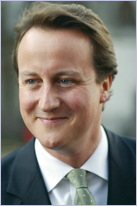
    The speech made by David Willetts, the then Shadow Secretary of State for Innovation, Universities and Skills, on 31 October 2007.

    The decision to go to university is one of the most important that a young – or older – person will make in their lives. Having a degree means considerably enhanced earning power. But it also means much more. A university education should be an intellectual, cultural and social experience. It is about learning to question and to think independently. It is about meeting people from all over the world, and from different cultural and social backgrounds. Increasingly it is also about learning to juggle the conflicting demands of study, a part-time job, and a personal life.

    In recent decades the higher education system has seen rapid expansion and great change. This has been a good thing. More young people have enjoyed the benefits of higher education. And despite the large increase in the number of people studying at UK universities, the OECD revealed last month that the graduate premium has not declined. A degree is worth as much today as it was ten years ago.

    Yet we need to be clear about the direction in which we are heading, and about the impact of this rapid change upon students and upon institutions. It is not enough to simply propel more and more students into universities, with little regard for the experience they have, or for whether they complete the course. Today’s students are savvy consumers, and we need to make sure that we are giving them the quality of experience that they expect and deserve.

    Frequently British universities are talked about in terms of their research, or their value to business and to the economy. These missions are clearly vital. But somewhere along the way we seem to have lost sight of one of the most important functions of a university. Gordon Brown can only see universities as factories, churning out research papers and the practical skills that will aid economic growth. That is indeed very important, but it does not fully capture the real value of education. It is almost as if people are afraid of just saying education is a good thing in itself. That comes from a loss of confidence in the fundamental importance of transmitting a body of knowledge, a culture, and ways of thinking from one generation to the next. It is one of the most important obligations we have to the next generation and we are failing to discharge it.

    Not only is that utilitarian view of higher education a bleak one, it is also counter-productive. People do not become lecturers or teachers because they want to help maintain the national stock of human capital; they wish to pass on a love of their subjects. Equally, students will not engage with subjects out of a desire to improve the trend rate of growth. It is only by making sure that tutors are allowed to teach their subjects and students are allowed to be inspired that we can achieve these goals. The route to creating a well-educated workforce is a good student experience.

    Crucial to this debate, of course, is the issue of how we fund our universities.

    Tuition Fees

    We support the idea that those who benefit from higher education should meet some of the cost of their degree. This is achieved through the introduction of a variable fee of up to a maximum of £3,000. There have been serious teething problems with top-up fees. There is a general air of mystery and confusion surrounding bursaries. Lots of people do not understand that the fees do not need to be paid up-front.

    This system of fees, loans and top-up fees has been fixed until 2010, but it may well continue afterwards. What happens afterwards will be dependent upon the result of a major review into the success of the current regime which will examine the results of the first three years of variable fees. This Government review will examine the impact of the arrangements on higher education institutions; the impact on students and prospective students; and will make recommendations on the future direction of the policy.

    We are not calling for the cap to be lifted and we are not calling for it to be lowered. Nobody knows enough about tuition fees and their impact to make any decisions at all on this issue. Especially not the Government. Rather than waiting until 2009 to call this review, why does the Government not start now? A proper review takes time. We do not need to make a decision any sooner than the Government suggests, but why waste this two years which could be spent collecting data, talking to people or analyzing what is happening?

    We would urge the government to set up the independent review group to look at the situation now.

    There is enough data on admissions and drop-out rates which they can start working on as it is.

    And if the review is to be successful, they will need to talk to students. They need to look at the financial support mechanisms that are in place. Why isn’t the bursary system that was set up to help those most in need working? Where has the money from fees gone and how much of a difference has it made to the quality of teaching? Steadily increasing application figures suggest that contrary to many fears, the £3,000 fees have not deterred students from applying to university. The latest figures released by UCAS this month show that record numbers of students applied to UK universities this year. The total number of people applying for full-time undergraduate courses at universities and colleges in 2007 was 532,000 – a rise of 5.4% on 2006. Moreover, the number of students from England accepted into the system this year has risen by more than the average – up 6.4 per cent on last year, compared with an increase of just 0.5 per cent in Scotland where fees have not been introduced.

    They will need to look at whether the prospect of increased debt is putting poorer people off the idea of a university education, and whether this can be overcome. Despite constant talk of widening access to universities, the Government has failed in its mission to encourage more young people from disadvantaged backgrounds to go to university. The proportions of students from different social groups remain depressingly static. In 1990 77 per cent of children from socio-economic group A made it to tertiary education, and 14 per cent from socio-economic group D.

    If the review is to be successful, they will need to talk to Vice-Chancellors. Where will UK institutions be financially by 2010 and how will this compare with universities in the US, Europe or Asia?

    Leitch was absolutely right when he highlighted the need to “embed a culture of learning” into our society and our workforce. Yet how can we foster a system of lifelong education if we are not thinking hard about creating the right experience for part-time and mature students?

    If we are going to understand fully what is happening in higher education, we also need to wake up to the fact that the university environment is changing. Brideshead won’t be revisited. One in five students live at home while studying. One third of students now juggle a part-time job alongside their studies during term-time. Over the past five years numbers of mature students have risen by 18%: in 2006, nearly 70,000 over-21s were accepted on to higher education courses. And the Higher Education Funding Council for England is keen to stress that with an ageing population, in the decade following 2010 institutions will be under serious pressure to recruit more mature students in order to fill their places and balance their books.

    They will need to look into the arrangements for part-time and mature students. One of the best ways of widening access is not just to get people to take full-time courses at universities, but to encourage part-time learning. There are good reasons for people not to take three or four years out of their working lives. We should not dismiss them. Currently there are 840,000 part-time students in the system, representing 40 per cent of the total UK student cohort. Yet HE institutions describe part-time students as the Cinderella sector of HE, overlooked and under-funded. The independent review must look carefully at part-time students. Who are they and how is the current funding regime impacting upon them? How do we continue to attract part time students into the system?

    The government has paid lip service to part- time students. In the summer the new Secretary of State for DIUS, John Denham, announced that he wanted to see an expansion in the number of part-time students, with more evening and weekend courses, in order to widen participation in higher education.

    But just weeks later, his first big move in his new position was to announce a £100 million cut in HE funding for people taking a second qualification at the same level or below their first. This is a retrograde move that will harm part-time students more than anyone else. The Open University, which came joint top for student satisfaction in the National Student Survey again this year, has one third of students taking a second qualification and stands to lose more than £30 million of its funding. The Government is already in retreat and keeps on adding to the list of exempted subjects. It now remains to be seen whether their £100m figure will even add up.

    Helmut Kohl used to fret that Germany found itself with the oldest students and the youngest pensioners in the world. No one wants to foster a higher education system filled with eternal students using university as a means of avoiding the wider world. However, by cutting second degrees the government has removed people’s right to change direction, and trampled upon their desire to broaden their skills. They are saying ‘no’ to the doctor who wants to study philosophy in order to work in the increasingly important field of medical ethics. They are saying ‘no’ to the history graduate who has thought long and hard and wants to retrain in IT. They are saying ‘no’ to anyone who needs to change direction. The message seems to be, if at first you don’t succeed, you don’t succeed.

    In an ideal world, employers might step in and provide the funding for their employees. But what if the employee’s new direction does not fit with their agenda? And, as a recent report by UUK on part-time students showed, the reality is that the part-time students who get support from employers tend to be men in full-time employment from the wealthiest households. This policy penalises those trying to climb back onto the learning ladder most in need of public support.

    We need to have a high-skilled workforce and we need an open education system to encourage an open society and social mobility. The debate on fees cuts straight to the heart of both of these issues. It is simply too important an issue for us to fly blind. A review of where we are now, focusing on the impact of the new fees on the mission to widen access to universities, on part-time and mature students, and on the financial health of our institutions, will set the stage for much clearer decision-making when the issue becomes live again in 2010.

    The Student Experience

    Yet students and their parents are not simply concerned about the cost of higher education. They care about quality. Students now regard themselves as customers, and they want to know that they are investing in the right student experience. If we are going to maintain that students should pay top-up fees – either at today’s level or a different one – then parents and students will have the right to demand that their fees are contributing to the delivery of a higher quality higher education experience. Rather than relying on clumsy monitoring institutions like the QAA, we can hold universities to account by empowering students with information about their courses.

    Already we are seeing a rash of student websites springing up monitoring the ‘real’ experience at their university. RateMyProf.com, the anonymous ratings website that has been unsettling academics in the US since 1999, has now launched a UK version. It has been joined by others that strike equal fear into university administrations, including, “WillISeeMyTutor.com’. Increasingly students are picking up their placards and raising their voices in defence of their teaching provision. Parents and students at Exeter University set up a vociferous campaign about the axeing of the chemistry department, and history students at Bristol went railing to the press last year about when their contact time was cut to two hours a week. Angry students told the media that they thought they were paying fees to be educated by renowned academics, not to receive “library membership and a reading list”.

    Whatever their content, these campaigns underline a demand for new information about universities, beyond what is available in the standard glossy marketing prospectuses. We need more transparency about what is really on offer to students.

    The introduction of the National Student Survey, which surveys the quality of teaching, assessment and management of different courses across institutions, was a step in the right direction. There are already signs that vice chancellors are reacting to poor scores in areas such as feedback and assessment and striving to drive up their standards in a competitive market. However, there are also strong signs that this is yet another Gordon Brown target that can be gamed.

    Do you want to make sure the students at your university sound satisfied? As one vice chancellor told me recently, there are ways and means. Do not go too hard on your students or organise early morning starts too close to survey time. Certainly never send out bills or reminder letters before you send out the survey form. If a lecturer has something terse to say to a student, he must never say it when the student is about to focus on filling in the survey – bide your time for the best results!

    The National Student Survey has its uses, but it should not be the last word on the student experience. Clearly we need new methods of monitoring and maintaining quality. We should ensure that there is much more data in the public domain. We will put pressure upon universities to provide information that is currently kept hidden – but which the public would like to see.

    I believe there is a strong argument for an official website which students and parents can search for much more detailed information about universities and courses. Such a site would empower students and their parents, giving them a much clearer picture of what different institutions offer and what they can expect from their time at university. It would also provide an important benchmarking system for universities and colleges, highlighting areas they could build on in order to improve the quality of their student experience.

    The government has set up a number of little-known sites along these lines – the latest of which has yet to launch despite promises it would be up in September – seems to offer no big step forward in terms of useful new data.

    It is becoming more and more common for parents to bemoan the fact that they are paying thousands of pounds for their children to go to university, despite the fact that they only shows their face in the faculty building for a few hours each week. To some extent it has always been thus. A university experience is about independent learning, and a move away from the comfortable spoon-fed environment of school, with plenty of time to think and research.

    However, there needs to be a national student experience website would pull together searchable information on research ratings, drop-out rates, library facilities and university estates. This is all in the public domain already, but hard to find unless you are an expert on HE statistics.

    But more importantly, universities must be urged to provide some data that is not in the public domain.

    In particular students and parents want information on contact hours, class sizes and employability. Universities have resisted making such information available, but as a market emerges in higher education and as students become increasingly savvy about the investment they are making, we will need more transparency.

    The institutions rightly point out that any such information is imperfect. It focuses on inputs, not outputs. A powerful lecturer may be able to teach 200 students as easily as 50. And universities are not the same as schools. However, I do not think we should not be using it as an excuse not to collect or release. A survey of first-year students by the Higher Education Academy found that 41% of students who knew nothing about their course before they enrolled had considered dropping out, compared with only 25% of students who knew a moderate amount or a lot about what to expect from their course. Transparency will not only drive up quality, it will help with the management of expectations.

    Similarly information about class sizes is kept very quiet. We want to bring it out into the open, searchable on the national student experience website by course and institution. Worryingly, academics from all sorts of universities (including the Russell group) report that as institutions expand, their class sizes are spiralling. A frustrated psychology professor at a leading research university told me recently that his final year classes had ballooned from 16 students to around 200. He felt that his students were getting a raw deal at the very time when their study should be reaching its peak.

    Such big increases can be explained by two factors. First, the major expansion of student numbers, which has been an overwhelmingly good thing, has nonetheless stretched university resources to the limits. Secondly, the emphasis on securing research grants above all else has resulted in an inevitable pull away from teaching, with professors filling in grant applications while PhD students stand in front of lecterns. These are complicated long-term issues upon which I want to reflect with the sector. However, in our rush to grow our higher education system, and to develop our universities, we must not lose sight of what it is we are trying to deliver with a university education. The old question, “What is a university for?” has perhaps never been more relevant.

    The national student experience website would bring together new information on employability. There is clear evidence that having a degree enhances both one’s earning potential and one’s ability to secure a job. Yet it is much trickier to find data on job prospects for graduates from individual institutions. This matters. Students are more focused on the job market than ever before. Gone are the days when they went away to university primarily to boost their social lives, or even to continue acquiring knowledge for its own sake. More than 7 in 10 students go to university in order to improve their job prospects, and 60% want to boost their earning potential. Students may want to know how their subject will be taught, but ultimately they want to know whether it will hoist them onto the career ladder.

    That said we must not forget that university should be about much more than simply securing a qualification that will lead to a job. University should be an enriching life experience, and institutions should fit students not just for the workplace but also for society.

    Student Unions

    The student is not just a free-floating consumer. He is a member of a community. To this end, we should strive to foster the idea of the university community. Each and every university is its own community – its own society. Whether it be a leafy out-of-town campus, or spread across the centre of London, every university, and every student body, has its own collective feel, challenges, successes, character.

    But the hub of these university communities is not the university itself. It is not the Vice Chancellor, the central administration or the quadrangle. It is the students’ union.

    Many of these determined and commercially attractive institutions form such a successful hub that they have been the envy of their respective university administrations. Recognising their potential some universities have made advances on the services their students’ union provides.

    Universities – and, for that matter, FE colleges too – should not just be places where you drive in, turn up for a lesson and then drive off at the end of class. They should be open communities which welcome and encourage learners. I think it is sad that almost half of students now do most or all of their socialising outside the university.

    This is not the way forward. In an age where the voluntary sector helps to run the New Deal, it cannot be progressive to let universities encroach upon their own voluntary sector. If we take a closer look at today’s students’ unions, it becomes fundamentally apparent that the student experience and wider society can only benefit from their continued independence from university and state control.

    Student unions are often viewed by wider society as the place where Marxist-Leninists have hard-fought ideological battles with Leninist-Marxists. There are still some union members who use them as an opportunity to posture. There are new threats as well; radical Islam has emerged on some of our campuses – and student unions cannot be expected to deal with it on their own. However, this is not typical. These days, students are more likely to have posters of Boris Johnson than Che Guevara. The social interaction and fiery political debate that went on when I was an undergraduate was – and still is – important. But students’ unions offer so much more to students and to the communities they live in.

    Welfare and advice services provided by students, for students, are at the heart of what student unions have to offer. And whilst many of these services, such as Nottingham’s sexual health or Reading’s immigration advice, are provided by government or university departments, students would often prefer to approach their peers about their problems rather than the sate or other authority.

    Should these services not have been there, who knows how many students would have kept their problems to themselves, having been too mistrustful of university or state authority. For example, international students from countries with far more intrusive states than our own have been know to be too scared to approach a university-run welfare service or their personal tutor. But they would not fear a fellow student who they could speak to in confidence.

    Participation in student societies is, nowadays, a feature of the ambitious graduate’s CV. Students’ unions nurture these societies, which, regardless of whether they seek to promote the Conservative Party (or to destroy it) all help students to learn vital skills for the workplace. These might include event organisation, financial management, public speaking, marketing, fundraising and even sales.

    Furthermore, there are some careers where no involvement in students’ unions and their societies is a distinct disadvantage. The humble student newspaper, for example, has been a fertile breeding ground for Fleet Street and broadcast media for many years.

    Out in the communities that surround our universities, student community action groups are bringing real benefit to the lives of others. Students’ unions are playing their part in their local communities: Charitable fundraising; university governance; sports and fitness training; examination guidance; job centres; equality campaigning. I could go on. The Party has recently rediscovered its commitment to social responsibility – or what I have called ‘Civic Conservatism’. It is an interest in institutions which help build a strong society. To local schools, hospitals, charities, friendly societies, I would add student unions.

    We value student unions. We salute them and what they achieve for and on behalf of students. Without them, universities would be much poorer institutions, as would the employers, causes and political parties who take on their alumni.

    Conclusion

    We have a great tradition of higher education in the UK. As British universities expand, so they must become the gold standard for other universities to follow across the globe. As well as leading the world with our research we must continue to strive to offer the best and most rewarding experience for our students.

    Higher education may have slipped down the political agenda since the tumultuous debate over top-up fees in 2004, with the government insisting this is a “bedding-in period” and no further discussion is needed. But higher education – for all who can benefit from it, regardless of social status, age or career – is a serious and pressing priority. We should not be wasting time now.


  • Oliver Heald – 2007 Speech on Social Exclusion

    Oliver Heald – 2007 Speech on Social Exclusion

    The speech made by Oliver Heald on 12 February 2007.

    Let me start by welcoming the Government’s renewed emphasis on social exclusion. We share their concerns and welcome further efforts to help those on the edge of society. Although I promise not to refer to Polly Toynbee, it is only right to say that I agree that we should not let people fall too far behind the caravan of society.

    We clearly have problems of social exclusion; the proportion of children in workless households is the highest in Europe, more than half the children in inner London are still living below the poverty line, more than 1.2 million young people are not in work or full-time education despite a growing economy, and 2.7 million people of working age are claiming incapacity benefits—three times more than the number who claim jobseeker’s allowance.

    The Minister for Social Exclusion knows from her background in social work, as I do from helping many disadvantaged people as a lawyer. She laughs, but if she has ever been to a law surgery, she will know what I mean. The statistics do not convey the full misery and hopelessness in which some people find themselves. Family breakdown, financial problems, addictions, poor educational achievement and worklessness are key matters at the heart of social exclusion that lead to people being trapped in pockets of permanent poverty.

    As the Minister said, approximately 2.5 per cent. of every generation appears to be caught in a lifetime of disadvantage and harm. We argue that far more people are affected to some extent by the factors that I have mentioned. It is important to maintain a vision that is broad enough to help all those who are affected by social exclusion and does not simply concentrate on a tiny group that has particular problems. The Minister said that one of the core principles of the Government’s action is better identification and earlier intervention—I am happy to agree with that.

    The groups at the highest risk of social exclusion are those affected by the issues that I mentioned. The Leader of the Opposition has asked my right hon. Friend the Member for Chingford and Woodford Green (Mr. Duncan Smith)—He is in Birmingham. He had a prior commitment to do with the subject that we are discussing. He had hoped to be here today. It is important to bear in mind that his social justice policy group has just published “Breakdown Britain”, which examines family breakdown in great detail. My right hon. Friend treats family in his report in its wider, less restricted sense and breakdown as meaning dissolution and dysfunction. He also considers homes without fathers and single parenthood.

    Most people learn the fundamental skills for life in the family—physically, emotionally and socially—and the findings in the report are evidence based. I believe that they are important. The rate of marriage has declined but divorce rates are now stable. The continuing rise in family breakdown is driven by the dissolution of cohabiting partnerships. As the Minister said, there seems to be an intergenerational transmission of family breakdown, with high rates of teenage pregnancy. My right hon. Friend has been given the task of first producing a detailed analysis. He has published a detailed document. It runs to approximately 500 pages but it is very good.

    The process of making recommendations has not yet happened—my right hon. Friend will do that in the summer. The shadow Cabinet will then consider them.

    Survey evidence from YouGov based on a large sample showed a worrying correlation between those who experience family breakdown and other problems. It showed that those who are not brought up by both parents are more likely to experience educational problems, drug addiction, alcohol problems, serious debt or unemployment. On dysfunction, my right hon. Friend’s policy group identified a breakdown of nurture in many families that are unable to provide for core needs, such as secure attachment, protection, realistic limits to behaviour, freedom to express valid emotions, autonomy, competence and a sense of identity, which are gained from a nurturing family.

    The report also worryingly points out the link between family breakdown and youth crime. The reduction in committed relationships has also affected the amount of family care that is available to the elderly. The Local Government Association recently said that that is an expensive problem for the country.

    It seems harsh to mention public spending but there is a high cost in benefits—more than £20 billion on lone parent benefits. We all know about the increasing housing needs that family breakdown generates, and the extra care costs for councils due to changed demography are estimated to be £146 million. My right hon. Friend the Member for Chingford and Woodford Green will report on his conclusions in the summer. At that point, we will consider our policy response.

    Recently published research shows that the poorest households in Britain are paying a higher share of tax and getting a lower share of benefits than they did before 1997. The figures show that if the poorest fifth of households were paid the same share of total taxes and got the same share of total benefits as in 1996-97, they would have £531 a year more; and the second poorest fifth of households would have £427 a year more. To add insult to injury, the poorest fifth of households pay a higher proportion of their income in taxes than any other group.

    The claim in the action plan mentioned by the Minister—that the steady rise in income inequality has been halted—is simply not the case. The fact is that levels of income inequality are now slightly higher than they were in the 1980s or 1990s. The Minister ended up saying that there has not been an increase, while acknowledging that the position has not improved. However, what the Institute for Fiscal Studies said in its report was that inequality was slightly higher. The Government wonder in the action plan why those on the very lowest incomes have seen the lowest rates of income growth, which I think is a valid question.

    “those on the very lowest incomes have seen the lowest rates of income growth”,

    comes from page 17 of “Reaching Out: An Action Plan on Social Exclusion”, published in September 2006. The Institute for Fiscal Studies said that there has been

    “little impact upon the slight upward trend in inequality that has been experienced over Labour’s term in government.”

    That is a straightforward quotation.

    Social mobility, which is so important, has been reduced since 1997. The Secretary of State for Trade and Industry, who is well respected in the House, said in a speech to the Social Market Foundation on 13 September:

    “It is actually getting harder for people to escape poverty and leave the income group, professional banding or social circle of their parents. In fact, it’s currently harder to escape the shackles of a poor upbringing in Britain than anywhere else in Europe”.

    If your parents are poor, you are likely to be poor—and that is after 10 years of a Labour Government.

    It is not just that the rise in incomes—once one takes account of tax—has not been the success story one would hope for, as the cost of living for families is rising fast. The Leader of the Opposition recently highlighted the true levels of inflation on items affecting people on low incomes. He pointed particularly to energy prices, which are up 71 per cent. since 2003. Mortgage payments, which are also important to many, are up 78 per cent. and taxes are up 81 per cent. He has asked the Office of Fair Trading to investigate the rises in energy prices.

    The Minister and I would agree about the importance of education—she mentioned it—to reducing social exclusion. Unfortunately, success has proved elusive. Three quarters of 16-year-olds from low-income families in England and Wales failed to get five good GCSE passes at grades A to C. That is double the rate that applies to other students. The Public Accounts Committee recently highlighted the failure of 1,500 schools and only today we have learned—it is in the news—that 500 schools have failed to meet the 25 per cent. target for five good GCSE grades. If we look into some of the most excluded groups, such as children in care. About 89 per cent. of children in care failed to get five good GCSE passes—a poor record of dealing with the low achievement of children in care.

    The Government admit it. The Minister for Children and Families has said that despite the Government’s efforts—no one is denying that the Government are trying—the gap between the outcomes of looked-after children and others is “extremely wide” and “completely unacceptable”. The future for many children in care is very depressing. Almost half of young women in care become mothers within 18 to 24 months of leaving care; and between a quarter and a third of rough sleepers have been in care. I think that tackling the present level of under-achievement has to be a major priority.

    Schools can play an important role in the overall strategy to halve teenage pregnancy by 2010. If teenage parents are encouraged to increase their participation in education and training or employment, they may reduce their chances of long-term social exclusion. The likelihood of teenage pregnancies is far higher among those with low educational achievements, even after adjusting for the effects of deprivation. Nearly 40 per cent. of teenage mothers leave school with no qualifications at all. We need to give young people access to consistent help from professionals who understand them and can advise them—with proper assurances of anonymity, where appropriate. It is concerning that, despite the work of the teenage pregnancy unit, set up by the Government, pregnancies among under-14s are actually rising and the overall target for reduction has been missed.

    In terms of health, despite the Government target to reduce infant mortality by 10 per cent., the relative gap in the infant mortality rate between the general population and the poorest social classes has increased by 46 per cent. since 1997. Despite the clear link between mental health and social exclusion, the Government have had to reduce the percentage of funding for mental health in many parts of the country. Children are often the worst affected with 15 per cent. of those with mental health needs having to wait more than 26 weeks to see a specialist. Well, those are all Government figures.

    Aside from treatment, we need to provide people with mental health problems with better access to training and employment. Just 20 per cent. of those with severe mental health problems have jobs. Four out of 10 employers have said that they would not consider employing someone with a history of mental illness. If we are to move forward, we must tackle that stigma and discrimination.

    Concern is being expressed in the voluntary and not-for-profit sector that the Government are asking it to deliver a Government agenda, rather than allowing it to develop innovative services based on its knowledge and expertise. I hope that the Secretary, Cabinet Office, the hon. Member for Wolverhampton, South-East (Mr. McFadden) will give the House an assurance when he responds to the debate that the kind of measures that the Minister for Social Exclusion was describing—monitoring, ensuring standards and so on—will not involve cutting back on the innovation that some social enterprise voluntary bodies have been able to give us to tackle these deep-seated problems.

    There is a considerable body of evidence that good public health—particularly the encouragement of good practice and healthy living—can really improve health outcomes. This is an area in which the Government certainly took their eye off the ball during their first few years. For example, there was an epidemic of sexually transmitted diseases, particularly in London, before they took action. They also took a very long time to take action on the issue of tuberculosis, particularly among the Asian community. In public health terms, there are real concerns about how slow the Government have been to react to these major problems.

    It is well established that some of the cheapest and most successful health systems in the world are those that place a strong emphasis on public health, so that fewer people require treatment for the more expensive conditions. One of the problems with the Labour Government is that they have never really got down to implementing any solid reform in the public service sector in order to deliver on their intentions. Those intentions have often been very good, but the delivery has often been a bit of a shambles.

    I have visited many projects that help the socially excluded, and one lesson that I have learnt is that it is not possible to make sweeping decisions from on high. The socially excluded are, by their very nature, individuals with complex needs. Solutions to social exclusion must come from the bottom, from the people who know the individuals and their problems. This is not about abdicating responsibility; it is about giving the power to those who should have it. There is a role for national initiatives, but they only work if those delivering them on the front line accept them.

    We wish the new social exclusion taskforce well, and we hope that it will be more effective than previous attempts. We are concerned, however, that the new body does not appear to have the same direct backing of the Prime Minister as the original social exclusion unit, which was based at No. 10. We accept that tackling social exclusion is an enormous challenge that will involve efforts across many Government Departments, but this will require the full and energetic support of No. 10, simply because it crosses so many portfolios.

    Rather than relying on traditional thinking, and on the ideas that underpinned the last nine initiatives on social exclusion, is it not time to look for a new direction based on trusting people and on social responsibility? We need to trust the professionals, the social enterprises and the voluntary sector to tackle multiple deprivation through a combination of long-term funding, increased scope to innovate and a level playing field. We also need to trust local government, and to accept that civil servants and Ministers in Whitehall might not have all the answers. We need to move away from thinking that everything is the responsibility of the state, and towards a new spirit of social responsibility in which we work together to empower local people and local communities. We should not be so arrogant as to believe that politicians have all the answers. Our approach should not be solely about what the Government can do. It should be about what people can do, and what society can do, because we are all in this together.

  • Gordon Brown – 2007 Speech to Government Leaders Forum Europe

    Gordon Brown – 2007 Speech to Government Leaders Forum Europe

    The text of the speech made by Gordon Brown, the then Chancellor of the Exchequer, at the Scottish Parliament on 31 January 2007.

    My theme today is how we, the advanced industrial world, make globalisation and it’s technological advances – many of them the innovations of Bill Gates – work for not just some of the people, but all of the people. For what Bill Gates is achieving in building a partnership between rich and poor countries that addresses the health and educational needs of the poor, is now at the very core of what the Prime Minister of India has called an ‘inclusive globalisation’.

    Two centuries and more ago, the very idea of globalisation – of a wholly global interconnected economy – was anticipated by Adam Smith, the great Scottish economist, who was born in my home town of Kirkcaldy.

    Brought up by the waterfront, looking out from his window over the North Sea, witnessing a hundred and more ships coming in and out of Kirkcaldy to trade, he could see with his own eyes how trade was the engine of wealth creation, that an increasingly specialised division of labour would drive nations to seek their comparative advantage through innovation and trade, and his book ‘The Wealth of Nations’ explained the foundations of the world’s first industrial revolution starting here in Britain.

    And now today, driven by the same dynamic of technology and trade that Adam Smith observed, but this time with global and not just national or continental flows of capital and labour as well as of goods and services, we are at the birth of the creation of a new world order, as dramatically different for the 21st century as the growth of the industrial revolution was for the 19th century.

    It took just 40 years for the first 50 million people to own a radio;

    Just 16 years for the first 50 million people to own a PC;

    But just 5 years for the first 50 million to be on the Internet.

    Today one hundred million people are using online communities such as MySpace or YouTube. On the Internet, one million new postings are made every day, and one new blog is created every second – a world so interdependent and connected that we talk now, not just as Adam Smith did, of the wealth of nations, but of the wealth of networks.

    And with technological change – the falling costs of technology and telecommunications – has come also a dramatic restructuring of manufacturing and services and an even more dramatic shift in power:

    Asia now out-producing Europe;

    China today producing half the world’s computers, half the world’s clothes, and more than half the world’s digital electronics;

    And India home to three quarters of the world’s outsourced services.

    In the 1980s, before the rise of Asia and before the full scale of the technological revolution became known, people talked of a world order dominated in politics by the cold war and in economic policy by what had replaced the Bretton Woods system of fixed exchange rates, what was called the Washington Consensus – represented by the primacy of Europe and America.

    Today, twenty years on, wherever we now look we can see very clearly a new global paradigm: a new world economic political and social order, driven forward not just by considerations of military fire-power, but of economic power too.

    John F Kennedy once summoned the American people to recognise a new age of interdependence.

    The old declaration of independence had to be superseded, he said, by a declaration of interdependence.

    And it is because global public goods on which we depend, such as health – as we see with the threat of avian flu – energy, natural resources, environment and the fight against terrorism, can only be secured through partnerships and alliances across borders, that we need to act upon our interdependence.

    Instead of a retreat into the old isolationism, progress forward through partnership and cooperation:

    Cooperating together to meet energy needs and climate change;

    Cooperating to tackle global terrorism;

    Cooperating together to manage the global economy;

    The means by which through restructuring our international institutions the benefits of this new world order can be shared by not just some but all.

    I happen to believe that there is a common sense world view of an inclusive globalisation founded on free trade, open markets, flexibility and matched with investment in equipping all people to master change – including environmental change – in both developed and developing countries.

    Yet we have to recognise that with the rise of protectionism and national champions in Europe, nativism in the USA, populism in Latin America, a real sense of unfairness amongst the youthful populations of poor countries, there are many round the world who, seeing globalisation as unfairness, want to stop the clock, to shelter their jobs and industries, to close their borders, to insulate themselves from change.

    I remember when I was in Washington facing demonstrators at a recent IMF meeting, I saw a banner saying worldwide campaign against globalisation – men and women feeling like victims rather than beneficiaries, even when benefiting from lower consumer prices and low interest rates, as a result feeling like losers rather than winners.

    So instead of feeling beneficiaries from cheaper goods from low cost imports from Asia, many men and women in Europe and America are feeling like victims, seeing only lost manufacturing jobs:

    Instead of feeling like winners, seeing lower inflation and lower interest rates, and seeing also the opportunities for travel, people are thinking of themselves as losers, worried about immigration;

    Instead of wanting to embrace the opportunities of globalisation, many view globalisation as a threat, they see the risks associated with globalisation shifting from institutions who used to help them with job security, pensions and, in the USA, health care to individuals who feel on their own.

    And so instead of recognising, and indeed celebrating, our interdependence and our connectedness as people and nations, people resort to demanding protection and shelter against change and the erection of new barriers.

    This is even when we know that anti-globalisation protectionist rhetoric offers an illusory safety and no long term security at all: a promise to stop the clock, to save redundant jobs, to avoid essential upskilling, to hold back scientific change that cannot genuinely be honoured, when it is clear all nations have to raise their game and out-compete others on quality and quantity.

    The answer for all throughout Britain, up against large countries with vast pools of not only unskilled labour, but also now millions of graduates, is not protectionism – an attempt to stop the clock that will fail – but to invest in science, technology and the creative industries so we have world leading products and services to sell, and to continuously upskill the entire population: recognising that by developing the talent of each of us we ensure the prosperity of all of us.

    And so – and this is the purpose of this conference – if we are to make a success of globalisation we cannot afford to ignore the potential of any child, waste the talent of any young person, write off or discard the skills of any adult.

    As Bill Gates said last year at this international conference when held in Cape Town:

    “your salary, which historically was mostly determined by what country you were in, in the future will not be determined by that, but rather will be determined by what education you’ve had.”

    Almost 500 years ago, Scotland led the world with the vision that every child in every village every town and every city should have the right to schooling.

    Now, today in 2007, liberating technology makes it possible for us to say that every person can, and should, enjoy the opportunities of life-long education, permanent education, recurrent education – opportunities not a one-off, pass-fail, life-defining event at 11 or 16, but education for any person, any place, any time.

    But what’s new also is not just what we do to respond to globalisation, but how we do it to build agreement: that we cannot succeed in making globalisation work by top-down commands, pulling levers from the centre, orders and dictats from on high. We can succeed only with the British people themselves involved in discussing and agreeing, as a long term national purpose, the priority to invest in education.

    So our task as government leaders – and this why the theme of this conference is so timely – is to engage the citizens of our countries in discussing, and then implementing with their active engagement, the new policy programme that ensures that the benefits of the emerging new world order can be shared by not just some, but all.

    But if the best economic policy is a good education policy, and if in ten years we have moved from where we were – below average – to where we now are – above average – now the challenge today is to move from being above average to being at all times truly world class.

    It is vital because across Britain and the advanced industrial economy, globalisation is creating a crisis of unskilled work. Of 3.4 million unskilled jobs today, by 2020 we will need only 600,000. So unless you have skills you are at risk of being unemployed.

    Highly skilled jobs must and will replace lower skilled jobs. The 9 million highly skilled graduate jobs of today must become, by 2020, 14 million: instead of 25 per cent of jobs, 40 per cent of all jobs.

    So Scotland’s First Minister, Jack McConnell, is right to make the Scottish Parliament’s world-class education the centrepiece of his programme for the next Parliament.

    Scotland is today leading Britain and Europe in three areas:

    First, Scotland is creating more jobs, with unemployment today lower than London;

    Second, Scotland is reducing child poverty faster, removing one of the main barriers to young people’s life chances;

    Third, Scotland has seen Europe’s fastest rise in educational investment since 1997.

    But it is now time, with new investment and the new technology discussed today, to set our sights even higher, raise our ambition in every area to the best world class standards:

    Every child should have the best start in life – so we will no longer tolerate failure at school. Our aim – learning from reading recovery programmes in Scotland, and special projects like those in Dumbartonshire and the Every Child a Reader programme in England – that all who can do so leave primary school with basic literacy and numeracy;
    Every young person who leaves full time education should have a pathway to a career – so we will not tolerate a culture of low aspirations and dead end qualifications – our aim that all leave education with a pathway to a career;
    And every adult should have access to training throughout their working lives – so that instead of education as a one-off, pass-fail event which for millions ends at 16, all in the workforce have second and, if necessary, third chances to retrain.

    And life-long education should start with the world-class ambition that we raise the education leaving age to 18:

    Universal education from 5 to 11 was achieved in 1893;

    Universal education from 5 to 14 in 1918;

    From 5 to 15 in 1947;

    From 5 to 16 in 1972.

    But during 30 years when globalisation has been transforming the importance of education, the span and reach of education remained the same.

    But the coming generation should have the chance not just to start education at 3, but to continue in education or training until 18, with second and, if necessary, third chances to follow.

    If every young person after 16 had part-time or full-time schooling college or work-based training there would be over a quarter of a million more young people training for qualifications.

    Over one and a half million more young people in education and training over the next ten years.

    So we should start now with a roadmap to life-long learning starting with changes at 16 to 18 – a nationwide campaign persuading young people to stay on at school or in education, and persuading parents of the risks that being an unskilled and unqualified young person today is a recipe for being an unemployable worker in future.

    To tackle this crisis of the unskilled, to address also the growing unacceptable gap in performance between boys and girls, and to offer every young person new chances I am ready:

    First, to consider new incentives to help people stay on in education, building on educational maintenance allowances, now paid to 480,000 people at up to £30 pounds a week;

    Second, to introduce new transitional arrangements for young people who have fallen through the net with new opportunities for training alongside tougher obligations, including compulsion, to take part in education; and matching similar initiatives in Scotland 21 areas will pilot “work-focused” programmes designed to motivate about 5,000 young people most at risk of dropping out, and we will pilot schemes that make out-of-education teenagers ready to come back;

    Third, to double quality apprenticeships to 500,000 in the UK, almost 50,000 in Scotland;

    Fourth, to develop, like the proposed new skills academies, new routes into apprenticeship, with the widest range of enhanced vocational opportunities in earlier years;

    Fifth, to learn more from the model of US community colleges to transform further education, driven forward by more employer engagement, more individual choice, simpler routes from college courses to degrees, and, where necessary, merging or taking over failing colleges;

    Sixth, to invite forward-looking employers to join with us in partnerships, to ensure access for 16 and 17 year olds to work-place training – such as the innovative programme agreed yesterday between Microsoft and the Scottish Executive – as we also expand the number of adults learning basic workplace skills in our Train to Gain programmes from 100,000 last year to 350,000 a year by 2011.

    Our ambition for education: to raise the floor and to remove the ceiling, a higher floor for all to build from, with no ceiling for anyone to be held back, no limit to potential, no cap on aspiration.

    What makes our ambitions possible is to apply the transformative power of technological innovation to learning – enabling technology to be what it has the potential to be: the great liberating force in providing opportunity to all.

    Capital investment per pupil has grown from £100 per pupil in 1997 and by 2011 we will be spending per student over £1,000 per year, a ten-fold increase. In the past 10 years IT investment has increased sevenfold, interactive whiteboard- and IT-based learning helping the teacher be more than a lecturer and a tutor as well.

    But we cannot achieve an educational revolution without a new culture emphasising the importance of education: parents, pupils and teachers leading as the agents of change.

    And I want parents, pupils and teachers involved, wholly engaged in the national mission that is my passion, my priority, and will be given pride of place to be a world power in education, so that, just as in the past we led the globe as pioneers of schooling for all, we lead the globe now as pioneers of life long education for all.

    Overall, an inclusive globalisation, because alongside free markets, open trade and flexibility, globalisation is driven forward by an empowering vision of opportunity for all – the insight that by unlocking the talent of each of us, we ensure the prosperity of all of us.

    And today we can be more optimistic than ever.

    More optimistic that talents once held back and thwarted can be realised, and that new technology, new investment and a new commitment as a country to be truly and permanently world-class in education can make us the first generation which, instead of developing only some of the potential of some of the people, we develop all of the potential of all of the people.

    Education supported by new technology: the great liberator, the pathway in the modern world to opportunity and the gateway prosperity not just for some, but for all.

  • Gordon Brown – 2007 Mansion House Speech

    Gordon Brown – 2007 Mansion House Speech

    Below is the text of the speech made by Gordon Brown, the then Chancellor of the Exchequer, on 20 June 2007.

    My Lord Mayor, Mr Governor, my Lords, Aldermen, Mr Recorder, Sheriffs, ladies and gentlemen.

    Over the ten years that I have had the privilege of addressing you as Chancellor, I have been able year by year to record how the City of London has risen by your efforts, ingenuity and creativity to become a new world leader.

    Now today over 40 per cent of the world’s foreign equities are traded here, more than New York:

    over 30 per cent of the world’s currencies exchanges take place here, more than New York and Tokyo combined, while New York and Tokyo are reliant mainly on their large American and Asian domestic markets, 80 per cent of our business is international, and in a study last week of the top 50 financial cities, the City of London came first.

    So I congratulate you Lord Mayor and the City of London on these remarkable achievements, an era that history will record as the beginning of a new golden age for the City of London.

    And I believe the lesson we learn from the success of the City has ramifications far beyond the City itself – that we are leading because we are first in putting to work exactly that set of qualities that is needed for global success:

    openness to the world and global reach,

    pioneers of free trade and its leading defenders,

    with a deep and abiding belief in open markets,

    champions of diversity in ownership and talent, and of flexibility and adaptability to change, and

    a basic faith that from wherever it comes and from whatever background, what matters is that the talent, ingenuity and potential of people is harnessed to drive performance.

    And I believe it will be said of this age, the first decades of the 21st century, that out of the greatest restructuring of the global economy, perhaps even greater than the industrial revolution, a new world order was created.

    When my predecessors spoke to this event a century or more ago, the world order of the nineteenth century they described was defined by the balance of military power, and saw European empires dividing the world between them from 1945 to 1990 when my predecessors of the post war years spoke to you. The world order was defined by the high-stake stand-off of the cold war years, these were orders ultimately reflected by political weight and military strength.

    Today with Asia already out-producing Europe, India and China are becoming part of this new order, principally because of their economic strength and potential.

    And while military and political power retain their status, future strength will depend much more on economic strength.

    Indeed success will flow to, and the next stage of globalisation will be driven by those countries:

    which are open and not closed, stable, pro competition and flexible, able to adjust quickly to change, and
    can as a result find – through their social and political cultures – the best means of developing and creating wealth through the scientific, creative, and entrepreneurial talent of their people, not least through being world class in education and skills.

    So why am I more optimistic than ever about the future of our islands, just one per cent of the world’s population, in this new era of globalisation?

    By your efforts Britain is already second to none:

    for our openness, pro Europe, pro free trade,

    a world leader in stability, and we will entrench that stability, by ensuring Britain’s macroeconomic framework remains

    a world benchmark, and

    we are flexible, and in being vigilant against complacency, we must be, as I believe we are ready to become even more flexible.

    So let me say as I begin my new job, I want to continue to work with you in helping you do yours, listening to what you say, always recognising your international success is critical to that of Britain’s overall and considering together the things that we must do – and, just as important, things we should not do – to maintain our competitiveness:

    enhancing a risk based regulatory approach, as we did in resisting pressure for a British Sarbannes-Oxley after Enron and Worldcom, maintaining our competitive tax regime, and having cut our main rate of corporation tax to again the lowest in the G8, today we are publishing the next stage of implementing Sir David Varney’s recommendations for a more risk based approach to the administration of the system, with greater certainty on tax matters when it’s needed most; and ensuring a modern planning system, that balances our economic and environmental needs with a more predictable and accountable decision making process, including that for major infrastructure projects.

    And because I recognise the benefits Crossrail would bring to the City, we are using every effort to find a solution to its affordability. I will ensure this work is stepped up but as you know the only financing solution that will work will require all parties – public and private – contributing significantly.

    But most importantly of all in the new world order, as the City bears witness, Britain’s great natural resource are our people – resourceful, enterprising, innovative – the foundation on which we will compete successfully.

    The financial services sector in Britain and the City of London at the centre of it, is a great example of a highly skilled, high value added, talent driven industry that shows how we can excel in a world of global competition. Britain needs more of the vigour, ingenuity and aspiration that you already demonstrate that is the hallmark of your success.

    We are unquestionably an enormously talented and creative country. Historically, we’ve been one of the most inventive nations in the world. And as the City shows with its high skills, if we are to be what I want Britain to be – the great global success story of this century – our first priority, and this is the theme of my final speech to you as Chancellor, must be to use the talents of every individual in our country far better than we do today by ensuring we become world class in education.

    But if we fail to equip people successfully for the future and then as a result of them being left behind by our competitors, they start to see themselves as the victims not beneficiaries of globalisation, I have no doubt that open markets, free trade and flexibility will be challenged by protectionist pressures.

    Indeed this is what we are already seeing in the USA, parts of Europe and Asia.

    So the choice is for me clear: invest in education, to prevent protectionism.

    It is investment in education that when combined with free trade, open markets and flexibility makes for the virtuous circle of an inclusive globalisation:

    the key to prosperity for all as well as to opportunity for all,

    the key to making globalisation work, and

    to become world class in education is our mission.

    And so I believe it is time for all of us, and particularly businesses who recruit skilled people, to usher in a national debate on how we, Britain, can move to becoming world class in education.

    But for me the necessity for this national debate is fundamental. Because unless we widely engage people in the debate about being world class in education – and show how people themselves must now be involved in an endeavour that is essential to secure our common future prosperity – then that future prosperity is at risk.

    Let me give one example.

    Today there are in Britain 5 million unskilled people. By 2020 we will need only just over half a million. So we must create up to five million new skilled jobs and to fill them we must persuade five million unskilled men and women to gain skills, the biggest transformation in the skills of our economy for more than a century.

    And we will need 50 per cent more people of graduate skills. Yet, while China and India are turning out 4 million graduates a year, we produce just 400,000.

    Quite simply in Britain today there is too much potential untapped, too much talent wasted, too much ability unrealised.

    And so despite all the progress we have made, there is no place in the new Britain we seek for complacency and no room for inadequate skills, low aspirations, a soft approach to discipline or for a culture of the second best.

    Other countries aren’t standing still, rather they are pushing forward the frontiers – showing what a 21st century education system can offer. There are many good examples:

    in Finland every teacher now has a masters degree and many have PhDs,

    in Ireland 55 per cent now go on to higher education and their target is for 90% to stay in education until 18,

    in France every pupil now learns a second language in primary school, and

    in Singapore the consistently high quality of classroom teaching has led them to be world leaders in maths and science.

    The global competition to create highly skilled, value added economies is fierce and can only get fiercer.

    I am passionate about education because I want a Britain where there is no cap on ambition, no ceiling on talent, no limit to where your potential will take you and how far you can rise. A Britain of talent unleashed, driving our economy and future prosperity.

    And because schools are the foundation, we need to ensure all schools are committed to high standards and are at the same time centres of creativity, innovation and enjoyment. Ready to challenge and inspire – fostering scholarship, inquisitiveness and independence of thought, teaching facts and imparting knowledge – of course. But doing far more than that – nourishing all forms of talent – because that is the future of our nation.

    The foundation of our new approach is that for the first time young people in Britain will be offered education to 18 and for the first time also a clear pathway from school to a career: either through college or university and then a profession, or through an apprenticeship and skilled work. Diplomas such as engineering or for others a young apprenticeship with an employer. For those who need more support we will provide pre-apprenticeship courses as a stepping stone to a full apprenticeship of which there will, over time, be 500,000.

    And I believe that taking private and public investments together, advanced industrial countries will have in future aspire to invest not 5-6-7-8 per cent of their national income, on education science and innovation but 10 per cent, one pound in every ten.

    And to mobilise all the energies of our country – the Secretary of State for Education and I propose a National Council for Educational Excellence – bringing together leaders in business, higher education, and the voluntary sector, alongside school heads, teachers and parents, all who can play their part.

    It is good for our country that we have businesses involved in some schools, and I can congratulate companies who are. In future every single secondary school and primary school should have a business partner and I invite you all to participate, every secondary school should have a university or college partner, every school should work directly with the arts and cultural and sporting communities in their area, every school should work with other local schools to raise standards for all.

    I am pleased that Sir Terry Leahy, Sir John Rose, Richard Lambert, Bob Wigley and Damon Buffini have agreed to join the Council.

    The Council will be advised by Sir Michael Barber, Julia Cleverdon, Head of Business in the Community, has agreed to report on how more businesses, small medium and large, can play a bigger part in support of our schools.

    We have asked Steve Smith, Vice-Chancellor of Exeter University to report on what more universities and colleges can do to help our schools.

    We have asked Edward Gould, former chair of the Independent Schools Council and Steve Munday, Principal of Comberton Village College to work jointly to identify how in areas such as sports science and languages private and state funded schools can work together to raise standards to the benefit of all.

    We would like this new Council to promote national debate, that I invite you to be part of, about our ambitions for our education system in the years to 2020: today we invest £5,500 in the education of a pupil in the public sector and £8,000 or more in the private sector, 50 per cent per pupil less, and my aim is, over time, to raise our public investment towards that £8,000 figure.

    First, our future education policy must and will champion aspiration and excellence with a renewed focus on standards and rigour in teaching methods, particularly in literacy and by reviewing fundamentally the teaching of numeracy.

    So my proposal is for a far-reaching new nationwide programme that will empower head teachers to provide individual guidance and support for every child in Britain:

    for each pupil, a personal learning guide or coach to help them make the right curriculum choices and to act as an easy point of contact for parents,

    to back this up, for pupils at risk of falling behind, early intervention and special support to help them catch up. This is already underway with the ‘Every Child a Reader’ programme for literacy, which is now being matched with the ‘Every Child Counts’ initiative for numeracy, alongside one-to one tuition for up to another 600,000 children, for all secondary school pupils, starting with a pilot this year, access to after-school small group tuition in subjects areas they have special interest in,

    for pupils who show a special aptitude or talent, extra support through growing our gifted and talented programme,
    for young people at risk of disillusion or dropping out, a mentor – often from a local business – to help them raise their sights, and

    to ensure that those on low incomes receive the support they need, I would also like to pilot a new learning credit which they, their parents and the school can agree will be spent on extra provision in order to make the most of their potential.

    And because this personalised approach to learning is at the heart of the next stage of education reform, we need a renewed focus on setting by ability in the key subjects essential to our competitiveness like maths, English, science and languages as the norm in all our schools; we need pupils increasingly assessed on these subjects by stage, when they are ready to move to the next level; and we need schools held to account for ensuring that every child makes progress.

    Second, in order to achieve excellence in the classroom, future educational policy must and will champion greater diversity, the best way of both encouraging innovation and meeting the different and individual needs of every child. Already we are close to every school being either a specialist, trust or academy school – like the City of London’s own academy in Bermondsey I recently visited with Lord Adonis, and applaud and like so many is flourishing. And we will now consider reduced cash contributions for universities and colleges to make it easier for them to play a fuller part in the expansion of academies.

    And we should also be willing to consider new proposals for: combined all-through primary and secondary schools, employer-led skills academies to transform the quality of vocational provision, and studio schools that motivate dis-engaged pupils by allowing them to learn the curriculum alongside a chance to work in and run a real business based in the school.

    Third, future education policy must and will champion excellence in teaching. Excellent standards require excellent teachers and hence greater status and respect for the difficult job they do. So we need to give heads the freedom they need to lead schools and respect the professionalism of our teachers – helping them to train and retrain, and become expert tutors and subject specialists. We also need to attract more of the most inspirational graduates from the best universities into our schools. So we will expand our ‘Teach First’ programme for the best graduates and complement it with a new ‘Teach Next’ programme, encouraging men and women of talent to move mid or late career into teaching.

    And fourth, future education policy will champion discipline. I know parents and employers expect us to do more to help schools recognise this vital role in developing children and young people and they are right to do so. I want teachers to be in control in every classroom, so we will work with the profession not just to ensure that teachers can make maximum use of tough new powers, but to emphasise the priority of setting boundaries on what is acceptable and unacceptable, I will ask Ofsted to consider raising the bar on what is satisfactory and unsatisfactory behaviour. And we will take further steps not just to stamp out bullying in and outside the school but give parents rights of appeal.

    And alongside discipline there are broader educational goals that have had too little attention: good behaviour, decent manners, the ability to communicate well and work in a team – these soft skills that help a young person’s character develop, that are critical for their employability, and are the essential complement to the hard skills they gain from higher standards.

    And we’ll do this by encouraging parents to work with schools and organisations in the community that have a reputation for fostering children’s character, like the cadets and skill-force; and by building a new offer of national youth community service for young people.

    I have spoken about education this evening.

    Only with investment in education can open markets, free trade and flexibility succeed.

    And the prize is enormous. If we can show people that by equipping themselves for the future they can be the winners not losers in globalisation, beneficiaries of this era of fast moving change, then people will welcome open, flexible, free trade and pro-competition economies as an emancipating force.

    If we can become the education nation, great days are ahead of us.

    While never the biggest in size, nor the mightiest in military hardware, I believe we are – as the city’s success shows – capable of being one of the greatest success stories in the new global economy.

    Already strong in this young century, but greater days are ahead of us.

    Britain the education nation,

    Britain a world leader for its talents and skills,

    So tonight in celebrating the success of the talents, innovations and achievements of the city let us look forward to working together for even greater success in the future.

  • Michael Gove – 2007 Speech on Integration and Cohesion

    michaelgove

    Below is the text of the speech made by Michael Gove, the Conservative MP for Surrey Heath, in Westminster Hall on 17 April 2007.

    It is a pleasure to serve under your chairmanship, Mr. Olner.

    I congratulate my hon. Friend the Member for Wycombe (Mr. Goodman) on securing the debate. As the hon. Member for Hazel Grove (Andrew Stunell) pointed out, my hon. Friend made a brilliant speech in the debate on the Queen’s Speech, in which he outlined the scale of the challenge that our society faces. That challenge is not one of religious separatism, but one of ideological division, and here I must take issue with what the hon. Member for Hazel Grove said in his fascinating, wide-ranging, but in some respects misconceived remarks. He was right to stress the importance of community initiatives. He was, as ever, right to stress the importance of pluralism and to recognise that one size does not fit all when we are dealing with the various problems that we have all had an opportunity to analyse in the debate. However, he was wrong to suggest that the problem is an explicitly religious one, and to draw the historical comparisons that he did.

    I should point out that, when the hon. Gentleman said that we no longer believed in one version of British history that saw us moving towards a golden future, he was disavowing a grand Liberal tradition. That version of history, which saw us moving towards a more liberal future, which used to be known as Whig history, and was the product of Macaulay and Trevelyan, used to be the guiding light of his party. It is a pity that it is no longer. One of the insights of Macaulay, Trevelyan and other Whig historians is that what has made Britain great is not just our respect for pluralism and tolerance, but a belief in liberty, rooted in our historic institutions. Those institutions are challenged by the specific ideology outlined by my hon. Friend the Member for Wycombe.

    Islamism is distinct from Islam. Islam is a great faith that has nourished millions for hundreds of years. To this day it contributes intellectually and spiritually across the globe to enriching the lives of a great many people. No one on the Conservative Benches would want to criticise Islam as a faith. Indeed, it has enriched this country. Islamic scholars and tens of thousands of British Muslim citizens make Britain a better and more tolerant place today, but the best of those—in fact, the majority of them—also recognise that those who call themselves, sometimes, Islamists or jihadists, or who use another name, such as Salafists, and who follow the specific Islamist ideology are following a 20th-century totalitarian aberration that is intended to undermine the very tolerance that makes Britain both a safe and a warm house not just for its Muslim citizens but for all citizens. If we are to ensure that toleration will survive in this country, and protect pluralism and liberty, we need to be aware of the precise nature of the threat. That is why my hon. Friend the Member for Wycombe deserves praise for drawing attention to that challenge in this House and elsewhere.

    Andrew Stunell: The hon. Gentleman was kind enough to address his remarks to me, and of course I acknowledge the points that he was making about the hon. Member for Wycombe, who has rightly set out his stall on the matter. I hope that I conveyed the point that I wanted to make, which is that confronting the extremists is not the major job that we have. We must address the society.

    Michael Gove: Both go hand in hand, and we cannot effectively champion the interests of moderate Muslims and of our pluralist, tolerant and liberal society, unless we show a determination to tackle extremism. It is the extremists who, in the past, have crowded out from the debate the moderate voices in the Muslim world. I am thinking particularly of the voices of female British Muslim citizens, which have been stilled and silenced as a result of extremists operating not just in mosques but more broadly in our society.

    I want to say a word of appreciation about my hon. Friend the Member for Newark (Patrick Mercer) and congratulate him on his speech. He brings huge expertise and great integrity to the debate. In his professional career before he joined us in this House he spent many distinguished years serving this country and defending its interests. While he has been in the House he has proved himself a dedicated public servant, and whenever he speaks on such issues it behoves all of us to pay close attention to the expertise and integrity that he brings to bear on them, as he did so effectively today.

    I also congratulate my hon. Friend the Member for Cities of London and Westminster (Mr. Field) on his speech. Rather than inhabiting a constitutional Never Land, all that he did was stick up for those Enlightenment values that are the best protection for all minorities. In that respect I am delighted that his comments found a ready answering call in all my hon. Friends’ speeches.

    When we are talking about integration and cohesion it is important for all of us to choose our words carefully and to tread with care. With your permission, Mr. Olner, I want to make a brief apology to the House. On a previous occasion, in December 2005, I had an opportunity to question the Home Secretary about his strategy for preventing extremism. I believe that several individuals whom the Government had asked to work with them on preventing extremism were themselves linked to extremist groups. I took the opportunity to raise in the House the names of some of those individuals. One of them, a gentleman called Ahmad Thomson, is a Muslim convert who was involved in holocaust denial, and I believe that it was right to draw attention to his involvement and that of several others whose enlistment by the Government in their fight against extremism seemed to be mistaken.

    However, even as I was pointing out that the Government had made a mistake, I myself made a mistake. One of the individuals to whom I drew attention was Mr. Khurshid Ahmed. I remind the House that the gentleman to whom I drew attention has exactly the same name as another Khurshid Ahmed who is indeed linked with extremist activity, and who operates primarily in Pakistani politics but also has a link with institutions in this country. The Khurshid Ahmed who served on the preventing extremism together group is an admirable individual. I have now had the opportunity of meeting and working with him on several occasions.

    When I discovered my mistake, I immediately wrote to Mr. Ahmed and to the Home Secretary to apologise and to put the record straight, but I have received representations from Mr. Ahmed’s Member of Parliament, the hon. Member for Dudley, North (Mr. Austin), who asked me to use any opportunity to place on the record in Hansard an acknowledgment of my mistake and to underline what I said in my letter, which was that Mr. Ahmed has done considerable work to further integration and cohesion in our society, and that he deserves nothing but the highest praise for his many years in public life. I am happy to use this opportunity to state on the record, for the benefit of Hansard and those outside, my appreciation of Mr. Ahmed’s work and of the calm, diligent way in which the mistake was brought to my attention by the hon. Member for Dudley, North, whose own contribution to fighting extremism in his area of the west midlands also deserves to be noted with credit by the House. I placed copies of the letters that I wrote in December 2005 to the Home Secretary and to Mr. Khurshid Ahmed in the Library earlier today.

    I mentioned that it is important to acknowledge our mistakes, and I believe that the Secretary of State for Communities and Local Government, in her conduct since taking on responsibility for integration and cohesion matters, has acknowledged that the Government made errors in the past. She did that not in a breast-beating way, but in an appropriately respectful fashion. Before sitting down and allowing the Minister to reply to the many questions that have been put by my hon. Friends,

    I would like to acknowledge that the Government have moved but also to indicate that there is still some way to go.

    I believe that the Government have accepted that, before the fateful events of 7 July 2005, they had fallen down on the job when it came to questions of integration and cohesion, and of extremism, specifically within the Muslim community. They have acknowledged that the principle of the covenant of security—that unless someone is actively engaged in violence against the state, their activities would be tolerated, no matter how extreme their preaching—was a mistake. More than that, I believe that the Government have acknowledged that some of their chosen partners in the Muslim community and elsewhere were not as well chosen as they might have been.

    The Secretary of State was absolutely right to point out recently that Muslim organisations that boycott holocaust memorial day should no longer receive public money. I also note with approval that recently she has been showing a willingness to work with the Sufi Muslim Council, the British Muslim Forum and especially the Fatima Women’s Network, all of which are more moderate Muslim organisations.

    The Government’s greater openness to working with moderate, mainstream organisations is to be welcomed, but it provokes a couple of questions. First, as my hon. Friend the Member for Wycombe pointed out, the Government still seem to be taking a disjointed and far from synoptic approach. I mention one area that he did not, which comes under the rubric of the Department for Education and Skills. Why is it that the Government’s adviser on the teaching of Islam in higher and further education, Dr. Ataullah Siddiqui, is linked with the Islamic Foundation and the Markfield Institute of Higher Education, both of which are institutions that were set up by the Jamaat-e-Islami party, an explicitly Islamist organisation, and its supporters? In other words, why is the man who is charged with checking extremism on Britain’s campuses in fact linked with a body that was set up by a separatist Islamist organisation?

    Secondly and more broadly, I welcome again what the Secretary of State said about seeking to encourage mosques to register with the Charity Commission and, as a result, receive not only help with fundraising, but a higher level of oversight and help with governance. What, however, do we do with mosques that explicitly reject that kind offer because they wish to carry on with extremist preaching and teaching? How do we ensure, as my hon. Friend the Member for Wycombe said, that the flood of extremist Wahabi literature and, indeed, Saudi money into certain mosques is effectively checked so that the process of indoctrination in an extremist ideology is scrutinised and we deal effectively with teaching that might encourage a new generation of people who believe in separatism and division?

    In that regard, I am very interested in my hon. Friend’s question about the Mosques and Imams National Advisory Board. Why is the Muslim Association of Britain—the UK branch of the Muslim Brotherhood, an Islamist organisation—on an equal footing with the British Muslim Forum and the Muslim Council of Britain? Why is Finsbury Park mosque, which used to be the haunt of Abu Hamza, now run by the Muslim Association of Britain’s Dr. Azzam Tamimi? Why, having got rid of one extremist, do we have another version of extremism in control?

    I have a final request for the Minister. I appreciate that time is pressing and that she has a limited amount of time in which to answer all our questions, but can she prevail on the Secretary of State and the Cabinet to ensure that we have a full-day debate on this issue in Government time? Given the setting-up of the commission, the Secretary of State’s announcements and, crucially, the prospect of significant changes in the Government machinery for dealing with this most sensitive of issues, as well as the Government’s fitful record of implementation, to which my hon. Friend the Member for Newark referred, we need the Government to give a clear statement in their own time on precisely what the new strategy is. That will give those Opposition Members who wish to see them and our multi-ethnic society succeed an opportunity to make an effective contribution to this ongoing process.

  • Michael Gove – 2007 Speech on Home Information Packs

    michaelgove

    Below is the text of the speech made by Michael Gove, the Conservative MP for Surrey Heath, in the House of Commons on 22 May 2007.

    thank the Secretary of State for her grace and courage in coming to the House to make the statement today. It cannot have been easy announcing a retreat on a policy that she had no part in implementing originally. It is big of her to take the flak.

    I also thank the Secretary of State for allowing me sight of her announcement, which I received just 25 minutes ago—clearly this is a day for doing everything at the last minute.

    May I ask why, after being warned more than a year ago that they were comprehensively mishandling this issue, Ministers have seen fit to retreat only now with eight days to go before home information packs were due to be implemented? Why did Ministers not take the opportunity that we offered last week to think again? Was it stubborn vanity or sheer incompetence? The Secretary of State may argue that this humiliating climbdown was precipitated by the judgment issued in the High Court today, but that prompts the question that goes to the heart of the matter: why did Ministers find themselves in court in the first place? Why did they press ahead with a scheme that everyone who knows anything about the housing market told them was flawed at the heart?

    Those warnings, unlike this climbdown, did not come at the eleventh hour. In this House at this Dispatch Box a year ago, we told the Government that their scheme was flawed. The Government told us that we were scaremongering, but 11 months ago they were compelled to execute the first in a truly embarrassing series of U-turns by dropping the mandatory home condition report, which was the keystone of the original home information pack, just hours after the Minister for Housing and Planning had defended it in this House. However, they were still determined to press ahead after that U-turn. Why did they not take the opportunity to work with us and others to put the stability of the housing market first? Why did Ministers decide to ignore the growing chorus of concern, shut out expert advice and carry on regardless?

    On 21 February, all the key stakeholders who were originally invited to help the Government set up the scheme issued a warning letter to the Minister for Housing and Planning asking for an emergency meeting to address fundamental concerns with the scheme. They were not granted the meeting for which they asked: why? In desperation, the same group wrote to the Secretary of State on 2 March asking for a collective emergency meeting. Again, they were snubbed and no collective meeting was granted: why? What explains that refusal to listen to the experts, who were once charged with setting up the policy and whose involvement would be key to implementing it? Was it because this Government could not bear to be told that they were in the wrong, or did they not realise what a mess they were presiding over? Was it deadly arrogance or fatal ignorance? After today’s announcement, we know that this lady is for turning.

    There are still many unanswered questions. The Government were warned that there were not enough qualified, accredited and certificated home inspectors in place. Over a year ago, I warned that getting those people in place was crucial. Only last week, the Minister for Housing and Planning told us that we had enough people to ensure the smooth operation of the scheme—she told us that everything would be all right on the night. Why did she offer that cavalier assurance, when the Secretary of State has told us that there will not be enough people in place after all? We know that relations between these Ministers are bad, but did the Secretary of State find out only in the past few days how few qualified people are in place? When did she know the real numbers? And why was not the House informed about the truth last week?

    How can Ministers ever again ask to be taken seriously on the environment, when they have comprehensively mismanaged a measure that they argued throughout was vital to fighting climate change? Will the Secretary of State also confirm that today’s judgment in the High Court underlines what we have argued all along and what best practice in the European Union shows—you do not need home information packs for energy performance certificates? Will she agree to meet me, my colleagues, the Liberal Democrats and everyone with an interest in getting the housing market right to ensure that there is at last some expertise in this process?

    Is this not a desperate, last-minute retreat designed to ensure that the Minister for Housing and Planning is airlifted out of this Department by her friends in the Treasury in a future reshuffle, so she does not have to cope with the chaos that she has created? And is it not truly tragic that confidence in the industry, the stability of the housing market and the battle against climate change have all been damaged by this Government’s arrogance and incompetence?

  • David Cameron – 2007 Speech on the Economy

    davidcameronold

    Below is the text of the speech made by David Cameron, the then Leader of the Opposition, at the LSE on 10 September 2007.

    INTRODUCTION – THE END OF ECONOMIC HISTORY?

    When I studied economics, twenty years ago, arguments raged about the most basic principles of how to run the economy.

    There may have been some agreement about aims: to save Britain from being the sick man of Europe, and raise living standards throughout the country.

    But there was a vast gulf between left and right as to how this could best be achieved.

    The left advocated more intervention and government ownership.

    Those on the right argued for monetary discipline and free enterprise.

    That debate is now settled.

    Over the past fifteen years, governments across the world have put into practice the principles of monetary discipline and free enterprise.

    The result?

    A vast increase in global wealth.

    The world economy more stable than for a generation.

    Global income doubled.

    Two billion people have escaped subsistence poverty, and joined the world economy.

    So the conclusion appears…well, conclusive.

    Francis Fukuyama argued in the early 1990s that, if we see human history as the acting-out of intellectual disputes, then history was over.

    On the political battlefield, democracy had emerged the victor; in economics, liberalism had prevailed.

    Thus in 1990 the “post-Cold War consensus” began: the idea that, as Fukuyama put it, history had ended in the triumph of liberal democracy and market economics.

    Today, Fukuyama’s political thesis – the victory of liberal democracy – has been qualified, shall we say, by events since 2001.

    And in this lecture I want to ask what has happened to his thesis in the economic sphere – the consensus on free markets.

    Have we really seen the end of economic history?

    AGREEMENT ON THE FUNDAMENTALS

    Here in Britain, it is tempting to answer that the consensus is intact.

    The principles put forward by Nigel Lawson in his 1984 Mais lecture have become standard practice:

    Use macroeconomic policy to ensure stability and control inflation.

    Use microeconomic policy to promote supply side growth.

    Less intervention; more competition; an increasingly open economy.

    Added to this, the monetary framework that we developed in the early 1990s – a combination of inflation targeting and a floating exchange rate – brought to an end decades of argument in Britain, and academic debate.

    I’m proud that this is one of the few countries in the world where all serious candidates for high office support the principles of free trade and monetary discipline.Other countries – even America or Germany – have senior politicians who disagree with economic liberalism.

    Not us.

    Indeed the whole New Labour project was built on recognising, and accepting, the free market consensus.

    When I visited India last year everyone – from the Prime Minister to the chief executive of Tata Steel – told me that Britain’s political consensus on free markets is one of our most important selling points as a destination for trade and investment.

    So I will not exaggerate the differences between myself and Gordon Brown on the overall economic framework.

    And yet my argument today is that we have in fact reached the limits of the post-Cold War consensus.

    We have reached its limits because the post-Cold War consensus was actually a consensus on how to manage Cold War-era economies.

    It does not provide answers to the questions that have emerged since 1990.

    MARKET TURBULENCE

    Of course, in many ways the times we have been living through in the past decade have been remarkably benign.

    Indeed, the recent turbulence in the credit markets has reminded us of just that fact…

    …as well as the reality that the very success of a competitive and innovative economy can lead to new challenges.

    Our hugely sophisticated financial markets match funds with ideas better than ever before.

    They have facilitated cheap credit that has helped companies expand, helped families achieve their dreams, and helped entrepreneurs put their ideas into practice.

    Yet that same cheap credit has also increased the social problems associated with over-indebtedness, and potentially has made us more vulnerable to global shocks.

    And it leaves central banks grappling with the question of whether providing help now will increase the danger in future.

    It is still too soon to know what impact this latest bout of financial turbulence will have on the real economy of jobs and investment.

    But it is clear that our economy has not been best prepared.

    Gordon Brown’s reckless strategy of excessive borrowing, leaving our economy with the largest structural deficit in Europe, has left us ill-prepared to respond if the turbulence spreads more widely.

    That is why we are determined to create a more secure framework for economic stability in this country.

    In terms of monetary policy, by enhancing the independence of the Monetary Policy Committee.

    And in fiscal policy, by giving control over monitoring of the fiscal rules to an independent body.

    These measures will strengthen monetary policy, and ensure that fiscal policy supports rather than undermines it.

    But while these differences on the execution of macroeconomic policy are important, they are not as great as the difference between the approaches of right and left on the big questions that will determine the course of economic history in this century.

    Our distinct responses to these big questions about the future give the lie to the idea that we have reached the end of economic history.

    There are three questions in particular that the modern world demands answers to – and I would like to address these questions today.

    First, the best way to stimulate economic growth in the face of globalisation.

    Second, the best way to stimulate green growth in the face of climate change.

    And third, the best way to stimulate social growth in the face of inequality and social breakdown.

    ECONOMIC GROWTH: SUPPLY SIDE REFORM

    It is globalisation that most insistently prompts us to consider afresh the question of economic growth, and whether there really is consensus about the right way to stimulate that growth in the post-Cold War era.

    History did not stop in 1990, any more than the church clock stopped at 10 to 3 one summer day in 1914.

    John Maynard Keynes’ famous description of the pre-World War One Londoner, “sipping his morning tea in bed” and ordering by telephone “the various products of the whole earth” is famous because that world abruptly ended in the guns of August.

    Many years of economic nationalism followed, until a new era of globalisation began in our own time.

    So we must not assume, like Keynes’s Edwardian Londoner, that the age of Amazon, eBay and Google is here to stay forever.

    The thousands of people who demonstrated against the WTO in Seattle, or against the G8 recently in Germany, certainly don’t think that globalisation is a necessary or inevitable process.

    As George Osborne has put it, every generation has to make the case for free markets.

    And every generation has to develop the mechanisms to make free markets work better.

    Nearly two years ago I asked our economic competitiveness policy group to set out proposals for the way Britain should meet the challenges of globalisation.

    Its findings were very clear.

    To stimulate economic growth in the new global economy, dramatic supply side reform is required.

    Government must regulate and tax enterprises less.

    But Britain’s competitiveness is not simply a matter of government getting out of the way.

    It must also do more to secure the skills, energy and transport infrastructure that help us compete.

    For example, we need a radical simplification of business taxes, to lower the rate and broaden the base.

    But we must also ensure that we remain at the cutting edge of science and technology.

    Government funding of science and technology may look to some like old-fashioned interventionism.

    Yet because the findings of primary research can be too far from the market to be commercially viable, there is a strong case for direct government intervention.

    Some of the most successful free market economies, like the United States, spend the highest proportions of their income on government-funded scientific research.

    Our taskforce on Science, Technology, Engineering & Mathematics has set out an ambitious agenda for promoting science and innovation…

    …including proposals to promote scientific research in our universities, and make it easier for innovative start-up businesses to win government contracts.

    While we bring forward supply-side reform proposals that are imaginative and appropriate to the scale of the challenges we face, the Labour government is in my view moving in the wrong direction.

    And so I do not believe there is consensus on the best way to stimulate economic growth in Britain today.

    Our economy is labouring under the highest tax burden in our peacetime history, the longest tax code in the world, and an explosion of new regulations that cost us more than £50 billion a year.

    Just last week we heard that the latest version of Tolley’s tax handbook is more than twice as long as it was in 1997.

    The publishers even had to change the formatting just to stop it going to five volumes.

    The result of all this is that Britain has fallen from 4th to 10th in league tables of economic competitiveness.

    Indeed, last week the Institute of Directors concluded from its annual survey that Britain’s competitiveness was “remarkable by its mediocrity.”

    This is not an abstract concern.

    Research done here at LSE’s Centre for Economic Performance shows that on average a British worker has to work an extra day each week, just to produce the same as an equivalent worker in France.

    Our average rate of productivity growth – what Gordon Brown himself has called the “fundamental yardstick” of economic performance – has actually fallen over the last decade.

    Meanwhile in America it has almost doubled.

    Both a symptom and a cause of Britain’s falling overall productivity is the productivity of our public services, for which the Government is responsible.

    Perhaps the biggest mystery in British politics is how Labour can have spent so much and achieved so little.

    I believe the answer is a top-down system of central control and targets that takes power away from the professionals who deliver public services and the citizens who use them.

    And at the centre of it all a Treasury that, under Gordon Brown, was so busy trying to do everything that it lost sight of its single most important role – delivering value for money.

    We believe that it’s time for change…that it’s time for modern Conservative supply-side reform to stimulate higher economic growth.

    The agenda is clear.

    We need deregulation to promote commercial competitiveness.
    We need decentralisation to promote public sector productivity.

    And overall, we need to share the proceeds of economic growth between higher investment in our public services and lower taxes.

    George Osborne and I have made clear that we will put economic stability before promises of up-front, un-funded tax cuts.

    As George Osborne has set out, we will match Labour’s spending totals, and by growing the economy more quickly than public spending over an economic cycle, we will deliver a lower tax economy over time.

    Sharing the proceeds of growth is a significant policy choice.

    There are clear dividing lines here, and I believe that in time economic history will show that once again those on the political right, and not those on the left, have the correct analysis and the most productive policy solutions.

    GREEN GROWTH: MARKETS AND GREEN TAXES

    Just as the pressing need for supply-side reform in the face of globalisation should enable us to challenge the notion of a post-Cold War consensus on economic growth…

    …and the accompanying fiction that we have reached the end of economic history…

    …the threat of imminent, irreversible, and catastrophic change to the climate of our planet should prompt us to challenge any perceived consensus on green growth…

    …the vital need to protect our environment through policy that enhances, rather than impedes, wealth creation.

    I won’t rehearse here the arguments in favour of action to halt climate change.

    Let me simply ask the big question to which economics must provide a modern answer:

    How can we make economic growth sustainable for our planet?

    This is not a question many people were asking at the end of the Cold War, but they are certainly asking it now.

    The pollution that leads to global warming is one of the greatest market failures of all time.

    Some argue that to save the planet we must stop growing altogether.

    Capitalism has brought this threat upon us, they say, and we must reduce consumption now.

    Others argue that whether or not climate change is man-made, there is nothing we can realistically do to stop it, so we should simply prepare for the consequences.

    I think both are wrong.

    As Nicholas Stern’s authoritative report showed, the likely economic cost of inaction is greater than the cost of action.

    So what is the action we need to take?

    I believe that if we blame capitalism for climate change, we should also look to capitalism for the solution.

    Jonathan Porritt, in his important book Capitalism as if the world matters, argues explicitly that we must harness the power of the market to deliver progress on the environment.

    Of course we must look at all the tools at our disposal, including green taxes, trading, regulation and technology.

    But in designing and using those tools, we must understand their limitations.

    Consider for example the choice between green taxes and carbon trading.

    In theory, the argument for trading schemes is compelling.

    Government sets the limit, and the market puts a price on carbon.

    The result is that carbon is reduced at the lowest marginal cost.

    But a growing body of evidence shows that the reality can be very different.

    Consider the EU Emissions Trading Scheme, the largest scheme of its kind.

    Partly due to government backsliding on national emissions quotas, the first phase of the scheme has suffered from low and variable carbon prices that have failed to provide the long term incentives needed to affect investment decisions.

    I support the scheme and I hope that the second and third phases will be more successful.

    But time is running out.

    More generally, trading schemes may seem the obvious free market solution, based as they are on market transactions.

    But crucially they are artificial markets dependent on government regulation and monitoring for their existence.

    A growing strand of opinion on the right argues that green taxes provide both better environmental outcomes and make more economic sense.

    In a paper for the free market think tank the American Enterprise Institute, Kenneth Green and others have gone so far as to argue that because of the cost in terms of bureaucracy, the opportunities for fraud, and the inherent incentive “to push the legality at all stages of the process”, carbon trading systems are bound to suffer limitations.

    Instead, they argue for environmental tax reform.

    I believe that to confront the challenge of climate change and to stimulate the green growth we need, we must use a combination of the tools available to us.

    Trading schemes will play an important role, but they depend crucially on real government leadership in setting quotas and ensuring they are kept to.

    Environmental taxes must also play a role.

    As taxes will always have an incentive effect – discouraging whatever they are levied on – why not use them to discourage bad things rather than good things?

    To mitigate market failure, rather than pervert good decision-making?

    Environmental tax reform can have economic benefits too – the so called “double dividend” of lower pollution and lower taxes on jobs and investment.

    But in this country, that is not what we have seen.

    By using green taxes as extra stealth taxes, Gordon Brown has given them a bad name.

    I’m determined that the Conservative approach will be different.

    With my Government, any new green taxes will be replacement taxes, not new stealth taxes.

    In a few days, our Quality of Life Policy Group will publish its report.

    It will contain many recommendations on tackling climate change, at home and abroad, including recommendations on green taxes.

    As with all the reports in our Policy Review, we will study its proposals carefully.

    But let me be clear.

    We will raise green taxes, and use the proceeds to reduce taxes elsewhere.

    That is the right direction for the environment and it’s the right direction for our economy.

    It is the best way to deliver the green growth that must be our aim.

    SOCIAL GROWTH: INEQUALITY AND WELL-BEING

    Let me turn now to the last great counter-argument to the post Cold War consensus.

    The case for the end of economic history is based on the observation that everyone now agrees on the need for economic growth and the way to achieve it – even if sometimes they don’t always practice what they preach.

    But there is an area of profound disagreement beyond this consensus.

    It concerns the need to stimulate the social growth that people demand in the face of inequality and social breakdown.

    How shall we help, firstly, those left behind by economic growth – and secondly, those for whom economic growth is not enough?

    This matters, for the simple reason that everyone is in one or other of these groups.

    First let me talk about those left behind.

    If we are to enjoy all the potential benefits of the modern economic era, we need to understand why so many people are deeply anxious about it.

    For a start, we have to be honest and admit that when the winds of globalisation are unleashed, our societies become more prosperous overall but people can get left behind.

    There are towns in Britain where the retreat of traditional industries has helped to leave a quarter of older working men on disability benefit year after year.

    Where the winds of globalisation feel like a chilling blast, not an invigorating breeze.

    As is often pointed out, globalisation tends to decrease inequalities between countries, but it can also increase inequalities within countries.

    So we should celebrate the benefits of globalisation.

    But we must also recognise our moral obligation to the people and the places left behind.

    For government that means preparing our economy to make the most of globalisation, and preparing our society to cope with the disruption it can bring.

    The tragedy is that for all their rhetoric – and for all their undoubted sincerity and effort – our present Labour government has failed in these vital tasks.

    I have already noted Labour’s economic failure, in particular with respect to supply-side reform.

    This is a record that is, I think, increasingly well-understood in the economics community and beyond.

    Perhaps less well understood is Labour’s failure to prepare our society.

    Too many people in our country are not sharing in the new global prosperity.

    There is a poverty of ambition, of capability, and of hope – increasingly passed down through generations – which the world’s rising prosperity has failed to dent.

    It is a startling fact that despite the vast rises in wealth across the world, in Britain, the poorest in our society have got poorer in the past ten years.

    Social mobility is falling.

    Some estates in Britain have a lower life expectancy than the Gaza Strip.

    But the old solutions are not working.

    Over the past decade the degree of redistribution between regions of the UK has reached unprecedented levels.

    Yet still, as the IPPR has demonstrated, regional inequality has actually risen.

    They warn that the north-east remains at the lower end of achievement in education, health and welfare-to-work despite receiving some of England’s highest total spending on public services per head over the last decade.

    And of course it is not just inequality between regions that is growing, but inequality between communities and people within regions.

    Areas of entrenched poverty sit alongside pockets of vast wealth.

    We have known for years that the old responses of the old left – hostility to markets and enterprise – were spectacularly ill-suited to the task of overcoming these challenges.

    But now we can see that the new responses of the new left – targets and transfers – have failed too.

    Child poverty is rising, despite a huge increase in means-tested benefits.

    On Government figures, 600,000 more people are in extreme poverty than in 1997.

    Massive payments from one region to another have not halted the growing disparity.

    It is clear that social growth – enabling everyone to share in growing global prosperity – requires new solutions.

    We know that high taxation and over-regulation can stifle the enterprising spirit.

    We know that without a decent education, success is ever harder.

    And we know that the greatest force for social progress is the force of people’s determination to build a better life for themselves and their family.

    So let us take those lessons and apply them across Britain.

    Our approach reflects the modern Conservative freedom agenda, aiming to give people more power and control over their lives…an approach built around enterprise, education and aspiration.

    Enterprise – where we learn from countries where radical benefits reform, with tough incentives combined with patient, personalised support from the voluntary sector, has moved people from welfare to work.

    Education – where we learn from countries where radical schools reform, enabling the creation of new schools that give parents a real choice within the state sector, has helped increase standards, discipline and achievement – particularly in poor neighbourhoods

    And aspiration – where we understand that none of this will work without a renewed drive to create a can-do culture of opportunity.

    Over the past year, across Britain the average family has seen their take home pay actually fall in real terms.

    Thanks to a rising cost of living and extra stealth taxes, families are finding their budgets increasingly squeezed.

    And when young families look to take their first steps onto the housing ladder, they find that even the bottom rung is unattainable.

    Half of all families now rely on their parents for help in buying their first home.

    Yet because the threshold has not kept up with the rise in house prices, more than a third of families now find that aspiration hampered as they fall into the inheritance tax net.

    There are so many ways in which those striving to reach their aspirations for a decent life are being hit.

    Because of the complex tax and benefits system, millions of people on low and middle incomes find that if they earn a little extra, or move from part time to full time work, the taxman takes away more than two thirds of every extra pound they earn.

    So any revenue raised from new green taxes will be used to reduce the burden on those striving hard for a better life.

    WELL-BEING

    I grew up in a home that was materially privileged.

    But as I have often said, the real privilege of my upbringing was a strong family.

    And that is the point I want to end on today.

    If a significant, unacceptably large minority of our fellow countrymen and women are trapped in poverty, in all the horrors of multiple deprivation and social injustice, the majority of us are also trapped in an economic system which can be destructive of family and community life – destructive of all the elements which contribute to well-being.

    Let me explain clearly what I mean when I talk about well-being.

    I do not mean some woolly, new-age, anti-capitalist agenda which favours downshifting rather than ambition, or a hair-shirt Puritanism rather than the legitimate pursuit of happiness.

    Capitalism is clearly the greatest agent of human fulfilment that human ingenuity has ever contrived.

    But capitalism on its own is not enough: an approach that ignores the rest of life is one that is badly misguided.

    For me, well-being is simply the opposite of the social breakdown that we see all around us in countless daily manifestations…

    …crime and anti-social behaviour, rudeness and incivility, litter on the streets and a transport system which makes it such a hassle to get around.

    For me, well-being means a determination to improve the quality of life for everyone in our country.

    Let me demonstrate my point with a quotation I am fond of from Robert Kennedy:

    “Our gross national product… if we should judge America by that – counts air pollution and cigarette advertising, and ambulances to clear our highways of carnage.

    It counts special locks for our doors and the jails for those who break them.

    It counts napalm and the cost of a nuclear warhead, and armored cars for police who fight riots in our streets.

    It counts Whitman’s rifle and Speck’s knife, and the television programs which glorify violence in order to sell toys to our children.

    Yet the gross national product does not allow for the health of our children, the quality of their education, or the joy of their play.

    It does not include the beauty of our poetry or the strength of our marriages; the intelligence of our public debate or the integrity of our public officials.

    It measures neither our wit nor our courage; neither our wisdom nor our learning; neither our compassion nor our devotion to our country; it measures everything, in short, except that which makes life worthwhile.”

    Those words have a special relevance for Britain today.

    Over the last ten years we have fallen in the league tables of quality of life.

    For example, the UN’s Human Development Index, devised by Amartya Sen and Mahbub ul Haq, found that quality of life in the UK has fallen from 10th in the world a decade ago to 18th in the world today.

    That is a terrible finding.

    How do we increase well-being alongside wealth?

    How do we stimulate the social growth that people so badly want?

    Economists are now fully engaged in this debate.

    On one side of the argument, Lord Layard has pointed out that once out of poverty, happiness doesn’t seem to rise with income, and more equal societies are happier.

    From this he draws a simple policy conclusion: more redistribution is needed.

    Yet this simple analysis only gives part of the picture.

    Recent work by Paul Ormerod and Helen Johns shows that redistribution does not increase happiness either.

    In fact, as Ormerod and Johns show, the few things that do consistently correlate with well-being are the sense of trustfulness in the society we live in, our health, and the strength of our marriages.

    And this points me to a central insight of Conservatism – central to the Conservative philosophy throughout our Party’s history.

    The value of institutions.

    Abstract national wealth – a high rate of GDP – is necessary, but not sufficient, to deliver higher GWB, or general well-being.

    We need to tackle poverty, and we need to tackle inequality – particularly the gap between the mainstream and those left behind.

    But we need more than that.

    We need above all an agenda which puts not the individual, not the state, but society at the centre of national life:

    … society in all its forms: families and local councils, trade unions and churches, small shops and great universities, charities and clubs and protest groups …

    …all the institutions and associations that in Bobby Kennedy’s words, “make life worthwhile.”

    That’s what I call a richer society.

    That, to me, is the real object of economic policy.

    CONCLUSION

    So far from this being the end of economic history, far from there being a consensus on economic matters today…

    I believe there are still great battles to fight.

    But these are different battles, on different terrain.

    The fight for supply-side reform that will deliver economic growth in the face of globalisation.

    The fight for environmental protection that will deliver green growth in the face of climate change.

    And the fight for well-being that will deliver social growth in the face of inequality and social breakdown.

    Economic growth; green growth; social growth.

    These are the big questions in the economic debates of the modern age.

    This is the new economic history that it falls to this generation to write.

    And these are the battles that the centre-right of politics is once again uniquely equipped to fight.

  • David Cameron – 2007 Speech on ‘Time for Change’

    davidcameronold

    Below is the text of the speech made by David Cameron, the then Leader of the Opposition, on 7 September 2007.

    I’ve brought you here as we face a great fight for the future of our country.

    I don’t know whether the general election will be in weeks, months or years.

    But we will be ready…

    Ready with a plan to change Britain for good, a plan that is as bold and ambitious as the one on which we fought Labour the last time we came from opposition to win.

    Ready with policies that meet the great challenges and opportunities of our times and which are the product of the most serious, comprehensive policy review ever conducted by an opposition party.

    And ready with a message that reaches every part of this country and inspires every person in this country – a message of change, optimism and hope.

    Today I want to talk about the things that drive me, why I want to put this forward and why I want to win.

    THE CHANGES WE’VE MADE

    Two years ago I said we had to change to win and I’ve led those changes.

    We changed our Party, the way we selected candidates, and now almost a third are women, but still we must go further.

    We changed the issues we talked about: NHS as well as crime, the environment as well as Europe, well-being as well as wealth creation.

    But we changed something more fundamental – our whole approach to the great challenges and opportunities Britain faces.

    We have been doing the long-term thinking we need to meet the challenges and opportunities of the future.

    I want to thank all of you for the work you’ve done with our Policy Groups.

    As a result of that work, we’re leading the argument on the big challenges …

    ….social breakdown … improving the quality of life for everyone…

    … sharpening our economic competitiveness …

    … international security … improving public services and fighting global poverty.

    Since I became leader of this Party, all the new thinking and all the new argument has come from our side of the political divide.

    While we have a fully worked up NHS white paper … the PM has an 11 month long meandering review with no idea what to do next.

    While we are making the running on discipline and standards in schools and promoting small schools, he’s wandering round the country holding focus groups to ask people what on earth he should do.

    But still we have further to go.

    Britain, and the world, are changing faster than ever before in front of our eyes.

    There will be new challenges and new opportunities.

    We need to be ready for them, ready to lead the world in shaping the future as we did in the 1980s.

    PEOPLE WANT TO KNOW MORE

    But these things are not enough. People want to know something even more profound and even more simple.

    And they want to know it of their leader more than anyone else.

    What are the beliefs that really drive you?

    What are the values that, when you’re faced with a tough choice, help you make that choice?

    They don’t just want to know about the policies in your manifesto.

    They know that leaders will be confronted with unpredictable dilemmas and difficulties …

    … so they want to know how a leader would make those decisions.

    And linked to that, there’s something else…

    What will the country look like after five or ten years of leadership and commitment, consistently putting those values into effect?

    Those are the two things I want to talk about today.

    FAMILY

    The first and most important of my values is my belief in family.

    When I think of my own life and experience it was a strong family more than anything else that gave me a good start in life.

    That was the real privilege.

    A Mum and Dad who were always there for you, brothers and sisters who always looked out for you, with help and advice about school, home, jobs…

    And today my own family shows me how there is nothing more important than your family responsibilities…and when disaster strikes, it’s your family that gives you the strength and the resources to cope.

    Anyone who says that the family is an old-fashioned idea and not relevant to the modern world and its challenges is just completely, 100% wrong.

    It’s precisely because the modern world can move so quickly, has so many varied temptations and opportunities and choices that you need the rock of the family to be a secure base.

    Just ask yourself…who is best at bringing up children with the right values, helping with the elderly, sick and disabled…Who’s picks us up when we fall, or puts us back on track when go astray…. It’s the family.

    It’s because the family is such a vital part of society that communists and socialists hate it so much.

    They always want to undermine the family, because they don’t want anything to come between the individual and the state.

    Well I do.

    And so when it comes to making choices, facing up to tough dilemmas, I think politics should begin and end with a simple question and a simple test: does this help families and the work they do?

    That’s how I will lead.

    RESPONSIBILITY

    The second belief at the heart of everything for me is my belief in responsibility.

    We are not atomised and passive individual units. We are all part of society, we have responsibilities to each other and to our neighbours.

    I think of my mother who was a magistrate for almost three decades. She believed she had a social responsibility to serve her community and do her bit.

    If that sounds idealistic or even paternalistic, I don’t care.

    I believe we all have an active responsibility to do things for each other and we’ll never have a strong society unless we make it happen.

    That’s why I go on and on about social responsibility and will not stop going on and on about social responsibility until the day I die because social responsibility is what I believe in.

    Ask Amir Khan and the youth workers I was with yesterday what social responsibility means and they will tell you.

    He doesn’t just want to be the best boxer in Britain and the world – he wants to put something back, building the gym I spoke in yesterday to get teenagers off the streets, to give them the chances and the choices that he’s made for himself.

    That is social responsibility.

    Ask doctors, nurses, teachers who went into public service through a sense of vocation what social responsibility means and they will tell you …

    … and they will tell you what it means to have that sense of social responsibility and their vocation questioned and undermined with targets and second-guessing from a government that doesn’t believe in social responsibility because it just doesn’t have faith in human nature and is fundamentally pessimistic about people’s motivations and values.

    OPPORTUNITY

    And the third belief that drives me is my belief in opportunity.

    I’ve always believed that life is what you make it, that of course life isn’t fair, you make your own luck but that there’s nothing you can’t achieve if you strive and try hard.

    I learnt from my father’s irrepressible optimism that opportunity is always there if you go for it with passion and courage.

    And so the role of the state is to clear away any and every obstacle to opportunity so that individuals really can make the most of their lives.

    That’s the real difference between left and right: they believe in equality of outcome, we believe in equality of opportunity.

    We as the government, we have to tear down the barriers to opportunity.

    You as an individual, you have to do your best, make your own luck and go for it with everything you have.

    And what makes me angry is that we’ve got a world where there have never been opportunities like this, and yet there are so many barriers still in the way of so many people …

    … poor education, bad housing, no assets…that’s the job of government, to unleash opportunity by taking down the barriers.

    A POLITICAL AGENDA OF FREEDOM AND CONTROL

    So if you believe in family, responsibility and opportunity, if you know that those are your values, what is the political agenda that flows from that?

    As night follows day it means that the most important driving force of everything you do, the principle and purpose of your politics, is to give people more freedom and control over their lives.

    Why?

    Because freedom is the real benefit of a strong family – it’s the security it gives you to get on and get out and get up, with a strong family behind you if you fall.

    It’s because if you believe in responsibility, you have to give people freedom. You literally cannot be responsible for something unless you have power and control over it.

    And it’s because opportunity means the freedom to be a doer not a done-for, taking down the barriers so that everybody can make the most of their life.

    So that will be the central test for the decisions I make: will it give people more freedom and control over their lives?

    That is the overriding aim of the government I will lead.

    A CLEAR POLITICAL PROGRAMME

    So what is the political programme that flows from this political agenda of freedom and control?

    I want to paint a picture of the kind of country Britain will be if we consistently apply these values and principles, and drive forward this political agenda.

    Conservatives, with our traditional suspicion of utopias and state-manufactured solutions, have not always been good at describing the kind of country we want to see.

    But I want you to imagine an education system where parents have a real choice of strong, independent schools within the state sector that set their own rules on discipline …

    … where the teachers are happy and proud to do their jobs without interference from on high …

    … where the kids are well behaved because the parents have made a commitment to that school and a real emotional investment in it.

    You don’t need a Citizens Jury for that, you just need a Conservative Government.

    Imagine an NHS …

    … where you can go to your GP and they have the freedom to get the best care for your needs instead of being bogged down in rules and regulations …

    … where the local hospital is being saved and improved instead of being closed down …

    … and where the doctors and nurses have the time and the energy to treat you like a king instead of having to give you the brush-off because of all the red tape and targets they’re drowning in.

    You don’t need a Citizens Jury for that, you just need a Conservative government.

    Think of those families that are caring for disabled or special needs kids …

    We don’t need Citizens Juries to work out how to improve the services they use, there are a hundred thousand experts out there already – they’re the parents of those kids.

    We just need to give them the freedom and control to get what they want, with individual budgets and direct payments so that they have the cash and they can make the choices about care, about respite, about the help and support they need.

    We don’t need Citizens Juries to work out what to do about social breakdown – everyone knows what needs to happen.

    You start with strong families, and then you need discipline in schools, active policing on the streets, strong communities with things for young people to do.

    You need welfare reform to get people off benefits and into work, tough punishments when people break the law, and every citizen to play their part in delivering it.

    Imagine a world where you know your local police officer and they know you because they’re out there in the community, free of all the ridiculous targets and paperwork and accountable to you because you voted for their boss.

    You don’t need a Citizens Jury for that, you just need a Conservative government.

    Imagine local councils that are free to respond to the needs of the local area because they have real power instead of being second-guessed by Whitehall the whole time.

    They know their areas, the problems, the opportunities … give them the money, let them get on with the job and let the local population use the ballot box to reward the good and chuck out the bad.

    Imagine a world where more people can buy their own home because the right to buy has been extended, rent to mortgage schemes are available to all and the perverse rules that stop affordable houses being built have been swept away.

    Imagine a Britain where a government says to its people we want you to keep more of the money you earn to spend as you choose … because we will share the proceeds of economic growth instead of spending all the money ourselves.

    Imagine a country where the government doesn’t change the way we’re governed without asking the people.

    Not a Prime Minister who lamely says you are the master, I am the servant and then denies you a referendum that he had previously promised.

    But one that gives this guarantee – no passing power away from Westminster without asking you in a referendum – and let’s start now with a referendum on the European constitution.

    Imagine a world where, yes, we give priority to tackling environmental degradation but with a government that says we will meet this challenge by making it easier for people to take green choices in their daily lives.

    That’s the world we’re fighting for, and it’s a world away from the ‘he knows best’ Britain of Gordon Brown.

    When I heard him talking this week about his Citizens Juries it said everything about the difference between his vision and mine, between his worldview and the way I see things.

    We don’t want people to sit on Citizens Juries and talk about what they want, we want to give them the power and the freedom and the control to get what they want.

    They shouldn’t have to ask Gordon Brown if he’d be so kind as to listen to them for once.

    NO FALSE CHOICES

    That’s the political programme I will follow, based on my values of family, responsibility and opportunity, and driving forward our political agenda of giving people more freedom and control over their lives.

    And we need to apply this with renewed rigour to every issue, not just some issues.

    That is the essence of the modern compassionate Conservatism I believe in.

    Forget about those on the left who say I shouldn’t talk about Europe, crime or lower taxes …

    … or those on the right who say I shouldn’t talk about the NHS, the environment or well-being.

    That is a false choice and I will not make it.

    All these areas of policy matter to people in Britain today and they are all long overdue for the modern Conservative freedom and control agenda.

    It is the only way we will meet the challenges and make sure of the opportunities of our time.

    It’s what Conservative leaders have always done.

    Churchill with his bonfire of war time controls to set people free.

    Macmillan with his house-building programme to deliver a property owning democracy.

    Margaret Thatcher with her great economic liberalisation, stripping power and control from trade union leaders and giving it to their members.

    We have always applied our freedom and control agenda to the challenges of the day, and that’s what I will do.

    That’s what modern compassionate Conservatism means.

    Meeting all of the challenges of the modern world all of the time, not just some of them some of the time.

    What are these people saying who think the Conservative party shouldn’t be at the forefront of the green revolution – that we should ignore the fact that we face a great environmental challenge and that people care about their quality of life as well as the money they earn?

    That would be a betrayal of the Conservative party and its values.

    And crime isn’t a right wing issue or a left wing issue – it is a daily threat that people – rich, poor, black, white, urban and rural – face in their daily lives.

    That is why I will not ignore the rising tide of crime, but meet it with a proper three dimensional approach to liberate the Police, punish the guilty and strengthen our society and our families.

    That’s modern Conservatism.

    And to those who think, even in 21st century Britain that commitment and responsibility cannot be embraced by all, I say: you will not find a stronger supporter of marriage but why not also recognise the commitment that gay couples make to each other in civil partnerships?

    That’s modern Conservatism.

    And responsibility doesn’t end at the front door of your home, it encompasses businesses as well.

    Someone who believes in responsibility should not exclude big business from the obligation to be a good neighbour and good citizen.

    That’s modern Conservatism.

    And if we believe in opportunity for all – that must really mean for all – and that’s why we must condemn racism and help to create role models within our own party that British black and asian people can aspire to.

    That is modern Conservatism.

    LEADERSHIP FOR THE INTERNET GENERATION

    We will give the leadership we need on the issues that matter.

    We will drive forward our freedom agenda, based on our values of family, responsibility and opportunity.

    This is an agenda that is right for our times and right for the next generation, who above all know the power and the joy of having freedom and control over their life.

    The internet generation, who are growing up in a world of amazing choice and control …and who expect that to be extended, not limited by government and politics.

    Gordon Brown just doesn’t get it. When I look at him one phrase comes into my mind: “Oh ye of little faith.”

    He has little faith in anyone but himself…

    … little faith in the people of this country …

    … little faith in the doctors, the nurses, the teachers, the police officers, any of us at all.

    I do have faith, faith in the men and women of Britain who make this country great and will make it greater still if we give them more power and control over their lives.

    Those are our values, that is our agenda, and this is our time.

    It’s time for change.

    This will be the choice at the election.

    State control from Labour. Freedom with the Conservatives. And we will say to the British people – choose freedom.

  • David Cameron – 2007 Speech on Youth Crime

    davidcameronold

    Below is the text of the speech made by David Cameron, the then Leader of the Opposition, in Darwen, Lancashire, on 22 August 2007.

    Thank you for coming here to listen to me today. I hope that together we can address some of the serious issues that are affecting your community. Two weekends ago, not far from here in Bacup, a young couple were viciously attacked in a skate park, leaving both unconscious. Last weekend a man was stabbed to death here in Darwen, and a 16 year-old was murdered, also with a knife, down the road in Farnworth. These terrible events are part of a national trend – a crisis of order on Britain’s streets.

    A dead father in Warrington, Gary Newlove, who went outside to confront a gang of youths and ended up bleeding to death on his doorstep. 17 dead children in London this year alone. This year Tony Blair suggested that this spate of murders in our cities is a “specific problem within a specific criminal culture” – that is, not part of a wider social problem.

    To me that betrays a deep complacency. In the last 10 years violent crime has doubled. Here in Lancashire, it’s up 140 per cent. Knife crime – mostly robberies committed at knife point – has doubled in the last two years. What Mr Blair’s remark failed to recognise is that violence grows in the fertile soil of anti-social behaviour. And here we have a real and growing problem throughout society.

    The Chief Constable of Cheshire said earlier this week that anti-social behaviour in Britain is “out of control”. And most people agree. A recent poll showed that half of British people feel more frightened on the streets than they did a decade ago. And it’s not just the fear that matters – it’s the damage to our quality of life. Vomit and broken glass in the town centres. Graffiti and litter and urine in the stairways of blocks of flats. Fly-tipping in country lanes.

    Aggression and foul language on the train and the bus … general disrespect… all the little acts of aggression and ugliness that people have to put up with in the course of a day. Is all this an inevitable feature of life? I don’t believe so. Other cities, other countries, have fought the battle with anti-social behaviour, and won.

    New York halved its murder rate between 1992 and 1996 – and it did so by a fixed concentration on low-level disorder. Litter. Fare-dodgers on public transport. Petty vandalism. Aggressive begging.
    The police targeted the minor crimes which cause the community to retreat, and thus cede the ground to more serious criminals. Helped by the police, the community advanced back, and crime retreated.
    Government approach

    So if that is what can be done, how is the British Government tackling the problem? I am often reminded of Robert Peel’s remark: “The test of police efficiency is the absence of crime and disorder, not the visible evidence of police action in dealing with it.”

    The same can be said of Government efficiency. In the last 10 years we have seen a lot of visible evidence of activity – but there is no absence of crime and disorder. Labour confuse activity with action, and initiatives with results.

    They have taken a one dimensional approach to the problem – relying on criminal justice legislation. There has been wave upon wave of legislation. Over 30 criminal justice Bills since 1997. Over 3000 new criminal offences created – one for every day Labour have been in office. Yet in all this, no real steps to reform the police, to build enough prison places, or to reverse the social breakdown which lies at the root of our crime rate. And even on Labour’s own terms – the legislative approach – they have failed.

    Their legislation has been inconsistent, contradictory, and not properly implemented. Take the 2003 Criminal Justice Act. This was presented as the centrepiece of Labour’s attack on crime. Yet one in five of the sections of this Act, and half the schedules, have been repealed in whole or in part or not implemented at all.

    If we are to tackle crime and anti-social behaviour we need a resolute and comprehensive response. Instead of a one dimensional approach – just looking at criminal justice – we need a three dimensional approach. First, the response of the courts. Second, the response of the police. And third, the response of society at large.

    Criminal Justice

    Let me deal with the courts first. Our system of criminal justice is an essential defence against disorder. People need to know that crime is punished – victims need to know it and potential criminals need to know it.

    But at the moment, this basic knowledge is missing. Detection rates are down. Conviction rates are down. And too many convicted criminals either escape prison or are let out too soon.

    The Human Rights Act simply adds insult to injury. The recent judgement in the case of Philip Lawrence’s murderer flies in the face of common sense.

    We believe there is a better way – and that is why we will replace the Human Rights Act with a British Bill of Rights that can better balance rights and responsibilities in a way that chimes with British traditions and common sense.

    My party is currently reviewing sentencing policy and our prison and probation system. Today I want to mention two proposals which we will consult upon as part of this review.

    First, I would like to see magistrates have greater powers over sentencing. One of the many provisions of the 2003 Criminal Justice Act was the power for magistrates to sentence an offender to a maximum of a year’s imprisonment, not the current maximum of six months.

    This power was never actually enacted. Instead Ministers brought forward the point at which prisoners become eligible for parole. Prisoners sentenced to less than 12 months only serve a maximum of 13 weeks. Take off the extra 18 days from the early release scheme, and magistrates’ powers are really limited to little more than two months.

    We need to scrap the early release scheme. And I suggest the Government should activate the 2003 measure, and allow magistrates to hand down sentences of up to 12 months. A 12 month sentencing power would enable the community-based lower courts to get real criminals off their streets.

    The second issue I would like our review to examine is designed to target offenders and potential offenders a little lower down the scale – to stop them before they become the sort of criminal that deserves a prison sentence. The sad fact is that the penalties available to magistrates and judges – even the power of custody – often don’t have the deterrent effect we would wish.

    Common sense suggests that with young people you need to hit them where it hurts: in their lifestyle and their aspirations. In 2000 the Government passed a law allowing judges to disqualify a young offender from holding or obtaining a driver’s license. Characteristically, this power was not actually enacted until 2004 – four years when a law lay on the statute books without being used.

    I want to see this measure more widely used – and I don’t believe it should only be targeted at driving-related offences, as the Government guidance suggests. I’d like to see judges and magistrates tell a 15 year old boy, convicted of buying alcohol or causing a disturbance, that the next time he appears in court he’ll have his driving licence delayed. And then I’d like that boy to tell his friends what the judge said.

    Policing

    Let me move on to the second dimension of a proper response to anti-social behaviour – the policing response. At the moment police officers spend more time on paperwork than they do on patrol. That’s utterly wrong. With its targets and audits and inspections the Government is guilty of wasting police time.

    Only a fifth of an officer’s time is spent on the beat. They have to fill in a form a foot long every time they stop someone. And making an arrest usually involves four hours back at the station. This has to change.

    Earlier this year we published proposals for ending the remote control of policing from Whitehall, freeing forces up to respond to local need and making the police forces of England and Wales directly accountable to local people.

    This agenda is acutely necessary when it comes to anti-social behaviour. For this is a local problem if ever there was one. It simply happens because too many young people in a particular place feel they can get away with it. And because of the way that policing is organised, too often they can get away with it.

    I quoted Cheshire’s Chief Constable earlier. He also said this:

    “The obsession with statistics makes the criminal justice system less effective in tackling anti-social behaviour… They give less room for local police officers to take into account local priorities”

    For “obsession with statistics” read the whole range of central performance management which the police are subject to. I want to see a general bonfire of the targets and measurements which the police have to comply with. I want them accountable to the communities they serve, not to officials in London.
    Community

    Finally, let me outline the third element of the proper response to anti-social behaviour: the response of society itself.

    Some people say that trying to understand the causes of crime betrays weakness. I say that failing to understand the causes of crime is simple stupidity. Those fifteen year old boys who are causing such mayhem in our towns and cities, were five years old when Labour came to power. They mostly had problems even then – but they weren’t criminal, there was nothing that the police or the courts could do. But now they are very much involved with the police and courts, and it’s often too late to stop them.
    Labour failed to address the problems those five year olds had. Let us not do the same to the next generation.

    That’s why a comprehensive approach to crime and disorder must include radical action to restore families and communities, to build up the natural networks which – far more than laws and regulations – stop crime before it starts. How do we restore families and communities?

    As I said recently we can start with schools

    – giving head teachers the power to exclude unruly pupils
    – stopping the closure of special schools, including those that address behavioural problems
    – intervening early and empowering the social enterprises that specialise in turning around children with behavioural problems.

    But as well as policy changes, we need cultural changes.

    We need to make men realise that having children is an 18-year commitment – not a one-night stand.

    We need to make mothers realise that it’s work, not welfare, that offers their family the best future.

    We need to help couples stay together, not drive them apart with the tax and benefits system.

    And we need to make society as a whole – that’s you and me – realise that we all have duties to our neighbours.

    These are duties as compelling as the taxes we pay and the laws we obey. They represent a social responsibility.

    For me the most exciting development that is happening in Britain today is the growth of social enterprises and other voluntary bodies dedicated to social justice. They’re tackling the hardest problems, the things which agencies of the state find it so difficult to get at – debt and addiction, unemployment and family breakdown.

    They are independent organisations, locally based, often amateur in their beginnings but soon highly expert. They are fired by compassion and the spirit of innovation. They work.

    I would like to make a new deal with the voluntary sector. Longer contracts. Less red tape. Full cost recovery. These are the organisations in the front line of the war against crime and exclusion, and we need to give them the weapons to do the job.

    Tough action on criminal justice.

    A radical programme for reforming the police, freeing them from paperwork and making them locally accountable.

    And concerted action to tackle social and family breakdown in Britain.

    This is the programme we need to tackle crime and lawlessness.

    This is the approach to replace disorder and fear on our streets with hope and respect.

    This is way that the modern Conservative party will help to mend our broken society.

  • David Cameron – 2007 Speech on Families

    davidcameronold

    Below is the text of the speech made by David Cameron, the then Leader of the Opposition, on 10 July 2007.

    The report published by Iain [Duncan Smith] and his team today is a landmark in British social policy.

    And I believe it is a clear vindication of this Party’s approach to policy-making.

    Iain’s Policy Group has held over 3,000 hours of public hearings.

    Over 2,000 organisations – most of them non-political – from all over the country, have contributed ideas.

    50,000 people have been surveyed.

    That’s people from broken homes…

    …people who are drug addicts today…

    …and they were asked how they wish they’d been treated by society and by government policy.

    We have engaged the people on the front line, the people who know most about the complex human and emotional challenges of social policy.

    People like Camila Batmanghelidj, whose remarkable work we celebrate with our event here today.

    What a contrast to Labour’s approach.

    We’ve had ten years of government by short term initiative – and as today’s announcement from Ed Balls shows that’s not going to change under Gordon Brown.

    We said we would be different.

    That we wouldn’t rush out policy initiatives to get headlines.

    That we would take the time to understand the big long-term challenges Britain faces.

    And that we would go back to first principles, applying our Conservative values to the problems of today and tomorrow, rather than the preoccupations of the past.

    BROKEN SOCIETY

    Let’s be clear about what most concerns people today.

    This is a great country to live in, but we all know life could be a lot better.

    That’s not just about our economy, though of course a growing economy is vital.

    It’s about our society – the level of crime, the state of the neighbourhood, our relationships.

    I think there’s a real sense of unease about what’s happening to our society.

    I spoke about it right at the start of my campaign for the leadership of this Party.

    Six year olds wandering the streets of some of our cities looking for a hot meal and an adult who will take them to school.

    Eleven year olds beating each other up and filming it on their mobile phones.

    Fourteen year olds getting pregnant…children having children.

    Gangs. Guns. Graffiti.

    It’s all part of the same story.

    And above all, the sense of social unease is reflected in the breakdown of the family, which is for me the most important institution in our society.

    The family has always been the starting point for everything I want to achieve in politics.

    And with my leadership, the Conservative Party will not shy away from saying the things that need to be said if we’re to mend our broken society.

    Well now we have all the evidence we need.

    As Iain’s report comprehensively demonstrates…

    …millions of people in Britain today still suffer from the complex and connected problems of poverty, poor education, unemployment, drug and alcohol addiction and debt.

    And at the heart of it all is family breakdown, the highest in Europe.

    As I argued in my speech to our Party’s spring conference earlier this year, the widely-held sense of social breakdown is the biggest challenge Britain faces.

    In the 1970s, as she prepared for government, Mrs Thatcher focused her energy on fixing our broken economy.

    She did that by applying Conservative principles like freedom and enterprise.

    Today, I will focus my energy on fixing our broken society.

    And just as before, Conservative values will help us through.

    SOCIAL RESPONSIBILITY

    Those values are represented by my belief in social responsibility, not state control, as the best way to solve problems.

    That means trusting people, families and communities…

    …not thinking that government has the answer to every problem.

    I believe that we’re all in this together…

    …that there is such a thing as society, it’s just not the same thing as the state.

    And as I said in my party conference speech last year, this belief in social responsibility, not state control, is the foundation of everything we do and all we hope to achieve.

    It is the big dividing line in British politics today and it is the reason we can confidently offer people change, optimism and hope.

    Because we know there is a positive alternative to Gordon Brown’s top-down, centralizing state control.

    IAIN’S REPORT

    These ideas – the importance of family; the challenge of fixing our broken society; the vital need for more social responsibility and less state control…

    …these ideas are what I am all about.

    And they are what Iain’s report is all about.

    That’s why I’m so delighted and proud that his report is the first of our main Policy Group reports to be published.

    The report of the Social Justice Policy Group does two vital things.

    It outlines, in forensic detail, the scale and the nature of Gordon Brown’s social failure.

    And it presents, in substantive and robust terms, a long-term programme for reversing that failure and fixing our broken society.

    GORDON BROWN’S SOCIAL FAILIURE

    Gordon Brown’s social failure is costing this country over a hundred billion pounds a year.

    But it is not just the financial cost that should concern us.

    It is the cost in wasted lives, dashed hopes and disappointment.

    And the scandal is, this was what the Labour government was supposed to fix.

    Gordon Brown said he wanted to get Britain back to work.

    But after ten years of his policies, five million people of working age – over one in ten adults – are out of work and on benefits.

    Gordon Brown said he wanted to give young people the best start in life.

    But after ten years of his policies, there are over a million young people not in work, education or training – more than in 1997.

    Gordon Brown said he wanted to tackle poverty.

    Yet after ten years of his policies, the poorest people in our society have got poorer – and there are more of them.

    What on earth was it all about, these last ten years, if it wasn’t about this?

    With this report as our evidence we will take Gordon Brown to pieces for his devastating social failure.

    These Labour politicians, they talk about being progressive; they pose as the champions of the poor and the vulnerable…

    …and all the while preside over a Britain where the poorest and most vulnerable sink further and further behind.

    We’ve got among the worst rates of teenage pregnancy, drug addiction and personal debt in Europe.

    It’s often said that over the past ten years Britain has become a more tolerant country, and I welcome that.

    It’s good that we’re more tolerant of social change.

    But I believe we have become far too tolerant of social failure.

    Indeed this government has all too often indulged it.

    Failing to take the tough decisions that address the fundamental causes of social breakdown.

    Clinging to an outdated view of society and relationships.

    And unable to break free from a simplistic, short-term, top-down, centralizing, mechanistic approach.

    That is what we intend to change.

    FIXING OUR BROKEN SOCIETY

    This report provides a rich and constructive menu of options.

    There are around two hundred specific policy recommendations.

    Some would make a bigger difference than others.

    Some of them would cost a lot of money; some would save money.

    Some ideas could be implemented quickly and easily; others are more complex and would take more time and effort.

    The reality of government is that you can’t “have it all.”

    You have to make hard choices between different, sometimes competing priorities.

    I won’t pretend that I can wave a magic wand and solve all our problems overnight.

    I think people have had enough of that kind of politics.

    That’s why I will not make the mistake of instantly picking and choosing policies from this report.

    I want to lead a full and serious debate with the whole country about what the priorities should be.

    I want people to get involved in debating these ideas over the next few months.

    Politics – especially Conservative politics – should be about practical, grass-roots common sense, not top-down ideology.

    That is why we will be asking the British people to get involved in shaping our next manifesto through our Stand Up Speak Up campaign.

    But politics is also about giving a lead, and I can tell you today the elements of this report that I welcome.

    THINGS WE WELCOME

    I welcome the fact that this report does not shirk the big challenges and confronts the issues head on.

    I welcome the emphasis on trusting charities and community groups.

    As the proposals in the report show, we now have the chance to make a decisive break with the Labour approach, where the government gives charities money, tells them what to do, and calls it “partnership.”

    I welcome the report’s thoughtful approach to drugs, and the emphasis on turning addicts’ lives around so they can lead drug-free lives, rather than keeping them hooked on methadone.

    FAMILY

    But above all, I welcome this report’s emphasis on the family, and on marriage, as the basis for the social progress we all want to see.

    My family, and my marriage, are the most important things in my life.

    They matter more than anything to me, and I believe that families matter more than anything else to our society.

    If we get the family right, we can fix our broken society.

    Britain is almost the only country in Europe that doesn’t recognise marriage in the tax system.

    And the benefits system actively discourages parents from living together.

    We have the highest rate of family breakdown in Europe.

    And we have the worst social problems in Europe.

    Don’t tell me these things aren’t connected.

    If Gordon Brown wants to play political games with this, let him.

    If he wants to defend the anti-marriage bias in our tax and benefits system, good luck to him.

    He’s on the side of the past, and on the side of social failure.

    CONCLUSION

    This report shows that only the Conservative Party is serious about tackling Britain’s long-term challenges.

    Gordon Brown has poured billions of pounds into the fight against poverty but the nation’s deepest social problems remain untouched.

    We are the only Party willing to face up to the root causes.

    We understand that unless we do this, we limit not just the opportunities of those trapped in poverty, but the opportunities of everyone else too.

    No-one can isolate themselves from what’s going on in our society.

    Individual opportunity depends on collective security.

    Our society, your life.

    Our support for families and for marriage puts us…

    … on the side of the mainstream majority…

    …on the side of a progressive politics…

    …on the side of change that says…

    We can stop our social decline.

    We can fix our broken society.

    We can and will make this a better place to live for everyone.