
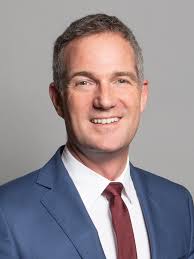
The speech made by Peter Kyle, the Secretary of State for Business and Trade, in the House of Commons on 18 May 2026.
Mr Speaker, I heard your call for decency and respect, and I hope those will be the watchwords for today’s debate.
My right hon. Friend the Chancellor is with her G7 colleagues today, so I am grateful for the opportunity to open the King’s Speech debate on backing British business to create economic growth. That is economic growth for a purpose: not simply to exceed the growth rate of other European members of the G7, which we achieved in the last year; not simply to have the highest growth rate in the G7, which we achieved in the last quarter; and not simply to deliver on the Government’s primary mission; but for the purpose of achieving greater social justice for all.
Economic growth is the surest path to higher living standards, improved public services and better quality of life for people up and down our country. We know that economic growth is the catalyst for new opportunities, the pathway to greater prosperity, and the vehicle for greater equality and security for working people. That is why it matters so much.
The growth figures published last week show that, despite the many international headwinds, the UK economy grew by 0.6% in the last quarter—the fastest growth among G7 countries. There is silence from the Opposition Benches. I would have thought that the party that champions Britain and calls for economic growth would be celebrating economic growth when they see it, but no: silence, silence, silence.
The situation is much better than the one we inherited, continuing to exceed the forecast of the doom-and-gloom mongers on the Opposition Benches and in the right-wing media, and even beating market expectations. When the Conservatives were in government, they and their strangely related first cousins, Reform, let down Britain’s economic future. Now, in opposition, they talk down Britain’s economic present. You can bet your bottom dollar that they will do so again today, ignoring the facts.
The facts are that the UK experienced the highest GDP growth among European countries in the G7 last year. Just today, the International Monetary Fund has upgraded the UK growth forecast, with the UK projected to have the fastest cumulative growth among European G7 economies over 2026 and 2027. None of this happened by accident, just like the damage done to the economy by the Tories did not happen by accident.
Alicia Kearns
(Rutland and Stamford) (Con)
Does the Secretary of State not concede that GDP per capita is down? Can he tell me that a single one of his constituents, apart from those on welfare, feels better off under this Government?
Peter Kyle
The whole purpose of the debate is to emphasise that economic growth matters. In the last full year in which the Conservatives were in office, economic growth stood at 0.4%. In the first full year of this Government, it was 1.4%. The hon. Lady should be apologising for the state in which she left the economy, leaving us to pick up the pieces.
This growth has been driven by an activist, interventionist Government who back British business—a Government who are not afraid to roll up their sleeves and make the big calls when big times demand it. From Jaguar Land Rover in the west midlands to Ineos in Scotland, Agratas in the south-west, Tata Steel in Wales, and Harland & Wolff across the United Kingdom, we step in to invest, modernise and protect British industry when necessary. We step back by reducing unnecessary regulation when that is possible, and step up to modernise our critical national economic infrastructure where that is vital: supporting the third runway at Heathrow that the Conservative party curtailed; expanding the Oxford-Cambridge corridor where the Conservative party hesitated; backing Northern Powerhouse Rail which the Conservative party cancelled. This Government have confirmed £45 billion of funding for Northern Powerhouse Rail to upgrade lines east of the Pennines and to bring forward a brand-new route connecting Liverpool and Manchester.
Harriet Cross
(Gordon and Buchan) (Con)
That was a great list, but what was missing from it was the oil and gas sector, and specifically the £17 billion of investment that was lost as a result of the Government not scrapping the energy profits levy and the £50 billion of investment lost because of their ban on new licences, and other hostile policies. Will the Secretary of State reflect on those, and on the damage that the Government are doing to growth not only in the north-east of Scotland but in the United Kingdom as a whole?
Peter Kyle
This Government have invested in industry up and down the country, from Agratas in the south-west, where we are investing in gigafactories, to Ineos in Scotland. We are investing in the industries that are keeping our country going, and we have put growth into the economy.
Gavin Robinson
(Belfast East) (DUP)
The Secretary of State was kind enough to mention Harland & Wolff. Successive Governments have introduced a number of support measures, and have ensured that that company can thrive by itself. However, in taking at face value what the Secretary of State has said, does he recognise that if this Government continue to refuse to designate Programme Euston a defence project and open it to international tender, not only will they not support British business and yards like Harland & Wolff, but the project will be delayed by three years? If the Secretary of State wants to inject business growth and economic growth, he should designate it a UK defence project, and keep the work and the investment in the UK.
Peter Kyle
The right hon. Gentleman knows full well the commitment that I personally have to Northern Ireland and its economic success. All the issues related to national resilience are things that we have to consider at this moment in time, unlike any other moment in time in peacetime. They are issues that I look at very closely, and in the days and weeks ahead I shall be talking a great deal more about how we can support industry and business across Northern Ireland.
Jim Shannon
(Strangford) (DUP)
I commend the Secretary of State for what he is saying. I know he is a regular visitor to Northern Ireland because he loves the country, and we appreciate that.
According to the Federation of Small Businesses in Northern Ireland, more than half the enterprises trading between Great Britain and Northern Ireland face severe friction, with more than a third halting trade entirely. Can the Secretary of State explain explicitly how the proposed regulating for growth Bill will help? I know he is committed to it, so let us hear what he has to say.
Peter Kyle
I have been aware of those issues from opposition into government. Of course, rebuilding the relationship with the European Union is also partly about smoothing that barrier across the Irish sea, and we will continue to do so.
We are building the critical national economic infrastructure that the Conservative party consistently failed to deliver, on runways, reservoirs and railways. Just as we are modernising Britain’s critical economic infrastructure, we are maximising Britain’s industrial strength by delivering our modern industrial strategy. Written for business with business, our strategy creates the right conditions for business to succeed. Since its publication, we have been tackling the high costs of energy. Our supercharger saves firms hundreds of millions of pounds every year, and our British industrial competitiveness scheme will help more than 10,000 eligible manufacturing businesses, saving them up to £40 per megawatt hour from next April. I am very aware of challenges faced by the ceramics sector; I will meet representatives of the sector tomorrow to discuss how the Government might be able to support it, and I hope to be able to say more about that very soon.
To cut the red tape that is holding back British businesses we are ending mandatory strategic reports for medium-sized companies and ending directors’ reports for businesses of all sizes, saving firms £230 million each and every year. We are stripping out unnecessary rules and regulations. Through the regulating for growth Bill, announced in the King’s Speech, we will create regulatory sandboxes—economic growth laboratories where innovators can trial cutting-edge technologies safely and speedily.
Whereas the Conservatives, with their destructive ideology of deliberate de-industrialisation—from monetarist Thatcherism to Brexit isolationism—drove British manufacturing businesses to the wall and destroyed the jobs that depend on them, this Government are determined to maximise the UK’s competitive advantage, not just through reindustrialisation, though that is necessary, but through new industrialisation in advanced manufacturing, clean energy, artificial intelligence and new technology. That is why we have rolled out new AI growth zones and confirmed the site of the UK’s first small modular reactor—a milestone in the journey to becoming a clean energy superpower.
Gregory Stafford
(Farnham and Bordon) (Con)
The Secretary of State talks about deregulation, but does he not accept that adding 330 pages-worth of regulation in the Employment Rights Act 2025, at a cost of a billion pounds to the economy, is having the opposite effect? Youth unemployment in my constituency has gone up by 28% in just one year.
Peter Kyle
I am grateful to the hon. Gentleman for giving me the opportunity to point out that, in my Department, the overall net regulatory burden is reducing, not expanding. I will not stand in front of the Tories and apologise for giving new rights to workers that are fit for the age we are living in. Over their entire 14 years in office the Tories failed to make sure that people have protections and rights at work that are fit for the age we are living in. We can move forward with growth in the economy that takes forward businesses and the people who work in them. That is to be celebrated, not condemned like the Tories are doing.
John Glen
(Salisbury) (Con)
The right hon. Gentleman is, quite reasonably, setting out his assertions about where he wants the Government to go, but does he not see the irony? After all the events of last week, the cost of borrowing in the UK is higher than that of many of our competitors, and all business leaders say they feel the instability. The right hon. Gentleman’s words will not ring very true for people who seriously wonder about the Government’s future direction, with putative leadership contenders talking about fundamental changes in direction and different fiscal rules.
Peter Kyle
The right hon. Member mentions irony; this is from the party that gave us the Liz Truss mini-Budget, which wreaked havoc on our economy. Mortgage rates went up for every mortgage holder across the country, with inflation peaking at 12%, yet the Conservatives talk about instability. The country still lives with the instability that they wreaked on it.
Our major expansion of DRIVE35 is channelling investment into batteries, electric motors and power electronics—part of the biggest Government investment in the British car industry since the second world war. “Invest”, “modernise” and “protect” are the watchwords for the new industrialisation of Britain through our biggest industries, our biggest sectors and our boldest companies.
Iqbal Mohamed
(Dewsbury and Batley) (Ind)
The Secretary of State talks about deregulation, but we have seen what that has led to in the finance sector, the banking sector and the water industry: consumers end up paying the price. The Secretary of State also talks about AI; speaking way back in 2014, Stephen Hawking cautioned:
“The development of full artificial intelligence could spell the end of the human race.”
Why do the Government believe that deregulating AI is going to assist their growth mission? It will put consumers’ lives and the human race at risk.
Peter Kyle
The Government are investing in AI infrastructure, but also making sure that the regulatory and legislative landscape is up to date for the time we are living in. The hon. Gentleman wants to turn the clock back. The world is awash with AI technology. We cannot stop it coming to our country, but we can shape how it interacts with our economy and its people. That is why we are investing in the training of 7.5 million people throughout the economy, including a million students, to make sure we can seize the opportunities that AI presents but also protect people from the potential damage it could cause.
Not only are we creating the conditions for new industrialisation, but we are ambitious for the success of Britain’s small businesses. Our “Backing your Business” plan is one of the most generous packages of support rolled out by any Government, with new hospitality zones and reduced red tape for bars and cafés. We have brought in an £11 billion lending package to help small firms to grow internationally and take advantage of the trade agreements we have negotiated with India, South Korea and the United States. This may trigger the Opposition, but we are also going to deepen Britain’s trading relationship with the European Union, Britain’s most significant international marketplace. That is what our European partnership Bill is all about.
Vikki Slade
(Mid Dorset and North Poole) (LD)
I welcome the deepening of the relationship with the EU and the measures on late payments, but the elephant in the room is that while the jobs tax exists, and the Government do not make the most of business rate changes in retail, hospitality and leisure, the benefit to small businesses is more than outweighed by the extra difficulties they face. Does the Secretary of State accept that there need to be changes on that front, even if we have to wait until the Budget for them?
Peter Kyle
Once again, the Lib Dems condemn every fundraising measure we have brought in to invest in our public services and get our country back on its feet, but they never say how they will pay for the alternative. They never say how they will raise the money themselves. I am not going to apologise for any of the measures. I will come in a moment to the investment we have made in small businesses and in hospitality, and I will give way to the hon. Lady again if she wants me to at the time, but will she please say what the alternative is from her perspective? The Lib Dems want to spend all the money in the world but they do not want to tell people how it is.
The lending commitment we have secured with the UK’s five leading banks will support Britain’s small businesses to succeed and prosper. Our business rates support package, worth £4.3 billion, will protect ratepayers from large overnight increases in bills. We have introduced permanently lower multipliers for retail, hospitality and leisure properties. That is worth nearly £1 billion a year and will benefit over three quarters of a million properties.
I know that many businesses, particularly in the hospitality and retail sectors, would like us to go further. I get that. They are impacted by changes in the shopping and social habits of their customers, as well as the financial and geopolitical pressures in the wider economy. We are absolutely aware of and attuned to that. However, the crocodile tears of the Conservatives about these industries are laughable and lamentable. Theirs is the party that urged us to join the costly military action in the Gulf, which will heap further pressure on hospitality and other sectors throughout the economy. It is not our war, but the Conservative party would make British businesses and consumers pay the price.
Ben Obese-Jecty
(Huntingdon) (Con)
The Secretary of State mentions crocodile tears; what would he say to the hospitality businesses in my constituency that have been impacted by the rise in national insurance contributions, the minimum wage rise and the business rates that he just talked so effusively about? What message would he give to them as they struggle to deal with the outcome of the Budget?
Peter Kyle
Unfortunately, none of the Conservative Members was listening to what I just said in outlining the measures we are taking, and the admission that we get it and we are listening. Fundamentally and foundationally, what those businesses need is what every business in this country needs, which is a growing economy. In the last year the Conservatives were in office, growth was 0.4%, but in the first year in office of this Government, it was 1.4%. That is what every business needs across the country, and when it comes to specific sectors at specific moments in time, we are watching and attuned, and I am acting where necessary. When the right hon. Member for Central Devon (Sir Mel Stride) addresses the House, I am certain that on that and so much more he will display all the symptoms of the economic illiteracy and ideological incompetence that for too long have engulfed the Conservative party. By contrast, we are taking practical action to end these conditions.
We are bringing in new measures to tackle late payments. The small business protections (late payments) Bill will give the UK the strongest legal framework in the entire G7. Late payments cost the UK economy £11 billion a year, forcing the closure of 38 businesses every single day. For 14 years it was the same under the Conservatives, and they did nothing. The Bill tackles the scourge of late payments, brings in stronger powers for the Small Business Commissioner, sets out strict maximum payment terms of 60 days, and bans the deduction of retentions in construction contracts. The Federation of Small Businesses has said that tackling late payment is one of the biggest things the Government can do to help small businesses to grow. That is the difference that an activist, interventionist Labour Government can make.
Finally, let me turn to another example of the difference. The ghost of free market Thatcherism still haunts many of the industrial areas of this country. It can be seen in the scars of de-industrialisation still marking too many communities around our country. It is high time to exorcise the ghost of de-industrialisation. When I published the steel strategy last month, I told the House I would never hesitate to fight for British industry in defence of the national interest. The legislation we are bringing forward is proof positive of that commitment.
Tom Tugendhat
(Tonbridge) (Con)
I am grateful to my right hon. Friend—forgive me, I should not call him that; he will be embarrassed. I am grateful to the right hon. Member for his point about the steel industry. Understandably, he has chosen to support one particular aspect of the industry, the steelmaker, but at the expense of and to the cost of every other part of the industry—the steel consumers. How will he balance that and what provision will he make for those who will see steel prices rises because of his intervention?
Peter Kyle
I have committed to invest in, modernise and protect the steel industry where I need to. Those are watchwords that I apply throughout the economy in highly volatile times. We are investing up to £2.5 billion to modernise and transform the steel sector, from blast furnaces to electric arc furnaces—those are the kinds of transformations we need to make. If I had invested that money but not also protected our sector, that would be pouring vast amounts of public money straight down the drain. In certain circumstances I have had to step in and use measures to protect the domestic British industry. I am not introducing measures for any products that are not manufactured in the UK. I am doing so wisely; I am doing so to protect and ensure that we can build and retain a steel industry that is fit for the future and sustainable.
We will move forward and ensure that, in an era of global instability, we have the key aspects of our supply chain that we need for our resilience as a nation—yes, in defence; yes, in industry; and yes, in all the money we are investing in infrastructure. We must reserve those capabilities. I am listening and engaging with all parts of the steel sector, and the manufacturers and businesses that depend on it. I am listening closely to them. If there are any impacts, I will of course engage with them to understand and see how it will be possible, where necessary, to provide support.
Ayoub Khan
(Birmingham Perry Barr) (Ind)
Will the Secretary of State give way?
Peter Kyle
No, I am going to carry on. I appreciate Members’ kind offers to intervene again and again; I look forward to all their speeches.
The Steel Industry (Nationalisation) Bill will give us the authority to bring British Steel into public ownership, not as an ideological exercise but as a practical means of safeguarding the national interest. It will allow us to retain the Scunthorpe plant as a critical piece of our national infrastructure that is essential to British economic resilience. Britain has long been a proud steelmaking nation. Whatever I have to do to make it so, Britain will retain its capacity and capability to manufacture steel. That is my commitment to Members in this House and to the remaining steel communities of our country. The strength of that commitment can be measured in our determination to boost domestic steel production to ensure that 50% of the steel used here is made here.
Britain cannot make its way in the world as a services-only economy. We have to make our way—earn our way—to greater prosperity, equality, security and opportunity. We cannot do that by economic isolationism, neoliberalism, greater protectionism or a command economy. We cannot regulate our way to prosperity. We can achieve it only through practical and pragmatic policies that support British businesses to be profitable, to scale up, to create jobs and to grow.
We have to end the outdated free-market ideologies, failed economic theories and siren voices that all but destroyed Britain’s manufacturing base and drove the British public towards Brexit. Britain’s future prosperity can be built only by business success. There is no other way, no shortcut, no easy option and no magic bullet—no matter how attractive and simplistic slogans and superficial soundbites may appear to some.
George Freeman
(Mid Norfolk) (Con)
The Secretary of State is making a wonderful speech about the 1980s. While I agree with many of his points, the truth is that the country today has come a long way in all sorts of sectors, and I am proud to have done my bit to help that. On regulation, the Secretary of State agrees that leadership on regulating new industries, and having sandboxes and testbeds, is a great UK strength. He also wants us to get closer to the European market; is he worried that if we do, we may end up losing our competitive advantage in a number of areas where we could genuinely attract investment into new industries, such as agri-tech and gene editing?
Peter Kyle
To clarify, I am talking about how we recover from the scars of the 1980s, how we learn the lessons, and how we ensure that we never repeat mistakes that cause scars that endure for generations. To answer the hon. Gentleman directly, we will align with the European market only where that is in the national interest.
We cannot turn back the clock to build future success. The partnerships that this Government have built with businesses, local government and trade unions are delivering resilient growth and helping to build a stronger economy. They are building a fairer country, in which wages are up and public borrowing is down. There have been six interest rates cuts and 500,000 children are being lifted out of poverty. The FTSE 100 has reached historic highs, and the UK is raising more venture capital funding this year than France, Germany and the Netherlands combined.
This Government faced enormous challenges on taking office, and the conflict in the Gulf presents us with even greater challenges. Despite that, we are making progress. It will take time for the benefits of progress to be sufficiently seen and properly felt. The recent election results show that. The only sure route to proving the benefits of change is growing the economy, and the only certain way to grow the economy is through British business success. Our task is to create the right conditions for Britain’s businesses to invest, succeed, and win in an increasingly competitive global marketplace. We have made a start, and we will see this through to the finish.