
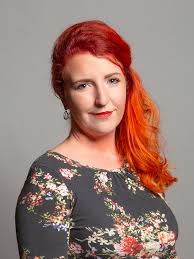
The statement made by Louise Haigh, the First Secretary of State, in the House of Commons on 3 September 2026.
With your permission, Mr Speaker, I would like to make a statement on the work of the newly formed Office of the Prime Minister and Cabinet and the change it will bring.
On the steps of Downing Street six weeks ago, the Prime Minister set out the priorities that will guide this Government. He was clear that 40 years of overly centralised decision making and over-privatisation have stripped power and resources away from communities in every nation and region of this country; that public control over the things that matter so much to people’s lives has been systematically eroded and become a barrier to businesses wanting to start and grow; and that a broken economic and political model has cost good jobs and opportunities in many parts of the country, while delivering sky-high prices in exchange for poorer customer services.
The Prime Minister was clear that this Government will be the circuit breaker that our country needs: a Government who will take power from Westminster and Whitehall, and put it in the hands of the communities who are best placed to use it; who will rewire Britain, so that our politics and our economy work for every person and every place. On a bedrock of fiscal discipline, we will build a pro-business culture and an innovation-led economy that delivers good growth in every postcode.
We have wasted no time in delivering on that commitment. In the newly formed Office of the Prime Minister and Cabinet, we are rewiring the machinery of government so that the Prime Minister has the resources and levers he needs to deliver on his priorities. By stripping out many of the bureaucratic functions of the office, we have created a stronger, more focused Department that is capable of driving forward the Prime Minister’s agenda. This Government recognise that for far too long there has been a disconnect between the Cabinet Office and No. 10, and it is that lack of joined-up thinking that has hampered the ability of successive Prime Ministers to drive forward their own agendas across Government.
We have had a dichotomy at the heart of Government: the most centralised state in the G20, with one of the most underpowered centres. In the newly established OPMC, we are ensuring that the Prime Minister has the support and resources he needs to deliver the change that the public are impatient to see. From that office, we will drive forward work across Government to put the essentials, such as water, transport, energy and housing, under greater public control, in order to regenerate our communities, breathe new life into our high streets and give people more room to breathe through action on the cost of living.
That work of change has begun. Working closely with the Prime Minister and the Cabinet Secretary, we have begun the work of shifting power and resources away from Whitehall. Through our devolution blueprint and the establishment of No. 10 North, we have created a new engine of regional economic growth that will empower places that have been overlooked by Westminster for too long. We are granting new powers to strategic authorities to take more control over the future of their regions: a greater share of locally generated revenues, beginning with business rates; and more control over housing, public transport and infrastructure. For the first time, local leaders will have the power and resources they need to invest in the things that matter most to their communities.
This Government are filling in the map to bring an end to the system of two-tier devolution, so that by the end of 2028 we are able to extend to all parts of England the same offer that the rest have enjoyed for many years. This is how we can empower communities, drive local economic growth, create new jobs and deliver maximum benefit to the people who live there. This is devolution by design and devolution by default, and by working across Government we will build a new economic model that begins to put life’s essentials back under stronger public control and make them affordable for people again.
Working with my right hon. Friend the Secretary of State for Housing, Communities and Local Government and the Under-Secretary of State for Housing, Communities and Local Government, my hon. Friend the Member for Doncaster Central (Sally Jameson)—and building on the strong foundations laid down by my predecessor, my right hon. Friend the Member for Bristol North West (Darren Jones), whom I thank for his work—we are delivering a once-in-a-generation rebalancing of power in this country. This is what a rewired state looks like: one that is relentlessly focused on delivering for the people of this country, with empowered communities and good growth in every postcode. These are the tests against which our decisions will be measured and the metrics by which our actions will be judged.
Last month, the Chancellor and I announced reforms to public procurement that will cut red tape and unleash a new wave of British job creation. Too often, small and medium-sized businesses have struggled to navigate complicated procurement processes that seem to prioritise everything. When we prioritise everything, we prioritise nothing, so we are making the process simpler and doing things differently. From next year, businesses seeking to win a share of £90 billion in central Government contracts will be left in no doubt about what we want from them: creating good jobs and giving young people the skills they need for the future. These new rules will ensure that the £90 billion spent each year through Government contracts supports British jobs, skills and people in every postcode.
We are going further in our reforms to public procurement to ensure that taxpayers’ money is delivering more for our communities. For the first time since 2020, we are removing the defence exemption from social value. That means billions of pounds of defence contracts will soon give weighting to jobs and skills for young people across Britain. This is how we back businesses in every part of the country. In my ministerial colleagues, Parliamentary Secretaries to the Cabinet Office my hon. Friends the Members for Gateshead Central and Whickham (Mark Ferguson) and for Chipping Barnet (Dan Tomlinson), businesses looking to build and grow here in Britain—creating those good jobs and driving that good growth—will have strong advocates in this Government.
The work of my Department in strengthening our national resilience and co-ordinating the Government’s response to emergencies remains central. Over the summer, we saw communities across the country impacted by unprecedented wildfires precipitated by one of the hottest and driest summers on record—a reminder of the very real and present threats to the UK posed by climate change. During the third week of August, four major incidents were declared across south Wales, Hampshire, Cambridgeshire and the west midlands. By 13 August, fire and rescue services were tackling 47 wildfire incidents, and 79 separate requests for additional equipment and resources were made by fire and rescue services. In south Wales alone, more than 200 military personnel were deployed to tackle 14 separate incidents.
Such was the extent of support provided across the country that almost every service was impacted or involved in the response, and some of the most stretched services faced the prospect of having to deprioritise certain call-outs due to the pressures on the system. The day before the national alert was issued, close to 12,000 999 calls were recorded in a single day, which is six times the average call volume. Many services were stretched to breaking point, but continued to work around the clock to protect lives, communities and properties. I am sure everyone in the House will join me in thanking our emergency services and military personnel, who put themselves in harm’s way to keep us safe.
On 14 August, when the Government received direct requests from fire and rescue services for urgent Government intervention, we took decisive action. A national emergency alert was issued to provide the public with clear guidance on the steps they should take to avoid inadvertently contributing to an already dangerous situation. It should come as no surprise that the British public did their bit. Within 48 hours, there was a 42% decrease in the number of 999 calls, falling from 12,000 to 5,200, and by Monday morning the number of live wildfire incidents had fallen from 47 to 27. This gave our fire and rescue services the breathing space they needed to tackle existing fires and keep us all safe.
Over the coming weeks, I will continue to work closely with Cabinet colleagues to ensure the Government’s response meets the scale of the challenges we face. I will also be working closely with my right hon. Friend the Minister for Security in ensuring that this Government take a long-term and strategic approach to the country’s preparedness. The Government will continue to work closely with our frontline services and local resilience forums to mitigate the risks posed by extreme weather and drought, including a £100 million increase in funding for the fire services and a £65 million boost in support of our farmers.
In the interests of brevity, I will touch briefly on the work that is happening elsewhere in my Department. I have been delighted to welcome my right hon. Friend the Member for Vale of Glamorgan (Kanishka Narayan) not only to his role as the Minister for Artificial Intelligence, but to join us around the Cabinet table. The Prime Minister has been clear that he sees harnessing the potential of artificial intelligence as a central part of our country’s future, and the elevation of this role reflects the ambition this Government have to make Britain a world leader in these advanced technologies.
I am also pleased to welcome the Minister for Intergovernmental Relations and European Relations to his role. My right hon. Friend the Member for Lincoln (Mr Falconer) has wasted no time in the vital work of building stronger ties with our closest neighbours and allies. I was very grateful to him for interrupting his honeymoon to come home and be appointed to the post.
My Department is also bringing forward a programme to modernise the operation of the state. We are taking public control of the way Government work—cutting out the unnecessary processes and needless reviews that slow decision making and stifle innovation. At the heart of this agenda will be the restoration of Ministers’ responsibility and agency to deliver the change they promise, with increased accountability to Parliament and the public for the direction they set and the decisions they take. We will bring forward new methods of public deliberation in policy development and do away with box-ticking consultation with the usual suspects. Fewer decisions will be delegated to unelected bodies, and the way decisions are made will be scrutinised in Parliament, not in the courts, ending the warm bath of constructive ambiguity that politics has been too happy to soak in for far too long.
I am aware—I am deeply honoured—that I am the first woman to hold the role of First Secretary of State since the late, great Barbara Castle. I am confident that if I can channel even a fraction of the energy and determination that she brought to this role, collectively we can change our country for the better. For too long, too many places have been written out of our national story; their contribution ignored and their potential overlooked. People feel like the system just does not work for them. That is why in 2024 they voted for change. This Government are on a mission to ensure we can deliver on the Prime Minister’s and the public’s priorities. This is a collective endeavour, and together we will deliver the lasting change that people deserve. I commend this statement to the House.