Blog

  • Naz Shah – 2026 Speech on the Loyal Address

    Naz Shah – 2026 Speech on the Loyal Address

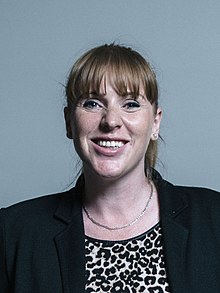
    The speech made by Naz Shah, the Labour MP for Bradford West, in the House of Commons on 13 May 2026.

    I beg to move,

    That an humble Address be presented to His Majesty, as follows:

    Most Gracious Sovereign,

    We, Your Majesty’s most dutiful and loyal subjects, the Commons of the United Kingdom of Great Britain and Northern Ireland, in Parliament assembled, beg leave to offer our humble thanks to Your Majesty for the Gracious Speech which Your Majesty has addressed to both Houses of Parliament.

    It would be remiss of me not to say a few words about the outstanding state visit by His Majesty to the United States. We saw eloquent oratory, remarkable wit and genuine statesmanship from His Majesty. Presenting President Trump with the original brass bell—inscribed with his name before he was even born—from the second world war submarine HMS Trump and suggesting, if he needs us, to “give us a ring” was a masterstroke in diplomacy. His Majesty returned—very humbly, of course—having secured the lifting of trade barriers on Scotch whisky. Given the performance, I was rather worried His Majesty might come back with the 13 colonies as well.

    It is a huge honour for me and my constituents in Bradford West for me to move the Loyal Address. This is the second time that my constituency has been honoured in this way. In 1959, the then Member for Bradford, West, Arthur Tiley, seconded the Loyal Address. When the Chief Whip called me about today, my first reaction, like many across this House when the Chief calls, was, “Uh-oh, what have I done?” However, that “Uh-oh” soon turned into, “Oh my days—no way!” with the biggest smile ever.

    I clearly remember listening to the speeches by my hon. Friends the Members for Bootle (Peter Dowd) and for Vauxhall and Camberwell Green (Florence Eshalomi) the last time this occasion happened, and thinking, “Now, that is an honour.” Had I known God was listening, I would have asked to win the EuroMillions. In fact, had I known that not always voting with the Government also works, I might have done more of it. [Laughter.]

    I am indeed humbled and honoured, primarily for being trusted by the people of Bradford West in placing their faith in me and sending me to this place, but also by being given this opportunity to be the first ever Muslim to propose the Loyal Address in this Chamber—[Hon. Members: “Hear, hear”]—and, of course, seeing the meltdown of the far right online at a “Muslim takeover” and even an “act of domination”. In the light of this, I must assure them this is not a takeover. I must state it is, per convention, a joke—[Laughter.] But if seeing black and brown people on TV makes you feel sick, my speech is going to make you vomit. [Laughter.]

    On a more serious note, over the last few months I have had the opportunity to tell my own story: the story of my life and the challenges I faced growing up. I often pinch myself while in this Chamber, questioning how a girl who lived the life that I lived could be given such an honour to represent her city in the mother of all Parliaments. It is because, despite the challenges we may face as a nation and the differences in approach that we present across the House, I know without a doubt that, as someone who comes from the ethnic, religious and socioeconomic background that I came from, and whose entire live crashed before her, I would never have been given such an honour in any other country than this one—my own country, our country. For me, there is no nation greater than ours. We are the greatest nation on earth, and I am a true patriot. [Hon. Members: “Hear, hear.”]

    Raised in abject poverty, living in a single room because we could not afford to heat the whole house and suffering tuberculosis as a result, I understand at first hand what this means. Therefore, I welcome the Government’s continued commitment to prioritise addressing the cost of living crisis. In doing so, we cannot ignore the instability across the world around us: the plight of the Palestinians, the war in Ukraine, the instability in the strait of Hormuz, and the growing global threats for which we must also be ready.

    Living in a globalised world means that there is an ever-growing connection between the local, the national and the international. What happens out there reaches every home and doorstep across every constituency. The defence of our country is rightly also among these top agenda items. As a proud graduate of the armed forces parliamentary scheme—I recommend that all Members take part in and support it—I have nothing but admiration and thanks for those who have served and continue to serve to protect our tomorrow.

    I also have the honour to serve as the Prime Minister’s trade envoy for Indonesia and the Association of Southeast Asian Nations, a region of more than 660 million people, and a hugely important geopolitical and trade corridor. I welcome the continued commitment to strengthening our place across the world. Without international trade and growth in our economy, we cannot deliver the jobs, investment and support we need across our country. I will continue to play my part in securing trade and investment for the UK, and championing British business abroad with colleagues from across the House.

    Closer to home, I had the honour to serve in Committee for the assisted dying Bill—something that went beyond party lines—where I had the opportunity to work with colleagues from across the House, including the hon. Member for East Wiltshire (Danny Kruger). While I did not eventually support the Bill, I pay tribute to my hon. Friend the Member for Spen Valley (Kim Leadbeater) for her work, commitment and passion.

    Talking about going beyond party lines, I noted with interest, as I am sure the whole nation did too, the rather peculiar fascination of the previous Chancellor of the Duchy of Lancaster, the noble Lord Gove, with our Home Secretary. He actually confessed to browsing the internet for her images. Thankfully, knowing our Home Secretary as I do, I am confident that this is not the kind of cross-party mischief that she would reciprocate. [Laughter.]

    But I do have a guilty pleasure of my own—and no, it is not a Tory. [Laughter.] Unfortunately for my calorie count, it is custard and cake. I blame Godfrey and Sharon in the Tea Room for their unwavering encouragement to indulge “sparingly”. [Laughter.]

    I am proud to be the first woman elected to Parliament for the constituency of Bradford West, a constituency with a history of extraordinary women who broke every barrier that patriarchy put in front of them. The Brontë sisters changed English literature forever but had to use men’s names to publish their writing. The suffragettes of Bradford went to Holloway prison for the right to vote. The women of Manningham Mills walked out into the cold, changing our political landscape forever. Margaret McMillan pioneered free school meals—trialled in 1904 in the school I later attended, Green Lane primary—leading to the Education (Provision of Meals) Act 1906, which cemented free school meals in our history.

    Barbara Castle, shaped by Bradford’s streets and schools, went on to write equal pay into law, and I am proud to serve alongside equally formidable women, such as my hon. Friends the Members for Bradford South (Judith Cummins) and for Shipley (Anna Dixon). There is something in the air in Bradford as a whole that produces women who will not be told. I promise this House that I have zero intention of breaking with that.

    Today our country beams with pride because of the many great changes made by successive Labour Governments, but none of those changes would have been possible without the women who led the Manningham Mills strike. That strike led to the founding of the Independent Labour party, conceived and formed in Bradford West. It was in Bradford that a man named Keir first took the chair of the Labour movement, and despite 130 years, two world wars, and roughly 47 leadership elections, the party remains in the hands of a Keir. Prime Minister, nobody can say that you do not know how to fight on.

    I could not make this speech without recognising David Hockney—a boy from a Bradford terrace who pushed his paintings around the city in a pram. David went on to become the world’s most famous living artist. He once said that if you look closely, Bradford is a city with magic. I do not know whether he was looking into the future and describing Bradford magician Dynamo, Zayn Malik’s magical music, or the leg-spinning, world cup-winning magic of our very own Adil Rashid, but Bradford is without question a place of wonders.

    Bradford is also a place of culture. The Bradford literature festival is often referred to as the jewel in the crown; it is now one of the largest literature festivals in the UK, and the largest of its kind throughout Europe, pairing excellence with access for those who would otherwise be excluded from culture. In 2025, Bradford was proud to be named UK City of Culture, home to a rich, diverse population, built on the back of the historic title of the wool capital of the world.

    In the 1850s, German-Jewish merchants came to Bradford and built the magnificent warehouses of what we now call Little Germany, helping to make Bradford a global trading city and the proud home of the oldest synagogue in the north. It is a synagogue that the Muslim community recently stepped in to save when the roof was about to cave in, illustrating the relationship between the Muslim and Jewish communities in Bradford. A century after the German-Jewish merchants, men from Azad Jammu and Kashmir, India, and Pakistan arrived in the 1950s and 60s, and worked tireless nightshifts to keep the mills running, ensuring Britain’s economy continued to flourish after the second world war. Each generation of newcomers did not just come to Bradford—they built Bradford.

    Chicken tikka masala might be the UK’s national dish, but I must inform the House that they have not had a curry until they have had a Bradford curry. Whether it is the legendary family naans on trees invented by the late king of curries Shabbir Hussain, the founder of Akbar’s, or the subcontinent flavours of Aaghra, Mumtaz, Jinnah, MyLahore, or any one of hundreds of restaurants across the city, Bradford does curry like nowhere else. The curries are that good they even defy the Mounjaro jab. A note to the Health Secretary: he may have to develop a stronger solution.

    I recommend Bradford’s curry to all Members of the House. Now that Bradford has a few Reform councillors, perhaps the hon. Member for Clacton (Nigel Farage), who I see is not in his place, could pay them a visit and treat them to a good curry, followed by a pint brewed in Bradford. In fact, given the size of the gift he received that we are all now aware of, he could probably take half of Bradford out and still be left with plenty of change.

    Bradford is the youngest city in the United Kingdom. It has been named the most entrepreneurial, too; Morrisons grew from a market stall in our city to a household name. Bradford has no poverty of aspiration, talent or ambition, but decades of poverty of infrastructure have left us behind.

    Bradford is, however, turning a corner, with £270 million in public sector investment building private sector confidence, with a combined pipeline now reaching £2.3 billion. I am grateful for our Government’s support, which includes: a new hospital in Airedale; a £2 billion integrated settlement for West Yorkshire, giving our Labour Mayor, Tracy Brabin, the power and flexibility to invest in local jobs, new homes and improving skills; a Bradford city station; and £2.1 billion investment in transport for the city region, enabling West Yorkshire to deliver mass transit, better buses and repair our roads and potholes. All that is pumping confidence into a city ready for investors to benefit from its untapped potential. Northern Powerhouse Rail is not a “nice to have”, but the difference between Bradford’s young people building their futures at home and building them somewhere else.

    I give thanks to all the House staff across the estate who ensure that Parliament can play the role it does. They are hugely deserving of our appreciation for everything they do. Outside of this place, I also thank the security services and our police forces, who keep us safe with the ever-increasing risks and threats to our democracy. Given the magnitude of this moment, I also emphasise the huge weight and burden of responsibility on our shoulders. When we speak in this Chamber, it carries meaning and impact; it impacts the boy who takes off his kippah and the girl who removes her hijab, fearing for their safety because their race and religion have become a political football. An attack on anyone, or anyone’s place of worship—a synagogue, a mosque, a church, a temple, a gurdwara or any kind of religious institution—is an attack on our British way of life. We must strengthen our communities against the rising tide of nationalism and populism. In an ever more dangerous world, and an ever more toxic online world, society needs unity, calmness and leadership more than ever to make our country the best it can be. The burden of responsibility falls on all our shoulders, and it has never been greater.

    It is also convention to part with words of wisdom for those who are slightly newer to this place. With that in mind, I simply say this: nurture the pragmatism of being an elected representative of the people who have put their trust in you and sent you here, but never forget the passion of an activist. Keep that fire burning—it is that passion that will sustain you and carry you through, because sometimes it gets difficult here.

    A King’s Speech is meant to be a fresh start—Parliament’s version of clearing the kitchen table, making room for the work ahead, gathering the family round and reminding ourselves what the country has sent us here to do. As hon. Members may know, I believe in a full table. In my home, hospitality matters. You make space, listen and serve people properly. But good hospitality and politics itself is about more than who speaks first or loudest. It is about noticing the quiet ones, those who may be less organised or not as powerful but who are none the less equally, if not more, important—the voiceless whose voices we need to become.

    For someone like me, who spent her formative years fighting a campaign to release her mother from prison and who did not have a formal education beyond the age of 12, spelling, grammar and parliamentary language do not come naturally. Forced into a marriage at 15, forced to live a life with hearing aids, lugging around a black bin liner of belongings as a homeless teenager, left all alone as a guardian to a younger brother and sister without a shoulder of support or stability in life, attempting suicide as I could not see a way out from my despair, yet here I stand—[Hon. Members: “Hear, hear.”] Here I stand with the world’s eyes watching the state opening of Parliament on this momentous occasion, having been given the privilege of this moment. If this was not my story, I would believe it to be fiction. But the truth is that there can be light at the end of the tunnel. As I believe, and as my life personifies, after hardship comes ease.

    When I stood in this Chamber for the first time, I pinched myself—and I still do—that someone like me can end up here representing the city they love in the mother of all Parliaments. Bradford and my country gave me everything. I intend to spend every day in this House returning the favour. It is the honour of my life to move the Loyal Address on behalf of the people of Bradford West. I commend the motion to the House.

  • Lindsay Hoyle – 2026 Statement on Parliamentary Standards

    Lindsay Hoyle – 2026 Statement on Parliamentary Standards

    The statement made by Lindsay Hoyle, the Speaker of the House of Commons, on 13 May 2026.

    The House has directed the Speaker to make a statement at the beginning of each Session about the duties and responsibilities of hon. Members. I begin by reminding Members of their duty to observe the code of conduct and behaviour code agreed by the House, and to behave with civility and fairness in all their dealings. Unacceptable behaviour that does not meet the standard of these codes will be dealt with seriously and independently, and with effective sanctions.

    The House asserts its privilege of freedom of speech. That privilege is enjoyed by Members of Parliament only in their work in proceedings of this House; as private individuals, we are equal under the law with those whom we represent. This privilege is there to ensure that our constituents can be represented without fear or favour. It is an obligation upon all of us to exercise that privilege responsibly. The Speaker does not have the power to police the accuracy of Members’ contributions—unfortunately. [Laughter.] It is incumbent on all Members to be accurate in what they say in this House, and to correct any mistakes as soon as possible.

    All Members, including Ministers, should take their responsibilities in this House seriously. I remind Ministers that the Government’s own ministerial code makes it clear that important policy announcements should be made in the first instance in this House when it is sitting—some people seem to have short memories. Both Front and Back Benchers must also adhere to the courtesies of this House. That includes informing other Members in advance of visits to their constituencies, except those for purely private purposes.

    I remind all Members that it is important that they are able to raise matters with me and seek guidance from the Clerks freely. For that reason, any such conversations and correspondence should be treated as confidential. I want all Members and everyone in the parliamentary community to be able to go about their work safely online, here in Westminster, and in their constituencies. We have a duty to be vigilant and to assist those whose job it is to keep us safe.

    Finally, I want to say something about how we treat each other and the language we use in the Chamber. What we say in this House, and how we say things, matters. It has an impact on colleagues, on those who follow our proceedings and on wider political discourse across the country. Members should be heard courteously, whatever their views, but in this place we are all honourable Members. While I expect robust political debate, I will not accept undignified language or improper criticism of individual Members. Our constituents expect us to focus on the very serious issues that they care about, rather than make cheap attacks on each other.

    If a Member falls short of the standards expected of us all, there are ways of dealing with that, but not by accusations made as sideswipes during questions or debates. If we fail to treat each other with respect in debate, it diminishes our work and risks raising the temperature of discussions outside this place—particularly on social media—which too often descend into abuse against Members and others. I expect Members from all sides to treat each other with respect.

    Before moving to the first business of the new Session, I would like to express my very best wishes to all hon. Members, and to thank all those who work for the House and for Members for their continuing support. They are the unsung heroes. I thank them all for working with Members and for working in this House.

  • John McDonnell – 2026 Comments on Wes Streeting

    John McDonnell – 2026 Comments on Wes Streeting

    The comments made by John McDonnell, the Labour MP for Hayes and Harlington, on 13 May 2026.

    Just a thought. Wes Streeting owes his political status to the support he’s received over years from Peter Mandelson & Morgan McSweeney at Labour Together. He wouldn’t make a move against Keir Starmer without Mandelson’s say so. So look on this as Mandelson’s and Morgan’s revenge.

  • Katie Hopkins – 2026 Statement on Zara Sultana

    Katie Hopkins – 2026 Statement on Zara Sultana

    The statement made by Katie Hopkins on 13 May 2026.

    On behalf of their client, Zara Sultana, Bindmans Media and Information Law Practise Group requires that I publish the following statement on X, and that such statement must be clearly visible and pinned to my profile for a continuous period of no less than 24 hours:

    “On 30 March 2026, I published a post on my X account addressed to Zarah Sultana in which I stated that she encourages and incites violence and is friends with terrorists.

    Those statements are false. I was wrong and offer my sincere apologies to Ms Sultana for the harm and distress caused to her.”

    It is my very great pleasure to do this, and I reiterate my sincere and repeated offer to meet with Miss Zara Sultana in person to resolve our differences.

  • PRESS RELEASE : Citizens’ Rights Specialised Committee meeting [May 2026]

    PRESS RELEASE : Citizens’ Rights Specialised Committee meeting [May 2026]

    The press release issued by the Cabinet Office on 13 May 2026.

    The UK Government and European Commission gave a joint statement following the 18th meeting of the Specialised Committee on Citizens’ Rights.

    The 18th meeting of the Specialised Committee on Citizens’ Rights was held on 13 May 2026 in Brussels, co-chaired by officials from the European Commission and the UK Government. Representatives from EU Member States were also in attendance.

    The co-chairs took stock of the implementation of the Citizens’ Rights part of the Withdrawal Agreement, and discussed elements that require further work, under the overall objective of ensuring the full, timely and faithful implementation of the Agreement.

    Representatives from civil society organisations, representing EU citizens living in the UK and UK nationals living in the EU, attended the meeting and expressed their views and experience from the ground.

    The co-chairs welcomed overall progress on the issuance of documents for Withdrawal Agreement beneficiaries correctly evidencing their status, while noting that many beneficiaries were yet to obtain them. They underlined the importance of ensuring a successful transition to permanent residence for all eligible EU citizens and UK nationals over the course of this year.  

    The co-chairs also discussed the EU’s Entry/Exit System (EES) and the UK’s Electronic Travel Authorisation Scheme (ETA) and recalled that guidance is available for Withdrawal Agreement beneficiaries for a better understanding of the applicable rules on the websites of the Commission (PDF, 528KB) and of the UK Government.

    The EU reiterated the concerns about the approaches that affect the rights of EU citizens when attempting to travel on a certificate of application, access to proper appeal rights for EU citizens whom the UK authorities consider were originally granted their residence status in error, and about NHS charges for those who submit a successful residence application after the June 2021 deadline, with particular consequences for newborn children. 

    The UK highlighted its concerns with the implementation of one member state concerning the treatment of late applications and the risk of further issues in the future as UK nationals seek to acquire permanent residence. The UK also noted that several EU Member States are not currently providing overseas criminal conviction certificates in a timely fashion, resulting in delays to EUSS application processing times. 

    The EU and the UK underlined their ongoing commitment to the full implementation of the Citizens’ Rights part of the Withdrawal Agreement and to continue meeting regularly to advance. They agreed to meet again in autumn 2026.

  • Wes Streeting – 2026 Comments on Maternity Review

    Wes Streeting – 2026 Comments on Maternity Review

    The comments made by Wes Streeting, the Secretary of State for Health and Social Care, on 13 May 2026.

    The families in Sussex who have campaigned so tirelessly for this review have shown extraordinary courage. Their commitment to ensuring no other families suffer what they have is admirable, and they deserve the full truth about what happened to them and their babies.

    The scope we have set out is deliberately broad and inclusive with all eligible cases included automatically unless families choose otherwise.

    Donna Ockenden has already shown, time and again, that she has the expertise and confidence of the families to lead a thorough review, and I have every confidence she will do the same in Sussex.

  • PRESS RELEASE : Scope of maternity review confirmed [May 2026]

    PRESS RELEASE : Scope of maternity review confirmed [May 2026]

    The press release issued by the Department of Health and Social Care on 13 May 2026.

    Sussex families to get answers as maternity review scope confirmed.

    • Scope of independent review into University Hospitals Sussex NHS Foundation Trust confirmed
    • Review will examine maternity cases from 2018 onwards and reflects the priorities and concerns raised directly by affected families
    • Scope was jointly agreed following a series of meetings between families and the Secretary of State

    Harmed and bereaved families in Sussex will get the answers they have been fighting for after the Health and Social Care Secretary confirmed the scope of the independent review into maternity and neonatal services at University Hospitals Sussex NHS Foundation Trust (UHSx), chaired by Donna Ockenden. 

    The review will shine a light on maternity and neonatal care at the trust and set out the changes needed to ensure services are safe and equitable for every family.

    Families helped shape the scope of the review, ensuring every person who experienced harm gets the answers they deserve, driving lasting improvements to maternity safety.

    The review will cover cases of stillbirth, neonatal death, maternal death, neonatal harm caused by severe brain injuries, and severe maternal harm. 

    Every family who meets the terms of reference will be automatically included in the review unless they choose not to be, with no need to apply or come forward, ensuring the most vulnerable and bereaved families are not left out. 

    It is expected that the review will examine more than 1000 cases spanning over a decade.

    The vast majority of births in the NHS have good outcomes, and women should continue to attend all maternity appointments. Women and families are encouraged to raise any concerns with their midwife or healthcare team without hesitation.  

    The Truth For Our Babies group said:

    Today we welcome confirmation that the government has listened to families by agreeing to a full and inclusive review into maternity and neonatal services at University Hospital Sussex NHS Foundation Trust. Bereaved and harmed families across Sussex have spent years pushing for a review that reflects the scale of harm experienced due to failures in care and will establish what went wrong to deliver accountability and meaningful change. 

    This outcome has been driven by our group’s extensive organising, advocacy and research despite ongoing struggles, grief and trauma. We are confident that the scope of this review, led by Donna Ockenden and supported by her large multi-professional team will ensure that all voices are heard and importantly acted upon.  

    It gives us hope that families will finally receive the answers they have been seeking. We need to know what has failed, why so many families have been harmed, and what immediate and then further and long-term actions will be taken to improve maternity safety for future parents and babies in Sussex. 

    We would encourage any affected families or those who think they may have been affected who would like to connect with us to join the Truth for Our Babies Facebook group. It is a community for us to share our experiences and find other people who understand. Every bereaved or harmed family’s experience matters.

    Wes Streeting, Secretary of State for Health and Social Care, said:

    The families in Sussex who have campaigned so tirelessly for this review have shown extraordinary courage. Their commitment to ensuring no other families suffer what they have is admirable, and they deserve the full truth about what happened to them and their babies.

    The scope we have set out is deliberately broad and inclusive with all eligible cases included automatically unless families choose otherwise.

    Donna Ockenden has already shown, time and again, that she has the expertise and confidence of the families to lead a thorough review, and I have every confidence she will do the same in Sussex.

    Donna Ockenden said:

    It’s a privilege to have the trust of so many families across Sussex. Family voices will run through the heart of the Review; their perspective is essential in ensuring that the Review is fully inclusive and reflective of their experiences (what has happened to them), and meets their needs.

    Together with families, we will develop the Terms of Reference of the Review to make sure that all families have the opportunity for their voice to be heard – especially disadvantaged, seldom heard and global majority families.

    My team and I are fully committed to ensuring that hearing from and learning from family experiences and the voices of current and former staff ‘on the ground’ across Sussex will shape improvements at the Trust to the benefit of both families and staff.

    As we progress through the Review my team and I will share learning from what we hear from families and staff. This will help shape improvements so that local communities can feel confident that maternity care is improving whilst our work is ongoing.

    As independent chair, Donna Ockenden will also have the power to consider cases before 2018 and those where women believe they meet the criteria around severe harm, but whose records are incomplete or missing, ensuring the review is as thorough and inclusive as possible.

    The full terms of reference will be developed with Donna Ockenden and families in the coming months.

    The independent review at UHSx follows concerns raised by harmed and bereaved families about the safety of care provided at the trust. The Secretary of State met with a core group of families and MPs in March and April this year and committed to appointing an independent chair and agreeing a scope for the review at pace.

    Today’s announcement comes as the Care Quality Commission (CQC) upgrades its rating for leadership at UHSx from inadequate to requires improvement.

    The government is determined to go further and faster to ensure families at UHSx and others across the country get the safe, high-quality maternity care they deserve. Since July 2024 across England, it has:

    • recruited an extra 2,000 midwives
    • invested more than £149 million in 122 infrastructure projects across 49 NHS trusts to improve the safety of maternity and neonatal care facilities
    • implemented a new programme to reduce the 2 leading causes of avoidable brain injury during labour
    • piloted Martha’s Rule in maternity and neonatal units in 14 trusts across 6 regions to give patients and families the right to request a second opinion
    • launched a package of initiatives and interventions to reduce stillbirths, neonatal brain injury, neonatal death and preterm birth * introduced a Perinatal Culture and Leadership Programme to develop a culture of safety, learning and support for leads from all maternity and neonatal units
    • created targeted schemes to promote midwife retention and the Graduate Guarantee, so that every qualified nurse and midwife in England can apply to join the health workforce
    • expanded maternal mental health services to help women, and extended the baby loss certificate scheme to include all historic losses
    • rolled out guidance across the NHS to tackle the leading causes of maternal death, including thrombosis, mental health, epilepsy and haemorrhage
    • launched an anti-discrimination programme and a system to better identify safety concerns
    • published an inequalities dashboard through NHS England to support the identification of areas where specific populations face the greatest disparities, enabling tailored interventions and more equitable support.

    The Secretary of State has also:

    • ordered a national maternity investigation, chaired by Baroness Amos, to develop one set of national recommendations to drive improvements in maternity and neonatal care across England and reduce inequalities in the delivery of these services
    • appointed Donna Ockenden to chair an independent review of maternity
    • committed to chairing a National Maternity and Neonatal Taskforce to ensure the investigations’ recommendations translate into action.
  • PRESS RELEASE : WTO General Council – UK Statement [May 2026]

    PRESS RELEASE : WTO General Council – UK Statement [May 2026]

    The press release issued by the Foreign Office on 13 May 2026.

    UK Statement at the World Trade Organization’s General Council in Geneva.

    Agenda item 5: Request for Observer Status by the African Union – Communication from Mozambique on behalf of the African Group (WT/MIN(26)/9 – WT/GC/W/995) – Request from Namibia on behalf of the African Group

    The UK is a supporter of the African Continental Free Trade Area (AfCFTA) and was the first non-African country to sign a Memorandum of Understanding with the AfCFTA Secretariat in September 2021.

    The UK is content with the request from the African Group for the African Union to be an observer, recognising the unique role of the African Union.

    This should not, however, be a precedent for more regional and supranational groupings being observers. All requests should be considered on a case-by-case basis.

    Agenda item 8. Preserving the Spirit of Open and Predictable Trade: Collective Restraint Against Actions Undermining Trade Liberalization – Request from the Republic of Korea

    We agree with much of Korea’s analysis. The gaps in the WTO framework and the poor implementation frameworks have left us unable to address systemic issues that are leading to politically unacceptable outcomes.

    These problems, including those connected with subsidies and overcapacity, have been debated in many different parts of the WTO. In disputes, in the Committee on Subsidies and Countervailing Measures and elsewhere. 

    We very much agree that these issues have long-standing and complex roots.

    Yet all of our discussions, all of our conversations have not yielded any results. They have not resulted in any change.

    It has left Members with no other option but to act. It underlines the urgency that we need to change our approach and get really serious about addressing the lack of a level playing field and move forward with reform.

  • PRESS RELEASE : WTO General Council May 2026 – UK Statements for Agenda Items 1, 2 & 3 [May 2026]

    PRESS RELEASE : WTO General Council May 2026 – UK Statements for Agenda Items 1, 2 & 3 [May 2026]

    The press release issued by the Foreign Office on 13 May 2026.

    UK Statement at the World Trade Organization’s General Council in Geneva. Delivered by the UK’s Permanent Representative to the WTO and UN, Kumar Iyer.

    Agenda item 1: Election of Chairperson

    The UK would like to start by expressing our condolences at the passing of the Commerce Secretary, Mahbubur Rahman, a tragic loss. We would also like to bid a fond farewell to departing colleagues and to welcome new Members whom we look forward to working with. Importantly we would like to thank Ambassador Saqer bin Abdullah Al-Moqbel for the thankless task that you have taken on, and we would like to thank you as much as possible for having done so. As others have said your dedication and patience, and on a personal note, I am particularly grateful for your warmth and openness in the work that you have done.

    A warm welcome to Ambassador Kelly. The UK very much looks forward to getting to work under your guidance, and you have the UK’s full support on the choices of beverages. I know that New Zealand has a very strong coffee culture. I also note that you have great Marlborough Sauvignon Blanc and that the UK is content with either beverage, at any time of day!

    Agenda item 2+3: Follow-up to MC14 (Yaoundé)

    The UK is grateful to Cameroon and the Secretariat for the organisation of MC14 and in particular for the genuine warmth, the reception and hosting of the event. We are however disappointed in the outcome. Something that the hosts could not control and is way beyond their ability to shape.

    The outcome is what it was. We did not achieve substantive outcomes on any of the major decision items. We did, however, as has been mentioned, come very, very close. What is clear from the discussions is that the need for change is significant. The support for reform and change is also significant. As has been noted, we do have a document that has widespread support. I know from the UK perspective we do not currently have a mandate to engage in further process discussions. We are however ready to engage in further discussions with any and all countries who are willing and ready to do so. The UK will start to think about substantive policy papers that we will bring forward to this Council.

    However, we want that process to be inclusive and orderly, involving all Members. That requires a process, we think that some of those ideas set out by the Chair are ones that we would fully support. Whilst the Work Programme is not everything that the UK wanted, to maintain order, if other Members are willing, the UK to voluntarily constrain its scope to the work programme as outlined at the end of Yaounde in the Chair’s statement.

    We believe there are lessons to be learned from previous process. I think some of the points that you note are in the right direction in that regard.

    There is also outstanding work to do in two areas where we missed an opportunity for decisions.

    The first is IFDA. We thank South Africa and Türkiye for changing their positions, but we are still extremely disappointed that we did not reach consensus. We do celebrate the launch of the joint Ministerial Declaration which provides clear next steps to advance incorporation and implementation of the Agreement.

    On E-commerce the UK is also disappointed at the outcome. We are now in a situation with no moratorium, no dedicated venue to discuss digital trade. This provides significant challenges for the reputation and credibility of the WTO and an important sphere for companies around the world. We do however welcome the ECA and the UK remains open and committed to providing certainty to businesses through this and other viable mechanisms in the interim period. Primary for us is to seek a multilateral solution in place for the moratorium. Finally, we were of course disappointed very significantly with the lack of outcomes on development and we are willing to support all areas of the LDC package including to find compromises on LDC Graduation. The UK would encourage all parties to continue to engage with an open mind on this topic.

  • PRESS RELEASE : Russia’s Militarised Economy and the Destabilising Effects on Regional Security – UK Statement to the OSCE [May 2026]

    PRESS RELEASE : Russia’s Militarised Economy and the Destabilising Effects on Regional Security – UK Statement to the OSCE [May 2026]

    The press release issued by the Foreign Office on 13 May 2026.

    UK Senior Military Advisor, Colonel Joby Rimmer warns that Russia’s selective ceasefires mask bad faith engagement, a war dependent economy, and growing militarisation, making Moscow more coercive and risk tolerant. Russia’s actions, not its rhetoric, demonstrate the absence of any genuine commitment to a lasting peace in Europe.

    The United Kingdom remains unequivocally committed to Ukraine’s sovereignty, independence and territorial integrity within its internationally recognised borders. We warmly welcome President Trump’s achievement in brokering a 3-day ceasefire and a substantial prisoner exchange. We fully support US-led efforts to secure a just and lasting peace and would emphasise that Ukraine has demonstrated its commitment to peace, including by agreeing to a full, immediate and unconditional ceasefire, and is working constructively with the US, UK and other partners towards that objective.

    Unfortunately, Russia has failed to engage with peace efforts in good faith. Moscow’s rhetoric may suggest openness to restraint, but its actions demonstrate something very different: a non-committal, selective approach designed to serve their own short-term political and security objectives rather than a genuine effort to bring the war to an end. The limited ceasefire announced last week was not a step toward peace, but a pause timed to protect domestic political symbolism from increasingly capable Ukrainian long-range and unmanned strike capabilities.

    The Kremlin’s primary concern was clearly the protection of high-profile commemorative events from disruption, not the cessation of hostilities or the protection of civilians. The fact that Russia could suspend certain operations for its own convenience, while refusing a broader ceasefire proposed by Ukraine and supported internationally, exposes the fundamentally instrumental nature of its approach to de-escalation.

    This posture is closely linked to a growing structural challenge for the Russian system: an economy that is becoming ever more dependent on the continuation of war. Russia’s aggression against Ukraine has become the central mechanism through which the Kremlin sustains industrial output, channels employment, protects regime-linked interests, mobilises society, justifies repression, and preserves the political narrative on which it increasingly relies.

    The United Kingdom takes no satisfaction in the hardship imposed on the Russian people by their government’s decision-making. But the deterioration of Russia’s economy has direct implications for military sustainability, escalation dynamics and regional stability. A weakening Russia that remains committed to imperial aggression is not a less dangerous Russia. It is a more militarised, more coercive and more risk tolerant one.

    Russia’s own data underlines this trend. Economic growth has stalled, investment remains weak and consumer demand is slowing. Fiscal pressures are intensifying as revenues decline and expenditure, particularly defence spending, continues to rise. Even where commodity revenues provide temporary relief, they do not address the deeper structural imbalances of a war-driven economic model that is approaching its limits.

    This creates a dangerous feedback loop. As the civilian economy weakens, the Kremlin relies more heavily on defence spending and state procurement to sustain output, employment and political control. The greater this reliance becomes, the harder it is for Russia to disengage from the war without triggering internal economic and political costs.

    Consequently, major components of the Russian system now have material interests tied to the continuation of the conflict: defence manufacturers, recruitment structures, regional patronage networks, sanctioned intermediaries, security services and state-connected businesses. This is an economy seemingly being actively reorganised around coercion, mobilisation and confrontation.

    Such dependence on war increases risks across the OSCE area. A state under fiscal strain may rely more heavily on coercive bargaining and brinkmanship. A government whose conventional economic strength is eroding may turn increasingly to asymmetric tools: cyber activity, sabotage, disinformation, political interference, nuclear signalling, attacks on critical infrastructure and sanctions evasion.

    The problem is not simply inefficiency, but choice. The Kremlin alone bears responsibility for this war. It chose to violate Ukraine’s sovereignty. It chose to reject peaceful settlement. It is choosing imperial ambition over the welfare of its own people. Its refusal to engage seriously on a ceasefire flows directly from these choices.

    The United Kingdom will continue to expose the reality behind Moscow’s claims. Until Russia withdraws its forces, ends its attacks and returns to compliance with its OSCE commitments, we will not be convinced that Russia has any meaningful interest in a lasting peace.