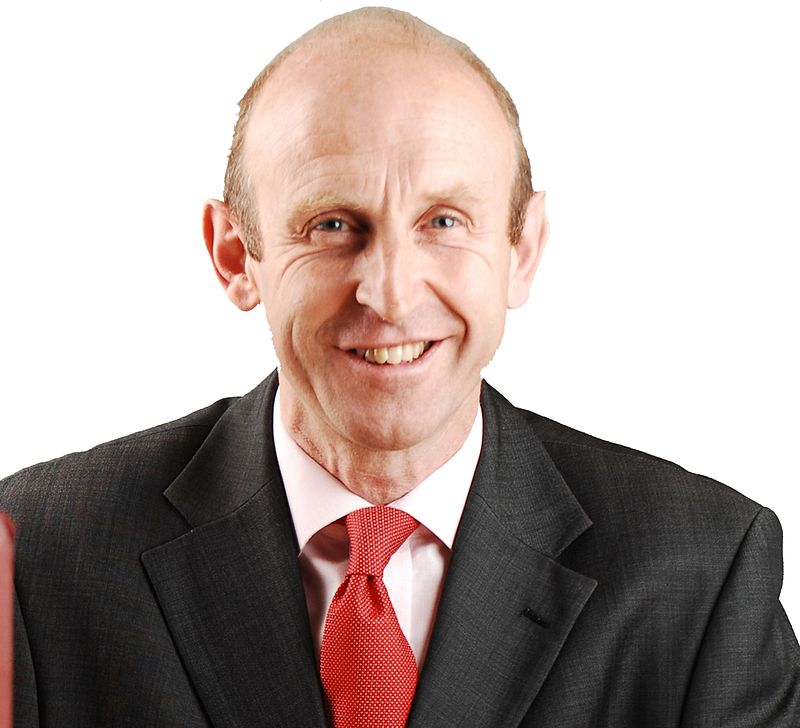
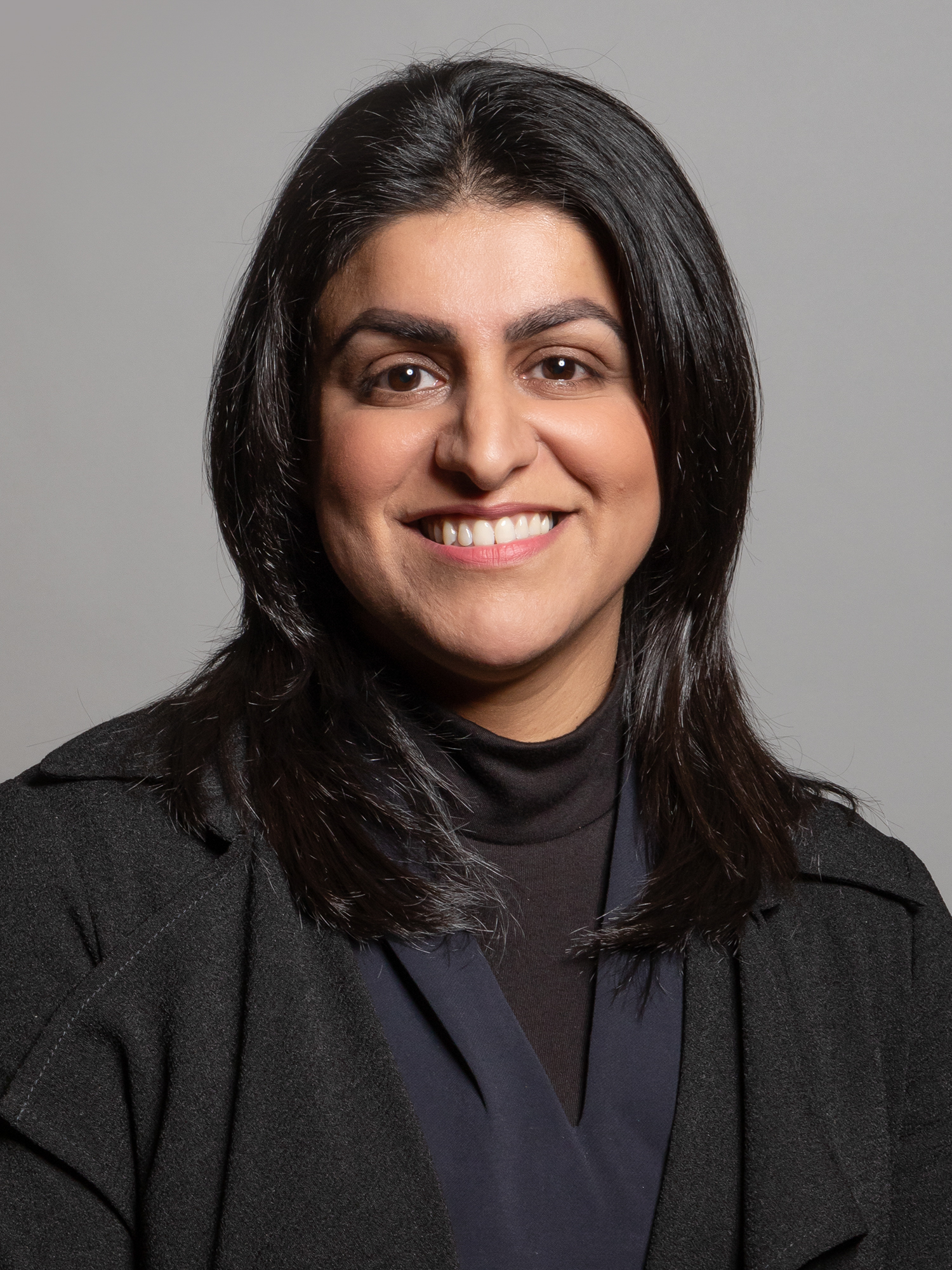
The speech made by Andy Burnham, the Prime Minister, in Liverpool on 29 September 2026.
Thank you so much, Conference. Thank you.
And Nadia, I love you Nadia. I am so proud of you, so proud of you up on the stage. Thank you.
All Together Now. That’s my rallying call to the country today. When we pull as one, there is nothing we can’t do.
Today we draw a line on a decade of division. We stop doomscrolling on posts running Britain down. And we put the country on a new path.
Britain with belief again. People with hope again.
It’s very hard to put into words the emotion I feel standing here before you all.
For me, life truly has come full circle because this is where my story began. My grandad drove a lorry along these docks for Tate & Lyle.
My gran Kitty inherited the drive of her Irish ancestors. She walked three miles out of the bombed-out city after the war to put a deposit down on a house, without Jimmy’s knowledge actually. I wouldn’t do that to you John, wherever you are Chancellor!
She put a deposit down on a house. The house where I was born. It changed the fortunes of my family.
It was where my mum and dad started off, built a partnership and went on to create our own family home and filled it with life, love and laughter.
Eileen and Roy gave me a care for people. Forged by her faith, his politics and the values of this great city we are in again for our conference.
They guided me to the point where I stand before you today.
Ours is the same story of so many families, British families of my generation. A story of working-class aspiration. A desire to get on and give back, never pulling up the ladder. And a post-war Britain that backed them to do it.
It’s still there, as I saw in Stourbridge this summer. I watched a whole community getting stuck in to support those whose homes had been burnt down. Proof the British people haven’t changed. Still as great as they ever were.
But something is different these days. That sense of the powers-that-be pulling against the people not with them. If there’s one thing I want to put right, it’s that.
Imagine living in a Britain where people feel the country has their got back again. A Britain for everyone, no matter who we are or where we’re born. We would be unstoppable. And we will be.
Conference, I am 10 weeks into this job. And not all of my recent predecessors have been able to say that.
I’ve been thinking very carefully about what to say to you today. Of course I am here to speak to you, our Labour family. The other family that love so much.
For the historic victory he achieved for us, I am here to say thank you Keir. And to thank you to the whole of this conference and all of you for the backing that you have given me.
The politician in me wants to give the usual tub-thumping conference speech today. But the patriot in me tells me something very different is needed.
This country isn’t where any of us would want it to be. Politics-as-usual has taken it backwards. More of the same isn’t good enough. That’s why I feel I have to break the mould today.
I am going to give you a real speech.
I left Westminster a decade ago because of my frustration at its failure to face up to what happened at Hillsborough. Its refusal to treat all parts of the country equally and fairly. Its capitulation in the face of the social care crisis.
So I became an outsider from the Westminster club. When I asked the people Makerfield to support my return, it was not because I missed Westminster so much. It was to come back to change it. To make politics work for you.
Everyone can see the position Britain is in. Everyone knows things are not working as they should. Everyone is talking about how life is too expensive. Everyone wants less drift and more direction.
Today I answer that call.
Hope comes from honesty and we will have hope again. But first, honesty. It comes from saying the things politicians usually avoid.
I will say it straight. Britain has been on the wrong path for a long time. Deindustrialisation. Deregulation. Privatisation. Austerity. Brexit.
And what has it given us? A country run for vested interests. Not in the public interest. With power held in too few hands. And too many places left to drift.
I am ready to do things my predecessors wouldn’t. I will make a break with the direction of the past 40 years and put Britain on a new path.
Build a new economy and a new politics. That is the case I make to you today.
Conference, change will be difficult. It always is. But I know we can do it. Because we have done it before.
In 1945, we had the vision to win the peace. We had the bravery to make change. We built good homes, secure jobs, health and education for everyone. We gave Britain hope again.
We made working-class aspiration feel real for families like mine. We built the common good. Or at least we did until the 1980s.
Suddenly, the common wealth we had created, this party, the wealth we had created for the many was seen as an opportunity for the few.
Homes. Water. Energy. Transport. Care. Broken up and sold off.
The British Right talk about ‘taking back control’. Never let them forget, they are the ones that gave it away in the first place.
Economic control diminished by selling off essentials. Political control corroded by the hollowing out of councils. Immigration control weakened by Brexit.
Later this year, we will publish our plan for Britain and set out how, over 10 years, we will make this country work for you again.
More control of the basics so that we can make it more functional. More power in the hands of people and places to set their own ambitions. And from there, good growth in every postcode, hope in every heart.
Our journey starts where I started, in the Old Roan, not far from here. With housing. A home.
That home on Keeble Drive unlocked the aspiration in my mum and dad for a better life for us all and has taken us to places we could never have imagined.
With a good home, everything is possible. Without one, it feels like nothing is.
Kids can’t have a good start in life. Families can’t have good health, physical and mental health. Over a million people are in that position on housing waiting lists – almost exactly the same number as the homes we lost through Right-to-Buy in the 1980s.
I will not rest until we live in a Britain where everyone has a roof over their head every night and no one is forced to sleep rough on our streets.
On my first day in this job, on the steps of Downing Street, I set an immediate mission to end the need for rough sleeping. Everyone In. Our new permanent national policy.
Putting the right principles and standards back at the heart of this country. The care for people I got from my mum and dad at the heart of the running of the British state.
From there, the biggest council house building programme since the post-war era, led by Angela Rayner.
And I am specific about council homes because we need to restore stronger democratic control over our housing stock.
We will help councils build again and make it affordable by building on unused public land. We will reform Right-to-Buy. Not taking the right away from anyone in an existing home. But removing it from the new homes we build so they are there for generations to come.
Rebuilding our common wealth. Restoring the public housing stock to what it once was, not just by building new but acting on the private rented stock too.
Go to almost any town across Britain and you will see plenty of empty homes. We will give councils the power to take control of them and bring them back into the public housing stock.
You will see rented homes in a poor state of repair too on so many British streets. Homes which harm the health of the people inside and drag down the streets around them.
The worst of it? Often owned by absent landlords who are paid through the benefits system but refuse to reinvest anything in the upkeep of the property.
It is time to call an end to this. Landlords who rent out the worst quality homes will be given warnings to improve them. If they refuse, we will make it much easier for councils to acquire those homes and we will legislate if necessary.
We don’t let people sell food which damages health. So why allow it with homes? From now on, we won’t.
This is what I mean about taking back control with our communities.
But I also want to get back to a Britain where young people starting out are able to buy a home like my mum and dad did. Like I did.
They have had it tougher than us. Working hard, paying bills, trying to save but looking at a student loan which never gets any smaller.
Today I say to them we are bringing back the hope you can have a home of your own.
Your First Home will reduce the size of the deposit you need. It will open up home ownership to those not backed by the bank of mum and dad.
And we promise we will not forget our promises to leaseholders. We will introduce a Bill before Christmas for long overdue Leasehold Reform.
To the millions of leaseholders across the country, you have my word. The days of you being squeezed for every penny are coming to an end.
Conference, this is the break we are making with the flawed thinking of the last 40 years.
Not seeing housing only as a market with winners and losers, but as an essential everyone needs for a good life.
And the next stage of our journey is to apply that same philosophy to the most basic thing of all.
Water is a symbol of what has gone wrong with Britain. A service where the shareholders never lose and the public never win. From which some have syphoned out easy money while the public picked up the bill for the sewage in our seas.
It stinks. I will not allow it to continue like this.
Today I can confirm Angela Eagle will present a strengthened Water Bill to Parliament. The centrepiece of that Bill will be this – the repeal of Margaret Thatcher’s ideological ban on public ownership of water companies.
It will start a 10-year journey to a very different water system.
It will strengthen public control. Mayors will have new powers to hold water companies to account, with tougher consequences for those which repeatedly fail. It will close the loopholes used to pay excessive bonuses.
Where private companies serve the public interest, we will support them. But the consequences will be clear for those who do not, including taking back control or public ownership.
Conference, when people hear the phrase public control, I am sure some think it’s anti-business. It’s the opposite.
Businesses need the basics to be functional and affordable too, as does the wider economy. As someone said to me recently, there’s a reason why you can’t build all over the Water Works and the Electric Company on the Monopoly board.
One of the biggest barriers to growth in the UK is the cost of energy. British businesses and billpayers pay some of the highest energy costs in Europe.
Within 10 years, I want those costs to be in line with our neighbours.
This means reforming a broken energy market so it better serves the public interest.
We are already taking more control of our electricity prices with a massive expansion of home-grown renewables and nuclear. I have asked Miatta to speed up the breaking of the link between what we pay for power at home and the international gas market, to get bills down.
And we will be pragmatic in relation to the North Sea as we build a bridge to a clean energy future and face the climate crisis.
But it’s not just the price. The system needs to work better too. You would not believe how many businesses complain to me they can’t get going because they can’t get connected to the grid.
It pushes costs up. It drags growth down. And it holds Britain back. We won’t get the growth and inward investment we need if we don’t fix it.
So, for the first time, we will have a national energy plan and we will bring back local democratic control through a stronger role for mayors and local leaders.
But we must go further. Today I can announce our plan for Great British Grid. A new branch of Great British Energy. A publicly-owned company that will challenge the private sector operators.
It will increase competition, drive down costs and speed up connections so businesses can expand and grow more quickly.
Energy, water, housing. Back under stronger public control. We rely on them, we pay for them and once again we will have power over them.
I realise people can’t wait forever for change though. They need breathing space now. And I am determined to provide it.
I can say to everyone watching, you will see VAT disappear off your electricity bill this Thursday. I didn’t expect a standing ovation for that but I’ll take it. Thank you, Conference!
From January, you will be able to travel for the whole of 2027 anywhere in England paying no more than £2 for a single bus journey. You knew I wouldn’t get through a conference speech without mentioning buses, didn’t you?
These things are not everything but I hope you will see it as a sign, a strong one, of our intent to get your bills and fares down as you wait for the bigger changes to come.
I would love to go quicker. But I have to be honest about what the country can afford. I will stick to our fiscal rules to get borrowing and debt down.
The approach I am outlining today is the responsible one. If we build a generation of council homes, we will save billions from the housing benefit budget over the decade.
If we get energy bills down, we will better control inflation and support the economy.
If we change the way we support people, we will get more people into work and the welfare bill down.
Not through crude cuts. That should never be the Labour way.
But by investing in people in their success, supporting them to get where they want to be, rather than paying for failure as the country does now.
Our plan for public control is a plan for growth, growth of people, places and businesses.
The truth is this. When we gave up public control, we left people exposed. Just when it was getting harder to grow up and harder to grow old.
Support has been cut away from young and old. And that leaves the country paying for failure on a grand scale.
Almost a million young people not working or learning. Thousands of older people stuck in hospital because of the lack of good home care.
We can’t afford to carry on like this.
In 1945 we had the Beveridge Report. We need something similar now. A new social contract for the 21st century.
You know of my long-held ambitions to reform social care. When I was a new MP in the early 2000s, I despaired at what I saw when my gran Kitty went through the system.
I winced at the pain it caused my mum. My gran’s engagement ring ripped from her finger and stolen in a care home. Care not worthy of the name.
And the modest savings she had built up through her life, starting from the house where I was born? All taken to pay for it.
I vowed then to fight for something better for my parents’ generation. And here we are 25 years later. If anything, it’s worse today than it was then.
What an indictment of my generation of politicians, myself included. Too cowardly to fix something as basic as the care we give to each other.
Is it any wonder people are giving up on politics?
I watched closely the people who looked after my dad. Caring for other people’s parents on poverty pay, but doing it with huge skill, humour and humanity.
Holding a threadbare system somehow together.
Yet invisible to the political class of this country.
I want to speak directly today to our care workers.
You are not invisible to me.
I see you.
I thank you.
And I am sorry that my profession has let down yours for so long.
I promise you: I won’t leave this job without doing everything I can to change things for you.
And I say the same to our wonderful NHS staff.
We have let you down too.
Left you under intolerable pressure.
At risk of burn-out.
Dealing with 999 calls from a failing care system.
Corridor care your daily reality.
If we carry on like this, Conference, broken social care will break the NHS too.
And we can’t let that happen, we must never let that happen, this party that founded the National Health Service.
There is only one real answer.
A person-centred, high-quality care service that starts in the home.
A system in the best traditions of this party, where everyone contributes and everyone is covered.
Free at the point of use and no care charges paid out of your basic state pension.
Care that is about people not profit.
Which gives peace of mind over care needs in later life.
Which protects people’s homes and their savings.
And gives proper recognition to the care workers we will all need to rely on at some point in our lives.
Conference, this is the National Care Service we will build.
We will, we will. Thank you, Conference.
We’re going to do it. We are going to do it.
A landmark policy as significant as the creation of the NHS itself.
And utterly essential to securing its future.
NHS savings from fewer ambulance call-outs, A&E admissions and vulnerable people being stuck unnecessarily in hospital.
We will start laying the ground now for the National Care Service and introduce it in the next Parliament.
Louise Casey’s review will advise us on exactly how and Yvette and I will seek to build the maximum national consensus around her recommendations.
It will be fully funded, and not through borrowing.
Conference, I won’t pretend some of this won’t be difficult.
I accept I may pay a political price.
But someone has to go through the pain barrier and rip the plaster off.
It’s the leadership I promised you when I asked to be your leader and I will do it.
But I’ll be honest as well.
We promised in our manifesto to keep the Triple Lock unchanged throughout this Parliament.
I will honour that promise.
I will honour that promise, and I will do more.
That promise will take the state pension to a record high.
From there, in April 2030, we will adjust it.
The state pension will continue to rise every year at least by prices or 2.5%.
And it will hold its value relative to earnings over time so that pensioners will always share in the rising prosperity of the nation.
But this change will generate significant savings which we will use to build up our National Care Service.
Some may not realise it but older people with nothing more than the state pension, or only a little more, can find themselves paying care charges today from that small income.
Under my plan, this will no longer happen.
I can also confirm today our commitment to ensure that the low-income pensioners won’t be dragged into paying income tax in this Parliament.
So this is the deal.
A state pension that rises every year.
No care charges.
And a high-quality National Care Service to give peace of mind in later life.
Conference, I am going to go out and argue for that.
A good deal for our pensioners and for older people in the 21st century.
And I will do it in memory of my dad and out of complete respect for everyone who cared for him.
Conference, we will need to show the same boldness for our young people too.
Just when growing up got harder in the social media age, their support was stripped away.
Youth services practically abolished in the 2010s.
Children’s mental health services cut.
Families left to battle for support for kids with special educational needs and disabilities.
So many young people cast adrift by a school system built for some, not all, overly focused on the university route and not enough on technical education.
Should we be really surprised that the numbers of late teens and early 20s on benefits has grown?
Conference, it’s not their fault. It’s ours.
Politicians fail to give people, young people, the support they need as they grow up in a tougher world and then threaten them in their 20s that they will strip away what they’re left with.
How is that fair? How does that build a strong society?
We have a choice, Conference.
Either we invest in our young people.
Or we pay for failure through the benefits system.
Truthfully, we can’t afford to do both.
My choice is to invest in them.
We can’t retake control of the country’s future if we leave so many of our young people drifting towards it.
We await the final report from Alan Milburn’s review.
But I can say now we will change the education system and the welfare system.
We will rebuild a system of comprehensive education in this country with parity between academic and technical, with Lucy Powell leading the way.
Good quality pathways for all from 14.
And the right support for our young people when they need it.
A 45-day work placement between 16 and 18.
An apprenticeship at 18.
And no long waits anymore for mental health support growing up.
We will need a fundamental rethink of the welfare system to find the money for these opportunities upfront.
And we will require young people to take up the help presented to them – guaranteeing in-work support and not leaving those out of work losing confidence and connection.
This is a different approach to welfare.
It is based on a philosophy of social security.
A country which invests in people’s success, rather than abandoning them and paying for failure, will be much more resilient to the shocks we will undoubtedly face in the rest of this century.
And more able to meet its NATO obligations on defence.
This leadership we are showing at home will be matched on the international stage.
I will be steadfast in my support for Ukraine and stand up to threats wherever they come from. Whether Russia, Iran or anywhere.
And Conference, we will be principled in our leadership in securing a two-state solution between Israel and Palestine, as Ed Miliband has shown.
This is the Labour way. A plan for Britain that will enhance our social security and our national security.
You don’t make Britain safer by leaving a younger generation without hope stuck at home looking at screens.
You do it by giving young people hope again.
And you do it by getting our economy growing strongly again.
I know Britain is full of brilliant businesses who want our young people to succeed and want to employ them.
And we will help them do that and grow together.
I have a theory of growth.
It starts by retaking control of the essentials that make a place work or not.
You’ve got to have that control over the fundamental things that everybody needs.
And from there you devolve more power to places to put them in charge and decide their own destiny.
And then in doing those things we optimise the conditions for businesses to grow.
And make sure we support our people so they are there for our business to employ.
Conference, I developed this approach over a decade leading the country’s fastest-growing city region.
And I could not have been more proud to hand over to Bev Craig as the new Mayor of Greater Manchester.
It’s like the other way round from when Alex Ferguson handed over to David Moyes, I think this is David Moyes handing over to Alex Ferguson.
We have a theory of growth, and we built it with Steve too when we left Westminster together, and with the other mayors who are with us today.
And you can see the change, you can feel it in this city, can’t you.
Amazing isn’t it, to be here, to see it every year, because we come back every year.
We see the change every year, and how good is that to see.
And we want it everywhere, don’t we, every place represented in this conference hall here today.
And that’s what I intend to do.
I intend to take what I did in Manchester, our plan for good growth, and drive it from the very centre of Government into every postcode in Britain.
Number 10 North, in lockstep with John and the Treasury, overseeing the rewiring of the British state, the rebuilding of resilience in our communities and the re-industrialisation of our regions.
Changing government procurement so that it backs British business, as our trade unions have rightly pushed us to do.
And that will require culture change in Whitehall.
The Mayor of the Liverpool City Region should not have had to fight Whitehall as hard as he did to get a new ferry built on the banks of the River Mersey.
And what a job he is doing.
Liverpool growing faster than the UK economy.
How often have we been able to say that in our lifetimes? What a brilliant thing to be able to say.
Places written off by the powers-that-be in the past now proving them wrong.
Bringing big names in AI like Kyndryl into the city.
I see huge potential for more of this in every part of Britain.
I see start-ups and scale-ups pouring out of our world-class universities.
I see businesses up and down the country playing their part and ready to do more.
As Gordon Brown has said, we can be the world’s innovation nation, and he’s right, we can.
A nation trusted by others to be a global leader in AI, an honest broker
When Britain takes the Presidency of the G20 next year, I will show our new-found confidence as a country, and I will show it to the world by putting AI centre stage and Britain will then work to develop a new global code to capture its benefits whilst being clear-eyed about its risks.
Just as Gordon did in the financial crisis in 2008, so Britain will do it again, step forward, and bring people together around what’s right for the future.
Securing our prosperity, but also our safety, and particularly the safety of our young people.
We led the world first’s industrial revolution from the Midlands and the North of England.
So why can’t we lead the next?
We can, Conference.
And we will.
We are a country full of working-class aspiration.
And we will be the Government that unlocks it.
Conference, there is one final thing we need to change if our plan for Britain is to succeed.
Our politics.
Westminster prizes point-scoring over problem-solving.
And that is why so many things go unfixed for so long.
If we want to change Britain, we need to change ourselves.
I will work as hard as I can to get as much cross-party support for our plan for Britain.
If we can secure that, it will project a message of confidence and stability to markets and the world about Britain’s future direction.
It is why I decided to make this a very different conference speech.
We can’t succeed in the eyes of the world if we continue with the levels of political turbulence we have seen in recent times.
It is always in my mind that I’m the seventh Prime Minister in ten years.
It is why I want to underpin our plan for Britain with a new politics.
We will all have failed in our public duties if we carry on as we are and open the door of Number 10 to a divisive government on less than 30% of the vote.
Conference, in past years you have voted twice to support electoral reform.
I hear you, I agree with you and today I am announcing a new national commission on electoral reform.
I invite all the political parties to be part of its work.
We will contest the next election with a manifesto commitment to change the electoral system so that everyone’s vote counts and everyone’s voice is heard.
As you can see, what I am outlining is a more serious and thought-through prospectus for the future of Britain than people have been offered in a generation.
I appreciate some of it is difficult.
I accept people, including in this hall, will not agree with every part of it.
But I believe this is what we need, small things will not get us through what are difficult times.
We need to be bigger and to have the courage of our convictions.
I believe we can turn Britain around, but it requires us to think bigger about what we need to do.
I will try my best to find common ground.
But let me be clear.
Where I can’t agree with others, I will fight hard for what I believe to be right and what I believe to be in the best interests of this country.
On the day my dad died, the Scottish First Minister said I would be the last Prime Minister of the United Kingdom.
I quote that not to seek sympathy.
Nor to criticise John Swinney, I don’t think he knew the news at the time.
And anyway, my dad Roy would have been the first to defend his right to say it.
I relay it because I want you to know how it made me feel.
Utterly determined to prove him wrong.
Whatever its flaws, this country gave my dad a good life.
And it has given his sons opportunities he didn’t get for himself.
He recognised that and was grateful for it.
And so proud of what Nick, John and I did with them.
If only, if only he had been able to appreciate that moment of the family in Downing Street.
The son of a man who failed his 11-plus becoming Prime Minister.
The fact it could even happen in this country would not have been lost on him.
He could have gone to university himself, but times were different then so it wasn’t an option.
But he voted every time, religiously for the Labour governments which changed education so his sons could do that.
The United Kingdom my dad represented is the one I believe in.
A union of nations that gave trade unions and the cooperative movement to the world.
The National Health Service.
A country that stood up to fascism.
A country of solidarity not separation.
That’s the Britain my dad represented.
Britain is not perfect. It can be better and we will make it so.
But it still stands for something worth saving, worth fighting for.
And we will always be stronger facing a changing world together, rather than separating.
So I am going to use this job to build the kind of Britain my dad wanted to see – and fight with everything I’ve got to keep it together.
Not the last Prime Minister of the United Kingdom.
Rather the first to rewire it to make it work for all people and places.
Driving power out of Whitehall and into every postcode of Wales, Scotland, Northern Ireland and England and closing divides between people and places.
The first Prime Minister to make a break with politics-as-usual.
I believe the plan I have outlined today will not just hold us together, it will allow us to rise again.
Britain to rise again.
And we will be a Britain again confident of our place in the world.
It has changed dramatically since 2016.
And, in the spirit of this speech, we have to be honest.
Brexit hasn’t given us control.
We’ve lost some of the control we had over our economy, as a decade of low growth has put us in a weaker position.
And we’ve lost some of our control over immigration.
At its most fundamental level, this is a debate about fairness.
So I understand the anger about what is happening in the Channel.
Shabana has done a great job in beginning to restore our grip over the system.
People arriving on small boats down 40% on the last year, 50% from the early 2020s.
Net migration down more than 80% since the peak of the Boris Johnson era.
Conference, we make these changes but we will always grateful – always, and we thank them – to those whose who have come here and are contributing to our country.
Than you, to them.
But control over immigration was weakened when we lost collaboration with our European partners.
And we are still having to work hard to bring it back.
Later this year, there will be a UK-EU summit where one of the issues on the agenda will be how we best work together on immigration.
And beyond that we will work to secure gains for our industries most harmed by Brexit.
Conference, these are important concrete steps.
But they are not enough.
I say this to you and the country.
We will not give Britain the clear path we need into the rest of the century until we decide on a long-term relationship with what is still our largest market.
I cannot say to you truthfully that where we are is good enough.
Brexit has done more harm than good.
We need to restore a higher level of growth and prosperity for Britain.
So, I will take the opportunity around the summit to lay out to you, to lay out to the country, what I believe the different options are for Britain’s long-term relationship with our European partners.
And there are different options.
And I will see if we can find consensus around one which will give us clarity about our position, and the future of the continent we live in.
Well, Conference, I did warn you this speech would be different, didn’t I?
But I think this moment in our country’s history requires it.
1945.
1964.
1997.
Now.
All moments of Labour governments.
All moments which saw Britain rediscover a sense of hope.
When I walked up Downing Street on my first day in the job, I promised to give Britain a circuit breaker.
To get us out of the rut we’ve been in.
To get us believing again.
I say to this to everyone watching at home.
You may disagree with some or all of what I have said today.
But I have given you what you often say is missing from politics.
Honesty, ideas and a clear direction for the country we all love.
I now want to make a direct appeal to you.
If you agree with enough of what I have said, get behind this plan.
And get behind each other.
It’s time to draw a line.
To move beyond a decade of drift and division.
To bring a spirit of unity and positivity back to our country.
To unlock the working-class aspiration that is still there in every postcode in this great land.
All Together Now.
We can do it.
We will believe again.
We will hope again.
Thank you, Conference.


![PRESS RELEASE : National museums to remain free for everyone [September 2026]](https://www.ukpol.co.uk/wp-content/uploads/2025/09/cultureukpol.png)