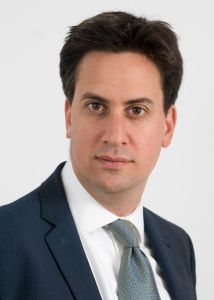
The speech made by Ed Miliband, the Foreign Secretary, in Liverpool on 28 September 2026.
Thank you friends and can I thank you for your support.
And let me start by echoing Wes’ words earlier. Events at RAF Fairford yesterday are a reminder of the threats our country faces.
I want to thank our security services, Armed Forces and police for the work they did yesterday and they do all year round to help keep our country safe.
Friends, we will always stand up for our security against those who would do us harm.
And friends, I am so proud to be your Labour Foreign Secretary, and to support Andy Burnham, our Prime Minister, who has put Labour values back at the heart of our Labour Government.
I want to start today by telling you about the spirit that animates my work as Foreign Secretary, driven by two refugees a world away from us here today.
The first of them walked 100km from Brussels to Ostend with his father, leaving behind his mother and his sister, to take one of the last boats to Britain to flee the Nazi invasion.
He learned English, he joined the Royal Navy and fought fascism. You know, he would tell stories of being at sea watching the lights of the D-Day landings and he would say it softly, but I know he always felt an incredible sense of pride that he had played his part in defeating the Nazis.
The other refugee spent her childhood in hiding in Poland. She faced experiences that no child should face – the loss of her father in a concentration camp, as well as separation from her mother and her sister.
She only survived because, unlike 60 family members, she was saved by the heroism of the bravest people. Ordinary people who did extraordinary things.
Then she got to Britain after the war as a teenager, learned English and built a life.
Friends, I am sure you have guessed this, those two refugees were my father and mother. My dad and my mum. And I want to start today by saying their history, my family history, means it is the honour of my life to be your Labour Foreign Secretary.
My parents found sanctuary in Britain, but they also found something else. As fascism engulfed Europe, they found in Britain a country that was a beacon of light against the darkness.
A country that stood for fundamental values – freedom, democracy, the rule of law. A country that was rebuilt after the war by the 1945 Labour Government, and with other nations, that government built the world anew.
Think what that generation achieved. That Labour Government led the way in holding the Nazis responsible for their crimes. That Labour Government helped create NATO. That Labour Government ratified the convention on human rights. And that Labour Government led the way in establishing the United Nations – an international system built by our values, Labour values, British values.
Friends, we should be all proud of that legacy.
And I come to this conference today to tell you it is time to roll up our sleeves all over again. Because once again the world order needs rebuilding anew.
We need to be honest about the world we confront. War has returned to Europe. Democratic norms are under threat as they haven’t been for generations. The international rule of law is being brazenly flouted. New threats have emerged from the climate crisis to AI.
There is only one response to these challenges – to fight for our values. The values my parents saw in Britain. Values which today are more important than ever.
Fighting for those values of democracy, the rule of the law, protection for rights and freedoms, is essential to tackle injustice and suffering.
But hear me well when I say this, it is also the only way to fight for our interests as the only real route to stability in the world and therefore peace and prosperity.
You see, what we understand is we fight for our values and our interests as a country together. So just like in 1945, now it falls to this generation, this Labour Government, to play our part defending and advancing Labour values, Britain’s values, the values this party has always fought for.
And friends, this must begin by confronting the fact that war has returned to Europe with Russia’s full-scale invasion of Ukraine. A war which has already seen more than 100,000 Ukrainian civilians and soldiers killed, as well as hundreds of thousands of Russians.
A war on our doorstep. The worst conflict in Europe since World War Two.
And here’s the thing, this is not just a war which is killing innocents. It is a war of terror.
The Kremlin says it wants to “freeze” the Ukrainians into defeat. Last winter temperatures in Kyiv reached minus 25 degrees and power was interrupted almost every day. Drone warfare leaves people afraid to go out onto the streets.
Friends, this war matters to all of us. If our values mean anything, they mean standing firm against this invasion.
The future security of all of Europe is on the line in this fight. If Putin wins, we would have allowed war and force to beat sovereignty and self-determination on our continent.
Now, I am proud that since 2022, under successive governments, Britain has stepped up. Stepped up our military aid, stepped up our humanitarian support, and the British people have stepped up too, taking in Ukrainian refugees.
Friends, I say today we will never, never give in to Russia’s threats that we must stand aside and abandon the people of Ukraine. And we will always, always stand up to Russia’s threats wherever they are.
Today I salute the courage of the people of Ukraine. We send our solidarity to President Zelenskyy and his government. And we say with one voice we will stand with the people of Ukraine until they prevail.
We are part of this fight as humanitarians, but also as proud Europeans. This is our continent. And if there is one lesson that I have seen demonstrated to me again and again in this job, it is this – Europe is not just our geography but so much more.
It is how we pursue our values, from climate to the Middle East. It is how we pursue our interests, from trade to defence. It’s where we build and protect our alliances, so it is not simply Britain acting alone but Britain with others.
And on economics, on defence, on security, I say to this conference, our future lies in a stronger, deeper partnership with the European Union.
Of course, our alliance with the United States in trade, defence and security remains essential, including as part of NATO. But Europe also needs to do more to defend itself.
That is why investment in our defence is an absolutely core part of this government’s foreign policy. And as we speak, British forces are deployed across the globe, from Cyprus to the Falklands, Estonia to Somalia.
Let me take this opportunity to pay tribute to the men and women of our Armed Forces, serving in operations across the world to maintain our security, keep the peace, and uphold our values. Friends, let us all applaud them today.
And we must be prepared to confront all the security threats that Europe and the world faces.
We will stand up to prevent a nuclear Iran through economic sanctions. We will act against the proxies of Iran. And we will continue to isolate Iran so that they reopen the Strait of Hormuz, which is so essential to tackling the cost of living crisis here at home.
We also face new threats in today’s world. This summer’s heatwaves and wildfires in Europe are just the latest wake up call about the climate crisis.
Friends, we know the longer we wait the greater the costs. We know the effects will spread across borders. And we know that future generations will hold us in infamy if we leave them with climate disaster unaddressed.
So let us therefore ask each and every party, where do you stand on tackling the climate crisis? Where do you stand on defending our way of life?
And I say to those parties that deny, delay, and dissemble on the climate threat, your position would leave our country unsafe and threaten our national security.
And I pledge to you, we will lead the efforts across the world to put climate at the heart of national security.
And friends, we will also confront the urgent risks we face from AI. The technological progress offered by AI as we see in our daily lives is inspiring. But the threat it poses, according to its own inventors, is daunting.
Now some are calling for us to act, but other tech companies are saying we should leave it all to them.
But friends, the lesson of history is that we cannot leave it to corporations to put in place the guardrails to serve the public interest. It is neither their purpose nor their motive. Theirs is to maximise profits. Friends, we cannot and will not allow that to come at the expense of our children or indeed humanity.
That is why as part of our G20 presidency next year, this country will lead the efforts to manage AI so we keep our country and our world safe, and I say no tech titan should stand in our way.
And as we think about our role in the world, we will never be silent about injustice and suffering.
Let us state the reality about the Middle East. The only route to peace is two states, a secure Israel and a secure Palestine, with freedom, dignity and self-determination for both peoples.
We all know how far away we are from that.
Hamas’ murderous attack on October 7th united the vast majority of the world in rightful condemnation.
We stand, I say, against antisemitism wherever we find it and in whatever form. And this party will always recognise the threats Israel faces and stand emphatically against those who seek its destruction.
But this cannot justify the suffering the Netanyahu government has inflicted in Gaza and the West Bank. This suffering is a stain on the conscience of the world.
And I want to say to the millions of people in this country, and indeed elsewhere who have been moved and outraged by the plight of the Palestinian people, we hear you. You were right. And under Andy’s leadership, we have reset our approach.
We call out ethnic cleansing by the settler terrorists in the West Bank. We call out the evidence of war crimes In Gaza. We call out Israel’s illegal occupation of Palestine. And we match words with actions.
We will ban the import of goods from illegal settlements. We will disrupt the supply lines of British finance, British construction and British services for illegal settlements.
And when it comes to the attempt to destroy the two-state solution, this party, this movement, this government, says we will not let you succeed.
And friends, our argument is not with the people of Israel, but with the actions of its government.
My grandmother was given shelter and sanctuary after the Second World War by Israel.
And the bonds of solidarity between the British people and those who yearn for peace in Israel and Palestine are too strong to be broken. And our decision to act mobilised the international community, country after country.
And you see, there is a lesson here. This is how we make change happen in today’s world. Doing what is right and galvanising others to act too.
And there is also a wider lesson for our party from Israel and Palestine about how we have changed our approach. As a government we can, must and we will succeed because of, not in spite of, our progressive values.
We are proud to be Labour. Proud to believe in changing the world for the better. Proud to believe in international solidarity.
We stand up for what is right. We act on what we believe. We are not here to accept the status quo, but to change it.
And that confidence, that belief in boldness, is the change that Andy has brought to our party and our government and it is why I am so proud of his leadership.
And we will apply our principles to other conflicts in the world, including the worst humanitarian crisis there is – the conflict in Sudan. Millions displaced, tens of thousands killed, malnutrition rampant.
Friends, we will use every diplomatic and political tool to address the suffering of its people. And we will use our leadership to reform the international financial system so it properly serves the developing world.
So many countries you know, and I meet this when I meet foreign ministers, so many countries face the triple challenges of climate breakdown, debt burden – unsustainable debt burden – and poverty.
In two weeks time, I will attend the annual meetings of the World Bank, where I will use Britain’s seat on the board to drive change.
And friends, I promise this. We will use our G20 presidency next year to meet our responsibilities and mobilise the world, building on the great achievements on debt and development of the last Labour Government.
Friends, from security and defence to Israel and Palestine, to Europe, to climate, to AI, this is our foreign policy. Stronger in our values, bolder in our action, building alliances across the world.
Now friends, I began by talking about my parents. And after my Mum died at the end of May of this year, I received a letter from a friend. It said she had a special quality that he recognised from his own family. Resilient idealism.
Resilient idealism. I love that phrase. Resilient because, let’s be honest, it is hard to change the world. You get knocked down – don’t I know it – you get knocked down and you have to pick yourself up.
Idealism because for all the world’s complexities and compromises, Labour exists to stand up for what is right.
Labour is here to defend the principles that my parents admired about our country and that means so much to me now.
You see my parents didn’t just observe a country fighting for values, they taught me that I have a responsibility to fight for them too.
There is this phrase that people use about Holocaust survivors – survivor’s guilt. I think my parents had something else. Survivor’s responsibility.
Survivor’s Responsibility to pass on the message to the generations that come next that we are here to leave the world a better place than we found it. To never walk by on the other side. To never be bystanders to oppression and injustice.
Those are the reasons I joined this party and so many of you did too.
You know, they say that as you age, you become more cynical. Why? Not me. Not you. Not us.
I believe in our ability to change our country and the world for the better now more than ever.
And I promise you, I promise you that every day as Foreign Secretary, every day as your Labour Foreign Secretary, I will fight for your values. Labour values. Britain’s values.
Thank you so much.