Blog

  • Douglas Ross – 2023 Speech on Lifeboat Services – Search and Rescue

    Douglas Ross – 2023 Speech on Lifeboat Services – Search and Rescue

    The speech made by Douglas Ross, the Conservative MP for Moray, in Westminster Hall, the House of Commons, on 10 January 2023.

    It is a pleasure to serve under your chairmanship, Mr Davies. I congratulate my hon. Friend the Member for Torbay (Kevin Foster) on securing today’s important debate. The constituency that I represent, Moray, is proud and privileged to have both an RNLI facility at Buckie and an independent lifeboat support, the Moray Inshore Rescue Organisation, at Findhorn. I shall touch on both in today’s debate.

    Let me begin, as others have, by paying tribute to the remarkable work of our search and rescue services in Scotland. As others have said, across our British coastline, the RNLI and its army of volunteers have served our great nation since 1824. It is a charity that is close to my heart and the hearts of many of my constituents in Moray. Being mainly staffed by volunteers, the RNLI relies heavily on the good will of British people to fund its rescue services. Thanks to the efforts and generosity of people across the country, there are over 230 operational lifeboat stations, which respond on average to 24 call-outs every day. As the hon. Member for Strangford (Jim Shannon) said, that support has saved over 143,000 lives since the RNLI’s inception.

    Mr Gregory Campbell

    Does the hon. Member agree that one of the best ways we can demonstrate our support is, as he is doing, to maximise and highlight the issue, including in the local media, and to supply all independent and RNLI lifeboats with the best possible equipment for saving lives?

    Douglas Ross

    I absolutely agree with the hon. Gentleman’s comments. There is a very good publicity system around the RNLI in Buckie. In fact, the sub-editor of the local paper is a member of the RNLI at Buckie, which always gets good front-page coverage in the Banffshire Advertiser and other papers. The point on equipment is well made, and the Minister will have heard it.

    The coastal communities that I represent across Moray simply could not imagine not having the support of the brave men and women who dedicate their lives to rescuing those in peril at sea. The RNLI and our independent lifeboats across Scotland and the rest of the United Kingdom deserve our full support, and it is vital and fitting that we have a platform in Parliament today to give them that recognition.

    Jamie Stone

    The hon. Member’s constituency faces mine across the Moray firth, which is named after his constituency, but it really should be named after mine—but that is not the point. In an emergency, it is a fact that the lifeboats in the hon. Member’s constituency can, if necessary, go out in the Moray firth and help out the communities in my constituency. I highlight the inter-connected nature of the service all over Scotland and the United Kingdom.

    Douglas Ross

    I agree with almost everything the hon. Gentleman said, but calling it the Caithness, Sutherland and Easter Ross firth, rather than the Moray firth, might be a bit long-winded for some—but his points are absolutely right.

    Let me focus on Moray and Buckie. Lifeboats have been launching into the waters of the Moray firth from Buckie for over 145 years, and crews and volunteers there have rightly been honoured with numerous awards. I have mentioned the late, great Adam Robertson in this Chamber in the past. He was a Moray Council employee with whom I worked closely in my time as a Moray councillor, but he dedicated his voluntary work throughout his life to RNLI Buckie, and his family has continued that trend since his sad death. Most recently, Anne Scott, RNLI Buckie’s lifeboat operations manager, received a special award that recognised her 20 years of professional service. Anne retired from the RNLI in 2021, and immediately after retirement became a volunteer. That shows the dedication of those who support our lifeboat services. It is absolutely right that Anne was given that award. When Anne received the award, RNLI Buckie’s Davie Grant said:

    “We call Anne the lady who launches”

    because she “hits the big button” as the lifeboats speed out to save people. Pillars such as Anne and Adam demonstrate not only the timeless contribution of the RNLI to rescue services and the support given by those volunteers, but the overwhelming contribution of lifeboat services to our local coastal communities.

    Let me quickly move on to independent lifeboat services. Last year, I was honoured and delighted to support my hon. Friend the Member for Totnes (Anthony Mangnall) in his launch of the National Independent Lifeboat Association, which is a new charity that will assist the UK’s independent lifeboats in ensuring the preservation of life on the water. I am proud that one of its founding members is the Moray Inshore Rescue Organisation, which is in my constituency. Based at Findhorn, it is, as the hon. Member for Strangford said, one of 46 established independent lifeboat services manned by unpaid volunteers, and does not receive any funding from the RNLI. First formed in July 2005, it is a proud recipient of the Queen’s award for voluntary service and does outstanding work from its base at Findhorn.

    At the launch, MIRO’s chairman, John Low, said:

    “We are a small organisation working locally with larger organisations, such as UK Coastguard, RNLI, police and fire services, to provide vital lifesaving services. It makes sense to join the new National Independent Lifeboat Association to collaborate and share practice with colleagues in similar small organisations around the country. We also hope that in the future there will be financial benefits such as accessing funding and services such as insurance and training.”

    Those are important, which is why MIRO and others have joined the collaborative approach suggested by my hon. Friend the Member for Totnes. It is right that we have the opportunity in Parliament today to highlight that and, as others have done, to thank both those in the RNLI and our independent lifeboat services for the amazing work they do, day in, day out.

  • Jim Shannon – 2023 Speech on Lifeboat Services – Search and Rescue

    Jim Shannon – 2023 Speech on Lifeboat Services – Search and Rescue

    The speech made by Jim Shannon, the DUP MP for Strangford, in Westminster Hall, the House of Commons, on 10 January 2023.

    Thank you, Mr Davies, for chairing the debate and for giving me a chance to participate. I thank the hon. Member for Torbay (Kevin Foster) for setting the scene so well, and hon. Members for contributing to the debate.

    Lifeboats and their services are imperative for safety in coastal communities, which is the key issue for me. The hon. Member for Torbay represents a coastal area that is similar to my constituency of Strangford, and we follow each other in debates more often than not—either him before me or me before him. The neighbouring constituency of North Down also has coastal areas with lifeboats, and people rely on the local stations.

    It is great to be here to give them the praise they truly deserve and to thank them for their work and efforts.

    Thousands of people along the coastline of Northern Ireland depend on the services of the RNLI for their protection and safety. During the summer, thousands of families and young people partake in coastal sports such as sailing, surfing and pier jumping. I used to do that myself off Ballywalter harbour, although that is not a very wise thing to do—always ensure the tide is in or there is big trouble. In addition, people go out in canoes and boats to fish, including from the fishing village of Portavogie. There are caravan parks at Millisle and my home village of Ballywalter, where I was brought up. They lie very close to where I live on the edge of Strangford lough. I am aware of the sheer number of water sports undertaken in this area.

    The RNLI charity provides a 24-hour search and rescue service around the United Kingdom and Republic of Ireland. Across the entire UK, there are 238 lifeboat stations, 46 of them in Northern Ireland. There are also 240 lifeguard units on beaches, which gives an idea of the magnitude of the issue. I found this figure incredible: since the RNLI was founded in 1824, its lifeboat crews have saved more than 142,700 lives. That is an enormous figure.

    We are fortunate to have a lifeboat station in Portaferry in my constituency, and I visited the station just before the summer. Portaferry is one of seven RNLI lifeboat stations operating a lifeboat funded by viewers of the BBC TV programme “Blue Peter”. Some of us can cast our minds back to that, although others cannot go back that far. The station was established due to increased pleasure boating in Strangford lough, after Cloughey lifeboat station closed. Most recently, in November, the Portaferry lifeboat station came to the aid of two kayakers who got into difficulty near St Patrick’s rock in Strangford lough, and who faced weather conditions of wind force 8 to 10. Since the station opened in 1980, there have been 850 launches, rescuing 600 people and saving the lives of 100 people. That is just my lifeboat station in Portaferry. Thank you to all lifeboat crews, past and present, for their commitment.

    Last year, I attended the parliamentary launch of the National Independent Lifeboat Association. I think the hon. Member for Torbay sponsored that event. It is important to pay thanks to those independent lifeguards and life-saving organisations who risk their lives in dangerous seas to help save others.

    Margaret Ferrier (Rutherglen and Hamilton West) (Ind)

    Does the hon. Gentleman, like me, welcome the representation provided by the National Independent Lifeboat Association for smaller lifeboat operators, which might otherwise be overlooked?

    Jim Shannon

    I certainly do. We have all said how much we appreciate that. The hon. Member for Torbay said that in his introduction. My hon. Friend the Member for East Londonderry (Mr Campbell) will recognise the independent ones in his contribution. I am thinking of the Foyle rescue team, about which we have spoken. We understand the commitment that those volunteers give. When I visited Portaferry before the summer, I was greatly impressed by their commitment and by the fact that they were there every time they were needed.

    There are 46 independent lifeboat organisations that operate along the coastline and on inland waterways across England, Wales, Scotland and Northern Ireland. Those independent lifeboats are run primarily, if not entirely, by volunteers, and funded by local donations. The invaluable service they provide has saved the lives of so many and, in conjunction with the RNLI, they continue with those dedicated efforts day in and day out to save people. They are an asset to our communities. We would be completely lost without them, and many lives would sadly be lost as well. I am not the only who was moved by adverts on TV for RNLI showing a lady leave her house over Christmas to go and save people. We see how important these crews are when we recognise what they do.

    To conclude, there are many ways in which we can support institutions such as the RNLI. It is possible to become a volunteer or a member, and even train to become assistance personnel. There are many things that people can do, including fundraising and donating money to ensure the RNLI staff have the best equipment available to fulfil their duties and be able to perform with the correct number of staff.

    I sincerely thank the RNLI Portaferry team for all their dedication and work in my constituency. I also thank the lifeboat teams across Northern Ireland and the whole of the UK for the work they do, as our coastal communities would literally be lost without them. I live in a coastal community and understand what it means to have the RNLI, and I thank them very much.

  • Robin Millar – 2023 Speech on Lifeboat Services – Search and Rescue

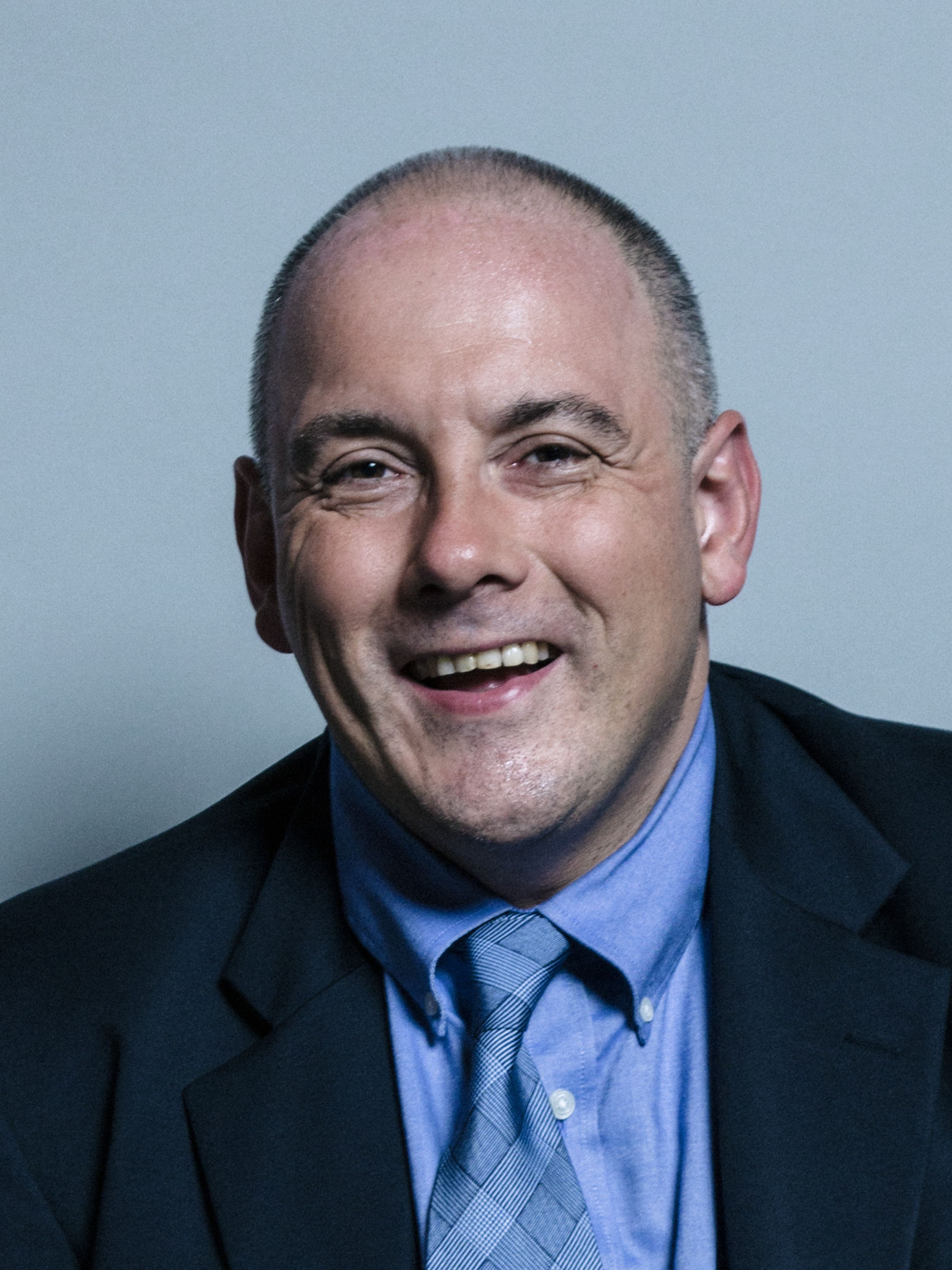
    Robin Millar – 2023 Speech on Lifeboat Services – Search and Rescue

    The speech made by Robin Millar, the Conservative MP for Aberconwy, in Westminster Hall, the House of Commons, on 10 January 2023.

    It is a pleasure to serve under your chairmanship, Mr Davies. I congratulate the hon. Member for Torbay (Kevin Foster) on securing this important debate, and I thank him for the opportunity to highlight the invaluable contribution of the volunteer crews of Conwy and Llandudno RNLI lifeboat stations in my constituency of Aberconwy.

    We have become accustomed to seeing on the news images of lifeboat crews along the channel coast bringing asylum seekers and refugees safely ashore. Given that they volunteer their time to fulfil the RNLI’s mission of saving lives at sea, it is right that these crews are commended for their service and courage. However, as a supporter of the RNLI, I share the concern of the crew I have spoken to that the constant images from the channel overshadow the huge range of search and rescue call-outs or “shouts”, as they are known to the crews, with which lifeboat volunteers are tasked. These include rescuing paddleboarders and swimmers in distress, searching for divers, assisting broken-down vessels and undertaking lengthy searches, sometimes lasting days, for missing boats. Maintaining the operational capability to safely conduct the myriad requirements involves lengthy and intensive training, not just for the crews at sea but for the shore crews, whose service is indispensable to lifeboat operations.

    The professionalism and commitment of our lifeboat crews was exemplified in January 2021, when the crews from Conwy and Llandudno joined the search for the Nicola Faith, a fishing vessel that was lost with all hands, and which had set sail from Conwy. For over 48 hours, the crew of Llandudno’s all-weather Shannon-class lifeboat, the Williams F Yates, searched hundreds of square miles, often in freezing conditions. The entire station was mobilised in support of the search, with boat crews swapping once the inevitable fatigue set in and the lifeboat needed to be refuelled ashore. The crewmen and women were nearly all volunteers, with many of them forgoing paid work. The whole community rallied in support, with members of the public bringing cakes and other refreshments to the station to keep up morale.

    Tragically, the Nicola Faith could not be located, but the search for its crew demonstrated another key point: lifeboat stations are the focus of a team effort that involves communities, fundraising committees, shore crew, the boat crew and their families. The work of the shore crews, and the intense training they undertake, is often overlooked but it is indispensable to lifeboat operations. No lifeboat launch, whether of a D-class inshore lifeboat or an all-weather lifeboat, would be possible without a highly trained shore crew, often working in adverse conditions. When Shannon lifeboats are launched from a launch-and-recovery system, a team of between eight and 12 people is required to launch and recover the boat safely.

    I want to recognise the enormous sense of pride that volunteers have in their commitment to saving lives at sea. In fact, just before Christmas, Conwy lifeboat station’s volunteer crew member Paddy Byrnes was recognised for 30 years of service. There are also four men—Keith Charlton, Nigel Forest, Robin Holden and David Roberts—who recently reached an impressive 40 years of service at Llandudno station, and four more are approaching this milestone. I would like to congratulate those crewmen and thank them for their decades of invaluable and selfless service—a tremendous achievement that should not go unnoticed.

    Mr Gregory Campbell (East Londonderry) (DUP)

    As the hon. Member is congratulating his own local personnel, will he join me in congratulating the management team, the fundraisers and all those associated with the Portrush lifeboat station, which celebrates 100 years next year? In the same year, the RNLI will celebrate 200 years. This is an excellent achievement by many lifeboat associations across the whole of the United Kingdom.

    Robin Millar

    I thank the hon. Member for his intervention, and I completely endorse what he says. In fact, I would like to recognise the work of the fundraising committee chairman in my own constituency, who has persevered in the work, despite facing personal challenges.

    Finally, it is vital that we extend our appreciation to the families of lifeboat crews. As mentioned, crew members can spend significant time away from their families when training and attending “shouts”. When their pagers sound on stormy nights—in the winter, in the dark—it is difficult to appreciate the apprehension felt by loved ones who remain ashore about the safety of the crew members at sea. Without the support of families and loved ones, lifeboat stations simply could not operate. To the families of the crews of Llandudno and Conwy lifeboat stations, thank you.

  • PRESS RELEASE : Easier for Sky customers to get cheaper internet thanks to DWP scheme [January 2023]

    PRESS RELEASE : Easier for Sky customers to get cheaper internet thanks to DWP scheme [January 2023]

    The press release issued by the Department for Work and Pensions on 16 January 2023.

    • Sky is the first major connectivity provider to join DWP initiative making it easier for benefits claimants to get discounted broadband and mobile tariffs
    • Automatic verification means claimants do not have to repeatedly prove their benefit claim status to access discounted social tariffs
    • Switching to a social tariff could save claimants up to £180 a year

    This system makes it easier than ever for low-income families to sign up to discounted broadband which could save households as much as £180 a year compared to industry average tariffs.

    Introduced last summer, the government scheme lets internet service providers – with claimants’ permission – ask the DWP to automatically verify their customers’ benefit entitlement.

    This means people do not need to actively prove they claim benefits whilst on a tariff designed for those on low incomes, as they did previously, often as frequently as every month.

    Minister for Social Mobility, Youth and Progression Mims Davies said:

    It’s positive to see a major provider, such as Sky, sign up to our scheme, making it easier for families to access cheaper broadband and mobile tariffs in difficult times, and I call on other providers to follow suit in offering this type of tariff for those in need.

    Claimants who think they might be eligible for one of these tariffs, should contact their provider.

    This is just one of the ways we are working to help households during these tough times as part of the government’s £37 billion support package for those most in need. Do use the DWP benefits calculator, which is a helpful tool for those looking to see if they could access wider support.

    Stephen van Rooyen, Executive Vice President & Chief Executive Officer, Sky, UK & Europe, said:

    We know how important connectivity is to our customers, which is why we are focussed on ways we can support them to say online. As well as support with bills, we also provide existing, eligible customers with a broadband and mobile social tariff, helping them stay connected for a significantly reduced cost. The Department for Work and Pensions eligibility tool is a useful step forward, enabling us to more easily confirm eligibility.

    Sky and its subsidiary brand NOW join a growing list of providers signing up to the government initiative to help millions access cut price broadband, with WightFibre already signed up to the scheme.

    Before the new system was introduced, people were regularly required to verify their entitlement to providers with Jobcentre letters or screenshots of their Universal Credit account.

    The availability of social tariffs has been strengthened recently thanks to a drive by the Department for Digital, Culture, Media and Sport to encourage telecommunicators to expand their range of cheaper deals.

    Broadband social tariff take-up more than doubled in 2022 to 136,000 households and the cross-government Help for Households programme, which aims to help people with the increased cost of living, recently launched a UK-wide public awareness campaign to drive awareness and uptake further.

    Those in receipt of benefits interested in exploring broadband tariff options should visit Ofcom’s website to view the full list of options on offer from providers.

  • Jamie Stone – 2023 Speech on Lifeboat Services – Search and Rescue

    Jamie Stone – 2023 Speech on Lifeboat Services – Search and Rescue

    The speech made by Jamie Stone, the Liberal Democrat MP for Caithness, Sutherland and Easter Ross, in Westminster Hall, the House of Commons, on 10 January 2023.

    It is a great pleasure to serve under your chairmanship, Mr Davies. I congratulate the hon. Member for Torbay (Kevin Foster) on a characteristically erudite and well-informed speech. I first want to mention the RNLI in my constituency. I have sailed out on the Thurso lifeboat—and did not sink it. The waters in the north of Scotland are treacherous, and subject to very strong tides, changeable winds and fog. My grandfather, alas, put his warship HMS Goldfinch on the rocks in 1915 in a very thick fog, and was not given command of a destroyer again. That proves how treacherous the waters are.

    The work that the lifeboat crews undertake is varied. The hon. Member for Torbay touched on some of the big, dramatic stuff, but we have little stuff as well. For instance, in August the Wick lifeboat—the Wick station was put there in 1848—was called out to rescue a lady on a paddleboard. She had sailed out from the beach at Reiss, north of Wick, and, thank goodness, was rescued. It was a small rescue, but so important to the family, and to the people of Caithness.

    More locally, we have the East Sutherland Rescue Association, which I have often spoken about to the hon. Member for Totnes (Anthony Mangnall). It is crewed by volunteers and is based at Dornoch in the Dornoch firth. It was founded in 1981 to cover a lack of facilities to rescue people, and it uses Dornoch or Embo beaches. It was called out not long ago to rescue some sheep off the village of Nigg, which got stranded as the tide rose. That might seem semi-laughable, but would a crofter or a farmer want to see their animals slowly drown? No, I do not think so. That shows how much the crews do for the local area.

    I want to praise Lord Cadogan, who has given substantial amounts of money to the East Sutherland Rescue Association. He owns land in Sutherland and, out of the goodness of his heart, has seen to it that it is adequately financed and was able to build a new facility, so that it could maintain and launch its boats. I want to put that on the record in Hansard, because I am grateful to him, as is the whole community. I have touched on the treacherous waters of the north of Scotland, and the splendid work done by the RNLI and its volunteers, and how close it is to all our hearts. The hon. Member for Torbay thanked them, and I thank them, too. They do fantastic work.

    Thinking ahead, as global warming carries on, and as the ice pack in the Arctic gets thinner and retreats, the north-east route from Europe, round the top of Norway and along the north coast of Russia, to markets in the far east, which we can use in the summer months, becomes more and more important. Scapa Flow is in the constituency of my neighbour, my right hon. Friend the Member for Orkney and Shetland (Mr Carmichael). Before the first world war, Scapa Flow was set up as a natural anchorage for the grand fleet, so that it could defend the United Kingdom. I believe that there is scope for Scapa Flow to once again feature as a shelter anchorage for vessels about to undertake the long journey over the north of the continents of Europe and Asia.

    My point is this: in future we will need lifeboat services just as much as we need them today. They are here for a very long time to come—here for keeps. Man can do many things, but man cannot alter the weather and or change dangerous circumstances, so this is a blatant plug. Lifeboat services have long done a great job. They are doing a great job now, and there is a great future for them. We must support them and back them to the hilt.

  • PRESS RELEASE : First orbital satellite launch from UK [January 2023]

    PRESS RELEASE : First orbital satellite launch from UK [January 2023]

    The press release issued by the UK Space Agency on 16 January 2023.

    On 9 January 2023, the first ever orbital launch attempt from UK soil took place by Virgin Orbit from Spaceport Cornwall. Although the rocket reached space, it did not reach the orbit required to enable it to successfully deliver its payloads.

    It did, however, demonstrate the UK’s growing satellite launch capability.

    What happened during the first launch?

    The first launch was attempted from Spaceport Cornwall in the south-west of England on the evening of 9 January 2023. It was what is known as a ‘horizontal launch’.

    A specially modified Boeing 747 from Virgin Orbit called Cosmic Girl, with a rocket attached under its wing, took off from Spaceport Cornwall.

    In flight, the LauncherOne rocket deployed from the wing as planned and began its journey to space.

    Unfortunately the rocket was not successful in reaching the required orbit. The plane returned safely to the Spaceport.

    The project succeeded in creating a horizontal launch capability at Spaceport Cornwall.

    Spaceport Cornwall is situated at Newquay Airport, near the coast of Cornwall. The 747 flew out over the sea and launched its rocket far away from populated areas.

    Why launch from the UK?

    The UK has a growing space sector, which employs 47,000 people. UK space companies have a strong track record in satellite manufacturing, spacecraft design and data applications. In fact, Glasgow builds more satellites than anywhere outside the United States. Soon we’ll be able to launch them from the UK too.

    The UK is also located relatively far north, which means it’s perfect for launching satellites into polar and Sun-synchronous orbits, which go over the north and south poles. These orbits are ideal for satellites that monitor the Earth and provide telecommunications.

    With a long coastline and many islands, the UK offers a range of suitable locations for launching rockets safely out over the sea – away from settlements and people.

    What benefits will it bring?

    Launch services are worth a potential £3.8 billion to the UK economy over the next decade.

    UK spaceports will need new skills, supply chains and supporting services, creating high-skilled jobs and opportunities across the country. For example, Spaceport Cornwall and the Centre for Space Technologies expect to create 150 jobs.

    Through initiatives such as our LogoLiftOff! and Nanosat Design competitions, the UK Space Agency is also harnessing launch as a platform to encourage young people to pursue STEM subjects in order to help grow the UK’s future space talent pipeline.

    Safety and the environment

    Safety, security and protection of the environment are top priorities for the UK government.

    We have progressive regulations for launch which make it safe for the public and protect the environment, while allowing new technologies to be used as they are developed.

    The government is very careful about the impact launches have on the environment and won’t allow launches to happen before a detailed assessment of their environmental effects has been done.

    Rocket launches do release some CO2 and other by-products, but they take place infrequently and the satellites being launched bring significant benefits.

    Half of the data we need to monitor climate change can only come from satellites – so it’s vital to get them into space.

    UK rocket manufacturers are also working to make rocket launches better for the environment, including turning unrecyclable plastic waste and even beeswax into rocket fuel.

    Future launches

    The UK has made significant steps forward towards achieving our launch ambitions and further our position as Europe’s most attractive destination for commercial launch activities.

    Through the 2021 Space Industry Regulations, our outcome-focused regulatory framework is the most modern space legislation in the world, with a focus on safety and the flexibility to support the pace of innovation.

    We have used our strong global partnerships to work with international partners to secure the agreements we need to enable UK launch including with Ireland, Iceland, Portugal, the Faroe Islands and Norway to secure their support for UK launch activities.

    The UK remains committed to becoming the leading provider of commercial small satellite launch in Europe by 2030.

    There are several other spaceports currently planned or under construction in the UK. These are in England, Scotland and Wales.

  • Kevin Foster – 2023 Speech on Lifeboat Services – Search and Rescue

    Kevin Foster – 2023 Speech on Lifeboat Services – Search and Rescue

    The speech made by Kevin Foster, the Conservative MP for Torbay, in Westminster Hall, the House of Commons on 10 January 2023.

    I beg to move,

    That this House has considered the contribution of lifeboat services to search and rescue.

    It is a pleasure to serve under your chairmanship, Mr Davies. I am grateful to my colleagues on the Backbench Business Committee for granting me this debate, and of course to my hon. Friend the Member for Totnes (Anthony Mangnall), who did the legwork on the application to secure it.

    It is worth giving some context at the debate’s start. Search and rescue provision in the UK is delivered through an amalgam of Government Departments, emergency services and various SAR charities and voluntary organisations. UK SAR is arranged through the UK SAR Strategic Committee, an interdepartmental body chaired by the Department for Transport, hence our being joined by a DFT Minister and his shadow. His Majesty’s Coastguard provides a response and co-ordination service for air and sea-based SAR in the UK. HM Coastguard has existed since 1822, and of course celebrated its bicentenary last year. The coastguard co-ordinates air and sea-based SAR through its nine operation centres around the UK. They are in Shetland, Aberdeen, Humber, Dover, Fareham, Falmouth, Milford Haven, Holyhead, Belfast and Stornoway. In addition, the London coastguard, which is co-located with the Port of London authority, looks after SAR on the River Thames. HM Coastguard has its national maritime operations centre in Fareham in Hampshire.

    Lifeboats are not the only part of SAR at sea; many organisations, including the Royal Navy, Royal Air Force, commercial vessels in the vicinity of an incident and HM Coastguard’s helicopters, play their part, but in this debate, I will focus on the lifeboat service. The classic image of the lifeboat service is one of heroism, and of its crews fighting through rough seas to save lives. The courage of those involved, and their commitment to saving those in peril on the sea, are the anchor that holds the crew together during a rescue mission while, in the words of the famous hymn,

    “the breakers roar and the reef is near”.

    No debate such as this should pass without mention of how that legendary bravery was demonstrated on 19 December 1981, when the Penlee lifeboat headed out into atrocious conditions to try to save the lives of eight people in peril. Tragically, all eight lifeboat crew were lost that night. It was the last time the Royal National Lifeboat Institution lost a whole crew in one incident—a record that I am sure we hope will stand for many years to come.

    It is of course the RNLI that most people will think of when they hear a reference to lifeboats. It was founded as the Royal National Institution for the Preservation of Lives and Property from Shipwreck in 1824. In 1854, it changed its name to what we know it as today. Its main base is in Poole, Dorset. It has 238 lifeboat stations, and an active fleet of 431 lifeboats, which range from large, all-weather lifeboats to smaller inshore vessels.

    The impact of the RNLI’s work cannot be overestimated. Its operations have saved over 143,900 lives since 1824, and it is not just men who have been the heroes: Grace Darling became one of the Victorian era’s most celebrated heroines when, on 7 September 1838, she risked her life to rescue the stranded survivors of the wrecked steamship Forfarshire. Today, around 95% of the RNLI team are volunteers; they are around 5,600 crew members, 3,700 shore crew, including station management, 82 lifeguards, and 23,000 fundraisers. The scale of the RNLI’s contribution to search and rescue is immense. In 2021 alone, there were 8,868 lifeboat launches, 84 of which were in at least force 8 conditions, and 1,022 crew assemblies—a total of 9,890 taskings. That resulted in 12,903 people being aided, and 296 lives being saved.

    The RNLI’s work is about not just reacting when things go wrong, but reducing the need for search and rescue by educating and advising on dangers. RNLI water safety teams reached more than 27 million people in 2021 with essential messaging, undoubtedly saving more lives and keeping families together.

    We should bear in mind that lifeboat services are not just about the RNLI—a subject that is close to the heart of my hon. Friend the Member for Totnes. In addition to the RNLI, a number of voluntary organisations provide independent lifeboats for the purpose of saving lives on the water. There are more than 50 independent lifeboat organisations around the UK, and independent lifeboats operate in coastal areas—for example, the Hope Cove lifeboat in south Devon—and on inland waters, rivers and lakes, while some organisations operate independent lifeboats alongside other search and rescue services, such as mud rescue. The majority of those independent lifeboats are equipped, maintained and operated in accordance with the rescue boat code.

    Independent lifeboat organisations vary greatly in size, crew numbers, rescue numbers and types of rescue boat used. Crews range from the 12 crew members at Port William Inshore Rescue Service in Dumfries and Galloway to the around 260 crew members at Community Rescue Service, which operates across Northern Ireland; and call-outs range from the five call-outs in 2021 for the Sea Palling independent lifeboat in Norfolk to more than 120 for the Hamble lifeboat in Hampshire. The rescue boats involved range from small RIBs—rigid inflatable boats—to large all-weather lifeboats, which are comparable to the boats that many people associate with the RNLI.

    Bob Seely (Isle of Wight) (Con)

    My hon. Friend is making an excellent speech and I thank him for doing so. He is making important points about independent lifeboats, but also about the support services. We have independent lifeboats at Freshwater, Sandown and Shanklin in the Isle of Wight, which do wonderful work, on top of the RNLI stations at Bembridge, Cowes and Yarmouth. Not only that, but our inshore lifeboat centre in East Cowes keeps half the nation’s fleet of RNLI boats in good condition. Will my hon. Friend join me in paying tribute to those services?

    Kevin Foster

    I am delighted to hear my hon. Friend list the amazing support that the Isle of Wight provides. It does not just save lives and help those in peril on the sea around the Island—as he knows, some of those waters famously present obstacles and risks to passing shipping, and it is worth paying tribute to the many Islanders over the years who have put their life at risk trying to save those in peril near the Island—but makes a wider contribution to the service. As he says, lifeboat services are not just about the team who go out on the boat; they are about the support network that enables the lifeboat teams to go out. It is great to be able to pay it the tribute that he just did.

    Independent lifeboats are not a new invention, and the first independent lifeboat station was formed in Formby, Lancashire, in 1776. Although many independent lifeboat stations were RNLI stations when they were established, others have been set up in response to specific incidents. For example—I see colleagues from Northern Ireland in the Chamber—Foyle Search and Rescue was set up by local people in 1993 in response to the alarmingly high number of drownings in the River Foyle, 30 in 18 months. It has since adopted a role in suicide prevention and supporting families in the city more widely. That shows the diversity in the types of work that such organisations can take on, and the contribution that such services can make.

    It is right that we remember the contribution that those organisations make, and how their work is supported by the National Independent Lifeboat Association, a new charity founded last year by my hon. Friend the Member for Totnes. All independent lifeboats in Great Britain and Northern Ireland were invited to join the association, and it has 30 members from England, Wales, Scotland, Northern Ireland and Jersey.

    During my preparations for the debate, it was made clear to me that the RNLI is proud of its independence and the fact that it can operate free from requirements of the type that Government funding would bring. I was advised of that in the knowledge that such debates can sometimes involve the subject of whether the service offered by the RNLI should be publicly funded, rather than our having the current funding arrangements, which are based on voluntary giving.

    It might seem strange to some, but this service is not lobbying for Government funding. That position recalls the fact that, a decade ago, a former Prime Minister described his vision of creating a big society—a concept in which individuals come together to tackle an issue or make a difference, rather than the state setting up structures to intervene that might often be less effective or efficient. There are often debates about how that concept can be defined in real life, but in many ways lifeboat services reflect that idea, from the crews who volunteer their time to train, and who are ready to answer the call of duty, to fundraising teams in communities who raise the resources needed to support operations, to the many community members who do their bit by simply dropping a few coins into a collection box when they buy a pint, visit the local shop or walk past one of the many collection boxes across coastal communities. Also included are people who, when thinking about the legacy they want to leave, tell their solicitor to include the lifeboat service in their will. This shows how society comes together to help others in need, and to provide a unique service that we can all benefit from, but hope never to need.

    Those who regularly hear me speak know that I will not miss an opportunity to highlight the work being done in south Devon, and I will start with the Torbay RNLI lifeboat station. It was established in Brixham in 1866 and has occupied the same premises since 1872. It was established after a fleet of merchant ships were caught in hurricane-strength winds in Torbay in January 1866, causing the loss of about 40 ships and nearly 100 lives. Today, the lifeboat station has 35 crew members, including those who are shore-based. The station operates two lifeboats that reflect the diversity of the rescues that the station may be called on to perform: a Severn class all-weather lifeboat and a D-class inshore lifeboat. The crew members are volunteers who mostly have day jobs.

    In 2022, Torbay RNLI lifeboat station responded to 111 shouts. The station is supported by the Torbay Lifeboat Fundraisers, who work throughout the year to raise the funds needed to support the lifeboat. The group has over 200 volunteer members, and it organises a range of events and activities to raise money. I thank everyone in Torbay who supports them; the crew would not be ready to save lives without their contribution.

    I pay tribute to the team at the National Coastwatch Institution in Torbay, who also play a part in search and rescue operations in south Devon. NCI watchkeepers, who are volunteers, provide eyes and ears along the coast, monitoring radio channels and providing a listening watch in poor visibility. When people get into trouble, NCI watchkeepers can alert His Majesty’s Coastguard and direct the appropriate rescue teams, including lifeboats, to the casualty. The NCI station at Torbay is one of over 50 such stations located around England and Wales. Located at Daddyhole plain, it is the first purpose-built NCI watch station. In January 2012, the station was given declared facility status, meaning that the station was not only fully operational, but fully recognised in search and rescue operations as having the same status as RNLI lifeboat stations. That shows the benefit of partnerships between organisations that save lives.

    Lifeboats are as vital to search and rescue operations today as they were in the era when horses drew the boat to the launching point and the crew pulled on the oars against the high sea to reach a vessel in distress. Direct funding is not sought, but I am interested to learn from the Minister how he sees the future for our lifeboats, and on a couple of other points.

    First, some independent lifeboats are not fully declared HM Coastguard rescue facilities, often because of the complex process that must be undertaken to become such a facility. Does the Minister see an opportunity to simplify the process, without compromising standards? Secondly, independent lifeboats are not represented on the UK SAR operators group, but hope to join the group later this year. Will he provide an update on that? Finally, how does he see the work of lifeboats and their contribution to search and rescue fitting into wider efforts to improve safety at sea?

    The debate is a good opportunity to highlight the contribution of lifeboat services to UK search and rescue. As we speak, crews across the UK stand ready to answer the call to save those in peril; they are ready to face whatever dangers that may bring. They are some of the best of our nation, and I end with a simple message to them: thank you.


  • Dehenna Davison – 2023 Statement on Freeports

    Dehenna Davison – 2023 Statement on Freeports

    The statement made by Dehenna Davison, the Parliamentary Under-Secretary of State for Levelling Up, Housing and Communities, in the House of Commons on 10 January 2023.

    Today I am announcing a major milestone for the flagship UK freeports programme, with two further English freeports—in Plymouth, Solent and in Teesside—now fully up and running after receiving final Government approval. Each of these freeports will now receive £25 million of seed funding and potentially hundreds of millions in locally retained business rates to upgrade local infrastructure and stimulate regeneration. This is alongside a generous package of trade and innovation support for businesses locating there.

    This significant milestone is an important step on the freeports journey and sends a clear message: the UK Government are backing these places as a key part of their economic strategy.

    Freeports are at the heart of the Government’s levelling-up agenda. They will unlock much-needed investment into port communities and their hinterlands. This in turn will help these areas overcome the barriers holding them back and bring jobs and opportunity to some of the UK’s historically overlooked communities.

    Freeports catalyse investment through a combination of tax reliefs on new economic activity, a special streamlined customs procedure, an ambitious programme of public investment, and wide-ranging support from the UK Government to help businesses trade, invest, and innovate.

    Excellent progress has been made with delivery: investors can now take advantage of tax reliefs in all eight English freeports and are starting to do so, and we expect the remaining five English freeports to join Plymouth, Solent, and Teesside in receiving final approvals shortly.

    This Government also remain committed to ensuring that all parts of the UK can reap the benefits of our freeports programme. We have recently concluded competitions for two green freeports in Scotland and a freeport in Wales, and we will announce the winning locations in due course. We also continue discussions with stakeholders in Northern Ireland about how best to deliver the benefits associated with freeports there.

  • Robert Halfon – 2023 Statement on Reform of Post-16 Qualifications

    Robert Halfon – 2023 Statement on Reform of Post-16 Qualifications

    The statement made by Robert Halfon, the Minister of State at the Department for Education, in the House of Commons on 10 January 2023.

    Today, I am notifying Parliament of the next stage in the Government’s review of post-16 qualifications at level 3 in England—the publication of new criteria for alternative academic and technical qualifications funded from 2025.

    In July 2021, we published the Government response to the second stage consultation of the review of post-16 qualifications at level 3 and below. Here, we made clear our intentions to streamline the qualifications landscape, simplify choices for students and only fund qualifications that are high quality and lead to good progression outcomes. It is vitally important for social mobility to ensure that everyone, no matter their background, is able to access the education and skills opportunities which lead to good jobs.

    The reforms are taking place in three stages.

    In July 2022, we completed the first phase of streamlining the qualifications landscape by removing funding approval from around 5,500 qualifications at level 3 and below in England that had very low numbers or no new students enrolled on them.

    By August 2025, we will also have removed funding approval from qualifications that overlap with our new, highly rigorous T-levels, so that T-levels have the space they need to flourish as the main technical route for 16 to 19-year-olds. In October 2022, we published details of the first 106 qualifications that will have funding approval removed from 1 August 2024 because they overlap with a T-level in Education and Childcare, Digital, or Construction and the Built Environment. Funding approval will also be removed from qualifications that overlap with the Health and Science T-levels and we will publish this list once the review of the outline content of those T-levels has concluded. Funding approval will be removed in August 2025 for qualifications which overlap with T-levels in waves 3 and 4—Legal, Finance and Accounting; Engineering and Manufacturing; Business and Administration; Hair and Beauty; Catering and Hospitality; Creative and Design; and Agriculture, Environmental and Animal Care. A provisional list of these qualifications will be published in spring 2023.

    From August 2025, all alternative academic and technical qualifications in scope of the review will be required to demonstrate that they serve a clear and distinct purpose and meet new quality and funding criteria, irrespective of the T-level overlap assessment process. Details of the new approval process, which all qualifications at level 3 in scope of the review must go through in order to be publicly funded from 2025, are being published today. This includes full details of the types of qualifications and subjects that we will fund, and the criteria that awarding organisations must meet to secure funding approval.

    For academic qualifications, this includes progression to higher education, evidence of demand and a clear statement of why the qualification is needed. Technical qualifications will be required to meet new occupational relevance and employer demand tests developed by the Institute for Apprenticeships and Technical Education (IfATE). This will ensure that technical qualifications deliver the content that truly matters to employers, and that the skills system is simpler for learners, training providers and employers to navigate. All qualifications must also meet regulatory requirements set by the Office of Qualifications and Examinations Regulation (Ofqual).

    Our reforms do not constitute a binary choice between T-levels and A-levels. We have listened to feedback and recognise the need for additional qualifications, including alternative qualifications such as some BTECs designed to be taken as part of a mixed study programme including A-levels. These alternative qualifications are an important part of how we will support diverse student needs and deliver skills that employers need for a productive future economy, in areas that A-levels and T-levels do not cover. In addition, the T-level Transition Programme provides a high-quality route on to T-levels, for students who would benefit from the additional study time and preparation that it will give them before they start their T-level.

    The Government also recognise that there are still too many people who are being held back by poor maths. The Prime Minister has set out his intention that all students in England should study some form of maths to age 18, to ensure they are better equipped for the jobs of the future. Further detail on this measure will be set out at a later date.

    Today’s announcement marks the start of the final stage of the reforms to post-16 qualifications and will give the education sector clarity on the shape of the future post-16 qualifications landscape.

    I look forward to engaging with parliamentarians and colleagues in awarding bodies and further education as we implement these important reforms.

  • Grant Shapps – 2023 Statement on Spaceport Cornwall and the First Launch of Satellites

    Grant Shapps – 2023 Statement on Spaceport Cornwall and the First Launch of Satellites

    The statement made by Grant Shapps, the Secretary of State for Business, Energy and Industrial Strategy, in the House of Commons on 10 January 2023.

    Last night, Virgin Orbit attempted the first orbital launch from Spaceport Cornwall. Unfortunately, the launch was unsuccessful. We will work closely with Virgin Orbit as they investigate what caused the failure in the coming days and weeks. While a failed launch is disappointing, launching a spacecraft always carries significant risks. Despite this, the project has succeeded in creating a horizontal launch capability at Spaceport Cornwall, and we remain committed to becoming the leading provider of commercial small satellite launch in Europe by 2030, with vertical launches planned from Scotland in the next year.