Blog

  • PRESS RELEASE : New plan for smart electric vehicle (EV) charging could save consumers up to £1000 a year [January 2023]

    PRESS RELEASE : New plan for smart electric vehicle (EV) charging could save consumers up to £1000 a year [January 2023]

    The press release issued by the Department for Business, Energy and Industrial Strategy on 17 January 2023.

    • New plan sets out steps to unlock the potential of smart electric vehicle charging, including allowing motorists to power their homes using the electricity stored in their electric vehicle
    • electric vehicle drivers could save hundreds of pounds each year while cutting emissions by smarter charging of their electric vehicles
    • billpayers without electric vehicles will also benefit from a more sustainable, secure and efficient electricity system
    • projects, including a street lamppost capable of charging electric vehicles and selling power back to the grid, will receive a share of £16 million funding

    Electric vehicle consumers are set to benefit from lower energy bills and cheaper motoring thanks to a landmark plan to unlock the potential of smart electric vehicle charging.

    The Electric Vehicle Smart Charging Action Plan published today (Tuesday 17 January) by the government and Ofgem, sets out steps being taken to seize on the significant potential of smart charging and make it the preferred method of long duration charging by 2025.

    Smart charging harnesses the potential of energy use data and the latest energy innovations to deliver significant benefits for consumers, including allowing motorists to charge electric vehicles when electricity is cheaper or cleaner, allowing consumers to power their home using electricity stored in their electric vehicle, or even sell it back to the grid for profit. It is expected high mileage motorists could save up to £1,000 a year through smarter charging.

    And to back this up further, the government has today also announced £16 million funding from the Net Zero Innovation Portfolio (NZIP) for technologies that harness the potential of smart charging, including a smart street lamppost which will enable motorists to access smart charging on the move, and projects that will enable domestic appliances, from heat pumps to electric vehicle charge points and batteries, to integrate into a smarter energy system.

    Energy and Climate Minister Graham Stuart said:

    We want to make smart charging an easier choice for drivers of electric vehicles, whether that is charging on the driveway, at the workplace, or parked on the street. To do that we need to build new network infrastructure at pace, using the latest available technologies.

    Today’s plan sets out how we will work with Ofgem and industry to kickstart the market for smart charging, which we are backing up with £16 million in innovation funding. This will let people take control of their energy usage, in the most convenient and low-cost way.

    Ofgem Director for Strategy and Decarbonisation Neil Kenward said:

    As energy regulator, we’re helping create the infrastructure to deliver Britain’s net zero future at the lowest cost to customers. This latest innovative plan will help to maximise the benefits of smart charging, offer vital savings to consumers and reduce the overall cost of energy by seizing the opportunities to use batteries to both power homes and fuel the wider grid.

    Today’s announcements build on the major steps already taken by the government to enable smart and flexible electric vehicle charging. As of July 2022, all new charge points sold for private now must have smart functionality and the UK is consulting on a new policy and technical framework to unlock the benefits of domestic smart, flexible energy, and enhance its cybersecurity.

    Through the plan, the government will improve publicly available information and evidence on smart charging, support the implementation of robust consumer service standards and ensure private charge points are secure and compatible with the latest energy innovations.

    The roll out of intelligent and automated smart charging will deliver a win-win situation for all consumers. Reduced electricity system costs will lower prices for everyone, motorists will pay less for charging their electric vehicle, and the electricity powering electric vehicles will be cleaner and greener.

    The government and Ofgem will seek to remove the barriers that currently prevent the full development of a diverse and competitive smart charging market, while making sure the energy system is ready to respond to the upturn in energy demand that electric vehicles will bring.

    Among those receiving funding today through the V2X (Vehicle to Everything) Innovation Programme for prototype hardware, software and business models, are:

    • £229,000 to a project led by Otaski Energy Solutions (Gateshead, Tyne and Wear) to develop a smart street lamppost capable of charging electric vehicles and sharing power back to the grid
    • £220,000 to V2X-Flex (Reigate, Surrey), a project led by EV Dot Energy Ltd to develop prototype software and a new business model which will reduce entry barriers for the domestic use of V2X bi-directional chargers to provide energy flexibility services
    • £165,000 to BEVScanV2X (London), a project led by Agile Charging Ltd to develop technology that could overcome battery degradation by creating a cost-effective tool to monitor and advise best approaches to maximise battery life and financial returns from smart charging

    Among those receiving funding today through the Interoperable Demand-Side Response (IDSR) Programme, which supports technologies that allow consumers to remotely increase or decrease their energy use to take advantage of when energy is cheaper or more renewables are on the grid, are:

    • £510,000 to Energy Smart Heat Pump (Chertsey, Surrey), a project by Samsung Electronics UK and their project partners Passiv UK to design and develop a technology solution that is able to provide demand side response (DSR) services via Samsung Heat Pumps, giving greater control of their usage on the basis of cost or carbon savings
    • £1.2 million to Smart-DSRFlex (Manchester), a project by Landis & Gyr UK to demonstrate how DSR technology can help to manage a renewables-based electricity grid using the smart meter system
    • £29,000 to Open DSR for All (Manchester), a project by Carbon Co-op to explore the benefits and technical barriers to an accessible approach to domestic DSR, potentially enabling more products being able to offer DSR in future

    Depending on tariff, mileage, and charging patterns, smarter charging could save an average driver up to £200, and a high mileage driver up to £1000 a year by delaying the power demand from electric vehicles at peak periods, such as 4pm to 9pm on winter evenings. By helping to efficiently balance when energy is generated and used on the electricity grid, the technology could contribute to reducing electricity prices for consumers across the network.

    Delivering the steps set out in the Action Plan will help make smart charging the norm at home and work by 2025. It is the ambition that in the late 2020s smart charging will also become more commonplace at long-duration public charging, such as on-street or at transport hubs.

  • PRESS RELEASE : New EHRC commissioner appointed [January 2023]

    PRESS RELEASE : New EHRC commissioner appointed [January 2023]

    The press release issued by the Cabinet Office on 16 January 2023.

    • Minister for Women and Equalities appoints a new commissioner to the Equality and Human Rights Commission Board
    • With a track record of promoting women’s rights and freedom of expression, Joanne Cash brings experience and expertise to the equality regulator
    • The appointment follows the addition of Kunle Olulode MBE and Arif Ahmed MBE to the board last month.

    Joanne Cash will support the EHRC, using her expertise and experience to advise on its important work promoting equality and human rights across the UK.

    Minister for Women and Equalities and Trade Secretary, Rt Hon Kemi Badenoch MP, said:

    “Under Baroness Falkner, the EHRC plays a vital role in informing and regulating the UK’s anti-discrimination legislation – protecting the rights of everyone in the UK.

    “Joanne’s valuable skills and knowledge will be a great asset to the Commission as it continues its work to positively impact lives across Britain.”

    Cash brings with her a strong background to the role:

    Joanne Cash is a former human rights barrister, policy advisor and senior businesswoman.

    She was Board Chair at MindGym plc from 2014 to 2021 during which time she led a successful IPO. She also co-founded the award-winning social mobility programme Parent Gym which she still Chairs.

    Since 2007 she has advised consecutive governments and cross party groups on equalities issues and has been named by The Observer as a modern freedom fighter.

    Her previous roles include Vice-Chair of the Fawcett Society and Chair of Step Up.

    The appointment follows a full public recruitment process that was carried out in line with the Cabinet Office’s Governance Code on Public Appointments. Joanne Cash will serve as a Commissioner for a term of 4 years.

    The EHRC was reaccredited as an ‘A’ Status UN National Human Rights Institution in October 2022. The “A” status denotes “full compliance” with the Paris Principles.

  • Alister Jack – 2023 Statement on the Gender Recognition Reform (Scotland) Bill

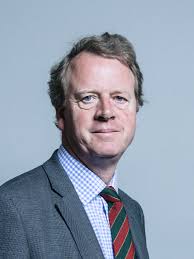
    Alister Jack – 2023 Statement on the Gender Recognition Reform (Scotland) Bill

    The statement made by Alister Jack, the Secretary of State for Scotland, on 16 January 2023.

    I have decided to make an order under section 35 of the Scotland Act 1998, preventing the Scottish Parliament’s Gender Recognition Reform (Scotland) Bill from proceeding to Royal Assent.

    After thorough and careful consideration of all the relevant advice and the policy implications, I am concerned that this legislation would have an adverse impact on the operation of Great Britain-wide equalities legislation.

    Transgender people who are going through the process to change their legal sex deserve our respect, support and understanding. My decision today is about the legislation’s consequences for the operation of GB-wide equalities protections and other reserved matters.

    I have not taken this decision lightly. The Bill would have a significant impact on, amongst other things, GB-wide equalities matters in Scotland, England and Wales. I have concluded, therefore, that this is the necessary and correct course of action.

    If the Scottish Government chooses to bring an amended Bill back for reconsideration in the Scottish Parliament, I hope we can work together to find a constructive way forward that both respects devolution and the operation of UK Parliament legislation.

    I have written today to the First Minister and the Scottish Parliament’s Presiding Officer informing them of my decision.

  • Mike Kane – 2023 Speech on Lifeboat Services – Search and Rescue

    Mike Kane – 2023 Speech on Lifeboat Services – Search and Rescue

    The speech made by Mike Kane, the Labour MP for Wythenshawe and Sale East, in Westminster Hall, House of Commons, on 10 January 2023.

    As ever, it is a pleasure to serve under your chairmanship, Mr Davies, and I thank the hon. Member for Torbay (Kevin Foster), who represents a beautiful part of the world, for his excellent speech. My researcher indicated that 52 awards for gallantry have gone to the hon. Gentleman’s RNLI station alone.

    I shall be following the hon. Member for Totnes (Anthony Mangnall), who advocated for the National Independent Lifeboat Association, and the hon. Member for Paisley and Renfrewshire North (Gavin Newlands), in that we are not really having a debate, because there is consensus. The only note of division I think I heard was in the intervention from the hon. Member for Caithness, Sutherland and Easter Ross (Jamie Stone) on the hon. Member for Moray (Douglas Ross). Perhaps we need a separate debate on what we call that firth; the name Inverness strait might help to sort this out. [Interruption.] I see I have caused complete division across the Chamber.

    Next year, it will be 200 years since William Hillary’s vision of saving souls at sea became a reality, and on 19 December 2022 the Minister and I were at the Dispatch Box for the Second Reading of the Seafarers’ Wages Bill. Today, we have heard the story of the Penlee lifeboat disaster, which was eloquently told by the right hon. Member for New Forest East (Sir Julian Lewis), and on 19 December, the 41st anniversary of the disaster, we were able to have recorded in Hansard our thanks to the crews who went out that night in 1981.

    The RNLI was formed to save souls at sea and the institution’s priorities were

    “the preservation of human life…assistance to vessels in distress…the preservation of vessels and property…the prevention of plunder and depredations in case of shipwreck…succour and support of those persons who may be rescued…the bestowing of suitable rewards on those who rescue the lives of others”.

    I want the debate to recognise those people as well and to be an acknowledgement of those who risk their lives to save those in peril on the sea.

    As shadow maritime Minister, I know only too well the sacrifices made by our seafarers, which we saw during the pandemic. However, professional seafarers are not the only people our lifeboats serve to protect. We have seen the small boats in the English channel, which, as has been mentioned, is the busiest shipping lane in the world. We have seen children, women, families and individuals being plucked from the seas by the RNLI and others, and we have heard testimony from those who are tasked by the coastguard to perform their rescue missions without prejudice and without judgment.

    There is nobody who is illegal. If people are in peril on the sea, we rescue them—no ifs, no buts. I thank those people for their service and for their determination to save everyone and anyone who gets into difficulty around UK and Irish shores. This is such a vital lifesaving service—so selfless—that, as has been mentioned, it is almost unbelievable that the RNLI receives no money from Government and is funded primarily by donations.

    My best man was rescued from a cliff by the RNLI, when he was a child and on holiday. We have been friends for 30 years, and he has fundraised for the RNLI all his life, even being in a landlocked constituency. Imagine how the course of my life might have changed, had that rescue gone wrong, so I, too, pay personal tribute to the RNLI.

    As I was preparing this speech last night, I noticed that at 6 pm lifeboats were launched from Hartlepool and Ramsgate. At 9.40 pm there was an incident that led to Tynemouth launching a rescue mission, with another one launching from Falmouth at 11 pm. Remarkable bravery takes place every day and every night. Since 1824 the RNLI has saved almost 143,000 lives. I go back to the original mission statement of Sir William Hillary, when he conceived the idea of the RNLI. I should add that the use of the word “men” is of its time, and not reflective of the nature of the RNLI, who for generations have had women launching lifeboats and working alongside crew to ensure that boats could set sail efficiently and speedily. More recently, they have crewed the boats and acted as shore crew. Now, the RNLI has more than 300 women crew and a third of their lifeguards are female, preventing accidents before they happen with good safety advice and keen stewardship of the shore.

    Sir William said that at the heart of this institution would be

    “a large body of men…in constant readiness to risk their own lives for the preservation of those whom they have never known or seen, perhaps of another nation, merely because they are fellow creatures in extreme peril.”

    Every lifeboat volunteer—whether they be a fundraiser, a coxswain or at the helm— exemplifies that mission statement, and I would like to thank them for their service and their contribution to search and rescue.

  • Gavin Newlands – 2023 Speech on Lifeboat Services – Search and Rescue

    Gavin Newlands – 2023 Speech on Lifeboat Services – Search and Rescue

    The speech made by Gavin Newlands, the SNP MP for Paisley and Renfrewshire North, in Westminster Hall, the House of Commons, on 10 January 2023.

    It is a pleasure to see you in the Chair, Mr Davies. I thank the hon. Member for Torbay (Kevin Foster) for bringing forward this important debate. I also thank the Backbench Business Committee, of which I am a former Member, along with you, Mr Davies, and the hon. Member for Torbay.

    The hon. Member for Torbay started the debate extremely powerfully with a lot of good points. There will be a huge amount of consensus, which is unusual, particularly from the SNP in this place. I will detail that particularly when I get to the speech made by the hon. Member for Moray (Douglas Ross). The hon. Member for Torbay rightly said that search and rescue is carried out by a number of governmental and independent organisations and agencies. He also mentioned the Penlee lifeboat, which lost all eight of its crew in 1981. The right hon. Member for New Forest East (Sir Julian Lewis) has just powerfully described that incident, and I will come to that when I sum up his contribution. The hon. Member for Torbay mentioned that there were nearly 10,000 taskings last year, and made an important point about preventive work through education and training. He rightly highlighted the excellent work of his own local lifeboat in Torbay.

    The hon. Member for Caithness, Sutherland and Easter Ross (Jamie Stone) was absolutely right to mention how treacherous the waters can be off the north-west coast of Scotland. He also made what may appear to be a lighter point about the sheep rescue and how important it would have been to the crofter—and no doubt to the sheep themselves. That put me in mind of another rescue; I think it was the Skye lifeboat that helped to refloat some stranded dolphins last summer. It is not just humans that the RNLI supports.

    The hon. Member for Aberconwy (Robin Millar) made many better points than he made in the independence debate just weeks ago. I did not catch their names, but he made a good point about four volunteers who have served for 40 years with the lifeboat service. I add my thanks and gratitude. That makes the wider point that many who serve in the RNLI have done so for a long time, and that must be recognised. He also mentioned the Nicola Faith tragedy, in which three lives were sadly lost.

    It would not be a Westminster Hall debate without the hon. Member for Strangford (Jim Shannon). He mentioned coastal activities, including sailing and surfing. The one I was interested in was pier jumping. He confessed that he partook in that activity himself. It is not clear whether that was last week or some time ago, so we are unsure whether his pier-jumping speedos have been retired. Now that I have loaded up that image, I will come to the hon. Member for Moray. It is very rare—in fact, probably unique—that I agree with every word that he said.

    Jim Shannon

    I think the hon. Gentleman can finish now.

    Gavin Newlands

    I should probably sit down at that, yes. I will not put that on my leaflets, obviously.

    The hon. Member for Moray brought up the National Independent Lifeboat Association, which I very much support. That leads me on nicely to the hon. Member for Totnes (Anthony Mangnall). I thank him for his work in setting up that organisation. He was right to say that this debate is essentially a moment of consensus when we can thank all those who volunteer and put their lives at risk on our behalf to save those in distress at sea. He also made the point that they do it all by raising their own money. I add my thanks and gratitude to all those who fundraise for, and donate to, the RNLI, making possible all its excellent work, which we have all spoken about.

    That brings me on to the hon. Member for Clacton (Giles Watling), who said he was a proud yachtsman and talked about how he shared water safety training with a local school. He, too, reiterated the vital importance of such training for youngsters in school at all ages. As he said, one only has to reflect on the tragedy in Solihull in recent weeks to realise that we must do more in that regard.

    The hon. Member for Gosport (Dame Caroline Dinenage) spoke about the impact on the volunteers—the risk they take and the unsocial hours—but also about the impact on the families, which is something we do not always mention, so that was a very welcome point. She also mentioned her new year’s day dip. Rather her than me.

    The last speaker, whose constituency I have forgotten—

    Sir Julian Lewis

    New Forest East.

    Gavin Newlands

    Of course; I thank the right hon. Gentleman for that reminder. He spoke about the Mumbles lifeboat. I visited Mumbles on a rugby tour over 20 years ago, when a number of us had to be rescued that night—albeit thankfully from the Mumbles mile and not, it must be said, at sea.

    The right hon. Gentleman also mentioned—quite rightly and powerfully, as I said earlier—the Penlee disaster. We should all go online and watch “Cruel Sea”, the documentary he highlighted, which I was unaware of. I will certainly go away and look at it, and I thank him for telling us about it. Hopefully it is on iPlayer.

    Sir Julian Lewis

    It is on YouTube.

    Gavin Newlands

    So it is there for all of us. In the spirit of consensus, I would like to pay particular tribute to lifeboat services in the south of England at this moment, amidst the record small boat crossings. I will not repeat all the statistics that the hon. Member for Torbay helpfully set out at the start, but the numbers are simply huge. Obviously, there are 238 lifeboat stations and 240 lifeguard units. As has been said, the RNLI was founded nearly 200 years ago, and in that time it has saved nearly 143,000 lives. In 2021, it saved 296 people. An average of 35 people are helped every day by RNLI crews.

    I want to highlight a couple of people, if I may, who were decorated in the King’s new year’s honours list. An MBE was awarded to Dupre Strutt, a mechanic at the RNLI Kirkwall lifeboat station and a retired area lifesaving manager for Scotland. Dupre was part of the fabric of Kirkwall lifeboat station and had followed in his father’s footsteps, having grown up in the station. Since joining in 1983, Dupre has given 39 years of service to the RNLI, during which time he has been directly involved in over 300 rescues, saving over 60 lives.

    Similarly, a volunteer mechanic and lifeboat operations manager at Kirkcudbright lifeboat station, William “John” Collins, has been awarded at a BEM for his dedication to the RNLI and the community in the town. He joined the station in 1991 as a mechanic, a role in which he continues to this day, alongside his duties as LOM. Outside of the RNLI, John is employed as the local school bus driver. During the pandemic, he extended that role to deliver essential food supplies around the area.

    Of course, Scotland, with its long coastline and 790 islands, has a long tradition of life on the seas and, of course, facing the dangers that can be inherent in that, whether that is winter storms off the Atlantic, fishing boats in distress or leisure craft running into trouble, often with inexperienced people at the helm. Scotland is absolutely indebted to the RNLI, so if I may, and so that I do not miss any out, I will list the stations. They are, from the south-west: Portpatrick, Stranraer, Girvan, Troon, Largs—I will give the list to Hansard, so do not worry if I rush through it—Arran, Campbeltown, Tighnabruaich, Helensburgh, Islay, Oban, Tobermory, Mallaig, Barra, Kyle of Lochalsh, Portree, Leverburgh, Stornoway, Lochinver, Thurso, Wick, Longhope, Stromness, Kirkwall, Aith, Lerwick, Invergordon, Kessock, Buckie, Macduff, Fraserburgh, Peterhead, Aberdeen, Stonehaven, Montrose, Arbroath, Broughty Ferry, Anstruther, Kinghorn, Queensferry, North Berwick, Dunbar and Eyemouth—and I nearly mentioned Berwick-upon-Tweed, but that is only half-Scottish, so I shall leave it out.

    We are also indebted to the independent and inshore rescue services, including at Dornoch, as well as the Glasgow Humane Society, Loch Lomond, Nith and the Moray Inshore Rescue Organisation, which I am delighted the hon. Member for Moray mentioned. Obviously, a lot of assistance, or co-ordination, goes to the RNLI through the Coastguard Agency. The coastguard is also 200 years old.

    I want to make one point as I conclude, although I do not want to stray too far from consensus. I want to talk about the channel, but briefly, as I appreciate that my speaking time is nearly up. Last year, a record 45,000 people succeeded in crossing the channel, and we know there have been tragedies and a huge number of rescues there. We have always called for and maintained that there should be a safe and legal route so that the coastguard and the RNLI are not put in the position of having each day to save lives in the busiest shipping lane in the world.

    Some of the rhetoric deployed has been deplorable, and Nigel Farage compared the work of the Maritime and Coastguard Agency and of the RNLI to

    “a taxi service for illegal trafficking gangs”.

    On the back of that, the RNLI received the most donations in its history in response to a single event—more than £200,000.

    We can all castigate such rhetoric, which is deployed by some, but I want to finish on a note of consensus. I say thank you to all who are involved in the RNLI and those who co-ordinate our search and rescue services. In particular, I pay tribute to all those who sadly lost their lives in attempting to rescue others on our behalf.

  • PRESS RELEASE : UK welcomes efforts, by all parties, to build upon the relative peace we continue to see in Yemen [January 2023]

    PRESS RELEASE : UK welcomes efforts, by all parties, to build upon the relative peace we continue to see in Yemen [January 2023]

    The press release issued by the Foreign Office on 16 January 2023.

    Statement delivered by Ambassador James Kariuki at the UN Security Council briefing on Yemen.

    Thank you President.

    And let me thank Special Envoy Grundberg and USG Griffiths for your briefings. We are hugely grateful for the work they and their teams continue to do for the Yemeni people.

    The UK welcomes efforts, by all parties, to build upon the relative peace we continue to see.

    All steps towards a negotiated, Yemeni-led political settlement under UN auspices, are steps towards the longstanding peace that Yemenis deserve.

    This is the only way to fully address the humanitarian situation, which remains dire across the country.

    While efforts continue to seek a lasting solution to the conflict, we must intensify efforts to improve the immediate humanitarian situation alongside addressing long-term drivers of the humanitarian crisis.

    Mr President,

    The Houthi block on oil exports has plunged the Government of Yemen into dire economic straits. We urge the international community to take all steps to mitigate this impact and support Yemen’s government at this critical time.

    With the launch of the Humanitarian Response Plan at the end of this month, the UK encourages all donors, current or prospective, to stay committed to alleviating the suffering of the Yemeni people.

    To ensure access to lifesaving assistance, we further call on authorities in the north and south for unfettered access of our partners across the country.

    As Martin has outlined, the introduction of mahram requirements in the north, does the very opposite.

    We call for an immediate end to these restrictions that curtail Yemeni women’s ability to both deliver and access crucial aid and remain employed.

    Finally, I want to reiterate our concern about the delays surrounding the operation to salvage the FSO SAFER tanker to which the UK has dispersed £6 million in funding.

    To avoid a wholly preventable crisis, we call on the UN and all parties to continue working together at pace. Urgency needs to be balanced with rigour, but we must identify ways to avoid further delays.

    Thank you.

  • PRESS RELEASE : £3.6 million fund launched for projects to help parents reduce conflict [January 2023]

    PRESS RELEASE : £3.6 million fund launched for projects to help parents reduce conflict [January 2023]

    The press release issued by the Department for Work and Pensions on 16 January 2023.

    • Bidding process for share of £3.6 million fund to help families where children are exposed to conflict
    • Local authorities, digital firms and expert public, private and voluntary sector organisations invited to bid
    • Projects must support disadvantaged parents and those with complex needs, or any parent needing support through digital and interactive self-help tools

    Successful bidders will receive a minimum £150,000 grant to back their projects, between June 2023 and November 2024.

    The application window opens today (16 January), closing on 24 February 2023. Potential applicants must also complete an eligibility check by 8 February.

    Applicants can include local authorities or other public sector organisations, private sector companies working in digital for example, or social enterprises, voluntary or community organisations.

    Bidders’ projects will need to fall into one or both of the following strands:

    • projects that support diverse families at a greater risk of parental conflict
    • projects that use digital tools to support parents experiencing conflict and/or self-guided tools that central government could integrate into its services

    Since launching in 2018, the DWP’s Reducing Parental Conflict programme has been pivotal in finding ways to address relationship distress between parents, to protect children’s mental health.

    The programme supports couples and separated parents to reduce conflict, so their children have healthier environments to grow up in and can reach their full potential as adults.

    The programme has already worked with all 152 local authorities in England and dozens of organisations to lead the way in building a solid evidence base on what works to help families.

    Minister for Work and Pensions Viscount Younger of Leckie said:

    Conflict between parents can have a lasting impact on children, affecting their school grades and life chances.

    Our projects are guided by the expertise of those working closest with families, who often witness the impact of conflict on children and can support with solutions.

    With the launch of our new £3.6 million Challenge Fund, I look forward to seeing the innovative, workable ideas of experts so we can help more families overcome difficulties and improve their lives.

    The main fund will be managed by Ecorys UK in coordination with other government departments’ programmes including Family Hubs and Supporting Families. Ecorys UK will review applications for funding and oversee the delivery of final projects.

  • PRESS RELEASE : Civil servants given tools to spot economic abuse victims [January 2023]

    PRESS RELEASE : Civil servants given tools to spot economic abuse victims [January 2023]

    The press release issued by the Cabinet Office on 16 January 2023.

    • New toolkit to help frontline public sector staff identify and signpost support for economic abuse victims
    • Victims can have benefits controlled or be forced by their abuser to accrue debt to government
    • Around 16% of adults are estimated to have experienced economic abuse

    Frontline government staff are to be trained to identify signs of economic abuse,  so they can support vulnerable people and prevent them accumulating debt, the Cabinet Office has announced today.

    Economic abuse, which domestic violence charity Refuge estimates 16% of adults in the UK have experienced, is when an individual’s ability to acquire, use and maintain economic resources are taken away by someone else in a coercive or controlling way.

    The Economic Abuse Toolkit is made up of clear guidance which can be used by frontline staff, across departments including HMRC and DWP, to help them identify and support vulnerable individuals who are suffering from economic abuse.

    This includes advice on spotting the signs and creating an appropriate environment for victims to disclose their experiences.

    Staff will be trained on how to handle any declarations sensitively and then ensure victims get access to support, helping to ensure vulnerable people don’t accumulate debt to the government.

    Minister for the Cabinet Office Jeremy Quin said:

    Economic abuse is an abhorrent crime and we are determined to use all levers of government to stamp it out.

    It is a problem that is often hard to spot and this new toolkit will give staff on the front line the tools to help identify and protect vulnerable people.

    Through helping people access the support they need, this toolkit will help us tackle this crime and get victims out of abusive relationships and into safe spaces.

    In a public sector setting, forms of economic abuse can include:

    • Abusers preventing victims claiming support which they are entitled to in order to make them financially dependent
    • Victims being unable to communicate their financial position and therefore not being able to access government support
    • Victims being unable to claim for support due to the abuser putting everything in their own name
    • Abusers putting bills to government in the victim’s name and then refusing to pay
    • Abusers gaining access to financial information regarding the victim without adequate consent

    Specialist charity Surviving Economic Abuse (SEA), which was one of the organisations which contributed to the Toolkit, registered an 85% increase in traffic to their website during the pandemic.

    SEA research also found seven in ten front-line professionals reported the number of victims of economic abuse coming to their organisation for help had increased since the start of the pandemic. By the end of the first lockdown, SEA found one in five women were planning to seek help around welfare benefits which could put more vulnerable people at risk.

    Tackling domestic abuse is a government priority and improving the response to economic abuse is integral to this. For the first time in history, economic abuse is now recognised in law as part of the statutory definition of domestic abuse included in the Domestic Abuse Act 2021. This is in recognition of the devastating impact it can have on victims’ lives.

    Minister for Safeguarding, Sarah Dines said:

    Domestic abuse can come in many forms, and economic abuse is a particularly insidious one, with significant and complex impacts on victims.

    Following the passage of the Domestic Abuse Act and the publication of our Domestic Abuse Plan, I am committed to building on this momentum to improve the response to economic abuse. The public sector and its frontline services have a key role to play in this.

    Plans are underway for departments to integrate the guidance into their training for frontline workers, but it’s hoped the Toolkit will be utilised by other parts of the public sector including local councils.

    Money Advice Plus CEO Karen Perrier said:

    Victim-survivors often find themselves with multiple debts from multiple sources. Given this drastic picture, it is vital that both public and private sectors provide informed support to victim-survivors so they can move forward with economic safety and stability.

    The development of the Economic Abuse Toolkit will enable government staff to support victim-survivors with greater confidence and Money Advice Plus was happy to bring their expertise to its development.

    The Toolkit was created by the Fairness Group, a collaboration led by the Cabinet Office’s Government Debt Management Function which brings together central and local government, debt advice sector and the debt collection industry.

  • PRESS RELEASE : Northern Ireland Protocol, January 2023 – joint statement from the Foreign Secretary and Vice President Šefčovič [January 2023]

    PRESS RELEASE : Northern Ireland Protocol, January 2023 – joint statement from the Foreign Secretary and Vice President Šefčovič [January 2023]

    The press release issued by the Foreign Office on 16 January 2023.

    Foreign Secretary James Cleverly and European Commission Vice President Maroš Šefčovič met via video conference, along with Northern Ireland Secretary Chris Heaton-Harris.

    European Commission Vice-President Maroš Šefčovič, UK Foreign Secretary James Cleverly, and Northern Ireland Secretary Chris Heaton-Harris met via video conference today to discuss the work on the Protocol on Ireland/Northern Ireland since their last meeting on 9 January.

    The two sides discussed the range of existing challenges over the last two years and the need to find solutions together to tackle comprehensively the real-life concerns of all communities in Northern Ireland and protect both Northern Ireland’s place in the UK’s internal market and the integrity of the EU’s Single Market.

    They agreed that this scoping work for potential solutions should continue in a constructive and collaborative spirit, taking careful account of each other’s legitimate interests.

  • PRESS RELEASE : DLUHC announces Chief Scientific Adviser appointment [January 2023]

    PRESS RELEASE : DLUHC announces Chief Scientific Adviser appointment [January 2023]

    The press release issued by the Department for Levelling Up, Housing and Communities on 16 January 2023.

    Following a rigorous recruitment campaign Professor Richard Prager has been appointed to the role, succeeding Professor Alan Penn. Professor Prager is currently Head of the Department of Engineering at Cambridge University and Academic Director of Cambridge Online Education. He is a Chartered Engineer and Fellow of the Royal Academy of Engineering, the Institution of Engineering & Technology, and of Queens’ College Cambridge.

    In this role Professor Prager will support the science and engineering profession in the department, offer advice on specific initiatives and work with other CSAs across government to enable work to be informed by appropriate data and scientific principles.

    Commenting on his appointment, Professor Richard Prager said:

    I am delighted to be joining the Department for Levelling Up, Housing and Communities and to have a chance to build on the strong scientific and engineering foundations that Professor Alan Penn has created. I will be particularly interested to contribute to the department’s work in sustainable housing, building safety and the integration of evidence across different aspects of society. I am also looking forward to collaborating with CSAs from other departments on broader strategic projects.

    The team of government chief scientific advisers aim to ensure, through advising ministers and senior officials, policy decisions are evidence-based and supported by the highest-quality scientific evidence and understanding.