Blog

  • NEWS STORY : Metropolitan Police Condemn Actions of Serving Officer David Carrick

    NEWS STORY : Metropolitan Police Condemn Actions of Serving Officer David Carrick

    STORY

    The Metropolitan Police have condemned the actions of David Carrick, a serving police officer, who has admitted a number of rape and sexual allegations. Assistant Commissioner Barbara Gray, the Met’s lead for Professionalism, said:

    “On behalf of the Metropolitan Police, I want to apologise to the women who have suffered at the hands of David Carrick. I commend their outstanding bravery in coming forward and reporting the horrific crimes they were victims of. Carrick is a prolific, serial sex offender who preyed on women over a period of many years, abusing his position as a police officer and committing the most horrific, degrading crimes”.

    Ruth Davison, from the Refuge charity which helps those who have suffered from domestic violence, said:

    “What happens next must change the culture of policing for good. A force which breeds a culture of violent misogyny is not a force which can even begin to protect women and girls”.

    RESOURCES

    Metropolitan Police Statement

    Refuge Press Release

    EXTERNAL NEWS LINKS

    Guardian News Story

  • PRESS RELEASE : Refuge’s Ruth Davison responds to the plea entered by serving Met police officer David Carrick [January 2023]

    PRESS RELEASE : Refuge’s Ruth Davison responds to the plea entered by serving Met police officer David Carrick [January 2023]

    The press release issued by Refuge on 16 January 2023.

    In response to the plea entered by serving Met police officer David Carrick today, Ruth Davison, Refuge Chief Executive said:

    Today, the platitudes must end. The crimes that David Carrick is accused of committing are utterly abhorrent, and his ability to be appointed and continue to serve as a police officer, while multiple allegations against him had been received by the force, will terrify women and girls up and down the country.   

    What has come to light today is barbarous and I send solidarity to the brave women who have come forward and reported these crimes. When a man who has been charged with 49 offences, including 24 charges of rape, is a serving police officer, how can women and girls possibly be – or feel – safe. The police are supposed to be our first line of defence, they are supposed to protect us from violent crime, they are supposed to hold perpetrators to account. Instead, the people who commit violent crimes against women are able to hold positions of power within the force and use their authority and status to abuse and harm, seemingly with impunity. 

    For too long, we have heard that things will change, that lessons are being learned, that mistakes will not be allowed to happen again. There has been enquiry after enquiry, promise after promise. But I see little evidence of any change today, and I ask myself what has to happen before crimes against women and girls are taken seriously?  Last year, the government agreed to make violence against women and girls a strategic policing priority, yet here we are again, learning about the numerous violent crimes committed by a man whose job it was to protect the public. As he stood in the dock today, David Carrick remained a serving police officer. One who had been authorised to carry firearms.  

    We cannot continue to be told that these are isolated incidents, that this is ‘one bad apple’. Last month, the director general of the IOPC stood down, after serious allegations were made against him. If the office responsible for investigating police misconduct is having to investigate its own director for allegations of crimes committed against a woman, then how can anyone have any faith in its ability to regulate against misconduct across the wider force? 

    Time and again, across the VAWG sector, we have called for more training, for more investment, for the police to work with specialist frontline organisations like Refuge, so they can better understand the dynamics of domestic abuse and so that officers can better understand the patterns of behaviours that perpetrators display. How can you prevent something you do not understand?  

    In this particular case, David Carrick was first reported to the police in 2001, before he even joined the force. He should never have passed intake vetting. There then followed a series of other complaints against him, including further incidents of domestic abuse. Sadly, as the CEO of the country’s largest specialist domestic abuse provider, it comes as no surprise to me that these incidents were dismissed as a ‘non-crimes’ and no action was taken. The first chances to stop this serial abuser were missed. If domestic abuse had been recognised and treated as the serious crime it is, how many of his later crimes could have been prevented?  

    Numerous other reports and complaints were made. Every single one of them should have raised the alarm. But none of them were taken seriously and no action was taken. Carrick was able to continue in post and was later issued with a licence to carry a firearm. Over the course of almost two decades, more and more brave women came forward to report crimes they allege were committed against them by Carrick. Those women were let down by the police and Carrick went on to abuse and harm more and more women, in ways which I cannot begin to comprehend.  

    What happens next must change the culture of policing for good. A force which breeds a culture of violent misogyny is not a force which can even begin to protect women and girls. Unless radical change to the way the policing system works across the country happens immediately, then women and girls will remain unsafe, and they will not have the confidence to come forward and report the violent crimes committed against them. Violence against women and girls has reached epidemic levels, and if the police cannot protect us from harm, then we must demand that they change the way in which they police violent men. 

  • PRESS RELEASE : Met condemns officer, David Carrick, guilty of most serious sexual offences [January 2023]

    PRESS RELEASE : Met condemns officer, David Carrick, guilty of most serious sexual offences [January 2023]

    The press release issued by the Met Police on 16 January 2023.

    The Met today condemns the appalling criminal actions of a serving officer after he pleaded guilty to multiple rapes and other serious sexual offences.

    David Carrick appeared at Southwark Crown Court today (Monday, 16 January) and entered guilty pleas to false imprisonment, indecent assault and four counts of rape. At a previous hearing at the Old Bailey on Tuesday, 13 December he pleaded guilty to 43 offences including 20 counts of rape, and further counts of controlling and coercive behaviour and sexual assault.

    He was remanded in custody and will be sentenced at a hearing to take place at Southwark Crown Court beginning on Monday, 6 February.

    Assistant Commissioner Barbara Gray, the Met’s lead for Professionalism, said: “On behalf of the Metropolitan Police, I want to apologise to the women who have suffered at the hands of David Carrick.

    “I commend their outstanding bravery in coming forward and reporting the horrific crimes they were victims of.

    “Carrick is a prolific, serial sex offender who preyed on women over a period of many years, abusing his position as a police officer and committing the most horrific, degrading crimes.

    “He has devastated women’s lives. He has had a devastating impact on the trust and confidence of women and girls that we are working so hard to earn. He has devastated colleagues.

    “He used the fact he was a police officer to control and coerce his victims. We know they felt unable to come forward sooner because he told them they would not be believed.

    “We should have spotted his pattern of abusive behaviour and because we didn’t, we missed opportunities to remove him from the organisation.

    “We are truly sorry that Carrick was able to continue to use his role as a police officer to prolong the suffering of his victims.

    “I would also like to recognise the work of the Hertfordshire Constabulary officers whose thorough investigation has meant Carrick’s victims have been spared the further ordeal of a trial.”

    After Carrick was charged with rape in October 2021, the Met began a thorough review of his service, his conduct and complaints record, any occasions on which he had come to the notice of the police and his vetting.

    It was established that he was on police systems in relation to a number of off duty incidents both before and after his employment as a police officer. These incidents were in the Met’s force area and in those of other forces.

    With the exception of his arrest in October 2021, none of these incidents resulted in any criminal sanction at the time.

    However, when the overall case history is examined now in detail, it reveals a pattern of behaviour that should have raised concerns regardless of the outcome of individual incidents.

    AC Gray added: “The duration and nature of Carrick’s offending is unprecedented in policing. But regrettably he is not the only Met officer to have been charged with serious sexual offences in the recent past.

    “Our work to identify and rid the Met of corrupt officers is determined and focussed.

    “As the Commissioner has said, we will continue to be relentless in our pursuit of those who are engaged in corrupt or criminal behaviour using all the available tactics and techniques at our disposal.”

    In response to the recent report by His Majesty’s Inspectorate of Constabulary and Fire and Rescue Services and the interim findings of the Baroness Casey review, the Met has invested millions of pounds and brought in over 400 additional officers and staff to identify and investigate offenders within the police service.

    A dedicated Domestic Abuse and Sexual Offending investigation team has been set up with over 50 experienced investigators targeting any officer or staff member who may be engaged in domestic abuse or sexual offences.

    All current officers and staff who have previously been the subject of allegations of sexual offending or domestic abuse, where allegations couldn’t be proven and were not subject of misconduct hearings, are subject to an ongoing review.

    A new Anti-Corruption and Abuse Command is proactively investigating and identifying officers and staff who abuse their positions of trust whether on duty or off duty, in person or online.

    There has been significant investment in intelligence capabilities and in the skills of specialist investigators.

    A thorough audit of national police databases, to identify intelligence and information about officers and staff that may not be known by the organisation, is under way.

    An internal appeal is asking Met officers and staff to report corruption and abuse and for the first time in policing, an anti-corruption and abuse hotline has been launched, in partnership with Crimestoppers, where the public can anonymously report Met officers and staff who abuse their positions of power and trust.

    Further information about David Carrick:

    Carrick was arrested in October 2021 and was immediately suspended.

    A thorough and complex investigation was carried out by Hertfordshire Constabulary, culminating in the guilty pleas entered at court. Met officers have provided every possible assistance and cooperation to the investigation throughout.

    As soon as Carrick entered his first guilty pleas, his pay was stopped and the accelerated misconduct process was initiated which will conclude with a hearing to be held in his absence on Tuesday, 17 January.

    After Carrick was charged, a thorough review was carried out covering his career history, any complaints received during his service, occasions that he came to the notice of police and his vetting.

    Career history:

    Carrick joined the Met in 2001. He initially worked as a response officer in Merton and Barnet. In 2009 he transferred to what is now the Parliamentary and Diplomatic Protection Command where he remained until his arrest and suspension in October 2021.

    He had no prior service with any other police force.

    Public complaints:

    Carrick was the subject of five complaints from members of the public during his Met service. They were all received between 2002 and 2008 and none were of a sexual nature.

    Two complaints alleged that Carrick had been rude in his manner towards members of the public. These were investigated and dealt with by management action locally.

    Three further complaints, relating to incivility and use of force, were received but subsequently withdrawn or dismissed.

    Off duty matters:

    We identified that Carrick had come to the attention of the Met and other forces on nine* occasions prior to October 2021 but that on none of those occasions had he been charged with a criminal offence.

    2000 (MPS)

    Prior to the start of his police service, he was a suspect in two offences involving the same female victim. One involved an allegation of malicious communications and the second an allegation of burglary.

    The victim was a former partner. Carrick had refused to accept the end of their relationship.

    He was not arrested and no further action was taken in relation to either allegation.

    *The above two allegations are counted separately as they were reported at different times within the same year.

    2002 (MPS)

    Carrick was accused of harassment and assault against a former partner. He was not arrested and no further action was taken in relation to the criminal investigation.

    This was after the start of his service as a police officer, but the matter was not referred to the Directorate of Professional Standards. Information about this matter and our review of it has been shared with the Independent Office for Police Conduct (IOPC).

    2004 (MPS)

    Carrick was involved in a domestic incident. No criminal allegations were made, he was not arrested. The matter was not referred to the Directorate of Professional Standards as there was no criminal allegation.

    2009 (Herts)

    Hertfordshire Constabulary officers responded to a third party report of a domestic incident involving Carrick. No criminal allegations were made and he was not arrested. Records held by Hertfordshire in relation to this incident suggest Met supervisors were informed at the time however no record of this has been found on Met systems. It doesn’t appear a formal referral to the Met was made.

    2016 (Hants)

    Carrick was initially a suspect in a Hampshire Police investigation following an allegation of harassment. He was not arrested and the investigation was later closed.

    2017 (TVP)

    We understand that Carrick was spoken to by Thames Valley Police officers having been ejected from a nightclub in Reading for being drunk. This information has been provided by a third party and there is no record of the incident on police systems. It is understood Carrick was not arrested and the matter was not referred to the Met.

    2019 (Herts)

    It was alleged that Carrick had assaulted a woman during a domestic incident dealt with by Hertfordshire Constabulary officers, specifically that he grabbed her by the neck.

    No further action was taken. The matter was referred to the Met and Carrick was given words of advice in relation to informing his chain of command about off duty incidents.

    Following the decision to take no further action in relation to the criminal allegation, it was determined he had no case to answer in relation to misconduct. Information about this matter and our review of it has been shared with the IOPC.

    2021 (Herts)

    In July 2021, Carrick was arrested by Hertfordshire Constabulary following an allegation of rape. The victim ultimately decided not to proceed and in August it was decided that no further action would be taken. The victim was later spoken to again as part of the current investigation and the offences she disclosed are among those Carrick has pleaded guilty to at court.

    The 2021 matter was referred to the Met at the time and Carrick was placed on restricted duties.

    When the criminal allegation was not proceeded with, it was determined that he had no case to answer in relation to any misconduct matters and in September the restrictions were lifted albeit Carrick never returned to full duties. Information about this matter and our review of it has been shared with the IOPC.

    Were these incidents to have occurred today, we are more confident that they would have been identified as forming a pattern of behaviour requiring further investigation even in the event that individual allegations had been withdrawn.

    Cases where no further action is taken in relation to criminal allegations are now more likely to be further interrogated to identify any underlying concerns.

    We have a dedicated team of officers who make up the Domestic Abuse and Sexual Offences Unit in our Directorate of Professional Standards who are taking allegations forward, supporting victims and ensuring we build evidence against officers where we believe they have a case to answer.

    Vetting:

    Carrick was vetted on joining the Met in 2001 and again in 2017. On both occasions his vetting was successful, but we know the vetting requirements (the types of checks undertaken) were not as robust for either of these clearances as they are now.

    He should have been re-vetted after ten years of service. Delays in re-vetting of officers have previously been identified as an area that the Met needs to improve and significant improvements have already been made.

    The Met’s approach to vetting has changed significantly in recent years and is now far more robust. We are confident that someone applying to join the Met today with the same pre-employment history would not receive vetting clearance.

    A review of Carrick’s case has also determined that were he to have been re-vetted following his arrest in 2021 according to the processes in place today, he would not have received vetting clearance.

    It is now the case that if an officer or staff member is arrested or is being investigated for a serious offence, consideration is given to a full review of that individual’s circumstances including the possibility that re-vetting would be required.

    This is a change from the approach that was in place in 2021 when such an arrest did not always result in consideration of a vetting review.

    Vetting is one of the focuses of ongoing reviews and any learning identified in this case will be fed into those pieces of work.

  • Julian Lewis – 2023 Speech on Lifeboat Services – Search and Rescue

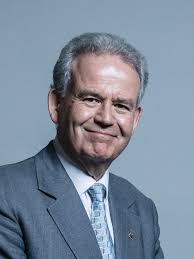
    Julian Lewis – 2023 Speech on Lifeboat Services – Search and Rescue

    The speech made by Sir Julian Lewis, the Conservative MP for New Forest East, in Westminster Hall, the House of Commons, on 10 January 2023.

    It is a privilege to take part in this debate, and our thanks are due to my hon. Friend the Member for Torbay (Kevin Foster) for making that possible.

    We all come to an awareness of volunteer lifeboat crews in different ways. In my case, it was as a schoolboy growing up in Swansea. I remember in the 1950s visiting the Mumbles lifeboat and noting its unusual name. It was called the William Gammon, and it was in later years that I learned the reason for that. It was named after a particularly heroic coxswain of a previous lifeboat—a man who had been awarded a bronze and a gold medal for incredibly brave rescues in 1941 and 1944, but lost his life, together with seven colleagues in his crew, in the great disaster of 23 April 1947, when a former Liberty ship, the SS Samtampa, broke up off Sker Point off the coast of south Wales.

    I remember going to the reference library on a research project and looking at the South Wales Evening Post report of that disaster. The headline—I think I am right in rendering it—said: “One terrible tragedy after another in the channel”. It showed the upturned lifeboat and the wrecked ship. That image has never left me. It is a tradition of which everybody who volunteers to serve in lifeboats is all too aware.

    In those days, one had to go back to the newspapers to try to relive the experiences and heroism of the lifeboat crews, but today we have modern media. If colleagues on both sides of the Chamber take away only one thought from my brief contribution, it should be this: I urge them to go online and have a look at a BBC documentary called “Cruel Sea”. They can find it on YouTube. It was made in 2006 to mark the 25th anniversary of another disaster—the loss of the Penlee lifeboat. It is a quite extraordinary piece of television; they will never forget it, and I advise them to have a box of Kleenex tissues by their side. I have seen it several times, and I always find it hard to maintain my composure.

    The documentary is about the way in which that crew and its coxswain, the late Trevelyan Richards, went out to try to rescue eight people on a vessel, the Union Star, whose engines had failed and was drifting toward the rocks. It contains the actual recordings of the messages that went back from the Penlee lifeboat to the command station, which tried to communicate with the boat. At one point—this was watched by a helicopter crew who were powerless to intervene but saw everything—the crew had managed to get four of the eight people off the ship. The waves were 60 foot high. The Penlee lifeboat was lifted up and actually came down on the deck of the ship it was trying to save the crew from, before being washed off. The crew went back one last time to try to get the last four people, and at that point they were lost.

    The thought that remains with me is the calmness of the voice of Trevelyan Richards in moments of extreme peril, right up to the point at which the radio goes silent and we just hear the command station calling, “Penlee lifeboat, Penlee lifeboat, come in.” Of course, it never could. It is an unforgettable programme. It is a great tradition that, to this day, comes down to independent lifeboats such as Solent Rescue, which operates from Lepe in my constituency, and to RNLI stations such as RNLI Calshot. It operates with a 112-foot tower at Calshot Spit, with the aid of the National Coastwatch Institution, spotting the people who get into difficulties in the Solent. Frankly, these are the finest people we will ever know. I do not think I can say anything further than that.

  • Caroline Dinenage – 2023 Speech on Lifeboat Services – Search and Rescue

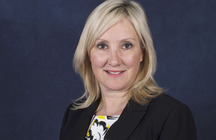
    Caroline Dinenage – 2023 Speech on Lifeboat Services – Search and Rescue

    The speech made by Dame Caroline Dinenage, the Conservative MP for Gosport, in Westminster Hall, the House of Commons, on 10 January 2023.

    It is a great pleasure to serve under your chairmanship, Mr Davies. I thank my hon. Friend the Member for Torbay (Kevin Foster) for securing the debate, not least because it gives me the opportunity to wax lyrical about my constituency, and its proud record of supporting the search and rescue services. My constituency is right on the border with Titchfield, where the search and rescue HQ, which he mentioned earlier, is located. The helicopters take off from my very own Gosport constituency—at Daedalus, where the Maritime and Coastguard Agency does a lot of its training.

    Today I will talk specifically about the wonderful Gosport and Fareham Inshore Rescue Service—an independent lifeboat and inshore rescue service that was founded in 1969, so has been around for a really long time. It is a declared facility to the UK coastguard, providing emergency lifeboat cover to the eastern Solent and Portsmouth harbour. Those who know the area will know that that is an incredibly busy stretch of water—certainly the busiest on the south coast, if not one of the busiest in the UK. There are Navy vessels coming out of Portsmouth, cruise ships and freighters coming out of Southampton, a significant number of yachts, personal water craft, dinghies, and a whole range of stand up paddle boarders and kite surfers; it is pretty crowded out there in the summer months. GAFIRS provides an essential service to civilian safety, and I simply cannot stress its value enough.

    GAFIRS responded to 135 incidents in 2022, making the year its busiest in 12 years and third busiest in the last 29. In those 135 incidents, it assisted 171 people, eight of whom were “life at risk”, including marine emergencies and first aid assistance on shore. Of the incidents, 126 were HM Coastguard taskings.

    GAFIRS is managed and delivered solely by a tremendous team of volunteers. We have heard all about the incredible volunteers that support the service and make it flourish. Our volunteers are of a variety of ages and come from a whole swathe of professions. They operate 24/7, 365 days a year. To put that in context, 61 of the coastguard incidents in 2022 were weekend duty day taskings, with the crew on standby at the station or afloat on patrol, but 65 were out-of-hour pager callouts—33 daytime, 14 evening and 18 night-time. Volunteers are giving their time, day and night, often at unsociable or typically non-working hours. Of course, it is a commitment not just by the volunteers, but by their families, who should not be forgotten, as they support these great sacrifices.

    Like all the other independent lifeboat services, GAFIRS relies solely on donations and receives no Government funding at all, which is why I could be found in the sea on new year’s day, alongside hundreds of my constituents in fancy dress. I was not in fancy dress myself, but my youngest son was dressed as a 6-foot tall banana and could easily be seen from any drone; he is a shy, retiring soul! GAFIRS is remarkable and very well valued by local people, which is why people are prepared to go into the sea on new year’s day dressed in a variety of different costumes.

    Mark Garnier (Wyre Forest) (Con)

    My hon. Friend speaks passionately about the work of the inshore volunteer lifeboat services. Does she agree that inland lifeboat services such as the Severn Area Rescue Association—which works incredibly hard at times of flooding along the River Severn, as far as Bewdley and Stourport—do just as good a job with just as many personal sacrifices in terms of time and effort as any others?

    Dame Caroline Dinenage

    My hon. Friend is absolutely right. The water gives us so much enjoyment and pleasure but can be a dangerous place. There are challenges up and down the country, inland and at sea, that volunteers rise to every single day.

    The response time of GAFIRS is incredible. For all 135 incidents, the average time from being alerted to being in attendance or standing down was just over 16 minutes. The volunteers are, quite simply, local heroes; lives would be lost without them. They do not only respond to a variety of incidents; my hon. Friend the Member for Clacton (Giles Watling) spoke about the importance of training people to understand the dangers, and our volunteers actively promote water safety. In 2022, they provided 29 sea safety education talks to 1,194 local children and 100 teachers and leaders.

    Before I sit down, I want to take the opportunity to thank the National Coastwatch Institution, which operates out of Fort Blockhouse and Lee-on-the-Solent. It provides eyes along the coast and is an invaluable service to local people. I am extraordinarily proud to have it and GAFIRS in my community, and I want to put on the record my enormous thanks and gratitude to them for everything they do.

  • Giles Watling – 2023 Speech on Lifeboat Services – Search and Rescue

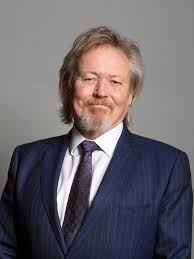
    Giles Watling – 2023 Speech on Lifeboat Services – Search and Rescue

    The speech made by Giles Watling, the Conservative MP for Clacton, in Westminster Hall, the House of Commons on 10 January 2023.

    It is an honour to serve under your chairmanship, Mr Davies. I thank my hon. Friend the Member for Torbay (Kevin Foster) for securing this terribly important debate.

    One of the first things I did when I moved to my constituency of Clacton many years ago was to join the local lifeboat service at Walton-on-the-Naze as a volunteer. I had this theory—probably a mistaken one—that, as a keen yachtsman and a user of water all my life, it would be nice to see friends when I got into trouble.

    There is no doubt in this Chamber that the contribution of the RNLI is great, and the people at Clacton and Walton-on-the-Naze lifeboat stations are an amazing bunch of people, who deserve all the support we can give them. However, sadly, a young man named Sujal Sahu lost his life in Clacton this summer when visiting my constituency. The RNLI was brilliant in its efforts and it must not be let down. The service in Walton-on-the-Naze, in my patch, is reducing at the moment; the boat is being changed. The resources are being spread out across the constituency, but the service needs further support to help prevent loss of life.

    That brings me to my main point, which is about prevention. As an avid yachtsman—I am chairman of the all-party parliamentary group on water safety—it is abundantly clear that we must educate people on the dangers of water. There are two piers in my constituency: Clacton pier and Walton pier. Near these obstructions on the beach are sand scoops—areas where the tidal current rushes past faster. People who come to the coast and do not know about coastal dangers can walk into such areas and find themselves, on a wonderful, hot summer’s day, suddenly in a very dangerous situation indeed; the sand beneath their feet has gone, the tide is running, and if they do not know how to swim or how to behave in water, they are at incredible risk.

    In the summer, I held a water safety event—I invited schools to the beach so that pupils could learn how to behave safely around potentially dangerous water—but the issue prevails all year round; we heard about the recent sad case in Solihull. If we truly wish to support those who get into danger around water, we must support water safety education.

  • Anthony Mangnall – 2023 Speech on Lifeboat Services – Search and Rescue

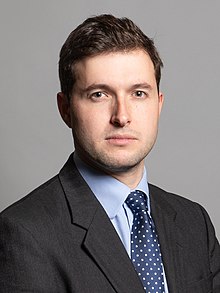
    Anthony Mangnall – 2023 Speech on Lifeboat Services – Search and Rescue

    The speech made by Anthony Mangnall, the Conservative MP for Totnes, in Westminster Hall, House of Commons on 10 January 2023.

    It is a pleasure to serve under your chairmanship, Mr Davies. I am delighted to take part in this debate for the second year in a row. I start by congratulating my hon. Friend and neighbour, the hon. Member for Torbay (Kevin Foster), for securing this debate. We are of one heart and one mind when it comes to our coastline and making sure that we protect all those who are on the coastline or at sea, as well as supporting and promoting the important work that our UK search and rescue organisations do across the country.

    I am always surprised that we call this a debate, because it is not really a debate. It is a moment for us to congratulate, recognise and thank those who put themselves in harm’s way to save others, to look after them and to promote the important work that, across the country, is often overlooked. I declare my interest, as I am the founder of the National Independent Lifeboat Association, which many Members have kindly mentioned.

    Jonathan Edwards (Carmarthen East and Dinefwr) (Ind)

    I thank the hon. Gentleman for his work in setting up the charity. I wish to inform him that my own independent lifeboat association in Ferryside will be joining the organisation soon. I also take the opportunity to thank it for all the work they undertake in the Carmarthen bay area.

    Anthony Mangnall

    I thank the hon. Gentleman for that intervention. It is particularly welcome news that his independent lifeboat is joining the organisation. As has been said, there are more than 50 independent lifeboat stations and 30 have joined the association. We would like it to be a full complement, so that every independent lifeboat station across the country has the recognition that it needs. Hon. Members across the Chamber have made a point about the important work of the RNLI. It is essential that we recognise the important apolitical nature of the RNLI and the fact that it does not ask for Government funding. The hundreds of RNLI lifeboat stations do fantastic work by raising their own money and through bequests, as well as by working with volunteers, who do an extraordinary job. The tales of their heroism are what make many of our coastal communities aware of the work of those lifeboat stations, which are part of the fabric of our community.

    We are aware of the scale of UK search and rescue, which covers 2 million square miles of air, land and sea of and brings together multiple Government Departments. It brings together air ambulances, the National Coastwatch Institution, the RNLI and NILA. In my constituency, I am fortunate to have Torbay RNLI station, which is based in Brixham, Dart RNLI, which is in Dartmouth, and Salcombe RNLI which, unsurprisingly, is in Salcombe. The three stations cover more than 80 miles of coastline and have saved countless lives over the years.

    The RNLI’s fantastic model has worked since 1824, saving an estimated 143,000 lives. Its work is unbelievably essential and, as the hon. Member for Caithness, Sutherland and Easter Ross (Jamie Stone) said, it will only increase over the coming years. We need to ensure that that model is recognised, supported and promoted wherever we go. We also have to be extremely clear that volunteers often work day jobs as well and that their employers need to be thanked for allowing them to take on the work.

    I came to the position of founder of NILA because I have an independent lifeboat station in my constituency, in Hope Cove. Far from trying to compete with the RNLI, it works in co-operation with it; they work together to help people in danger at sea. It became clear to me that many of the independent lifeboat stations were not getting the attention or awareness that other UK search and rescue organisations to which people were donating were attracting, and that we should try and do something to promote them.

    The result was that we formed NILA by contacting the 50 independent lifeboat stations and having a conversation about how we could secure greater recognition for their work and ensure that we were not taking away any funding abilities from them. Each independent lifeboat station is still self-funded, but we are able to ensure that they have access to the rescue boat code, the Department for Transport, the Home Office if necessary, best practices, and training procedures; they can also buy equipment collectively if necessary.

    The whole purpose was not to hurt or harm those services, but to make their operations easier. I am really pleased to say that, since we had the idea, we have managed to create it. We have had the association registered with the Charity Commission. It has been in regular conversations with the Department for Transport, which has given it recognition. It has a chairman, Neil Dalton, and a vice chairman, Sean McCarry. The secretary is Wayne Monks and the treasurer is David Harvey. Together, they are creating the management structure that is going to be able to deliver for the independent lifeboat stations, not just now, but in future years, and to protect those independent lifeboat stations that do such fantastic work.

    I will explain what we are asking for and what we would like to hear from the Minister. The first thing we ask for, as has been mentioned, is recognition through the rescue boat code. We understand that the Maritime and Coastguard Agency is going through the process of reviewing the rescue boat code, so we would like to ask whether it can engage with independent lifeboats to ensure that, when the rescue boat code is revamped and rewritten, that is done so in conjunction with independent lifeboats and that they are using it to make sure it is most effective.

    Secondly, we would like some clarification over VAT relief and fuel duty. I know that there is guidance out there. It is not simple; it needs to be simplified for the RNLI and independent lifeboats. The third thing is official recognition for NILA. We are waiting—the application has gone in through UK search and rescue. I would be grateful for an update on how quickly that will happen. The fourth point—I have got two more points and then I will sit down—is about support for the campaign to promote independent lifeboats and raise public awareness. There is continued support from MCA for NILA to join UKSAR’s operators group. Lastly, I call for the reintroduction of the rescue boat grant fund, which is specifically for the independents. A £5 million fund was launched. It finished in 2020. That fund was essential in helping those independent lifeboats. It was not a huge amount of money, but it made all the difference to those independent lifeboat stations.

    I will end with this. We are very lucky across our coastal communities and in our inshore areas. We owe those people a debt of gratitude and of thanks. I hope we can hold an annual event in Parliament to promote the work of the RNLI and NILA.

  • PRESS RELEASE : British Royal Navy ship HMS TAMAR visits Bangladesh [January 2023]

    PRESS RELEASE : British Royal Navy ship HMS TAMAR visits Bangladesh [January 2023]

    The press release issued by the Ministry of Defence on 16 January 2023.

    The deployment of HMS TAMAR emphasises the UK’s commitment to defence cooperation with Bangladesh, and to an open and resilient international order for open societies and economies to flourish.

    On 15 January 2023, the Royal Navy’s Offshore Patrol Vessel HMS TAMAR has arrived at the naval base in Chattogram, Bangladesh. The vessel was received by Chief Staff Officer to Commander Chattogram Naval Area, Capt M Faizul Hoque, (C), psc, BN. The deployment of HMS TAMAR emphasises the UK’s commitment to defence cooperation with Bangladesh, and to an open and resilient international order for open societies and economies to flourish.

    During the visit, HMS TAMAR and her crew will engage in a series of events with the Bangladesh Navy and the local administration in Chattogram to maximise bilateral relations benefitting both countries’ military, trade, development and political alliances.

    Commanding Officer of HMS TAMAR Commander Teilo Elliot-Smith, Royal Navy said: “It is a complete honour to bring HMS TAMAR to Bangladesh. Apart from the cultural wonder of Chittagong I’m excited to better understand maritime security priorities in the Bay of Bengal. Our welcome was spectacular and it’s clear we have much in common.”

    British High Commissioner to Bangladesh Robert Chatterton Dickson said: “I am delighted that HMS TAMAR is visiting Bangladesh, the second Royal Navy ship to come to Chattogram in eighteen months, and I am very grateful to the Bangladesh Navy for their warm welcome. This visit is another example of the UK’s long history of defence cooperation with Bangladesh, especially in the maritime domain. As part of the Indo Pacific focus to our foreign policy we are committed to further deepening defence and naval cooperation with Bangladesh.”

    It is worth mentioning that a significant number of Bangladesh Navy personnel have trained alongside the Royal Navy in the UK, including at the Royal College of Defence Studies; on International Principal Warfare Courses, Royal Navy Young Officer Courses, Advance Marine Engineering Courses, Marine Engineering Application and Management Courses, International Midshipman Courses, and Underwater Medicine Courses; and through the UK government’s prestigious Chevening Scholarship.

  • James Bevan – 2023 Speech on Tackling Climate Change

    James Bevan – 2023 Speech on Tackling Climate Change

    The speech made by Sir James Bevan, the Chief Executive of the Environment Agency, at the UEA in Norwich on 16 January 2023.

    The Fear

    “First of all, let me assert my firm belief that the only thing we have to fear is fear itself—nameless, unreasoning, unjustified terror which paralyzes needed efforts to convert retreat into advance.”

    Unfortunately, that’s not one of my quotes, because it’s a very good one. As most of you probably know, it’s from the American President Franklin D. Roosevelt, in his inaugural address in 1933, at the very height of the Great Depression – when millions were forced into deprivation and were fearful of what the future would hold.

    I quote FDR because his point is just as relevant today, when we confront what for many is the scariest challenge we could imagine: the climate emergency. According to numerous studies, a sizeable majority of young people now struggle with ‘eco-anxiety’ and are fearful about the future due to the climate emergency.

    What I’m not here to do today is to tell you that everything is fine, because it isn’t. But what I do want to argue is that fear is not the most useful emotion when it comes to the climate crisis because it can paralyse us into inaction; and that there is an evidence-based case for climate optimism if we do the right things.

    The Fear = doomism

    But first let’s acknowledge that the Fear exists for good reason. We are already seeing the consequences of climate change: more extreme weather, rising sea levels, higher rainfall, bigger floods, extreme droughts, massive wildfires, ecological harm wiping out species, and rising impacts on the economy, the way we live, and the health and wellbeing of every human on this planet. This affects us all directly and indirectly. The impact is particularly hard on people in the countries of the Global South who are the least responsible for the emissions that are causing these effects but are hardest hit by them – which is why the fight against climate change is also a fight for social justice.

    So if you’re worried about climate change, that’s OK – you are right to be so. And if you are angry about those who are primarily responsible for causing it or those who are denying it (often the same people), that’s fine too: as John Lydon, singer of the punk band the Sex Pistols, used to say: anger is an energy.

    But fear tends to exhaust us rather than energise. And what we sometimes hear from sections of the media, influencers, some well-intentioned campaigners and politicians is all focussed on The Fear. The Fear that we’re running out of time. The Fear that what we’re doing is never going to be enough. The ultimate Fear, that humanity is doomed.

    In my view this climate doomism is almost as dangerous as climate denial. Indeed doomism might even be the new denial. And it’s equally misplaced. It’s not justified by the facts. And it risks leading to the wrong outcome: inaction.

    The evidence: the case for confidence

    So let me give you some evidence to combat this doomism: the case for confidence.

    My case for climate optimism is simple: we know what the problem is; we know what we have to do to solve it; we have started to do it; and if we keep on doing it we will succeed – not just in ending the climate emergency but in building a better world too.

    We know what the problem is: the massive increase in greenhouse gas emissions since the start of the industrial revolution is doing exactly what the science predicts – warming the planet and making our climate more extreme.

    We know what we have to do to solve this problem. The solutions are technically quite simple. First, we need to reduce and as far as possible stop entirely the emissions of carbon dioxide and the other greenhouse gases that are causing the climate to change: what the experts call mitigation. And second, we need to adapt our infrastructure, our economies and our lifestyles so we can live safely, sustainably and well in a climate-changed world. Because even if all greenhouse gas emissions magically stopped at midnight tonight, some climate change has already happened and will go on happening as a result of all the carbon already released into the atmosphere over the last decades.

    And we are starting to do these things.

    Mitigation

    Let me start with mitigation. Governments around the world are taking action to reduce their national emissions, including here, where successive UK governments have shown strong leadership. The 2008 Climate Change Act was the first time a major economy set legal limits to reduce its own emissions. In 2019 the UK became the first major economy to pass laws to end its contribution to global warming by getting to Net Zero by 2050.

    Just passing laws of course doesn’t make it so. But we are starting to do the things we need to do to get there. Take energy generation, which has historically been one of the biggest drivers of greenhouse gas emissions. In 1991 only 2% of the UK’s electricity came from renewable sources: wind, solar, hydro and bioenergy. By last year (2022), nearly half (43%) of our electricity came from those sources. And if you include nuclear energy, which accounts for a further 16% of our electricity, the majority of our power is now coming from low or no carbon sources. Which is why the National Grid say that the UK is well on its way to creating an electricity system that’s wholly based on renewable and carbon-free sources by the 2050 target.

    Putin’s war in Ukraine has inadvertently given this move to sustainable domestically-generated energy a massive push, because no-one in Europe now wants to be dependent on Russian gas.

    Science and innovation are helping us too. Last month US scientists announced a breakthrough in the race to create nuclear fusion, which is a potential source of near-limitless clean energy. For the first time in an experiment they produced more energy from a fusion reaction than they put in to generate it.

    Now if this is to power our world in future, it will need massive scaling up: the experiment in question lasted nanoseconds and produced just about enough energy to boil seven kettles. Building a fusion machine that can produce industrial quantities of power and run constantly is a massive technical challenge. But because it can be done, and because it will be so beneficial if it is, it almost certainly now will be done. And the UK will have a part in that: the UK government has announced that the West Burton power station site in Nottinghamshire will be the home of the UK’s first prototype fusion energy plant.

    Adaptation

    Everyone talks about net zero, and I just have. That’s important: the lower our carbon and other emissions, the lower the extent and rate of climate change. But the other side of the climate coin – adaptation to make us more resilient in a climate changed world – is just as important.

    And until recently adaptation has tended to be the Cinderella of climate – getting less attention than mitigation. The good news is that is now starting to change.

    Here in the UK more and more infrastructure providers and utilities – Network Rail, National Highways, the energy providers and the water companies for example – all now have programmes to adapt their own networks and operating arrangements to make them more resilient to the impacts of the changing climate.

    Meanwhile internationally we saw a major step forward on adaptation at COP27, the UN climate change summit in Egypt last month. This was the agreement on a new Loss and Damage Fund that will help nations most impacted by climate change cope with the damage that has happened already and adapt to be more resilient in future.

    This won’t fix any of those problems immediately. It will only mean anything if it’s actually delivered, and you can argue about how much money is needed to get the job done. But the agreement matters in itself, because it signals that the rich nations recognise that they have a particular responsibility to the rest of the world and that they need to show solidarity with the developing nations and back their rhetoric with resources. And that matters because the rebuilding of trust between rich and poor countries that this agreement can help achieve will make it much more likely that we sustain the collective international commitment we need to tackle the climate emergency successfully.

    The Environment Agency is a major player on climate

    The Environment Agency which I lead is playing a central part in tackling the climate emergency. We have put it at the heart of everything we do.

    Our strategy, EA 2025, which drives all our work, has three goals: a nation resilient to climate change; healthy air, land and water; and green growth and a sustainable future. The common theme that runs through them all is the climate emergency. Tackle it successfully, and we will achieve all those goals. Fail and we will fail on all.

    The EA plays a major role in mitigation. We regulate most of the greenhouse gas emitters in this country, and have cut emissions from the sites we regulate by 50% since 2010. We run the UK Emissions Trading Scheme, which limits and will progressively reduce the emissions that airlines, steel works and other major sources of carbon are allowed to make.

    We are trying to walk the walk ourselves with our commitment to make the Environment Agency and the whole of our supply chain Net Zero by 2030. That has meant we are rethinking much of what we do – for example using hydrogen vehicles to move around, low carbon concrete or better still natural flood management (tree planting etc) for flood defences. We are even using our own pension fund to influence investors to put their money into sustainable businesses and move it out of carbon.

    The EA also plays a major role in adaptation. We build and maintain most of the country’s flood defences: that is helping ensure that communities are protected in the face of the higher tides and more violent rainfall that climate change is generating. And those defences are working, because even as we’ve seen record-breaking rainfall and river heights over the last few years, we’ve seen fewer and fewer homes and businesses suffering the trauma of flooding.

    We work with the water companies and other water users to reduce the risk of another impact of the changing climate – severe drought – by finding ways in which they can take less water from the environment and use it more efficiently.

    And in our role as a statutory consultee on all major planning decisions, we are helping design places for people to live and work which are not just more resilient to the effects of climate change (example: if you have to build homes in a flood plain, put the garage on the ground floor but the people on the first floor) but are also better places to live, both for the people and the wildlife, because we try to design in as much blue and green infrastructure – rivers, lakes, trees and grass to you and me – as we can.

    There’s an important point there that I alluded to earlier: which is that if we tackle the climate emergency right, and treat it not just as an existential risk but as a massive opportunity, we can actually build a better world: one in which we make cities which don’t just generate less carbon or which are just more resilient to the changed climate but are also better places to live; in which we invent new technologies that don’t just help mitigate and adapt but also help nature recover from the battering we’ve given it over the last few decades and thrive; in which we find new ways to run successful economies so there is sustainable, inclusive growth for everyone; and in which by ending the impacts of climate change on the weakest and helping them recover from things which they did not cause, we help deliver justice for all.

    UEA is a player too

    You here in the University of East Anglia are also a major player on all those things because of your own outstanding work on climate, and I want to recognise that and thank you for it.

    I know that UEA was one of the early pioneers of climate research and that you’ve been producing world class analysis for nearly 50 years now. I know that the Climatic Research Unit and the Tyndall Centre here have both broken new ground in understanding what is actually happening to our climate, what that means for society, and how best to address those consequences. All that is giving us News We Can Use – the best of all academic research.

    I also know – and here I feel particular solidarity with you – that that endeavour hasn’t been consequence-free, and that you have been the subject of aggressive targeting by climate deniers and others who don’t like the clarity or the consequence of your messaging. To which I can only say: let’s stick together, keep going, follow the evidence and have the courage of our convictions.

    The ingredients for success: none of us is as good as all of us

    But it’s not enough of course for UEA, the Environment Agency or the UK government to be taking action on climate on our own. The climate emergency is a textbook example of a problem that can only be successfully dealt with if everyone takes action, not just in this country but around the world.

    And here too I see cause for optimism, because that is pretty much what is now happening. Think about the things which have to be true in order to tackle the climate emergency successfully.

    There needs to be international consensus on the need for action and on what action should be taken, and a mechanism to make sure it actually happens. There is: the United Nations COP process. Is it perfect? No. Is it moving as far and as fast as we’d all like? No. But is it a necessary condition of success, and is it making progress in the right direction? Yes and yes.

    There needs to be national action by individual governments all around the world. And increasingly there is – not least because ordinary people, in the developing world even more than in the rich west, are feeling the impacts of climate change on their own lives and livelihoods and demanding that their governments take that action. I’ve spent over forty years working with politicians around the world, and one thing that is true in all countries – democratic or not – is that politicians pay attention to what the public want, because giving it to them is ultimately the best way of staying in office.

    There needs to be action by business, both because businesses are a large source of the problem and because they are a key ingredient of the solution: most of the money in the world, as well as a lot of the innovation, both of which are critical for success – is found in the private sector. And over the last few years we’ve seen more and more businesses adapt what they do and how they do it in ways which are helping tackle the climate emergency. In some cases that’s happening because it’s the right thing to do, in others because it’s the smart thing to do: businesses which innovate, get out of carbon and don’t trash the planet will ultimately have stronger futures and better profits than those that don’t.

    And critically there needs to be action by each of us as individuals, because in what we do in our daily lives we are all part of the problem and so all part of the solution. And here too in the last few years we are seeing people all over the world, not just the young or privileged western elites, take action to change how they live and the impact they have on the planet – whether by using low emission vehicles or public transport, insulating their homes, sharing or freecycling possessions, or lobbying their own governments to take action.

    The spearhead of this movement is the new generation of adults who are now in their twenties or thirties. And these are the people – and I may be looking at some of them right now – who over the next two critical decades will be running the country, leading major organisations, or shaping public opinion. That too gives me confidence that the right decisions will get made and that we will indeed tackle the climate emergency and come out on the other side with a better world.

    The EA: environment plus agency

    There is no free lunch, so let me conclude with a brief commercial for the Environment Agency. Our job is to create a better place. We are always looking for talented people who have a passionate commitment to that goal. There is a lot of that talent and commitment in this room, and in UEA more widely.

    So if you are interested in building a better world, think about joining us. If you are interested in the environment, the clue is in the first word of our name. The other clue is the second word – agency. If you actually want some, and you want to make a real difference to the real world, please also think about joining us. Because ultimately the best cure for fear is agency – taking back control, to coin a phrase.

    I can do no better than end with a quotation from Mae Jemison, who was the first African American woman to travel into space, which she did as a mission specialist on the US Space Shuttle Endeavour:

    “Don’t let anyone rob you of your imagination, your creativity, or your curiosity. It’s your place in the world; it’s your life. Go on and do all you can with it, and make it the life you want to live.”


  • PRESS RELEASE : UK Government reaffirms commitment to protect energy users in the North of Scotland [January 2023]

    PRESS RELEASE : UK Government reaffirms commitment to protect energy users in the North of Scotland [January 2023]

    The press release issued by the Department for Business, Energy and Industrial Strategy on 16 January 2023.

    Households and businesses in the North of Scotland will continue to benefit from energy bill savings through the Hydro Benefit Replacement Scheme.

    • All households and businesses in the North of Scotland will continue to be protected from the higher costs of distributing electricity to the area.
    • £94.97 million will be provided through the Hydro Benefit Replacement Scheme to subsidise those facing higher energy bills because of these additional costs, with savings of £60 per household. This comes on top of UK government energy support in place for this winter.
    • the UK government is introducing legislation to make several technical improvements to the scheme to boost its efficiency.

    The UK government is today announcing that all households and businesses in the North of Scotland will continue to receive protection from higher energy bills, with average savings of £60 to offset the higher costs of electricity distribution in the region. This is in addition to savings offered through other UK government schemes including the Energy Price Guarantee and Energy Bill Support Scheme.

    £94.9 million of support will be provided through the continued Hydro Benefit Replacement Scheme (HBRS) and Common Tariff Obligation (CTO), which is automatically taken off bills.

    The government introduced the HBRS in April 2005 to provide a cross subsidy to reduce distribution charges in the North of Scotland. Electricity distribution in the region is more costly than elsewhere because of its unique geography, which presents challenges to electricity networks. The scheme is funded by charges on all licensed electricity suppliers across Great Britain, costing £1 per household.

    Following the illegal invasion of Ukraine, the UK Government stepped in to provide Scottish households with support to help meet rising energy costs. This includes the Energy Price Guarantee, saving the typical household in Great Britain around £900, payments of £400 towards bills through the Energy Bill Support Scheme, as well as £1,200 being provided to the most vulnerable households.

    UK government Minister for Energy and Climate Graham Stuart said:

    The UK Government is determined to protect energy users wherever we can and to ensure fairness when it comes to energy prices across the Union.

    Therefore we are reaffirming our commitment to the Hydro Benefit Replacement Scheme and Common Tariff Obligation, which are vital tools for easing energy costs for those living in rural areas of the North of Scotland.

    Technical improvements are being brought forward. This will mean that funding charges are minimised without reducing assistance being offered.

    UK government Minister for Scotland John Lamont said:

    At a time when the cost of energy bills is on everyone’s minds, the UK Government wants to see equality for users, whether you live in Sutherland or Sunderland.

    The continuation of this payment is good news for people in rural parts of Northern Scotland, protecting households from the higher electricity distribution costs in certain areas.

    Legislation to be introduced in Parliament will make technical improvements to the HBRS and follows support of £92.7 million provided through these schemes in 2021/22.

    The Common Tariff Obligation (CTO) performs a similar function to the HBRS within the North of Scotland by preventing electricity suppliers from charging comparable domestic consumers different prices solely on the basis of their location within the region.

    David Hilferty, Social Justice spokesperson for Citizens Advice Scotland, said:

    We know consumers and business in the North of Scotland continue to face higher costs when it comes to energy and extending this scheme and the associated protections is a welcome move. If anyone is worried about energy bills or costs generally they can seek free, impartial and confidential advice from the Citizens Advice network.

    There is a requirement for the UK government to review the HBRS and CTO every three years. The latest review included a public consultation, where most respondents supported the UK Government’s proposal to retain the schemes in their current form with some technical improvements to the funding arrangements of the HBRS.

    These technical improvements included:

    • Removing a distortion which allowed some suppliers to avoid charges at the expense of others.
    • Adjusting support for inflation using the Consumer Prices Index including owner occupiers’ housing costs instead of the Retail Price Index, as the former is now considered a better measure.
    • Addressing an ambiguity that could be interpreted as requiring funding to be recovered twice-over from electricity suppliers.