Blog

  • PRESS RELEASE : Report by the President of the OSCE Parliamentary Assembly – UK response [January 2023]

    PRESS RELEASE : Report by the President of the OSCE Parliamentary Assembly – UK response [January 2023]

    The press release issued by the Foreign Office on 26 January 2023.

    Ambassador Bush voices full support for the OSCE Parliamentary Assembly’s continued focus on Russia’s illegal invasion of Ukraine.

    Madam President, on behalf of the United Kingdom, welcome back to the Permanent Council. I thank you for your address. We support your call for the immediate release of Vladmir Kara-Murza and all political prisoners in Russia, as well as Belarus, and those areas under temporary Russian control in Ukraine.

    A new year usually ushers in new beginnings and hopes for the future. Instead, we are faced with death and destruction in Europe as Russia continues to inflict its appalling war against its neighbour, endangering the lives of Ukraine’s citizens and threatening the peace and stability of the wider OSCE region. Most Parliamentarians across the region are rightly appalled by this unrelenting assault and complete disregard for OSCE’s commitments and principles. We are grateful for the OSCE Parliamentary Assembly’s focus on Russia’s illegal invasion and we join you in denouncing President Putin and his enablers for their horrific acts of violence against the people of Ukraine.

    The pursuit of justice and accountability has been an integral part of the UK’s support to Ukraine from the very beginning. We have consistently supported Ukrainian authorities’ and the international community’s efforts to investigate, document, pursue and prosecute those committing horrific crimes. Madam President, we welcomed your appointment in July of Rt Hon John Whittingdale MP as Special Rapporteur on War Crimes to the OSCE Parliamentary Assembly. His mandate to raise awareness and share information about Russia’s war crimes, and engage with Ukraine’s judiciary and the International Criminal Court (ICC) is desperately needed. In March, the UK and The Netherlands will welcome Justice Ministers from across the world to agree on practical support to the International Criminal Court and ensure it has all it needs to prosecute those responsible. Russian forces and their proxies should know they cannot act with impunity and we will back Ukraine until justice is served.

    Madam President, we agree with your and the new Chair’s view that we cannot neglect other vulnerable regions in our neighbourhood. Conflicts and instability persist in Moldova and the South Caucuses (including Georgia). Our Central Asian partners are subject to multiple security, economic and climatic shocks and we need to ensure stability in the Western Balkans. Russia’s full-scale invasion of Ukraine exacerbates many of those issues. The OSCE has the versatile toolbox required to help address all of these challenges. We must ensure it is sufficiently resourced and empowered to do so, and condemn those who deliberately seek to undermine it.

    Finally, I wish to commend the Assembly’s unwavering commitment to advancing gender equality in the OSCE region, and Special Representative, Hedy Fry’s and your own leadership on this issue. Women have a right to participate in the decisions that affect their lives, in peacetime and in war. Full, equal and meaningful participation of women leads to better outcomes before, during and after conflicts. This is no less true than in Ukraine, where women are making a critical contribution on the frontline and in their communities. This year, the UK will publish its new UK National Action Plan on Women, Peace and Security for 2023-2027, which will continue the important tradition of reporting to the UK Parliament. We welcome the transparency which will be critical in holding us to account.

    Madam President, to conclude, we value the Assembly’s ongoing partnership with the OSCE and its institutions. The UK offers its full support to you and the Assembly and we look forward to continued co-operation and collaboration in 2023 and beyond.

  • PRESS RELEASE : UK Defence Senior Advisor Conducts Visit to Lebanon [January 2023]

    PRESS RELEASE : UK Defence Senior Advisor Conducts Visit to Lebanon [January 2023]

    The press release issued by the Foreign Office on 26 January 2023.

    The UK Defence Senior Advisor to the Middle East and North Africa (DSAME) Air Marshal Martin Sampson conducted a three day visit to Lebanon from 23 to 25 January.

    DSAME met Speaker of Parliament Nabih Berri, Prime Minister Najib Mikati and Commander in Chief of the Lebanese Armed Forces (LAF) General Joseph Aoun. He was accompanied by the British Ambassador to Lebanon, Hamish Cowell, and the UK’s Defence Attaché Lt. Colonel Lee Saunders.

    At the UNIFIL Headquarters in Naqoura, DSAME toured the Blue Line and underlined the UK’s full support for UNIFIL’s work in south Lebanon, as mandated in UN Resolution 1701, and offered his condolences following the tragic death of Private Sean Rooney. He was accompanied by the UK’s new Deputy Head of Mission, Camilla Nickless.

    DSAME also met the inspiring Lebanese endurance athlete Michael Haddad. DSAME was inspired to hear about Mr Haddad’s ambitious plan to walk 100 kilometres across the North Pole later this year, in order to draw attention to the devastating impact of climate change.

    The British Ambassador to Lebanon, Hamish Cowell, said:

    It is a pleasure to welcome Air Marshal Sampson to Lebanon. The longstanding cooperation and partnership between the UK’s Armed Forces and the Lebanese Armed Forces makes a significant contribution to Lebanon’s security, sovereignty and prosperity. The UK will continue to do all we can to support this, including through our agreement last month for a further £13 million commitment to support the Lebanese Armed Forces (LAF).

    I also take this opportunity to express my admiration for Michael Haddad’s achievements. He is an inspirational role model. I wish him the best of luck in his upcoming North Pole expedition.

    Air Marshal Martin Sampson said:

    It was an important visit to Lebanon, hearing about the impact of the severe economic crisis on the Lebanese people in general and the Lebanese Armed Forces in particular. I admire the courage and resilience of the Lebanese people and that of the LAF in face of adversity. The UK remains committed to strengthening our bilateral cooperation between our two countries and supporting the LAF’s resilience.

    I conveyed my condolences and support to UNIFIL over the tragic incident which resulted in the tragic death of Private Sean Rooney and injured three others. We reiterated the UK’s position that the perpetrators must be held to account. UNIFIL’s mandate and operations in South Lebanon are important to stability and security for Lebanon and the region.

  • PRESS RELEASE : New visits to understand children’s experience of alternative provision [January 2023]

    PRESS RELEASE : New visits to understand children’s experience of alternative provision [January 2023]

    The press release issued by Ofsted on 26 January 2023.

    Ofsted and the CQC have published guidance for the first series of thematic visits to be carried out under the new area SEND inspection arrangements.

    Beginning in February, the visits will take place across the spring and summer terms, with the findings to be shared in a national report published in autumn 2023.

    Each academic year, the series of in-depth reviews will explore particular aspects of the special educational needs and/or disabilities (SEND) system. The first set of visits will focus on alternative provision (AP), given the large number of children and young people with additional needs in these types of provision.

    The visits will not result in judgements about local areas. Instead, the overarching report will highlight examples of good practice and identify any systemic concerns.

    Inspectors from Ofsted and the Care Quality Commission (CQC) will explore how AP arrangements are currently working, including how partners work together to commission and oversee AP. These visits will enable the inspectorates to better understand and report on the increasingly varied reasons why AP is used. By sharing examples of good practice, Ofsted and CQC aim to highlight the positive role that AP can play in the education system.

    All types of AP may be examined during the visits, which will consider how AP is being used and if it is meeting children’s needs. Evidence will be gathered from a range of stakeholders, including young people and their families, to understand the experiences and outcomes of those at the centre of the AP system.

    Lee Owston, Ofsted’s National Director for Education:

    The current SEND system is not working for too many young people and their families, and we want to play our part in driving forward much-needed improvement.

    We know that the majority of children and young people in alternative provision have some form of SEND. But all too often alternative provision is being used for purposes that it was not originally intended to serve. These visits will help us to better understand how alternative provision is working for those who rely on it most, and support the sector in meeting growing demand. They will also highlight any areas that need to be improved.

    We hope that these thematic reviews will provide valuable insights as the government develops its plans for reform of alternative provision. They will also help support partners across education, health and social care to work together in delivering important improvements for children and their families.

    Dr Sean O’Kelly, Chief Inspector of Hospitals and interim Chief Inspector of Primary Medical Services at the Care Quality Commission:

    All good services should start from an understanding of how to provide the best care for the people that use them. With a significant number of young people with SEND in alternative provision, this work with Ofsted is a critical opportunity to ask how local agencies are working together to recognise and meet the health and educational needs of children and young people in alternative provision.

    Visiting these services with Ofsted – working together as we expect other agencies to do – will help to identify and share best practice, as well as areas for improvement.

  • PRESS RELEASE : Three company directors banned for a total of 30 years for abusing Bounce Back Loans, Mathius Thompson, Moira Wood and Ioan Adrian Mociar [January 2023]

    PRESS RELEASE : Three company directors banned for a total of 30 years for abusing Bounce Back Loans, Mathius Thompson, Moira Wood and Ioan Adrian Mociar [January 2023]

    The press release issued by HM Treasury on 26 January 2023.

    Mathius Thompson, 33, from Birmingham, Moira Wood, 47, from Lightwater, Guildford, and Ioan Adrian Mociar, 35, from Harrow have been banned for a total of 30 years after separate investigations found they had abused the Bounce Back Loan scheme during the Covid-19 pandemic.

    Mathius Thompson was the sole director of West Midz Cars Ltd in Ladywood, Birmingham. In May 2020 he applied for a Bounce Back loan of £50,000 for his used car dealership.

    Bounce Back Loans were a government scheme to help keep businesses afloat during the Covid-19 pandemic. Under the rules of the scheme, companies could apply for loans of up to 25% of their 2019 turnover, up to a maximum of £50,000. All loan money had to be used for the economic benefit of the business.

    Thompson stated in his loan application that the dealership’s turnover for 2019 was around £287,500, and received the maximum £50,000 loan for the company. But the business went into liquidation in August 2021 owing £53,500, including the full amount of the Bounce Back Loan, which triggered an investigation by the Insolvency Service.

    Investigators discovered that West Midz Cars Ltd’s turnover in 2019 had been just over £2,500 and the company’s bank statements for that year show no income or trading activity, meaning the business had not been entitled to a loan.

    The company accounts also showed no evidence that the money had been used for the economic benefit of West Midz Cars. A compensation order of £50,000 is now being sought, to repay the loan provider.

    Moira Wood, who was sole director of her IT consultancy, Clockwork Compliance Services Ltd, in Guildford, Surrey, applied for a £24,000 Bounce Back Loan for her company in September 2020. The business went into liquidation in February 2022, owing £55,800, including the full amount of the loan, and triggering an Insolvency Service Investigation.

    Investigators discovered that Wood had transferred £23,400 to herself between October 2020 and January 2022, just before the company folded, with no evidence that the money had been used for the benefit of Clockwork Compliance Services.

    And Ioan Adrian Mociar, who was sole director of Midi Construction Ltd in Pinner, Harrow, applied for a £41,000 Bounce Back Loan for his building company, after stating on the application that the business’s turnover in 2019 had been £166,000. Under the rules of the scheme, if a business began trading after 1 January 2019, the estimated annual turnover could be used.

    When Midi Construction Ltd went into liquidation in December 2021 with debts of around £46,000, including the full amount of the loan and almost £5,000 owed to HMRC, it triggered an investigation by the Insolvency Service.

    Investigators found that as the building company had only begun trading in June 2019, accounts showed that its turnover for the year ending 31 May 2020 was around £45,500. Midi Construction had therefore received around £29,600 more than it was entitled to under the rules of the loan scheme.

    They also discovered that payments of more than £39,700 had been made from Midi Construction Ltd’s bank account during a three-week period between October and November 2020, without any evidence to show that they were for the economic benefit of the company.

    The Secretary of State for Business, Energy and Industrial Strategy accepted disqualification undertakings from the three directors after they did not dispute that they had caused their companies to either:

    • provide misleading information to a bank to obtain a Bounce Back Loan when they knew or ought to have known that their business was not eligible for a loan of the amount claimed
    • and/or not provide evidence to show that payments from the company bank accounts were used for the economic benefit of the company.

    Ioan Mociar’s disqualification runs for 11 years from 6 January 2023. Moira Wood is banned for 8 years from 30 January 2023, and Mathius Thompson is banned for 11 years, also from 30 Jan 2023.

    The disqualifications prevent them from directly or indirectly becoming involved in the promotion, formation or management of a company, without the permission of the court.

    Tom Phillips, Assistant Director of Company Investigations at the Insolvency Service, said:

    The Bounce Back Loan scheme was designed to support businesses in genuine need. These three company directors abused taxpayers’ money to either apply for loans to which they weren’t entitled, or by failing to show that the money they claimed had been used to support their companies.

    They have been removed from the corporate arena for a total of 30 years, and their disqualifications should serve as a reminder to others that the Insolvency Service will take action to protect the public and the taxpayer.

    • West Midz Cars Ltd traded as a used car salesroom at Great Tindle St, Ladywood from its incorporation in January 2016 until it went into liquidation in August 2021.
    • Clockwork Compliance Ltd traded as an IT consultancy firm in Guildford from its incorporation in January 2018 until it went into liquidation in February 2022.
    • Midi Construction Ltd traded as a building company in Pinner, Harrow from its corporation in in May 2019 until it went into liquidation in December 2021.
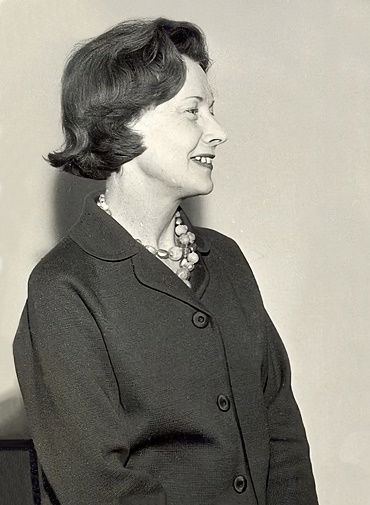
  • Barbara Castle – 1967 Speech on Transport

    Barbara Castle – 1967 Speech on Transport

    The speech made by Barbara Castle, the then Transport Minister, in the House of Commons on 6 November 1967.

    This debate is on the Queen’s Speech and our present discussion is geared to the Amendment moved by the hon. Member for Worcester (Mr. Peter Walker) to the passage in the Gracious Speech relating to transport. In that Amendment the hon. Gentleman complains that the Government are not … concentrating on practical measures to improve conditions for the travelling public and for industry”. The passage in the Gracious Speech on which the hon. Gentleman bases this complaint reads: Legislation will be brought before you to provide for the better integration of rail and road transport within a reorganised framework of public control … That is an integration which has long been overdue and which the development of the container is making technically imperative.

    The passage continues: … to promote safety and high standards in the road transport industry … Is not that a matter that will improve conditions for the travelling public and for the public in general, who have been complaining for years about the danger of “killer” lorries on our roads?

    Then the Speech says: … to strengthen the powers of local authorities to manage traffic … Will any rational Member in this Chamber seek to claim that this will not be an important measure for improving the travelling conditions on the congested roads of our great cities? The hon. Gentleman did not have time for even a fleeting reference to it, although he asks the House to approve an Amendment condemning this whole paragraph.

    The paragraph states, finally, that the legislation will: … reorganise the nationalised inland waterways with special emphasis on their use for recreation and amenity “. Is not that another matter in which the public is very interested indeed? The hon. Gentleman is always pressing me to produce my White Papers elaborating the different aspects of the Bill I shall be presenting to Parliament before very long. I gave him a White Paper on the inland waterways part at the beginning of September. I do not think that he has even read it, and today he has not made so much as a passing reference to it.

    I will come in a moment to the perfunctory way in which he has dismissed another White Paper, which he has had in his hands all morning.—[Laughter.] Yes, I know—the hon. Gentleman is slow to pick up new ideas, but in the other part of his speech he was complaining that the ideas were not new at all, so I do not know what further time he needs to discuss it.

    Before I leave that aspect of the argument let us get the roads expenditure position quite clear. The hon. Gentleman believes in economy. He believes in economy in new speeches, and we have had this same one of his time after time. Let me therefore deal once and for all with this aspect of his argument, which is at the heart of the comparison between the records of the previous Administration and this Government in this important sphere.

    Under this Government, the total Exchequer expenditure on roads in the five years up to 1970 will be greater than that involved in the previous Conservative Government’s proposals—and let us remember that their proposals for the five years were merely paper plans. They had never got to the point of finding the money for them. They had never got to the point of having to turn a pre-election propaganda into concrete fact, but this is what we are doing.

    Mr. Peter Walker rose—

    Mrs. Castle Just a moment. This is what we are doing.

    The fact is that in the seven years 1964–65 to 1970–71, a period for which the Labour Government will be responsible, Exchequer expenditure on new and improved roads in Great Britain will be in the neighbourhood of £1,600 million. The total public expenditure on new and improved roads in Britain will be about £1,850 million. We have had to find the money, and we have been doing so, and we shall be doing so faced merely by demands from hon. Gentlemen opposite that we should cut public expenditure.

    Mr. Peter Walker Will the right hon. Lady explain why, in reply to a Question on 28th February of last year, the Parliamentary Secretary stated that, for the years 1965 to 1970, Exchequer expenditure would be £1,100,000 on new roads, yet in July, 1964, my right hon. Friend stated that expenditure would be £1,200,000 for the same period?

    Mrs. Castle I assure the hon. Gentleman that the figures I have given exceed the proposal of the former Conservative Administration, just as the expenditure has exceeded it beyond all bounds. I remind the hon. Gentleman that this year alone—and let us talk about 1967–68—Exchequer expenditure on new and improved roads will be nearly double what it was in 1963–64, the last full period of Conservative Administration. That was the peak of their achievement after 13 years in office; and it really does not lie in the mouths of hon. Gentlemen opposite to keep bringing up this Tory charge.

    The transport system which the Labour Government inherited required fundamental and practical improvement over the whole sphere. This was the approach which underlay last year’s White Paper. It is the approach which will dominate the Transport Bill, which will give effect to it—except, of course, to the ports issue, which, as has been explained, is a matter for separate legislation later in the lifetime of this Parliament.

    After that, I part company with the hon. Gentleman because his main preoccupation on every possible occasion, both inside and outside the House, is to denigrate public ownership. The Labour Government’s approach is to recognise that public ownership must play a vital rôle in transport, and to ensure that the nationalised industries are given the right social and financial targets to enable them to play their rôles. The publication today of the White Paper on railway policy shows how successfully the Government are succeeding with that task.

    It is no good the hon. Member for Worcester coming along with his sad story about morale in the railways. The constant propaganda of hon. Gentlemen opposite against the very concept of public ownership is one of the most damaging things that can be done to denigrate this publicly-owned industry. The fact is, of course, that the hon. Member for Worcester does not care about the railways. He does not care about any particular form of public ownership. My hon. and right hon. Friends, on the other hand, do care and we believe that the people of this country want to see their nationalised railways made a maximum success.

    Sir Robert Cary (Manchester, Withington) Does the right hon. Lady recall that in our debate on 18th July, when we were discussing bus operators and road hauliers, she promised to publish a White Paper, to be laid in August, with the Bill to come in September? She has laid a White Paper today on the railways. Why has she not also laid a White Paper on bus operators and road hauliers?

    Mrs. Castle I promised—I intend to keep this promise and I am in the process of keeping it—to lay detailed White Papers on the different aspects of the Transport Bill, before the publication of that Bill, so that the House fully understands the implications of what will be a very detailed Measure.

    I have already produced two of the White Papers and the remaining two, including the one to which the hon. Member for Manchester, Withington (Sir R. Cary) referred, will be appearing during the next few weeks. I assure the hon. Gentleman that he will get it well in advance of the publication of the Bill; and I shall be only too glad to enlighten him and his hon. Friend the Member for Worcester about some of the implications of the P.T.A.s, which he is so anxious to mis-represent.

    I have told the House that the details which I have circulated about my proposals are for consultation only. Those consultations have taken place. Ideas have been advanced and these have been adapted in the light of those consultations. The results of the consultations will appear in the White Paper for which the hon. Gentleman has asked and I certainly do not intend to anticipate that White Paper today.

    The hon. Member for Worcester has really wasted an opportunity. Instead of repeating, almost verbatim, the speech which he made the last time we debated this subject, he might have given a little attention to the White Paper on railway policy, which, at last, should have enabled him to deal not with speculation but with fact. I appreciate that this document was available in the Vote Office only at 11 o’clock this morning. It was due for publication tomorrow, but when the Opposition chose today for this debate I thought it only courteous to expedite its publication. [Interruption.] If it had appeared tomorrow, when the debate was over, I can imagine what hon. Gentlemen opposite would have said.

    Several Hon. Members rose–

    Mrs. Castle I must get on. The Stationery Office worked overtime during the weekend to enable the House to have the White Paper in time for this debate.

    I regret that the hon. Member for Worcester has seen fit to pay such perfunctory tribute to the outstanding work that has been done by the Joint Steering Group, under the chairmanship of the Joint Parliamentary Secretary, my hon. Friend the Member for Aberavon (Mr. John Morris). However grudging hon. Gentlemen opposite may be, I assure them that the Government are deeply grateful to the group for the long and arduous months of work they have put in.

    As for the date of publication, the simple position is this. Although it is true that the final Report of the Joint Steering Group—the Report in its final form—is dated September, that was only one part of the process. The Government had to consider the recommendations, decide their action on them and write and publish a White Paper; and this is, in fact, what we have done. It would be no good giving the House the Joint Steering Group’s recommendations without the Government’s reaction to them. To have produced that White Paper as quickly as we have is an indication of the sense of urgency which the Government feel about the railway situation, despite the frivolity of hon. Gentlemen opposite.

    This has been a novel kind of inquiry. On the Joint Steering Group have been representatives of the railways, of Government Departments and from outside. We are particularly grateful to the independent members who have worked tirelessly without reward and who have given us of their wisdom and long experience. The inquiry is also a shining example of worker participation because on the group and contributing his ideas was a rank and file railway man, in addition to representatives of the railway trade unions, who submitted their experienced views. I pay tribute to the masterly way in which this work has been chaired by the Parliamentary Secretary. The House should recognise the calibre of the Morris Report and pay tribute to all concerned.

    The hon. Member for Worcester is always complaining about the Government trying to keep things from the House. I assure him that we have been a great deal more forthcoming than the Administration who produced the Stedeford Report, not a word of which ever got published. Indeed, I have not even been allowed to see it, though a succeeding Minister. There has, therefore, been a very different practice between the two Administrations in handling what is a matter of widespread public interest.

    All that the hon. Member for Worcester could find to say was that there had been Press leaks. He said that The Times had it all on 26th June. He wanted to know what the Government were doing about it, what was the point of having a White Paper and what was the point of publishing the Report. The July Report of the group did not exist on 26th June. So the report was not even accurate. Certainly, the Government’s decisions upon it did not exist at that time. So it is absurd for the hon. Gentleman to suggest that in some way I had leaked the matter to the Press.

    I hope that the debate will now be concentrated on the White Paper and the indications that it gives of the kind of approach that we shall have in the Transport Bill. Let us look at what the White Paper says. It should be considered as one of the triumvirate. There will be other White Papers on the National Freight Corporation and the Passenger Transport Authorities, though the implications of the setting up of a National Freight Corporation on the finances of the railways are taken into account in Appendix B of the Report in the Annex, and also it is important to remember that the method of fixing the grants for the socially necessary lines will be appropriate whoever may become responsible for them.

    Today’s White Paper concentrates on two aspects which are critical to any business—finance and management. If these two are right there is a good chance that the business, whether it is private or nationalised, will prosper, and unless they are right, it will not prosper. But the railways are not just a business. That was the mistake that right hon. and hon. Members opposite made when they voted for the 1962 Transport Act. To treat nationalised transport as a business or a series of businesses without taking account of the social aspects of a public service is not to have any real grasp of the needs of the travelling public.

    The 1962 Act set up the railways as a separate entity, encouraged them to compete with other forms of nationalised transport and then left the profit and loss account as the sole criterion of success and did not even provide conditions in which the profit and loss account could be balanced. The Railways Board was early told to break even as soon as possible, but an open-ended grant was provided in case it failed. So it is not surprising that the deficit for the current year is almost as large as in 1962.

    This fact is a complete indictment of the whole purpose and machinery of the 1962 Transport Act. It took no account of the social factors. It provided detailed machinery for closing lines but imposed no duty on the Minister to heed social considerations when deciding closures, still less the effect on the workers involved.

    Mr. T. G. D. Galbraith (Glasgow, Hillhead) The right hon. Lady has made a charge—

    Mrs. Castle I have not given way.

    The Deputy Speaker (Sir Eric Fletcher) Order. The hon. Member must resume his seat unless the Minister gives way.

    Mrs. Castle I object to being harangued by the hon. Gentleman on his feet when I am on my feet. If he will behave courteously I shall be glad to give way.

    Mr. Galbraith I am very grateful to the right hon. Lady. But she made a charge against the previous Administration when she said that social considerations were not taken into account. I can categorically deny that and would like her to accept it.

    Mrs. Castle To the extent that they were taken into account they were in breach of the terms of reference of the 1962 Act. The hon Gentleman had better make it clear. The 1962 Act placed an obligation on the British Railways Board to break even as soon as possible. The very fact that the right hon. Member for Wallasey (Mr. Marples) could not follow the logic of his own statute does not mean to say that that made the position any better. Indeed, I believe that one of the serious sources of the problems of the railway industry is that it has never been given any clear-cut financial target appropriate to the sort of social conditions that a railway business has to take into account as well.

    During the 18 months from the publication of the Beeching Plan in March, 1963, and being swept out of office in October, 1964, the right hon. Member for Wallasey had already imposed on British Railways an annual burden of well over £1 million by refusing to consent to closures, which, therefore, showed the inconsistency of his own policy.

    What we are doing—it is long overdue, and when the hon. Gentleman says that nobody outside approves of my policy I would tell him that every sort of financial and economic commentator has been asking for a very long time that this kind of separation of financial and social objectives should be carried through—is to recognise and face the fact that there are many railway passenger services which do not pay and cannot be made to pay but are an essential part of any foreseeable transport system.

    This is what the White Paper is about. We said that, having decided that as a Government, and decided it as a point of principle, we ought to identify these services, consider whether they were of the right level, whether they should be increased or reduced, make sure that they run efficiently and then meet the full cost of any losses on these socially necessary lines, and meet that consciously as a community.

    The Joint Steering Group’s Report, which is annexed to the White Paper, explains in detail the procedure which has been worked out. I think that every hon. Member who studies that Report—and no one ought to talk about transport policy in future unless he has—will agree that the procedure has been systematically and carefully evolved to enable us to get the benefits of a social element of transport policy without undermining financial incentives and efficiency. For instance, the Report suggests that these grants, instead of being paid in arrears, should be based on estimated losses three years ahead, with no repayment if the Railways Board does better than the estimates, and this is designed to give an incentive to the Railways Board to do even better than at first had been hoped.

    Hon. Gentlemen opposite have frequently asked me for the estimated total cost of the grants, and I am surprised that the hon. Gentleman did not consider even mentioning it in his speech. The best estimates that the consultants and the Group can make of what would be the total of these grants in any one year is a figure of some £40 million in 1969, plus £15 million allowance for interest, making £55 million in 1969, and reducing to some £50 million in 1974.

    This decision, which is in accord with the Government’s policy on nationalised industries, and is published in the White Paper, marks a major development in nationalised industry policy. No one in the House can talk about the need for greater efficiency in the Government or in the nationalised industries unless he fairly and squarely faces the fact that something of this kind had to be done. The hon. Gentleman who is so anxious to quote denigrations and attacks upon me might have paid a little attention to the leading article in The Times a day or two ago when it welcomed this new approach to the finances of the nationalised industries and said that it was imperative to their future efficiency that economic and social elements should be differentiated out from the financial ones.

    Mr. Gordon Campbell (Moray and Nairn) Did the right hon. Lady also notice the leading article in the Scotsman last Thursday, saying, “For integration read disintegration”?

    Mrs. Castle Yes, I read it. That leading article was applying to a wider field than just this. But I would tell the hon. Gentleman and the Scotsman that it is a curious definition of disintegration when the Government come along and say, “It is time the country established what size of railway network we need and then set about finding more intelligent ways of paying for it.” In my view, that is not disintegration. It is the first ray of rational light on this subject for many a long year.

    The Report also provides for a capital reconstruction of the railway industry so as to give a really efficient target to the railways and provide the basis on which we can expect the railways to meet their charges, including interest, out of revenue by the early 1970s. Here again, a first-class expert job of work has been done by all concerned.

    I think that it is helpful to the House to have had examined all the possible elements in railway costs that could be attributed to their social obligations. The Joint Steering Group, for example, examined the concept of stand-by capacity which the railways have argued for a long time as one of the excuses why they could not be expected to break even. The railways say, “The trouble with the public is that they want the railways, but only to use them very occasionally, so we should be compensated for an element of stand-by capacity.”

    This the Report has rejected, but it does point to the existence of surplus capacity in the railway system due to the duplication of track in many places where a reduction of track would achieve dramatic economies. Reducing tracks from four to two and, in some cases, from two to one can make a major contribution to cutting costs.

    Miss J. M. Quennell (Petersfield) The right hon. Lady keeps saying that the Report will be “useful” to the House. She has said that the Report was in the Vote Office at 11 a.m. I have been in the House all day and I did not know that it was available until I read about it in the mid-day edition of an evening newspaper. It was 2.15 when I got the Report, and it was not possible to read it sensibly before this debate.

    Mrs. Castle I also took the precaution of informing the House, in a Written Reply on Friday, that the Report would be in the Vote Office at 11 a.m. today. I am only too anxious to give the House as much time as possible to study the Report, but it was not I who chose the subject of today’s debate. The best I could do was to expedite the White Paper as quickly as possible.

    The Joint Steering Group’s Report therefore proposed—and I think that the House will agree that this is an imaginative and constructive suggestion—that the best way of helping to reduce costs and the deficit was for track rationalisation to be pressed ahead with the help of a track rationalisation grant which would taper off over the next few years.

    The major part of the Group’s Report is the emphasis it lays upon the management question. When capital reconstruction has been carried through, even if the Railways Board begins by breaking even, we know that it will have a very tough job to maintain that position. That is why an integral part of the Report is the emphasis that it lays upon the need to have another look at the management structure of the railways.

    As the House will have seen, the Report recommends a somewhat smaller Board whose members should not be tied down by day-to-day executive responsibilities for particular functions. This would leave the Board freer to concentrate on policy questions and on the long-term planning and financial control of the industry, helped by the appointment of two senior members of the Board with specific responsibility for these two aims, in addition to a chief general manager and a member responsible for long-term development of labour relations in the industry.

    The Government broadly accept these recommendations, which, clearly, will involve a considerable reorganisation of the Board’s work. The hon. Gentleman raised with me the position of the chairman of the Board. I believe that this reorganisation must involve a change in the chairmanship and I am currently discussing with Sir Stanley Raymond the possibility of his taking another job in transport. The outcome of our discussions will be announced in due course.

    As for the suggestion that there is some kind of breach between Mr. Philip Shirley and myself, I will tell the hon. Gentleman that Mr. Shirley resigned at his own request and that it was not as a result of any disagreement between him and me. I remind the hon. Gentleman that Mr. Shirley is, after all, a signatory of the Report which is in the Annex to the White Paper, and if there had been any such disgruntlement he would not have accepted my invitation to become a part-time member of the Board, which he has willingly done.

    It is sad that the hon. Member had nothing to say about the merits of these proposals in the Joint Steering Group’s Report. If he claims that he has known for some time what was in the Report, then I should have thought that he would have been giving a little thought to it in all his consideration of the problems of the railway system. If he has known, as he says he has, that the Joint Steering Group—and I have announced this to the House on more than one occasion—was working on the principles of a social grant to keep alive the socially necessary lines, he has had plenty of time to decide first whether he approves of the Government’s proposals to pay such grants on the socially necessary services which do not pay their way and, secondly, what principle the Government should employ in fixing them.

    The hon. Gentleman has challenged me more than once today. I challenge him now. It is not asking him very much, between 11 a.m. this morning—I saw that the hon. Gentleman had the Report; he got it personally—and 5 p.m., to decide whether he approves of the principle of paying grants on socially necessary lines which do not pay their way. Perhaps he will answer that one now.

    Mr. Peter Walker I did not receive the Report at 11 a.m., but somewhat later. I will judge this question on the criteria to be used for these services. I want to know how they are to be paid for. I am violently against their being paid for out of the rates. What are “social criteria”? The term can mean anything. I am not willing to commit myself to the details of the Minister’s proposals until she has expressed them fully.

    Mrs. Castle That will not do. The hon. Gentleman is dodging it. If he does not know what social criteria are, he should ask some of his hon. Friends behind him. Week after week they ask that railway lines be kept open in their areas. They say that they should be kept open because they serve tourism or remote areas, or because their constituents would not have alternative means of transport, or because the lines are heavily used by commuters or because they serve areas scheduled for future development and to which industry is being attracted.

    Mr. Peter Walker If that is the right hon. Lady’s view, where do the 3,000 miles of railway track that she is closing fit into these social criteria? May we have the answer to that?

    Mrs. Castle Certainly. The basic network published in the railway map some months ago was drawn up in full consultation with the regional economic planning councils and with the Government Departments concerned with development and the siting of new towns. All these factors were taken into account. But the 3,000 miles of line will still be subject to the full statutory procedure and it has been made clear that, as a result of the examination, some of these lines not marked for development in the basic map may be added to the “black line network”. That has been made clear to the hon. Gentleman time and again. Some pruning of duplicate lines as well as duplicate stations is not only inevitable, but desirable in the interests of railwaymen themselves who have to live in an industry that ought to be able to afford them higher standards.

    We need to find a balance between complete sentimental sterilisation of the status quo and an adjustment of the policy of drastic reduction which we would have been faced with under the 1962 Transport Act. The hon. Gentleman knows perfectly well what are the social criteria. He knows perfectly well that there are lines which the right hon. Member for Wallasey refused to close and other lines which his hon. Friends would like to Government to refuse to close.

    The question we now have to ask ourselves is, if, as a result of these examinations and the will of Parliament, some of these lines are to be kept open and will not pay their way, is it or is it not right that they should be included in the operating deficit of the Railways Board? Should they not rather be put into a separate account, carefully costed by the Ministry and the Railways Board, and have a proper grant affixed to them, the Government deciding to pay that grant? That policy will be widely welcomed by the travelling public and by railwaymen as one of the most practical contributions which the Government can make. It is a great pity that the hon. Member is still back in his July speech and has not moved a step further forward despite all the information and evidence we keep putting in front of him.

    So much for this Government’s interest in efficiency of the nationalised industries. There was not a word of praise from the hon. Member, although we are debating the references in the Queen’s Speech, for our intention through the computer licensing Bill to establish a licensing system for motor vehicle licensing and driver licensing. This is something which is urgently needed and which was welcomed by The Times Business Supplement. It reported that car dealers have to deal with 183 local authorities and they are expected to welcome this proposal as a practical contribution to the transport problem, but there was not a word from the hon. Member about it.

    There was not a word from him about our White Paper on the inland waterways which, once again, has taken the chaotic, muddled situation left by the previous Administration and clearly separated the commercial from social activities. This is what a Socialist transport policy means and it makes practical sense. There was not a word by the hon. Member about all the other practical contributions we have made. He is concerned and obsessed about the conditions of the passenger transport authorities. As I said earlier, we shall discuss this matter in the light of the White Paper. I certainly do not intend to anticipate the outcome of the consultations, which will be reported fully to the House in that document.

    In conclusion, I refer to one very practical activity in which the passenger transport authorities will be engaged. One of them is proposed for the Manchester area, S.E.L.N.E.C. area. The need for integration of road-rail services there, for something to be done practically and urgently to improve transport conditions for people using public transport, is demonstrable to anyone who ever tries to travel in that city.

    No one knows this more than Manchester City Council. That is why it gladly engaged with us in the promotion of a rapid transport study towards the possibility of which we paid a grant of 75 per cent. That is something else practical done in this matter by this Government. The report is now available and will be published tomorrow. A Question is to be asked of me about it and I shall be giving fuller details. It begins to hold out exciting possibilities of a breakthrough in the improvement of public transport.

    I merely say to the hon. Member—this is another of the practical things we have done to which he never troubles to refer —that my new power to pay capital grants towards the cost of new public transport authorities, a power I shall be seeking in the Transport Bill, will enable me to contribute to the cost of new major transport projects in Manchester, provided they form part of a comprehensive transportation plan.

    Here we have been acting while the hon. Member has merely talked. That is why I say to the House that the local authorities, whatever the hon. Member may try to do, will welcome these passenger transport authorities and cooperate with them because they know that what is needed are practical measures and that they are getting them from this Government.

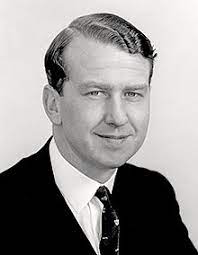
  • Peter Walker – 1967 Speech on the Government’s Transport Policy

    Peter Walker – 1967 Speech on the Government’s Transport Policy

    The speech made by Peter Walker, the then Conservative MP for Worcester, in the House of Commons on 6 November 1967.

    I beg to move, at the end of the Question, to add: but humbly regret that the Gracious Speech contains proposals to nationalise further large sections of the transport industry instead of concentrating on practical measures to improve conditions for the travelling public and for industry. I am sure the House regrets that this debate is taking place under the shadow of a major railway disaster. I assure the House that any criticisms of the management or policies of British Railways are in no way connected with the railway’s safety record, which has been outstanding over the years, or the diligence with which our railwaymen apply themselves to seeing that railway travel is safe and secure.
    Last week’s by-election results are perhaps a reflection on the fact that the Government’s performance contrasts vividly with their plans. If the plans which have been published week by week, and month by month, had been fulfilled, or even started to be fulfilled, the Government’s popularity would be very much higher, but instead we have had a long series of plans contrasting vividly with performance, and this is particularly true of transport.

    An examination of the various forms of transport shows that in every sphere Government policies are hindering progress. In aviation one finds that B.E.A.’s future is in jeopardy as a result of the constant delay and indecision of the Government on replacing the present B.E.A. fleet. If one considers future developments in aviation, internal air services, the development of freight air services, and the indecision, and probably wrong decision, on matters such as Stansted, one sees aviation once again being affected by the Government. It is remarkable that this industry, which could perhaps best be quoted as an industry of the future, is completely and utterly without investment grants as a result of the Government’s policies.

    When one considers shipping, and ports and docks, one sees that only last week the Confederation of British Industry and the British Shippers’ Council gave their verdict on the Government’s policy. Their verdict is summarised in a statement issued last Wednesday or Thursday: To face the industry with an administrative revolution when it is already grappling with great changes would surely reduce operating efficiency, retard evolution, increase costs, and thus, by raising the price of exports, damage the economy. No case has been made for fundamental change now or in the future. The Minister’s proposals establish no reasoned case for a further change of ownership or control. On the railways, we see a fast increasing deficit, obviously completely out of the Minister’s control. Indeed, it was the Minister herself who said in reply to a Question on 25th January of this year, at col. 1471 that the railway deficit this year would be £130 million, but we were told in a debate in another place that the figure was now likely to be £150 million. Labour relations on the railways have never been worse than they are at the moment, and the position of top management is in complete chaos.

    One of the most fundamental needs is an improvement in the road building programme, but we see the Minister complacently going up and down the country boasting that at the moment expenditure on road building is higher than it has ever been in our history. This is a boast which every Minister of Transport has been able to make every year since 1950, but the real test of the Minister’s performance—and that of the Government—is to see how the right hon. Lady has carried out the road building programme which she inherited.

    The programme was laid down in great detail in July 1964. It proposed Government expenditure of £1,200 million on road building in the years 1965 to 1970. The party opposite said that it was an electioneering offer, and something to entice the voters. Indeed, the right hon. Member for Vauxhall (Mr. Strauss), who at that time was the shadow Minister of Transport, stated categorically in the Press and in speeches that the programme announced by the Tories for the period 1965–70 was too little and too late.

    Let us examine what has happened to the programme which the present Government described as too little and too late. We can establish the exact figures because my right hon. Friend the Member for Barnet (Mr. Maudling) published a White Paper setting out the Government’s investment programme for 1967–68. He said that in that year at 1963 prices, £470 million would be spent by the Government and local authorities on roads in this country. Adjusted to 1963 prices, it would be necessary to spend £53 million this year to fulfil the promise which hon. Gentlemen opposite described as too little and too late. This year the Government and local authorities will spend £450 million on the roads, so this year alone they will spend £81 million less than that set out in a programme which they described as too little and too late.

    The Government have stated categorically that in the period 1965–70—this information was given in reply to a Question—they will spend £1,100 million. This is £100 million less than the sum laid down in the programme which they described as too little and too late, and during this period the motorist has had an extremely bad deal. Comparing this year’s figures with those for 1964–65, one sees that this year the Government will spend £70 million more on roads, but from the owners of motor cars they will get an extra £350 million in increased petrol tax, in increased Purchase Tax, and in increased motor vehicle licences. Thus, for every £1 extra which they are spending on reads they are taking an extra £5 from the motorist. This is the Government’s record for the motorist and the roads.

    The Government’s record on the railways, in aviation, in shipping, and in the road programme is bad, and what do they offer for the future? They have put forward a programme—which received enthusiastic support at the Labour Party conference as a good Socialist one for tackling transport problems—substantially to increase the nationalisation of public transport.

    First, I turn to the proposals for passenger transport authorities. These proposals have no friends. Local authorities do not like them; industry does not like them, and the bus industry in particular does not like them. Everybody is opposed to them. The Minister says that this is not nationalisation, and describes me as illiterate for speaking of it as such. She claims that it is local ownership and not nationalisation. The only real ownership which will be given locally is the ownership of losses.

    How can the Minister claim that these P.T.A.s will have local control? Let us consider some of the features of the proposal. These authorities will be very much in the hands of the Minister of Transport. First, the Minister will designate the boundaries of the P.T.A.s, and she has specifically stated that not only will she designate them but will allow no form of public inquiry into them, and there will be no appeal from her decisions. So much for local control of the boundaries.

    Secondly, local control will consist of immediately confiscating the assets of all municipal bus companies—a very odd and peculiar way of giving local control—and doing away with local bus companies.

    Thirdly, there will be considerable investment control in the hands of the Minister. Grants will depend on her being satisfied with the way P.T.A.s are run. Then, the Minister will have nominees on the boards of the P.T.A.s. Her first suggestion was that one-third of the representatives should be appointed by the Ministry of Transport and that the chairmen should also be so appointed. We are pleased to know that as a result of considerable criticism and pressure she has reduced her demands for representation, and the chairmen will now be appointed by the P.T.A.s. But let us remember that even if, for example, her representatives consisted only of 20 per cent. of the Board, this would be 20 per cent. more than the representation on the boards which are now running local government transport. Also, if, in a public transport authority area, 60 per cent. of the authorities were Tory-controlled and 40 per cent. Labour-controlled, with the Minister’s nominees and the Labour-controlled representatives the Minister’s nominees would have a majority on the P.T.A. Under the P.T.A.s, many major boroughs will have no appeal on the question of fares or timetables.

    There is much evidence that there is no great advantage in size, in respect of bus operations; indeed, the public will vouch for the fact that the bigger the size the less efficient is the bus company, the more inferior its labour relations, and the less direct contact it has with the public.

    It is becoming more and more clear that all the local authorities in the major conurbations and elsewhere are becoming bitterly opposed to this project. The Minister will say that this is due to briefing and interference on the part of the Conservative Central Office and the leaders of Tory councils, but she should remember that last May the people of this country overwhelmingly voted Tories to their local councils, and they did not vote for them to give back into public ownership private and municipal bus companies.

    But not only Tory councils are opposed to this scheme. One of the Minister’s civil servants—a person who is particularly responsible for P.T.A.s.; a Mr. Locke—spoke to municipal operators, and if he reported accurately to the Minister he will have told her that local authorities are passionately opposed to her proposals. At the M.P.T.A. conference five Labour chairmen of local authority transport committees spoke in the debate upon the P.T.A. proposals. Every one was opposed to those proposals. Perhaps their objections were most appropriately put by Councillor Williams, chairman at St. Helens, who said: It would be a voice in the wilderness. I am second to none as a supporter of the Labour party, but this is not one of the things they ought to be doing. Another opinion—and I am sure the Minister will appreciate this, as she represents a Lancashire division—was expressed by Alderman Walsh, vice-chairman at Bolton, who said that the whole programme could only be called a load of codswallop. It is understandable that local authorities should be strongly opposed to P.T.As. First, the ratepayers will have to bear the service charges necessary to compensate for the taking over of privately owned bus companies. Secondly, they will lose their municipal assets. Thirdly, they will have to make a contribution to the deficit of passenger railway services in their areas. Fourthly, fares will increase as a result of the levelling up of wages and conditions of all those employed in bus companies which are taken into P.T.As.

    One of the proposals which will be greeted with great alarm is a clear undertaking that P.T.As. will have control over coaches and coach excursions going out of their areas. Many people travel by coach because of the cheap fares. To travel from Birmingham to London costs 34s. by coach, but £3 6s. by second-class railway fare. We can understand this Minister, for what she will describe as good transport planning, deciding that it is wrong to take this traffic from the railways and therefore placing considerable restrictions on coach services.

    Alternatives to this programme are quite clear. They are immediately to repeal some of the policies which the Government have pursued, which are directly opposed to the efficient running of our bus companies. It was this Government who took away investment allowances for buses and coaches, immediately resulting in increased fares. It is this Government who made bus companies create an interest-free overdraft for the Government, in the form of S.E.T., and it is this Government who are dragging their feet on trade union reform, which would help to bring single manning and do away with some of the overmanning which exists today.

    It is a remarkable thing that if there was one proposal which should have waited for the report of a Royal Commission it was the P.T.A. proposal, which should have waited for the report of the Royal Commission on Local Government. But the Government were determined to hasten through these proposals before the published. What a different attitude to their attitude on trade union reform. The creation of passenger transport authorities will result in considerable increases in road fares and a great loss of freedom of choice in terms of transport for the individual, and we shall oppose this proposal.

    The post-war history of the railways is that from the early 1950s, as people began to own more and more motor cars, and passengers turned from the railways to the roads, and as a great modernisation programme was required to change from steam to diesel electric, the railways ran into increasing deficits. It was then that a Conservative Government appointed Lord Beeching and a major reorganisation started to take place. The success of this was reflected in the last two years of Tory Government, when the railway deficit was reduced by £37 million. In the first three years of Labour Government it will have increased by over £30 million.

    Today we have had published a White Paper. I say that it has been published today but, like all Government documents, it was really published many weeks previously in the Press. It is remarkable that every major proposal in the White Paper appeared in The Times of 26th June. That newspaper’s transport correspondent described the proposals of the Joint Steering Group under the chairmanship of the Parliamentary Secretary. He described its conclusions in respect of subsidies for services of social importance; he described the recapitalisation of the railways and the writing off of a great deal of capital. He described in detail the proposals for reorganisation of the main board and the doing away with regional boards, and he went on to describe the special subsidies for bridges, level crossings and railway police.

    If that same correspondent wanted to summarise the Minister’s White Paper he could not do better than repeat his article of 26th June. This is a terrible reflection upon Her Majesty’s Government.

    One political correspondent suggests today that the right hon. Lady should become the next Foreign Secretary. On Press leaks, she puts Lord Chalfont completely in the shade, because every major proposal from the Ministry since she has been Minister has been leaked, in one way or another, beforehand. If these proposals were not leaked by the Ministry itself, the Ministry should have done something to give this House the White Paper, the details of which appeared in the Press in June, some time before November, a few hours before this debate. Instead, with the normal sense of priorities of this Government, the Press came first and Parliament came afterwards.

    The White Paper carries the report and recommendations of a very distinguished firm of accountants, Cooper Brothers, who have done a great deal of work, and of the steering group which contained a number of distinguished men from industry and the British Railways Board, and a distinguished professor of finance, under the chairmanship of the Parliamentary Secretary. The whole House will want to examine carefully its proposals, and we obviously have not had time to study some of the background facts and statistics; some of the figures, of course, are not available in the White Paper. But there are some questions which I should like to ask the Minister.

    First of all, she states in the White Paper, in rather strange wording; that, after consultation with British. Railways, the Government have decided to adopt the proposals. Do British Railways agree with the proposals? I know that they had representatives on the Steering Group, but it has been said that the Chairman and many of the Board disagree with the proposals. We should like to know whether this is true or whether it was purely consultation, without the Board fully supporting the proposals.

    One of the things which will dramatically affect British Railways is the Minister’s proposals for a National Freight Authority. This Steering Group contains the advice of one of the best firms of accountants in the world, with men of considerable ability who have looked in depth into the management and financial problems of British Railways. I therefore challenge the right hon. Lady to ask this same Steering Group, with all its knowledge, whether or not it is in favour of the creation of the National Freight Authority. If it is, that will give great support to her case. If it is not, it will show that her proposals are thoroughly irresponsible and against the future interests of British Railways. If the right hon. Lady declines that challenge to put that question fairly and straightly to the Steering Group, the country will realise why?

    The real problem for the railways is not the proposals in the Report, interesting though they are and correct as many probably are. It is easy to study and decide what should be done, but the test is implementing that study. Everything that has so far happened has given us absolutely no confidence in the Minister’s ability to bring this Report into being, because the essence is the attraction of top and good management. The railways today have labour relations problems, and a rising deficit, yet, for more than a week, 350,000 men employed by British Railways— an industry losing £150 million a year—have known that their chairman has been under notice to quit, but have had no idea who his replacement is to be. That is an appalling situation for any major industry.

    Also, almost every national newspaper reported that, in the middle of the most crucial negotiations with the unions, in which a major strike was a possibility, the chairman of British Railways was called out to be hold by the Minister that she was going to offer him another job. What a way to handle top management. If this did not happen, the Minister should immediately have issued a statement saying that it did not, instead of leaving this situation for a week.

    Everyone knows that the chairman has been offered another job but does not know his replacement. The vice-chairman has said that he will join a shipping company and has given notice to quit. Did the Minister tell Mr. Shirley that she would like him to go, after which he found another job, or did the reverse happen? As the Minister has constantly praised Mr. Shirley in the country for the wonderful way in which he has organised freight liner trains, why can she not provide him with the terms and conditions under which he could stay? Either he was important and successful, in which case it was her duty to see that he was kept or enticed to stay, or else he has been inefficient for some time, in which case she has been wrong to praise him all over the country. As well as the chairman and vice-chairman, Mr. Fiennes, one of the most creative thinkers of all the general managers of British Railways, has been sacked and has left the service.

    This is the position of top management in British Railways after the Minister has been in charge for a couple of years. She says in the White Paper that the real need is for stability of British Railways. What a lot of stability there is at present—an army without a general, a major industry not knowing exactly what will happen in terms of top management.

    Who will be attracted to take on the jobs of top management? What is this Minister’s record in this respect? Just look at the treatment of top management. First of all, the road construction units were created so that the county surveyors, who had been vocal critics of all Governments, would no longer have that same say. Then, Sir Alexander Samuels was removed from his position as road traffic adviser to the Minister because, as we knew, he was having a number of disagreements with her. Then, Sir Alfred Owen had views on the 70 m.p.h. speed limit and was removed from his position as chairman of the National Road Safety Advisory Council and replaced by the Parliamentary Secretary, Lord Rochdale, who was Chairman of the National Ports Council, opposed nationalisation and was in favour of developing Portbury, so he was given another job and replaced by someone from one of the nationalised boards. This is a complete record of any person who disagrees with the Minister being removed to another job.

    Who will take on the job of Chairman of British Railways, with this sort of background—[HON. MEMBERS: “George will.”]—when the Minister has already stated that the track will remain at 11,000 miles, no matter what the commercial considerations? The new chairman will immediately inherit that fixed position. She has also said that she will take away from British Railways its most expanding element, the freightliner trains, and give it to the National Freight Authority. So the new Chairman will be told. “You will have to keep the track as it is and I am taking away the best potential for the future, but, apart from that, you have every freedom and may get on with the job.” This is an impossible position for top management.

    Any top management coming into British Railways while the present Minister remains will, of course, remember her words at the Labour Party conference. When pressed to set up various organisations, she said: No, friends, when it comes to transport planning, I have got to be the overall authority. The real trouble is that any person working under this Minister knows that he will always be subject to considerable political interference.

    The other proposal which will be in the Government’s Bill, the National Freight Authority itself, also has no friends and no supporters in industry. No one in the railways supports it, either. There has been no pronouncement from the Railways Board or from the railway unions saying that it wants such an authority. Sir Donald Stokes, who would not be quoted as an enemy of the present Government, has made his position clear. He said: If we are going to have restrictions for Socialist doctrinaire reasons, it is absolutely crazy. He went on: … if they are going to restrict road transport, it is still worse, because in Great Britain we need above all a competitive transport system. This is the biggest machine tool of industry. Sir Donald Stokes has clearly stated his view, and so has the C.B.I.

    The proposal for a national freight authority is a proposal to allow the nationalised industries to take over a large section of the road haulage industry without compensation. Seventy thousand vehicles will be subject to new tribunals. How many bureaucrats will be employed on those tribunals? What sort of people will decide, and what criteria will those people use?

    The Minister has stated that licences will be taken away or refused only if it can be shown that the railways are faster, less expensive and more reliable. Those are the three criteria. Will all three have to apply or will it be a matter of balance? Who will judge the speed of British Rail? Will British Rail have to prepare a time-table? A lot of tribunals would not take much note of that. Who will decide whether the reliability will be better or worse? Is this to be based on promises? Who is to decide on cost in its relationship with time?

    We on this side of the House have made our position quite clear. We believe that the best people to decide how best to send their goods are the customers themselves, and not some bureaucratic tribunal trying to decide for them. The position is that £150 million worth of assets belonging to private road hauliers are in jeopardy without any form of compensation.

    Let us just look at the handicap which the Government have put on those in the road haulage industry before they start: three increase in fuel tax, graduated pension contributions up, National Insurance contributions up, Selective Employment Tax, postage and telephone costs up, industrial training 1.6 per cent. up, road vehicles licences increased by 50 per cent. and investment allowances on road haulage vehicles completely taken away by this Government. The Minister has said that the N.F.A. would give the road haulage industry a good run for its money, and so I should think, with the handicap put on the road haulage industry before ever it starts.

    In every sphere of transport the performance is bad, and instead of the Government offering remedies for these performances they are embarking on a programme of public ownership of all our ports and docks, considerable ownership of the bus industry, interferences in the ancillary services such as taxis and coaches, and a considerable extension of the public section of long distance road haulage. We on this side believe that this will make no contribution to efficiency. It is yet another attack on free enterprise by a Government that by now should realise that they are doing great harm to the country by their constant attacks on free enterprise, and that they will bring about a considerable worsening, and not an improvement, of the nation’s transport system.

  • NEWS FROM 100 YEARS AGO : 26 January 1923

    NEWS FROM 100 YEARS AGO : 26 January 1923

    26 JANUARY 1923

    The German Railwaymen’s Union in Essen sent a strong message to the French Government telling it to withdraw from taking control of German services in the Ruhr Valley. They said that there were growing safety issues and ordered their workers not to support the French authorities in the occupied region.

    A general strike began of boatmen on the Rhine, causing a suspension of all freight traffic on the river.

    A committee appointed by the Bishop of London recommended demolishing a number of city churches that weren’t well used to raise more money by selling off the sites. Opponents of the idea complained that many of the churches were designed by Christopher Wren and had significant historic interest, with a decision to be made by the future Church of England Representative Assembly.

    Dublin authorities confirmed that they had executed two men in Waterford for illegally possessing ammunition and firearms. The two men, Michael Fitzgerald and Patrick O’Reilly, brought the number of people executed to 50 over the last three month period.

  • PRESS RELEASE : Thérèse Coffey – Farmers central to food production and environmental action [January 2023]

    PRESS RELEASE : Thérèse Coffey – Farmers central to food production and environmental action [January 2023]

    The press release issued by the Department for Environment, Food and Rural Affairs on 26 January 2023.

    The Secretary of State for Environment, Food and Rural Affairs has today (Thursday 26 January 2023) set out detailed plans for the nation’s farming sector, supporting farmers to be profitable and resilient as they produce food sustainably while protecting nature and enhancing the environment.

    The accelerated roll out of the Sustainable Farming Incentive – a key part of the Government’s Environmental Land Management schemes – will provide farmers with a diverse range of paid actions to manage hedgerows for wildlife, plant nectar-rich wildflowers and manage crop pests without the use of insecticides.

    These incentives will make food production more resilient and efficient over the longer term whilst contributing towards the UK’s environmental goals on carbon, biodiversity, water quality and net zero. Together this will safeguard the long-term prosperity of the farming industry and protect the environment for future generations.

    Environment Secretary Thérèse Coffey said:

    Farmers are at the heart of our economy – producing the food on our tables as well as being the custodians of the land it comes from.

    These two roles go hand-in-hand and we are speeding up the roll out of our farming schemes so that everyone can be financially supported as they protect the planet while producing food more sustainably.

    Environmental Land Management

    Six additional standards will be added to the Sustainable Farming Incentive this year, meaning farmers can receive payment for actions on hedgerows, grassland, arable and horticultural land, pest management and nutrient management. They build on the three existing standards to improve soil health and moorlands introduced in 2022 – which nearly 1,900 farmers already have in agreements.

    The Government has also detailed what farmers will be paid to deliver through an enhanced version of the Countryside Stewardship scheme, which will see around 30 additional actions available to farmers by the end of 2024. The expansion builds on the more than 250 actions farmers can take at present with the scheme seeing a 94% increase in uptake since 2020 and is now part of thousands of farm businesses. The next round of Countryside Stewardship Higher-Tier will open in February, with Mid-Tier following in March.

    Countryside Stewardship Plus will reward farmers for taking coordinated action, working with neighbouring farms and landowners to support climate and nature aims. It will deliver the same high environmental ambition previously planned for Local Nature Recovery, including managing floodplain meadows to reduce flood risk and improve biodiversity, restoring and maintaining peatland for carbon capture and storage, and enhancing and managing woodland to mitigate against drought and enhance its resilience to climate change.

    The scheme will also be improved so farmers benefit from greater flexibility over when they can apply and how they manage their agreements, with improved access for tenant farmers and increased access to Higher Tier options and agreements.

    Elsewhere, following high demand last year, Defra has confirmed it will open applications for the second round of the Landscape Recovery scheme in the spring to support ambitious large-scale nature recovery projects, focusing on net zero, protected sites and habitat creation. This could include projects creating and enhancing woodlands, peatland, nature reserves and protected sites such as ancient woodlands, wetlands and salt marshes.

    They involve groups of land managers and tenant farmers, working together to deliver a range of environmental benefits across farmed and rural landscapes. 22 projects began last year aiming to restore nearly 700km of rivers and protect and enhance 263 species.

    Today’s announcement provides clarity and certainty to farmers, allowing them to make business decisions and cover costs as direct payments are phased out whilst getting involved in Environmental Land Management schemes. The plans also deliver on the assurances provided by the Farming Minister earlier this month, during a speech at the Oxford Farming Conference announcing increased payment rates.

    Further details on the new standards and payment rates being rolled for the Sustainable Farming Incentive as well as information on the future roll out of Countryside Stewardship Plus from 2024 is available on gov.uk.

    Straightforward applications

    The Sustainable Farming Incentive has been made as straightforward as possible to apply online for with farmers giving positive feedback over the simplicity and speed of the application.

    The 2023 offer has been made as flexible and accessible as possible to enable farmers to get started in the scheme and start to deliver the outcomes for their business and the environment. These improvements are based on learnings from extensive pilots and feedback to make it simpler, clearer and more workable for farmers.

    Over time, it will continue to evolve so that it supports and incentivises farmers to deliver the right combinations of actions, at the right scale, in the right places and in a joined-up way with their neighbours. This will be essential for us to make the required progress towards our environment and climate targets alongside food production.

    Harry Baker Cresswell, an agent working with two arable farmers from Northumberland, said:

    I work with two holdings which are part of the SFI pilot, neither of which were in existing schemes.

    The application and payment experiences have been good to date, and the objectives of SFI for arable land have been clearly set out.

    SFI is different to previous Environmental Stewardships models in that the option-requirements are much less prescriptive. This is welcome, but does require a little steering to ensure objectives are met – something that Defra has recognised with its SFI Management Payment.

    This is a real step forward in the journey towards enthusing widespread participation in the ELM schemes.

    Kitty Hamilton, a mixed farmer from East Lincolnshire, said:

    The big positive of the SFI pilot is the flexibility, which we really like. We were able to retain habitats from previous schemes which we were really proud of. The pilot fits well with our current and planned farming methods, which means it’s gently nudging us towards a more regenerative system.

    The fact that we can layer the standards, and use all of the land on the estate, means that we can generate a good income. Generally I’ve enjoyed engaging with the learning activities, helping us to upskill professionally and personally within our organisation.

    Robin Milton, a livestock farmer from Exmoor, said:

    We’ve been on three standards to give the SFI pilot a trial run because we felt it would benefit our business.

    The application process was straight-forward and, although the guidance was lengthy, I learned quite a bit and we ended up doing more than we needed to – which isn’t a bad thing.

    Taken together the Environmental Land Management schemes mean there is something on offer for every type of farmer.

    For tenant farmers there is range of actions relevant to their holding, especially through the Sustainable Farming Incentive which has been designed with them in mind. Shorter three-year agreements have been introduced with no landlord consent required meaning the risk of entering an environmental scheme has been reduced considerably. There are also no penalties in the event a farmer leaves the scheme early.

    Upland farmers can be paid for actions on moorland, grassland and upland peat with over 100 actions in all schemes applicable to them.  From this year, farmers in existing Higher Level Stewardship agreements will be able to expand their activities and increase their payments by having a Countryside Stewardship agreement as well.

    The 2019 manifesto commitment maintains the annual farming budget of £2.4 billion until the end of this Parliament, with all reductions from farmers’ direct payments reinvested back into the sector. All three Environmental Land Management schemes are accessible to farmers with the budget managed flexibly so that we can achieve the best value for money and deliver the intended outcomes in ways that best suit farmers and land managers.

  • PRESS RELEASE : British Embassy Washington Welcomes New Defence Attaché, Rear Admiral Tim Woods [January 2023]

    PRESS RELEASE : British Embassy Washington Welcomes New Defence Attaché, Rear Admiral Tim Woods [January 2023]

    The press release issued by the Foreign Office on 25 January 2023.

    Rear Admiral Tim Woods has joined British Embassy Washington as its new Defence Attaché. He will lead the UK’s extensive military engagement and partnerships across all branches of the United States military.

    Rear Admiral Woods joins the team in Washington from Kyiv, Ukraine where he was the British Defence Attaché – at the frontline of the UK’s support to the Ukrainian military. In Kyiv he also served as Head of the British Defence Staff in Eastern Europe, commanding all Defence Attaches across Belarus, Moldova, Georgia, Armenia, Azerbaijan and Ukraine at a defining moment in European security.

    He brings more than three decades’ experience both on land and at sea. Previous roles have included active duty in Afghanistan, deployments to the Far East, submarine patrols, secondments to NATO, the UK Ministry of Defence and the National Security Secretariat.

    Rear Admiral Woods joined the Royal Navy in 1988 after training at Britannia Royal Naval College in Dartmouth, south west England, and at sea. He is a graduate of the prestigious Royal College of Defence Studies, where he was awarded the Wellington Prize for Strategic Analysis.

    Commenting on the appointment, His Majesty’s Ambassador to the United States of America Dame Karen Pierce said:

    I am delighted to welcome Rear Admiral Tim Woods to the British Embassy. The UK’s military-to-military links with the US form part of the bedrock of the Special Relationship and have protected our citizens for decades. Tim’s extensive experience in Ukraine, NATO and with US forces will be a huge asset at this critical time, as we work with the US to support Ukraine.

    The Rear Admiral said he was relishing his new role at the heart of the UK-US defence relationship:

    I have worked closely with our American colleagues throughout my military career and have seen the strength of the relationship – the UK’s most important single bilateral partnership – at first hand.

    I am thrilled to have moved to such an exciting and welcoming country, and am looking forward to meeting US decision makers to ensure our hand-in-glove relationship remains very focussed on the range of pressing defence and security threats. I also look forward to travelling throughout the various states over the next three years, and seeing our defence collaboration in action across America.

    Rear Admiral Woods takes over the role of UK Defence Attaché at the British Embassy from Air Vice-Marshal Mick Smeath who will become Director of the Global Defence Network, the head of UK Defence Attachés worldwide.

  • PRESS RELEASE : The UK urges the Sudanese authorities to enhance their cooperation with the International Criminal Court – UK Statement at the UN Security Council [January 2023]

    PRESS RELEASE : The UK urges the Sudanese authorities to enhance their cooperation with the International Criminal Court – UK Statement at the UN Security Council [January 2023]

    The press release issued by the Foreign Office on 25 January 2023.

    Statement by Chanaka Wickremasinghe, UK Legal Adviser, at the Security Council briefing by the Prosecutor of the International Criminal Court on Darfur.

    President, I thank the Prosecutor for the thirty-sixth report on the Situation in Darfur, pursuant to Resolution 1593 and for his presentation today.

    We welcome the swift progress made in the trial of Mr Abd-Al-Rahman as a historic step towards seeking accountability for survivors and affected communities in Darfur after many years. In this light, the UK would like to commend the ICC’s tireless commitment for more than 17 years to help deliver justice for the people of Darfur.

    The trial of Mr Abd-Al-Rahman has enabled victims and witnesses to courageously tell their stories and to demonstrate to other victims that justice can be delivered. Such progress is an example of how strong cooperation with the ICC can translate into meaningful action.

    It is therefore deeply disappointing that sufficient cooperation has been lacking from the Sudanese authorities, despite their reassurances to the Chief Prosecutor during his visits to Sudan.

    Stronger engagement would demonstrate that the Sudanese authorities are serious about delivering their commitments on transitional justice, as outlined in the 2020 Juba Peace Agreement and the initial Framework Agreement signed 5th December 2022.

    The UK urges the Sudanese authorities to immediately enhance their cooperation with the Court, in three areas in particular:
    Firstly, we call on the Sudanese authorities to provide prompt access to Sudan, including unimpeded access to documentary archives and witnesses relevant to the Court’s investigations.

    Secondly, a permanent presence is vital for the Office of the Prosecutor to  deepen its engagement with affected communities. We therefore urge the Sudanese authorities to help facilitate the establishment of a field office in Khartoum, and to remove the unnecessary bureaucratic impediments preventing Court staff from being granted multiple-entry visas to Sudan and to give access to ICC staff to Darfur.

    Thirdly, the UK calls on the Sudanese authorities to respond swiftly to the Court’s outstanding requests for assistance, noting that 34 requests currently remain outstanding, with no responses received in the current reporting period.
    Finally, Mr President, we welcome and encourage the continuation of cooperation between the Court and third States, which has proved vital, particularly in the absence of sufficient cooperation from the Sudanese authorities.

    The UK would like to reiterate our support to the Court in delivering justice for the people of Darfur. In this respect, we call for action to deliver on the four ICC warrants which remain outstanding in the Darfur situation, and we continue to call for the surrender of Mr Banda, who remains a fugitive from justice.

    Thank you.