Blog

  • PRESS RELEASE : Chancellor sets out long-term vision to grow the economy [January 2023]

    PRESS RELEASE : Chancellor sets out long-term vision to grow the economy [January 2023]

    The press release issued by HM Treasury on 27 January 2023.

    Chancellor Jeremy Hunt today set out his vision for long-term prosperity in the UK, calling on businesses in key growth areas to invest in the UK and expressing his desire to make the UK an attractive site for innovators and entrepreneurs.

    Chancellor Jeremy Hunt called on businesses to invest in the UK and promised long-term thinking to make the UK the next Silicon Valley

    – he outlined a vision to drive for growth as one of the government’s five priorities – doing so by encouraging enterprise, tackling poor productivity, and getting more people into better paid jobs right across the country

    – digital technology, green industries and life sciences among those identified as growth sectors that can help realise a more innovative economy

    Speaking at Bloomberg’s European headquarters in London, the Chancellor opened his speech on the economy by highlighting one of the UK’s major growth sectors – technology – before revealing that the opening section of his speech had been written by ChatGPT, the AI software that was released late last year.

    Getting the economy growing faster is one of the government’s five priorities, as set out in Prime Minister Rishi Sunak’s New Year address. Mr Hunt outlined how he intends to deliver upon that over the coming years, ahead of the Spring Budget due on 15th March.

    The Chancellor Jeremy Hunt said:

    “Our plan for this year remains to halve inflation, grow the economy and get debt falling.

    “But all three are essential building blocks for much bigger ambitions for the years beyond.

    “World-beating enterprises to make Britain the world’s next Silicon Valley.

    “An education system where world-class skills sit alongside world-class degrees.

    “Employment opportunities that tap into the potential of every single person so businesses can build the motivated teams they need.

    “And opportunities spread everywhere just as our talent is spread everywhere.”

    The Chancellor went on to call on businesses in the key growth sectors of Digital Technology, Green Industries, Life Sciences, Advanced Manufacturing and Creative Industries to increase their investment in the UK, with the Chief Scientific Adviser Sir Patrick Vallance already leading work on how we should change regulation to better support safe and fast introduction of new emerging technologies.

    The Chancellor added:

    “If anyone is thinking of starting or investing in an innovation or technology-centred business, I want them to do it in the UK. I want the world’s tech entrepreneurs, life science innovators, and clean energy companies to come to the UK because it offers the best possible place to make their vision happen.

    “And if you do, we will put at your service not just British ingenuity – but British universities to fuel your innovation, Britain’s financial sector to fund it and a British government that will back you to the hilt.”

    Digital Secretary Michelle Donelan said:

    “I believe that Britain is uniquely placed in the world to become the number one home for tech – one where entrepreneurs have both the stability, but also the freedom, to invest and innovate.

    “We have a clear vision for where this country is going, and a government that is prepared to match that ambition with action. That’s why this year we’re bringing forward new laws to transform digital markets, free up businesses to innovate with data, and set out our strategy for globally important semiconductors.”

    Business Secretary Grant Shapps said:

    “We stand at the cusp of a new age, facing a technological revolution that will transform the world as deeply as the industrial revolution did in the nineteenth century.

    “The UK has an opportunity to be at the forefront of this revolution, building upon our world-class research infrastructure and open markets to scale up the business titans of the future here in Britain, in everything from AI to quantum, from robotics to biotechnology.”

    The Chancellor set out his aim to increase enterprise, supporting businesses by using our new-found Brexit freedoms to review regulations in key growth sectors to make it easier for companies to innovate, alongside the importance of competitive business taxation.

    He reiterated the importance of employment and tackling economic inactivity, helping more people into work and filling the vacancies in the jobs market. He also outlined ambitions to help more disabled people and those with mental illnesses into work, and a pensions system that encourages continued workforce participation. The Work and Pensions Secretary is thoroughly reviewing issues holding back workforce participation, with a report due to conclude shortly.

    The Prime Minister and the Chancellor have both placed enormous importance on education, with £2.3 billion of additional funding for 23-24 and 24-25 announced at the Autumn Statement and continued implementation of the government’s skills reforms. The government has already made progress with T-levels, boot camps and apprenticeships.

    And finally the aim of levelling up everywhere across the UK, ensuring that all areas feel the benefits of economic growth with empowered local areas and reducing the time it takes to build new infrastructure. Already the Levelling Up Fund has awarded £3.8 billion to projects across the UK and the UK Government is working to launch Freeports in every country in Britain, with several already operating in England and the locations of two having recently been announced in Scotland.

    The Secretary of State for BEIS Grant Shapps and Secretary of State for Culture Media and Sport also delivered keynote speeches at the event.

  • PRESS RELEASE : Political prisoners in Belarus – UK statement to the OSCE [January 2023]

    PRESS RELEASE : Political prisoners in Belarus – UK statement to the OSCE [January 2023]

    The press release issued by the Foreign Office on 27 January 2023.

    Deputy Ambassador Deirdre Brown joins others at the OSCE in calling for the immediate and unconditional release of all political prisoners in Belarus.

    Mr Chair, the Lukashenko regime continues to enact harsh repression against its own people. In Belarus, individuals exercising their human rights are systematically detained, abused, and subjected to intimidation and harassment. Civil society organisations face an unprecedented struggle for survival and at the last count there are as of today, 1,444 political prisoners in Belarus and 2,350 people have been declared “extremist”. Last year Lukashenko’s regime made at least 1,200 political convictions on criminal charges. 215 printed media outlets were shut, and since 2020 more than 1,000 NGOs have been liquidated.

    2023 has already seen this continue. Even as this session takes place, numerous high-profile politically motivated trials are happening in Belarus. Nobel Peace Laureate Ales Bialiatski and two other members of human rights NGO Viasna are being prosecuted on trumped-up charges of smuggling and “financing group actions that violate public order.” On the first day of this trial the defendants were handcuffed and locked in a cage.

    The trial of Svetlana Tikhanovksaya and other well-known opposition figures for treason began in absentia last week, with an empty cage representing her and fellow defendants. Svetlana was forced to flee the country in 2020, has stated that “in Belarus there are no honest trials.”

    Independent journalists also cannot escape the long arm of the Lukashenko regime. Read by more than 60% of the population in 2019, Tut.by was the largest independent media group in Belarus. Former chief editor, Maryna Zolatava, and director-general, Lyudmila Chekina, are currently facing trial on trumped-up charges, including threatening the national security of Belarus. But, independent journalism is not a crime.

    These are the names we know well, but many of the more than 1,400 currently in detention are ordinary Belarusians who are being brutally punished for protesting the fraudulent 2020 Presidential elections. Journalists, media actors, opposition figures, and human rights defenders sentenced for peacefully exercising their human rights and fundamental freedoms, those same rights underscored by our collective commitments – on freedom of expression and the freedom of peaceful assembly and association.

    We once again call for the immediate and unconditional release of all political prisoners in Belarus. Since the new year, the Belarusian authorities have already turned their attention to expanding their toolbox of repression. Lukashenko has signed new laws, allowing the regime to confiscate property of individuals or organisations who engage in “unfriendly activities” towards Belarus.

    The OSCE has been active in condemning the human rights situation in Belarus. In 2020, 17 States triggered the Moscow Mechanism, the report concluded that “massive and systematic” violations of human rights and fundamental freedoms had been committed by the Belarusian security forces.

    Mr Chair, have the Belarusian authorities, who have been given ample opportunities, responded to the recommendations in the report? No. The human rights situation in Belarus has only deteriorated. In November 2021, we then invoked the Vienna Mechanism, yet again there was no substantive response.

    We urge the Belarusian authorities to fully implement their international obligations and OSCE commitments, and to make use of the OSCE’s tools and mechanisms to help resolve the continuing human rights crisis in Belarus.

    Finally, we commend the tireless work of civil society organisations and human rights defenders in Belarus, despite the very real dangers they face in conducting their vital work.

    Thank you Mr Chair.

  • PRESS RELEASE : Teesside country park project to bring boost for wildlife [January 2023]

    PRESS RELEASE : Teesside country park project to bring boost for wildlife [January 2023]

    The press release issued by Environment Agency on 27 January 2023.

    Plans for a £1million project to restore wetland habitat, open up the river for fish and improve access at a Teesside country park will be on display next week.

    Residents are invited to find out more about the Billingham Beck Valley Country Park habitat restoration project, which will boost wildlife and biodiversity and support water quality improvements at Billingham Beck and Thorpe Beck.

    The £1million project, led by the Environment Agency in partnership with Stockton-on-Tees Borough Council and National Highways, will start later this year.

    It includes:

    • Partly removing an historic weir to open up 55km of river for migrating fish from the River Tees.
    • Woody debris dams and new shallow ditches to reconnect Billingham Beck to floodplains, restoring areas of wetland.
    • An upgraded network of footpaths and improved landscaping to enhance access and public enjoyments of the site and boost visitor numbers.
    • Improved vehicle access for easier maintenance of the new wetlands.

    Public events to find out more about the project will take place on:

    • Monday 30 January in Billingham Library from 3-6.30pm
    • Friday 3 February in Norton Library from 3-6.30pm

    The watercourses in this area have been historically modified with channels straightened and deepened and the introduction of culverts and a weir, with the loss of wetland habitat having an adverse effect on the ecology and restricting fish movement.

    Much-needed boost to biodiversity

    Joe Reed, Project Manager for the Environment Agency, said:

    This exciting project will bring a much-needed boost to biodiversity after decades of modification saw precious habitat lost.

    Working with our partners, we’re creating new wetlands, supporting fish migration and making it more accessible for the community and we’d encourage people to come along to the events to find out more.

    Councillor Mike Smith, Stockton-on-Tees Borough Council’s Cabinet Member for Environment and Transport, added:

    Last year we announced a ten-year Environmental Sustainability and Carbon Reduction Strategy – and it’s great to be working on this project alongside partners who share the same ambition to protect and enhance the environment, which is one of the key aims of the strategy.

    It’s very exciting to be involved in restoring the wetland at Billingham Beck Valley Country Park and I would certainly encourage anyone who wants to know more to come along to one of the upcoming drop-in engagement sessions.

    Most of the funding for the project has come from National Highways, which has approved £906,000 for feasibility, detailed design and implementation. The project has been aligned with its scheme to improve the A19 between Norton and Wynyard to create a better journey for drivers, ensuring it also provides benefits for the environment.

    National Highways Senior Project Manager Keith Bradley said:

    Our aim is that through our activities, there should be no loss of biodiversity. By working closely with the Environment Agency we have aimed to protect the landscape surrounding our roads, as well as wildlife and water quality.

    By funding the improvement of public access to this area we have also worked to develop a fantastic community green space as well as a tranquil rest area for users of the A19. We’re delighted that the community now has the chance to see these plans for themselves.

    The funding has been provided through National Highways’ Designated Funding programme. National Highways manages four designated funds, allocated by the Government, to deliver benefits above and beyond building, maintaining and operating England’s strategic roads.

  • Eric Pickles – 2023 Speech at Holocaust Memorial Day

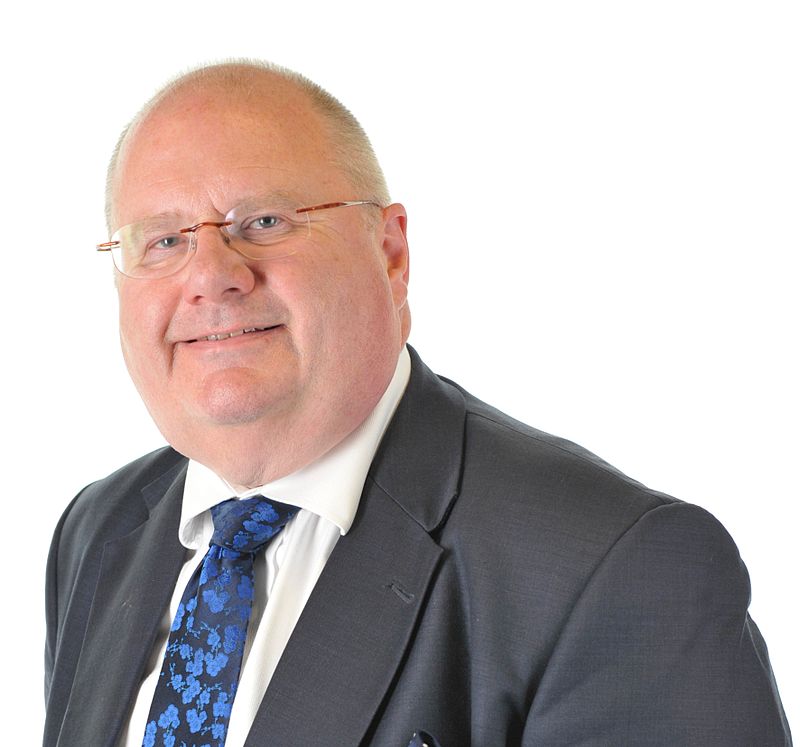
    Eric Pickles – 2023 Speech at Holocaust Memorial Day

    The speech made by Eric Pickles on 27 January 2023.

    A chilling fact about the Holocaust is that it could never have taken place without the willing participation of many millions of ‘ordinary people’.

    In Germany, many individuals who were not ardent Nazis nonetheless participated in varying degrees in the persecution and murder of Jews, the Roma, the disabled, homosexuals and political prisoners.

    There is no better example than the ordinary men of the Reserve Police Battalion 101. Five hundred policemen, most from Hamburg, most in their 30s and 40s – too old for conscription into the army.

    Men who, before the war, had been professional policemen, as well as businessmen, dockworkers, truck drivers, construction workers, machine operators, waiters, pharmacists, and teachers. Only a minority were members of the Nazi Party and only a few belonged to the SS.

    During their stay in Poland, these ordinary men participated in the shootings, or the transport to the Treblinka gas chambers, of at least 83,000 Jews.

    Ordinary people were witnesses; many cheered on the active participants in persecution and violence.

    Sadly, most, ordinary people remained silent.

    Responsibility for the Holocaust does not rest with the Nazi leadership alone.

    Responsibility for later genocides in Cambodia, Rwanda, Srebrenica, and Darfur does not rest solely on the leaders who incited hatred and violence.

    Ordinary people bear responsibility too. For some, that has meant responsibility for the most appalling crimes. For others, the responsibility of failing to act.

    Thankfully, there have also been ordinary men and women willing to stand against hatred.

    Ordinary men and women who often showed extraordinary bravery to save Jews.

    Their selfless acts demonstrate the best of us.

    The Holocaust and subsequent genocides show that ordinary people have choices. It is up to all of us to ensure that the choices we make today and tomorrow ensure a world without genocide.

  • PRESS RELEASE : The UK supports the expansion of the Security Council [January 2023]

    PRESS RELEASE : The UK supports the expansion of the Security Council [January 2023]

    The press release issued by the Foreign Office on 26 January 2023.

    Statement by Ambassador Richard Croker, at the Intergovernmental Negotiations on Security Council reform.

    Thank you Co-Chairs.

    On behalf of the United Kingdom I’d like to thank you for taking on the responsibility of co-chairing this session of the Intergovernmental Negotiations on Security Council reform.

    The UK recognises that the world is not the same today as it was in 1946 when the Security Council first met, or as it was in 1965 when it was last expanded. This is why the UK has long supported reform of the Security Council. This task is more relevant and important today than ever. At a time when the Charter itself is under threat following Putin’s unprovoked invasion of Ukraine it is incumbent on all of us to ensure the Security Council is able to uphold international peace and security. And to show that we are united in our commitment to the principle that no state should threaten or use force against the territorial integrity or political independence of another, as enshrined in the Charter.

    The UK believes that to fulfil its important mandate, the Security Council must be efficient, effective, and accountable. This is why the UK was proud to co-sponsor the initiative led by Liechtenstein last year to bring greater scrutiny to the use of the veto in the Security Council. And it is why we approach the task of Security Council reform seriously. Although we recognise its inherent challenges, we believe momentum for change is building around the UN, and hope that all Member States will approach these negotiations with flexibility and the intent to make progress.

    We remain convinced that a move to text-based negotiations in a fixed timeframe could help us to make meaningful progress on our collective task. I would like to reiterate the UK’s longstanding position – as articulated recently by Foreign Secretary James Cleverly: the UK supports the permanent membership of Brazil, Germany, India, and Japan; permanent African representation; and the further expansion of the non-permanent category towards a total membership in the mid-20s.

    Our position is grounded on the core principles of the UN Charter: that the Council should represent the world whose peace and security it seeks to protect and should draw on diverse perspectives and expertise. And that Council members are willing and able to contribute to the maintenance of international peace and security. On the question of regional representation, we are also clear that the Council acts on behalf of the whole membership and therefore we remain clear that States are elected to the Council, by the General Assembly, in their own right. We note that this is reflected in the Co-Chairs Elements Paper of 2022.

    Thank you, co-chairs for convening this meeting. We look forward to discussions in the coming months as a further step towards securing a Security Council that is fit for purpose for the twenty first century.

  • PRESS RELEASE : The ‘New Agenda for Peace’ is an opportunity to put prevention centre and to save lives down the line – UK Statement at the UN Security Council [January 2023]

    PRESS RELEASE : The ‘New Agenda for Peace’ is an opportunity to put prevention centre and to save lives down the line – UK Statement at the UN Security Council [January 2023]

    The press release issued by the Foreign Office on 26 January 2023.

    Statement by Ambassador James Kariuki at the Security Council Open Debate on Peacebuilding and Sustaining Peace.

    Thank you, President. I am grateful to the Deputy Secretary-General, Peacebuilding Commission Chair, and Ms Ndiaye for their briefings.

    As we all know, the cost of conflict is unsustainable – both in terms of human suffering, and the resources available for peacekeeping and humanitarian aid. The ‘New Agenda for Peace’ is an opportunity to put prevention front and centre, to save lives and greater costs down the line.

    President, we understand that the concept of conflict prevention can raise sensitivities. But nationally-owned peacebuilding processes can bolster sovereignty and strengthen state resilience. This is at the heart of the Sustaining Peace framework articulated by the General Assembly in 2016 – which emphasises working with countries to meet their needs, shared responsibility and a whole-of-system approach. Fragilities are universal, and sustaining peace requires constant work in all countries.

    Working together, the UK sees potential for greater impact in three key areas.

    Firstly, we should support efforts to strengthen UN foresight capabilities to anticipate risks, and inform responses. We can better leverage data and technology to understand conflict risks, including in places where climate change is exacerbating those risks. And we can ensure the UN has the right mediation capacities, and wider networks, to help resolve conflicts before they escalate. Inclusive approaches and investing in women and youth peacebuilders is a priority, because we all know the evidence that this leads to results that are more durable.

    Secondly, the UN family – ourselves included – must fully implement the Sustaining Peace agenda. This includes empowered Resident Coordinators leading joined-up peacebuilding approaches to maximise the impact at country-level of development, diplomatic and other efforts. The UK has long invested in the Peacebuilding Fund, with its critical role in incentivising UN coherence and underpinning nationally-owned prevention strategies. But coherence can also be driven and modelled better in New York among all parts of the UN system, including the Agencies, Funds and Programmes.

    Finally, this Council can do more to support conflict prevention by being aware of emerging risks, and working in cooperation with relevant UN bodies and regional organisations to drive integrated responses. The Peacebuilding Commission is also a critical part of this equation – both in its own right, and through its advisory role to the Council. The United Kingdom strongly supports a more active role for the Commission. South Sudan’s active engagement is a welcome development and further example of the increasing interest in peacebuilding support.

    President, the New Agenda for Peace is an opportunity to reinvigorate our shared commitment to sustaining peace. I welcome Japan’s initiative today to help move forward ideas. We all need to adapt to emerging threats and risk multipliers, investing in and prioritising prevention.

    Thank you.

  • PRESS RELEASE : Housing and Planning Minister visits Digital Planning partner council [January 2023]

    PRESS RELEASE : Housing and Planning Minister visits Digital Planning partner council [January 2023]

    The press release issued by the Department for Levelling Up, Housing and Communities on 26 January 2023.

    Lucy Frazer MP visited Buckinghamshire Council to see new digital planning services which are modernising the planning process.

    Housing and Planning Minister, Lucy Frazer, visited Buckinghamshire Council today (January 26), to see how DLUHC funding is being used to develop new Digital Planning services as part of the department’s Digital Planning Programme.

    The minister met with a range of representatives from across the council including members and council officers who have been involved in the DLUHC funded Open Digital Planning (ODP) Project. The project brings together pioneering councils with digital agencies to co-design, build, test and launch more efficient software for planning.

    Together with Lambeth and Southwark Councils, Buckinghamshire was one of the first local authorities to launch new digital planning services in 2022. Two of the new services which will help make the planning process easier for people applying were demonstrated to Minister Frazer during the visit.

    The “Find Out If You Need Planning Permission” guidance service and “Apply for a Lawful Development Certificate” application service use plain English questions and visual guides to streamline the planning process for residents. The services allow users to quickly understand which permitted development rights exist on a property, submit proposals where planning permission is unlikely to be needed and apply for the documentation needed to prove a planning project is lawful.

    Minister Frazer was also shown Buckinghamshire’s new Back Office Planning System (BOPS). This back-end case-management system for local authorities allows planning officers to reach planning decisions quickly by clearly indicating whether the application meets pre-programmed criteria. It also enables direct communications between planning officers and applicants.

    Housing and Planning Minister, Lucy Frazer said:

    It was fantastic to hear about the work going on in Buckinghamshire in the Digital Planning space. We want to ensure the public are better connected to the planning issues and decisions that affect them whilst also supporting councils to develop cutting edge services which will save them time and money.

    These new digital services will modernise the planning system, speeding up applications and help us to deliver our levelling up mission.

    Councillor Martin Tett, Leader of Buckinghamshire Council said:

    We’re proud to be working with government to pilot new prototype software which will streamline and simplify the planning process for applicants and the council alike – and we’ve been delighted to welcome the Minister to Buckinghamshire today so show her this software in action.

    As a new council, we’re proud to be at the forefront of developing and trialling new ways of working for councils that ultimately bring big benefits to our residents.

    Work to improve the software used to process planning applications is only one part of DLUHC’s Digital Planning programme which is using digital tools and data to improve the current planning system, saving time and money for people and Local Planning Authorities (LPAs).

    Other areas of the programme include:

    • Developing new legislation as part of the Levelling Up and Regeneration Bill, to support our ambitions to create a data-driven planning system.
    • The development of the Planning.Data.gov.uk platform which makes land and housing data openly available on a national scale.
    • The delivery of a faster, more efficient local plan-making process, and
    • Accelerating the adoption of digital engagement tools to increase the quantity and quality of engagement through the planning process, through our PropTech Engagement Fund.

    You can find out more about the DLUHC Digital Planning Programme on the DLUHC Digital Blog.

  • PRESS RELEASE : UK firms up support for Georgia in annual Wardrop Dialogue [January 2023]

    PRESS RELEASE : UK firms up support for Georgia in annual Wardrop Dialogue [January 2023]

    The press release issued by the Foreign Office on 26 January 2023.

    Foreign Secretary James Cleverly hosted Georgian Foreign Minister Ilia Darchiashvili in London for the annual UK-Georgia Strategic Dialogue.

    • Foreign Secretary underlines UK’s unwavering support for Georgia’s sovereignty and territorial integrity during high-level talks with Georgian counterpart
    • combatting hybrid threats from Russia, strengthening support for Ukraine and supporting Georgia’s Euro-Atlantic aspirations were top of the agenda

    The UK reiterated its commitment to the security and stability of Georgia today as the country faces increasing Russian aggression.

    Known as the ‘Wardrop Dialogue’, UK Foreign Secretary James Cleverly hosted Georgia’s Foreign Minister Ilia Darchiashvili at Lancaster House in London (Thursday 26 January) for the eighth annual UK-Georgia Strategic Dialogue, telling Minister Darchiashvili that the UK would stand by Georgia for the long term.

    The Foreign Secretary used the meeting to underline the UK’s unwavering support for Georgia’s sovereignty and territorial integrity, which continue to be challenged by Russian hybrid tactics since their 2008 war, including through ongoing construction of barbed wire fences along the Administrative Boundary lines with Abkhazia and South Ossetia.

    He also welcomed Georgia’s support in the fight against Putin’s illegal war of Ukraine by providing vital humanitarian aid, including providing power generators and supporting refugees forced to flee their homes.

    The Foreign Secretary recognised Russia’s invasion of Ukraine demonstrated the need to enhance and deepen cooperation with countries, including Georgia, that are particularly vulnerable to Russian aggression.

    He also set out the UK’s commitment to playing a leading role in supporting Georgia to strengthen resilience against hybrid threats. This bolsters the wide-ranging assistance the UK already provides to Georgia covering military cooperation, cyber security and counter-disinformation.

    During the meeting, the ministers agreed to increase cooperation on a range of priorities including combatting Putin’s aggression through continued collaboration on international sanctions and supporting Georgia’s aspirations for closer ties with NATO through the Tailored Support Package.

    UK Foreign Secretary James Cleverly said:

    Few understand the reality of Russian aggression better than the people of Georgia.

    Today I reiterated that the UK stands with our Georgian friends, and will continue our leading role in supporting them to counter hybrid threats they continue to face from Russia.

    As part of the dialogue, the foreign ministers also signed an agreement to enhance cooperation on readmissions.

  • PRESS RELEASE : Research agency supporting high risk, high reward research formally established [January 2023]

    PRESS RELEASE : Research agency supporting high risk, high reward research formally established [January 2023]

    The press release issued by the Department for Business, Energy and Industrial Strategy on 26 January 2023.

    Science Minister George Freeman today announces the formal establishment of the Advanced Research and Invention Agency (ARIA) as an independent body.

    • Advanced Research and Invention Agency (ARIA), a new independent research body to fund high-risk, high-reward scientific research, has formally launched
    • this coincides with appointment of 5 new members to the ARIA board, including Nobel Prize winning chemist Professor Sir David MacMillan
    • ARIA has been built to identify and fund transformational science and technology at speed

    Science Minister George Freeman has today (Thursday 26 January) announced the formal establishment of the Advanced Research and Invention Agency (ARIA) as an independent body, beginning its work to create transformational research programmes with the potential to create new technological capabilities for the benefit of humanity.

    ARIA has been designed with a unique level of freedom which puts trust in the decisions of experts in their field and empowers them to quickly allocate funding in support of their ambitious vision.

    It is a key part of the government’s plans to build a better future with innovation at the heart of growing the economy and improving lives.

    UK Science Minister George Freeman said:

    The UK has long been a leading light in scientific discovery research and pioneering technology: from the invention of the steam engine and discovery of DNA to the first computer and Formula 1 telemetry.

    As the global race for science and technology leadership heats up, we are committed to going further to cement our position as a Science Superpower: which is why we have committed to a record £39.8 billion public R&D budget in the Spending Review, alongside the creation of ARIA.

    Transformational discoveries come from world class scientists and labs with the freedom to explore the unknown. We have set up ARIA as an £800 million global super lab to do just that through frontier science and technology.

    ARIA CEO Dr. Ilan Gur said:

    I could not imagine a better board of directors to oversee ARIA’s formation. Guided by their experience and judgement, ARIA will make bold bets that leverage the strengths of the UK research system to drive world-changing breakthroughs.

    The appointments of Dr. Ilan Gur and Matt Clifford MBE last year, as ARIA’s founding CEO and Chair respectively, demonstrate the UK’s ability to attract global scientific and entrepreneurial talent as well as the continuing strength of our research base.

    Today also marks the announcement of 5 further board members, recently appointed to help ARIA realise its vision. Newly appointed Non-Executive Directors, joining the government Chief Scientific Advisor, Sir Patrick Vallance, are:

    • Stephen Cohen, a UK Civil Service Commissioner and a Commissioner for the Gambling Commission, who has over 40 years’ experience in asset management, in Asia, Europe and the USA
    • Professor Sir David MacMillan, a Nobel Prize winning organic chemist and the James S. McDonnell Distinguished University Professor of Chemistry at Princeton University
    • Sarah Hunter, public policy expert who has worked across Silicon Valley and London, who is the Global Director of Public Policy at X, the Moonshot Factory
    • Dame Kate Bingham (DBE), Managing Partner at SV Health Investors and former Chair of the UK Vaccine Taskforce

    Also appointed as an Executive Director is Antonia Jenkinson, who takes up post as Chief Financial and Operations Officer. Antonia joins from the UK Atomic Energy Authority (UKAEA), where she was Chief Financial Officer.

    This group brings together unique experience from across the science, technology and investment sectors, ensuring ARIA invests in the high-risk research that offers the best chance of high rewards, supporting ground-breaking discoveries that could transform people’s lives for the better.

    The creation of ARIA as an independent body will help to cement the UK’s position as a global science superpower, building on record funding for R&D announced by the Chancellor in his most recent Autumn Statement.

    ARIA was legally established yesterday (25 January), following a commencement order made in Parliament.

  • Stuart Andrew – 2023 Speech to the Pro Bono Economics’ Civil Society Unleashed Event

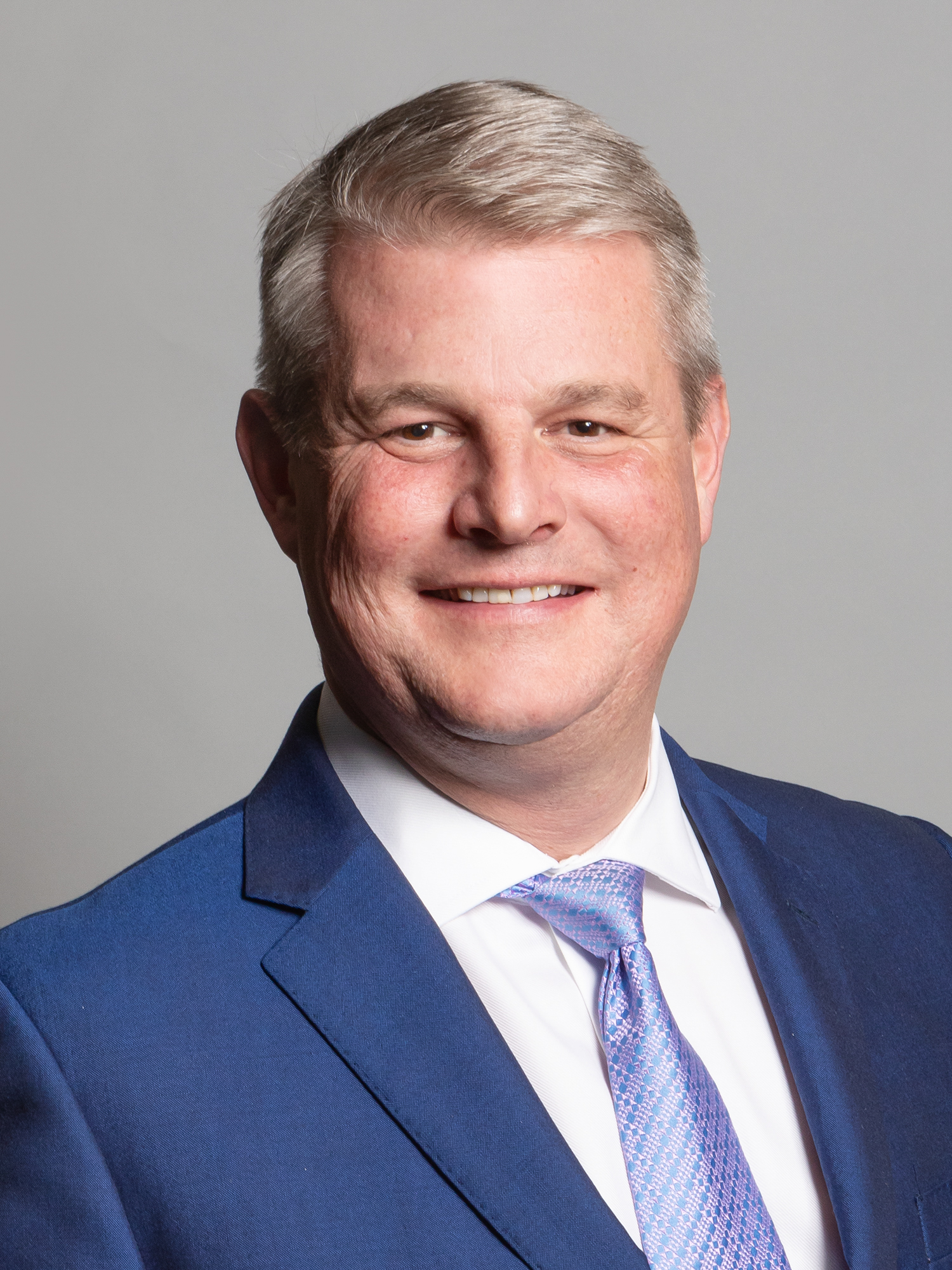
    Stuart Andrew – 2023 Speech to the Pro Bono Economics’ Civil Society Unleashed Event

    The speech made by Stuart Andrew, the Minister for Civil Society, on 26 January 2023.

    Thank you for the introduction, Gus and for inviting me to join you here today.

    It is fantastic to see so many of you here representing the huge variety of different sectors and perspectives, in recognition of the vital role that civil society plays in not just supporting communities, but helping them thrive.

    I am pleased to be celebrating the achievements of the Law Family Commission on Civil Society. Your final report concludes an ambitious programme of work seeking to understand the potential of civil society and how to unleash it.

    Thank you to everyone who has contributed over the course of this Commission.

    The wealth of knowledge generated will be fundamental to pushing forward our understanding of civil society and importantly, what more is needed to bolster it, especially after such a period of rapid change.

    I was delighted to take on responsibility for working with civil society as part of my portfolio last year although I’m equally excited to be the minister for the Eurovision song contest.

    As you just heard, my early career when some would say I had a proper job, was in the charitable sector.

    I worked for 16 years within the charitable sector working with national charities but also local charities, and hospices in particular, and I learnt a great deal through my time working for those organisations, not least seeing the benefits that donating gives not just to the individuals but certainly to many corporate organisations who saw their employees getting a great deal of benefit from working with our charities.

    And also many of the community organisations that I’ve been involved with, both before and since becoming a member of parliament, and seeing the enormous contributions that they have not just on their local community but the many benefits they bring to individuals whether through volunteering, benefitting their mental health and wellbeing but also in my other roles in tackling loneliness.

    The global pandemic, Putin’s war on Ukraine, and the cost of living have created significant impacts across the country. And civil society organisations are on the front line, helping individuals most in need.

    I’m aware that we are experiencing a challenging economic climate at the moment, and many in the sector are facing increased demand for their services. This is alongside them experiencing higher energy prices themselves.

    It is important that we acknowledge how challenging these times are. And that is why the government is supporting energy bills for all organisations until March this year.

    This report therefore comes at a critical time.

    There is a real opportunity to grasp these challenges facing civil society, and work together to ensure charitable organisations can thrive. And the government has a critical role to play in this journey.

    Whilst more time and discussion is needed on the recommendations themselves, I’m keen to briefly touch on some of the main themes of the report here today.

    Firstly, the report provides a call to action on philanthropy and giving. I know how generous the public are, even in this challenging economic environment. I know from my time in the hospices, when we had challenges like the Kosovo crisis, despite that challenge people were still generous to our organisation.

    This was evident in the £260 million that was raised for the Disasters Emergency Committee’s ‘Ukraine Humanitarian Appeal’, which the government contributed to. This clearly demonstrates the generosity of the nation, and how we are compelled to try and support those in need in any way we can.

    However, there is more to be done to bring our combined resources together to maximise our collective funding power.

    I look forward to continuing the conversation on philanthropy, and working with you to consider how we further encourage giving to charitable causes.

    Secondly, the Commission’s work also highlights the importance of improving data and evidence across the civil society sector.

    Better data helps the charitable sector to tell a richer story about the impact it has on communities. It will enable decision makers and funders to better understand the unique value civil society brings.

    As noted in this report, there have already been great strides in improving data from the charitable sector itself. And the Government is contributing to this change.

    For example, we have worked closely with the Charity Commission on their new charity classification and updated annual return. As noted in this report, these changes will help improve the coverage and accessibility of data collected.

    My department is also working with Pro Bono Economics on a feasibility study for a Civil Society Satellite Account, which will bring together data to help us better understand the economic value of the sector.

    But there is more to be done, and the Commission provides some thought provoking ideas for how the sector can develop better data infrastructure for the future.

    Thirdly, this report puts a spotlight on how greater investment in productivity will help civil society maximise its already considerable impact, and ensure resources are most effectively used.

    There are bold recommendations on how the sector, funders, regulators and the government can support this endeavour.

    I believe that a key part of this is for civil society organisations to be able to access the appropriate forms of finance they need to thrive.

    Evidence has shown, for example, that social investment has increased the long term financial sustainability of many organisations operating in the heart of communities. This has also leveraged private capital to ensure that this money is going further.

    In recent years, the government has provided support to the sector through helping to grow the social investment market, ensuring more community organisations can access appropriate forms of capital through a blended finance approach.

    We are also delivering change in this space by increasing civil society organisations’ delivery of public service contracts, thanks to the Contract Readiness Fund.

    The intersection of civil society, the private sector and the public sector can bring long lasting and meaningful change to productivity, and I look forward to working with many of you on this.

    Fourthly, the power and importance of collaboration across sectors is a key tenet of this report, and I am keen to see the government play a role in this. And you can have that personal commitment from me that I will invest my personal time and resources in this.

    Research from the Commission notes that almost all MPs and councillors surveyed have had contact with charities and community groups.

    MP’s from across the political spectrum see the impact charities have in their constituencies, and how vital they are to a flourishing community.

    DCMS wants to build on this by connecting civil society with key government priorities, bringing the diversity and expertise of the sector to the discussion.

    Over the last year, there have been some fantastic examples of civil society and the government collaborating.

    For example, my department worked with the Department for Levelling Up, Housing and Communities on the ‘Homes for Ukraine’ scheme. This was a great example of government departments and civil society organisations coming together to provide targeted support for those displaced by the war in Ukraine.

    More recently, the voluntary and community sector has led the creation of a  ‘Vision for Volunteering’, setting out an ambitious set of aims for volunteering in the ten years post-COVID.

    I am proud that DCMS is investing £600,000 into the next steps of the Vision, and we will continue to work together on the vision’s aim to make England a great place to volunteer.

    We will do more together when we continue to harness knowledge and share expertise.

    My department and I will continue to work to build bridges between the sector and the government, and ensure civil society representatives have a seat at tables across Whitehall.

    In conclusion, I want to thank everyone involved in producing these reports. Your vital work shines a light on the fantastic potential of the civil society sector, suggesting innovative solutions for a more sustainable future, and I look forward to working with you on this, because as I said earlier, my personal experience in the charity sector has shown me the enormous contribution they can make to improving so many people lives and making all of our communities a better place to live.

    Thank you again for inviting me here today.