Blog

  • Michael Kane – 2014 Speech after Winning Wythenshawe and Sale East By-Election

    Below is the text of the speech made by Michael Kane after winning the Wythenshawe and Sale East by-election on 13th February 2014.

    Tonight the people of Wythenshawe and Sale East have sent a very clear message – they want a government will to stand up for us all – a One Nation Labour government.

    It’s a result which emphatically demonstrates that people here know the NHS is not safe in David Cameron’s hands, and that we’ve had enough of his utterly out of touch government.

    But tonight we are thinking of those across the country affected by storms, by flooding and by the dreadful weather which we also experienced in Manchester on Wednesday.

    I will be an MP speaking out on the issues that matter to you:

    Fighting for a fair deal for Wythenshawe A&E.

    Exposing the cost-of-living crisis felt by families and pensioners across our area and beyond.

    And on the unfair and disproportionate cuts to local services – Wythenshawe and Sale has said tonight: enough is enough.

    This was the by-election nobody wanted.

    My dear friend Paul Goggins achieved so much for the people of Wythenshawe and Sale East, and their love and respect for him will be one of my abiding memories of the campaign.

    Paul’s legacy is matched by the legacy of my mentor and my inspiration Alf Morris, who championed the rights of the chronically sick and disabled.

    To be returned as MP for the area both Alf and Paul served so well, the constituency in which I’ve lived all my life, is a humbling moment for me.

    My message to you tonight, whether you voted for me, for one of my opponents, or you didn’t vote at all, is that I will represent everyone in this constituency and I will be your voice in Westminster.

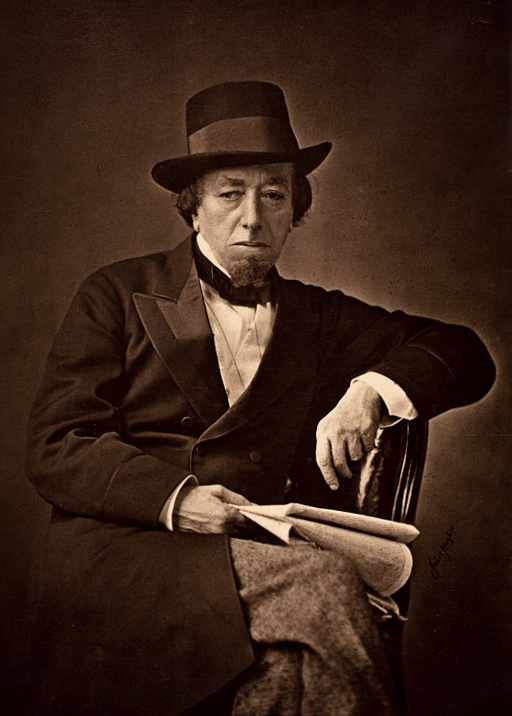
    Almost 200 years ago Benjamin Disraeli stood on a spot across the road from here and spoke of One Nation – and he said “What Manchester does today, the world does tomorrow”.

    Well, Manchester has rejected David Cameron today…and the rest of Britain will tomorrow.

    Today’s Tories have abandoned Disraeli’s principles.

    It’s the same old Tory attitude of “them and us” , and people here are sick of their constant attempts to divide our communities.

    But as Ed Miliband told Wythenshawe when he came here during the campaign: we are a party for everybody – uniting communities, building on the best of Britain … not pandering to the worst.

    That’s what One Nation Labour is all about.

    I want to thank the returning officer, Sir Howard Bernstein, the staff and the police who have all worked hard at the count tonight.

    And thank you to my opponents for what has been predominantly a robust but fair contest … I wish them a safe journey home.

    I’d like to thank my agent and all those who have worked so hard on my campaign, so often battling the elements…

    And I want to pay special tribute to my wife Sandra who has been at my side all the way and without whom I wouldn’t be here tonight.

    But most of all I’d like to thank the people of Wythenshawe and Sale East.

    They have rejected the failed policies of the out-of-touch Tories…

    They have rejected the isolationism and scaremongering of UKIP.

    Labour is proud of Wythenshawe and Sale, and this is the place I am proud to call my home.

    Today the people have said loud and clear: Labour is on your side.

    Thank you.

  • Jeremy Corbyn – 2003 Speech on George Bush

    jc-small

    Below is the text of the speech made by Jeremy Corbyn in November 2003.

    Tomorrow the streets of London will be filled with a cross-section of the entire community as we march from Malet Street to Trafalgar Square via Kingsway, Waterloo and culminating in a march along Whitehall. This itself is a product of weeks of negotiation with the Metropolitan Police, to try and protect the right of free speech and assembly in our capital city. Having been a party to all these talks I have always had the feeling that there were huge pressures being placed on the Police to try and prevent any access to London by anybody whilst Bush was visiting.

    Bush’s visit, the first state visit by a US President (as opposed to the lower status ‘Head of Government’ visits by Carter, Regan, Bush Snr and Clinton) is really bizarre for any observers of this scene. Refused an open procession in the State Landau with the Queen, Londoners will at least see a horse and carriage, with appropriate cycling outriders when the Stop the War Coalition put on this event later this morning.

    All visiting heads of state or Government visit the Palace of Westminster and make an address to an assembly of both Houses, and some even answer questions. President Mandela came twice and happily answered questions on one visit for over an hour; he led no one into war, showed the courage of the South African people to oppose, and defeat the vile apartheid system. His State visit was the most popular ever. Bush Jnr on the other hand has no history of ever standing up for anything, unless avoiding being drafted into a war which he claimed to support counts as principle.

    Since he is the centre of attention this week, and those of us who oppose his visit are being accused of “crude anti Americanism”, it is worth looking at his record.

    On Sunday evening I was privileged to meet Vietnam veteran Ron Kovic and introduce him to the audience at the Prince Charles Cinema in Leicester Square, and then watched the film with him. The film is really a journey of discovery of a young man growing up in a patriotic American household in the sixties. Convinced of his country’s rightness and opposition to the communist menace he joins the marines, and in his fervour, does two tours of duty. Almost killed and paralysed in 1968, he comes home to indifference and hostility and in time, becomes opposed to the brutality of the Vietnam War.

    Ever since that time Ron has devoted his life to opposing the military policies of the United States. On Monday morning he led a delegation to Downing Street to ask that Bush’s visit be cancelled.

    Tomorrow the march will be led by a group of United States citizens who are opposed to the war. Far from being anti-American, the peace movement has united the ordinary people on both sides of the Atlantic, in the cause of peace.

    George Bush, for the red carpet and £4 million worth of security and hospitality being spent, is the only US President to be elected by the Supreme Court, and as a result of the greatest ever expenditure, by Corporate America, on his campaign. Since then he has repaid with interest: tax cuts, welfare cuts, huge arms budgets, oil drilling and now contracts to rebuild Iraq to the same companies who provided the weapons to destroy it.

    Globally, his administration has opposed the Kyoto protocol, supported cruel World Trade Organisation conditions and methods, and continued dumping surplus US food on the poorest countries – destroying much sustainable agriculture.

    Post September 11th the US never took stock and looked at the world; war in Afghanistan followed; the Axis of Evil speech; and then the build up to Iraq. Afghanistan is presented as a victory, yet 8000 died and opium production is soaring, so it is hardly complete.

    In Iraq, the military ‘victory’ of May, and the premature celebrations have been brought to a halt, as the casualties mount, and the effects of cluster bombs and Depleted Uranium are felt by thousands of wholly innocent Iraqis and their children.

    Bush’s cabinet contains those who met and financed the Saddam Hussein section of the Ba’ath Party and they will be well aware of the problems that the unilateral and illegal war has created. Nobody who opposes the war ever supported the regime, but most people want to see a peaceful Iraq with an accountable Government.

    In his determination to go to war in Iraq, Bush flouted the UN, and now wants the world body to pick up the pieces, without any legal authority.

    Whilst the war in Iraq and Afghanistan gain all the publicity, we should not forget the on-going gruesome and grim conflict in Colombia, where the pro US Government is rapidly losing support as the US maintains its military presence on the pretence of being part of an anti drugs crusade.

    Whilst many issues unite the peace and anti-war movements in this country, the Government’s support for the Bush-inspired National Missile Defence system has mobilised many members and supporters of CND; we opposed the US inspired cruise missiles in the 1980’s; NMD is equally as dangerous to world peace.

    Amidst all the opposition to Bush we should reflect on one positive aspect: the world, as John Pilger reminds us, is divided into one superpower and world opinion. The unwanted visit of George Bush has helped to create a huge Trans Atlantic movement for peace and justice. Merely being allowed to hold the march tomorrow shows the strength of public opinion and the power of peaceful protest.

  • David Jones – 2014 Speech on Growth in Wales

    davidjones

    Below is the text of the speech made by David Jones, the Secretary of State for Wales, in Cardiff on 30th June 2014.

    It is generally recognised that there nothing more important for our nation’s long-term economic prosperity than investment in infrastructure.

    It is what gets people to work, facilitates communication and helps British businesses to compete in what is an increasingly globalised economy.

    I am pleased, therefore, to be here today to speak to you about what we in government are doing to ensure that Britain gets the infrastructure it needs to compete effectively in the global race.

    Our inheritance

    It is now just over 4 years since the coalition government came to power.

    Our inheritance here in Wales was an infrastructure that had been severely neglected, was in dire need of upgrade, and was inadequate to cope with modern demands.

    There was little plan for investment, not even on the main road route into South Wales – the M4 – despite general recognition that its improvement was desperately needed.

    Energy infrastructure was coming to the end of its operating life without any commitment on the investment required to replace it.

    Indeed, it is fair to say that for almost a decade under the last administration, Britain was without any coherent energy policy.

    Wales’s railway infrastructure was neglected, too.

    At the end of 13 years of the last government, Wales remained the only part of Europe, other than Albania, without a single centimetre of electrified railway track.

    And Wales also lagged well behind the rest of the UK in broadband provision. It was notorious for “not spots”.

    Mobile telephone coverage in large parts of Wales was, frankly, appalling.

    Not only did the last government fail to “fix the roof while the sun was shining”, it failed to fix the infrastructure, too.

    Wales was being expected to compete in a 21st century global economy when it was struggling with an obsolete, 20th century infrastructure network – it was an impossible ask. Wales – and Welsh businesses – deserve better.

    Long-term economic plan

    We know that investment in infrastructure is one of the driving factors of economic growth.

    And when we came to power we didn’t just inherit an infrastructure that was unfit for purpose; we inherited an economy that had suffered the worst economic downturn since the 1930s and a deficit that was the largest in peacetime history.

    We had to get the deficit down and to do so required difficult, and sometimes unpopular, decisions.

    But because of the difficult spending decisions we have taken, we have been able to prioritise public investment where it is needed most and to create the right conditions for private investment in infrastructure.

    Ensuring the United Kingdom has first class infrastructure is a crucial part of our long-term economic plan: supporting businesses, helping them create jobs, and offering the prospect of a brighter future for the British people.

    And – whisper it – our plan is working!

    Britain is now the fastest growing major economy in the West. There are more people going out to work than ever before, and confidence is returning.

    But, as any business man or woman here will recognise, getting banks to lend has sometimes proved problematic.

    So we have also used the strength of the national balance sheet to provide £40 billion of UK Guarantees to get infrastructure projects going, which otherwise would have stalled because of financial difficulties.

    So in this year alone, new projects worth an estimated £36 billion are due to start across the United Kingdom, helping creating thousands of jobs, securing future growth and delivering the world class infrastructure that the country – Wales included – deserves.

    Private sector

    Key to infrastructure investment is a confident private sector. And the private sector is indeed investing.

    Some 200 projects across the UK are due to be completed this year – including the Gwynt y Môr offshore wind farm, which is currently the largest in construction anywhere in Europe.

    But this has only been possible because we took the difficult decisions required.

    We know that the old model of the public sector funding our entire infrastructure network is not sustainable, nor is it desirable.

    We understand that unlocking and stimulating private sector investment is crucial.

    Because it is the private sector that will provide the majority of UK infrastructure investment between now and the end of the decade.

    Broadband

    But the government does have a significant enabling role.

    We have, for example, invested significantly in better broadband.

    We know that this investment will pay dividends; it is estimated that every £1 government invests delivers benefits of around £20 to the economy.

    In Wales, we have increased our support for broadband to almost £70 million to allow the Superfast Cymru programme to go even further.

    This is direct United Kingdom government funding for a programme managed by the Welsh Government under the guidance of Broadband Delivery UK – an excellent example of Wales’s two governments working positively together.

    But there is still more we need to do.

    Even with significant investment in the pipeline, there will still be parts of Wales in 2016 that will not be benefiting from high speed broadband.

    That is why earlier this year we announced that we are providing an additional £10 million for those areas which are the most “hard to reach.”

    This funding will allow market testing of solutions proffered by suppliers for the areas not covered by the superfast broadband rollout.

    Businesses in our super-connected cities of Cardiff and Newport can also now apply for vouchers to improve their broadband connectivity, which is vital for a modern business to compete and grow.

    And it’s not just in fixed broadband connection that we have plans to improve Wales’s digital connectivity.

    Our £150 million mobile infrastructure project will see masts going up across the country, significantly extending coverage across Wales.

    Transport

    And let us consider the issue of transport.

    Just as Wales needs to be better connected through our digital infrastructure, we need a transport network fit for a modern economy to prosper.

    As I mentioned earlier, the congestion along the M4 at Newport is one of the most pressing road transport issues for the whole of the UK, let alone Wales.

    And in the 15 years that have passed since devolution, nothing has been done to ease that congestion.

    But upgrading that important stretch of highway is crucially important.

    Indeed, the director of CBI Wales said recently that if the Welsh Government does not build a Newport relief road Wales could “miss out on millions of future investments and hundreds of new jobs.”

    The Prime Minister put it even more starkly: he called the M4 at Newport “a foot on the windpipe” of the South Wales economy.

    So in November of last year, we gave the Welsh Government the borrowing powers it needs to raise the necessary finance for this project.

    We now expect to see firm progress.

    And through the Wales Bill – currently passing through Parliament – we are providing the Welsh Government with the opportunity to acquire extended borrowing powers to enable it to upgrade Wales’s road infrastructure yet further.

    We want them to take those powers, and trigger the referendum need to do so as quickly as possible.

    And let us consider Wales’s railways. As a government, we are serious about giving Wales a railway that is fit for the 21st century.

    Our plans for rail are the most ambitious since Brunel was transforming Victorian Britain.

    We are investing £9 billion over the next five years to upgrade railway networks across England and Wales.

    As part of our investment, we are committed to electrifying key rail routes including the Great Western main line.

    But let me say this quite clearly.

    It is a matter of great concern to me that, while we remain absolutely committed to perform our part of the bargain we struck with the Welsh Government in 2012 to electrify the main line through to Swansea, the Welsh Government remain reluctant to fulfil their side of the deal, and fund the electrification of the Valley lines.

    I am seriously concerned that their stance is putting this transformational project at risk.

    We stand ready to discharge our part of the bargain.

    We want to help them to get this scheme underway and will continue to work with them to try to make this happen.

    HS2

    And let us consider HS2.

    As we improve our rail services within Wales, we must not close our eyes to projects across the border in England – indeed, we must seek and exploit every opportunity to connect Wales better.

    The economy of Wales is inextricably linked to that of England and our transport systems need to reflect this.

    Sir David Higgins highlighted in his report the need to be alert to opportunities to connect services into HS2.

    With the planned HS2 hub station at Crewe only 20 miles from Wales, we must be looking at how investment in Wales can link into the new network.

    The development of HS2 is a huge opportunity for Wales and I believe that we must welcome it enthusiastically.

    Energy

    Nowhere is the close integration of networks more evident than in the case of energy infrastructure.

    Wales has always been central to the UK’s energy security, and Wales’s potential in the sector is enormous.

    We have the natural resources, the skills, the expertise and the enthusiasm to generate a significant proportion of the electricity Britain needs.

    The UK National Infrastructure Plan lists more than 15 Welsh energy projects already in the pipeline, from large scale offshore wind farms to micro generation; and there is the potential for more.

    We need to show Wales is open to diversity and innovation when it comes to growing the energy supply. Hitachi’s decision to build a new nuclear power station at Wylfa Newydd highlights the attractiveness of Wales as a place in which to invest.

    Their investment will create thousands of jobs and provide massive supply chain opportunities for British companies.

    And last autumn, we announced that we are working with Hitachi to support this development with a sovereign backed guarantee through the UK Guarantees Scheme.

    Holistic approach

    While broadband, transport and energy are, in their own right, key areas of infrastructure, we need to be holistic in our approach to infrastructure planning.

    Let me illustrate this by a real life example.

    Following the announcement that Hitachi would be investing £20 billion into nuclear energy projects in the UK, I met members of their executive team on Anglesey to discuss their proposals for Wylfa.

    Bear in mind that this is the largest investment in Wales for generations.

    This project will rightly showcase Wales as a leading place for investment.

    During the meeting one of the executives, needed to make an urgent call but was unable to do so because there wasn’t a mobile signal!

    Remember that we were discussing £20 billion of investment – it was embarrassing, to put it at its mildest, that he was unable to complete such a basic function.

    So the moral is that infrastructure improvements don’t happen in silos.

    Providers and investors need to work closely together to deliver infrastructure collaboratively.

    We cannot have one sector investing in world leading technology if the supporting infrastructure is not up to scratch.

    Planning

    As we call on investors to be more collaborative in providing the infrastructure Wales needs, it is also essential that they should be able to invest quickly and with confidence.

    There is absolutely nothing more crucial to efficient infrastructure development – or, for that matter, to economic growth – than a benign, flexible and practically-focused planning regime.

    Because developers need be assured that Wales is a welcoming place in which they can invest with confidence.

    In England, planning reforms are underpinning our long-term economic plan by unblocking the system; and we are determined to do all we can to make sure that it improves continuously.

    We have, for example, radically simplified planning guidance.

    What used to consist of thousands of pages of often impenetrable jargon and otiose waffle has now been cut to around 50 pages of clearly written, plain English.

    Guidance that, remarkably, actually guides, rather than impedes.

    Our reformed system means we can deliver the infrastructure that people want and need, by working with, not against, investors.

    The hard fact is that, as a consequence of Eric Pickles’s reforms, the planning system across the border in England is now substantially more streamlined and accessible than that in Wales.

    That is not good for Wales, and will only work to its disadvantage.

    So, I urge the Welsh Government to look at what is happening in England and take action in their forthcoming Planning Bill, to implement similar, effective reforms to the planning system to enable the infrastructure Wales needs, to get going.

    Infrastructure report

    A year ago at this very conference I told you about a new Infrastructure Working Group I had set up.

    Its task was to identify Wales’s future infrastructure priorities and the challenges they face.

    I am delighted that today we are publishing our report, which sets out the infrastructure we need for a modern economy to build a more prosperous Wales.

    This report highlights the key themes I have outlined today.

    We need to remove the barriers to infrastructure investment in Wales, especially around planning.

    Investors need to unlock all existing sources of finance, including UK Guarantees.

    Infrastructure providers need to be holistic in infrastructure.

    Planning and Wales’s two governments need to work together in planning and delivering Wales’s infrastructure needs.

    Concluding remarks

    My message to you today is: after years of neglect and inaction by previous administrations on infrastructure – we have a plan.

    Our long-term economic plan is bringing stability and competition back to our economy and ensuring a brighter future for our nation.

    We are investing in infrastructure across the country, to create a more balanced, resilient economy.

    If we are to be ambitious for the economy in Wales, it is essential we are bold and clear in our infrastructure plans.

    I can not reiterate this strongly enough – infrastructure is an absolutely vital part of our long-term economic plan and will continue to play a central role in improving our long term economic security.

    Building a more prosperous Wales, fit to compete in the global race, demands world class infrastructure.

    We are determined to do all we can to deliver that for the people and businesses of Wales.

  • David Jones – 2014 Speech to Welsh Local Government Association

    davidjones

    Below is the text of the speech made by David Jones, the Secretary of State for Wales, to the Welsh Local Government Association in Llandudno on 19th June 2014.

    Introduction

    Today, I want to talk to you about our changing local democracy.

    About what I believe is the need radically to decentralise power: to move it away from Westminster and Cardiff and closer to the people and communities it serves.

    And about advancing localism and embedding it in our political system.

    As a government, we are strongly committed to localism, and we have achieved a great deal already.

    But I have real concern that there is a growing divide between the devolutionary approach to power that we are adopting at United Kingdom level and the picture here in Wales.

    I believe much more could and should be done in Wales to push power down to local authorities and local communities.

    A matter, I’m sure, of particular interest to all of you here today.

    We are living in an age of localism

    As a government, we believe that it is right – no, essential – that those who represent local people and serve local communities should be given the right degree of power to make decisions about the issues that matter to those people and communities.

    We are keen, enthusiastic proponents of devolution.

    We believe in developing the devolution settlement in Wales, and that is why the Wales Bill, which is currently passing through Parliament, will give the Welsh Government and Assembly more powers to take decisions that affect the people of Wales.

    But let me be clear: we don’t believe that the progress of those devolved powers should come to a stop in Cardiff Bay.

    We believe in a dynamic form of devolution – with power cascading down to the right level at which it can best be exercised.

    The problem is that, in Wales, this simply isn’t happening.

    Power is devolved by us in Westminster to Cardiff, but, too often, that’s where it hits a barrier.

    Instead of cascading down to local communities, it is restricted and confined, as if behind a dam, in Cardiff Bay.

    For that reason, local councils in Wales increasingly enjoy less power than their counterparts in England.

    Indeed, it is a sad paradox of devolution in Wales that the devolutionary process, far from pushing power away from the centre, has actually led to more centralisation of decision making – but in Cardiff, rather than Westminster.

    And if you live in a community away from the capital, Cardiff can be as remote as London from your everyday life.

    Indeed, given the train services, to us here in North Wales, Cardiff is, in journey times, actually further away!

    Differences in Approach between England and Wales

    We don’t think that is right.

    As a government, we at Westminster are unashamed, enthusiastic localists.

    And with localism you really have to mean it, want it, be committed to it…

    …and deliver it.

    It isn’t enough simply to pay lip service.

    Williams Review

    Now, I have no doubt that, as members of this Association, you are currently spending a lot of time considering the recommendations of the Williams commission.

    The Welsh Government are, of course, also considering their response to those recommendations.

    I believe that their response to Williams will be pivotal to the development – or lack of development – of localism in Wales.

    This is an opportunity that should be seized by ministers in Cardiff Bay.

    An opportunity for them enthusiastically to devolve more power to local authorities across Wales.

    To show the same enthusiasm for localism that we have at Westminster.

    To give you the power to make the right decisions…

    …to take the right actions…

    …to use your local knowledge to improve the lives of people in your parts of Wales.

    Because reforming local government shouldn’t be about central government – whether in London or Cardiff – taking the opportunity to impose more micromanagement on local government.

    It should be empowering local authorities, local councillors, and ultimately individuals, to develop their own responses to their own, unique challenges.

    And that is what we, as a government, are doing in England.

    Breaking down, for example, the barriers that have stopped councils, charities, social enterprises and voluntary groups working together, and sharing responsibilities and budgets for the benefit of those who need their help.

    Because we believe that people who share communities are very probably best placed to make the right decisions for those communities.

    And we want to trust and enable them to do so.

    Planning and housing industry red tape

    Sadly though, in Wales, decisions are increasingly being centralised by the Welsh Government; and those decisions are only serving to impede locally-driven development.

    I believe that decisions about housing stock, for example, are best made at the local level, not by officials hundreds of miles away whose knowledge of local needs and priorities will inevitably be less than that of local elected representatives.

    A flexible, practical planning regime is all-important.

    It is key to economic growth.

    And stimulating and supporting the housing and construction industries is critical to our economic recovery.

    In England, our radical planning reforms are underpinning our long-term economic plan by unblocking the system.

    And in this way, boosting house building and attracting new investment into the market.

    And those reforms are working.

    In 2013, new home registrations rose in England by 30%; the highest level since 2007.

    Sadly, here in Wales, it is a different picture.

    Last year, Wales was the only region in the United Kingdom that saw a fall in the number of new home registrations: a decline of 12 percent.

    The latest construction figures also show that output in Wales is lagging well behind the rest of the country.

    Over the last year, new house building in Wales declined by almost 7 per cent, as opposed to growth of almost 34 per cent recorded across Great Britain as a whole.

    Let’s be frank.

    These are shocking figures.

    They indicate, as clearly as they could, that there is something seriously wrong in the planning and regulatory system in Wales.

    The Welsh Government need to take urgent action to improve the planning process.

    In England, we in the United Kingdom Government are determined to do all we can to make sure that it improves continuously.

    We have, for example, radically simplified planning guidance.

    What used to consist of thousands of pages of often impenetrable jargon and otiose waffle…

    …has now been cut to around 50 pages of clearly written, plain English.

    Guidance that, remarkably, actually guides, rather than impedes.

    So the planning system across the border in England is now much more accessible – much more user-friendly – than here in Wales.

    It will therefore come as no surprise that developers increasingly find England a more welcoming place to develop.

    That should be a concern to everyone, at every level of government, in Wales.

    And let’s consider the issue of regulation.

    As a government, we don’t believe in regulation for the sake of it.

    In fact, we believe that there should be much, much less of it; and where it is necessary, it should be sensible, better and smarter.

    So we have conducted a “red tape challenge”, testing the need for thousands of regulations.

    As a consequence of that exercise, almost half of the Housing and Construction regulations considered are going to be scrapped or improved.

    Changes which we estimate will save businesses almost £90 million a year.

    In the Queen’s Speech, we announced an Infrastructure Bill, designed to bolster investment in infrastructure and to reform planning law – creating jobs and improving economic competitiveness.

    We are committed to implementing a zero carbon standard for new homes from 2016.

    But we understand that it is not always feasible or cost-effective for house builders to mitigate all carbon emissions on-site.

    So, rather than a rigid, top-down approach, we are introducing flexible means for house builders to meet the zero carbon standard.

    ‘Allowable solutions’, where minimum energy standards are set through the building regulations and the remainder of the zero carbon target is met through off-site abatement, will provide builders with just that flexibility.

    That’s what we’re doing in England.

    Regulating fairly, proportionately and sensibly.

    However, in Wales, all too often the Welsh Government seems intent on maintaining, and even increasing, the burden of regulations on councils and businesses, rather than reducing them.

    By imposing increasingly onerous building regulations in Wales, the Welsh Government is increasing the cost to house-builders of constructing the starter homes so many families desperately need.

    And putting up the price of those homes, so that more people will struggle to get onto the property ladder.

    There are examples of development costs increasing by 20 per cent as a result of the way BREEAM standards are imposed in Wales – seriously damaging the industry.

    And the Welsh Government is pressing ahead with the so-called ‘Conservatory Tax’.

    This will require Welsh homeowners to carry out extra work to the rest of their property when, for example, they add a conservatory, an extension or convert a loft into living space.

    This is a measure that we considered, but rejected, in England.

    Research showed it would harm the economy by discouraging nearly 40 per cent of households from undertaking home improvements in the first place.

    The ‘Conservatory Tax’ is a straightforward tax on Welsh builders and homeowners.

    It will deter people from improving their homes and damage the construction industry.

    I urge the Welsh Government to abandon it.

    Welsh builders are increasingly despairing, too, over the draconian way building regulations are imposed in Wales.

    Redrow have estimated that, as a consequence of Welsh Government requirements for the sustainable building code, and for all new homes to be fitted with sprinklers, the cost of building a typical house in Wales will be £13,000 more than in England by 2016.

    So it is no wonder that Persimmon have pulled out of investing in the south Wales Valleys, citing heavier regulation in Wales as a major factor in their decision.

    Planning and localism

    Yes, planning is key to economic growth.

    Do it well and the economy is likely to prosper; do it badly and it will be damaged.

    And planning decisions shape our localities and affect our communities profoundly.

    It is therefore surely right that local communities should be given as much power as possible to make those decisions.

    We at Westminster have reformed planning, so that it can help deliver the homes and infrastructure that people want and need; by working with, not against, local communities.

    Our reforms and the locally-led planning process are delivering real results and speeding up the system.

    We believe that Local Planning Authorities are best placed to make decisions that affect their areas – drawing up clear local plans that meet local development needs and reflect local people’s views.

    And the National Planning Policy Framework in England is just that – a framework – within which local authorities are empowered to make the best decisions for their local needs.

    We made a commitment to give people more power over development in their areas.

    And the Localism Act has done just that.

    It has introduced new powers for people to make neighbourhood plans; giving communities the power to set the priorities for local development and reducing interference from central government.

    But the Localism Act largely doesn’t apply in Wales.

    The reforms to the planning system and the building regulations that we have carried out in England haven’t been adopted in Wales.

    And this has contributed to the decline in house building and the reduced availability of homes of which I have spoken.

    Wales is now at a tipping point.

    So the Welsh Government have to make a decision.

    Do they want a Wales that is over-regulated, centrally driven, increasingly uncompetitive and economically sclerotic?

    Or do they want a Wales in which lower, smarter regulation frees up businesses and communities, and creates more prosperity?

    Conclusion

    As a Government, we are strong supporters of devolution and the opportunities it provides to advance the cause of localism.

    But devolution should not be an end in itself.

    It should not be a case of accruing increasing powers to a few individuals in Cardiff Bay.

    It should, rather, be a stream of power that becomes a mighty river, flowing down to every community, large and small, the length and breadth of Wales.

    And ultimately, it should flow to every household, every individual in Wales, making them more in control of their own surroundings and lives.

    Real devolution is about decisions being made at the right level, by people who understand local issues, for the benefit of local communities.

    I, and my colleagues at Westminster, are committed to that kind of devolution.

    I want to see that same commitment from the Welsh Government.

    More powers being decentralised from Cardiff Bay to decision-makers in local authorities across our country.

    That is what we are doing in England.

    And that is what should be happening in Wales.

    In short, we believe in strong, empowered, local government.

    We believe in you.

    Because you are the ones best placed to make decisions for your communities, your towns and villages, the people you represent.

    Because you understand, better than anyone, their needs, their concerns, their priorities

    You do fantastic, valuable work.

    And we want to do all we can to enable and empower you to do it better.

    Thank you.

  • David Jones – Speech at CBI Wales

    davidjones

    Below is the text of the speech made by David Jones, the Secretary of State for Wales, at the CBI Wales event on 7th March 2014.

    I am delighted to be here in north Wales.

    Only last week I was hosting a delegation from the Indonesian Embassy to showcase what the region has to offer to inward investors.

    One of the visits we undertook was to Airbus where the delegation was greatly impressed by their fantastic operations at Broughton.

    What impresses me about Airbus is their commitment to developing their workforce – including almost 400 apprentices – which is the largest engineering apprenticeships scheme in Wales.

    I encourage you all to look at their model for apprenticeships and the opportunities that you can provide to young people in Wales to create a skilled workforce for the future.

    As we look to help businesses to develop apprenticeship programmes we are also investing in our infrastructure to build a stronger economy.

    Last year we introduced a National Infrastructure Plan.

    The National Infrastructure Plan brings together the Government’s infrastructure priorities across different sectors and identifies the top 40 projects considered crucial for economic growth.

    It includes a forward-looking pipeline of investment worth over £375billion, ensuring that we are investing a greater share of our nation’s wealth in infrastructure than the whole period of the last Government.

    This forward plan includes key projects in Wales.

    We are investing in rolling out superfast broadband to homes and businesses across Wales.

    The UK Government has announced further funds to Wales to build on this scheme, taking the total investment in Wales to £69million;

    We are also investing in improving mobile broadband and telephony services across Wales.

    Recognising the importance of a modern transport network, we are making the most significant investment in Wales’ rail infrastructure for decades with the electrification of the rail network in south Wales.

    As the first north Wales Secretary of State for Wales for 40 years I have been clear that this is just the start of large scale rail investment in Wales.

    The planned high speed network coming down the tracks to Crewe provides an exciting opportunity for the region.

    I have been supporting the case for electrification of the north Wales main line, which would allow;

    More efficient connections with the high speed network and shorter journey times into Wales vital for attracting inward investment; even closer integration across north Wales and into major cities in England.

    We must strengthen the existing economic success of north Wales to ensure it continues to expand and attract new business ventures.

    Financing key infrastructure projects is of course a prominent issue.

    I am pleased to welcome Louise Minford from Infrastructure UK to talk about the UK Guarantees scheme.

    This is a Government initiative aimed at boosting infrastructure investment.

    You may be aware that the Government has committed to working up a guarantee for Hitachi’s investment in the Wylfa Newydd power station by the end of 2016.

    I believe this investment is vital for the region and presents great opportunities for local business.

    The UK Guarantees Scheme aims to kick start critical infrastructure projects that may have stalled because of adverse credit conditions.

    Up to £40 billion in guarantees is available to do this.

    In light of the Scheme’s extension to December 2016, Infrastructure UK is eager to encourage a wide range of projects to apply.

    I hope to see the UK Guarantees Scheme utilised in many more defining projects in Wales and I encourage you all to speak to Louise about ideas that you may have.

  • David Jones – 2013 Speech on Devolution

    davidjones

    Below is the text of the speech made by David Jones on 28th November 2013.

    Introduction

    Thank you for my introduction.

    And my thanks also to all of you here at the Durham Union Society for inviting me to talk about Devolution in the Continuing Union.

    This is my second visit to Durham University in just a few months, and it is always a huge pleasure to visit this world-renowned academic institution in one of the loveliest cities of Britain.

    I am pleased, too, to learn that Wales is well represented here by the Durham Welsh Society, Cymdeithas Gymraeg Dyrym (Cym Gym Dyrym) which provides those with ties to Wales or those simply interested in Wales with opportunities to learn the language, to network or to socialise through more traditional student activities.

    I want to reflect this evening on the United Kingdom and the benefits it delivers for us all; to explain why I, as a proud Welshman and equally proud Briton, believe in the Union; why I would not want to see that Union wrenched apart by Scotland’s separation; and why I believe that devolution works – and works well – for the United Kingdom and for all parts of the United Kingdom.

    Why, in short, I believe we are truly Better Together.

    I am happy to take questions at the end.

    Future of the Union

    As I speak to you this evening, 2014 is just over a month away. Constitutionally, it will be the most important year for the United Kingdom in over 300 years.

    There are, I suspect, few of us who, until recently, would ever have thought that the day would arrive when we would be contemplating the end of the United Kingdom in its current form. But that is precisely what is at stake in the referendum on Scottish independence next September.

    In just ten months time, the people of Scotland will be asked to make an historic choice between a continuing Union – staying part of the UK – or taking the huge gamble of walking away; a choice that would truly be a leap into the unknown.

    There is a vigorous and vibrant debate going on right now north of the border – and indeed across the UK – about the best future direction for Scotland. And as decisions go, they don’t come much bigger; make no mistake, it is a decision which has important and far reaching implications for all parts of our United Kingdom and for all its citizens, not only Scots.

    It is a decision on whether Scotland should end over three centuries of history, shared endeavour and success. Whether Scotland should turn its most important trading partner into a foreign country, and put up barriers against it. And whether Scotland should turn its back on the shared values and mutual dependence of the UK’s family of nations.

    Benefits of Devolution within the Union

    The UK Government is making a strong, positive and, I believe, convincing case to the Scottish people for Scotland to remain part of the United Kingdom. Devolution has enabled Scots to take important decisions locally in relation to schools, hospitals, transport and many other issues which affect daily life. In many respects the decisions taken north of the border have differed from those taken in relation to England, and in relation to Wales.

    That is, of course, a legitimate consequence of devolution. But devolution has also enabled Scotland, like Wales, to benefit from two legislatures and two governments working in its interests. It has provided the flexibility to evolve and adapt to changing circumstances in both nations: a flexibility that Scotland would lose with independence.

    The Benefits of a United Kingdom

    Our Union is of course about much more than devolved decision-making. It is about the interrelations and interdependences that make us more prosperous, more secure and more innovative together, rather than apart.

    Together, we enjoy the benefits of a strong economy in an increasingly competitive global marketplace.

    The UK is the world’s seventh largest economy and is ranked in the top ten most competitive economies in the world. The Government is committed to an internationally competitive tax system and, when Corporation Tax falls to 20 per cent in 2015, it will be the lowest in the G20.

    The UK is the number one destination in Europe for foreign direct investment. London remains the world’s leading financial centre according to the Global Financial Centres Index, but Edinburgh, too, is home to many important financial institutions.

    All parts of the UK benefit from being part of an internal market of over 60 million people, rather than a market of only 5 million which a separate Scotland would provide.

    Over 4.5 million British companies benefit from the trade and investment opportunities delivered through the strong UK brand.

    And these companies carry out their business within the UK unimpeded by borders and customs, with a strong common currency and single financial system.

    How exactly would Scottish businesses, and the Scottish jobs which depend on those businesses continuing to thrive, benefit from separation?

    The UK is a key player on the international stage.

    We are a permanent member of the UN Security Council, a key member of NATO and have a huge degree of influence in many other international institutions and alliances – from the EU and the G8, to the Commonwealth.

    We have recently seen several examples of the UK’s important world role – from the Geneva talks earlier in this week which resulted in a deal to curb Iran’s nuclear programme, to the British people’s magnificent support for those affected by the Philippines typhoon.

    This global role is not just of passing benefit to the people of Scotland. It benefits them directly, as it does people across the entire UK directly, by making our country safer and more secure. Together, the UK has a strong and influential place in the world; a position from which we are able to promote the British values of democracy and fair play.

    And we, the British, are an inventive and enterprising people. We have a proud and long history of invention and innovation, from the world-wide web to the jet engine and carbon fibre.

    Our universities co-operate on research in a way that is possible only as part of a common UK framework. If we are to continue to innovate to deliver the next revolutionary technologies, we need to ensure that our research institutions, like here in Durham University, can continue to use the UK-wide networks and infrastructure that have proved so successful in the past.

    Continuing the Union

    So I believe that the United Kingdom is a great country, with an important global role and a strong voice in the councils of the world.

    But a vote for independence would place all that in jeopardy. Let us be clear: it would be a vote for the permanent separation of the nations of these islands. It would be irrevocable. There would be no going back.

    So I want to see Scotland remain in the Union.

    I certainly believe that we are better together as one economy with one shared currency. But it’s about more than mere economics. All the nations of the United Kingdom benefit from being part of a larger Union, with strong, shared bonds of culture, values and heritage.

    There is nothing contradictory about Scots considering themselves both Scottish and British. Or, for that matter, Welsh people feeling comfortable with the notion that they are Welsh and British, too. I certainly do.

    Indeed, I would hope all Britons feel – and most do – that they can unselfconsciously assert two nationalities with equal pride.

    I am a proud Welshman, but I am also a Unionist, heart, mind, body and soul. I am campaigning vigorously in favour of Scotland remaining part of the Union, and I hope that as many others as possible from all parts of the UK’s political and civic life will do the same.

    From Carwyn Jones, the First Minister of Wales, who made an important speech in Scotland last week in support of the Union, to all of those who are working for, or publicising, the Better Together campaign on social media – we are all committed to the same goal: a continued Union of the peoples of these islands for the good of all those who live in the United Kingdom.

    A Positive Case for the Union

    Just a few days ago, the Scottish Government published its White Paper on independence. Alex Salmond called it a “mission statement” for Scotland’s future. But it reads to me like a “mission impossible”, already showing signs of self-destruction.

    Because the White Paper fails to give credible answers to fundamentally important questions. It is founded on a fantasy of a Scotland that could leave the United Kingdom whilst keeping all the benefits that it currently enjoys by being part of the UK. And it sets out a wish-list of promises without any credible plan for how an independent Scotland would pay for them.

    Let’s start with the crucially important question of currency. Alex Salmond believes an independent Scotland could retain the pound in a currency union with the continuing UK. But could it?

    If Scotland decided to leave the UK it would also be leaving the UK’s currency. The pound would of course continue to be the currency of the UK, and the laws and institutions that currently oversee our stable, resilient and successful currency – like the Bank of England – would continue in place.

    But a separate Scotland would sit outside those arrangements, and would need to put in place new currency arrangements of its own.

    But could there not be a currency union, which is what the Scottish nationalists seem to assert? Well, the challenges and difficulties of currency unions are many and varied. Just look at what has happened in the Eurozone in recent years. Who would want that repeated in these islands? And the currency union between the Czechs and the Slovaks following the break up of Czechoslovakia famously lasted all of 33 days!

    There’s simply no guarantee that a currency union would be agreed. And even less likelihood that one would work. So I would say to the Scottish people, don’t vote for an independent Scotland on the basis that you will be able to keep the pound in your pocket. I think that is simply wishful thinking on the part of Alex Salmond.

    Secondly, the White Paper makes a raft of eye-catching commitments, from pensions to tax, from childcare to the minimum wage. But how exactly would these promises be paid for?

    The impartial Institute of Fiscal Studies has said that an independent Scotland would face big tax rises or big cuts in public services because of an ageing population and falling oil revenues.

    Even under the most optimistic scenario, the IFS says there would need to be an 8 percentage point rise in the basic rate of income tax – meaning an average increase in the tax bill of basic rate taxpayers in Scotland of around £1,000 a year – or a 6% cut in public spending, by 2021-22, in order to balance the books and put Scotland’s long term finances on a sustainable footing.

    Hiking the basic rate of income tax from 20% to 28%.

    That’d be a hefty price tag for discarding the 300 year old United Kingdom, and a heavy burden for the people of Scotland to bear long into the distant future.

    The simple fact is that an independent Scotland would not come cheap. It would mean either higher taxes or much poorer public services than the people of Scotland currently enjoy. Little wonder then that the Scottish Government chooses to be evasive on the true cost of independence.

    But, as I’ve already said, it’s not just about economics. It’s about culture, too; about enjoying the things that make us British.

    Take the BBC.

    The White Paper says that in an independent Scotland, BBC Scotland would be replaced with a new Scottish Broadcasting Service, continuing a formal relationship with the rest of the BBC. The result of that, says the Scottish First Minister, is that people in Scotland would still be able to watch Strictly Come Dancing in an independent Scotland.

    That continues a familiar theme of the SNP; that independence would not mean changing anything about being British that Scottish people might enjoy. That Scotland could leave the United Kingdom but still enjoy all the benefits that being part of the Union brings. And what could be more British than Bruce Forsyth?

    In truth, there are many consequences of independence that would become apparent only in the event of a “yes” vote, and after negotiations had ended. Alex Salmond might claim he is presenting certainties in the White Paper. But they are only certainties as he sees them. The simple truth is that a vote for independence would truly be a leap into the unknown, as his own White Paper makes only too apparent.

    Scotland is part of one of the world’s most successful unions. Scots hold great influence in government, finance and industry. The test for the White Paper is whether it really convinces people why they should give that up and leave the United Kingdom.

    Independence doesn’t bring about a new union – it means Scotland leaves the United Kingdom, a fundamental and irreversible change whose implications cannot be determined in advance of a referendum. We are continuing to study the detail of the White Paper, but initial impressions are that it appears to be nothing more than a wish-list designed to hide what independence means.

    This cannot be a manifesto for independence. If Scots vote to separate, then their future will need to be negotiated with dozens of countries who will be acting in the interests of their own citizens, not Scotland’s, on issues like currency, defence and borders.

    It would, at the very best, be a very uncertain future.

    An Evolving Union

    There are those in Scotland who accuse campaigners for the preservation of the Union of negativity, of seeking to stand in the way of Scottish nationhood. I simply do not agree.

    The campaign for continuation of our Union is called “Better Together” because that is its key message and that is what I, personally, strongly believe.

    We are indeed better together as a strong Union that does what is right for each part of the UK and for the UK as a whole.

    And sometimes the right thing to do includes further devolution.

    I have on occasions been accused from certain nationalist quarters in Wales of being lukewarm about devolution – a “devo-sceptic” as it is termed in the lexicon of post-devolution political journalism.

    That is an accusation I flatly reject. On the contrary, I am a strong believer in the devolution of decision-making to the most appropriate level; and I also believe in government at all levels that is accountable to the people who elect it.

    Devolution is here to stay. For the people of Scotland, Wales and Northern Ireland it delivers the best of both worlds; important decisions made in Edinburgh, Cardiff and Belfast and the benefits that come with being part of a greater United Kingdom.

    And devolution is not static. It must evolve as we constantly seek to do what is best for each constituent part of the UK.

    In Wales, for example, it was this Government that delivered a referendum on further law-making powers for the Assembly in 2011 and it was we who set up a Commission under the chairmanship of Paul Silk (“the Silk Commission”) to look at the Assembly’s powers.

    And devolution in Wales continues to evolve. Earlier this month, we announced that we will implement almost all recommendations made in the Silk Commission’s first report. We are devolving a package of tax and borrowing powers to the Assembly and the Welsh Government – powers which are already being devolved to Scotland – which will give the Welsh Government the tools to invest in Wales and make the Assembly and the Welsh Government more accountable to the people in Wales who elect them.

    It is only right that our elected representatives think carefully about how they spend taxpayers’ money, and are held accountable for the money they spend.

    Since devolution the Assembly and the Welsh Government have been accountable for how they spend taxpayers’ money. Now they will also be more accountable for how they spend it.

    It is, after all, the easiest thing in the world to spend other people’s money; it’s an altogether different thing to explain why they should hand it over.

    The Silk Commission will publish its second and final report in the spring, looking at where the Welsh devolution settlement needs to be modified to make it work better. We will of course be looking carefully at the recommendations the Commission makes, and how devolution in Wales can be made to work even better.

    Localism

    As a Government, we are strong believers in the importance of localism.

    Devolution is part of the way we are delivering localism in Northern Ireland, Scotland and Wales.

    And we are delivering localism in England, too, by empowering councils to deliver for the people they serve; and by agreeing new city deals with our urban centres, including here in the North East, so that they can focus on delivering prosperity and economic growth.

    These changes are about decision making at the right level and they are happening across the UK. Councils in the North East – including here in Durham – have been working together on proposals to create a Combined Authority from April next year, to work more closely to support economic growth in areas such as skills, transport and investment.

    This all demonstrates that our Union is flexible and adaptable to meet the evolving needs of different parts of the United Kingdom.

    They show the benefits of the United Kingdom working together.

    As we have demonstrated, by staying together we can achieve so much more.

    Conclusion

    In summary, our United Kingdom is a family of nations with shared values and culture and a strong sense of mutual dependence.

    I believe that our current approach to devolution – evolving settlements, avoiding one size fits all – is right, and should continue. It provides flexibility, and can constantly adapt to changing circumstances. I believe that is what people in Scotland, and in Wales, really want, and what this Government has been delivering.

    Our four nations have different histories, different institutions and different relationships with each other and it is right that they have different frameworks of Government which best meet their needs, whilst benefiting from being part of a strong, successful and continuing United Kingdom.

    The biggest advantage by far that the four nations of our Union have on the world stage is that they are constituent parts of our shared United Kingdom.

    And I believe that for each and every one of those nations – including Scotland – we are “better together”.

  • David Jones – 2013 Conservative Party Conference Speech

    davidjones

    Below is the text of the speech made by David Jones to the 2013 Conservative Party Conference in Manchester.

    Bore da.

    Good morning; and it’s a huge pleasure to be here at the first session of the final day of this excellent conference.

    The United Kingdom has always been a family of nations and it is good to see the three Celtic members of that family represented here this morning.

    Later today, we will be hearing from Ruth Davidson, the leader of the Scottish Conservatives, who will be telling us why it is so important for Scotland to remain a strong part of our United Kingdom.

    And from the Welsh perspective, I can only agree that each and every region and nation of our country is stronger by virtue of our all being part of a greater whole.

    I am proud to lead a Wales Office that is playing its own part in ensuring that we have a sound devolution settlement and making sure that the UK Government delivers for Wales and the people of Wales.

    Let me thank my excellent Parliamentary Under Secretary of State, Stephen Crabb, for the hard work he is doing, and Daniel Kawczynski, my Parliamentary Private Secretary, for his unflagging support.

    We have a great team at Gwydyr House.

    In 2010, we Conservatives inherited the worst economic legacy that any incoming government has known for generations.

    Since we came to power, however, Wales has seen – again and again – the benefit of the strong economic and other policies that this Government has pursued.

    We in the UK government have shown our commitment to Wales and to hardworking Welsh families.

    Last year, we announced that the Great Western railway line will be electrified as far as Swansea, bringing Cardiff within two hours travel time of London.

    Contrast that with Labour’s 13 years in power, when Wales remained the only country in Europe – apart from Albania – without a single centimetre of electrified track.

    This year, Chris Grayling has announced that a new £250 million prison is going to be built in Wrexham.

    Not only will this help ensure that North Wales prisoners can be accommodated closer to home, but it will mean the creation of up to 1,000 high quality jobs and an annual injection of £28 million into the local economy.

    We’ve invested in Wales’s digital infrastructure, too, providing £57 million to give the whole of Wales the latest superfast broadband.

    Only a couple of days ago, BT announced that over 150 more towns and villages across Wales are to benefit from superfast connections, giving businesses in even the most rural locations the same competitive advantage as their counterparts in the big cities.

    But we don’t intend to rest on our laurels.

    We are determined to do all we can to ensure that Wales continues to see improved infrastructure, giving Welsh businesses the tools they need to do the important job of growing the Welsh economy.

    Giving them the help they need to succeed in the global race.

    So we are working with Patrick McLoughlin at the Department for Transport to examine ways of improving the North Wales coast railway line; and also the Wrexham – Bidston lines, which links the two great Enterprise Zones on Deeside and the Wirral.

    We are looking at options for upgrading the M4 in South Wales.

    And, through our Infrastructure Group, we are looking at ways to maximise the enormous potential of Wales’s great ports.

    In short, we in the Wales Office regard doing all we can to improve the Welsh economy as our first, second and last priorities.

    And we at working across Whitehall to that end.

    But we can’t do it alone.

    In Wales, many of the levers for economic development are in the hands of the Welsh Government.

    If Wales is to succeed in that global race, then it is absolutely crucial that both governments – at Westminster and Cardiff – work closely together.

    And we mustn’t underestimate the scale of the challenge.

    Wales is the poorest part of the United Kingdom and Welsh GVA is only three quarters of the British average.

    So the Welsh government, in partnership with us, need to pursue policies that will help make Wales more prosperous.

    Sadly, however, they seem, in many respects, to be doing quite the opposite.

    Whilst we have a policy of reducing regulation through the principle of ‘one in, two out’, there is no sign that the Welsh government intends to follow our example.

    We are pursuing policies to give hardworking Welsh families a helping hand; they are slow to follow suit.

    Take housebuilding, for example.

    We think that improving and increasing the housing stock is essential.

    Not only to provide the new homes that hardworking people aspire to, but also to give a boost to the building industry, which is so economically important, particularly in Wales.

    That’s why we are giving the sector a boost through our Help to Buy scheme, which will mean that aspirational young people can get a foot on the property ladder with only a 5 per cent deposit.

    And that’s why Eric Pickles is doing all he can to reduce unnecessary regulations on builders.

    In Labour-run Wales, however, none of this is happening.

    Whilst Welsh house buyers do get the mortgage guarantee element of Help to Buy, Labour have no equity loan scheme in place in Wales.

    That means that young Welsh buyers need to find 25% of the purchase price as a deposit – often way beyond their reach.

    And, in Labour-run Wales, regulations on builders are considerably more onerous than in England – including the bizarre proposal to fit every new house with a sprinkler system.

    The consequence of this over-regulation is that fewer houses are being built in Wales.

    In the 12 months to May – July of this year, new home registrations in England were 34% up.

    In Wales they were 32% down.

    That isn’t just a statistical blip.

    That is a sign that things are not healthy in Labour-run Wales.

    And nothing could have been starker than the announcement last week by Persimmon Homes that they are pulling out of entire sections of the Welsh housing market because of the red tape coming from Cardiff.

    So my challenge to the Welsh government is this.

    Look at what we are doing at Westminster.

    Think about giving young, aspirational people in Wales the sort of helping hand that we are providing young house-buyers in England.

    Get an equity loan scheme in place as soon as possible.

    Cut the red tape that is pushing builders out of the Welsh market.

    Use devolution as something that can give Wales a competitive edge in the global race, rather than as an excuse to regulate.

    And work with us to make Wales a place where hardworking people are more prosperous.

    Where business can succeed.

    And where the world wants to come to, to do business.

  • Derek Twigg – 2005 Speech on English

    derektwigg

    Below is the text of the speech made by Derek Twigg, the then Parliamentary Under-Secretary of State for Education and Skills, on 23 February 2005.

    The world of the 21st century presents huge opportunities and enormous challenges. As the world becomes more complex, so education becomes more important for ensuring that our children are able to make the most of those opportunities and tackle those challenges. A strong education system plays a crucial role in individual fulfilment, economic prosperity and a healthy society.

    The RSA was founded 250 years ago to encourage the development of a principled and prosperous society, and I would like to thank the RSA for hosting us today. It’s an organisation that wants to see teaching and learning in schools that enables individuals to make the most of life in the 21st century.

    The focus today is English. So I’d like to thank the QCA for launching their “national conversation” on the future of English, and all of you for being here today. You’re here because you care passionately about the importance of English and are genuinely interested in the teaching and learning of English in our schools.

    Everyone has their own particular view on the importance of English. For me, I think that a sound grasp of the language gives you the ability and confidence to fulfil your potential, realise your goals and get more enjoyment out of life. Imagine the possibilities if everyone achieved their potential for reading, writing and communicating in English, whatever their purpose for doing so and whatever the context. Imagine a world where more and more people had the ability, opportunity and desire to read widely; write extensively; and communicate well.

    I’m optimistic about the future of English in the 21st century; not because there aren’t any challenges to face, but because the evidence suggests that we continue to make progress:

    • Every year more pupils are reaching the standard expected of them in English;
    • Every year more adults are learning basic literacy skills;
    • Every year more people are using English around the world. A recent study in the EU found that the most popular foreign language to learn in primary school was English.

     To justify that optimism, we have to acknowledge and address the challenges we face. We can’t be happy that one in four children starts secondary school below the level expected of them in English. We mustn’t forget the 5 million adults in this country with poor literacy skills. And we can’t just sit back in the glow of English as a global language. Our aim must be to ensure that every person in this country has the knowledge, skills and confidence in their English to:

    • One: deal with every aspect of an ever-changing world: at school, at work, at home, and beyond;
    • Two: achieve personal fulfilment, whatever that means for the individual;
    • And three: make the most of and contribute to wider society.

    Government has a moral responsibility to do everything in its power to guarantee that people can achieve that. So I want to mention 4 principles that I believe are key, not just for today’s learners, but for all tomorrow’s learners as well.

    First, we can never give up on our drive to develop basic language and literacy skills, the essential tools for lifelong learning. That means sharpening up the drive for high standards in English at every stage of a pupil’s school years.

    • We’ve incorporated the National Literacy Strategy into the Primary National Strategy, and since 1998, the number of eleven year olds reaching the expected level of English for their age has risen from 63% to 78%;
    • We have the Key Stage 3 Strategy that will transform into the Secondary Strategy to act as a lever for whole school improvement. Since 2001, the number of fourteen year olds reaching their expected level has risen from 65% to 71%;
    • And in 2004-05, further work is under way to look at how we can increase the number of pupils passing English and English Literature GCSE.

    The clear message is that we can’t leave anyone behind and we’re extending opportunities to help those who may be falling behind.

    And of course, it’s never too late to learn. We launched the Skills for Life strategy in 2001 to improve adult basic skills. I was reading a really uplifting story of a grandmother who had never read a book before. Trying to read a picture book to her grandson inspired her to join a literacy class at her local college. Two years on, she’s taking a GCSE in English and hopes to help others in a similar situation by becoming a basic skills classroom assistant.

    The second principle is that we have to get away from this false tension between the basic skills and creativity. The basic tools of any language are essential, but of course any language is so much more than just the basic skills. With the basic skills in place, then creativity, arts and culture can flourish. And combined together, they reinforce each other.

    It’s about giving learners all the opportunities, support and encouragement they need to spread their wings in whichever direction they wish: reading for pleasure, writing creatively, composing lyrics, acting things out, using the internet, and the list goes on and on.

    We’re committed to promoting such breadth.

    That’s why creative writing is a key part of the primary and secondary English curriculum.

    That’s why we’re encouraging writers who work with children.

    That’s why we’re working with organisations such as the National Literacy Trust and the Campaign for Reading.

    And that’s why we’re supporting librarians, who are often the key link between children and literature. I was delighted last year when we opened a refurbished and enlarged library in my constituency.

    The third principle is that appropriate assessment has a crucial role to play and will continue to do so. Parents and teachers need to be confident that each child is making progress; and that this progress is well-understood and reliably measured. Recognising progress and building on it lies at the heart of teaching.

    Parents look to both teacher and test assessments because they want a fair, round and honest view of how their children are progressing, measured against their own standards and against those of other pupils of the same age.

    Assessment for Learning, a key part of Personalised Learning, helps progress by highlighting the strengths that would benefit from further stretch and the weaknesses that need further support. Knowing where pupils are and where they can get to helps teachers to plan an effective curriculum and to determine the best way forward for each individual pupil.

    External assessments have played a vital role in driving up standards. The results help us to identify and act on the strengths and weaknesses in the system. And they give learners qualifications and credentials that are widely recognised and respected, and in greater demand in today’s society.

    In a society that’s rich with information, we shouldn’t be surprised that parents also look to performance tables, because they take an interest and want to make the best choice for their child.

    More information empowers parents. And of course it’s not just about the raw results. Value added tables show which schools are making the most difference to their pupils’ performance. The new school profile will tell parents what they want to know about the school’s approach to creativity, arts, and culture, all of which are essential parts of a good school. If every school becomes a good school, then parents would have even better choice.

    The fourth principle is that there’s a valuable two-way relationship between modern technology and English. ICT can be a powerful tool not just for raising standards in English, but equally for widening opportunities to explore all the possibilities of English. At the same time, better skills in English will mean that people are more comfortable with modern technology.

    The Austrian philosopher Wittgenstein said, “The limits of my language mean the limits of my world”. In the 21st century we don’t want to limit anyone.

    There are materials to help teachers use ICT in literacy in all the primary years, and other materials to promote the use of ICT across all subjects at Key Stage 3.

    Earlier this week, I was in a primary literacy class in a school in East London, where a teacher was using an interactive whiteboard to lead a lesson on the topical issue of snow. At one point, pupils had just two minutes to articulate their thoughts on the dangers of snow. They were clearly engaged and worked impressively.

    ICT can be used in English to help pupils to draft, review and finalise their work; to work in alternative and challenging ways; and to benefit from collaborative work or individual sessions on areas in need of further stretch and support.

    Pupils can learn how to make the most of the powerful search engines now available, how to analyse and respond to a range of texts in a variety of media, and how to assess the validity and reliability of the information presented to them.

    I can’t see any reason why the best of the old and the best of the new can’t exist side by side, and there’s a presentation next on how technology can enhance the teaching of Shakespeare.

    It’s all about giving learners the provision and support to develop their language and literacy skills to their highest standard possible; and also giving them the opportunity and encouragement to explore the endless possibilities of English, however they may want to. That will empower learners to make the most of their lives and to take a bigger role in shaping them.

    The government’s commitment to getting the conditions right for English to flourish is just the starting point. We’re here today because the debate is just beginning. English 21 gives professionals and experts from a range of fields the chance to contribute to the debate. Your input is valued and vital for determining how we proceed in the 21st century. It’s not just central government setting out the way forward. We can set the best agenda by working together.

    I want to start drawing to a close by disagreeing with something George Bernard Shaw said in Pygmalion. We do respect our language. And all of us here want to teach our children to speak it, to write it, and to use it well.

    So the challenge for all of us now is to inspire in disengaged young people the desire to learn and to pick up a book and read it for pure enjoyment.

    My constituency is one of the most disadvantaged in the country. I’ve met too many people there who have said to me that they feel inferior because they can’t read and write, and that this has blighted their whole lives. In the 21st century, we don’t want anyone saying that in any constituency. Thank You.

  • Lord Falconer – 2015 Speech to Labour Party Conference

    charliefalconer

    Below is the text of the speech made by Lord Falconer, the Shadow Lord Chancellor, at the party’s conference in September 2015.

    Conference, it’s a huge privilege to be speaking to you today as the Shadow Secretary of State for Justice.

    I’m proud to have with me a fantastic team – Andy Slaughter, Jenny Chapman, Wayne David, Karl Turner, Willy Bach, Jeremy Beecham and Christina Rees.

    We’re all determined to fight the Tories every step of the way.

    Conference, it’s been nine years since I last addressed Conference.

    Back then, Jeremy was making speeches from the backbenches, David Cameron promised in his Tory Conference speech to repeal the Human Rights Act and I weighed in at 16 stone 6.

    Not a lot has changed from David Cameron.

    But Jeremy is now leader of the Labour Party.

    And I’ve lost five stone.

    It’s the Labour party that’s making progress there.

    Conference, Jeremy Corbyn has been criticised for appointing me to the Shadow Cabinet.

    People say that we’re too alike.

    We’re both thin men, in our 60s, from Islington.

    Actually – and I know many of you will be surprised by this – there are a few matter on which we disagree.

    But we share so much more.

    We share the view that politics should change.

    Conference, this summer, our party has had a transfusion of ideas, energy and drive.

    A transfusion that makes us stronger.

    We must harness that power to fight for the things Labour stands for.

    Every one of us has to make the case for what we believe and do all that we can to persuade the public to elect a Labour Government, Labour councillors, Labours mayors, Labour AMs, Labour MSPs and Labour MEPs.

    Conference, all of us want to see a justice system, which protects the poor and the vulnerable.

    We don’t need a debate on that.

    So many of us know that the justice system is breaking and it’s the poor and the vulnerable who suffer.

    Prisons in crisis with surging violence and overcrowding.

    Prison staff, who do a great job in hugely difficult circumstances, left to cope on their own with rising assaults and reduced numbers.

    People denied access to advice or legal representation in court, with thousands forced to represent themselves and local justice undermined.

    Victims, championed by Labour in Government and Opposition, ignored by the Tories.

    But Conference, there is worse to come.

    This week, it’s 15 years since the Human Rights Act came into force.

    The Tories call it “Labour’s Human Rights Act”.

    They think that’s an insult.

    It’s not.

    I am so proud that it was a Labour Government that passed the Human Rights Act.

    It’s protected the powerless – victims of crime, people in care – and, yes, sometimes also the unpopular – against the might of the strong  and the dictates of the State.

    Take the case of Corporal Anne-Marie Ellement.

    She was a member of the military police, who said she had been raped.

    She was bullied for making these allegations.

    She killed herself.

    There was an inquest. It barely scratched the surface.

    Her sisters were denied the truth.

    They went to court, seeking a proper investigation.

    They won. Only because of the Human Rights Act.

    The Tories’ proposals would deprive Anne-Marie’s sisters of this right.

    Well Conference, I say to the Tories: we won’t let these rights be taken away.

    We’ll block attempts to repeal the Human Rights Act and we won’t let them walk away from the European Convention on Human Rights.

    We stand by our human rights, no ifs, no buts.

    But Conference, it’s not just those rights we need to fight for.

    It’s people’s most basic rights.

    Law centres closing all over the country.

    Tribunal fees introduced and court fees increased.

    Legal aid cut to the bone.

    In the year we left office, over 470,000 cases received advice or assistance for social welfare issues.

    The year after the Tory legal aid Act came into force, that number fell to less than 53,000.

    Hundreds of thousands of people left without help.

    Victims of domestic abuse trapped with their abuser because the alternative is to face them in court.

    Small businesses facing bankruptcy because court fees mean they can’t chase unpaid debts.

    Children separated from their parents denied help and left vulnerable to exploitation and homelessness.

    The refugee crisis has led to many children being separated from their parents ending up in the UK alone.

    Tory reforms make it much harder for these children to get legal aid.

    Who says the Tory party isn’t still the nasty party?

    Conference, this assault on legal aid is hurting people across the country.

    Like a father fighting to keep contact with his children after their mother took them away but who can’t complete the court forms on his own because he can’t read or write.

    Like a woman employed on a zero-hours contract and who had her working hours cut because she took time off for a pregnancy-related illness but who couldn’t afford the £1,200 fees to take her employer to court.

    I’ve been to quite a few conferences in my time.

    Usually, justice issues aren’t at the top of people’s list of concerns– it’s the NHS or schools.

    But Conference this year so many people have come up to me and shared their stories – of friends, family members or colleagues being denied justice.

    Justice shouldn’t depend on where you’re from or how much you earn.

    But in Britain, in the 21st century, under this Tory Government, it does.

    We all accept that the State should provide decent standards of health care or education.

    The same should be true of access to justice.

    If you have a right to fair treatment at work or not to be discriminated against, you should be able to go to court to enforce that right.

    You should be protected from a bullying partner.

    You should be helped when it’s children’s interests that are at stake.

    So I’m delighted that we’ve appointed Willy Bach to immediately review legal aid.

    And over the next few months, Willy will talk to lawyers, trade unions and people up and down the country who’ve been affected by these cuts to look at how we restore minimum standards to legal help and advice, in an economically responsible way.

    We’ll build a justice system worthy of our country again.

    Conference, Michael Gove and David Cameron don’t care.

    But I know that you and millions of people across this country do.

    I urge you to share your stories, campaign in your communities and use this energy to fight for justice.

    We will fight for the Human Rights Act.

    We will fight against unfair court and tribunal fees.

    And we’ll fight for proper legal aid.

    But most of all Conference, we will fight this unjust, nasty Tory Government.

  • Jeremy Corbyn – 2015 Speech to Labour Party Conference

    jc-small

    Below is the text of the speech made by Jeremy Corbyn, the Leader of the Labour Party, at the party’s conference in September 2015.

    Friends, thank you so much for that incredible welcome and Rohi, thank you so much for that incredible welcome. Rohi, thank you so much for the way you introduced me and the way our family and you have contributed so much to our community. That was absolutely brilliant. Thank you very much.

    I am truly delighted to be invited to make this speech today, because for the past two weeks, as you’ve probably known I’ve had a very easy, relaxing time. Hardly anything of any importance at all has happened to me.

    You might have noticed in some of our newspapers they’ve taken a bit of an interest in me lately.

    Some of the things I’ve read are this. According to one headline “Jeremy Corbyn welcomed the prospect of an asteroid ‘wiping out’ humanity.”

    Now, asteroids are pretty controversial. It’s not the kind of policy I’d want this party to adopt without a full debate in conference. So can we have the debate later in the week!

    Another newspaper went even further and printed a ‘mini-novel’ that predicted how life would look if I were Prime Minister. It’s pretty scary I have to tell you.

    It tells us football’s Premier League would collapse, which makes sense, because it’s quite difficult to see how all our brilliant top 20 teams in the Premiership would cope with playing after an asteroid had wiped out humanity. So that’s a no-no for sure!

    And then the Daily Express informed readers that – I’m not quite sure how many greats there are here, but I think there are three or four – great-great-great grandfather, who I’d never heard of before was a very unpleasant sort of chap who apparently was involved in running a workhouse. I want to take this opportunity to apologise for not doing the decent thing and going back in time to have a chat with him about his appalling behaviour.

    But then there’s another journalist who had obviously been hanging around my street a great deal, who quotes: “Neighbours often see him riding a Chairman Mao style bicycle.” Less thorough journalists might just have referred to it as just a ‘bicycle’, but no.

    So we have to conclude that whenever we see someone on a bicycle from now on, there goes another supporter of Chairman Mao. Thus, the Daily Express has changed history.

    But seriously Conference it’s a huge honour and a privilege for me to speak to you today as Leader of the Labour Party.

    To welcome all our new members.

    More than 160,000 have joined the Labour party.

    And more than 50,000 have joined since the declaration of the leadership and deputy leadership election results.

    I’m very proud to say that in my own constituency, our membership as of last night had just gone over 3,000 individual members and 2,000 registered supporters. 5,000 people in my constituency.

    I want to say first of all thank you to all of the people of my constituency of Islington North and Islington North Labour party for their friendship, support and all the activities we’ve done and all the help and support they’ve given me in the past few weeks. I’m truly grateful to you. Thank you very much indeed to everyone in Islington.

    Above I want to welcome all our new members to this party, everyone who’s joined this party in this great endeavour. To change our party, change our country, change our politics and change the way we do things. Above all I want to speak to everyone in Britain about the tasks Labour has now turned to.

    Opposing and fighting the Tory government and the huge damage it is doing.

    Developing Labour’s alternative.

    Renewing our policies so we can reach out across the country and win.

    Starting next year.

    In Wales.

    In Scotland.

    In London.

    In Bristol.

    In local government elections across Britain.

    I want to repeat the thanks I gave after my election to all the people who have served the Labour Party so well in recent months and years.

    To Ed Miliband for the leadership he gave our party, and for the courage and dignity he showed in the face of tawdry media attacks.

    And also for the contribution I know he will be making in the future.

    Especially on the vital issues of the environment and climate change.

    Thank you Ed. Thank you so much for all you’ve done.

    And to Harriet Harman not just for her leadership and service, but for her commitment and passion for equality and the rights of women.

    The way she has changed attitudes and law through her courage and determination. The Equality Act is one of many testaments to her huge achievements. Thank you, Harriet, for everything you’ve done and everything you continue to do.

    I also want to say a big thank you to Iain McNicol, our General Secretary, and all our Party staff in London and Newcastle and all over the country for their dedication and hard work during the General Election and leadership election campaigns.

    And also to all the staff and volunteers who are doing such a great job here this week in Brighton at this incredible conference we’re holding. Thank you to all of them. They’re part of our movement and part of our conference.

    Also I want to say a special thank you to the fellow candidates who contested the leadership election for this party.

    It was an amazing three month experience for all of us.

    I want to say thank you to Liz Kendall, for her passion, her independence, determination and her great personal friendship to me throughout the campaign. Liz, thank you so much for that and all you contribute to the party.

    I want to say thank you to Yvette Cooper for the remarkable way in which she’s helped to change public attitudes towards the refugee crisis.

    And now for leading a taskforce on how Britain and Europe can do more to respond to this crisis. Yvette, thank you for that.

    And to Andy Burnham, our new Shadow Home Secretary, for everything he did as Health Secretary to defend our NHS – health service free at the point if use as a human right for all.

    I want to say thank you to all three for the spirit and friendship with which they contested the election.

    Thank you Liz.

    Thank you Yvette.

    Thank you Andy.

    I want to thank all those who took part in that election, at hustings and rallies all across the country. Our Party at its best, democratic, inclusive and growing.

    I’ve got new people to thank as well.

    The talented colleagues working with me in the Shadow Cabinet and on Labour’s front bench.

    An inclusive team from all political wings of our Party.

    From every part of our country.

    It gives us the right foundation for the open debate our Party must now have about the future.

    I am not leader who wants to impose leadership lines all the time.

    I don’t believe anyone of us has a monopoly on wisdom and ideas – we all have ideas and a vision of how things can be better.

    I want open debate in our party and our movement.

    I will listen to everyone.

    I firmly believe leadership is about listening.

    We will reach out to our new members and supporters.

    Involve people in our debates on policy and then our Party as a whole will decide.

    I’ve been given a huge mandate, by 59 per cent of the electorate who supported my campaign. I believe it is a mandate for change.

    I want to explain how.

    First and foremost it’s a vote for change in the way we do politics.

    In the Labour Party and in the country.

    Politics that’s kinder, more inclusive.

    Bottom up, not top down.

    In every community and workplace, not just in Westminster.

    Real debate, not necessarily message discipline all the time.

    But above all, straight talking. Honest.

    That’s the politics we’re going to have in the future in this party and in this movement.

    And it was a vote for political change in our party as well.

    Let me be clear under my leadership, and we discussed this yesterday in conference, Labour will be challenging austerity.

    It will be unapologetic about reforming our economy to challenge inequality and protect workers better.

    And internationally Labour will be a voice for engagement in partnership with those who share our values.

    Supporting the authority of international law and international institutions, not acting against them.

    The global environment is in peril.

    We need to be part of an international movement to cut emissions and pollution.

    To combat the environmental danger to our planet.

    These are crucial issues. But I also want to add this.

    I’ve been standing up for human rights, challenging oppressive regimes for 30 years as a backbench MP.

    And before that as an individual activist, just like everyone else in this hall.

    Just because I’ve become the leader of this party, I’m not going to stop standing up on those issues or being that activist.

    So for my first message to David Cameron, I say to him now a little message from our conference, I hope he’s listening – you never know:

    Intervene now personally with the Saudi Arabian regime to stop the beheading and crucifixion of Ali Mohammed al-Nimr, who is threatened with the death penalty, for taking part in a demonstration at the age of 17.

    And while you’re about it, terminate that bid made by our Ministry of Justice’s to provide services for Saudi Arabia – which would be required to carry out the sentence that would be put down on Mohammed Ali al-Nimr.

    We have to be very clear about what we stand for in human rights.

    A refusal to stand up is the kind of thing that really damages Britain’s standing in the world.

    I have huge admiration for human rights defenders all over the world. I’ve met hundreds of these very brave people during my lifetime working on international issues. I want to say a special mention to one group who’ve campaigned for the release of British resident Shaker Aamer from Guantanamo Bay.

    This was a campaign of ordinary people like you and me, standing on cold draughty streets, for many hours over many years.

    Together we secured this particular piece of justice.

    That’s how our human rights were won by ordinary people coming together. Ordinary people doing extraordinary things – that is how our rights and our human rights have been won.

    The Tories want to repeal the Human Rights Act and some want leave the European convention on Human Rights.

    Just to show what they’re made of, their new Trade Union Bill which we’re opposing very strongly in the House and the country, is also a fundamental attack on human rights and is in breach of both the ILO and the European Convention on Human Rights.

    Now I’ve been listening to a lot of advice about how to do this job.

    There’s plenty of advice around, believe me.

    Actually I quite like that.  I welcome that.

    I like to listen to advice, particularly the advice which is unwelcome. That is often the best advice you get. The people that tell you, “yes, you’re doing great, you’re brilliant, you’re wonderful”. Fine. Thank you, but what have I got wrong? “Oh, I haven’t got time for that.”

    I want to listen to people.

    But I do like to do things differently as well.

    I’ve been told never to repeat your opponents’ lines in a political debate.

    But I want to tackle one thing head on.

    The Tories talk about economic and family security being at risk from us the Labour party, or perhaps even more particularly, from me.

    I say this to them. How dare these people talk about security for families and people in Britain?

    Where’s the security for families shuttled around the private rented sector on six month tenancies – with children endlessly having to change schools?

    Where’s the security for those tenants afraid to ask a landlord to fix a dangerous structure in their own homes because they might be evicted because they’ve gone to the local authority to seek the justice they’re entitled to?

    Where’s the security for the carers struggling to support older family members as Tory local government cuts destroy social care and take away the help they need?

    Where’s the security for young people starting out on careers knowing they are locked out of any prospect of ever buying their own home by soaring house prices?

    Where’s the security for families driven away from their children’s schools, their community and family ties by these welfare cuts?

    Where’s the security for the hundreds of thousands taking on self-employment with uncertain income, no sick pay, no Maternity Pay, no paid leave, no pension now facing the loss of the tax credits that keep them and their families afloat?

    And there’s no security for the 2.8 million households in Britain forced into debt by stagnating wages and the Tory record of the longest fall in living standards since records began.

    And that’s the nub of it.

    Tory economic failure.

    An economy that works for the few, not for the many.

    Manufacturing still in decline.

    Look at the Tory failure to intervene to support our steel industry as the Italian government has done.

    So, as we did yesterday in conference, we stand with the people on Teesside fighting for their jobs, their industry and their community. The company has said that it will mothball the plant and lay the workers off, therefore it is not too late now, again, to call on the Prime Minister even at this late stage, this 12th hour, to step in and defend those people, like the Italian government has done. Why can’t the British government? What is wrong with them?

    There’s an investment crisis.

    Britain at the bottom of the international league on investment.

    Just below Madagascar and just above El Salvador.  So we’re doing quite well!

    Britain’s balance of payment deficit £100 billion last year.

    Loading our economy and every one of us with unsustainable debt for the future.

    And the shocks in world markets this summer have shown what a dangerous and fragile state the world economy is in.

    And how ill prepared the Tories have left us to face another crisis.

    It hasn’t been growing exports and a stronger manufacturing sector that have underpinned the feeble economic recovery.

    It’s house price inflation, asset inflation, more private debt.

    Unbalanced.

    Unsustainable.

    Dangerous.

    The real risk to economic and family security.

    To people who have had to stretch to take on mortgages.

    To people who have only kept their families afloat through relying on their credit cards, and payday loans.

    Fearful of how they will cope with a rise in interest rates.

    It’s not acceptable.

    The Tories’ austerity is the out-dated and failed approach of the past.

    So it’s for us, for Labour to develop our forward-looking alternative.

    That’s what John McDonnell started to do in his excellent speech to conference.

    At the heart of it is investing for the future.

    Every mainstream economist will tell you that with interest rates so low now is the time for public investment in our infrastructure.

    Investment in council housing, and for affordable homes to rent and to buy.

    John Healey’s plan for 100,000 new council and housing association homes a year.

    To tackle the housing crisis, drive down the spiralling housing benefit bill and so to make the taxpayer a profit. A profit for the taxpayer because the benefit bill falls when the cost of housing falls. It’s quite simple actually and quite a good idea.

    Investment in fast broadband to support new high technology jobs.

    A National Investment Bank to support investment in infrastructure.

    To provide finance to small and medium sized firms that our banks continue to starve of the money they need to grow.

    A Green New Deal investing in renewable energy and energy conservation to tackle the threat of climate change.

    The Tories of course are selling off the Green Investment Bank. They are simply not interested in this.

    This is the only way to a strong economic future for Britain.

    That’s sustainable.

    That turns round the terrible trade deficit.

    That supports high growth firms and businesses.

    That provides real economic security for our people.

    The economy of the future depends on the investment we make today in infrastructure, skills, and schools.

    I’m delighted that Lucy Powell is our new shadow Education Secretary.
    She has already set out how the education of every child and the quality of every school counts.

    Every school accountable to local government, not bringing back selection.
    We have aspirations for all children, not just a few.

    Now my first public engagement as Labour leader came within an hour of being elected.

    I was proud to speak at the ‘Refugees Welcome’ rally in London. I wanted to send out a message of the kinder politics we are pursuing and a caring society we want to achieve.

    I have been inspired by people across our country.

    Making collections for the refugees in Calais. Donating to charities.

    The work of Citizens UK to involve whole communities in this effort.

    These refugees are the victims of war – many the victims of the brutal conflict in Syria.

    It is a huge crisis, the worst humanitarian crisis in Europe since the Second World War. And globally it’s the biggest refugee crisis there has ever been.

    But the scale of the response from the government, Europe and the international community isn’t enough.

    And whilst the government is providing welcome aid to the region, especially in the Lebanon, we all know much more needs to be done. Because it’s a crisis of human beings just like you and just like me looking for security and looking for safety. Let’s reach out the hand of humanity and friendship to them.

    Now let me say something about national security.

    The best way to protect the British people against the threats we face to our safety at home and abroad is to work to resolve conflict.

    That isn’t easy, but it is unavoidable if we want real security.

    Our British values are internationalist and universal.

    They are not limited by borders.

    Britain does need strong, modern military and security forces to keep us safe.

    And to take a lead in humanitarian and peace keeping missions – working with and strengthening the United Nations.

    On my first day in Parliament as Labour Leader it was a privilege to meet the soldiers and medics who did such remarkable work in tackling the Ebola crisis in Sierra Leone.

    There is no contradiction between working for peace across the world and doing what is necessary to keep us safe.

    Today we face very different threats from the time of the Cold War which ended thirty years ago.

    That’s why I have asked our Shadow Defence Secretary, Maria Eagle, to lead a debate and review about how we deliver that strong, modern effective protection for the people of Britain.

    I’ve made my own position on one issue clear. And I believe I have a mandate from my election on it.

    I don’t believe £100 billion on a new generation of nuclear weapons taking up a quarter of our defence budget is the right way forward.

    I believe Britain should honour our obligations under the Non Proliferation Treaty and lead in making progress on international nuclear disarmament.

    But in developing our policy through the review we must make sure we all the jobs and skills of everyone in every aspect of the defence industry are fully protected and fully utilised so that we gain from this, we don’t lose from this. To me, that is very important.

    And on foreign policy we need to learn the lessons of the recent past.

    It didn’t help our national security that, at the same time I was protesting outside the Iraqi Embassy about Saddam Hussein’s brutality, Tory ministers were secretly conniving with illegal arms sales to his regime.

    It didn’t help our national security when we went to war with Iraq in defiance of the United Nations and on a false prospectus.

    It didn’t help our national security to endure the loss of hundreds of brave British soldiers in that war while making no proper preparation for what to do after the fall of the regime.

    Nor does it help our national security to give such fawning and uncritical support to regimes like Saudi Arabia and Bahrain – who abuse their own citizens and repress democratic rights. These are issues we have to stand up on and also recognise in some cases they are using British weapons in their assault on Yemen. We have got to be clear on where our objectives are.

    But there is a recent object lesson in how real leadership can resolve conflicts, prevent war and build real security.

    It’s the leadership, the clever and difficult diplomacy that has been shown by Barack Obama and others in reaching the historic deal with Iran. A deal that opens the way for new diplomatic efforts to resolve the conflict in Syria.

    The scale of the destruction and suffering in Syria is truly dreadful.

    More than a quarter of a million people killed.

    More than ten million driven from their homes.

    I yield to no-one in my opposition to the foul and despicable crimes committed by Isil and by the Assad government including barrel bombs being dropped on civilian targets.

    We all want the atrocities to stop and the Syrian people free to determine their own destiny.

    But the answer to this complex and tragic conflict can’t simply be found in a few more bombs.

    I agree with Paddy Ashdown when he says that military strikes against Isil aren’t succeeding, not because we do not have enough high explosives, but because we do not have a diplomatic strategy on Syria.

    That’s the challenge for leadership now, for us, for David Cameron.

    The clever, patient, difficult diplomacy Britain needs to play a leading role in.

    That’s why Hilary Benn and I together are calling for a new United Nations Security Council resolution that can underpin a political solution to the crisis.

    I believe the UN can yet bring about a process that leads to an end to the violence in Syria. Yesterday’s meetings in New York were very important.

    Social democracy itself was exhausted.

    Dead on its feet.

    Yet something new and invigorating, popular and authentic has exploded.

    To understand this all of us have to share our ideas and our contributions.

    Our common project must be to embrace the emergence of a modern left movement and harness it to build a society for the majority.

    Now some media commentators who’ve spent years complaining about how few people have engaged with political parties have sneered at our huge increase in membership.

    If they were sports reporters writing about a football team they’d be saying:

    “They’ve had a terrible summer. They’ve got 160,000 new fans. Season tickets are sold out. The new supporters are young and optimistic. I don’t know how this club can survive a crisis like this.”

    We celebrate the enthusiasm of so many people, old and young, from all communities.

    In every part of the country.

    Joining Labour as members and supporters.

    And we need to change in response to this movement.

    Our new members want to be active and involved.

    Want to have a say in our Labour Party’s policies.

    Want to lead local and national campaigns against injustice and the dreadful impact of Tory austerity.

    Want to work in their local communities to make people’s lives better.

    They don’t want to do things the old way.

    Young people and older people are fizzing with ideas. Let’s give them the space for that fizz to explode into the joy we want of a better society.

    They want a new politics of engagement and involvement.

    Many of them are already active in their communities, in voluntary organisations, in local campaigns.

    And we’ve convinced them now to take a further step and join our Labour Party.

    What a tremendous opportunity for our Labour Party to be the hub of every community.

    The place where people come together to campaign.

    To debate, to build friendships, to set up new community projects.

    To explain and talk to their neighbours about politics, about changing Britain for the better.

    That’s going to mean a lot of change for the way we’ve done our politics in the past.

    Our new Deputy Leader Tom Watson is well up for that challenge. He’s leading the charge and leading the change of the much greater use of digital media as a key resource.

    That is the way of communication, it is not just through broadsheet newspapers or tabloids, it’s social media that really is the point of communication of the future. We have got to get that.

    One firm commitment I make to people who join our Labour Party is that you have a real say, the final say in deciding on the policies of our party.

    No-one – not me as Leader, not the Shadow Cabinet, not the Parliamentary Labour Party – is going to impose policy or have a veto.

    The media commentariat don’t get it.

    They’ve been keen to report disagreements as splits: agreement and compromise as concessions and capitulation

    No.

    This is grown up politics.

    Where people put forward different views.

    We debate issues.

    We take a decision and we go forward together.

    We look to persuade each other.

    On occasions we might agree to disagree.

    But whatever the outcome we stand together, united as Labour, to put forward a better way to the misery on offer from the Conservatives.

    There’s another important thing about how we are going to do this.

    It’s a vital part of our new politics.

    I want to repeat what I said at the start of the leadership election.

    I do not believe in personal abuse of any sort.

    Treat people with respect.

    Treat people as you wish to be treated yourself.

    Listen to their views, agree or disagree but have that debate.

    There is going to be no rudeness from me.

    Maya Angelou said: “You may not control all the events that happen to you, but you can decide not to be reduced by them.”

    I want a kinder politics, a more caring society.

    Don’t let them reduce you to believing in anything less.

    So I say to all activists, whether Labour or not, cut out the personal attacks.

    The cyberbullying.

    And especially the misogynistic abuse online.

    And let’s get on with bringing values back into politics.

    So what are our first big campaigns?

    I want to start with a fundamental issue about democratic rights for Britain.

    Just before Parliament rose for the summer the Tories sneaked out a plan to strike millions of people off the electoral register this December.

    A year earlier than the advice of the independent Electoral Commission.

    It means two million or more people could lose their right to vote.

    That’s 400,000 people in London. It’s 70,000 people in Glasgow.

    Thousands in every town and city, village and hamlet all across the country

    That’s overwhelmingly students, people in insecure accommodation, and short stay private lets.

    We know why the Tories are doing it.

    They want to gerrymander next year’s Mayoral election in London by denying hundreds of thousands of Londoners their right to vote.

    They want to do the same for the Assembly elections in Wales.

    And they want to gerrymander electoral boundaries across the country.

    By ensuring new constituencies are decided on the basis of the missing registers when the Boundary Commission starts its work in April 2016.

    Conference we are going to do our best to stop them.

    We will highlight this issue in Parliament and outside.

    We will work with Labour councils across the country to get people back on the registers.

    And from today our Labour Party starts a nationwide campaign for all our members to work in every town and city, in every university as students start the new term, to stop the Tory gerrymander. To get people on the electoral register.

    It’s hard work – as I know from 10 years as the election agent for a marginal London constituency.

    But now we have new resources.

    The power of social media.

    The power of our huge new membership.

    Conference, let’s get to it. Get those people on the register to give us those victories but also to get fairness within our society.

    And, friends, we need to renew our party in Scotland. I want to pay tribute today to our leader in Scotland, Kezia Dugdale and her team of MSPs in the Scottish Parliament.

    I know that people in Scotland have been disappointed by the Labour Party.

    I know you feel we lost our way.

    I agree with you.

    Kezia has asked people to take another look at the Labour Party.

    And that’s what I want people across Scotland to do.

    Under Kezia and my leadership we will change.

    We will learn the lessons of the past.

    And we will again make Labour the great fighting force you expect us to be.

    We need to be investing in skills, investing in our young people – not cutting student numbers. Giving young people real hope and real opportunity.

    Conference, it is Labour that is the progressive voice for Scotland.

    There’s another big campaign we need to lead.

    David Cameron’s attack on the living standards of low paid workers and their families through the assault on tax credits.

    First, remind people over and over again David Cameron pledged during the election not to cut child tax credits.

    On the Question Time Leader’s debate he said he had rejected child tax credit cuts.

    It’s a shocking broken promise – and the Tories voted it through in Parliament just two weeks ago.

    How can it be right for a single mother working as a part time nurse earning just £18,000 to lose £2,000 to this broken promise?

    Some working families losing nearly £3,500 a year to this same broken promise.

    And how can it be right or fair to break this promise while handing out an inheritance tax cut to 60,000 of the wealthiest families in the country?  See the contrast

    So we’ll fight this every inch of the way.

    And we’ll campaign at the workplace, in every community against this Tory broken promise.

    And to expose the absurd lie that the Tories are on the side of working people, that they are giving Britain a pay rise.

    It was one of the proudest days of my life when cycling home from Parliament at 5 o’clock in the morning having voted for the national minimum wage legislation to go through.

    So of course it’s good to see a minimum wage.

    But the phoney rebranding of it as a living wage doesn’t do anyone any good.

    And the Institute of Fiscal Studies has shown Cameron’s broken promise mean millions of workers are still left far worse off.

    They can and must be changed.

    As I travelled the country during the leadership campaign it was wonderful to see the diversity of all the people in our country.

    And that is now being reflected in our membership with more black, Asian and ethnic minority members joining our party.

    Even more inspiring is the unity and unanimity of their values.

    A belief in coming together to achieve more than we can on our own.

    Fair play for all.

    Solidarity and not walking by on the other side of the street when people are in trouble.

    Respect for other people’s point of view.

    It is this sense of fair play, these shared majority British values that are the fundamental reason why I love this country and its people.

    These values are what I was elected on: a kinder politics and a more caring society.

    They are Labour values and our country’s values.

    We’re going to put these values back into politics.

    I want to rid Britain of injustice, to make it fairer, more decent, more equal.

    And I want all our citizens to benefit from prosperity and success.

    There is nothing good about cutting support to the children of supermarket workers and cleaners.

    There is nothing good about leaving hundreds of thousands unable to feed themselves, driving them to foodbanks that have almost become an institution.

    And there is nothing good about a Prime Minister wandering around Europe trying to bargain away the rights that protect our workers.

    As our Conference decided yesterday we will oppose that and stand up for the vision of a social Europe, a Europe of unity and solidarity, to defend those rights.

    I am proud of our history.

    It is a history of courageous people who defied overwhelming odds to fight for the rights and freedoms we enjoy today.

    The rights of women to vote.

    The rights and dignity of working people;

    Our welfare state.

    The NHS – rightly at the centre of Danny Boyle’s great Olympic opening ceremony.

    The BBC.

    Both great institutions.

    Both under attack by the Tories.

    Both threatened by the idea that profit comes first, not the needs and interests of our people. That’s the difference between us and the Tories.

    So let me make this commitment.

    Our Labour Party will always put people’s interests before profit.

    Now I want to say a bit more about policy – and the review that Angela Eagle has announced this week.

    Let’s start by recognising the huge amount of agreement we start from, thanks to the work that Angela led in the National Policy Forum.

    Then we need to be imaginative and recognise the ways our country is changing.

    In my leadership campaign I set out some ideas for how we should support small businesses and the self-employed.
    That’s because one in seven of the labour force now work for themselves.

    Some of them have been driven into it as their only response to keep an income coming in, insecure though it is.

    But many people like the independence and flexibility self-employment brings to their lives, the sense of being your own boss.

    And that’s a good thing.

    But with that independence comes insecurity and risk especially for those on the lowest and most volatile incomes.

    There’s no Statutory Sick Pay if they have an accident at work.

    There’s no Statutory Maternity Pay for women when they become pregnant

    They have to spend time chasing bigger firms to pay their invoices on time, so they don’t slip further into debt.

    They earn less than other workers.

    On average just £11,000 a year.

    And their incomes have been hit hardest by five years of Tory economic failure.

    So what are the Tories doing to help the self-employed, the entrepreneurs they claim to represent?

    They’re clobbering them with the tax credit cuts.

    And they are going to clobber them again harder as they bring in Universal Credit.

    So I want our policy review to tackle this in a really serious way. And be reflective of what modern Britain is actually like.

    Labour created the welfare state as an expression of a caring society – but all too often that safety net has holes in it, people fall through it, and it is not there for the self-employed.  It must be. That is the function of a universal welfare state.

    Consider opening up Statutory Maternity and Paternity Pay to the self-employed so all new born children can get the same level of care from their parents.

    I’ve asked Angela Eagle, our Shadow Business Secretary, and Owen Smith, our Shadow Work and Pensions Secretary, to look at all the ways we can we support self-employed people and help them to grow their businesses.

    And I want to thank Lillian Greenwood, our Shadow Transport Secretary for the speed and skill with which she has moved policy on the future of our railways forward.

    It was wonderful to see Conference this morning agree our new plan to bring private franchises into public ownership as they expire.

    Labour’s policy now is to deliver the fully integrated, publicly owned railway the British people want and need. That’s the Labour policy, that’s the one we’ll deliver on.

    Housing policy too is a top priority.

    Perhaps nowhere else has Tory failure been so complete and so damaging to our people.

    In the last parliament at least half a million fewer homes built than needed.

    Private rents out of control.

    A third of private rented homes not meeting basic standards of health and safety.

    The chance of owning a home a distant dream for the vast majority of young people.

    There’s no answer to this crisis that doesn’t start with a new council house-building programme.

    With new homes that are affordable to rent and to buy.

    As John Healey, our Shadow Housing Minister, has shown it can pay for itself and make the taxpayer a profit by cutting the housing benefit bill by having reasonable rents, not exorbitant rents

    And we need new ideas to tackle land hoarding and land speculation.

    These are issues that are so vital to how things go forward in this country.

    I want a kinder, more caring politics that does not tolerate more homelessness, more upheaval for families in temporary accommodation.

    A secure home is currently out of reach for millions.

    And John Healey has already made a great start on a fundamental review of our housing policies to achieve that.

    And we are going to make mental health a real priority.

    It’s an issue for all of us.

    Every one of us can have a mental health problem.

    So let’s end the stigma.

    End the discrimination.

    And with Luciana Berger, our Shadow Minister for Mental Health, I’m going to challenge the Tories to make parity of esteem for mental health a reality not a slogan.

    With increased funding – especially for services for children and young people.

    As three quarters of chronic mental health problems start before the age of 18.

    Yet only a quarter of those young people get the help they need.

    All our work on policy will be underpinned by Labour’s values.

    End the stigma, end the discrimination, treat people with mental health conditions as you would wish to be treated yourself. That’s our pledge.

    Let’s put them back into politics.

    Let’s build that kinder, more caring world.

    Since the dawn of history in virtually every human society there are some people who are given a great deal and many more people who are given little or nothing.

    Some people have property and power, class and capital, status and clout which are denied to the many.

    And time and time again, the people who receive a great deal tell the many to be grateful to be given anything at all.

    They say that the world cannot be changed and the many must accept the terms on which they are allowed to live in it.

    These days this attitude is justified by economic theory.

    The many with little or nothing are told they live in a global economy whose terms cannot be changed.

    They must accept the place assigned to them by competitive markets.

    By the way, isn’t it curious that globalisation always means low wages for poor people, but is used to justify massive payments to top chief executives.

    Our Labour Party came into being to fight that attitude.

    That is still what our Labour Party is all about. Labour is the voice that says to the many, at home and abroad: “you don’t have to take what you’re given.”

    Labour says:

    “You may be born poor but you don’t have to stay poor. You don’t have to live without power and without hope.

    “You don’t have to set limits on your talent and your ambition – or those of your children.

    “You don’t have to accept prejudice and discrimination, or sickness or poverty, or destruction and war.

    “You don’t have to be grateful to survive in a world made by others.

    No, you set the terms for the people in power over you, and you dismiss them when they fail you.”

    That’s what democracy is about.

    That has always been our Labour Party’s message.

    You don’t have to take what you’re given.

    It was the great Nigerian writer Ben Okri who perhaps put it best:

    “The most authentic thing about us is our capacity to create, to overcome, to endure, to transform, to love”.

    But they’re at it again.

    The people who want you to take what you’re given.

    This Tory government.

    This government which was made by the few – and paid for by the few.

    Since becoming leader David Cameron has received £55 million in donations from hedge funds. From people who have a lot and want to keep it all.

    That is why this pre-paid government came into being.

    To protect the few and tell all the rest of us to accept what we’re given.

    To deliver the £145 million tax break they have given the hedge funds in return.

    They want us to believe there is no alternative to cutting jobs.

    Slashing public services.

    Vandalising the NHS.

    Cutting junior doctor’s pay.

    Reducing care for the elderly.

    Destroying the hopes of young people for a college education or putting university graduates into massive debt.

    Putting half a million more children in poverty.

    They want the people of Britain to accept all of these things.

    They expect millions of people to work harder and longer for a lower quality of life on lower wages. Well, they’re not having it.

    Our Labour Party says no.
    The British people never have to take what they are given.

    And certainly not when it comes from Cameron and Osborne.

    So Conference, I come almost to the end of my first conference speech, and I think you for listening OK, alright, don’t worry. Listen, I’ve spoken at 37 meetings since Saturday afternoon, is that not enough? Well talk later.

    So I end conference with a quote.

    The last bearded man to lead the Labour Party was a wonderful great Scotsman, Keir Hardie who died about a century ago this weekend and we commemorated him with a book we launched on Sunday evening. Kier grew up in dreadful poverty and made so much of his life and founded our party.

    Stood up to be counted on votes for women, stood up for social justice, stood up to develop our political party.

    We own him and so many more so much. And he was asked once summaries what you are about, summarise what you really mean in your life. And he thought for a moment and he said this:

    “My work has consisted of trying to stir up a divine discontent with wrong”.

    Don’t accept injustice, stand up against prejudice.

    Let us build a kinder politics, a more caring society together.

    Let us put our values, the people’s values, back into politics.

    Thank you.