Blog

  • Paul Maynard – 2020 Speech on Free School Meals

    Paul Maynard – 2020 Speech on Free School Meals

    The speech made by Paul Maynard, the Conservative MP for Blackpool North and Cleveleys, in the House of Commons on 21 October 2020.

    As I said earlier, with over 6,000 children eligible for free school meals in my constituency, tackling food poverty during the school holidays is more than important: it is the ultimate example in politics of where something must be done. That is very different from saying that anything should be done. We need to ensure that the right support reaches the right children and, most importantly, in the right manner to have the impact required.

    I note the support that has already been provided, not least the £120 million extra spent over the critical summer holiday period. I note the £1,000 a year uplift in universal credit, as well as the £1 billion extra in local housing allowance. It is worth noting that eligibility for universal credit covers far more children than the much narrower eligibility for free school meals does, and that is supporting the financial resilience of many families in my constituency at a time of real and growing insecurity as tier 3 impacts my hospitality sector so devastatingly. It none the less remains a source of deep, deep personal regret that advantage has not been taken in the intervening period since we were here discussing this back before the summer for the Government to reach agreement across the whole of Government—not just within individual Departments—to take a decision that could have obviated the need for this debate. My view is that we need a national and universal summer holiday activity and food support stream to deal with the trials that have occurred. This would avoid any of the stigmatisation that I see in my constituency around eligibility for free school meals. It is essential that children retain a link with an outside body during the longer summer break when child neglect as well as food poverty increase. Such a scheme would also diminish the risk of them losing some of the learning that they have acquired during the academic year.

    The policy chief of the Leader of the Opposition, Claire Ainsley, observed, in her previous role with the Joseph Rowntree Foundation, that strong families able to withstand the shocks of personal change and external pressures such as job loss are vital. She was clear, as I am, that strong families matter. She also wants to see a return of a sense of agency and autonomy to the lives of some of the most disadvantaged in society—people who have had their ability to make choices about how their lives are structured taken away from them by systems that they have not designed. I am talking about choices that we here take for granted.

    I am not convinced that the model on the Order Paper today is the right one. I am not sure that it returns that sense of agency and autonomy that I seek. Politics is not something that we do to people; it is something that we do with people. We need to make much more ​strategic use of Opposition day debates, rather than have the partisan squabbling that we tend to see. I have had 10 years here now. I have yet to see a single Opposition day debate illuminate an issue rather than obscure it further. I am not sure that it is the greatest use of the time that we have in this House—time that is very, very restricted these days.

    For all that, the Government must move much more quickly to fill what has now become a policy vacuum and turn the thinking that I know is occurring within Departments into something much more concrete than they argue for—whether it be the spending review, the comprehensive spending review, the autumn fiscal event, or whatever season’s fiscal event it might be. The next time we have big announcements I have big hopes and expectations of what the Government will deliver.

  • Robert Halfon – 2020 Speech on Free School Meals

    Robert Halfon – 2020 Speech on Free School Meals

    The speech made by Robert Halfon, the Conservative MP for Harlow, in the House of Commons on 21 October 2020.

    Throughout the pandemic, the Secretary of State has acted significantly to support families in financial distress, and I thank both the Children’s Minister, my hon. Friend the Member for Chelmsford (Vicky Ford), and the Minister with responsibility for universal credit, my hon. Friend the Member for Colchester (Will Quince), for the many discussions that I have had with them on these subjects.

    The £20 a week uplift to universal credit and the £63 million for local authorities to provide families with emergency food and essential supplies has been a lifeline, but all the while that support has been in place, food insecurity has continued to rise. Between January and September 2020, the Harlow food bank gave out 118 tonnes of food—nearly double the tonnage of last year—and nationally, 32% of households have experienced a drop in income since late March. An estimated 1.9 million children have been affected by food insecurity in the same period, according to the Food Foundation, and 2% of adults said they had skipped meals entirely. That is only set to continue.

    Neil Parish

    My right hon. Friend is quite right about food insecurity, because that is exactly what the Environment, Food and Rural Affairs Committee report found. Does he agree that, if a sugar tax were implemented, raising £300 million, it would cost about £20 million per week to support free school meals? Surely it would be money well spent. I believe that the sugar tax was meant for helping poor people to get food.

    Robert Halfon

    My hon. Friend is absolutely right; I will come to that later. I am asking not for huge amounts of new money from the Treasury, but for the redistribution of the proceeds of the existing sugar tax, which disproportionately hits those on low incomes, back to those on lower incomes through free school meals and food programmes.

    The Office for Budget Responsibility has forecast a 13.2% rise in unemployment, meaning that 336,500 more working adults could face food insecurity. Now is the time for a long-term plan on combating food hunger from the Government, rather than a series of patchwork solutions.​

    First, I urge the Government to collect and publish proper data on child food insecurity. The most recent DFE estimate of the number of children eligible for free school meals, provided to me in a recent letter from the Children’s Minister, is 1.4 million. The figures are from January 2020, and we know that since then the world has been turned on its head. The Food Foundation suggests that the figure is now more like 2.2 million children, with 900,000 newly registered.

    To the Government’s credit, there are a number of schemes to relieve food hunger, but what is being done to ensure that they are working? In September, for example, just 47.3% of eligible mothers were receiving healthy start vouchers, and those uptake figures are in decline. Much more could be done to boost awareness of those schemes, digitise healthy start vouchers and ensure that all those eligible for free school meals are registered quickly.

    Secondly, free school meals should be extended over the school holidays temporarily for as long as the big effects of the pandemic continue to be felt. I would only support that temporarily. If we acknowledge that children risk going hungry in term time by providing them with free school meals despite the provision of universal credit and the other things that have been mentioned by the Government, we know that they risk going hungry in the holidays too.

    Thirdly, as the report by the House of Lords Select Committee on Food, Poverty, Health and the Environment, “Hungry for change: fixing the failures in food”, recommended, when calculating universal credit allowances, the Government must consider the cost of buying and preparing healthy, nutritious meals under its own Eatwell scheme. Fourthly, the Government should implement the private Member’s Bill introduced by the hon. Member for South Shields (Mrs Lewell-Buck) on school breakfasts and give all disadvantaged schools the funding to provide a free school breakfast to children at risk of hunger. We know that that increases educational progress by two months, and average GCSE achievement goes up for those children who have a regular breakfast.

    Fifthly, we need a programme of holiday activities not just over the summer, but over every school holiday, to offer academic catch-up, as well as mental health and wellbeing support. I have seen that work in my constituency of Harlow, with children getting fed. Of course, I understand there are significant financial constraints on the Treasury right now, but these proposals do not need new money. It is also time for prominent retailers, suppliers and manufacturers to take on a much bigger role and match fund Government investment in tackling child food insecurity. It is no good just ticking a virtue-signalling box on a taskforce—they should actually act. We should ring-fence the £340 million a year in revenue from the tax on sugary drinks to cover the cost of these proposals.

    The sugar tax, as I mentioned, hits families on lower incomes. Why should we not redistribute the revenue to fund these policy proposals, helping those same families facing food insecurity? Kellogg’s has found that hunger in the classroom costs the English economy at least £5.2 million a year. All the evidence shows that if we feed children properly, we increase educational attainment and boost life chances. It is a no-brainer. I urge the Government to set out a serious long-term plan to ​combat childhood hunger, and—at least until we are over the coronavirus—keep free school meals going through the winter and Easter holidays.

  • Brendan O’Hara – 2020 Speech on Free School Meals

    Brendan O’Hara – 2020 Speech on Free School Meals

    The speech made by Brendan O’Hara, the SNP MP for Argyll and Bute, on 21 October 2020.

    It is a pleasure to speak in the debate this afternoon and to give the full support of the Scottish National party to this Opposition motion. We very much welcome this debate, particularly as just yesterday the Scottish Government announced a £10 million package of funding for local authorities to continue providing free school meals over the forthcoming school holidays, up to and including the Easter break of 2021. The Scottish Government did that, quite simply, because in the middle of a global pandemic and with an economic crisis looming, that was the right thing to do. As the Cabinet Secretary for Social Security, Shirley-Anne Somerville, said:

    “We are doing all we can to ensure the right support gets to the right people at the right time in the right way”.

    Part of getting the right support to the right people in the right way at the right time involves ensuring that those who are most exposed to the economic consequences ​of the pandemic know that their children will still at least have one hot meal every day, even if it is during the school holidays. I agree with the hon. Member for Stretford and Urmston (Kate Green) that it is remarkable that, in the 21st century, at a time like this, in one of the richest countries in the world, we are even having to debate this or to ask the Government to fund free school meals over the school holiday period to prevent 1.5 million of the poorest and most vulnerable children in England from going hungry.

    I, too, would like to pay tribute to the work done by Marcus Rashford to shine a light on this issue. As a hugely successful young professional athlete, it would have been so easy for him not to have done what he has, but it is a measure of him as a person that he has not forgotten where he came from and the struggle that his family and others had to endure every day growing up. In his public petition, he is asking the Government to keep going with the free school meal programme that was put in place over the summer holidays and did so much to help children from low-income families, who have been hardest hit by the pandemic. It is not a huge ask, but it has struck a chord across these islands, including several hundred of my constituents in Argyll and Bute, who, although not directly affected by this, have been struck by the sincerity and compassion of this young man.

    Sadly, that compassion was not replicated in the Government’s response to the petition reaching 300,000 signatures. Their spokesperson said:

    “It’s not for schools to regularly provide food to pupils during the school holidays. We believe the best way to support families outside of term time is through Universal Credit rather than government subsidising meals.”

    Of course, they said that when the Government had just announced that they were taking the £20 universal credit uplift away. That particularly dismissive, not to say callous, response exposes just how hollow the Chancellor’s promise was back in the summer to do “whatever it takes” to help people through this crisis. As we head into what will certainly be very difficult times this winter, with coronavirus cases on the rise, prompting fears of a second wave, taking away food from under- privileged children seems a perverse way of doing whatever it takes to help. Bizarrely, that same UK Government spokesperson said of the summer holiday school meal scheme:

    “This is a specific measure to reflect the unique circumstances of the pandemic”

    as if we had somehow come through it all, the pandemic had gone and everything had returned to normal. Is that really what the Government wanted to say? Is that the message that they wanted to get out? If so, it is palpable nonsense, as any health professional, self-employed worker, hospitality business owner, seasonal worker or someone who is about to lose their furlough will confirm—as will the parent and carer of every poor child in England whose income has fallen and are now reliant on food banks and for whom a free school meal had become almost a daily necessity.

    This is a political choice. There is no doubt that if this Government prioritised eradicating poverty, the money would be found in an instant, because poverty is not accidental. It is not inevitable. It is a political choice. Poverty is not something that happens by accident. ​Children going hungry in a country as rich as this is a consequence—a direct consequence—of political choices. A decade of austerity in which the poorest and weakest in our society were forced to carry the can and bear the brunt of a financial crisis that had nothing to do with them was a political choice, and so too is the decision to take away poor children’s food during an economic and health crisis. It is staggering.

    Wera Hobhouse

    I was going to ask the Secretary of State this. We all know how important healthy eating is—not just food on the table but healthy food on the table. During the covid crisis, the Government suspended the fruit and veg scheme, and it was only reinstated after some serious campaigning by the organisation Sustain. Does the hon. Member agree with me and Sustain that the fruit and veg scheme should be extended to all primary school children, so that they have the benefit of it?

    Brendan O’Hara

    That is not really a question for me—I am not and never would aspire to be the Secretary of State for Education—but I take on board the hon. Member’s point, because it is about political choices. That is why I am so pleased that the Scottish Government have chosen to use the limited powers they have to support 156,000 of our children and young people by committing £10 million to ensure that those children who need it will continue to get a free school meal during this holiday and every holiday up to Easter 2021. In addition, the Scottish Government have announced £20 million of funding to be made available to local councils to help tackle financial insecurity. That funding will be sufficiently flexible for councils to be able to provide support to people who, shamefully, have no recourse to public funds and would otherwise be destitute and have no access to mainstream benefits.

    Of course child poverty still exists in Scotland; no one could or would deny it. But the difference between what the UK Government are doing and what the SNP is doing in Holyrood is that the Scottish Government are doing what they can, with limited powers, to alleviate the worst effects of the Government’s policies, to try to improve the lives of Scotland’s poorest children. That was recognised by both the Joseph Rowntree Foundation and the United Nations special rapporteur on extreme poverty, who praised the Scottish Government for using what he described as their

    “newly devolved powers to establish a promising social security system guided by the principles of dignity”.

    Included in that new security system is the Scottish child payment, which will pay the equivalent of £10 a week per child to families with eligible children who are currently in receipt of low-income benefit. From November, the fund will be open to families with children under the age of six, recognising that, of all children in poverty, almost 60% live in a family where a child is under six years old. Although there is no cap to the number of children per family, it means, for a family with two children under six, £1,040 a year extra in their pockets. That is expected to alleviate the worst excesses of poverty for 194,000 children, and it is a significant investment by the Scottish Government.

    I understand that the Government intend to vote against the motion tonight. I hope the Whips have done their arithmetic, because I understand that at least one group of Conservatives will be voting with the Opposition ​this evening—the Scottish Conservatives. It was less than a month ago that the new leader, the hon. Member for Moray (Douglas Ross), declared that providing free school meals, breakfast and lunch to every primary school pupil in Scotland was to be his flagship policy in next year’s Scottish elections. He said:

    “I have seen myself the difference that providing free meals can make. I just want to make sure no-one falls through the cracks and by giving this to all primary school pupils we can make sure the offer is there for everyone.”

    Given his words, it is absolutely inconceivable that he and his colleagues would do anything other than vote for the motion tonight and provide the same level of support for the 1.5 million children in England who will benefit from school meals. That is why, despite being wholly devolved, we will be in the Lobby this evening alongside, I believe, every single Scottish MP when the House divides this evening.

  • Gavin Williamson – 2020 Speech on Free School Meals

    Gavin Williamson – 2020 Speech on Free School Meals

    The speech made by Gavin Williamson, the Secretary of State for Education, in the House of Commons on 21 October 2020. He was replying to the speech made by Kate Green.

    I beg to move an amendment, to leave out from “House” to the end of the Question and add:

    “notes that schools are now fully operational following the covid-19 outbreak, and will continue to offer free school meals in term time; welcomes the substantial support provided by the Government to children worth £550 million annually; further welcomes that this support has been bolstered by almost £53 billion worth of income protection schemes, and £9.3 billion of additional welfare payments; notes that eligible families have also been supported throughout lockdown through the receipt of meal vouchers worth £380 million while schools were partially closed, alongside the Holiday Activities and Food Fund; and further supports the Government in its ongoing activities to help the most vulnerable children in society.”

    As we all know, this is a unique and hugely challenging period that our nation faces. We understand the profound impact that the pandemic has had on people’s lives. Supporting those on lower incomes and vulnerable families is very much at the heart of the Government’s response. I recognise and understand the strength of feeling around this issue, both within this House and more widely. I would like to take this opportunity to outline the significant steps that we have taken to support children during the pandemic and the package of support available from the Government for families who might otherwise be facing hardship.

    As my right hon. Friends the Prime Minister and Chancellor of the Exchequer have both made clear throughout this period, the Government will continue to support people affected by coronavirus. We have taken unprecedented action to support families and jobs, as we take measures to tackle this virus. That is ​why we have undertaken the most radical overhaul of our welfare system since Beveridge, by introducing universal credit, ensuring that work pays for everyone. If we had not taken those bold actions—actions that were opposed by Labour at every single stage—this country would not have been in a position to support those families and individuals, who are most vulnerable in society.

    Karin Smyth (Bristol South) (Lab)

    May I take the Secretary of State back to children and schools? As my hon. Friend the Member for Stretford and Urmston (Kate Green) has outlined, schools are anchors in the community. School leaders are already overburdened by much of what they are having to do, but they are already doing much of it. This week I visited FareShare South West in Bristol, which reaches out and uses community anchors to feed children and families. We have a golden opportunity to use schools as community anchors. The Secretary of State needs to see this differently and do that, and also include nurseries and children’s centres—the anchors for families. He needs to reconsider.

    Gavin Williamson

    I thank the hon. Lady for highlighting another Government initiative—FareShare receives considerable support from the Government, as do such schemes as Magic Breakfast, in recognition of the important role that the voluntary sector plays in provision and support for schools and children. Let me also take this opportunity to thank not just the teachers and support staff in her constituency, but those in all our constituencies, who have done an amazing job in ensuring, despite opposition from Labour on numerous occasions, that every school has the opportunity to open and that children can go back, as we have been able to do so.

    Paul Maynard (Blackpool North and Cleveleys) (Con)

    As my predecessor as candidate in Blackpool North and Fleetwood, my right hon. Friend will know that I have some 6,000 pupils reliant on free school meals in my constituency, and I am deeply disappointed by the decision that has been taken at the moment. Will he commit to pushing in the comprehensive spending review for a much more strategic approach that rolls out the school holiday activity fund nationwide—a universal approach to tackling child poverty that does not just stigmatise those on free school meals?

    Gavin Williamson

    My hon. Friend raises a really important point, which I was going to come to, about the important role that the holiday activities and food programme has played in making a real difference for children. This debate should not be just about food; we have to look at different ways that we can support children and families. Children, often from the most deprived backgrounds, are sometimes in a situation over the long summer period of not being able to have the level of support that we would like to see all children benefit from, and we should look at how we can roll out that programme more into the future. It has been very successful in the previous two years and we would like to see how we can do more in the future.

    Mr Dhesi rose—

    Gavin Williamson

    I am looking forward with enthusiasm to turning to the hon. Gentleman, but let me just finish addressing the points made by my hon. Friend the Member for Blackpool North and Cleveleys (Paul Maynard).​

    As my hon. Friend will know, we have invested a considerable amount of money in the opportunity areas, which are looking at some of the real long-term challenges that we have in Blackpool as well as in 12 other areas right around the country. I would be very happy to sit down with him to see how we can link up what we are doing with the Blackpool opportunity area, and the progress that we are making on that, in addressing some of the concerns that I know he has.

    Let me make just a little more progress, and then I will hand over to the hon. Member for Slough (Mr Dhesi), who I know is keen to get in. I was talking about universal credit and how it has been such an important part of our response to the covid crisis. If we had not had universal credit in place, the job of the Department for Work and Pensions and the whole of Government would have been so much more challenging in being able support everyone in this country. By tapering benefits and providing work allowances to those facing the greatest barriers to work, we ensure that people are always better off in work. Something that is often forgotten is the number of barriers that we inherited and had to deal with when we came to power back in 2010, as a result of the legacy of the last Labour Government.

    That is why between 2015-16 and 2019-20, we have taken 1.7 million people out of tax. Yes, we on the Government side of the House believe that tax cuts are good, and they benefit the poorest in society by taking them out of tax. We provided approximately 32 million people with a tax cut by raising the personal tax allowance to £12,500. I personally, and I think a lot of Government Members, think that helping 32 million people is a good thing.

    Mr Dhesi

    I thank the Secretary of State for his kind words and for allowing me to intervene. Food bank usage is predicted to be 61% higher this coming winter than it was last winter. That is a mere prediction. It will take a lot more than free school meals to sort out this poverty crisis, but does the Secretary of State agree that that is the least we can do to help support struggling families?

    Gavin Williamson

    I know that the hon. Gentleman is a man who has great passion and belief on the subject of education and how we support the most vulnerable people in society, and he raises an important point about how we can support those people. Our view is, clearly, that the best way of doing that is through the universal credit system and ensuring that we have a welfare system that works for everyone in this country.

    As I touched on, we have raised the personal tax allowance to £12,500 to ensure that those on the lowest incomes benefit, and at the same time we have raised the adult national living wage to £8.72, up from the adult national minimum wage of £5.80 at the start of 2010.

    Neil Parish (Tiverton and Honiton) (Con)

    I very much welcome the support being given to poorer families, but the Select Committee on Environment, Food and Rural Affairs looked at covid and the food supply, and there is no doubt that it is hugely challenging for the poorest in society to get food at the moment. Does the Secretary of State accept that some of these families are very challenged, and that if we give them money, it does not necessarily get to food for children—[Interruption.] No, it does not. Therefore, I think school meal vouchers ​are a good way of getting food out to those families that really need it, so will he re-look at meal vouchers for Christmas?

    Gavin Williamson

    That is what is so incredibly important about our free school meals programme, which originally came into existence in 1906 and has evolved considerably since. The programme has the raised the standards of what children receive and has expanded to support so many others. It is an important part of what we deliver. I will touch on that later in my speech.

    Munira Wilson (Twickenham) (LD) rose—

    Gavin Williamson

    I know that the hon. Lady is eager to intervene—I am sure that it is an interchangeable point that she can probably make at any time in my speech. If I could make some progress, I will give way to her later.

    Since the start of the coronavirus pandemic, we have been prioritising supporting jobs. We are helping employees to get back into work with an £1,000 bonus for employers if they keep on a member of staff. We are doubling the number of frontline work coaches, and putting in place a new job support scheme to protect jobs and businesses that are facing lower demand over the winter due to coronavirus. We are determined to build back better, which is why we have introduced a £30 billion plan for jobs, including the £2 billion kickstart scheme to help 250,000 16 to 24-year-olds on universal credit to get a foot on the jobs ladder.

    Wera Hobhouse (Bath) (LD) rose—

    Gavin Williamson

    I am going to give way to the hon. Member for Twickenham (Munira Wilson) before the hon. Lady, but first I will make just a little bit more progress.

    In this unprecedented time, the Government are proud to have injected £9 billion into the welfare system, because we on this side of the House recognised that action needed to be taken to protect and support those who are most vulnerable. That support has been targeted at those on low incomes, and includes increasing universal credit and working tax credit by up to £1,040 for this financial year, which benefits more than 4 million households. We have also provided an additional £63 million in welfare assistance funding for local authorities to support families with urgent needs, including over the October half-term.

    Munira Wilson

    I was not going to make an inter-changeable point; I actually wanted to pick up on a point that the Secretary of State made earlier in his speech about raising the income tax personal allowance. Given that he is making such a passionate defence of what was a Liberal Democrat policy in the coalition Government, perhaps he might follow another Liberal Democrat policy—that of the Education Minister in Wales, Kirsty Williams, who has extended free school meals until April next year—so that some 2,000 children in my constituency of Twickenham will not go hungry in the holidays this winter.

    Gavin Williamson

    The hon. Lady will probably remember that it was a coalition Government that the Liberal Democrats were part of. We are proud that the UK Government have provided free school meals to ​those who have needed them for over a century. They are an essential part of our education system, supporting 1.4 million students from the lowest-income families to learn and to achieve in the classroom.

    This Government have always recognised the importance of free school meals. That is why it was the Conservatives, in coalition with the Liberal Democrats—the hon. Member for Westmorland and Lonsdale (Tim Farron) may want to intervene at this point—who, in September 2014, extended free school meals to disadvantaged further education students for the first time ever. Throughout the coronavirus pandemic, schools have continued to receive their expected funding to cover both free school meals and universal infant free school meals.

    Tim Farron (Westmorland and Lonsdale) (LD)

    I was not going to make that point, but it was actually another example of a policy that you guys definitely did oppose, and which we managed to persuade you to do. But that is not my point.

    My point is about support for children, particularly from disadvantaged backgrounds, when it comes to their learning. It is clear that young people who have no access to learning technology at home fall further behind than those who do have access to wi-fi, laptops and larger screens. There are 2,300 children living in poverty—below the poverty line—in my constituency, yet only 116 PCs were delivered to support them. Should not the Secretary of State look at that provision again, so that people from poorer backgrounds do not fall further behind at school?

    Gavin Williamson

    The hon. Gentleman raises an important point about learning for children. He has the privilege of representing a beautiful and rural part of the world, and he know some of the challenges that come with that. Beauty can often disguise some of the poverty that sits behind it, and he is right to mention some of the challenges around how we support schools. We have extended the laptop scheme, making more available. In total, close to 500,000 laptops will be made available for schools, and we continue to work with the sector to do everything we can to support schools in the delivery of remote education.

    Kevin Hollinrake rose—

    Gavin Williamson

    I will give way to my hon. Friend, but I hope Members will forgive me if I then make some progress.

    Kevin Hollinrake

    These are obviously exceptional times, but temporary solutions tend to become permanent. By the way, it was not me who called the shadow Secretary of State “frit”—I wanted to clear that up. If Opposition Members are suggesting a permanent right to free school meals during the holidays, why did they not introduce such a provision during their many years in power? Should we have an honest conversation with the public about whether such a measure would require raising taxes to pay for that increased welfare?

    Gavin Williamson

    My hon. Friend raises important points about what is temporary and what is permanent. Indeed, there seems to be some disagreement here, because the hon. Member for Stretford and Urmston ​(Kate Green) seems to be moving away from the motion that she tabled. I was a little confused about whether she was developing her policy at the Dispatch Box, or whether her policy is stated in the motion.

    There are real challenges around youngsters and tackling poverty, and Conservative Members are intent on ensuring that we put in place actions to deal with those issues, and that families, children, and individuals get the support they need. The best way to do that is through the welfare system; the best way to do that is by supporting people into work, as that is always the best route out of poverty.

    Kate Green rose—

    Gavin Williamson

    I will make some progress, and then I will give way to the hon. Lady. In March we took the unprecedented step of asking schools to close to all but a very small number of children. Given that children were expected to study from home in such an unexpected manner, we took swift and decisive action, and invested significant funding to ensure that we could continue free school meal provision for eligible children. We also, temporarily, extended eligibility for free school meals to children from families with no recourse to public funds—an arrangement that we have extended into the autumn term while we undertake a review. It is right that such extraordinary measures were put in place at the start of the pandemic.

    Now that pupils are back in schools, kitchens are open once again to provide healthy, nutritious meals to all children—including those eligible for free school meals—aiding their academic performance, and supporting attendance and engagement. We have also set out in guidance information for schools and caterers to support free school meal pupils who are self-isolating, through the provision of food parcels to those children.

    Kate Green

    I simply wanted to ask the Secretary of State, in the context of what he was saying about his party’s determination to reduce child poverty, whether he agrees with his colleague who, today at lunchtime on the BBC, said that there have always been hungry children, as if that were somehow a reason not to take action.

    Gavin Williamson

    I think it is fair to say that Members on both sides of the House are united in their commitment to drive out poverty and to make sure that children do not go hungry. We will do everything we can to support families and help them to do well and to succeed, and to provide them with a world-class education system driving up standards. That is what drives Conservative Members and always will.

    David Simmonds (Ruislip, Northwood and Pinner) (Con) rose—

    Gavin Williamson

    I give way to my hon. Friend.

    Mr Deputy Speaker (Mr Nigel Evans)

    Order. The Secretary of State has been incredibly generous with interventions, but there are 43 Members on the call list and we would like to get them in. There will be time limits, by the way, so please keep that in mind.

    David Simmonds

    Was the Secretary of State moved, as I was, by The Times “Red Box” article that Marcus Rashford wrote? Did he find it quite striking that the ​anxiety and difficulties that he described in growing up, with his mum’s worry about feeding the children, took place entirely under a Labour Government who claimed that eradicating child poverty was their front and central policy?

    Gavin Williamson

    My hon. Friend points out that this is a challenge that both parties face. There is a sense of commitment on the Conservative Benches to make a real and long-lasting difference to this, and that is what we will do.

    We have sent out our guidance information to schools about how they can be supporting children from the most disadvantaged backgrounds. We understand how important this is. It is a continued focus of this Government and always will be. Schools are an integral part of our local communities. However, free school meals have only ever been intended to provide support during term-time periods while children are engaging in activity and learning. The provision of a healthy school meal helps children to concentrate and learn, as most recently evidenced by the pilot programme in 2012 that led to the introduction of universal infant free school meals in 2014. This complements a wider range of Government support that responds more directly to the challenges faced by families on lower incomes, and is further supplemented by the additional support in place as a direct result of the pandemic.

    Wera Hobhouse rose—

    Gavin Williamson

    I do apologise, but Mr Deputy Speaker has been quite clear about wanting me to make progress, and I would best do so.

    During the unprecedented and unpredictable period at the start of the pandemic, it was right that extra measures were taken to provide free school meals during the holidays, but we are in a different position now that we have welcomed all pupils back to school. We know that the long summer break is the time when families most welcome support, and when children will most benefit from engaging activities so that they are ready to learn when they return to school in September. For the past three years, we have supported disadvantaged children with free healthy meals and enriching activities through our holiday activities and food programme. This summer, the £9 million holiday activities and food programme supported about 50,000 children across 17 different local authority areas. We have also provided £63 million in welfare assistance funding to local authorities to support families with urgent needs. This funding was passed to councils in July to provide local access to funding for those who need support, including families facing financial challenge.

    Education is the No. 1 route to opportunity and prosperity. We invest more in the education of disadvantaged children to give them the very best chance in life, both through the weighted national funding formula and the £2.4 billion annual pupil premium. We have invested £1 billion in the covid catch-up fund, including investing in the national tutoring programme, which will offer high-quality small-group tutoring to disadvantaged pupils who have fallen furthest behind. We are equally determined to encourage the continuation of high-quality childcare, which helps parents to work and is a critical building block in children’s development. We are proud that since 2013 the proportion of children ​achieving a good level of development at the end of reception year has gone from one in two to nearly three out of four.

    However, we recognise that these are unprecedented and difficult times for some families, and that is why the Government have significantly strengthened the welfare net. We have put in place additional welfare measures worth around £9 billion in this financial year, including increasing universal credit and working tax credit by up to £1,040 for this financial year, benefiting more than 4 million households. These welfare measures sit alongside our extensive support package, including the income protection schemes that have so far protected 12 million jobs at a cost of almost £53 billion for England alone. This is one of the most significant interventions by any Government in the western world. We recognise how important it is to protect not only jobs but families, and that is why we have taken these interventions. Taken together, it is clear that the Government have taken significant and unprecedented action to support children and families at risk of hardship during this period.

    Free school meals are, and always have been, about supporting children with a meal to help them to learn when they are at school or, indeed, currently at home learning. However, it is our support through universal credit and our comprehensive welfare system that supports families. I have outlined a significant series of actions from across Government to support families who may otherwise struggle in the light of a pandemic, including £9 billion in welfare, £53 billion for job support measures, £63 million for local authorities to help those with urgent needs and £350 million to help the most disadvantaged students to catch up at school. Those are just a few things that this Government have put in place to support those who are most disadvantaged. They represent a direct financial response to the pandemic and demonstrate that the Government are doing everything possible to support those who need help. I encourage Members from across the House to support the Government as we tackle this pandemic and the impact it has on people across society, and I commend our amendment to the House.

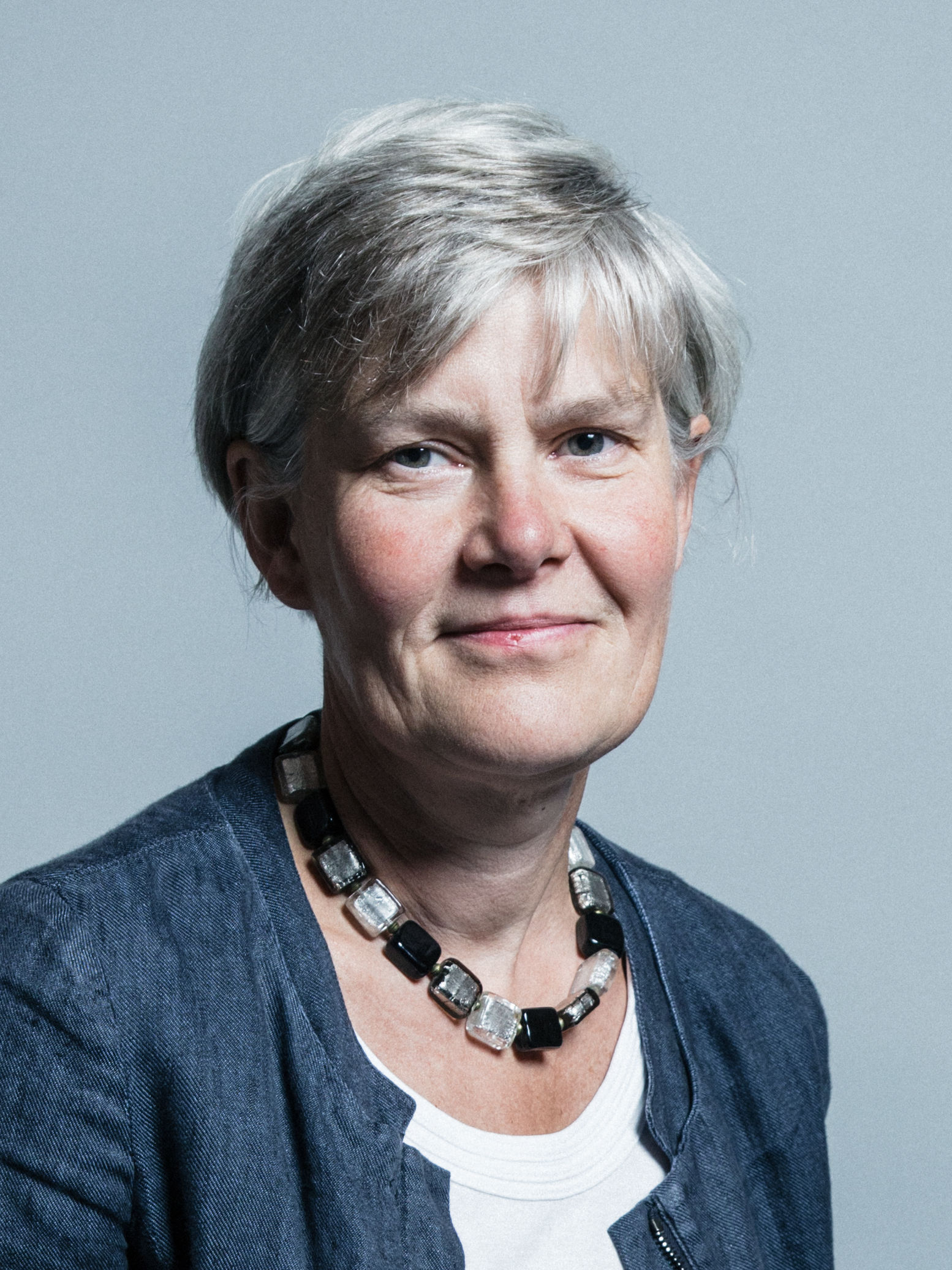
  • Kate Green – 2020 Speech on Free School Meals

    Kate Green – 2020 Speech on Free School Meals

    The speech made by Kate Green, the Shadow Education Secretary, in the House of Commons on 21 October 2020.

    I beg to move,

    That this House calls on the Government to continue directly funding provision of free school meals over the school holidays until Easter 2021 to prevent over a million children going hungry during this crisis.

    I am very pleased to open today’s debate on such an important motion on behalf of children across the country who are at risk of going hungry and of all the families worried that their children will be hungry over the school holidays.

    The truth is that we should not be having this debate at all. In the summer, when this issue was debated in this House, the Government saw sense, did the right thing and ensured that no child would go hungry over the summer holidays. This time, however, despite many families facing even more challenging circumstances now than they did four months ago, shamefully the Government are walking away from their obligation to hungry children. In their hearts, hon. Members on the Government Benches who rightly supported the extension of free school meals over the summer holidays know that. They will also know that the thousands of families who rely on free school meals to help them to make ends meet will watch with great interest how they vote this evening. I am aware that there are some right hon. and hon. Members on the Government Benches who are indicating that they will vote in favour of this motion. I commend them for setting party politics aside and I hope that by the end of this evening many more of their colleagues will join them.

    More than 1.4 million children benefit from free school meals. Nearly 900,000 eligible children live in areas now subject to tier 2 and tier 3 covid restrictions. Their families face an upcoming furlough cliff-edge, an inadequate replacement system and the deep fear of growing unemployment. So the question for Members on the Government Benches is simple: are they absolutely confident that support is adequate and that no child in their constituencies will go hungry?

    Kevin Hollinrake (Thirsk and Malton) (Con)

    Does the hon. Lady consider this to be a temporary measure while the covid crisis continues or a permanent measure that would be on the statute book indefinitely?

    Kate Green

    I am grateful to the hon. Member. Initially, I would suggest that we urgently need a measure that will take us through this half term and the remainder of this academic year. We understand that nobody can predict how the virus might progress over the coming months, but it is crystal clear that what we need to vote for tonight is an urgent emergency measure to protect children and families who are struggling.

    Mr Tanmanjeet Singh Dhesi (Slough) (Lab)

    I thank my hon. Friend for allowing me to intervene in the midst of her excellent oration. There are 3,891 children in Slough who are known to require free school meals. ​Does she agree that if feeding those children over the summer was the right and humane thing to do in the middle of a pandemic, surely it is right and honourable to feed them over the winter when their parents are struggling to put food on the table and more than 1 million children could potentially go hungry? Or does she think that the Prime Minister has merely changed his priorities once again?

    Kate Green

    My hon. Friend makes a very reasonable point, and he is right to draw attention to the Prime Minister’s view on this matter, because Downing Street said just the other day:

    “It’s not for schools to provide food to pupils during the school holidays.”

    I cannot believe I have to spell this out: it is the Government’s responsibility to ensure that children do not go hungry, and they do not stop being hungry just because the school bell rings for the end of term. Surely our constituents send us to this place as Members of Parliament to vote to ensure that the children who most need our help at any time of year are protected.

    Tim Farron (Westmorland and Lonsdale) (LD)

    The hon. Lady is making a passionate and thought-through speech. Does she agree that the holiday periods are always a difficulty—whether or not there is a pandemic—for those children from families on free school meals? They always need that support, and that should be something we are doing irrespective of the pandemic. In my constituency, 40% of the entire workforce are on furlough. The cliff edge is coming in a few days’ time, when the number of people desperate for support will increase massively. Is it not therefore right that we take action today?

    Kate Green

    That is right. The debate this evening is urgent. Let me say to Members on the Government Benches: please put party politics aside tonight and for the sake of our children vote to extend free school meals. After all, since the summer holidays, exactly as we have just heard, the situation has got worse and more desperate for millions of families.

    While the provision of free school meals is being closed, the gravy train is still open for business—with £7,000 a day for consultants working on a test and trace system that does not work, £130 million to a Conservative party donor for unsafe covid testing kits, £160 million of profits for Serco and an increased dividend for its shareholders, because the Government threw good money after bad on a test and trace contract that is robbing the public. Yesterday, a Business Minister said that extending free school meals was not as simple as writing a cheque, but why is it that the money only runs out when it is hungry children who need it?

    I am surprised there is not greater recognition on the Government Benches that families across the country are finding it very difficult to manage. It was, after all, only a matter of weeks ago that national newspapers were full of briefings from friends of the Prime Minister reporting anxiety about how he had to provide for his family. He had a new baby and, with the loss of his lucrative newspaper columns, his friends said it was a strain to manage on his £150,000 salary as Prime Minister.

    It is frankly contemptible that the kind of concern we read in the national newspapers for the Prime Minister’s finances is not extended to the millions across this ​country who are genuinely struggling. Imagine being a parent of one of the more than 3,000 children in the Prime Minister’s constituency who benefits from free school meals. To read one week about how hard it is to make ends meet on £150,000 a year and then to see the provision of a free meal for your child taken away a few days later is utterly inexplicable.

    The fact that we need to have this debate is a sign of repeated failures on the part of the Government—a failure of compassion, a failure of competence, not recognising the challenges that parents face and not giving them the support they need to provide for their children.

    Dr Kieran Mullan (Crewe and Nantwich) (Con)

    There are roughly 14 million people living in relative poverty this year. In 2000, there were roughly 14 million people living in relative poverty. Why were Labour not able to fix the problems of relative poverty when they were in power?

    Kate Green

    Perhaps the hon. Gentleman would like me to enlighten him on the poverty figures during Labour’s period in office. In 2010-11, there were 3.5 million children living in relative poverty. Today, the figure after housing costs is 4.2 million. I would advise him to be very careful about quoting child poverty figures to Labour Members.

    We have a failure of leadership today—a failure to be clear and unequivocal. No child should go hungry in one of the world’s richest countries, but where the Government have failed to show leadership, many others have stepped up to do the right thing. As the Member of Parliament for Old Trafford, I am very proud to pay tribute to Marcus Rashford. I congratulate him on his late winning goal last night and I hope that he will score another late victory today when we vote on Labour’s motion. I congratulate and thank the many others across the country who are acting and campaigning to end child poverty and food poverty.

    Kevin Hollinrake

    Will the hon. Lady give way?

    Kate Green

    If the hon. Member will forgive me, no—I will make progress and let others in.

    It gives me huge pride to see people come together and take action where the Government are failing to do so. Co-operative schools are already committing to providing free school meals over the holidays. That represents the very best of the co-op movement—a movement built on support for one another, on people helping their neighbours in their community and doing what is right for the most disadvantaged. Will the Secretary of State follow their example?

    Colleagues in the Welsh Labour Government, in Northern Ireland and in some parts of Scotland have already committed to providing free school meals over the holidays until Easter. Again, I ask: will the Secretary of State follow their example? Catering staff across our schools have worked flat out to fulfil their essential role in providing free school meals. They are among the many low-paid workers we have learned to depend on during the pandemic, but many feel that their jobs and livelihoods are at risk. Will the Secretary of State tell us what steps are being taken to protect and support the jobs of school catering staff and others who deliver this support to our children?​

    Before the pandemic, there were over 4 million children growing up in poverty. In the months ahead, that will only increase. Child poverty is a pandemic of its own. It is a pandemic that reflects the great evils still haunting our society—a society blighted by wages that are not enough for working families to make ends meet, a housing crisis that creates insecurity and a social security system cut to ribbons by the Conservative party.

    I recognise today’s proposals are not a silver bullet, and they will not end child poverty. They are a sticking plaster, but one that is badly and urgently needed—needed by the 1.4 million children who could go hungry without them and by families worried about putting food on the table—so will the Secretary of State do what is right and take this first small step to ensure that over a million children do not go hungry this Christmas?

    As I said at the outset, the Government should never have let things get this far. They still do not have to. The Secretary of State can stand up now and do the right thing. He can listen to Labour, to campaigners and to families across the country, withdraw his amendment and support our motion. Sadly, I do not think he will do so. Yet months ago, Marcus Rashford asked the question that started this debate and that saw the Government extend free school meals over the summer. Today I ask—[Interruption.] Oh, don’t be silly! The hon. Member for Thirsk and Malton (Kevin Hollinrake) knows perfectly well that the one thing I am not is frit. Today I ask the Secretary of State the same simple question: can we all agree that no child should go to bed hungry? I commend our motion to the House.

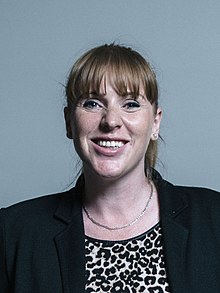
  • Angela Rayner – 2020 Speech on Fair Economic Support

    Angela Rayner – 2020 Speech on Fair Economic Support

    The speech made by Angela Rayner, the Deputy Leader of the Labour Party, on 21 October 2020.

    I beg to move,

    That this House calls on the Government to publish clear and fair national criteria for financial support for jobs and businesses in areas facing additional restrictions, to be voted on in Parliament; and calls on the Government to make good on its claim that workers faced with hardship who are subject to the Job Support Scheme extension will receive at least 80 percent of their previous incomes.

    I start by placing on record my thanks to the staff at Stepping Hill Hospital in Stockport who recently cared for my aunt, who died of coronavirus last week. I speak today not just as a Member of this House, or just as a Mancunian, but as someone like the many others across our city and our country who have in the past few weeks lost loved ones to this terrible virus. That, more than anything, is why I come here wanting the Government not to fail but to succeed, because lives literally depend on it.

    We know that a public health response will save lives only if it is supported by a fair economic settlement. The British people want to do the right thing, and they will do the right thing, but we need to support them in doing so. That is why I was so appalled by what I witnessed yesterday. I was with fellow Greater Manchester MPs on a Zoom call with the Health Secretary, who was handing us scraps from the Prime Minister, while our elected Mayor found out from Twitter. The Government then tried to blame it all on our Mayor for not doing what he was ordered to do from Whitehall. I have heard of power without accountability, but apparently the Government’s idea of devolution is accountability without the power.

    We were offered £8 per head—or, to put it another way, 30 seconds of work for a consultant working on the collapsed test and trace system. Let me say this: £8 per person is an insult. And now the Government are attempting to play us off against each other across GM. Well, let me tell the Prime Minister: our Mayor stood up for Greater Manchester, but he spoke for Great Britain. Indeed, his call for Parliament to have a say and a vote on these measures is one that so many Government Members have made.

    Gary Sambrook (Birmingham, Northfield) (Con)

    On the point about votes in Parliament, many of us called for votes in this place on national restrictions a couple of weeks ago but, unfortunately, near enough all Opposition ​Members did not bother to turn up for those votes, including the one on the rule of six. If the Opposition get their way and have votes on localised restrictions, will they even turn up?

    Angela Rayner

    As the hon. Member has turned up today, I hope he will do the right thing and support people with an economic package so that they can do the right thing and we can save people’s lives across Greater Manchester and the whole of this country. I hope he will do the right thing and support us in the Lobby tonight.

    The Government have not given us the chance to have our say, so today we are giving the House the chance to do so. Our motion calls for the Government to bring forward fair national criteria for financial support in areas facing additional restrictions, and it provides for Members to have a vote on the criteria.

    Mr Tanmanjeet Singh Dhesi (Slough) (Lab)

    I congratulate my hon. Friend on making some excellent points in her speech. Given that the Government’s strategy to deal with the pandemic is not working, does she agree that, rather than using divisive tactics and treating the regions of our nation with utter contempt, the Prime Minister needs to adopt a united, one nation approach? Does she also agree that, if we want to impose stricter measures, we need to provide support to individuals and businesses, and that we cannot have lockdown on the cheap?

    Angela Rayner

    I absolutely agree with my hon. Friend. Over the past 24 hours, the people of Greater Manchester, regardless of their political persuasions or colours, have been absolutely dismayed by the way in which our democratically elected Mayor has been treated, but this is about the treatment not just of our Mayor but of the people of Greater Manchester. This is not some spiteful little game; this is about people’s lives, people’s loved ones and people’s jobs. They have spent years building up our economy in Greater Manchester. This Government choosing the path that they have chosen has done one thing for Greater Manchester: it has completely brought us together in saying that this Government and Prime Minister must do the right thing by the whole of our nation and support everywhere, not pick us off one by one.

    Alun Cairns (Vale of Glamorgan) (Con)

    What advice would the hon. Lady offer my constituents in the Vale of Glamorgan, where the infection rates are exceptionally low, given that a one-size-fits-all approach has been taken across the whole of Wales? Retailers, hairdressers, personal service providers, beauticians and all those sorts of businesses have been closed, irrespective of the exceptionally low rate. Does that make sense? What does she have to say to those businesses that have invested all their time, effort, money and innovation in creating employment and wealth?

    Angela Rayner

    The right hon. Member makes a point about what the Welsh Government are doing. What they are doing is putting people, business and lives first. They are working with local government and with businesses to bring the R number down. The Scientific Advisory Group for Emergencies has said that the plan for Greater Manchester as it currently stands will not bring the R rate down and that it will lead us into poverty and destitution. When I speak to the experts, they tell me that poverty and destitution ​have a link to how deadly this virus is. In parts of areas such as Oldham in my constituency that have faced restrictions since July—I have not been able to see my granddaughter because of those restrictions—the rates have gone up. We do not want to plunge our businesses into destitution. I am proud of the Welsh Government’s defence of the people and their support for the people of Wales. I just wish we had a better Government here in Parliament.

    Our motion calls on the Government to implement their own promise that workers on the job support scheme extension will receive at least 80% of their previous income. I remember the promises the Prime Minister made, not just in this crisis but before it. He offered levelling up for communities such as mine, but he is not levelling us up; he is letting us down. Under Thatcher, we were consigned to managed decline, but now it feels like mismanaged decline. And it is not just a conflict between the north and the south, or between London and the rest. The elected leaders of our nation’s cities, regions and countries have been treated with the same contempt, from Wales to Wigan.

    Patrick Grady (Glasgow North) (SNP)

    I pass on the condolences of the Scottish National party to the hon. Lady and her family on the loss of her aunt.

    We are not in a position to field a Front-Bench spokesperson today—that might have been easier if the Government had allowed us virtual participation—but I can confirm that we will support the official Opposition in the Lobby this evening, precisely because of the hon. Lady’s point about the need for support across the UK. Any enhanced package that is provided to Liverpool, Greater Manchester and South Yorkshire must attract consequentials above what has already been guaranteed to Scotland. Scottish businesses are looking at the additional package of support that the Government have found for these English regions, and expect additional funding to be delivered to Scotland. Does she agree that that should happen for Scotland and the other devolved Administrations?

    Angela Rayner

    I thank the hon. Member for his contribution. I absolutely agree. All our nations and regions —the whole of Great Britain—have to come together, because this virus is a challenge for us all. We cannot treat people in different parts of the country and in our nations disproportionately and disgracefully.

    In Greater Manchester, we were promised a powerhouse, but what we have at the moment is a power grab. Even here in London, just this week, the Government have threatened to seize control of the tube. We now have a Prime Minister so determined to punish a Labour Mayor that he wants to whack a transport tax on his own constituents, yet the Government still refuse to take the decisive national action that is needed. Instead, they have tried to play people off against each other—divide and misrule.

    Kevin Hollinrake (Thirsk and Malton) (Con)

    I am very sorry to hear about the hon. Lady’s aunt.

    Will the hon. Lady she be straight and honest with British citizens when she talks about a national lockdown? Is it not the reality that the SAGE paper says that it might take multiple circuit breakers to keep this virus at low levels? Will she be clear about the impact that that would have on jobs and businesses in this country?

    Angela Rayner

    The hon. Member invites me to be clear and honest, and the one thing that probably most people know is that I tell it how it is and I always have. I can be clear and honest with him: the Prime Minister’s plan, as it currently stands, will not protect the people of Greater Manchester and will plunge us into more poverty. We have seen the evidence that says that. I promise him and other hon. Members across the House that the Labour party will always put the people, and the protection and security of the people, first. I ask the hon. Member to get the Prime Minister to do the same thing, instead of playing party politics with people’s lives and livelihoods.

    Today this House can vote for a fair deal for all and to end these political games. No more will the Health Secretary have to tour the country like a pound shop Noel Edmonds, announcing “Deal or no deal?”. The Government can honour their own promises that every worker facing hardship on the job support scheme will get at least 80% of their previous income, because what is good enough for the office worker in the City of London is good enough for the caterer in the city of Manchester, and what was good enough for the whole country in March is good enough for the midlands and the north today. We are trying to hold the Government to their own promises. Businesses need consistency, and they need that promise honoured.

    The Prime Minister told the House on 14 October that

    “whatever happens, a combination of the job support scheme and universal credit will mean that nobody gets less than 93% of their current income.”—[Official Report, 14 October 2020; Vol. 682, c. 368.]

    He then said that those on low incomes will get at least 80% of their income. Perhaps he can tell that to the waitress in my constituency who earned £9 an hour on a 32-hour week, serving in a central Manchester bar that has now closed. The Resolution Foundation has shown that she will end up with less than 70% of that wage under the Government’s current plan. So the Government are telling my constituents to survive on less than the minimum wage for months, because the Government cannot tell us when an area will leave tier 3 and how those restrictions will be lifted.

    Mr Toby Perkins (Chesterfield) (Lab)

    I am grateful to my hon. Friend for giving way and thank her for the case that she is making. Is she interested, as I am, that not a single one of the interventions that she has faced from the Conservative side has been relevant to the motion that we are debating? They all seem to be dragging us back on to Labour party policy, rather than standing up for the financial settlement that they are offering to Manchester, and that we know will be going to so many other areas. So can she help me in inviting them to actually speak about the 80% that we are trying to ensure gets into some of the most impoverished people’s—some of the most impoverished workers’—pockets, rather than trying to change the debate into the one they want to have?

    Angela Rayner

    I thank my hon. Friend for his contribution. I will go a little bit further and compliment some of the Tory Members who have stood up as part of Greater Manchester, and I will be incredibly disappointed if what I have seen over the past 24 hours results in this ​becoming a party political fight. Because in Greater Manchester, despite what the Prime Minister and the Health Secretary were trying to suggest, we were united in trying to support our citizens across the conurbation in doing the right thing, bringing the virus rate down and supporting our economy. I hope we can continue to do that. I hope we do not get distracted by messages that are not in the motion, and I absolutely hope the Prime Minister does the right thing, because this is not just about Greater Manchester—this is coming to a town near you. In so many areas now, the R number is increasing. So many areas are in tier 2; so many areas are going to go into tier 3. This is a marker to ensure that our economy survives through those problems.

    Mr Clive Betts (Sheffield South East) (Lab)

    On that point about coming to a town near you: it is indeed coming to cities and towns in the Sheffield city region, it was announced today. The package of assistance is totally inadequate. It is nothing like what the leaders and the Mayor asked for. It is exactly the same as has been offered to other areas—the standard package. It is not locally negotiated; it is the standard package. As the leader of Rotherham said, “They put lots of civil servants into a room with us to tell us what we couldn’t have.” That is actually what has been happening in the negotiations.

    Angela Rayner

    I thank my hon. Friend for his insight. Many of the local leaders I have heard from have said that it felt like they had been blackmailed and pressurised into taking a deal. Greater Manchester and the Mayor were not just trying arbitrarily to get more than somewhere else. We put a package together based on the needs of our city, our conurbation, our lowest-paid and the businesses that needed the support. It was not a bargaining chip to get this or that; it was about making sure that there was a floor that meant people were given the support that, by the way, this Government promised. They promised that support, and we are just asking them to keep to their promise.

    Nadia Whittome (Nottingham East) (Lab)

    Does my hon. Friend agree that it is grossly unfair that while the Prime Minister, reportedly, is complaining about not being able to live off £150 k a year, he is expecting my constituents in Nottingham, and all the constituents of every one of us in this House, to live off two thirds of the minimum wage unless a proper economic settlement is provided?

    Angela Rayner

    I thank my hon. Friend for her contribution. People on the Government Benches might grunt, but my hon. Friend was a care worker before coming into Parliament, like myself, and knows exactly how people on the minimum wage feel, and I commend her for standing up for her constituents, not leaving them behind like many Members on those Benches seem to be doing now.

    Even the two-thirds wage support under the job support scheme extension is only available to businesses legally required to close. Someone who works for a firm that is not required to close, but whose business is severely impacted as a result of the restrictions—such as a brewery supplying pubs that have to close—gets absolutely nothing.

    Imran Hussain (Bradford East) (Lab)

    My hon. Friend is making an excellent contribution, which highlights the points. Does she agree that much of the debate is around tier 3 support, not to say that tier 2 areas have no support whatsoever, which emphasises the point that she makes?

    Angela Rayner

    I absolutely agree with my hon. Friend. I say to the hon. Member for Winchester (Steve Brine) who keeps chuntering: you had your chance, mate. Let other people in.

    For hundreds of years, Mancunians have been told to know our place, but we have never listened—from the People’s History Museum to the Mechanics Institute, from our science and industry to women’s suffrage. We will not be told what our place is, and we will not be bullied into taking it. We are proud of our history and proud of our collective contribution to our great country and determined to build a great future together.

    This is not just about Greater Manchester; this is about all of us. We will not be picked off one by one. We will not be offered the crumbs when we helped bake the loaf. We deserve a fair slice and our people deserve a Government willing to protect them and to do as the Chancellor promised—“Whatever it takes”. In recent days, it has been Lancashire, Liverpool and Greater Manchester. Next week, and in the weeks ahead, it will be communities in other parts of the country that find themselves in tier 3. If the Government are prepared to wilfully inflict so much harm on their own people in the middle of a pandemic in one part of the country, they will do it to people elsewhere as well.

    We are staring down the barrel of a bleak winter, because the Government have lost control of the virus: infections are rising; hospital admissions are rising; and deaths, tragically, are rising. The testing system has collapsed. People and businesses across the country will be anxious that they will not be able to make ends meet and put food on the table. Our motion today will ensure a fair national deal for the country, a vote of this House on it and the Government’s own promises to workers kept. Madam Deputy Speaker, I commend this motion to the House.

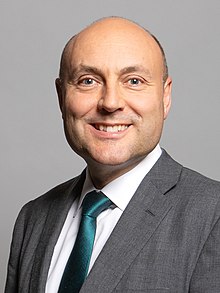
  • Andrew Griffith – 2020 Speech on Vehicle Registration Offences

    Andrew Griffith – 2020 Speech on Vehicle Registration Offences

    The speech made by Andrew Griffith, the Conservative MP for Arundel and South Downs, in the House of Commons on 21 October 2020.

    I beg to move,

    That leave be given to bring in a Bill to make vehicle registration offences under the Vehicle Excise and Registration Act 1994 attract driving record penalty points; and for connected purposes.

    The Bill I present today aims to save lives and to relieve the stress on residents living near roads by improving the ability of the police to identify, and therefore prosecute, antisocial or reckless road users. I should like to be clear that the Bill is not in any way about targeting motorcyclists or, indeed, motorists in general. There are more than 1.25 million motorcyclists in the UK. It is a great sport and industry. I am proud that Destination Triumph has a fantastic dealership for that British-owned brand in Washington in my constituency.

    The vast majority of motorcyclists use the roads responsibly and West Sussex welcomes careful riders and drivers alike. I arrived at the subject of the Bill, however, as a result of the misery inflicted on my constituents every summer, but which reached a new intensity during lockdown—misery because, on a day when the roads are dry, the residents of small towns and villages are woken by the sound of motorcycles and there is no respite until sunset. In places around Wisborough Green, Petworth, Bury Hill, Coldwaltham and Tillington, my constituents have to keep their windows closed, however warm the day. Pedestrians feel intimidated and this issue causes a great deal of mental stress.

    This is not just about noise. My constituents travel on statistically the most dangerous roads in the whole of Sussex. In fact, the Chichester Observer reported last month that the Road Safety Federation identified the A285 between Petworth and Chichester as one of the worst in the whole UK, with 29 serious and fatal crashes between 2013 and 2018. Nearly two thirds of those involved motorcyclists. Similarly dangerous roads include the A272 from Tillington to Cowfold, the A283 between Fittleworth and Steyning and the A29 from Bury Hill to Adversane. These all carry a particularly dangerous mix of vehicle types, even before the addition of a speeding motorcycle or sports car. Even the shortest journey is likely to include an encounter with tractors and combines, a peloton of bicycles or the local bus service. Things will improve when the long-awaited A27 Arundel bypass is built and takes heavy goods vehicles away from the most dangerous A roads that I have mentioned, but the upgrade was announced by my right hon. Friend the Secretary of State for Transport only last week and will therefore take many years to arrive.

    This issue is not confined to Arundel and South Downs. Members of this House who are supporting today’s Bill have told me of their concerns about the same issue on the A32 and the A272 in the Meon Valley, ​on the A27 at Sherfield English in Hampshire and in the Kingsnorth area of Ashford in Kent. Nationally, five people are killed and a further 68 receive life-changing injuries every day on our roads. That is one terrible family tragedy every 20 minutes. It falls to the police to do their best to address the twin impacts of antisocial noise and road safety, and I am grateful for all the efforts of my local police commissioner, Katy Bourne, and Chief Constable Jo Shiner.

    This summer has seen a real effort by Sussex police under Operation Downsway, which I saw at first hand out on patrol with Chief Inspector Jon Carter and Police Constable Van Der Wee. However, despite an increase in police numbers—380 new officers this year in Sussex and more than 4,000 nationwide—the police simply cannot be everywhere all the time. Cameras play a vital role in extending their eyes, and that is where today’s Bill will help by closing a loophole in the law.

    Currently, although speeding offences are endorseable—that is, they result in points on the offender’s driving licence—the offence of displaying a non-compliant number plate, or even of displaying no number plate at all, carries only a fine. That enables antisocial drivers on our roads, especially in rural areas, to defy both speed and number plate recognition cameras with relative impunity. That is particularly true for owners of high-performance bikes costing tens of thousands of pounds, where a £100 fine for infringing the law on public roads is far less than the cost of admission to a private and regulated track day.

    While I am sure that right hon. and hon. Members have no first-hand familiarity with the matter, when it comes to driving, points definitely do not mean prizes. More points mean substantially higher insurance premiums, and multiple offences quickly make the loss of a licence a real consideration. Unlike a fine, penalty points are a real sanction and are more likely to change behaviour. Indeed, I believe that the Home Office Surveillance Camera Commissioner’s working group has made a similar plea for more robust penalties in this area.

    Let me conclude by asking the Government and hon. Members from across the House to join me in supporting this Bill today. No novelty or innovation is required. It marries an existing offence with an existing sanction that is a tried and tested part of the motoring statute book. It is a measure that has support from the police and residents alike. It is clear and simple and does exactly what it says on the tin. I am therefore pleased to commend the Bill to the House.

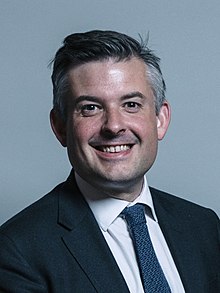
  • Jonathan Ashworth – 2020 Speech on Restrictions in South Yorkshire

    Jonathan Ashworth – 2020 Speech on Restrictions in South Yorkshire

    The speech made by Jonathan Ashworth, the Shadow Secretary of State for Health and Social Care, in the House of Commons on 21 October 2020.

    I thank the Minister of State for advance sight of his statement. Today, we have another great swathe of the north put into lockdown. Sheffield went into tier 2 restrictions last Wednesday, so did Ministers make the wrong judgment a week ago or has new evidence come to light that was not apparent last Wednesday? How many other areas in tier 2 today are facing the same fate as Sheffield, such as those areas in tier 2 that neighbour South Yorkshire, such as North East Derbyshire or Nottinghamshire?

    The Secretary of State could not answer yesterday the question of how long Greater Manchester will be in lockdown, or what the criteria will be for leaving lockdown, so can the Minister of State today tell us how long South Yorkshire will be in lockdown? Does the nationwide R number need to fall below 1, as the Prime Minister suggested last week, or just the regional R number? Or, if an area such as Doncaster gets the R below 1, will it be able to leave lockdown?

    The Prime Minister at the Dispatch Box earlier talked about hospital admissions, so could the Minister tell us what level hospital admissions need to come down to for an area to exit lockdown?

    As I said yesterday, my dad worked in casinos in Salford and my mum worked in bars. I know people will want to do the right thing and will understand that further measures are necessary to contain the spread of the virus, but families should not face financial ruin. The Minister wants congratulations for the package he has allocated to South Yorkshire, but why is contact tracing funding subject to the negotiations and deals? The virus is out of control because of the failures of the £12 billion test and trace system. If local areas had been given the resources months ago to put in place effective contact tracing, we would not be in this situation now. Those failures on contact tracing are having a direct impact on people’s lives.​

    This afternoon, families across South Yorkshire who work in hospitality—whether in Doncaster, Sheffield, Penistone, Rother Valley or Don Valley—will be asking why, if it was fair to pay 80% of wages in March, they should now be expected to get by on just two thirds of their wages in the run-up to Christmas. This matters to families everywhere, because we know that further restrictions will be needed. Indeed, according to sources briefing Times Radio, plans are being developed for a three-week lockdown more widely next month. Perhaps the Minister could confirm that his officials are now working on plans for a three-week national lockdown next month.

    The Communities Secretary said this morning that there was now a national formula for areas under local lockdown, but Ministers say they want a targeted local approach because circumstances vary. Yet when an area such as Greater Manchester, which has had restrictions since July, says, “Our circumstances are different,” the Prime Minister says, “Tough. Hard luck. You can’t be treated any differently,” and vindictively refuses Greater Manchester just £5 million extra to get a deal over the line. This is playing politics with people’s jobs and people’s livelihoods. We cannot defeat this virus on the cheap, nor should it be broken on the backs of the lowest paid. Public health restrictions must go hand in hand with economic support, because as night follows day, falls in employment lead to rises in chronic illness. The Chancellor must pay out to help out, and deliver a fair deal to support jobs and livelihoods under lockdown.

  • Edward Argar – 2020 Statement on Restrictions in South Yorkshire

    Edward Argar – 2020 Statement on Restrictions in South Yorkshire

    The statement made by Edward Argar, the Minister for Health, in the House of Commons on 21 October 2020.

    With permission, I would like to make a statement on coronavirus, further to the statement made by my right hon. Friend the Secretary of State for Health and Social Care last night.

    This virus remains a serious threat, and over a million people have tested positive for coronavirus in Europe over the past week. Here in the UK, we recorded 21,331 positive cases yesterday—one of the highest recorded daily figures. Average daily hospital admissions in the UK have doubled in the past 14 days, and yesterday we recorded the highest number of daily deaths, 241, since early June.

    We must keep working hard, together, to keep this virus under control. We have been vigilant in monitoring the data and putting in place targeted local measures so that we can bear down hard on the virus wherever we see it emerging. We have seen how local action can help flatten the curve, for example in Leicester and Bolton. This targeted local approach, supported by our local covid alert level system, means we can have different rules in places like Cornwall, where transmission is low, from those in places where transmission is high and rising.

    I would like to update the House specifically on the discussions we have been having with local leaders in South Yorkshire. The situation in South Yorkshire remains serious. There have been more cases in South Yorkshire so far in October—over 12,000—than in July, August and September combined. The number of patients with covid-19 in intensive care beds has reached over half the number seen at the height of the pandemic earlier this year, and the latest data suggests that the numbers of patients on mechanical ventilation will soon be comparable to the first peak in March. We need to act now to prevent the epidemic in South Yorkshire from continuing to grow.

    I am pleased to inform the House that, following discussions this week, the Government have reached an agreement with South Yorkshire on a package of measures to drive down transmission. That means that South Yorkshire—so the city of Sheffield, Barnsley, Rotherham and Doncaster—will be moving to the local covid alert level “very high”, taking effect at one minute past midnight on Saturday morning. That includes the baseline measures to the very high alert level which were agreed by the House earlier this month.

    As well as this, and as agreed with local leaders, unfortunately, casinos, betting shops, adult gaming centres and soft play centres will also have to close, and while gyms will remain open classes will not be allowed. On that point, the Liverpool city region and my hon. Friend the Member for Southport (Damien Moore) have also requested to bring their region into line with those measures. So gyms will be open and soft play centres will close in the Liverpool city region.​
    We know that some of the measures I have announced today are challenging and will have a real impact on people and businesses in South Yorkshire, so we will be putting in place substantial support. That includes the job support scheme, which ensures those affected by business closures are still paid. Once topped up with universal credit, those on low incomes will receive at least 80% of their normal income. The agreement also includes additional funding of £11.2 million for the local area for local enforcement and contract tracing activity. As well as that, we are putting in place extra funding so that local authorities in South Yorkshire can continue to support businesses through this period.

    From the Dispatch Box, I would like to thank all the local leaders in South Yorkshire for the collegiate and constructive way in which they have approached the negotiations. I would like to thank all hon. Members representing constituencies in the region as well. We have worked across party lines to reach an agreement that will protect public health and the NHS in South Yorkshire, while also supporting those who need it most. I know those local measures will be hard and entail further sacrifice, but through bearing down hard on the virus, wherever and whenever we see it emerge, we can help to slow the spread of this virus and protect our loved ones and our local communities. The agreement will help us to protect lives and livelihoods in South Yorkshire and I commend the statement to the House.

  • Nicola Sturgeon – 2020 Statement on Covid-19

    Nicola Sturgeon – 2020 Statement on Covid-19

    The statement made by Nicola Sturgeon, the Scottish First Minister, in the Scottish Parliament on 7 October 2020.

    Presiding Officer,

    I want to update the chamber today on the current position in relation to Covid.

    In doing so, I will give an assessment of the current course of the pandemic; propose important temporary measures to stem the increase in cases; set out how we will support businesses affected by them; and update the chamber on the longer term work we are doing to further improve our ability to live with Covid.

    And in all of this, I will be very frank about the challenges we face and the difficult balances we must try to strike.

    First, though, I will provide a summary of the daily statistics that were published a short time ago.

    Since yesterday, an additional 1054 cases of Covid-19 have been confirmed.

    That represents 13% of the people newly tested, and takes the total number of cases to 34,760.

    A total of 319 patients are currently in hospital with confirmed Covid-19, which is an increase of 57 since yesterday.

    And 28 people are in intensive care with confirmed or suspected Covid-19, which is an increase of 3 since yesterday.

    And in the past 24 hours, I regret to report that 1 further death has been registered of a patient who had been confirmed as having the virus.

    The total number of deaths in Scotland under that measurement is therefore now 2,533.

    National Records of Scotland has also just published its weekly update, which includes cases where COVID is a suspected or contributory cause of death.

    Today’s update shows that by last Sunday, the total number of registered deaths linked to Covid, under that wider definition, was 4,276.

    20 of those deaths were registered last week. That is the highest weekly number of deaths since late June.

    Every single one of these deaths represents the loss of a unique and irreplaceable individual.

    So once again, I want to send my deepest condolences to all those who are currently grieving.

    These figures illustrate the rising challenge we again face from Covid.

    That challenge is also set out – starkly – in an evidence paper published today by the Scottish Government’s senior clinical advisors – the Chief Medical Officer, the Chief Nursing Officer and the National Clinical Director.

    It assesses our current situation in relation to the virus.

    And it explains – as I will try to do in this statement – why we need to introduce additional measures to control the virus; why it is urgent that we act now; and why we have decided upon the specific actions that I am setting out today.

    Before I come onto that explanation, however, I want to emphasise some of the more positive elements of our current position.

    It is important – for the morale of all of us – that we don’t forget that progress has been made. It might not feel this way, but the situation now is better than it was in March.

    We are benefiting from the sacrifices we made over the summer. By driving the virus to very low levels then, we have helped to ensure that – even after several weeks of increases – the estimated total number of cases in Scotland is currently just 13% of the peak level back in March.

    Cases are rising, but they are not rising as quickly as they were then.

    In addition, we now have Test & Protect teams across the country, who are doing exceptional work. Test & Protect is now bearing a lot of the strain of controlling the virus.

    And we understand more now about how to reduce the risk of transmission – for example, by meeting outdoors rather than indoors if possible, wearing face coverings, cleaning hands thoroughly, and keeping our distance from people in other households.

    So while there are significant restrictions still in place – and they are hard and painful – we are living much more freely now than in the spring and early summer.

    We are determined – if at all possible – that this will continue to be the case.

    So let me be clear. We are not going back into lockdown today. We are not closing schools, colleges or universities. We are not halting the remobilisation of the NHS for non-Covid care. And we are not asking people to stay at home.

    So while the measures I announce today will feel like a backward step, they are in the interests of protecting our progress overall.

    It is by taking the tough but necessary action now, that we hope to avoid even tougher action in future.

    Let me turn now to specifics.

    The need for action is highlighted by the daily figures I reported earlier and, more fundamentally, in the evidence paper published today.

    It’s worth remembering that when I updated Parliament just over two weeks ago, the average number of new cases being reported each day was 285. That was up from 102 three weeks previously.

    Now, we are reporting an average of 788 new cases each day.

    In addition, I can report that in the 7 days up to Monday, the number of people in hospital with Covid increased by almost 80%.

    And the number of people who died with Covid last week was the highest for 14 weeks.

    In fact, there was the same number of deaths in the last week alone as in the whole of the previous month.

    The increase in the numbers of people in hospital with, and sadly dying from Covid reflect the rise we are now seeing in new cases among older age groups. In the second half of September, cases were rising most rapidly in the younger age groups.

    However, in the past week, cases in people over 80 years old increased by 60%, and cases in the 60 to 79 year old age group more than doubled.

    And we are seeing geographic as well as demographic spread.

    Without a doubt – and by some distance – the highest levels of infection are across the central belt.

    We are particularly concerned about Greater Glasgow & Clyde, Lanarkshire, Ayrshire & Arran, Lothian and Forth Valley – and that will be reflected in some of what I say later.

    However, that should not obscure the fact that numbers are rising across Scotland.

    The majority of our health board areas are now recording more than 50 new cases per 100,000 of their population each week.

    And virtually every health board area has a rising number of cases. The only exceptions are Orkney and Shetland, and even they have had cases in recent weeks.

    There is also, as we speak, a significant outbreak in the Western Isles.

    So the need to act – and to act across the country – is clear.

    What is also clear is the need to take additional action now.

    I mentioned earlier that prevalence of the virus is currently around 13% of its March peak.

    However, we estimate that the number of new Covid cases is currently growing by 7% each day.

    So without action – and this is perhaps the starkest warning in today’s evidence paper – we are likely to return to the peak level of infections we had in the Spring by the end of this month.

    It’s also instructive to consider the experience of other countries. Our modelling suggests that we are approximately four weeks behind France and six weeks behind Spain in the resurgence of the virus.

    Their resurgence, like ours, was initially concentrated among younger people. However it spread to other age groups and they are now seeing significantly more hospital admissions, more people in intensive care, and more deaths.

    It is to interrupt that trajectory that we must act now.

    Of course, we have already taken perhaps the most important – and painful – step we can to reduce transmission.

    For the last 12 days, apart from certain limited exceptions, we have not been able to meet up in each other’s homes.

    That should already be making a difference to infection rates even if, because there is always a time lag between introducing new measures and the impact they have, we are not yet seeing it reflected in our figures.

    And let me take the opportunity to emphasise again today how vitally important it is that we all stick to that rule. It’s incredibly hard for all of us not to visit friends and family, or have them visit us. But it is the single most effective measure we can take to stop Covid passing from one household to another.

    So please stick with it.

    That measure is vital, but the clinical advice I have received now is that it is not sufficient. We need to do more and we need to do it now.

    And to those who may wonder if the measures I set out today go too far, let me be clear about this.

    If this was a purely one-dimensional decision – if the immediate harm from Covid was all we had to consider – it is quite likely that we would go further.

    But, 7 months into this pandemic, I am acutely aware that this is not and cannot be a one-dimensional decision.

    We have a duty to balance all of the different harms caused by the pandemic.

    We have to consider the direct harm to health from the virus – which must be reduced – alongside the harm being done to jobs and the economy, which in turn has an impact on people’s health and wellbeing.

    And we have to consider the wider harms to health and wellbeing that the virus – and the restrictions deployed to control it – are now having on all of us.

    For all of these reasons, we are applying a far more targeted approach than we did in March – one which reduces opportunities for the virus to spread, while keeping businesses and other activities as open as possible.

    And we are not recommending that people who shielded over the summer, should return to staying completely indoors. We know how damaging that is to your wellbeing. But we do recommend that you take extra care – especially if you live in the central belt. You can now access information about infection levels in your local neighbourhood on the Public Health Scotland website.

    Presiding officer, let me now set out the additional measures that we are proposing.

    The measures are intended to be in force for 16 days, from Friday at 6pm to Sunday 25 October inclusive – in other words across the next two weeks and three weekends.

    So, firstly, with the exception of the five health board areas I will talk about shortly – pubs, bars, restaurants and cafes will be able to operate indoors on the following very restricted basis only:

    During the day, from 6am to 6pm, for the service of food and non-alcoholic drinks only.

    Hotel restaurants will be able to operate beyond 6pm, but only for residents and without alcohol.

    The reason we are not closing indoor hospitality completely is that we know the benefits, in terms of reducing loneliness and isolation, of giving people – particularly those who live alone – somewhere they can meet a friend for a coffee and a chat.

    But the restrictions will be strictly applied. And all the current regulations and the limits on meeting a maximum of 6 people from 2 households will still apply.

    Again with the exception of the central belt areas I will mention shortly, bars, pubs, restaurants and cafes can continue to serve alcohol outdoors up to the existing curfew time of 10pm, and subject to the 6/2 rule on group size.

    There will be an exemption to these rules – in all parts of Scotland – for celebrations associated with specific life events such as weddings that are already booked and funerals. The current rules for those will continue to apply.

    Presiding Officer,

    These are the new measures that will take effect nationwide.

    However, because of higher levels of infection in the central belt, we are introducing stricter restrictions in the following five health board areas – Greater Glasgow & Clyde, Lanarkshire, Ayrshire & Arran, Lothian and Forth Valley.

    In these areas, all licensed premises – with the exception of hotels for residents – will be required to close indoors and outdoors, though takeaways will be permitted.

    Cafes which don’t have an alcohol license will be able to stay open until 6pm to support social isolation.

    In addition, snooker and pool halls, indoor bowling alleys, casinos and bingo halls will close in these areas for two weeks from 10 October.

    Contact sports for people aged 18 and over will be suspended for the next two weeks – with an exception for professional sports.

    And indoor group exercise activities will not be allowed – although the current rules will remain in place for under 18s. Gyms can remain open for individual exercise.

    Outdoor live events will not be permitted in these five regions for the next two weeks.

    And finally, we are asking people living in these 5 health board areas to avoid public transport unless it is absolutely necessary – for example for going to school or to work, if home working is not an option.

    We are not imposing mandatory travel restrictions at this stage, and specifically, we are not insisting that people cancel any half term breaks they have planned.

    However, in general, we are advising people living in Greater Glasgow & Clyde, Lanarkshire, Ayrshire & Arran, Lothian and Forth Valley not to travel outside the health board area they live in, if you don’t need to – and likewise people in other parts of Scotland should not travel to these areas if they don’t need to.

    More detail of all that I have just set out will be available on the Scottish Government website.

    I now want to set out some of the reasoning behind these decisions, and the focus on hospitality.

    I know that the vast majority of pubs, bars and restaurants have worked exceptionally hard over the last few months to ensure the safety of their staff and customers. I am grateful to them for that.

    However the evidence paper published today sets out why these settings present a particular risk. The R number seems to have risen above 1 approximately three weeks after the hospitality sector opened up. We know that more than 1/5 of people contacted by test and trace, report having visited a hospitality setting.

    That makes sense from what we know about how the virus is spread.

    Indoor environments, where different households from different age groups can mix, inevitably present a risk of transmission. That risk can be increased, in some hospitality premises, if good ventilation is difficult, and if it is hard to control the movement of people. And the presence of alcohol can of course affect people’s willingness to physically distance.

    For all of these reasons, significantly restricting licensed premises for sixteen days temporarily removes one of the key opportunities the virus has to jump from household to household. It is an essential part of our efforts to get the R number significantly below 1.

    It is also worth noting that many other countries are also introducing restrictions on hospitality – Ireland, France, Germany and Belgium have announced a variety of different measures over the past few days.

    I mentioned earlier that one of the things we are trying to do is to balance the public health harm caused by Covid, with wider economic and social harms.

    I know that the measures we are proposing today will have a significant impact on many businesses. And since the Government is placing an obligation on businesses, we also have an obligation to help businesses.

    I can announce that we are making available an additional £40 million to support businesses that will be affected by these measures over the next two weeks. We will work with the affected sectors – especially hospitality – in the coming days to ensure that this money provides the most help, to those who most need it.

    For the rest of this month, businesses can also use the UK Government’s job retention scheme. However, that now requires a significant contribution from employers – so one of the things we will discuss with businesses, in relation to our own support package, is how we can mitigate some or all of that contribution.

    As I have indicated, our intention is that these additional measures will be in place for just over two weeks, incorporating three weekends – from 6pm on Friday to Sunday, 25 October. However, we will keep the situation under review between now and then, and keep Parliament updated.

    We hope that the restrictions already in place and those I have announced today will stem the increase in new cases. However, that is down to all of us.

    The more we comply, the more effective they will be.

    It is also important that we use the next two weeks to prepare, protect and prevent – to further strengthen our resilience and our ability to live alongside this virus. So we will also take the following steps.

    Firstly, we will introduce regulations to extend the mandatory use of face coverings in indoor communal settings – this will include, for example, staff canteens and corridors in workplaces.

    We will take action to strengthen compliance with the different strands of the FACTS advice – focusing on areas where we know from research that compliance is not yet high enough, for example, the need to self isolate.

    I can also confirm that, from this weekend and across Scotland, we are asking shops to return to 2 metre physical distancing and reintroduce the mitigations they put in place earlier in the pandemic – for example, one way systems.

    We will also work across all other sectors to review – and where necessary tighten – the guidance and regulation on their operating practices.

    In addition, we will conduct a further review of our testing strategy – setting out the steps we will take to further expand capacity and build resilience and extend testing to more people without symptoms.

    And, lastly, we will finalise a strategic framework, setting out the different levels of intervention which can be adopted in future – either locally or across Scotland – depending on how the virus is spreading. We hope to align the broad framework with those adopted by other UK nations – although each nation will take its own decisions on implementation.

    We will put this strategic framework to a vote in Parliament after the recess.

    Presiding officer,

    I am well aware that the measures I have outlined today are disruptive to many businesses – especially hospitality businesses – and will be unwelcome to many people.

    However although they are significant – as they need to be, to make an impact – they do not represent a lockdown. In fact, they are designed to reduce the likelihood of a future lockdown.

    We are not requiring people to stay inside all day.

    Schools will stay open. Learning will continue in our universities and colleges.

    Shops will continue to trade, and businesses such as manufacturing and construction will continue.

    And these new restrictions will last for 16 days. They are intended to be short, sharp action to arrest a worrying increase in infection.

    However although they are temporary, they are needed.

    Without them, there is a risk the virus will be out of control by the end of this month.

    But with them, we hope to slow its spread. That will help to keep schools and businesses open over the winter. And it will save lives.

    So please follow these new rules. And continue to take the other basic steps that will protect you and each other.

    Do not visit other people’s homes.

    Work from home if you can.

    Download the Protect Scotland app, if you can.

    And remember FACTS.

    Face coverings; avoid crowded places; clean hands and hard surfaces; 2 metre distancing; and self isolate, and book a test if you have symptoms.

    Sticking to all of this isn’t easy, after seven long months. But it is essential. It’s the best way to look out for each other, and now more than ever, we all need that spirit of love and solidarity that has served us so well.

    And hard though it is to believe it right now, all the hard sacrifices we are making will hasten the brighter days that do lie ahead.

    So, let’s all stick with it – and above all, let’s stick together.

    Thank you, again, for all you are doing.