Blog

  • Gordon Brown – 1999 Speech to the Foyer Federation Conference

    Gordon Brown – 1999 Speech to the Foyer Federation Conference

    Extracts from the speech made by Gordon Brown, the then Chancellor of the Exchequer, on 11 May 1999.

    The welfare to work programme helps young people after 18 find jobs and find the skills for jobs.

    At sixteen the challenge is different – it is to persuade young people to stay on at school or at college, to recognise the need for even the most basic qualifications if they are to secure a job. and to secure the best careers advice about how to get both jobs and skills for jobs.

    It is this, the sixteen plus problem, that is the most powerful motivating force behind our proposed educational maintenance allowances.

    Too many young people leave school early leave school without qualifications and leave school never to reappear in education to obtain the skills they need.

    We want more and more teenagers from lower income families staying on at school and going to college and then university and want to use resources we have to break the cycle which leaves children from poorer families without the qualifications they need.

    As David Blunkett and his department have shown One in five of our 16 to 18 year olds live in relative poverty.

    The current system is out of date, confusing and often perverse and counterproductive . it is indefensible.

    A young person on a national traineeship can receive more than a 16-18 year old studying for higher level qualifications.

    A young person who lives at home and is in full time education receives no payment for themselves but parents in income support or JSA receive £30 a week.

    Too many fall through the net and receive no help with the education that is vital to themselves and the country.

    Clearly the incentives are working the wrong way.

    So in 12 pilot areas of Britain from September Educational Maintenance Allowances will be paid in the following pilot areas: Bolton, Nottingham, Cornwall, Doncaster, Gateshead, Leeds, Middlesborough, Oldham, Southampton, Stoke-on-Trent, Walsall, and the four London boroughs of Lambeth, Lewisham, Southwark and Greenwich.

    All these areas have more young people leaving school early than the national norm.

    We will pay up to £40 a week for young people in families where household income is below £13,000 in the pilot areas.

    What they have to do is sign a learning agreement with the school and college and stick to it.

    And young people who are regarded as estranged from their parents will be assessed separately.

    This offers a real scope to make a difference to the lives of many young people who are in danger of losing out.

    And we will work in partnership with educational authorities, schools, colleges and foyer and housing agencies to put in place not openly effective delivery arrangements for maintenance allowances but effective monitoring of the programme.

    If successful the programme will go nationwide.

    Because opportunity is the key not just to social justice but future economic success, we will ensure that there will be second chances too and if necessary third chances.

    So you can see that I want a Britain where what matters is not your background or the school you went to, but the ambitions and aspirations you have.

    A Britain where the opportunity is available to everyone and where everyone has a contribution to make.

  • HISTORIC PRESS RELEASE : Chancellor Gordon Brown Outlines Government Plans to Help Britain´s ´Lost´ Youngsters [May 1999]

    HISTORIC PRESS RELEASE : Chancellor Gordon Brown Outlines Government Plans to Help Britain´s ´Lost´ Youngsters [May 1999]

    The press release issued by HM Treasury on 11 May 1999.

    A new future for the 150,000 16-18 year olds not in work, education or retraining was outlined today by the Chancellor Gordon Brown.

    Speaking to the Foyer Federation Conference in London the Chancellor said that the current support system for 16-18 year olds was “perverse and indefensible” and outlined a system of Educational Maintenance Allowance of up to £40 a week to persuade teenagers to stay on at school.

    The Chancellor said:

    “This is a wasted generation. There are 150,000 teenagers who are neither in work, education or training.

    “This system of Education Maintenance Allowances of up to £40 we propose is developed to persuade them to stay in school. They will offer real scope to make a difference to the lives of many young people who are in danger of losing out.”

    The allowances will be paid in pilot areas where more young people leave school early than is the national norm. The Government will pay up to £40 a week for young people in families where the household income is below £13,000.

    Educational Maintenance Allowances will start in September this year in 12 pilot areas. The areas are: Bolton, Nottingham, Cornwall, Doncaster, Gateshead, Leeds, Middlesborough, Oldham, Southampton, Stoke-on-Trent, Walsall and the four London boroughs of Lambeth, Lewisham, Southwark and Greenwich.

    The Chancellor said that more must be done than just home the homeless. He said:

    “Our ambition is not limited to bricks and mortar; it is to enable young men and women bridge the gap between what they are and what they have in themselves to become. So we must not only deal with the consequences of poverty, we must tackle its causes.

    “We are determined to provide a new future for the many thousands of people who had been written off for too long, unable to realise their potential.

    “Our challenge amongst young people is to persuade them to stay on at school or college, to take careers advice and to recognise the need for even the most basic qualifications is they are to secure a job.”

    This was one of the most powerful motivating force behind the introduction of the new Educational Maintenance Allowance.

    The Chancellor said the allowances “will make a real difference to the lives of many young people from disadvantaged backgrounds”. And there would be a true partnership between the Government, educational authorities, schools, colleges and foyer and housing agencies to make them a success.

    The Chancellor said:

    “What most people remember of the 1930s is unemployed men standing on street corners. What people identify with the 1980s are youngsters begging and sleeping rough in our city streets.

    “I want the 1990s and the new Millennium to be remembered for inclusion – when individuals, the voluntary sector and Government work together with a shared purpose.”

  • HISTORIC PRESS RELEASE : Gordon Brown Seeks Partnership with Nigeria to Assist Reform [May 1999]

    HISTORIC PRESS RELEASE : Gordon Brown Seeks Partnership with Nigeria to Assist Reform [May 1999]

    The press release issued by HM Treasury on 4 May 1999.

    Chancellor Gordon Brown has pledged UK Government support for reform in Nigeria, but said Nigeria must demonstrate real commitment to economic and institutional reform. Economic Secretary Patricia Hewitt gave further details of the assistance that could be made available at a conference on Nigeria today.

    Gordon Brown set out his plan in a letter to the Nigerian Finance Minister, Mallam Ismaila Usman, following their meeting at the IMF and World Bank Spring meeting in Washington last month. He said that Nigeria had a unique window of opportunity to accelerate the process of economic and institutional reform, and outlined a new package of measures to support Nigeria’s efforts.

    Mr Brown said:

    “I have offered the UK’s support to Nigeria on a wide range of issues in order to help build a stable platform upon which reform can be based.

    “A clear commitment to openness, transparency and good financial management are essential parts of the reform process, and will be seen by the international community as major steps on Nigeria’s reform path.”

    The UK aims to help Nigeria to build a stable platform upon which reform can be based, by:

    • pro-actively seeking support for an IMF funded programme for Nigeria in the autumn and a quick return to World Bank lending;
    • arguing for a permanent IMF monitoring mission at the Ministry of Finance and Central Bank to instill international confidence in the progress of reform;
    • building support for a rescheduling of Nigeria’s substantial Paris Club debt, which amounts to $20 billion;
    • advocating a partial debt cancellation, subject to the successful completion of funded programmes and reforms, and a debt sustainability analysis showing that Nigeria’s debt burden is unsustainable;
    • sending a Treasury debt team to Nigeria in the autumn to assist in preparing their bid for debt rescheduling at the Paris Club, together with a team to provide advice on privatisation.

    DFID are also providing technical assistance to the Nigerian government in the area of debt management, in addition to their significant aid programmes in the areas of health, water, education and rural livelihoods.

    This assistance is offered on the basis that Nigeria demonstrates a real commitment to reform. The first step must be getting back on track with the current IMF Staff Monitored Programme (SMP) and regularising their position with the Paris Club in order to prepare for a debt rescheduling once a funded IMF programme is established.

    Nigeria needs to rebuild its financial and economic reputation by moving towards greater openness and transparency. Progress in this regard will seen by the international community as major steps on Nigeria’s reform path.

    A permanent IMF monitoring mission at the Ministry of Finance and Central Bank would help to ensure cooperation and would contribute to international confidence in the progress of reform. Independent audits of the Central Bank and Nigerian National Petroleum Corporation (NNPC) would be valuable in demonstrating this new commitment to sound financial management

    These measures, along with early steps to tackle corruption, will be essential in building investor confidence in Nigeria.

    Speaking at the FT Nigeria conference in London today, Patricia Hewitt said:

    “This Government believes that poverty and social exclusion must be tackled worldwide as well as at home. This is a moral duty, fully in line with the humanitarian instincts which the people of the UK display when confronted with the plight of people in desperate need.

    “Our joint aim with the Nigerian government must be no less than the elimination of abject poverty and social exclusion amongst the Nigerian people. Nigeria must take the lead, but we will support them as a partner in this effort alongside the rest of the international community.

    “It is absolutely essential that Nigeria makes significant and rapid progress on economic and institutional reform. It is Nigeria’s responsibility to lead on undertaking reform itself.

    “Assistance from the international community will only be of benefit in the context of wide ranging reform, undertaken by Nigeria itself. This must encompass not just economic and institutional restructuring, but also the introduction of anti-poverty policies and efforts to build public support for reform.”

    The assistance is offered on the basis of continuing commitment to economic and institutional reform on the part of Nigerian government and its successors. The UK and international assistance will be effective on the basis of the Nigerian government’s commitment to economic and institutional reform continuing and accelerating leading to Nigeria’s international credibility being restored.

  • HISTORIC PRESS RELEASE : Anti-Fraud Focus in European Community Report [June 1999]

    HISTORIC PRESS RELEASE : Anti-Fraud Focus in European Community Report [June 1999]

    The press release issued by HM Treasury on 30 June 1999.

    Latest developments on anti-fraud measures in the European Community were published today as part of the Government’s annual statement on the EC Budget.

    Commenting on the publication of European Community Finances – the nineteenth statement in the series – Economic Secretary, Patricia Hewitt said :

    “As in previous years, this Statement clearly sets out the latest key developments and measures to counter fraud and financial mismanagement in the EC.

    “We are determined to crack down on fraud at every level within the European Community. That is why we pressed hard, and won agreement for, UK proposals to reform the EU’s anti-fraud system, drawing on a number of strengths of the UK model:

    • a strong, independent Head of Fraud investigations, with statutory protection from dismissal, like the independent Comptroller and Auditor General;
    • a Head with wide ranging powers to initiate any investigation on his own initiative, with rights of immediate and unannounced access to papers and buildings and to question officials and Commissioners;
    • powers matched by responsibility for making recommendations and ensuring speedy follow up when problems are found;
    • powers matched by accountability through the Council and the European Parliament to the taxpayer.

    “The new European Anti-Fraud Office meets our requirements. The EU fraud buster will be independent, will initiate its own investigations, and will make sure its recommendations are followed up.

    “But getting the new Anti Fraud Office in place is only the vital first step. We need thorough reform in Brussels. And it is coming. The Cologne European Council stressed the importance of reform and modernisation of the Commission and of the European civil service, and proposals will come forward soon.”

    Details about EC financial management and measures to counter fraud include:

    • the European Court of Auditors’ Annual Report for 1997 and Statement of Assurance, published on 17 November 1998;
    • the Council’s recommendation to the European Parliament on the discharge to be given to the Commission for its implementation of the 1997 budget;
    • details of progress on the major areas of work under the Commission’s Sound and Efficient Management 2000 Programme;
    • the 1998 “Fight against Fraud” report;
    • the new European Anti-Fraud Office.

    The Annual Statement also sets out a breakdown of expenditure and sources of revenue in the 1999 Community Budget, along with details of the UK’s contributions to, and receipts from, the Budget.

  • HISTORIC PRESS RELEASE : More Private Finance Initiative (PFI) deals expected as clarity of accounting standards is resolved – Alan Milburn [June 1999]

    HISTORIC PRESS RELEASE : More Private Finance Initiative (PFI) deals expected as clarity of accounting standards is resolved – Alan Milburn [June 1999]

    The press release issued by HM Treasury on 24 June 1999.

    Further steps to improve the flow of new PFI hospitals and schools were unveiled by the Government today when Chief Secretary to the Treasury Alan Milburn published new accounting guidance on Private Finance Initiative(PFI).

    Mr Milburn said that the revised guidance on PFI accounting transactions will remove ambiguity and build a platform of certainty and clarity upon which PFI can continue to grow.

    Already this Government has signed 140 deals worth £4.7 billion since May 1997 including the largest programme of new hospital building in the history of the NHS, he said.

    The document reflects extensive consultation between the Treasury and the accounting profession, including the Accounting Standards Board (ASB) and contractors, and offers the clarity of approach that the industry has been waiting for.

    Mr Milburn said:

    “The Government’s commitment to partnership between the public and private sector has never been greater. The Government’s new guidelines will make PFI work more effectively and more fairly. This will help deliver higher levels of investment to modernise Britain’s key public services such as the NHS.

    “By providing a platform of certainty, the new guidance will help the PFI continue to grow.

    “Value for money deals go hand in hand with the key test of genuine risk transfer achieved under PFI contracts. This clarity of approach will enable the revised guidance to work in practice.”

    The Treasury’s PFI Interim Accounting Guidance was the basis by which rules were first introduced for determining PFI accounting treatment in September 1997. Last year, the ASB published new principles for making such judgements in an Application Note. The ASB has said that the Revised Accounting Guidance is to be kept under review and updated as necessary in the light of developments in PFI to ensure that it remains both “useful in practice and is consistent with the ASB’s Application Note”.

  • HISTORIC PRESS RELEASE : Chancellor Gordon Brown Spells Out Reforms which could Cancel Two-Thirds of the Poorest Countries´ Official Debts [June 1999]

    HISTORIC PRESS RELEASE : Chancellor Gordon Brown Spells Out Reforms which could Cancel Two-Thirds of the Poorest Countries´ Official Debts [June 1999]

    The press release issued by HM Treasury on 17 June 1999.

    Following his Internet link-up with Elenata Kasanga from Zambia the Chancellor Gordon Brown said:

    “We set ourselves the objective of securing reforms which will deliver faster, deeper and wider debt relief.

    “The debt package to be agreed this weekend will deliver quickly to more of the poorest countries a lasting exit from their unsustainable debt burdens and bridge the gap between what the HIPC initiative promised and its current reality.

    “The package will:

    • mean that 38 of the world’s poorest countries could get up to $50 billion of debt reduction under the enhanced HIPC initiative – the target we set ourselves. It will help an extra 7 countries – Benin, Central African Republic (CAR), Ghana, Honduras, Laos, Senegal and Togo – qualify for HIPC relief;
    • on top of that, debt relief will offer another $30 billion; and cancellation of overseas development debt another $20 billion;
    •  a result equivalent, in total, to cancellation of two-thirds of the poorest HIPC countries’ official debts.

    “Specifically, it will

    • ensure that the full financing benefit of debt relief would be felt by countries after a maximum of 3 years rather than after the current maximum of 6 years; and
    • deliver more debt relief because the debt sustainability criteria have been substantially reduced. We have lowered the sustainability criteria: the debt -exports ratio and the fiscal criterion. And we have changed the criteria of the calculation to increase the relief and give countries the upside of economic growth after debt relief rather than reducing debt relief to reflect growth.

    “Equally important, the link between debt relief and poverty reduction will be strengthened. A new relationship will be formed between the Bretton Woods institutions and the poorest countries and the civil society in those countries. The World Bank and the International Monetary Fund will be asked to listen to poor countries, to protect investment in health and education and to strengthen the link between their programmes and the international target to halve world poverty by 2015. Developing this framework will be the challenge between now and September.

    “We greatly welcome the contribution the churches and non-governmental organisations have already made to securing public support for reform, and we support their desire to pursue the issues further. The package is a good one – but it is not the ceiling of our ambitions.”

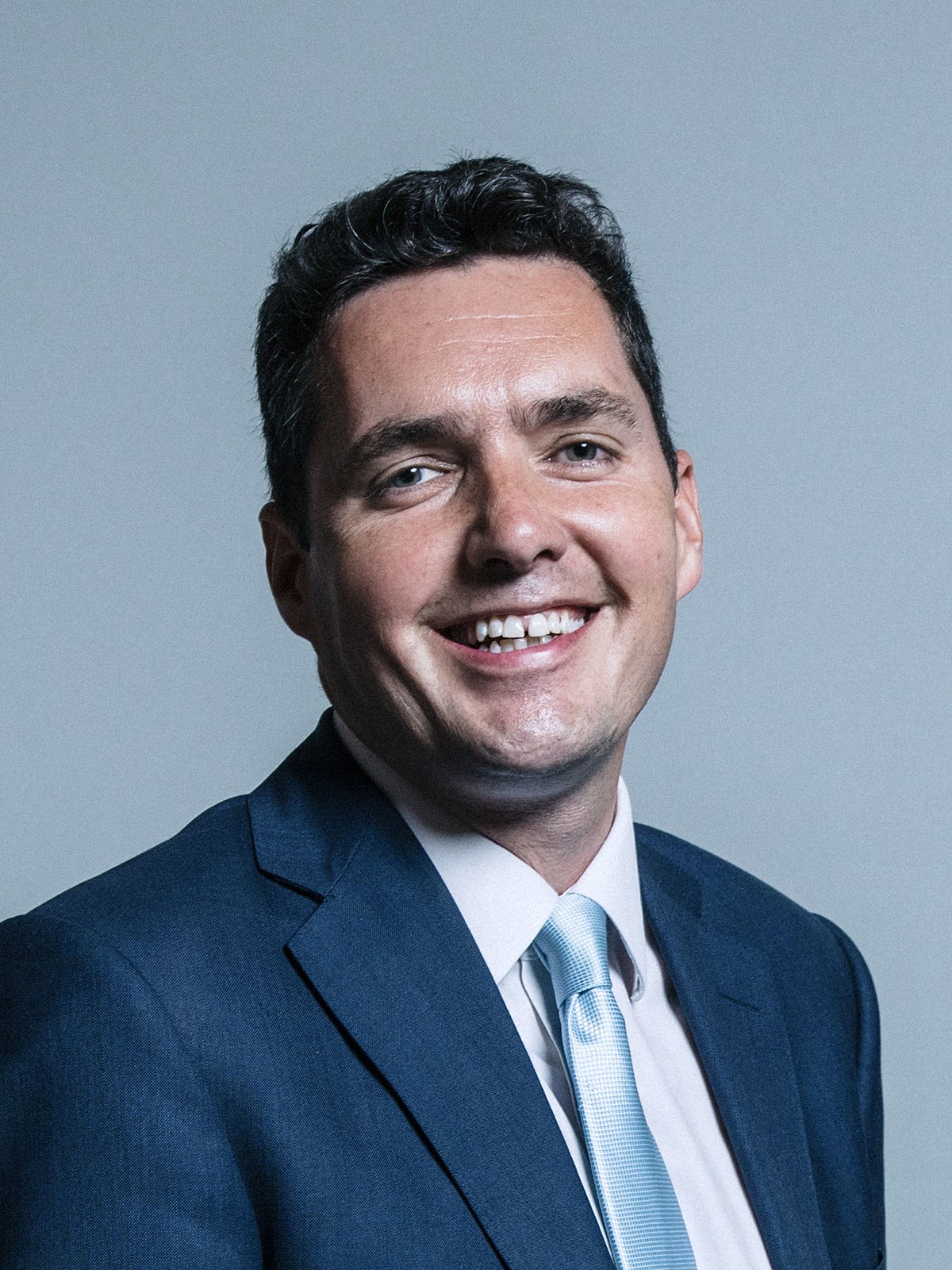
  • Huw Merriman – 2022 Speech on the Future of Rail Services

    Huw Merriman – 2022 Speech on the Future of Rail Services

    The speech made by Huw Merriman, the Minister of State at the Department for Transport, in Westminster Hall, the House of Commons, on 20 December 2022.

    It is a pleasure to serve under your chairmanship, Mr Robertson. It is also a great pleasure to be part of this debate, which was secured by my hon. Friend the Member for Wimbledon (Stephen Hammond). He said at the very end of his speech that he hoped the debate would be taken as positive and constructive, with ideas to feed into the mix. That is something that I always do with my hon. Friend, who has great expertise both as a brilliant railway constituency representative and as a former Transport Minister. In that regard, I thank him and all the other former Transport Ministers who have fed their ideas into the mix. I hope that I can cover the points made by my hon. Friend in the round, but I will try to address some of them specifically.

    The Government remain absolutely committed to reforming our railways and ensuring there are high-quality railway services across the whole country. As my hon. Friend pointed out, the Government commissioned Keith Williams to conduct the first root-and-branch review of the rail industry in a generation, which led to the publication of the plan for rail White Paper in 2021. Before that, more than 750 representations were made to the review, which met over 200 groups across the country. Although my hon. Friend pointed out that the review was completed some time ago—back at the end of 2019—it was extended to allow more time to test the conclusions and ensure that they were appropriate, given the impact of the pandemic on rail.

    There have been various changes of personnel, as my hon. Friend is well aware. The Secretary of State and I have been in post only since the end of October. We are reviewing the options for reform, and we expect to be able to provide concrete proposals as to what the reform will look like very shortly. We believe that the case for reform is stronger than when the plan for rail was first published. The lasting consequences of covid-19, along with industrial relations, sustained poor performance and financial challenges, increase the need for modernisation and efficiency. I will come on to the role of the private sector. If we want to regrow the railways back to the passenger numbers that we have previously seen, the best way to do that is to wrap in the private sector, which doubled those numbers post privatisation. I am very much with my hon. Friend the Member for Wimbledon on those optics.

    Dr Lisa Cameron (East Kilbride, Strathaven and Lesmahagow) (SNP)

    I am grateful to the Minister for speaking so eloquently about his vision for the future of rail services. As chair of the all-party parliamentary group for disability, I often hear from people right across the United Kingdom about difficulties in accessing rail services, ticketing offices and disabled toilet facilities. Will the Minister consider those important inclusion issues in his future vision?

    Huw Merriman

    Yes, we certainly will. We are looking at an interesting and challenging set of reforms. Ticket offices are largely unchanged from how they were 30 years back, but only 12% to 14% of tickets are purchased from ticket offices. The key is to find a way to get those personnel outside—on the platform and in the station—to help those with disabilities and mobility issues. Getting them on the platform and on the trains may mean change, but I hope that that will be a positive change for the passenger and the workforce. It will be a more interesting and exciting role with passengers.

    Munira Wilson (Twickenham) (LD)

    The Minister touched on his current focus on industrial relations and the need to grow the number of passengers coming back to the railways. Is he aware of the situation with South Western Railway, which serves all of south-west London, Surrey, Wiltshire and the south-west? Until the new year, there will be no services at all on non-strike days at 40 stations across the network, including Whitton, St Margarets and Strawberry Hill in my constituency, and numerous stations in Surrey. Nurses who are not striking cannot get to work, police officers cannot get to work and children cannot get to the schools that are open. What is the Minister doing to work with South Western Railway to ensure that services are available on non-strike days? We will never get people back on to the railways and improve industrial relations if passengers cannot get where they need to.

    Huw Merriman

    I agree with the hon. Lady, and I am aware that she applied for an urgent question on the matter. I will write to her.

    I call for all hon. and right hon. Members to come together as one on this issue. We cannot focus on good passenger experience and a future for the railways if there is industrial action that involves the workforce not working on rest days when it has previously done so. I have never encouraged that pattern or seen a future for it, because it means that we are reliant on goodwill. When goodwill is withdrawn at short notice, we end up with what the hon. Member for Twickenham (Munira Wilson) described. We need to move away from rest-day working, which does not work. Equally, I urge all those who are involved on the union side of matters to consider that it is Christmas. If we want a future for our railways, we must work positively and constructively, rather than withdrawing labour. I will write to the hon. Lady, as I mentioned.

    John Penrose

    Will the Minister give way?

    Huw Merriman

    I should make some progress, because time will push me towards the end. I shall try to take a further intervention if I can.

    I want to talk about other parts of the reform: fares and ticketing. As part of the plan, we will invest £360 million to radically reform and improve the passenger experience. We will also look to deliver our manifesto commitment by introducing tap-in and tap-out at additional stations in regional and urban areas, and contactless pay-as-you-go ticketing at over 200 stations in the south-east. We will also introduce simpler, modern ways of paying for travel and a straightforward compensation process.

    Let me touch on the proposals for reform. In addition to our significant investment in the passenger experience, one reform that we are considering is the creation of a new guiding mind to bring the fragmented railways under a single point of accountability. That would not be nationalisation; rather, it would be simplification. A simple, more agile structure will be needed to change travel and working patterns, introduce new technologies and enhance business models. My hon. Friend the Member for Wimbledon talked about the role of the private sector.

    My hon. Friend the Member for Wimbledon talked about the role of the private sector. Rail reform must have at its core greater private sector involvement. I want any new model to take the very best of the private sector: innovation, an unrelenting focus on quality and the type of models that drive reform, a better experience for the passenger and better return for taxpayer value. I am happy to discuss the private sector contribution, and to meet my hon. Friend to reassure him about that. He knows that I have always had a real passion for what the private sector has brought for rail. I agree that, although the franchise model may have run its course, it was not made easy for the private sector to navigate, because it became a very complex, documented process that put off new entrants to the market. Any rail reform has to be simple and nimble enough to bring in new innovators, not just the largest.

    My hon. Friends the Members for Wimbledon and for Weston-super-Mare (John Penrose) have championed open access. Rail reform must see an important role for open-access operators. We want to make the best use of the network and grow new markets for rail. The Department recently supported Go-Op’s innovative proposal to operate open-access services from Taunton to Swindon and Weston-super-Mare, providing new direct services and improved connectivity for communities.

    I have challenged my Department on open access. It seems to be the case that we are not putting open access on equal footing, which means that there is some sort of charge and enablement. The response is always, “It just takes away from the other contracted operators.” We need to charge open access more to allow it not to take away but to compete. In my view, open access definitely has a place, but we perhaps need to reform the entrance requirements so it is not constantly turned down. I am very excited about those possibilities.

    My hon. Friend the Member for Wimbledon asked when legislation would be forthcoming. We will not be taking forward legislation on rail reform in this parliamentary Session, as he is aware, but we will introduce it when the parliamentary timetable allows, and I am very keen that we do so. In the interim, rather than do nothing because legislation is not immediately forthcoming, many areas can be progressed outside legislation. They include making significant investment in ticketing and retail, and the formation of the reform proposals that we will focus on. I assure my hon. Friend that we will bring those forward in parallel with legislation.

    My hon. Friend mentioned the control period 7 settlement. That process is vital for securing value for money for the taxpayer and providing certainty to investors. The Government published a strong funding settlement of more than £44 billion for England and Wales for the next control period, which begins in April 2024. My hon. Friend touched on that. That demonstrates our long-term commitment to securing a safe, reliable and efficient railway. The industry—public and private—now needs to work together to establish stretching yet realistic targets for improvements and reliability, supported by Government investment.

    On the lack of reference to rail reform or GBR, the HLOS, which my hon. Friend mentioned, is more of a statement of principle. He should not read anything into that. We have not landed on one particular model, so it would not have been appropriate to insert one in there. I got my pen out and made sure there was reference to innovation and private sector involvement—I do not believe anyone took those words out. I was particularly keen to ensure that, with innovation, we included small and medium-sized enterprises so that we are focusing not just on larger private sector involvement but on the small innovators that can really drive change. They need to be in the room too.

    On industrial action, passengers rightly expect a regular, reliable service, seven days a week. Current shift patterns and voluntary weekend working for railway staff make that vision nearly impossible. The only solution is for everyone to come together and agree a new way forward. I have met the unions and employers, and the Secretary of State has met the unions too. I hope that will send a message to this House that we want to facilitate an end to industrial action. I again ask all right hon. and hon. Members to come together and push not just the train operators and the Government but those who are responsible for the strikes—the trade unions. It is time for all to be called out where they can deliver more.

    The Government are wholly committed to improving journeys for passengers and creating a better, more modern rail industry. I thank my hon. Friend for his contribution. I assure him that the private sector will be right at the heart of any reform proposals. The Secretary of State and I are committed to an improved railway with the private sector at its heart, and I hope that my hon. Friend will keep me to that mantra.

  • Stephen Hammond – 2022 Speech on the Future of Rail Services

    Stephen Hammond – 2022 Speech on the Future of Rail Services

    The speech made by Stephen Hammond, the Conservative MP for Wimbledon, in Westminster Hall, the House of Commons, on 20 December 2022.

    I beg to move,

    That this House has considered the future of rail services.

    It is a pleasure to see you in the Chair, Mr Robertson. I want to thank Mr Speaker for giving me the opportunity to host this debate. I have always believed that rail is critical to the success of our country. It connects our cities, towns and communities; it drives economic regeneration and growth; it is the employer of the present but also of the future, as new technological skills will be required; and it is the key to achieving many of our decarbonisation ambitions.

    It is clear that the pandemic has caused many industries catastrophic problems, and the rail industry is no different. When covid hit, ridership fell to about 4%, which was a record low. Train operating companies that had been providing the Treasury with £100 million every four weeks were requiring a subsidy of something like £600 million. The franchise system—which had been broadly successful from 1992 to 2016, when it experienced a number of problems—collapsed and the Government became the operator of last resort.

    It is not the case that all the problems of the industry came merely from the pandemic. The franchising system had worked well until 2016, but the more prescriptive franchising system set out in that round saw too much prescription and too little room for initiative. A distinguished predecessor of my hon. Friend the Minister recounts a story of how he was required to set the time of the last train from Southampton to Bournemouth. It should never be the role of Ministers to set timetables. There was too much interference.

    Network Rail was the cause of 80% of the delays, which is what caused most passenger dissatisfaction. The new timetable that was introduced in 2018 collapsed in September that year, which triggered the response from the Department to have the Williams review. It is true that the Williams review took some time, but it has now come forward and highlighted some problems. There are some very good elements of the Williams review. I have already mentioned the incentives to decarbonisation and the suggestion that no one disagrees that the industry needs a guiding mind.

    Equally, however, the review has embedded a number of problems. The concept of the guiding mind, the acceptance that the railways can drive social mobility and a cleaner, greener transport system, and that technology must be at the heart of future investment, are all absolutely key. However, I want to concentrate on two flaws of the Williams plan. First, the creation of Great British Railways as the guiding mind, the system operator, maintainer, enhancer and controller of operations, with the setting of passenger service contracts, safety and ticketing—I could go on—is to all extents and purposes the renationalisation of the railway system. Some in this room might think that is a good idea. Those of us old enough to have experienced British Rail will realise that no one in future would want to wear such rose-tinted glasses.

    There is also concern that there is too little emphasis in the plan on the benefits that the private sector has brought to the railway. It gives no incentive for operators to offer an enhanced service, and suggests little punitive action if it is a poor service. The passenger service operating contracts may well be a short-term palliative, but if adopted in the long run they would drive the private sector from the industry.

    Jim Shannon (Strangford) (DUP)

    I commend the hon. Gentleman for securing this debate. The key thing for me is the customer, and I know that that is the key thing for him as well. Does he agree that connectivity is essential to rural communities? The ability to jump on the tube or a train is missing in too many communities. We must look at not simply holding on to what we have, but at expanding the network so that we can tackle rural isolation. That is what the customer wants.

    Stephen Hammond

    The hon. Gentleman is exactly right. If he listens to my speech later on, he will hear me say that the passenger must be at the heart of the new railway system. The new system needs not to go back to what it was previously but to evolve. In a few moments’ time, he will hear me make that point.

    I have always been in favour of privatised railways, although I accept that there are some legitimate criticisms. However, the creation of a not just fat but staggeringly obese controller at the centre and heart of a hybrid railway system is likely to be the worst of all worlds. I can only echo the view of so many senior rail experts who believe that, as the Government are soon to finalise their plans, now is the time and opportune moment to consider not just the best of the Williams-Shapps proposals but radical change.

    The first test of this iteration of the Government’s plans has come with the recently announced SoFA—statement of funds available—for control period 7, which is £44 billion. That is a huge sum of money, but it is £4 billion less than the amount given for control period 6. That partly reflects the fact that, while Network Rail has excellent leadership at the top, all too often there are layers of permafrost that stifle initiative, do not give clear prioritisation to investment plans and do not get them delivered. In some cases, they have prioritised engineering over the customer. I reiterate that if this money is to be used sensibly, as I will say in a few minutes’ time, it is absolutely clear that the future plans for this industry must have well-defined, accountable plans for investment.

    I have also looked at the HLOS—the high-level output specification—which was even more revealing, probably for what it did not say as much as what it did say. I saw no reference in the HLOS to either the rail review or Great British Railways. Although I accept that I may well be overinterpreting the HLOS, the optimist in me thinks that that means that the Government are actually signalling that they intend to revise their proposals.

    Disappointingly, there was no reference to encouraging the participation of the private sector in the development of projects nor in the financing or funding of specific projects, despite that being one of the core suggestions that the transition team works on as it moves from the old system to the new. In response to the point about connectivity made by the hon. Member for Strangford (Jim Shannon), I accept that paragraph 24 of the HLOS refers to engaging with regional transport authorities, but I believe that local, regional and national schemes are all equally important. I hope the Minister will confirm that that was an error of omission rather than intent.

    Richard Foord (Tiverton and Honiton) (LD)

    Is the hon. Member aware of the very good example of rural connectivity with the recent reopening of Okehampton railway station in Devon? Is he also aware of the potential for rural connectivity at Cullompton railway station, which is also in Devon?

    Stephen Hammond

    Interestingly enough, in my first life in this place I was the Opposition spokesperson on railways for four years, and for two years I was the Minister for rail, so I know all about Okehampton station and what it might bring forward.

    That refers back to the point I made a moment ago that, with clear prioritisation of investment and the right incentives to operators, there is absolutely no reason why regional and local investment should not be seen to be just as important as national investment. Indeed, the point I made at the beginning, about rail being the key to regeneration and economic growth in a number of communities, underlines the point that the hon. Gentleman was making.

    Martin Vickers (Cleethorpes) (Con)

    I wish to make that very point about economic growth and investment in an area. As the Minister knows, I have been campaigning for the restoration of the three trains between Cleethorpes and King’s Cross for many years and they now appear in the London and North Eastern Railway draft timetable for next May. When the Minister sums up, will he comment on whether those services are likely to happen? As my hon. Friend said, economic growth and investment are crucial to the regeneration and levelling up of many of our more deprived areas.

    Stephen Hammond

    It is 20 December, but already many hon. Members wish my hon. Friend the Minister to become Father Christmas in his summing up. As it is Christmas, and given he is a great friend of mine and an acknowledged expert in this field, may I offer him a few Christmas cracker thoughts about how I would like to see him use this opportune moment by accepting the best from the Williams-Shapps plans but also looking at what could be done to make our rail system even better?

    A moment ago I referred to “the staggeringly obese controller”. One of the first things that could happen is that the Fat Controller could go on a new year diet. Everybody agrees that a guiding mind is needed for this industry. It would be right for Great British Railways to be turned into that guiding mind, with the clear objectives of setting timetables in conjunction with the infrastructure provider and operating companies, and being the body to set safety standards, let current contracts, see an evolution of the system and potentially oversee slot auctions.

    If that is what Great British Railways is to become, then it is implicit that the infrastructure operator and maintainer should be separate from the guiding mind. If both functions were under that one body, it would make that body partial to the interests of network engineers rather more than to ensuring the satisfaction of passengers, freight operators and ticket operators. It does not matter what that separate entity is called—we could call it national rail, network rail or whatever we like—but I suggest to the Minister that setting Great British Railways up as the guiding mind and distinctly separating the role of infrastructure operator would be an excellent way forward.

    John Penrose (Weston-super-Mare) (Con)

    My hon. Friend is making an excellent speech. I want to back up his suggestion for a much more slimline future system operator for two reasons. First, if I understand his point correctly, that would put customers and passengers right at the front rather than system and network engineers, which is the right way round and the right order of priority. Secondly, that addresses the fundamental point that my hon. Friend raised at the start that the difficulties from 2016 onwards were of an overly centralised, overly controlled agglomeration of power. He suggests a dispersal and relaxation of that power, and a transfer of it out from the centre, which is essential if we are going to have the flexible system we need to adjust to the changes that the pandemic has brought.

    Stephen Hammond

    I am tempted to say that great minds think alike, because my next point is to suggest to the Minister that the Government should look at passenger service contracts. We all accept that the post-2016 franchising system and the pandemic have meant there is a need for change, but passenger service contracts are a journey rather than an end in themselves and the Government should look at what the end might be, so I suggest two things. I suggest that we should look at evolving mechanisms, so that there is a spectrum of possibilities for either new contracts or revised franchises that look at revenue risk, how it is shared, a range of revenue incentives, and a range of arrangements that in some cases would allow slot auctions as well as new franchises and that potentially ensure passenger service contracts in some areas. To that end, a commitment to review what is now in place after two years would allow that to happen. As I say, it would also provide for greater competition by introducing slot and route auctions—initially, I suggest, for a limited number of some of the long-distance routes. It would drive passenger satisfaction, encourage initiative and secure a future for open access, which had been one of the drivers for change, and for a range of competitions.

    Some really exciting recommendations in the Williams-Shapps review should be kept. They include a steady programme of electrification alongside the utilisation of enhanced battery and hydrogen technology; new procurement processes based on whole-life value, with consideration of opex and social value, not just old-style cost-benefit analysis; and the provision of open data being more accessible and available to all industry participants. Those are some of the sensible, well-thought-through suggestions, as is the need for a guiding mind, but I hope the Minister will also accept that now is the right time, as I understand that the Government are looking to bring forward new plans or even a Bill in the new year. I hope he will accept the points I have made about separating the guiding mind from the infrastructure provider, giving a commitment to revise the spectrum of possibilities for train operating companies, and giving a commitment to see the private sector work alongside the public sector to deliver a clear, identified and accountable investment programme, so that all the money that is available for investment is spent in control period 7.

    I am optimistic about the future of the railways, and I am particularly optimistic about their being in my hon. Friend the Minister’s hands, so I hope that he will accept that what I am trying to do—in a very thumbnail and headline way—is to set out some ideas that I think will make the future of the railways even more secure. I hope he will accept them as positive, constructive and implementable ideas, so that we have a railway that is fit for the 21st century.

  • Kevin Hollinrake – 2022 Speech on Family Businesses

    Kevin Hollinrake – 2022 Speech on Family Businesses

    The speech made by Kevin Hollinrake, the Parliamentary Under-Secretary of State for Business, Energy and Industrial Strategy, in Westminster Hall, the House of Commons on 20 December 2022.

    It is a pleasure to see you in the Chair, Mr Robertson. I thank my hon. Friend the Member for Carlisle (John Stevenson) for bringing forward this important and beautifully timed debate. If Christmas is about anything, it is family. Moreover, business is important in this place; it is absolutely right to have a debate on family businesses on our last day of term. I thank hon. Members for sharing their fine examples of businesses in their constituencies; we are all very proud of those businesses. It is hugely important that we support them.

    There were many fantastic points made in this debate. Most of all, hon. Members stressed the importance of family businesses to their communities. Their contribution is fundamental. It is not just about employing local people; they can contribute to local charities, sponsor local football teams, or indeed sit on councils. My hon. Friend the Member for Carlisle made that important point. Easingwold is still part of my constituency, though it will not be after the boundary changes, which is quite annoying. There used to be the old Easingwold Rural District Council. Around the walls of the council chamber were black-and-white photographs of all the former council leaders. They were all local business people that I knew really well. They were important, and so proud of the town and their contribution to it. Now that our model for local authorities has changed, maybe that connection between businesses and their communities is not as strong as it was; that was a point made by my hon. Friend.

    My right hon. Friend the Member for Aldridge-Brownhills (Wendy Morton) said that local businesses’ contribution to their communities cannot be overestimated. I am very proud to be somebody who might be described as having a family business. We started our business back in 1992; I was in partnership not with a family member, but with a very good friend, John Waterhouse, but over the years, we gathered family into our business. It did not start off as a family business, but it became one. The point about the proportion of women contributing to family businesses being greater than the proportion of women in business in general is interesting; my sister took over as chief executive of our business in 2015, just before we listed it, and I have to say that she did a far better job of running it than I did. It very much became a family business.

    I am very proud to have this role. I am from business and for business, and am proud to have an opportunity to play an important part shaping how we look after all businesses in future, not least family businesses. My hon. Friend the Member for Torbay (Kevin Foster) made a point about support for staff. In the pandemic crisis, lots of business people cut their wages to make sure that they did not have to cut staff from their businesses. We did the same. I always used to say to people when they were starting a business, “You work twice the hours for half the money, if you run a business. That is what you have to be prepared for. You do that for a lot of years.” The commitment cannot be overestimated.

    The hon. Member for Caithness, Sutherland and Easter Ross (Jamie Stone) made another point that really resonated with me, about local reputation, which is fundamental. A family business operates and does the right thing because its reputation is on the line every single day, whether that is through the service provided to the customers or the way employees are treated. Those elements are vital to local reputation and are hugely important.

    Of course, the family business community is very disparate, and its representation here is really important. I also commend the Institute for Family Business—I think we have some representation in the Public Gallery today—for its work. It is so important to highlight the benefits of family businesses and their contribution. I was proud to speak at the Family Business Week event, as did the shadow Minister. It was a fantastic event. There were so many people there, and a huge range of businesses, from construction to hospitality. It highlighted that 88% of UK businesses are family businesses, which employ 14 million people; and that 50% of mid-size businesses are family businesses, which shows both their contribution and the opportunity ahead.

    I want to touch on what we are doing to support all businesses through a difficult period—there is no doubt that we will go through a difficult period—and I will come to some things we can do better in the future, to improve the prospects for family businesses. Clearly, it has been a difficult time for business generally, with the EU transition, the covid pandemic and now a supply-chain crisis and an energy crisis. It is important to recognise that these are global issues that we are trying to mitigate—they are not principally domestic—but they are clearly leading to recession, due to the need to put up interest rates to try to control inflation. It is therefore absolutely right that the Government should step in to try to mitigate some of the pressures, with measures such as the energy bill relief scheme, which is hugely important for businesses and is saving them a significant amount of money. That is a very expensive package; about £25 billion of taxpayers’ money is going into the scheme to try to mitigate the effects of the extra cost of energy for businesses.

    The EBRS 2—the extension to that scheme—will be announced shortly. We are keen to make sure that we get all these good, viable businesses through this tricky time, until energy prices become more moderate. The one positive thing I can say about the difficult time ahead is that our business went through three recessions, and we came out stronger on the other side each time. Good businesses get through it and come out stronger, and the best years come after difficult years. Hopefully there is some optimism for the future, as well as a recognition of the challenges we face.

    The Government announced a cut to fuel duty, and employment allowance has increased, reducing national insurance by up to £5,000 for small and medium-sized enterprises. There is also the £13.6 billion of business rate relief for businesses. I do not want to argue with the shadow Minister, as it is nearly Christmas, but I keep hearing that the Opposition are going to scrap or reform business rates—I am not sure which it is. To talk about getting rid of £22 billion without talking about what they will replace it with is not right and will create more uncertainty for businesses. It would be better to set out exactly how that money will be replaced. Perhaps we can deal with that issue in the new term next year.

    The Government obviously reversed the decision to increase national insurance, which was helpful for most businesses and saved them about £4,200 a year. Importantly, at the Budget we announced the incentives to invest—the annual investment allowance. That is £1 million annually of full expensing against a business’s profitability. That is an important investment concession, and the Government are absolutely right to give that long-term certainty to businesses. That is an important new step, and that £1 million is permanent. That gives businesses the confidence that they can invest, knowing that it will be tax efficient.

    My hon. Friend the Member for Carlisle and the shadow Minister talked about succession—passing on businesses to the next generation. Business property relief is a really important part of that. Not everybody understands exactly what it does, but it is an important tax concession that means that families can pass on their business to the next generation without paying inheritance tax. That hugely important tax incentive keeps family businesses together, and it is being done for exactly the right reasons.

    The Government have exempted more businesses from regulations. Various business regulations have increased from a threshold of 50 or 250 employees to 500, which should lower regulations on many family businesses. We are trying to help family businesses, as well as many other businesses, transition to net zero. We have zero-rated energy on energy-saving products, which is really important. The Help to Grow: Management scheme improves management skills for SMEs. The Government are subsidising 90% of the cost of that scheme, which is hugely important in improving our management skills. Of course, the £4.8 billion levelling up fund and the £2.6 billion shared prosperity fund try to improve the communities that family businesses make such a huge contribution towards.

    To improve the prospects of family businesses, and all small and medium-sized businesses, the most import thing that we can do is support them by spending our hard-earned money there and use them rather than their larger competitors. Like others, I was delighted to attend small business Saturday. From early morning to late evening, I visited fantastic small businesses across my constituency. I just want to name-check Taylor’s of Pickering. Pickering is a small town in a beautiful part of North Yorkshire, and Les and Joan Taylor started the business in 1969. It is a greengrocer and fishmonger, and it is in its third generation now. Peter Taylor, who now runs it, gets up at 2 o’clock every morning to deliver his groceries—he is a wholesaler too—and smoke his fish. It is a fantastic business. Those kinds of business are the backbone of our communities. As the hon. Member for Strangford (Jim Shannon) said, we are a nation of shopkeepers, and it is important that we go and shop in those businesses. I know that he does that on his high streets in Strangford.

    We are doing a lot on finance, which a number of Members talked about. The hon. Member for Caithness, Sutherland and Easter Ross and my right hon. Friend the Member for Aldridge-Brownhills talked about the demise of the local bank manager. In my community, Ron Taylor was our local bank manager and a very well-known figure. I think that has disappeared.

    We are doing things to improve access to finance for SMEs and family businesses. The British Business Bank has given £12.2 billion through various different mechanisms to 96,000 businesses, and when it comes to new family businesses, over £1 billion is now being lent in start-up loans to about 100,000 businesses. However, there is an argument that we need to once again put in place patient capital for intergenerational businesses—some other countries do that better than we do. Certainly, in lots of the G7 nations, particularly Germany, regional mutual banks provide long-term finance for family businesses; that, I think, is why we see many more big intergenerational businesses in places such as Germany. That is something we need to look at and learn from, and in my role I am keen to explore the potential of that.

    The UK has a very good story to tell in terms of business. We are first in the OECD for the numbers of start-ups per capita, but we are 13th in terms of scale-up, so we do not get as many businesses growing quickly in those early years. Again, that is something I very much want to focus on in my role. It is a huge opportunity, because we know that if we can solve that particular equation—that first and 13th equation—we can solve the productivity puzzle.

    We are looking at many other things, including through our review of payment and cash flow, which is another source of finance. We are very keen to scrutinise current practices and develop best practice in that area, to make sure we have good advice and mentoring services. There are 38 growth hubs around the country. We are keen to improve people’s growth hubs, and to hear stories from hon. Members across the House about the quality of their local growth hubs, to make sure that they are as good as they can be. We invest heavily in them. They are there to provide advice on access to finance and mentoring, and we want to make sure that they are delivering good outcomes for our local SMEs. We also want to improve procurement by bringing more SMEs and family businesses into public sector procurement. The Procurement Bill is going through Parliament at the moment, but there are lots of other lessons we can learn.

    I will conclude now, to give my hon. Friend the Member for Carlisle a couple of minutes in which to sum up. As I say, it is a great privilege for me to be able to speak in this debate. All hon. Members across the House come to this place to make a difference, and this debate has been a great opportunity for me to be able to give something back to my community—the business community that has been transformational for my life. Thank you for that opportunity, Mr Robertson, and I conclude by wishing all hon. Members a very merry Christmas and a happy new year.

    John Stevenson

    I thank the Minister for his contribution. He is a very unusual Minister in Government terms, in that he is a round peg in a round hole.

    I also thank all colleagues for their contributions. It has been very interesting to hear about the significant contribution that family businesses make not only to local economies but—and this is equally important—to local communities up and down the country. Some 85% of all businesses are family businesses, and if I were to give one challenge to the Government on growing the economy, it would be to recognise that it is absolutely vital that those family businesses grow, expand and become much bigger, such that they contribute not just locally but nationally. That is how we will grow our economy. There needs to be greater recognition of the importance of family businesses, and we need to ensure that they grow, expand and receive support.

    Finally, I follow the Minister in wishing everybody a merry Christmas and a happy new year. I hope that 2023 will not be as exciting as 2022.

  • Seema Malhotra – 2022 Speech on Family Businesses

    Seema Malhotra – 2022 Speech on Family Businesses

    The speech made by Seema Malhotra, the Labour MP for Feltham and Heston, in Westminster Hall, the House of Commons, on 20 December 2022.

    It is a pleasure to serve under your chairship, Mr Robertson. I start by congratulating the hon. Member for Carlisle (John Stevenson) on securing this debate, which is a really excellent one to have on the last day before we break for Christmas. It is clear from the contributions that everybody has a story to tell about family businesses—either their own family business, or those in their constituency. Very strong feelings have come through about the contribution that family businesses make to our local economies and our national economy.

    So many points were raised, which I will draw on, but I also support and thank, as other hon. Members have, the Institute for Family Business, which has made such an important contribution to raising awareness of family businesses over the last couple of years, particularly through Family Business Week.

    The hon. Member for Carlisle was also right to highlight hospitality businesses, so many of which are family-run and family-owned, and so many of which play that very important role of being a home from home—a local place that people can pop out to in order to be with friends and neighbours, and indeed their own family. Family businesses give that “home from home” feeling that really touches our communities in special ways.

    The right hon. Member for Aldridge-Brownhills (Wendy Morton) mentioned showmen, and I was going to mention showmen from my constituency. Feltham has a long tradition of showmen living in the area, and I have continued to support their place in the community and their role in a unique industry that gives a tremendous amount of pleasure, and even joy, to families across the country. I will also mention a couple of businesses in my constituency. Flowers by Eva’s is one. It has been in Hanworth since 1955, and has given the joy of great flowers and bouquets for weddings, as well as providing flowers for funerals and other special occasions. It gives that extra personal touch, because when we go to such businesses, we get to know the people in them.

    I will also highlight businesses run by members from immigrant communities, for whom it has sometimes been hard to find a conventional way into employment. They have started businesses that have allowed them to make a big contribution to the community, and that have grown. One example is the Sanger family, which owns Heston Hyde hotel, Bentley hotel, Washington hotel and now the Courthouse hotel. The business is still run by the family—indeed, multiple generations of the family. That family started with nothing in this country, but they now contribute so much to our prosperity.

    I again pay tribute to the Institute for Family Business for the way that it conducted, ran and brought to Westminster, Family Business Week, which was supported by NatWest Group. I was delighted to speak at the reception in November, having made a virtual contribution to Family Business Week last year. Family Business Week celebrates local family businesses, encouraging them through social media. The family business in my area that I popped into at the weekend was Priyas Tandoori in Cranford, a very homely place to get a takeaway or to eat in with family members.

    I, too, grew up in a family business, above our small shop in Osterley, so I know about the contribution that family businesses make, and about the attitude that my parents had. They saw what they did as almost a public service. We sold school uniforms, jewellery imported from India, clothes—all sorts of useful items that people never knew they needed until they popped into Ramson of Osterley. I find it fascinating that people who went to the shop in the late ’70s and ’80s still remember it. They remember what my parents did and even remember me aged five, six and seven learning how to serve customers and the fun that we had with that.

    Research from the Institute for Family Business has revealed that family businesses are key drivers of regional growth and prosperity, spreading economic prosperity to all corners of the UK. We have heard in the debate what defines a family business, and about some of the more technical points around voting rights, control and ownership, and levels of involvement in administration. We have also heard how family business issues reflect the issues that other businesses face, such as the rising cost of doing business, energy costs and so on.

    I want to emphasise the point that was made about the part that women play in family businesses. It is a subtle point, but although we have heard about one-man bands, there are quite a few one-woman bands. It is important to make sure that we use language that reflects the work of women such as Anita Roddick, who set up the Body Shop, and so many other women entrepreneurs who run a family business.

    The hon. Member for Torbay (Kevin Foster) and others mentioned the 13.9 million people in such businesses, and the proportion of private sector employment that comes from family business employers. We know from the research and the debate that there are many ways that family businesses contribute to their local community. They often have a long-term relationship with a place. It can be where the owners’ kids go to school, as was the case in my family. There can be loyalty, local staff, and the creation of local services. The hon. Member for Strangford (Jim Shannon) was absolutely right to talk about local services—the lawyers, banks and insurance companies. All of those make a difference to a community’s fabric. When we think about support for family businesses, those are important things to emphasise and encourage; we should think about how we actively nurture the family business leaders of tomorrow.

    We have heard many examples of household names, but I might add Cadbury. My hon. Friend the Member for Brentford and Isleworth (Ruth Cadbury) is a member of the Cadbury family. We can see the social contribution made by family businesses that recognise the needs of their workforce and the community around them.

    Although family businesses had a higher decrease in turnover than other businesses during the pandemic, they were less likely to see a decrease in staff. That speaks to the story and the contribution of family businesses, the loyalty of staff to the organisation and its culture, and the loyalty of the owners to their staff. However, family businesses are absolutely up against it. They have raised concerns about business rates, supply chain costs, access to schools, and the need for a stable tax environment.

    A good Government should create an environment for business success. It is a concern to me that this Government and previous Conservative Governments have failed to do that. We have a supply chain crisis, petrol crisis, heavy goods vehicles crisis, CO2 crisis, energy crisis, cost of living crisis, cost of doing business crisis, and an industrial disputes crisis.

    Jamie Stone

    The hon. Member mentions the covid pandemic. It is interesting: during the pandemic, some businesses were really inventive and innovative. For instance, many food outlets offered a delivery service. I am sure my experience was exactly the same as that of many other hon. Members. It might be profitable for civil servants one day to take a look at some of those examples, and have a case study portfolio. We would be foolish to think that British inventiveness is dead.

    Seema Malhotra

    The hon. Member makes a powerful point. Indeed, what he says comes through in the data about how family businesses got through the pandemic. However, a recent survey has suggested that 80% of members of the Institute for Family Business were less confident going into this winter than they were last year, during the pandemic. Rising inflation is a threat, and there are concerns about the cost of living and consumer confidence. Clearly much, more support for businesses is needed. I am concerned that last week the Government slipped out in a written ministerial statement that they will be closing the “Help to Grow: Digital” programme, which was to give businesses support in adopting new technologies. They had all the warnings about the design and the roll-out, but they failed to listen to those important voices. That has cost businesses a year, and the possibility of moving forward in digital.

    What needs to happen if we are to support family businesses at this time? First, we need to deliver macroeconomic stability, and respect our institutions, such as the Office for Budget Responsibility and the Bank of England. A key reason for the failure and devastating impact of the mini-Budget was the sidelining of our economic institutions. We need to make sure that we work with businesses to tackle the crises facing our country. Small Business Saturday has been mentioned; we all celebrated its 10th year this year, and I celebrate it every year.

    We need to make importing and exporting easier; Brexit is not working as the Government promised. We need to address the inheritance challenges for family businesses, which have been mentioned—for instance, there should be clarity around rules, and support when there might be difficulties with succession planning. We should also have a proper industrial strategy, backed by ambitious investment, that makes decisions for the long term. It should be secured by an industrial strategy council that has a statutory footing.

    Family businesses are not just our local small businesses; they are also key in manufacturing and other big sectors across the country. We need a proper plan for skills, which is an area where our growth and skills levy will bring the flexibility that is needed. We also need a plan for reform of business rates, because so many businesses are concerned about the unfairness of business rates. They should be reformed and changed, to level the playing field between bricks and mortar and online businesses.

    This has been a fantastic debate. Labour has a long-term plan for growth, which would bring stability for businesses across the country and give our incredible family businesses the support that they need to grow and prosper. I look forward to the Minster’s response to this important debate, and to his saying how we can work together, across this House, to support our family businesses and the employment and prosperity that they bring.