Blog

  • Mark Eastwood – 2022 Parliamentary Question on Fiscal Steps on Levelling Up Communities

    Mark Eastwood – 2022 Parliamentary Question on Fiscal Steps on Levelling Up Communities

    The parliamentary question asked by Mark Eastwood, the Conservative MP for Dewsbury, in the House of Commons on 20 December 2022.

    Mark Eastwood (Dewsbury) (Con)

    What fiscal steps his Department is taking to level up communities.

    The Chief Secretary to the Treasury (John Glen)

    The Treasury is making significant investments to level up communities across the UK—101 towns, including Dewsbury, will benefit from more than £3.2 billion from the towns fund, supporting long-term economic and social regeneration. Of course, communities will also benefit from the £4.8 billion levelling-up fund, the £2.6 billion shared prosperity fund and the £250 million community ownership fund.

    Mark Eastwood

    The decision on the £47 million Penistone line levelling-up fund bid is due to be announced shortly. Can my right hon. Friend assure me that this important round 2 category 1 bid will be subject to the same financial considerations and eligibility as bids submitted in round 1?

    John Glen

    I can absolutely reassure my hon. Friend that all round 2 bids are undergoing a robust and thorough assessment through that decision-making process. That is consistent with the approach taken in round 1. Of course, the individual decisions will be made in due course in the very near future.

    Catherine McKinnell (Newcastle upon Tyne North) (Lab)

    One way the Government could level up low-income families with young children is through healthy start vouchers. This year, I have tabled four written questions asking what the take-up rate of that scheme has been since digitisation in April, but the Government have been unable to give me an answer, despite the fact that we are eight months on and in the middle of a cost of living crisis. How do the Government know what the take-up rate of the scheme is and whether it is working in balancing out inequalities?

    John Glen

    I obviously cannot answer that specifically, but I can say that the Government have, over recent weeks, shown the commitment to helping the most vulnerable across the United Kingdom. But I take the hon. Lady’s question seriously, and I am very happy to look into that and to work with colleagues across Government to find an answer.

    Kevin Foster (Torbay) (Con)

    As the Minister will know, fiscal steps in investment zones can help to boost and level up communities—I am thinking in particular of Paignton in South Devon, where South Devon College and the photonics industry exist side by side. Will he meet me to discuss how that initiative could help to support growth in Paignton?

    John Glen

    I am very happy to meet my hon. Friend, who is, as ever, fighting strongly for his constituents. As he knows, the investment zones are designed to be a meaningful mechanism to catalyse growth, sometimes, although not exclusively, through university, looking at where we can find clusters across the United Kingdom to drive the economy forward.

    Dame Meg Hillier (Hackney South and Shoreditch) (Lab/Co-op)

    Clearly, we need to level up on housing. In my constituency, many people just cannot afford a private rented home or to own their own home, and we need more social housing, but that is not possible without Government subsidy. What is the Treasury considering to make sure that people who desperately need a permanent roof over their head can get it?

    John Glen

    We are working very closely with the Department for Levelling Up, Housing and Communities to look at specific interventions. We have just released an extra amount of capital money to work alongside the Ukraine support scheme. But I totally recognise that this is a critical issue, and we will make further announcements about it in due course at the next fiscal event.

    Jason McCartney (Colne Valley) (Con)

    I fully support my hon. Friend the Member for Dewsbury (Mark Eastwood) in his levelling-up bid for the Penistone line, as it goes through my constituency, with stations in Brockholes and Honley. I also have my own levelling-up bid to regenerate a disused mill in Marsden for commercial space. These bids are good not only for connectivity and regeneration, but for the economy, because they create jobs and growth. Does the Minister agree that this allocation of funding therefore makes sense?

    John Glen

    I absolutely agree with my hon. Friend—perhaps unsurprisingly. The Government have developed a bespoke and objective index of priority places. We are very keen for this investment to work effectively, wherever it is. I very much respect the representations he has made this morning for the bid in his own constituency.

    David Linden (Glasgow East) (SNP)

    An important part of levelling-up communities is to invest in the community transport network. Last week, I visited Shettleston-based Community Transport Glasgow alongside Councillor Laura Doherty. They were telling me that they were having real difficulty attracting volunteers because of HMRC rules around mileage rates. Is that something that the Government are willing to look at? Will the Minister be willing to meet me and Community Transport Glasgow to discuss that issue?

    John Glen

    We keep these matters under review, but I am sure my colleague the Financial Secretary, who takes a close interest in these matters, will follow up in the appropriate way.
  • Peter Grant – 2022 Parliamentary Question on Poverty Levels in Scotland

    Peter Grant – 2022 Parliamentary Question on Poverty Levels in Scotland

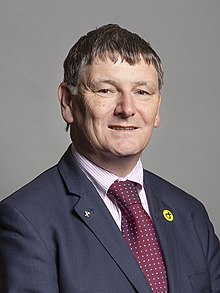
    The parliamentary question asked by Peter Grant, the SNP MP for Glenrothes, in the House of Commons on 20 December 2022.

    Peter Grant (Glenrothes) (SNP)

    What recent assessment he has made of the potential impact of his policies on levels of poverty in Scotland.

    The Exchequer Secretary to the Treasury (James Cartlidge)

    The Chancellor published the “Impact on households” document alongside the autumn statement 2022, containing analysis of how policy announcements affect household incomes. The results show that the autumn statement decisions on tax, welfare and changes to the energy price guarantee in 2023-24 benefit low-income households across the UK, including Scottish households, the most. The autumn statement announced further support targeted at 8 million of the most vulnerable households across the UK, who will benefit from additional cost of living payments in 2023-24.

    Peter Grant

    The Joseph Rowntree Foundation found that, by October this year, one in five households in Scotland had already had to go without food or without heat because they could not afford both—and that was before the recent severe cold snap. The JRF also described the Scottish child payment, introduced by an SNP Government, as

    “a watershed moment in tackling poverty”.

    Does the Minister have any plans to speak to the Scottish Government to find out how the Scottish child payment works so it can be introduced here? Who knows—they might give him some tips on how to avoid a nurse’s strike at the same time.

    James Cartlidge

    I am, as ever, grateful to the hon. Gentleman for his advice. Of course, we engage closely with the Scottish Government. The latest official statistics from the Department for Work and Pensions, based on data up to 2019-20, show that, compared with 2009-10, there were 55,000 fewer people in absolute poverty after housing costs in Scotland. But I think the key point is that we are supporting everyone in every single part of the UK with their energy bills this winter. It is a challenging time, but our extraordinary help is making a real difference.

  • John Penrose – 2022 Parliamentary Question on Loyalty Penalties in Insurance Market

    John Penrose – 2022 Parliamentary Question on Loyalty Penalties in Insurance Market

    The parliamentary question asked by John Penrose, the Conservative MP for Weston-super-Mare, in the House of Commons on 20 December 2022.

    John Penrose (Weston-super-Mare) (Con)

    What recent assessment he has made of the effectiveness of the Financial Conduct Authority in protecting customers from loyalty penalties in the insurance market.

    The Chief Secretary to the Treasury (John Glen)

    The Government welcome the Financial Conduct Authority’s pricing rules, introduced in January this year, which require insurers to offer a renewal price no greater than the price the firm would offer to a new customer for the same policy. The Financial Conduct Authority has confirmed there is no evidence of widespread non-compliance with those rules.

    John Penrose

    The FCA’s cheap and, we hope, effective measures to stop insurance company customers being ripped off is in stark contrast to the energy price cap, which was introduced for exactly the same reason, but has not held down the price of energy and has larded hundreds of pounds of extra hedging costs on to every household’s energy bills to boot. Since the Treasury is spending vast amounts of taxpayers’ cash on energy subsidies at the moment, will my right hon. Friend speak to the Secretary of State for Business, Energy and Industrial Strategy about replacing the failed energy cap with a version of the FCA’s much cheaper and more effective approach as soon as energy prices return to normal?

    John Glen

    I am very happy to look at that question further. The Government previously considered, but rejected, asking Ofgem to implement a relative rather than an absolute price cap in energy markets, which would have similarly prevented energy suppliers from charging those large differentials, because it was judged that it was more likely to distort competition in the fixed-term tariff market. As ever, I am happy to continue the conversation with my hon. Friend and I know he will take the matter up further with the regulator.

    Mr Speaker

    We now come to the SNP spokesperson.

    Stewart Hosie (Dundee East) (SNP)

    Subsequent to the changes to the insurance market to protect people from the loyalty payment, the Chancellor announced his Edinburgh reforms to wider financial services regulation and a great many consultations. At a quick glance, many of them closed very quickly—on 5 February, 17 February, 3 March, 5 March and 17 March. Given that the Treasury Select Committee warned over a decade ago that the Government

    “needs to take the time required to get its reform of financial regulation right”,

    how can we be convinced that the rather painful lessons of the financial crash have not been forgotten?

    John Glen

    For four and a half years, I was the Economic Secretary to the Treasury, and many of those reforms were baked up over a lot of consultation with industry over many months. The Edinburgh reforms represent an incremental advance on those reforms and have high prudential regulatory standards very much at their core.

    Stewart Hosie

    I will come to that, because the Minister is absolutely right. I did quote from a 2010 report. But in June this year, the Treasury Committee, in its report on the future of financial services regulation, warned:

    “Weakening standards could reduce the financial resilience of the UK’s financial system and undermine international confidence in that system and the firms within it.”

    Given the intention to review capital requirements, and the new remit letters and secondary objectives for the Prudential Regulation Authority and the FCA, how will the Chancellor and the Minister ensure the regulatory focus on stability is maintained?

    John Glen

    I gave evidence to that inquiry and I heartily agree with its conclusions. Stability is at the core of the regulators’ objectives, but so is the need to look at the competitive landscape across the globe and ensure that the UK, with the city of London as a global hub for financial services, evolves and remains competitive, taking account of the risks but also developing frameworks in line with expectations, so that we can remain that world-leading global hub.

  • Wendy Chamberlain – 2022 Parliamentary Question on Energy Producer Profit Trends

    Wendy Chamberlain – 2022 Parliamentary Question on Energy Producer Profit Trends

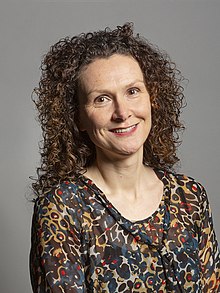
    The parliamentary question asked by Wendy Chamberlain, the Liberal Democrat MP for North East Fife, in the House of Commons on 20 December 2022.

    Wendy Chamberlain (North East Fife) (LD)

    What assessment he has made of the implications for his policies of trends in the level of energy producer profits in the last 12 months.

    The Exchequer Secretary to the Treasury (James Cartlidge)

    The structure of the electricity market means that the price of electricity is tied to the wholesale gas price. Russia’s invasion of Ukraine triggered an unprecedented increase in gas prices, driving energy prices to eight times their historic levels. As a result, many energy generators’ profits are well above pre-crisis levels. As announced at the autumn statement, the Government are introducing a temporary 45% tax on extraordinary returns made by some UK electricity generators from 1 January.

    Mr Speaker

    I call Wendy Chamberlain, whose birthday it is today. Happy birthday.

    Wendy Chamberlain

    Thank you, Mr Speaker.

    Shell announced worldwide profits of £8.2 billion and £9 billion for the three-month period between July and September and the three months to June. BP announced more than double its profits for the same period. They have increased their dividend payments and spent billions buying back their own shares from the market. Shell says that it does not expect to pay any windfall tax at all this year and BP said that it would pay £678 million. Does the Minister agree that, if the Government had implemented a proper windfall tax that captured these things, we could be supporting offshore customers such as my own in North East Fife?

    James Cartlidge

    Obviously, the hon. Lady knows that we do not comment on the commercial decisions of individual companies. What I can confirm is that the specific levy to which she refers—the energy profits levy—will contribute £40 billion to the Exchequer. We must remember that that £40 billion will play a key part in enabling us to afford the support that we are giving to constituents throughout the United Kingdom this winter and next year, which will total, for businesses and households, more than £100 billion, and the Office for Budget Responsibility has already found that that will help to reduce inflation overall.

    Mr Speaker

    I call the shadow Minister.

    Abena Oppong-Asare (Erith and Thamesmead) (Lab)

    May I begin, Mr Speaker, by wishing you, the Minister and the whole House a jolly Christmas?

    If the Government had implemented Labour’s windfall tax, they would have raised an additional £16.8 billion. Why have the Government chosen to leave this windfall of war on the table and not put it to use to support families and businesses in the tough winter ahead?

    James Cartlidge

    I do not entirely accept that. I would be interested to know the detail behind that figure. What we can confirm is that we have two specific levies: one on oil and gas, and one on certain electricity generators. We think that these are being applied in a very fair way. The levy to which the hon. Member refers does include an allowance for investment but this is the point. That level of support cannot continue for ever. The long-term answer is energy security—investment in new energy sources and, indeed, investment in the North sea, supporting UK jobs and the transition to net zero.

  • Dan Jarvis – 2022 Parliamentary Question on Funding for Northern Powerhouse Rail

    Dan Jarvis – 2022 Parliamentary Question on Funding for Northern Powerhouse Rail

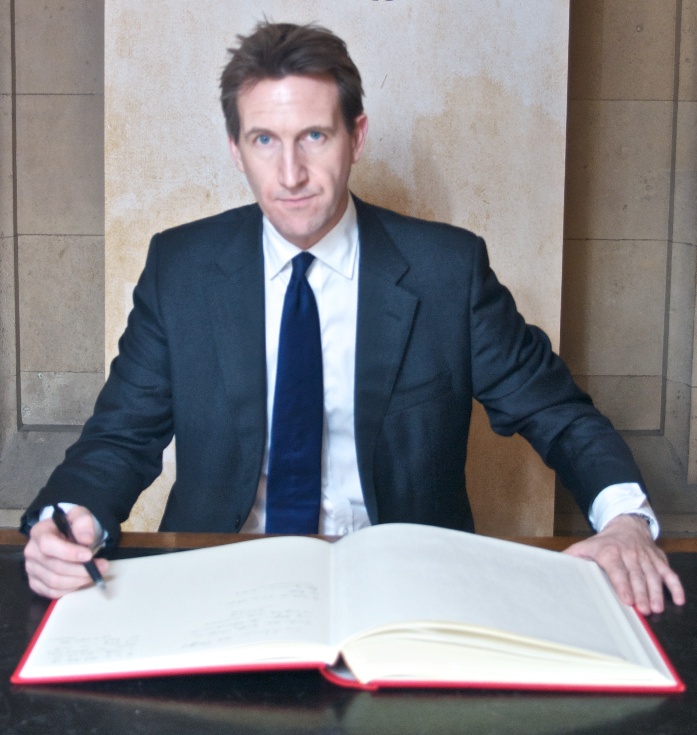
    The parliamentary question asked by Dan Jarvis, the Labour MP for Barnsley Central, in the House of Commons on 20 December 2022.

    Dan Jarvis (Barnsley Central) (Lab)

    What recent estimate he has made with Cabinet colleagues of the level of public funding that will be required to build core Northern Powerhouse Rail.

    The Exchequer Secretary to the Treasury (James Cartlidge)

    May I begin, Mr Speaker, by wishing you and all of your brilliant House of Commons staff a very merry Christmas?

    The integrated rail plan, published last November, set out an estimate of £17.2 billion at 2019 prices for the core Northern Powerhouse Rail network, with a further £5.4 billion for the TransPennine route upgrade. That includes building 40 miles of new, high-speed line between Warrington, Manchester and Yorkshire, as well as upgrading and electrifying the rest of the route between Liverpool and York, and the existing line between Leeds and Bradford.

    Dan Jarvis

    I am grateful to the Minister for that response. The Chancellor has rightly spoken about the importance of capital investment to the long-term growth of the economy but, at the same time, he has downgraded the £40 billion vision of Northern Powerhouse Rail, which was agreed on a cross-party basis with northern leaders, to the much-reduced £17 billion core scheme. Decisions on Northern Powerhouse Rail will shape the future of the railways in the north of England for generations to come and unlock massive economic benefits. Will the Minister look at refocusing Treasury appraisal of NPR on its long-term transformative benefits and whole-life value, rather than on short-term factors? Otherwise, a massive opportunity, not just for the north, but for the whole of the country, will be missed.

    James Cartlidge

    I commend the hon. Gentleman, who speaks with great passion on these issues. He is right that the Chancellor is absolutely committed to the long-term benefit to the economy of capital investment and infrastructure schemes like these. Just to be clear, the IRP set out the Government’s view that the core NPR network is the most effective way to deliver rail connectivity benefiting the north. Our plans would deliver substantial journey-time saving and capacity benefits all the way from Liverpool to York. It will do so far more quickly and cost-effectively than alternatives.

  • PRESS RELEASE : New funding and support scheme to finally end armed forces veterans homelessness [December 2022]

    PRESS RELEASE : New funding and support scheme to finally end armed forces veterans homelessness [December 2022]

    The press release issued by the Cabinet Office on 21 December 2022.

    More than £8.5 million of funding has been announced in order to ensure no veteran should sleep rough this Christmas, and veteran homelessness is ended in 2023.

    • £8.55m funding announced for more than 900 veteran supported housing units with specialist help for former armed forces personnel.
    • The funding for a bespoke homelessness pathway, called Op FORTITUDE – similar to Op COURAGE for Mental Health care, to ensure every veteran at risk of homelessness knows where to turn.

    More than £8.5 million of funding has been announced in order to ensure no veteran should sleep rough this Christmas, and veteran homelessness is ended in 2023.

    The funding will deliver services in more than 900 housing units in England, where specialist help for veterans, including with health, education and employment needs are provided.

    The new money announced today will also allow for the establishment of a new referral scheme – Op FORTITUDE, that will enable veterans at risk of homelessness to access supported housing and wrap-around specialist care in health, housing and education. Working with charities, the funding will ensure a single central point for local authorities and charities to identify those in need and refer them to a network of support.

    Ahead of the funding, Minister for Veterans’ Affairs Johnny Mercer worked with the veteran housing charity sector, bringing them together to establish a temporary referral scheme in England and Scotland for the Christmas period, ensuring that no Veterans should be sleeping rough this Christmas.

    Veterans can access the scheme through a dedicated charity helpline, on the number 01748 833797.

    This temporary referral scheme should ensure that no veteran who seeks support is homeless at Christmas.

    The Prime Minister will today host an event at No10 attended by charities Riverside and Stoll, along with veterans who were previously homeless. The Prime Minister will discuss with attendees the issue of veteran homelessness and how the government, including the Office for Veterans’ Affairs, can best ensure that everyone who needs support gets it.

    Minister for Veterans’ Affairs Johnny Mercer and Chief Secretary to the Treasury John Glen will also attend.

    Minister for Veterans’ Affairs Johnny Mercer said:

    No one, not least those who have served this country, should be homeless.

    That’s why today we are committing £8.5m in funding and supporting a dedicated pathway, set up in collaboration with our charity partners, so veterans can not only get the housing support they need this Christmas, but also the vital backing required to help them get on their feet again.

    As a government we remain steadfastly committed to ending veteran homelessness in 2023.

    Chief Secretary to the Treasury, John Glen said:

    It’s a sad fact that so many people who have served this country find themselves sleeping rough on the streets.

    Our mission is to put a stop to that, which is why we’re providing £8.5m in funding for over 900 housing units that support our veterans and creating a new service that will help those at risk of homeless access housing much more easily.

    Today’s announcement should ensure that no veteran who seeks help will be on the streets this Christmas.

    Lee Buss-Blair, the Director of Operations for The Riverside Group, and Member of the Veterans Advisory Board said:

    This funding will make a significant difference to the lives of vulnerable veterans.

    Not only will it support the Government’s commitment to end veteran rough sleeping, but it will also provide organisations the resources to support veterans into work.

    Veterans have so much to offer employers and communities, and thanks to this funding, providers will be far better placed to support them to realise their potential.

    The funding will ensure the government’s pledge in the Veterans’ Strategy Action Plan 2022-24 to end veteran rough sleeping within this Parliament, is delivered a year early.

    Running for two years the funding provides help and support to some of the most vulnerable veterans in our society.

    The vast majority of veterans go on to live happy, healthy and successful lives. But some do struggle and today’s announcement further demonstrates the government’s commitment to making this the best country in the world to be a veteran.

  • PRESS RELEASE : UK tech sector retains #1 spot in Europe and #3 in world as sector resilience brings continued growth [December 2022]

    PRESS RELEASE : UK tech sector retains #1 spot in Europe and #3 in world as sector resilience brings continued growth [December 2022]

    The press release issued by the Department for Digital, Culture, Media and Sport on 21 December 2022.

    • Leveraging the country’s deep science and technology base, the UK is leading the way as a leading ecosystem for responsible and values-led innovation
    • Over 3 million people working in UK tech with world-class companies training up a new generation of talent

    The UK tech sector will end the year as Europe’s leading ecosystem, retaining its position as the main challenger to the US and China amidst a global backdrop of difficult economic conditions, according to new figures from Dealroom for the Digital Economy Council.

    During 2022, fast-growing UK tech companies have continued to raise at near-record levels (£24 billion), more than France (£11.8 billion) and Germany (£9.1 billion) combined. This takes the total raised over the past five years to nearly $100 billion (£97 billion).

    Further stats today show that the UK has:

    • More high-growth companies than European peers having created 144 unicorns and 237 futurecorns and over 85,000 startups and scale-ups
    • More venture capital investment than European peers
    • A forward-thinking approach to regulation encouraging digital innovation and competition
    • Attracted VC funds from across the globe including General Catalyst, Sequoia and Lightspeed
    • Eight cities with more than two unicorns including Edinburgh, Nottingham and Oxford

    The latest figures, compiled by Dealroom for the Digital Economy Council, underline the success of the UK tech economy and its progress as a source of global innovation – a European Silicon Valley. These elements are guiding the expansion of its tech ecosystem, which now employs 3 million people, right across the country.

    Sustained investment and growth have forged a global tech powerhouse

    Consistent growth across UK tech saw the industry reach the $1 trillion in value milestone earlier this year, making it only the third country ever to hit this valuation after the US and China. This means the UK tech industry is ahead of its European peers and is worth more than double Germany’s ($467.2 billion) and three times more than France’s ($307.5 billion) as well as retaining the lead when it comes to overall funding, unicorns and startups numbers.

    This has enabled the UK to produce almost 400 high-growth startups since 2000 (worth more than $250 million in value). This includes 144 unicorns – companies with valuations of $1 billion or more – and 237 futurecorns, fast-growing companies which are predicted to be the most valuable businesses in the next few years. The new figures showcase how the ecosystem is expanding, up from 116 unicorns and 204 futurecorns at the same time last year.

    Laying the groundwork for value-driven growth

    Part of the UK’s strength in creating such a wide-ranging and expansive tech ecosystem is down to its focus on combining innovation with standards and values. Earlier this year the UK unveiled a new approach to regulating AI – based on core principles like safety, transparency and fairness – to take a less centralised approach than the EU to reflect how AI is used in their sectors. The Chancellor also announced that the government will bring forward legal powers for the Digital Markets Unit to drive up competition and level the playing field for challenger tech firms. All this goes towards creating the right environment to drive forward research, technology and growth.

    Introducing new generations to tech

    Upskilling and reskilling have become a key part of the UK’s dominance in tech with nearly 3,000 edtech startups having raised a collective £1.7 billion in funding over the past five years. Companies such as Academy, Code First Girls, Immersive Labs and Multiverse are focused on enabling people of all ages to gain the skills they need to succeed in tech roles, from tech apprenticeships to coding, development and cyber security.

    According to smarter job search engine Adzuna, UK companies are increasingly hiring for entry-level tech roles, up from 6,596 in November last year to over 15,000 this year, as they seek to bring in a new generation of tech talent and develop them into future leaders.

    Taking the lead in impact

    Whilst the UK remains the dominant country outside the US for fintech investment (nearly £10 billion raised this year), it is also becoming a leading hub for impact tech – companies creating technological solutions to reach the UN Sustainable Development Goals. There are nearly 1,200 impact tech companies in the UK which have raised £3.12 billion in funding this year, ahead of last year’s record £3 billion.

    Green energy receives the bulk of investment, such as Newcleo, a startup that is developing technology to enable safe uranium recycling (£258 million). Scaleups tackling healthcare inequality, such as Cera which bring technological innovation into social care raised £263m, while GrowUp Farms, a vertical farming company which uses technology to grow food more sustainably raised £100 million. The steady influx of investment into impact tech means the sector now employs more than 53,500 people, up from 37,500 last year.

    Regional strengths make the difference

    Innovation is spread out across the country with eight cities now home to two unicorn companies or more including Bristol, Cambridge, Edinburgh, Leeds, London, Manchester, Nottingham and Oxford. These high-growth businesses are using decades worth of science and tech research and development to revolutionise areas such as finance (Interactive Investor – democratising investing), sustainable travel (Vertical Aerospace – electric-powered aircraft), health research (Oxford Nanopore – portable DNA sequencing) and electronic device development (CSR – semiconductors).

    Collectively, these cities are home to 112 unicorn businesses, more than France (36) and Germany (63) combined – demonstrating the strong pipeline of global tech leaders being created up and down the UK. In fact, Cambridge was recently named the number one university in the world for producing successful tech founders ahead of the likes of Harvard and MIT – with over 500 alumni founders raising more than $10 million in funding. Oxford came third with 410. Bristol (173), Nottingham (100) and London (98) all made it into the top 20, thanks to their deep tech and science focuses.

    Finding the next sources of global innovation

    This is also what is attracting international investors to expand their footprint in London and the UK to access the growing network of entrepreneurs in the new Silicon Valley.US investors including General Catalyst, Sequoia and Lightspeed have increased their teams in the UK in 2022 after opening new offices here last year, and global firm New Enterprise Associates hired its first UK-based partner in October. Whilst European investor Earlybird VC has opened a new office in London earlier this year. This follows another strong year of fundraising for UK-based funds, who have collectively raised £9.2 billion this year, up from £9 billion at the same time in 2021.

    Digital minister Paul Scully said:

    UK tech has remained resilient in the face of global challenges and we have ended the year as one of the world’s leading destinations for digital businesses. This is good news and reflects our pro-innovation approach to tech regulation, continuing support for start-ups and ambition to boost people’s digital skills.

  • PRESS RELEASE : Winners of the special Queen Elizabeth II Platinum Jubilee Volunteering Award announced [December 2022]

    PRESS RELEASE : Winners of the special Queen Elizabeth II Platinum Jubilee Volunteering Award announced [December 2022]

    The press release issued by the Department for Digital, Culture, Media and Sport on 21 December 2022.

    A special one-off addition to the annual Queen’s Award for Voluntary Service (QAVS) has been awarded to 20 national charities for their exceptional work to empower young people.

    • 20 charities across the UK recognised for a unique one-off addition to the annual Queen’s Award for Voluntary Service, created in honour of Her Late Majesty The Queen’s Platinum Jubilee
    • The Duke of Edinburgh’s Award, The Social Mobility Foundation and The National Deaf Children’s Society among those awarded for their exceptional work empowering young people

    The Queen Elizabeth II Platinum Jubilee Volunteering Award, a special one-off addition to the annual Queen’s Award for Voluntary Service (QAVS), has been awarded to 20 national charities for their exceptional work to empower young people.

    From large household names to those operating on a smaller scale, the work of each awardee is vital in providing young people aged 16-25 with new opportunities, challenges, activities and skills.

    The awardees include The Duke of Edinburgh’s Award, widely recognised as the world’s leading youth achievement award that helps young people develop new skills and build self-belief and resilience, and the Jewish Lads’ and Girls’ Brigade, which helps to develop essential life skills and offers experiences to help young Jewish people reach their potential.

    Her Late Majesty The Queen displayed a life-long dedication to public service throughout her 70-year reign, so it is fitting that this one-off edition of the Queen’s Award for Voluntary Service recognises the thousands of volunteers who have showcased a similar longstanding commitment to their work.

    Culture Secretary Michelle Donelan said:

    From Action Tutoring to StreetGames, these 20 charities deliver outstanding work to help give young people the skills they need to grow and succeed. I’m delighted that their contribution is being recognised with a Queen Elizabeth II Platinum Jubilee Volunteering Award.

    Ensuring young people get the best possible start in life is a priority for me and the Government, and there is no more fitting way to celebrate these brilliant charities than a unique edition of the highest award for voluntary service.

    The Queen’s Award for Voluntary Service is the highest award given to local volunteer groups. It was established 20 years ago to commemorate The Queen’s Golden Jubilee, and has recognised around 250 outstanding local volunteer groups across the UK each year to date”.

    Sir Martyn Lewis CBE, the QAVS Chair said:

    These awards are a timely acknowledgement of the wide-ranging support and encouragement that is available to young people across the UK.

    They highlight the indispensable role that the voluntary sector plays in targeting help, advice and guidance where it is needed most.

    These awards should also be seen as a tribute to the millions of volunteers and donors who, in difficult times, provide the resources of time and money which contribute so powerfully to the social fabric of our country.

    Judging panel member Baroness Tanni Grey-Thompson said:

    I was delighted to be part of the judging panel for the Queen Elizabeth II Platinum Jubilee Volunteering Award. The process highlighted the amazing amount of work that is being done across a wide range of organisations and how it truly transforms the lives of so many people.

    Lucie Vickers, StreetGames Head of Volunteering and Youth Voice said:

    We are thrilled to have been awarded the Queen Elizabeth II Platinum Jubilee Volunteering Award. Creating opportunities for young people from low-income, underserved communities to become volunteers and future community leaders is at the heart of our Doorstep Sport approach, and we are delighted that the impact of this work has been recognised through this prestigious award.

    Kevin Munday, Chief Executive at City Year UK said:

    The journey towards receiving the Platinum Jubilee Volunteering Award is the success of hundreds of talented and dedicated volunteers taking the right small steps towards social change for over a decade. This Award represents a joyful and proud giant leap forward into the kind of future our volunteers have all aspired to.

    Additional recipients of this one-off award include:

    • British Youth Council – with 700 volunteers, this charity empowers young people to create political and social change through a number of programmes. The Make Your Mark consultation, led by UK Youth Parliament is an annual ballot allowing young people from across the UK to vote on the issues that matter to them, whilst the Youth Steering Group invites young people to participate in 26 round table discussions on issues such as gambling, climate change, youth violence and mental health.
    • Ethnic Minorities and Youth Support Team – supports young BME people, refugees and asylum seekers in Wales. It provides specific support to 16-25 year olds through three projects: BME Youth Invest project, The Think Project and the Young, Migrant and Welsh project, which aimed to engage ethnic minority people aged 16-25 to explore and document their experiences by creating films to increase public awareness and appreciation of Wales’ diverse history and heritage.
    • LGBT Youth Scotland – works to create safer spaces where LGBTI young people aged 13-25 can explore their identities in an affirming environment, learn new skills, gain confidence, develop resilience and find community. With 133 volunteers, they provide specific support via youth groups; one-to-one support; youth commissions; an LGBT Charter Programme and award-winning online community, Pride & Pixels.
    • YMCA England & Wales with The Scottish National Council YMCA – provides young people with the critical foundations for a better quality of life by offering support with housing, education and welfare. They provide a home to more than 20,000 people experiencing homelessness each year, making them the largest voluntary sector provider of supported housing for young people in England and Wales.
    • Brook Young People – delivers clinical and education support around sexual health, wellbeing and relationships to young people aged 16-25 through providing information, education and outreach, counselling, confidential clinical and medical services, professional advice and training. They also work in partnership with Youth Offending Services to deliver targeted education support to reintegrate youth offenders back into education and the community.
    • The National Young Advocacy Service (NYAS) – 600 volunteers work to support children in care, care-leavers and care-experienced young people through a variety of services including advocacy, mentoring, mental health projects, and a free national helpline. Their Independent Visitor Service is a befriending service for children in care up to the age 18, offering long-lasting friendship and support, and the opportunity to take part in new and fun activities.

    The Queen’s Award for Voluntary Service is awarded annually, with the date for the 2023 awardees soon to be confirmed. In June 2022, 244 local voluntary organisations across the UK received this prestigious award, all of which enhanced the lives of others through their work. Awardees of the 2022 award can be found here.

    To celebrate their achievements, the awardees of the Queen Elizabeth II Platinum Jubilee Volunteering Award will be invited to a unique presentation event in 2023.

  • PRESS RELEASE : Azerbaijan’s closure of the Lachin corridor could have severe humanitarian consequences – UK Statement at the UN Security Council [December 2022]

    PRESS RELEASE : Azerbaijan’s closure of the Lachin corridor could have severe humanitarian consequences – UK Statement at the UN Security Council [December 2022]

    The press release issued by the Foreign Office on 20 December 2022.

    Ambassador James Kariuki speaks at the UN Security Council emergency meeting on Armenia and Azerbaijan.

    Thank you, President, and thank you to Assistant Secretary General Jenca for the very helpful update.

    The United Kingdom remains deeply concerned at the recent closure of the Lachin corridor.

    We are pleased that the gas supply to the region has been reinstated, but we continue to call for the immediate reopening of the corridor. The Lachin corridor is the only means by which daily necessities can be delivered to the region. The closure of the corridor for over a week raises the potential for severe humanitarian consequences – especially in the winter. We also note with concern the civilians who have been stranded by the closure and urge that their unimpeded return is urgently prioritised.

    We are in touch with the governments of both Armenia and Azerbaijan. It is only through diplomacy, in line with the principles of the UN Charter, that lasting peace can be achieved. The United Kingdom continues to support the internationally-led negotiation efforts that seek to secure stability and peace in the region.

    Thank you.

  • PRESS RELEASE : The Taliban are failing to live up to their commitments to the Afghan people – UK Statement at the UN Security Council [December 2022]

    PRESS RELEASE : The Taliban are failing to live up to their commitments to the Afghan people – UK Statement at the UN Security Council [December 2022]

    The press release issued by the Foreign Office on 20 December 2022.

    Ambassador Barbara Woodward speaks at the UN Security Council briefing on Afghanistan.

    Thank you, President.

    Like others, I would like to start by thanking USG Griffiths and SRSG Otunbayeva for their briefings, and thank UNAMA for all its ongoing work to support the Afghan people in such challenging circumstances. I also thank Ms. Mahbouba Seraj for returning to brief us again.

    As we’ve heard, in the midst of one of the harshest winters on record, two thirds of Afghanistan’s population face severe hunger. The 2023 Humanitarian Response Plan for 2023 is expected to be the largest in UN history and it reflects the scale of the challenge.

    The UK remains steadfast in our support for the Afghan people. As the second largest donor to this year’s HRP, we have disbursed over $600 million in humanitarian and development assistance for Afghanistan since April 2021. We continue to work with the World Bank and others on measures to put the Afghan economy on a more sustainable footing.

    President, I’d like to highlight three priorities.

    First, humanitarian aid. While 97 percent of Afghans are in poverty, two thirds in dire humanitarian need, the priority is for aid to reach those in need. The Taliban should end interference in UN operations immediately and, in particular, give assurances on the safety and access of humanitarian workers. In particular, female humanitarian workers who, as we’ve heard, are particularly constrained by the Mahram requirement.

    Second, human rights. The Taliban continue to fail to live up to their commitments to the Afghan people. As we’ve heard, repression of human rights is widespread; there are reports of honour killings, child marriage, and floggings and executions have returned.

    As we’ve heard from Ms. Seraj, in recent months, violations of women and girls’ rights and freedoms – already the most drastic in the world – have sharply increased. These policies are a systematic attempt to erase women and girls from all spheres of social, economic, political and public life.

    The UN has estimated that excluding women from the workforce is already costing the Afghan economy up to $1 billion. In the absence of fair and impartial justice systems and access to education, there can be no self-reliant, prosperous Afghanistan.

    Third, counter-terrorism. We’ve heard from the chair of the 1988 committee of the deteriorating security situation, and Ms. Seraj endorsed that point. We’ve heard that the number of sanctioned individuals among the Taliban has increased. We’ve heard of Al-Qeada, ISIL-K, Da’esh –– members of this Council have suffered from terrorist attacks in Afghanistan.

    We should be clear that while the Taliban is failing to meet its counterterrorism commitments, it cannot expect to see sanctions relief or acquire legitimacy in the eyes of the international community or the Afghan people.

    In conclusion, President, this is truly a situation that is, as the SRSG said, fraught with challenges. The Taliban is manifestly failing to live up to its commitments and to meet the needs of the Afghan people for prosperity, peace and security. We should be of no doubt that we need a robust international response that delivers humanitarian aid, but also delivers the mandate of UNAMA.