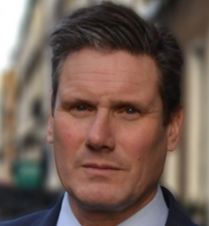
The statement made by Keir Starmer, the Prime Minister, in the House of Commons on 2 February 2026.
With permission, I will update the House on my visit last week to China and Japan, where we delivered for the British people.
With events overseas directly impacting on our security and the cost of living, I made it a founding principle of this Government that, after years of isolationism, Britain would face outwards once again. This was an 18-month strategy to rebuild our standing and we have delivered: strengthening our US relationship with our world-first trade deal; resetting our relationship with the EU; striking a groundbreaking free trade agreement with India; and now, thawing our ties with China to put this relationship on a more stable footing for the long term.
China is the second biggest economy in the world. Including Hong Kong, it is our third biggest trading partner, supporting 370,000 British jobs. It is also an undeniable presence in global affairs. It would be impossible to safeguard our national interests without engaging with this geopolitical reality. Yet we inherited a policy from the previous Government not of engagement with China, but of hiding away and sticking their heads in the sand. While our allies developed a more sophisticated approach, they let the UK fall behind. We became an outlier. Of my three predecessors, none held a single meeting with President Xi. For eight years, no British Prime Minister visited China—eight years of missed opportunities. Meanwhile over that period, President Macron visited China three times, German leaders four times, the Canadian Prime Minister was there a few weeks ago, and Chancellor Merz and President Trump are both due to visit shortly.
Tom Tugendhat (Tonbridge) (Con)
They went on their feet, not on their knees. [Laughter.]
Mr Speaker
Order! Mr Tugendhat, you will withdraw that remark.
Tom Tugendhat
I am sorry, Mr Speaker. I withdraw it.
Mr Speaker
Thank you. Can we calm it down? I am sure you will want to catch my eye and I would like to hear what you have to say, so let us not ruin the opportunity.
The Prime Minister
In this context, refusing to engage would be a dereliction of duty, leaving British interests on the sidelines. Incredibly, some in this House still advocate that approach. But leaders do not hide. Instead, we engage and we do so on our own terms, because, like our allies, we understand that engagement makes us stronger.
Protecting our national security is non-negotiable. We are clear-eyed about the threats coming from China in that regard, and we will never waver in our efforts to keep the British people safe. That is why we have given our security services the updated powers and tools they need to tackle foreign espionage activity wherever they find it, and to tackle malicious cyber-activity as well. The fact is that we can do two things at once: we can protect ourselves, while also finding ways to co-operate. It was in that spirit that we made this visit.
I had extensive discussions, over many hours, with President Xi, Premier Li and other senior leaders. The discussions were positive and constructive. We covered the full range of issues, from strategic stability to trade and investment, opening a direct channel of communication to deliver in the national interest, enabling us to raise frank concerns about activities that impact our national security at the most senior levels of the Chinese system. We agreed to intensify dialogue on cyber issues and agreed a new partnership on climate and nature, providing much-needed global leadership on this vital issue.
I raised a number of areas of difference that matter deeply to this country. I raised the case of Jimmy Lai and called for his release, making clear the strength of feeling in this House. Those discussions will continue. My right hon. Friend the Foreign Secretary is in touch with Mr Lai’s family to provide further briefing.
I raised our human rights concerns in Xinjiang and Tibet. We discussed Taiwan, wider regional stability, Iran and the middle east. I called on China to end economic support for Russia’s war effort, including the companies providing dual-use technologies, and urged it to use its influence on Putin to push for the much-needed ceasefire in Ukraine.
I also raised the fact that Members of this House have been sanctioned by the Chinese authorities. In response, the Chinese have now made it clear that all such restrictions on parliamentarians no longer apply. I want to be clear: this was not the result of a trade. Yes, Members will want to see more—I understand that—but that is precisely the point: ignoring China for eight years achieved nothing. This step is an early indication, not the sum total, of the kind of progress that this sort of engagement can achieve through leader-to-leader discussion of sensitive issues, in standing up for British interests.
My visit was also about creating new opportunities for British businesses to deliver jobs and growth for the British people. We took with us a brilliant delegation of nearly 60 businesses and cultural powerhouses—the very best of British—as an embodiment of what this country has to offer. If anyone is in doubt as to why this matters, I urge them to spend a few minutes with any one of those businesses; they will describe the incredible potential there and the importance of getting out there and accessing the market.
We made significant progress, paving the way to open the Chinese market for British exports, including in our world-leading services sector. We secured 30-day visa-free travel for all Brits, including business travellers. We secured China’s agreement to halve whisky tariffs from 10% to 5%, which is worth £250 million to the UK over the next five years—a significant win for our iconic whisky industry, particularly in Scotland. That lower tariff comes into force today. In total, we secured £2.3 billion in market access wins, including for financial services, £2.2 billion in export deals for British companies and hundreds of millions of pounds-worth of new investments.
In addition, we agreed to work together in some key areas of law enforcement. Last year, around 60% of all small boat engines used by smuggling gangs came from China, so we struck a border security pact to enable joint law enforcement action to disrupt that supply at source. We also agreed to scale up removals of those with no right to be in the UK and to work together to crack down on the supply of synthetic opioids.
We will continue to develop our work across all these areas, because this is the start of the process, not the end of it. My visit was not just about coming back with these agreements, but about the wider question of setting this relationship on a better path—one that allows us to deal with issues and seize opportunities in a way that the previous Government failed to do.
Finally, I will say a word about my meetings in Tokyo. Japan remains one of our closest allies; together, we are the leading economies in the comprehensive and progressive agreement for trans-Pacific partnership, and we are partners in the G7, the G20 and the coalition of the willing. Japan is the UK’s largest inward investor outside the United States and Europe.
I had an extremely productive meeting with the Prime Minister of Japan, where we set out our shared priorities to build an even deeper partnership in the years to come. Those include working together for peace and security, supporting Ukraine as we work for a just and lasting peace, and deepening our co-operation in cutting-edge defence production, including through the global combat air programme. We discussed how we can boost growth and economic resilience by developing our co-operation: first, in tech and innovation, where we are both leaders; secondly, in energy, where Japan is a major investor in the UK; and, thirdly, in trade, where we are working together to maintain the openness and stability that our businesses depend on. That includes expanding the CPTPP and deepening its co-operation with the EU. We will take all of that forward when I welcome the Prime Minister to Chequers later this year.
This is Britain back at the top table at last. We are facing outward, replacing incoherence and isolationism with pragmatic engagement, and naive posturing with the national interest. In dangerous times, we are using our full strength and reach on the world stage to deliver growth and security for the British people. I commend this statement to the House.