
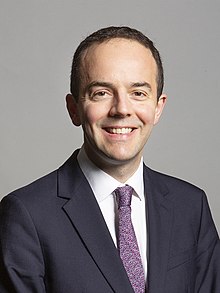
The speech made by James Murray, the Secretary of State for Health and Social Care, on 11 June 2026.
I am really pleased to be here so soon after being made Secretary of State for Health and Social Care.
Today, in fact, is exactly four weeks since the Prime Minister called me and asked me to take on this role.
And I can tell you that, from the moment that phone call with the Prime Minister ended, my head – and my heart – have been filled with thoughts and feelings of how important a role this is and how much I want to do.
I have spent the last four weeks meeting as many people as possible – patients, staff, outside experts.
I have been taking finely balanced decisions with all the sensitivity they deserve.
And I have been reading reams and reams of policy papers and briefing packs from front to back.
As my advisers will tell you, I like getting my head under the bonnet.
And one reason for that is that I want to understand the challenges you are facing inside and out so that we can work together to move things forward.
In all the previous roles I have held in public office – whether as a council cabinet member, as a deputy mayor in London, or as a minister at the Treasury – I have learned that the most effective way to deliver is to work openly and collectively with all members of the teams I have led.
And it is in that same spirit that I have joined this team of 1.5 million people, who work in the NHS, and the 1.5 million more, who work in social care.
I want our workforce to feel valued and rewarded, where they come in for every shift with a sense of purpose and go home from every shift with a sense of achievement.
Because as political leaders we can set the direction of travel.
But it is only by working with leaders throughout the system, and those on the frontline, that we will see our commitments to the people we serve become a reality.
And I want to thank you for everything that you and your teams, clinicians and non-clinicians alike, have done over the past two years:
We have moved toward our 18-week electives improvement target; delivered 1.8 million dental appointments; offered online requests for GP appointments; cut waiting lists by more than 400,000; getting ambulance response times and four-hour waits in A&E down; and improving productivity across the health system.
I am especially pleased, with my former Treasury hat on, that these achievements have been possible with us living within our means for the first time in nearly a decade.
I know that you have been under considerable pressure to meet the ambitious targets that we have set you, to do it while keeping on top of the finances, and to do it in the face of strikes, an early flu spike, supply chain challenges, disease outbreaks and record demand.
And I don’t want to diminish how tough the organisational changes have been on you and your colleagues, especially those in my department, in NHS England and in ICBs.
I think it is easy to forget in talk of headcount and savings that what we mean are people’s jobs and livelihoods – and however necessary the changes are, that is certainly not lost on me.
But some people doubted our ability to make the progress we promised, and you are all proving them wrong.
You have risen to the challenge.
And the public are beginning to feel the improvements that you are making – whether that is on waiting times, urgent and emergency care, ambulance response times, or GP access.
It is no surprise that we have seen the biggest drop in dissatisfaction with the NHS since 1998 – and the first increase in satisfaction since before the pandemic.
And whilst we know there is a long road ahead, we have shown that by working together we can drive and deliver real and impressive progress.
For me to come into this role on the back of that growing sense of optimism and momentum, is a real gift.
My promise to you, is that I will work with you day and night to realise the opportunity that gives us to go further.
Now, in pursuing that goal, I do not want to waste a second.
Too often in the past, a change of Health Secretary has come with a change of priorities.
As a result, the service gets flooded with messages of what they need to focus on next, and progress gets delayed.
The lesson of the last two years for me is that you are at your best, and you are able to deliver fastest, when the message from the top is clear.
And so let me say clearly that the focus and targets of this government on electives, UEC, and access to GPs and dentists remain.
The Medium-Term Planning Framework remains.
And the 10 Year Plan remains.
The level of improvement required across the system in future years cannot be achieved through performance management alone.
What we have done in the first two years, on the back of record investment, is to make improvements while starting to modernise the NHS.
And now that we have stabilised the system, my job is to work with you not only to maintain and extend those improvements in performance, but also to put our feet to the floor on reform.
What I am bringing to this role is not a change of course but a change of gear.
I am determined that we accelerate our fundamental transformation and modernisation of the NHS by making sure that we make the fullest possible use of technology, digitisation and AI.
I know what benefits this can bring.
When I was responsible for tax collection at the Treasury – that made me popular I put HMRC on course to conduct 90% of interactions digitally by 2030.
And with more and more people able to meet their day-to-day tax needs through digital self-service, HMRC is now freeing resources that can help resolve the most complex cases that need a human eye.
AI tools are now being used to support evidence in criminal investigations, and voice recognition technology is being used to speed up taxpayers accessing support and to helping to write call logs to save on the costs of admin.
But one important barrier that we knew we had to overcome at HMRC – one that I recognise from many years in public service – is the risk aversion that too often limits innovation.
Too often the question is, ‘What if it goes wrong?’ – and of course that is an entirely legitimate question to ask, especially in health and social care where we are talking about profound consequences.
But I think we also need to balance that question by giving equal weight to another important question, ‘What if we don’t do this and leave things the same?’
I want you to have the confidence that I will back you in using new technology to improve the experiences and outcomes of patients.
I believe people expect their public services to be as easy and convenient to use as they get from the private sector – and it is our job to make that a reality.
Now I know that when challenging targets loom large and near on the road ahead, reform and modernisation can get pushed further from view.
Modernisation is seen as a promise for tomorrow, rather than a way of tackling the challenges of today.
And let me be clear that the challenges of today are very real.
All of us in this room know that for all the progress that we’ve made, things still aren’t good enough for far too many people in far too many parts of the country.
As we meet here, there will be someone who can’t get through to their GP to make an appointment, someone off work and in pain who has been waiting too long for treatment, someone in crisis who can’t get the support they need, and someone stuck in a bed in the humiliating and undignified surroundings of a corridor.
But the NHS cannot simply manage its way out of the current pressures.
It must transform its way out of them.
The simple truth is that the NHS will only become sustainable in the long term if it changes the way care is delivered.
The choice is not between reform and recovery; the task is to use reform to accelerate recovery.
And you are showing us the way.
The community wellness team in South Cumbria that cut emergency admissions by two thirds, did so by identifying a small group of high need patients responsible for a disproportionate share of hospital bed days – they are demonstrating how creating neighbourhood services will reduce the demand on A&E not just a decade from now but over the next few years.
Likewise, the eTriage tool being used by Royal Berkshire and others to reduce the number of face-to-face appointments, shows that new technology will not just improve the speed and convenience for outpatients a decade from now but, again, will do so over the next few years.
The Health and Growth Accelerator pilots to boost people’s health and get them back to work show how preventing sickness will improve the nation’s physical and economic health not just a decade from now but over the next few years.
In the same way that investment and modernisation are two sides of the same coin, delivery and reform are not separate agendas.
In fact, as the targets become more and more ambitious, it will be nigh on impossible to meet them if the system stays the way it is currently working.
Tomorrow must come to the aid of today.
And so I want to make sure that, at the centre, we use the modernisation and reform agenda to step up delivery straight away, and at the same time create new ways of working that give you the platform to innovate and drive improvement locally.
We have already made a start on that with the NHS Modernisation Bill, the changes we are making to ICBs, and the creation of Advanced Foundation Trusts and Integrated Healthcare Organisations.
I do not want to tie your hands in red tape.
I want you to be free to innovate, to be creative and to get on with what works, because I know that delivery does not happen from behind a desk in Whitehall.
Indeed, more often than not the system is way ahead of us.
North East Ambulance Service now delivers the fastest response times across all six national standards and is reducing pressure on emergency departments by increasing ‘hear and treat’ rates and improving handover times.
Princess Alexandra Hospital has significantly reduced elective waiting times by, among other things, expanding diagnostic capacity, introducing an ‘advice and refer’ model, and working with patients and primary care to redesign pathways.
These are the kinds of enterprising initiatives that are going to make the NHS better for patients, better for staff, and better for taxpayers.
I very much hope to see more of them and to make sure we help spread them and embed them throughout the system.
The real challenge is not choosing between short-term performance and long-term sustainability but ensuring that each reinforces the other.
Now, we all know the NHS matters deeply to people right across our country, because of how deeply it touches all of our lives.
For my part, the NHS came to my rescue when I was diagnosed 18 years ago with a serious and rare neurological condition that threatened my ability to run, to write, and to talk.
It is only thanks to the support of the NHS that I am able to stand here today, as the Secretary of State for Health and Social Care.
The NHS gave me a second chance at life – and I will fight for it every single day with the strength that it has given me back.
And I need your help to do that.
I want to work with you to implement the 10 Year Plan.
To quicken the pace of reform by embracing technology, digitisation and AI.
To innovate and take the right risks – and to know that, as you do so, I will be by your side.
We are going in the right direction and we must not ease our foot off the pedal for a second.
I am looking forward to working with you very much, and I cannot wait to see what we can achieve together.
Thank you.