Category: Health

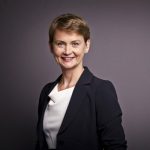
  • Yvette Cooper – 2026 Statement on the Hantavirus Outbreak

    Yvette Cooper – 2026 Statement on the Hantavirus Outbreak

    The statement made by Yvette Cooper, the Foreign Secretary, on 6 May 2026.

    The outbreak of Hantavirus is very serious and deeply stressful for those affected and their families. The UK response is being led by the UK Health Security Agency working with the WHO.

    The Foreign Office is working urgently to support the UKHSA’s work overseas and to make sure British nationals on the MV Hondius can all get safely home with proper protection for public health.

    Foreign Office consular staff are in direct contact with British nationals onboard the ship and stand ready to provide further assistance to any British national in need of support overseas 24/7 – our crisis response centre has been operating for the last few days to provide support. Ministers are in close touch with our Dutch and Spanish counterparts and we have been working with other countries to facilitate the medical evacuations, to support our Overseas Territories and to get British nationals home safely as quickly as possible.

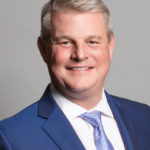
  • Wes Streeting – 2026 Speech to the Royal College of Emergency Medicine’s (RCEM) Annual Conference

    Wes Streeting – 2026 Speech to the Royal College of Emergency Medicine’s (RCEM) Annual Conference

    The speech made by Wes Streeting, the Secretary of State for Health and Social Care, on 30 April 2026. We have been unable to acquire a version which hasn’t been redacted.

    It’s good to be with you today, and it’s really good to follow a session on high performance.

    Let me start by echoing Ian’s words in his opening remarks on Tuesday, when he encouraged you to be ‘loud and proud’ of what you do.

    At a time when more and more people have lost faith that things can get better…

    When a general sense of pessimism and cynicism risks slipping into fatalism…

    And when the very existence of the NHS is being contested like never before…

    You are helping to prove the doubters and doomsters wrong.

    So I want to say a simple but heartfelt thank you to all of you for all your energy, stamina, creativity, and the huge amount of hard graft over the past year, not just all of you in this room, you and all of your colleagues across the country, because you – the whole team – are achieving something we’ve not seen for a long time, an NHS that is improving.

    This government set you ambitious targets last year. And despite resident doctors’ strikes and record demand, you rose to the challenge.

    Best 4-hour performance in A&E in 5 years.

    Today, almost 4 in 5 patients are seen within 4 hours and 500,000 more people than last year are being seen on time.

    Ambulances are arriving faster than for half a decade.

    For suspected heart attacks and stroke patients, we’re reaching them five minutes faster than last year, when you and I both know that every second matters.

    We have been repeatedly told that the NHS recovery won’t happen, it can’t happen. But you are delivering it.

    And in doing so, you have landed one in the eye to every commentator, who was preparing the headline [political content removed], or ‘the NHS falls short’ depending on which of us they dislike most that day.

    You’ve delivered a blow to think tank orthodoxy, which says that the NHS will never be able to cut waiting lists, A&E, and ambulance waiting times all at once.

    And to those who argue that the results are just a March sprint, just wait until you see April’s performance data.

    This is a marathon, not a sprint. And there’s a long track ahead of us. But some of the frontrunners are already approaching the finishing line.

    North East and West Midlands ambulance services are within reach of the constitutional standard of 18-minute response times.

    At Sheffield children’s A&E, 98% of kids are seen within 4 hours – above the constitutional standard. West Herts, Northumbria, and George Eliot are all above 90%.

    George Eliot, in particular, has made incredible strides, going from 66% to 91% in just this past year.

    They are showing what’s possible when UEC is made a priority.

    The trust introduced round-the-clock assessments to speed up triage; seven-day ward rounds in the Acute Medical Unit to get patients home on time; and doctors working the discharge lounge to make sure patients had the medication they needed to send them home.

    Those simple steps have transformed the experience and the safety of their patients. They have proven that we can do it.

    Ambulance recovery isn’t happening by accident, if you excuse the pun.

    It is happening because the ambulance service is embracing change.

    Where paramedics would once provide extraordinary care on the scene, then take their patient to hospital, now they’re using their skills to act as coordinators of care.

    Providing the same world class urgent, on-the-spot care they always have, then deciding the best place for follow-up treatment, which isn’t always a hospital.

    The result is improved turnaround and handover times, and fewer people ending up in A&E.

    You in emergency medicine understand better than most that the NHS is not just a service, it’s a system.

    And when part of the system has broken down, people end up at your door.

    It’s why A&E had gone from Accident & Emergency to Anything & Everything.

    When people can’t see a GP, they end up in A&E, which is worse for them, worse for you, and more expensive for the taxpayer.

    When people can’t get the mental health support they need, they reach crisis point, which is worse for them, worse for you, and more expensive for the taxpayer.

    And when people can’t get the social or community care they need, they’re left in hospital, which is worse for them, worse for you, and more expensive for the taxpayer.

    And so a lot of the answers to cutting ambulance and A&E response times lie outside the doors of the emergency department.

    It’s why the health think tanks are so wrong to argue that the government ought to prioritise certain sections of the NHS over others.

    That we should focus on social care or emergency care first and do electives or GPs later.

    The way we will get the NHS out of the hole it had been left in is by week by week, year on year, across the board improvement. A rising tide that lifts all ships.

    The NHS has been the standout winner from this government. Record £26 billion a year investment at a time when the public finances are under big and growing pressures, with increased instability and uncertainty around the world.

    It shows what this government’s priority is.

    But you and I know that the additional funding alone cannot buy our way to recovery. It has to be accompanied by change and modernisation.

    A narrative emerged during the years of [political content removed] that the NHS just needs more inputs into the same model. More staff, more beds, more money in hospitals.

    Investment is part of the solution.

    But unless we change how the NHS works, those will only be sticking plasters, storing up the same problems for later down the line.

    There will still be ever-increasing numbers of patients walking through your doors and ever-increasing numbers stuck in beds waiting to go home.

    With the war in Iran and its consequences for the global economy, I’m afraid I can’t play the Oliver Twist of the Cabinet, pleading for more from the Treasury.

    Not because the Chancellor is Scrooge – to invoke another Dickens character – but because there isn’t any.

    So we’re having to mop up the consequences of austerity, Brexit, [political content removed], the pandemic, and the war in Ukraine, as well as dealing with the Iran crisis and making sure that as we do so we’re beating a path to a better future, not just seeking to scramble back to a broken status quo.

    So the new investment needs to be matched with change and modernisation to help that investment go further and to make sure we get to where we want to be.

    You in emergency medicine are leading the way and showing that change is possible.

    Ambulance services are providing more paramedic-led care at the scene.

    Urgent community response services in Dorset and Kirklees cared for patients, directed them to appropriate services, with 80% never needing to step foot in a hospital.

    Hear and Treat is freeing up ambulance crews to reach the most urgent patients faster, and get other patients the right care, in the right place, at the right time.

    We set what was an ambitious 45-minute target for ambulance handovers and today average handover times are down to just shy of 30 minutes.

    That’s more patients off ambulances and into EDs more quickly.

    And it’s only been possible because of the combined efforts of ambulance services and ED teams – and we are grateful for it.

    My department and the NHS worked with RCEM to pull together our model ED guidance.

    It identifies the most successful methods of streamlining emergency care from across the country, taking the best of the NHS to the rest of the NHS.

    This is the first chapter of the new book we are writing together, and I look forward to working with RCEM on the model discharge guidance, which is coming soon.

    The government is putting our money where our mouth is.

    We’re investing £300 million in 55 new or improved same day emergency care and urgent treatment centres.

    We’re spending almost an extra half a billion pounds on mental health facilities, including up to 85 Mental Health EDs – providing patients with rapid assessment, urgent treatment, and safe discharge with referral for longer term support.

    All of this will help to unclog emergency departments, and make sure patients are seen where they should be, when they should be, by who they should be.

    Much of the change you are leading is about delivering the left shift from within emergency medicine.

    And the government is leading the left shift outside of emergency departments.

    Our 10 Year Plan for Health set the NHS on course to become as much a Neighbourhood Health Service as a National Health Service.

    A key measure of its success will be A&E admissions – specifically the 1 in 5 patients who turn up to A&E who do not need urgent and emergency care.

    They have been failed upstream.

    Our modernisation agenda is all about catching patients earlier, treating them faster, and preventing them falling ill in the first place.

    That work has already begun.

    We’ve recruited 2,000 more GPs and patients can now request appointments online.

    We’re delivering millions more dental appointments.

    We’ve invested £600 million more in community pharmacy and given them greater powers to monitor and manage patients with ongoing conditions.

    We’re investing £4.6 billion in social care.

    We’ve legislated for the first ever fair pay agreement for care workers, backed by half a billion pounds.

    We’ve given carers the biggest increase in carer’s allowance since the 1970s and increased the disabled facilities grant, which will help to speed up discharge, reduce admissions, and most importantly of all, give people dignity, freedom, quality of life and comfort in their own homes.

    And the first report from the Casey Commission is coming later this year, forging the national consensus we need to build a National Care Service.

    New neighbourhood health services will bring together healthcare professionals to deliver proactive and personalised care, out of hospital, in the community.

    We’ve set them a target of reducing avoidable hospital admissions by 10% for the most vulnerable patients, backed by new financial incentives.

    I know that the most difficult cases you see are patients in the midst of a mental health crisis. Failed by a lack of early support, in A&E through desperation, often the very worst place for them to be.

    So, we are intervening earlier.

    This government promised to recruit 8,500 more mental health workers by the end of the Parliament.

    And today I can announce that we have kept that promise… three years early.

    We have recruited 8,500 more therapists, psychiatrists, and mental health nurses. They are delivering more care, earlier, and closer to home.

    Another 900,000 children can also now see a mental health support team in their own school, thanks to action we have already taken.

    Promises made, promises kept.

    Change has begun. And the best is still to come.

    One of the bigger balancing acts I face as a political leader is giving the public confidence that the NHS is improving and hope for the future, at the same time as acknowledging that we know that things still aren’t good enough.

    Corridor care is the most visible, most distressing symptom of the pressures in our NHS.

    And since emergency departments are the frontline of the NHS and most people’s first impression of a hospital, you’re in the full glare of the public spotlight – and often used as the barometer for how the service is doing overall.

    I know this will be a test the government is judged against.

    When we came into office, NHS England didn’t measure corridor care, let alone have a plan to address it.

    Corridors were officially referred to as ‘temporary escalation spaces’.

    And as corridor care became normalised, you, the teams working in those conditions, suffered the moral injury of having to treat your patients in circumstances so undignified that you wouldn’t wish them on your worst enemy, never mind your closest loved one.

    I have walked past many of those trolleys. I cannot imagine walking past lines of trolleys every day, desperately wishing you could do something about it, but being held back.

    And I want to thank the Royal College, alongside the Royal College of Nursing and others, for never accepting this practice, for sounding the alarm, and for keeping the pressure on me and others to act.

    I am clear: corridor care is not normal, it is not acceptable, it should never be tolerated, and I am determined to end it.

    We’re calling it what it is; we’ve defined it; we’re measuring it; and with your help, we’re finally getting on top of it.

    Once again, change is being led from below.

    Blackpool are using data to predict the busiest periods and clearing beds in advance.

    The main corridor [political content removed] was cleared when the Medical Director and Chief Nurse took over discharge decisions.

    And take [political content removed], as seen on TV, because when its corridors were full of trolleys this winter, the broadcasters understandably chose the hospital of [political content removed] to exemplify the national crisis.

    I was back there the other month, no cameras in sight, apart from the one on my phone, walking the same corridors I did in January, but this time they were empty. Demand hadn’t changed, the level of funding hadn’t changed, but the model of care had.

    They put the senior consultant on the front door of the A&E to make swift triaging decisions – sending frail elderly people who needed care, but not A&E, into the frailty same day emergency care centre. And they worked with the Ambulance Service and community teams to get people the right care at home.

    As a result, 12-hour waits are down, 10,000 corridor hours were saved in February alone, and the corridors were empty aside from one chap who was about to be wheeled in for a scan.

    That is amazing progress, a real credit to the staff of Queen’s, and they are sustaining that progress.

    It’s not always easy, but it is important that we recognise improvement and we celebrate success.

    I said as much publicly, and then received a text message after an interview on BBC Breakfast, and that message said, ‘Glad to see this can be done. I had the opposite experience with my dad this weekend.’

    Her elderly father, who has Parkinson’s, had been left on a bed in a corridor by a vending machine, with a small bleed on the brain, with no water, no buzzer, and no dignity.

    That is the contradiction of where the NHS is today.

    There has been marked improvement.

    Incredible progress has been made against predictions and expectations.

    But too many patients are still being failed.

    What we have shown together in just under two years that this government has been in office, is that the NHS can change and things can get better.

    Success has come when we’ve moved as a pack, working together, driven by a simple but powerful conviction that we will not accept the status quo anymore.

    It’s not easy. We are having to rebuild the plane mid-flight. There are times when it is a bumpy ride.

    If we’re getting things wrong, I want to hear about it. If something’s not working, we need to know.

    But we must never forget that we are one team of 1.5 million people in the National Health Service, working alongside another 1.5 million in social care.

    Resident doctors say I need to do more for them. So does general practice. So do consultants. And so does every specialty.

    Take Advice & Guidance. If patients should be on waiting lists for elective care, that’s where I want them to be.

    But if they can be treated faster and better in the community, that is better for everyone.

    Yet even on that simple principle, we have encountered opposition.

    We can’t do everything, for everyone, everywhere, all at once. And if everyone just advocates for their part of the service, the NHS is going to end up like an overloaded shopping trolley with the wheels all pointing in different directions.

    Every part of the service has been under real pressure and has been through extended crises over the past decade.

    It isn’t just your corner of the NHS that feels like that.

    The model of care was broken across the whole service.

    So, the NHS has to change to survive. And it’s going to take a concerted effort from everyone.

    That’s why I wanted to speak to you all today.

    You and your colleagues are stepping up. You are proving the pessimists wrong and showing that change is possible. In doing so, you are charting the course to a brighter future.

    So, I need you to keep at it.

    To keep showing the innovation, drive, and leadership that is taking the NHS from the worst crisis in its history, getting it back on its feet, and making it fit for the future.

    We can do it.

    All of us.

    Together.

    And what a legacy that would be for our country.

    Thank you very much.

  • Ian Murray – 2026 Statement on UK Biobank Data

    Ian Murray – 2026 Statement on UK Biobank Data

    The statement made by Ian Murray, the Minister for Digital Government and Data, in the House of Commons on 23 April 2026.

    With permission, Madam Deputy Speaker, I will make a statement about the use of UK Biobank data.

    UK Biobank is a non-profit charity, independent of Government. The Biobank brings together data, kindly donated by its volunteer participants, that is shared with accredited researchers globally to make significant scientific discoveries that improve patient health. That includes discovering genes that affect the risk of heart disease or cancer, identifying new ways of predicting dementia, identifying early warning signs for cancers, understanding immunity to covid-19, and work towards earlier detection of Parkinson’s. It is one of the most successful and important studies of its type, and it continues to benefit patients in the UK and around the world. We are all grateful to those individuals who are part of this landmark study that is so important for all of our health.

    On Monday 20 April, the UK Biobank charity informed the Government that it had identified that its data had been advertised for sale by several sellers on Alibaba’s e-commerce platforms in China. Biobank told us that three listings that appeared to sell UK Biobank participation data had been identified. At least one of the three datasets appeared to contain data from all 500,000 UK Biobank volunteers. Additional listings offered support for applying for legitimate access to UK Biobank data or analytical support for researchers who already have access to the data. I want to reassure the House up front, however, that Biobank has advised that this data did not contain participants’ names, addresses, contact details or telephone numbers. The Government have spoken to the vendor today and they do not believe that there were any purchases from the three listings before they were taken down.

    Once the Government were made aware of the situation, we took immediate action to protect participants’ data. First, we worked with Biobank, the Chinese Government and the vendor to ensure that the three listings that UK Biobank informed us included participant data had been removed. I want to thank the Chinese Government for the speed and seriousness with which they worked with us to help remove the listings and the ongoing work to remove any further listings. Secondly, we ensured that the Biobank charity revoked access to the three research institutions identified as the source of the information. Thirdly, we have asked that the Biobank charity pauses further access to its data until it has put in place a technical solution to prevent data from its current platform from being downloaded in this way again. I can confirm to the House that this pause is now in place. UK Biobank has also referred itself to the Information Commissioner’s Office.

    We are still working with Biobank to ascertain from it the specific detail of what has happened. We have asked it to investigate how this data ended up for sale online as a priority, but I wanted to ensure that the House was aware of the incident and the action that the Government are taking.

    Officials have been in regular contact with UK Biobank since the Government were made aware of the issue on Monday. I personally spoke to the chief executive and chair last night, alongside the Minister of State for Science and the Minister for Health Innovation and Safety. We have received assurances that the charity will conduct a rapid board-level review of the safeguards in place for accessing its data.

    As I mentioned, in the short term, Biobank will suspend downloads from its platform. That is until a new system is brought in to control analysis downloads to approved researchers and will significantly enhance data access controls and safeguards. We have advised the chair and chief executive of Biobank to write to all participants as soon as possible to ensure that they are aware of what has happened.

    In summary, and to be clear to the House and to those people affected, the charity has assured us that the data did not contain anybody’s names, addresses or contact details. It includes only data of people who have explicitly opted in to be part of the Biobank. Those are people who have given their explicit consent that this data can be used, in the knowledge that it will be shared with researchers globally.

    Participants have done a great service to the people of this country, and human health globally, through their participation. For example, valuable research is being carried out at McGill University in Canada into chronic pain, which afflicts millions of people here in the UK. We expect UK Biobank to remain one of the leading health research resources.

    This has been an unacceptable abuse of the UK Biobank charity’s data, and an abuse of the trust that participants rightly expect when sharing their data for research purposes. The Government take the incident extremely seriously, which is why we have acted rapidly to support the UK Biobank charity in its response and why I wanted to update the House at the earliest opportunity.

    The Government will soon be issuing new guidance on control of data from research studies. I take this opportunity once again to urge all businesses and charities to ensure that that their systems and data-sharing processes are as secure as possible. We wrote to businesses last week about the cyber-security tools available to them—for free—from the Government and the steps they should take to maximise security. Ensuring the safe use of UK data is a priority for the Government. I commend this statement to the House.

  • Wes Streeting – 2026 Comments on Expanding Community Diagnostic Centres

    Wes Streeting – 2026 Comments on Expanding Community Diagnostic Centres

    The comments made by Wes Streeting, the Secretary of State for Health and Social Care, on 13 April 2026.

    Thanks to this government’s investment and modernisation, the NHS delivered a record number of tests and scans last year. But there’s still a long way to go before we’re catching disease on time.

    I was one of the lucky ones – my kidney cancer was caught early, and today I’m living cancer-free. But it shouldn’t be a question of luck. The NHS should be there for all of us when we need it, catching illness earlier so we can treat it faster.

    As part of the record investment we are making in the NHS’s recovery, these new CDCs are part of the biggest expansion in NHS diagnostics in a generation – continuing the progress we’re making and helping save lives.

    We’re not just investing in more, but delivering differently. The NHS should fit around people’s lives, not require patients to fit their lives around the NHS. Community Diagnostic Centres mean patients can get tests, checks and scans while they’re doing their shopping on the weekend or on the way to pick up the kids from school – without travelling across town to a hospital.

    This is part of the extra £26 billion the government is investing in a new, modern NHS that is fit for the future.

  • Wes Streeting – 2026 Comments on Health Service Workers who Worked During Strike of Doctors

    Wes Streeting – 2026 Comments on Health Service Workers who Worked During Strike of Doctors

    The comments made by Wes Streeting, the Secretary of State for Health and Social Care, on 13 April 2026.

    I want to personally thank all the NHS staff who once again worked round the clock during the BMA’s latest round of strikes to keep the show on the road.

    One of the things I am proud of is during previous rounds of resident doctors strikes we’ve maintained 95% of planned care, improvements in A&E and emergency response times. However, I wish we were not putting so much on the shoulders of other NHS staff or spending £300 million on this strike.

    That money would have been better spent implementing this offer to improve resident doctors’ pay and career opportunities.

    Resident doctors had a 28.9% pay rise in the first weeks of this government. There’s a deal on the table for an average 4.9% pay rise for this year which increases to 7.1% for some of the lowest paid doctors.

    We have also prioritised UK graduates for training places and that’s reduced competition for those places from 4 to 1 to less than 2 to 1.

    My door is open – as it always has been. I am asking the resident doctors committee to meet me so we can resolve this dispute and put an end to these needless cycles of disruption.

  • Wes Streeting – 2026 Comments on Destruction of Jewish Ambulances

    Wes Streeting – 2026 Comments on Destruction of Jewish Ambulances

    The comments made by Wes Streeting, the Secretary of State for Health and Social Care, on 24 March 2026.

    This shocking, cowardly, and despicable act of evil was not only an attack on London’s Jewish community, but on an ambulance service whose sole purpose is to save lives and care for others.

    There is no doubt this attack was designed to strike fear into the heart of Jewish people in Golders Green and across the country. And, as a Member of Parliament who represents a significant Jewish community further east in London, I know what’s happened will be felt painfully and acutely by all Jewish people across our country.

    The aim of these attackers is clear – they want Jewish people in this country to live smaller lives, to live less Jewish lives, to be less visible as Jewish people, and to fear going about Jewish life – whether that’s attending school or providing the services and support that makes the Jewish community one of the most resilient, strong, and proud communities in the country.

    Hatzola’s volunteers represent the very best of public service, providing rapid, life-saving care to anyone in need, and it is appalling that such a service has been targeted in this way.

    Of course, the best form of solidarity is practical solidarity, which is why today, our London Ambulance Service colleagues are providing support to the team in Golders Green to make sure that we don’t skip a beat when it comes to responding to emergency call-outs. We will also be providing four replacement ambulances, initially on loan until we can provide permanent replacements. The Jewish community should not bear the cost of this hatred.

    This moment demands more than practical support. The Jewish community will not stand alone – the government and this entire country stand with them.

    The answer cannot simply be higher walls, thicker doors, more CCTV. We also have to deal with this hatred at its source. We have to confront and beat the evil ideas that are permeating in our society. Anti-Semitism is an old hatred, but it is alive and kicking in our country, and all of us, particularly those who are not Jewish, have to wake up, stand up, and work with our Jewish friends and neighbours in confronting and defeating this despicable hatred.

  • Helen Maguire – 2026 Speech on the National Cancer Plan

    Helen Maguire – 2026 Speech on the National Cancer Plan

    The speech made by Helen Maguire, the Liberal Democrat MP for Epsom and Ewell, in the House of Commons on 5 February 2026.

    I thank the Minister for advance sight of the statement and for her personal experience that has gone into this plan. After the Conservatives failed to invest in our NHS, it is no surprise that cancer survival in the UK is still around 10 to 15 years behind leading countries, with worse survival rates for some cancers than Romania and Poland. I am therefore pleased that this Government listened to my hon. Friend the Member for Wokingham (Clive Jones) and brought this national cancer plan to life, because cancer touches everyone.

    One of my residents, a mum with a young family, discovered a lump in her breast. Despite attending the one stop breast clinic on four separate occasions, it took two horrendous years for her to be diagnosed with breast cancer. When she was finally diagnosed, the cancer was aggressive and required a mastectomy, chemotherapy and radiation therapy. That is why I welcome the Government’s target on meeting all cancer wait time standards by 2029, but the aim to halve the backlog in three years’ time is not ambitious enough. Will the Minister go further and back a Liberal Democrat plan to write into law a guarantee for all cancer patients to start treatment within 62 days from urgent referral?

    The focus on ending delays in cancer care is a step forward, but funding 28 new radiotherapy machines is not enough when the treatment is so cost effective and successful. We need to end radiotherapy deserts, so will the Minister extend her ambition to 200 extra radiotherapy machines?

    The Minister says that the plan will turn the NHS app into a gateway for cancer care, but how will she support older people and the digitally excluded? The plan promises to drive up productivity, end the postcode lottery, expand NHS diagnostic capacity, introduce personalised cancer plans and more. That is optimistic and will require more investment to increase NHS capacity, but without clear funding and capacity building plans, is it realistic?

    Labour was right to put patients at the heart of this plan and incorporate the Liberal Democrat’s calls for a specialist cancer nurse for every patient. We costed for 3,000 extra cancer nurses; how many additional cancer nurses does the Minister believe are needed?

    Finally, will the Minister confirm that the plan’s annual summary of progress will be reported in the House for Members to scrutinise?

    Ashley Dalton

    We listen to a lot of people on the need for a cancer plan. I want to take this opportunity to say that our friend Nathaniel Dye, who sadly died last week from stage 4 bowel cancer, challenged my right hon. Friend the Secretary of State to bring forward a cancer plan when we were in opposition. The Secretary of State made that commitment, and we have brought forward the plan 18 months after coming into government.

    The hon. Lady mentions the NHS app, which we understand is not necessarily relevant for people who are digitally excluded. One reason we are bringing that forward is to open up capacity within the rest of the system, so that those who can use digital tools can do so. That will free up capacity for the one-to-one, face-to-face support that many people need, but every cancer patient will get support under this plan, whether that is through the app or through their named lead clinical specialist in their neighbourhood, who will support them throughout the process, including after treatment. We are working with NHS England to identify the appropriate number of people for the cancer workforce, and we will be able to announce more about that as the workforce plan develops.

  • Clive Betts – 2026 Speech on the National Cancer Plan

    Clive Betts – 2026 Speech on the National Cancer Plan

    The speech made by Clive Betts, the Labour MP for Sheffield South East, in the House of Commons on 5 February 2026.

    I really welcome this plan, and the efforts of my hon. Friend the Minister and right hon. Friend the Secretary of State in putting it together. I will just raise one credit and one request to go a bit further.

    First, when I had my cancer treatment eight years ago, I thought I knew my way around the NHS, but it is a completely confusing organisation for anyone involved in it. One thing that really helped me was having a specialist nurse appointed at the beginning. That specialist nurse got my chemotherapy ready on a Monday before I came down to London, and then on a Thursday when I came back. That sort of organisation and help is vital, so I really welcome that proposal.

    Secondly, when I had my stem cell transplant for myeloma, my own stem cells were harvested and used, but many young people with complicated blood disorders need stem cells to be donated. So will the Minister work with the Anthony Nolan trust—I am chair of the all-party parliamentary group on stem cell transplantation and advanced cellular therapies—to ensure that more young people donate their stem cells so that other young people can have a life to look forward to?

    Ashley Dalton

    I thank my hon. Friend for his question, for his expertise and for all that he has shared from his experience to help us develop this plan. I note how important specialist nurses are, but we are also doing more to help people navigate the NHS. I know exactly what it is like; I think I have in my Filofax—I am that retro!—about 38 email addresses and phone numbers of the various people I have to contact in order to project manage my treatment. We are going further and ensuring that the NHS app can handle all that information. Cancer patients will have the ability in their hands, or in their pockets, to manage scans, appointments and test results directly through the NHS app.

    I am delighted to say that my hon. Friend the Minister for Technology, Innovation and Life Sciences is already looking at the issues that my hon. Friend the Member for Sheffield South East (Mr Betts) raises around blood products and donations, and is working with the Anthony Nolan trust on those. I will be more than happy to work with my hon. Friend further on those issues.

  • Stuart Andrew – 2026 Speech on the National Cancer Plan

    Stuart Andrew – 2026 Speech on the National Cancer Plan

    The speech made by Stuart Andrew, the Shadow Secretary of State for Health and Social Care, in the House of Commons on 5 February 2026.

    I thank the Minister for advance sight of her statement. May I say right at the outset that we share the ambition to improve cancer survival and outcomes? Almost every family in Britain has been touched by cancer, and patients deserve timely diagnosis, treatment and proper support. I also recognise the Minister’s personal experience and the commitment that she has clearly brought to this agenda. We on the Opposition Benches wish her every success for the future. I also join her in thanking all those who have taken part in the shaping of this plan. It makes a big difference when we hear the voices of patients and families who have been through these experiences.

    The national cancer plan sets out major commitments, including on early diagnosis, improving performance against cancer waiting time standards, the faster set-up of clinical trials, and the national roll-out of targeted lung screening. It also talks about modernising services through technology and innovation. Cancer Research UK has said there is “much to welcome” in the plan, but it is right for it to say that delivery, funding and accountability will determine whether patients see change. Too often, plans sound impressive on paper but fall short when it comes to clear published delivery milestones and accountability. In many respects, this plan mirrors the ambitions of the 10-year NHS plan: it is strong on aspiration, but light on the detail of how change will actually be delivered on the ground. My first question is Toggle showing location ofColumn 455simple: when will the Government publish clear, funded milestones showing how and when patients will see improvements in the next year or two?

    We welcome investment in diagnostics, technology and innovation. It is also right to recognise that this plan builds on the significant expansion of diagnostic capacity delivered by the last Conservative Government, including the roll-out of more than 160 community diagnostic centres. Earlier diagnosis on this scale is only possible because of that foundation, but technology is only meaningful if it translates into real capacity and quicker treatment for patients. That is why radiotherapy matters. Radiotherapy UK is right that it is a core part of modern cancer care, but it relies on up-to-date equipment and a skilled workforce. My second question is this: will Ministers set out how the plan will expand radiotherapy capacity in practice, including equipment replacement and the workforce, so that patients can benefit in reality, rather than the plan just being something written on paper? Are we learning the lessons from the Danish example? They invested in radiotherapy and saw significant improvements over a period of years.

    That point brings me on to the workforce. The success of this plan depends on cancer nurses, radiographers, pathologists and oncologists who are already under immense pressure. We have heard big promises before, but less clarity on delivery, so my third question is this: where is the fully funded long-term workforce plan to deliver the staffing needed to expand diagnostic and treatment capacity and to make sustained improvements, including in neighbourhood health centres? Will the Government explain clearly who will staff them and how they will be funded? Blood Cancer UK has highlighted the importance of ensuring that blood cancers are properly recognised in planning and that patients receive consistent support from the point of diagnosis, including access to a named healthcare professional. That underlines why delivery and accountability across the system matter so much to patients.

    I also welcome the commitments in this plan to children and young people. I pay tribute to my hon. Friend the Member for Gosport (Dame Caroline Dinenage), who I know did some incredible work in this area. Having worked in children and young people’s hospices, I will never forget the journey that those children and their families go on, and I am really grateful to the Government for having a big section on that in the plan.

    My fourth question is about life after—and at the end of—treatment. The plan rightly talks about improving quality of life and support after treatment, including personalised support and rehabilitation; we all want people to live longer, but for many patients and their families, hospice and palliative care are essential. Yet hospices across the country are under severe pressure, with many now in crisis, exacerbated by recent Government tax rises hitting staffing and running costs. Hospices are also notably absent from today’s statement. Will the Government urgently convene a crisis meeting with the hospice sector and set out what immediate steps they will take to stabilise services and expedite delivery of the palliative care plan?

    We will support any serious, deliverable reforms that improve earlier diagnosis, speed up treatment, strengthen the workforce and improve patient experience. But we will also hold Ministers to account on turning Toggle showing location ofColumn 456long term ambitions into real improvements now, because we want to see patients getting the care that they need.

    Ashley Dalton

    I thank the right hon. Member for his statement and questions, and particularly for his personal wishes.

    Overseeing delivery is absolutely crucial. It is great that we have written a plan, but what matters is delivering it. We started delivery even before we had finished writing this plan; we are not waiting. We have already put £200 million directly into cancer via cancer alliances. We have recruited 2,500 more GPs. We have already put in place 28 cutting edge radiotherapy machines and are rolling out lung cancer screening. We have opened more community diagnostic centres at evenings and weekends. We said we would deliver 2 million more appointments; we have already delivered 5 million more appointments. And we have put £25 million into the National Institute for Health and Care Research’s brain tumour research consortium.

    Steps are already being taken, but it is really important, as the right hon. Member points out, that we are held to account and that people keep our feet to the fire on delivery. That is why we are setting up a brand new cancer board of charities and clinicians, which will oversee the delivery of this plan and keep our feet to the fire.

    On workforce, we know how important it is to make sure that the cancer workforce is grown and developed, not only in terms of numbers but in having the resources and the support to use their skills to the utmost. The workforce plan that the Government are developing will also include cancer and will be published this spring.

    I was delighted to hear the right hon. Member mention rare cancers and children and young people. This is the first ever cancer plan with a chapter on rare cancers, and the first ever cancer plan with a chapter on children and young people, and I am really proud of that.

    On radiotherapy, as I said, we have invested £70 million into 28 new linear accelerator—LINAC—radiotherapy machines. We have also listened to stakeholders in the radiotherapy community. We are investing in new technology, including those radiotherapy machines, and in AI to assist the oncology workforce to reduce the time it takes to plan and then deliver treatment. By April next year, we will streamline the process to make it easier for radiotherapy centres to use cutting edge stereotactic ablative radiotherapy—SABR—which is crucial to many patients. We will also ensure that the payment system associated with this treatment incentivises rapid adoption.

    The right hon. Member mentioned hospices, something that I know is very close to his heart and his experience. We are delivering the biggest investment in hospices in a generation. We have provided £100 million to upgrade buildings, facilities and digital systems, and we are giving a further £26 million to children’s and young people’s hospices, ensuring that they can continue offering specialist, compassionate support. More broadly, we are developing a palliative care and end of life modern service framework for England. That is currently being developed alongside our stakeholders, with a planned publication date of autumn 2026.

    I hope that addresses most of the issues raised by the right hon. Member, but I am more than happy to speak with him further after the debate.

  • Ashley Dalton – 2026 Statement on the National Cancer Plan

    Ashley Dalton – 2026 Statement on the National Cancer Plan

    The statement made by Ashley Dalton, the Parliamentary Under-Secretary of State for Health and Social Care, in the House of Commons on 5 February 2026.

    With permission, I will make a statement on the Government’s national cancer plan for England.

    A cancer diagnosis changes you forever. When I was diagnosed with metastatic breast cancer 18 months ago, I did not know whether I would be alive today, never mind standing at this Dispatch Box announcing a national cancer plan, but one year ago almost to the day, the Prime Minister asked me to do just that. Since the Government took office, over 212,000 more people are getting a cancer diagnosis on time, over 36,000 more are starting treatment on time, and rates of early diagnosis are hitting record highs. Despite those vital signs of recovery, though, the NHS is still failing far too many cancer patients and their families. That is why first and foremost, this plan is a break with the failure of the past 15 years.

    In 2011, the coalition Government published “Improving Outcomes: A Strategy for Cancer”. That strategy was followed in 2016 by “Achieving world-class cancer outcomes: a strategy for England”. In 2019, the long-term health plan for England made cancer a priority and included a headline ambition to diagnose 75% of cancers at stages 1 and 2. However well-intentioned they were, not one of those strategies has lived up to its promises. Cancer mortality rates in the UK are much higher than in other, comparable countries, while survival rates are much lower. Cancer incidence is around 15% higher than when the 62 day standard was last met, and working-class communities are being failed most of all. The most deprived areas, including rural and coastal communities, often have fewer cancer consultants, leaving patients waiting longer. This all adds up to the chilling fact that someone living in Blackpool is almost twice as likely to die young from cancer than someone living in Harrow. Wherever in our country a person lives, they deserve the same shot at survival and quality of life as everyone else. Wealth should not dictate their health, and neither should their postcode.

    Behind these statistics are real people. I have heard from those whose care lacked empathy and dignity, from those whose cancer was missed or whose test results were lost, from those who were passed from pillar to post and kept in the dark about their condition, and from those whose loved ones died before their turn came for surgery because the wait was too long. Those experiences are unacceptable—they are devastating. From day one, I was determined to put their voices front and centre of our plan. Over the past year, we have listened to and learned from cancer charities, clinicians and, most importantly, patients and their families. Every action is a response to someone’s lived experience. Every commitment is a promise to transform someone else’s life. Their stories have become the blueprint to make the biggest improvement in cancer outcomes in a generation.

    Three major themes stood out from the 11,000 responses to our call for evidence, some 9,000 of which came from patients and their carers: core performance standards, improved survival, and quality of life after diagnosis. Those are not radical ideas, but unlike previous strategies, this plan is not limited to incremental improvement. Instead, it is an ambitious, bold plan to save 320,000 more lives by 2035, which will be the fastest rate of improvement this century. We will do that by modernising the NHS, harnessing the power of science and technology, putting our patients at the front of the queue for the latest medicines, and helping them to live well after diagnosis, not least for people diagnosed with stage 4, metastatic and incurable cancers—people like me.

    How do we get there? We are placing big bets on genomics, data and artificial intelligence, as set out in our 10-year plan for health. We will hardwire the three shifts of our 10-year plan into cancer pathways. First, on moving from analogue to digital, we heard from patients about the importance of clinical trials, so we will make the UK one of the best places in the world to run a trial with a new cancer trials accelerator. We will start people’s care earlier using liquid biopsy tests, which can return results up to two weeks faster than conventional testing. We will harness AI to read scans, plan radiotherapy and identify the right path for each patient. We will harness genomics so that every eligible patient has access to precision medicines. We will harness data to make sure that all metastatic disease is counted properly—starting with breast cancer—so that people with incurable cancer are properly recognised and supported. When people are not counted, they feel like they do not count, but we will end that.

    Innovation will also help us fight inequalities and make the shift from sickness to prevention. We will turn the NHS app into a gateway for cancer care. By 2028, it will host a dashboard for cancer prevention, with access to tests and self-referral. By 2035, it will bring together genomic and lifestyle data with the single patient record to advise every patient according to their risk. That will benefit people in rural and coastal communities who can find it difficult to access specialist care simply due to geography.

    Finally, we will use the neighbourhood health service to make the shift from hospital to community. That will mean more care, from prehabilitation to recovery support, delivered closer to home. We will help people live well with cancer through tailored support closer to home. People will be given personal cancer plans, named neighbourhood care leads and clear end-of-treatment summaries so that no one feels abandoned after their treatment.

    For too long, those with rarer cancers have seen little to no progress for many of their conditions. They told us we need a special focus on these cancers, and our plan sets out how they will benefit from the deployment of genomics, early detection and the development of new treatments. That was asked for by patients and will be delivered by this Government. I pay tribute to my hon. Friend the Member for Mitcham and Morden (Dame Siobhain McDonagh) for her campaigning in memory of her late sister Margaret. We should also remember that the late Tessa Jowell raised this issue in 2018, and her family have campaigned ever since.

    Our plan also gives pride of place for children and young people. We will improve their experience of care at every level, from hospital food to youth worker support and play support. I pay tribute to my hon. Friend the Member for Leyton and Wanstead (Mr Bailey) for his campaigning on that point. Our children and young people cancer taskforce asked for support with travel costs, because when someone’s child has cancer, the last thing they should worry about is how they will pay for their train ticket. Today, I can announce that we will fund those travel costs.

    Alongside rare and less common cancers, we will make research for children and young people a national priority. I take this moment to thank the children, young people and families who made up our children and young people cancer taskforce. It was a pleasure and a privilege to meet them earlier this week. I thank the many families and loved ones of people lost too soon who continue to fight to make change for others. I am so grateful to them, and I want people to hear their voices as they read the plan, because it is rooted in the voices of patients, families, clinicians and charities. It will turn cancer from one of this country’s biggest killers into a chronic condition that is treatable and manageable for three in four patients. It delivers the ambition of the 10-year health plan, embodies this Government’s three shifts and sets a clear path towards earlier diagnosis, faster treatment and world-leading survival rates by 2035.

    This plan does not belong to the NHS, and it does not belong to the Government; it belongs to us all. We all must play a part in making it work. Over the past year, I have met the patients, families, carers, clinicians, researchers, cancer charities and voluntary groups who all contributed to our plan. This Government is on their side. We wrote this with them, and we cannot deliver it without them. Let us do it together. I commend this statement to the House.