
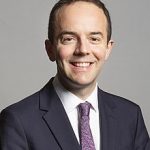
Tag: James Murray

  • James Murray – 2026 Speech at NHS ConfedExpo

    James Murray – 2026 Speech at NHS ConfedExpo

    The speech made by James Murray, the Secretary of State for Health and Social Care, on 11 June 2026.

    I am really pleased to be here so soon after being made Secretary of State for Health and Social Care.

    Today, in fact, is exactly four weeks since the Prime Minister called me and asked me to take on this role.

    And I can tell you that, from the moment that phone call with the Prime Minister ended, my head – and my heart – have been filled with thoughts and feelings of how important a role this is and how much I want to do.

    I have spent the last four weeks meeting as many people as possible – patients, staff, outside experts.

    I have been taking finely balanced decisions with all the sensitivity they deserve.

    And I have been reading reams and reams of policy papers and briefing packs from front to back.

    As my advisers will tell you, I like getting my head under the bonnet.

    And one reason for that is that I want to understand the challenges you are facing inside and out so that we can work together to move things forward.

    In all the previous roles I have held in public office – whether as a council cabinet member, as a deputy mayor in London, or as a minister at the Treasury – I have learned that the most effective way to deliver is to work openly and collectively with all members of the teams I have led.

    And it is in that same spirit that I have joined this team of 1.5 million people, who work in the NHS, and the 1.5 million more, who work in social care.

    I want our workforce to feel valued and rewarded, where they come in for every shift with a sense of purpose and go home from every shift with a sense of achievement.

    Because as political leaders we can set the direction of travel.

    But it is only by working with leaders throughout the system, and those on the frontline, that we will see our commitments to the people we serve become a reality.

    And I want to thank you for everything that you and your teams, clinicians and non-clinicians alike, have done over the past two years:

    We have moved toward our 18-week electives improvement target; delivered 1.8 million dental appointments; offered online requests for GP appointments; cut waiting lists by more than 400,000; getting ambulance response times and four-hour waits in A&E down; and improving productivity across the health system.

    I am especially pleased, with my former Treasury hat on, that these achievements have been possible with us living within our means for the first time in nearly a decade.

    I know that you have been under considerable pressure to meet the ambitious targets that we have set you, to do it while keeping on top of the finances, and to do it in the face of strikes, an early flu spike, supply chain challenges, disease outbreaks and record demand.

    And I don’t want to diminish how tough the organisational changes have been on you and your colleagues, especially those in my department, in NHS England and in ICBs.

    I think it is easy to forget in talk of headcount and savings that what we mean are people’s jobs and livelihoods – and however necessary the changes are, that is certainly not lost on me.

    But some people doubted our ability to make the progress we promised, and you are all proving them wrong.

    You have risen to the challenge.

    And the public are beginning to feel the improvements that you are making – whether that is on waiting times, urgent and emergency care, ambulance response times, or GP access.

    It is no surprise that we have seen the biggest drop in dissatisfaction with the NHS since 1998 – and the first increase in satisfaction since before the pandemic.

    And whilst we know there is a long road ahead, we have shown that by working together we can drive and deliver real and impressive progress.

    For me to come into this role on the back of that growing sense of optimism and momentum, is a real gift.

    My promise to you, is that I will work with you day and night to realise the opportunity that gives us to go further.

    Now, in pursuing that goal, I do not want to waste a second.

    Too often in the past, a change of Health Secretary has come with a change of priorities.

    As a result, the service gets flooded with messages of what they need to focus on next, and progress gets delayed.

    The lesson of the last two years for me is that you are at your best, and you are able to deliver fastest, when the message from the top is clear.

    And so let me say clearly that the focus and targets of this government on electives, UEC, and access to GPs and dentists remain.

    The Medium-Term Planning Framework remains.

    And the 10 Year Plan remains.

    The level of improvement required across the system in future years cannot be achieved through performance management alone.

    What we have done in the first two years, on the back of record investment, is to make improvements while starting to modernise the NHS.

    And now that we have stabilised the system, my job is to work with you not only to maintain and extend those improvements in performance, but also to put our feet to the floor on reform.

    What I am bringing to this role is not a change of course but a change of gear.

    I am determined that we accelerate our fundamental transformation and modernisation of the NHS by making sure that we make the fullest possible use of technology, digitisation and AI.

    I know what benefits this can bring.

    When I was responsible for tax collection at the Treasury – that made me popular I put HMRC on course to conduct 90% of interactions digitally by 2030.

    And with more and more people able to meet their day-to-day tax needs through digital self-service, HMRC is now freeing resources that can help resolve the most complex cases that need a human eye.

    AI tools are now being used to support evidence in criminal investigations, and voice recognition technology is being used to speed up taxpayers accessing support and to helping to write call logs to save on the costs of admin.

    But one important barrier that we knew we had to overcome at HMRC – one that I recognise from many years in public service – is the risk aversion that too often limits innovation.

    Too often the question is, ‘What if it goes wrong?’ – and of course that is an entirely legitimate question to ask, especially in health and social care where we are talking about profound consequences.

    But I think we also need to balance that question by giving equal weight to another important question, ‘What if we don’t do this and leave things the same?’

    I want you to have the confidence that I will back you in using new technology to improve the experiences and outcomes of patients.

    I believe people expect their public services to be as easy and convenient to use as they get from the private sector – and it is our job to make that a reality.

    Now I know that when challenging targets loom large and near on the road ahead, reform and modernisation can get pushed further from view.

    Modernisation is seen as a promise for tomorrow, rather than a way of tackling the challenges of today.

    And let me be clear that the challenges of today are very real.

    All of us in this room know that for all the progress that we’ve made, things still aren’t good enough for far too many people in far too many parts of the country.

    As we meet here, there will be someone who can’t get through to their GP to make an appointment, someone off work and in pain who has been waiting too long for treatment, someone in crisis who can’t get the support they need, and someone stuck in a bed in the humiliating and undignified surroundings of a corridor.

    But the NHS cannot simply manage its way out of the current pressures.

    It must transform its way out of them.

    The simple truth is that the NHS will only become sustainable in the long term if it changes the way care is delivered.

    The choice is not between reform and recovery; the task is to use reform to accelerate recovery.

    And you are showing us the way.

    The community wellness team in South Cumbria that cut emergency admissions by two thirds, did so by identifying a small group of high need patients responsible for a disproportionate share of hospital bed days – they are demonstrating how creating neighbourhood services will reduce the demand on A&E not just a decade from now but over the next few years.

    Likewise, the eTriage tool being used by Royal Berkshire and others to reduce the number of face-to-face appointments, shows that new technology will not just improve the speed and convenience for outpatients a decade from now but, again, will do so over the next few years.

    The Health and Growth Accelerator pilots to boost people’s health and get them back to work show how preventing sickness will improve the nation’s physical and economic health not just a decade from now but over the next few years.

    In the same way that investment and modernisation are two sides of the same coin, delivery and reform are not separate agendas.

    In fact, as the targets become more and more ambitious, it will be nigh on impossible to meet them if the system stays the way it is currently working.

    Tomorrow must come to the aid of today.

    And so I want to make sure that, at the centre, we use the modernisation and reform agenda to step up delivery straight away, and at the same time create new ways of working that give you the platform to innovate and drive improvement locally.

    We have already made a start on that with the NHS Modernisation Bill, the changes we are making to ICBs, and the creation of Advanced Foundation Trusts and Integrated Healthcare Organisations.

    I do not want to tie your hands in red tape.

    I want you to be free to innovate, to be creative and to get on with what works, because I know that delivery does not happen from behind a desk in Whitehall.

    Indeed, more often than not the system is way ahead of us.

    North East Ambulance Service now delivers the fastest response times across all six national standards and is reducing pressure on emergency departments by increasing ‘hear and treat’ rates and improving handover times.

    Princess Alexandra Hospital has significantly reduced elective waiting times by, among other things, expanding diagnostic capacity, introducing an ‘advice and refer’ model, and working with patients and primary care to redesign pathways.

    These are the kinds of enterprising initiatives that are going to make the NHS better for patients, better for staff, and better for taxpayers.

    I very much hope to see more of them and to make sure we help spread them and embed them throughout the system.

    The real challenge is not choosing between short-term performance and long-term sustainability but ensuring that each reinforces the other.

    Now, we all know the NHS matters deeply to people right across our country, because of how deeply it touches all of our lives.

    For my part, the NHS came to my rescue when I was diagnosed 18 years ago with a serious and rare neurological condition that threatened my ability to run, to write, and to talk.

    It is only thanks to the support of the NHS that I am able to stand here today, as the Secretary of State for Health and Social Care.

    The NHS gave me a second chance at life – and I will fight for it every single day with the strength that it has given me back.

    And I need your help to do that.

    I want to work with you to implement the 10 Year Plan.

    To quicken the pace of reform by embracing technology, digitisation and AI.

    To innovate and take the right risks – and to know that, as you do so, I will be by your side.

    We are going in the right direction and we must not ease our foot off the pedal for a second.

    I am looking forward to working with you very much, and I cannot wait to see what we can achieve together.

    Thank you.

  • James Murray – 2026 Comments on Measles

    James Murray – 2026 Comments on Measles

    The comments made by James Murray, the Secretary of State for Health and Social Care, on 11 June 2026.

    My thoughts are with the families who have suffered such unimaginable loss. These deaths are a heartbreaking reminder that measles is not a harmless childhood illness. 

    Measles can lead to serious complications that can be fatal, and the MMR vaccine, which has saved countless lives, remains the best protection we have against this highly infectious disease. 

    I urge all parents and carers to check that their children are up to date with their vaccinations as it is never too late to catch up – even if you miss a dose. By ensuring our children are vaccinated, we not only protect them but also help safeguard the most vulnerable in our communities.

  • James Murray – 2026 Comments on the Single Patient Record

    James Murray – 2026 Comments on the Single Patient Record

    The comments made by James Murray, the Secretary of State for Health and Social Care, on 1 June 2026.

    When I was in my 20s I was diagnosed with a rare neurological condition. I am now symptom-free and I get fantastic support from the NHS. But I know how much effort it can be to keep different parts of the health service joined up, and how distressing it is for some patients to repeat their medical history over and over.

    That’s why our Single Patient Record is so important. It sits at the heart of our NHS Modernisation Bill will end this once and for all – making care safer while saving clinicians’ time.

    My priority as Health Secretary is to modernise the NHS and make it work better for patients. This is our 10 Year Health Plan in action — making the NHS fit for the future by building it around patients’ lives, not the other way round.

  • James Murray – 2023 Speech on Removing VAT from Sunscreen Products

    James Murray – 2023 Speech on Removing VAT from Sunscreen Products

    The speech made by James Murray, the Labour MP for Ealing North, in Westminster Hall, the House of Commons on 9 February 2023.

    It is a particular pleasure to serve in this debate with you, Mr Sharma, my parliamentary neighbour, as Chair. I congratulate the hon. Member for East Dunbartonshire (Amy Callaghan) on securing the debate and raising this important health issue. I am pleased to be here on behalf of the Opposition and I thank all hon. Members for their contributions. People have spoken powerfully about the impact that skin cancer can have on people’s lives, and on friends and family.

    There is consensus among hon. Members present about the importance of sunscreen products and their growing importance in our lives. While these products have perhaps historically been associated more with travel to warmer climates, the past year has demonstrated how susceptible we are to heatwaves and the intense periods of direct sunlight they can bring to the UK.

    I echo what other hon. Members have said today. Organisations including Cancer Research UK have long made clear that the amount of UV exposure over someone’s entire lifetime is one factor that contributes significantly to the risk of skin cancer. According to the research, melanoma is the fifth most common cancer in the UK, with 16,000 cases a year, of which almost nine in 10 cases are preventable. It is vital that people can access sunscreen products when they need them.

    As we heard earlier, high factor sunscreen products are already available on the NHS prescription list for a few specific conditions, and are exempt from VAT when dispensed through pharmacies. However, we are only too aware of the crisis facing our NHS and the difficulties people can encounter trying to secure an appointment with an NHS GP. That may restrict access to prescriptions, especially in cases where a repeat prescription is not available.

    In her response, it would be very helpful if the Minister could share with us any information she has on the number of people receiving sunscreen products as a prescription on the NHS, and how many receive their prescription free of charge. It would also be helpful if she could update us on the average waiting time to obtain an NHS GP appointment. I am sure that the Minister will also set out the Government’s position in response to the call from the hon. Member for East Dunbartonshire. The Opposition appreciate that expanding the scope of VAT release is a complex consideration that can add pressures to public finances.

    There is a wider point about the affordability of sunscreen and other products that consumers may need to buy, as my hon. Friend the Member for Reading East (Matt Rodda) said. As the cost of living crisis has deepened, costs for ordinary households have risen to record highs. The Office for Budget Responsibility has predicted that living standards will be worse at the end of this Parliament than they were at its start. It has also outlined that real post-tax household income is expected to fall by 4.3% in 2022-23—the biggest fall since comparable records began nearly 70 years ago.

    Finally, I would be interested to hear from the Minister what discussions the Government have had with sunscreen product manufacturers and retailers to determine what steps can be taken to ensure that such products are affordable for consumers. I would be grateful if she could also set out what support those manufacturers have said they may want or need from the Government to help make sure this can be achieved.

  • James Murray – 2022 Speech on Business Rates and Levelling Up

    James Murray – 2022 Speech on Business Rates and Levelling Up

    The speech made by James Murray, the Labour MP for Ealing North, in Westminster Hall, the House of Commons, on 13 December 2022.

    It is a pleasure to serve under your chairmanship, Mr Mundell. I begin by congratulating the hon. Member for Waveney (Peter Aldous) on securing this important debate on business rates. I am pleased to respond on behalf of the Opposition.

    We know that there are around 5.6 million small businesses in the UK, creating millions of jobs and opportunities. They provide essential services to local people, and make a significant contribution to the Exchequer. Businesses on high streets across our country are not just places to buy things we need. They are also an important part of where we live, work and share our daily lives.

    While business rates affect businesses of all sizes, smaller businesses often struggle the most to meet those costs. They face the burden of an outdated system of business rates, while struggling with rising energy costs, rents or mortgages, and inflation, as well as the ongoing impacts of the pandemic and the September mini-Budget. Data released by the Office for National Statistics shows that the number of business closures in the UK in the first quarter of 2022 was a shocking 137,210 which is 23% higher than the equivalent figure in the first quarter of 2021.

    As the shopkeepers campaign has highlighted, the existing business rates system in England has become disconnected from the realities of modern retail and retail real estate. As the campaign explains, business rates in England were 87% higher in March 2020 than they were in 2001, whereas retail rents rose by only 17% over the same period. As it also points out, business rates have not responded effectively to evolving consumer and economic trends, not least the rapid growth of online retailing, and equitable business rates liabilities are the result of infrequent and delayed revaluations under a system that acts as a barrier to investment. Such views are echoed by the 2018 Confederation of British Industry report, “A Tax System that Enables Businesses to Invest and Grow”, which states:

    “In an increasingly digitalised word, it has never been a more crucial time for the Government to act and set out a path for reform to the broken business rates system.”

    I am sure the Minister will recall the 2019 Conservative manifesto, on which the party stood for election. Specifically, page 32 promised:

    “We will cut the burden of tax on business by reducing business rates. This will be done via a fundamental review of the system.”

    We recognise that any help for businesses that are struggling is welcome, and we recognise that the UBR has been frozen, relief extended into 2023-24, and downward phasing abolished. However, it seems that the promise of fundamental reform has now been abandoned. It seems that the Government have abandoned their promise fundamentally to address the imbalance that affects bricks-and-mortar businesses, which find themselves at a significant disadvantage compared with their online counterparts, whose warehouses typically attract considerably lower business rates.

    My colleagues and I believe that the current system of business rates should be replaced to meet the needs of a modern economy. Last year, my right hon. Friend the Member for Leeds West (Rachel Reeves) announced that a future Labour Government would replace the current system of rates with a new system of business taxation that is fit for the 21st century. We will set out our plans before the next general election, and such a system will involve more frequent revaluations—a move that many people have been urging for years. It will be a fairer system that asks online giants to pay a fairer share, so that small, local and high-street businesses in all parts of the country can thrive. Ahead of fundamental reform, we also believe that the same principle of rebalancing the burden of tax in the system should apply, which is why we have set out our plans for an increase in the threshold for small business rates relief, funded by an increase in the rate of the digital services tax.

    We know that partnership between the Government and businesses is critical to economic growth, but it has been lacking in our economy for so long. We also know that small businesses have been held back, particularly by an outdated system of business rates, for many years. To increase growth in all parts of the UK, the Government should support small businesses to invest, grow and create jobs.

    As the shadow Chancellor has set out, Labour will carry out the biggest overhaul of business taxation in a generation so that our businesses can thrive. Our replacement system will shift the burden of business taxation so that online firms take a fairer share, while freeing those that rely on bricks-and-mortar premises. Our new system will incentivise investment and include more frequent revaluations and instant reductions in bills where property values fall. It will reward businesses that move into empty premises and encourage, rather than penalise, green improvements to businesses. It will also make sure that no public services or local authorities will lose out from the changes.

    Labour’s approach will be based on working together, with businesses, workers and public bodies all pulling together to rebuild Britain and to seize the opportunities of the future. A Labour Government will help to breathe new life into our high streets by calling time on the outdated model of business rates, so that British businesses in all parts of the country can play their part in creating economic growth and the jobs of the future.

  • James Murray – 2022 Speech on the NHS Workforce

    James Murray – 2022 Speech on the NHS Workforce

    The speech made by James Murray, the Labour MP for Ealing North and Shadow Minister, in the House of Commons on 6 December 2022.

    There can be no doubt that the NHS is in crisis. We have heard shocking stories today from hon. Members about what their constituents are having to endure. Each and every one of these deeply distressing stories helps to confirm the devastating impact of the Conservatives’ neglect of the NHS. Patients deserve so much better than this Government and everyone who works in the NHS deserves so much better, too, for the invaluable work they do.

    We all know that from the experience we have in our constituencies, as we have heard so powerfully today. My hon. Friend the Member for West Ham (Ms Brown) spoke powerfully and in detail about the impact of vacancies in the NHS, particularly in maternity services, in her constituency and the surrounding areas. My hon. Friend the Member for Coventry North West (Taiwo Owatemi) spoke about the role of community pharmacists and the wider struggles that NHS workers face. She was speaking with particular authority, given her background in the NHS before becoming an MP. My hon. Friend the Member for Ilford South (Sam Tarry) spoke about the severe impact of vacancies and exhaustion in nursing after 12 years of the Conservatives.

    My hon. Friend the Member for Kingston upon Hull West and Hessle (Emma Hardy) spoke about the impact that workforce shortages were having, even before the pandemic, on crucial radiotherapy services in her constituency and beyond. My hon. Friend the Member for Streatham (Bell Ribeiro-Addy) spoke about the scale of the crisis that we face in NHS recruitment and retention. My hon. Friend the Member for Leeds East (Richard Burgon) rightly mentioned those shameful attacks by Conservative Ministers on nurses.

    My hon. Friend the Member for Bristol South (Karin Smyth) spoke with great experience, having spent three decades working in the NHS, about the growing crisis of retention over the past decade. My hon. Friend the Member for Worsley and Eccles South (Barbara Keeley) spoke about the NHS crisis and set it in the context of the Government’s unfair decision in the recent autumn statement. My hon. Friend the Member for Halifax (Holly Lynch) gave a wide-ranging and powerful speech that drew attention to the genuine sense of fear among people across the country at the prospect of not being able to access vital NHS services. My hon. Friend the Member for Wirral West (Margaret Greenwood) made it clear that the staffing crisis in the NHS is the failure of 12 years of the Conservatives.

    Madam Deputy Speaker, that is the truth. The Conservatives have spent 12 years running down the NHS and letting our economy fall further and further behind, but, make no mistake, this is not inevitable. After 1997, Labour not only grew the economy 1.5 times the rate that the Conservatives subsequently managed, but delivered an NHS to be proud of, and we are proud of our record.

    Although the challenges now are even greater than they were in the late ‘90s, if we take office at the next election, we will, again, deliver a modern, sustainable NHS that is fit for the future that we face. We know that, to make the NHS fit for the future, it needs a prescription of reform and sustainable funding from a growing economy. For our economy to grow, we need to start getting our public services back on track, too. As my hon. Friend the shadow Health Secretary set out, one of the first steps that a new Labour Government will take to get the NHS back on track is to deliver a workforce plan that addresses the root cause of the crisis it is in.

    Under our plan, we would double the number of medical school places to 15,000 a year. We would double the number of district nurses qualifying each year. We would train 5,000 new health visitors a year and we would create 10,000 more nursing and midwifery clinical placements each year, too—all part of a long-term workforce plan for our NHS.

    Steve Brine

    On the doubling of the number of medical school places, can the hon. Gentleman tell me what the cost of that is, especially as the shadow Chancellor is so handily sitting next to him? It would be helpful for those of us on the Select Committee to put the price tag on that one.

    James Murray

    All the pledges that the Opposition make are fully costed and fully funded. [Interruption.] If the hon. Gentleman waits one second, I will address that point. Today is about political choices. It is not just a political choice of whether we invest in the NHS; it is a political choice of how we pay for it. That is why we have made it clear that, to pay for our NHS workforce expansion plan, Labour would abolish the unfair, outdated non-dom tax status. Non-dom tax status is passed down through people’s fathers and it costs the public purse £3.2 billion a year, while failing to support economic growth in the UK. Under the current arrangements, a small group of high-income people who live in the UK are able to avoid paying tax on their overseas income for up to 15 years. We would abolish that 200-year-old tax loophole and introduce a modern scheme for people who are genuinely living in the UK for short periods. We believe that if a person makes Britain their home, they should pay their taxes here.

    Paul Bristow

    My hon. Friend the Member for Winchester (Steve Brine) asked the hon. Gentleman a very specific question about the exact cost of doubling the number of places at medical school. Is the hon. Gentleman able to confirm the exact cost of that—not the non-dom cost, but the exact cost of doubling the number of medical places?

    James Murray

    I thank the hon. Gentleman for his intervention. I have set out that scrapping the non-dom status would raise £3.2 billion, and that our workforce expansion plan would cost £1.6 billion, so we would be well able to afford that measure from the amount of money that we have raised from scrapping this outdated, unfair tax loophole.

    Non-dom status should have no place in our modern tax system. It is unfair. When the Government are making working people pay more tax, it is simply wrong to allow wealthy people with overseas income to continue to benefit from an outdated tax break. It is also bad for UK business: the loophole prevents non-doms from being able to invest their foreign income in the UK, as bringing it here means it becomes liable for UK tax. Abolishing non-dom status would end that barrier to UK investment—and, as I have said, raise £3.2 billion, money we would use to put towards priorities including expanding the NHS workforce.

    To be honest, we would have thought abolishing non-dom status, replacing it with a modern system and using the money to strengthen the NHS and economy would be a no-brainer. What is it about this Conservative Government, led by the right hon. Member for Richmond (Yorks) (Rishi Sunak), that makes them so reluctant to close that loophole? Last week, during the rushed debates on the Government’s autumn Finance Bill, I asked Treasury Ministers to confirm whether the Prime Minister had been consulted on the option of abolishing non-dom status and whether it was ever considered as an option for last week’s Finance bill. I also asked whether, when the current Prime Minister was Chancellor, he had ever recused himself from discussions on the matter, for obvious reasons.

    I put these questions to Treasury Ministers on three separate occasions last week, but they refused each time even to acknowledge the questions, never mind answer them. For a Minister to overlook a set of questions once might be an oversight, but to ignore them three times looks like something else. Perhaps the Minister will today show that they have nothing to hide by answering the questions I have raised.

    In the autumn statement and last week’s Finance Bill, the Chancellor chose to leave non-dom status untouched, while picking the pockets of working people, including nurses, with stealth taxes such as freezing income tax thresholds and pushing up council tax. Today, the Secretary of State for Health only mounted a brief defence of non-dom status; I wonder whether his colleague from the Treasury will, in her closing remarks, repeat some of the defences that Treasury Ministers tried to set out last week.

    Last week, Ministers tied themselves in knots trying to find a justification for the £3.2 billion tax break for non-doms. They tried to pretend that the Government’s investment relief is working, when only 1% of non-doms invest their overseas income in the UK in any given year, and last week they tried to win praise for ending permanent non-dom status, while keeping quiet about the new loophole they created, which allows people to use trusts to retain non-dom benefits permanently.

    The truth is that, unless the Conservatives vote with us today to abolish non-dom status once and for all, the British people will be clear that no amount of reason or common sense will get this Government to come round. The British people need a fresh start and a new Labour Government that would take those fairer choices on tax to support the stronger NHS we so desperately need.

    The NHS is an achievement we share together as a country and one that we all have a personal relationship with. We all want to know that when we have medical symptoms, concerns or needs, the NHS will be there for us. We want to know it will be there as a publicly funded service, free at the point of use, able to provide us with the high-quality help we need. That is what I wanted to know in my early 20s, when I started to notice symptoms of what would later be diagnosed as myasthenia gravis, a rare neurological condition that caused muscle weakness throughout my body.

    After the best care I could have hoped for from my brilliant consultant and his team and colleagues at the National Hospital for Neurology and Neurosurgery in Queen Square, I have been symptom-free for many years now, but the memory of first feeling those symptoms and then finding my way towards the right treatment sticks with me. I would never want anyone to feel symptoms like mine and not be sure whether the NHS would be there to help.

    We all know stories like that. We all need the NHS to diagnose and treat us when we are worried. We all need to be able to turn to the NHS so that we get that treatment in good time. We all connect with the NHS through our own lives and the lives of our family and friends. That is why the NHS matters so much to us all and why we are so determined to deal with the crisis the NHS is facing and to make sure it is ready for the modern challenges we face.

    At the heart of our vision for the country are stronger public services and stronger economic growth. We know that getting public services back on track will support a growing economy, which will in turn support modern, sustainable public services. Before us today we have a chance to end the unfair 200-year-old tax loophole, which lets a small number of people avoid tax on overseas income, and use the money saved to fund one of the biggest workforce expansion plans in the history of the NHS. That is the choice in front of us today, and I urge all MPs to do the right thing by backing our plan.

  • James Murray – 2022 Speech on the Finance Bill

    James Murray – 2022 Speech on the Finance Bill

    The speech made by James Murray, the Labour MP for Ealing North, in the House of Commons on 28 November 2022.

    I beg to move an amendment, to leave out from “That” to the end of the Question and add:

    “this House declines to give a second reading to the Finance Bill because, notwithstanding the importance of increasing the energy (oil and gas) profits levy, it raises taxes on working people through its freeze of the personal allowance threshold; because it fails to take advantage of other sources of revenue, such as ending non-domiciled tax status and further reducing the tax allowances available to oil and gas companies; and because it derives from an Autumn Statement which fails to set out plans to arrest the 7 per cent fall in average living standards forecast over the next two years, and to grow the UK economy, including through replacing business rates, supporting start-ups, giving businesses the flexibility they need to upskill their workforce, investing in clean and renewable energy, insulating homes across the country, and creating jobs in the green industries of the future.”

    After 12 years of economic failure from the Conservatives and 12 weeks of economic chaos, we now have this Finance Bill from a party that is holding Britain back. It is a Bill from a party that has, of course, lost any claim that it might once have tried to lay to economic competence; but more than that, it is a Bill that shows a party making the wrong choices time and again, and a party with no plan to grow our economy and halt the decline in living standards.

    As people across the country know, the Conservatives’ economic failure is hitting households hard. We are living through the longest period of earnings stagnation for 150 years, with real wages lower this year than when the Tories came to power in 2010. Living standards are forecast to fall by 7% over the next two years—the biggest fall on record, taking incomes down to 2013 levels. No wonder the director of the Institute for Fiscal Studies described the forecast drop in disposable income as “simply staggering”. This will truly feel like a lost decade for people across the United Kingdom: a decade of low growth, with incomes now set to fall back to where they were a decade ago.

    I know that Conservative Members are desperate to make out that global factors are entirely to blame for the economic reality of today, but although no one denies the deep impact of covid and of Putin’s invasion of Ukraine, it is simply not credible—and it is frankly insulting—to pretend that the occupants of Downing Street, now and over the past 12 years, have had nothing to do with the mess that we face. It was decisions taken by the Conservatives in office that left us uniquely exposed to the inflationary shock of oil and gas prices rising—they took misguided and damaging decisions to shut down our gas storage, to stall on nuclear power and to ban renewable technologies such as onshore wind—and it was decisions taken by the Conservatives in office that have denied the UK the opportunity to grow our economy over the past 12 years as we could and should have done.

    Richard Fuller

    Will the hon. Gentleman please check his facts? If he looks at the period from 2010 to just before the covid pandemic and compares the UK’s average rate of growth with that of our OECD competitors, particularly the G7, he will find that the UK outstrips all of them bar the United States and Germany.

    James Murray

    I seem to be engaging more with the hon. Gentleman now that he is on the Back Benches than when he was briefly on the Front Bench. If he looks at the statistics, he will see that, over the last 12 years, the UK’s growth rate has been a third lower than the OECD average, and a third lower than it was during the previous Labour years. I will take no lessons from him or his colleagues on the need for economic growth.

    I take this opportunity to give the previous Chancellor, the right hon. Member for Spelthorne (Kwasi Kwarteng), some rare credit. At least he took responsibility for the mess he inherited from his colleagues when he confirmed that our economy is stuck in a “vicious cycle of stagnation.” On that point, he was absolutely right.

    Over the Conservatives’ 12 years in power, as I said to the hon. Member for North East Bedfordshire (Richard Fuller), the UK economy grew a third less than the OECD average and a third less than during the previous Labour years. What is more, we are now the only G7 economy that is still smaller than before the pandemic. Over the next two years, we are forecast to have the highest inflation in the G7 and the worst economic growth of any country in the G20 except Russia.

    What is more, we are the only country in the G7 whose governing party chose to inflict profound damage on its own economy. Although the Prime Minister and the Chancellor refuse to take responsibility, the British people can see through them and will hold them to account. What the British people want and need is a Government who will get on and do the right thing without having to be pushed, dragged and forced into doing so. That is one reason why people across the country have been so exasperated by the Government’s reluctance at every turn to implement a windfall tax on oil and gas producers’ huge profits this year.

    My right hon. Friend the Member for Leeds West (Rachel Reeves) first called on the Government to bring in a windfall tax in January. It took five months of pushing the Government along a painful journey to get them to act. In those months, Conservative Ministers tried to defend their position, saying that oil and gas producers were struggling. They said a windfall tax would be “un-Conservative”, and the current Prime Minister said it would be “silly” to use this money to offer people help with their energy bills. Conservative MPs voted against a windfall tax three times, and then, when they finally realised their position was untenable, they did a U-turn.

    Even then, having been dragged kicking and screaming into introducing a windfall tax, the current Prime Minister coupled it with a massive tax break for the oil and gas giants. This tax break will be given to the oil and gas giants for doing the things they were going to do anyway, which helps to explain why some of them have paid zero windfall tax in the UK this year, despite record global profits.

    Despite having another go at windfall tax legislation with this Bill, the massive tax break is still there. It is set at a level that will, to quote the explanatory notes,

    “maintain the overall cumulative value of relief”.

    This tax break leaves billions of pounds on the table. These profits—the windfalls of war—could go towards helping people facing the difficult months ahead. This tax break is set to cost the taxpayer £80 billion over five years. This tax break was brought in by decisions that this Prime Minister took when he was Chancellor, and it is staying thanks to the decisions of the Chancellor he appointed from No. 10. What clearer evidence could there be that, no matter which Conservative goes through the revolving door of Downing Street, it is all more of the same?

    All we get from the Conservatives is the same vicious cycle of stagnation. This doom loop has been dragging wages down, forcing taxes up and hitting public services, all of which come round again and keep economic growth low.

    Jonathan Edwards

    I agree with many of the hon. Gentleman’s points. Much of the narrative around the autumn statement and the Budget is about restoring market credibility after the implosion of the previous Administration. In reality, the one thing we could do to restore market credibility is to have a more sensible trading relationship with the European Union. There is no hope from the Government, but will the Labour party offer us that hope?

    James Murray

    Later in my speech I will talk about our plan for growth, which will involve fixing the holes in the Brexit deal with which the Conservatives left the European Union. Alongside other measures, it is important to make sure that the deal has a proper plan for growth that is sorely lacking from this Government.

    This Finance Bill is a bill in more ways than one, because as well as being legislation, it represents a bill landing on working people’s doormats. It is a bill that working people are being forced to pay for the Government’s failure. Working people are paying for the Tories’ decisions that, for the last 12 years, have held back the economy, and for the last 12 weeks have crashed it.

    This Bill freezes the income tax personal allowance, which will leave an average earner paying over £500 more income tax a year by 2027-28. In the autumn statement, the Government announced a council tax bombshell that will force a £100 tax rise on families in the average band D house from next April. As a result of all the tax measures announced in this Parliament, middle-income households will see their tax bill rise by £1,400. That is what it looks like when working people are made to pay the price.

    It is all the more galling for people to be asked to pay more when the Conservatives are so slapdash with public money. Today, new figures show that the current Prime Minister wasted a staggering £6.7 billion on covid payments to businesses and individuals that were fraudulent or mistakes. Despite wasting public money so carelessly, he is now happy to put up taxes on working people across the country.

    It could have been different had the Government made fairer choices. The Government could have chosen to close the unfair private equity loophole that gives hedge fund managers a tax break on their bonuses. They could have chosen to reverse their tax cut for banks. Perhaps they have forgotten what their position is, having voted for the cut at the start of the year, before U-turning on it a few months ago and then, more recently, U-turning again.

    The Government could have finally chosen to scrap non-dom tax status, an outdated and unfair tax break that costs the taxpayer £3.2 billion a year. A tax break for non-doms should have no place in the UK in 2022. As if evidence were needed that this tax break belongs in a different era, the law makes it clear that people can inherit non-dom status only from their father, unless their parents were unmarried. More fundamentally, this loophole ignores the principle of fairness that should be at the heart of our tax system. If a person makes Britain their home, they should pay their taxes here.

    There are theories going around about why the Government are so reluctant to modernise the tax system and abolish the non-dom tax break. Perhaps the Minister will be able to confirm at the end of the debate, or in writing afterwards, whether the Prime Minister has been consulted on the option of abolishing non-dom tax status. Perhaps he can confirm whether the option was ever considered. When the current Prime Minister was Chancellor, did he recuse himself from discussions on this matter? I see the Exchequer Secretary to the Treasury acknowledging my request, so I look forward to his response either later today or in due course.

    We know that the Conservatives’ choices on tax are deeply unfair, but we also know that the lack of economic growth is the deep root of the rising tax burden in the UK. Over the last 12 years, the UK economy has grown a third less than the OECD average and a third less than during the previous Labour years. We are now the only G7 economy that is still smaller than it was before the pandemic, and over the next two years we are forecast to have the lowest growth of any country in the G20 bar Russia.

    A plan for growth has been missing for a decade, and its absence is having a greater impact than ever. In its report this month, the OBR confirmed that measures announced at the autumn statement will make no difference to growth in the medium term. The CBI’s director general, Tony Danker, put it starkly following the autumn statement:

    “There was really nothing there that tells us that the economy is going to avoid another decade of low productivity and low growth”.

    We cannot afford another decade like the last. We cannot afford another decade of being held back, another decade of lost growth. That is why Labour’s plan is so crucial to raising wages and living standards, supporting and sustaining public services and driving business investment and job creation in the decade ahead.

    Karin Smyth (Bristol South) (Lab)

    My hon. Friend is making an excellent speech, in stark contrast to what we have heard from the Conservative party. It is about people, working people and building back better. Does he agree that, for the people, particularly young people, who lost out so much during covid and are now facing another decade of low growth, we are particularly disappointed about the lack of support for further education and colleges to support the skills agenda for both 16 to 18-year-olds and adults who desperately need retraining and skills? That is starkly absent from what we have heard from this Government.

    James Murray

    I thank my hon. Friend for her contribution. She is a great advocate for investment in skills training and making sure that young people have opportunities in the decade ahead, which they have been denied in the last decade under this Conservative Government. The points she makes fit well within a wider plan for growth, which is at the heart of what Labour Members are proposing and pushing the Government to adopt.

    That plan is wide ranging. It covers business rates being replaced with a fairer system that makes sure that high street businesses no longer have one hand tied behind their back. It relies on us implementing a modern industrial strategy to support an active partnership of government working hand in hand with businesses to succeed. Labour’s start-up reforms will help to make Britain the best place to start and grow a new business. Small businesses will benefit from our action on late payments and we will give businesses the flexibility they need to upskill their workforce. As I mentioned, we will fix holes in the Brexit deal so our businesses can export more abroad. Crucially, our green prosperity plan will create jobs across the country, from the plumbers and builders needed to insulate homes, to engineers and operators for nuclear and wind. We will invest in the industries of the future and the skills people need to be part of them. That is what a plan for growth should look like. As John Allan, the chair of Tesco, said recently, when it comes to growth, Labour are the

    “only…team on the field.”

    The truth is that the need for an effective plan for growth has exposed the emptiness and exhaustion of the Conservative party. All we have to show from 12 years of Cameron, May and Johnson is chronic economic stagnation.

    Madam Deputy Speaker (Dame Rosie Winterton)

    Order. The hon. Gentleman knows that he should not refer to existing colleagues by name.

    James Murray

    I apologise, Madam Deputy Speaker. All we have to show from those three former Conservative Prime Ministers in the last 12 years is chronic economic stagnation. This autumn, the Conservatives tried desperately to make their economic strategy work, but their decisions crashed the economy, imposed a Tory mortgage premium, put pensions in peril and trashed our reputation around the world. Now they are trying again. We face tax hikes on working people, the biggest drop in living standards on record and growth still languishing at the bottom of the league. It seems that Conservative MPs are beginning to realise they have come to the end of the road and their time is up. In a timely echo of the popular TV show, hon. Members from Bishop Auckland to South West Devon are declaring: “I’m a Tory, get me out of here.” It seems the Conservative party is finally beginning to realise what the rest of us already know: the Tories are out of time and out of ideas, and Britain would be better off if they were out of office.

    Our amendment makes it clear that, although Ministers have been dragged, kicking and screaming, into action on oil and gas giants’ windfall tax, this Finance Bill fundamentally fails the UK economy and comes from a Government holding the British people back. Be in no doubt: the mess we are in is the result of 12 years of Conservative economic failure. With this Bill, they are loading the cost of their failure on to working people. The Government still have no plan to grow the economy and to stop the fall in living standards that is filling people across the country with dread. We need a Government with a plan to get our economy out of this doom loop, to support businesses to grow and to raise living standards again. We simply cannot afford another decade of the Conservatives. Now is time for change, now is the time for them to get out of the way, now is the time to let Britain succeed.

  • James Murray – 2022 Speech on Sri Lanka

    James Murray – 2022 Speech on Sri Lanka

    The speech made by James Murray, the Labour MP for Ealing North, in the House of Commons on 9 November 2022.

    I congratulate hon. and right hon. Members on securing this important debate, which gives me the opportunity to speak about the human rights and economic situation in Sri Lanka—a situation of great concern to a number of my constituents in Ealing North. Like many of my constituents, I have been deeply concerned by the ongoing violence and the suppression of peaceful protesters in Sri Lanka as the economic crisis on the island continues to unfold.

    Just over the weekend, we saw peaceful protesters face violence at the hands of Sri Lankan police officers as they demonstrated against the detention of two student leaders. That is just one of the latest examples of the arbitrary detention of minority groups such as Tamils and Muslims, which has now expanded to include the Sinhala population, as state security forces have clamped down on the mass protests that have taken place in Colombo over recent months. I have also heard disturbing reports that the Sri Lankan army, which continues to maintain a military presence in the north-east of the country, has been disrupting the Tamil community as they prepare to commemorate victims of armed conflict.

    Over the last week, Tamils in the north-east have begun preparations for Maaveerar Naal—Great Heroes’ Day—which falls on 27 November. I have been concerned to hear that the preparations have been disrupted by plain-clothes officers in what appears to be an attempt to intimidate Tamils organising any memorial activities.

    As the current economic and political crises have gripped Sri Lanka, I have been contacted by many constituents with deep concerns about the conduct of the former Rajapaksa Government. I have written to the Minister for south Asia, Lord Ahmad, on multiple occasions and pressed him on what the UK Government are doing to support Sri Lanka with the economic situation and to help bring an end to the violence that has erupted. The current economic crisis has left close to half the population living below the poverty line, while a third face food insecurity. The people of Sri Lanka need the UK to do all it can to help bring an end to that.

    Alongside help with the immediate economic and political situation, many of my constituents, particularly those from the Tamil community, have made clear the importance of their continued fight for accountability and justice for what happened during the Sri Lankan civil war. As we have heard from hon. Members, the UNHRC has passed resolutions on the matter and the UK has been the penholder. The most recent resolution, passed last month, renewed the mandate of the Office for the UN High Commissioner for Human Rights to report on Sri Lanka and to protect and preserve evidence of past human rights abuses to use in future accountability processes. However, Sri Lanka is not complying with the resolutions, so the UK must introduce targeted sanctions on individuals who are credibly accused of war crimes.

    Earlier this year, I met a group of Tamil constituents to discuss General Shavendra Silva, a member of the Sri Lankan army who was sanctioned by the US Government due to allegations of human rights violations during the Sri Lankan civil war. Silva was the head of Sri Lanka’s notorious 58 Division: an army unit that committed grave violations of international law and oversaw a military offensive that killed tens of thousands of Tamils. I urge the Minister to commit the Government to sanctioning General Silva under the terms of the British Government’s global human rights sanctions regime.

    The people of Sri Lanka face a desperate economic situation while peaceful protesters face violent suppression. That comes after so many years during which people in the country and beyond, particularly from the Tamil community, have been fighting for accountability for what happened during the civil war. As an MP representing so many constituents with strong ties to Sri Lanka, I repeat my calls for the Government to give whatever support they can to bring an end to the immediate economic crisis and violence and to support the ongoing fight for justice.

  • James Murray – 2022 Speech on the Health and Social Care Levy (Repeal) Bill

    James Murray – 2022 Speech on the Health and Social Care Levy (Repeal) Bill

    The speech made by James Murray, the Labour MP for Ealing North, in the House of Commons on 11 October 2022.

    Just over a year ago, Opposition Members stood in this Chamber urging the Government to drop their plans to hike national insurance contributions and to introduce a new levy on working people and their jobs. It was not just my Opposition colleagues and me making the case against this tax rise; the Government were warned by so many others, from the Federation of Small Businesses to the British Chambers of Commerce, the CBI and the TUC. Ministers were warned from all sides of the harm that their approach would cause. The Government were warned by their own Back Benchers. Ministers at the time even warned themselves. The tax information impact note on the tax rise was signed off by the Minister who took the original legislation through Parliament, and that note said:

    “There may be an impact on family formation, stability or breakdown as individuals, who are currently just about managing financially, will see their disposable income reduce.”

    In relation to businesses, it said:

    “Behavioural effects are likely to be large, and these will include…business decisions around wage bills and recruitment.”

    Yet the Government pressed ahead with the tax rise, supported in the Lobby by the current Prime Minister and the Chancellor. The Government kept supporting it until the then Foreign Secretary became Prime Minister and decided to perform a U-turn.

    We welcome this U-turn, as it puts an end to a tax rise that we said was wrong from the very start. It is, of course, not the only U-turn that we have seen under this Prime Minister. Just last week the Government U-turned on their damaging and misguided plan to cut the top rate of tax for the very highest paid, so our current message to the Prime Minister and the Chancellor is to keep on U-turning.

    James Cartlidge (South Suffolk) (Con)

    Will the hon. Gentleman clarify something? Would he keep the social care cap and the spending on the backlog, and if so, given that he supports repeal, how would he fund that?

    James Murray

    The truth is that we are having this debate as part of a wider Government economic strategy that has caused economic chaos, and contains no plan for growth and no plan to fund public services. Even when we were discussing the original Bill last year, there was no plan for social care: there was no guarantee that a penny of the money would go into social care. So I will not take lectures from the hon. Gentleman.

    James Cartlidge rose—

    James Murray

    I am going to make some progress. I may let the hon. Gentleman intervene again in a few moments.

    As I was saying, right now our message to the Prime Minister and the Chancellor is to keep on U-turning. They need to U-turn on their whole disastrous approach to the economy, which the Chancellor set out just over two weeks ago. That Budget—in all but name—was the most destructive, unfair and irresponsible fiscal announcement in a generation.

    The Prime Minister and the Chancellor should now U-turn on their decision to lift the cap on bankers’ bonuses. They should U-turn on their refusal to ask oil and gas giants to put some of their eye-watering excess profits towards helping keep to people’s energy bills down. They need to U-turn on their discredited, dangerous trickle-down approach to the economy. It is time for them to reverse their disastrous kamikaze Budget, which has unleashed an economic crisis that they made in Downing Street, and which working people are paying for through higher mortgages and prices.

    Alex Cunningham

    My hon. Friend says, rightly, that we support this particular U-turn, but is he not as perplexed as I am about where all this money will actually come from—or does he know that, rather than having a magic money tree, the Tories have a full orchard?

    James Murray

    My hon. Friend is right to point out that the Conservatives’ sums simply do not add up. However, you do not have to take our word for it, Mr Deputy Speaker. Just look at the markets: they have issued their own judgment on the Conservatives’ so-called economic plan, and they are not convinced.

    As we consider the repeal of the Health and Social Care Levy Act, it is important to remember how the Government’s decision to bring in this national insurance hike came to pass in the first place. Over the last 12 years under the Conservatives, we have been stuck in what the Chancellor himself rightly described last month as a “vicious cycle of stagnation”. With tax revenues stagnating under low growth, the Government made it clear that they felt the only way to raise more funds was to raise taxes on working people.

    On Second Reading of the legislation that is being repealed today, the then Chief Secretary to the Treasury tried to defend the Government’s approach, saying that this new charge would

    “enable the Government to provide additional funding to the NHS so that it can recover from the pandemic.”—[Official Report, 14 September 2021; Vol. 700, c. 843.]

    We argued at the time that if the Government felt that they had to raise taxes, those with the broadest shoulders should contribute more, but the Government refused. They pushed ahead with this tax rise on working people and their jobs, and they refused throughout the debate on the original legislation to ask those with the broadest shoulders to take more of the burden. Now, as they repeal the legislation for the national insurance increase, they have abandoned any attempt at fiscal responsibility altogether, with an economic approach that has borrowing at its heart.

    In a letter sent to the shadow Chancellor and the shadow Secretary of State for Health and Social Care on 22 September, the Economic Secretary to the Treasury wrote:

    “The additional funding used to replace the expected revenue from the Levy will come from general taxation and may require further borrowing in the short-term.”

    Labour takes a different approach. Our pledges are fully and fairly funded. As the shadow Chancellor has set out, we would boost NHS investment by ending the outrageous non-dom tax loophole exploited by the super-rich. We will use money from what is saved by scrapping that arcane practice to double the number of district nurses qualifying every year, to train more than 5,000 health visitors, to create an additional 10,000 nursing and midwife placements every year and to double the number of medical students so that our NHS has the doctors it needs.

    Chris Philp

    I think I heard the shadow Chancellor on television a week or so ago saying that her proposals on non-doms would raise about £2 billion. The cost of this measure is about £15 billion, so where is the other £13 billion going to come from?

    James Murray

    The Minister must not have been listening carefully enough to the shadow Chancellor setting out Labour’s plans, because we have set out how we would scrap the non-dom status, which it is completely irresponsible to keep in the current context, and to use some of that money to set out our plans for investment in the NHS. The difference between the Government and the Opposition is that the Government make promises and use throwaway comments about how they might fund this with general taxation or through extra borrowing, whereas when we set out our pledges, we set out exactly what we will pay for. They are fully costed, fully funded and paid for through fairer taxation.

    James Cartlidge

    Will the hon. Gentleman give way?

    James Murray

    No, I am going to make some progress.

    We have set out that we will not borrow for day-to-day spending and that we will not ask working people who are already struggling to foot the bill. That is what we mean when we say we are the party of economic responsibility and the party of social justice. The Conservatives have shown themselves to be the party of a failed approach to the economy. After six so-called growth plans from the Government that have all failed, the drunken gamblers of Downing Street have rolled the dice one last time, putting their faith in the ideological mantra that if they just slash taxes and regulation, they will unleash business investment and growth. They believe that wealth is created only by a few at the top, when the truth is that it comes from the bottom up and from the middle out.

    The trickle-down economics of the Prime Minister and her Chancellor are wrong. Their approach will not work and it is not fair. It will hit working people’s spending power, undermining prospects for growth, and it ignores the need for the Government to be a partner for business to grow—something that is more important than ever with the turbulent, changing, challenging outlook that we face. That is why the next Labour Government would do things differently. We would bring together businesses and trade unions through a national economic council. We would support businesses to grow, through our modern industrial strategy, and we would use a national wealth fund to invest in the new green industries of the future. That is our approach to the British economy: pro-business, pro-worker, pro-growth.

    The Government are making the wrong calls again and again. They were wrong last year to introduce the national insurance rise on working people, just as they were wrong last month when they tried to cut tax for some of the highest paid in society and to hide the OBR report on their plans. We welcome the Government finally admitting that they were wrong to raise national insurance on working people and businesses in the middle of a cost of living crisis, but their wider economic approach is one that is characterised by ballooning borrowing and a discredited trickle-down approach to economic growth.

    The Prime Minister and her Chancellor are gambling with the livelihoods and wellbeing of people across the UK. Their gamble is dramatically worsening the cost of living crisis, with higher costs and mortgage payments for households across the country. It is shredding any reputation for economic competence the Conservatives might once have claimed to have, and it will fail to deliver the growth we need after 12 years of stagnation.

    Throughout the cost of living crisis, Labour has forced the Conservatives to U-turn time and again. By repealing the national insurance rise and levy and by halting their plans to cut the top rate of tax for the very highest paid, the Prime Minister and the Chancellor have shown that they have it within themselves to make a U-turn. Our message to them is clear: do not stop there. The Government must U-turn on their whole economic approach and reverse their disastrous kamikaze Budget. Our message to the British people is also clear: this is a Tory crisis that has been made in Downing Street and is being paid for by working people. Only Labour will fix the damage that the Tories are doing. Only Labour will deliver economic responsibility and social justice. Only Labour will be a Government that are on your side.

  • James Murray – 2022 Tribute to HM Queen Elizabeth II

    James Murray – 2022 Tribute to HM Queen Elizabeth II

    The tribute made by James Murray, the Labour MP for Ealing North, in the House of Commons on 9 September 2022.

    This morning I left my Ealing North constituency to come to Parliament by boarding an Elizabeth line train. As we know, the mark of Queen Elizabeth II on our banknotes, our coins, our stamps and so on will gradually give way over time to the mark of King Charles III, but in our part of the country, those stations and trains mean that my constituents and I will always have a physical tribute to our greatest monarch running through our borough.

    To the great disappointment of the countless primary school children who have asked me since I was elected, I never had the chance to meet the Queen as an MP, but I know that I was not alone in feeling her presence across Greenford, Perivale, Northolt, Hanwell and Ealing during the platinum jubilee celebrations in June. In our diverse part of London, people of all ages, all backgrounds, and all faiths and none, came out to celebrate the reign of our Queen and our love of our community and country. After the separation of the pandemic, we were celebrating the Queen’s jubilee with our neighbours, and that celebration itself helped the Queen’s assurance during lockdown—that better days would return—to come true.

    At those jubilee celebrations, as in the House of Commons today, everyone had their personal reflection on the Queen and what it was about her that they most admired. For me, what stood out above all else was her most incredible sense of duty and her awesome devotion to service, which, quite simply, was her life. On behalf of the people of Ealing North, I offer our deepest condolences to the King and the royal family, and our most heartfelt thanks for the life of Queen Elizabeth II, whose legacy will live on forever.