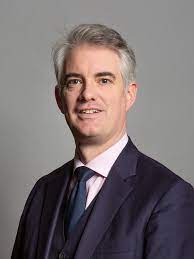
The speech made by James Cartlidge, the Shadow Defence Secretary, in the House of Commons on 5 January 2026.
Our legacy Act ensured that those who served bravely in Northern Ireland could sleep soundly in their beds at night, knowing that they would not be hauled before the courts for protecting all of us from terrorism decades ago. But when our Act was challenged in the courts, instead of appealing, Labour immediately caved and is now scrapping those protections. This will reopen cases, such as Loughgall, from 1987, when IRA members were shot while mounting a bomb attack on a police station, having fired first on the Army.
Loughgall involved 24 SAS soldiers, so it is no wonder that on 30 December, seven senior former SAS officers wrote an extraordinary letter stating:
“Commanders now hesitate, fearing years of litigation. Troops feel abandoned…This self-sabotage needs no foreign hand…In this Troubles Bill, the Government is complicit in this war on our Armed Forces.”
The Minister knows the operational importance of special forces as much as anyone. Does he recognise the huge hit to morale if cases like Loughgall are restarted because of the troubles Bill?
Of course, the Government will say that we need the troubles Bill to pursue unsolved IRA crimes, but as the Prime Minister’s own appointed Northern Ireland Veterans Commissioner David Johnstone warned last week, soldiers may be dragged before the courts, but IRA terrorists walk free because the weapons they used were decommissioned without forensic testing. Was the commissioner not right to say that veterans are treated “worse than terrorists”? Furthermore, last October the Government said that the troubles Bill would contain protections specifically for veterans. Will the Minister confirm that all the protections in the Bill also apply to terrorists?
In November, eight retired four-star generals and an air chief marshal described the troubles Bill as a
“direct threat to national security”.
The letter from seven former SAS officers said that they
“are not asking for immunity; they simply want fair procedures and decisive political leadership”.
With the threats that we face and the need to maximise recruitment and retention, can the Minister show decisive political leadership of his own and scrap the troubles Bill?
Al Carns
As the shadow Defence Secretary has raised a question about recruitment and retention, it is important that we look at the record of his own Government. Military morale fell to record lows under his Government, with just four in 10 personnel in the UK armed forces satisfied with service life; satisfaction fell from 60% to 40% in 2024. Is that surprising when there were real-terms pay cuts in nine out of the 14 years that the Conservatives were in power and over 13,000 housing complaints in a single year? I will not be lectured by the hon. Gentleman on this issue.
I would suggest that to mention that I have an insight into the operational imperative of our forces, as the tip of the spear, is a slight underestimation. I would argue that there are several people in this House who would understand that, including one who is stood here and another on the Opposition Benches. We have been left with a mess and our Northern Ireland veterans were in a legal wild west because of what the Conservatives did with the last legacy Act. No party in Northern Ireland agreed with that Act or supported it, so we had to sort that out—this Government will not allow that situation to continue.
Let me be very clear: we are listening. We have spoken to the Royal British Legion and other associations. I speak to military cohorts on a weekly, if not daily, basis and I speak to the Northern Ireland Veterans Commissioner almost every day. We are working collaboratively and collectively to ensure that the Bill is fit for purpose, that it protects the individuals, that the process does not become the punishment for those individuals, and that we do not allow any terrorist organisation to rewrite history through the courts.