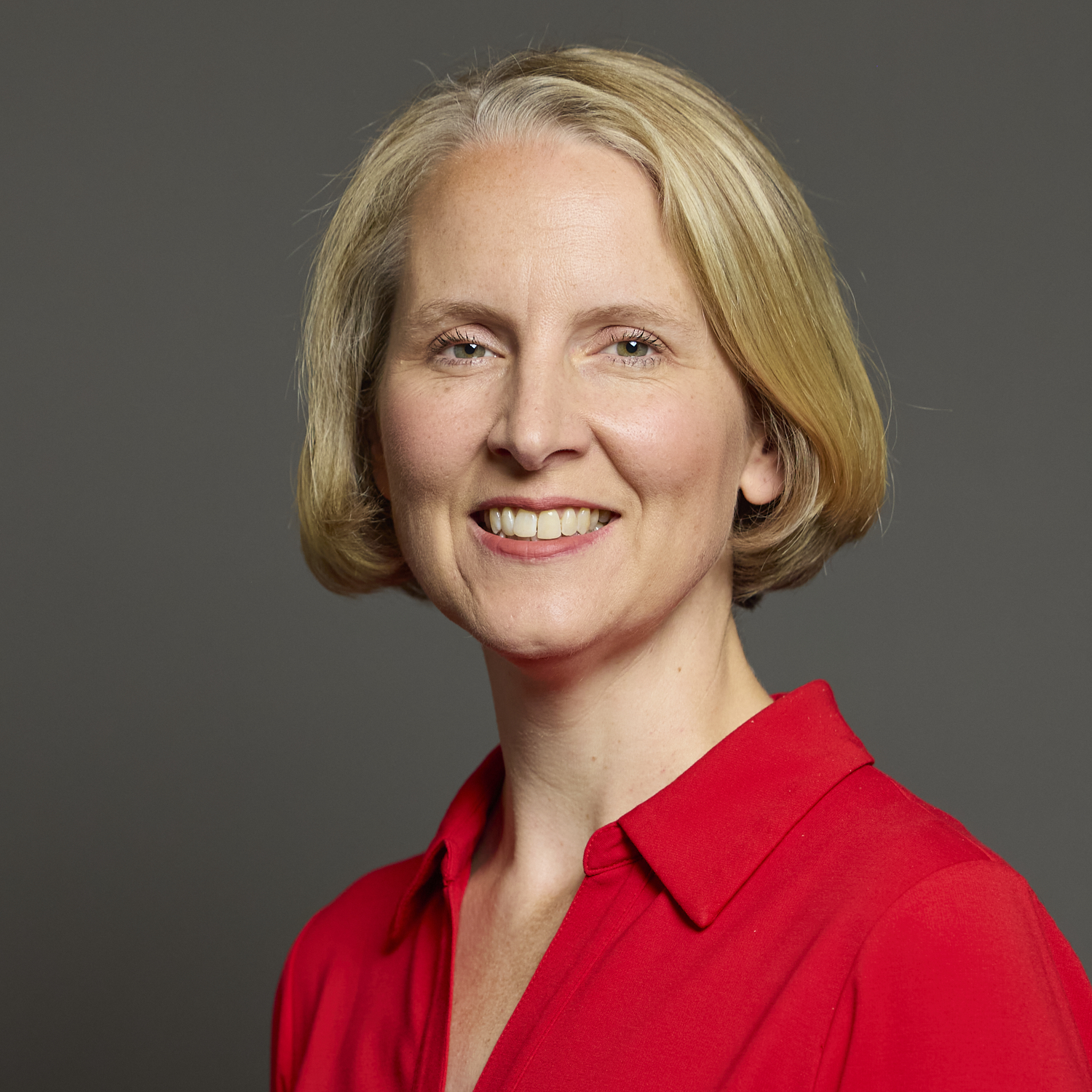
The speech made by Emma Reynolds, the Secretary of State for Environment, Food and Rural Affairs on 8 January 2026.
Good morning,
It’s a real pleasure to be here at my first Oxford Farming Conference.
This conference has a remarkable history – 90 years of new ideas being tested, challenges being confronted, and the future of British farming being shaped.
Farmers are the custodians of 70% of England’s land and provide 65% of the food we eat.
You are at the heart of our national life – for what you produce, the communities you sustain, and the landscapes and heritage you protect.
I live in a rural area and I represent a rural constituency with 89 farms. So I came to this role with an understanding of the challenges you face – and the opportunities ahead.
One of my first conversations as Secretary of State was with the NFU’s President, Tom Bradshaw. Since then, I’ve had frequent discussions with him and stakeholders from across the sector – hearing about your concerns, your frustrations, and your ambitions.
And every one of those conversations has deepened my respect for what you do.
For your resilience in the face of increasingly unpredictable weather and volatile markets.
For your innovation in finding new ways to farm productively and sustainably in a changing climate.
And for your determination to build businesses you can pass on to the next generation.
Speaking of your determination, I also want to take this opportunity to thank farmers who have been out clearing roads and helping to protect their local communities in the recent snow.
You step up when your communities need you and you are the heart of rural Britain.
Today I’m going to cover a lot of ground, but there are 3 commitments that run throughout my speech.
First, that this government is serious about partnership with your sector.
Second, that we’re committed to giving you clarity and stability.
Third, that we’re backing you to grow with confidence and resilience.
Let me start with the announcement we made just before Christmas.
Since starting this role in September, I’ve listened to farmers and stakeholders about your concerns on proposed changes to inheritance tax.
You told me the threshold was too low. You told me it would hit small family farms – the very farms we want to protect.
Farms that have been in families for generations. Farms you understandably want to pass on to your children.
We have listened and we are making changes – increasing the inheritance tax threshold for Agricultural and Business Property Relief from £1 million to £2.5 million pounds.
That means couples can pass on up to £5 million pounds without paying inheritance tax on their assets. That’s on top of the existing allowances such as the nil-rate band.
Around 85% of estates claiming APR, including those also claiming BPR, will pay no more inheritance tax.
Good governments listen. And when they hear real concerns, they act.
That’s exactly what we’ve done and now we can move forward together.
That commitment to partnership is why we asked Baroness Minette Batters to lead an independent review into farming profitability.
We are working through all of her recommendations and we will set out a more detailed response in our 25 year Farming Roadmap, built with you, later this year.
However, we have issued our initial, high-level response.
She underlined the need for government to work in close partnership with the agriculture and food industry.
I completely agree.
So we will set up a Farming and Food Partnership Board to bring together the whole agri-food system – farmers, food processors, retailers and finance.
Because food security isn’t just about what happens on the farm. It’s about the whole chain – from farm to fork.
I will chair this new Board with my excellent colleague, the Farming Minister, Angela Eagle, as my deputy.
Farmers will have a seat at the table when policy is developed. And it is your voice that will shape what government does.
It also means that government can ask things of you – and of the wider food system.
When we open new export markets, we need the industry ready to seize them.
When consumers want more British produce, we need retailers committed to stocking it.
When there’s an opportunity to grow, we need the whole system pulling in the same direction.
That’s what partnership means. Not just listening but acting together.
And it won’t be a one-size-fits-all approach.
Different parts of our food system face different challenges and opportunities.
We will develop sector plans – initially with horticulture and then with poultry. This will be followed by other sectors – where there’s real scope to grow more of our own food.
Because when British farming thrives, consumers benefit – with affordable, high-quality food on their tables.
Alongside creating the partnership board and sector plans, we have also announced planning reform to unlock food and farming infrastructure.
Stepping up action on supply chain fairness.
Bringing together farmers and financial institutions to tackle barriers to private investment.
And dedicated trade missions to showcase British food and drink overseas.
However, it’s not just the relationship between government and farmers that matters – it’s farmers’ relationships with one another.
The Batters review highlights that collaboration between farmers and indeed with experts will be key to closing the productivity gap and improving farm profitability.
So today I’m pleased to announce our new Farmer Collaboration Fund of £30 million pounds, over 3 years.
We want to make it easier for farmers to share knowledge with each other. To make best practice common practice.
Across the country, farmers are already coming together – sharing that best practice, managing rivers that cross boundaries, and accessing private investment that would otherwise be out of reach.
We want to support these existing networks and help get new ones off the ground.
Our vision is to help farmers improve their productivity and profitability; and to collaborate on delivering positive environmental change together.
After all, the best ideas in farming don’t come from Whitehall. They come from farmers. You know your industry better than anyone else.
There’s no such thing as a typical farm.
A dairy farm faces different challenges to a horticultural business. A hill farmer in Cumbria operates differently to an arable farmer in East Anglia.
Our approach must recognise this diversity.
And nowhere is that more important than in our uplands.
They provide over 70% of our drinking water, support rural livelihoods and are home to precious wildlife and beautiful landscapes.
And they produce food in some of the most challenging conditions anywhere in the country.
For too long, upland communities have faced a perfect storm. Economic fragility. Social isolation. Environmental pressures.
We want to change that.
Over the last year, we’ve started working with social entrepreneur Dr Hilary Cottam on a new approach.
An approach where we get out on the ground and talk directly to upland communities.
So today, I’m announcing that Dr Cottam and Defra will start a long-term partnership with communities in Dartmoor, then Cumbria.
The overall vision is to develop a place-based approach for what these communities need; co-designing solutions to specific problems.
By developing a common understanding of how land can be best used for food production and the public good.
It’s vital we build governance that reflects the local challenges and opportunities of these areas.
Together we will look at pooling public, private and third sector resources. Laying the foundations for new income streams. And creating the skills and networks that let communities lead their own transformation.
That’s the most important thing here, that communities lead change from the ground up.
During our time with upland communities, we also heard how much farmers value our Farming in Protected Landscapes programme.
Today I’m pleased to announce we’re extending the programme for another three years – with £30 million pounds in funding next year.
The programme has partnership at its core. It brings farmers, protected landscape organisations and communities together to deliver change at a scale no single holding could achieve alone.
This extension means more farmers can deliver for wildlife, climate and their communities in England’s National Parks and National Landscapes.
Productive farms at the heart of thriving rural areas.
And that partnership approach continues with the new SFI offer launching this year.
You’ve told me, loud and clear, that you need clarity, stability and predictability.
I have a background in business. So I know how important margins, risk, and long-term investment are to you. Running a farm means balancing immediate pressures with decisions that will play out over decades.
To make those decisions, you need to know where you stand.
Protecting the environmental foundations of farming isn’t separate from profitability. It’s essential to it.
Because without healthy land, there is no food. And without profitable farms, there are no farmers to produce it.
Healthy soil. Clean water. Thriving pollinators. These aren’t nice to haves. They’re business fundamentals, environmental necessities and the foundations of our food security.
And with more than 50,000 farm businesses already in environmental land management schemes, many of you clearly agree.
But I’ve heard your frustrations. The SFI scheme became too complex. The unexpected closure last year damaged trust and confidence. And too much of the available funding was being absorbed by bigger farms.
So we’re making three changes to fix that.
First: we’re making it simpler and more focused.
90% of spending currently goes on fewer than 40 of the 102 actions available.
So we’re streamlining it. Fewer actions. Less complexity. Easier to apply.
You’ll still have plenty of choice – but this government recognises SFI must work alongside food production not displace it.
So we will limit how much land can be put into certain actions and review payment rates for others.
These changes will make funding go further, allowing more people to benefit from agreements.
Second: we’re improving fairness and accessibility.
Right now, a quarter of the money goes to just 4% of farms.
How can that be fair?
We want to see farmers helping nature thrive everywhere, not just in a few places.
So, we’re considering ways to address this such as an agreement value cap.
This will help us meet our ambitious Environmental Improvement Plan target to double the number of farms delivering for wildlife.
I’ve heard you say that you need planning certainty.
I know many of you will have Environmental Land Management agreements expiring later this year.
So I can confirm today, that we will open two SFI application windows this year.
An initial window from June for small farms, and also those without existing Environmental Land Management agreements.
Then a further window from September for all farms.
Third: we’re going to provide certainty and transparency.
From day one, I’ve heard loud and clear how important it is for you to plan for the future.
I recognise that mistakes were made in the past, and that’s why I acted quickly – extending Countryside Stewardship Mid-Tier agreements and opening applications for the new and improved Higher-Tier offer.
I am determined to provide you with that same stability going forward.
So we will publish full scheme details before the first window opens and set clear budgets for each window – just like with the Capital Grants offer last year.
There will be no more sudden unexpected closures.
We’ll give you regular updates so you know when a window is close to being fully subscribed.
Together, we will work with you to get the detail of these three changes right to deliver an SFI that is simpler, fairer, and more stable.
An SFI shaped with you, that works for you.
Once these changes are in place, the main design of SFI will be stabilised for the rest of this Parliament. So you know what to expect in the years to come.
Because growth in farming depends upon solid environmental foundations.
And British farming is a key growth sector – one we are backing for the long term.
I’ve met farmers who want to build. Farmers who want to export. Farmers who want to invest in new technology.
Too often, you’ve been held back by bureaucracy. Our government is changing that.
I’ve heard from many of you that the planning system has stopped you building the vital infrastructure you need.
That’s why last month, we launched a consultation on planning changes to make it easier to build on-farm reservoirs, greenhouses, polytunnels, and farm shops – so you are free to diversify, adapt and grow.
Planning should enable ambition, not stifle it.
But your ambitions don’t stop at the farm gate. Many of you want to reach new customers – not just here, but abroad.
We’re opening doors to new markets by promoting British agriculture in trade deals with India, the US and Korea.
Our deal with the EU on food standards will slash red tape and costs, improving access to the EU market.
And our network of global agri-food attachés has unlocked export deals worth over £125 million pounds in the last year alone.
We’re also backing the technology that will define the next generation of British farming – precision agriculture, new breeding techniques, and smarter use of data.
And as this year’s OFC report rightly states, “farming has always evolved” and your “ability to innovate, adapt and be resilient remains your greatest asset”.
And we will support you with that resilience.
You know better than anyone how quickly extreme weather and disease can overturn months of work.
That’s why we’re investing a record £10.5 billion pounds in flood defences and transforming our animal disease prevention capability through a new National Biosecurity Centre.
The growth opportunities for British farming are significant. And we are backing you to seize them.
So let me finish where I began.
Partnership. We will work with you, not impose on you. Through our new Farming and Food Partnership Board. Through peer-to-peer networks. Through community-led change. And through engagement on the detailed changes to SFI.
Clarity and stability. You will have the certainty you need to plan. Clear budgets. Clear timelines. And a clear Farming Roadmap for the future.
Growth built on strong foundations. Trade deals that open new markets. Planning reforms that cut through barriers. Investment that backs your ambition.
And most importantly, profitable farming and a thriving environment – not as a trade-off, but as two sides of the same coin.
These are my commitments to you.
The foundation for the bright future we are building together.
That’s what modern British agriculture looks like.
Productive. Profitable. Sustainable.
Thank you.