The business case for the Norwich Western Link published on 1 June 2021.
Outline Business Case (in .pdf format)
The business case for the Norwich Western Link published on 1 June 2021.
Outline Business Case (in .pdf format)
The statement made by Clive Lewis, the Labour MP for Norwich South, on 18 May 2022.
Bulldozers could soon be tearing through a pristine area of natural beauty and biodiversity to make way for the Western Link. This fossil fuel infrastructure and ecological destruction is not what Norwich needs.
The river Wensum and the rich ecology in the Wensum Valley is part of our shared environment, a natural corridor for wildlife, and a beautiful area in its own right that should be preserved so we can all continue to access and enjoy it.
This is why I support the campaign to stop the Western Link road being built.
The interview with Emma Corlett, the Deputy Leader of the Labour Group on Norfolk County Council, on 1 January 2023.
(i) Are the Labour group on Norfolk County Council opposing the project primarily on the cost or environmental grounds?
Our initial opposition and manifesto position was on environmental grounds and in favour of investing in public transport infrastructure. Over the past eighteen months concerns about the rocketing cost have given an additional dimension to our steadfast opposition to the proposed road.
(ii) Is the suggested need for the road simply a legacy of an inadequate public transport system in the county?
In part, but also a failure of a vision by the council as strategic transport authority that genuinely addresses the climate crisis, tackles social inequality (see car ownership stats below for 2011 census – 2021 not yet available but we anticipate being worse due to austerity of past twelve years). It is also ideologically driven in that the ruling Tory administration have a very outdated view of “growth” and are not focussed on sustainable and inclusive growth. They love leaving a “legacy” and like 1970s style legacy infrastructure projects such as this road.
Households with no car (2011 census)
Norwich 33%
Great Yarmouth 28%
King’s Lynn & West Norfolk 17%
North Norfolk 17%
Broadland 12%
South Norfolk 12%
(iii) Do you agree with the council’s suggestion that the road is essential for economic growth or do you feel that there are alternatives?
No, we do not agree the road is essential for economic growth. There are greater priorities in the County that would bring sustainable growth such as in integrated and affordable public transport system to get people around the county not just for work and education but for leisure and social life. People will spend money in the local economy if they can access it easily and cheaply. It would also boost sustainable tourism. Our vision for ‘growth’ is based on the principles of the Green New Deal (eg, Pettifor’s Case for A Green New Deal – the Ecologist – Ann Pettifor) rather than the outdated vision of growth that we are being presented with. Norfolk is well placed to develop the renewable energy sector. We face a social care crisis and investment in the social care skills and workforce would pay dividends with the challenge of a rapidly aging population.
This is the first in our ‘issue of the week’ series which are designed to collect information and resources together about specific matters of political debate. Although we are publishing a number of documents every week for each new issue, we will also continually add new resources to these pages to make them as comprehensive as possible. We also hope that students will find the topics useful as a starting point for research on matters of political interest.
For this week’s ‘issue’, we’re looking at how politicians can balance economic growth whilst also protecting the environment, especially on matters of infrastructure projects. One of these current debates is in Norfolk, East Anglia, with the planned Norwich Western Link. We have interviews with Martin Wilby, a Conservative councillor and the Cabinet Member for Highways, Infrastructure and Transport at Norfolk County Council, and also the campaign group established to oppose the road, Stop the Wensum Link. Listed below, we also have additional interviews we have conducted, as well as collecting together past statement and policy positions from charities, pressure groups and individuals.
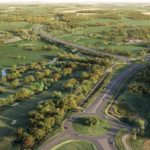
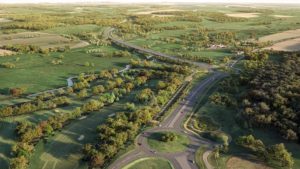
The council are supporting the road (the route of which is visible in the council’s own video above) as they argue that it completes the ring of roads (the Southern Bypass which opened in 1992 and the Norwich Northern Distributor Route – which is formally known as the Broadland Northway – which opened in April 2018) around Norwich and will improve transport links in the county. Although Norfolk County Council are the main movers of the project, it is also supported by the majority of other councils in Norfolk, although Norwich City Council oppose the road as it promoted car dependency in the area. The road construction is supported by numerous organisations including Norfolk Fire Service and also the Norfolk and Norwich University Hospital who believe on balance that it would be beneficial because of reduced ambulance conveyancing times, as well as Norfolk Chambers of Commerce who say it will meet “our growth ambitions”. Norfolk Constabulary stated that they supported the road as “it would be useful to have the Western Link Road completed which would save officers time when they are on an emergency call rather than go partially around the route and then have to traverse through the city roads”.
However, the reason this section of road was not constructed along with the Broadland Northway was explained by the council stating in their executive summary in 2008:
“[The public consultation led to] strong environmental concerns being expressed about the impact of a new road across the River Wensum Special Area of Conservation (SAC) to which the County Council responded by carrying out further assessment beyond a Stage 2 level to ascertain whether the impact on the SAC could be mitigated. The conclusion was that it could not be demonstrated that the new road would not affect the integrity of the SAC. Alongside this, traffic modelling indicated that a road starting at the A1067 in the west rather than the A47 gave significant benefits and delivered most of the objectives of the NDR scheme and these were key factors in the decision to choose the preferred route as now proposed.”
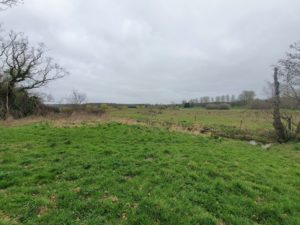
These environmental concerns are based around the land which would need to be crossed which is the rare chalk stream habitat of the Wensum Valley. The council’s proposals include a bridge across the River Wensum itself, but opponents question whether this would significantly damage not just the natural environment, but also be damaging visually and cause noise issues during both the construction of the road and then from traffic using it. Stop the Wensum Link point to the environmental mitigation measures on the Norwich Broadland Northway and say that these “had failed” with the council’s own inspection report showing issues.
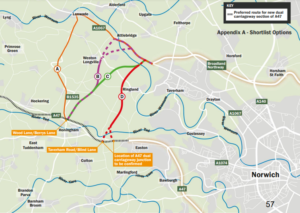
The council are arguing that after reviewing transport usage that this section should now be built. After some initial research and site investigations, there were four suggested routes for the new road which went to a wider consultation and review, with the council preferring route C. Although this consultation is now closed, details of all of the routes are still visible at https://nwloptions.commonplace.is/. The council have organised a number of events explaining the need for the road and they also published the results of the 2018 public consultation exercise.
The council argue that there are economic benefits to the road, stating that the environmental issues can be mitigated. Others argue that the environmental impact is too damaging and the CPRE produced a report with evidence that road projects simply generate more traffic. The Government believe that new infrastructure is necessary for the economy, with the Western Link road being listed in the Government’s September 2022 Growth Plan. Other pressure groups, such as the Campaign for Better Transport, have argued that sustainable transport can reduce the need for new roads and have published a research paper entitled Roads and the Environment. The new road is opposed by environmental groups including Norfolk Wildlife Trust, Friends of the Earth, the Woodland Trust, Norfolk Rivers Trust and the Norfolk & Norwich Naturalists’ Society.
Opponents of the scheme also argue that roads are only necessary because there are a lack of alternative public transport options, with some suggesting that despite environmental concerns the Government is too ready to provide financing for new road projects. The council have also had to amend their preferred route slightly due to the presence of bats in the area, which are a protected species. There is also the challenge of providing access to the road for pedestrians and cyclists, with Norwich Cycling Campaign stating their opposition to the current proposals as they don’t include cycle lanes which the group says is necessary to keep cyclists safe. Other public transport organisations such as First Eastern Counties Buses said that they supported the road because they believed that it would “reduce congestion” in the area. A representative from KonectBus also stated that they supported the Western Link, but wanted the road “to be built as close to the Longwater junction as possible” in their public consultation submission.
The current cost of the 3.9 mile long road is estimated to be around £251 million, an increase on the previous estimate of £198 million, although opponents of the project have suggested that the final total might be closer to £300 million. The project requires the financial backing of the Department for Transport, who would provide 85% of the total funding. The Government is also committed to continuing a road building programme, but have stated that they are focused on the Strategic Road Network being net zero. However, there is still a significant cost to the council and Stop the Wensum Link note on their web-site:
“Norfolk County Council already have a deficit of £39M, forcing them to hike council tax 3% this year. With construction costs spiralling, high inflation and stagnating wages, throwing more money at building this road makes no sense. Increasing costs and an already debt laden council threatens vital services and risks further tax rises.”
Although the Government’s growth plan of September 2022 mentioned the road, this was under Liz Truss’s brief premiership and no guarantees have been given to the council on whether funding will still be made available. Liz Truss had been in support of the road before becoming Prime Minister and as she was a Norfolk MP, it had seemed very likely that her government would have backed the plans. With Rishi Sunak now Prime Minister, a final decision on the funding is expected to be made in 2023 with the Government needing to balance the economic argument alongside a growing demand for action to be taken to protect the environment and there is also the backdrop of potential national spending cuts being needed to balance the books.
If the funding is made available, the current timetable for the road construction is:
Mid-2022 – Pre-planning application public consultation
Spring 2023 – Submit planning application
Late 2023 – Public inquiry (if required)
Mid-2024 – Full Business Case submitted to the Department for Transport
Late 2024 – Start of construction
Late 2026 – Norwich Western Link open for use
This road is an example of the challenges which local Government have in trying to balance economic growth and the environment. It also shows the cost of embarking on these projects and the substantial amount of work that has to take place to get them to a stage where funding can be secured. For those opposing schemes such as this, there are financial challenges as councils have funding to help them make a business case for a new road, whereas campaigning organisations often have to fund raise to secure their monies. They also often have to be creative in how they can get publicity for their work, with the Stop the Wensum Link group holding numerous events and having a strong social media presence.
Whether or not the road is built, this is likely to be an important case that is watched by other councils and governmental bodies to see how the environmental impact is dealt with. It also shows how much work local councillors have to put in to these projects, often facing opposition to their plans and needing to constantly respond to that. But, on the flip side, it also shows how much work and energy that volunteer campaigners put in towards monitoring projects and putting together arguments to help protect the environment. These are complex arguments and why it is perhaps important for individuals to become engaged in politics to fight for their beliefs to ensure that the best decisions are made.
For readers, we have listed a wide variety of resources below which may help those who are undecided on whether they support this road project and ones like it. We will continue to add to this list and continue to secure more interviews as the project continues.
KEY INTERVIEWS
INTERVIEWS, RESOURCES AND COMMENTS
Emma Corlett, Deputy Leader Labour Group of Norfolk County Council
Ben Price, Leader of Green Party Group of Norfolk Council Council
Chloe Smith, Conservative MP for Norwich North
Chloe Smith – 2019 Letter to Norfolk County Council on Norwich Western Link
Clive Lewis, Labour MP for Norwich South
George Freeman, Conservative MP for Mid Norfolk
Jerome Mayhew, Conservative MP for Broadland
Natalie Bennett, Baroness Bennett of Manor Castle (former Leader of the Green Party)
Nova Fairbank, Norfolk Chambers of Commerce
Norfolk County Council – Key Benefits of the Road
Norfolk County Council – 2016 Technical Report for the Road
Norfolk County Council – 2021 Outline Business Case for the Road
Norfolk County Council – 2022 Addendum to Business Case
10 Myths About the Western Link – Stop the Wensum Link
CPRE Letter to Norfolk County Council Opposing Road
Report to Breckland District Council’s Cabinet
Bat Conservation Trust’s Position Statement
First Eastern Counties Buses Letter of Support for the Project
PRESS RELEASES
[The county council also have their own extensive timeline of documents at https://www.norfolk.gov.uk/roads-and-transport/major-projects-and-improvement-plans/norwich/norwich-western-link/timeline]
Amended route options approved as Norwich Western Link shortlist – 09/11/2018 [Norfolk County Council]
Road Link Across Wensum Valley Would Cause Irreversible Harm – 15/01/2019 [Norwich Green Party]
Western Link for NDR options are unacceptable, says NWT – 11/01/2019 [Norfolk Wildlife Trust]
Grave concerns as Norwich Western Link route approved – 16/07/2019 [Norfolk Wildlife Trust]
Preferred route for Norwich Western Link agreed by councillors – 25/07/2019 [Norfolk County Council]
Cabinet asked to agree council’s approach to appoint Norwich Western Link contractor – 24/01/2020 [Norfolk County Council]
NDR Western Link – Net Gain is not enough – 03/02/2020 [Norfolk Wildlife Trust]
NWT reaction to conditional support for Western Link road – 18/05/2020 [Norfolk Wildlife Trust]
NDR Western Link – Norfolk Wildlife Trust will object – 02/09/2020 [Norfolk Wildlife Trust]
Western Link threatens probable largest barbastelle bat colony in UK – 01/12/2020 [Norfolk Wildlife Trust]
Norwich Western Link contractor announced – 25/06/2021 [Norfolk County Council]
Ferrovial Construction Awarded Norwich Western Link Project – 25/06/2021 [Ferrovial Construction]
The Wensum Link – What About Cycling? -22 August 2021 [Norwich Cycling Campaign]
Maternity colony for rare bats continues to be under threat from proposed road route – 06/12/2021 [Norfolk Wildlife Trust]
National Highways announce new environmental sustainability division as it targets net zero – 07/01/2022 [National Highways]
Campaigners from Norfolk, Suffolk and Essex have signed a joint statement calling for greener priorities in Transport East’s 30-year plan -31/01/2022 [Stop the Wensum Link]
Western Link’s design refined following bat surveys – 25/02/2022 [Norfolk County Council]
Norwich Western Link remains catastrophic for wildlife despite route changes – 04/07/2022 [Norfolk Wildlife Trust]
The Western Link: What would happen to our wildlife? – 08/08/2022 [Norfolk Wildlife Trust]
Our Open Letter, in objection to the Norwich Western Link – 17/08/2022 [Norfolk Wildlife Trust]
Western link still represents value for money, despite cost increase – 24/06/2022 [Norfolk County Council]
EXTERNAL LINKS
Norfolk County Council – Western Link Road
Norfolk Wildlife Trust – Western Link Road
Norwich Western Link – Campaign Web-Site Opposing the Road
Imperial College Business School Report – Are new roads worth the money?
Guardian News Article – Norfolk road report rewritten to remove warning of risk to bats
The wood and the road: my battle to save an irreplaceable ecosystem
Andrew Boswell’s Crowd Justice Campaign to Stop Road Building
The interview with Stop the Wensum Link Group published on 1 January 2023.
(i) The county council has modelled numerous routes for the Norwich Western Link (NWL). Do any of them have your support, or is there any new road development or improvement that you would support?
We would support single-carriageway improvements to B1535 and its junctions with A1067 and A47, in conjunction with other non-new-road initiatives e.g public transport and restriction of traffic through villages. Most of such a road improvement was proposed and agreed amongst local villages in 2008, but a much lower-cost scheme was put in place instead.
(ii) The NWL has the support of numerous public bodies, including emergency services, the majority of councils and many business groups. Are they mistaken in that support?
Unfortunately, they are.
We have never seen an analysis by any emergency service to show how many emergency journeys would be shortened by the building of the proposed road, and by how many minutes. We suspect the difference is negligible; after all, the blue light allows high speed on existing roads. Ambulance response times currently are much more affected by the availability of vehicles than how fast a route is.
Councils and business groups always see new roads as reducing travel times, making industry and commerce more efficient. This is probably true to a certain extent, but its effect is exaggerated. The Norwich Distributor Road, for instance, predicted commercial gain, but this has not yet been assessed; the ‘one year after’ report declined to do an analysis, and promised to do one after 5 years (2023). We need to see and evaluate that report before giving credence to the idea that an NWL would improve commerce.
Any improvement in commerce has to be weighed against the major harm such a road would do, and its escalating financial cost.
(iii) The Norwich Northern Distributor Road (or Broadland Northway) was finished in 2018 and nearly completed a circle around Norwich with the exception of the proposed NWL. Isn’t there an inevitable number of car journeys which would be more efficiently completed along one joined-up road rather than having to cut through villages? Do you feel that evidence has been produced by the council to quantify that number of journeys?
Certainly, many car journeys may be more efficiently completed on the proposed new road, depending on exactly is meant by ‘efficiently’. Much better fuel and emissions efficiency would be achieved by encouraging travellers to use a good public transport system, instead of their cars.
Council predictions show much of the 15,000 journeys per day across the valley would transfer to the NWL. We believe this is hugely exaggerated, and that many journeys will still be pressed through villages and suburbs. Especially closer to Norwich where the time saving of driving out to the NWL will be negligible at best. Council traffic counts have shown how many vehicles travel through the villages, but not their origins and destinations. So NCC do not have full information to base their decision on. Such information could inform the creation of the most efficient bus routes.
(iv) The county council has said that there would be no public transport along the route of the road as there would be limited demand. Do you consider that this excludes those who can’t afford a car?
Yes, clearly it does. Those members of society are excluded now, as there is no public transport across the valley. We cannot agree that there would be limited demand for good, well-planned joined up, frequent and affordable public transport. Figures show a minimum of 15,000 journeys each way (mostly cars) within the valley sector. A proportion of these could be shifted to public transport. But this needs to be a comprehensive system, not a couple of infrequent bus routes. This could be instated at low capital cost without building the proposed new road.
(v) The county council claims that the majority of the public support the construction of the road. Is this a legacy of a failure of public transport policy in Norfolk over recent decades?
That is certainly a major component. Public transport throughout the country is poor, not only in Norfolk, despite government statements of the need for ‘modal shift’. This has led the public to lose trust in public transport outside the very big cities. Norfolk, in particular, has reneged on its promise to introduce ‘bus rapid transit’ services, which was an agreed action when the NDR was approved. Cost, reliability, frequency, speed, and lack of useful routes has meant that much of the public prefer to rely on their own transport, with resulting increasing congestion and harm to the environment. The attitude of Norfolk CC has been that ‘this is a car county’. Many people do love their cars, but if public transport were good, more people would not need to meet the costs of running one.
(vi) The cost of the road is estimated to be over £250 million with the majority paid for by national Government (if agreement is reached), but much to be funded by Norfolk County Council (perhaps around £50 million). Would it better for the county to use that money to fund the public transport network? Do you have any view on how the money could be spent instead?
Most certainly. With regard to the NWL area, subsidised bus routes could be introduced from, say, Dereham to the Airport area, Aylsham to Wymondham, Fakenham through Hellesdon and Costessey to the Hospital; a consolidation of bus routes on the A47. These are just a few examples. Bus routes need to be informed by detailed origin and destination analysis, with continual review when in operation. We have noted much support for the improvement of bus services when have raised this at events. It is worth bearing in mind that the result of the most recent general questionnaire on transport in Norfolk (before the NDR was built, in 2005) the MOST popular policy was ‘improve public transport’. Yet NCC then made building the NDR their top priority.
(vii) You have raised concerns about numerous aspects of the environmental damage, including removing ancient woodland, destroying the habitat of bats and impacting on the River Wensum. How much of this can the council mitigate if the road is constructed?
Very little. No mitigating measures can compensate for the loss of an ancient woodland, or an important hedge. They take centuries to develop, and the wildlife cannot wait for newly panted saplings to grow into old trees. Unfortunately, many councillors and others seem to think that all wildlife can learn to live anywhere, and will easily move and adapt to change, as do wood pigeons, blackbirds and rats. This is not the case. If we carry on disturbing their habitats, the more specialist animals will not survive, and we risk ending up with an environment with reduced variety.
No doubt care can be taken in construction of the viaduct to reduce possible contamination of the river (which is an SAC), but this depends on maintenance of filters. With the death of so many trees on the NDR, NCC have shown themselves incapable of handling such necessary maintenance.
(viii) Would you consider this sort of project as being something that might have been acceptable twenty years ago, before there was more prominence placed on environmental issues?
For those of us who care deeply about the protection of the natural world, its landscapes, and about the well-being of us all, whether living in town or country, these projects have never been acceptable. The M25 was built around 40 years ago, with huge destruction and at huge cost, and now it is regularly congested and there are calls for its expansion. Building large roads cures nothing long-term; we are a finite country (and planet), and we need to be enacting policies which let us live well without destroying our own habitat.
The interview with Martin Wilby published on 1 January 2023.
ROUTE QUESTIONS
(i) The county council undertook work on several routes early on during this process, coded Option A, Option B (East and West), Option C and Option D (East and East). The preferred route is Option C, but would it be too late in the process for the council to switch to, for example, Option A? Would it rather switch than lose the project entirely? Some campaigners have suggested that the improvement of existing roads would be possible, is that still an option?
The proposed route for the Norwich Western Link was selected as the best overall solution for the road having considered a number of factors, such as transport benefits, environmental effects, value for money and impacts on local communities.
We wanted, and continue to want, to strike the right balance in providing infrastructure that provides great benefits to residents, businesses and visitors in Norfolk which effectively tackles the transport issues that exist to the west of Norwich but also limits impacts on the local area.
The process we need to follow for a major infrastructure project of this kind means there is still some way to go before we can be certain that the project will be delivered; reaching milestones such as receiving a funding commitment from central government and receiving planning approval will be crucial. We are focused on achieving these milestones and we have no plans to change the route. If that position were to change in the future, we would need to consider the reasons for that change in any decision-making on how to proceed.
(ii) When the preparatory work was done by the council to choose a preferred route, there was preference given to Option C because of the limited presence of bats compared to other routes. It has transpired that there are bats on this route and amendments have been needed. Would this have impacted on the council’s decision earlier on if this information had been known? Is it normal for mistakes of this sort to be made on projects of this scale and funding?
As referred to above, the proposed route for the Norwich Western Link was chosen based on a number of factors, which included information gathered about the presence of bats in the area to the west of Norwich. It is not therefore true to say that decision-making about the route selection was based, or would ever be based, on one element but rather by taking all the relevant elements into account.
Before the decision on the preferred route was reached, a great deal of work had been carried out. Objectives for the project were established with input from local communities and a long list of options was developed. These were reduced to a shortlist of options based on how effective the options were at meeting the project objectives, and a public consultation on this shortlist was conducted as well as other assessment work including a range of surveys in the area. Bat surveys were among the surveys conducted before the preferred route was agreed.
Surveys over a number of years had identified the presence of bats in the area to the west of Norwich, including around the proposed route for the Norwich Western Link, and mitigation measures including green bridges and planting were developed to take account of this. Our 2021 surveys identified a roost used by a maternity colony of barbastelle bats in an area of woodland close to part of the route. We therefore needed to develop our design to minimise our impact on these woodlands.
It is entirely normal on an infrastructure project for further surveys to be carried out at the point at which a single, preferred route has been agreed and for the design of the route to be developed as further detail is known. And continuing to develop the design of the road and its associated measures in response to evidence until the planning application is submitted is a normal and expected part of the process.
(iii) The route has the support of most councils in the county, business groups and also the emergency services. Do you believe that some opponents of the new road have underestimated how much support the project has in many areas?
There is strong support for the project, not least from those people who are living in communities to the west of Norwich which are badly affected by traffic congestion on unsuitable local roads and in residential areas. And with planned growth in and around Norwich, existing traffic congestion to the west of Norwich is expected to significantly worsen without the Norwich Western Link. I don’t know if anyone has underestimated the support that exists for the project, I can’t think of anything that would lead me to think that.
ENVIRONMENTAL QUESTIONS
(iv) Assuming that the council’s preferred route receives approval and funding, is it confident that it has done all that it can to minimise the negative environmental impact? Are there things that the council would like to do, but can’t justify the cost of doing?
Cost and value for money are of course important considerations across all aspects of this project, as they should be when national and local public investment is involved. But there are also other important considerations and these include our environmental responsibilities on a project like this.
We’re continuing to take an evidence-based approach to the project and to receive expert advice and follow relevant guidance. If we receive planning approval this means we would have satisfied the planning authority and environmental statutory bodies that our proposals are acceptable to them, which is of course a crucial aim.
TRANSPORTATION QUESTIONS
(v) The council has suggested that the road has significant public support. Is this a failure of the wider public transportation policy over recent decades, both within and without the control of Norfolk County Council? Is a new road primarily necessary as there are poor public transportation options, particularly when crossing Norfolk rather than on arterial routes?
There are a number of reasons why people might support the creation of the Norwich Western Link: businesses may welcome more efficient journeys for the transportation of goods, enabling them to increase productivity and profitability; local residents may be looking forward to quieter, safer local roads and better air quality close to their homes; and emergency services and the people who rely on them are likely to be relieved that many journeys to the west of Norwich will be shortened, including for ambulances to and from the Norfolk and Norwich University Hospital.
It’s also important to remember that public transport requires good infrastructure just like any other mode of travel. Bus operators need to be able to run quick, reliable services to attract and retain passengers and make routes commercially viable, and getting stuck in queuing and slow moving traffic significantly hinders this.
We want to support people to shift their journeys from using a car to more sustainable forms of transport, such as walking, cycling and public transport where appropriate. This will generally be more achievable over relatively short distances and in and between larger centres of population, or where there is a concentration of public amenities or employment.
We have been investing in improvements to facilities for public transport users and walkers and cyclists for several years now, particularly in our towns and larger villages and in and around Norwich through our multi-million Transport for Norwich project (www.norfolk.gov.uk/tfn). We have, among other things, improved pedestrian and cycle access to railway stations in Norwich and Great Yarmouth, there have been upgrades to bus facilities in Norwich, Thetford, North Walsham and Cringleford, and we’ve created an off-road pedestrian and cycle path linking Norwich to the fast-growing populations in Hethersett and Wymondham, and extended our very popular Beryl bike/e-bike/e-scooter hire scheme from Norwich into those areas.
So my view is that there isn’t a ‘one size fits all’ approach to transport and we need to continue to invest in a wide range of transport infrastructure in Norfolk to support all kinds of journeys.
(vi) The council has suggested that it is unlikely that there will be public transport provided along the route of the road itself. Does this further exclude those who can’t afford cars, don’t want cars or are trying to avoid acquiring a car? Does more road building make it harder to ever increase public transport usage?
As stated above, reducing congestion on the existing road network as well as creating a more resilient road network that is able to cope with planned growth will bring benefits to all road users, including bus companies and passengers. So making sure we have good infrastructure is important to everyone who travels in Norfolk.
I would also add that the possibility of a new bus service being established to connect communities to the west of Norwich directly to employment hubs and services, such as the Norfolk and Norwich University Hospital, once the Norwich Western Link is in place is being discussed with bus operators. By taking traffic off the existing road network, the Norwich Western Link would make such a service more viable.
We are also planning to support people to walk and cycle more by improving the Public Rights of Way network in the vicinity of the Norwich Western Link route as well as putting in measures to make walking and cycling more attractive across a wider area.
(vii) Is the council comfortable with the level of money that has already gone into the project? What are the latest figures for the total cost of the project?
The latest cost of the project is £251 million as set out in the July 2022 Cabinet report, of which we anticipate 85% would be funded by central government.
Cost is of course an important factor when managing a project of this nature but so is value for money, and the Norwich Western Link is considered ‘high’ value for money according to Department for Transport criteria. Providing and improving infrastructure is an investment in the future of an area that will provide benefits for many years to come and enable it to grow successfully. So this is how I see the Norwich Western Link – an investment in Norfolk’s future.
(viii) The council is relying on the support of national Government financing to fund the majority of the project. Is a problem the council faces that it is easier to get funding for road projects in Norfolk than perhaps subsidised bus routes or new light rail/rail routes?
I wouldn’t say funding for road projects is easier but rather there are different processes, partners and mechanisms involved with the different types of projects and services you mention.
Infrastructure improvements to the council’s highway network – whether that’s projects aimed at supporting all road users or more specific interventions like creating bus lanes or cycle paths – are by and large funded by a one-off investment that we will deliver, and the infrastructure will then be added to the network for which we are responsible. Our £32 million Transforming Cities Fund project in Norwich is wholly funded by the Department for Transport and is currently delivering a range of improvements aimed at investing in clean and shared transport, creating a healthy environment, increasing social mobility and boosting productivity through enhanced access to employment and learning.
Network Rail are responsible for the country’s rail network, so while we can make the case for investment, any new or improved rail infrastructure in Norfolk would generally be delivered and owned by them. That said, we are currently working to develop a proposal for a new rail station at Broadland Business Park to the east of Norwich, which would be on an existing rail line adjacent to the business park.
Subsidised bus routes are a recurring rather than a one-off cost to a council, so this is funded by revenue rather than capital spending. We do subsidise some bus services in Norfolk and we’ve recently secured £50 million of funding – £31 million of capital funding and £19 million of revenue funding – from the Department for Transport for our Bus Service Improvement Plan, which will deliver measures to support and expand bus services across the county over the next three years.
QUESTIONS ABOUT POLITICS AND BEING A COUNCILLOR
(i) Projects such as road building are controversial because of the balance of ensuring the local economy thrives whilst limiting the damage to the environment. As a councillor and portfolio holder, have you found the debate on the road’s construction generally positive and engaged? Or can being a councillor sometimes feel a little thankless?
The vast majority of the people I encounter in my role as a county councillor and cabinet member are very polite, friendly and respectful and I get a lot of satisfaction from holding a position which gives me the opportunity to help Norfolk and its residents. People will always have different views about how this should be achieved and of course it isn’t possible to please everyone, but I’ll just keep trying to do the best job I can.
(ii) Would you like councils to have more power and influence over public transport to help deliver an integrated transport policy?
The county council certainly supports the principle of devolving powers to local government so that local decision makers have more control over how money is spent in their area, as the recent County Deal announcement has demonstrated. I think we at the county council, the Department for Transport, public transport companies and other partners are all committed to making sure we have good public transport services that are viable options for many journeys people want and need to make.
(iii) Is standing for election in local politics something that you would recommend those interested in the environment to get involved with?
I think the most important quality in any elected representative is the desire to represent a community and an aptitude for public service. For me, it’s less about what I’m interested in and more about what the people I’m representing want and need. That’s obviously not always easy and, as I said above, it’s impossible to please everyone when people have different and sometimes competing priorities, and – being realistic – there’s a finite amount of time and money. But I’ll keep trying my best and that’s all I can do.

The comments made by Louise Haigh, the Shadow Transport Secretary, on Twitter on 22 December 2022.
The Tories have just announced a brutal near-record 6% rail fare rise.
This savage fare hike will be a sick joke for millions reliant on crumbling services.
People up and down this country are paying the price for twelve years of Tory failure.
The speech made by Richard Holden, the Parliamentary Under-Secretary of State for Transport, in Westminster Hall, the House of Commons, on 20 December 2022.
It is a pleasure to serve under your chairmanship, Mr Hosie. I congratulate my hon. Friend the Member for Dartford (Gareth Johnson) on securing the debate. On ultra low emissions, we heard quite a few emissions from the hon. Member for Wythenshawe and Sale East (Mike Kane), but I am not sure that any of them were really relevant to the broader debate. He seemed to praise the Mayor of Greater Manchester for what he is up to. The Mayor stopped his ULEZ. I not sure that the Leader of the Opposition and the hon. Member for Wythenshawe and Sale East are on the same page regarding the Mayor of Greater Manchester, given the Leader of the Opposition’s recent jokes at the Mayor’s expense.
The need to tackle air pollution is something on which I hope that Members on both sides of the House—and indeed the Government and the Mayor of London—agree, to answer the question from the hon. Member for Putney (Fleur Anderson). Air pollution is a big environmental risk to human health, and the Government are determined to tackle it. As my hon. Friend the Member for Old Bexley and Sidcup (Mr French) said, that is why we have invested more than £800 million to tackle air pollution in 64 local council areas. Much more can be done, although we can be proud that air pollution has reduced significantly since 2010, with emissions of particulate matter down by 18% and nitrogen oxides down by 44%, to their lowest level since records began.
As my hon. Friend the Member for Orpington (Gareth Bacon) made very clear in a tour de force speech, ULEZ will have only a minor or negligible impact, as the Jacobs report has said. My hon. Friend the Member for Runnymede and Weybridge (Dr Spencer) put forward various sensible solutions. My hon. Friend the Member for Ruislip, Northwood and Pinner (David Simmonds) also reflected some of the issues, particularly around accessibility of public transport. As my hon. Friend the Member for Dartford said, the expansion to the London boundary was not in the Mayor’s manifesto—a point reflected by my hon. Friends the Members for Sutton and Cheam (Paul Scully), for Orpington, and for Watford (Dean Russell). It was against the Mayor’s manifesto and against his own consultation. Those are not political points, as some Opposition Members would like to suggest; they are facts, eloquently put forward by hon. Members.
David Simmonds
I commend the Minister on the work that he has been doing on buses. Does he agree that the fact that the Labour group in Hillingdon Council supports the Conservatives’ campaign against ULEZ is evidence that this is not a matter of party politics but one of people putting their constituents and residents first?
Mr Holden
I thank my hon. Friend for that point. It was interesting to hear from the hon. Member for Feltham and Heston (Seema Malhotra), who is not in the Chamber at the moment. She seemed to be on a slightly different page from some of the other Labour Whips’ remarks from the other hon. Members present.
Many hon. Members have spoken clearly and eloquently about the anger that their constituents feel about what is going on. I hope that the Mayor, the Labour party in London, the Lib Dems and the Greens hear that too. The Mayor of London, however, needs no agreement from the Government to pursue his proposed expansion of ULEZ. He is doing so using powers granted to him under section 295 and schedule 23 of the Greater London Authority Act 1999 to implement any road schemes that charge users within greater London. He has previously used those powers to introduce the congestion charge, the low emission zone, and the current ultra low emission zone. While he has notified my Department of his intention, he is not obliged to consult us. As hon. Members will also be aware, the Department for Transport will not provide any of the £250 million that the scheme needs in order to be set up.
I thank my hon. Friends the Members for Sevenoaks (Laura Trott), for Mid Sussex (Mims Davies) and for Bromley and Chislehurst (Sir Robert Neill), my right hon. Friends the Members for Bexleyheath and Crayford (Sir David Evennett) and for Epsom and Ewell (Chris Grayling), and other hon. Members from across the south-east of England who have also made representations to me on this matter, and who met with me recently. Sadly, the Government do not have the power to veto the Mayor’s decision. There has been some suggestion that the Secretary of State has powers under section 143 of the GLA Act to block the measure.
Geraint Davies
The Minister will know that it is the 10-year anniversary of the death of Ella Kissi-Debrah, who was the first person to have air pollution listed as the cause of death on her death certificate. Will he support the Clean Air (Human Rights) Bill that went through the Lords completely, with the support of Conservatives, and its ambition to introduce World Health Organisation air quality standards, ideally by 2030?
Mr Holden
As I have said to the hon. Gentleman, we have already made substantial progress in that area. On the specifics of any legislation, I will write to him.
I have been advised by my officials in the strongest terms that section 143 of the GLA Act is focused on correcting inconsistencies between national policy and the Mayor’s transport strategy. It is not intended to be used to block specific measures that the Mayor would like to introduce under the devolution settlement.
Hon. Members raised two specific issues about councils and their land and about council consent and the environment. I will write to Members on those issues, as well as the other issues that they raised with me recently. In fact, I will write to Members across the House in the coming days.
I understand the concerns of hon. Members. Estimates show that approximately 160,000 cars and 42,000 vans that use London’s roads would be liable for the £12.50 ULEZ charge on an average day—approximately 8% of cars and 18% of journeys. But it is not just about the charge of around £1 million a day, as hon. Members have said. It is also about the fines, as my hon. Friend the Member for Dartford said.
In spite of the hundreds of millions of pounds that it is proposed will be raised annually, the Mayor has announced a new £110 million pound scrappage scheme to help certain Londoners prepare for expansion. The scheme will launch at the end of next month, but it will be open only to certain residents and to Londoners, not those from outside London who are affected and travel in every day, including 50% of people who work in blue light services. They will not be touched by that scheme at all. Moreover, it will only be for those on specific benefits, including universal credit. There will be no help at all for the majority of Londoners affected, with many small and medium-sized businesses, as my hon. Friend the Member for Sutton and Cheam said, left to bear that heavy burden alone.
As the hon. Member for Putney quoted from the FSB report, I will cite it as well. For businesses that do not currently comply with the zone, 25% said that they will immediately pass any increase on to customers directly, creating further inflationary pressure, and 18% of firms—almost one in five—said that they would close their business. That is from a Federation of Small Businesses press release today.
Fleur Anderson
The Federation of Small Businesses has asked the Government to deal with this by topping up the scrappage scheme. Will the Minister consider topping up the scrappage scheme to help more people, as he has outlined?
Mr Holden
It is interesting that the Labour party would like the Government to fund that out of general taxation. I suggest that the Mayor of London should look at that. If it is his policy, he should seek to fund it.
Mike Kane
No leadership!
Mr Holden
There is certainly no leadership from the Mayor of London, as we can see from all the hon. Members here, and there is certainly no leadership from the Lib Dems, who were too scared to turn up to this debate. I think the hon. Gentleman and I can agree on that.
My hon. Friend the Member for Carshalton and Wallington made a really important point about grace periods, because the exemptions are very limited. Points were also made by the hon. Members for East Kilbride, Strathaven and Lesmahagow (Dr Cameron) and for Feltham and Heston (Seema Malhotra), and by my hon. Friend the Member for Watford (Dean Russell), who spoke passionately about charities. Grace periods will be extended for disabled and disabled passenger vehicles as well as wheelchair-accessible private hire vehicles. Those categories will be exempt only until October 2027. Minibuses used for community transport, the charities my hon. Friend spoke about, will be exempt only until October 2025. Some of those charities are in outer London and many work across the south-east—they will not even be able to apply for the scrappage scheme.
In addition, NHS patients may be eligible to claim back under the Mayor’s plans, but only if they are clinically assessed as too ill to travel to an appointment on public transport. It is not about whether the transport is available, but about whether they are too ill to travel on it. My hon. Friend the Member for Ruislip, Northwood and Pinner made the really good point that it is not available at all in many parts of outer London. As he said, the choice just is not there for many of his constituents, and it is not there for many other Members’ constituents, either.
Currently, emergency vehicles are exempt from ULEZ and LEZ charges. However, the sunset period lasts only until October 2023, which is months away. Has an assessment been made of the impact on London services, including the ambulance service, the Metropolitan Police Service and the fire service? It will be interesting to see that, if there is one. There will also be an impact on the council tax bills of Londoners.
Several Members, including my hon. Friend the Member for Dartford, asked questions about the Mayor’s authority. Specifically, they are concerned that the Mayor may apply ULEZ charges to motor vehicles that are current under the scheme today, such as compliant petrol, diesel and hybrid vehicles.
Geraint Davies
Will the Minister give way?
Mr Holden
I am sorry, but I will make further progress.
I reassure Members that if that were to occur, the Government would explore what more could be done and consider whether the Mayor was using his authority properly and fairly, without detriment to even more people. It is clear that the Mayor is prepared to go well beyond any pledges or manifesto he was elected on in order to pursue his own objectives.
The hon. Member for Wythenshawe and Sale East made an interesting point about there being no Government support for TfL or transport. He needs to look at the amount of support that the Government provide to the Labour Mayor of London. We understand that the pressure on Transport for London has been huge. Before covid, 70% of TfL’s revenue came from passenger fares, but passenger journeys reduced by as much as 95%. Fare income has recovered, but it is still less than nine tenths of what it was previously.
The TfL long-term funding settlement of 30 August provided TfL with £1.2 billion until the end of March 2024. That takes total Government funding of TfL to more than £6 billion since the beginning of the pandemic, or £650 for every Londoner. What has the Mayor done with the money? The £1.2 billion matches the Mayor’s own pre-pandemic spending. It will ensure that London’s transport network remains protected against potential lost revenue and the uncertainty of post-pandemic demand. Furthermore, it will enable the delivery of a number of projects set to revolutionise travel across London, including supporting £3.6 billion-worth of critical infrastructure projects, which will benefit not just London but the wider economy.
The Government have supported and helped passengers to benefit from major upgrades to our world-class transport network, including the Elizabeth line, which opened recently. The settlement also requires the Mayor and TfL to control their operating costs and to continue to progress initiatives to modernise, reform and become more efficient. We have been clear that the Mayor needs to put TfL on to a financially sustainable footing. In no way, however, does that require ULEZ expansion. That is clear. Taxpayers across the UK have had to support TfL continually. It is imperative that they get a fair deal.
The purpose of devolution is that decisions are taken by elected local politicians, not in this House or in Whitehall. Labour, the Lib Dems and the Greens need to know that political decisions have political consequences, and that there are political solutions to them. Were I the Mayor of London, I would not be going down the path he has chosen—but I am not. If Londoners do not like the decisions that he has taken, they will have the opportunity to have their say in 2024. In their local elections, I am sure that hon. Members will make it clear about the Mayor of London’s policies.
I thank my hon. Friend the Member for Dartmouth for bringing this matter to the attention of the Government. I thank hon. Members from all across the south-east for their ongoing work, and I will continue to use my role in Government to work with them. As I said, in the coming days I will write to all hon. Members across London and the south-east on the important questions asked not only in the debate, but in other recent meetings and by Members who have approached me. I also assure Members that, across Government, we will continue to ensure that the Mayor of London is held accountable for his decisions in our capital city.
Gareth Johnson
Briefly, I thank all hon. Members for their contributions to what has been a productive and constructive debate. I am grateful to the Minister for his efforts in challenging this whole policy of the London Mayor. No one disputes the fact that we need clean air. In Dartford, we have very poor air. Frankly, however, that is a mask used by the Mayor of London to increase taxation. It is about raising money. It just so happens that it raises hundreds of millions of pounds for him. And it just so happens that he has a black hole in his finances and wants to bring in a broader charge, taxing every motor vehicle. This is about money and not about pollution.
I feel sick to my stomach that people who cannot vote out the Mayor of London—such as Dartfordians—cannot do a thing about this. That is not right or fair. The whole thing should be stopped, but I hear what the Minister says about his inability to do so. It is the most unfair situation that I can recall ever being put into.
The speech made by Mike Kane, the Labour MP for Wythenshawe and Sale East, in Westminster Hall, the House of Commons, on 20 December 2022.
It is a pleasure to serve under your chairmanship, Mr Hosie. I, too, congratulate the hon. Member for Dartford (Gareth Johnson) on securing the debate.
I am going to scrap my speech for a second. One of the great honours of living in London for part of the week is understanding how absolutely fantastic the public transport system is. If you try to get back to Manchester today on an Avanti train, Godspeed to you all. If you have tried to get across the Pennines over the last few months, Godspeed to you all. I have had the great honour in my nearly nine years as an MP to spend one day a month walking in London. I have done the London loop, so unfortunately I have walked through most of the places represented by the hon. Members present, including Orpington, Petts Wood, Ruislip, Wallington and Watford. What a beautiful place London is. I am still astonished by the quality of the public transport system, which is second to none on this planet and the envy of everybody outside this great conurbation.
Every year, 4,000 Londoners die prematurely due to poisonous air, and the greatest number of deaths are in outer London boroughs, with 11 Londoners dying prematurely every day. Air pollution is quite simply a matter of life and death; it makes our communities sick. Despite the Government’s promise that there would be no weakening of environmental targets post Brexit, it seems that they are refusing to match the EU standards, setting a weaker target while sentencing our children and communities to an unnecessary 10 years of toxic air.
The challenge is threefold: we must tackle toxic air pollution, we must deal with the climate emergency, and we must deal with traffic congestion. I was at the Sutton Ecology Centre at the weekend, and I saw just how congested the A232 is and the problems there.
Elliot Colburn
Is the hon. Gentleman aware that the A232 is only congested because the Mayor of London has scrapped the A232 review that he promised to do?
Mike Kane
The A232 is actually congested because there are too many vehicles on it—that is what congestion is. London is a beautiful town, so I do not know why we allow it to happen. It is incredible to me.
The Government’s own watchdog, the Office for Environmental Protection, says that the Government have failed to announce new targets, as they should have done under the Environment Act 2021, and that the new Government air quality targets are too weak and will condemn another generation to poor air.
We know that around 85% of vehicles driving in outer London already meet the pollution standards. Mayor Khan has introduced the biggest scrappage scheme yet: £110 million in support for Londoners on low incomes, disabled Londoners, micro-businesses and charities to scrap or retrofit their non-compliant vehicles. He has extended the exemption period for them and for community transport. As the hon. Member for Orpington (Gareth Bacon) said, the scheme was devised under the last Mayor of London, but it has taken Mayor Khan to implement it.
As was already pointed out, the Mayor also announced plans to add an extra 1 million kilometres to the bus network—much of that in outer London. Again, that requires leadership and support from central Government. The Government’s clean air fund excludes applications from London boroughs and the Greater London Authority. London’s share would amount to around £42 million, which would have gone a long way to expanding or supporting the Mayor’s £110 million scrappage fund.
I am a Greater Manchester MP. We have had problems. There are nitrogen dioxide sewers—controlled by Highways England—going through my constituency. If those roads were factories, they would have been shut down. They are simply not acceptable in this day and age. Local authorities were given a legal direction to clean up the air by 2024, and like Birmingham, Bradford and Portsmouth, they had to act, but Ministers have comprehensively failed to provide the necessary funding. Ministers need to help families and small businesses switch to electric vehicles, and they must take action to expand charging infrastructure. Plumbers who use their vans for work are being priced out of this revolution. I commend my hon. Friend the Member for Putney (Fleur Anderson) for having two brothers who are plumbers—wouldn’t we all want that?
This week, we learned that instead of charging ahead, the Government are slipping back on the charging infrastructure strategy. Rapid charging fund trials have been delayed, changes to planning rules have been kicked into the long grass, and take-up of the on-street charging scheme is anaemic. Labour’s plan for green growth will drive jobs, tackle the cost of living and help to clean up toxic air. There will be help for families with the cost of switching to electric vehicles, and we will provide the action we need to tackle toxic air. Britain is the only country in the developed world where private bus operators set routes and fares with no say from the public. That is not the case in London, but it is for bus services outside London. I was delighted to see the work that Andy Burnham has done as Mayor of Greater Manchester in setting the £2 fares, which the Government are now copying.
I thank my hon. Friend the Member for Putney, who spoke eloquently about the problems of Putney High Street, which is one of the most polluted places in the country. As somebody who rides a bike to Richmond Park occasionally, I have to go and experience it. I also thank my hon. Friend the Member for Swansea West (Geraint Davies); he is in charge of his facts, and gave powerful personal testimony about asthma and his children.
Let me say this to Conservative Members, genuinely and from the bottom of my heart: where there are low-traffic neighbourhoods, and where cars are tackled, electoral popularity rises. Tackling air pollution is electorally popular. I look at the percentage chances of Conservative Members winning their seats in the next election. In Dartford, they have a 64% chance of losing. The hon. Member for Runnymede and Weybridge (Dr Spencer) has a 57% chance of losing. The hon. Member for Ruislip, Northwood and Pinner (David Simmonds) has a 64% chance of losing. No wonder the hon. Member for Carshalton and Wallington (Elliot Colburn) is going on about the Lib Dems—they have a 52% chance of winning that seat.
Stewart Hosie (in the Chair)
Order. That is jolly interesting, but the topic is the ultra low emission zone.
Mike Kane
I can hear the Risographs of activists in London churning out leaflets about their Members of Parliament who do not want to support clean air. That is a clear divide, and I urge Members to get on the right side of it.
The speech made by Dean Russell, the Conservative MP for Watford, in Westminster Hall, the House of Commons, on 20 December 2022.
Unlike the buses, I will be on time. I pay tribute to my hon. Friend the Member for Dartford (Gareth Johnson) for calling this really important debate.
I hope that the Mayor has been watching the debate to hear the forensic take-down of the reasons behind the policy. It has been quite powerful hearing colleagues speak about the actual facts behind this, because it is a really important debate that will affect constituents who cannot vote for the Mayor. This is about fairness and democracy. It is unfair that situations such as this will hit my constituents in the pocket and perhaps stop them from going to work, shopping or picking up their kids from school; charging them when they have no ability to stop that happening feels utterly wrong.
I recommend that anyone who wants to know the facts behind this should watch the forensic take-down that my hon. Friend the Member for Orpington (Gareth Bacon) presented earlier. I do not think that I will be able to match the detail that he gave, but some of his key points related to the fact that even the Mayor’s consultation said that this should not go ahead. Some of the feedback from respondents that I have read includes the point that the scheme penalises workers—correct. It comes at a time of increased cost of living; that is the case, sadly, as we are living in difficult times. This is about the affordability of daily charges, and it would be to the detriment of the local economy in London and to those who want to travel near London to places such as Watford in my constituency.
One of the key elements here is voting. Liberal Democrat and Labour Greater London Authority members voted for this, and my constituents did not have a say; again, that is completely wrong. This is ultimately putting an invisible wall around London. Some of my constituents probably will not even realise that they have gone through that invisible wall, and will be charged and impacted by something that they may not have known was coming in. As was stated earlier, this is happening in a very short period of time; it is a matter of months. There is no long consultation or period of time when people can prepare for this or buy a new car. Hon. Members have made the point that it is not easy to just go out and buy a car; the people who think that that is one of the solutions are really speaking nonsense, because the people on the lowest incomes are those who will probably be hit the hardest.
There are some legacy issues in Watford. For a long time there has been an argument about a Metropolitan line extension to Watford, and I understand that it was TfL and Sadiq Khan who stopped that from happening. If he really cares about people using public transport he would have helped to put in the additional funding, which was already being organised by Hertfordshire County Council and other organisations, to ensure that the line would be extended, but that did not happen. The argument is now that we should not use our cars, and that seems utterly wrong.
As I said earlier, my constituents have commented on this issue. In my intervention, I mentioned a charity that transports emergency blood and breastmilk to premature babies, and urgent medical samples—24 hours a day, 365 days a year. Its volunteers use their own cars and time, without compensation. Many of those vehicles may not be compliant, and the charity wrote to me to share its response to the proposed ULEZ expansion. It wrote to TfL, which said that it would not discount or exempt the emergency medical transport charity, citing the importance of air quality. I am sorry, but that does not seem fair or right. I get that there might be legacy situations across the country with similar schemes, but this is a new scheme. It seems utterly wrong that TfL cannot build an exemption into a brand new scheme.
I want to talk about the new technologies coming through. I met representatives of a business in my constituency that does carbon cleaning for engines, and they showed that they can massively reduce the amount of carbon coming out of cars and reduce emissions quite extensively. I have seen nothing in the consultation and the plans for expanding the ULEZ that will allow people to use new technology and new systems, or even to start looking at ways to get exemptions so that they could keep their cars but automatically reduce the emissions.
I join Conservative colleagues in saying that this is not a political point; this is about hard-working people who just want to live their lives. Extending the ULEZ, which will affect places outside London—I am not a London MP—seems wrong. Measures need to be taken to stop it happening, but we have no way to do that. I would like the Minister to tell us whether there are ways for us to take this issue to the Government in order to say, “Can we say to the Mayor that this is wrong?”. We need a longer period of time to bring in the expanded ULEZ, but ultimately we need to try to stop it, because it is not going to deliver the supposedly clean air that will be used as the platform for this. Actually, it is just going to cost hard-working people more money at a time of difficulty.