Category: Transportation

  • Cat Smith – 2021 Speech on the Integrated Rail Plan

    Cat Smith – 2021 Speech on the Integrated Rail Plan

    The speech made by Cat Smith, the Labour MP for Lancaster and Fleetwood, in the House of Commons on 8 December 2021.

    It is a pleasure to speak in this debate on the disintegrated rail plan. I associate myself with the comments made by the hon. Member for Westmorland and Lonsdale (Tim Farron); I agree wholeheartedly with his points about rail connectivity outside the Liverpool-Manchester-Leeds corridor, and across Lancashire and Cumbria. It so often feels as though that part of the north is forgotten about. Just because we do not have big cities, it does not mean that we do not have jobs and industry, and a need for connectivity. Indeed, we have some very good projects that lend themselves to reasonably cheap electrification, which would help lower the carbon footprint of our public transport system.

    I will keep my remarks tightly focused on lines affected in my constituency. I must be clear: if HS2 ever gets as far north as us in Lancashire and Cumbria, which seems like something of a long shot, we cannot have trains not stopping in Lancaster. It is the county town of Lancashire. We have world-class universities and industries that need rail connectivity to the capital, and we need that investment. We cannot keep talking about rail connectivity as meaning getting to London faster. We must also talk about investing in the north and in our communities.

    I want to talk about Fleetwood, a town without a railway station, though it has been promised one. In November 2019, the Prime Minister came to Poulton-le-Fylde—and later got it muddled up with Bolton, but we will move on from that. He promised us that its rail line would be reconnected. We are still waiting. We have had £100 million for a plan, but so far, there is no indication that the line will materialise. I encourage the Minister of State, Department for Transport, the hon. Member for Pendle (Andrew Stephenson), who is on the Front Bench —a Lancashire guy—to look favourably on Fleetwood, and to work with us and the local community to make that rail line happen.

    I finish with some words from my constituents, because all too often the real impact is on constituents’ lives. Mark Waites asks, “Where’s the railway?” That is probably the No. 1 question that I am asked as a local MP—where is our railway in Fleetwood? The track bed is there, but there are no trains running up and down it. Jack Harrison offered me a festive quote to share in the debate:

    “Now all we want for Christmas, is our trains back;

    And no more empty election yackity yack.”

    That sums up the feeling across Fleetwood, and right across the Fylde coast, about the promises that the Government have made, but not delivered on. We have been promised that railway back.

    “Now that the Prime Minister knows where Fleetwood is, will he finally say when the railway connection will be reinstated to Poulton and the rest of the country?”

    That is a quote from my constituent Tony Johnson. I urge the Minister to look favourably at Lancashire and Cumbria, and to offer us the rail connection that we have been promised.

  • Ruth Edwards – 2021 Speech on the Integrated Rail Plan

    Ruth Edwards – 2021 Speech on the Integrated Rail Plan

    The speech made by Ruth Edwards, the Conservative MP for Rushcliffe, in the House of Commons on 8 December 2021.

    I feel privileged to speak in this debate, not simply because this fantastic £96 billion investment in rail is transformational for huge swathes of our country, and not just because we have sped up existing plans by around 15 years to bring real benefits to places such as my constituency of Rushcliffe. No—I feel particularly privileged because this debate gives us the chance to examine the habits and the utterances of that rare species, the Starma chameleon.

    For years, the Leader of the Opposition has manned the barricades in opposition to HS2. He said that he opposes HS2

    “on cost and on merit: it will not achieve its stated objectives.”—[Official Report, 15 September 2015; Vol. 599, c. 1006.]

    He called its impact devastating and said it would cause “wholly unacceptable damage”. However, all of a sudden, the Government have not gone far enough. Suddenly he believes that the plans are

    “a second-class option for the North”

    and the midlands. If the Leader of the Opposition had had his way, the people of Nottinghamshire, Derbyshire, Birmingham and Sheffield would not have had high-speed rail at all, but perhaps it only matters when it is in his own backyard—hardly prime ministerial.

    The integrated rail plan delivered on a commitment to level up regional connectivity by electrifying the midland main line, and electrification work is set to begin in the next phase, before Christmas. These improvements will be welcomed by my constituents, who, because of the plan, will find it a lot easier to commute and undertake other travel by train. Indeed, in my inbox, praise for this plan far outweighs criticism. As the Secretary of State and my hon. Friend the Member for Keighley (Robbie Moore) have said—in fact, as has been said repeatedly—the last Labour Government electrified 63 miles of track in 13 years. An ordinary British garden snail moving at a top speed of 0.048 kph would have made more progress.

    Colleagues may be surprised to hear that the Leader of the Opposition and I have something in common: we both represent constituencies containing planned HS2 stations, the only difference being that I did not petition against this massive upgrade to, and investment in, rail in my constituency. The integrated rail plan will deliver HS2 faster. It will slash train journey times between London and Nottingham by two thirds, and the journey time from Nottingham to Birmingham to only 26 minutes, which is half an hour faster than envisaged under previous plans. It will deliver HS2 right into the heart of the East Midlands freeport, where we are making a green jobs hub that will create over 60,000 jobs in the region.

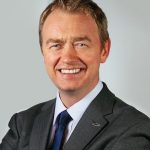
  • Tim Farron – 2021 Speech on the Integrated Rail Plan

    Tim Farron – 2021 Speech on the Integrated Rail Plan

    The speech made by Tim Farron, the Liberal Democrat MP for Westmorland and Lonsdale, in the House of Commons on 8 December 2021.

    It is a pleasure to follow the hon. Member for High Peak (Robert Largan), who made a thoughtful contribution concerning his constituency.

    The integrated rail plan for the north is a real disappointment to many people, not least people from Cumbria, the furthest north-west county in England. When we leaf through the 162 pages of that document, we find not a single mention of the county of Cumbria. That is a reminder that when we talk about the north and levelling up the north, it feels to many of us that the rural north—rural communities generally, but specifically those in the far north-west of England—is not thought of and is very much overlooked.

    The cancellation of part of HS2 is deeply troubling, but of course the more troubling cancellation is that of Northern Powerhouse Rail. If one understands the north of England, one understands that what we really need is not to get to London a bit quicker, but to have greater capacity and to get from east to west more quickly. That has been overlooked by the Government. It is a betrayal of the north, yes, but more than that it is a betrayal of their lack of understanding of the north, which is more telling.

    I want to focus on a couple of things in my community. First, we appreciate that the HS2 line is not going to go further into Lancashire and into Cumbria, but nevertheless the trains will. I am deeply concerned that there are no plans for any of those HS2 trains to stop in the biggest visitor destination in the country apart from London, namely my constituency—the Lake district. That should be put right.

    We have a railway line from the main line at Oxenholme that takes us to Windermere—the Lakes line. It is a very short line, and it would be one of the cheapest electrifications in the country if only it were done. Sadly, the Government have cancelled that. I am, however, encouraged by recent conversations with the Rail Minister about the possibility of a passing loop at Burneside, which would give us the opportunity to effectively dual the line again—that was our Beeching cut back in the ’60s and ’70s. Doing that would double the capacity on the Lakes line and massively increase the number of people who could come to the Lake district and not come by car. That would be a huge positive.

    It is worth bearing in mind that there are many small things that are huge to us. At Staveley, the first station in the Lake district, there are 42 steps to get up to the station. Friends of mine who have disability issues, are elderly or need to use prams simply cannot use their local station, so I call on the Government to consider very carefully funding access to Staveley station.

    We have a world-class visitor destination in the Lake district, with what feels at the moment like a third-class rail connection. That is why I ask, finally, that the Government reconsider the electrification of the line from Oxenholme to Windermere, and of the Furness line from Lancaster to Barrow through my constituency. That would be a positive, carbon-neutral thing to do, and it would be a massive boost to tourism and to local communities. It would be a good, effective use of public money after this disappointment.

  • Robert Largan – 2021 Speech on the Integrated Rail Plan

    Robert Largan – 2021 Speech on the Integrated Rail Plan

    The speech made by Robert Largan, the Conservative MP for High Peak, in the House of Commons on 8 December 2021.

    First, I associate myself with the excellent speeches of my hon. Friends the Members for Harrogate and Knaresborough (Andrew Jones) and for Blackpool North and Cleveleys (Paul Maynard), two experienced former rail Ministers who set out why they welcome the integrated rail plan while perhaps hoping that it had gone further in some areas. I completely agree with every word of both of their speeches.

    One area of the IRP that I really welcome is the continued commitment to the £137 million upgrade to the Hope Valley line running between Manchester and Sheffield. That is important for several reasons. First, the line is one of the worst performing in the country in terms of reliability and punctuality, so this extra capacity to improve reliability and frequency and help freight get out of the quarries and into market is a really positive step, along with, finally, the retirement of the Pacers and their replacement by the new class 195 trains, and the much-needed reforms to rail franchising. That £137 million investment in our railways, combined with the £228 million new Mottram bypass and Glossop spur road, which is due to start construction in 2023, represents the biggest investment in transport infrastructure in the High Peak in my lifetime at least.

    On top of that, it is important to ensure that local passengers on the stopping stations on the Hope Valley line, such as Hope, Edale, Bamford, New Mills and Chinley, also benefit from this, and that we link up the bus services from those stations to destinations. That is why the Hope Valley explorer bus pilot is such a positive step forward. I also welcome the commitment to look at electrification of the line.

    I also want to talk about HS2, which benefits the High Peak directly. I am very pleased that the western leg and extension is going ahead. That will free up capacity on the Stockport corridor of the west coast main line through to Manchester Piccadilly, a big bonus for those travelling there from places including Buxton, Whaley Bridge, Chapel-en-le-Frith and New Mills.

    However, we do need to go further. That is why I continue to campaign for a railway station for Gamesley, one of the most deprived places in the country. It has one of the lowest car ownership rates but atrocious transport links, including a bus service that ends at 5 o’clock in the evening. That desperately needs sorting out. We also need to replace the loss of the 236 bus, which means that at the moment people in Glossop have no connection and no direct bus route through to Tameside Hospital and Ashton College. I really hope that gets fixed too.

    Overall, there are lots of really positive things in the integrated rail plan for us to welcome. I would like to see it go further in other places, but the key now is that we get on and deliver it, and that we get spades in the ground as soon as possible. I look forward to the start of the construction of the upgrade to the Hope Valley line within the next few months.

  • Louise Haigh – 2021 Comments on ‘Rail Betrayal’

    Louise Haigh – 2021 Comments on ‘Rail Betrayal’

    The comments made by Louise Haigh, the Shadow Secretary of State for Transport, on 8 December 2021.

    Northern communities are, once again, paying the price for broken Tory promises on rail.

    This great rail betrayal will hit millions of people, and leave the North in the slow lane for decades to come.

    Promises made must be kept, and today Labour will stand up for our communities and demand they deliver the northern rail investment promised by the Prime Minister.

  • Kwasi Kwarteng – 2021 Comments on Liquid Hydrogen Aircraft

    Kwasi Kwarteng – 2021 Comments on Liquid Hydrogen Aircraft

    The comments made by Kwasi Kwarteng, the Business Secretary, on 6 December 2021.

    These designs could define the future of aerospace and aviation. By working with industry, we are showing that truly carbon-free flight could be possible with hydrogen a front-runner to replace conventional fossil fuels.

    Fuelling planes sustainably will enable the public to travel as we do now, but in a way that doesn’t damage the planet. It will not only help us to end our contribution to climate change, but also represents a huge industrial opportunity for the UK.

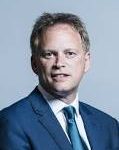
  • Grant Shapps – 2021 Comments on Liquid Hydrogen Aircraft

    Grant Shapps – 2021 Comments on Liquid Hydrogen Aircraft

    The comments made by Grant Shapps, the Secretary of State for Transport, on 6 December 2021.

    As we build back greener, it’s crucial that we place sustainability at the heart of the aviation industry’s recovery from COVID-19.

    This pioneering design for a liquid hydrogen powered aircraft, led by a British organisation, brings us one step closer to a future where people can continue to travel and connect but without the carbon footprint.

    I will continue to work closely with the Jet Zero Council to support the UK’s world-leading research in this sector, which will create green jobs, help us meet our ambitious net zero targets and lead the global transition to net zero aviation.

  • Sadiq Khan – 2021 Comments on TFL Funding

    Sadiq Khan – 2021 Comments on TFL Funding

    The comments made by Sadiq Khan, the Mayor of London, on 30 November 2021.

    I agree with the Government and Mayors across the country when they say other regions should have “London-style” transport services.

    But the irony is that a failure to provide enough operational and capital funding for TfL means that it won’t be long before London itself will no longer have “London-style” transport services.

    Instead, we’ll be forced to move into managed decline – leading to run-down services reminiscent of the 1970s and 80s.

    This is no exaggeration.

    If the Government continues to starve TfL of funding, bus services would have to be reduced by almost a fifth, and Tube services would need to be cut by nearly 10 per cent.

    In practice, this could mean more than 100 bus routes being withdrawn and less frequent Tube timetables on a number of lines and branches. TfL is even having to look at potentially closing a whole Tube line to achieve the savings it may need to make.

    And that’s not all.

    There would also be an increase in road and tunnel closures due to a lack of money to maintain London’s key transport infrastructure.

    This combination of deteriorating public transport services and an increase in road and tunnel closures would cause wide-spread disruption and gridlock across the capital.

    Not only would this have a devastating effect on passengers, but it would put the national economic recovery at risk.

    Because there can be no national economic recovery without a London recovery, and there can no London recovery without a properly funded public transport network in the capital.

    On 11 December, the existing temporary funding deal between TfL and the Government comes to an end.

    So it’s time to remove short-term political thinking and to come together to call on the Government to provide the long-term funding TfL urgently needs.

  • Andrew Stephenson – 2021 Speech on Portishead Railway

    Andrew Stephenson – 2021 Speech on Portishead Railway

    The speech made by Andrew Stephenson, the Minister of State at the Department for Transport, in the House of Commons on 26 November 2021.

    I congratulate my right hon. Friend the Member for North Somerset (Dr Fox) on securing this debate on an issue that I am very aware is of great importance to both him and his constituents. I also congratulate him on his Down Syndrome Bill earlier today, which I was delighted secured Government support.

    My right hon. Friend has been a passionate advocate for the restoration of the rail link to Portishead for many years, frequently championing the case in this House, and outside the House directly to Ministers. The restoration of the railway is part of MetroWest, which is a third-party scheme promoted by the West of England Combined Authority and North Somerset Council. The Government have committed to funding the scheme, with £31.9 million of support to close the funding gap on this project. This is dependent on the success of the development consent order that my right hon. Friend mentioned, alongside the endorsement of a full business case through the rail network enhancement pipeline.

    The application for a development consent order for the Portishead branch line MetroWest phase 1 scheme includes works and powers to enable the reinstatement of the railway line between Pill and Portishead, an upgrade to an existing freight line and two new stations. The section to be reinstated has significantly overgrown since the railway stopped running to Portishead in 1964 and would require some clearance work. The scheme also involves proposals for clearing vegetation along the existing freight line through the Avon gorge woodlands special area of conservation, which is home to a number of rare species of plants including the Bristol whitebeam.

    The examination into this application for a development consent order began on 19 October 2020 and concluded on 19 April 2021. Following this, the Secretary of State received the examining authority’s report on 19 July, with a statutory deadline for a decision by 19 October. As with all nationally significant infrastructure projects such as this, this is a complex scheme and there can be detailed matters that need to be worked through even after an examination has closed.

    My right hon. Friend will be aware that, following the written ministerial statement laid on 19 October by the Under-Secretary of State for Transport, my hon. Friend the Member for Witney (Robert Courts)—the Minister for Aviation, Maritime and Security—the decision on this development consent order application has been extended to 19 April 2022 to allow for further consideration of environmental matters. Since then, the Secretary of State has requested additional information from North Somerset Council, as the applicant for the DCO, and comments have been invited from interested parties on this response.

    Dr Fox

    I hope it is not pointing out the blindingly obvious that when people look at projects like HS2, which are able to tunnel under the entire area of the Cotswolds, they find it a touch hard to swallow that we have significant delay because there is some overgrowth on a line that last ran in the 1960s. I hope the Government will understand that.

    Andrew Stephenson

    My right hon. Friend makes a valid point, although I am sure he will remember that phase 1 of HS2, taking the line from London to the west midlands, took four years to get through the House and the detailed examination of tens of thousands of pages of an environmental statement. I, like him, want to see us moving forward projects at pace, but however we legislate for nationally significant infrastructure projects—whether by hybrid Bill, DCO or other means—there is a process we have to follow and it is, unfortunately, quite bureaucratic. But I think we also share a view that we must protect the environment and do everything we can to mitigate the impacts of all such schemes.

    This is still a live planning application and it will now be for the Secretary of State to consider his decision in the light of the original report and the recommendations from the examining authority and all other relevant information, including the responses to the most recent consultations. As the Secretary of State is the decision maker for all applications for transport DCOs and the competent authority for any habitat regulation assessment, this is required to be undertaken to assess the impact of a scheme on a European-protected site, such as the Avon gorge woodlands special area of conservation. It is important that he, or any other Minister delegated to undertake a planning decision on behalf of the Secretary of State, brings an unbiased, properly directed and independent mind to his consideration of that application. Decisions on applications need to be based on planning matters only and all decisions need to comply with all necessary processes and legislation regardless of the risk or otherwise of potential legal challenge.

    I am not involved in the decision on this DCO, but my right hon. Friend will understand that, as the decision on the application is under consideration in the Department, I cannot take part in any discussion of the pros or cons of the proposal. That is to ensure the process is correctly followed and remains fair for all parties.

    I recognise that extending decision deadlines for DCOs has implications for the scheme’s delivery and the Government’s commitment to levelling up. It is therefore only used where it is absolutely required to take further necessary steps to ensure a legally robust decision. While a new deadline for a decision on the DCO has been set for 19 April 2022, the Department is working hard to enable a decision to be made ahead of that deadline.

    I recognise that all transport schemes have an environmental footprint. It is right that we fully understand them and any other impacts resulting in such schemes, and ensure that they are mitigated appropriately, whether that is in relation to the planning decision or the funding decision.

    With regard to funding for the scheme, I can assure my right hon. Friend that the Department will continue to work closely with the West of England Combined Authority, North Somerset Council and Network Rail counterparts on the approval process of the scheme’s full business case. I understand that the West of England Combined Authority and North Somerset Council sent a letter to the Secretary of State on 12 November that set out concerns about the extension to the DCO deadline and ongoing costs. A reply to that letter will be sent shortly.

    In conclusion, the Government are committed to improving rail services in the wider Bristol area. I understand my right hon. Friend’s impatience for the scheme to progress, following his years of campaigning. As I have set out, the application for any development consent order needs to follow appropriate processes and any decision must be made in line with the relevant legislation to ensure that it is robust. We are aware of how important the scheme is to my right hon. Friend’s local area. Although I am unable to comment directly on the merits of the individual DCO application in respect of funding from my Department, we will continue to provide support to the West of England Combined Authority and North Somerset Council to help them to develop their business case.

    I hope that my right hon. Friend is reassured that my Department fully appreciates the importance of the proposal to his constituency, and we heard that message loud and clear again today. I thank him for raising this important issue.

    Dr Fox

    With the leave of the House, Madam Deputy Speaker, I wish briefly to respond.

    We have all become used to reading between the lines in these debates. I take it from my hon. Friend’s speech that the Government are not ruling out a decision earlier than April, which would be a good thing. If I am correct in that interpretation, let us get on with it.

    My hon. Friend mentioned the environmental sensitivities in respect of Avon gorge; I should point out that the railway already runs through the gorge to get to Royal Portbury dock, so that is something of a red herring.

    For many of us, with this recurrent delay, the pantomime season has come early. There is a very thin line between frustration and farce. I know that my hon. Friend sympathises with my points—I can tell from his tone—and wish him well in persuading his Department to see that, although it is something of an oxymoron, common sense is still the best way forward.

  • Liam Fox – 2021 Speech on Portishead Railway

    Liam Fox – 2021 Speech on Portishead Railway

    The speech made by Liam Fox, the Conservative MP for North Somerset, in the House of Commons on 26 November 2021.

    Earlier today, I had the great pleasure of introducing my Down Syndrome private Member’s Bill, on which I was extremely grateful for the support of the Government. Let us hope that we can repeat that exercise now and make it two in a row.

    This is the third time I have raised the issue of the railway extension to Portishead on the Adjournment in this House. Let us be very clear: we are not talking about HS2. We are not talking about major infrastructure or billions of pounds from the public purse. We are not talking about massive environmental impact or huge public dissent about the route. We are, as I have repeatedly said, seeking only around 1.3 miles of additional track. Although that is only a tiny fraction of the extra railway lines that are currently being planned, it has proved a gargantuan challenge to get through the bureaucracy required to provide a growing and affluent town with improved public transport—public transport that will improve quality of life for many, take traffic off our overcrowded roads and provide a public transport route into Portishead that may help to alleviate our current labour shortage.

    On 20 October 2021, the decision was issued from the Secretary of State for Transport’s office to extend the statutory deadline to determine the application for the proposed rail “Portishead branch line—MetroWest phase 1” development consent order by up to six months to April 2022. That extension has significant financial, reputational and programme implications for North Somerset Council and comes as a great disappointment to all of us who have looked forward to the opening of the railway line, particularly given the Government’s support for the expansion of the railway network. When I requested further information from Ministers, I was informed that there was a fear that a judicial review might be granted to environmental groups opposed to the reopening of the line. I will return to that point later on.

    On 10 November 2021, North Somerset received initial feedback requesting further information on carbon budgets. Understandably, the council has been seeking urgent clarification as to whether that information will address the so-called environmental matters that have been cited as the delay to the granting of the DCO. What might seem like precautionary legal moves to a large Department are having significant costs at a local level, and we are all at a loss to fully understand the situation, which is why I am grateful to Mr Speaker for granting this debate today. If the Government want to see improvements in the rail network, including the opening of new lines such as that to Portishead, we need predictability, not surprises.

    I fully understand the Government’s disappointment that several DCOs, such as that at Stonehenge, have been thwarted by judicial reviews, and I also understand the fear that those groups that have been involved in lawbreaking in recent times, such as Extinction Rebellion and Insulate Britain, might seek such a review on the Portishead line, but I have to tell my hon. Friend the Minister that our local scheme has the full support of all our mainstream environmental groups, which can fully see the advantage of taking traffic off our congested roads and on to the railways. In these circumstances, I wonder whether any judge would be likely to grant a judicial review to some of these more extreme organisations.

    The issues that may have arisen with some of these other DCOs are not present in our case. There has already been a very detailed examination of the environmental and wider considerations of the merits of the scheme, including examination of the environmental statement and habitats regulations assessment. That also included a report into the implications for European sites. The information requested by the Department on carbon budgets should be easily resolved, and North Somerset will make it available as quickly as possible, but it is essential that we all understand whether there will be further issues that may result in a delay.

    Let me be very clear with the House: delays of the nature suggested in October can have a hugely detrimental impact on the ability to deliver this project within costs and on time. Following an initial review with Network Rail, it has been assessed that the scheme may accommodate a maximum delay of three months, albeit importing additional cost and risk to the programme. A six-month delay, as suggested by the Secretary of State’s office, would have a potentially devastating impact. It is important that we understand whether this six-month figure was simply plucked out of the air and whether a shorter delay would deal with any reservations from the Department.

    For example, at a practical level, delays beyond 14 January would result in key ecology windows being missed, with a net programme impact of at least 12 months. We can control a lot of things in North Somerset, but the calendar is not one of them. It has been assessed that the impact on cost beyond 14 January 2022 will be in the order of an additional £13 million at minimum—an unacceptable figure for the project to bear. The loss of £13 million may be a rounding error on a weekly basis to big Government Departments, but on local government projects of this nature, it is a very large sum indeed.

    Today I am asking the Minister to ensure that we receive a positive DCO decision by 14 January 2022 to facilitate the continuation of the project. Failing that, it is unavoidable that we will incur significant extra cost on further legal and consultancy support, and difficulties with practical issues such as the manual clearance of vegetation over the winter—again, something over which we have no control. Although it is clear that the Government have some flexibility in the timetable that they impose on the project, there is, I am afraid, no flexibility in nature’s season.

    This scheme fits into every aspect of current Government policy, from environmental benefits to improved public transport and increased economic opportunity. Although we are tantalisingly close to finally getting delivery of a scheme that is supported across the whole community and from every aspect of political opinion, we are still not quite there. I understand that this is a live planning decision and that the Minister may be limited in what he can legally tell us today, but knowing him as I do, I trust that he will sense the frustration that many of us feel—very much including myself—and will undertake to get us full and rapid answers to the reasonable questions that we are currently asking.