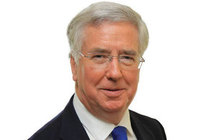
Category: Speeches

  • John Hayes – 2004 Speech on Housing

    Below is the text of the speech made by John Hayes at Toynbee Hall on 24th May 2004.

    We plant trees for those born later – and we build houses for them, too. Well – that’s how it should be. In recent times we often build – like we shop – for immediate consumption, on an excessive scale and with little regard for the future. Today I want to set out a different vision. A new vision. Built on age-old principles.

    First, I will propose that the idea of the home – and its protection – should become a defining theme for Conservatives as we seek to become Britain’s government again.

    Second, I will expose the twin threats posed by Labour’s gargantuan housebuilding plans –to Britain’s precious countryside and to the prospect of urban renewal.

    Third, I will describe the priorities that will guide our housing policy.

    The home and Conservatism For me, the idea of the home is an emblem of Conservatism.

    To talk about housing is one thing. To talk of the home lifts us to a different emotional plane. The difference between a house and a home is like the difference between calling a parent a mum or an acquaintance a friend.

    The home stands at the bright centre of our lives. Home is where lives start and end. It is where we return at the end of each day and at the end of all of our days. But there are far too many people – in our otherwise wealthy society – who either do not have a home or else the kind of home they deserve.

    Frustrated aspirations to home ownership, overcrowding and fuel poverty are painful symptoms of what’s wrong with Britain. So what do Conservatives have to say in response? What do we have to say about homelessness and broken or abusive homes? What do we have to say to the young couple fearing that they’ll never be able to afford a first home together?

    The Conservative Party must have specific and credible answers to these questions. Today I will describe the policy direction which has emerged from our dialogue with the organisations represented here today and many others besides. But, for me and Caroline Spelman – who I’m delighted is here – providing better housing is not simply about the mechanics of policy. Policies must be built on sound foundations. Ours will stand on our commitment to:

    · help more people to afford a home of their own…

    · ensure everyone has a warm, safe home – built-to-last – those least advantaged just as much as those of good fortune…

    · give local communities control over how they develop…

    · protect and enhance our precious environment…

    · and regenerate urban Britain – building high quality homes on brownfield sites.

    These are our goals. Goals at the heart of authentic Conservatism. The idea of the home can define a Conservative agenda for the twenty-first century. Homes are a symbol of social justice – of private ownership – of security – of independence from intrusive government – of local identity – of embryonic community life…

    The duty of Conservatives is to help people to find a home that supports their aspirations and anchors them for life’s journey. That duty involves protecting people from forces that make that journey more difficult. On the first day of his leadership Michael Howard spoke of this duty.

    “No one should be over-powerful”, he said.

    “Not trade unions. Not corporations. Not the government. Not the European Union.”

    “Wherever we see bullying by the over-mighty, we will oppose it.”

    And we oppose the over-mighty planning system. It’s bureaucratic, unresponsive and esoteric. It frustrates developers and bemuses council tax payers. It’s intrusive when a light touch is needed; yet ineffective when it comes to saving greenfields or ancient woodlands. Heavy-handed regulation limits the scope for innovative development but fails to stem urban sprawl.

    Conservatives know that the energy of the market powers the drive to social renewal. So we support protection of tenants from bad landlords BUT without making those protections so onerous that private landlords are discouraged from letting their properties.

    We believe that private developers should build long-lasting homes in character and scale with the built environment and local landscape BUT to do so we know they need an efficient planning system which assists their businesses to plan.

    And we support enterprise BUT oppose Gordon Brown’s eagerness to scrap controls on out-of-town hypermarkets introduced by John Gummer for the last Conservative government. Because Mr Brown’s permissiveness threatens market towns and high streets as much as it threatens the countryside. Conservatives recognise that the market and government can be good servants of the common good but neither should become so powerful that they make it harder for families to lead free and responsible lives. The idea of the home and all that it represents helps Conservatives to rediscover the things that really matter.

    Labour’s approach to housing

    You can tell how much Labour value housing. John Prescott has been put in charge. The Deputy Prime Minister has now turned his attention to housing. Recently, he welcomed the Treasury-commissioned Barker report. The Deputy Prime Minister is arguing that Britain needs at least two million more houses. That’s more than enough houses to gobble up land equivalent to two cities the size of Birmingham. That means for every year – two towns the size of Middlesbrough will eat into England’s shires. Mile after mile of the world’s finest countryside – Britain’s green and pleasant land – would be bulldozed. There’s a greenfield site near every Briton that he proposes to build on and every community will be blighted by his plan to slacken planning regulations.

    Mr Prescott’s other misplaced passion – Regional Authorities – will overrule the wishes of local people and impose sprawling developments on reluctant communities. Labour’s policy has mutated from ‘predict and provide’ to ‘dictate and provide’. But one-size-doesn’t-fit-all. We should encourage local diversity and allow local government to come up with local solutions.

    I’m clearly not alone in finding Labour’s approach frightening. The House of Commons Committee that shadows John Prescott has warned that a major housebuilding programme is unlikely to reduce house prices. They know that it’s low interest rates, macroeconomic factors and the relative unattractiveness of alternative investment opportunities that drive up house prices. A supply-side solution to the problem of house price inflation will be slow and crude.

    The same Committee warned of “excessive pressure on the water supply and other natural resources” and the significant costs of providing “the transport links, education and other facilities which new neighbourhoods require”.

    Similarly, the Campaign to Protect Rural England has said: “any such massive increase in the rate of building of new homes would have unacceptable environmental impacts and would impose enormous infrastructure and service costs.”

    Mr Prescott’s impending blitz of Britain’s countryside would be distressing enough if it was justified. But Labour’s approach is based on fundamentally flawed assumptions. Mr Prescott would lead you to think that there was a shortage of available dwellings. In fact: there were a million more dwellings than households in 2001. An excess that has grown by 300,000 dwellings since 1991.

    Labour’s approach would lead you to conclude that population growth is outstripping expectations. In reality the 2001 census revealed that there are 900,000 fewer people in Britain than previous government estimates. Labour’s approach would lead some people to believe that housebuilders are desperate for more land. In fact: planning permission has already been granted for 250,000 homes.

    Labour’s approach might lead you to think that they’d cracked the problem of empty houses. In fact: more than 700,000 homes stand empty in England tonight – and have done so for at least six months.

    Labour’s approach would lead you to believe that new home construction had a big impact on house prices. In fact: data from the Council of Mortgage Lenders has shown that 90% of property transactions involve existing homes.

    Myths and errors fuel Labour’s unacceptable approach to housing. Rural and urban communities are both being let down by Labour. Much of rural Britain would be concreted over – destroying vast swathes of the world’s finest countryside. And the opportunity to renew urban Britain – a task that includes housebuilding but also requires the introduction of school choice programmes and a zero tolerance of drugs and crime – would be missed yet again.

    A wholly different approach is needed.

    Conservative housing policy

    The direction of Conservative housing policy has been inspired and informed by many meetings with developers, pressure groups, charities and housing experts. And I’m very glad that some of those people are here today. I’ve listened carefully and I’m certainly committed to a continuing dialogue. The priorities that will characterise a future Conservative government’s housing policy are:

    · Aspiration.

    · Social justice.

    · Community.

    · Harmony.

    · And sustainable regeneration.

    (1) Supporting the aspiration to own a home

    Our first policy priority addresses the crisis of affordability. The Barker Report revealed that only 37% of new households in England could afford to buy a home – down from 46% fifteen years previously. The situation in London is especially serious. In 1993 a home in London cost approximately four times the annual income of those in the bottom quarter of the earnings scale. In 2002 eight times that group’s annual income was required to buy a home. No wonder 35% of our capital city’s first time buyers need help from parents or others to buy a home. The problem is so acute that the Government has been forced to introduce schemes to help the capital’s key workers find homes. But on-the-job houses are today’s tied cottages. They are a quick fix for the symptoms – not a cure for the cause of the affordability crisis. This is not the portable share of equity or assistance with mortgage eligibility that would help key workers to buy a home of their choice – where they want.

    The affordability pressures on key workers and first-time buyers will only worsen if Labour gets the opportunity to load graduates with tuition fees debts. It will deteriorate still further if young people, living with their parents and slowly saving for a deposit, are hit by the Liberal Democrats’ plan for a local income tax.

    Affordability is about people – not buildings.

    Setting affordability targets ignores the plain fact that houses become unaffordable as the market changes. So, we must help people to afford the homes that are available. Promotion of shared equity will be at the heart of the Conservative Party’s help for first-time buyers, key workers and other people currently struggling to fulfil their aspiration to home ownership. First-time buyers who can’t afford to buy 100% of a house might be able to afford a half or two-thirds. Building on the policies introduced by the last Conservative government– a government lucky enough to have as housing ministers Sir George Young and David Curry – we will work with the lending industry, builders and local authorities to bring about an equity revolution enabling millions more people to get on the property ladder.

    In my own area I know there is consideration of how a fresh approach to shared equity can help provide affordable local housing. Margaret Thatcher’s right-to-buy policy was one of the defining ideas of her first government. It enabled millions of people to own their own homes.

    But now we must go further. I want people to have the opportunity not just to buy the place they occupy but to buy a home of their choice. This opportunity – rooted in the concept introduced by the last Conservative government but never enthusiastically endorsed by Labour – will mean looking at how we can promote and extend transferable discounts to help tenants buy a home in the marketplace. By achieving a better pull-through from social housing this should ease pressure on the public purse.

    Conservatives also want to extend the right-to-buy to housing association tenants and we will consult housing associations and tenant representatives on how this policy can be implemented.

    Our aim is to create a more fluid social housing sector. One that increases the sector’s capacity to help those people desperate for a home because it also helps others to move from social housing to market housing.

    (2) Social justice: all Britons to have warm, safe homes – built-to-last

    The policies I’ve just outlined on affordability will most help people on lower incomes.

    But the Conservative commitment to ensure more people – whatever their income – live in warm, safe homes doesn’t end there. The scale of the empty homes crisis is a scandal when the number of homeless people has rocketed under Labour. Priority homelessness has risen from 102,650 in 1997-98 to 129,320 in 2002-03. These aren’t just damning statistics. Homelessness blights futures and costs lives. Homeless children are more likely to suffer ill health. Homeless adults are more likely to succumb to addiction. Roughsleepers are thirty-five times more likely to commit suicide than you and I. The Government has moved 4,000 families out of bed and breakfast to meet a pledge. But as Barnado’s say 9,000 families in B&B aren’t covered by it.

    Conservatives believe that families placed in temporary accommodation by social services – who say the Government don’t count – need help, too. We should redefine suitable accommodation and aim at a new measure of what is appropriate. I seek the advice of Shelter, Crisis, Barnado’s and others on achieving this.

    We will also take action to correct the mismatch between people and the properties they want and need. Many people – who as they get older – have more special needs but are living in unadapted, large houses whilst large, growing families are living in overcrowded accommodation. We must enable those who want to downsize to do so, by reviewing the availability of accessible, sheltered and extra-care housing. And by working with the care homes sector rather than against them – as the Government seems to do.

    Getting a better housing match could also helped by the provision of better information. I want to see local authorities maintaining an ‘accessible homes register’. Such a register would assist disabled and elderly people in their search for suitable housing and potentially save local authorities a fortune because of the reduction in unnecessary adaptation and readaptation of houses. Even so, much of the housing stock is unsuitable for people with disabilities. With a 300,000 shortfall in wheelchair-accessible homes, urgent action is needed.

    In England alone there are over 700,000 homes that have been empty for at least six months. Another 100,000 are estimated to be empty in Scotland and Wales. Many more properties – that fall just outside the definitions set by the Empty Homes Agency – are empty, unused and deteriorating. At last – after continuous pressure from Conservatives and others – the Government has reacted by offering an amendment to its Housing Bill.

    But, as usual, they’ve missed the point.

    A fifth of these empty properties are owned by the public sector! Dilatory local authorities must be obliged to let homes quickly. In the private sector incentives are normally preferable to penalties. The challenge is to encourage homeowners to make vacant properties available for rent. We need to look again at legal, administrative and tax incentives and disincentives of bringing these homes into use. Before Labour destroys more of Britain’s countryside it would seem sensible to fill these empty homes – over 300,000 of which are in London, the South-East, the South-West and the Eastern region.

    There are particular housing problems in rural Britain. The exception site policy has provided important opportunities for incremental development in rural towns and villages, but the Government is unenthusiastic about it. Not only is there a case for its maintenance, but also one for extending the opportunity for developers and local authorities to cross-subsidise affordable housing, through the construction of market houses in rural areas.

    We also propose to look again at incentives to the use adapted redundant farm buildings for housing. But it’s no good building rural homes to suck in second homeowners and buy-to-letters. The allocation of affordable housing should prioritise local people: those with roots, family or a job in the countryside.

    Urban areas that have been gentrified suffer, too, and we will look at how this can be addressed. I’m personally interested in ideas put forward by Gary Streeter MP for a new system of housing tenure – called ‘local hold’. Homes that can only be bought by people with long-standing, local connections.

    Social renewal means helping those in most need. 380,000 households do not claim the housing benefit to which they’re entitled. Those households are being failed by an over complex system. David Willetts MP, the Conservative spokesman on welfare issues, is already committed to find remedies to this failure.

    (3) Community – giving local communities control over how they develop

    My third policy theme is the need to give communities control over how they develop. Lawyers have said that the Government’s planning bill will keep their profession employed for years. Rather than undertaking necessary reform of planning Labour’s bill will throw the whole system into a period of massive upheaval. It’s a bill built on irreconcilable objectives. The first, purportedly, to make the planning system more transparent and effective. The second, unforgivably, to transfer more power to unaccountable regions. A more remote system can never be better at recognising local needs and responding to communal sensitivities.

    We need more user-friendly, efficient planning. There will be no ‘dictate-and-provide’ under the Conservatives. We will trust local communities; reduce government dictats; counter the undercapacity in the planning system – and give developers a fair deal by setting tougher statutory planning timetables. Conservatives understand that real communities evolve. They’re not designed by economists and imposed by Whitehall. Local people – not Mr Prescott – should decide what kind of houses they want and where they should be built.

    In its rush to build more and more houses Labour is stripping local authorities of strategic planning powers and giving them to regional planning bodies that cannot be as sensitive to the needs and traditions of local communities. The Leader of Kent County Council, Sir Sandy Bruce-Lockhart, has rightly warned that: “Local areas are in danger of losing their local identity to the man in Whitehall. Local people are in danger of losing their local voice and ultimately their countryside”.

    The Barker report calls for an even greater erosion of local democracy. New regional planning executives would deliver housebuilding goals that would be “independent from local government”.

    Yet, ironically, the Government’s unwillingness to provide adequate infrastructure is inhibiting development. Kent alone has an allocated land bank of 41,000 acres – largely undeveloped – because of a lack of infrastructure.

    The transfer of power from local people to remote regional bureaucracies is supported by the Liberal Democrats – but will be reversed by the Conservatives.

    (4) Harmony – the protection and enhancement of our precious environment

    Housing isn’t just about where we live but how we live and who we are. Housing policy and planning should give everyone the opportunity to live in a safe, warm, well-designed home. Our aim must also be to mix generations, help families to stay together and build houses that add to the landscape and locale. Everything built should add aesthetically to what is already there. This vision must inspire all development. Social housing should never be ugly; it should never be bad housing.

    For too long the most disadvantaged of our countrymen have endured indecent homes. Good local authorities are already working to ‘decent homes plus’ because standards set by the Government aren’t good enough. Shelter tell me that 500,000 households are officially overcrowded. An estimated three million live in fuel poverty. This just isn’t acceptable.

    I congratulate South Holland District Council who are building village council homes to a standard set higher than the private sector equivalent. They are showing that the design and quality standards that win awards must be the standard for all. Every local authority should develop supplementary planning guidance through local design guides and specific site appraisals – as the best already do.

    I think of the ambitions of the Victorians and the way those ambitions were reflected in the way they built. From public lavatories to public libraries the Victorians built to last Every building – a statement of local pride.

    We must raise our sights today and build warm, secure homes that people are proud to live in and others pleased to gaze at. The Prince of Wales has also modeled a very special vision of community in Poundbury. Tenants live next door to owner-occupiers. Workshops and offices are close to the homes of the people who work in them. All of the building materials used complement the local environment.

    All over Britain market and social housing should harmoniously meet environmental objectives. Britain’s housing industry is already building concept homes that recycle ‘grey-water’ and harness bio and solar power. Our age should match the ambition of the Victorian age with a commitment to environmentally sustainable housing.

    (5) Sustainable regeneration – high quality homes for urban Britain

    Brownfield land is a stream and not a reservoir. Brownfield development will be a central component of Conservative housing policy. Because, as we know, as land use changes development opportunities emerge. A housing policy that is seamlessly connected to a vision of urban renaissance so that, once again, our cities become places where families want to live and have their children schooled. Urban development has an unhappy post-war record in Britain. There has been an inhuman concentration on purely utilitarian objectives. Britain’s post-war cities, towns and villages have often been disfigured. Local identity corroded by an aesthetic orthodoxy which has given us buildings out-of-keeping in scale, design and materials with their surroundings. Time and again hastily-built, thoughtlessly-designed houses are demolished ahead of time at significant cost to the taxpayer. The planning system has routinely torn communities apart.

    Fortunately there are signs of better practice in regeneration today. Where regeneration projects are owned by local people they are much more likely to be sustainable. At Perry Common in Birmingham, local people – local champions – have modeled a kind of regeneration that meets local needs and is in harmony with community wishes. I know that Wimpey, Redrow and Bovis all have particular developments in different parts of Britain that illustrate what the best can be like.

    Smaller builders also often excel. I was proud to be a guest at the Federation of Master Builders awards lunch where the outstanding success of projects across Britain was recognised.

    The planning system – and government guidance that supports it – must enable best practice to become contagious. Such high quality housing depends upon a high quality construction industry and I welcome Kate Barker’s emphasis on increasing take-up of building industry apprenticeships. The challenge for government is to give builders the chance to excel – the challenge for builders is to rise to the task. Too often local authorities, Government departments and quangoes hold on to land that could be developed.

    We will review the planning, regulation and tax treatment of contaminated land with a view to making it safe and then developing more of it. In contrast, anxious to meet its brownfield development targets the government has crammed high density housing into suburban back gardens. More than half of the ‘brownfield land’ which the Government claim has been previously developed is people’s backyards, gardens and the like.

    Labour is doing nothing to prevent ‘town-cramming’. Nor are they stemming urban sprawl. The inner green belt is being built over. The percentage of greenbelt land developed has doubled under Labour. 91% of Mr Prescott’s much-trumpeted new greenbelt land is actually in a handful of remote parts of northern Britain – faraway from the development pressures of southern England. Mr Prescott’s greenbelt is clearly elastic.

    The Conservative ‘brownfield first policy’ will be heralded by the drawing up of a ‘Blacklist of Blight’. The people of Portsmouth recently saw the beginning of the demolition of the long and much-loathed Tricorn Centre. Other great British cities have been blighted by buildings that shout too much and insult their neighbours.

    Over the next twelve months I’m going to tour Britain and put together this ‘Blacklist of Blight’. In some cases an infamously ugly building will be blacklisted. In other cases a derelict dump spot – a crumbling and disused factory or the site of a demolished warehouse- will be added to my list of Blight.

    Some of this land will be suitable for new housing. Sometimes for greening over. Once fully evaluated by the next Conservative government all blacklisted buildings and sites will become priority candidates for a mixed provision of high-quality housing and community services.

    Building houses on brownfield sites by redesignating former commercial and industrial land will be a priority for that government. There is a great opportunity for Britain’s property developers to use their world class skills to rejuvenate urban Britain.

    Conservatives are also ready to reflect on some of the factors driving the scale and volatility of demand for housing. Volatile demand makes it particularly difficult for developers to invest with confidence. So can this volatility be ended?

    Stabilising the demand for housing raises controversial issues in the same way as increasing its supply… They’re just different controversies.

    The growth of the buy-to-let and second home markets – partly a result of the relative unattractiveness of alternative investment vehicles – hardly helped by Labour’s mishandling of the pensions industry – is one area of concern.

    Family breakdown is another. I believe that much more could be done to help couples to fulfil their aspirations to start a family home and to stay together once children have arrived.

    Conclusion

    Owning a home is the number one financial objective of most working families. Families that are being let down by Labour. During the horror of World War I soldiers dreamt of ‘home fires burning’ – and then Lloyd George promised ‘homes fit for heroes’. Now, as then, if housing policy is right – many of society’s other goals become easier to achieve.

    A child learns more quickly if he or she isn’t moving from one temporary form of accommodation to another. A warm home improves the welfare of children and older people, in particular. Thoughtfully-designed housing estates prevent crime. Where housing tenure and size of dwelling is mixed different generations are more likely to look after one another.

    Borrowing – prudently secured on a home – can support small business start-ups. It is in the interests of good, holistic public policy that we enter a virtuous circle of good housing feeding better health, education and welfare and these, in turn, supporting a good housing policy.

    A focus on the home will also help Conservatives to reconnect with the British people. Helping everyone to have a good home reinforces traditional Conservative strengths like our commitment to property ownership and independence from government.

    But the principles and policies I’ve also outlined point to equally deep to sometimes neglected Conservative beliefs. The emphasis on protecting the countryside and ending urban blight renews our party’s aesthetic and conservationist character. The emphasis on tackling homelessness and the affordability crisis is in tune with the Conservatism of Disraeli and Shaftesbury. Conservatives know that we are all diminished when some of us are diminished. And Conservative housing policy requires new vision. New vision. Age-old principles. A journey to deep-rooted Conservatism. A journey home.

  • William Hague – 2014 Speech on Ukraine

    williamhague

    Below is the text of the speech made by William Hague, the Foreign Secretary, at Lancaster House in London on 29th April 2014.

    Good evening Ladies and Gentlemen. I am very pleased to welcome you here today at Lancaster House.

    I thank our co-host United States Attorney General Eric Holder for being with us today at this event and his commitment to this vital initiative, the World Bank for their important technical support and Ukraine’s Prosecutor-General Oleh Makhnitsky and Justice Minister Pavlo Petrenko who are here with us for their valued presence at this immensely difficult time for their country.

    I am also grateful to Interior Minister Arsen Avakov who I understand has had to return to Ukraine to help manage the very serious situation there. He has our very strong support. I am looking forward to visiting Ukraine next week.

    This Forum on Asset Recovery provides a vital opportunity to forge connections between law enforcement agencies, to share expertise and to agree practical steps to track down assets that were criminally looted from the Ukrainian state by former President Yanukovych and his associates.

    Twenty two individuals suspected of embezzlement have already had their assets frozen in the EU, as you know. But we know from our experience of asset recovery after the Arab Spring that moving from freezes to actually returning stolen funds requires rapid, coordinated and widespread international action, so I am very glad to see so many countries represented here today.

    The task ahead of us is complex and challenging, but it is essential for three reasons.

    First, as a matter of principle, we have a duty to do everything we can to return to the Ukrainian state the huge quantities of funds that Yanukovych and his cronies are thought to have embezzled. These assets should be working to the benefit of the people of Ukraine, not lining the pockets of corrupt former officials.

    Second, we must show there is no safe haven for the proceeds of corruption in order to deter those who might be tempted to steal from the public purse in any country in the future. The people of Ukraine rose up against Yanukovych in large part because corruption and theft of state assets had reached such an appalling level under his leadership. I pay tribute to the many civil society activists, journalists and parliamentarians who worked so hard to bring these abuses to light.

    The Ukrainian people deserve our strong support in tackling corruption, strengthening the rule of law and building a more prosperous future for their country. That is why the United Kingdom is supporting projects in Ukraine to improve governance and public financial management, and recovering stolen assets will also make an important contribution to that effort. And the third reason – we must support the interim Government in Ukraine in its efforts to restore stability, begin the process of reform and prepare for elections on 25 May in the face of enormous pressures and unacceptable actions by the Russian Government even after agreement was reached at Geneva on 17 April to reduce tensions.

    The Government of Ukraine has made some determined efforts to implement that agreement. It has collected illegal weapons, removed roadblocks, initiated an amnesty law for protesters and taken an inclusive approach to constitutional reform.

    But Russia for its part has done nothing to implement the agreement. On the contrary it has continually called it into question, while mounting huge military exercises on Ukraine’s eastern border and unleashing a continual barrage of propaganda and aggressive rhetoric that can only increase tensions.

    And that is why the EU is pressing ahead with additional sanctions and I welcome the new US measures announced yesterday.

    It is why the international community must be united in condemning Russia’s illegal violations of Ukraine’s sovereignty and territorial integrity, and why we must be committed in our support for the right of the Ukrainian people to chart their own course in the future.

    So, I hope that your combined expertise and resources allow us to make practical progress during this Forum to support the Ukrainian Government in identifying and recovering the assets that rightfully belong to it.

    If we are successful in this task, we will be making an important contribution to tackling corruption and to supporting the Ukrainian people in their desire to build a better, more prosperous and stable future. Thank you very much indeed for everything you do.

  • William Hague – 2014 Speech on British Foreign Policy

    williamhague

    Below is the text of the speech made by William Hague, the Foreign Secretary, in London on 15th April 2014.

    My lord Mayor, Ladies and Gentlemen, it is an honour to address you tonight.

    It is an exceptionally turbulent time in world affairs, and I believe it will be so for some time to come.

    But it is also a time of immense opportunity.

    Crises always capture the headlines, but there is another side to the story.

    For four years in our government we have had a steady purpose in foreign policy:

    To build up Britain’s ties beyond Europe and our historic alliances;

    To connect our country up to the world’s fastest-growing economies;

    And to maintain Britain’s global role, for that is how we best protect our national interest.

    I am proud of what we have accomplished so far:

    Neglected alliances revived;

    Our relationships in Latin America, the Gulf, Asia and Africa transformed;

    Exports of goods and services up £50 billion since 2010;

    The Foreign and Commonwealth Office stronger than it has been in decades;

    And 14 new British Embassies, High Commissions, or Consulates opened around the world.

    We are the only major European government that is expanding its diplomatic network in this way.

    That is how we build the trust that enables us to work on vast global issues from climate change to free trade.

    It is how we link our young people and businesses with opportunity across the world.

    And it is how we forge the agreements we need at the United Nations and other international institutions.

    So we have a long-term vision for the future of British foreign policy.

    As a result, I believe Britain is now in a stronger position to make the most of all that this century has to offer, and that we can offer more to the world ourselves.

    At the end of the 20th century some people thought that the end of Empire meant Britain would be in a state of permanent retreat internationally.

    But in the 21st century we are the country that is at the top of the world’s league tables of soft power, that has hosted a magnificent Olympics and Paralympics, that has met the UN target for development aid – and not many nations have – and whose economy this year is set to achieve the fastest growth of any nation in the developed world.

    Our rapidly falling unemployment, the surge in inward investment and our reformed tax rates all present an immense opportunity to our partners in the world as well as to British people.

    I am grateful to the British companies and institutions who are indispensable to this success overseas, to the Diplomatic Corps here in London and to all our partners, including in the European Union.

    The reforms we advocate for the European Union will help the whole of Europe become more competitive, more flexible and more democratically accountable.

    We have already in the last four years cut the EU’s budget for the first time, ended our liability for Eurozone bail outs, achieved the biggest reform ever to the Common Fisheries Policy, secured political agreement to free trade deals with Singapore and Canada and we are reaping the benefits of the trade deal with South Korea, we’ve opened talks on free trade with the US and Japan and investment talks with China, established a unified European patent, cut red tape for the smallest businesses, and secured vital protection for non-Eurozone countries in Banking Union – part of how we protect the UK and the competitiveness of our financial services in this great City.

    But the EU’s institutions are not immune from 21st century expectations of responsiveness, accountability and democracy.

    Institutions that prove to be impervious to change will prove to be without the means of their own preservation.

    Therefore the British Conservative Party will have no hesitation at all, when we have tested the ability to reform and improve the EU, in submitting the result to a national referendum and the verdict of the people of this country.

    As the United Kingdom we have every reason to face the world with confidence.

    But to do this we have to overcome some of our own demons and doubts. It has been a difficult decade for Western democracies:

    We have endured a global financial crisis so intense it shrank world trade by a tenth in a single year, and caused the entire world economy to contract.

    In Britain we experienced our deepest recession since the Second World War, three times as deep as that of the 1990s.

    On top of this, we have lived through a demanding decade in foreign policy.

    Tens of thousands of our Armed Forces served in Iraq and Afghanistan.

    627 of these courageous men and women gave their lives in these conflicts. They and their families have our unending gratitude.

    It is not surprising that some people feel we have done too much, and that our country was over-extended.

    Some voices call for Britain to look inwards and turn away from its global role.

    When the government proposed that we should be ready to take limited military action to deter the further use of chemical weapons in Syria, we faced a great deal of opposition.

    But this has not in any way discouraged us from believing that Britain has international responsibilities.

    The aptitude for self-criticism is one of our greatest strengths, and it allows us to rebound as a nation.

    We are not like autocracies, prone to collapse under the weight of their contradictions or to become ever more oppressive.

    We should always learn the lessons of history. That is why in Opposition I and others demanded and secured the Iraq Inquiry.

    But our capacity for self-criticism must not become corrosive of our own values and our ability to defend them.

    We are approaching the time, while learning every lesson, when we must reassert our sense of confidence.

    Our economy is turning a corner. We are stronger at home, we have a clear purpose abroad, and we have the network and skills our country needs to prosper.

    It is time to draw on our talents as the United Kingdom with new confidence about our place in the 21st century.

    The British people are surely among the most tolerant, generous and daring people of all nations on earth.

    Everything we have achieved we have won through bold engagement with the world over centuries.

    Our NGOs blazed the trail on human rights, development and peace-building. The campaign to abolish the slave trade took root here, as did the demand for an Arms Trade Treaty.

    Our legal system is admired across the world, and companies on every continent choose to protect their interests and resolve their disputes under British law.

    We have many of the world’s best universities, and our media, musicians, artists and authors take British culture to billions of people around the world each year.

    Our history is often one of hard power. But in the coming years we will do even more to unleash these rivers of soft power across the world, so that we cultivate influence that flows rather than power that jars.

    On top of this, we are one of the few nations with the diplomatic network, the capabilities and the willingness to bring the world together to tackle vast problems, as we have done over the last two years on Somalia.

    We use our huge experience in ending and preventing conflict to help other countries, as we have done recently in the Philippines.

    Working with others we have been able to make progress in the nuclear negotiations with Iran that was unthinkable even a year ago.

    And I am proud that Britain that is leading the campaign to end sexual violence in warzones, now with the support of 144 countries.

    I have invited representatives of all those countries to London in June for a summit I will co-host with the Special Envoy of the UN High Commissioner for Refugees, Angelina Jolie. It will bring together civil society, judiciaries, and police from around the world, and be the largest event of its kind, at which we want to shatter the culture of impunity for those who use rape as a weapon of war.

    Fewer than 50 countries in the world have not yet joined this campaign. If you are from one of those countries I hope you will ask your governments why they alone are standing on the sidelines, when we have it in our power to be the generation that saves millions of people from the horrors of warzone sexual violence, forever. But this need for confidence applies not just to us in the United Kingdom, but to many other nations.

    It is time to shake off a decade of doubt, while learning all its lessons, and to rediscover confidence in the power and longevity of our values.

    There is an obvious and immediate challenge requiring strength and unity from not only western nations but from many others, and that is the crisis over Ukraine.

    Last month Russia, a European country, annexed a part of the territory of its neighbour on trumped up pretexts and through an illegal referendum held at the end of the barrel of a gun.

    By this act Russia violated the fundamental principles of sovereignty, territorial integrity and the right of every democratic nation to choose its own future.

    These principles have been built up over 70 years to avoid a repeat of the terrible conflicts of the 20th century that inflicted such grave suffering on Europe, particularly on Russia.

    If we do not defend these principles in Ukraine, including over Crimea, they will be threatened elsewhere in Europe and around the world.

    This would be immensely damaging for the long term prosperity and security of all nations – including Russia – which ultimately depend on a rules-based international system.

    We have to maintain strength and unity and confidence now, or our resolve could be tested even more severely in the future.

    That is why yesterday in the European Union we agreed to expand sanctions and to complete preparations for far-reaching economic, trade and financial sanctions whenever necessary in the future.

    In recent days Russia has deliberately pushed Ukraine to the brink, and created a still greater risk of violent confrontation. We call on Russia to stop these actions and to condemn the lawless acts in Eastern Ukraine.

    We want diplomacy to succeed, and for the Contact Group meeting later this week to produce steps to de-escalate the crisis.

    We are at a crucial moment. Russia needs to choose whether it is open to diplomacy and de-escalation, and if it decides otherwise, we must be ready for a different state of relations with Russia in the next ten years than we have enjoyed in the last twenty years.

    Ukraine can be a bridge between East and West and be able to have good relations with Russia. But that does not entitle Russia to send in its armed groups, thinly disguised, to spearhead the occupation of buildings in multiple Ukrainian cities, to try permanently to destabilise the country and dictate the terms of its constitution.

    My message to Moscow is that if anyone thinks they can do these things without serious long-term consequences then they are making a grave miscalculation.

    Russia is already paying a serious price for its actions. And the longer it breaches the independence and sovereignty of Ukraine, the heavier the price it will pay.

    First, we have already seen the flight of over $63 billion in capital out of Russia and the fall of the Russian stock market, as investors draw their own conclusions about the long-term implications for the Russian economy.

    Second, President Putin’s top objective in foreign policy is the creation of a Eurasian Union that would lock Russia’s neighbours into its own economic and political orbit. But now all countries in the region can see the risks of reliance on a bullying neighbour that shows no respect for the sovereignty of other nations. So the Russian government is undermining its own foreign policy, including alienating the vast majority of the people of Ukraine for decades to come.

    Third, Russia’s actions will only strengthen the unity, relevance and common purpose of the NATO Alliance for the long term. Already we have agreed increased NATO’s peacetime Baltic Air Patrols to reassure our partners. The NATO Summit, which we will be proud to host in Wales in September, will be even more strongly committed to strengthen capabilities and guarantee our common defence. And the case for increased defence spending, among NATO allies that have slipped below the threshold of 2% of their national income spent on defence, has become even stronger.

    Fourth, it is now much more likely that European countries will take action to reduce their energy dependence on Russia. The UK will advocate the diversification of gas supplies to Europe, the boosting of investment in gas interconnections and terminals, and the development of indigenous energy supplies such as shale gas. We will urge the EU to take action to help Ukraine and neighbouring countries to ensure more resilient energy supplies for them. And ahead of the G7 Heads of Government meeting in June, which will exclude Russia, Energy Ministers will meet to discuss ways to strengthen our collective energy security.

    And fifth, Russia’s behaviour has laid bare the danger of the creation of concentrations of economic, political and media power that subvert democratic institutions, particularly in South-Eastern Europe. We will increase our focus on supporting those institutions in European countries vulnerable to the pressure of creeping oligarchisation.

    In all these areas the Russian government is now at risk of undermining its own influence, and steadily disconnecting Russia from the international community.

    The Russian people stand to lose most of all, if their government continues on this path of the destabilisation of Ukraine.

    As these events show, we are probably heading for a period of greater instability and sometimes greater dangers in world affairs.

    Faced with such pressures the circle of countries bearing responsibility for upholding peace and security in the 21st century has to be widened.

    Countries that now play a bigger part in the world economy, particularly those aspiring to join the United Nations Security Council, have broad enough shoulders to take on a greater share of the burden.

    But nonetheless, it will remain vital that Western nations do not shrink from world affairs, and retain and reinforce their sense of purpose.

    We must demonstrate renewed confidence in the strength of our values.

    Democracy – even if it takes many different forms according to different cultures – will surely prove to be the foundation of the greatest human prosperity and stability over the long term. So let us be clear, democracy is not just an alternative to autocracy, secrecy and repression, it is infinitely preferable and superior to it.

    Accountability, human rights and the rule of law, transparency, tolerance, free trade, and open societies –they are the themes that will prove to be the most in tune with the trends of the 21st century, and the best basis for the fulfilment of human ambitions and dreams.

    So we have to advocate our values confidently and to make sure they emerge stronger from any challenge.

    This means we have to maintain our patient long term support for countries in the Middle East and North Africa that have experienced political upheaval.

    We have to do more to try to save lives in Syria and overcome the lack of international political will and unity. Just five countries, including the United Kingdom, account for more than 70% of all the aid that has been pledged through the UN for Syria this year. Britain has given over a billion dollars in aid so far. Other countries have to do more, because this crisis will get worse and the dangers to the region are growing every day. It is wrong for Lebanon, Jordan, Turkey and Iraq to bear the burden without sufficient help and it is our duty to support them.

    And we have to show resolve and imagination as never before to win the greatest prize of all of the 21st century, the full social, political and economic empowerment of all women everywhere.

    In all these areas and more it is time for all nations that share these values to reject the psychology of decline, to have confidence in our democracy, to show collective leadership based on those values, to use our soft power to the full to persuade other countries to work with us in new ways, and to inspire the world with our efforts to improve the condition of humanity.

    This will be our approach in the years to come, as the United Kingdom: expanding our diplomatic network, seeking new friends while nourishing old alliances, not surrendering to events, but retaining our belief in our ability with our allies and friends to shape the world and a more prosperous and secure future.

  • William Hague – 2014 Statement on Crimea Referendum

    williamhague

    Below is the text of the statement made by William Hague, the Foreign Secretary, following the Crimean referendum on 16th March 2014.

    I condemn the fact that this referendum has taken place, in breach of the Ukrainian constitution and in defiance of calls by the international community for restraint.

    Nothing in the way that the referendum has been conducted should convince anyone that it is a legitimate exercise.

    The referendum has taken place at ten days’ notice, without a proper campaign or public debate, with the political leaders of the country being unable to visit Crimea, and in the presence of many thousands of troops from a foreign country. It is a mockery of proper democratic practice.

    The UK does not recognise the referendum or its outcome, in common with the majority of the international community. At the meeting of EU Foreign Ministers tomorrow we believe measures must be adopted that send a strong signal to Russia that this challenge to the sovereignty and territorial integrity of Ukraine will bring economic and political consequences.

    Furthermore, any attempt by the Russian Federation to use the referendum as an excuse to annex the Crimea, or to take further action on Ukrainian territory, would be unacceptable.

    I call on Russia to enter into dialogue with Ukraine and with the international community to resolve this crisis through diplomacy and in accordance with international law, not to exacerbate it further through unilateral and provocative actions.

  • William Hague – 2014 Speech on Receiving Hillary Clinton Prize

    williamhague

    Below is the text of the speech made by William Hague, the Foreign Secretary, at Georgetown University in Washington, United States, on 25th February 2014.

    I am delighted to be back at Georgetown University. I gave one of my first speeches as Foreign Secretary from this stage, and I am very proud to return under these circumstances. Secretary Clinton, Ambassador Verveer, thank you for this immense honour.

    Everyone remembers who they shared a desk with at school. Well Hillary and I shared a desk for 2½ years when I was a brand-new Foreign Secretary, at the UN Security Council and in meetings around the world where they seat nations in alphabetical order.

    She would silence any room, just by walking into it. She always spoke the truth as she saw it, fearlessly. And she was fond of passing notes in class. I remember one that said ‘William, let’s get out of here and have some fun’.

    Hillary, you enhanced the standing of US diplomacy in the world. You strengthened the State Department. You created new opportunities for your country, breaking fresh diplomatic ground in Asia and Africa. You are one of the world’s resolute champions of human rights, and in doing all these things and more you placed the United States in a stronger position for the 21st century. You are a remarkable stateswoman and an outstanding American, and I am glad to call you my friend.

    I am of course a Conservative Foreign Secretary while you were a Democrat Secretary of State. But there is a particular reason why we worked so well together across a political divide, as well as across the Atlantic:

    We both believe that foreign policy is not just about responding to crises, its goal must be to improve the condition of humanity.

    Yes, we must always be realistic about threats and dangers, but we must also always be fired with optimism about human nature, and be bold in seeking out and sweeping away injustice.

    As nations, it is what we choose to do with our power that matters most of all, and that is the greatest testament to our values.

    I believe that there is no greater strategic prize of the 21st century than the full social, political and economic empowerment of all women everywhere.

    This must be the century in which women take their rightful place, in which hundreds of years of marginalisation are forcefully and finally overturned and extinguished, in which girls are born not into a world of narrow hopes and lesser protections, but into a world of equal treatment and boundless opportunity.

    Every country including our own has far more to do, but this is not just a national responsibility. It is a cause that every Foreign Minister should champion, in a global effort to break down the barriers which hold women back and unlock their full potential.

    It requires all the ingenuity and persistence that diplomacy can bring to bear, and should be part of the mission of each Ambassador in every Embassy of all democratic nations.

    We must turn commitments that exist on paper into education, jobs, equal participation and leadership positions for women.

    We need to turn women’s invisible presence in many countries around the world into a visible force in every society: with women represented in every peace process, in every government, in all walks of life.

    In my view it is impossible to achieve that aspiration in a world in which the use of rape as a weapon of war goes unchallenged.

    Many men and boys are victims of these crimes. Their plight too must be brought out of the shadows. But sexual violence in armed conflict disproportionately affects women, and is part of the crushing weight holding back women’s development.

    It is also a major factor in creating refugee flows and perpetuating conflict. And it should be at the heart of how we view conflict prevention and foreign policy in this century.

    In discussing this award we must acknowledge that it is still considered unusual for a man, and a politician, to raise these issues. But rape and sexual violence are crimes overwhelmingly committed by men. And that they should happen, while the world does nothing, should shame all men. Indeed to shy away from talking about these facts is in itself unmanly.

    But that said, it is true that three women have inspired me and motivated me to take up this cause, on top of what I have witnessed as Foreign Secretary.

    Two of them are my Special Advisers, Arminka Helic and Chloe Dalton, who have worked with me for nine years.

    Among their many skills is the art of persuading me to do things. When I learnt that I was to receive this prize, they brought me down to earth by reminding me that the best way to get a man to do the right thing is to tell him that he has had an extremely clever idea, when in fact it was your idea all along. Perhaps that is what Hillary had in mind in awarding me this honour.

    The third woman who has inspired me is Angelina Jolie. Without her film In the Land of Blood and Honey this Initiative would not exist at all.

    It brought home to me that an estimated 50,000 women were raped in Bosnia twenty years ago, and that still today virtually none of them have seen any justice.

    It made me think about Colombia, Rwanda, South Sudan, Somalia, the Democratic Republic of Congo, Mali, Liberia, Syria – the endless list of conflicts where women, children and men have been brutally assaulted, often as part of a military strategy, with total impunity.

    Sexual violence is often one of the first things that happens as soon as conflict or instability take hold.

    Yet it is usually the last thing to be taken into account by those ending wars or rebuilding nations.

    Women bear the worst of the burden of war – but they have always benefited least from the peace.

    With this in my mind, I asked Arminka and Chloe to invite Angelina to the Foreign Office, to screen her film and talk about these issues.

    They came back and said she wants to know something first: what are you going to do that will make a difference?

    She was absolutely right. It is not enough just to watch a film, or to meet and discuss these issues. We only get close to doing enough when we take action that practical action that makes a difference to the lives of survivors.

    Out of those conversations was born the Preventing Sexual Violence Initiative, and the campaign that has taken us together from London to the DRC, the G8, the UN Security Council, and the UN General Assembly, while the number of nations supporting us has grown from 8 to 140.

    Tonight Angelina has just returned from Lebanon where she has been working with refugees, who are often survivors of sexual violence. Her extraordinary humanity, her deep understanding of the lives of people uprooted by conflict, and her remarkable ability to motivate people and governments around the world are central to the success of this initiative. There is no barrier of language or culture that she is not able to overcome with her intelligence, her charm and her compassion. She is a credit to her country.

    This summer, we will co-host a global summit in London, which we intend will be a summit like no other:

    It will be the largest gathering ever held on this issue, running for four days from 10-13th June. It will bring together not only Foreign Ministers from those 140 nations, but also members of their armed forces, police forces, judiciaries and civil society.

    We will involve young people from around the world, and open up the Summit to civil society and groups working on these issues. It will be open to members of the public, and interact with every form of social media. And British Embassies will stage events all around the world, so that the Summit continues on a 24-hour basis, and people across the globe can participate. Achieving change in the world today requires a new and more open form of diplomacy; that fuses the work of governments with civil society and the power of public opinion.

    We are going to ask these 140 countries to write action against sexual violence into their military training and doctrine and their peace-keeping missions overseas. We will encourage them to form partnerships to help the worst-affected nations truly turn a corner on this problem. We will ask governments to plug gaps in their criminal justice systems and pledge to make this a priority. And we will launch a new International Protocol on how to document and investigate, document and prosecute sexual violence in conflict, to overcome one of the greatest barriers of all to justice, which is the lack of evidence.

    But we are going to be even more ambitious than that. We are setting out to change the whole global attitude to these crimes, as well changing bureaucracies. We don’t just want to move the pens of Ministers, we are going to try to move the hearts of people. It is not enough to change countries’ laws, unless we change people’s whole mentality. We hope that to create so much momentum that we begin to shatter the culture of impunity, so that in the future, far from any judge, prosecutor or law, any man with a gun in any conflict-zone will think twice before ordering or committing rape.

    There will be many people who say that this is too big a task, too difficult, or that it requires too much change in the crooked timber of humanity ever to be successful.

    Other people say start with other, less extensive crimes, arguing that sexual violence in conflict is something that has always happened and can never be eradicated.

    It is true that this task will take years and that it will be formidably difficult. But we cannot turn away.

    If we don’t end impunity this problem will get worse not better.

    A society that believes in human rights for all human beings and opportunities for all its citizens cannot know about the way rape is used as a weapon of war and then simply ignore it.

    We cannot hope to end other forms of pervasive discrimination against women if we are unable to stand up to one of the most extreme forms of violence against them.

    If women are still treated in this abhorrent way in times of war, they will never be treated as equals in times of peace, and that simply cannot be tolerated.

    We know that the world is capable of agreeing that even during war, certain actions are unacceptable. We must remove rape and sexual violence from the world’s arsenal of cruelty.

    To receive this award is a proud moment in my public career, and I accept it with humility.

    I accept it in the name of the survivors who find the courage to talk about their ordeal, who overcome their terrible injuries, who struggle on despite intimidation, ostracism, and rejection by their families and societies. I hope that this award is some recognition that they matter and are not forgotten. And I hope it will encourage other men and other leaders to talk about these issues, since only then will we lift the stigma from innocent victims.

    I accept this award thinking of the true heroines and heroes who work with survivors of rape: doctors – like Dr Mukwege – nurses, human rights defenders, lawyers; thousands of women and men who have done far more than I have, most with no reward or acknowledgement. They have done for years what governments have failed to do, and we must follow their example.

    And I accept it with humility because although I am proud of what we have achieved, it is only a beginning.

    I will continue this campaign for as long as it takes. I am grateful to men and women of the Foreign Office who are working across the world in support of it, and to the NGOs whose years of indispensable work we want to build upon. I am greatly encouraged by this award and by knowing that we are all part of the same endeavour.

    By taking up this cause we are shouldering a responsibility that our world has shirked for too long; and having taken it up, now we must never set it down again.

    Thank you.

  • William Hague – 2014 Speech on Sexual Violence

    williamhague

    Below is the text of the speech made by William Hague, the Foreign Secretary, in Bogota, Colombia, on 17th February 2014.

    I thank the Centre for Peace, Reconciliation and Memory for hosting us today.

    And I thank you Defence Minister – it is an honour to be here in your country. Yesterday you and I saw how your navy´s counter-narcotics operations are making a huge difference to the security of my country as well as to Colombia, by reducing the flow of drugs on our streets. This is a powerful symbol of the trust and mutual benefits that underpin our bilateral relationship. I am here in Bogota because we want to strengthen those ties in many areas, from trade and education to foreign policy and security cooperation, as well as to support your peace process.

    I discussed the peace negotiations this morning with President Santos. We know from our own experience how hard it is to reach and implement peace agreements and the courage and commitment that is required. I pay tribute to the President for his leadership, and to the efforts of civil society and affected communities. You will have our support as you bring an end to this terrible conflict and build sustainable peace. I am delighted to be sharing the stage with Nigeria Rentería, the Presidential Advisor for Women’s Equality, and one of two female negotiators to the team leading talks with the FARC. The Women for Peace march in November showed the inspiring possibilities for women’s participation in the peace process. Colombia is setting an example for many other countries, where women are frequently excluded from negotiations, something we must ensure does not happen in Syria today.

    The friendship between our countries is growing stronger by the day because we have a like-minded approach to many problems in the world.

    I hope we can now take our cooperation into a new area, and work together on ending the use of rape and sexual violence as weapons of war anywhere in the world.

    To each generation fall different responsibilities, and this I believe is a cause for our generation.

    Millions of women and girls and men and boys have been raped in conflicts in our lifetime, on every continent, including in the heart of Europe only twenty years ago.

    Warzone rape destroys lives, traps survivors in poverty, undermines reconciliation and fuels conflict. We must stop this terrible cycle by shattering the culture of impunity that exists around the world today.

    These crimes must no longer be regarded as something that simply happens in conflict zones. The suffering of women must never again be treated as an issue of secondary importance. And survivors must no longer be shunned and abandoned but supported and freed from stigma. To do this we need to change the entire global attitude to these crimes, so that governments are persuaded to live up to their responsibilities and take the practical action that is needed.

    In many countries across the world civil society organisations have been working towards this goal – including Colombia’s courageous “Now is not the time to be silent” campaign who are our partners in this event today.

    But the missing element until now has been that Governments have not taken up this cause. That is what I am trying to change, using the full diplomatic weight and global presence of the United Kingdom to persuade not just a few countries, but the entire world, to treat this as an urgent global priority. By championing it as a Foreign Minister I hope to persuade other countries to see that this is an issue of international peace and security that needs to be discussed at every top table of international diplomacy.

    The samples of earth around this centre taken from the sites of atrocities are a powerful reminder of everything that the people of Colombia have endured during fifty years of appalling conflict, of the lives lost, and the lives shattered by violence, upheaval and displacement, including sexual violence. These crimes are particularly hard to quantify, but I am aware of one survey that estimates that between 2001 and 2009, almost 500,000 Colombian women were victims of sexual violence associated with the conflict.

    Your government is working to address this government at home, but your knowledge and experience is something to be drawn upon by other countries facing similar problems. So we see Colombia as a natural partner in this area, and I was delighted when your Foreign Minister gave Colombia support to a historic Declaration promising to end the use of rape as a weapon of war which I presented at the United Nations in September last year and which has now been endorsed by 140 countries.

    This was the highpoint so far of a campaign I began in May 2012 with the Special Envoy of the UN High Commissioner for Refugees Angelina Jolie, our Preventing Sexual Violence Initiative

    In four months time we will convene a global summit in London in June this year, which we intend to be the largest ever staged on this issue. It will bring together governments, militaries, police forces and international organisations. It will be open to the public. Civil society organisations will hold open sessions on conflict prevention, women’s rights and business and human rights. Here in Colombia and across the world our Embassies will organise high profile events so that we really capture the imagination of the whole world.

    We will ask all the countries present at the summit to make real practical commitments: to revise their military doctrines and training; to commit new support for local organisations and human rights defenders; to launch new partnerships and to prioritise this effort in their foreign policy; and to endorse and implement the new International Protocol which will help to increase the number of prosecutions worldwide.

    We want Colombia to be represented in strength, and I hope Colombian civil society organisations will also accept our invitation to take part.

    The Colombian government’s efforts internationally and at home demonstrate a clear commitment to tackling sexual violence.

    As part of our strong support for those efforts, and I am glad to be able to announce two UK-funded projects in Colombia:

    First, the British Embassy will work with two NGOs, LIMPAL and Casa Amazonia, directly to support survivors of sexual violence, train women’s organisations and connect them to government authorities.

    Second, we will work with DeJusticia and the Attorney General’s Office to train prosecutors to investigate sexual violence in armed conflict, in support of your efforts to develop new national standards for investigation and prosecution.

    We have also agreed that UK experts will visit Colombia to seek out views on the new International Protocol on the documentation and investigation of sexual violence in conflict which we hope will be adopted at the June Summit.

    So, both internationally and here in Colombia we are already working together to prevent sexual violence and tackle impunity.

    I hope Colombia will continue to translate its political commitment into practical steps, and that we can strengthen our international cooperation.

    Colombia can play a vital role in the worldwide effort to end the horrors of warzone rape, and I have no doubt that working together with determination, courage and conviction, we can inspire many other nations to join us, make a difference to the lives of many people, and be able to say that by putting our shoulders to the wheel, we have hastened the day when the use of rape as a weapon of war will be consigned to the pages of history.

  • William Hague – 2014 Speech in Brazil

    williamhague

    Below is the text of the speech made by William Hague, the Foreign Secretary, in Brazil on 19th February 2014.

    Good morning Excellencies, ladies and gentlemen and thank you, Ambassador Amaral for hosting this event. I am grateful to the Lula Institute, and to our hosts FAAP.

    It is a pleasure to be in your dynamic, vibrant city, the sixth largest in the world, and a symbol of all that Brazil has achieved in recent decades.

    I am here in Brazil for our annual foreign policy Strategic Dialogue with your government, which took place yesterday. Over the last four years there has been a significant strengthening of our bilateral relationship. There has been a huge increase in the number of visits to Brazil by British Ministers; we’ve opened a new British consulate in Recife; we now have more diplomats at our missions here in São Paulo and in Rio, and we’ve signed agreements which are bringing thousands of Brazilian students to the UK through the Science without Borders programme. But there is immense scope for us to do more together and achieve more together by working side-by-side in foreign policy, perhaps nowhere more so than in Africa. So I am very pleased to be part of this panel event, since exchanging ideas in this way is an important stepping stone to future cooperation.

    Africa is a region still affected by conflict. We are all conscious I am sure of the terrible situations in South Sudan and Central African Republic. The UK has committed more than £70 million for humanitarian activities in South Sudan and we are supporting efforts to find a political solution. We have also provided £15 million in humanitarian aid to Central African Republic and £2 million to the African Union peace-keeping mission and we supported the deployment of an EU force to assist the African Union and French troops already on the ground.

    In both these countries we see the way conflict and instability destroy livelihoods and undermine sustainable development. The international community must be able to act to protect populations and avert disaster and we hope that the African Union will continue to strengthen its ability to respond in crisis situations like these. I hope Brazil can join us in supporting them, because your experience in Haiti and Lebanon gives you deep peace-keeping expertise, reflected in the choice of a Brazilian General to lead UN Peacekeepers in the Democratic Republic of Congo.

    My country is playing a leading role in reducing piracy of the Horn of Africa by contributing vessels to three international naval missions; we are working to counter terrorism from North Africa and the Sahel through Nigeria to Kenya and Somalia; we have held two major conferences in London in the last three years bringing together the Somali government and 50 other nations and organisations, helping that country to turn itself around; and we are one of the very biggest contributors in the whole world of development assistance to African nations.

    But to look at Africa solely through the lens of conflict is misleading. My argument today is that there are exciting opportunities for Britain and Brazil to work in partnership with African countries to promote economic growth, good governance and stability – drawing on our own expertise, history, knowledge and historic ties with different parts of Africa – and building on the development partnerships that we have already established.

    Both of our countries’ relationships with Africa are rooted in history, though they are not defined by it.

    Eighteen African countries, including Mozambique, are members of the Commonwealth, a vibrant, free association of countries from every continent working together for our shared values and shared prosperity. British Africans make an invaluable contribution to many areas of our national life, while many leading government figures in Africa studied at world class institutions in the UK.

    Brazil’s ties with Africa reflect your own long historical and cultural links. I know that Brazilians of African heritage and African culture play a vital role in your society, that your linguistic ties are a special bond with a number of countries in Africa, and that our other speakers today will touch on Brazil’s many contributions to prosperity, security and development across the continent, including your peacekeeping contribution. Your remarkable record of poverty reduction, growth and development of thriving democracy makes you an extremely strong partner for African countries set on the same path.

    Both our countries are now building on those historical connections to strengthen our relationships with African countries for the future.

    Since 2010 the UK has opened new Embassies in Cote d’Ivoire, Madagascar, Liberia, South Sudan and Somalia. I know that you have also been expanding your presence in Africa and both our countries have extensive and well respected development programmes. In fact, we are working together in 23 African countries helping farmers boost productivity and ensuring children get the school meals they need to succeed. But the similarities do not end there because both our countries are also building our economic ties with Africa. Brazil’s annual trade with Africa rocketed from $4 billion to $27 billion between 2002 and 2012 and I look forward to hearing Vitor Hallack’s views on the trading relationship from the business perspective.

    In that same ten year period, UK exports to Nigeria and Ethiopia doubled, our exports to Tanzania trebled and exports to Ghana increased almost four-fold.

    Both our countries know we can do even better, because Africa is a continent of huge economic potential. In 2012, 5 African nations saw growth rates higher than China’s, and 36 grew faster than India.

    Economic growth could transform countries in Africa as it has transformed Brazil. The vast majority of the 700 million people who escaped poverty in the last two decades did so thanks to growing economies that gave them jobs and higher incomes, and that gave their governments tax receipts to fund better health, education and infrastructure.

    So growth will benefit the citizens of African countries, and it will help Brazil, the UK and the global economy too.

    For all these reasons, the UK is putting economic cooperation and development at the heart of our relationships in Africa.

    Our Department for International Development is doing so particularly successfully by working with Brazil across Africa. Through joint projects together we are strengthening food security, increasing agricultural productivity, supporting incomes and improving resource management. In many cases, applying to Africa techniques approaches developed and successfully implemented in Brazil, such as the Favela policing project we support in Nairobi and Cape Town, which uses social media to improve citizen security.

    The UK’s Department for International Development is also working in partnership with African countries to make them more attractive destinations for much needed investment, to improve regulation, build infrastructure and develop capital markets. This will help create opportunities for home grown entrepreneurs and for British and Brazilian businesses alike, all to the benefit of the African countries concerned.

    UK businesses can play a valuable role in supporting economic development in African countries not only because they bring world class skills, services, and technologies but also because British companies recognise the importance of local job creation, training, and corporate responsibility. In this they are supported by the UK government: we were the first in the world to launch a national business and human rights action plan and we are helping British companies invest in their staff worldwide.

    We have fourteen UK Trade and Investment offices across Africa, dedicated to helping British companies to forge links with African countries, and all our Embassies have been tasked with finding opportunities for British businesses to invest and export.

    In order to strengthen our effort across government, we recently established High Level Prosperity Partnerships with Angola, Cote d’Ivoire, Ghana, Mozambique and Tanzania. British Ministers will work with their counterparts in these five countries to remove barriers to trade, share expertise and identify business opportunities.

    The UK will also continue to argue strongly throughout Africa for good governance, human rights and the rule of law because these are the common aspirations of people everywhere, and because corruption, oppression and instability hold back economic development, as we have seen all too clearly in Zimbabwe.

    I hope Brazil can work with us to ensure that the world agrees a strong set of new global development goals that reflect the importance of the rule of law, stability and open and accountable government, because these are all essential conditions for long-term economic success.

    We also recognise the importance of African countries and the African Union on the world stage. We are working closely with Nigeria, Chad and Rwanda on the Security Council and we support a permanent African presence on that body; 31 African countries have endorsed the Declaration of Commitment to End Sexual Violence in Conflict which I launched last year, and we are working with many of them and with the African Union on practical measures to tackle warzone rape; and we are building strong bilateral partnerships to work together on issues from free trade to piracy to climate change.

    So, the United Kingdom’s partnerships with African countries, like Brazil’s, are wide-ranging, dynamic and full of potential. I believe that our two countries should do more together to harness those strong ties to support economic development, good governance and stability, in a spirit of respect and cooperation, so that in the future African lion economies might rival Asia’s tigers, with all that that means for their peoples and for the security and prosperity of the world.

    And in that spirit I look forward to hearing the views of our other panellists and to discussing these issues with you and the audience here today, and to even stronger cooperation between our countries in Africa in the years to come.

    Thank you.

  • William Hague – 2014 Speech at the Illegal Wildlife Trade Conference

    williamhague

    Below is the text of the speech made by William Hague, the Foreign Secretary, at the Illegal Wildlife Trade Conference at Lancaster House in London on 13th February 2014.

    I would like to thank his Royal Highness for his words, and the personal long-standing commitment that he, the Duke of Cambridge, and Prince Harry have shown to raising awareness of this issue.

    It is no exaggeration to say that we are facing an unprecedented crisis: Tens of thousands of elephants were killed last year; over a thousand rhinos lost their lives to poaching and trafficking; and tigers and many other species are under ever greater threat.

    But this is not just an environmental crisis. This is now a global criminal industry, ranked alongside drugs, arms and people trafficking.

    It drives corruption and insecurity, and undermines efforts to cut poverty and promote sustainable development, particularly in African countries.

    There is also anecdotal evidence that shows how insurgent or terrorist groups could benefit from the trade.

    Therefore tackling it would build growth, enhance the rule of law, increase stability and embed good governance.

    So the illegal wildlife trade is a global problem – and it matters deeply to all of us gathered here today and the nations and organisations we represent.

    We need to show the world our political commitment, at the highest levels across the globe, to addressing it before it is too late.

    We want to support the amazing work already done in Africa, Asia and elsewhere and send the unequivocal message that this stops now. We will confront the crisis and we will beat it.

    I am greatly heartened by the presence here of leaders, Ministers, and representatives from all parts of the world from Africa, from Asia, from Europe and from North America. This gathering is unprecedented.

    We will hear from all sides of the story; the countries that are most affected by the criminals which slaughter the world’s most iconic species; the countries working tirelessly to stop the trafficking; the countries where demand for products is highest; and our partners from the international system.

    And we will learn from each other. We will take away solutions; breakthroughs on how we categorise and prosecute poachers and traffickers; how we investigate wildlife crime; how we invest in sustainable alternatives to poaching; and how we campaign to eradicate demand and supply for illegal wildlife products.

    At the end of this Conference we will adopt an ambitious and powerful Declaration that demonstrates to the world we will not tolerate this abhorrent trade.

    Firstly, governments here have committed for the first time to renounced the use of any products from species threatened from extinction. This goes beyond on our legal obligations – it shows that nobody, government’s least of all, need to buy these products.

    Secondly, we will recognise that CITES is a fantastic weapon in the fight against the illegal wildlife trade. It is the only body that draws the whole of the international community together on this issue. Its strength is that it is universal. But we will go further than our earlier commitments and promise that we will support the CITES commercial prohibition on international trade in elephant ivory, until the survival of elephants in the wild is no longer threatened by poaching. This is an enormous and important step.

    Thirdly, today we will commit to treat poaching and trafficking as a serious organised crimes in the same category as drugs, arms and people trafficking. Poachers think they can act with impunity. We will show them that they are wrong. There will be no weak links – we will all seek out those who commit these atrocious acts and use the full force of our national and international laws to break these criminal networks.

    We have the attention of the highest levels of government now on this issue. We cannot pass up this opportunity to make a real breakthrough.

    I am clear that action does not end with this Conference; we need to ensure that the commitments we make today are translated into urgent, concrete actions on the ground in the weeks and months to come.

  • William Hague – 2014 Speech in the Philippines

    williamhague

    Below is the text of the speech made by William Hague, the Foreign Secretary, in the Philippines on 30th January 2014.

    Magandang hapon” [Good afternoon]. It is a great pleasure to be here in the Philippines.

    I am grateful to the Asian Institute of Management for hosting this event, and I am delighted to see so many young people in the audience as well. You represent the future of your country of course, and I look forward to taking your questions at the end of my speech.

    I am here in Manila today because the United Kingdom government is set on building an even stronger relationship with the people and government of the Philippines: a relationship that is forward-looking; characterised by optimism, dynamism and trust, and founded on our common values.

    Your high rates of economic growth are a testament to strong economic policy and the hard work of Filipinos at home and abroad, including thousands in my own country. Your government can also be proud of its work to embed good governance.

    The Philippines clearly has the potential to be one of Asia Pacific’s great success stories and we want to support you in that, to the benefit of both our peoples.

    We are increasing the number of Chevening Scholars from the Philippines able to study in world-class British Universities; new direct flights between London and Manila are boosting tourism in both directions; the Prime Minister has just appointed a Trade Envoy to the Philippines, George Freeman MP, who will no doubt strengthen the flourishing business links that saw British exports to the Philippines rise 13% last year; and I am told I have arrived in the middle of a five month celebration of Britain in the Philippines.

    You may be surprised to know that the British nomination for this year’s Foreign Language Film at the Oscars was a film made here in the Philippines by a British director with Filipino actors. That film, ‘Metro Manila’, is in Tagalog, and it has already won three awards at a British film festival. It goes to show what British creativity and Filipino talent can accomplish together and it illustrates the potential that there is in our relationship.

    In Britain we deeply admire the resilience, fortitude and community spirit you demonstrated after Typhoon Yolanda. Thousands of British people gave money to support your relief effort, raising more than two billion pesos in just four days as part of the more than twelve billion pesos provided by the Government and people of the United Kingdom, along with the two Royal Navy vessels HMS Daring and HMS Illustrious, which we despatched to enable aid to reach isolated communities.

    You have shown the same spirit in working to bring an end to the terrible Mindanao conflict, which has taken so many lives and caused such suffering.

    I am particularly glad to be able to visit so soon after the completion of the Comprehensive Agreement on Bangsamoro, which I have just discussed with your Foreign Secretary. The success of those negotiations is a testament to the vision and determination President Aquino and all those involved, some of whom I had the great pleasure of meeting last night.

    I am proud of the support the UK has been able to offer as part of the International Contact Group supporting these negotiations. We know from our own experience in Northern Ireland that implementation brings its own challenges, but it will also bring rewards, both for Mindanao and for the whole of the Philippines. You have found a Filipino solution to a problem that has divided the Philippines for too long, and I have no doubt that it can be an inspiration for other countries who are struggling to overcome their own conflicts and divisions.

    As this example shows, our engagement in Asia is as much about security as it is about as trade and prosperity, since these are all inextricably linked.

    We are setting our country firmly on the path to far closer ties with countries across Asia over the next twenty years; and on a completely new footing from the past.

    We want Britain to be a leading partner with Asian countries, in trade and commerce, in culture, education and development, and in foreign policy and security.

    Our government is investing the time and effort to develop the political relationships and, we hope, the deep understanding to support this vision over the long term.

    This means investing in our relationships across the Asia-Pacific, from old friends like Japan and South Korea in North and East Asia, to Britain’s long standing allies Australia and New Zealand, and with our partners in South East Asia where we are building dynamic new relationships, including with the Philippines.

    It also means building a strong and open partnership with China fit for the 21st Century, which is why, in December, the Prime Minister led a large delegation to China to advance our political, economic, business and cultural ties. As well as increasing the trade flows of today, we want to generate the ideas of tomorrow, which is why they announced a £200m joint research fund, to build on our position as China’s second largest collaborator in terms of joint research papers. We all need China to succeed: to continue to grow, and to play a responsible and active role in international affairs and in Asia. As part of our new approach to the Asia-Pacific we have increased the number of UK diplomats in Embassies across Asia including here in Manila, many more British Ministers are travelling to the region, and we are on track to open five new diplomatic posts in Asia by next year. I re-opened Britain’s new Embassy in Laos in fourteen months ago, making us one of the very few European countries to be represented in every single nation of ASEAN.

    We see the potential of ASEAN both as an international organisation and as a group of sovereign states. We have deep connections with ASEAN countries that reach far back into history and we recognise this region’s strategic position at the heart of Asia-Pacific and astride the world’s major trading arteries.

    A stable, secure and prosperous Asia-Pacific will only be achieved in the long-term if countries in this region are able to change, to innovate, to stay competitive through strengthening free trade, individual liberty and the rule of law. My message today is that as we strengthen our ties with countries across Asia, we will of course have a particularly close bond with nations that share our values most closely and those that are ready to take the reforms necessary to advance free and open societies.

    Some people think Asia’s economic success has called into question the value of open economies and societies. Seeing the prolonged effects of the 2008 financial crisis in the EU and US, those people argue that Asia’s rise proves autocratic forms of capitalism are just as capable of economic success as stable democracies, and that countries can do without the values of individual liberty, free-markets and the rule of law.

    Speaking here in the Philippines, this flourishing Asian democracy, fresh from my visit to another vibrant democracy over the water in Indonesia, I say that these people are drawing the wrong conclusions.

    Universal values are not just right in principle, reflecting the aspirations of people everywhere; they also work in practice. In an ever more competitive world they will be just as important to Asia’s prosperity as they are to that of the West.

    It is true that over the course of the last thirty years, countries have made progress under very different systems and from very different starting points.

    There has been no single political recipe for Asia’s economic miracle. Economic growth has been achieved in vibrant parliamentary democracies in Japan, Taiwan and of course increasingly now in the Philippines, while Vietnam and Laos have taken other paths, and China’s economic growth has enabled more than half a billion people to lift themselves out of poverty.

    Actions have clearly mattered more than ideology and states have had success when they have taken steps to attract foreign investment, support export-oriented businesses and open up to global trade.

    But demographic, economic and political shifts are starting to pose new challenges for countries in this region. Populations are ageing in some parts of the Asia Pacific, if not yet in the Philippines. The middle-income trap is becoming a serious risk and states are struggling to meet the aspirations of their emerging middle classes in some cases. Corruption has emerged as a serious cause of public discontent in many countries, regardless of their political system, and Asia faces fresh competition from the emerging markets of Latin America, the Gulf and parts of Africa.

    If governments want to address these long term challenges, they cannot just do more of the same. To sustain their progress, in our view, countries in Asia Pacific need to shift their economies up the value chain, raise productivity and innovate. They need to move from technological catch-up to exploring the technological frontiers.

    In Britain, we believe countries in this region, of course, have to follow their own routes to prosperity, taking into account their traditions and history. There is no uniform solution to the challenges you will face in the coming years and indeed success is about innovation, not sticking to the inflexible models of the past. But we know from our experience in the United Kingdom that when it comes to economic performance, values add value.

    To break through the middle income trap and achieve sustainable growth and long-term prosperity, a commitment to free societies and open economies of the kind I have encountered in Indonesia and the Philippines is, in my view, vital, matched by sensible policy and good leadership.

    In Europe we are working to get our economies back on track and in Britain we are succeeding. We need to tap into vibrant and open societies and enhance competitiveness. I believe five principles underpin sustainable growth and will be crucial for the stability and success of Asian countries, as they are for many other countries, as they adapt to a changing world.

    The first principle is that smaller is generally better when it comes to the state. The public sector should be lean but effective, and governments bold enough to allow market forces to drive enterprise and finance because economies dominated by public ownership stifle dynamism. Success can seem easy for state owned enterprises with access to cheap credit from state-owned banks and benefitting from the indulgence of regulatory authorities that naturally tend to serve the interests of the state. But this stifles competition, makes life harder for entrepreneurs, and limits innovation.

    The suppression of competition, and the clash of political interests and commercial objectives within state-owned enterprises can cause inefficiency, inflexibility and stagnation; and it can lead to situations where the lifespan of failing companies is artificially extended, which just makes their inevitable collapse more painful and costly. In the UK, Margaret Thatcher’s government fought a long and difficult struggle to free our economy from the shackles of an oversized state and too much public ownership. History has shown it the right course of action. Formerly publicly owned companies such as Rolls Royce, British Aerospace and BG Group have flourished in the private sector, and Britain’s economy has been greatly strengthened as a result.

    The second principle is that states need the rule of law to encourage investment, support fair and open competition, ensure innovators are able to benefit from their ingenuity and reduce corruption and its economic costs. Private and foreign investors do not feel encouraged to help dynamic companies expand if the judiciary cannot be relied upon to protect their interests impartially and in accordance with the law. A brilliant scientist does not have much reason to labour years for a technological breakthrough if his or her ideas can be stolen with impunity. And innovative foreign firms will be reluctant to open cutting edge factories in countries where their hard earned technological advances can be imitated while the state turns a blind eye.

    One of the reasons the UK has become a biotech hub, home to 4,500 companies turning over £50 billion a year, is that our strong, independent and well-respected legal system gives companies confidence they will get the return they deserve on their remarkable innovations.

    And both for businesses to have full confidence in the rule of law, and for the institutions of government to retain their legitimacy, it has to be possible to hold the powerful, and the state, to account, in the rare cases where people fall short. In the UK, five Members of Parliament were recently sentenced for claiming fraudulent expenses. Showing that all of us are accountable before the law is essential to ensuring public confidence in our institutions, and it is essential to the health and resilience of those institutions themselves. Throughout this region too, courts can and should play a vital, active and transparent role in tackling crime and corruption wherever they occur.

    The third principle is respect and protection for individual freedoms. This is essential to unlocking a nation’s creativity and ingenuity and a prerequisite for long-term stability. I do not believe that you can achieve the very best in innovation in a political environment that prevents the free exchange of ideas. And I reject the proposition that what have long held to be universal values are in fact merely “Western” values; that freedom of expression, association or religion are somehow less relevant in Asia Pacific than in Europe; or that a vibrant civil society, democratic institutions and an independent judiciary are good for some countries but unsuitable for the populations of others.

    British inventions from the steam engine to jet propulsion, the light bulb to the television and from the telephone to the World Wide Web all owe their existence not just to brilliant individuals but to a free and open intellectual and scientific culture, a culture that encouraged critical thinking, scepticism and debate. The freedom to question, to criticise and to propose new solutions are essential to the scientific method and a political system that values those freedoms does not just support a strong scientific culture at home, it attracts talent from overseas, and freely connects its own thinkers and institutions to great global currents of ideas and debate. In our digital age, those freedoms must extend online as well, and a vibrant and open internet can drive growth, development, innovation and good governance.

    The fourth principle underpinning future success is a commitment to free trade. High tariffs, strict investment controls or obscure regulations designed to favour domestic over international firms may keep competition at bay for a while but they can raise consumer prices, and even the relief they offer to home companies often turns out to be illusory or short-lived. Protectionism prevents a country’s businesses developing the competitive edge they need to prosper internationally and countries that do not open up to competition run the risk that this fast moving world will pass them by.

    The UK has long been a champion of free trade, which we know from experience to be an engine of national and global growth. The EU-US free trade agreement negotiations launched during our G8 Presidency will be worth £100 billion a year to the EU economy, £80 billion to the US, and as much as £85 billion to the rest of the world. Britain is an energetic advocate of EU free trade agreements with Asian countries, including those currently under negotiation with Thailand and Japan, and possible future agreements with China, Indonesia and the Philippines.

    We also warmly welcomed the outcomes of the Bali round of WTO negotiations and I pay tribute to the Indonesian government for its generous hosting and exemplary chairing of that meeting, which produced the first multilateral trade agreement in almost twenty years. More still needs to be done, but Bali was a good step in the right direction.

    The fifth principle is investment in human capital and infrastructure. High-quality education, training and public utilities are vital to support sustained economic development and innovation. They have made a huge contribution to the success of many countries in Asia, including China and South Korea. Hundreds of creative start-ups have sprung up around Britain’s world-class universities in places like the Cambridge Science Park.

    But this investment is always an unfinished effort. That’s why the UK government is undertaking the biggest education reforms in our history, the biggest road enhancement programme since the 1970s and the largest programme of investment in our railways since the nineteenth century.

    So sustainable economic development does not imply the absence of the State but it does imply the State focusing its efforts in the areas where it can best add value.

    Some aspects of these principles pose a particular challenge for those states like Vietnam, Laos and China that retain a one-party system of rule and a legacy of state ownership. But domestic reform efforts can lead in the same direction.

    At the recent Third Plenum, China’s leaders announced that the market would play a decisive role in the Chinese economy and set the goal of comprehensive reform, including issues like governance and the judicial protection of human rights. The Plenum recognised that all types of reform are inextricably linked and this is clearly something to be welcomed. Indeed, we are actively supporting many of these reforms. Experience elsewhere demonstrates that an effective and independent judiciary, transparent regulation and a market-driven financial sector work together to increase business confidence and support economic dynamism. So comprehensive reform will be an opportunity for China to ensure its growth is sustainable for the long term, which is good for China and good for the global economy as a whole.

    South East Asian countries also face pressing governance challenges of their own. Thailand is struggling with deep political tensions, Cambodia must find a way to overcome the current political impasse and pursue reform, and Burma needs to resolve longstanding conflicts and build on the progress it has made towards genuine democracy. Here in the Philippines, you are seeking to institutionalise the gains you have made in terms of good governance, improve service provision and build the foundations for long-term growth.

    Democratic institutions do not automatically produce smart policy or effective leadership and in a digital age, governments, whatever their nature, must run faster to keep up with the demands of their citizens, or “bosses” as I understand President Aquino sometimes refers to the Filipino public.

    A pluralist democracy will only truly unlock the economic potential of a society if government responds to the wishes of its electorate, ensures strong and open institutions, fosters education and innovation, and builds a robust framework that allows the market to function properly. Democracy is about more than regular elections, it’s about what happens in between. Successful democracies drive governments to share the fruits of economic growth with the many not just the few, to invest in public goods like health and the environment, and strengthen societies and improve public participation. However, global stability and growth depend not just on what countries do themselves, but also on what they do together and organisations such as ASEAN have an important role to play. With the right level of ambition, the planned ASEAN single market, highly competitive and more integrated into the global economy, is a real opportunity to deliver huge benefit to the 600 million people who live in ASEAN countries.

    ASEAN can also contribute to advancing international security, including through its important efforts to regularise conduct in the South China Sea. I urge all parties to these disputes to seek peaceful and cooperative solutions in accordance with international law. The UK, although not a claimant in these disputes, has an interest, as all nations do, in peaceful and rules-based resolutions.

    In the long term, ASEAN will also reinforce regional stability through the connections it builds between people, businesses and governments and its increasing focus on the values of human rights and open and accountable government. For all these reasons, engaging ASEAN – as an institution and as a group of sovereign states – is central to the UK’s Asia policy.

    So, in the international system and within states themselves, a principled and rules-based approach will be critical to stability and growth in the long term.

    Countries in Asia Pacific have, in their different ways, made remarkable progress in recent decades but on some of the paths they have taken until now, progress will get harder as the global landscape changes. As Asian economies reach the technological frontier, their own pioneers will reach furthest when states embrace the principles of openness and freedom that I have outlined today.

    In Britain we will continue our strong engagement with countries across this region. In a rapidly changing international system, where there are more centres of decision-making than ever before, strengthened bilateral ties are vital to advancing our interests and securing the common good. But at the same time we will continue to argue for these vital principles of economic liberalism and political freedom, because we believe them to be vital to the success of all countries of the Asia Pacific and the wider world, because our economic fates are increasingly tightly bound together. Asia has astounded the world with its progress in the last three decades, and I confidently hope it will produce the new ideas, the new thinking and the new discoveries to surprise and benefit all of us for many decades to come.

  • William Hague – 2014 Speech on Scottish Independence

    williamhague

    Below is the text of the speech made by William Hague, the Foreign Secretary, in Glasgow on 17th January 2014.

    It is a pleasure to be in the Lighthouse, this iconic building designed by Charles Rennie Mackintosh, the man who put Glasgow Style on the map.

    One century on, your city’s reputation is riding high, for good reason, and it will rise even higher this summer when you host the Commonwealth Games.

    Over the last three months the Queen’s Baton Relay has wound its way through 28 countries, carried from Asia to Australia to Africa, from India to Rwanda.

    In each country it has been greeted by enthusiastic crowds.

    And in each country it has been supported by our High Commissions, who have seized the opportunity to promote Scotland and all it has to offer. They arranged for haggis to be sampled in New Zealand and Scottish salmon in Singapore; they brought Scottish music to Ghana, Brunei and Kenya; and they told the world about great Scottish companies from bus manufacturers to Whisky distilleries.

    When it comes to what we do to promote Scotland, these events are just the tip of the iceberg, but they show how the UK’s extensive diplomatic network and our longstanding relationships support Scottish success, and how Scottish culture, tradition and innovation enrich Britain’s reputation and impact in the world.

    As Foreign Secretary I am immensely proud to represent the whole United Kingdom. That does not mean I am any less proud to be a Yorkshireman or to have been Secretary of State for Wales. But I feel strongly that the United Kingdom is greater than the sum of its parts. I am convinced that the different peoples, traditions, languages, and landscapes that make up the United Kingdom are a vital part of who we are and the reason why we have been able to achieve so much together; something to be treasured, not to be torn apart.

    And I feel deeply that what is at stake this year is not only Scotland’s future but all our future, because Scotland leaving the United Kingdom would diminish us all.

    Of course those voting in the referendum must be forensic in weighing up the arguments. That is essential for any people charting their course in an uncertain and dangerous world. It is a duty owed not only to those living in Scotland today but to the future generations that will have to live with the decision.

    The paper we present today sets out the facts and it is clear that the advantages of Scotland remaining in the United Kingdom are indisputable in foreign policy as they are in every other area of our national life. A Scotland outside the UK would find itself less connected in an increasingly networked world, less able to advance its interests in an ever more competitive global economy and less able to influence decisions in a shifting international order.

    But there is more at stake even than that. At stake is what we can – and do – stand for together as a beacon of human rights, as a determined advocate of democracy and the rule of law and as a central force in the fight against extreme poverty and for women’s rights. At stake are the resources we all have to draw on, born of the self-sacrifice and hard graft of generations of our forbears, that mean that together we can approach the changing global landscape with pride and confidence and optimism. At stake are the relationships and the international standing we have built together. None of these things are easy to quantify. But people in the rest of the world clearly see their worth, as I hear all the time in my work overseas.

    When people and governments in other countries look at the United Kingdom they see one of the most successful political and economic unions ever known and an outward looking country with a global reach that is positioning itself to flourish in a changing world. They see a cultural powerhouse that benefits from its many distinctive literary traditions under the great umbrella of the global language we call English; and a whole set of institutions and relationships nurtured over the course of our history that give us huge advantages; they see a shared endeavour that has yielded inspiring achievements; and they wonder why anyone would want to break up such a successful and promising union. It is something we often take for granted but it is not something to give up lightly.

    I am conscious of course that this is not the picture the Scottish Government would like to paint. This paper, on the EU and international considerations around Scottish independence, is the first to be launched since their White Paper in November and the claims in that paper call for the kind of forensic examination I mentioned because the Scottish Government continues to state as fact what they know to be uncertain.

    Let’s be clear about four things that we do know and that this paper sets out.

    Currently, people in Scotland share a right to be represented by one of the world’s biggest and best diplomatic networks, made up of 14,000 people spread out over 267 locations in 154 countries and 12 territories.

    This is three times the size of the network of 70 to 90 diplomatic offices proposed by the Scottish Government for an independent Scotland.

    With this network, people in Scotland are represented on all of the world’s major economic, political and defence bodies.

    Whether or not a Scot is in the chair, our diplomats do all they can to fight in defence of Scottish interests. And they display the same professionalism when they are standing up for the interests of Wales, England or Northern Ireland too.

    When these diplomats speak, everybody knows they represent the world’s sixth largest economy, a permanent member of the UN Security Council and NATO, and the third largest country in Europe. The Scottish Government maintains that only they should speak for Scotland. But it’s one thing to speak and another to be heard.

    The world of diplomacy is intensively competitive. An ambassador from an independent Scotland arriving in Washington would find that he or she was the 179th ambassador in town. With changes coming in on voting rules later this year, larger states will have relatively more weight in EU decision-making – and smaller states less. And, as the paper shows, while an independent Scotland would indeed have a seat in some international bodies, in others it would have to share, and in some it would have no seat at all.

    My second point is on trade. As Foreign Secretary, I have put our prosperity at the heart of our foreign policy and this is a top priority for the years ahead.

    Boosting overseas trade is just as vital to the economic recovery in Scotland as the rest of the UK. Currently, Scottish businesses draw on the expertise of UK Trade & Investment, a network that covers 169 offices in over 100 markets representing 98% of global GDP.

    This network is six times the size of the current network of 27 Scottish Development International offices which the Scottish Government plans to use as the basis for its trade support. And UKTI can rely on the support of all UK Ministers in their contacts with other countries. As Foreign Secretary I have promoted Scotch Whisky with very genuine enthusiasm on countless foreign trips, arguing for and helping to achieve improved market access and protection against counterfeit products.

    Even if an independent Scotland were eventually to offer trade support in each of the 70 to 90 diplomatic offices it plans, the network would still only be a fraction of the size of that offered by UKTI right now.

    UKTI provides the overseas network used by Scottish Development International, which it also helps to fund. Last year alone, it helped nearly 2,000 Scottish businesses.

    Here in Glasgow, a UKTI office provides grants to firms to attend over 400 trade shows each year: we’re sending Scottish engineering firms to Germany, IT firms to the United States and biotech firms to Brazil.

    And UKTI also helps woo investors, who last year generated 13,500 jobs in Scotland. Three-quarters of these investment projects were won with UKTI help.

    When it comes to education, that other great Scottish asset, Scottish universities can draw on the support of British Council offices in over 100 countries around the world, which have helped to attract more than 40,000 overseas students a year to Scotland.

    And you will have seen that the European Commission has cast doubt on the legality of the Scottish Government’s plans to continue charging university tuition fees for English, Welsh and Northern Irish students if Scotland becomes independent.

    My third point relates to that primary task for almost all foreign services, which is to look after their citizens overseas.

    Currently, Scottish people are entitled by right to seek help from the UK’s consular network.

    At any one time, this includes over 800 full-time, dedicated, trained professionals, for whom a routine day’s work can involve thefts, plane crashes, abductions, imprisonments, hospitalisations, violent weather, forced marriage and almost every form of misadventure that can and sadly does befall British people overseas. Last year alone, they answered around one million enquiries from members of the public.

    The Scottish Government knows it is not able to match this. They are hoping that an independent Scotland would be able to piggy-back on the consular support offered by other EU member states.

    Fourth, the Scottish people can be proud that together we are the second largest donor of aid in the world, with the power and reach to support the values that all of us on the British Isles hold dear.

    In 2012, organisations supported by the Department for International Development gave 97.2 million people food aid, and immunised 46 million children against preventable diseases.

    In the three years to 2013, UK support paved the way for 30 million people, over half of them women, to work their way out of poverty by giving them access to financial services; it helped almost six million children to go to primary school; and prevented 13 million children and pregnant women from going hungry.

    In Syria, we are helping refugees shivering through a bitter winter and we have just announced a further £100 million in support; in the Philippines, we are providing aid for families whose homes have been washed away; and in South Sudan we have sent equipment to stop people dying from water-borne disease.

    The Scottish Government says that it would spend 0.7% of Gross National Income on aid, but the United Kingdom is already committed to doing that. In fact, the UK is the first country in the G8 to reach this target. And the advantages of scale mean when we give as one our aid goes further.

    And we don’t just give together, we campaign and work together for our shared values. One of the issues I feel most strongly about is the advancement of women’s rights. I believe passionately that the full realisation of social, political and economic rights for women is the great strategic prize of our century.

    That’s one of the reasons why I launched the Preventing Sexual Violence Initiative and why the UK will host this year an unprecedented global summit designed to ask nations to confront the horrors of warzone rape once and for all. And the same commitment to ending discrimination, violence and exploitation runs through the Modern Slavery Bill the Home Secretary is introducing, and through DFID’s work to unlock the potential of girls and women.

    But none of this is easy and on all these issues we need to take other countries with us, shift attitudes and change minds. To make a difference we have to call on all the resources and relationships at our disposal. The Declaration of Commitment to End Sexual Violence in Conflict which we put forward in the UN in September has been endorsed by 138 countries, all of whom are now committed to tackling impunity for the perpetrators of warzone rape, giving aid and justice to survivors and putting their weight behind a new practical measure to improve the investigation and documentation of these horrific crimes. This is the kind of result we can achieve together as a United Kingdom and there is still much more for us to do.

    So these are facts that we know. Let me move on now to what we can’t know.

    As the Minister for Europe noted this week, there are pronounced question marks over an independent Scotland’s membership of the European Union. Based on the evidence we have, it is unlikely to be as easy as the Scottish Government makes out.

    We have statements from those who are in the best position to know.

    The President of the European Commission Jose Manuel Barroso has said that any region leaving an existing member state would have to reapply for membership.

    This point was underlined by the President of the European Council, Herman Van Rompuy who said that “a new independent state would, by the fact of its independence, become a third country with respect to the Union and the treaties would, from the day of its independence, not apply any more on its territory.”

    Spanish Prime Minister Rajoy has pointed out that any region that seceded would require unanimous support to rejoin. Even the nationalist Catalan leader has stated that secession could mean exclusion from the EU.

    No-one knows for certain how long it would take for an independent Scotland to become an EU member but one thing is for sure – it is not reasonable for the Scottish Government to expect what they have claimed would be a “seamless transition”.

    The second question mark is over the euro.

    Under the terms of the EU Treaties, all new Member States are obliged to make the political and legal commitment to join the single currency.

    Only Denmark and the UK have a permanent opt-out, and all countries that have joined the EU since the 1990s have been formally required to commit to adopt the euro.

    The Scottish Government doesn’t want to join the euro, but people in Scotland cannot be sure it would have the political capital to resist the pressure to join. Without an opt-out, Scotland would face greater EU oversight of its spending decisions and broader economic policy long before it joined the euro.

    The third question mark is over Schengen.

    The Scottish Government wants to remain in the same common travel area as the UK and Ireland, but membership of the Schengen area has been part of the EU legal framework since 1999 and all new members of the EU since that time have been required to commit to joining.

    Only the UK and Ireland have a permanent opt-out, and it would take substantial diplomatic clout to negotiate a similar deal without any guarantees of the result up-front.

    There are other assumptions in the White Paper that Danny Alexander will discuss.

    It is clear that every voter has to look at what independence would mean for the future.

    The Scottish Government says that Scotland faces a once-in-a-generation opportunity to choose between moving forward as an independent nation or standing still. I agree that this debate is about opportunity, not just for those who vote in September, but for Scotland’s next generation. I don’t agree that Scotland is standing still, nor indeed is the wider world and that’s the point.

    We live in a time of unceasing and accelerating change, a time when as a nation or as individuals, we should aim to draw on every resource at our disposal.

    When I speak to younger people here, optimistic, ambitious and with their whole lives ahead of them, many will say they are 100% Scottish, but that doesn’t mean that they should be denied the advantages of British citizenship that are theirs by right.

    Being a member of this historic union gives people in Scotland the opportunity to do more good in the world; to exert an influence on global politics or economies; even to represent Team GB at the Olympics where we came third in the medals table in 2012, with Scots and English athletes sharing the podium and showing what we can achieve together.

    It gives the security of belonging to a nation of 63 million people; with one of the fastest growing economies in the developed world; and a tried and tested defence and security network which is the envy of many other nations and will help to keep the Commonwealth Games secure this summer.

    It also guarantees a British passport, which provides instant access to our extensive diplomatic, consular and trade networks and the most professional help worldwide for any Scot travelling or doing business overseas.

    When Scottish people go to the polls in September, the Yes campaign will make great claims about the romance of national destiny. Uniquely among all the choices we face in life, they will present the choice for Scotland to leave the UK as pure gain and no loss. It is an astonishing claim because the assurances they are giving are based on very shaky ground. On the terms of this paper alone, they are offering a fraction of what Scotland already has. There are great risks, and it would be wrong for us to pretend otherwise.

    Making a decision to remain within the United Kingdom is a positive choice – reinforcing what we already have and reaffirming what more we can be if we continue to work together.

    In the end, this decision is Scotland’s to take. I hope Scotland will choose to remain in the United Kingdom and that together we can continue to act for our common good and our common beliefs and values.

    Thank you.