Category: Speeches

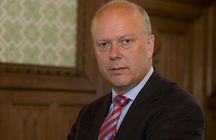
  • Lord Falconer – 2015 Speech to Labour Party Conference

    charliefalconer

    Below is the text of the speech made by Lord Falconer, the Shadow Lord Chancellor, at the party’s conference in September 2015.

    Conference, it’s a huge privilege to be speaking to you today as the Shadow Secretary of State for Justice.

    I’m proud to have with me a fantastic team – Andy Slaughter, Jenny Chapman, Wayne David, Karl Turner, Willy Bach, Jeremy Beecham and Christina Rees.

    We’re all determined to fight the Tories every step of the way.

    Conference, it’s been nine years since I last addressed Conference.

    Back then, Jeremy was making speeches from the backbenches, David Cameron promised in his Tory Conference speech to repeal the Human Rights Act and I weighed in at 16 stone 6.

    Not a lot has changed from David Cameron.

    But Jeremy is now leader of the Labour Party.

    And I’ve lost five stone.

    It’s the Labour party that’s making progress there.

    Conference, Jeremy Corbyn has been criticised for appointing me to the Shadow Cabinet.

    People say that we’re too alike.

    We’re both thin men, in our 60s, from Islington.

    Actually – and I know many of you will be surprised by this – there are a few matter on which we disagree.

    But we share so much more.

    We share the view that politics should change.

    Conference, this summer, our party has had a transfusion of ideas, energy and drive.

    A transfusion that makes us stronger.

    We must harness that power to fight for the things Labour stands for.

    Every one of us has to make the case for what we believe and do all that we can to persuade the public to elect a Labour Government, Labour councillors, Labours mayors, Labour AMs, Labour MSPs and Labour MEPs.

    Conference, all of us want to see a justice system, which protects the poor and the vulnerable.

    We don’t need a debate on that.

    So many of us know that the justice system is breaking and it’s the poor and the vulnerable who suffer.

    Prisons in crisis with surging violence and overcrowding.

    Prison staff, who do a great job in hugely difficult circumstances, left to cope on their own with rising assaults and reduced numbers.

    People denied access to advice or legal representation in court, with thousands forced to represent themselves and local justice undermined.

    Victims, championed by Labour in Government and Opposition, ignored by the Tories.

    But Conference, there is worse to come.

    This week, it’s 15 years since the Human Rights Act came into force.

    The Tories call it “Labour’s Human Rights Act”.

    They think that’s an insult.

    It’s not.

    I am so proud that it was a Labour Government that passed the Human Rights Act.

    It’s protected the powerless – victims of crime, people in care – and, yes, sometimes also the unpopular – against the might of the strong  and the dictates of the State.

    Take the case of Corporal Anne-Marie Ellement.

    She was a member of the military police, who said she had been raped.

    She was bullied for making these allegations.

    She killed herself.

    There was an inquest. It barely scratched the surface.

    Her sisters were denied the truth.

    They went to court, seeking a proper investigation.

    They won. Only because of the Human Rights Act.

    The Tories’ proposals would deprive Anne-Marie’s sisters of this right.

    Well Conference, I say to the Tories: we won’t let these rights be taken away.

    We’ll block attempts to repeal the Human Rights Act and we won’t let them walk away from the European Convention on Human Rights.

    We stand by our human rights, no ifs, no buts.

    But Conference, it’s not just those rights we need to fight for.

    It’s people’s most basic rights.

    Law centres closing all over the country.

    Tribunal fees introduced and court fees increased.

    Legal aid cut to the bone.

    In the year we left office, over 470,000 cases received advice or assistance for social welfare issues.

    The year after the Tory legal aid Act came into force, that number fell to less than 53,000.

    Hundreds of thousands of people left without help.

    Victims of domestic abuse trapped with their abuser because the alternative is to face them in court.

    Small businesses facing bankruptcy because court fees mean they can’t chase unpaid debts.

    Children separated from their parents denied help and left vulnerable to exploitation and homelessness.

    The refugee crisis has led to many children being separated from their parents ending up in the UK alone.

    Tory reforms make it much harder for these children to get legal aid.

    Who says the Tory party isn’t still the nasty party?

    Conference, this assault on legal aid is hurting people across the country.

    Like a father fighting to keep contact with his children after their mother took them away but who can’t complete the court forms on his own because he can’t read or write.

    Like a woman employed on a zero-hours contract and who had her working hours cut because she took time off for a pregnancy-related illness but who couldn’t afford the £1,200 fees to take her employer to court.

    I’ve been to quite a few conferences in my time.

    Usually, justice issues aren’t at the top of people’s list of concerns– it’s the NHS or schools.

    But Conference this year so many people have come up to me and shared their stories – of friends, family members or colleagues being denied justice.

    Justice shouldn’t depend on where you’re from or how much you earn.

    But in Britain, in the 21st century, under this Tory Government, it does.

    We all accept that the State should provide decent standards of health care or education.

    The same should be true of access to justice.

    If you have a right to fair treatment at work or not to be discriminated against, you should be able to go to court to enforce that right.

    You should be protected from a bullying partner.

    You should be helped when it’s children’s interests that are at stake.

    So I’m delighted that we’ve appointed Willy Bach to immediately review legal aid.

    And over the next few months, Willy will talk to lawyers, trade unions and people up and down the country who’ve been affected by these cuts to look at how we restore minimum standards to legal help and advice, in an economically responsible way.

    We’ll build a justice system worthy of our country again.

    Conference, Michael Gove and David Cameron don’t care.

    But I know that you and millions of people across this country do.

    I urge you to share your stories, campaign in your communities and use this energy to fight for justice.

    We will fight for the Human Rights Act.

    We will fight against unfair court and tribunal fees.

    And we’ll fight for proper legal aid.

    But most of all Conference, we will fight this unjust, nasty Tory Government.

  • Jeremy Corbyn – 2015 Speech to Labour Party Conference

    jc-small

    Below is the text of the speech made by Jeremy Corbyn, the Leader of the Labour Party, at the party’s conference in September 2015.

    Friends, thank you so much for that incredible welcome and Rohi, thank you so much for that incredible welcome. Rohi, thank you so much for the way you introduced me and the way our family and you have contributed so much to our community. That was absolutely brilliant. Thank you very much.

    I am truly delighted to be invited to make this speech today, because for the past two weeks, as you’ve probably known I’ve had a very easy, relaxing time. Hardly anything of any importance at all has happened to me.

    You might have noticed in some of our newspapers they’ve taken a bit of an interest in me lately.

    Some of the things I’ve read are this. According to one headline “Jeremy Corbyn welcomed the prospect of an asteroid ‘wiping out’ humanity.”

    Now, asteroids are pretty controversial. It’s not the kind of policy I’d want this party to adopt without a full debate in conference. So can we have the debate later in the week!

    Another newspaper went even further and printed a ‘mini-novel’ that predicted how life would look if I were Prime Minister. It’s pretty scary I have to tell you.

    It tells us football’s Premier League would collapse, which makes sense, because it’s quite difficult to see how all our brilliant top 20 teams in the Premiership would cope with playing after an asteroid had wiped out humanity. So that’s a no-no for sure!

    And then the Daily Express informed readers that – I’m not quite sure how many greats there are here, but I think there are three or four – great-great-great grandfather, who I’d never heard of before was a very unpleasant sort of chap who apparently was involved in running a workhouse. I want to take this opportunity to apologise for not doing the decent thing and going back in time to have a chat with him about his appalling behaviour.

    But then there’s another journalist who had obviously been hanging around my street a great deal, who quotes: “Neighbours often see him riding a Chairman Mao style bicycle.” Less thorough journalists might just have referred to it as just a ‘bicycle’, but no.

    So we have to conclude that whenever we see someone on a bicycle from now on, there goes another supporter of Chairman Mao. Thus, the Daily Express has changed history.

    But seriously Conference it’s a huge honour and a privilege for me to speak to you today as Leader of the Labour Party.

    To welcome all our new members.

    More than 160,000 have joined the Labour party.

    And more than 50,000 have joined since the declaration of the leadership and deputy leadership election results.

    I’m very proud to say that in my own constituency, our membership as of last night had just gone over 3,000 individual members and 2,000 registered supporters. 5,000 people in my constituency.

    I want to say first of all thank you to all of the people of my constituency of Islington North and Islington North Labour party for their friendship, support and all the activities we’ve done and all the help and support they’ve given me in the past few weeks. I’m truly grateful to you. Thank you very much indeed to everyone in Islington.

    Above I want to welcome all our new members to this party, everyone who’s joined this party in this great endeavour. To change our party, change our country, change our politics and change the way we do things. Above all I want to speak to everyone in Britain about the tasks Labour has now turned to.

    Opposing and fighting the Tory government and the huge damage it is doing.

    Developing Labour’s alternative.

    Renewing our policies so we can reach out across the country and win.

    Starting next year.

    In Wales.

    In Scotland.

    In London.

    In Bristol.

    In local government elections across Britain.

    I want to repeat the thanks I gave after my election to all the people who have served the Labour Party so well in recent months and years.

    To Ed Miliband for the leadership he gave our party, and for the courage and dignity he showed in the face of tawdry media attacks.

    And also for the contribution I know he will be making in the future.

    Especially on the vital issues of the environment and climate change.

    Thank you Ed. Thank you so much for all you’ve done.

    And to Harriet Harman not just for her leadership and service, but for her commitment and passion for equality and the rights of women.

    The way she has changed attitudes and law through her courage and determination. The Equality Act is one of many testaments to her huge achievements. Thank you, Harriet, for everything you’ve done and everything you continue to do.

    I also want to say a big thank you to Iain McNicol, our General Secretary, and all our Party staff in London and Newcastle and all over the country for their dedication and hard work during the General Election and leadership election campaigns.

    And also to all the staff and volunteers who are doing such a great job here this week in Brighton at this incredible conference we’re holding. Thank you to all of them. They’re part of our movement and part of our conference.

    Also I want to say a special thank you to the fellow candidates who contested the leadership election for this party.

    It was an amazing three month experience for all of us.

    I want to say thank you to Liz Kendall, for her passion, her independence, determination and her great personal friendship to me throughout the campaign. Liz, thank you so much for that and all you contribute to the party.

    I want to say thank you to Yvette Cooper for the remarkable way in which she’s helped to change public attitudes towards the refugee crisis.

    And now for leading a taskforce on how Britain and Europe can do more to respond to this crisis. Yvette, thank you for that.

    And to Andy Burnham, our new Shadow Home Secretary, for everything he did as Health Secretary to defend our NHS – health service free at the point if use as a human right for all.

    I want to say thank you to all three for the spirit and friendship with which they contested the election.

    Thank you Liz.

    Thank you Yvette.

    Thank you Andy.

    I want to thank all those who took part in that election, at hustings and rallies all across the country. Our Party at its best, democratic, inclusive and growing.

    I’ve got new people to thank as well.

    The talented colleagues working with me in the Shadow Cabinet and on Labour’s front bench.

    An inclusive team from all political wings of our Party.

    From every part of our country.

    It gives us the right foundation for the open debate our Party must now have about the future.

    I am not leader who wants to impose leadership lines all the time.

    I don’t believe anyone of us has a monopoly on wisdom and ideas – we all have ideas and a vision of how things can be better.

    I want open debate in our party and our movement.

    I will listen to everyone.

    I firmly believe leadership is about listening.

    We will reach out to our new members and supporters.

    Involve people in our debates on policy and then our Party as a whole will decide.

    I’ve been given a huge mandate, by 59 per cent of the electorate who supported my campaign. I believe it is a mandate for change.

    I want to explain how.

    First and foremost it’s a vote for change in the way we do politics.

    In the Labour Party and in the country.

    Politics that’s kinder, more inclusive.

    Bottom up, not top down.

    In every community and workplace, not just in Westminster.

    Real debate, not necessarily message discipline all the time.

    But above all, straight talking. Honest.

    That’s the politics we’re going to have in the future in this party and in this movement.

    And it was a vote for political change in our party as well.

    Let me be clear under my leadership, and we discussed this yesterday in conference, Labour will be challenging austerity.

    It will be unapologetic about reforming our economy to challenge inequality and protect workers better.

    And internationally Labour will be a voice for engagement in partnership with those who share our values.

    Supporting the authority of international law and international institutions, not acting against them.

    The global environment is in peril.

    We need to be part of an international movement to cut emissions and pollution.

    To combat the environmental danger to our planet.

    These are crucial issues. But I also want to add this.

    I’ve been standing up for human rights, challenging oppressive regimes for 30 years as a backbench MP.

    And before that as an individual activist, just like everyone else in this hall.

    Just because I’ve become the leader of this party, I’m not going to stop standing up on those issues or being that activist.

    So for my first message to David Cameron, I say to him now a little message from our conference, I hope he’s listening – you never know:

    Intervene now personally with the Saudi Arabian regime to stop the beheading and crucifixion of Ali Mohammed al-Nimr, who is threatened with the death penalty, for taking part in a demonstration at the age of 17.

    And while you’re about it, terminate that bid made by our Ministry of Justice’s to provide services for Saudi Arabia – which would be required to carry out the sentence that would be put down on Mohammed Ali al-Nimr.

    We have to be very clear about what we stand for in human rights.

    A refusal to stand up is the kind of thing that really damages Britain’s standing in the world.

    I have huge admiration for human rights defenders all over the world. I’ve met hundreds of these very brave people during my lifetime working on international issues. I want to say a special mention to one group who’ve campaigned for the release of British resident Shaker Aamer from Guantanamo Bay.

    This was a campaign of ordinary people like you and me, standing on cold draughty streets, for many hours over many years.

    Together we secured this particular piece of justice.

    That’s how our human rights were won by ordinary people coming together. Ordinary people doing extraordinary things – that is how our rights and our human rights have been won.

    The Tories want to repeal the Human Rights Act and some want leave the European convention on Human Rights.

    Just to show what they’re made of, their new Trade Union Bill which we’re opposing very strongly in the House and the country, is also a fundamental attack on human rights and is in breach of both the ILO and the European Convention on Human Rights.

    Now I’ve been listening to a lot of advice about how to do this job.

    There’s plenty of advice around, believe me.

    Actually I quite like that.  I welcome that.

    I like to listen to advice, particularly the advice which is unwelcome. That is often the best advice you get. The people that tell you, “yes, you’re doing great, you’re brilliant, you’re wonderful”. Fine. Thank you, but what have I got wrong? “Oh, I haven’t got time for that.”

    I want to listen to people.

    But I do like to do things differently as well.

    I’ve been told never to repeat your opponents’ lines in a political debate.

    But I want to tackle one thing head on.

    The Tories talk about economic and family security being at risk from us the Labour party, or perhaps even more particularly, from me.

    I say this to them. How dare these people talk about security for families and people in Britain?

    Where’s the security for families shuttled around the private rented sector on six month tenancies – with children endlessly having to change schools?

    Where’s the security for those tenants afraid to ask a landlord to fix a dangerous structure in their own homes because they might be evicted because they’ve gone to the local authority to seek the justice they’re entitled to?

    Where’s the security for the carers struggling to support older family members as Tory local government cuts destroy social care and take away the help they need?

    Where’s the security for young people starting out on careers knowing they are locked out of any prospect of ever buying their own home by soaring house prices?

    Where’s the security for families driven away from their children’s schools, their community and family ties by these welfare cuts?

    Where’s the security for the hundreds of thousands taking on self-employment with uncertain income, no sick pay, no Maternity Pay, no paid leave, no pension now facing the loss of the tax credits that keep them and their families afloat?

    And there’s no security for the 2.8 million households in Britain forced into debt by stagnating wages and the Tory record of the longest fall in living standards since records began.

    And that’s the nub of it.

    Tory economic failure.

    An economy that works for the few, not for the many.

    Manufacturing still in decline.

    Look at the Tory failure to intervene to support our steel industry as the Italian government has done.

    So, as we did yesterday in conference, we stand with the people on Teesside fighting for their jobs, their industry and their community. The company has said that it will mothball the plant and lay the workers off, therefore it is not too late now, again, to call on the Prime Minister even at this late stage, this 12th hour, to step in and defend those people, like the Italian government has done. Why can’t the British government? What is wrong with them?

    There’s an investment crisis.

    Britain at the bottom of the international league on investment.

    Just below Madagascar and just above El Salvador.  So we’re doing quite well!

    Britain’s balance of payment deficit £100 billion last year.

    Loading our economy and every one of us with unsustainable debt for the future.

    And the shocks in world markets this summer have shown what a dangerous and fragile state the world economy is in.

    And how ill prepared the Tories have left us to face another crisis.

    It hasn’t been growing exports and a stronger manufacturing sector that have underpinned the feeble economic recovery.

    It’s house price inflation, asset inflation, more private debt.

    Unbalanced.

    Unsustainable.

    Dangerous.

    The real risk to economic and family security.

    To people who have had to stretch to take on mortgages.

    To people who have only kept their families afloat through relying on their credit cards, and payday loans.

    Fearful of how they will cope with a rise in interest rates.

    It’s not acceptable.

    The Tories’ austerity is the out-dated and failed approach of the past.

    So it’s for us, for Labour to develop our forward-looking alternative.

    That’s what John McDonnell started to do in his excellent speech to conference.

    At the heart of it is investing for the future.

    Every mainstream economist will tell you that with interest rates so low now is the time for public investment in our infrastructure.

    Investment in council housing, and for affordable homes to rent and to buy.

    John Healey’s plan for 100,000 new council and housing association homes a year.

    To tackle the housing crisis, drive down the spiralling housing benefit bill and so to make the taxpayer a profit. A profit for the taxpayer because the benefit bill falls when the cost of housing falls. It’s quite simple actually and quite a good idea.

    Investment in fast broadband to support new high technology jobs.

    A National Investment Bank to support investment in infrastructure.

    To provide finance to small and medium sized firms that our banks continue to starve of the money they need to grow.

    A Green New Deal investing in renewable energy and energy conservation to tackle the threat of climate change.

    The Tories of course are selling off the Green Investment Bank. They are simply not interested in this.

    This is the only way to a strong economic future for Britain.

    That’s sustainable.

    That turns round the terrible trade deficit.

    That supports high growth firms and businesses.

    That provides real economic security for our people.

    The economy of the future depends on the investment we make today in infrastructure, skills, and schools.

    I’m delighted that Lucy Powell is our new shadow Education Secretary.
    She has already set out how the education of every child and the quality of every school counts.

    Every school accountable to local government, not bringing back selection.
    We have aspirations for all children, not just a few.

    Now my first public engagement as Labour leader came within an hour of being elected.

    I was proud to speak at the ‘Refugees Welcome’ rally in London. I wanted to send out a message of the kinder politics we are pursuing and a caring society we want to achieve.

    I have been inspired by people across our country.

    Making collections for the refugees in Calais. Donating to charities.

    The work of Citizens UK to involve whole communities in this effort.

    These refugees are the victims of war – many the victims of the brutal conflict in Syria.

    It is a huge crisis, the worst humanitarian crisis in Europe since the Second World War. And globally it’s the biggest refugee crisis there has ever been.

    But the scale of the response from the government, Europe and the international community isn’t enough.

    And whilst the government is providing welcome aid to the region, especially in the Lebanon, we all know much more needs to be done. Because it’s a crisis of human beings just like you and just like me looking for security and looking for safety. Let’s reach out the hand of humanity and friendship to them.

    Now let me say something about national security.

    The best way to protect the British people against the threats we face to our safety at home and abroad is to work to resolve conflict.

    That isn’t easy, but it is unavoidable if we want real security.

    Our British values are internationalist and universal.

    They are not limited by borders.

    Britain does need strong, modern military and security forces to keep us safe.

    And to take a lead in humanitarian and peace keeping missions – working with and strengthening the United Nations.

    On my first day in Parliament as Labour Leader it was a privilege to meet the soldiers and medics who did such remarkable work in tackling the Ebola crisis in Sierra Leone.

    There is no contradiction between working for peace across the world and doing what is necessary to keep us safe.

    Today we face very different threats from the time of the Cold War which ended thirty years ago.

    That’s why I have asked our Shadow Defence Secretary, Maria Eagle, to lead a debate and review about how we deliver that strong, modern effective protection for the people of Britain.

    I’ve made my own position on one issue clear. And I believe I have a mandate from my election on it.

    I don’t believe £100 billion on a new generation of nuclear weapons taking up a quarter of our defence budget is the right way forward.

    I believe Britain should honour our obligations under the Non Proliferation Treaty and lead in making progress on international nuclear disarmament.

    But in developing our policy through the review we must make sure we all the jobs and skills of everyone in every aspect of the defence industry are fully protected and fully utilised so that we gain from this, we don’t lose from this. To me, that is very important.

    And on foreign policy we need to learn the lessons of the recent past.

    It didn’t help our national security that, at the same time I was protesting outside the Iraqi Embassy about Saddam Hussein’s brutality, Tory ministers were secretly conniving with illegal arms sales to his regime.

    It didn’t help our national security when we went to war with Iraq in defiance of the United Nations and on a false prospectus.

    It didn’t help our national security to endure the loss of hundreds of brave British soldiers in that war while making no proper preparation for what to do after the fall of the regime.

    Nor does it help our national security to give such fawning and uncritical support to regimes like Saudi Arabia and Bahrain – who abuse their own citizens and repress democratic rights. These are issues we have to stand up on and also recognise in some cases they are using British weapons in their assault on Yemen. We have got to be clear on where our objectives are.

    But there is a recent object lesson in how real leadership can resolve conflicts, prevent war and build real security.

    It’s the leadership, the clever and difficult diplomacy that has been shown by Barack Obama and others in reaching the historic deal with Iran. A deal that opens the way for new diplomatic efforts to resolve the conflict in Syria.

    The scale of the destruction and suffering in Syria is truly dreadful.

    More than a quarter of a million people killed.

    More than ten million driven from their homes.

    I yield to no-one in my opposition to the foul and despicable crimes committed by Isil and by the Assad government including barrel bombs being dropped on civilian targets.

    We all want the atrocities to stop and the Syrian people free to determine their own destiny.

    But the answer to this complex and tragic conflict can’t simply be found in a few more bombs.

    I agree with Paddy Ashdown when he says that military strikes against Isil aren’t succeeding, not because we do not have enough high explosives, but because we do not have a diplomatic strategy on Syria.

    That’s the challenge for leadership now, for us, for David Cameron.

    The clever, patient, difficult diplomacy Britain needs to play a leading role in.

    That’s why Hilary Benn and I together are calling for a new United Nations Security Council resolution that can underpin a political solution to the crisis.

    I believe the UN can yet bring about a process that leads to an end to the violence in Syria. Yesterday’s meetings in New York were very important.

    Social democracy itself was exhausted.

    Dead on its feet.

    Yet something new and invigorating, popular and authentic has exploded.

    To understand this all of us have to share our ideas and our contributions.

    Our common project must be to embrace the emergence of a modern left movement and harness it to build a society for the majority.

    Now some media commentators who’ve spent years complaining about how few people have engaged with political parties have sneered at our huge increase in membership.

    If they were sports reporters writing about a football team they’d be saying:

    “They’ve had a terrible summer. They’ve got 160,000 new fans. Season tickets are sold out. The new supporters are young and optimistic. I don’t know how this club can survive a crisis like this.”

    We celebrate the enthusiasm of so many people, old and young, from all communities.

    In every part of the country.

    Joining Labour as members and supporters.

    And we need to change in response to this movement.

    Our new members want to be active and involved.

    Want to have a say in our Labour Party’s policies.

    Want to lead local and national campaigns against injustice and the dreadful impact of Tory austerity.

    Want to work in their local communities to make people’s lives better.

    They don’t want to do things the old way.

    Young people and older people are fizzing with ideas. Let’s give them the space for that fizz to explode into the joy we want of a better society.

    They want a new politics of engagement and involvement.

    Many of them are already active in their communities, in voluntary organisations, in local campaigns.

    And we’ve convinced them now to take a further step and join our Labour Party.

    What a tremendous opportunity for our Labour Party to be the hub of every community.

    The place where people come together to campaign.

    To debate, to build friendships, to set up new community projects.

    To explain and talk to their neighbours about politics, about changing Britain for the better.

    That’s going to mean a lot of change for the way we’ve done our politics in the past.

    Our new Deputy Leader Tom Watson is well up for that challenge. He’s leading the charge and leading the change of the much greater use of digital media as a key resource.

    That is the way of communication, it is not just through broadsheet newspapers or tabloids, it’s social media that really is the point of communication of the future. We have got to get that.

    One firm commitment I make to people who join our Labour Party is that you have a real say, the final say in deciding on the policies of our party.

    No-one – not me as Leader, not the Shadow Cabinet, not the Parliamentary Labour Party – is going to impose policy or have a veto.

    The media commentariat don’t get it.

    They’ve been keen to report disagreements as splits: agreement and compromise as concessions and capitulation

    No.

    This is grown up politics.

    Where people put forward different views.

    We debate issues.

    We take a decision and we go forward together.

    We look to persuade each other.

    On occasions we might agree to disagree.

    But whatever the outcome we stand together, united as Labour, to put forward a better way to the misery on offer from the Conservatives.

    There’s another important thing about how we are going to do this.

    It’s a vital part of our new politics.

    I want to repeat what I said at the start of the leadership election.

    I do not believe in personal abuse of any sort.

    Treat people with respect.

    Treat people as you wish to be treated yourself.

    Listen to their views, agree or disagree but have that debate.

    There is going to be no rudeness from me.

    Maya Angelou said: “You may not control all the events that happen to you, but you can decide not to be reduced by them.”

    I want a kinder politics, a more caring society.

    Don’t let them reduce you to believing in anything less.

    So I say to all activists, whether Labour or not, cut out the personal attacks.

    The cyberbullying.

    And especially the misogynistic abuse online.

    And let’s get on with bringing values back into politics.

    So what are our first big campaigns?

    I want to start with a fundamental issue about democratic rights for Britain.

    Just before Parliament rose for the summer the Tories sneaked out a plan to strike millions of people off the electoral register this December.

    A year earlier than the advice of the independent Electoral Commission.

    It means two million or more people could lose their right to vote.

    That’s 400,000 people in London. It’s 70,000 people in Glasgow.

    Thousands in every town and city, village and hamlet all across the country

    That’s overwhelmingly students, people in insecure accommodation, and short stay private lets.

    We know why the Tories are doing it.

    They want to gerrymander next year’s Mayoral election in London by denying hundreds of thousands of Londoners their right to vote.

    They want to do the same for the Assembly elections in Wales.

    And they want to gerrymander electoral boundaries across the country.

    By ensuring new constituencies are decided on the basis of the missing registers when the Boundary Commission starts its work in April 2016.

    Conference we are going to do our best to stop them.

    We will highlight this issue in Parliament and outside.

    We will work with Labour councils across the country to get people back on the registers.

    And from today our Labour Party starts a nationwide campaign for all our members to work in every town and city, in every university as students start the new term, to stop the Tory gerrymander. To get people on the electoral register.

    It’s hard work – as I know from 10 years as the election agent for a marginal London constituency.

    But now we have new resources.

    The power of social media.

    The power of our huge new membership.

    Conference, let’s get to it. Get those people on the register to give us those victories but also to get fairness within our society.

    And, friends, we need to renew our party in Scotland. I want to pay tribute today to our leader in Scotland, Kezia Dugdale and her team of MSPs in the Scottish Parliament.

    I know that people in Scotland have been disappointed by the Labour Party.

    I know you feel we lost our way.

    I agree with you.

    Kezia has asked people to take another look at the Labour Party.

    And that’s what I want people across Scotland to do.

    Under Kezia and my leadership we will change.

    We will learn the lessons of the past.

    And we will again make Labour the great fighting force you expect us to be.

    We need to be investing in skills, investing in our young people – not cutting student numbers. Giving young people real hope and real opportunity.

    Conference, it is Labour that is the progressive voice for Scotland.

    There’s another big campaign we need to lead.

    David Cameron’s attack on the living standards of low paid workers and their families through the assault on tax credits.

    First, remind people over and over again David Cameron pledged during the election not to cut child tax credits.

    On the Question Time Leader’s debate he said he had rejected child tax credit cuts.

    It’s a shocking broken promise – and the Tories voted it through in Parliament just two weeks ago.

    How can it be right for a single mother working as a part time nurse earning just £18,000 to lose £2,000 to this broken promise?

    Some working families losing nearly £3,500 a year to this same broken promise.

    And how can it be right or fair to break this promise while handing out an inheritance tax cut to 60,000 of the wealthiest families in the country?  See the contrast

    So we’ll fight this every inch of the way.

    And we’ll campaign at the workplace, in every community against this Tory broken promise.

    And to expose the absurd lie that the Tories are on the side of working people, that they are giving Britain a pay rise.

    It was one of the proudest days of my life when cycling home from Parliament at 5 o’clock in the morning having voted for the national minimum wage legislation to go through.

    So of course it’s good to see a minimum wage.

    But the phoney rebranding of it as a living wage doesn’t do anyone any good.

    And the Institute of Fiscal Studies has shown Cameron’s broken promise mean millions of workers are still left far worse off.

    They can and must be changed.

    As I travelled the country during the leadership campaign it was wonderful to see the diversity of all the people in our country.

    And that is now being reflected in our membership with more black, Asian and ethnic minority members joining our party.

    Even more inspiring is the unity and unanimity of their values.

    A belief in coming together to achieve more than we can on our own.

    Fair play for all.

    Solidarity and not walking by on the other side of the street when people are in trouble.

    Respect for other people’s point of view.

    It is this sense of fair play, these shared majority British values that are the fundamental reason why I love this country and its people.

    These values are what I was elected on: a kinder politics and a more caring society.

    They are Labour values and our country’s values.

    We’re going to put these values back into politics.

    I want to rid Britain of injustice, to make it fairer, more decent, more equal.

    And I want all our citizens to benefit from prosperity and success.

    There is nothing good about cutting support to the children of supermarket workers and cleaners.

    There is nothing good about leaving hundreds of thousands unable to feed themselves, driving them to foodbanks that have almost become an institution.

    And there is nothing good about a Prime Minister wandering around Europe trying to bargain away the rights that protect our workers.

    As our Conference decided yesterday we will oppose that and stand up for the vision of a social Europe, a Europe of unity and solidarity, to defend those rights.

    I am proud of our history.

    It is a history of courageous people who defied overwhelming odds to fight for the rights and freedoms we enjoy today.

    The rights of women to vote.

    The rights and dignity of working people;

    Our welfare state.

    The NHS – rightly at the centre of Danny Boyle’s great Olympic opening ceremony.

    The BBC.

    Both great institutions.

    Both under attack by the Tories.

    Both threatened by the idea that profit comes first, not the needs and interests of our people. That’s the difference between us and the Tories.

    So let me make this commitment.

    Our Labour Party will always put people’s interests before profit.

    Now I want to say a bit more about policy – and the review that Angela Eagle has announced this week.

    Let’s start by recognising the huge amount of agreement we start from, thanks to the work that Angela led in the National Policy Forum.

    Then we need to be imaginative and recognise the ways our country is changing.

    In my leadership campaign I set out some ideas for how we should support small businesses and the self-employed.
    That’s because one in seven of the labour force now work for themselves.

    Some of them have been driven into it as their only response to keep an income coming in, insecure though it is.

    But many people like the independence and flexibility self-employment brings to their lives, the sense of being your own boss.

    And that’s a good thing.

    But with that independence comes insecurity and risk especially for those on the lowest and most volatile incomes.

    There’s no Statutory Sick Pay if they have an accident at work.

    There’s no Statutory Maternity Pay for women when they become pregnant

    They have to spend time chasing bigger firms to pay their invoices on time, so they don’t slip further into debt.

    They earn less than other workers.

    On average just £11,000 a year.

    And their incomes have been hit hardest by five years of Tory economic failure.

    So what are the Tories doing to help the self-employed, the entrepreneurs they claim to represent?

    They’re clobbering them with the tax credit cuts.

    And they are going to clobber them again harder as they bring in Universal Credit.

    So I want our policy review to tackle this in a really serious way. And be reflective of what modern Britain is actually like.

    Labour created the welfare state as an expression of a caring society – but all too often that safety net has holes in it, people fall through it, and it is not there for the self-employed.  It must be. That is the function of a universal welfare state.

    Consider opening up Statutory Maternity and Paternity Pay to the self-employed so all new born children can get the same level of care from their parents.

    I’ve asked Angela Eagle, our Shadow Business Secretary, and Owen Smith, our Shadow Work and Pensions Secretary, to look at all the ways we can we support self-employed people and help them to grow their businesses.

    And I want to thank Lillian Greenwood, our Shadow Transport Secretary for the speed and skill with which she has moved policy on the future of our railways forward.

    It was wonderful to see Conference this morning agree our new plan to bring private franchises into public ownership as they expire.

    Labour’s policy now is to deliver the fully integrated, publicly owned railway the British people want and need. That’s the Labour policy, that’s the one we’ll deliver on.

    Housing policy too is a top priority.

    Perhaps nowhere else has Tory failure been so complete and so damaging to our people.

    In the last parliament at least half a million fewer homes built than needed.

    Private rents out of control.

    A third of private rented homes not meeting basic standards of health and safety.

    The chance of owning a home a distant dream for the vast majority of young people.

    There’s no answer to this crisis that doesn’t start with a new council house-building programme.

    With new homes that are affordable to rent and to buy.

    As John Healey, our Shadow Housing Minister, has shown it can pay for itself and make the taxpayer a profit by cutting the housing benefit bill by having reasonable rents, not exorbitant rents

    And we need new ideas to tackle land hoarding and land speculation.

    These are issues that are so vital to how things go forward in this country.

    I want a kinder, more caring politics that does not tolerate more homelessness, more upheaval for families in temporary accommodation.

    A secure home is currently out of reach for millions.

    And John Healey has already made a great start on a fundamental review of our housing policies to achieve that.

    And we are going to make mental health a real priority.

    It’s an issue for all of us.

    Every one of us can have a mental health problem.

    So let’s end the stigma.

    End the discrimination.

    And with Luciana Berger, our Shadow Minister for Mental Health, I’m going to challenge the Tories to make parity of esteem for mental health a reality not a slogan.

    With increased funding – especially for services for children and young people.

    As three quarters of chronic mental health problems start before the age of 18.

    Yet only a quarter of those young people get the help they need.

    All our work on policy will be underpinned by Labour’s values.

    End the stigma, end the discrimination, treat people with mental health conditions as you would wish to be treated yourself. That’s our pledge.

    Let’s put them back into politics.

    Let’s build that kinder, more caring world.

    Since the dawn of history in virtually every human society there are some people who are given a great deal and many more people who are given little or nothing.

    Some people have property and power, class and capital, status and clout which are denied to the many.

    And time and time again, the people who receive a great deal tell the many to be grateful to be given anything at all.

    They say that the world cannot be changed and the many must accept the terms on which they are allowed to live in it.

    These days this attitude is justified by economic theory.

    The many with little or nothing are told they live in a global economy whose terms cannot be changed.

    They must accept the place assigned to them by competitive markets.

    By the way, isn’t it curious that globalisation always means low wages for poor people, but is used to justify massive payments to top chief executives.

    Our Labour Party came into being to fight that attitude.

    That is still what our Labour Party is all about. Labour is the voice that says to the many, at home and abroad: “you don’t have to take what you’re given.”

    Labour says:

    “You may be born poor but you don’t have to stay poor. You don’t have to live without power and without hope.

    “You don’t have to set limits on your talent and your ambition – or those of your children.

    “You don’t have to accept prejudice and discrimination, or sickness or poverty, or destruction and war.

    “You don’t have to be grateful to survive in a world made by others.

    No, you set the terms for the people in power over you, and you dismiss them when they fail you.”

    That’s what democracy is about.

    That has always been our Labour Party’s message.

    You don’t have to take what you’re given.

    It was the great Nigerian writer Ben Okri who perhaps put it best:

    “The most authentic thing about us is our capacity to create, to overcome, to endure, to transform, to love”.

    But they’re at it again.

    The people who want you to take what you’re given.

    This Tory government.

    This government which was made by the few – and paid for by the few.

    Since becoming leader David Cameron has received £55 million in donations from hedge funds. From people who have a lot and want to keep it all.

    That is why this pre-paid government came into being.

    To protect the few and tell all the rest of us to accept what we’re given.

    To deliver the £145 million tax break they have given the hedge funds in return.

    They want us to believe there is no alternative to cutting jobs.

    Slashing public services.

    Vandalising the NHS.

    Cutting junior doctor’s pay.

    Reducing care for the elderly.

    Destroying the hopes of young people for a college education or putting university graduates into massive debt.

    Putting half a million more children in poverty.

    They want the people of Britain to accept all of these things.

    They expect millions of people to work harder and longer for a lower quality of life on lower wages. Well, they’re not having it.

    Our Labour Party says no.
    The British people never have to take what they are given.

    And certainly not when it comes from Cameron and Osborne.

    So Conference, I come almost to the end of my first conference speech, and I think you for listening OK, alright, don’t worry. Listen, I’ve spoken at 37 meetings since Saturday afternoon, is that not enough? Well talk later.

    So I end conference with a quote.

    The last bearded man to lead the Labour Party was a wonderful great Scotsman, Keir Hardie who died about a century ago this weekend and we commemorated him with a book we launched on Sunday evening. Kier grew up in dreadful poverty and made so much of his life and founded our party.

    Stood up to be counted on votes for women, stood up for social justice, stood up to develop our political party.

    We own him and so many more so much. And he was asked once summaries what you are about, summarise what you really mean in your life. And he thought for a moment and he said this:

    “My work has consisted of trying to stir up a divine discontent with wrong”.

    Don’t accept injustice, stand up against prejudice.

    Let us build a kinder politics, a more caring society together.

    Let us put our values, the people’s values, back into politics.

    Thank you.

  • Carwyn Jones – 2013 Speech to Labour Party Conference

    Below is the text of the speech made by Carwyn Jones, the First Minister of Wales, to the 2013 Labour Party conference in Brighton.

    Cadeirydd, gynhadledd.

    Chair, Conference.

    Thank you Owen for that introduction and thank you for the work you’re doing at Westminster holding the Tories and Lib Dems to account.

    You’ll hear much during this conference about the harm the Tories and Lib Dems are wreaking on ordinary families up and down the land:

    – their one-size-fits-all approach to welfare reform;

    – and their laissez-faire approach to the economy which has resulted in so many young people being out of work.

    Their iniquitous bedroom tax, which penalises the disabled in particular.

    Well done Ed!

    Your pledge to do away with this morally bankrupt policy will bring hope to 40,000 households in Wales and many more across the rest of the UK which have been blighted by this tax.

    Well, let me tell you some of the things we – as a Welsh Labour Government – have been doing to stand up for the people of Wales during these difficult times.

    Our greatest focus as a Government has been on jobs and growth.

    Trying to make the difference to the lives of people in Wales and not rely on the failed Tory policies which have blighted the rest of the UK since 2010.

    As a result of our actions, in Wales, things are going in the right direction.

    Over the last 12 months, employment, unemployment and economic inactivity rates in Wales have all moved in a positive direction and outperformed the UK average.

    Since 1999 there has been a 101.2 per cent increase in Welsh exports, the fourth largest of any UK region and compared to an increase of 79.2 per cent for the whole of the UK.

    Wales is on the up under Labour.

    On inward investment into Wales, we are transforming the picture compared to some parts of the rest of the UK.

    Over the last 12 months there have been 67 foreign direct inward investment projects for Wales, creating 2,605 new jobs and safeguarding another 4,857.

    Through our ‘Our Business Start-up programme’ we’ve helped establish 6,800 new enterprises and that has helped create more than 13,433 jobs.

    Conference one of the first things the Tories did when they came to power back in 2010, was to axe the Future Jobs Fund.

    By contrast one of the first things the Welsh Labour did it when elected in 2011, was to introduce a Welsh version of that scheme – what we call, Jobs Growth Wales.

    I am proud to stand here today and tell you that over the last 18 months we’ve created eight and a half thousand job opportunities for young people aged between 16 and 24 – with six and a half thousand of those going on to find work.

    Conference – Labour delivering hope for young people in Wales for the future!

    When it comes to tackling poverty, we are equally as focused.

    In England you are witnessing the cuts to Sure Start.

    In Wales we have Flying Start and by the end of this year nearly 28,000 children and their families will be receiving support from the programme.

    It means we are on track to double the number of children benefitting from Flying Start by 2016.

    Also Conference, I am proud to stand here today and tell you that, the Welsh Government introduced a support programme for Remploy workers who were abandoned by the Tories in Wales.

    Our funding has helped 117 Remploy workers find new jobs – that’s a 117 disabled workers who faced redundancy thanks to Tory closures.

    You see, as a Welsh Labour Government, we don’t have different policies for the sake of being different.

    We have different policies in Wales because they’re right for our people.

    Right for our young people – who need hope for the future.

    Right for our older people – who need security and certainty.

    Right for our vulnerable people – who need a government that cares.

    Conference, we are building a Wales that’s a living, breathing example of what Labour values can achieve when in Government.

    So, what are we doing to make Wales a fairer, more equal country with more opportunity for our people?

    Well, for a start – when it comes to the NHS, there’s no market, no privatisation, no unworkable reform agenda.

    Our NHS – the Welsh NHS – remains true to Bevan’s founding principles and remains true to ethos that has served it well since inception.

    We have kept free prescriptions.

    We’ve increased access to GPs.

    And I’m proud to tell you that we recently passed a new law which means Wales will have the first opt-out system for organ donation anywhere in the UK – potentially providing organs to some of the 50 people in Wales who die every year waiting on the transplant list.

    In education, we have introduced the Foundation Phase for the youngest children –a curriculum based on learning through experience.

    Despite fierce opposition from the Lib Dems and Tories over many years, we have kept Free School Breakfasts for our children.

    Yes conference  – the same Lib Dems and Tories who last week adopted Welsh Labour policy and will now follow our example in England.

    We welcome their conversion, however late it is!

    We’ve kept Education Maintenance Allowance to encourage our young people to stay in learning.

    And, after the Tory debacle earlier this year, I am proud to say that in Wales we will retain GCSEs and A-levels as key school qualifications.

    We will not follow the shambles that Michael Gove has presided over in England.

    Conference, every day in Wales, we see tangible benefits of being a part of Europe.

    Whether it be helping farmers and rural communities, increasing skills, creating jobs and improving research and innovation at our universities.

    Thanks to EU money we have helped 50,000 people across the whole of Wales into work and nearly 140,000 to gain qualifications.

    EU funding has invested £110 million in some 500 businesses, helping them grow and create jobs.

    Europe is Wales’ largest trading partner and over 600 firms across the country export goods and services worth around £5bn every year to other EU countries.

    There are around 150,000 jobs in Wales depending on that trade.

    Wales cannot afford to leave the UK and we cannot afford to leave the EU.

    As the First Minister of a Welsh Labour Government, I am proud of our strong links with the trades union movement in Wales.

    We see trades unions as crucial social partners – just as we do with the CBI, for example.

    In Wales, we work with all sectors of Welsh society to make Wales a better and more prosperous place for all of us – whether they be employer or employee.

    We have worked with the trades unions to improve the lives  of our people and at a time when working people are under threat, they need trades unions to defend them.

    When it comes to workers’ rights in Wales, I am proud of the various stands my Government has taken over the last twelve months.

    If you remember one of the first things the Tories signalled when they came to office was their intent to scrap the Agriculture Wages Board and in England, they’ve already done it.

    But in Wales – as a Labour Government, we decided not accept this. So we have now passed legislation to protect the wages of over 13,000 farm workers in Wales.

    A Welsh Labour Government standing up for workers.

    When the Tories tried to undermine UK wide pay agreements by floating the idea of the regional pay, we knew that for thousands of public sector workers in Wales and other parts of England such a move would mean less money for some of the most lowest paid workers in the UK.

    Not only did we say “no” in Wales – we backed up our message of opposition with hard facts and hard evidence that destroyed the UK Government’s case to force it through.

    Again, a Welsh Labour Government standing up for workers.

    And more recently conference, I am proud to say we have taken action to stamp out the heinous practice of blacklisting.

    Last week, my government issued a Procurement Advice Note to all Welsh public bodies making clear those circumstances where they can exclude blacklisters from bidding for a public contracts in Wales.

    Conference, blacklisting has ruined the careers and livelihoods of good, decent trade unionists all over the UK.

    In Wales we have said “enough”.

    In Wales, there is a Government that is standing up for workers!

    In Wales, we have a Labour Government – we need a Labour in Scotland with Johann as First Minister and we need a Labour Government in London with Ed as Prime Minister.

    Working together, we can give people hope.

    Show that there is a better way.

    And lead the way to a fairer and more prosperous Britain.

    In Wales, because of the bedroom tax, there are 40,000 good reasons to elect a Labour Prime Minister.

    So let 2015 be the year to give hope.

    And let 2015 be the year to win.

    Thank you.

    Diolch yn fawr.

  • Carwyn Jones – 2011 Speech to Labour Party Conference

    Below is the text of the speech made by Carwyn Jones to the Labour Party conference on 26th September 2011.

    Cadeirydd, cynhadledd. Diolch am y croeso.

    Chair, Conference. Thank you for that welcome.

    Forgive me if I look a tad pleased this morning but I am sure you will understand the reason is that Wales have just beaten Namibia in the Rugby World Cup!

    Colleagues, on the 5th May our Party had the best ever result since devolution, and Labour formed the Government!

    On every measure – the number of seats won, the number of votes cast and the share of vote – Welsh Labour won the election.

    And importantly for this Party, it sent a message across these islands.

    A message that despite the outcome of the last General Election, Labour is back in the ‘saddle’ – setting out an alternative vision to people right across the UK.

    A message that amidst the laissez faire trademark approach of the Tory and Lib Dem coalition – we in Wales have shown that people from all backgrounds will come out and vote positively for a set of policies that offer them vision and hope for the future.

    Be in no doubt colleagues – our Party can replicate the success we have enjoyed in Wales across the rest of the UK.

    But the election of a Labour Government on the 5th of May was not our only success this year.

    On 3rd March, the people of Wales voted overwhelmingly in favour of the Assembly having powers to make ‘Welsh Laws’.

    Laws made in Wales, for the people of Wales.

    This is the year that Wales truly came of age. And at the heart of this change was the Labour Party.

    I would like to thank Ed personally for his support – not just during ‘Yes’ campaign, but for his frequent visits to Wales since becoming Party Leader.

    Diolch i chi Ed – you are a true friend of Wales!

    Also, I would like to thank Peter Hain for the way he has thrown himself into the ‘Refounding Labour’ debate over recent months.

    Peter – you have done the Party a fantastic service – well done!

    So, you may ask – “What was this vision that you offered to the people of Wales back in May?”

    Well Conference, our manifesto was the most comprehensive ever put before the Welsh people.

    And it was born of travelling the length and breadth of Wales over many months – talking to doctors and patients, to those providing social care and those relying on it for their everyday needs.

    Listening to teachers and pupils, to the people who collect our rubbish.

    To the voluntary groups who work tirelessly in their local communities to ensure youngsters get a chance.

    Our Programme for Government – which will be published tomorrow – will have at its heart the five pledges that we offered to the people of Wales at the election and a great deal more.

    We will deliver:

    More apprenticeships and training for young people – unlike the Tories, we won’t accept another lost generation of young people;

    Better access to GP surgeries in the evenings and on Saturdays and health checks for the over 50s;

    More funding for all our schools;

    An extra 500 police community support officers to keep our streets safe; and

    More children benefiting from free childcare and health visiting.

    Conference, the world economy is in a difficult state. However, that does not mean we can just sit back and let the tide wash over us. Far from it.

    In Wales, whilst we don’t have all the economic levers at our disposal, we can still make a difference to people’s lives.

    Unlike the Tories, we will not fail in our duty to help our people during difficult times.

    This Party was founded on standing shoulder-to-shoulder with the people through hard times.

    We will never abandon that principle!

    Conference, I just want to say something about the NHS.

    We are watching with great sadness the mess the Tories and Lib Dems are making of the health service in England.

    An NHS being dismantled by Tory dogma and their obsession with the market. One where waiting lists are running out of control, and where people are still subject to a ‘tablet tax’ on prescriptions.

    Welsh doctors are telling me they’d much prefer to work in Wales.

    That’s because:

    In Wales, we will not privatise the NHS.

    In Wales, we will not introduce market principles and competition in the NHS.

    And in case anyone is any doubt, in Wales, free prescriptions are here to stay.

    The NHS – made in Wales and safe in Wales – under Labour!

    Conference, I know the people I serve, are people to whom fairness – or chwarae teg – comes as second nature.

    People who know the true meaning of community.

    Indeed, it was that sense of community that was witnessed by the world in recent days, following the tragic events at the Gleision mine in the Swansea Valley.

    We must build on that sense of community.

    Conference, our Party in Wales is in a truly privileged position and I am in no doubt that now we have to deliver:

    On jobs and growth in the Welsh economy;

    Equipping our youngsters with the skills they need for the future;

    Providing more and better quality homes; and

    Underpinning it all, the Labour values of social justice and equality of opportunity for all.

    Conference – together, we can make that future a reality.

    Together, we will build a better Wales.

  • Carwyn Jones – 2010 Speech to Labour Party Conference

    Below is the text of the speech made by Carwyn Jones, the First Minister of Wales, to the 2010 Labour Party conference.

    Chair, Conference.

    I am delighted to bring you greetings from Wales – where Labour is still in Government!

    Chair, I come here to Manchester today to bring good news about Welsh Labour – about the reasons we have to be optimistic about the future of our party and how we are looking ahead with relish to the Assembly elections next May.

    But first, Conference, let me start with a word about the person who for most of the last decade, had addressed this Conference as Welsh Labour Leader – Rhodri Morgan.

    Today, I would like to pay tribute to Rhodri for his part in not just making devolution the overwhelming success it has become in Wales – but also for his role as the Leader of Welsh Labour throughout those years. Rhodri – thank you!

    Conference, it is twelve months ago – almost to the day – since we started the campaign to elect a successor to Rhodri.

    As with the UK Leadership contest, the Welsh Labour Leadership election breathed new life into our Party in Wales.

    Hundreds upon hundreds of members came to the hustings meetings to talk about the direction in which we needed to travel.

    Irrespective of the result, to see the Labour Party back to its democratic roots – debating, challenging and enthusing – was a great spectacle to witness once again.

    I was proud, Conference, and humbled, to have been chosen by party members the length and breadth of Wales, to be their Leader.

    I promised then to be a Leader for the whole of Wales and our task now is to take the battle to our opponents across the whole of Wales.

    To do that, we need to build on the General Election result – not the finest moment in Labour’s long and proud history in Wales – but a million miles from the ‘meltdown’ our opponents so foolishly expected and so rashly predicted, beforehand.

    Today, I would also like to pay a tribute to my colleague Peter Hain and the role he played in that election.

    Peter – you did us proud.

    Conference, as the first Prime Minister or First Minister in Britain to have gone to a Comprehensive school, today I look forward to welcoming Ed to that select ‘club’ in 2015.

    Ed congratulations on being elected the new Leader of our party. I am looking forward to working with you in the future.

    Incidentally Ed – when you came to Cardiff during the campaign, you publicly proposed that the Leaders of the Welsh and Scottish parties should have ex-officio seats on the National Executive Committee of the Labour Party.

    Both Iain Gray and I, wholeheartedly support you in this.

    It’s long overdue that our party structure reflects the variou s devolution settlements that exist within the UK.

    Next May, Welsh voters will go to the polls to elect their fourth Assembly.

    Yes, we will have a serious fight on our hands. Yes, we are taking absolutely nothing for granted.

    But I can tell you Conference, we are determined to win – not just for Labour but for Wales as a whole – and especially for those people who depend on us for fair play. Or, as we say in Welsh – “chwarae teg”.

    Let’s not forget that it was Labour that had the vision to let the people of Wales find their voice, when we held our referendum to set up the Assembly thirteen years ago.

    Far from destabilising the relationship between Wales, Scotland and England, I believe devolution has actually strengthened those bonds.

    Labour has remained at the head of Government in Wales throughout the lifetime of the Assembly – and yes we are going for a record fourth term too!

    We continue to deliver for the people of Wales on a daily basis in health and education, on the environment and on our economy.

    My appeal to you today is to come to Wales for the election in spring next year and help us ensure we keep Wales for Labour and we keep Labour for Wales.

    Conference, these are tough times. But it’s in such times this party of ours, proves its credentials and offers leadership.

    Aneurin Bevan once told this conference that “the language of priorities is the religion of socialism”.

    Well, we have always spoken the language of priorities in Cardiff Bay.

    And that’s why we will seek to protect the people’s priorities in frontline public services from the ravages of ConDem excesses.

    In short Chair – we do it differently in Wales.

    We do it our way – and we make no apologies for that.

    In Wales, we are proud to remain true to our principles on such things as comprehensive education.

    We are proud that the NHS in Wales is a market-free NHS.

    We are proud that we have free prescriptions for all.

    We are proud that we have free hospital parking.

    We are proud that we will keep our free bus travel for our pensioners.

    We are proud that during the darkest days of the recession, we intervened with wage subsidies for those companies in greatest danger to keep 10,000 workers in jobs.

    Workers who remain employed to this day.

    These are the things we do differently. These are things that make us proud.

    But Conference, there are areas that are not in our control. Areas that we will need our MPs – our Labour MPs – to speak up for on our behalf.

    We need that voice in London to say loud and clear that when everyone’s focus should be on saving jobs and creating growth and re-stimulating the UK economy, all the Lib Dems and the Tories want to do, is change the way we vote and gerrymander constituencies to get rid of hard-working Welsh Labour MPs .

    Colleagues, we will fight this all the way.

    Labour must be proud of what we have delivered for Wales.

    We have built a more confident Wales.

    And this confidence will be no better typified than next week, when we will be the focus of global sporting attention, when we host the Ryder Cup in Newport.

    But without the imagination and determination of a Labour Government in Cardiff Bay, this event would never have happened: and without devolution – we would never have had the confidence to have even contemplated hosting it.

    This is the spirit that encapsulates our modern Wales. This is the spirit that binds the people to our party.

    Next year, we will reach out and offer hope and vision – based on our values of decency, of social justice, of tolerance and mutual respect.

    Conference, as you know, Labour in Wales was founded on such a vision.

    In a year from now, I hope to report that we have secured a majority Labour Government in Wales – and with your help – we will!

    Welsh Labour is now re-discovering its voice. We are re-stating our radicalism and we are re-connecting with our people.

    I want us to win back Wales, ward by ward and street by street – in the north, in the West, in the Valleys, in the Vales, on the borders to the East and in the cities to the South.

    We will fight back. We will fight to win.

    Because Conference, we’re proud to be Welsh. We’re proud, to be British. But above all , Conference, we’re proud to be Labour.

    Thank you.

  • Carwyn Jones – 2010 TUC Speech

    Below is the text of the speech made by the Welsh First Minister, Carwyn Jones, on 30th November 2010 at the Trade Union Congress special conference.

    Thank you Sian. It is a real pleasure to be here and to be speaking alongside Brendan. I am grateful to the Wales TUC for calling this special conference. The timing could not be more appropriate.

    There is no doubt that public services in Wales are facing the biggest challenge since Devolution, and even further back.

    We have grown used to talking about Margaret Thatcher and the 1980s as the toughest period for public spending and services in recent times. We may be seeing the emergence of a rival which history will regard as equally devastating in its impact.

    It’s clear that in Wales we’re facing our biggest challenge since devolution began.

    I have talked recently about feeling two simple emotions: disappointment and determination. I would have liked a better budget settlement, and I would have liked an announcement on the future of the Defence Academy at St Athan, a superfast broadband pilot area and other investments that had been on the horizon.

    I would have welcomed some clarity yesterday on the electrification of the rail line between London and Swansea. But they have not come to pass and we must press on.

    Past experience has shown what happens when financial pressures are translated into all-round cuts in services – with those in greatest need often taking the biggest hit.

    So despite the disappointments, my government is resolute and determined to push on to protect the vulnerable – and when Jane takes you through the draft budget you will see we have made every effort to be responsible, to protect frontline jobs, to think about the long term and to take tough decisions.

    Whatever the doom mongers might tell you, I think it is a good time to be in Wales. Our government is modern and progressive – we are living up to the rhetoric of fairness.

    Following the draft budget, many commentators have said so: ‘indignant, but honest and progressive seems to be the prevailing view’.

    Wherever possible we have tried to think carefully and sensibly about how we can protect the public service and the economy in Wales; and how we can mitigate some of the worst impacts of the welfare cuts that the coalition has laid at our door.

    We have been seen through our draft budget to grasp the nettle to protect frontline staff and to continue serving people in their communities, not from the ivory tower.

    Pride in Welsh public service workforce

    I am incredibly proud of the Welsh public service workforce.

    We have an incredible heritage of Welsh workers and their communities making a huge difference to the lives of others in our country – and the thread from the great struggles of the past runs through to today.

    Men and women who might have played their part in other industries in years gone by, now bind our communities together as refuse workers or ambulance drivers or paramedics or environmental health inspectors.

    I met many of them in the Summer when I went on my tour of Wales, meeting people delivering and using services in local communities. I wanted to demonstrate my commitment as First Minister to “seeing it as it is” from those who know best – and what I heard was of enormous value.

    The refuse collectors in Torfaen had the smartest take on local government reorganisation I’ve heard, and the extra care facilities in Gwent – and particularly the Gwent Frailty project – really struck me with the way that both specialised and generic staff were working hand in hand really effectively for the people using the service.

    The projects where services understand people’s needs in detail and design those services around them seem to be the best – the most efficient and the most effective.

    At the frontline, people really do come first. Sometimes I worry that in the back office we’re making it too hard for them. I heard too much about duplicating assessments for the sake of bureaucracy, too many fixes in the system (though some of the advocacy services I saw in housing services were quite brilliant) and too much about the balance of workers time still shifting towards paperwork rather than care.

    We must do better across the whole system to support the common endeavours of our frontline workers to do the very best possible job.

    When I visited the Save a 1000 Lives campaign in Abertawe Bro Morgannwg, preventing harm to patients so effectively every single day, I saw that improvement happens when the frontline workforce identifies and implements the right solutions.

    Public Service is sometimes presented as if it sits apart from the economy and prosperity in Wales. This is not the case. It plays a critical role as part of the Welsh economy.

    Alongside the private and third sectors, public servants are vital to the delivery of our commitment to economic renewal. One of my criticisms of the Chancellor is that his fiscal and public services policy was almost completely detached from any strategy for economic development and jobs.

    The two have to be complementary, which is why our budget includes both a strong commitment to public service and fiscal stimulus measures to help jobs and business.

    The UK coalition government thinks that there are too many public service jobs in Wales and too few private sector jobs – well I think there’s room for both – our economy needs both.

    There are some 32,000 non-devolved civil servants in Wales to our 6,000, some 182,000 Local Government staff and some 84,000 NHS Wales staff.

    We will need to keep a watchful eye on our public sector workers as pressures increase, and endeavour to influence decisions taken about the future wherever we can.

    Passion for Public Service

    The other thing that I was reminded of as I met frontline workers and service users over the summer was the simple, invigorating passion that people in public service have for their jobs.

    I was at the Public Services Summit yesterday with the 250 leaders and staff from across the Welsh Public Service and I challenged them to work collectively to manage down every last overhead and inefficiency to mitigate the worst impacts of the CSR.

    I was also able to remind them of the importance of public service – not just for its own sake but because it underpins the economy through skills development, training and infrastructure. It transforms life chances through education; and it prevents high cost economic and social failure like those lives lost to abuse or prison or welfare dependence.

    This is why the Assembly Government’s commitment and distinctive approach to public service delivery is so important.

    It is a model that has from the beginning of devolution kept the workforce and the people of Wales right at the heart of the matter.

    From Making the Connections, through Beecham to the 5 year strategic framework in NHS Wales. More recently, in the Social Service Commission which is about to report, Local Government’s ‘What’s Best Delivered Where?’, and Education’s ‘Frontline Resources Review’.

    We are thinking hard about the challenges of the future and what that means for people and what it means for the workforce.

    My Cabinet team are absolutely committed to finding the models of public service that will work for the future – fairly, efficiently and effectively – despite the inevitable challenges we face.

    Professionalism in handling turbulent times

    So we are now in a period when workforce matters are likely to come to a head. We have already seen some of the first engagements play out quite publicly.

    In Local Government we have already seen some hard engagements, particularly in Neath Port Talbot and Rhonda Cynon Taf focused mainly on driving through change in local Terms and Conditions.

    I appreciate that this is a very tough time and I know that negotiations must happen, but I wanted to stress today that fairness in managing our public services matters. Respect and honest engagement should be the hallmarks of our discussions around workforce issues, not the waving of redundancy notices to secure revised terms and conditions.

    We all know each other pretty well and we know we must depend on each other to deliver for the people of Wales.

    There will be an inevitable impact on employment – but I have made it clear that I expect every avenue to be explored before any compulsory redundancies.

    Efficiency and Innovation will make a viable contribution if we all give our best.

    I am doing my bit. Most of you will know that I do not have a formal role in UK negotiations, but I am passionate about engagement and dialogue with social partners – it has always been a core part of my approach to politics.

    To this end I have built on the partnership councils that exist within WAG and have brought together the Workforce Partnership Council, which I chair and which brings public service employers and unions together on the basis of mutual respect.

    It is not negotiating machinery but it does provide a forum for dialogue and communication which will be critical in the times ahead. And it is not a talking shop.

    I have already commissioned from the partnership a national training programme to underpin better working relations. It is a partnership unique to Wales, and it reflects a real commitment to effective workforce engagement.

    Alongside this, the Efficiency & Innovation Board is:

    exploring proposals for a Career Transition Unit to support staff who may need to change career, receive training and move into a new field during the coming months or years;

    and it is keeping track of workforce changes and developments.

    At yesterday’s Public Services Summit I set an expectation that our Public Service Leaders should be good and fair employers in the difficult times ahead.

    Today I am asking for your support and flexibility as we take on the greatest of challenges as one Public Service in Wales.

    Conclusion

    In Wales, helped by our scale and the road we have already travelled together, we share a vision for Public Service.

    We saw this distinctive approach in the way that public services and social partners came together to lead Wales out of the recession and it is something which stands us in good stead to take on the challenge for public services.

    In England there is a sense that social partners and the workforce are somehow the problem, rather than the solution. I see things very differently.

  • Boris Johnson – 2012 Conservative Party Conference Speech

    borisjohnson

    Below is the text of the speech made by the Mayor of London, Boris Johnson, to the 2012 Conservative Party Conference on 9th October 2012.

    Thank you first for all you did to make sure that we Conservatives won in London this year and thanks to that intrepid expeditionary force of volunteers from around the country.

    The busloads from Herefordshire who crossed deep along the Ho Chi Minh trail into Hackney where they of course found people’s problems aren’t really so very different after all.

    You showed that we can overcome a Labour lead and win even in places Ed and co are so cocky as to think they own. And if we can win in the middle of a recession and wipe out a 17 point Labour poll lead then I know that David Cameron will win in 2015.

    When the economy has turned round and people are benefiting in jobs and growth from the firm leadership you have shown and the tough decisions you have taken.

    And I was pleased to see the other day that you have called me a blond haired mop. A mop. Well if I am a mop then you are a broom. A broom that is cleaning up the mess left by the Labour government and a fantastic job you are doing. I thank you and congratulate you and your colleagues – George Osborne the dustpan, Gove the J cloth etc

    Because for the last hundred years it has been the historic function of Conservatives to be the household implements after the Labour binge has got out of control.

    And it is thanks to Conservatives here in this hall that I was allowed to bask in the glory – often wholly undeserved, I am afraid, but never mind – of the greatest Olympic and Paralympic Games that have ever been held.

    I think anthropologists will look back with awe at the change that took place in our national mood – the sudden switcheroo from the gloom of the previous weeks.

    You remember what they were saying? When the buses were on strike and the taxi drivers were blockading the west end. And thousands of the security staff seemed mysteriously to have found better things to do. And the weather men were predicting truly cataclysmic inundations on the night of the opening ceremony. And then sometime in that first week it was as though a giant hormonal valve had been opened in the minds of the people. And the endorphins seemed to flow through the crowds. And down the tube trains like some benign contagion.

    Until everyone was suffused with a kind of reddibrek glow of happiness and from then on it was as if nothing could go wrong. And the G4s guys turned up after all. And five million people were showed to their seats without delay. And the volunteers revealed a kindness and a friendliness that we had almost forgotten. And the tube trains ran with metronomic efficiency. The Jubilee line going three miles an hour faster than they did when I was elected. And the sociologists will write learned papers on that sudden feeling that gripped us all. Was it eudaimonia, euphoria, eupepsia or some other Greek word beginning with eu? You name it

    Was it relief? It was surprise, wasn’t it? There we were, little old us, the country that made such a Horlicks of the Millennium Dome. Putting on a flawless performance of the most logistically difficult thing you can ask a country to do in peacetime. And some of us were frankly flabbergasted, gobsmacked.

    And I want you to hold that thought, remember that feeling of surprise – because, that surprise is revealing of our chronic tendency in this country to underestimate what we can do. And we need now to learn the lessons of the Olympics and Paralympics. The moment when we collectively rediscovered that we are a can-do country. A creative, confident, can-do country.

    The Olympics succeeded because we planned for years and we worked together. Public sector and private sector. And we put aside party differences. And yes this is the right moment to say thank you to Tony Blair and Gordon Brown and Tessa Jowell. And yes, Ken Livingstone. Ken old chum there is no coming back from that one. You have just been clapped at Tory party conference. As well as to Seb Coe and Paul Deighton and Hugh Robertson and David Higgins and John Armitt

    But for the success of these Olympics there is one Conservative we need to thank today. One Prime Minister who loves sport and who to this day is championing cricket in inner London. Oh yes. It is thanks to John Major, who put in the Lottery that we have gone from one gold medal in 1996 to the sporting superpower we are today.

    And we created the conditions in training and infrastructure that allowed our young people to take on the best of the rest of the world and do better than them. We gave them the stages to perform on. The stadia in which they could show their competitive genius. And that is exactly what we have to do with the economy today.

    I am a Conservative. I believe in a low-tax and low-regulation economy and I believe that as far as possible government needs to make life easy. For those who get up at 5 to get their shops or businesses ready – the strivers, the strugglers – whatever the vogue word is for them today. We know who they are, and there are many in this room. The backbone of the UK economy as Napoleon almost said.

    Britain is a nation of small and medium-sized enterprises and they make up 75 per cent of the London economy. And it is these businesses that have the capacity to grow. To take on young people, to expand and become world-beaters. And we need to think, every day, what we can do to create the right conditions for them to flourish. And to become more than medium-sized. To become the gold medalists of the global economy

    For the last four years my team in City Hall has been working – as you have been working, in Government – to fight the recession and to create the conditions for a dynamic recovery. And yes, we One Nation Conservatives are well aware that in a society where the gap between rich and poor has been growing – as it did under Labour – that we have to look first to the poorest and the neediest and those who cannot easily compete and that is why I am so proud that we have expanded the London Living Wage. Now paid – entirely voluntarily – by about 250 of the swankiest banks, law and accountancy firms in London putting about £60m into the pockets of some of the lowest paid people in London.

    We have protected or expanded every travel concession for young people, for people in search of work, for the disabled and we have taken Londoners off the age escalator and restored the 24 hour Freedom Pass. And I apologise to the people of Labour-run Birmingham as I generally and periodically apologise to so many other cities but that is a privilege that older people have only in Tory-run London. And we are delivering it on November 1 as I promised because we have been able so to manage the budget that we have cut £3bn in waste and have not only frozen council tax over the last four years but are now cutting our share by ten per cent.

    But when times have been toughand when the city has been afflicted by riots barely one year ago then we need to remember that there is one virtually all-purpose cure for want and squalor and anger and deprivation, better than more benefits, better than police crackdowns and that is a job. The self-esteem, the excitement, the fun, the human interaction and competition that a job can offer. Before you even talk about the money.

    London is an amazing creator of new jobs. But they don’t always go to kids who grow up in London and we need to work out why and we need to look at what is happening in our schools. I am a passionate supporter of Michael Gove’s free schools revolution parents, teachers, charities are coming together to create wonderful new places of learning, like Toby Young’s West London Free school in Hammersmith or the East London Science school, led by a formidable physics teacher called Dave Perks who wants all his pupils to learn triple sciences so that they can apply for top universities and the kind of high skill jobs created by the London economy.

    And I don’t want a handful of these schools. I want dozens of them, right across the capital. So I can announce today that I am setting up New Schools for London to help find the sites that they need. And we are opening up the GLA’s property portfolio to find the site.

    And I want to boost the teaching of the STEM subjects because it is an utter scandal that we are going through a golden age of engineering projects and yet this country is short of about 50,000 engineers and there are parts of London where A level physics or advanced Maths are hardly taught. And with so many school leavers failing to find a job we are seeing a tragic waste of talent 54,000 18-24 year olds on the dole.

    And that is why we are driving forward a massive programme of apprenticeships. We have done 76,000, and we are going to do 250,000 over this four year term and businesses won’t invest and shops won’t open unless they are confident that the place is safe. And so we have brought crime down by 12 per cent. And Bernard Hogan Howe has committed to reducing it by a further 20 per cent over the next four years. A further 20 per cent over the next four years. And in the last year the murder rate has fallen yet again to levels not seen since the 1960s. And it is no disrespect to my old friend Mike Bloomberg to say you are four times more likely to be murdered in New York as you are in London

    And for business to flourish they need employees who can afford to live within a reasonable commuting time from their place of work and so a job-creating economy needs good housing and good transport. And that is why we are not only building record numbers of affordable homes – 54,000 over the last four years – far more than Ken Livingstone

    But we have this week set out a new plan. To help the struggling middle to buy their homes. And if we invest in transport then we can not only drive the creation of thousands of new jobs in London – I am thinking of Battersea or Tottenham or Croydon – but we drive jobs across the country.

    I am pleased to inform you, Conference, that since we last spoke I have kept my promise to Londoners and introduced a new generation hop-on hop-off replacement for the Routemaster. They are the cleanest greenest new bus in Europe. They have conductors and unlike the hopeless broken-backed diplodocus of a bendy bus which was made in Germany, they are made in the United Kingdom. Aand that Ballymena factory has just received the biggest single order in its history. 608 of these great big dome-browed scarlet beasts. And unlike the hopeless broken-backed diplodocus of a bendy bus which was made in Germany, they are made in the United Kingdom.

    And when we buy new trains we drive jobs in Derby. Conductor rail from Chard. CCTV from Warwick. Railway sleepers from Boston. And if we build that platform for growth – with better education, with safer street, with more housing and better transport infrastructure then the private sector will produce amazing and world-beating results.

    Go to tech city and see young Londoners devising apps so that teenagers in America can watch movies on their Xbox. Go to soho and see them doing the special effects for so called Hollywood movies When they eat cake on the champs elysees, they eat cake made in London. When they watch Gangnam style on their TVs in Korea, they watch it on TV aerials made in London. The dutch ride bicycles made in London. The Brazilians use mosquito repellent made in London. Every single chocolate hobnob in the world is made in London. We export everything from badger shaving brushes to ballet shoes. And as I look ahead I am filled with confidence about the capital

    We will sort out our aviation capacity problem. We will create new river crossings. We will regenerate East London and we will put in air conditioned and driverless trains. Wven if Bob Crow says his RMT drivers won’t test drive the driverless trains. We will continue to expand cycle hire and plant thousands of trees.

    We have the right time zone the right language and we have the right government in Westminster and I will fight to keep it there.

    We fought to keep London from lurching back into the grip of a Marxist cabal of taxpayer-funded chateauneuf du pape swilling tax minimisers and bendy bus fetishist.

    I will fight to keep this country from lurching back into the grip of the two Eds. Unreformed, unpunished, unrepentant about what they did to the economy and the deficit they racked up.

    We need to go forward now from the age of Excess under Labour. Through the age of austerity to a new age of Enterprise in which we do what we did in the Olympics and build a world-beating platform for Britain for British people and businesses to compete and win and we need to do it now under the Conservatives and we will and it begins here.

  • Boris Johnson – 2012 Speech at City Hall

    borisjohnson

    Below is the text of the speech made by the Mayor of London, Boris Johnson, at City Hall in London on 10th May 2012.

    Good morning everyone and thanks for coming.

    I want to clear up some myths about the recent elections. They were not decided on the basis of who said what  to whom in the lift. It wasn’t a question of tax returns or Cornish pasties or bus advertisements.The reality is that the people of London would not have given me a second term if they had not looked at the record of the GLA over the last four years and decided that it was respectable.

    In fact it was more than respectable.

    It was excellent.

    And so I want to thank the people in this chamber for everything you did:

    – crime is down

    – homes built

    – tube delays improved

    – air quality improved

    – green spaces created

    – bicycles across the city

    People were willing to give my administration a second term because they had seen that we kept our promises to London on everything from Oyster cards, to getting rid of the bendies and inventing a beautiful new bus for London.

    We had a mandate and we delivered!

    Now we have a new mandate and so we must deliver again, therefore I want to repeat my priorities. In fact there is only one:

    To do everything we can to create jobs and growth to help Londoners into work in tough times.

    Everything else flows from that. We will continue to keep police numbers high because a safe city is not just an end in itself; It is a vital prerequisite for economic confidence and investment.

    We will continue to fight for the funding London needs for transport, housing and regeneration because those projects will not only create the platform for future growth and prosperity, they will generate 200,000 jobs now when Londoners need them.

    I want us to look at all the steps we can take to make sure Londoners get those jobs.That’s why we have set up the education inquiry and we will be pushing for more of a role in education and that’s why we are rapidly expanding the apprenticeship scheme. We will continue to improve the environment and the quality of life because a city that is clean and green and full of bikes is more likely to attract investment.

    In making the case to government for London I will point out that a strong London economy is the key to growth in the country as a whole and it is essential that we frame and focus the vision for the city.

    So I am now asking you all to help me produce a 2020 vision for the city, encompassing everything from spatial and transport developments, opportunity areas and river crossings to air quality, cycling and health outcomes. Of course this should include projects that will not only be complete by 2020 but which must be underway.

    The need is urgent because the population is growing and we can so easily slip behind, we must not repeat the mistakes of the 50s 60s and 70s. One thing that the Crossrail argument has taught me is that if we can build a consensus around the future, then we are much more likely to make it happen and to help us all see what is happening and what we are doing right and wrong.

    We are going to be much more pro-active about statistics. I want this building (City Hall) somewhere to contain a physical resource where we can see – and members of the public can see what is happening on gun crime or affordable home starts or educational outcomes or air quality and we can use that clarity to drive performance.

    One thing the last four years has taught me is that four years is a very short time. The elections have slowed us all down so now is the time to put the pedal to the metal. We have 78 days to produce the greatest Olympic and Paralympic Games that have ever been held, but I see no reason why the GLA’s 2020 vision for London should not be ready well before Christmas.

    We know what it is – it’s there in the London plan and It’s there in the manifesto, but we need to articulate it and sell it to the treasury and to the rest of the country.

    Thanks very much everyone and back to work.

  • Boris Johnson – 2012 Speech to the London Assembly over the Budget

    borisjohnson

    Below is the text of the speech made by the Mayor of London, Boris Johnson, on the draft budget.

    Value for money and freezing the precept

    Good morning. This administration has been dedicated to delivering value for Londoners’ money, and to leading the city to a strong economic recovery. You must remember that in the last four years we have not only been dealing with the deepest recession for 50 years.We have had to overturn and reform a culture of waste in City Hall.I might mention the £37000 spent on first class tickets to Havana, the £10,000 spent on a subscription to the Morning Star.These were the just the symptoms of a regime that could casually spend £34 m on architects drawings and consultancy for a west London tram that had no chance of happening. A regime that was happy to squander tens if not hundreds of millions on LDA projects, some of which verged on the dodgy.

    We have delivered sound finance to London government, with a 25 per cent reduction in managers at TFL, which now has 3500 fewer staff and which will have vacated 23 buildings by March.We have secured £2bn in savings already, and those savings would have been unthinkable under the previous administration. This budget delivers a further £1.5 bn of savings. And it is those savings that have allowed us to concentrate scarcer resources on the priorities of Londoners.

    We promised a 24 hour freedom pass – and we delivered it and will protect it.We promised a booze ban on public transport. We delivered it and with the help of hundreds of extra crime fighters we have made the tube network the safest in Europe and brought bus crime down by 30 per cent.I scrapped the vindictive £25 charge on family cars, and I kept my promise and listened to what Londoners really thought of the western extension zone of the C charge. I promised the world’s best cycle hire scheme, and it has been so successful that there are demands for it to be extended to other areas.

    We didn’t rage pointlessly at the Train Operating Companies – we persuaded them to take oyster on the overground, with the result that millions of Londoners not only have that convenience but cheaper oyster fares.It is under this administration that the east London line was completed, on time and on budget – and it was this administration that drove forward its second phase, to Clapham junction, to finish London’s first orbital railway. We were the first administration to introduce a roadworks permit scheme, which now has 27 of the 33 boroughs signed up to and the rest shortly to come on board. This is now beginning to control the number of roadworks. They are now down a quarter on the TLRN from their peak. And when we get lane rental the war on roadworks will have a new and formidable weapon.

    Transport investment

    This budget builds on our success in securing – despite the tightest spending round in generations – funding to deliver in full Crossrail and the Tube upgrades. When we arrived in City Hall we found a creaking public transport system that had suffered from decades of under-investment. It was obvious that the PPP contracts were not delivering upgrades and were wasting hundreds of millions of pounds. It was this administration that ended that madness – and will allow us to ensure that we save Londoners hundreds of millions of pounds, and deliver the upgrades on time and on budget and in a way that suits the needs of the London travelling public.

    We know that TFL staff are dealing with antiquated assets – and that when a 1920s signal box goes wrong at Edgware road it can disrupt 250,000 journeys. The hole punch signalling technology at Earl’s Court and the 40 percent of the Tube’s rolling stock past its expected lifespan. If the upgrades didn’t happen these assets would fail more frequently, resulting in a 30 percent reduction in capacity. Londoners will be asking as they make their decision what will be cut by those who call for a £1.2 billion reduction in TfL’s revenue. Perhaps it’s the Bank station congestion relief work, or the upgrades on the Piccadilly and Bakerloo lines. Or perhaps the sub-surface lines. Or congestion relief works at Victoria, Tottenham Court Road and Bond Street stations. Or cutting the Safer Transport Teams and the bus network. Which would it be? I know we will be rehearsing these arguments over and over again and I understand the politics of it. As has my predecessor who has made the same promise in 2000, 2004 and 2008 and yet has never actually delivered on that promise.

    Policing and Crime

    Turning now to the MPS budget. It is the first priority of the Mayor to keep Londoners safe and I believe in keeping numbers high. That is why I am re-balancing the precept towards the police to maintain those numbers. And of course again I understand the politically motivated but frankly false claims made by some about “police cuts”. There will be around 1,000 more fully warranted police officers on London’s streets at the end of this term than I inherited. That along with more than doubling the number of specials from 2,500 to over 5,000 and single patrolling has meant that there will be one million more visible police patrols at the end of this term than at the beginning. All of this has meant an overall reduction in crime over this Mayoral term of over 10 percent.

    Youth violence is down over 15 percent, robberies down almost 17 percent. Remember back in 2007 the numbers of teenage homicides. Just one is one too many but programmes like Operation Blunt 2, which has taken 11,000 knives off the streets and Time for Action has had a genuine effect with the number of violent teenage deaths, with the number halved. This budget builds on the successes of this term and there will be NO police cuts while I am Mayor. We will keep numbers at what I believe to be a safe level, which is around 32,000. Safer Neighbourhood Teams are sacrosanct under me. They will all retain their structure of at least 2 PCs and 3 PCSOs overseen by a sergeant.I would like to take this opportunity to pay tribute to all of those who served on the MPA the past 12 years. And to Kit Malthouse for his excellent chairing of that body and now leading the MOPC through difficult negotiations to deliver this excellent budget for the Met.

    LFEPA

    LFEPA has had real success over the last 4 years with the fire brigade engaging much more with the community, increasing the number of home fire safety visits by over 80 percent and the incidences of arsons has halved. This budget builds on the success delivering more savings to a total of £48 million during this Mayoral term. This year saw some of the busiest nights in the Fire Brigade’s recent history and I pay tribute to all of London’s firefighters for managing the situation with their usual professionalism and incredible bravery. The London Fire Brigade has been an exemplar of the public sector doing more for less and sensible investment for long-term savings. In this budget we are using £4.469 million in ear-marked reserves to buy-out outdated terms and conditions, which will save £1.362 million every year hereafter. Under this Mayor there will be absolutely no reduction in fire cover and we will continue to make London a safer city.

    City Hall (LDA + HCA)

    The last year has seen the LDA and the HCA successfully integrated into the GLA. My budget cements that ensuring full delivery of their programmes. I promised that I would deliver 50,000 new affordable homes – the most in any single Mayoral term. And despite the terrible economic conditions of the past few years by May they be. And during the next investment round, over 2011 – 2015, we will deliver a record breaking 55,000 affordable homes, which will not only house London’s workers but will also create 100,000 jobs.

    The apprenticeships programme has succeeded well beyond our expectations, surpassing our original targets with 40,000 already underway. The budget gives us the means to deliver our new target of 100,000 by the end of this year. This budget allows us to complete the delivery of £216 million to regenerate the capital coming from my Regeneration and Outer London Funds and the Growing Places Fund. Together, these are helping to give our high streets a real boost. Some traders in Orpington and Bromley have seen a significant increase in footfall and sales following investment from round one of the Outer London Fund. And I know we all look forward to the delivery of round 2, which will see 23 projects across 18 boroughs. This budget allows these investments without any extra borrowing – again showing how this administration’s careful stewardship of the public finances will not burden future generations in debt – in stark contrast to the former Labour government.

    Olympics

    Last but not least this budget delivers, through the new Mayoral Development Corporation, a true legacy for the Olympic and Paralympic Games, on time and on budget.And this budget delivers the legacy that had been promised. There will be 10,000 new homes – 40 percent of them family sized – and 10,000 permanent jobs in addition to all those already created by Westfield and other regenerated parts of east London. We are carrying forward a £30m programme in grass roots sport – with more to come – to deliver a sporting and health legacy. For young and older Londoners ; and I thank Kate Hoey for everything she is doing on this.

    Growing the economy

    This is a budget that builds on this administration’s achievements over the last 45 months. It delivers the promises I made four years ago and is a budget to grow London’s economy. London has a fantastic future. We are in the right time zone, speak the right language, and unlike virtually any other city in western Europe we have a young and growing population. But that dynamic and growing city needs investment if it is to compete. We need new river crossings. We need to extend and improve the tube network. We need to continue to improve reliability, and to end the scandal of overcrowding on a scale that would not be tolerated for the carriage of livestock.

    We have a choice. We could go for a short-term political swindle that will cut more than a billion from our investments – and which would simply drive fares even higher in the future. Or we can keep going with our programme of driving down crime, investing in transport, and growing the London economy.We can go back to the politics of waste and division and posturing. Or we can get on with the work of improving the lives of Londoners. I want to get on with that work, and I commend this budget to the assembly.

  • Boris Johnson – 2007 Conservative Party Conference Speech

    borisjohnson

    Below is the text of the speech made by Boris Johnson at the 2007 Conservative Party Conference in Blackpool on 30th September 2007.

    I stand before you proud to be your candidate, proud to be given the chance to represent the greatest city on earth, but what gives me the greatest pride of all is that from day one I have provoked such gibbering squeals of denunciation from King Newt and his allies that I know they are scared and they can see all too clearly that we Conservatives are launching a fightback in London that will recapture the capital for common sense government for the first time in a generation.

    And when people ask me are you serious about this I can tell them that I can think of nothing more serious than the security and prosperity of the powerhouse of the British economy and whose booming service industries are the best possible vindication of the revolutions brought in by Conservative governments.

    That’s why in the last weeks and months I have been travelling through all 32 boroughs, sometimes in a Routemaster bus, sometimes at the wheel of that bus.

    And in the hundreds of miles I travelled, I marvelled at the diversity of this city and I met hundreds of people who offered me all sorts of opinions not all of them fit to be repeated; and of all the conversations I had, there is one that sticks in my mind with a 14 year old young offender in Wandsworth who looked me in the eye and said in the tones of one who knows all there is to know about growing up in 21st century London: “The trouble is these days that adults are scared of kids”.

    I have to tell you conference that I felt a certain challenge in his gaze and we both knew that he was saying something that was both sad and true about Britain today, and one of the reasons I want to be Mayor is that I want to help change that feeling on the streets of London.

    Believe you me, the Mayor of London does have the power to end the climate of intimidation on too many bus routes and take away free travel from the minority of young people who are abusing their privilege and turning buses into glorified getaway cars and when they are caught we want to give the Community Support Officers real powers to make a difference. Because I have been out with the Safer Neighbourhood teams and I have seen how they do not even have an incentive to detain a shoplifter because that means summoning a Police Constable who then has to spend 4 and a half hours processing the case when he should be out on the beat deterring more serious crimes. And that, conference, is criminal.

    Above all I want to work with the people in London who are tackling the most fundamental problem of all the tragedy that these kids are themselves afraid, afraid that THEY will be stabbed, and who see the gang and the gang culture as the only real source in their lives of authority and community and esteem.

    That is why I want to support the work of people like Ray Lewis of Eastside Young Leaders Academy and Camila Batmangeligh of Kids Company who in a completely non-ideological way are helping our most disadvantaged young people to see that there is another future and to raise their aspirations and to give them hope because I believe Conservatives win when we enable people to fulfil their aspirations.

    As Mayor I want to give hope to the tens of thousands of people in London who do not have a place they can call home. There is so much scope for more imaginative shared ownership schemes and backing David Cameron’s plans to lift the stamp duty threshold for first time buyers and using mayoral power to encourage more social housing and more rented housing; but not in the counter-productive and anti-democratic way of Gordon Brown’s new friend the Labour candidate who seeks to wreck the skyline of London’s boroughs, by going against the wishes of local communities and their leaders.

    With rabbit-hutch tower blocks containing some of the smallest rooms in Europe and a blind repetition of the mistakes of the 1960s Conference, let’s stop this ego-fuelled civil war in London and let’s build homes that will still be loved and valued and conserved in 100 years time so that future generations will look back on our generation with admiration and respect for our foresight, and not blame us for the ghettoes of tomorrow.

    I want to give hope to all those who feel they have lost the basic right to get to work on time by building Crossrail now, getting the Underground repaired and improved, bringing an end to the jack-knifing, traffic-blocking, self-combusting, cyclist-crushing bendy buses, and yes, I want a greener London; a London where more trees are being planted than are being cut down and I want us all to have the confidence to cycle.

    My friends, people say the mayor has no power. They say he is just a figurehead. Well I say nonsense. They have not studied the enormous budgets he wields. Ken Livingstone and Gordon Brown have got to realise that they can’t keep taxing and bullying and delivering so little in return.

    It’s time to build on the record of Conservative councils across London who have found savings and shown there is another way.

    They have kept council tax low while they have created safer, cleaner and greener streets. If they can do it, so can I, and over the next few months, that will mean a policy lockdown and crunching the numbers so that when the election begins in 2008 we will have a winning manifesto that is based on Conservative principles of freedom and democracy and taxpayer value.

    On May 1st join me in winning back London not for you and me but because our nation’s capital deserves more.