Category: Speeches

  • Martin McCluskey – 2026 Speech on AI for clean energy vision

    Martin McCluskey – 2026 Speech on AI for clean energy vision

    The speech made by Martin McCluskey, the Minister for Local Energy and Jobs, at Google on 8 September 2026.

    Good morning everyone,

    I want to start by thanking Google for setting up this accelerator programme and bringing all of you together today: you are all incredible companies that are working at the leading edge of AI deployment in our energy system.

    From generation to transmission, each shows a tangible pathway from invention to innovation…and ultimately adoption.

    And to quote a line from some of the briefing I had on this programme, ‘AI is not just a tool, but a pivotal force in accelerating this essential energy transition’, in Google’s words themselves.

    Despite challenges we face today, we cannot rely on yesterday’s thinking.

    The electricity grid in the UK used to be managed centrally with a handful of large coal-fired power stations delivering baseload power around highly predictable peaks and troughs.

    Fast forward to today and not only has the electricity grid’s carbon intensity dropped, but its complexity has grown dramatically.

    In this country, total solar capacity across the UK surpassed 2 million installations for the first time ever in March 2026.

    In 2025, the UK had nearly 3,000 fully commissioned offshore wind turbines across 46 wind farms, producing up to 16.5 GW of grid-connected capacity.  

    The grid today is managing millions of decentralised energy generating assets from small- to large-scale, and the only way we can handle that generation and demand in real-time is through using AI.

    That’s why today matters. This programme is pairing your innovative concepts with the tangible means to make them a reality.

    And our people, our communities, are set to benefit.

    So I’m grateful to all of you here for choosing to put your ideas forward.

    And as the Minister responsible for AI in the energy system, let me spend a minute to talk through some of the areas where we see potential in the UK energy system.

    At the Department for Energy Security and Net Zero, our number one priority is to make energy more affordable. Not just for consumers and households, but also for businesses.

    And we know that AI holds real potential to make this happen.

    Its application could transform our energy system for the better.

    All the different possible uses I’ve outlined could add up to one incredibly important outcome; a modern, reliable energy grid that gives homes and businesses value for money. 

    But the word ‘could’ is doing a lot of heavy lifting here.

    Because this hinges on some big questions that need to be addressed.  

    Firstly, we need to take seriously the potential risks of introducing more AI into the energy system.

    We’re at a point in our history where energy infrastructure is known to be the target of disruption from our adversaries.

    That’s not just happening in the UK, it’s happening all over Europe.

    So we cannot be introducing risks and vulnerabities into our own system from technology that haven’t been fully explored yet. 

    And, second, we need to maintain public consent.

    Every technological and industrial revolution has been accompanied by questions about what it means for our society and the way we live.

    And that’s right – as politicians we wouldn’t be doing our jobs if we didn’t ask these questions, and the public has every right to push us to set out where we stand and to ensure we’re acting responsibly.

    So we have a duty, as government in this country and other countries across Europe, to be responsible in designing and delivering the infrastructure of the AI revolution…

    …and, just as we are seeking to do with our clean energy revolution, taking communities with us and making sure they’re in a position to benefit from playing a part in a generational upgrade.

    But let me also say this.

    People across the country will not forgive governments that fail to ensure we are equipped for the future.

    And AI has a fundamental part to play not just in modernising our energy system, but in allowing our industries to compete globally and in protecting our national security.

    These are big questions as the government we’re all grappling with. The technology is evolving fast, and the UK government is leading the effort to keep pace with it, and harness it for the public good.

    We are still at the beginning of this journey, and there is so much we will need to learn in the years ahead, but let me tell you about three things we are doing now.

    First, today we’re launching our AI for clean energy vision and seeking views on how AI could transform our energy system.

    This Vision sets out early thinking on how AI could improve efficiency, cut costs and strengthen energy security.

    We want to start a conversation with the public, with industry, with others, where we can start thinking about the big questions that we face…

    …including what role government can and should play in this, what AI’s long-term impact will be in our energy system…

    …how we acknowledge and mitigate against the risks involved, and how we overcome and identify barriers to adoption.

    This thinking, and the early answers to these questions, will shape the foundations of the AI in Energy Strategy we’ll be publishing next year.

    Second, we’re publishing an independent review of AI deployment in our electricity networks.

    And I want to thank Lucy [Yu], who is our AI Energy Champion, for her excellent work on that.

    The review has made a set of recommendations to government on moving towards a probabilistic grid…

    …delivering tangible benefits for consumers, establishing clear governance and accelerating the deployment of AI solutions.

    This is exciting stuff, pushing at the absolute frontier of global thinking on deploying AI in the energy sector.

    Third and finally, our Interim AI Adoption Plan, published in June this year, highlights four key barriers to adoption…

    …better data, clearer routes from innovation to deployment, trusted governance frameworks, and the skills and capabilities that we need to scale solutions across the system.

    For start-ups, like the ones we have here today, those barriers are also market opportunities.

    Opportunities to help unlock high-value datasets.

    Opportunities to make critical infrastructure safer and more resilient.

    Opportunities to bridge the gap between successful pilots and nationwide deployment.

    And opportunities to build trusted AI systems that regulators, operators and consumers can have confidence in.

    Let’s remember where we start from: The UK starts from a position of strength.

    We have world-class universities.

    A thriving technology ecosystem.

    Leading renewable energy deployment.

    And we already have examples of British companies creating exportable AI-enabled solutions for the energy sector.

    We are leading the work to get our energy system ready to embrace the AI solutions you are already working on here today.

    This is about exploring the potential of AI in our energy network, so that we can embrace it when the technology is ready.

    That’s what we need to communicate to the public.

    This is new territory for absolutely all of us.

    And we have a real duty to not just create policy, but to also explain to people about why we’re doing it.

    This is a frontier opening in the energy sector, where AI could resolve so many of the issues that have held us back in the past.

    So just to conclude, congratulations to all of you on the massive achievement of being here today…

    …because you’re on your way to solving some of the biggest challenges for our energy industry.

    My final message to you is simple.

    We need your ideas.

    We need your ambition.

    And we need your willingness to tackle some of the hardest problems in the energy system.

    The transition that we are on the road to in the UK at the moment, to clean power is one of the great national projects of our time.

    AI can help us get there faster.

    And it has the power to unlock a cheaper, fairer, simpler energy system for millions of people.

    Thank you.

  • Lucy Rigby – 2026 Speech at UK Finance

    Lucy Rigby – 2026 Speech at UK Finance

    The speech made by Lucy Rigby, the Economic Secretary to the Treasury, in London on 8 September 2026.

    Thank you Bob and to UK Finance for bringing us together today. And thank you for inviting me.

    As you know, I have spent a couple of months away from being City Minister. I think you’d be hard pressed to describe doing the Chief Secretary role as a holiday – I’ve certainly had more relaxing breaks – but it is fantastic to be back and supporting the success of the financial services sector and its contribution to growth and prosperity in every corner of the country.

    I am pleased that while I have been away, the digitalisation and tokenisation agenda has continued to accelerate. And as many of you know, building on this momentum is one of the things I am most excited to do back in this role.

    Because we are used to waves of technological development improving our lives; putting new products on to shelves, including digital shelves, and ensuring we benefit from new services.

    But there are also moments in the history of economic development where technology transforms the very infrastructure on which an economy operates. In the 1980s and 1990s we saw the shift from paper to electronic trading radically transform our financial markets. I believe we have reached a similar moment a generation later with the move from electronic to digital.

    So it is a pleasure to be here as UK Finance launches this report. This report, reinforcing the Digital Wholesale Champion’s report published in July, demonstrates a powerful message for the sector, which is that digitalisation is no longer a conversation taking place at the margins. It is moving firmly into the mainstream.

    And that matters because the opportunities before us are significant. For the City, the whole financial services sector, and importantly, for the entire UK economy.

    Today, I want to deliver a clear message. That the digitalisation of wholesale financial markets is now a national endeavour. An endeavour that requires industry, government, and regulators to work together.

    To maintain and enhance our global competitiveness; in what is an increasingly competitive landscape.

    The government can create the conditions and advocate for the UK. The regulators can provide clarity. But it is industry; market participants; you; that innovate, compete, forge new pathways and drive us forwards.

    That is why the work of organisations such as UK Finance is so important, and why I wholeheartedly welcome today’s report.

    One thing has become increasingly clear as I speak to firms across the sector. The debate isn’t whether wholesale markets will become tokenised; it’s when.

    And, importantly, if the UK can move quickly enough to be a leader in that global transition. And I say we can.

    And 2026 has already been such an important year for delivery. Significantly, we have seen the publication of the first report from the UK’s Wholesale Digital Markets Champion, Chris Woolard. That report sets out an industry-led roadmap for accelerating the digitalisation of UK wholesale financial markets, identifies priority use cases, and focuses attention on the practical issues that must be solved if digital markets are to scale.

    It also establishes nine industry action groups, and I am looking forward to the composition of these groups being announced very soon. It has also been great to see the number and variety of firms participating, from new entrants to large incumbents, as well as the senior individuals who are giving their valuable time to contribute.

    I am looking forward to seeing the outputs of the next phase.

    The key to the success of this work is not the technology itself. The technology already exists and we have individuals and organisations with the skills to deploy it effectively. The roots of the challenge are in coordination in order to build…

    How do firms move together?

    How do platforms interact with one another?

    How do we ensure interoperability?

    How do we build liquidity?

    How do we create common standards and ensure the UK is leading the global discussion?

    And how do we generate sufficient confidence for markets to move from pilots to scale?

    The answers to these questions are why this work matters so much

    And the additional question for government and regulators is then: how do we ensure that regulation effectively and appropriately accommodates digitalisation?

    Regulation is often criticised for being slow to adapt to new technological challenges and a rapidly changing environment. Well, we’re trying to address this.

    As you know, we have the Digital Securities Sandbox, and as UK Finance’s report highlights, it offers a nimble way of modifying UK legislation to enable firms to roll out innovative digital solutions to market.

    16 firms are currently participating, with the first firm recently approved to do live activity, and I am sure we will see more live activity soon.

    And we know there is more to do to ensure that the UK legal framework supports digital beyond the sandbox, building on work the government has done already to clarify the law.

    We will be engaging actively with the sector to map out the changes needed, and the plan for delivering them, including using the legislative tools we already have to make changes.

    All this builds on other work we are doing as government to support digital. This year, we have also seen continued progress on the Digital Gilt Instrument, DIGIT, which will be critical to establishing the foundations for a broader digital market ecosystem. DIGIT will be issued in Q1 2027, and we have announced our intention to prepare for potential further issuances, subject to the success of the first transaction.

    There is also work well underway to modernise the UK’s payments ecosystem, including through infrastructure upgrades and regulatory reforms that support stablecoins, tokenised deposits and the next generation of digital settlement.

    In particular, I wanted to recognise the efforts of UK banks in progressing the Great British Tokenised Deposit initiative, working with UK Finance to bring tokenised sterling deposits into the UK market.

    The work to tokenise bank deposits complements the work that the government and the regulators are undertaking to deliver a regulatory regime for stablecoins, all in order to provide payment settlement solutions for a truly digital market.

    Across all these areas, we are entering a critical delivery phase over this Autumn.

    Let’s continue to work together and whether it is the leadership shown by UK Finance.

    Whether it is the drive and the work of Chris Woolard and the Wholesale Digital Markets Champion Taskforce.

    Whether it is the Digital Securities Sandbox.

    Whether it is DIGIT.

    Each represents a different part of the same story. A story of a sector and a city choosing to innovate; whose sense of pride and ambition compel us to want to lead.

    A story of a country choosing to modernise.

    With a sense of national purpose to ensure that the markets of the future are built here in the United Kingdom.

    Thank you.

  • Angela Rayner – 2026 Statement on Local Government Reorganisation

    Angela Rayner – 2026 Statement on Local Government Reorganisation

    The statement made by Angela Rayner, the Housing and Local Government Minister, in the House of Commons on 7 September 2026.

    With permission, Mr Speaker, I will make a statement on local government reorganisation. This Government are committed to delivering good growth across the country and power in every postcode, with places able to set their own ambitions and integrate services to meet people’s needs. Achieving that requires a fundamental rewiring of the state, giving power held by Westminster and Whitehall back to the people and the places where they live and work. As we set out in the Cabinet statement on rewiring the state, effective and sustainable local government is the vital foundation of our devolution ambitions.

    As we are now determined more than ever to devolve power closer to the people we represent, it is only right that I, as the new Secretary of State, ensure that everything we do is working towards that plan to change Britain. [Interruption.]

    Mr Speaker

    Order. I think we have had this before, Mr Mayhew. I want to hear this statement; it affects my constituency and others. The last thing I need is you meddling.

    Angela Rayner

    They will get their chance, Mr Speaker.

    Mr Speaker

    They might not.

    Angela Rayner

    The Prime Minister told the House last week that he was

    “prepared to look at local government reorganisation”,—[Official Report, 1 September 2026; Vol. 790, c. 65.]

    and he asked me, as his Communities Secretary, to do that. Throughout this process, the Government have listened to representations from Members of this House, councils and the public, and I want to be clear on how critical this is to me, given their importance to our democracy and the services they provide for local people. However, there will always be a wide range of divergent views, which means that achieving perfect consensus will never be possible.

    I understand that feelings run high and people naturally have strong views in different directions. In that context, and in the light of legal advice, I want to satisfy myself first that the right process is in place, that it is robust and, of course, that it complies with the law. Secondly, I want to fully test whether our proposals for local government reorganisation meet the priorities of the new Administration and the new Prime Minister, and any additional considerations.

    With those two considerations in mind, I have decided to withdraw the decisions made in March this year for Essex, Hampshire, Norfolk and Suffolk and, where relevant, their neighbouring unitary authorities. The Government’s legal representatives have notified the court of this step.

    I have also decided to conduct a full review of the local government reorganisation programme, including the decisions that were announced in July this year for a further 14 areas, and the two areas where decisions have not yet been taken, and ask that reorganisation activity be paused.

    These 14 areas are Derbyshire, Devon, East Sussex, Gloucestershire, Hertfordshire, Kent, Lancashire, Leicestershire, Lincolnshire, Nottinghamshire, Oxfordshire, Staffordshire, Warwickshire, Worcestershire and, where relevant, their neighbouring unitaries.

    I do not take this lightly. I recognise the huge amount of work that has already gone into progressing reorganisation in each of these areas, and I am very grateful for it. I know that many Members of the House and many council leaders will have lots of questions about what this means for them and their communities, and I will try to address those questions as best I can today.

    First, we are working across Government on rewiring the state following the Cabinet statement. We recognise that effective and sustainable local government is fundamental to our ambitions for a devolved country that works better for and with communities, and we will consider this issue as part of our wider approach.

    Secondly, as an immediate step, I have asked the Minister for Local Government, Devolution and Regional Growth to undertake a rapid review of the current local government reorganisation programme, including the position of the four areas where we have withdrawn and the further 14 areas that we are reviewing and pausing, alongside the two remaining areas. The new councils for East Surrey and West Surrey will be unaffected because they are already established in law, have had their first elections and are on track to go live in April 2027.

    Thirdly, I want to be clear about what this means for elections scheduled for next May. Elections will go ahead in May 2027 on existing council boundaries. Finally, my Department will provide support to council leaders, officers and Members representing impacted areas, and the Minister for Local Government has written to leaders and copied in Members of this House.

    I want to ensure that all those who represent these areas feel fully included in considering their future, and I will update the House at the earliest opportunity. My ministerial team and civil servants from the Department are ready to discuss and work with those representatives. My team will proactively reach out to discuss the local implications in detail. My Department remains committed to working in partnership with local government, both in this immediate period and in the longer term. I commend this statement to the House.

  • Louise Haigh – 2026 Statement on Rewiring the State

    Louise Haigh – 2026 Statement on Rewiring the State

    The statement made by Louise Haigh, the First Secretary of State, in the House of Commons on 3 September 2026.

    With your permission, Mr Speaker, I would like to make a statement on the work of the newly formed Office of the Prime Minister and Cabinet and the change it will bring.

    On the steps of Downing Street six weeks ago, the Prime Minister set out the priorities that will guide this Government. He was clear that 40 years of overly centralised decision making and over-privatisation have stripped power and resources away from communities in every nation and region of this country; that public control over the things that matter so much to people’s lives has been systematically eroded and become a barrier to businesses wanting to start and grow; and that a broken economic and political model has cost good jobs and opportunities in many parts of the country, while delivering sky-high prices in exchange for poorer customer services.

    The Prime Minister was clear that this Government will be the circuit breaker that our country needs: a Government who will take power from Westminster and Whitehall, and put it in the hands of the communities who are best placed to use it; who will rewire Britain, so that our politics and our economy work for every person and every place. On a bedrock of fiscal discipline, we will build a pro-business culture and an innovation-led economy that delivers good growth in every postcode.

    We have wasted no time in delivering on that commitment. In the newly formed Office of the Prime Minister and Cabinet, we are rewiring the machinery of government so that the Prime Minister has the resources and levers he needs to deliver on his priorities. By stripping out many of the bureaucratic functions of the office, we have created a stronger, more focused Department that is capable of driving forward the Prime Minister’s agenda. This Government recognise that for far too long there has been a disconnect between the Cabinet Office and No. 10, and it is that lack of joined-up thinking that has hampered the ability of successive Prime Ministers to drive forward their own agendas across Government.

    We have had a dichotomy at the heart of Government: the most centralised state in the G20, with one of the most underpowered centres. In the newly established OPMC, we are ensuring that the Prime Minister has the support and resources he needs to deliver the change that the public are impatient to see. From that office, we will drive forward work across Government to put the essentials, such as water, transport, energy and housing, under greater public control, in order to regenerate our communities, breathe new life into our high streets and give people more room to breathe through action on the cost of living.

    That work of change has begun. Working closely with the Prime Minister and the Cabinet Secretary, we have begun the work of shifting power and resources away from Whitehall. Through our devolution blueprint and the establishment of No. 10 North, we have created a new engine of regional economic growth that will empower places that have been overlooked by Westminster for too long. We are granting new powers to strategic authorities to take more control over the future of their regions: a greater share of locally generated revenues, beginning with business rates; and more control over housing, public transport and infrastructure. For the first time, local leaders will have the power and resources they need to invest in the things that matter most to their communities.

    This Government are filling in the map to bring an end to the system of two-tier devolution, so that by the end of 2028 we are able to extend to all parts of England the same offer that the rest have enjoyed for many years. This is how we can empower communities, drive local economic growth, create new jobs and deliver maximum benefit to the people who live there. This is devolution by design and devolution by default, and by working across Government we will build a new economic model that begins to put life’s essentials back under stronger public control and make them affordable for people again.

    Working with my right hon. Friend the Secretary of State for Housing, Communities and Local Government and the Under-Secretary of State for Housing, Communities and Local Government, my hon. Friend the Member for Doncaster Central (Sally Jameson)—and building on the strong foundations laid down by my predecessor, my right hon. Friend the Member for Bristol North West (Darren Jones), whom I thank for his work—we are delivering a once-in-a-generation rebalancing of power in this country. This is what a rewired state looks like: one that is relentlessly focused on delivering for the people of this country, with empowered communities and good growth in every postcode. These are the tests against which our decisions will be measured and the metrics by which our actions will be judged.

    Last month, the Chancellor and I announced reforms to public procurement that will cut red tape and unleash a new wave of British job creation. Too often, small and medium-sized businesses have struggled to navigate complicated procurement processes that seem to prioritise everything. When we prioritise everything, we prioritise nothing, so we are making the process simpler and doing things differently. From next year, businesses seeking to win a share of £90 billion in central Government contracts will be left in no doubt about what we want from them: creating good jobs and giving young people the skills they need for the future. These new rules will ensure that the £90 billion spent each year through Government contracts supports British jobs, skills and people in every postcode.

    We are going further in our reforms to public procurement to ensure that taxpayers’ money is delivering more for our communities. For the first time since 2020, we are removing the defence exemption from social value. That means billions of pounds of defence contracts will soon give weighting to jobs and skills for young people across Britain. This is how we back businesses in every part of the country. In my ministerial colleagues, Parliamentary Secretaries to the Cabinet Office my hon. Friends the Members for Gateshead Central and Whickham (Mark Ferguson) and for Chipping Barnet (Dan Tomlinson), businesses looking to build and grow here in Britain—creating those good jobs and driving that good growth—will have strong advocates in this Government.

    The work of my Department in strengthening our national resilience and co-ordinating the Government’s response to emergencies remains central. Over the summer, we saw communities across the country impacted by unprecedented wildfires precipitated by one of the hottest and driest summers on record—a reminder of the very real and present threats to the UK posed by climate change. During the third week of August, four major incidents were declared across south Wales, Hampshire, Cambridgeshire and the west midlands. By 13 August, fire and rescue services were tackling 47 wildfire incidents, and 79 separate requests for additional equipment and resources were made by fire and rescue services. In south Wales alone, more than 200 military personnel were deployed to tackle 14 separate incidents.

    Such was the extent of support provided across the country that almost every service was impacted or involved in the response, and some of the most stretched services faced the prospect of having to deprioritise certain call-outs due to the pressures on the system. The day before the national alert was issued, close to 12,000 999 calls were recorded in a single day, which is six times the average call volume. Many services were stretched to breaking point, but continued to work around the clock to protect lives, communities and properties. I am sure everyone in the House will join me in thanking our emergency services and military personnel, who put themselves in harm’s way to keep us safe.

    On 14 August, when the Government received direct requests from fire and rescue services for urgent Government intervention, we took decisive action. A national emergency alert was issued to provide the public with clear guidance on the steps they should take to avoid inadvertently contributing to an already dangerous situation. It should come as no surprise that the British public did their bit. Within 48 hours, there was a 42% decrease in the number of 999 calls, falling from 12,000 to 5,200, and by Monday morning the number of live wildfire incidents had fallen from 47 to 27. This gave our fire and rescue services the breathing space they needed to tackle existing fires and keep us all safe.

    Over the coming weeks, I will continue to work closely with Cabinet colleagues to ensure the Government’s response meets the scale of the challenges we face. I will also be working closely with my right hon. Friend the Minister for Security in ensuring that this Government take a long-term and strategic approach to the country’s preparedness. The Government will continue to work closely with our frontline services and local resilience forums to mitigate the risks posed by extreme weather and drought, including a £100 million increase in funding for the fire services and a £65 million boost in support of our farmers.

    In the interests of brevity, I will touch briefly on the work that is happening elsewhere in my Department. I have been delighted to welcome my right hon. Friend the Member for Vale of Glamorgan (Kanishka Narayan) not only to his role as the Minister for Artificial Intelligence, but to join us around the Cabinet table. The Prime Minister has been clear that he sees harnessing the potential of artificial intelligence as a central part of our country’s future, and the elevation of this role reflects the ambition this Government have to make Britain a world leader in these advanced technologies.

    I am also pleased to welcome the Minister for Intergovernmental Relations and European Relations to his role. My right hon. Friend the Member for Lincoln (Mr Falconer) has wasted no time in the vital work of building stronger ties with our closest neighbours and allies. I was very grateful to him for interrupting his honeymoon to come home and be appointed to the post.

    My Department is also bringing forward a programme to modernise the operation of the state. We are taking public control of the way Government work—cutting out the unnecessary processes and needless reviews that slow decision making and stifle innovation. At the heart of this agenda will be the restoration of Ministers’ responsibility and agency to deliver the change they promise, with increased accountability to Parliament and the public for the direction they set and the decisions they take. We will bring forward new methods of public deliberation in policy development and do away with box-ticking consultation with the usual suspects. Fewer decisions will be delegated to unelected bodies, and the way decisions are made will be scrutinised in Parliament, not in the courts, ending the warm bath of constructive ambiguity that politics has been too happy to soak in for far too long.

    I am aware—I am deeply honoured—that I am the first woman to hold the role of First Secretary of State since the late, great Barbara Castle. I am confident that if I can channel even a fraction of the energy and determination that she brought to this role, collectively we can change our country for the better. For too long, too many places have been written out of our national story; their contribution ignored and their potential overlooked. People feel like the system just does not work for them. That is why in 2024 they voted for change. This Government are on a mission to ensure we can deliver on the Prime Minister’s and the public’s priorities. This is a collective endeavour, and together we will deliver the lasting change that people deserve. I commend this statement to the House.

  • NEWS STORY : Diane Abbott Calls Imminent Russian Threat ‘NATO Fiction’

    NEWS STORY : Diane Abbott Calls Imminent Russian Threat ‘NATO Fiction’

    STORY

    Diane Abbott has rejected claims that Russia poses an imminent threat to the West, describing the warning as a “NATO fiction” being used to support higher military spending. The Labour MP for Hackney North and Stoke Newington said the proposed increase in defence expenditure should not proceed.

    Writing on social media, Abbott said: “The imminent threat from Russia is a NATO fiction to justify their complete capitulation to Trump’s demands for more military spending.” Her comments came as the Government continues to face questions over how it will finance its commitments to increase defence spending in line with NATO targets.

    The remarks drew criticism from Conservative politicians. A spokesperson for Kemi Badenoch called Abbott’s position “reprehensible”, while Conservative MP Ben Obese-Jecty accused her of being “dangerously out of touch” and said Russia’s invasion of Ukraine and hostile activity directed at European countries demonstrated the need for greater defence investment. Downing Street declined to comment on Abbott’s statement.

  • Florence Eshalomi – 2026 Statement on Ending Homelessness

    Florence Eshalomi – 2026 Statement on Ending Homelessness

    The statement made by Florence Eshalomi, the Homelessness Minister, in the House of Commons on 1 September 2026.

    On 19 August, the Prime Minister and the Secretary of State for Housing, Communities and Local Government announced the next steps in his national drive to end rough sleeping, backed by £442 million of funding through a new rough sleeping programme.

    This will ensure that everyone sleeping rough is offered a route off the streets before Christmas this year, while providing longer-term accommodation and support for people with the most complex and long-term experiences of rough sleeping.

    No one should have to sleep rough. Yet too many people remain without the safety and stability of a secure home. This Government are determined to change that, combining urgent action this winter with longer-term investment to tackle rough sleeping and help people rebuild their lives.

    Ahead of Christmas, we are funding local areas to expand accommodation provision for people sleeping rough, alongside tailored support to address the issues that contribute to rough sleeping. This may include accommodation, support to access mental health or substance use services, help to access employment or training, help to access or maintain accommodation, or other support tailored to individual circumstances. At the same time, we are investing in settled accommodation and intensive support for people experiencing long-term rough sleeping, helping those with the most complex needs to leave rough sleeping behind permanently. This investment will help deliver more than 1,000 settled homes for people experiencing rough sleeping, alongside the support needed to sustain them.

    Funding has been targeted towards areas with the greatest rough sleeping pressures, while giving mayoral strategic authorities and local authorities the flexibility to shape services around local need. This reflects the Government’s commitment to devolving power and resources to local leaders, who are best placed to understand local challenges and shape the responses needed in their communities, and mayoral strategic authorities are expected to manage funding across their area, in partnership with local authorities.

    Alongside funding allocations, we have published guidance to help local areas mobilise quickly and deliver a consistent “route off the street” offer this winter. The guidance makes clear the need to ensure adequate and accessible provision for women experiencing rough sleeping, recognising that women are often underrepresented in official statistics and may be at greater risk of violence, abuse and exploitation.

    We are also increasing investment in the ending homelessness in communities fund, taking the total funding to £47 million, with £8.1 million additional funding, supporting voluntary, faith and community organisations, which are often the first point of contact for people furthest from mainstream support.

    This investment builds on the Government’s wider national plan to end homelessness and sits alongside action to prevent homelessness before it occurs. The £442 million package takes total investment in homelessness and rough sleeping services over the next three years to more than £4 billion. By combining immediate action this winter with long-term investment in accommodation and intensive support, we are taking a significant step towards ending rough sleeping and helping people build stable lives away from the streets.

  • Yvette Cooper – 2026 Statement on Funeral Industry Regulation

    Yvette Cooper – 2026 Statement on Funeral Industry Regulation

    The statement made by Yvette Cooper, the Secretary of State for Health and Social Care, in the House of Commons on 1 September 2026.

    I wish to update the House on the Government’s proposals for formal regulation of the funeral sector, announced this summer following the sentencing of criminal funeral director Robert Bush. These proposals will seek to crack down on rogue operators in the funeral sector and ensure better protection for bereaved families.

    On 31 July, Bush, of Legacy Independent Funeral Directors in Hull, was sentenced to 20 years in prison for a total of 67 charges, including the prevention of a lawful and decent burial, fraud, fraudulent trading and theft.

    His actions were utterly abhorrent, and my thoughts remain with all the bereaved families in Hull who were so badly let down. Every person in every situation deserves dignity in death, and every bereaved family deserves certainty that their loved ones are being treated with care and respect.

    For those families, there can be few things more painful than knowing a loved one was not treated properly after they died. The deceased cannot speak for themselves, which is why clear safeguards, stronger oversight and consistent standards are needed to protect their dignity and give families the reassurance they deserve.

    Sadly, this case was just the latest horrendous example in our country of the deceased not being treated with the care and respect they deserved.

    Sir Jonathan Michael’s independent inquiry into the horrific crimes of David Fuller in the mortuary of Maidstone and Tunbridge Wells NHS Trust showed the need to ensure better standards across all settings that look after our loved ones after they die, including those where some level of regulation is already in place.

    Building on the progress already made in responding to the Fuller inquiry—see HCWS26, 15 July 2026—and in the wake of the Robert Bush case, the Government will bring forward comprehensive proposals to ensure respect and dignity for the deceased in every setting, to drive rogue operators out of the funeral industry, and to protect other families from suffering this same heartache.

    The Department of Health and Social Care is leading this work alongside the Ministry of Justice and other Government Departments, and will draw up detailed proposals to drive up standards, including proper regulation of the funeral sector. As part of this work, the Law Commission will also undertake a review of the criminal law in relation to the deceased, consider any gaps in existing legal protections and make recommendations on the creation of new offences, if they are needed.

    The Government will work closely with bereaved families, funeral providers, faith groups, local authorities and other stakeholders to ensure that future policy in this area is proportionate, effective and informed by those with relevant experience. This will ensure families can have confidence that funeral providers are meeting clear, consistent standards, no matter where they live or which provider they choose.

    These changes will also reinforce the profound responsibility placed on anyone entrusted with caring for someone after death. The majority of funeral providers live up to that responsibility, and offer compassionate and professional care every day. Nevertheless, stronger oversight, including proper regulation of the sector, will protect families from rogue operators, support good providers and restore confidence in a sector that people must be able to trust in moments of profound grief and loss.

    We will keep the House updated as this work progresses, and set out our detailed plans and timetables for the implementation of these new proposals in due course.

  • Blair McDougall – 2026 Statement on CPTPP Canada

    Blair McDougall – 2026 Statement on CPTPP Canada

    The statement made by Blair McDougall, the Trade Minister, in the House of Commons on 1 September 2026.

    From 1 September 2026, the UK’s accession to the comprehensive and progressive agreement for trans-Pacific partnership (CPTPP) enters into force with Canada. Following Canada’s ratification, UK companies can trade with Canada under CPTPP terms for the first time.

    This means that the UK’s accession to CPTPP is now in force with all other member countries. British businesses can now access the full benefits of the agreement across all 11 CPTPP parties.

    Canada is a close UK partner and fellow G7 member. It was the UK’s largest CPTPP trading partner in the four quarters to the end of Q1 2026, accounting for 23% of all UK trade with CPTPP. Canada was also the world’s 10th largest economy in 2025, with a market of 42 million people and GDP of $2.3 trillion.

    Benefits for UK traders and consumers

    Entry into force of the UK’s CPTPP accession with Canada means that we have secured access to Canadian tariff rate quotas covering a wide variety of dairy products, including cheese, cream and ice cream. This provides UK farmers and dairy producers with additional tariff-free market access to Canada and opens further opportunities to increase exports.

    The agreement will also make short-term business travel to Canada more flexible. UK business visitors will be able to stay for up to six months, with the option to extend.

    Alongside this, new digital trade commitments will further support UK businesses by permitting them to store data entirely digitally, rather than having to establish physical facilities in Canada. These commitments will be particularly useful for small and medium-sized businesses (SMEs) looking to expand into Canada and across CPTPP economies.

    By improving access to information, reducing barriers to trade and increasing transparency, CPTPP will also help SMEs take advantage of new opportunities across the bloc.

    Additionally, there will be access to new public procurement opportunities by giving businesses in both countries enhanced access to markets not covered under previous agreements. For UK suppliers, this includes opportunities in sectors such as air transport, accounting and financial services.

    The UK will continue working with Canada and the other CPTPP members to build on the opportunities it creates for businesses, consumers and economic growth.

    I will keep the House updated on future CPTPP developments.

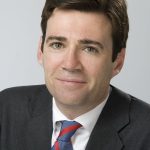
  • Andy Burnham – 2026 Statement on Flooding on Nepal-China Border

    Andy Burnham – 2026 Statement on Flooding on Nepal-China Border

    The statement made by Andy Burnham, the Prime Minister, on 26 August 2026.

    These scenes emerging from along the Nepal-China border are devastating. My thoughts are with all those affected, including the families and loved ones of British nationals missing in this tragedy.

    We will do everything we can to support British nationals impacted in the region and are in touch with the relevant authorities to offer support.

    I urge British nationals in the region to follow guidance from the local authorities and follow our travel advice.

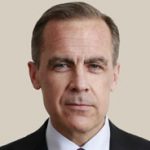
  • Mark Carney – 2026 Statement on Lake Ontario

    Mark Carney – 2026 Statement on Lake Ontario

    The statement made by Mark Carney, the Prime Minister of Canada, on 27 August 2026.

    The name Lake Ontario comes from the Wendat word Ontari’io, which, appropriately, means “the lake is beautiful, the lake is big”.

    The name is more than 400 years old, predating both the Confederation of Canada and the Declaration of Independence of the United States of America.

    We know that America is changing. Their trading relationships, their foreign policies, their national monuments, their hydronyms.

    Canadians also know that naming reality means calling it Lake Ontario – then, now and always.