Category: Speeches

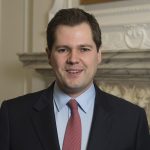
  • Stuart McDonald – 2022 Speech on Overseas Chinese Police Stations in UK

    Stuart McDonald – 2022 Speech on Overseas Chinese Police Stations in UK

    The speech made by Stuart McDonald, the SNP MP for Cumbernauld, Kilsyth and Kirkintilloch East, in the House of Commons on 1 November 2022.

    I, too, congratulate the hon. Member for Rutland and Melton (Alicia Kearns) on securing this important urgent question, and I welcome the Minister to his place.

    These are really alarming and incredibly serious allegations, which, as the Minister says, have to be properly investigated. Indeed, the suggested international scale of these activities across 30 countries on five continents is actually pretty shocking. Given the international perspective, what discussions are the Minister and his counterparts having with colleagues in the EU and beyond about how they can co-ordinate on this matter?

    What steps can the Minister say have been taken to ensure that law enforcement and security services have the skills and resources to tackle the matter? This seems a recent and different challenge for them. Will he say a little more about the co-ordination with devolved Governments who have responsibility for policing?

    The Minister expressed confidence that the powers in the National Security Bill, which we have debated at some length, will be sufficient to tackle this type of alleged activity. Will he express a willingness to use those powers if these allegations are made out?

    Finally, does the Minister agree that, while our attention is rightly focused on the bad actors seeking to control and coerce Chinese residents, BNOs and others, it is all the more important that we remember and support the many other groups, businesses and individuals who do positive work in supporting their communities to contribute to our society?

    Tom Tugendhat

    I thank the hon. Member for the tone with which he has addressed these questions. This is truly a United Kingdom issue, and the way to address them is for the United Kingdom to work together.

    The hon. Member is absolutely right that there are wider dimensions, which include our friends and allies around the world. The Government have already been working with Governments around the world to make sure that we deal with the repression and oppression that we are seeing in different places. He will remember well the way in which the United Kingdom stood so clearly with the Government of Canada to call out the illegal detention of Michael Spavor and Michael Kovrig. I am delighted to say that that will continue.

    The hon. Member is right that working with police forces across the United Kingdom—including Police Scotland, which does excellent work—is really important, but it is also important that they have access to the resources that we are able to bring as the United Kingdom. The agencies that do so much to support us all are essential.

    I am grateful for the hon. Member’s kind words about the National Security Bill. His support on that Bill has been incredibly important and demonstrates that this truly is a cross-party, cross-nation effort to keep the whole of the United Kingdom safe. He can be absolutely assured that I will not hesitate to use the powers in the Bill should they be required.

    The hon. Member’s question on the community is also really important. We need to make it absolutely clear that what we are resisting here is authoritarian Governments seeking to influence free people. We welcome people from across the world. We welcome people from communities that may be repressed at home but can be free here. It is essential that we champion those who can enjoy freedom here, and the Hongkongers are a clear demonstration that this Government and this country welcome those seeking freedom.

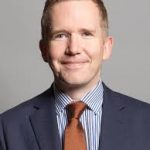
  • Holly Lynch – 2022 Speech on Overseas Chinese Police Stations in UK

    Holly Lynch – 2022 Speech on Overseas Chinese Police Stations in UK

    The speech made by Holly Lynch, the Labour MP for Halifax, in the House of Commons on 1 November 2022.

    I, too, welcome the Minister to the Dispatch Box. I am grateful to the hon. Member for Rutland and Melton (Alicia Kearns) for securing the urgent question. As we have heard, the Safeguard Defenders report alleges that the Chinese Communist party has set up parallel policing mechanisms around the world. The report identifies three such stations in Hendon, Glasgow and Croydon that purport to offer services for Chinese nationals abroad. There have been multiple reports, however, that those stations are cracking down on Chinese political dissidents, including Hong Kong ex-pats and Uyghur refugees.

    According to the Committee for Freedom in Hong Kong Foundation, people from Hong Kong relocating to the UK are being

    “followed, harassed, attacked and intimidated”

    by operatives based at the Glasgow station. The recent unacceptable conduct that we witnessed outside the Chinese consulate in Manchester makes it clear that we have to act to safeguard those in the UK from increasingly belligerent measures being undertaken by those acting on behalf of the Chinese state.

    With the Minister’s predecessor, the right hon. Member for Stevenage (Stephen McPartland), we discussed in the National Security Bill Committee that the harassment of dissidents was becoming an increasing concern. What assessment have the Government made of these stations and what action have they taken to disrupt these damaging activities? The foreign influence registration scheme is long overdue, as he and others have said, so can he put on record exactly when it will be introduced?

    The Government previously stated that the Home Office and the Department for Levelling Up, Housing and Communities have drawn up plans to protect those arriving from Hong Kong from surveillance and harassment. Can the Minister elaborate on what those provisions are? The rule of law and freedom of expression are fundamental principles in our democracy and we must act to make it clear to any overseas regime that only UK police forces undertake policing in this country—with absolutely no exceptions.

    Tom Tugendhat

    I thank the hon. Lady for the tone with which she has approached not just the urgent question but the National Security Bill Committee, and for the openness and frankness with which she has enabled us to work on a truly cross-party basis on what is fundamentally a national security question for our whole country. I am extremely grateful for the way she has addressed these questions.

    The Safeguard Defenders report that the hon. Lady cites certainly raises some very serious concerns. Those are being looked into. Of course, it would not be the first time an authoritarian dictatorship had claimed powers that it does not have, so we are looking into the assessment and, as I say, we will come back to the House with a report when and if action needs to be taken.

    On FIRS, the hon. Lady is absolutely right that this is a matter that many of us have raised on numerous occasions. As soon as the National Security Bill is through the House—as she is well aware, that will, I hope, be very soon—those powers will be able to be used to defend not just this country but Members of this House against the intimidation or influence of those who seek to lobby or influence, masking the fact that they are doing so for a foreign state.

    On protections, the hon. Lady is, again, absolutely right. The reality is that there is no police force in this country that has jurisdiction except the police forces of the United Kingdom. She is absolutely right that no foreign force should have abilities to influence, detain, hold or pressurise citizens of our country, except those that are agreed to by law.

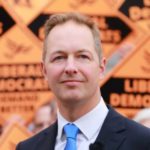
  • Richard Foord – 2022 Comments on Matt Hancock Going on I’m a Celebrity

    Richard Foord – 2022 Comments on Matt Hancock Going on I’m a Celebrity

    The comments made by Richard Foord, the Liberal Democrat MP for Tiverton and Honiton, on Twitter on 1 November 2022.

    This is just ridiculous. As MPs it’s our role to represent our constituents and help them with issues they’re facing – not take weeks off to go on reality TV. If Mr Hancock wants to spend his time outside of Parliament, then frankly he should resign.

  • Tom Tugendhat – 2022 Speech on Overseas Chinese Police Stations in UK

    Tom Tugendhat – 2022 Speech on Overseas Chinese Police Stations in UK

    The speech made by Tom Tugendhat, the Minister for Security, in the House of Commons on 1 November 2022.

    Thank you, Mr Speaker. It is a great pleasure to be here on my first outing at the Dispatch Box to speak about something that, as the House will know, I take extremely seriously. Reports of undeclared police stations in the United Kingdom are, of course, extremely concerning and will be taken seriously. Any foreign country operating on United Kingdom soil must abide by UK law. I have discussed this matter with the police and I am assured that they are investigating allegations of unlawful activity. It would be inappropriate for me to comment further on operational matters.

    I will take the opportunity, however, to reassure the House of the Government’s resolve to take the matter seriously. I will also shortly make a statement to the House on safeguarding our democracy. The protection of people in the United Kingdom is of the utmost importance. Any attempt to illegally repatriate any individual will not be tolerated. This egregious activity is part of a wider trend of authoritarian Governments perpetrating transnational repression in an effort to silence their critics overseas and undermine democracy and the rule of law. For example, we have been aware for some time of efforts to interfere in our academic freedoms and university sector, and we have been taking steps to protect our institutions.

    This Government are committed to tackling the challenge of transnational repression wherever it originates. It would be unacceptable for any foreign Government to feel able to operate in that way in the United Kingdom, and it must be stopped. The Home Office works closely with Departments across Whitehall and with devolved Administrations to ensure that our national security is protected and that, in particular, those who have chosen to settle here are free to engage in our democratic society without fear of the regimes that they have tried to leave behind.

    Through our excellent police forces and the agencies that work with them, we take a proactive approach to protecting individuals and communities from all manner of threats. Where we identify individuals who may be at heightened risk, we are front-footed in deploying protective security guidance and other measures where necessary. I pay tribute to my right hon. Friend the Member for Chingford and Woodford Green (Sir Iain Duncan Smith) and particularly my hon. Friend the Member for Rutland and Melton (Alicia Kearns), who has taken over the best job in Parliament as Chair of the Foreign Affairs Committee. They have worked tirelessly on this issue, including with our close international partners.

    The upcoming National Security Bill will strengthen our legal powers to deal with transnational repression. Coercion, harassment or intimidation linked to a foreign power that interfere with the freedoms of individuals will be criminalised under the new foreign interference offence in the Bill. Existing criminal offences against a person, such as assault, may also have sentences increased using the state threats aggravating factor in the Bill where they are undertaken for, on behalf of or with the intention to benefit a foreign power. The Bill will introduce a new foreign influence registration scheme, for which many hon. Members have campaigned, including my hon. Friend the Member for Rutland and Melton. That will provide greater transparency around foreign interference in our society.

    It is clear, however, that we can and must do more. I have therefore asked officials to step up the work to ensure that our approach to transnational repression is robust, and I have asked our Department to review our approach to transnational repression as a matter of urgency. I will provide an update on that work to the House in due course.

    Alicia Kearns

    I thank Mr Speaker for granting this urgent question. I take this opportunity to welcome my right hon. Friend to his place and say how reassured I am to have someone of his expertise leading on this important area for our national security.

    There are troubling reports of a widespread network of Chinese police stations operating worldwide, including three in our country in Croydon, Hendon and Glasgow. Publicly, those stations are harmless administrative centres for Chinese nationals, but reports suggest that they are actually used to hunt down dissidents and alleged Chinese criminals. The Chinese Government have admitted their existence, so I have some questions for the Minister. What is the legal basis for their operations on UK soil? Are Chinese officials involved in their administration? I welcome that the Minister has tasked an investigation, but will he commit to update the House on it in due course?

    Finally, the British national overseas scheme was world leading, but we have a duty to protect those who come here and seek refuge on our soil. Does he agree that, following the Chinese consul general’s attack on a Hongkonger only a couple of weeks ago, we are playing a dangerous game in sacrificing our sovereignty and the safety of not just British nationals, but refugees at the altar of not wanting to upset an authoritarian state?

    Tom Tugendhat

    I again pay tribute to the work that my hon. Friend has done over recent weeks, in particular, and years in alerting this House and the country to the threats that we have faced from authoritarian regimes around the world. I pay particular tribute to her leadership of the China Research Group, on which I was honoured to work with her before.

    The reports that my hon. Friend mentions are not exclusive to this country. Sadly, we have seen authoritarian states exercising repressive tendencies abroad and seeking to extradite, or indeed inveigle, citizens of their own country back to their homeland to extract punishment. That is simply unacceptable. The protections of the UK state need to apply to all those in the United Kingdom and it is absolutely essential that those protections are afforded to all. That is why I am working, and will work further, with the police and agencies to ensure that we are on top of this offence and that, should evidence be shown and proof be given, action will be taken.

    I also thank my hon. Friend enormously for her comments about the British national overseas scheme. She is right that that was not only world leading but essential for protecting British nationals in the face of an authoritarian dictatorship, and that those who come here under the scheme should be afforded the same protections, rights and dignity as all British nationals everywhere.

  • Emma Hardy – 2022 Speech on BBC Local Radio Proposed Reduction in Provision

    Emma Hardy – 2022 Speech on BBC Local Radio Proposed Reduction in Provision

    The speech made by Emma Hardy, the Labour MP for Kingston upon Hull West and Hessle, in the House of Commons on 1 November 2022.

    Thank you for granting the urgent question, Mr Speaker. Let me also welcome the Minister to her place and many of the comments she has made today. BBC local radio stations are vital as sources of information and for sharing communal experiences. I recently attended the Radio Humberside “Make a Difference Awards”, which highlighted the work of local people in their communities. In March last year, Chris Burns, the head of audio and digital for BBC England, celebrated these awards saying:

    “The power of radio is huge when it comes to connecting local communities in their hour of need.”

    I agree. Local radio, especially Radio Humberside, brings a feeling of belonging and companionship, especially to those who are isolated from everyday interactions. Local radio stations also hold democratically elected local politicians to account, and during the covid lockdowns they provided an invaluable service, enabling and publicising local support initiatives and disseminating up-to-the-minute news.

    Local radio has 5.7 million listeners—more listeners than Radio 1 and Radio 5 Live—and it is the embodiment of public service broadcasting, remaining true to the principles behind the creation of the BBC 100 years ago. The plans announced yesterday for changes to the content of local radio—without any consultation at all of local communities—effectively mean that local radio will cease to exist after 2 pm. At Radio Humberside, 139 redundancies are predicted; as well as the impact on the individuals affected, those redundancies represent a collective loss of local expertise and knowledge and of campaigning community voices.

    Does the Minister agree that local listeners should have been consulted? Does she agree that the loss of provision will be damaging to local communities as they lose an important voice for their experiences and concerns about local services, democracy and accountability? Finally, does she agree that local radio cannot call itself local when it stops being local after 2 pm?

    Julia Lopez

    I thank the hon. Lady for her comments and for highlighting the work done by Radio Humberside, as well as the power of radio to connect us in times of need and to ensure local democratic accountability. The mission and public purposes of the BBC include provision of output and services to the UK’s nations, regions and communities. That provision is a key part of the BBC’s remit and we hold the BBC to account for it via Ofcom; it is also something we will look at very closely in the mid-term review.

    The hon. Lady highlighted the loss of local expertise. BBC local radio stations have traditionally been a fantastic way to develop local talent which has gone on to be incredibly important national talent, so we have concerns about that. She talked about the need for consultation. I would have hoped to have had more chance to examine these proposals before they were released, and I shall be talking to the BBC about that next week. I am grateful to the hon. Lady for raising these issues.

  • Robert Jenrick – 2022 Statement on Manston

    Robert Jenrick – 2022 Statement on Manston

    The statement made by Robert Jenrick, the Home Office Minister, on 1 November 2022.

    Manston Update:

    Thanks to the hard work and professionalism of Home Office and Border Force staff, military personnel and our contractors we have made good progress.

    Numbers of migrants have fallen substantially today and we expect them to do so again tomorrow.

    Unless we receive an unexpectedly high number of migrants in small boats in the coming days, numbers will fall significantly this week.

    It’s imperative that the site returns a sustainable operating model and we are doing everything we can to ensure that happens swiftly.

  • Hilary Benn – 2014 Parliamentary Question to the Department for Communities and Local Government

    Hilary Benn – 2014 Parliamentary Question to the Department for Communities and Local Government

    The below Parliamentary question was asked by Hilary Benn on 2014-06-25.

    To ask the Secretary of State for Communities and Local Government, what estimate he has made of the additional cost of additional appeals to the Parking Traffic Appeals Service if a 25 per cent discount is given to motorists who lose an appeal at tribunal against the issue of a parking ticket.

    Brandon Lewis

    As recommended by the Transport Select Committee (Local authority parking enforcement, HC 118, October 2013), the Government intends to work in partnership with a local authority to assess introducing a 25% discount to motorists who lose an appeal at tribunal level. This trial will allow us to evaluate the impacts, before rolling out the policy nationally.

    The underlying policy rationale is the current lack of any discount at an appeal stage (but with a discount operating if the driver does not appeal) acts as a disincentive for drivers with genuine cases to appeal. I would remind the rt. hon. Member that parking fines are a quasi-judicial process, not a source of revenue for councils. This Government believes in fairness, in contrast to the Labour Government which actively told councils to adopt aggressive parking enforcement practices.

  • Andrew Griffiths – 2014 Parliamentary Question to the Department for Education

    Andrew Griffiths – 2014 Parliamentary Question to the Department for Education

    The below Parliamentary question was asked by Andrew Griffiths on 2014-06-25.

    To ask the Secretary of State for Education, what proportion of children receive free school meals in each (a) free school and (b) local authority area where a free school has been established.

    Mr David Laws

    Information on the percentage of pupils known to be eligible for and claiming free school meals was included in the publication ‘Schools, pupils and their characteristics, January 2014′.[1]

    Information on the percentage of pupils known to be eligible for and claiming free school meals in individual schools, including free schools, is provided in the publication’s underlying data. This includes school type and local authority.

    Table 8a in the publication shows the percentage of pupils in state-funded nursery and primary schools known to be eligible and claiming free school meals by each local authority area. Table 8b shows the percentage of pupils in state funded secondary schools known to be eligible and claiming free school meals by each local authority area. Table 3 shows the percentage of pupils known to be eligible for and claiming free school meals in free schools nationally.

    [1] https://www.gov.uk/government/publications/schools-pupils-and-their-characteristics-january-2014

    “

  • Charlotte Leslie – 2014 Parliamentary Question to the Department of Health

    Charlotte Leslie – 2014 Parliamentary Question to the Department of Health

    The below Parliamentary question was asked by Charlotte Leslie on 2014-06-25.

    To ask the Secretary of State for Health, what mechanisms are in place to ensure that those clinical commissioning groups providing financial support to a neighbouring clinical commissioning group does not suffer a reduction in its own provision of services as a result.

    Dr Daniel Poulter

    NHS England has responsibility for clinical commissioning group (CCG) funding.

    We are informed by NHS England that there is no provision for financial support between CCGs, and therefore no regime for repayment and/or interest.

    CCGs are expected to live within the resources allocated to them, but in rare cases where this is not possible, and subject to detailed assurance by NHS England Area Teams, a deficit plan is agreed and centrally funded. CCGs are expected to repay such funding over an agreed timescale in accordance with an approved recovery plan. The same applies if a CCG with a planned surplus records a deficit in year.

    In some cases, neighbouring CCGs have opted to enter into risk sharing or investment pooling arrangements, for example, in the context of shared commissioning arrangements or to facilitate wider health economy transformation programmes. The precise arrangements for such risk sharing are a matter for local determination by the governing bodies concerned, and they would be expected to ensure that these agreements were transparently documented and did not impact adversely on patient services.

  • Mike Weatherley – 2014 Parliamentary Question to the Department of Health

    Mike Weatherley – 2014 Parliamentary Question to the Department of Health

    The below Parliamentary question was asked by Mike Weatherley on 2014-06-25.

    To ask the Secretary of State for Health, what steps his Department is taking to reduce the number of missed GP appointments; and if he will make a statement.

    Dr Daniel Poulter

    Information is not collected centrally on the number of missed general practitioner (GP) appointments. This is a matter for local organisations. However, NHS England estimates that each year around 12 million GP appointments are missed, at a cost to the system of £162 million.

    In order to reduce the number of missed GP appointments, the Prime Minister’s Challenge Fund is supporting pilots to ensure appointments are as convenient as possible for the patient. The pilots will offer millions more patients evening and weekend GP appointments, as well as introducing initiatives, such as email and Skype consultations.